There’s really not much to (coherently) say after tasting twenty-three wines, other than
- our guide Kate was wonderful,
- our small group of just 8 people (Ted and I, plus young chef Mitch and his wife Shelley from New South Wales, caravaners Phil and Sam from Brisbane, and vacationing retirees Paul and Maria from Suffolk England) was a lot of fun,
- the independent vintners from the three cellar doors we visited were passionate and interesting,
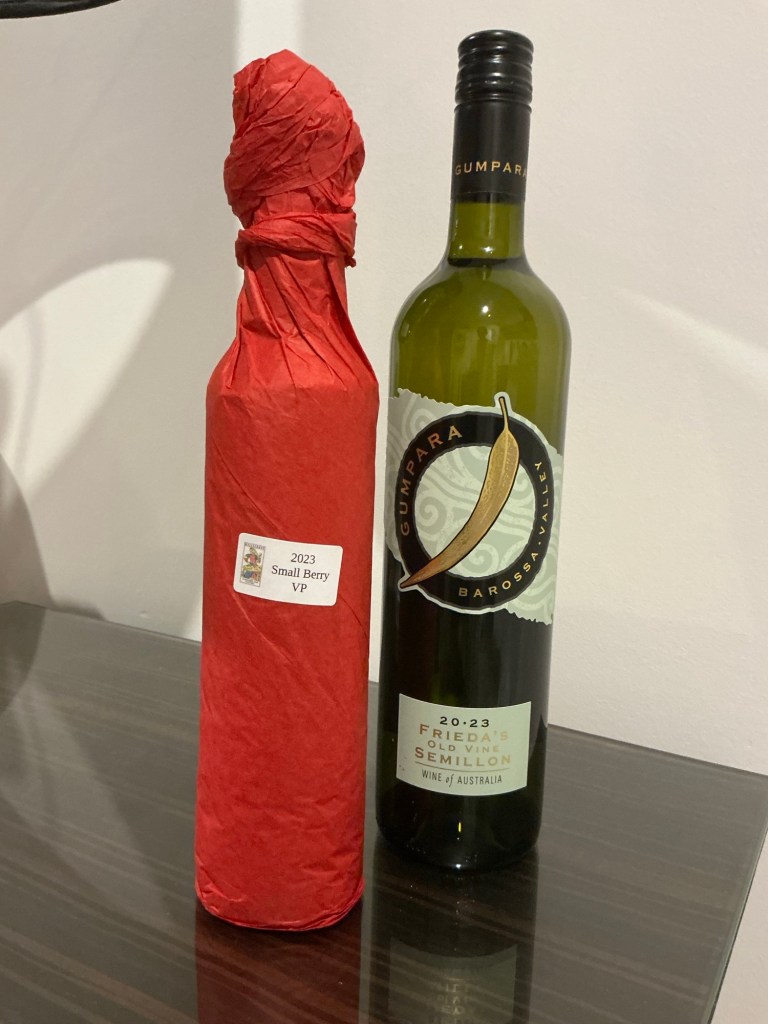
- and, despite having no way to travel on a plane with them, we bought two bottles of wine to take to Melbourne with us on the train and drink during our week there.
And yet, somehow, there’s still quite a lot to say, starting with the fact that:
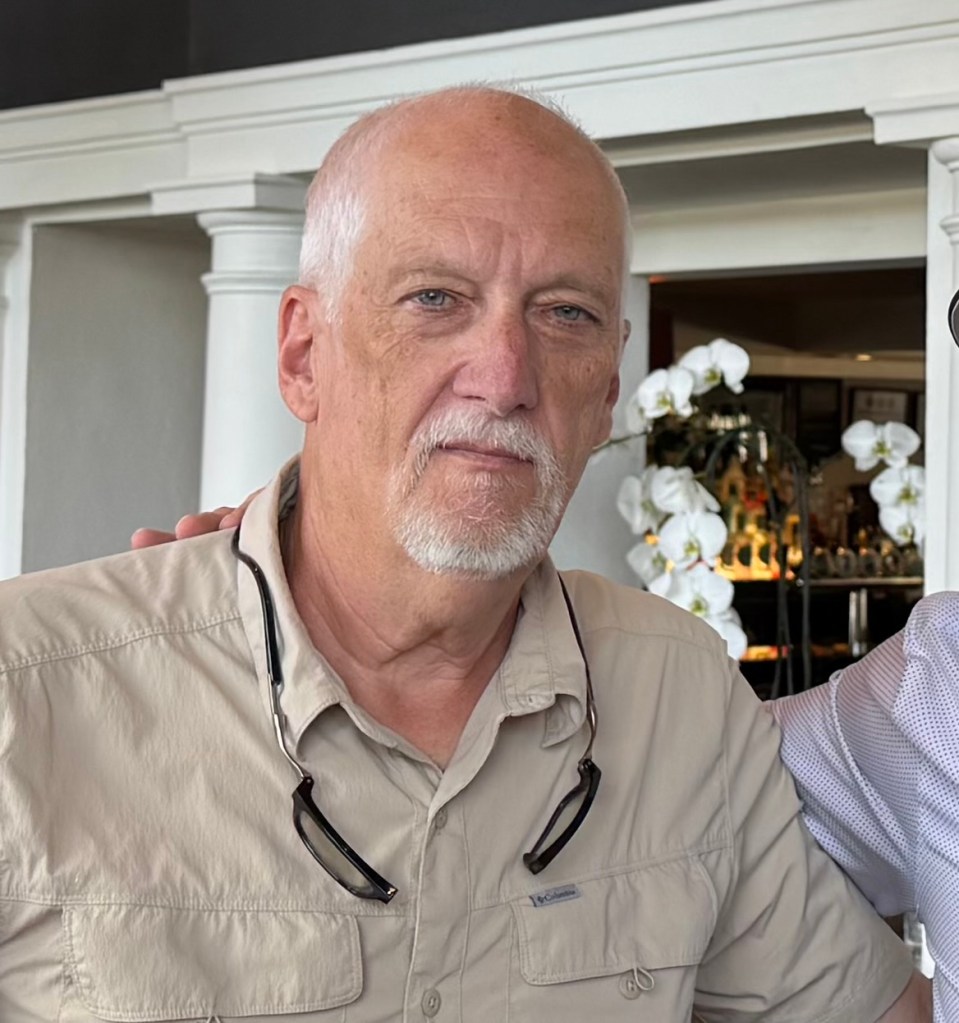
Ted doesn’t even like wine.
I do though, and he is an amazing husband.
A few days ago he showed me a listing of Barossa Valley wine tours, and expressed a willingness to book one.
He didn’t have to suggest it twice.
A bit of research via GetYourGuide, Viator, and Expedia led us to a company called South Australia Wine Tours and a small group (maximum 8) tour focussed on family-owned premium wineries where the tastings are led by the winemakers themselves. These aren’t big name Australian wineries. In fact, their small batch wines are only available at their cellars.
It sounded perfect, so we booked it.
Our knowledgeable and enthusiastic guide Kate picked us up at our hotel’s front door. Once our group was complete, she drove us an hour out of Adelaide, past leafy suburbs, dry industrial areas, swampy wetlands, and salt pans, to the lush Barossa Valley – regaling us the entire drive with the history and geography of the areas through which we drove.
The first cellar door we visited was GUMPARA, named after the vineyard’s ring of gum trees, and the nearby river (“para” in one of the local Aboriginal languages).
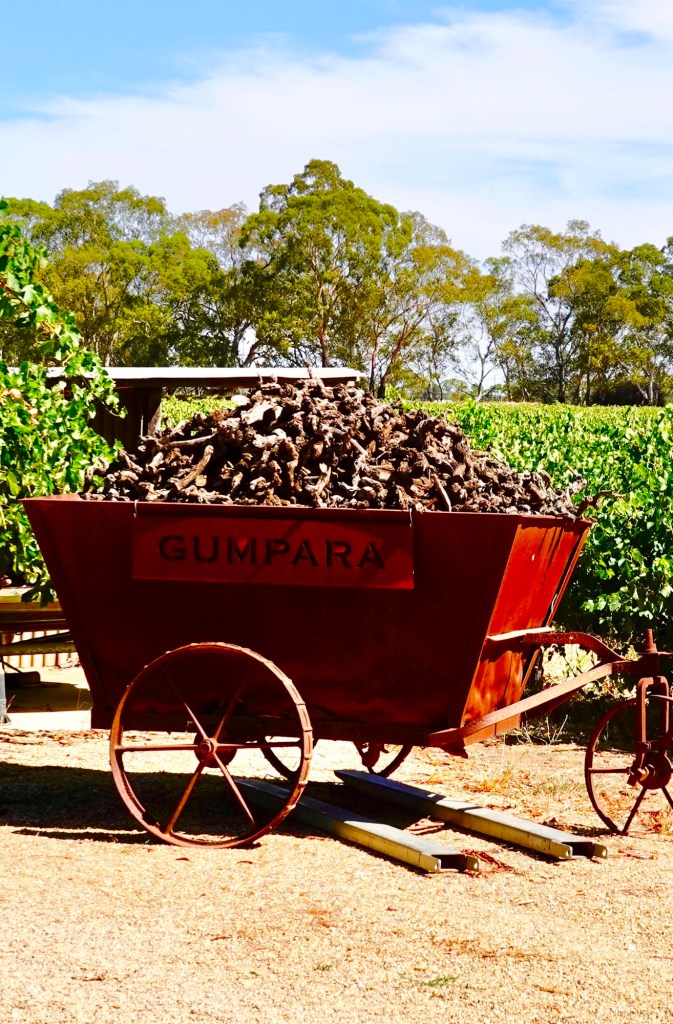
Winemaker Mark Mader, a 6th generation German farmer, and his viticulturist wife, Amanda, have now made and cellared 25 vintages, and won multiple awards for their wines. Mark was not originally a vintner – he started out growing tonnage (the term used for grapes grown in bulk for wineries) for Peter Lehmann Wines, and learned his craft by working there.
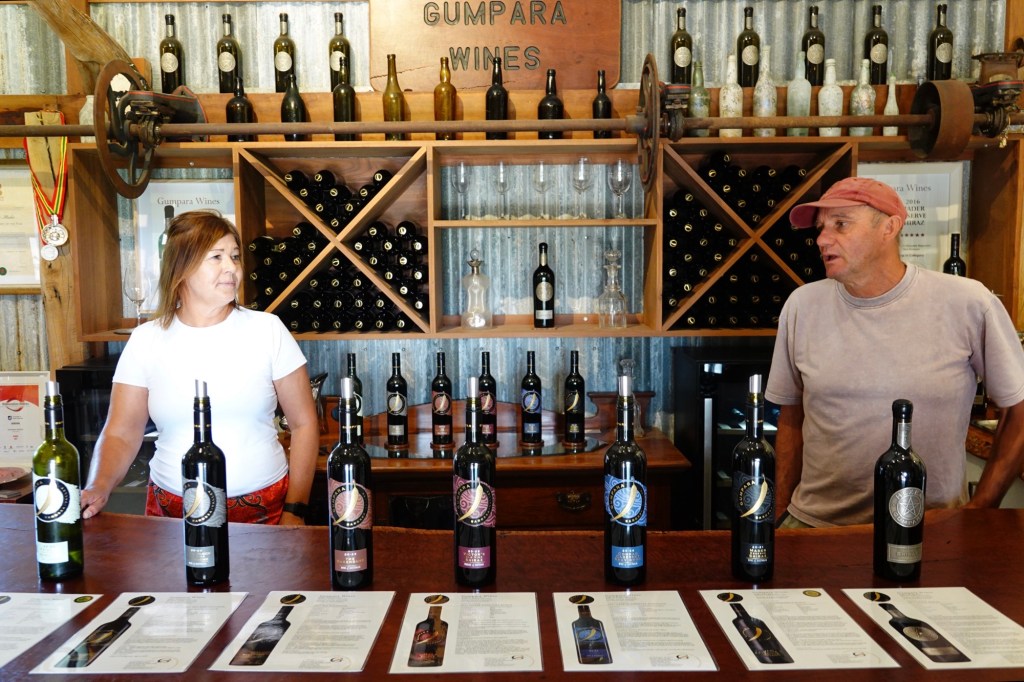
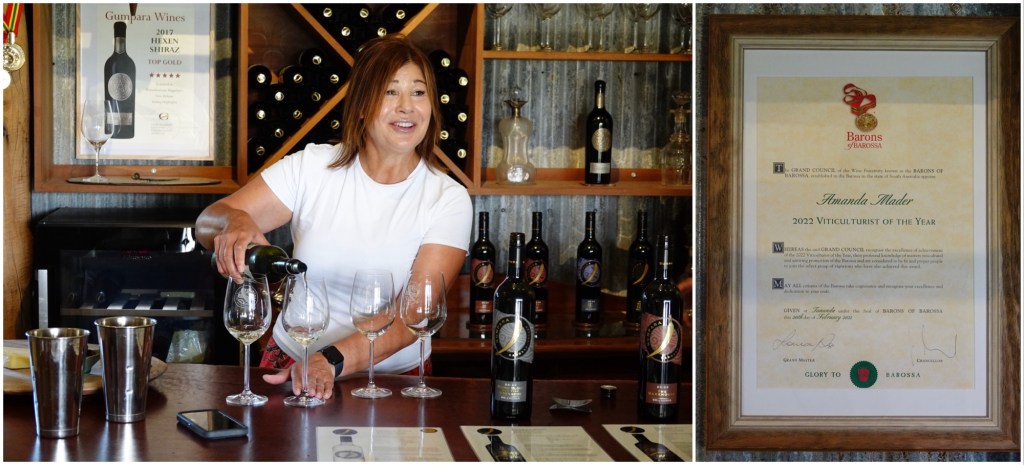
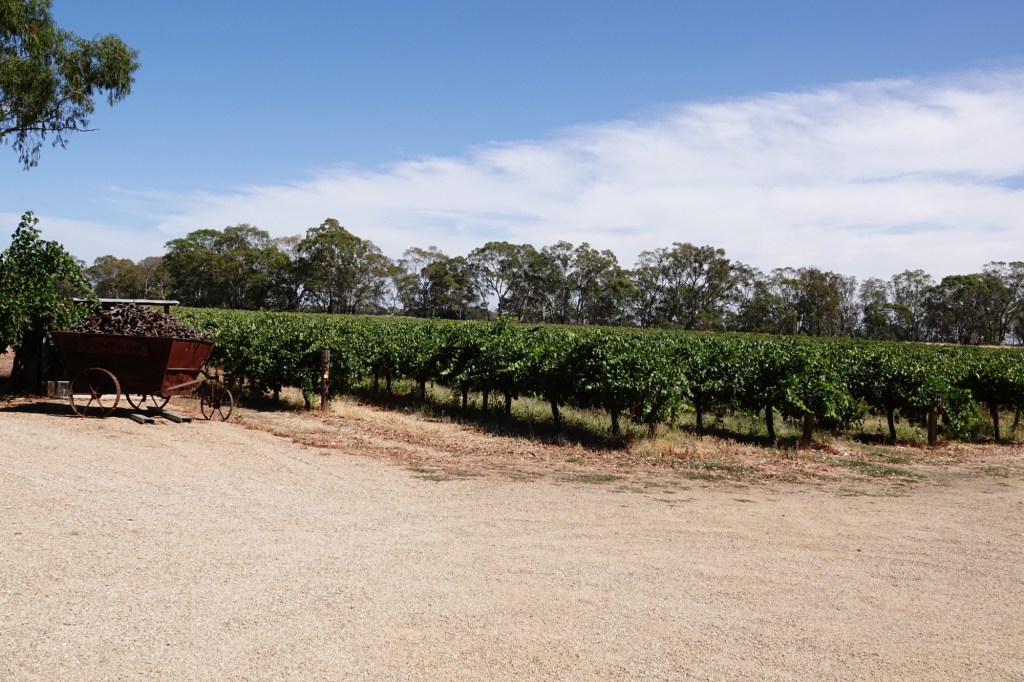
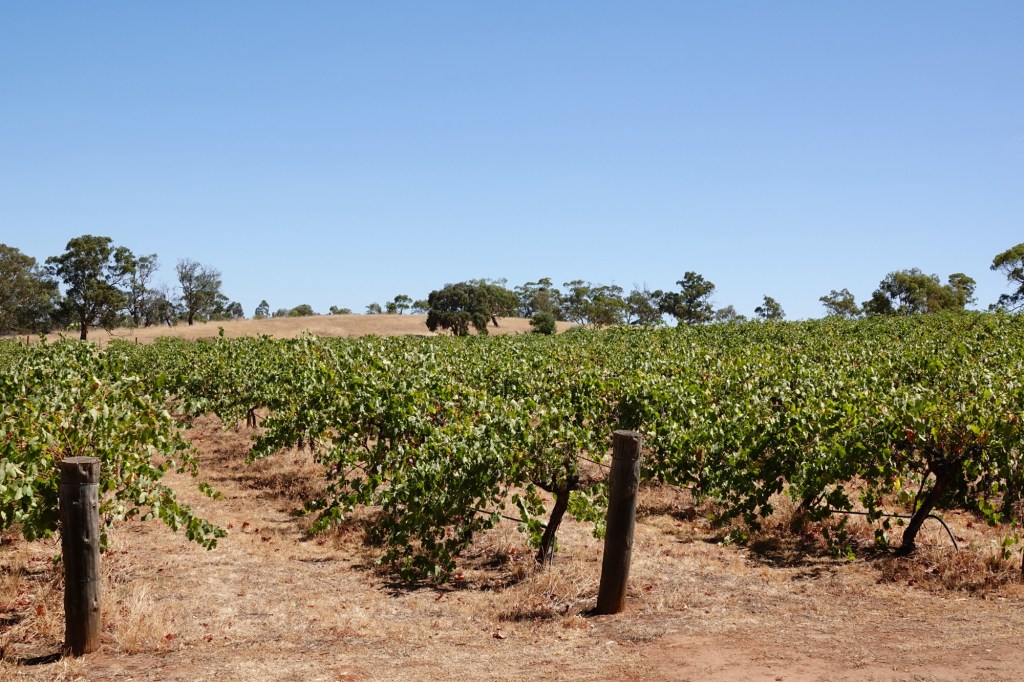
They have just 30 hectares of vineyard: 13,360 vines which are pruned by hand each winter. These vines include 101-year-old Semillon grapes planted by Mark’s grandmother Frieda, the only white grape hardy enough to flourish in the Barossa Valley without burning.
Their wines are only sold at the cellar door, since each yield is so small; for instance they only make one barrel(about 300 bottles) of their top end Hexen wine annually.
We tried 7 wines (and bought one – the only white of the day). Of those we tried, the first 5 were all fermented in stainless steel before spending a short time in oak; the last two were entirely fermented in oak, which Mark explained made them more tannic.
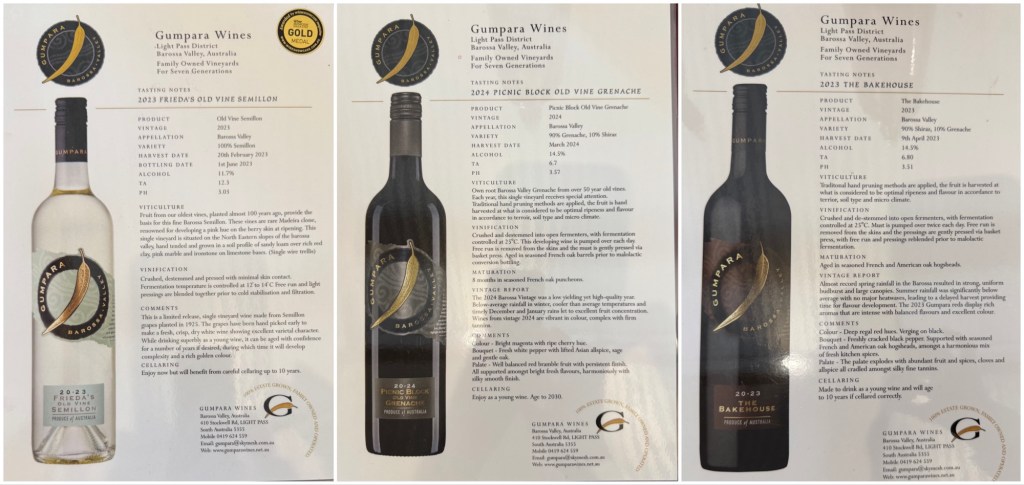
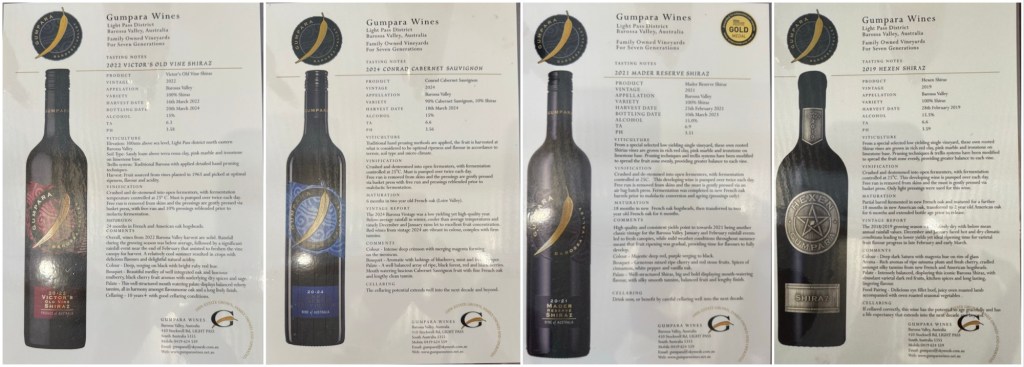
The awards are impressive.
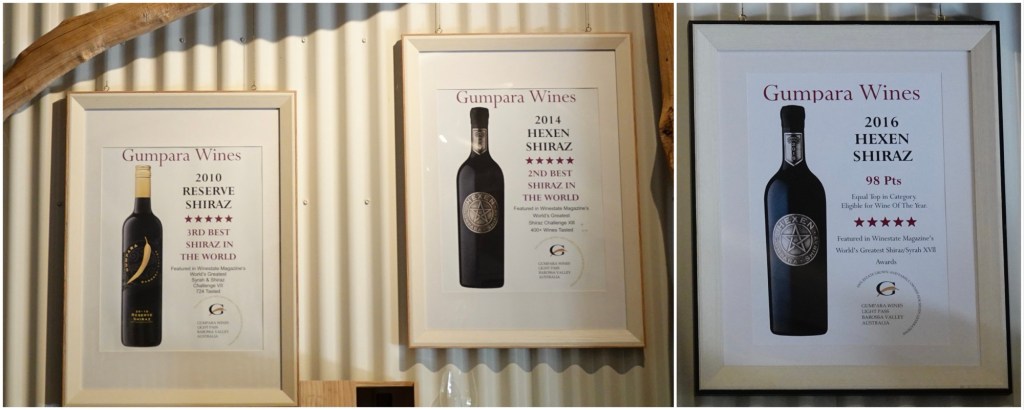
Interestingly, 6 of the 7 wines were in screw-top bottles, which Mark explained are preferable to traditional cork for flavour consistency and heat tolerance. Only the Hexen is still corked, and that will change when his current supply of very expensive corks is used up. He showed us the amount of staining on a cork from a bottle that has been cellared just one year, and explained that within 10 years the amount of wine absorbed by the cork will negatively impact the wine’s flavour. Screw top bottles can be cellared for decades, AND do not need to be stored horizontally or constantly turned. He also told us that a tiny CO2 pellet dropped into each bottle as it is sealed removes excess oxygen, ensuring that wines don’t oxidize as they age.
This was the only cellar at which the wines were not decanted before serving, the exception being the corked bottle. Gumpara wines are 700 micron filtered, so do not need decanting.
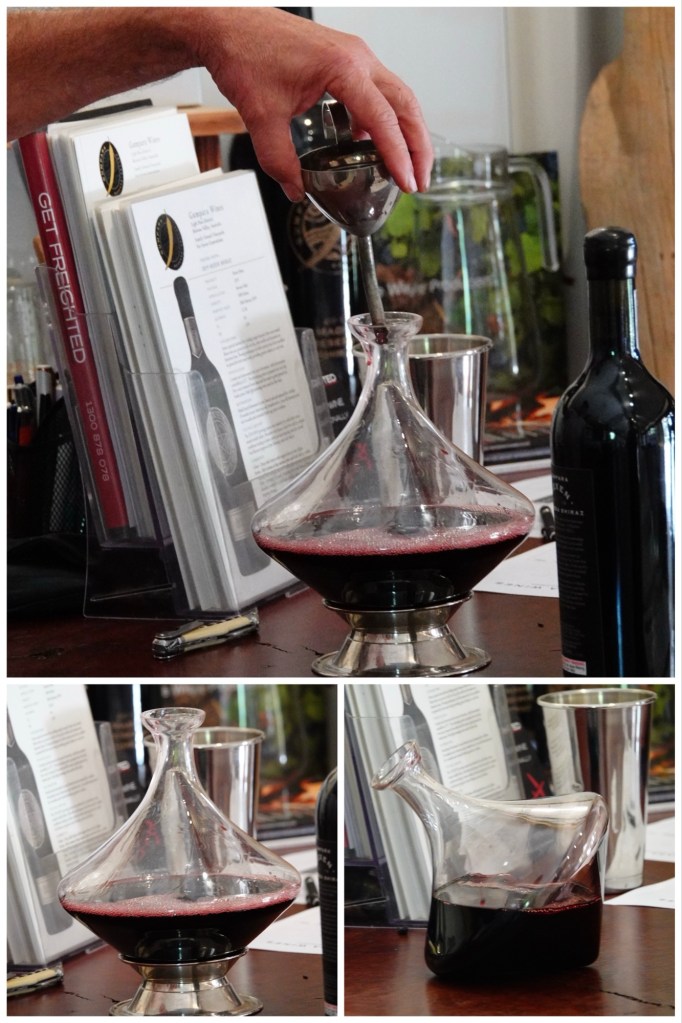
While all of the wines were suitable for aging, Mark commented that once a bottle has been opened it should be drunk within a maximum of 3 days.
At the pace set by Gumpara, we were going to need to be careful about our wine intake, and take advantage of the cool water provided in our van.
Our second cellar door was HART OF THE BAROSSA, where Michael and Alisa Hart’s vineyard is on land that has been in family hands since the mid-1800s.
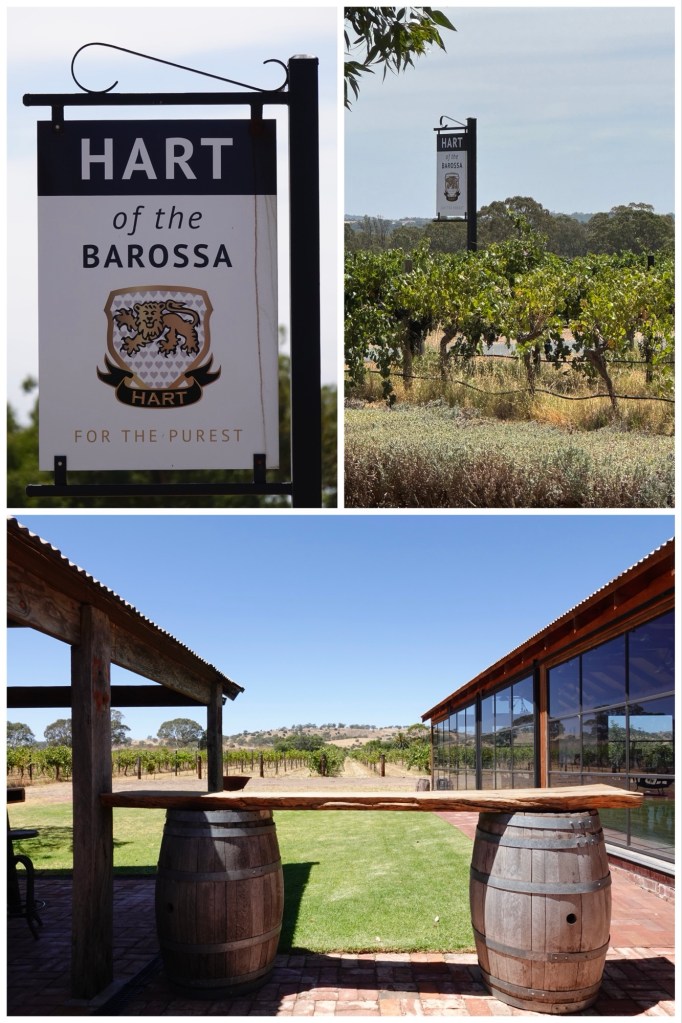
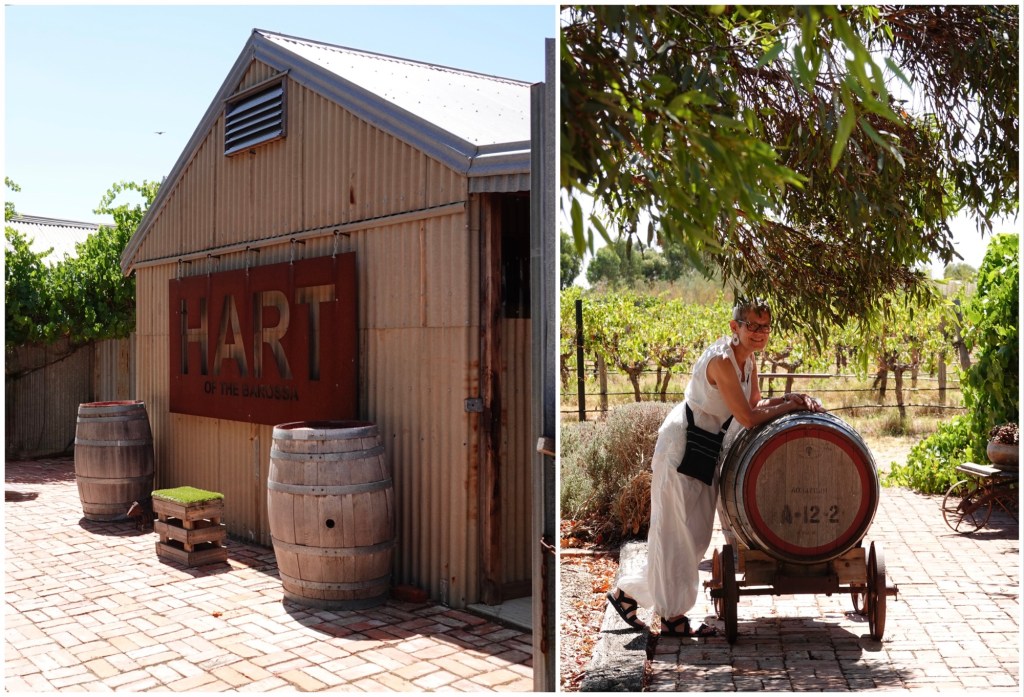
The oldest vines here are 185 year old Grenache, but Michael and Alisa have only been making wines since 2009, producing 3000 to 5000 cases per year.
The tasting shed here could easily seat 20, although our group was there alone. Hart of the Barossa was the only “open to the public”, i.e. not exclusively by appointment with the vintner, winery we visited.
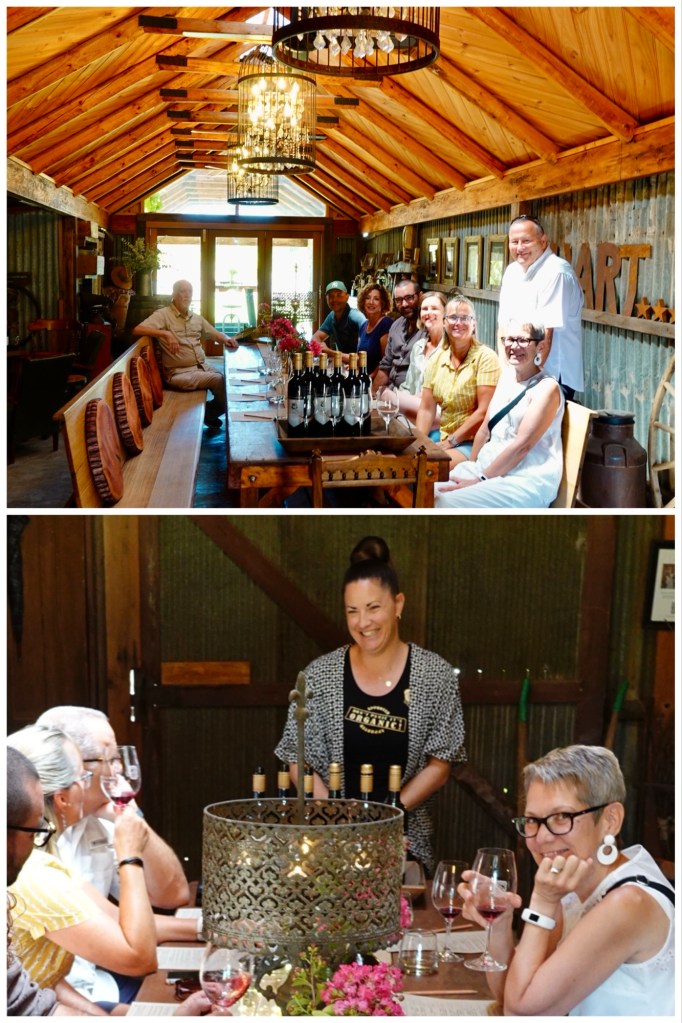
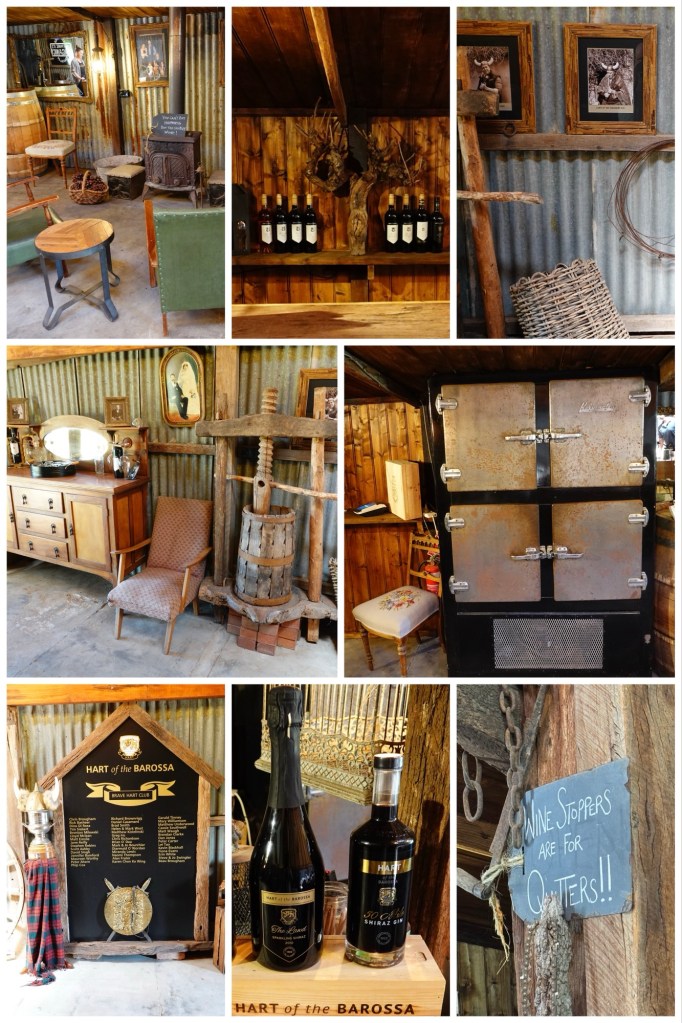
Alisa explained that Hart of the Barossa is the oldest certified organic block (vineyard) in the Barossa Valley. All the grapes are “dry grown” (with no water added to whatever rains down) and 100% picked by hand.
She also explained that the alluvial sand of the valley floor is a unique terroir that creates lighter floral wines as opposed to the heavier wines grown even just a few miles away. She called them “drinking wines, not thinking wines”.
There were another seven wines for us to taste here , plus a 2023 vintage Shiraz Gin that was absolutely incredible.
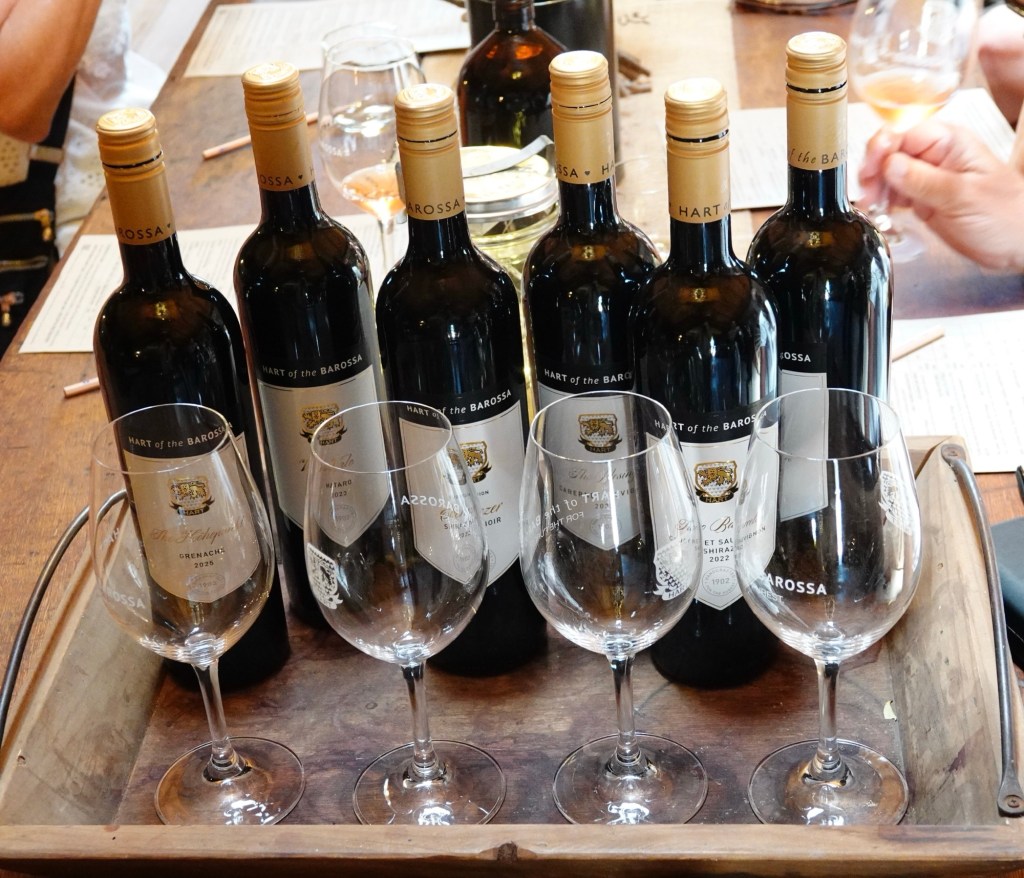
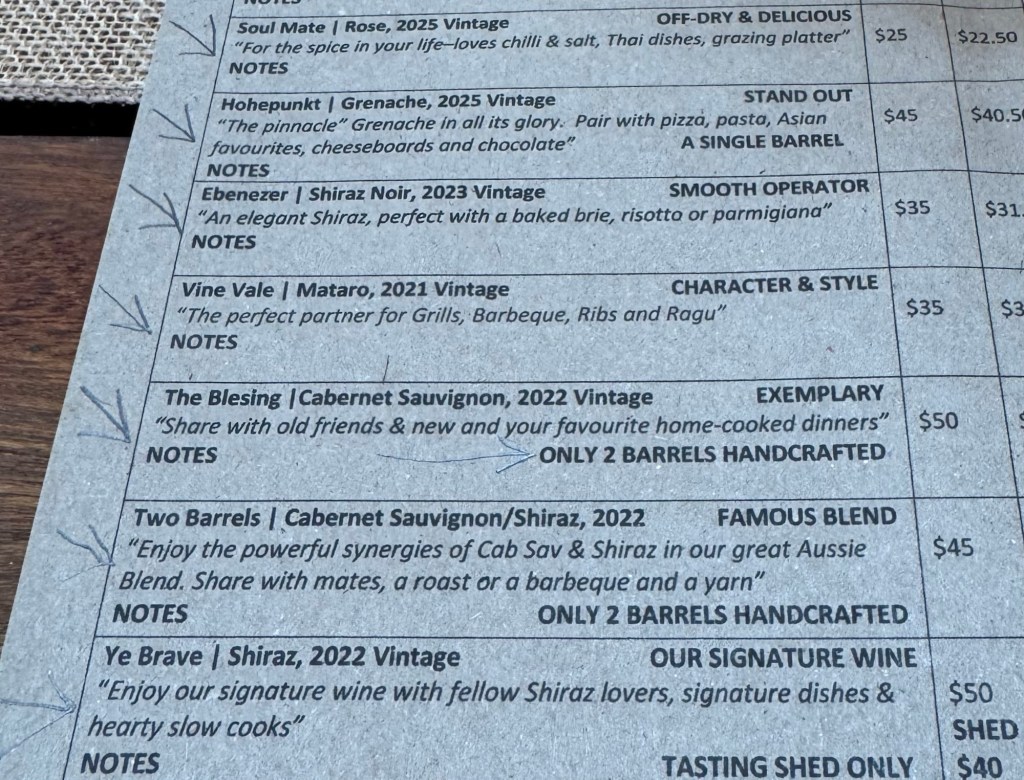
Australia does not have the kind of strict European rules around what the wines can be called on their labels. A wine can include up to 15% grapes other than what is on the label before being considered a “blend”.
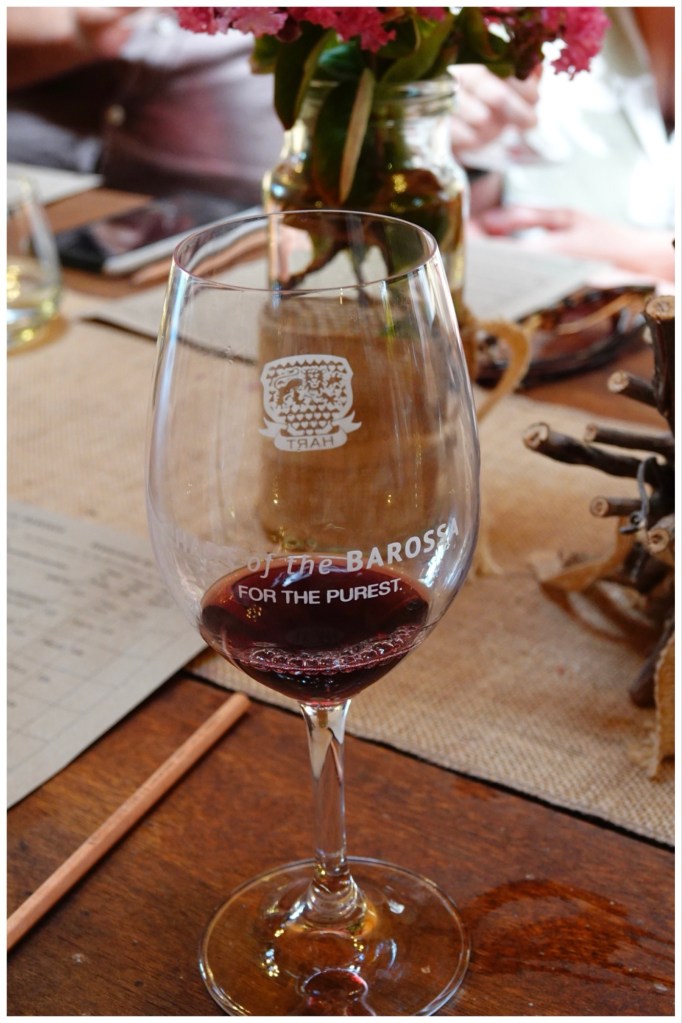
While we tasted, we learned a bit more about wines in general, and wine-making in Australia.
I learned that the tannic quality that I don’t particularly enjoy comes from tightly packed grape bunches and a high ratio of skin to flesh.
The wines were tasty, but OMG the Shiraz Gin! Distilled with lavender, peppercorns, coriander, ruby grapefruit, and juniper, and packing a hefty 38.5% alcohol content, it was beyond delicious. It would make a wonderful Spritz too.
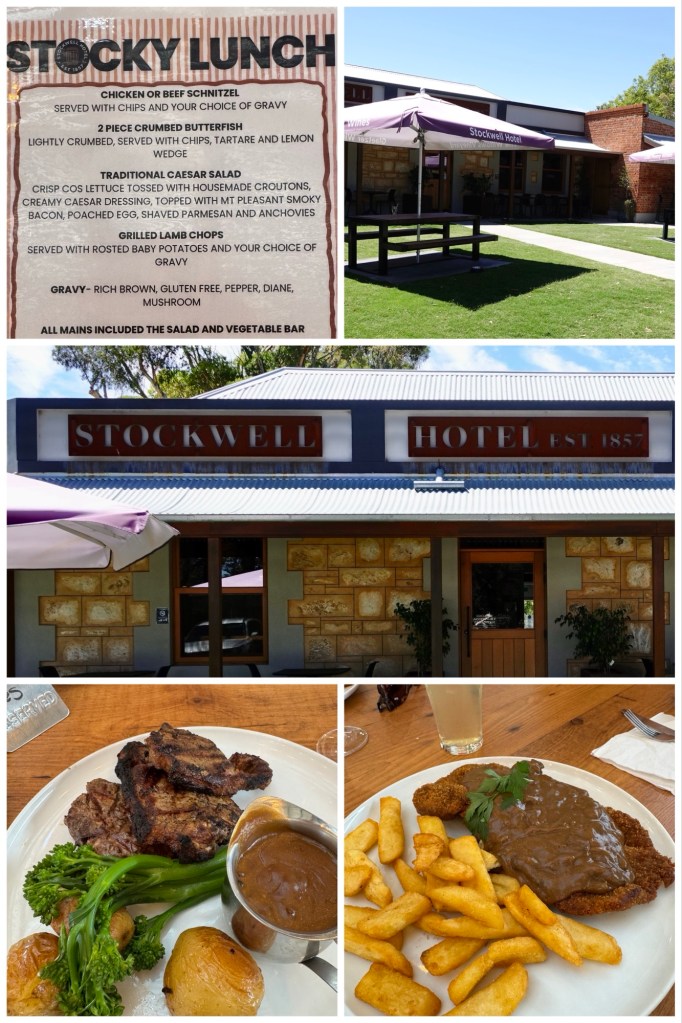
After 14 tastings, even though they were only about an ounce each, I definitely needed food. Thankfully, it was time for lunch, which was included as part of our tour. At the Stockwell Hotel (Est.1857) we were given a choice of several entrées, plus a small glass of house wine (because, of course). Our guide Kate recommended the lamb, which I’ve never been able to resist in the past 6 weeks; Ted chose the beef schnitzel.
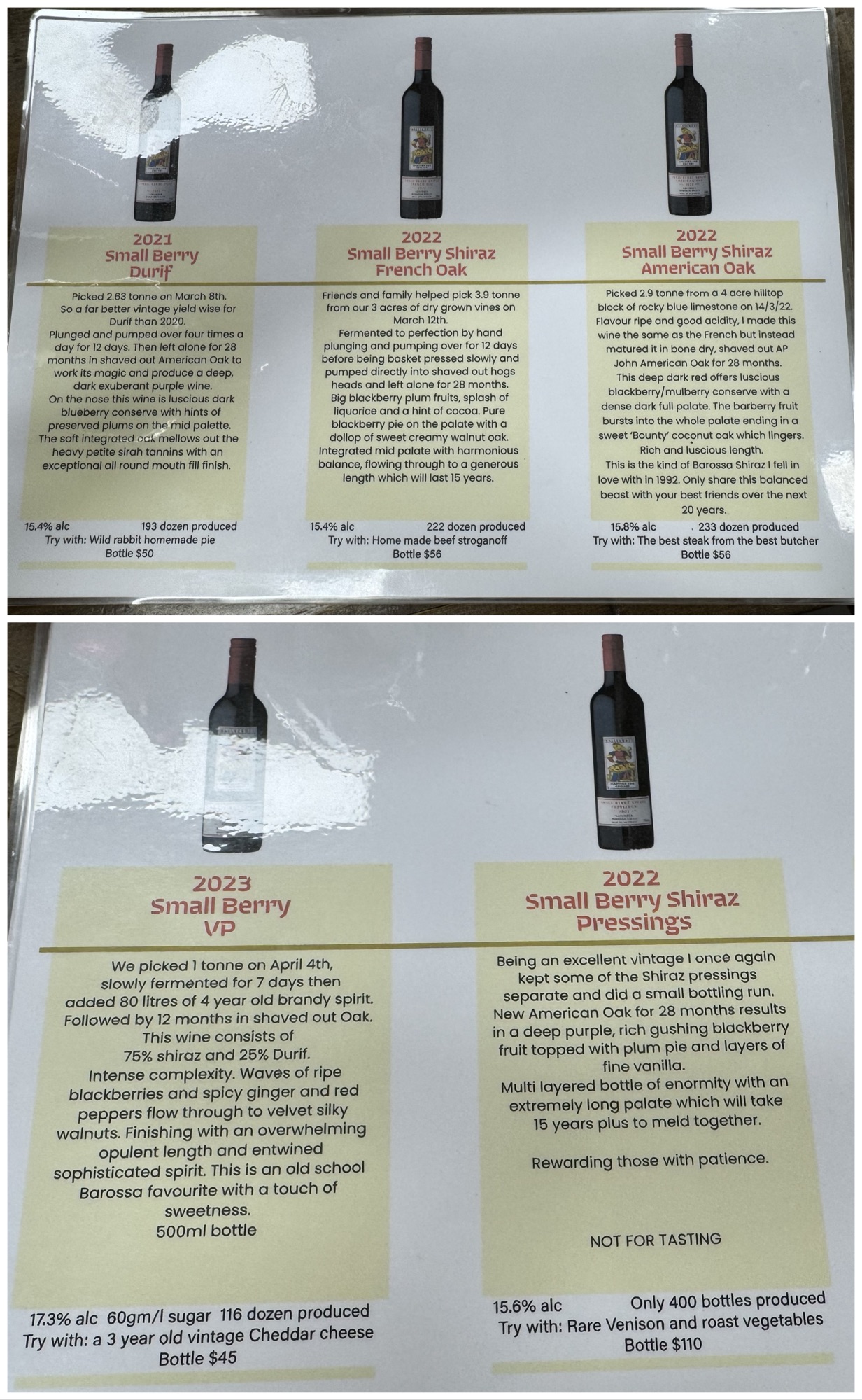
Our final tastings of the day were at BALLYCROFT, which is Irish for “small farm”.
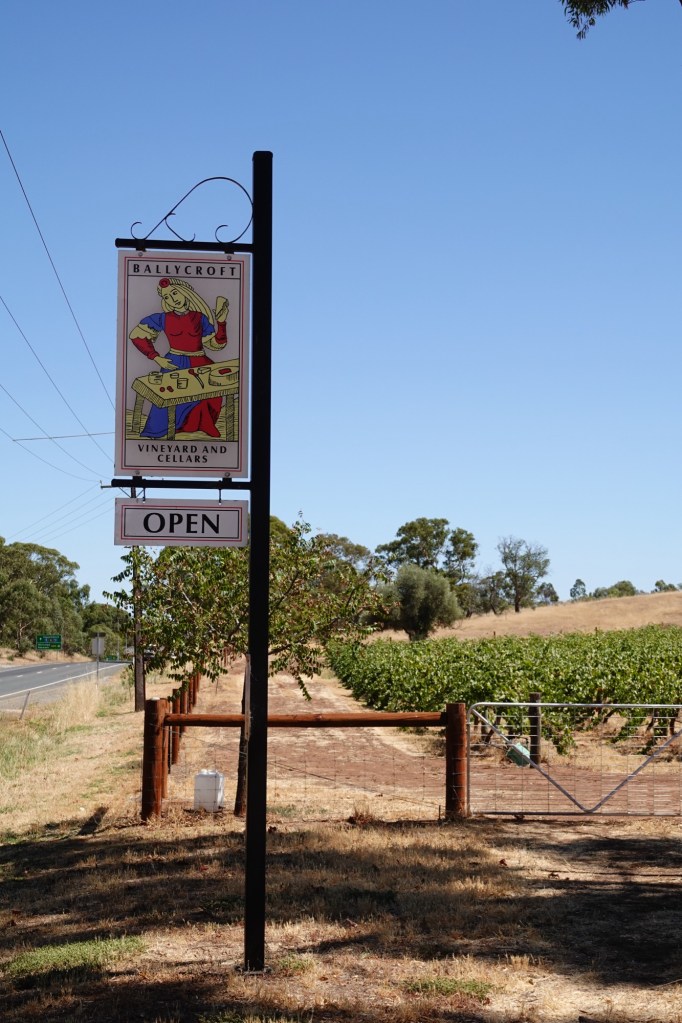
This was by far the smallest winery we’ve ever visited; winemaker Joe Evans has just 10 acres of Shiraz grapes and another 15 acres of other varietals; that qualifies him as a micro winery. Even with using grapes bought from a nearby family’s vineyard, he processes just 14 tonnes of grapes annually.
Joe is not only an enthusiastic winemaker, but also a very conscientious climate conservationist.
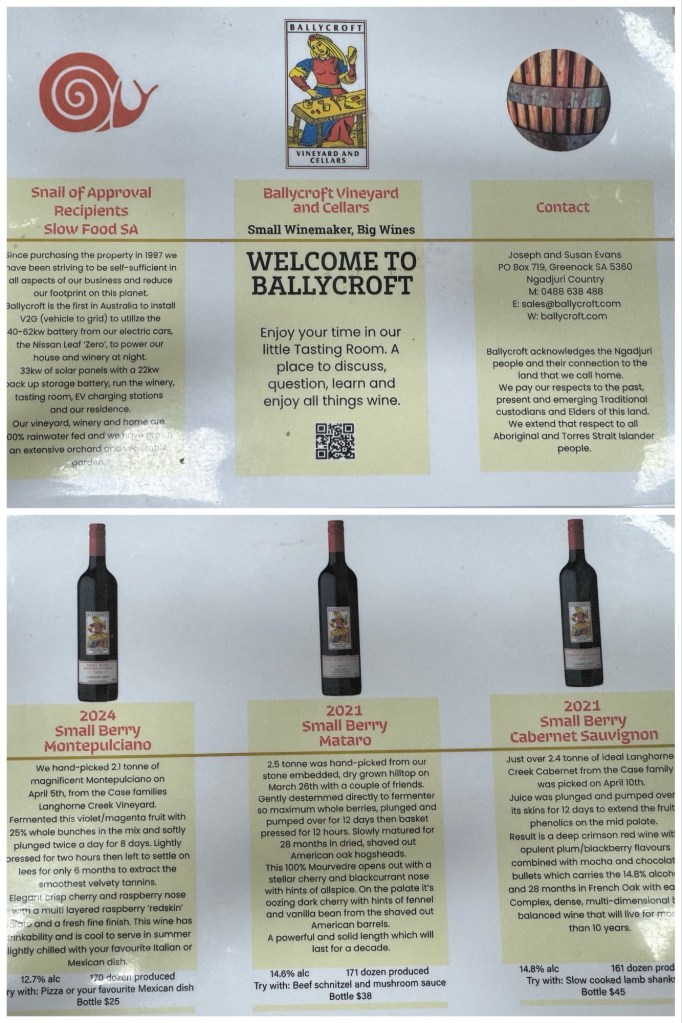
His property is home to the first electric car charging station in South Australia. His wine cellar, which is half underground, uses passive cooling and solar panels. Through a V2G converter (I’d never even heard of one before) the winery is powered by their electric car!
Ballycroft has all new vines; there is no heritage root stock here. As was the case at Hart of the Barossa, the grapes are “dry grown” and 100% hand picked. The grapes then go into a crusher/de-stemmer that is designed to be so gentle that the 85% of the de-stemmed grapes come out still whole. Fewer exposed seeds during fermenting means fewer tannins, which may be why I liked these reds even more than some of the others we’d tried. After 10-12 days of fermentation, the grapes are slowly pressed. The gentle pressing process takes 10-12 hours. After that, the wine goes into stainless steel tanks for 10 days before being finished in oak for 3-4 months.
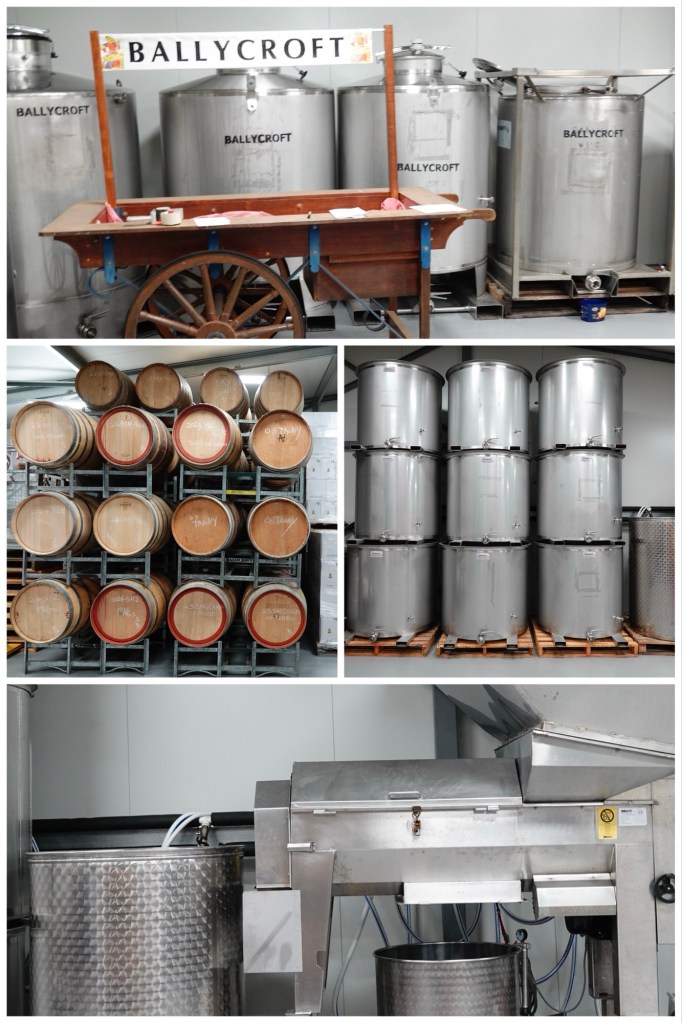
This year marks Ballycroft’s 30th vintage.
The tasting room was definitely not glamorous (it used to be a cheesery) but a new building is in progress. It was refreshing to have a tasting that was 100% about the winemaker’s passion, with not a single care for the aesthetics of the building. I’m so glad that our tour operator chose this cellar door. It’s the kind of place that would be easy to simply drive past.
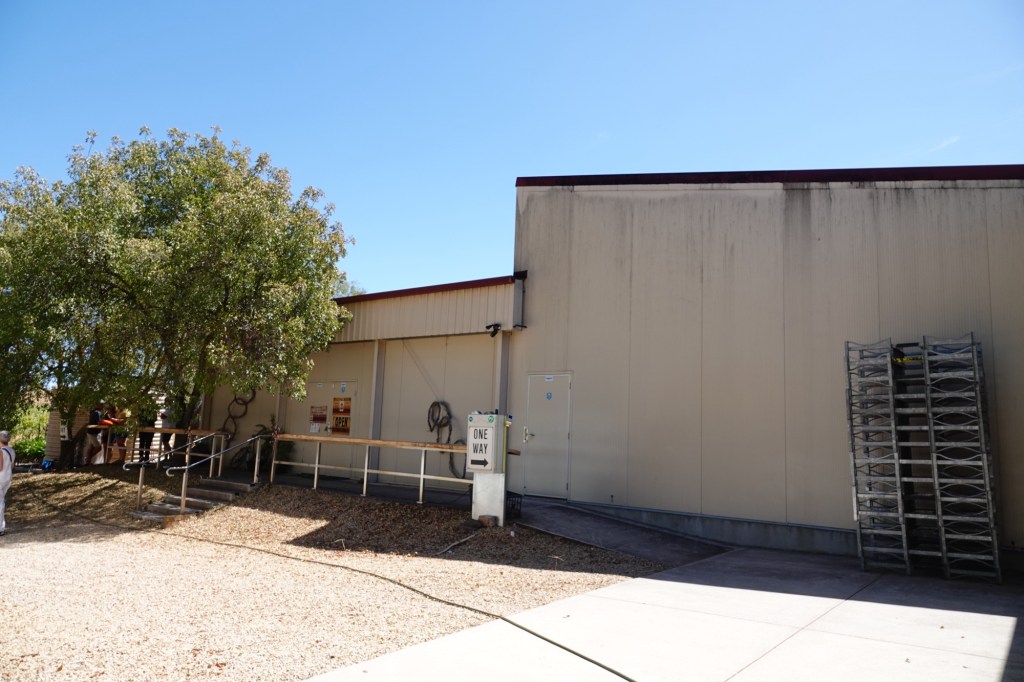
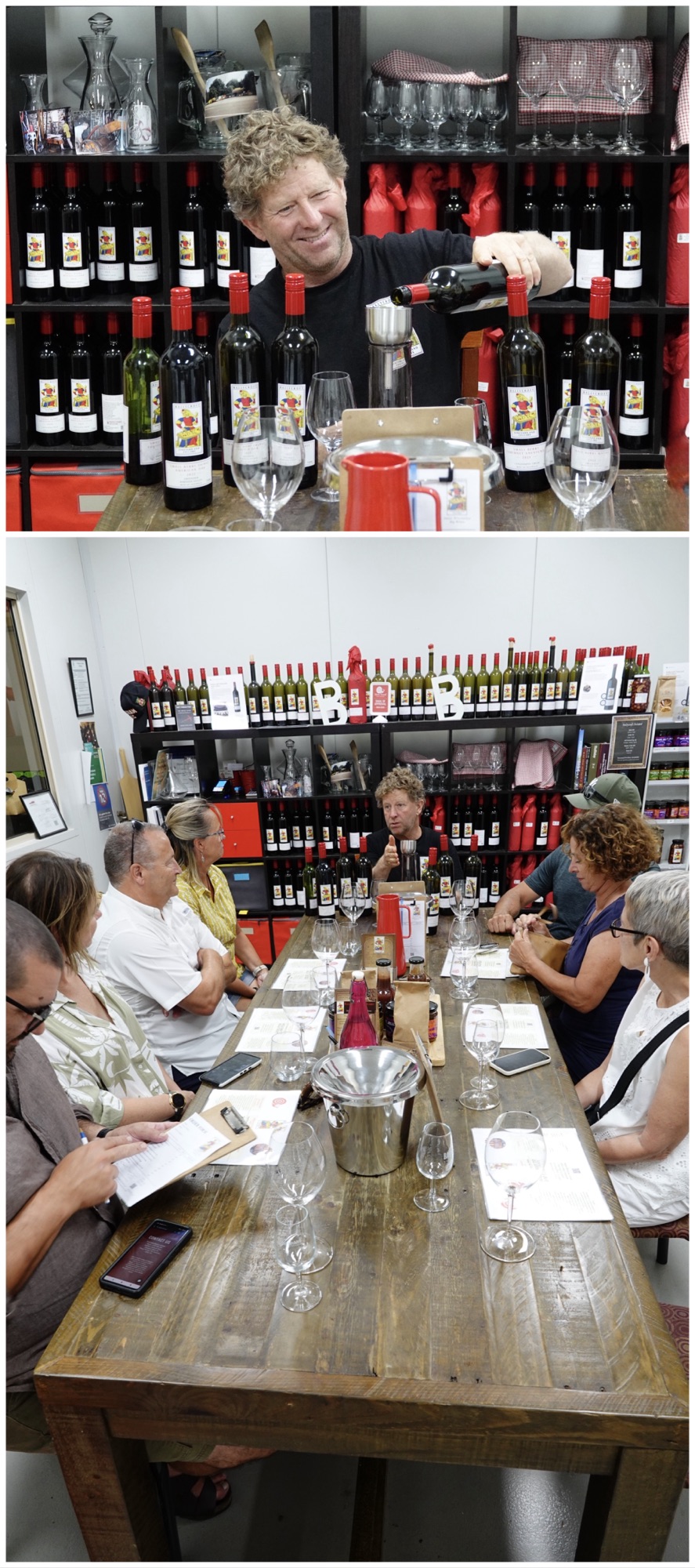
In the interim, we were happy to settle in to try another six wines … and then a further surprise two, one of which we bought.
After a ride back that was much quieter than our ride out in the morning, we asked to be dropped off with one of the other couples, instead of at our own hotel, hoping the 10 minute walk would wake us up a bit.
I headed directly to bed for an hour long nap anyway,
All in all, a really lovely day.
Thanks, Ted! I love you too.
 Rose and Ted’s Excellent Adventure
This reminds me so much of a wine tour we took in Tasmania on a visit in February 2020! I think we visited 5 or 6 wineries with a luscious lunch at one of them. By the final winery, we were beyond done. We’d expected to taste 3, maybe 4, wines at each stop, but it was much like your visits, 5-6, then bonus tastings! Way too much – but a wonderful day that we and the other two couples on that trip still reminisce about!
LikeLiked by 1 person
Another five star post! I once purchased three bottles from a winery in Israel to bring home. They were in a pretty heavy duty cardboard box, separated by a couple of layers of cardboard. I wrapped that in a heavy hoodie and towel and it went into a large duffel bag. Tel Aviv to Seattle: 2 out of three bottles made it intact. The cardboard, hoodie and towel soaked up most of the broken bottle; just a small amount dripping through the duffel at baggage claim in Seattle!
LikeLiked by 1 person
What a vivid picture that creates! Planning to drink ours to prevent breakage…..
LikeLiked by 1 person