Back on our very first day here we walked past the imposing old High Court building, beside the modern Supreme Court of New Zealand.
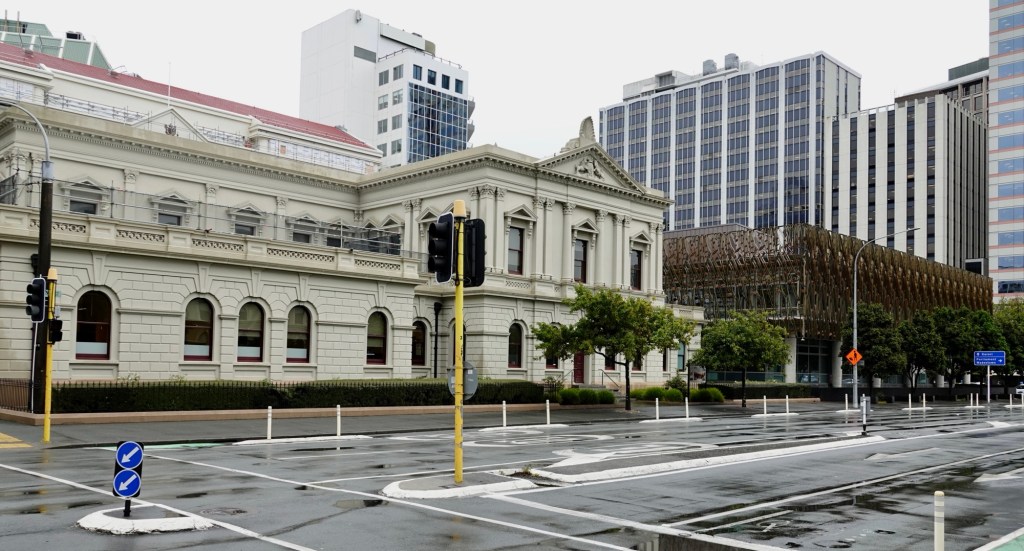
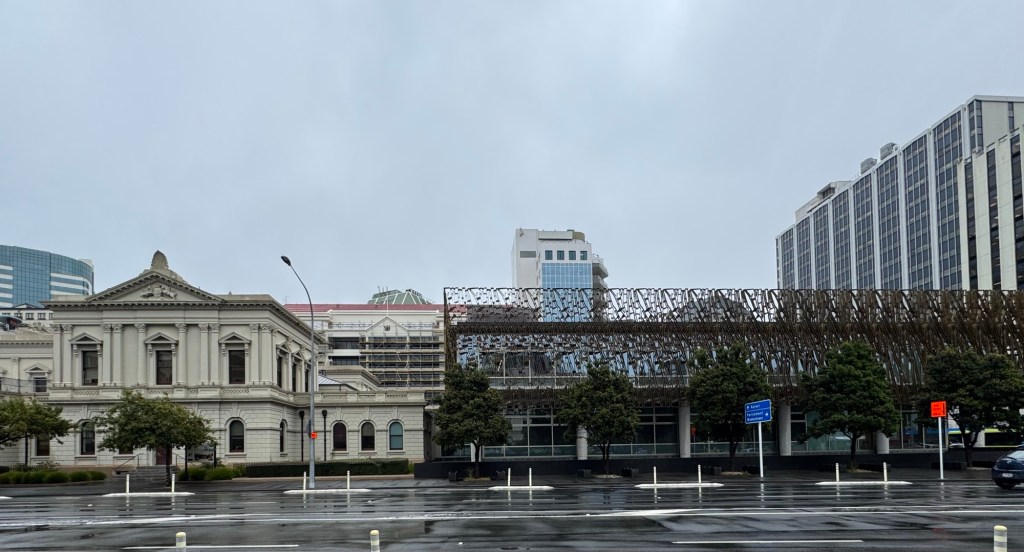
2010 (right) the home of an independent national Supreme Court of New Zealand, established January 1, 2004.
By the time my quick bit of research learned that tours were run every Thursday at 2 p.m., we had no Thursday available before heading to Auckland. Nonetheless, I used the contact link on the website “just in case”, and got a reply that since they were already at capacity for their Thursday tour, they would be happy to accommodate two Canadian visitors on Tuesday.
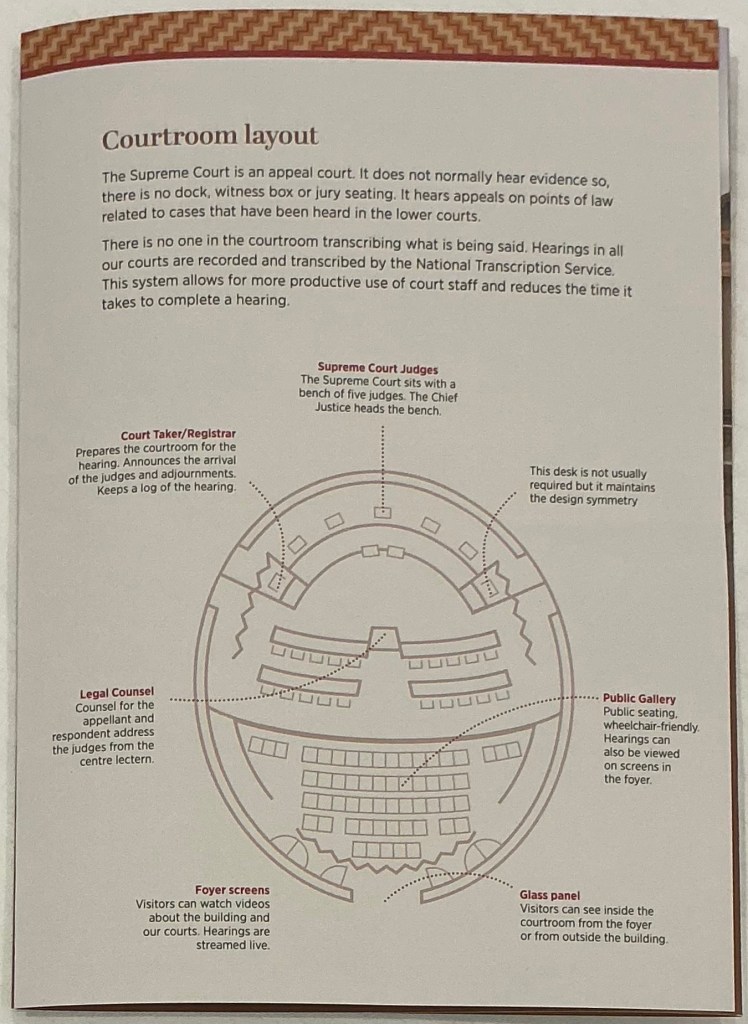
We learned later that even when court is in session, proceedings are open to the public although formal tours don’t occur. The Supreme Court’s workings are so transparent that people waiting for the bus across the street can actually see directly into the courtroom!
During the tour we
- watched a short video about the New Zealand’s court system and the principles of open justice;
- walked through the Supreme Court and heard about the establishment and operation of the court;
- visited the Old High Court to hear about its history;
- and were taken down to the cells of the Old High Court.
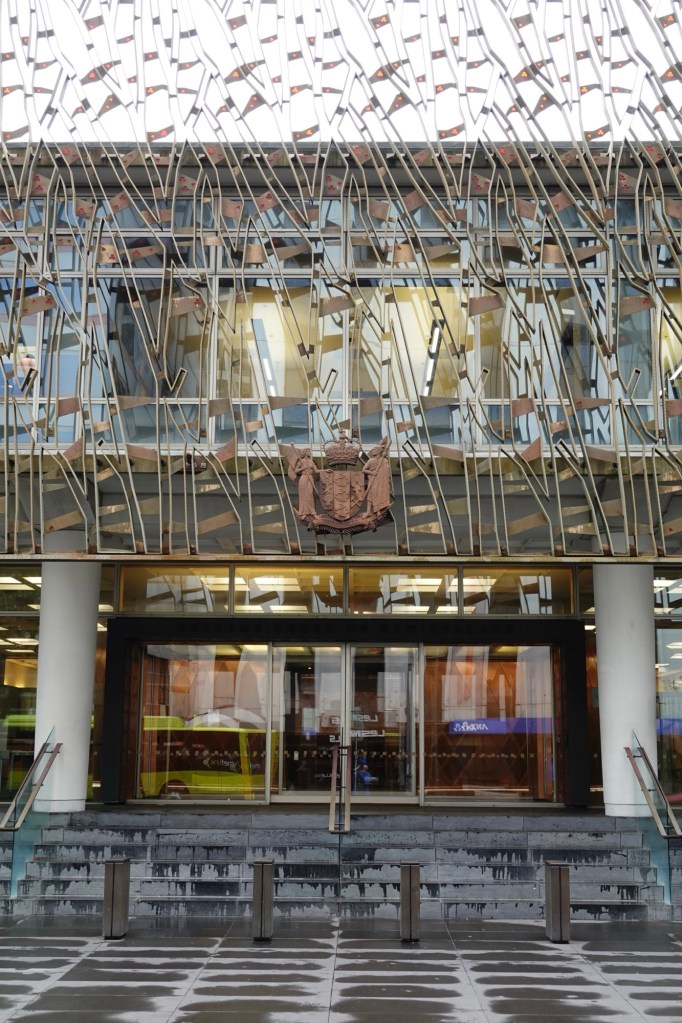
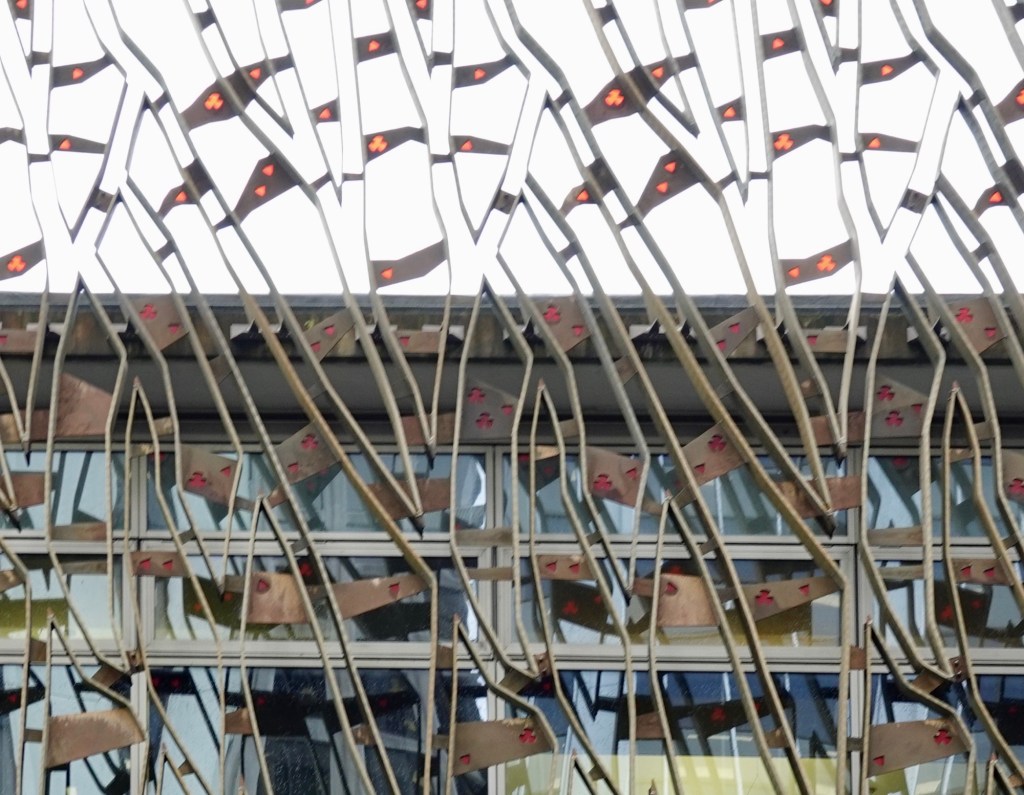
We entered the Supreme Court’s bright lobby and were greeted by Julie, the liaison to the Office of the Chief Justice, for a personal tour! We felt incredibly lucky that Julie loves her job so much that she’ll give a tour any time she isn’t otherwise occupied – and this week court wasn’t sitting.
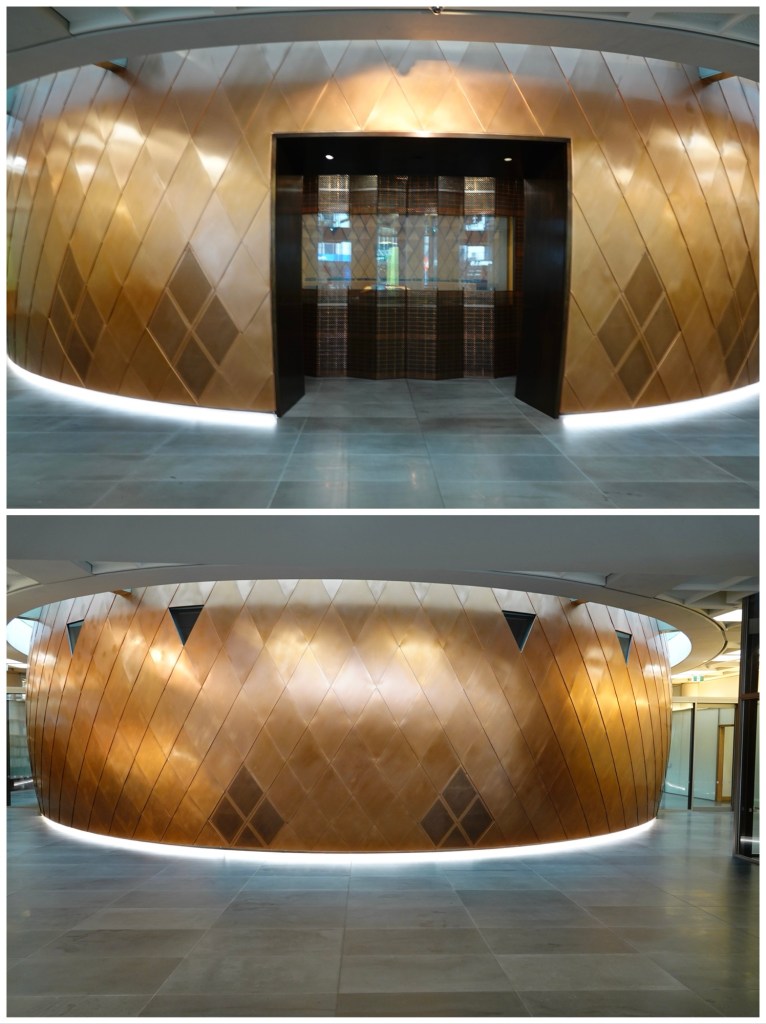
The courtroom is the heart of the space: ovoid in shape, and located in the centre of an otherwise rectangular building.
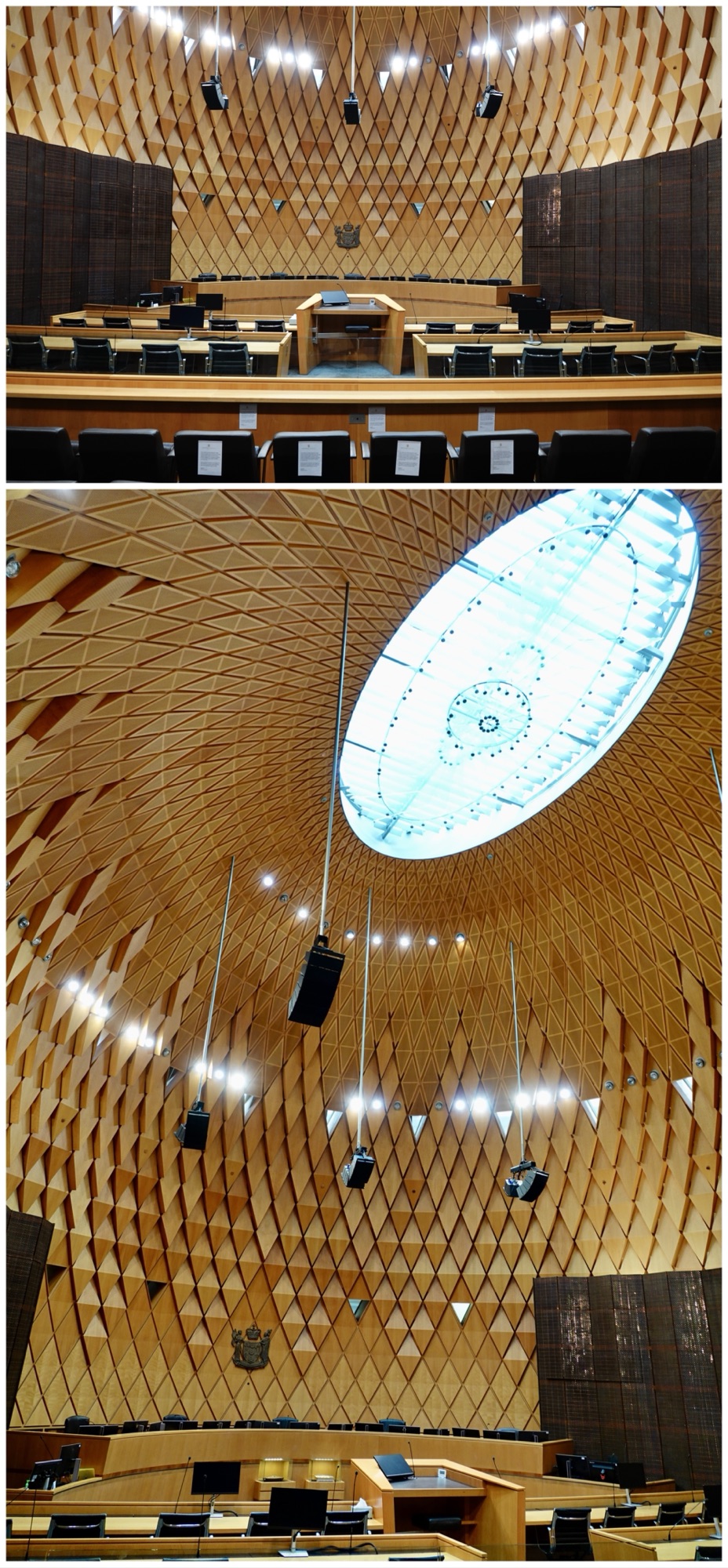
Inside, the wall panels are made of silver beech wood, and look even more like a kauri cone. The space made me think of a concert hall, and its acoustics are indeed similar. No microphones are needed in the space, but they are present as a tool for the live-streaming of court proceedings.
The ornate copper screens inside the courtroom, one of which covers the entry door that the judges use when going to their seats, were inspired by the tukutuku (woven panels) found inside marae (Māori meeting houses).

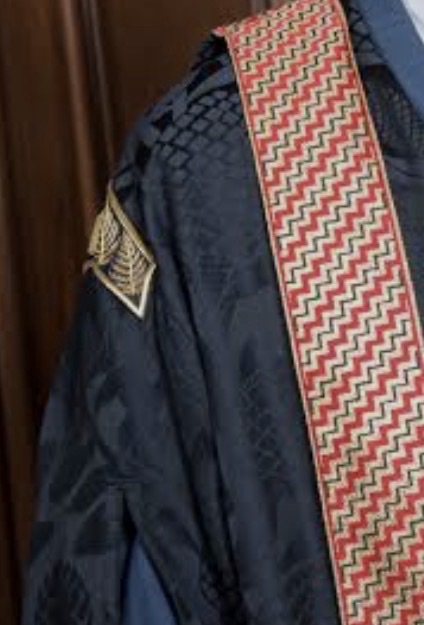
The stepped design in the panels is the Māori poutama, the “ascension of knowledge”, and is also found on the new design of the Supreme Court judge’s sashes.
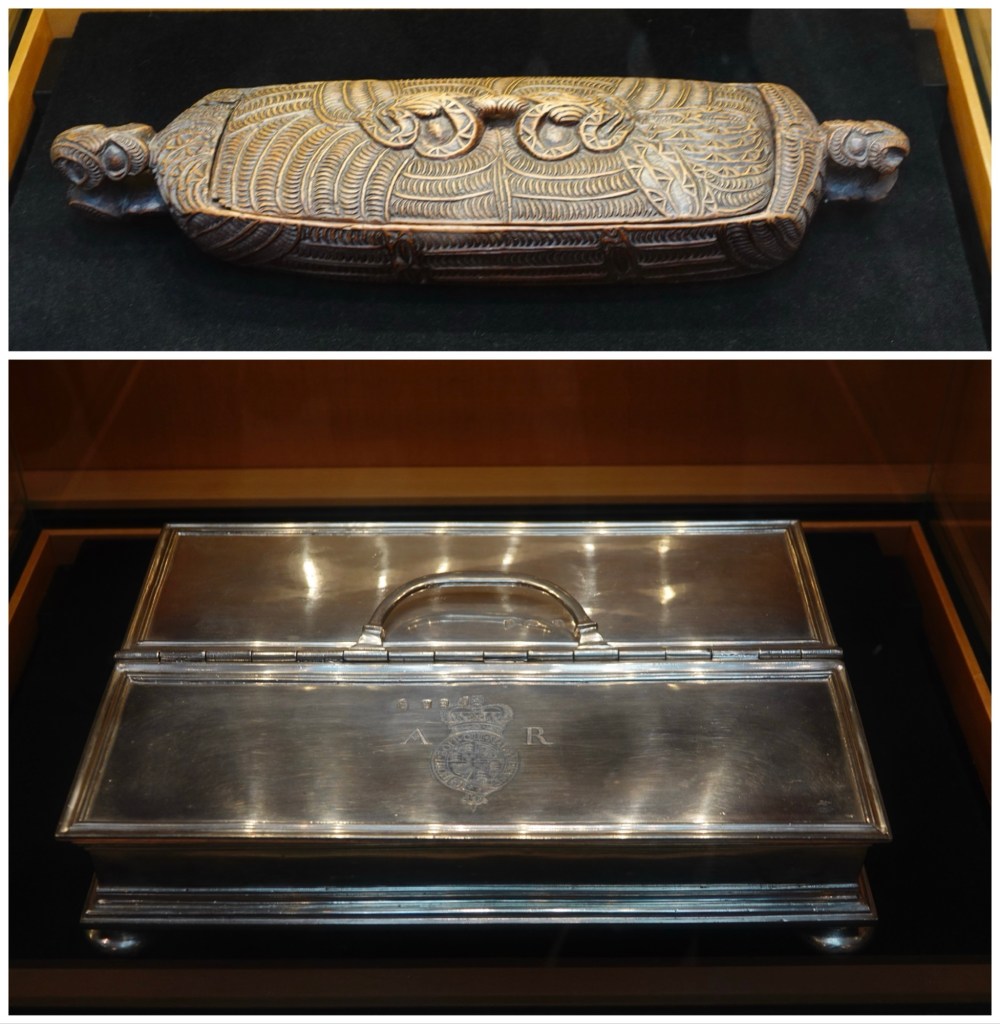
In front of the judge’s bench are two items that represent New Zealand’s twin heritage (a concept that has so impressed me during our visit here): a carved Māori waka huia (treasure box) and a silver inkwell dating to 1702CE which once belonged to Queen Anne and was gifted by the Privy Council of London to the New Zealand Supreme Court on the date of its official establishment. The waka huia is thought to date to about the same time as the inkwell.
The old High Court building dates to 1881, and was used as New Zealand’s highest court until 1993, when a new building opened on nearby Molesworth Street. It sat empty until 2007, simply allowed to deteriorate. The video we watched included the comment that the building’s only inhabitants were “squatters and pigeons”. The photos we saw were of a crumbling wreck. But, in 2007, when construction on the Supreme Court began, there was a realization that restoration of this heritage building should take place. It now holds a few offices, and an underused courtroom in which moot courts are sometimes held by the adjacent Victoria University Law School, and in which judges are occasionally invested.
It was certainly a stark contrast walking across the threshold from the 21st century Supreme Court back into the Victorian era.
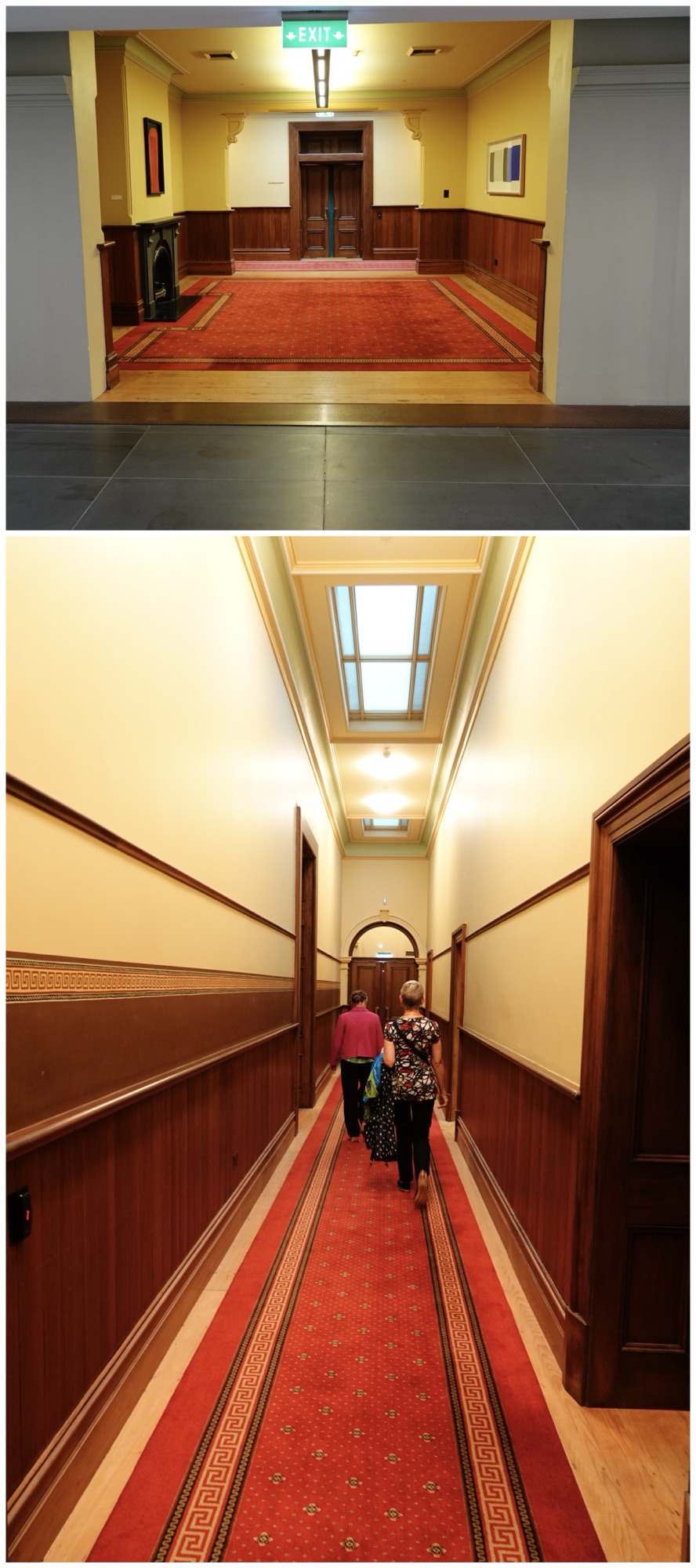
Julie described it as entering a Harry Potter world, full of heavy wooden doors, long hallways, and convoluted paths.
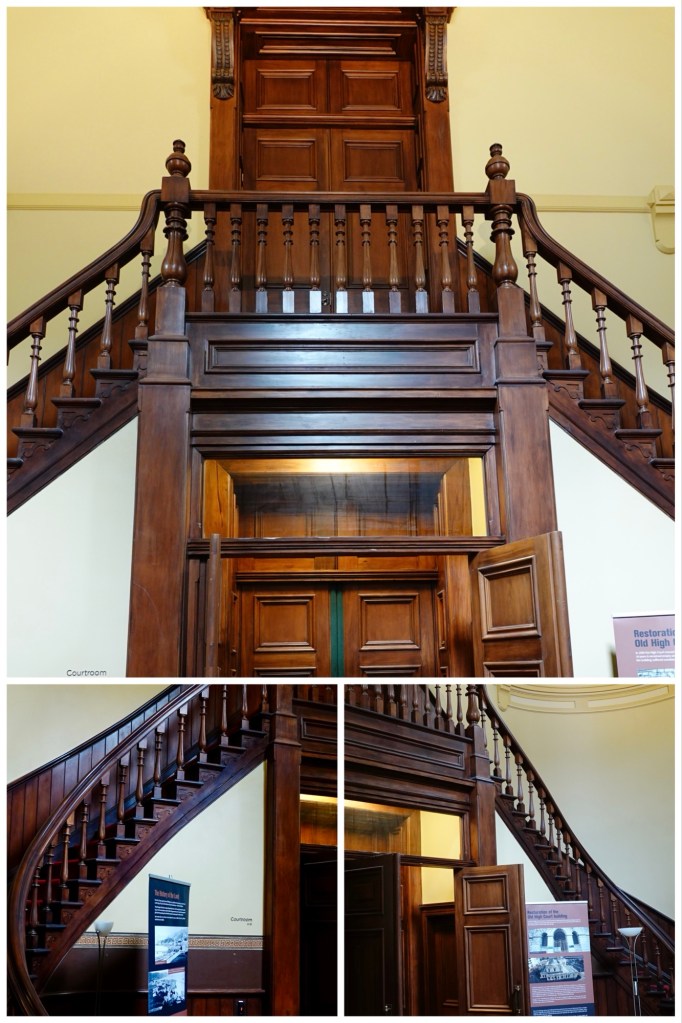
Inside the old courtroom it felt like being in an episode of Rumpole of the Bailey, or any one of the many British courtroom dramas we’ve watched.
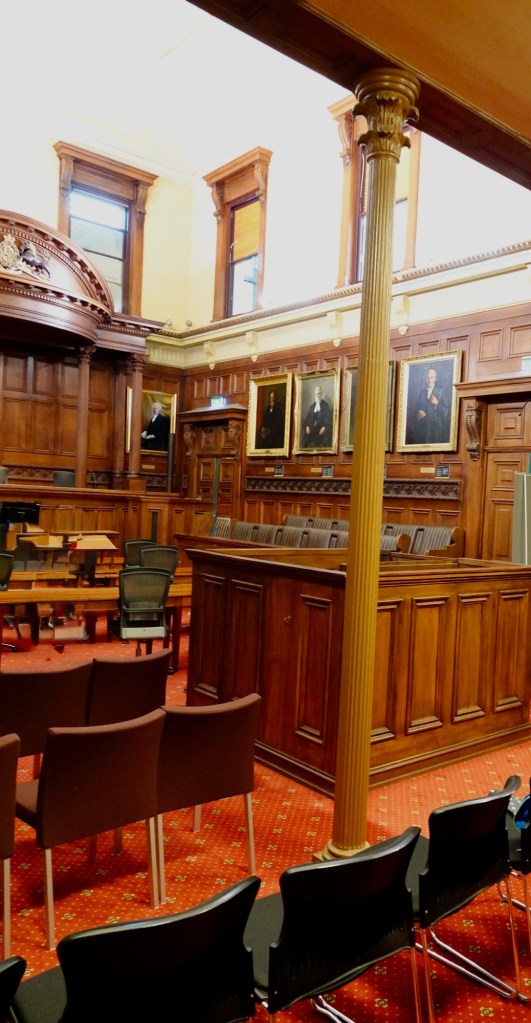
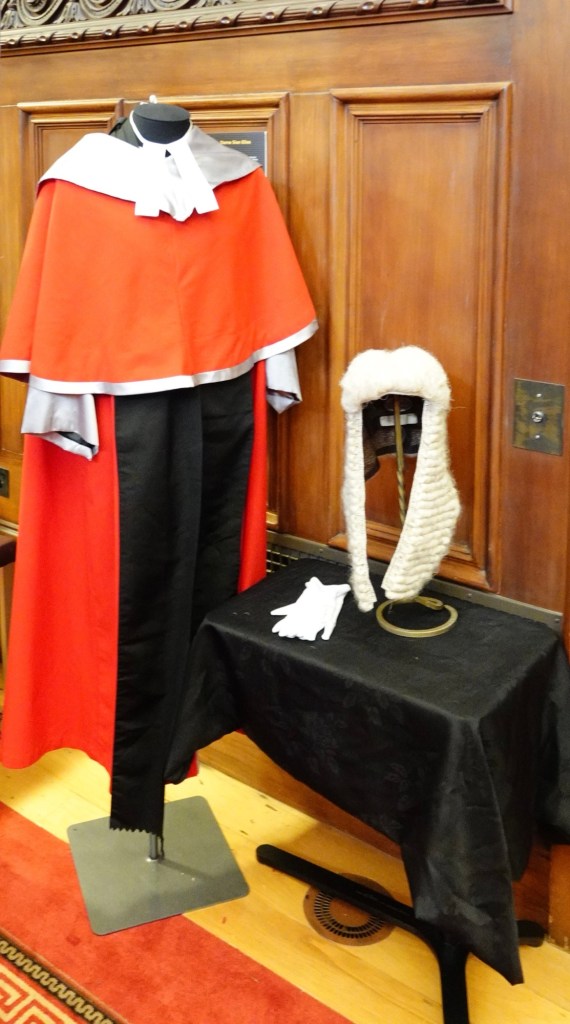
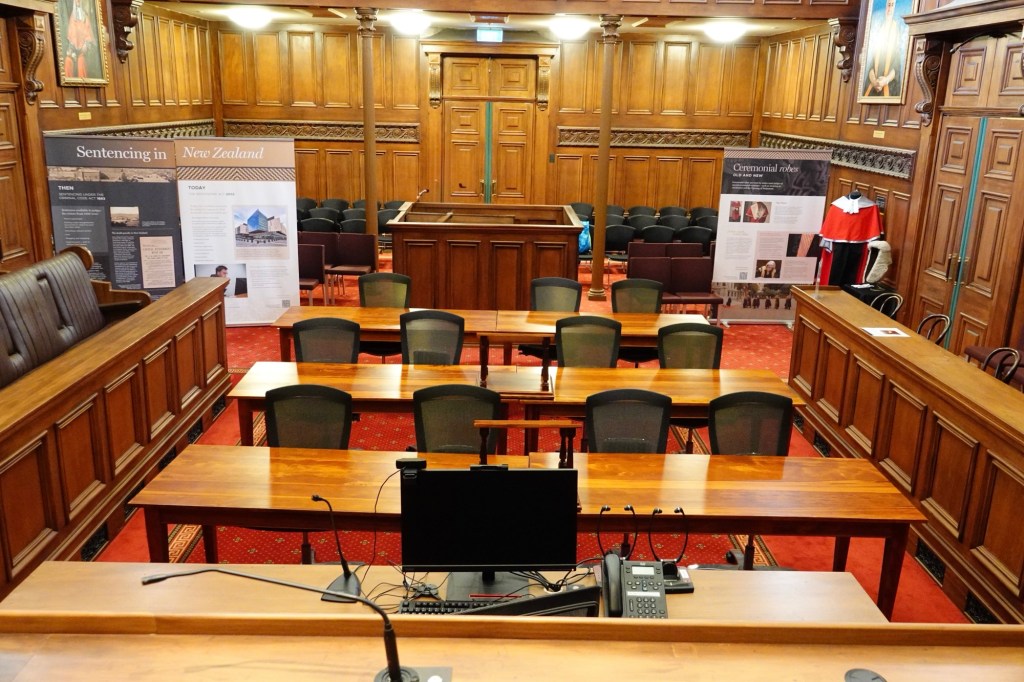
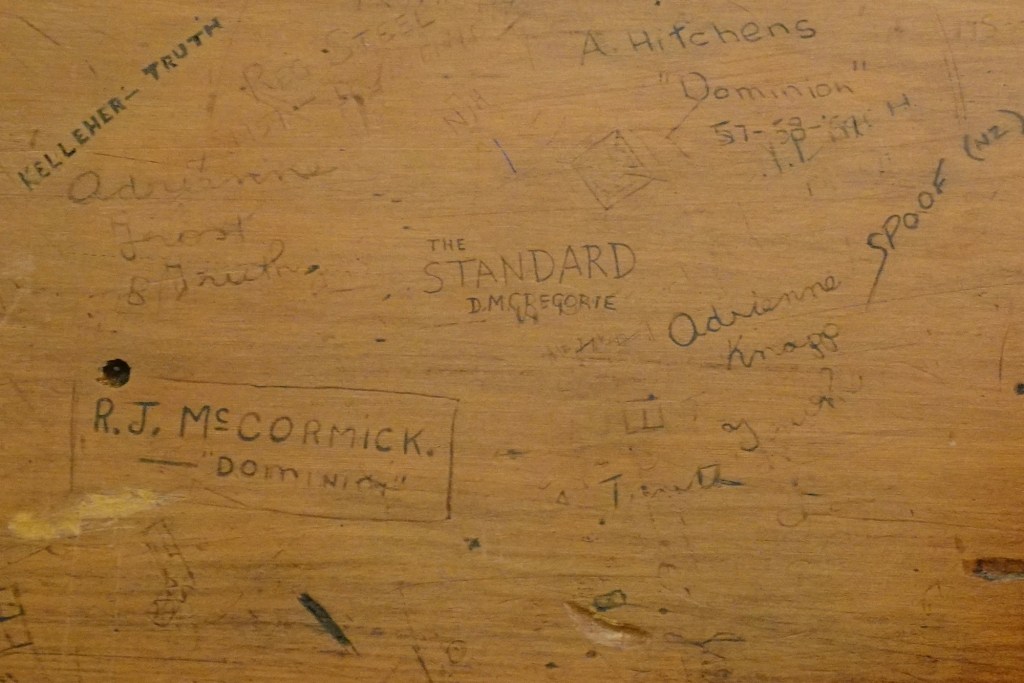
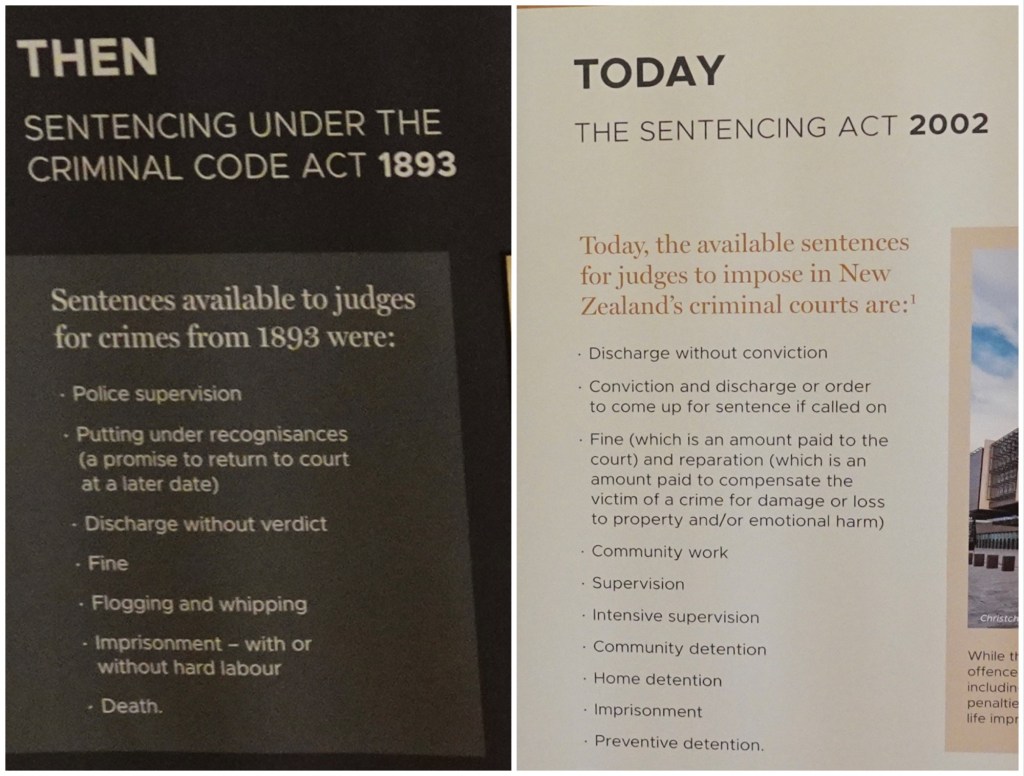
One of the displays in the courtroom was a chart comparing sentencing options in the late 19th century with current options.
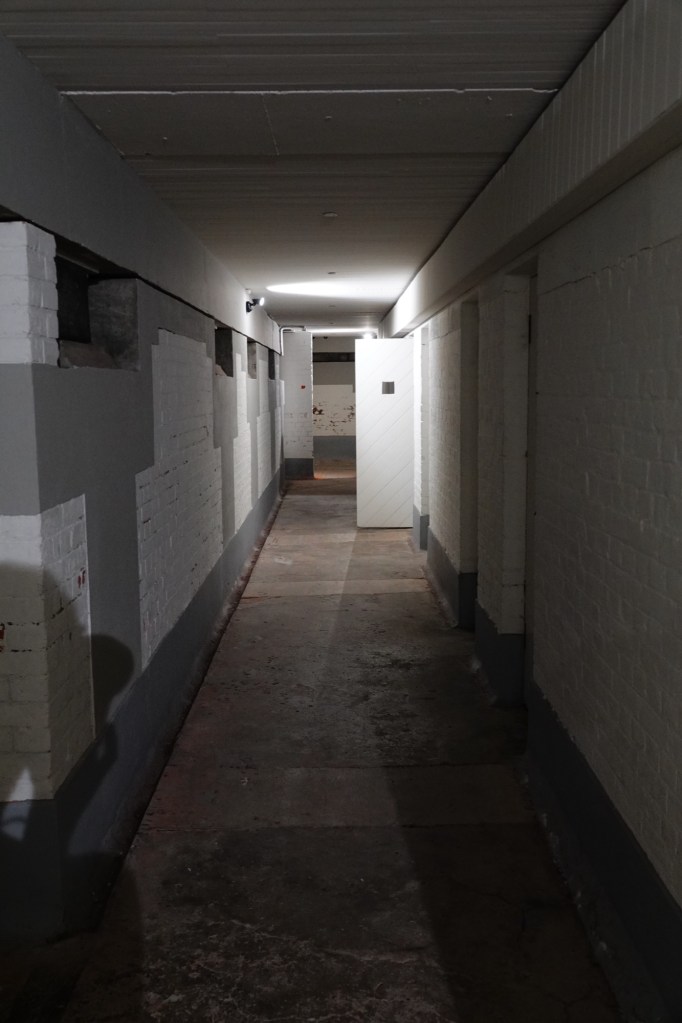
From the main floor courtroom we were taken into the basement holding cells. It was a much different atmosphere.
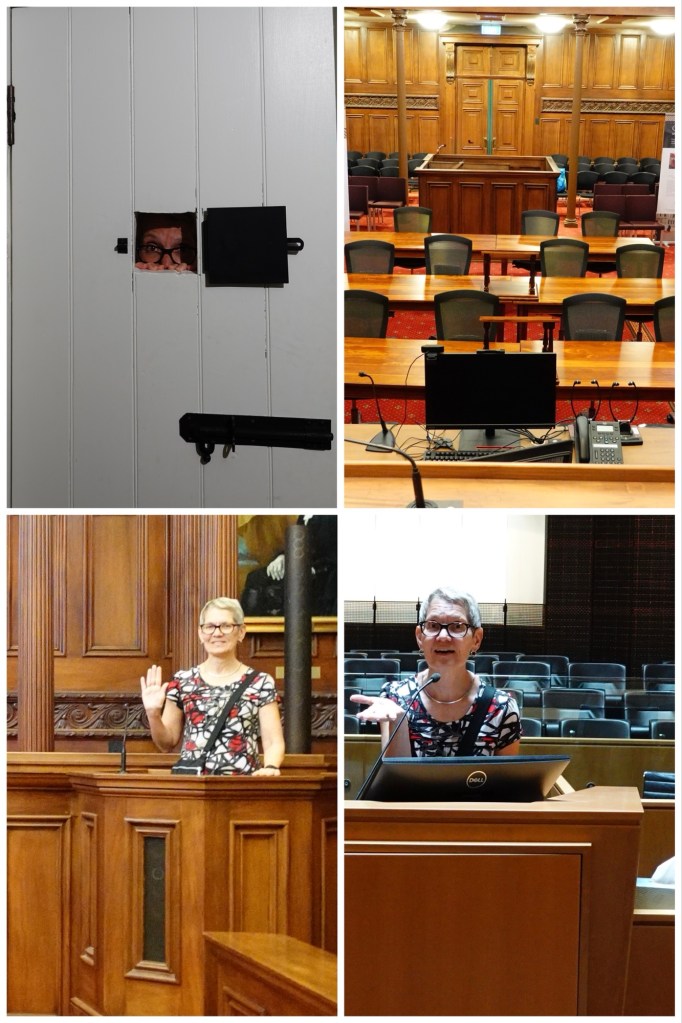
Because the tour was just the two of us, we got to create a bit of a storyline through photographs.
At the end of our tour, Julie asked if we had already visited the old government house, which is now the home of the Victoria University of Wellington’s Law School. Only a small portion of that building is open to visitors, but we’re glad she suggested it. It was architecturally interesting, and several of the exhibits inside related to the passage of suffrage legislation that tied together our visits to parliament and the court.
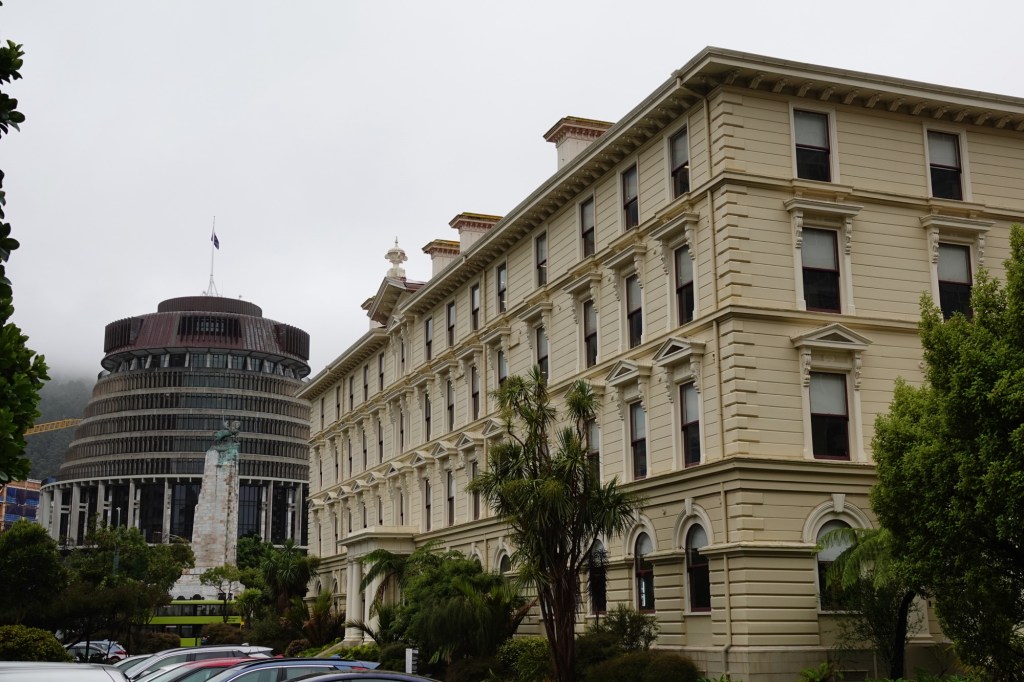
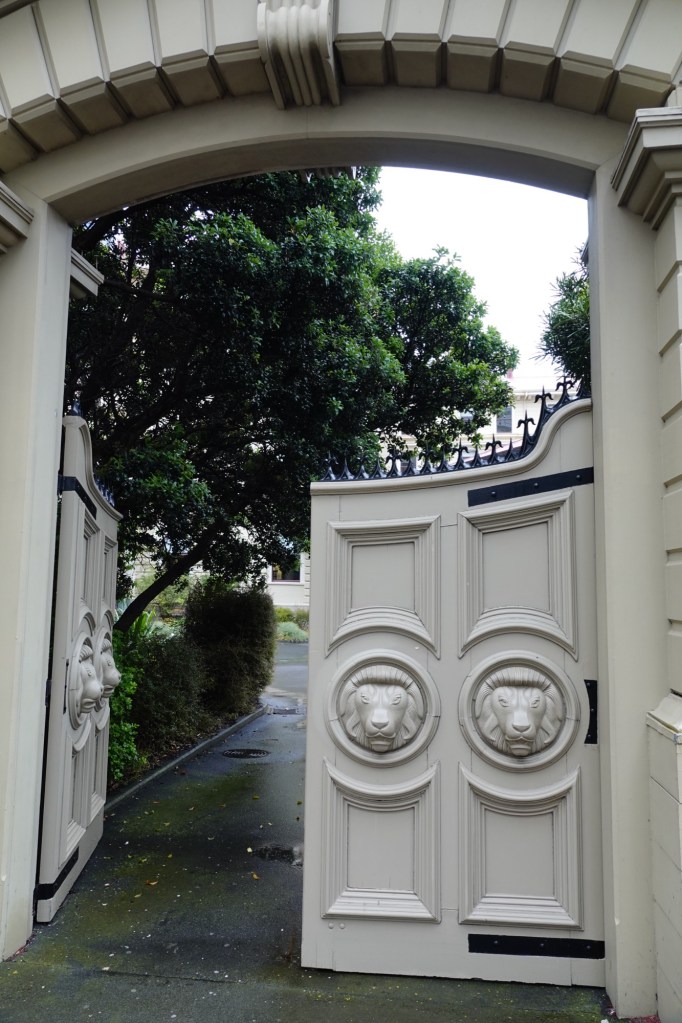
The building was nicknamed “The Stone Palace” for its appearance, but was actually constructed entirely of timber – Tasmanian hardwood for the framing, rimu for the carved decorations, and New Zealand kauri for the floors, walls, and exterior weatherboard. It is one of the largest wooden buildings in the world!
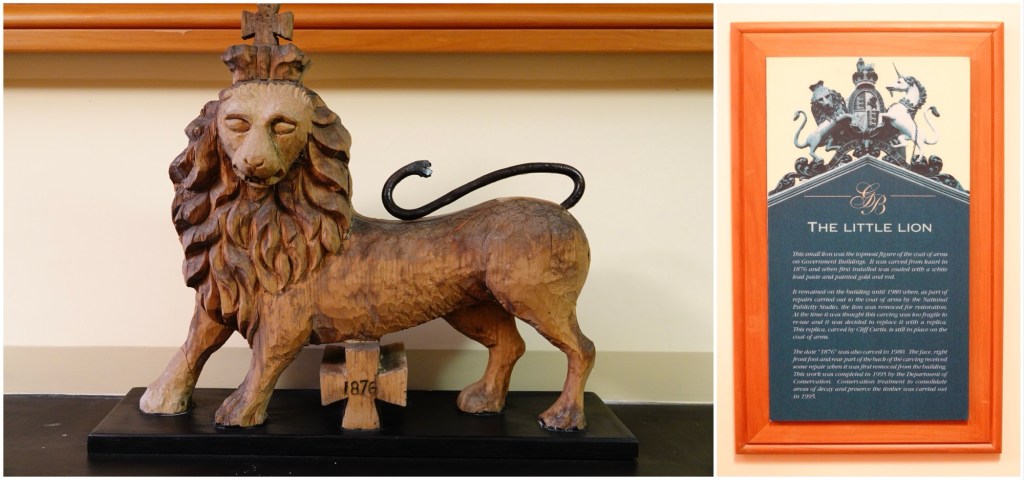
At the top of the building is a lion and the British coat of arms. During the building’s restoration, the wooden lion was considered too fragile to restore, so a reproduction was made instead. The original was displayed here.
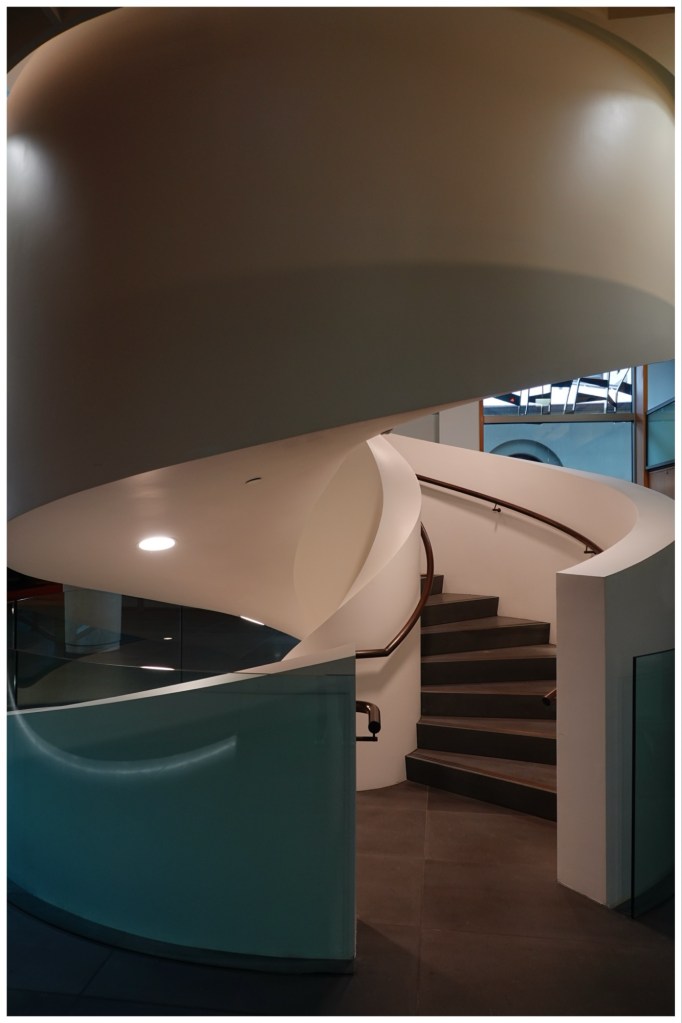
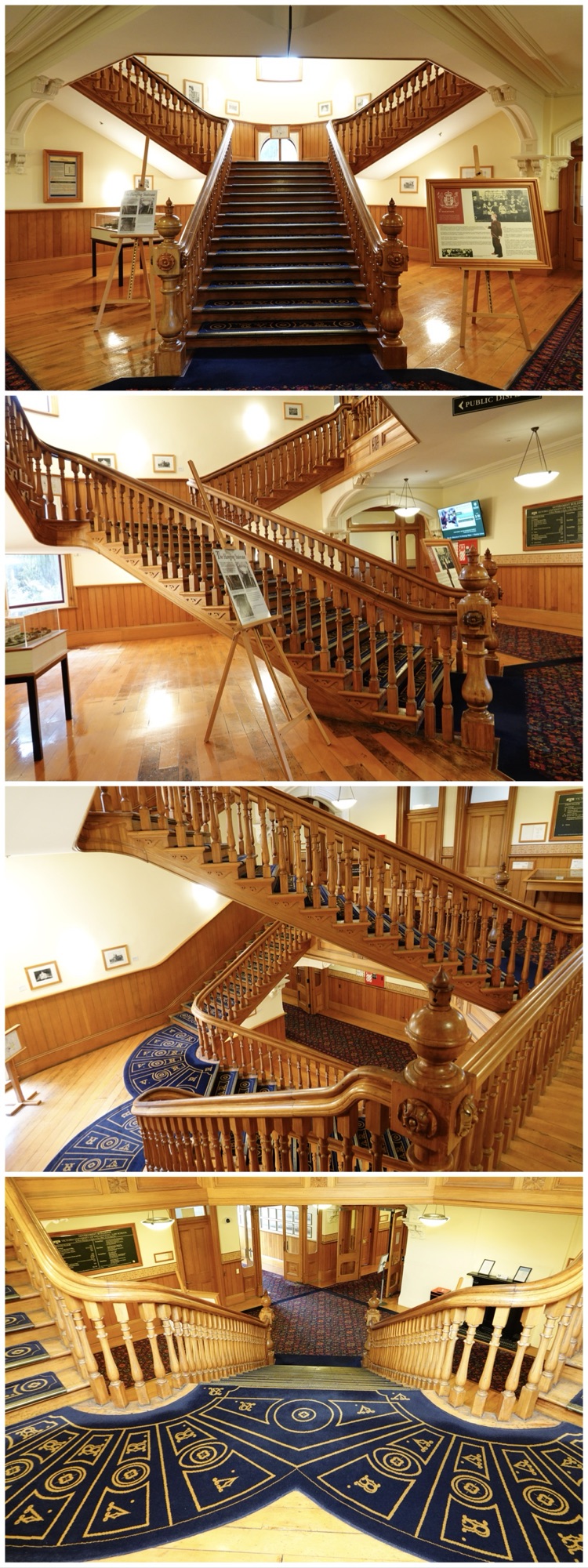
The most impressive interior feature is the floating staircase, now taken for granted by hundreds of law students who traipse up and down it every day.
Having learned a bit during our parliament tour about how women in New Zealand were the first in the world to get the vote, in 1893, it was fascinating to see some of the original correspondence related to that legislation on display here.
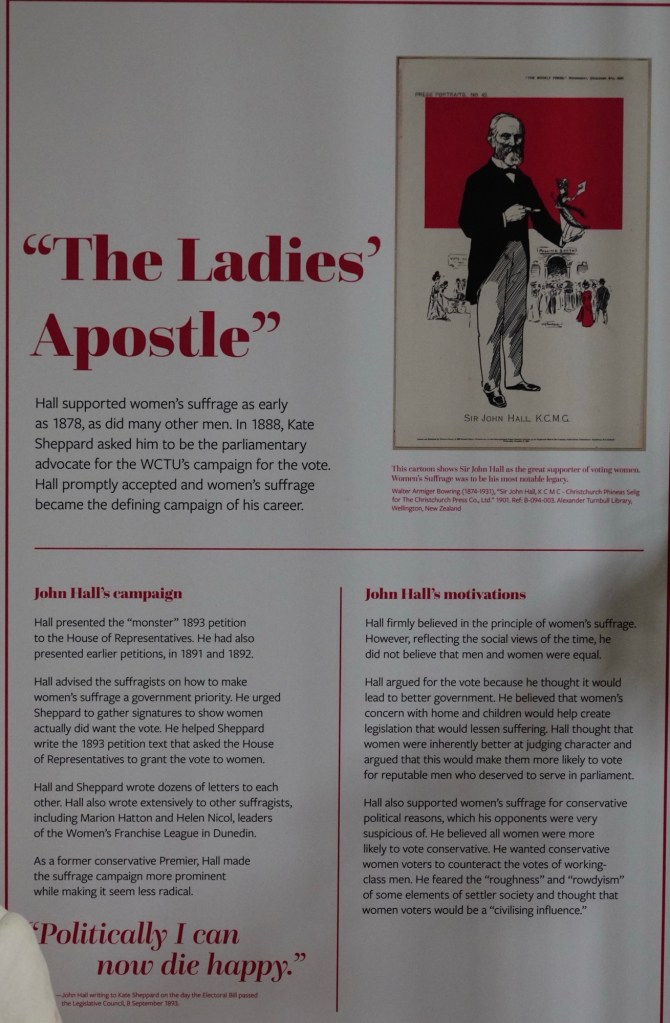
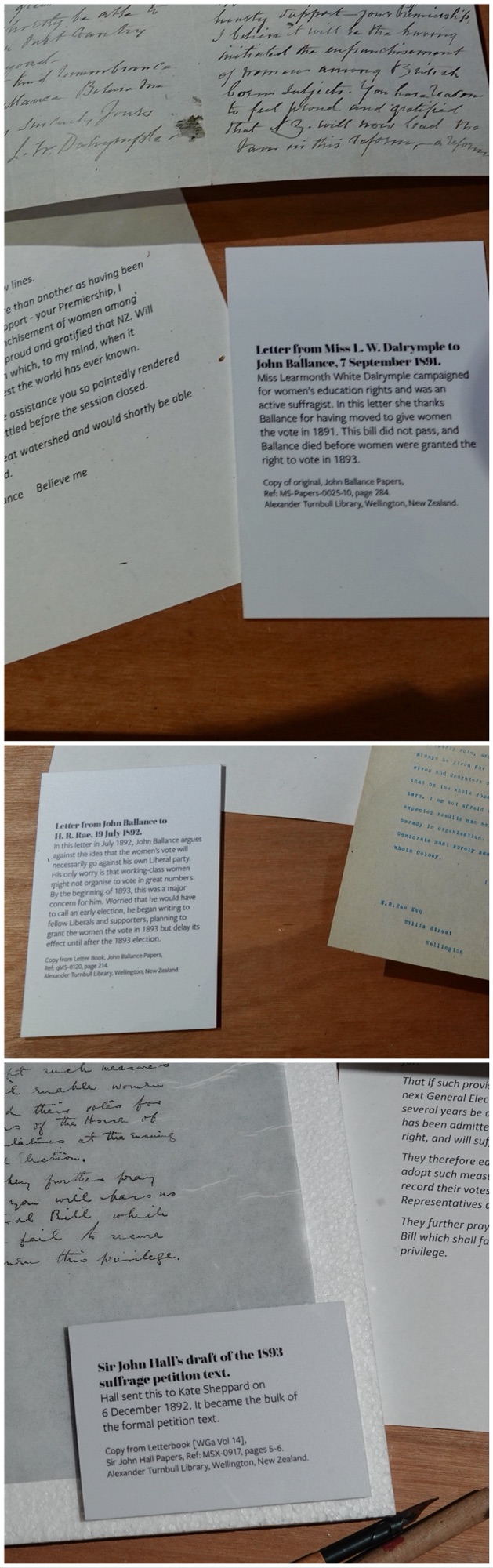
It was an interesting glimpse into the men who were allies of the women’s suffrage movement – not all for completely altruistic reasons.
It was another educational day, made enjoyable by a guide enthusiastic about sharing her knowledge about and pride in her country with us.
Tomorrow we’re up bright and early for the 11 hour scenic train ride to Auckland on the Northern Explorer. We do love trains!
 Rose and Ted’s Excellent Adventure
Fascinating day! Thank you for all that detail and wonderful photos. I have some cones which really look like that wonderful pattern inside the modern courtroom. We lived in Sydney when I was in Jr High and my parents took a cruise to three “south sea” islands. I wonder now if my mom picked them up and kept them in our Christmas decoration box ever after… I’ll never know for sure. It’s possible the same tree or a close relative exists on other Pacific Islands.
I admire your thirst for learning. I would have loved that tour, too. I really admire the way NZ has integrated and appears to admire the aesthetic culture of the Maoris — does it go deeper? The contrast with what we’re experiencing here is stark and painful.
I look forward to your train ride — enjoy it!
LikeLiked by 1 person
NZ is the closest thing we’ve seen so far in our world travels to an equal balance of cultures – and they are open about the fact that they continue to work toward that goal. Perhaps the very fact that even the first peoples here only arrived 800 years ago makes it easier for EVERYONE to see themselves as immigrants. The shared focus certainly seems to be the land itself.
LikeLike