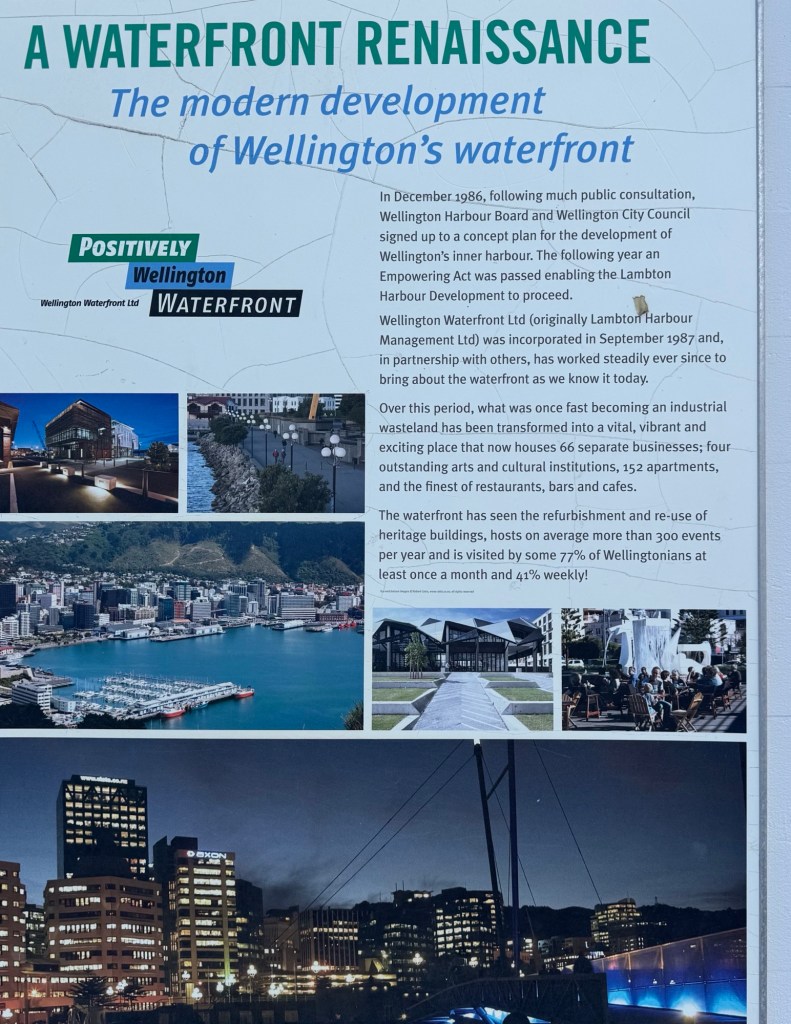
It’s always a treat to stroll along the water on a perfect sunny day, even if it’s just a boardwalk, or a beach, but here in Wellington the waterfront offers docking for ships of varying sizes, lots of restaurants, and some hidden gems for those not simply intent on reaching a destination.
The waterfront here is vibrant, but not particularly attractive compared to places like Picton on the South Island, Auckland, or our own beautiful Vancouver. It’s pretty obvious that this area was part of an industrial warehouse area supporting the port, and that turning it into a recreation hub is still a work in progress. That said, Wellingtonians love coming here!
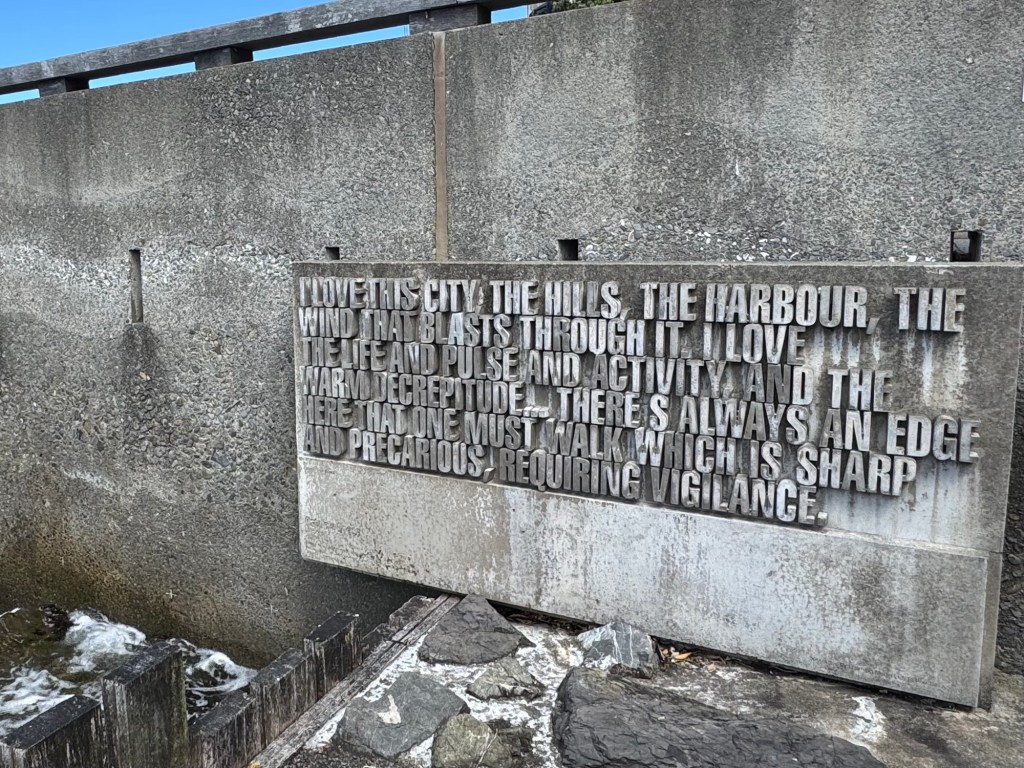
The excerpt below from New Zealand Māori writer Patricia Grace’s 1992 novel Cousins, part of Wellington Writers walk, perfectly describes the imperfection that makes Wellington so special. It is placed just below the waterfront walkway, behind the Rowing Club.

There are all kinds of interesting sculptures, some of them in the water.

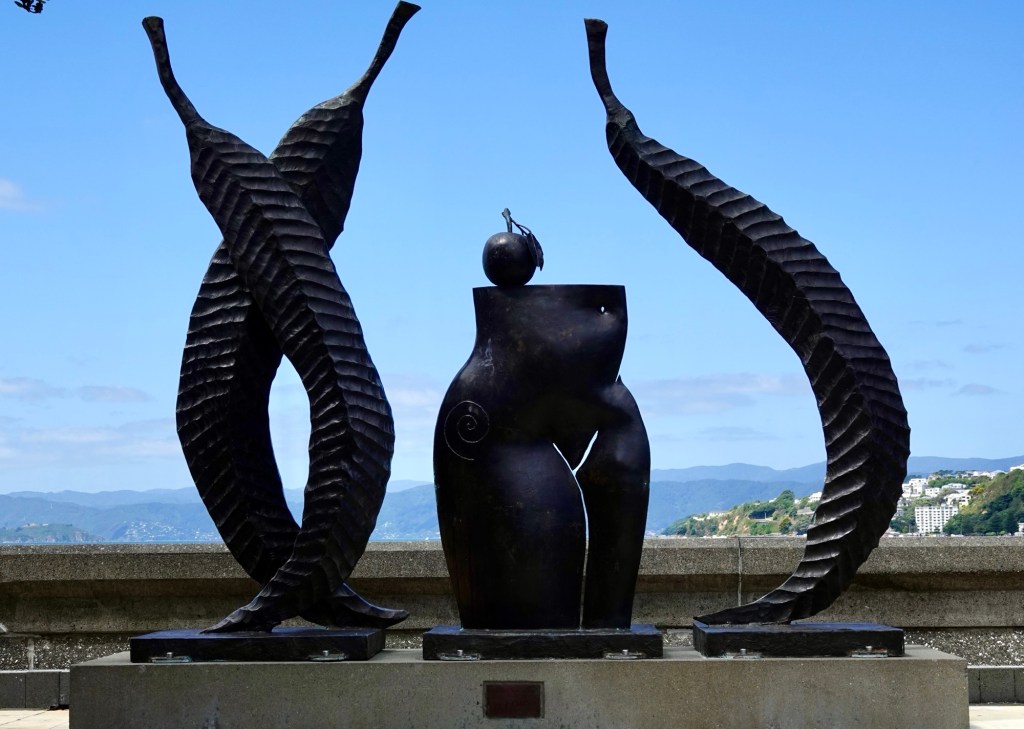
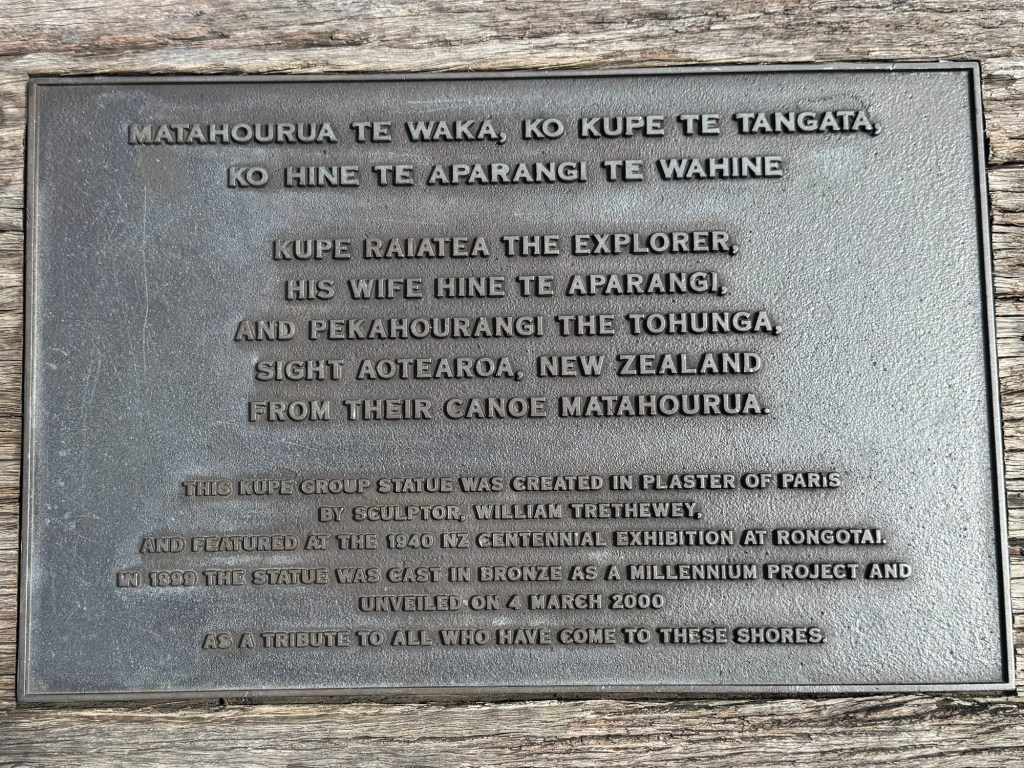
Bronze sculpture titled “Fruits of the Garden“ by New Zealand artist Paul Dibble. If we were tall enough, we could have looked through Eve’s navel out at the harbour.
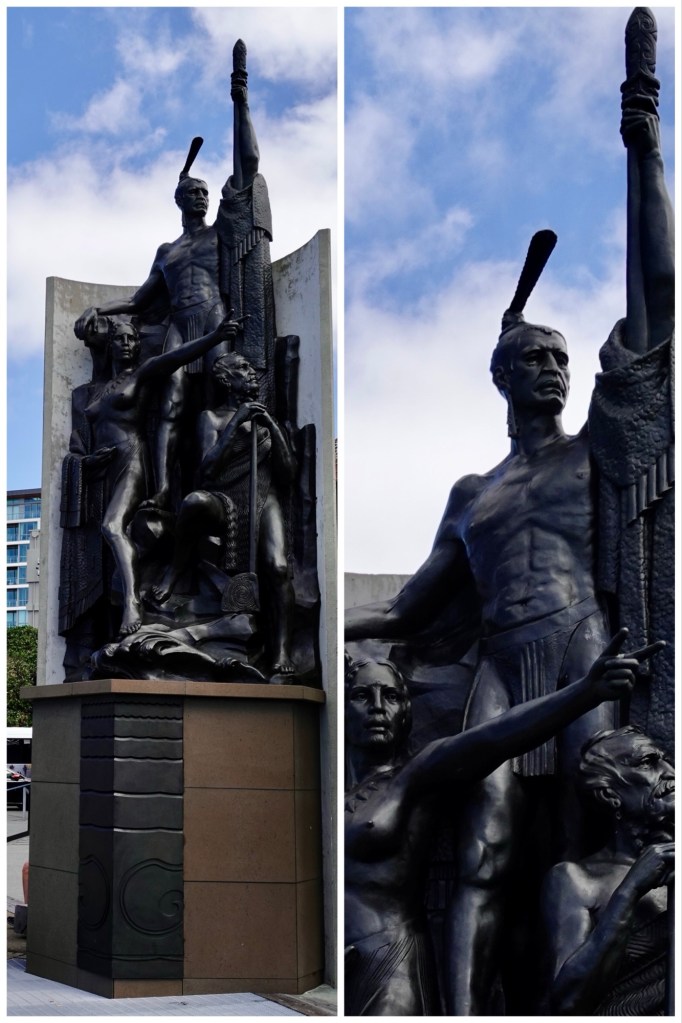
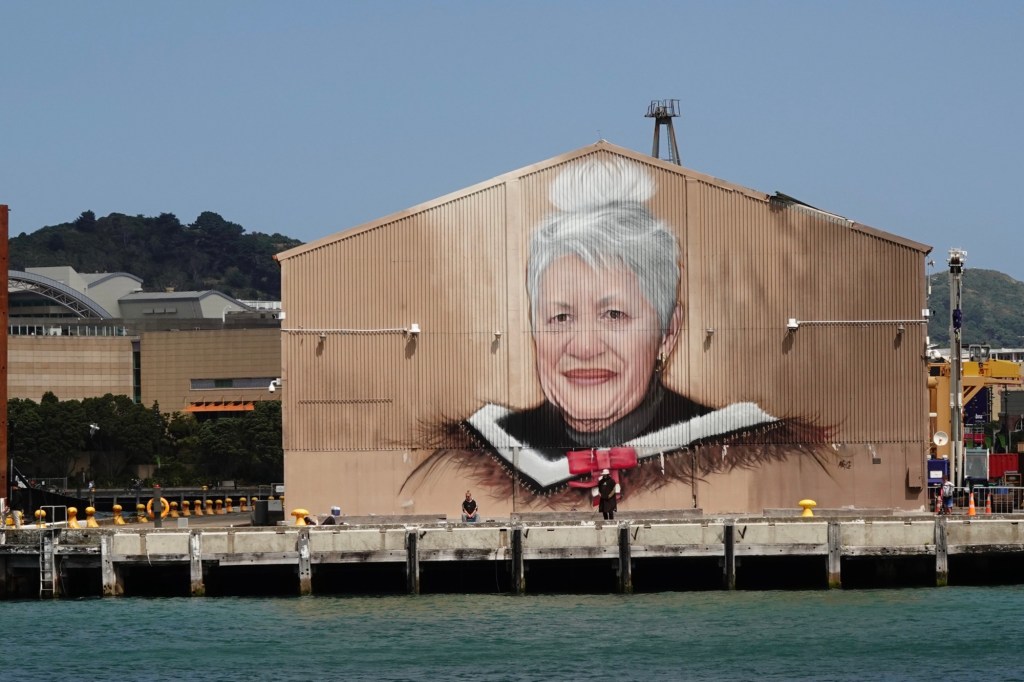
It was created to honour Dame June Jackson’s lifelong public service and her role as a Wellington icon.
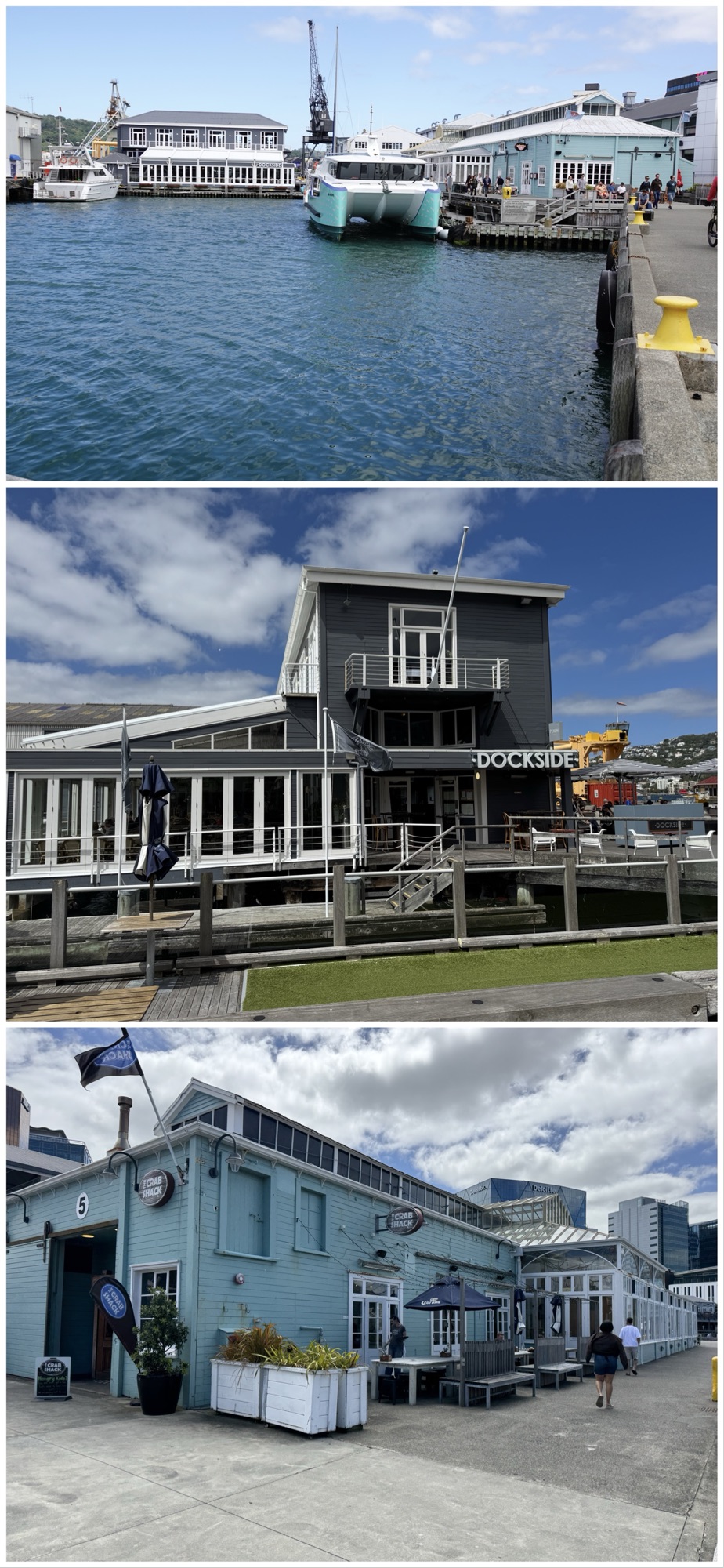
Sheds 3 (Dockside) and 5 (where we ate lunch today) are the oldest buildings on the waterfront. Completed in 1887, seven years after the Wellington Harbour Board was established, these sheds were part of a series of mainly timber buildings built on the wharves. Both were used to store goods and then by the tug and pilot staff.
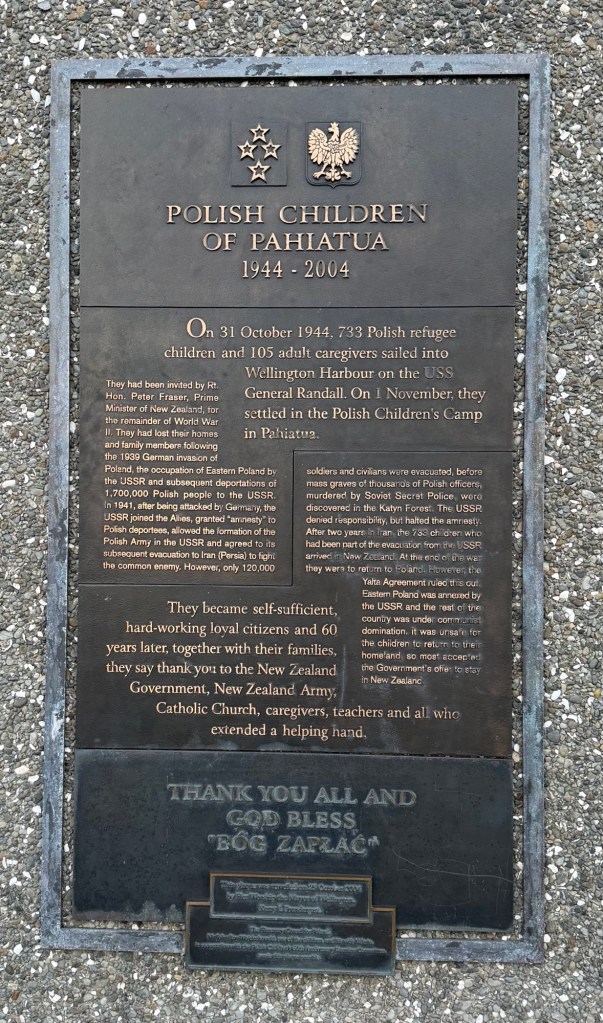
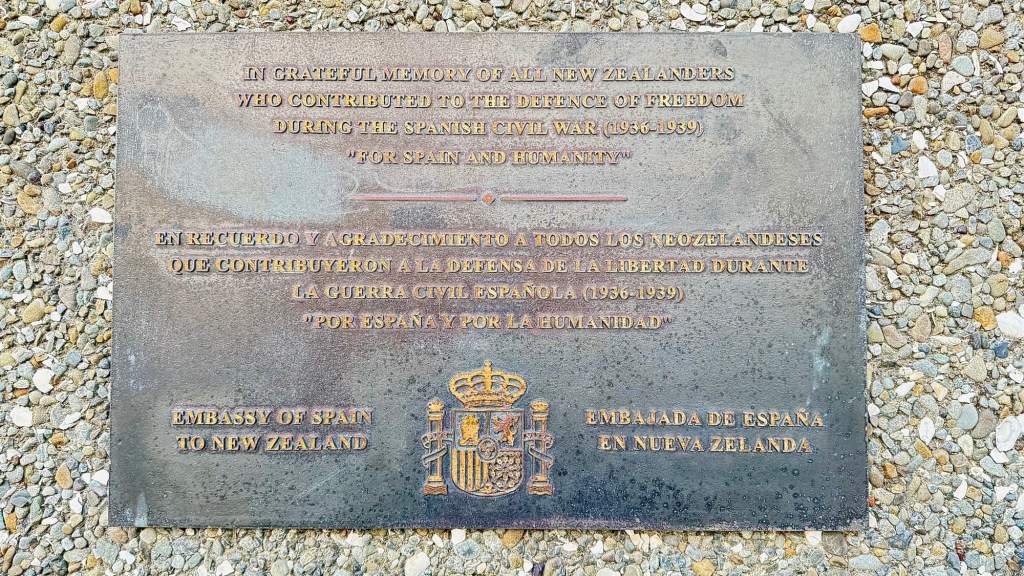
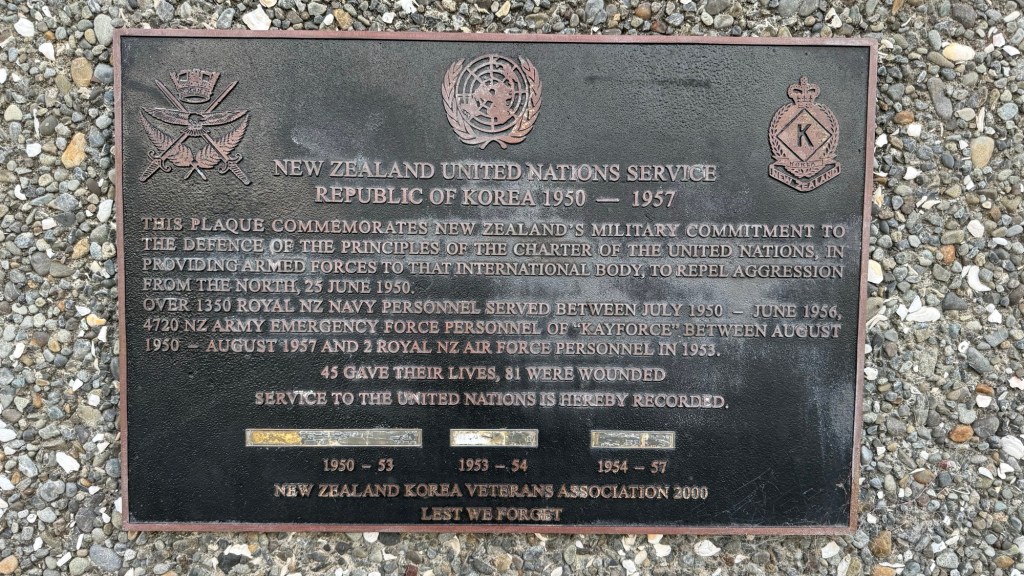
On the stone staircase wall in Frank Kitts Park, there are a number of brass plaques. Each has a story to tell.
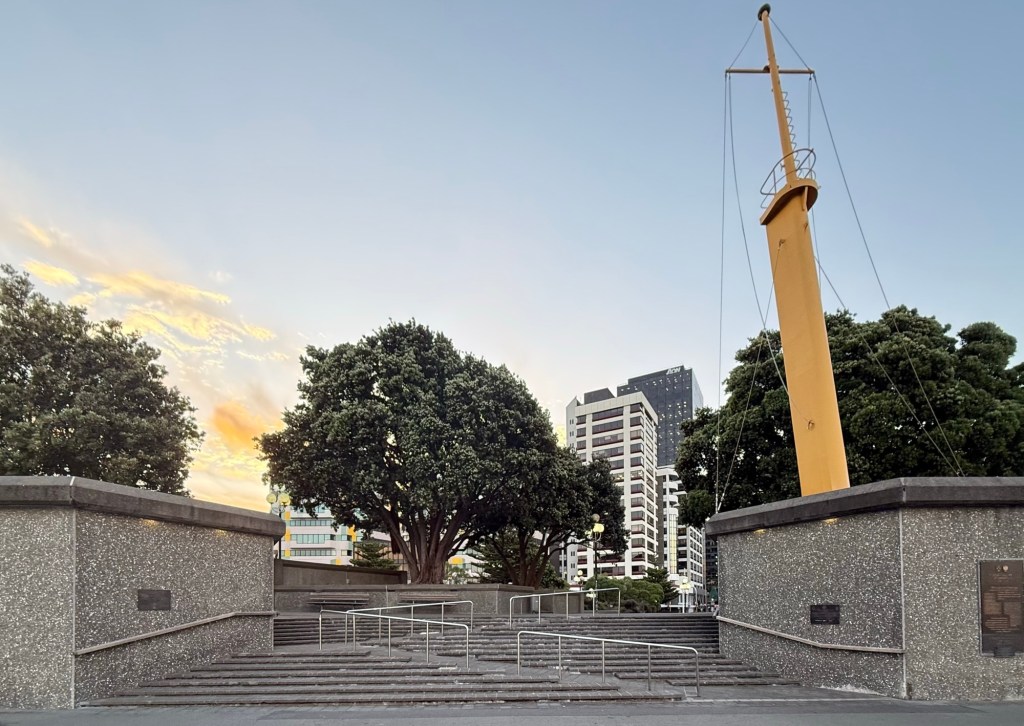
This one was partially poignant.
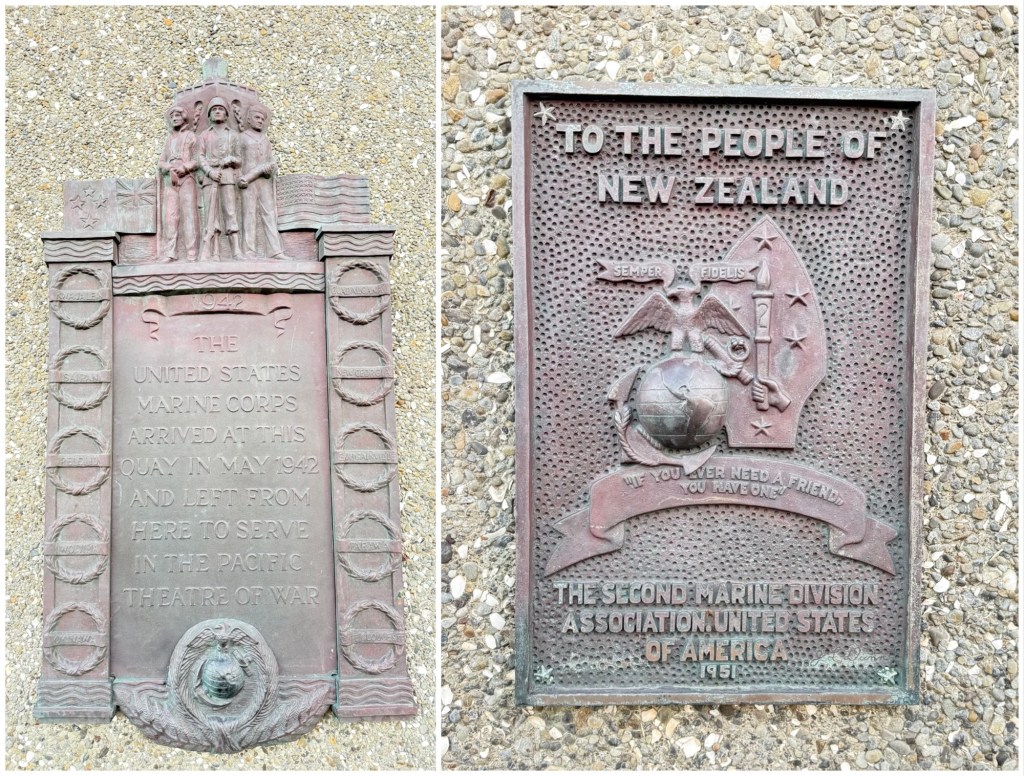

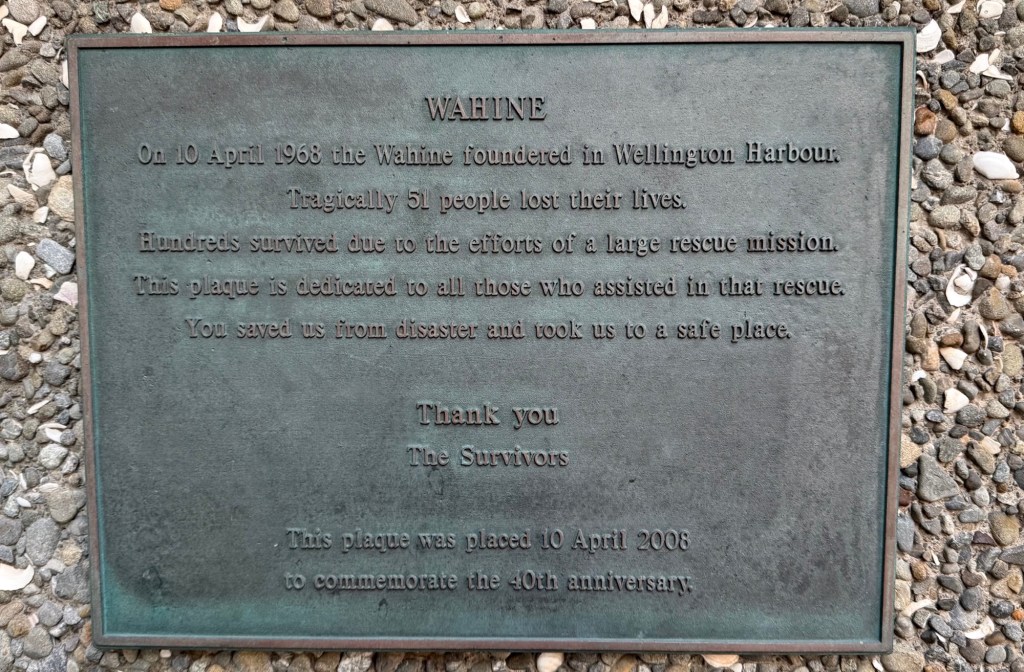
There were also plaques commemorating New Zealand’s involvement in the Spanish Civil War and the Korean Conflict, and rescue efforts led from Wellington Harbour…
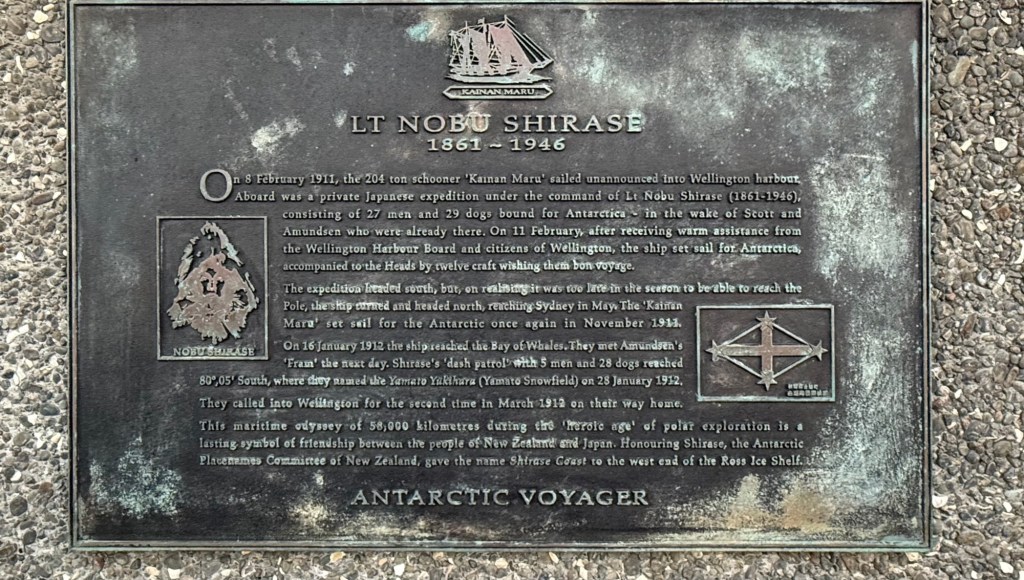
… and a reminder of the importance of New Zealand’s proximity to Antarctica during the greatest age of exploration of that continent.
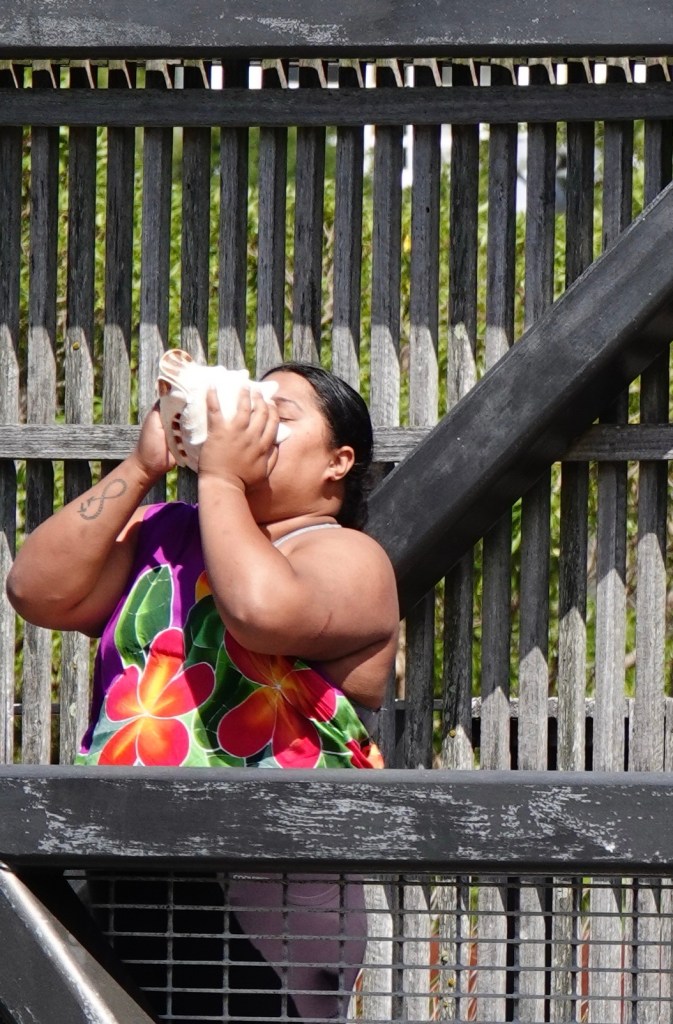
Some cities have buskers. Wellington has Māori blowing conch shells, sending deep resonating tones across the harbour waters.
Below are some fun photos we took of KIMI / You Are Here, a large reflective sphere by Korean–New Zealand artist Seung Yul Oh.
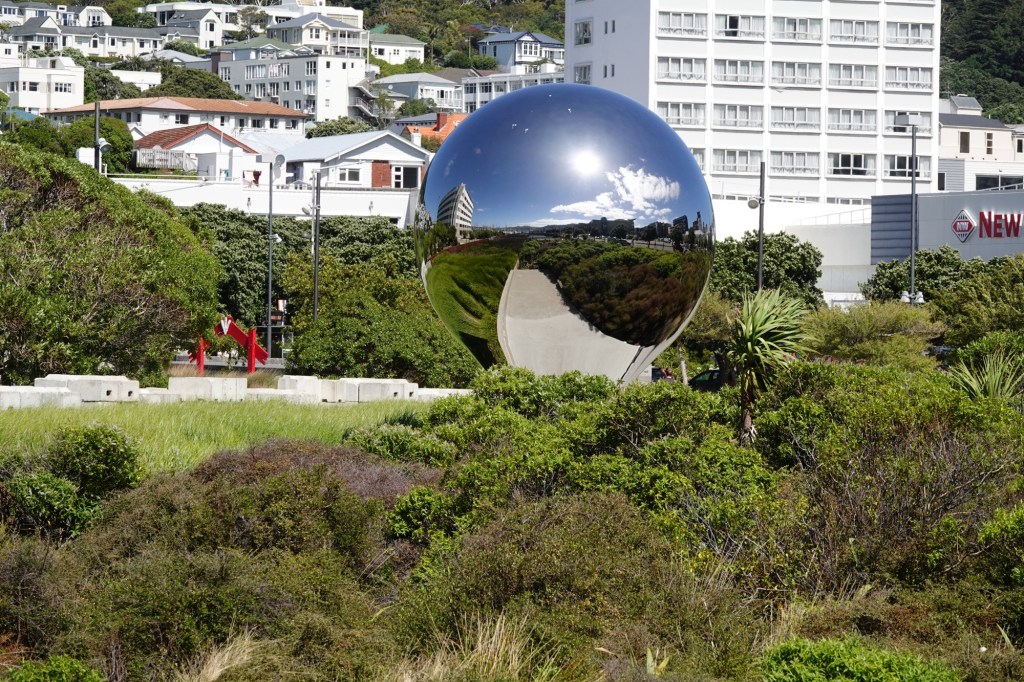

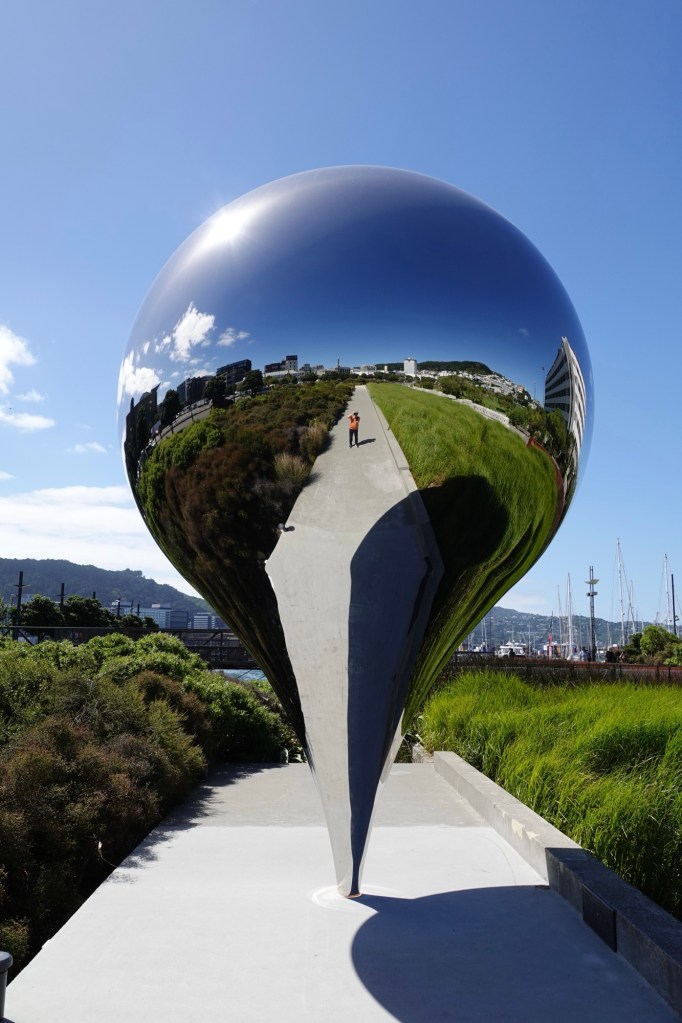
This is turning into a dangerous city for Ted: strenuous hill climbs, head-squishing trolls, and now being trapped inside a mirror!
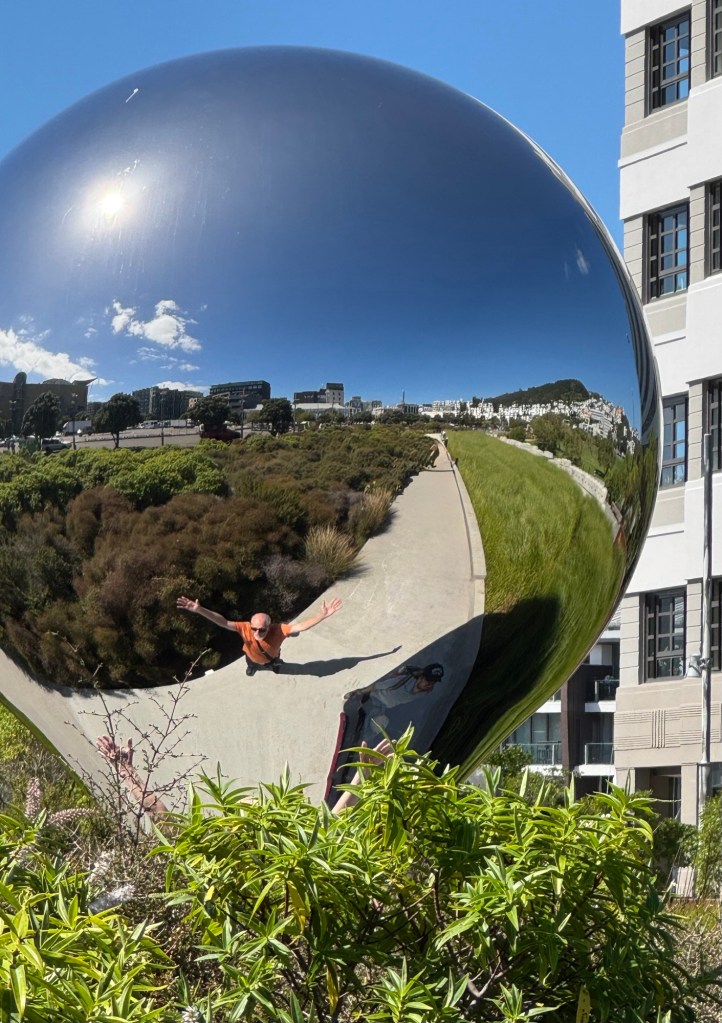
Once Ted “escaped” we continued our walk.
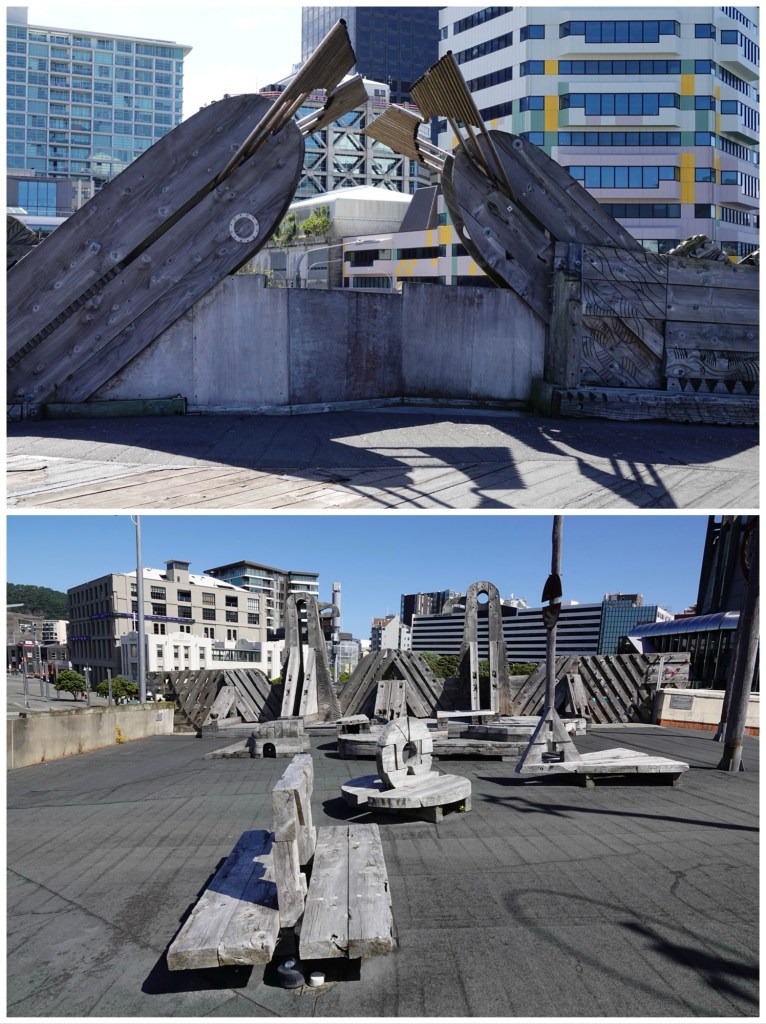
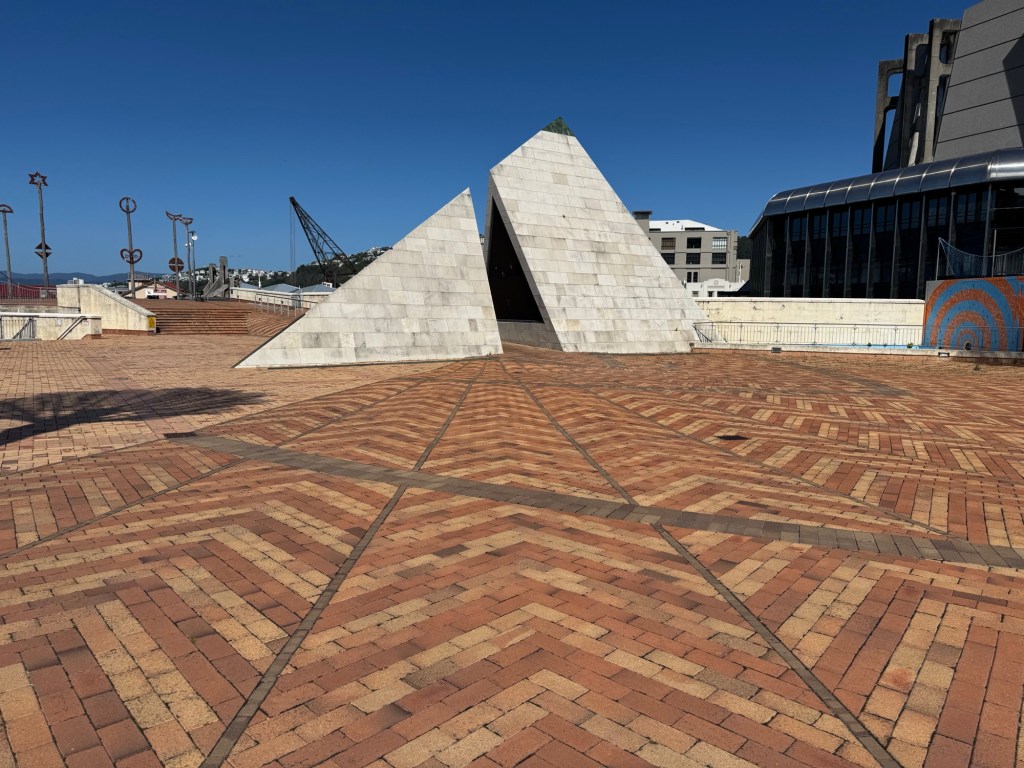
Wellington has one of the quirkiest bridges we’ve ever seen, connecting the waterfront walk to the city’s Civic Square. Even Wikipedia describes it as “Wellington’s most delightfully eccentric pieces of civic architecture — part pedestrian bridge, part sculpture garden, part 1990s fever dream. It’s a walkway, an artwork, and a cultural statement all at once.”
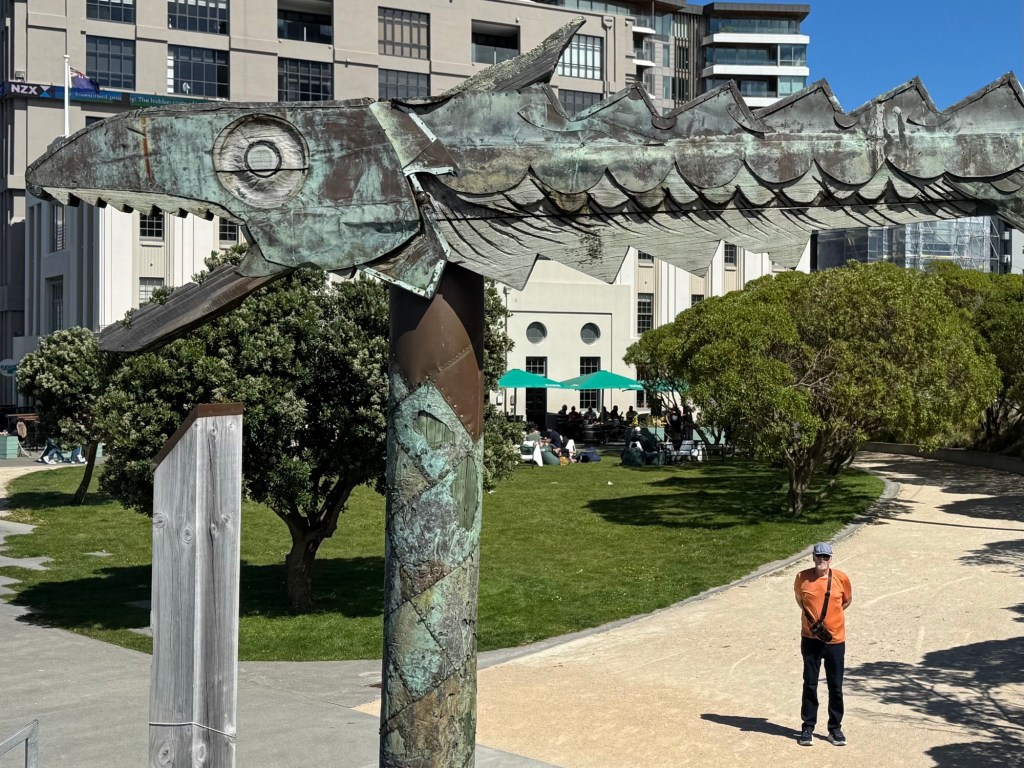

It was built from reinforced concrete and timber, but is now at risk based on new earthquake rules. Just last year city council voted to reverse a previous ruling to have it demolished, although it could cost $12-15 million NZD to refurbish and reinforce. We saw multiple “save our bridge” signs and stickers, but it is understandably not a unanimous sentiment.
Descending on the Civic Centre side, a more recent artistic endeavour.
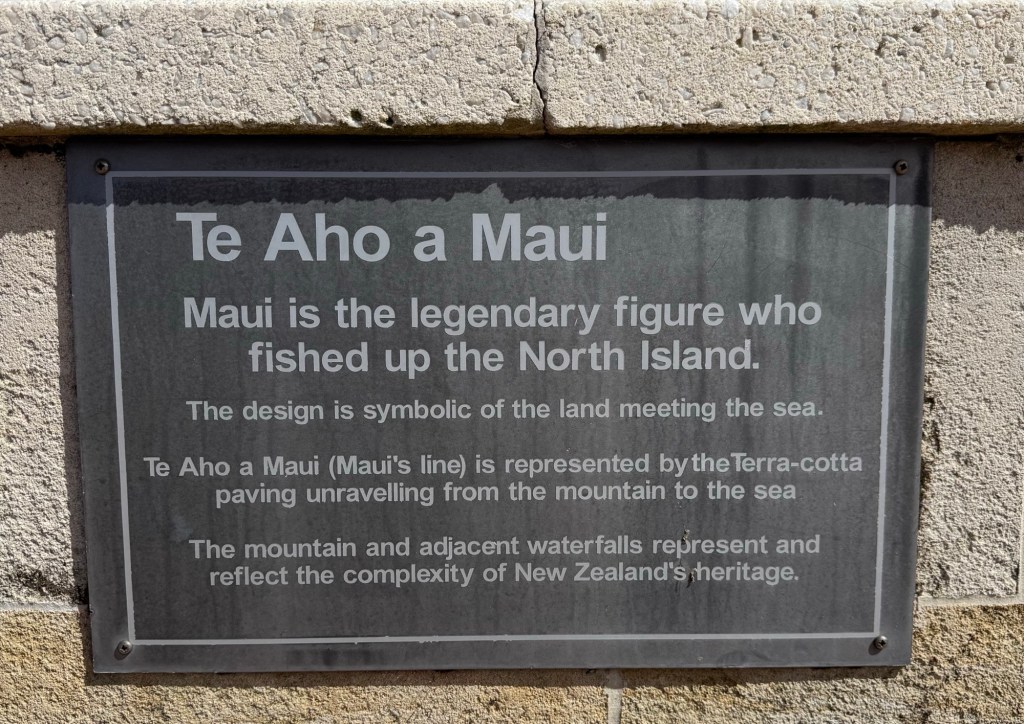
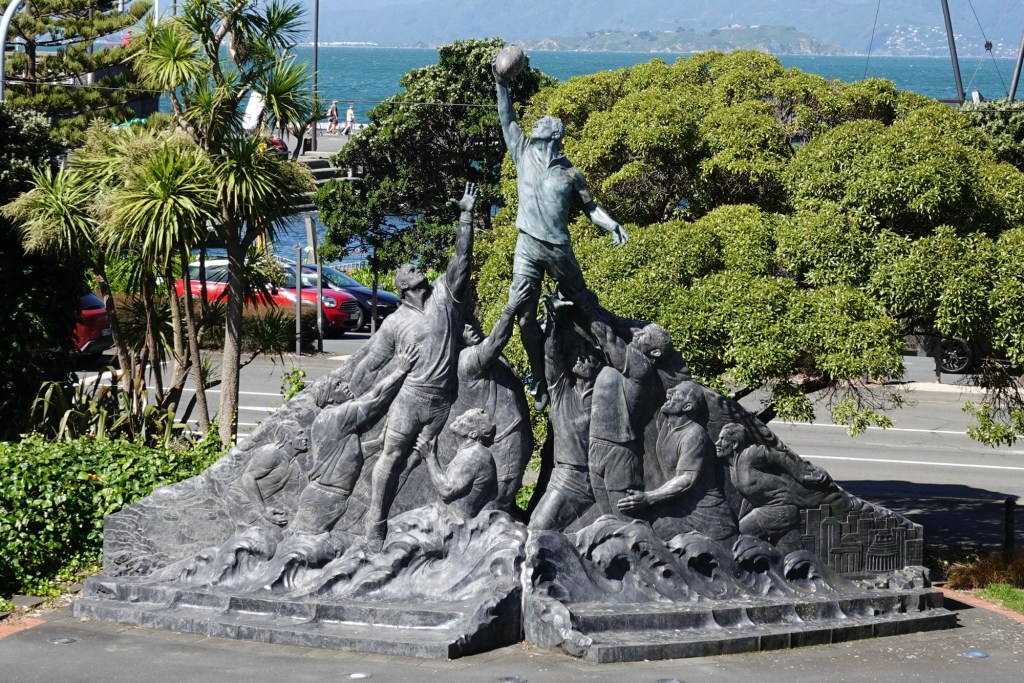
A bit further along, on the grassed area (Jack Ilott Green) at the intersection of Jervois Quay and Harris Street, below the City to Sea bridge on the Town Hall side, is a heroic-style bronze and concrete sculpture created in 2011 by Sir Richard Taylor and his team of 35 people at Wētā Workshop.
The sculpture depicts two clashing rugby teams rising in low-relief style from the Cook Strait (where the waves from the Pacific Ocean meet the waves of the Tasman Sea). At the peak of the sculpture, in full figurative style, a victorious player reaches for the burnished bronze rugby ball.
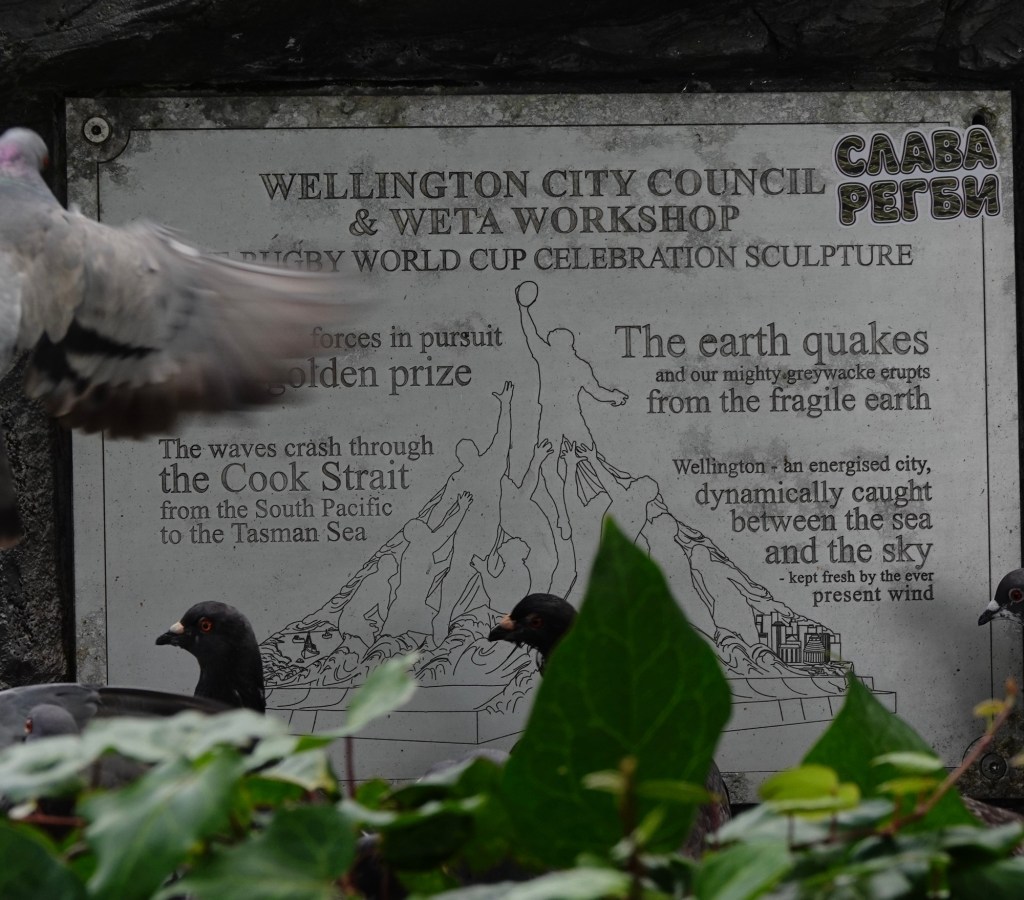
The sign behind the sculpture seems to be a regular roosting spot for dozens of pigeons; a local man who feeds them daily was quite anxious for us to move on, but I wanted to get the inscription:
RUGBY WORLD CUP CELEBRATION SCULPTURE

Wellington City Council & Wētā Workshop

forces in pursuit
golden prize

The earth quakes
and our mighty grey wacke erupts
from the fragile earth

The waves crash through
the Cook Strait
from the South Pacific
to the Tasman Sea

Wellington – an energised city,
dynamically caught
between the sea
and the sky
– kept fresh by the ever
present wind
The cheeky Wellington sign on the waterfront near Te Papa has no letter “I” in it until someone stands in it.
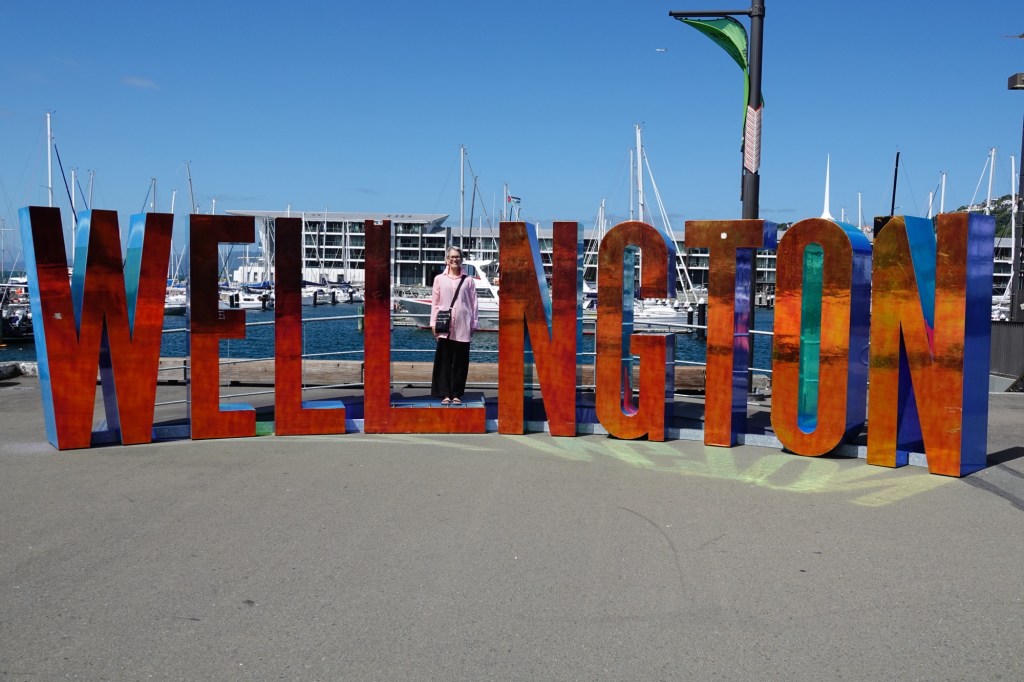
We got our 11,000 steps in, albeit on flat ground today, so I felt I deserved ice cream – or at least a flat (no pun intended) white. Sadly, by 4:00 p.m. on a Sunday all the cafés were closing.
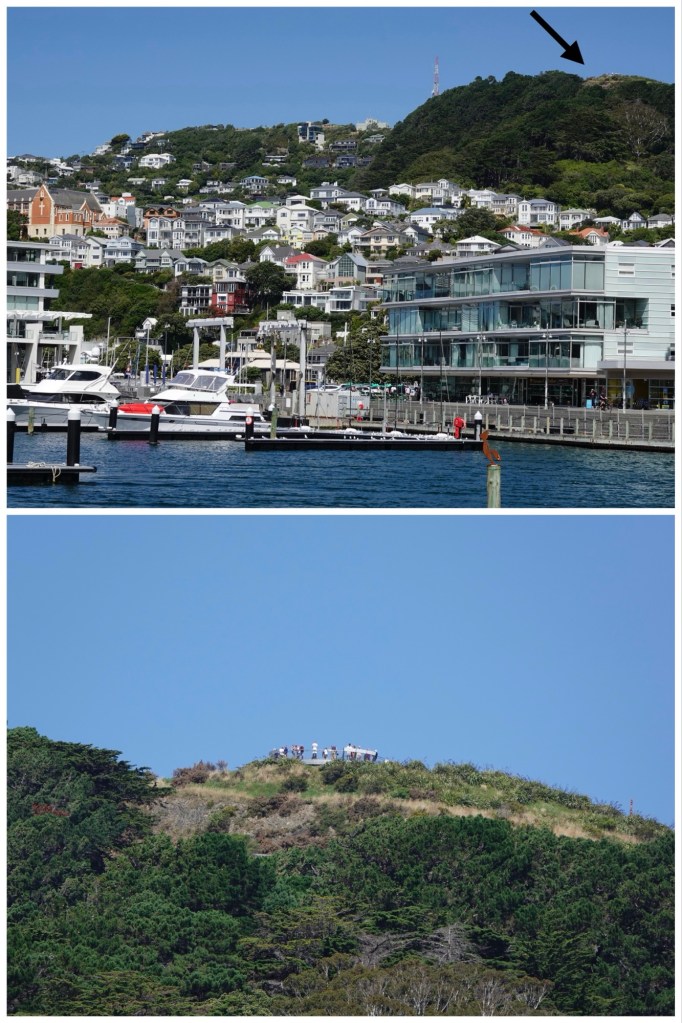
Thinking about flat walks, from the waterfront we got a good view of the lookout we climbed to yesterday.
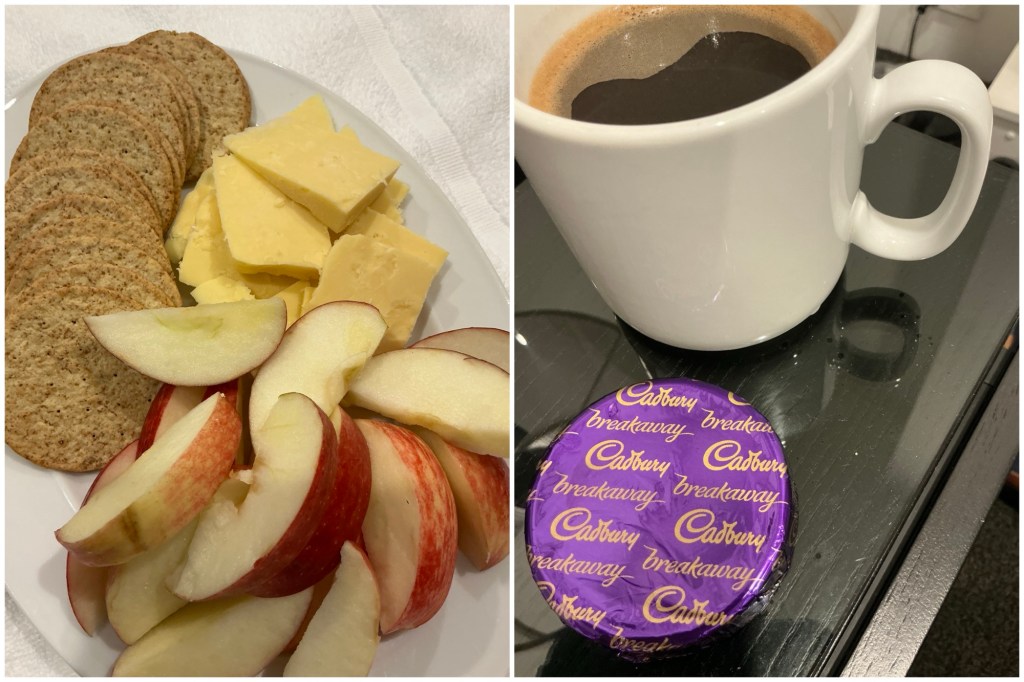
Because our life is non-stop glamour and adventure, our dinner: cheese, crackers, and apple slices in front of the TV, with a decadent dessert of coffee and a Cadbury Breakaway.
Tomorrow we have a tour or the New Zealand Parliament building. Rain is forecast, but hopefully not enough to prevent us from also visiting the gardens.
DINING NOTES:
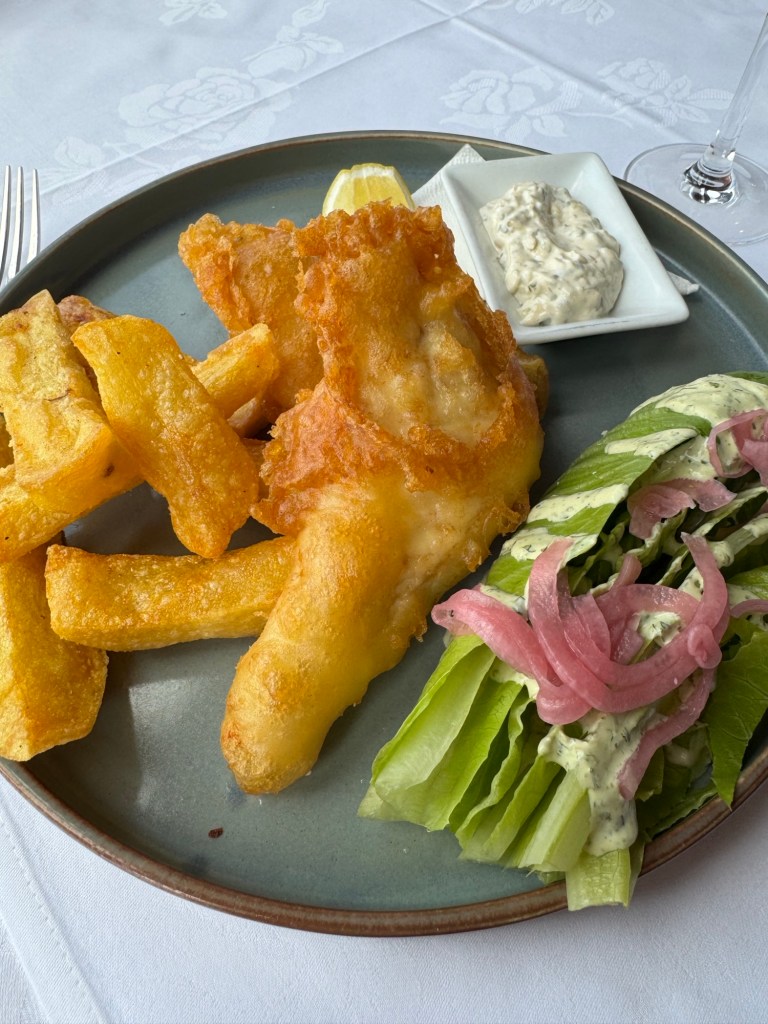
We’d walked past Shed 5 on Jervois Quay a few nights ago. It was full of smiling, laughing diners, which is always a good sign, but what caught my eye was a fantastic looking portion of fish and chips being delivered to a table by the window. I’ve been thinking about it ever since.
The restaurant’s menu is the same at lunch as at dinner, so we opted to have our heavy meal of the day at 1:30 and then walk it off along the waterfront.
 Rose and Ted’s Excellent Adventure