Edmund Hillary belonged to our parents’ generation. Born in Auckland New Zealand in 1919, the same year as Ted’s parents but 10 years before my dad, he was old enough to have fought with the ANZAC forces in WWII as part of the Royal New Zealand Air Force, but his adventurous streak was well established by then. He became interested in mountaineering while still in secondary school, and completed his first major climb in 1939, reaching the summit of Mount Ollivier.
His most famous accomplishments occurred before I was born or when I was still too young to care: conquering Mount Everest 3 years before I was born, and reaching the South Pole overland when I was only 2.
And yet, I remember learning his name in school, along with those of other earlier adventurers: Radisson and Groseillers, the coureurs de bois exploring Canada (“the Great Northwest”) in the 17th century; Dr. David Livingstone exploring and proselytizing in Africa in the 19th century; Roald Amundsen who first reached the South Pole in 1911 and the North Pole in 1926; Robert Peary exploring the Arctic Circle.
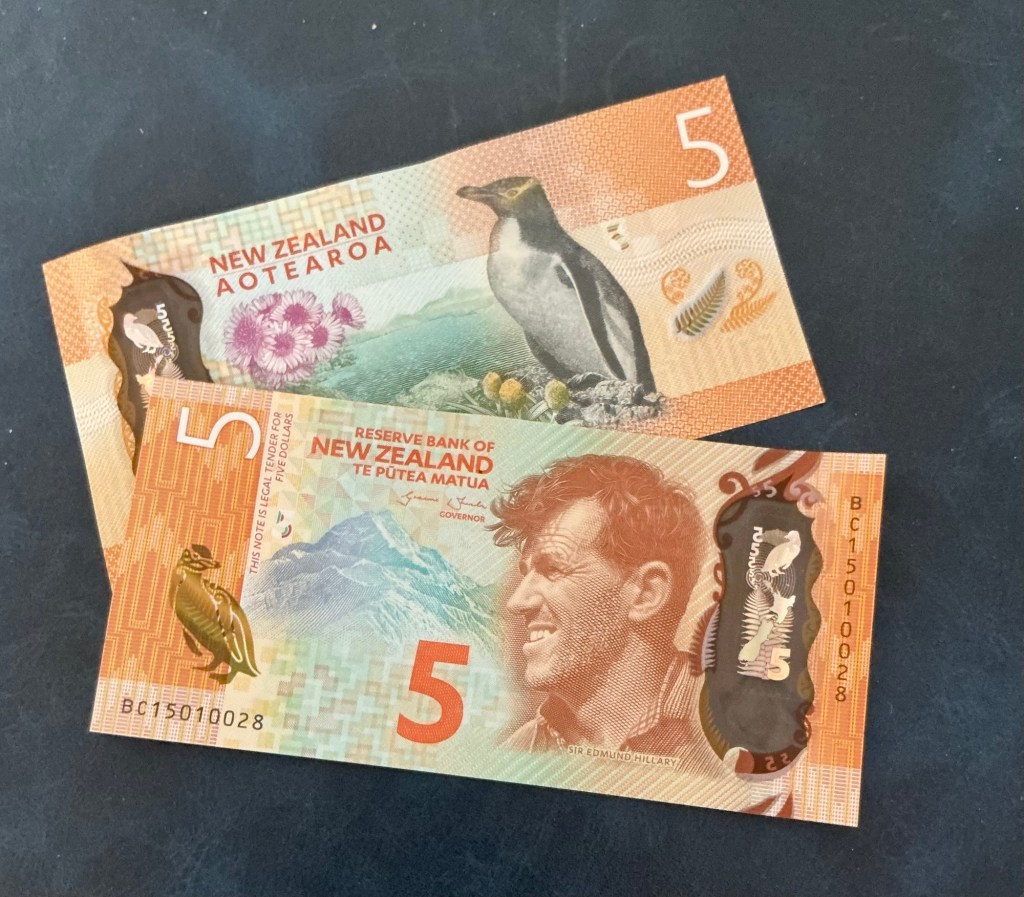
In his home country of New Zealand, Hillary’s many accomplishments were much more widely known and celebrated. Since 1992, New Zealand’s $5 note has featured Hillary’s portrait, making him the only living person not a current head of state ever to appear on a New Zealand banknote. That means I’ve been carrying him around in my wallet since last year’s world cruise!
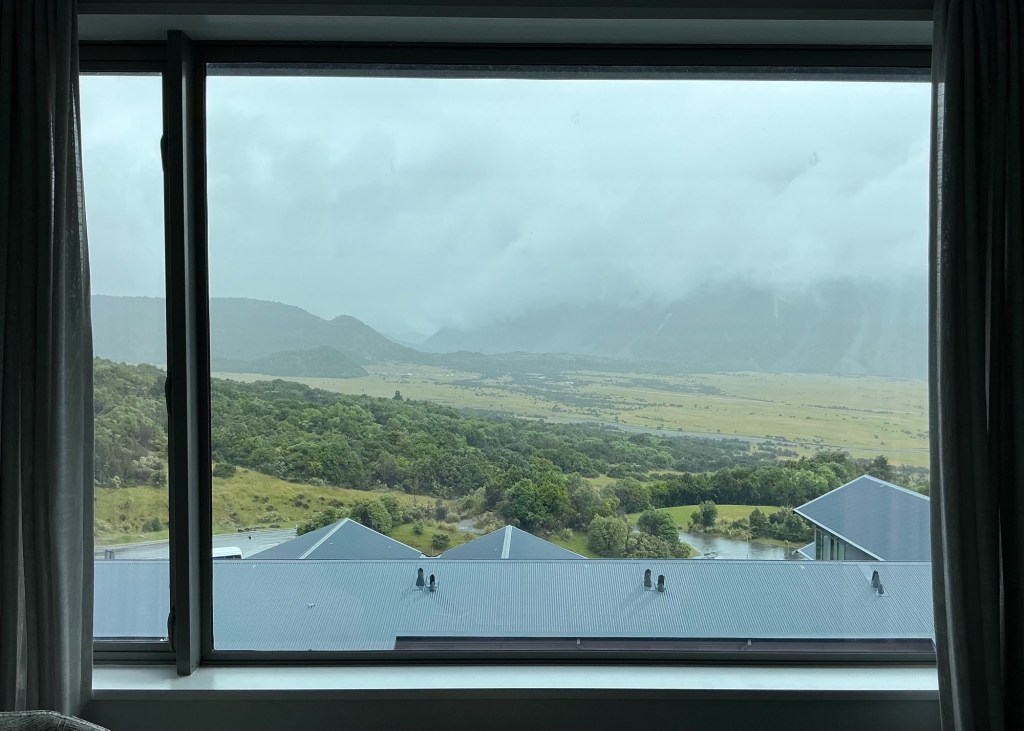
But first, how wonderful it was to sleep in and anticipate waking to the incredible mountain vistas just outside our window. However, when we opened the curtains … where did the mountains go?
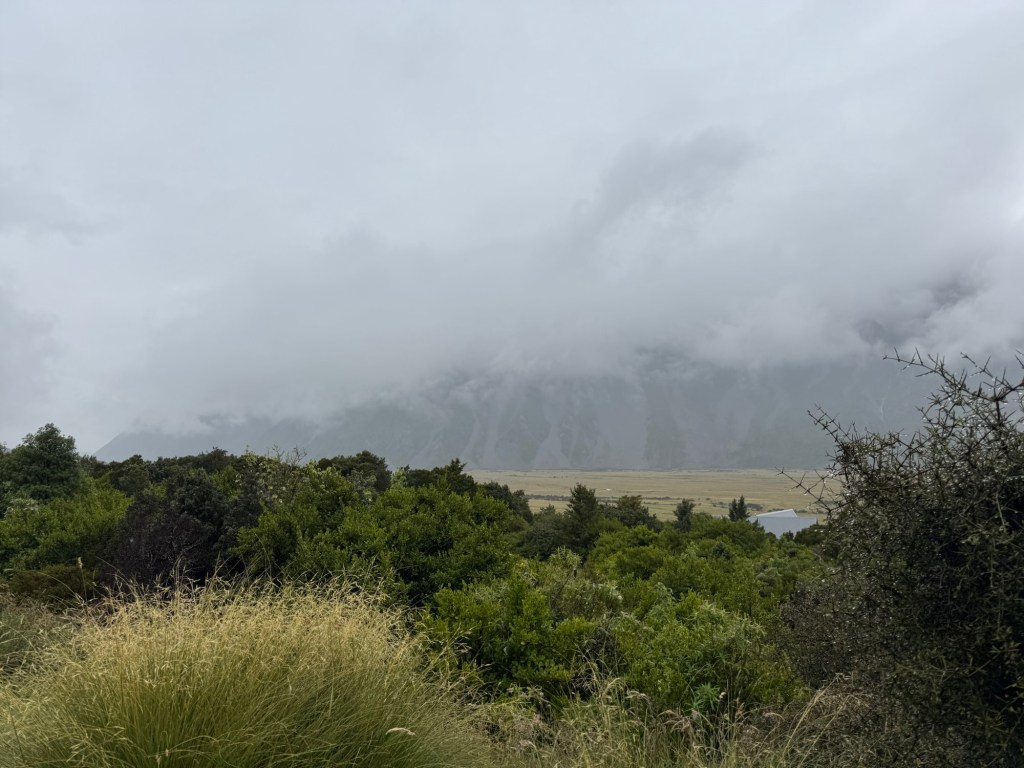
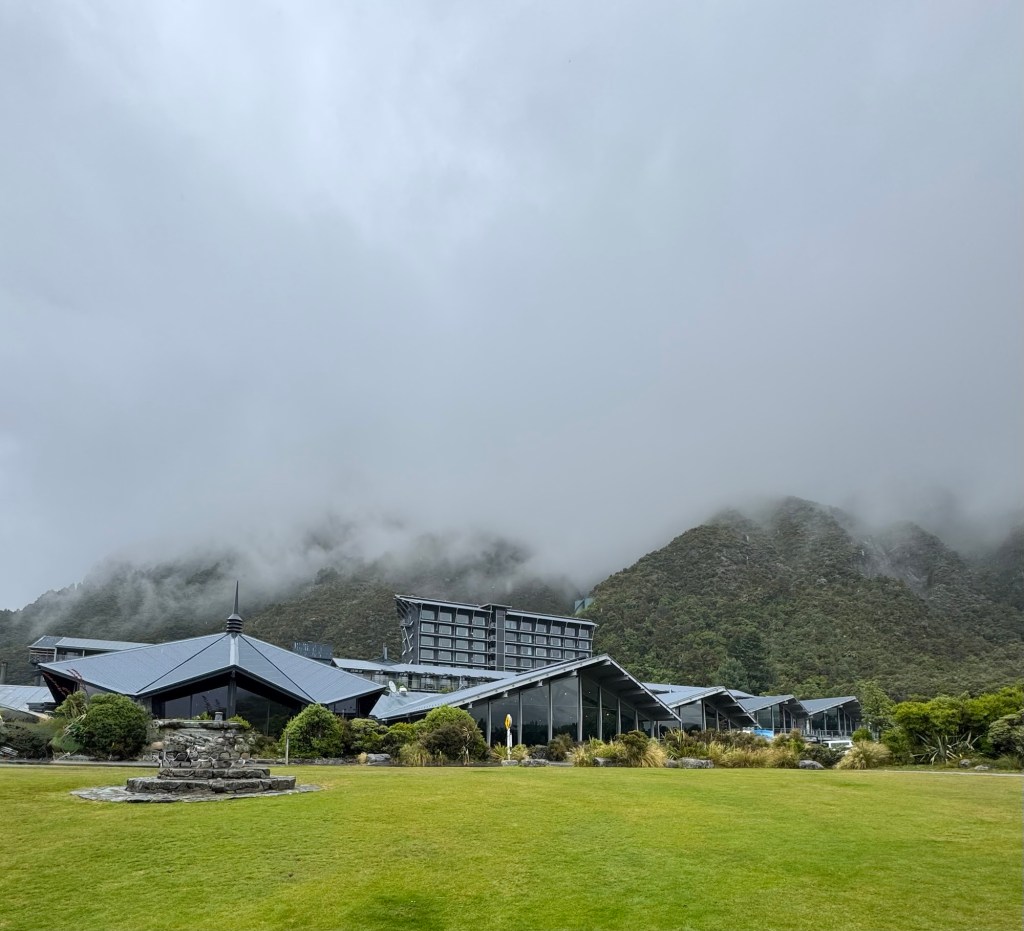
Even the bronze statue of Hillary gazing at Mount Cook had nothing to see.
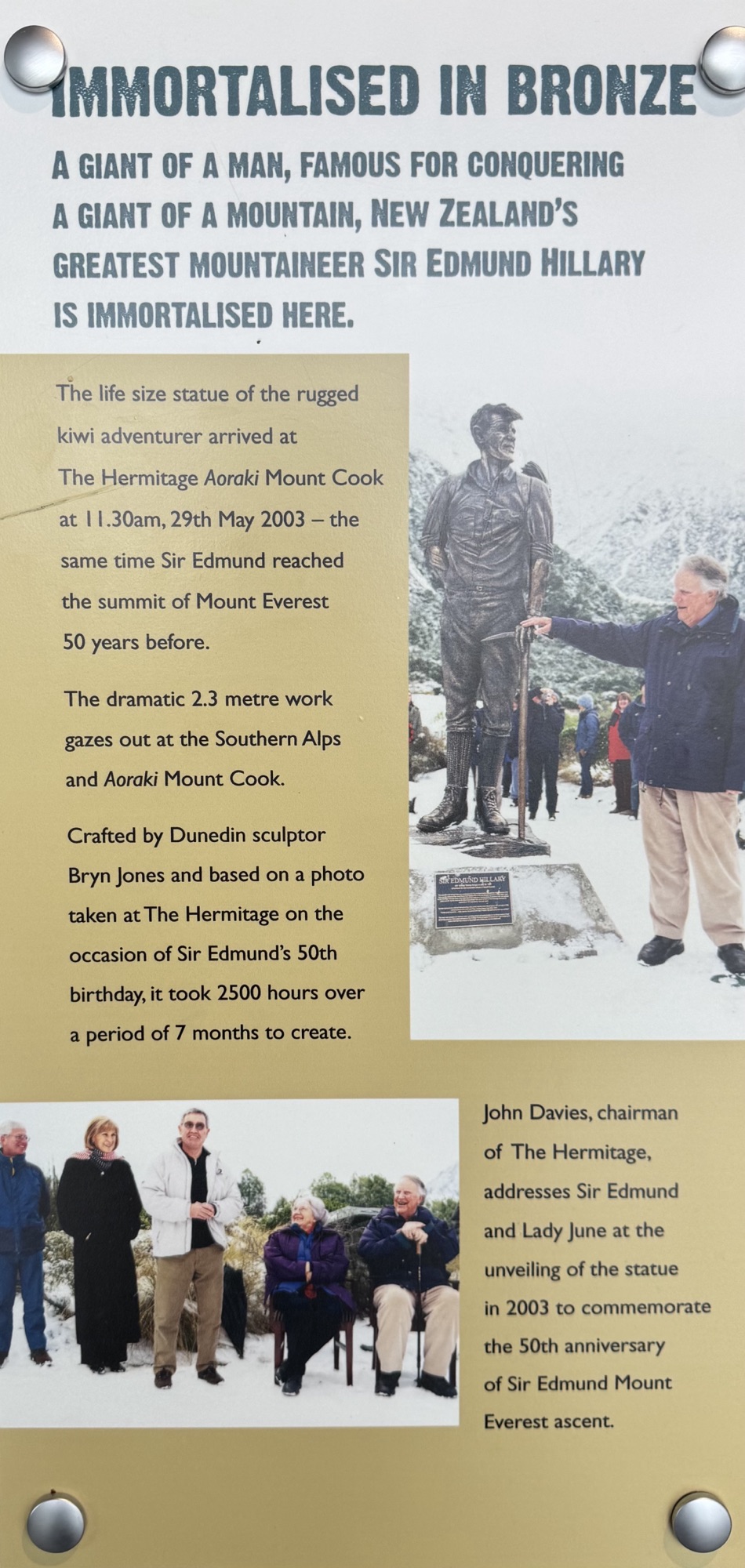
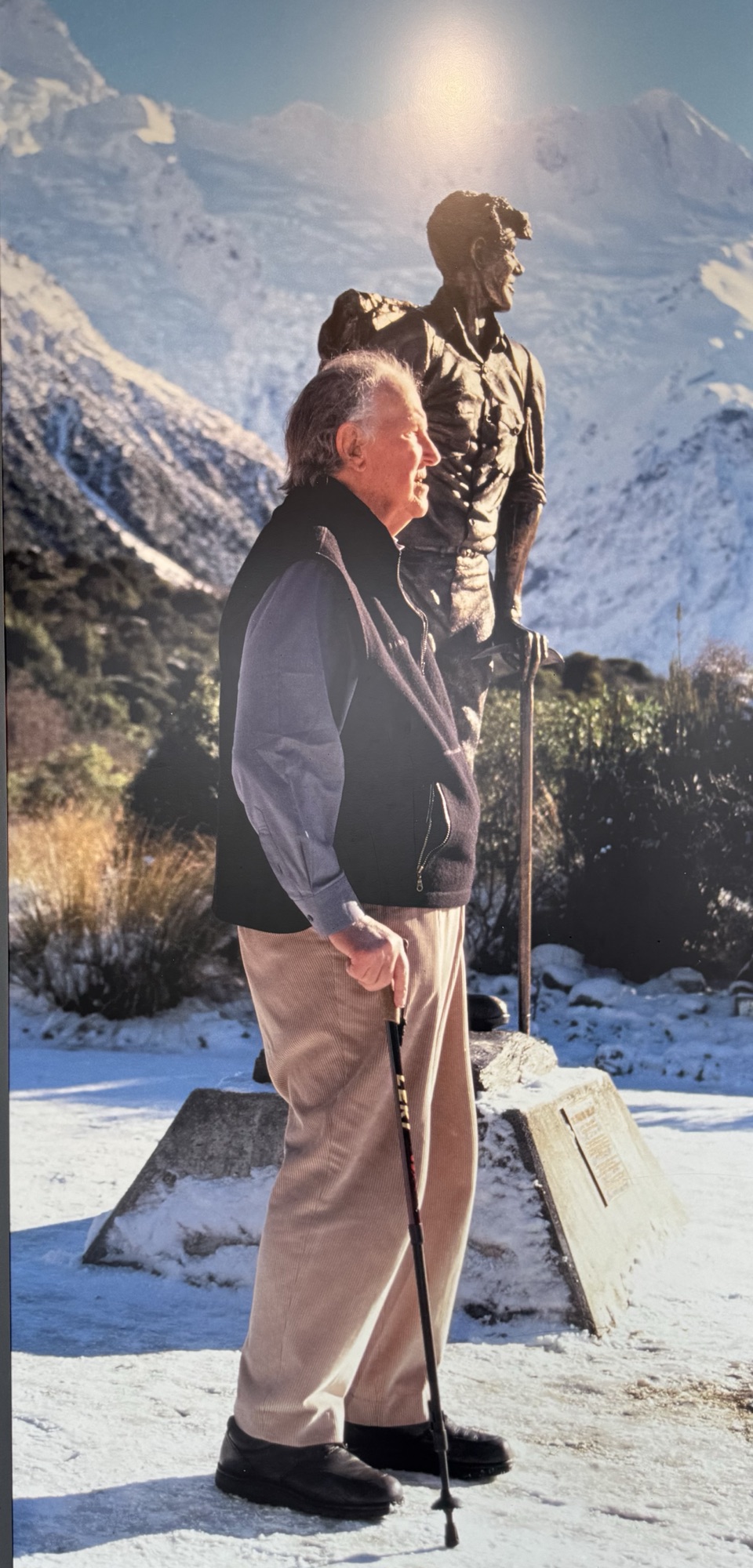
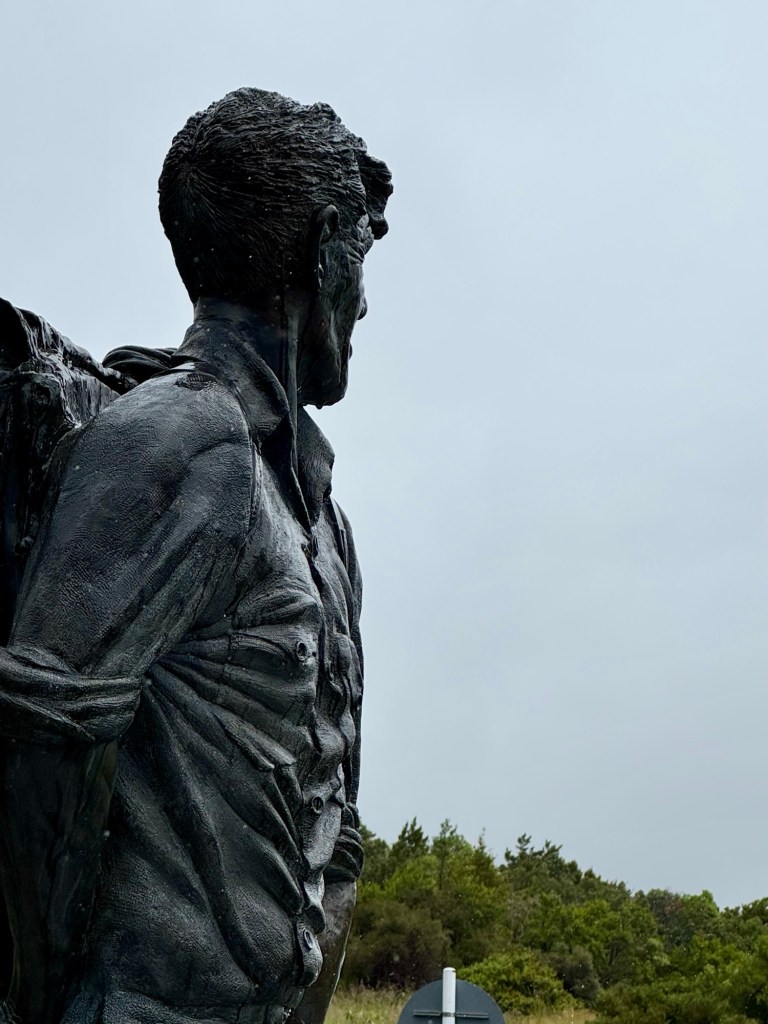
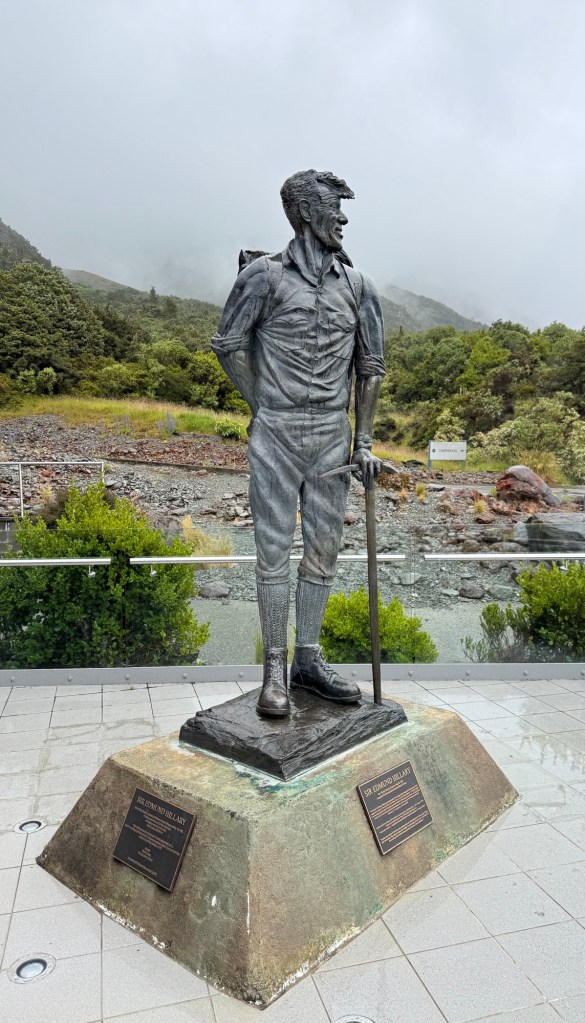
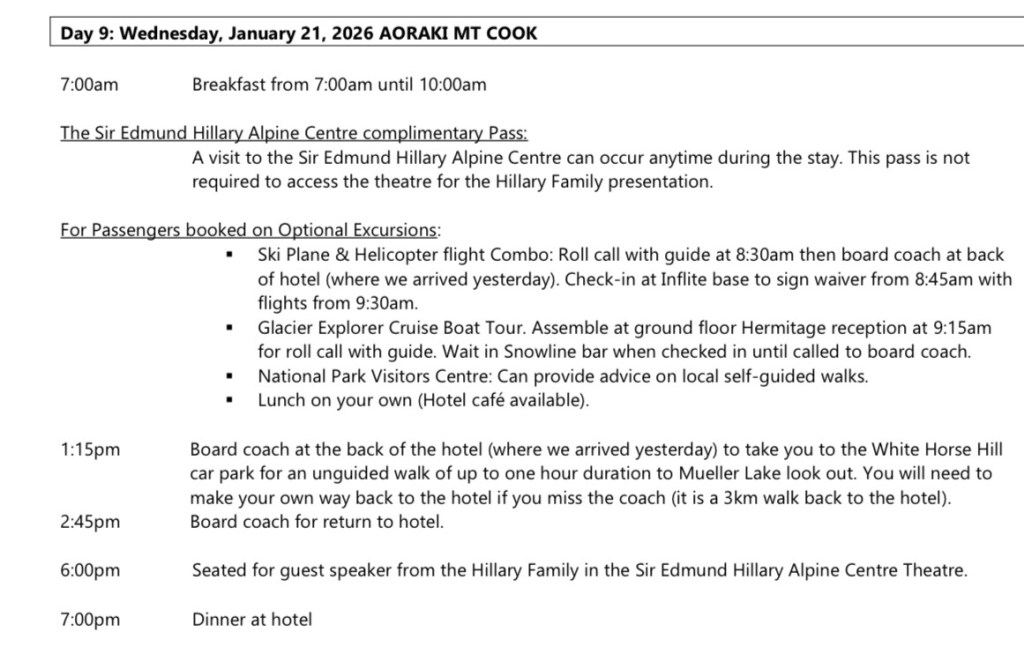
After a leisurely breakfast in The Hermitage’s Alpine Room, we’d originally planned to get ourselves organized for an independent trail walk. We didn’t feel the need to use the offered coach transport to the trailhead, since the paths are well marked and the trails all very doable lengths.
But…
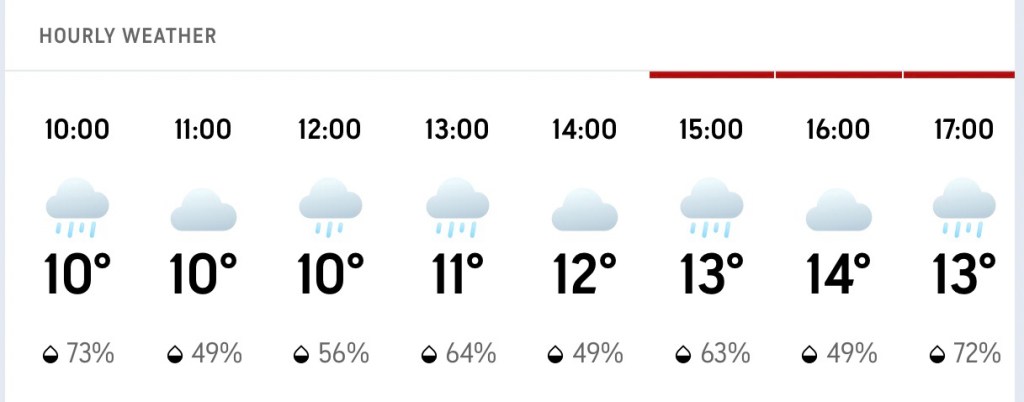
Or for our US friends…
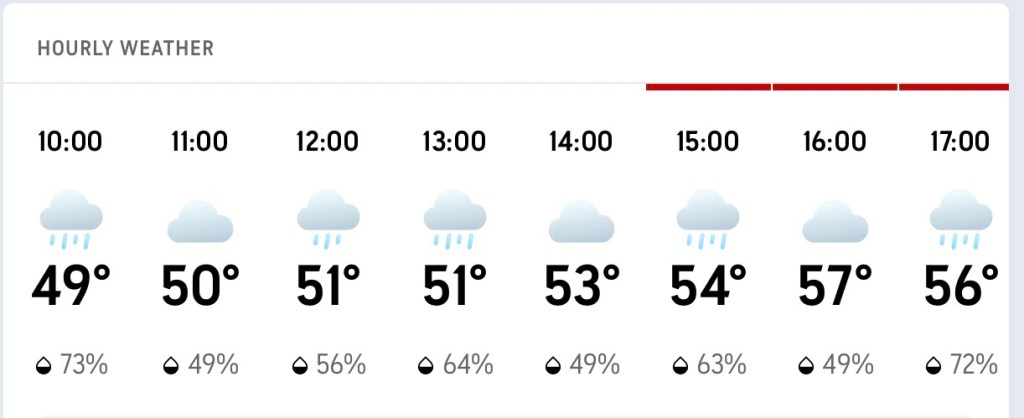
Behind every cloud os a silver lining. There’s nothing wrong with the occasional indoor day at leisure, plus not hiking meant we had ample time to explore the Aoraki Mount Cook Visitor Centre adjacent to the hotel, and the Sir Edmund Hillary Alpine Centre located right in the Hermitage.
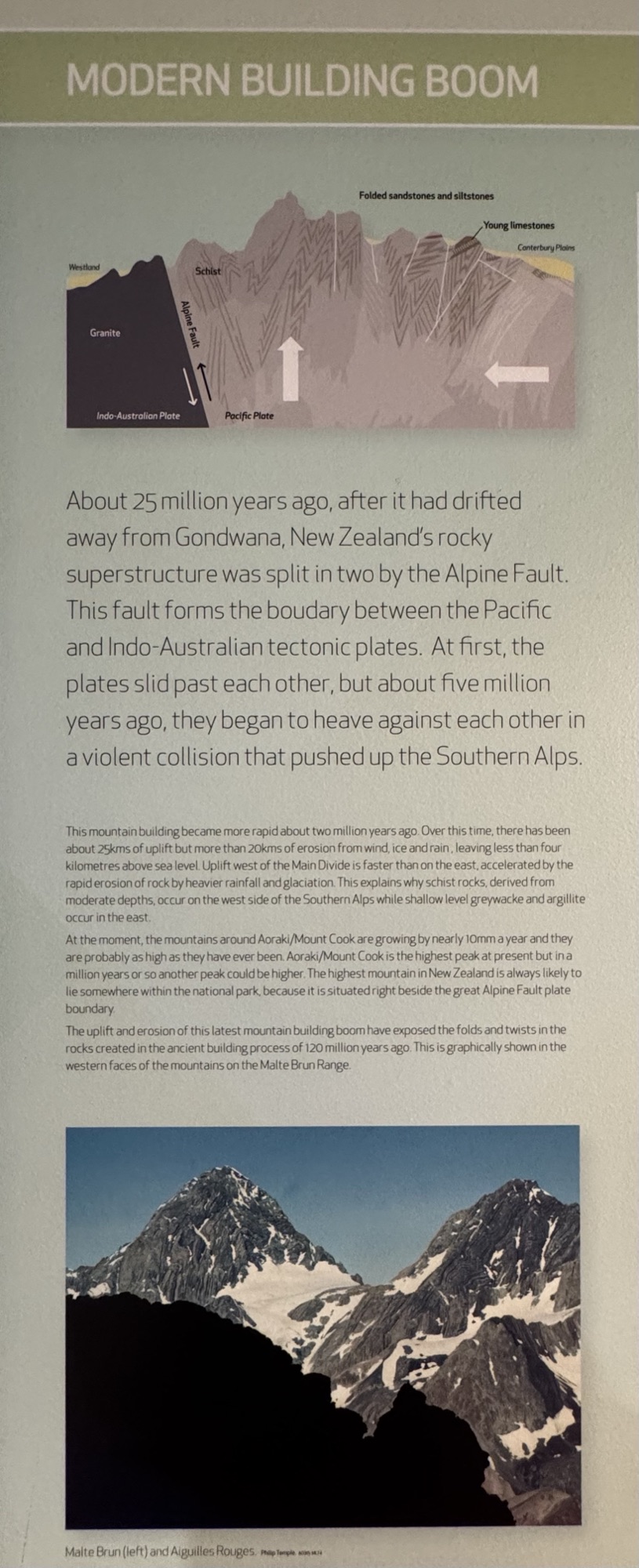
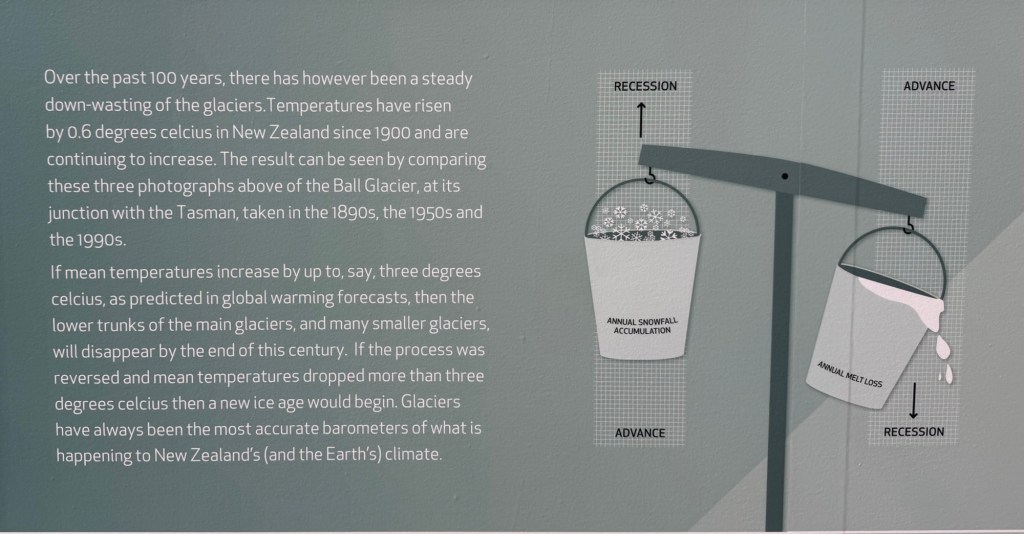
The Visitor Centre is on two levels, and includes information about the area’s geology …
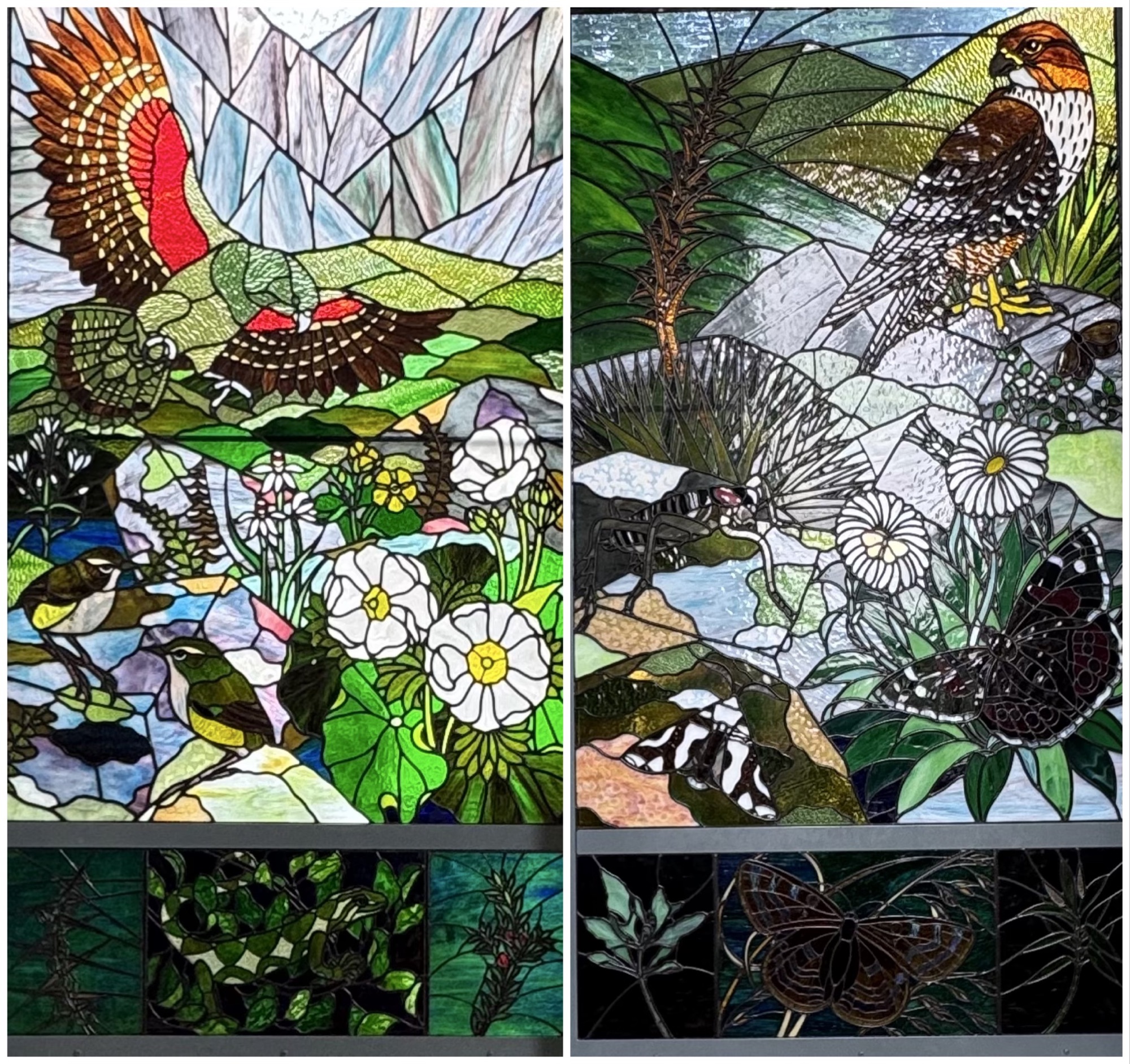
…and its flora and fauna, some via stunning stained glass windows…
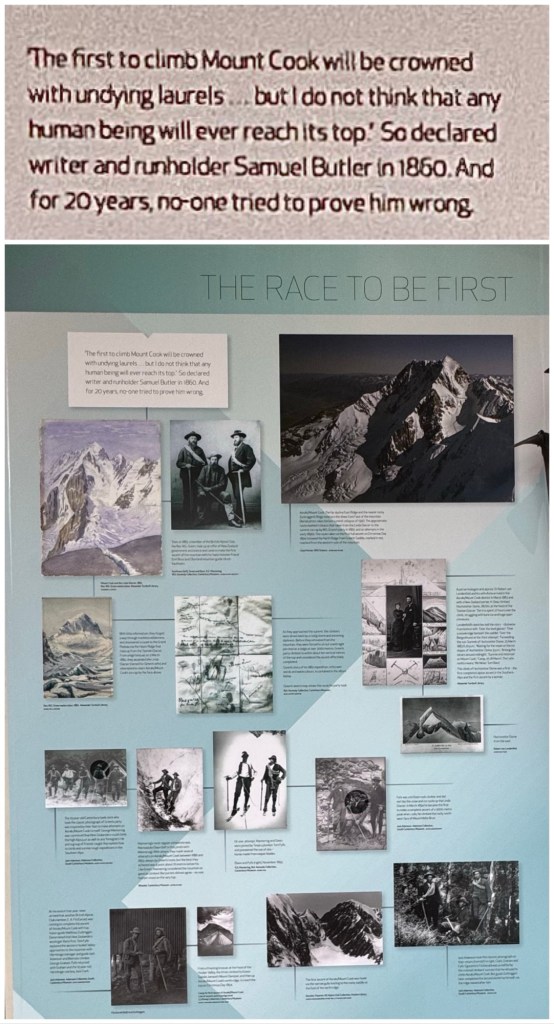
…as well as about the history of mountaineering in this part of the Southern Alps.
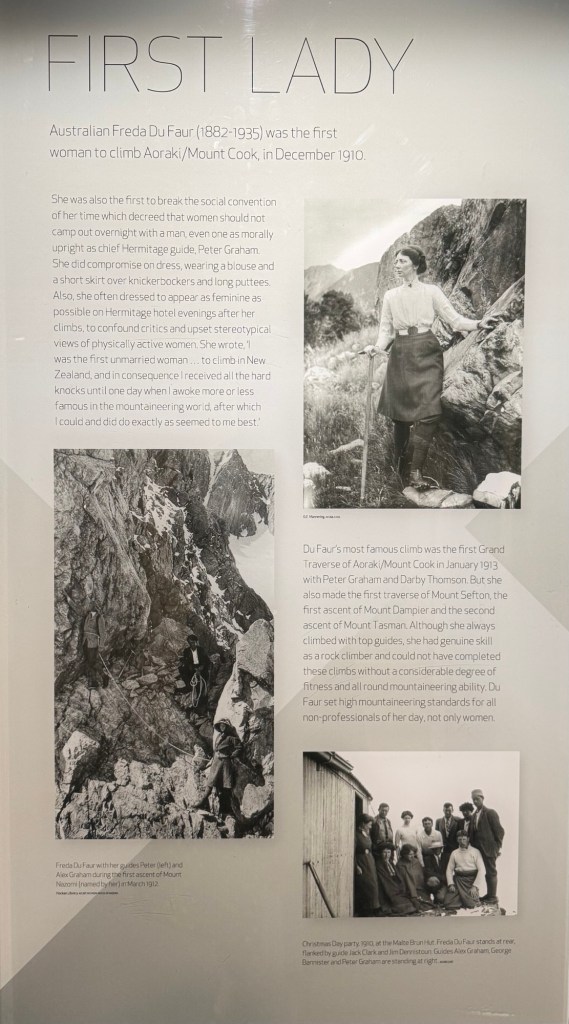
It wasn’t just men who summited the mountain. The first woman to do so had the added challenge of being expected to “dress like a lady”!
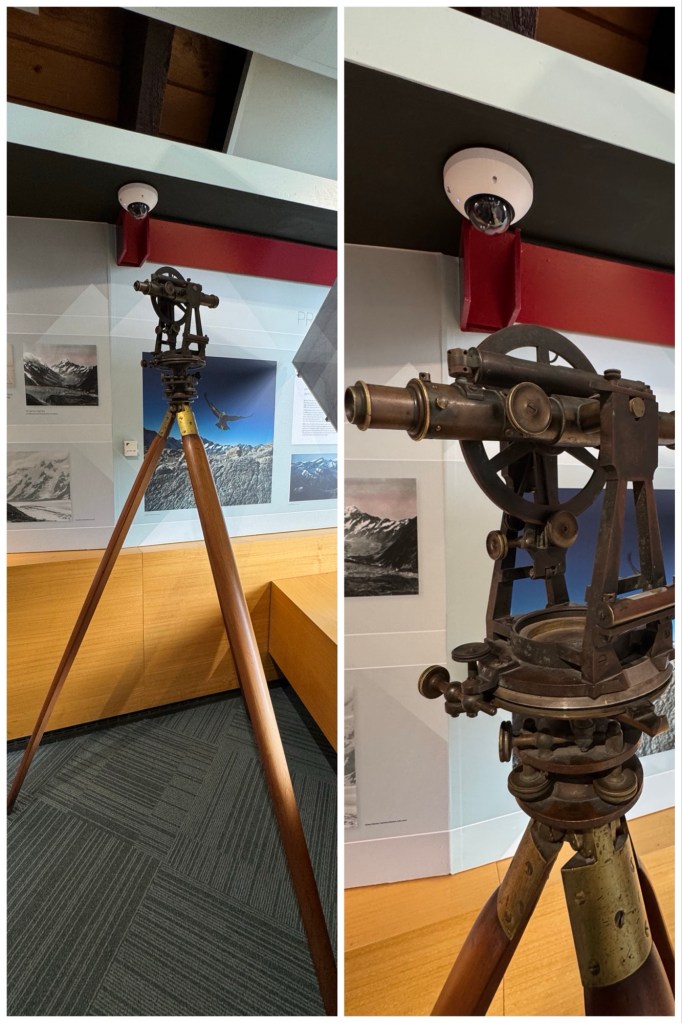
There were interesting displays of the equipment used for both climbing and surveying the mountain.
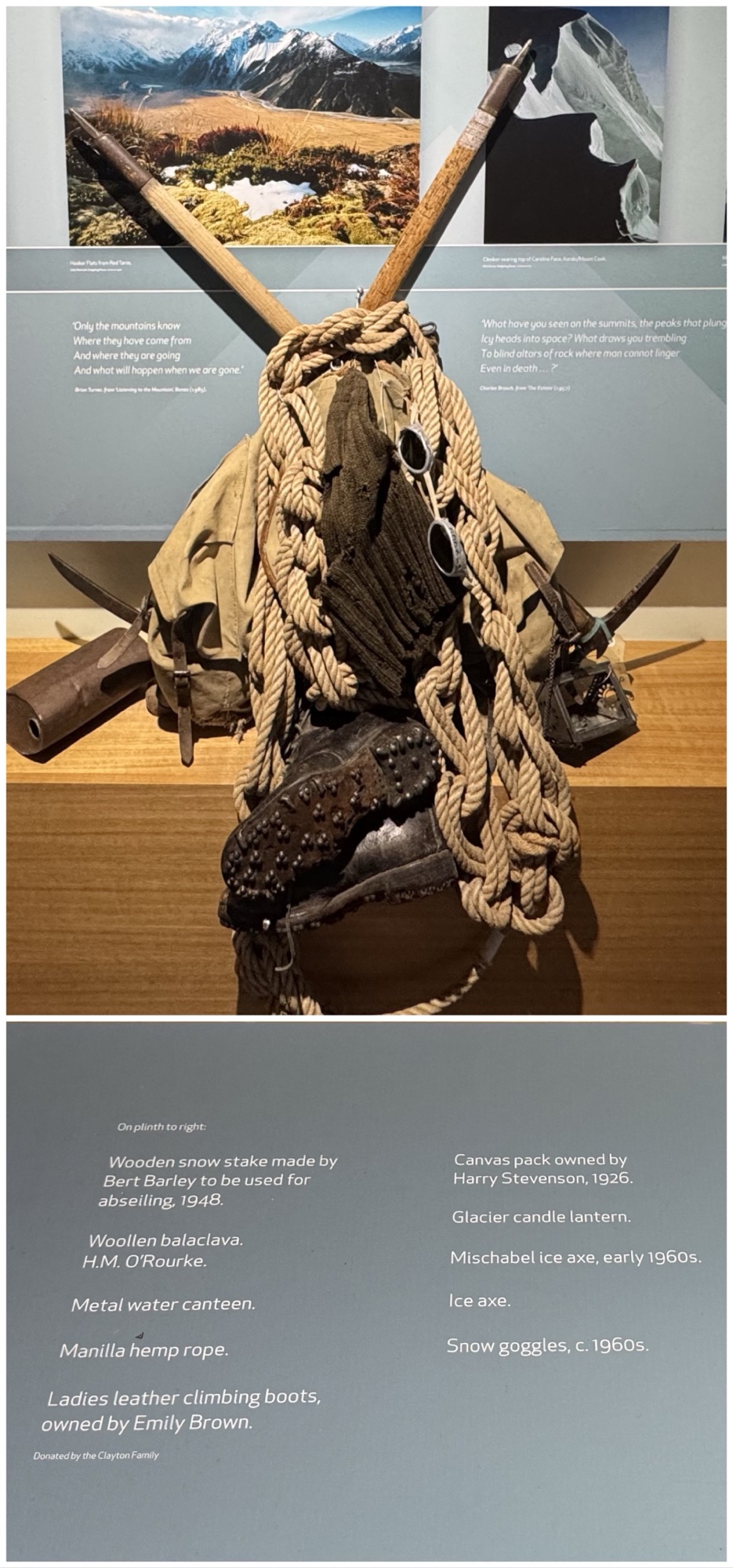
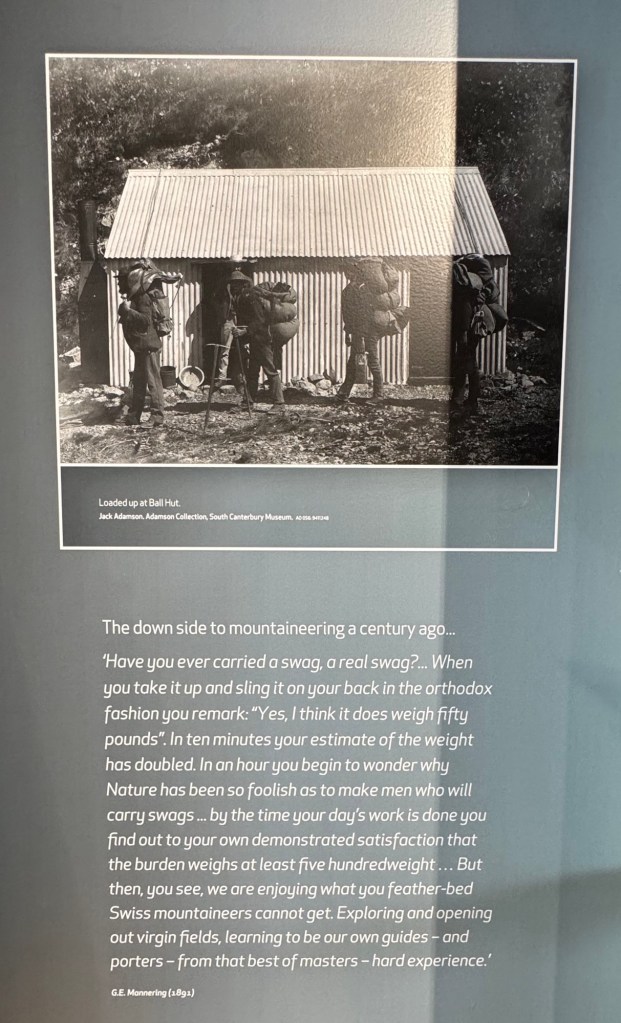
There’s no doubt the equipment was heavy. It definitely reinforced that mountain climbing is not an easy endeavour. Interestingly, what we learned here also explained the term “swag man” to us, belying those Australian lyrics to Waltzing Matilda depicting one as “jolly”.
A placard explained that “When the Rev. W.S. Green’s party made the first climb on Mount Cook in 1882, they knew exactly how high it was. The year before, Westland’s chief surveyor, G.J. Roberts, had triangulated the peak and arrived at a height of 12,349 feet (3764m).” Proof that geometry is useful in the real world!
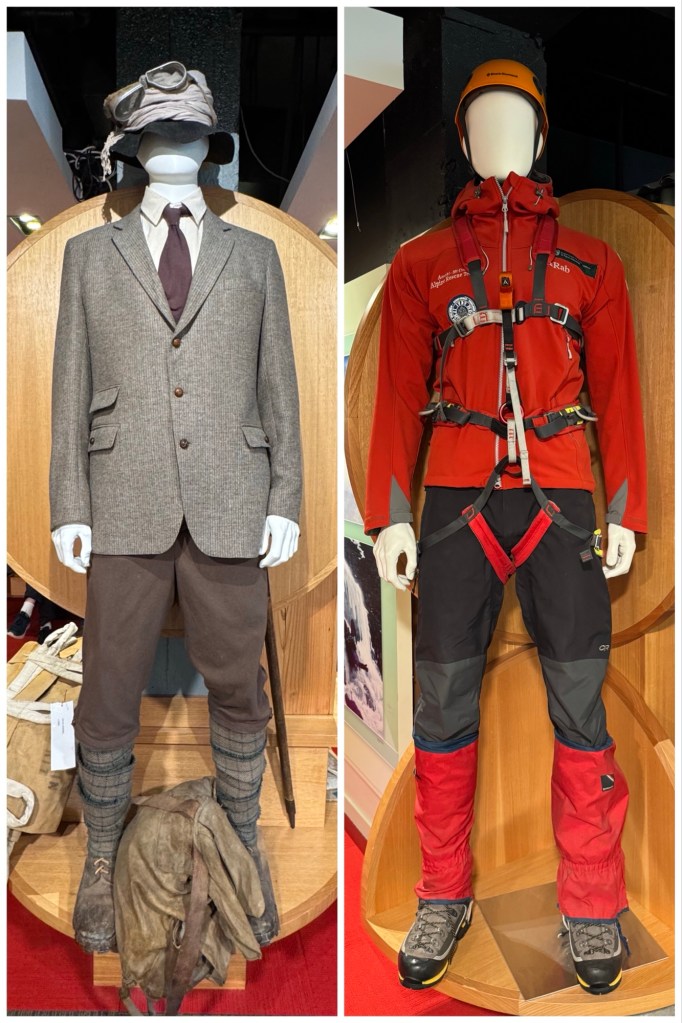
Models wearing 19th century and present day gear. The absence of safety harness alone gives one pause, never mind the jaunty tie!
I also learned where the name “Southern Alps” originated.
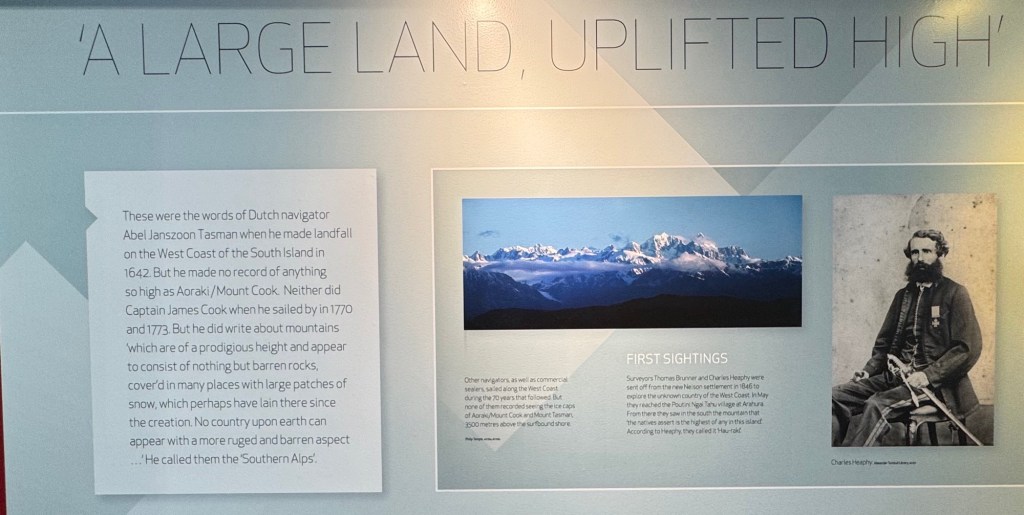
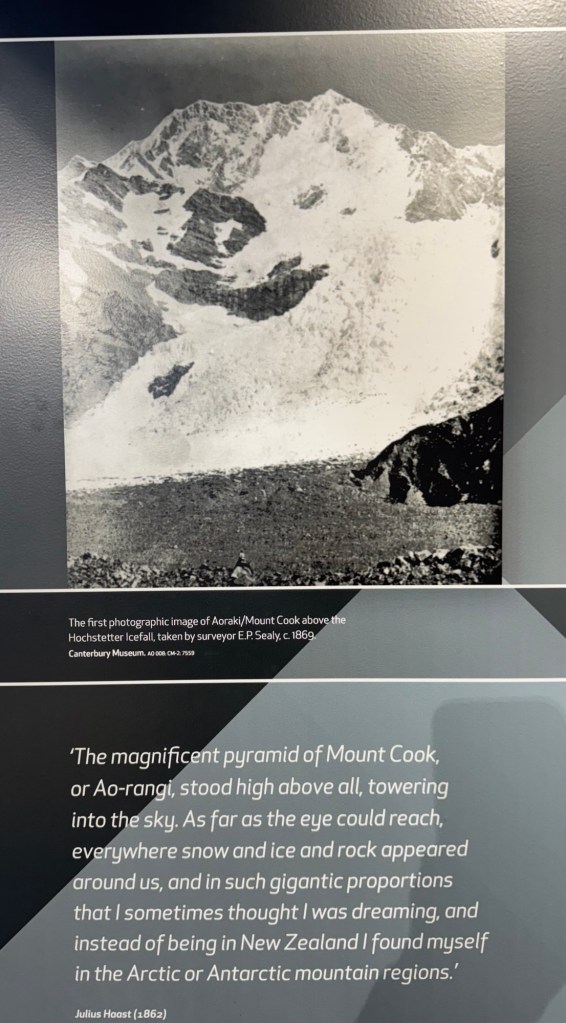
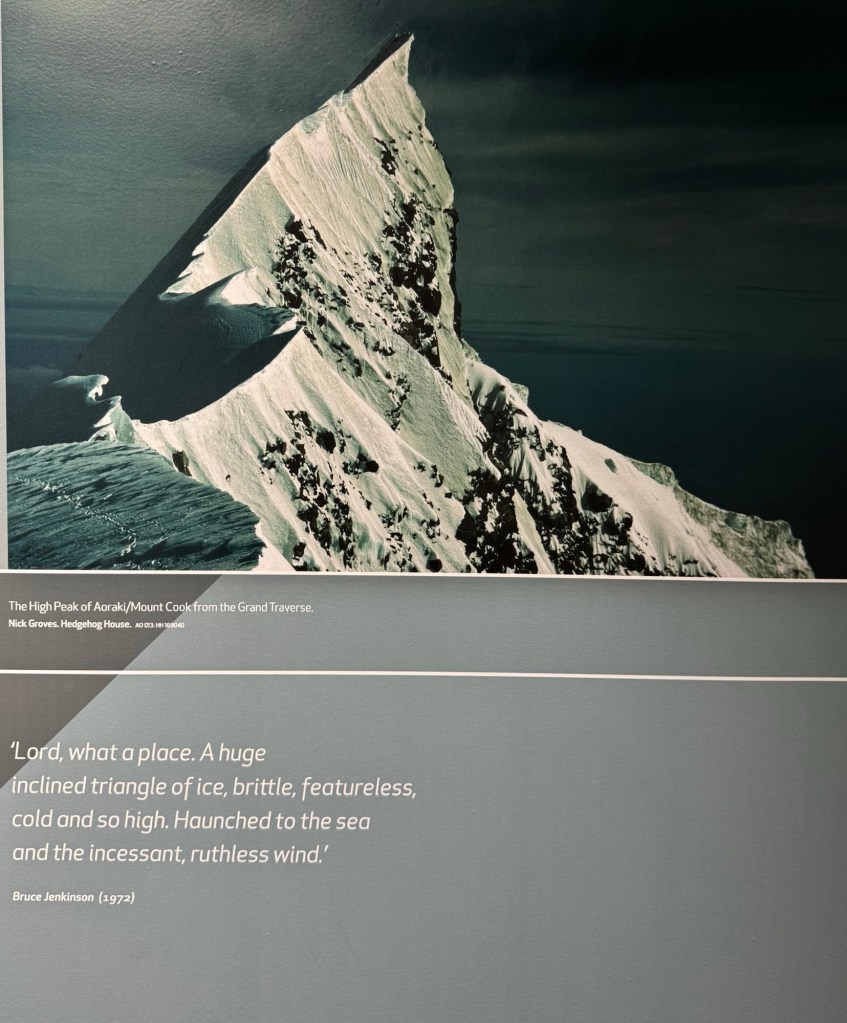
A picture may be worth a thousand words, and there was certainly lots of incredible photography on display, but the words were quite eloquent too.
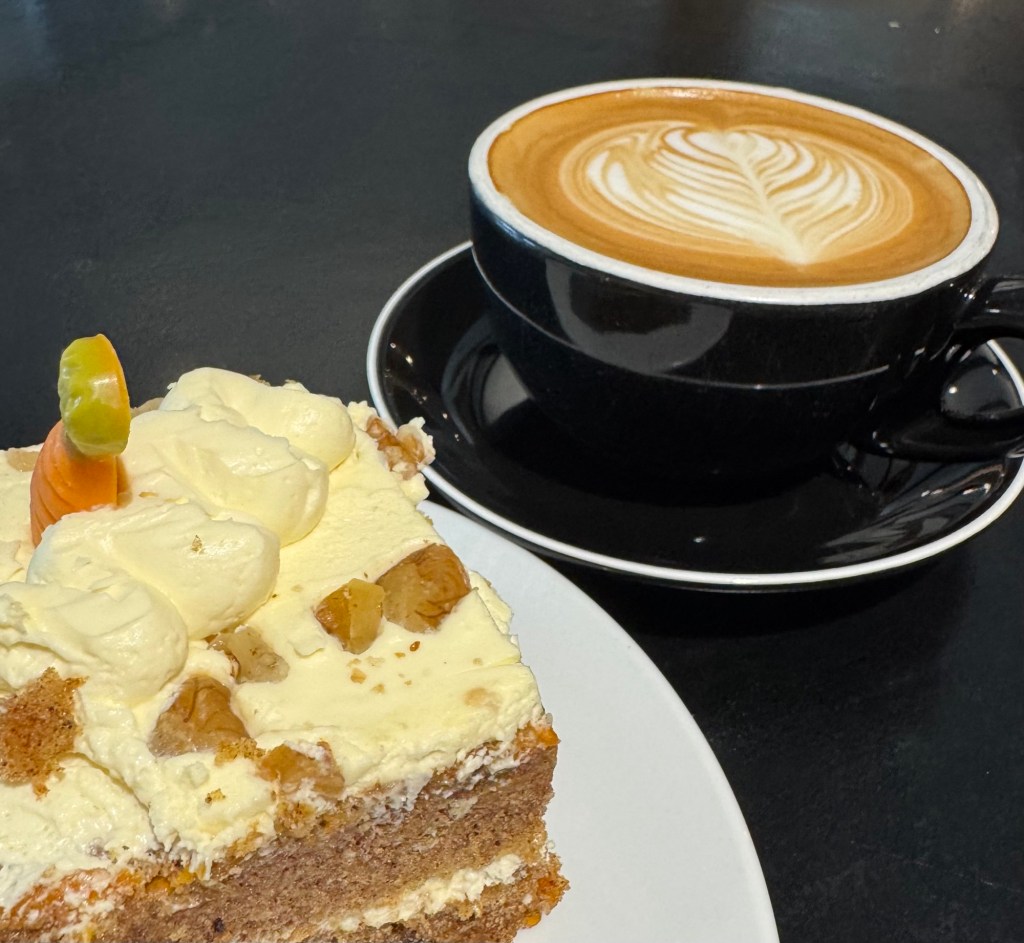
After a cake and coffee break in lieu of lunch,
it was time to explore the Sir Edmund Hillary Alpine Centre, but suddenly there was a break in the rain, so we took the opportunity to do the 6km/3.7mi round trip hike to Kea Point to see Lake Mueller.
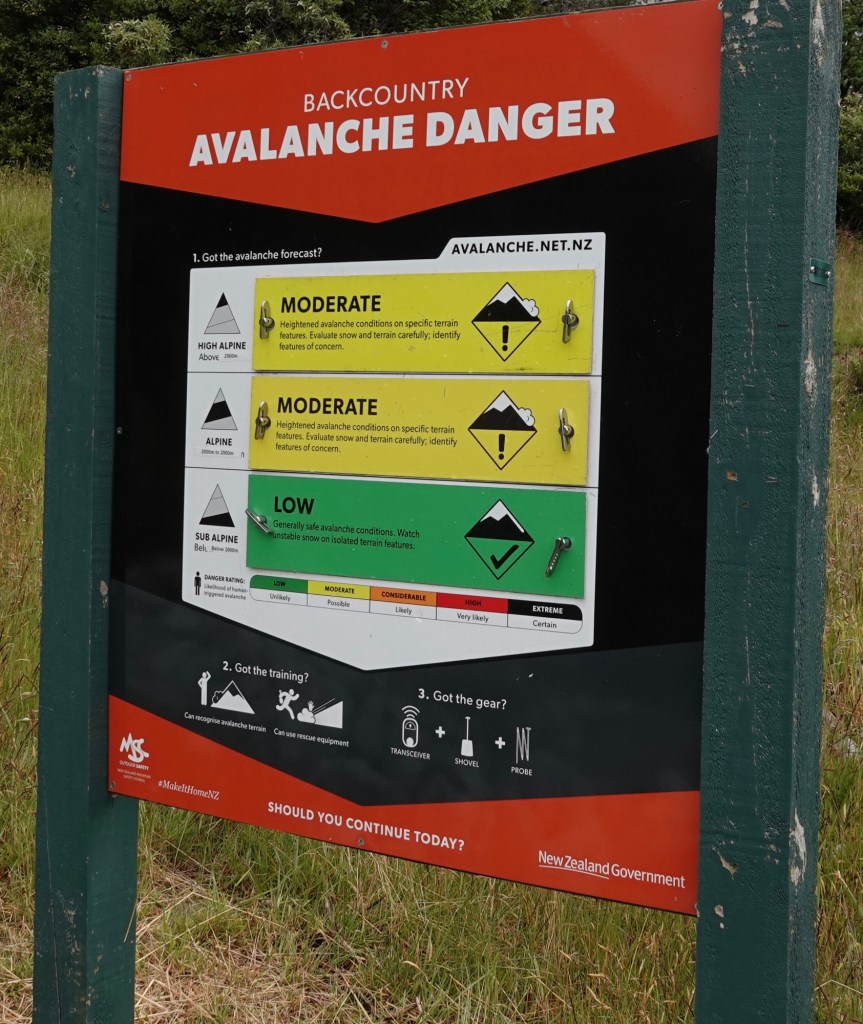
It’s always a good idea to check the conditions first; for our sub-alpine trail the risk of avalanche was low, so off we went.
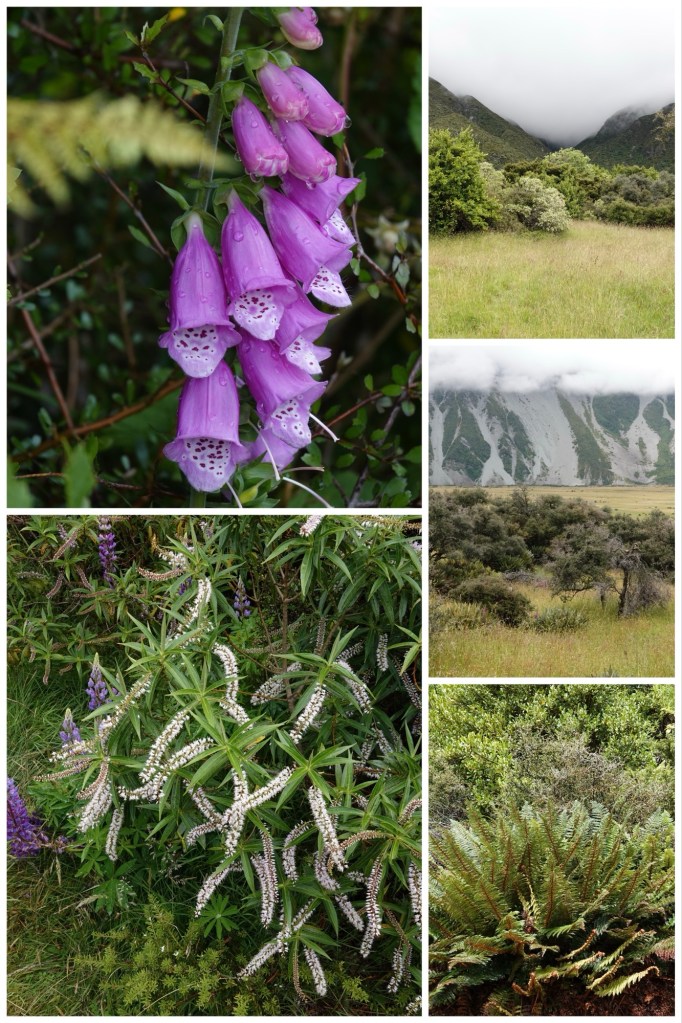
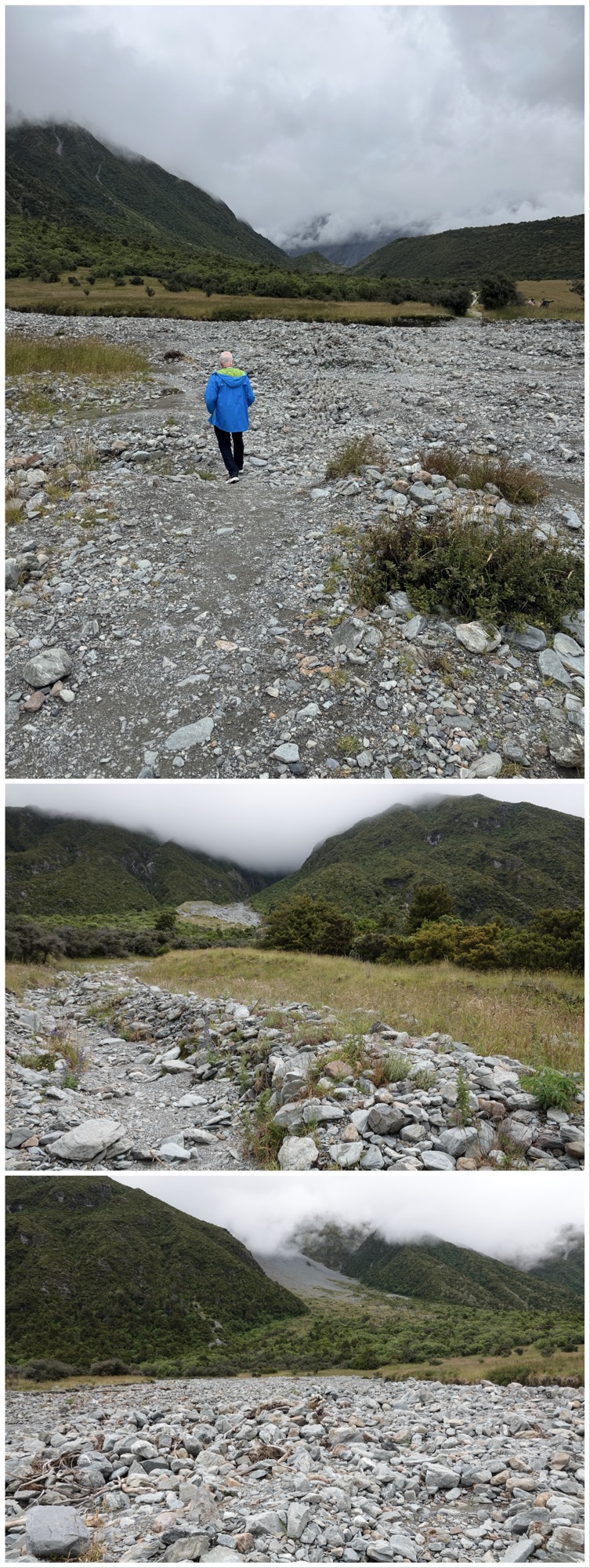
The scenery along the trail was beautiful, and the only sounds other than birds overhead was the crunching of our feet.
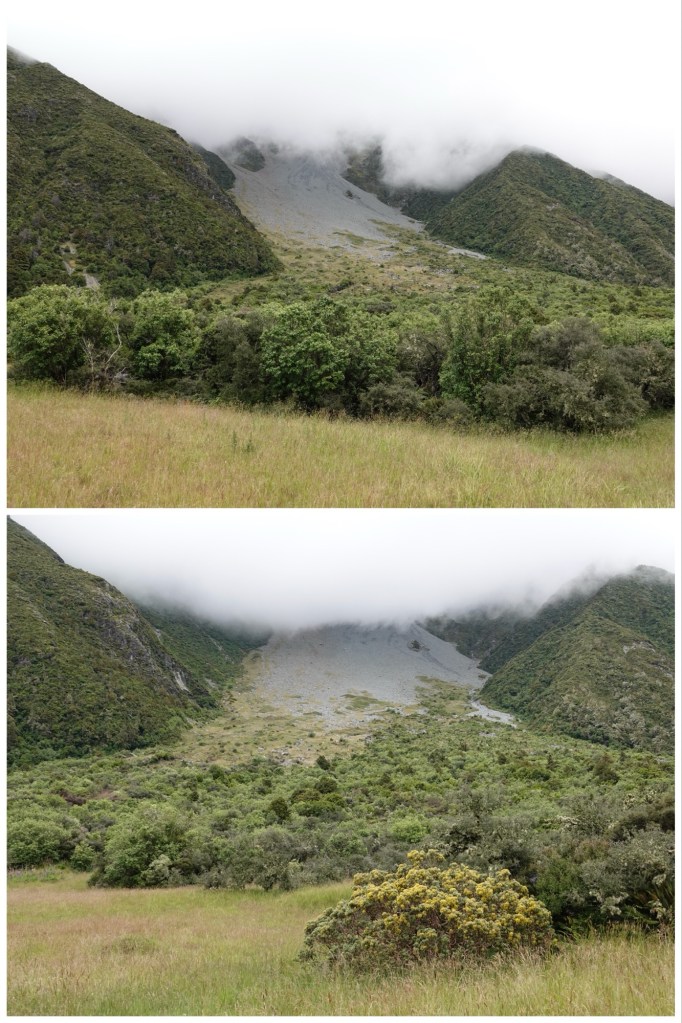
The trail was a mix of gravel path, boardwalk, and dry rocky riverbed.
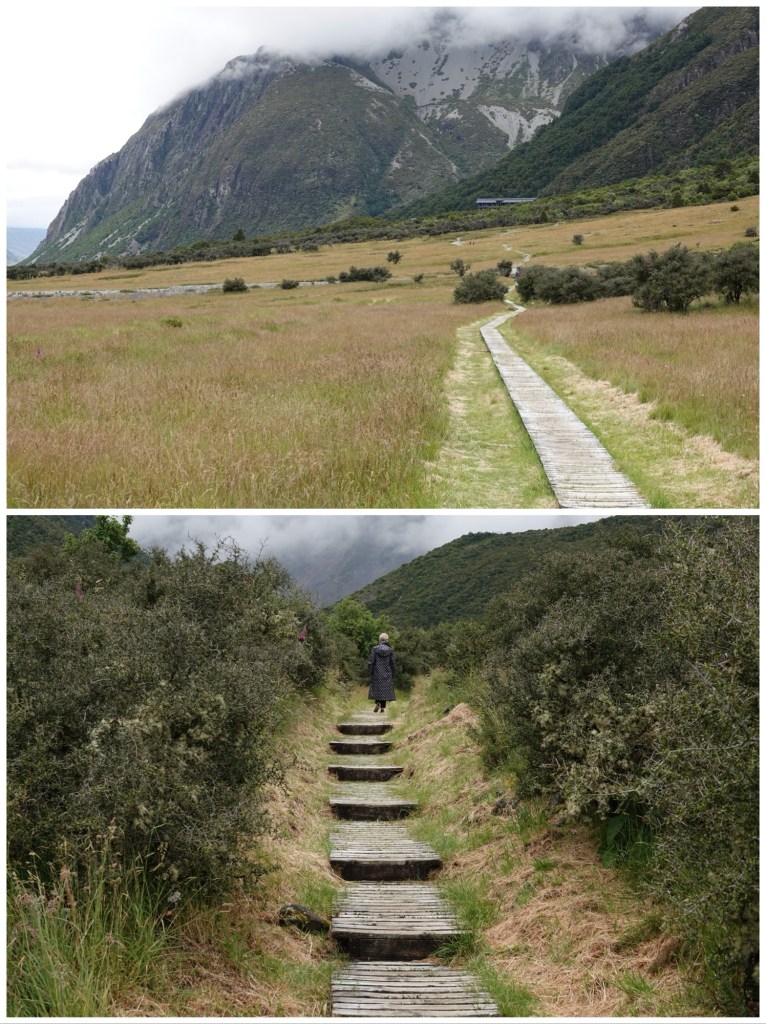
I can only imagine what this would look like during spring snow melt.
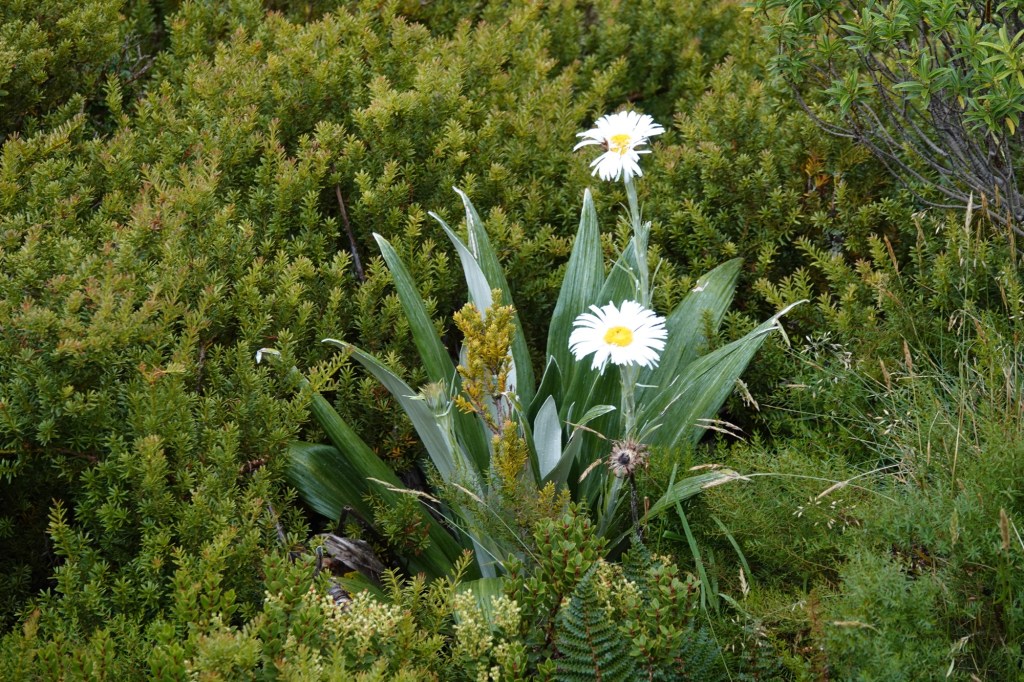
When we were almost at our destination, we noticed a Celmisia (Mountain daisy). We’d learned at the visitor centre that the mountain daisy provides food and protection for many insects, including the many buzzing flies we encountered along the trail.
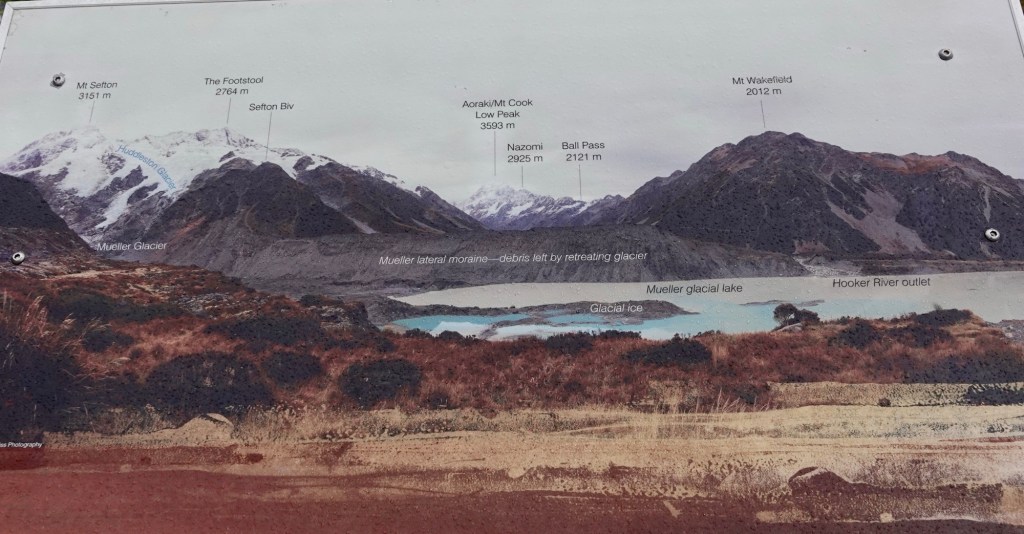
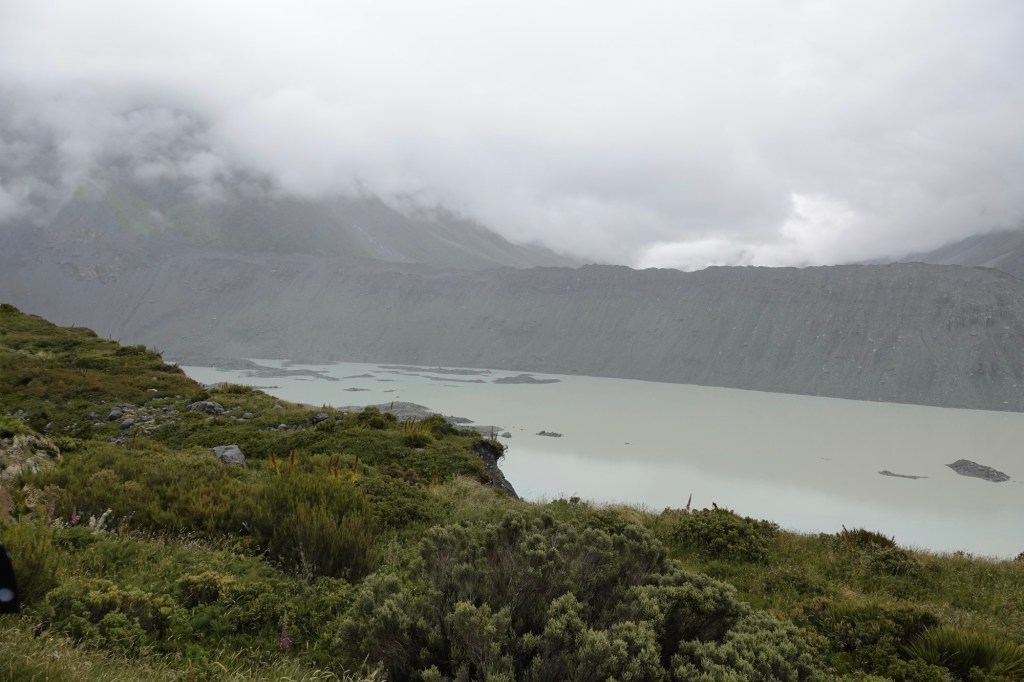
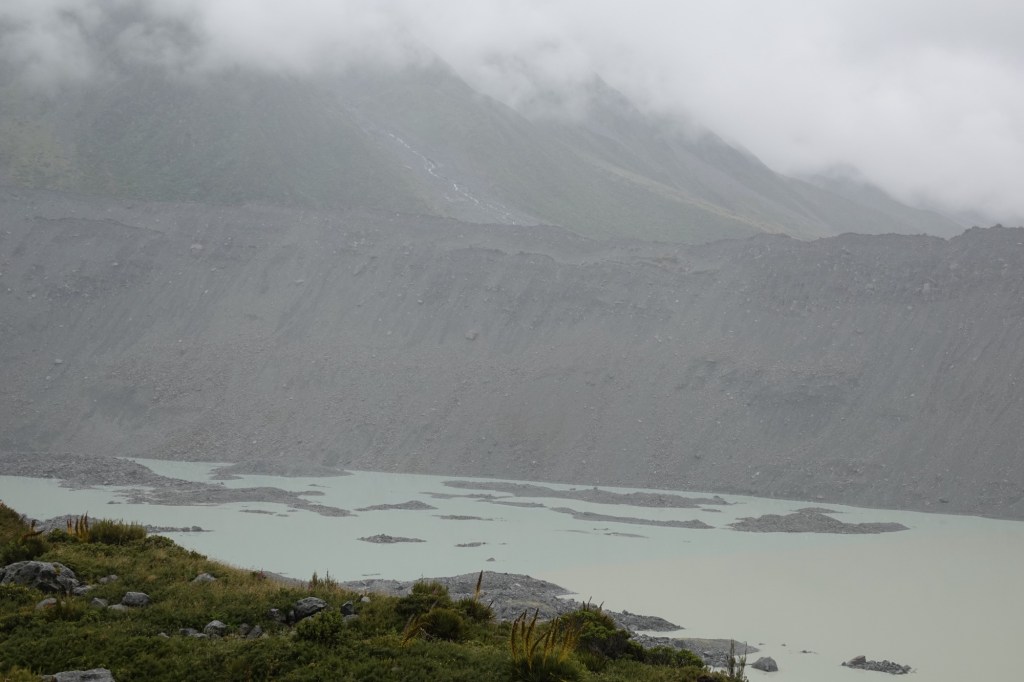
Our reward for a round trip of over 12,000 steps was the view at Kea Point of glacial Lake Mueller. Sadly, the sun never did appear to give is a view of peaks or glaciers.
What we’d hoped to see (from the plaque at the lookout):
What we did see:
Before dinner, we met Sir Edmund Hillary’s daughter Sarah and learned more about life with her father, and her family’s 6 decades of philanthropic endeavours in Nepal.
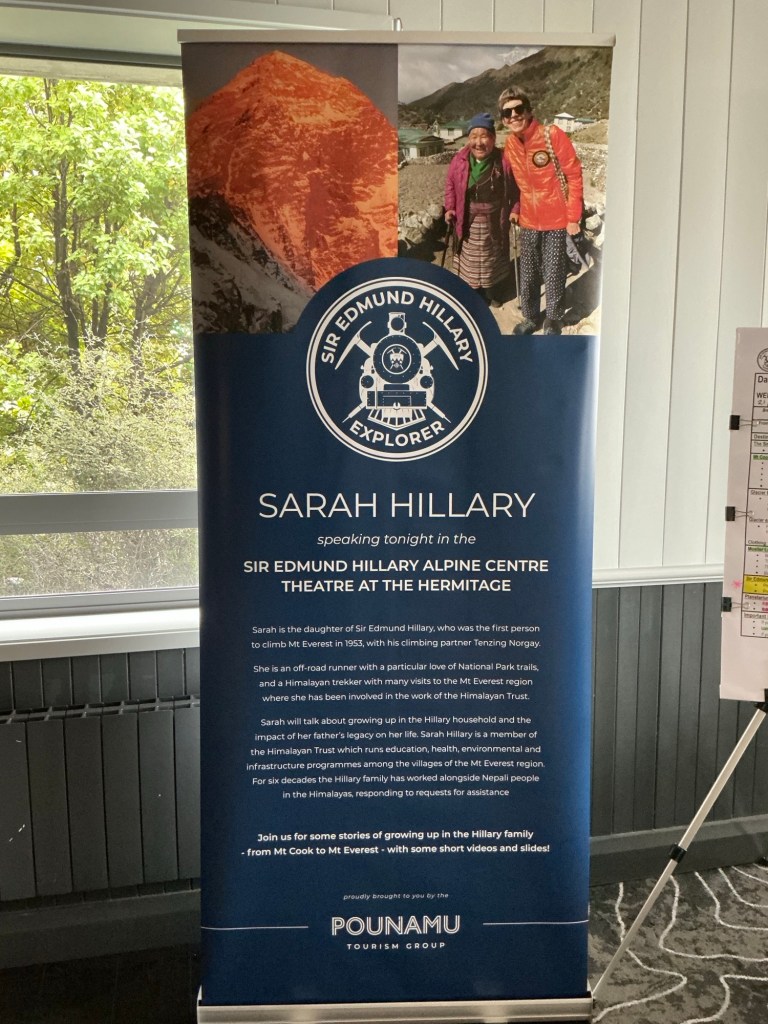
It was a really interesting glimpse into a childhood that may have been “ordinary” to Sarah and her siblings, but certainly seemed extraordinary to us. Imagine travelling back and forth to Nepal in the 1960s – or for that matter packing a family of 5 and all their camping gear into a Mini Cooper! No wonder her mother Louise wrote a book titled “Keep Calm If You Can”.
We were all in awe of the work the Himalayan Trust, the Hillary family’s creation, has done to build schools and hospitals in Nepal. Sir Edmund Hillary apparently said words to the effect that his Everest accomplishment was far less important than what his fame allowed him to do to improve lives in Nepal.
It was a bonus to learn that a portion of our tour cost goes to support the Trust.
And so ends another amazing day on New Zealand’s South Island. Tomorrow our tour circles back to Christchurch for a day.
 Rose and Ted’s Excellent Adventure