We’d originally not chosen an optional excursion, and since our hotel rooms here in Dunedin would each have their own washer dryer (which by Day 7 was feeling like a nice treat) had thought about just having a laundry afternoon.
But… an albatross colony? I simply couldn’t resist the idea of Ted being able to photograph these incredible birds – so we did laundry last night instead.
Breakfast today was toasted crumpets with Manuka honey, making a great start to another lovely day.
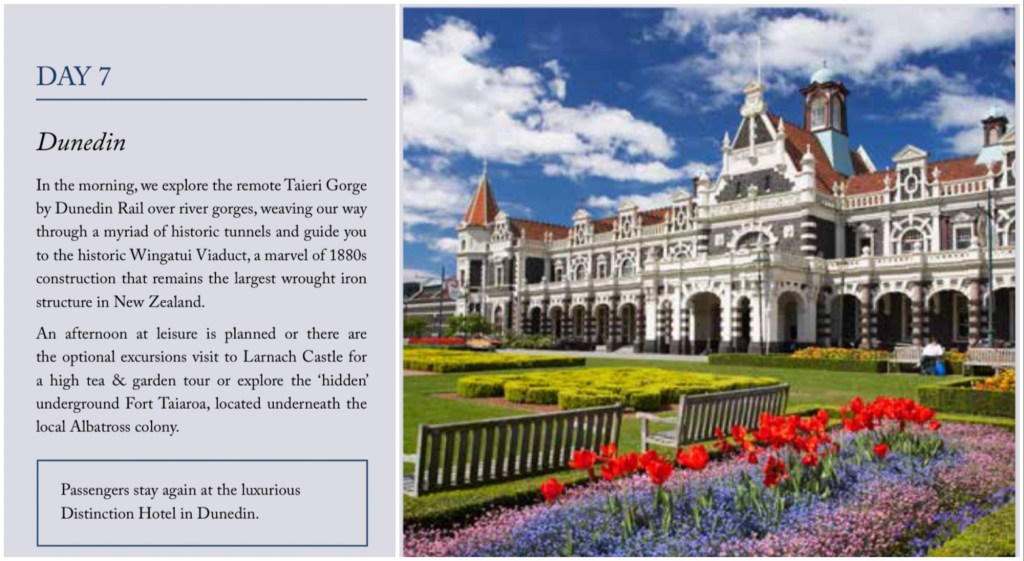
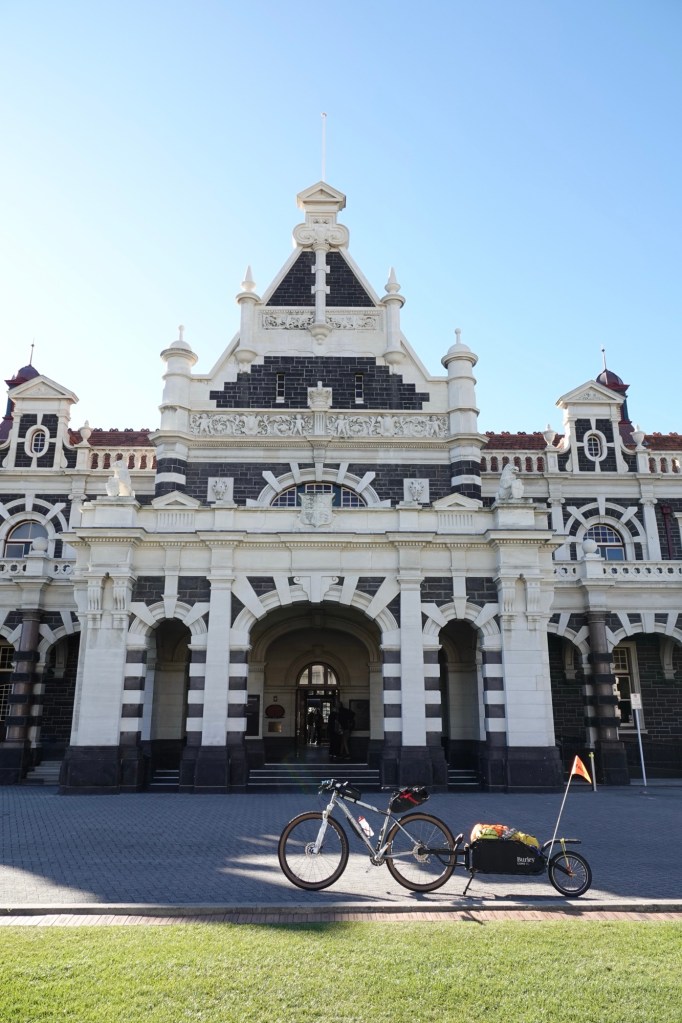
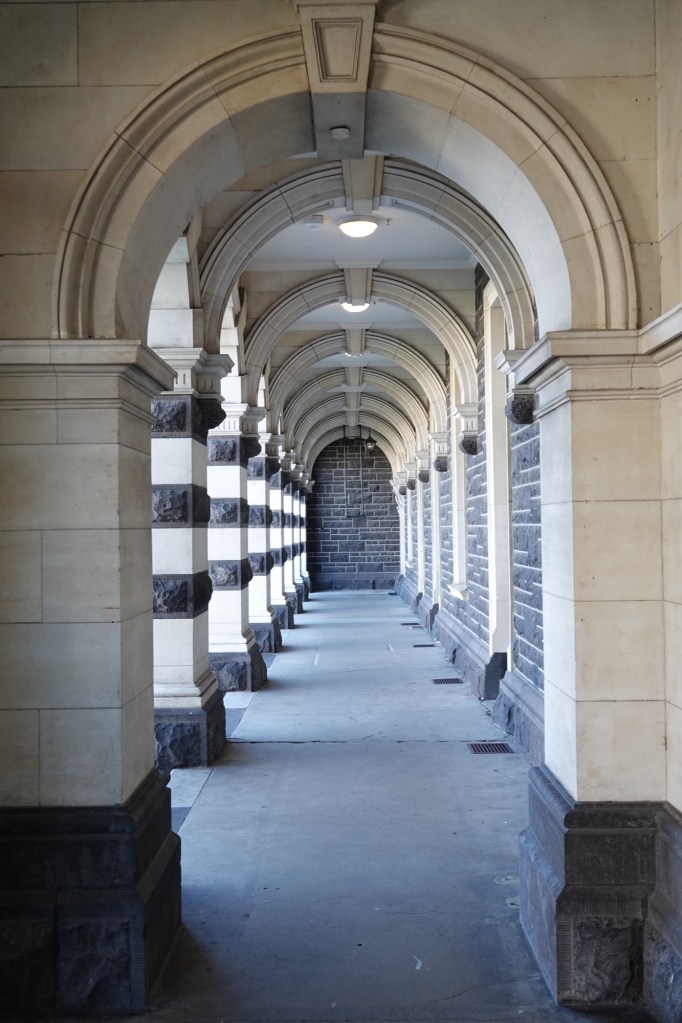
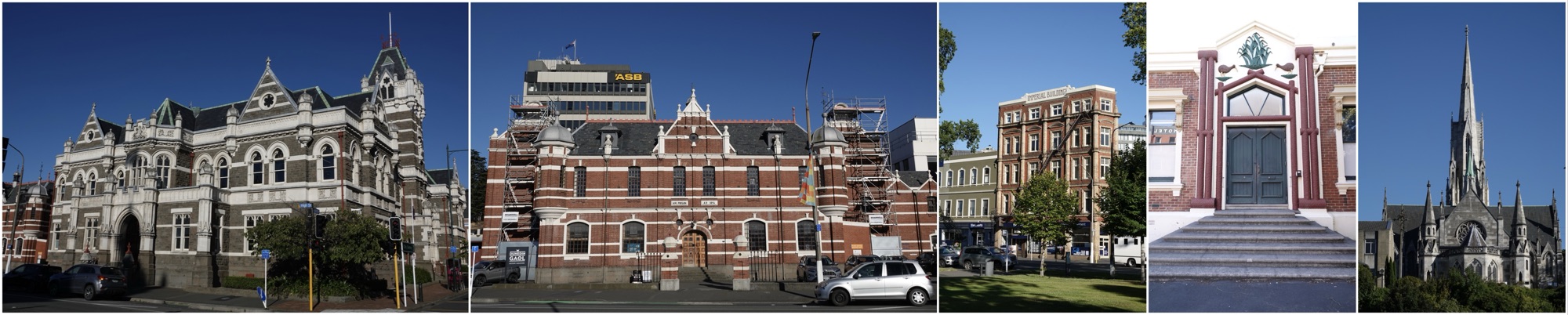
Dunedin train station is built in the Flemish renaissance style in limestone and blue basalt.
Over 75000 Minton tiles create the patterned floor and Royal Doulton ceramics adorn the walls.
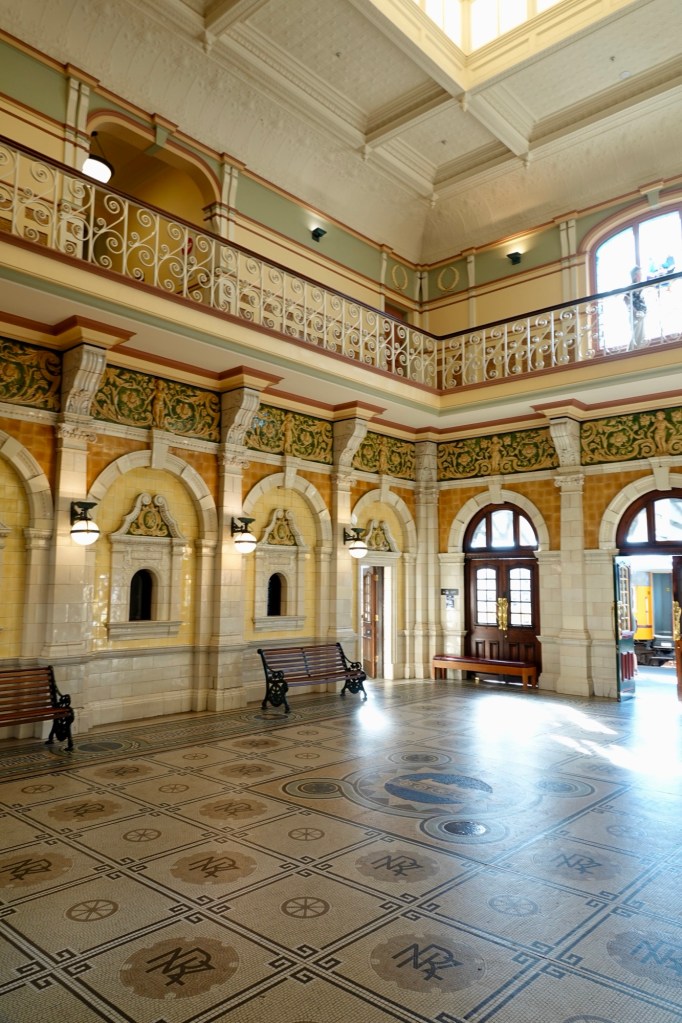
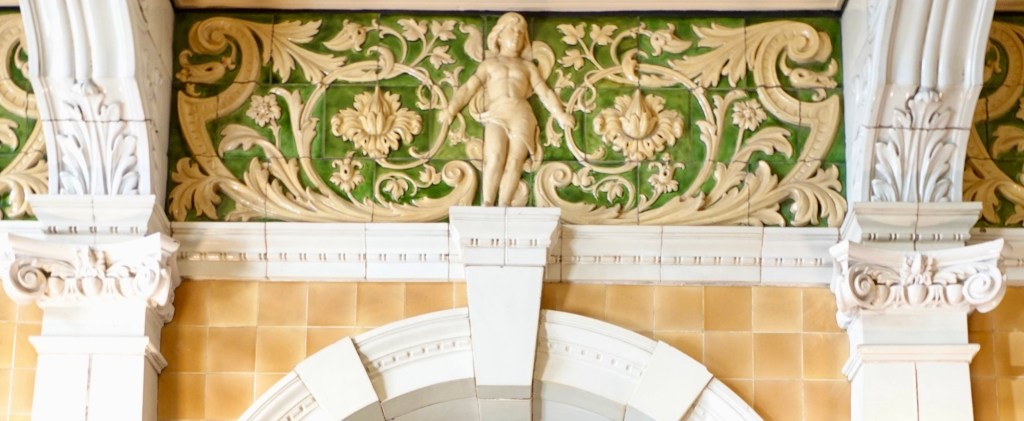
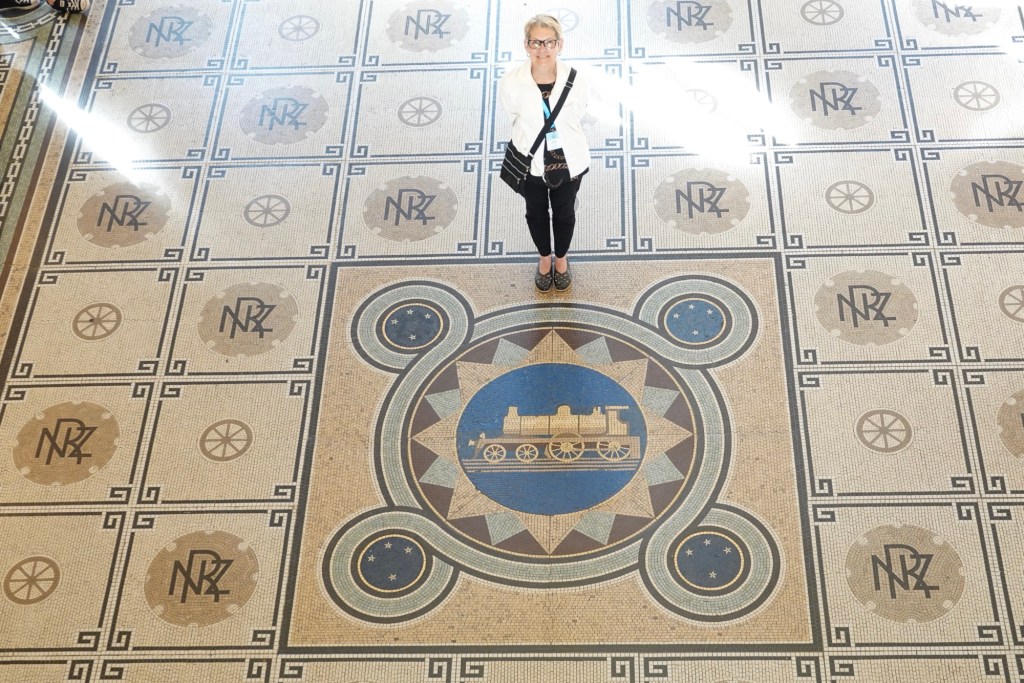
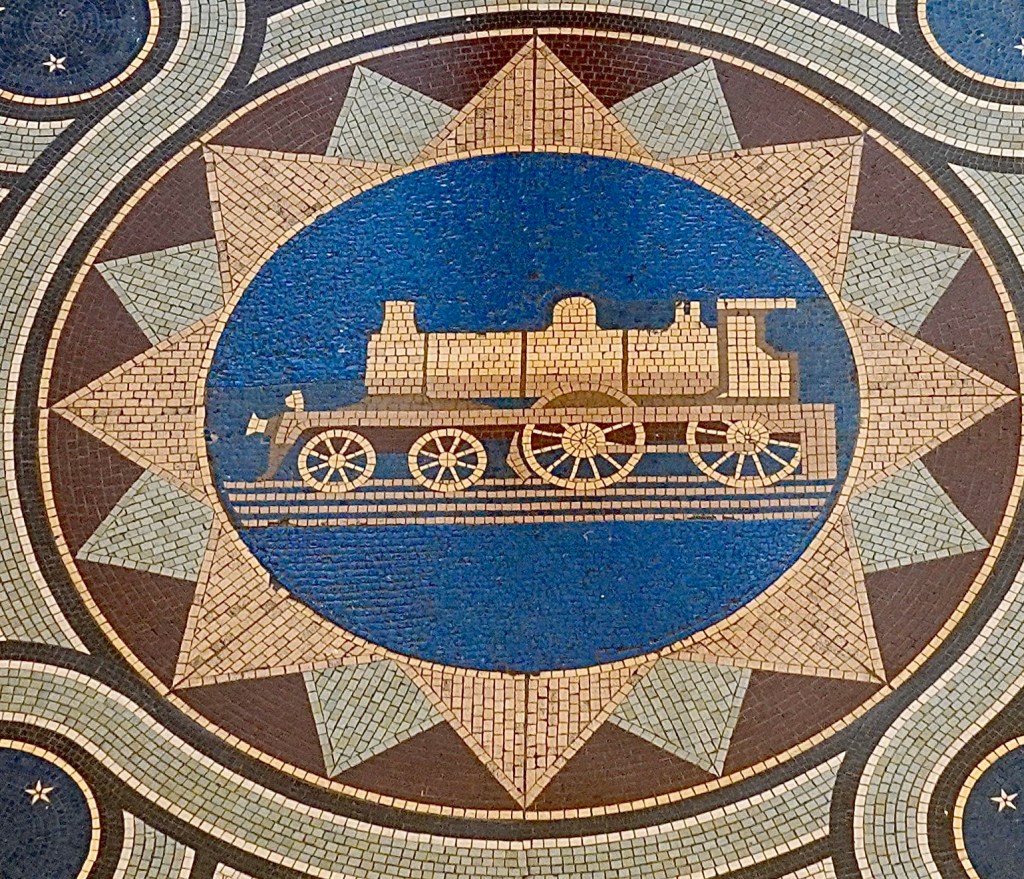
There is also a magnificent stained glass window.

The city of Dunedin also has NeoGothic, Romanesque, Victorian, Elizabethan, and Art Deco architecture – well worth coming back to explore for a couple of days.
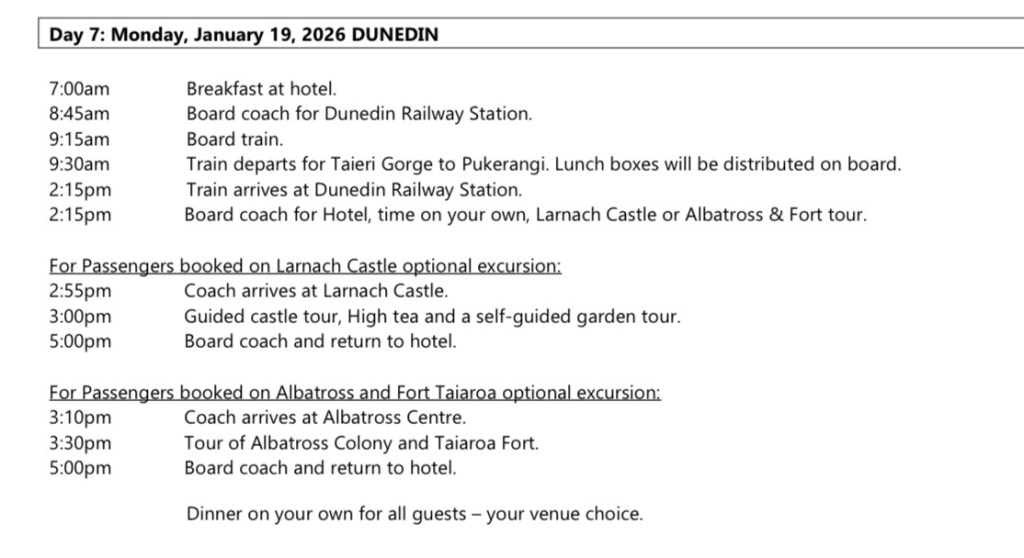
But …today’s focus was on our train journey through Taieri Gorge.
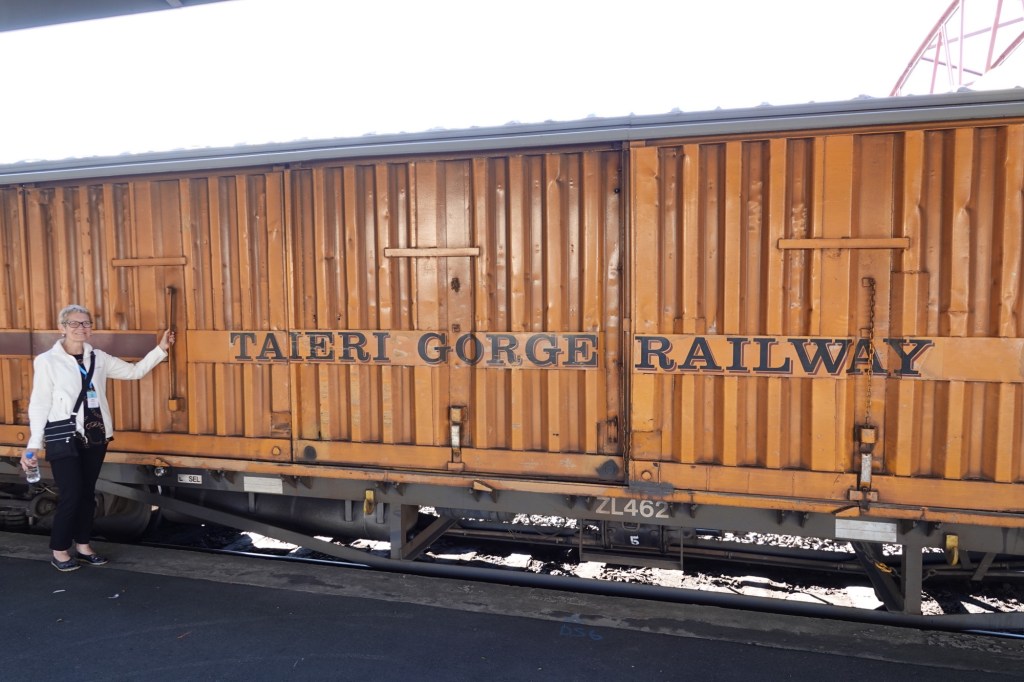
The round trip took almost 5 hours.
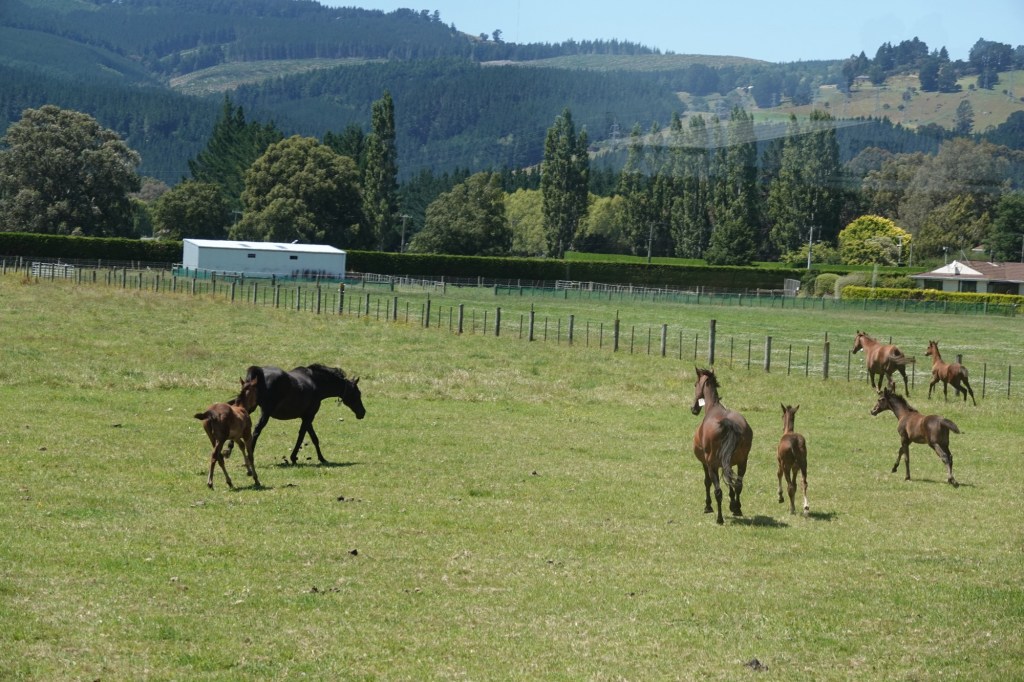
Along the plains of Taieri en route to the gorge we passed by horse farms where New Zealand racing champions are bred and trained.
We went through ten tunnels in each direction of our return trip, almost all of them dug through basalt rock.
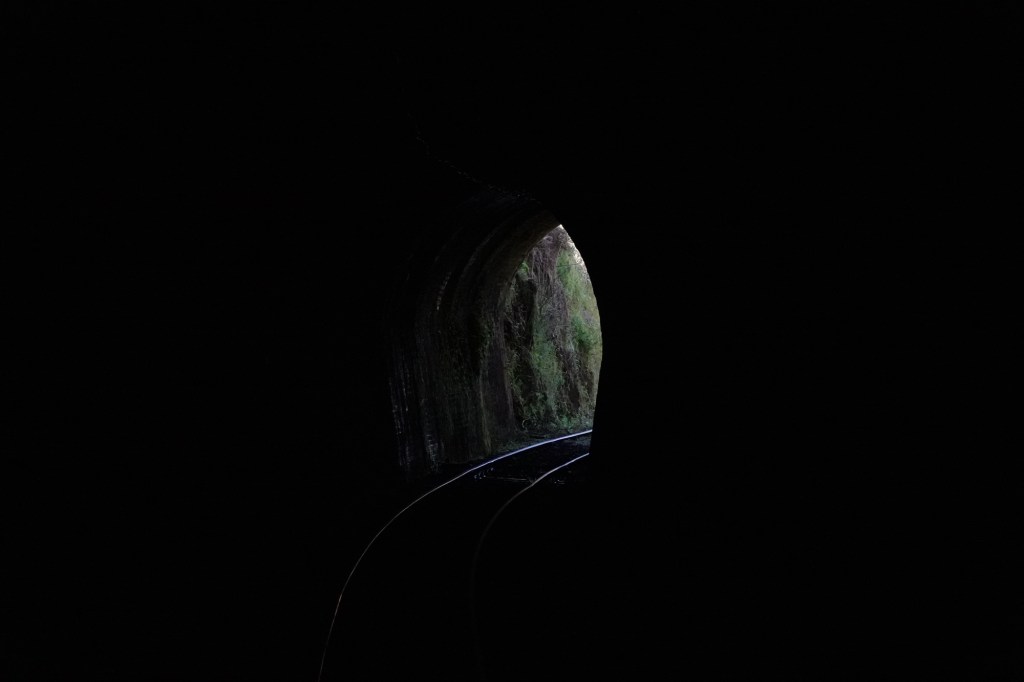
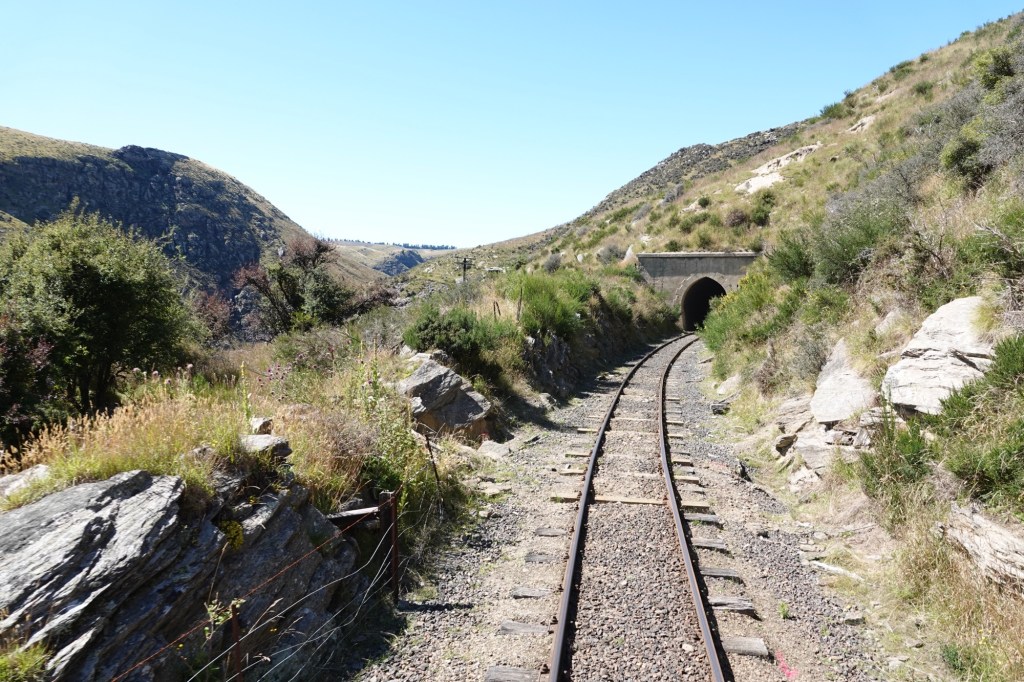
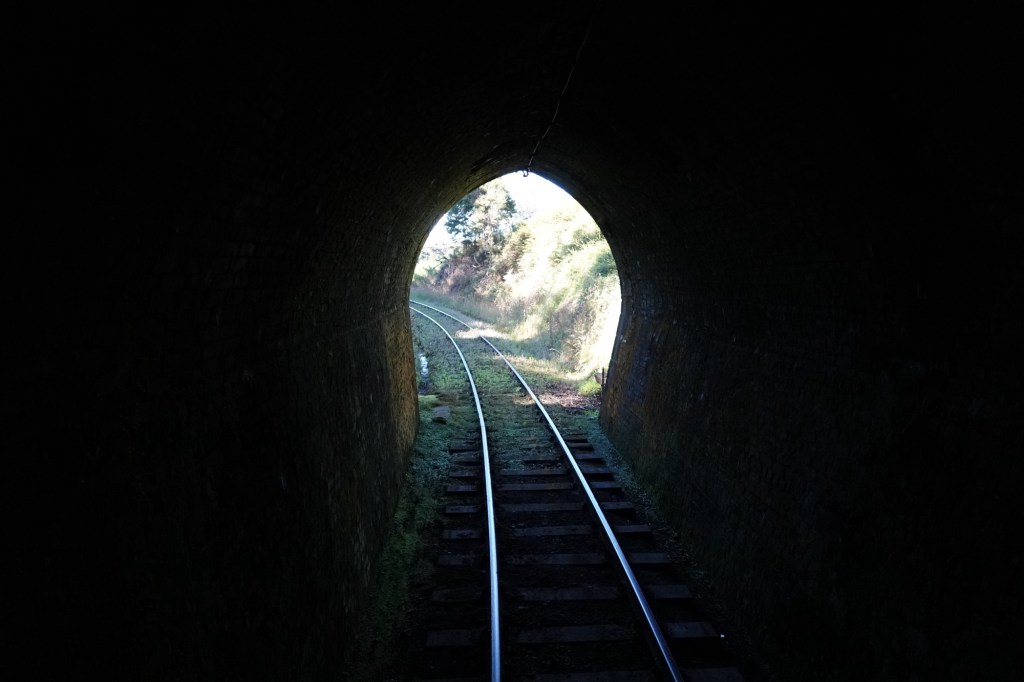
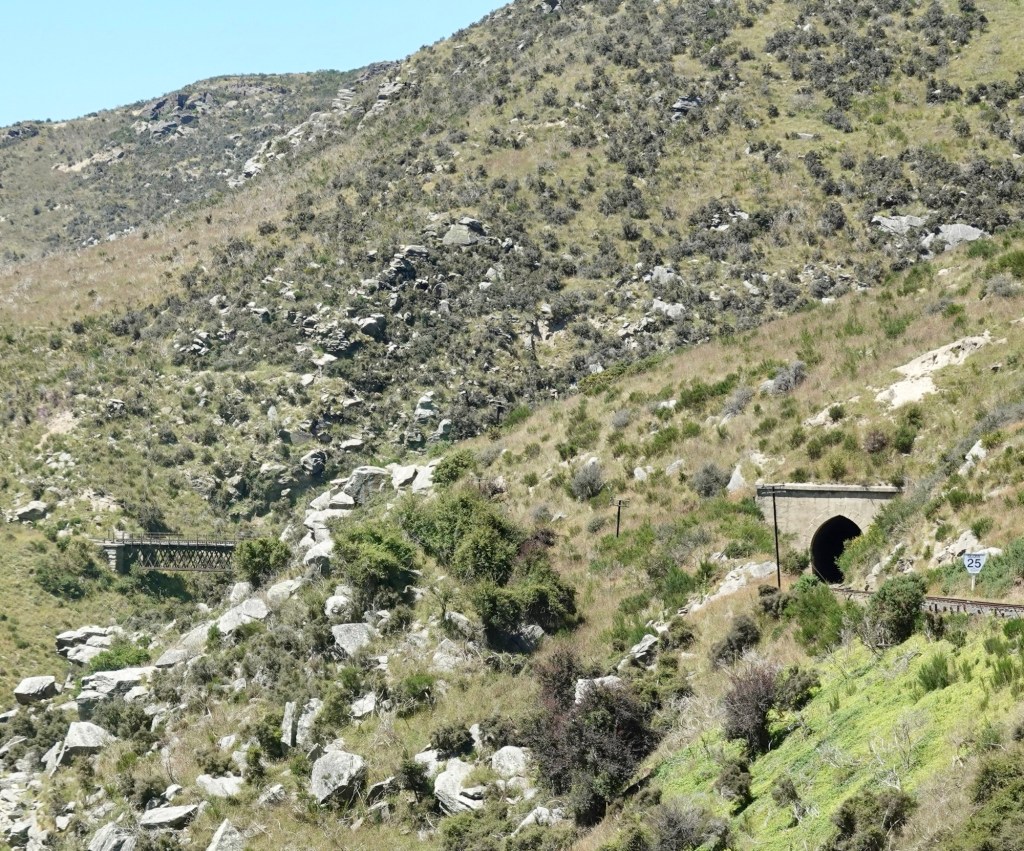
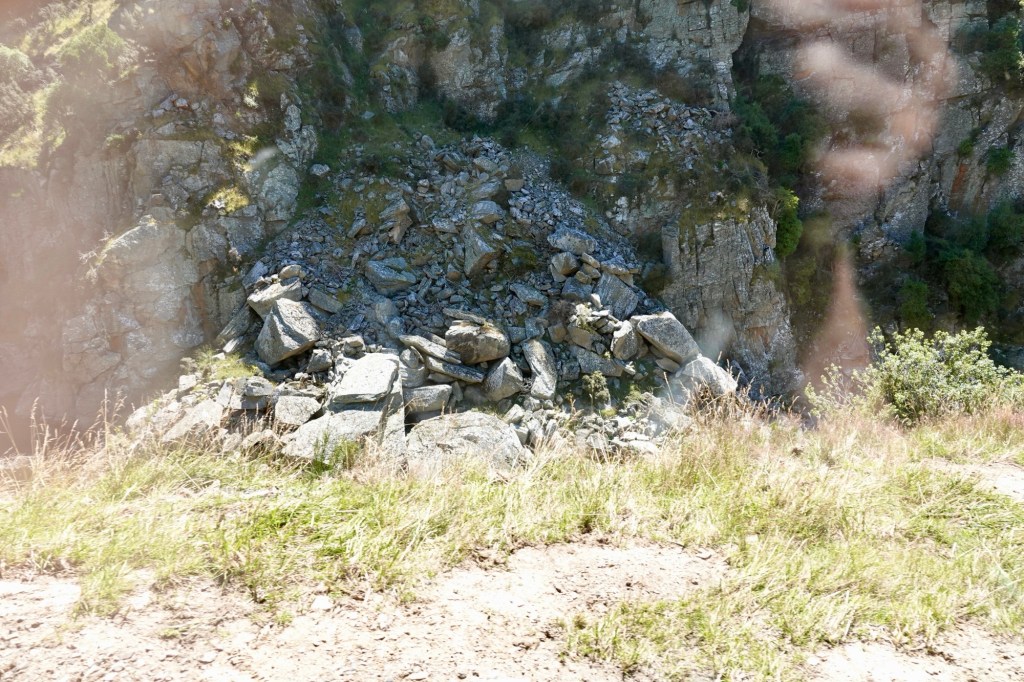
We heard lots of stories about landslides, reminding us that the South Island is earthquake country. The Kiwis nonchalantly refer to the landslides as “slips”.
We passed areas of farmed trees, identifiable by the fact that their lower branches are trimmed away.
We travelled over the 1879 Wingatui viaduct.
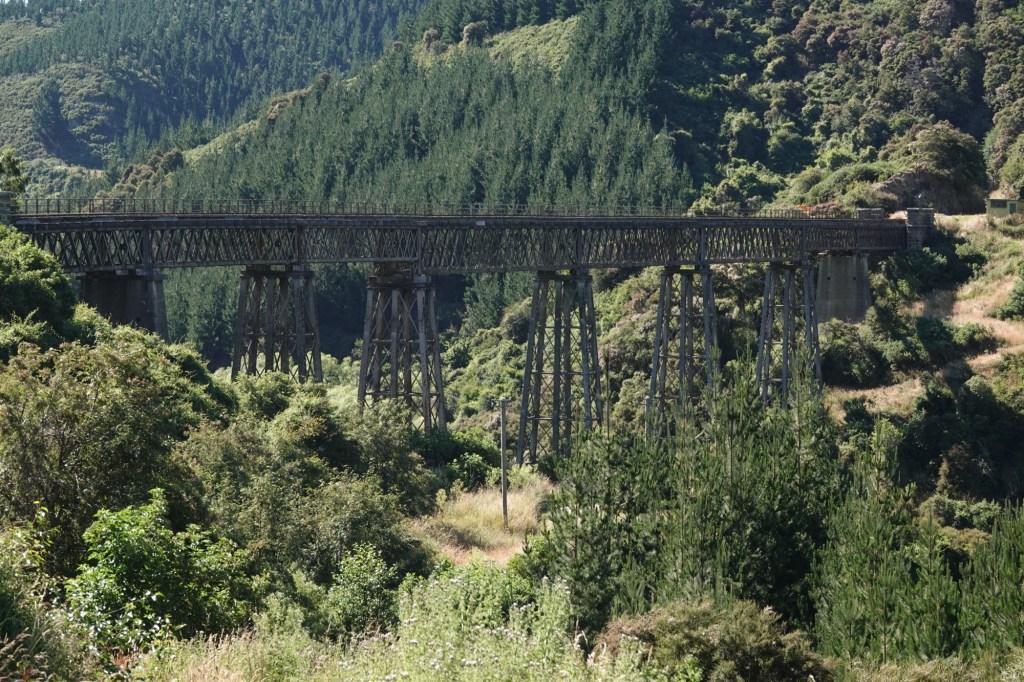
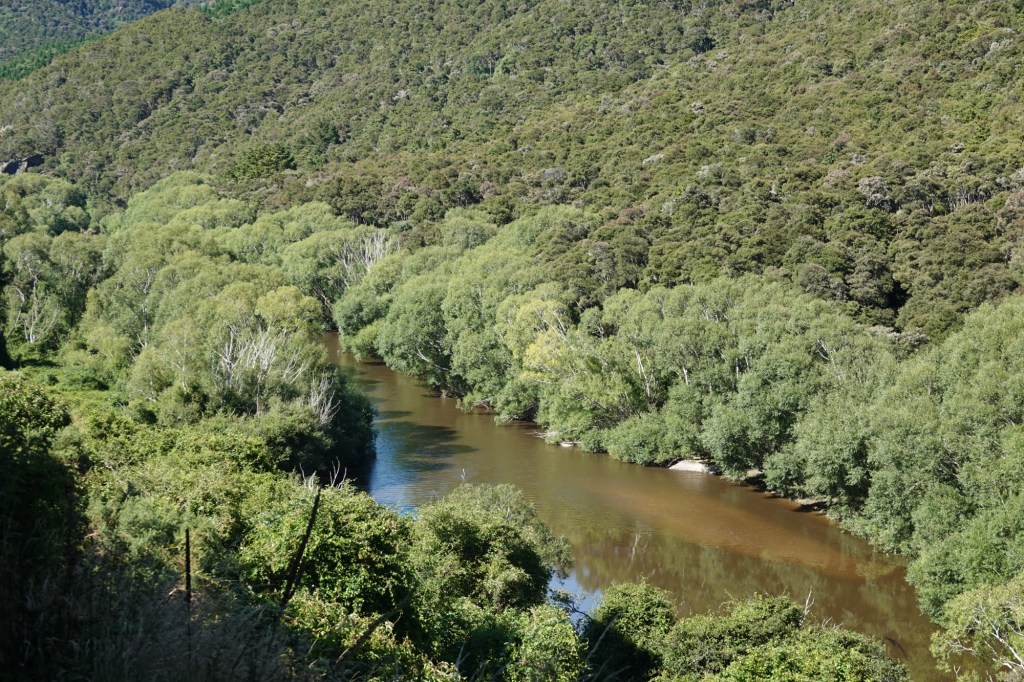
Shortly after that we got our first glimpse of the Taieri River, in the middle of the historic gold fields.
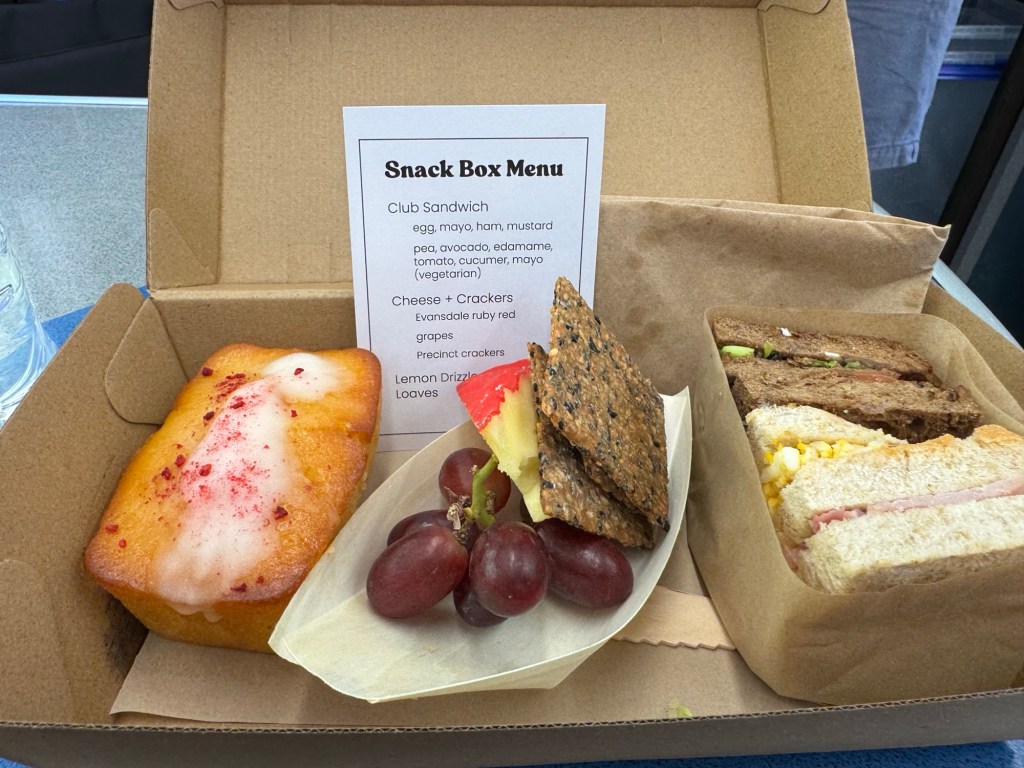
It was another boxed lunch day, this one being the first one that didn’t include a crisp apple with which to finish.
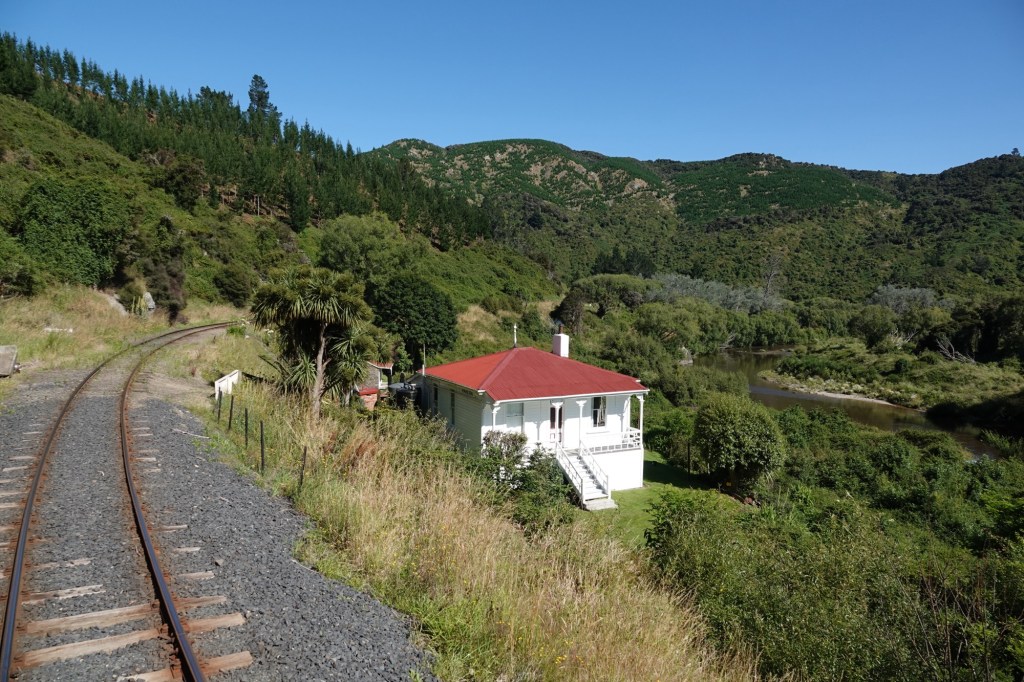
At Parera we passed a beautifully restored railway cottage which a family has made their full time home. It’s remote living at its best.
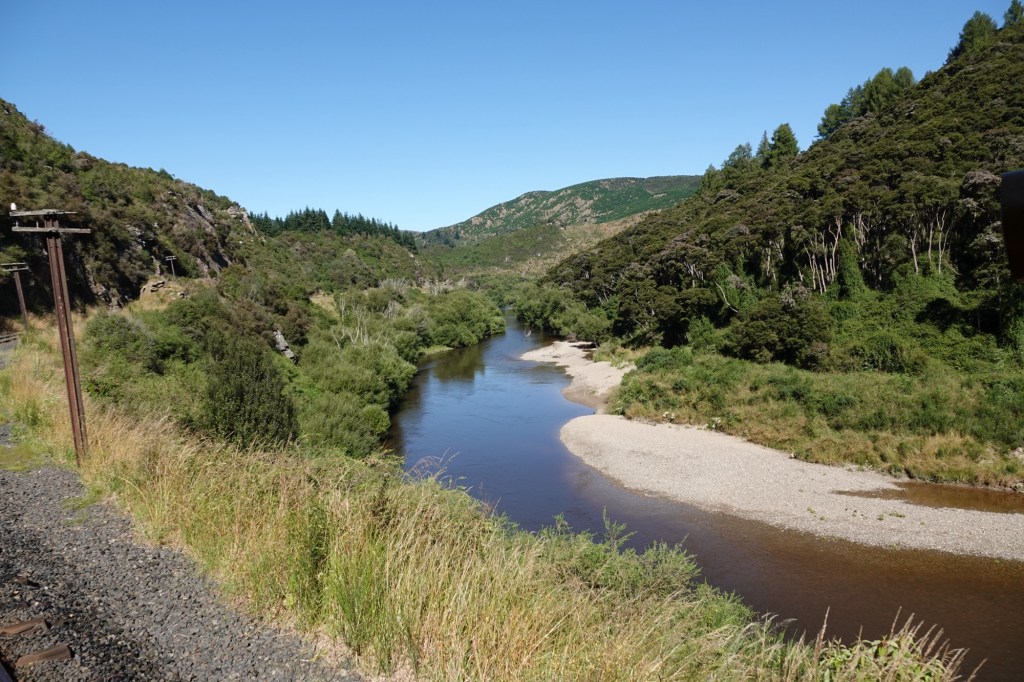
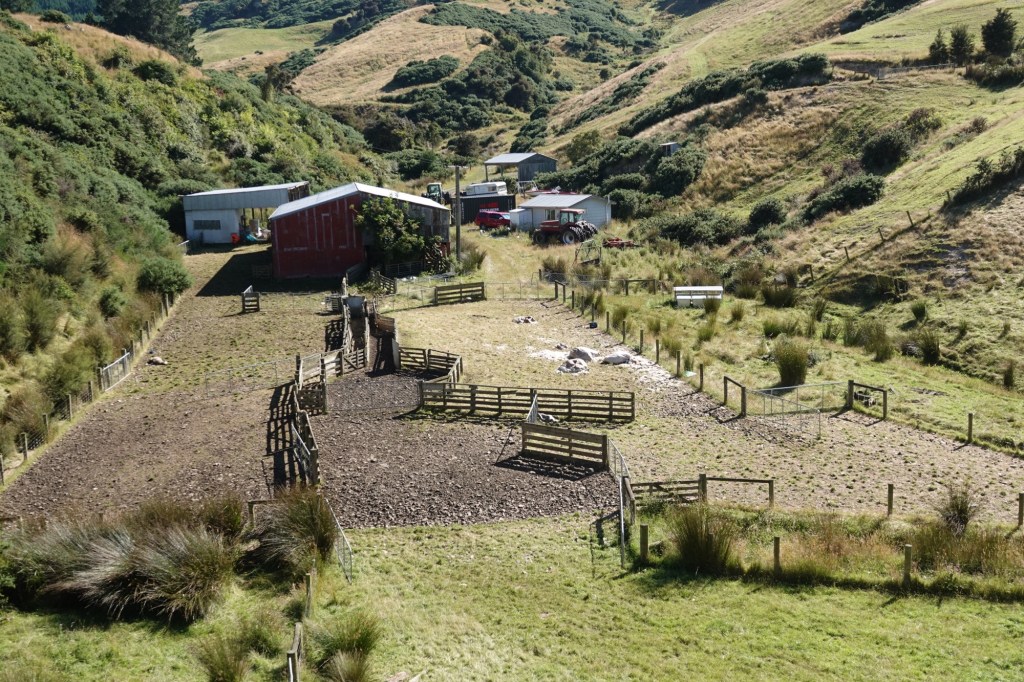
The seemingly empty hillsides are often part of huge sheep stations. Occasionally we could glimpse portions of the steep roadways which sheep trucks need to negotiate.
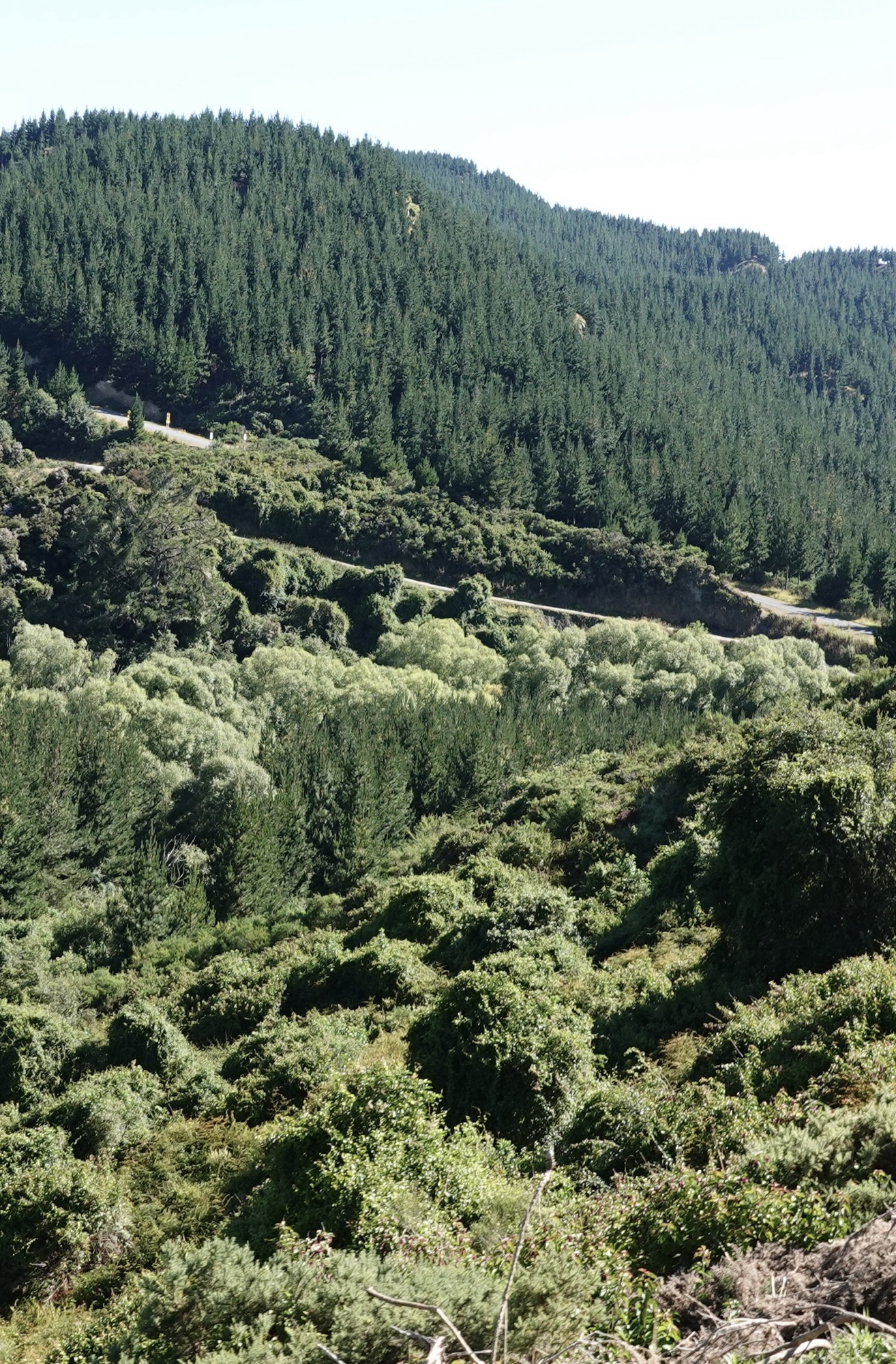
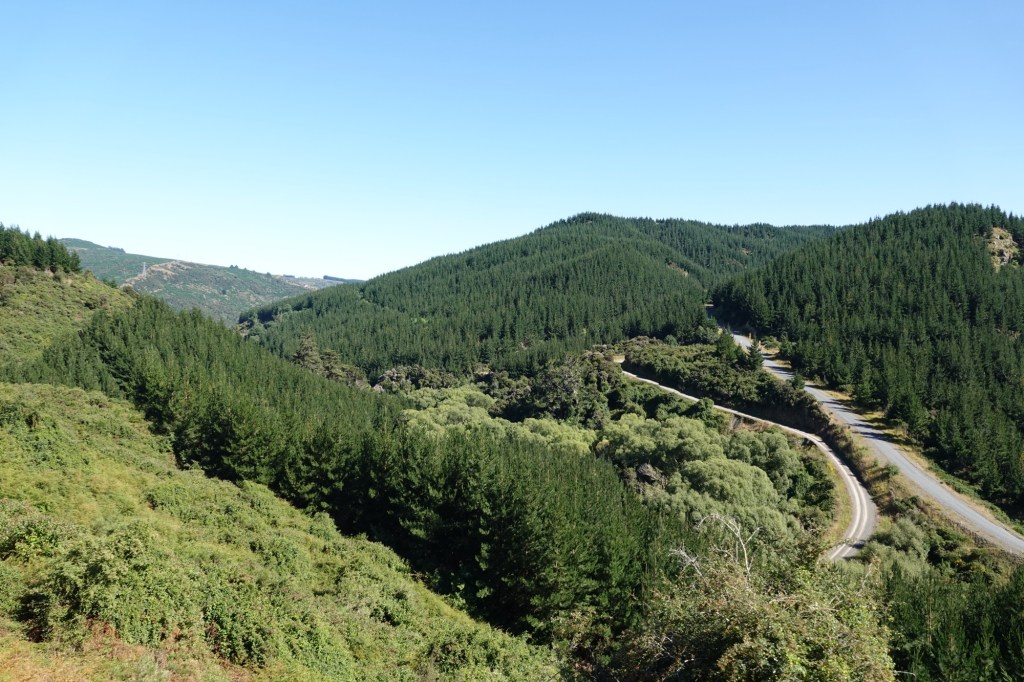
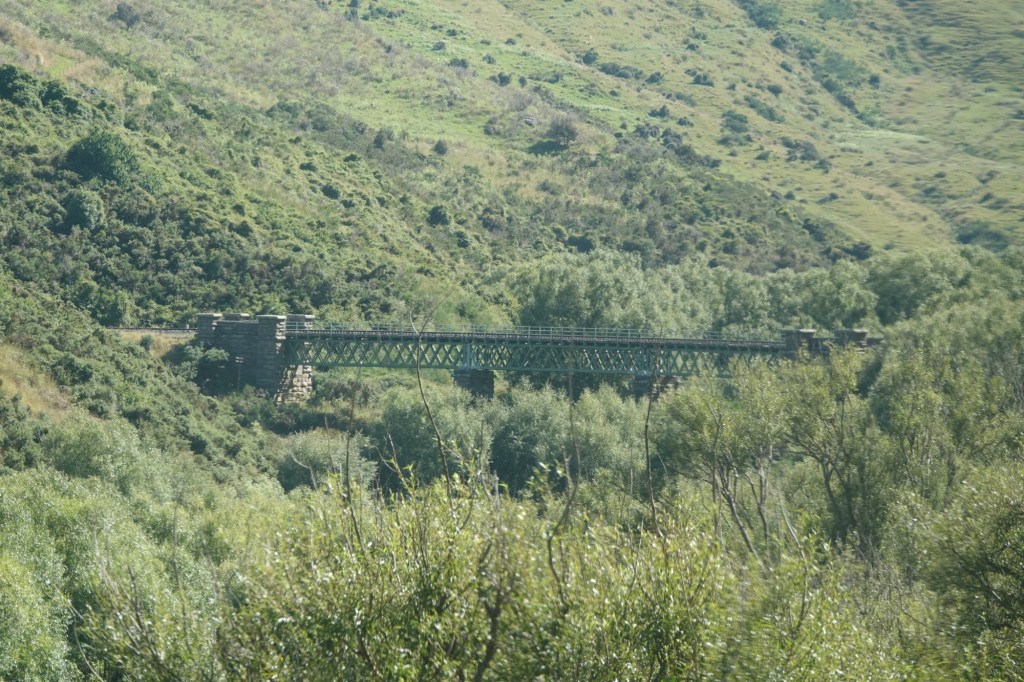
From his vantage point standing at the back of our train car, Ted could see the engine and the first few cars as they negotiated the curves.
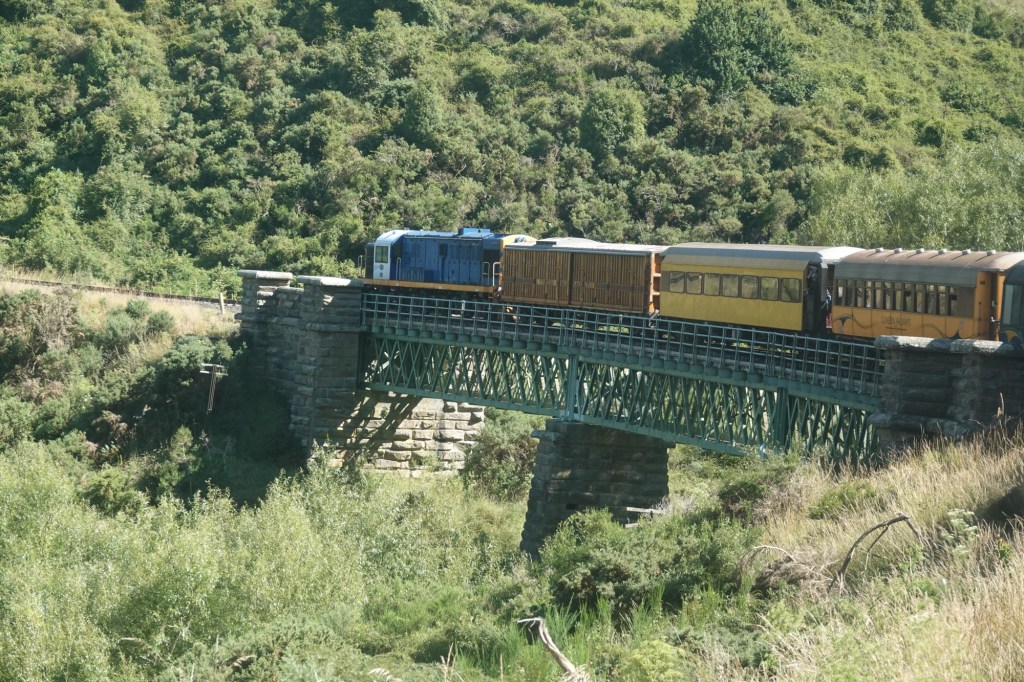
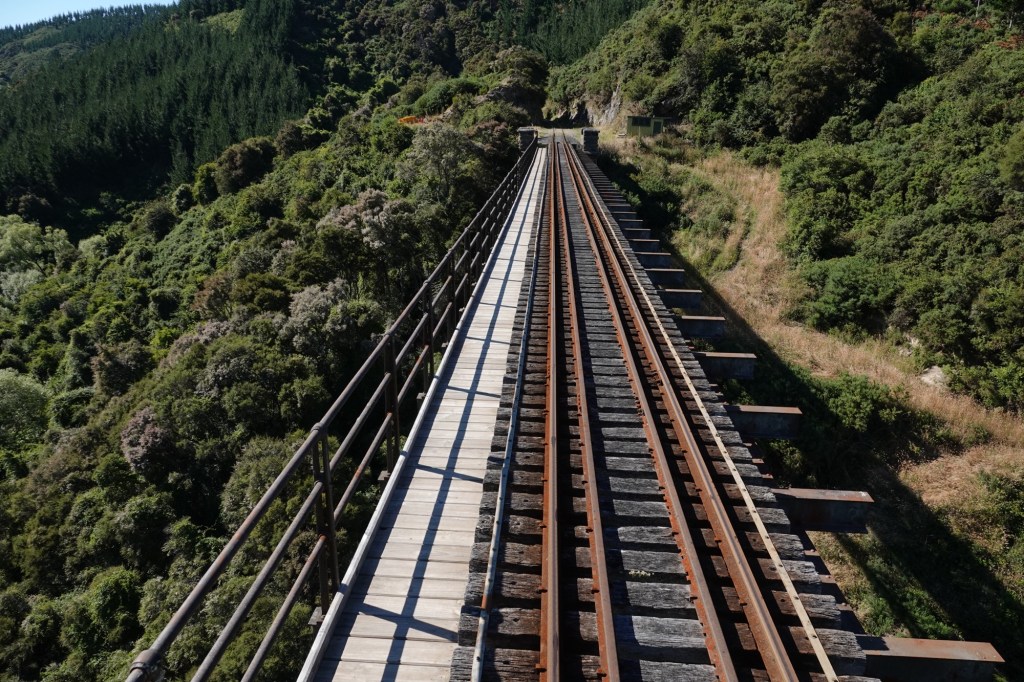
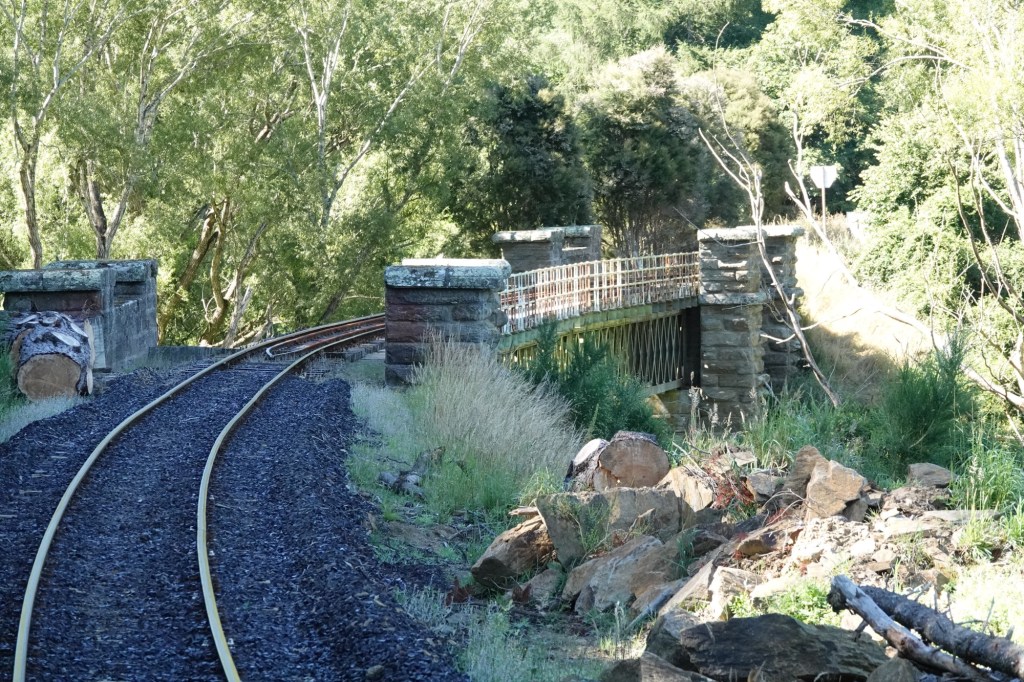
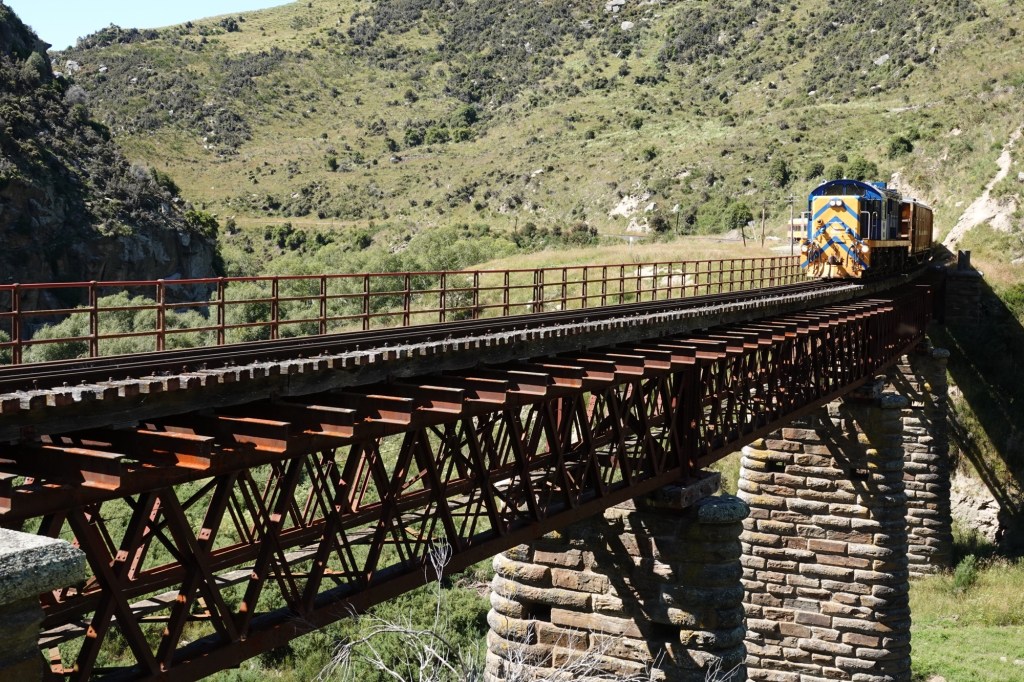
BONUS: a bridge walk across the Deep Stream Bridge! The conductor/journey narrator announced that those who had no mobility issues and were not afraid of heights could walk the trestle. The train would stop, park, let us walk across, and pick is up on the other side. Our tour guides said this has never happened before when they’ve done this stretch of train travel. Today apparently the sunny windless weather conditions were simply perfect for it.
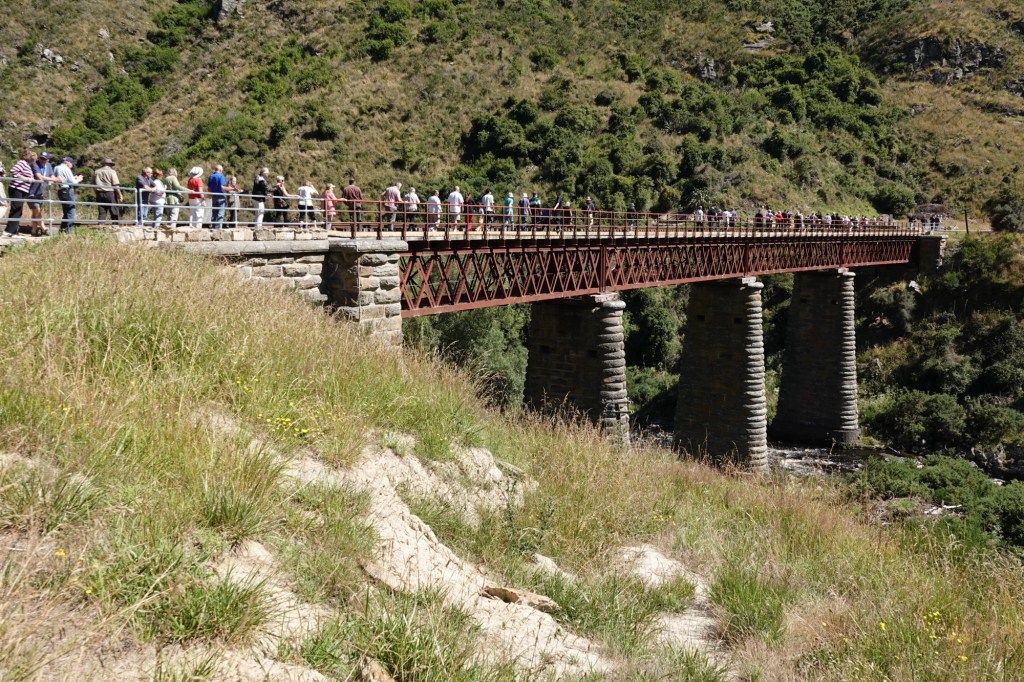
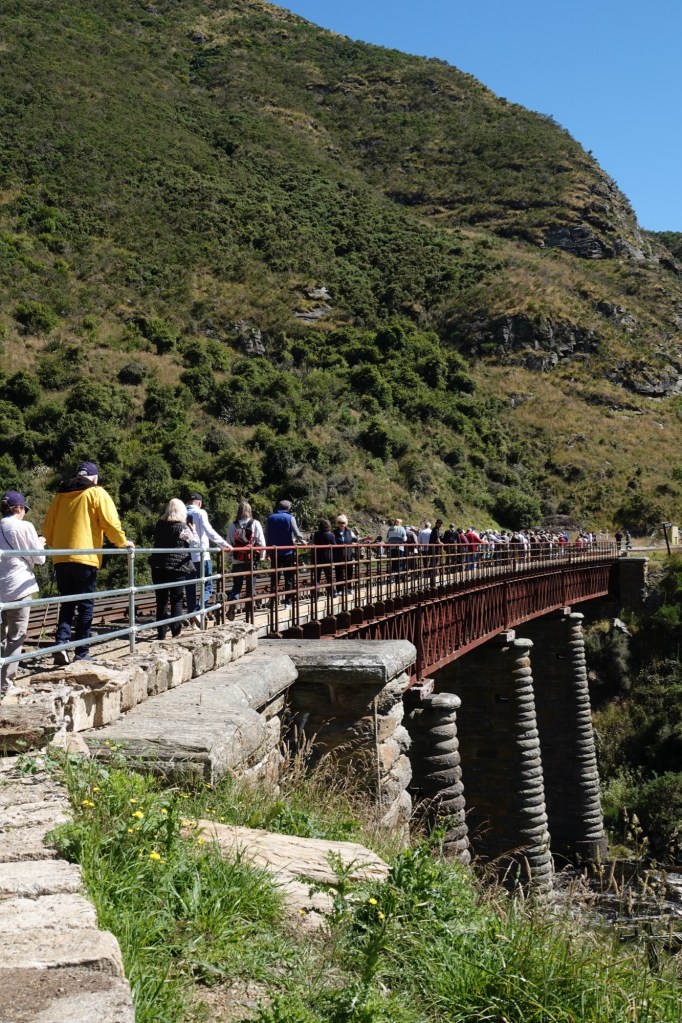
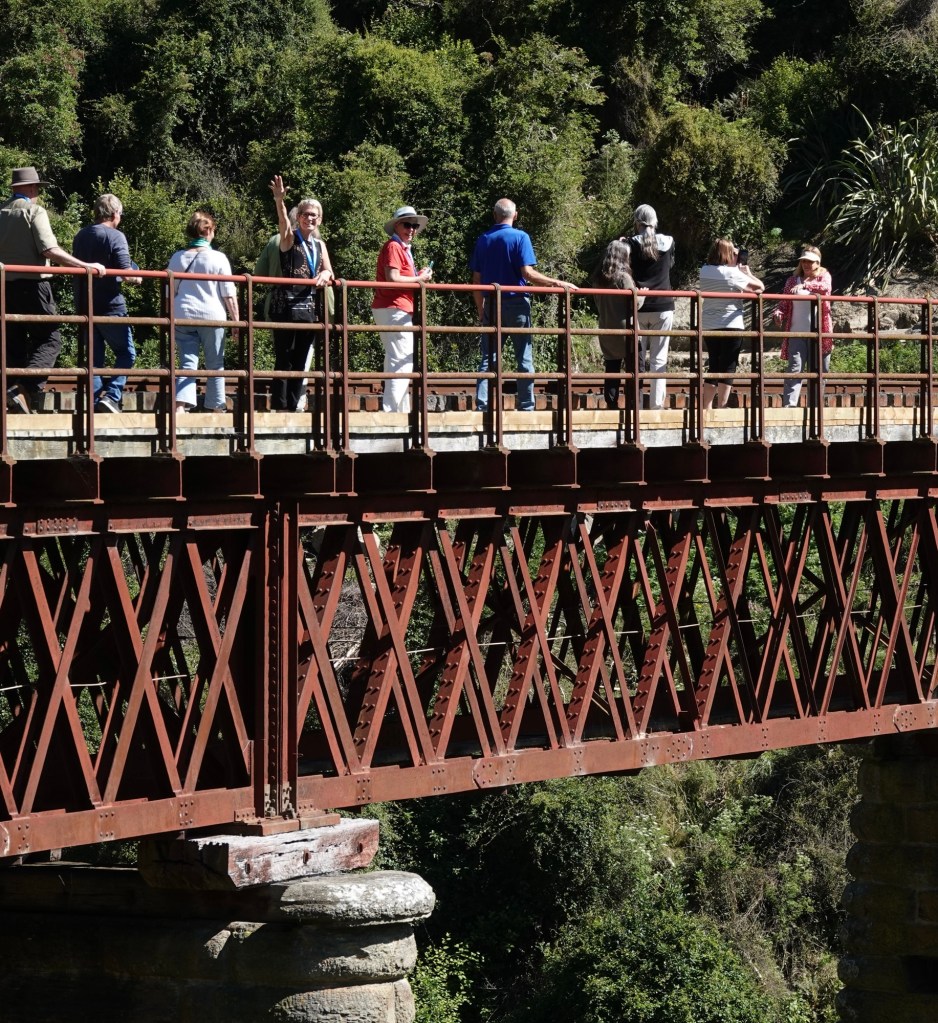
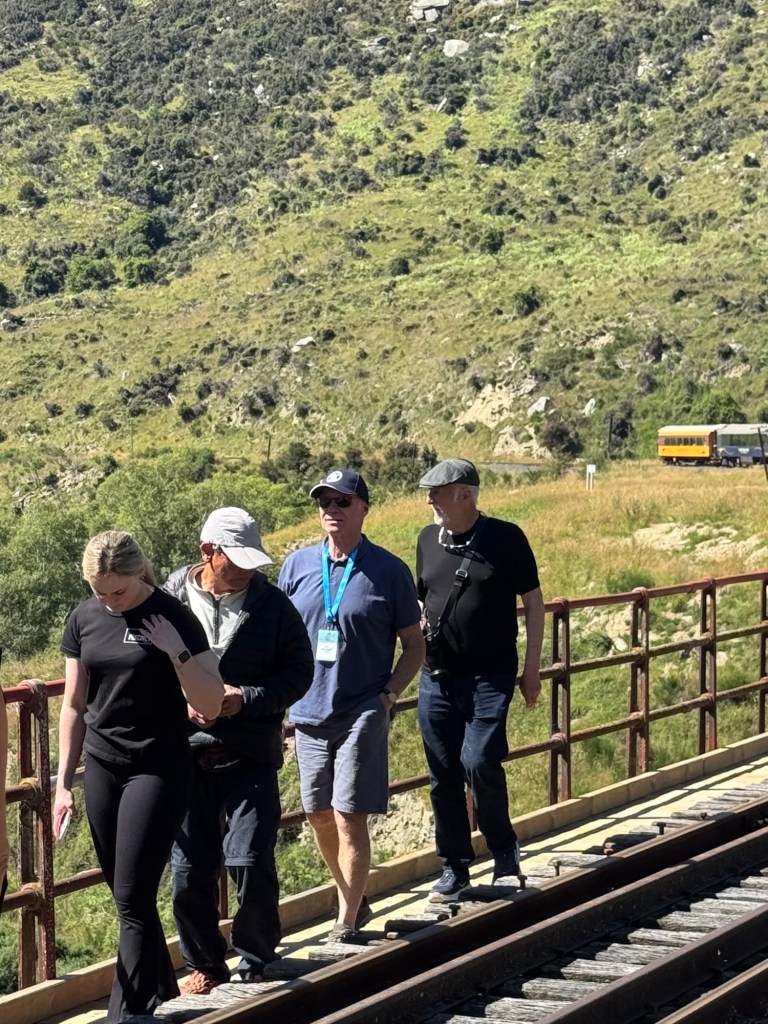
Being off the train meant that Ted could film the train crossing the bridge!
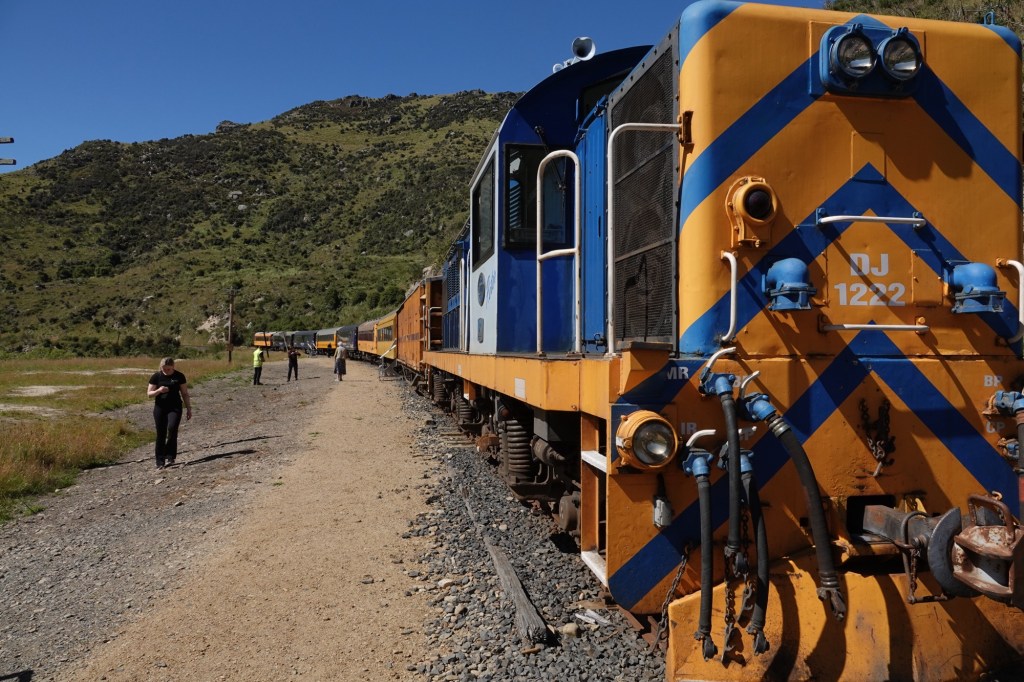
At the end of the line, the engine was uncoupled and moved via a siding to the other end of the train. We went from being the last coach to being the first.
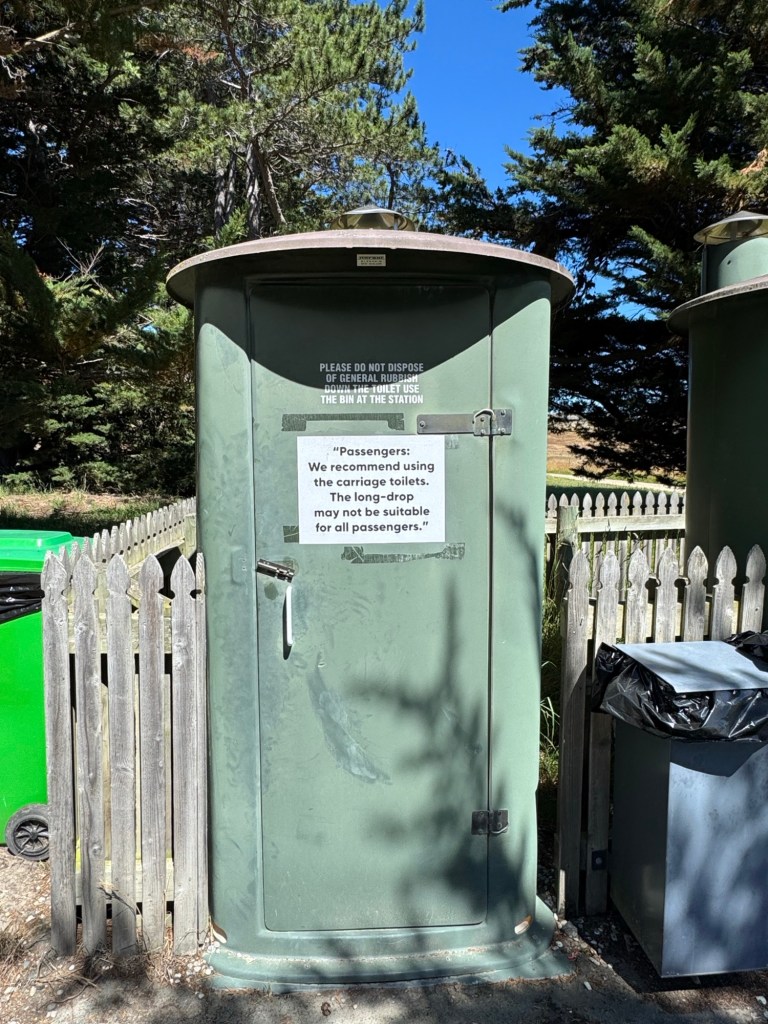
It was an almost half hour process that gave us a bathroom and shopping break – the former at a “long drop” (Kiwi-speak for a pit toilet) and the latter from a local artisan.
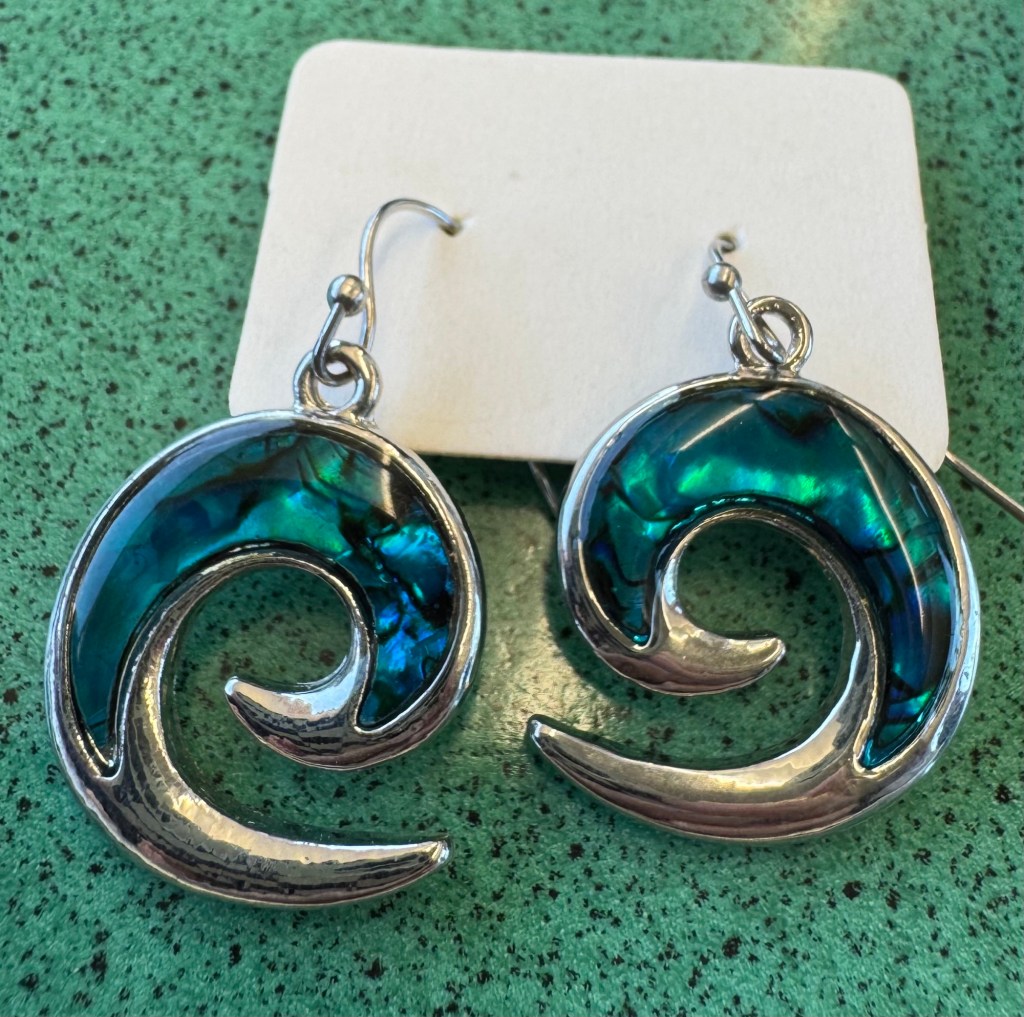
Ted pointed out these pretty earrings made of polished paua shell which are now in my collection. Their shape is intended to mimic the tip of a fern frond unfurling. New Zealand’s symbol is the silver fern.
Ted managed to capture in a single photo all four bridges across The Notches.
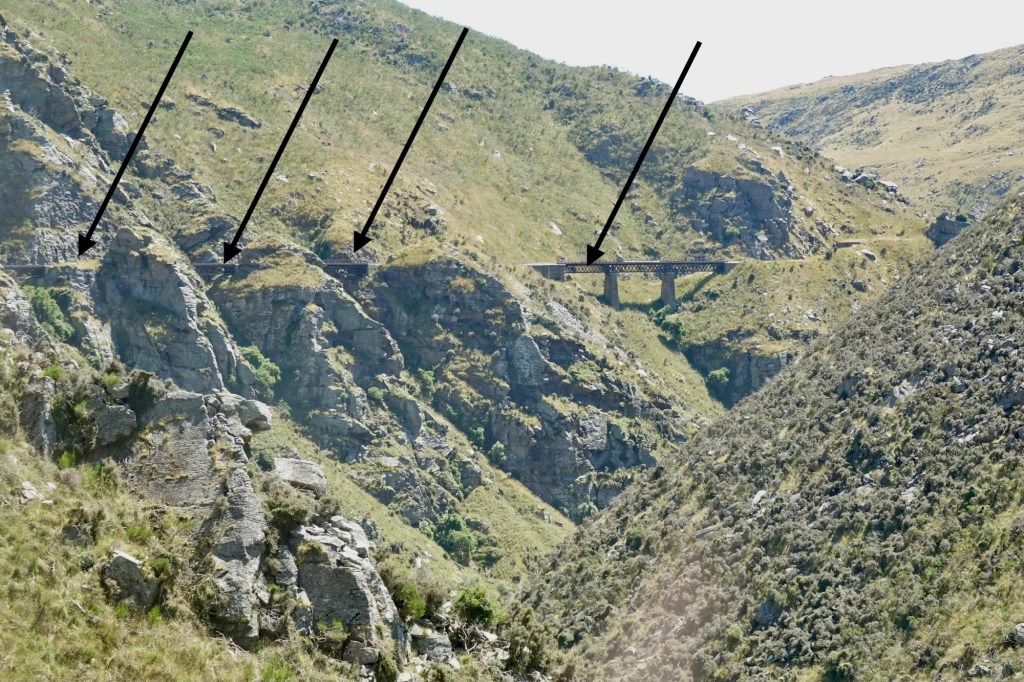
The impetus for much of the railway construction here was the discovery of gold, but for many years it was the only transportation from remote sheep stations into any town with medical care. Once the trains ran daily, groceries could be delivered via rail, making life here immeasurably easier.
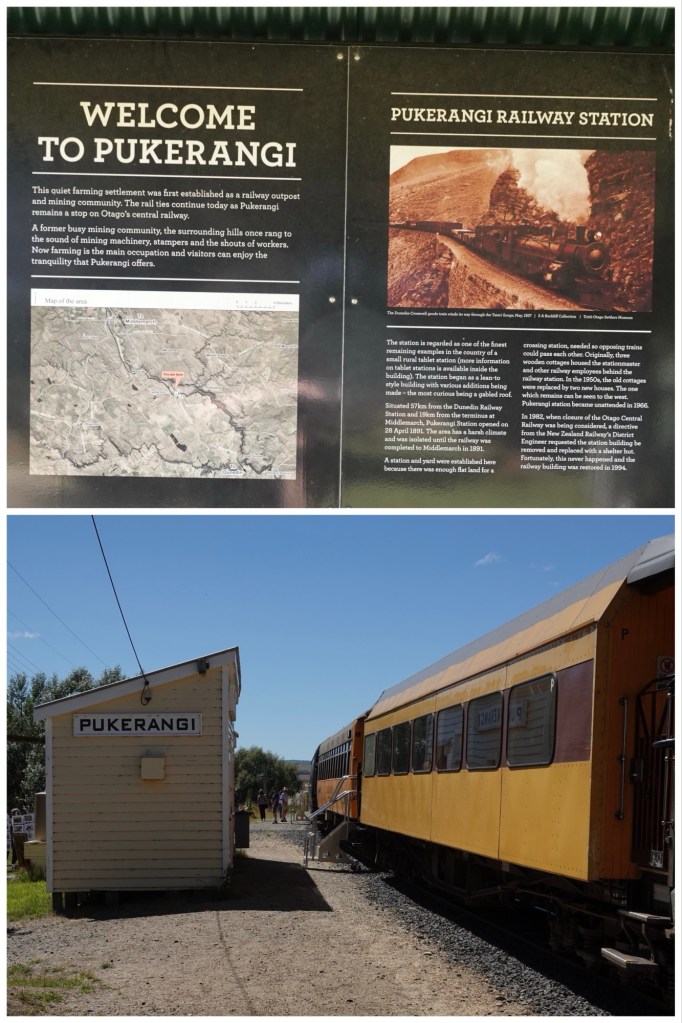
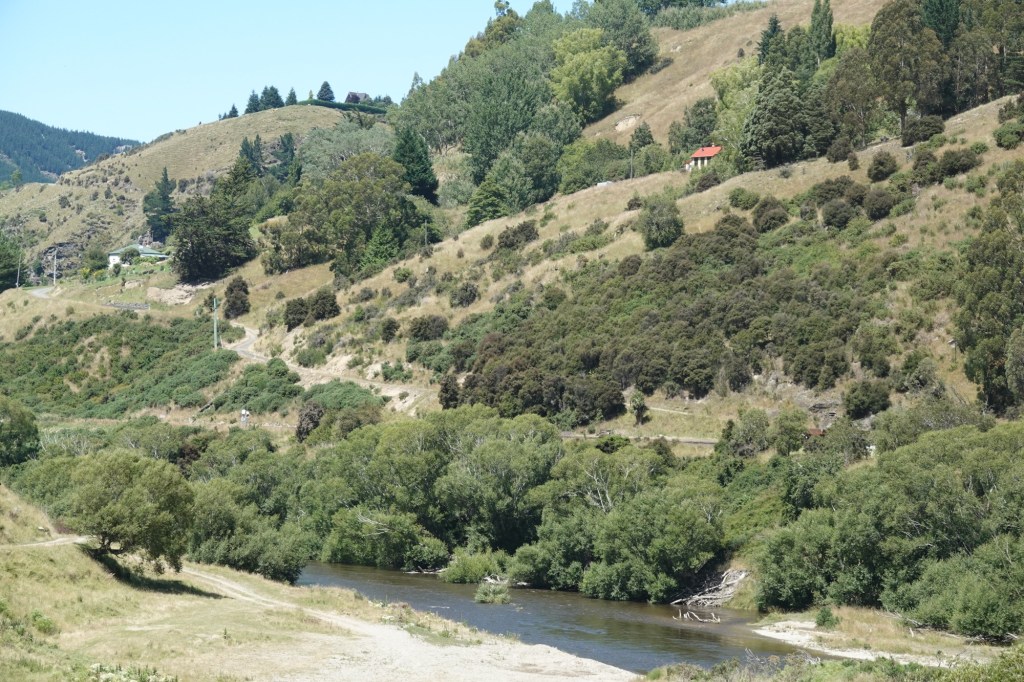
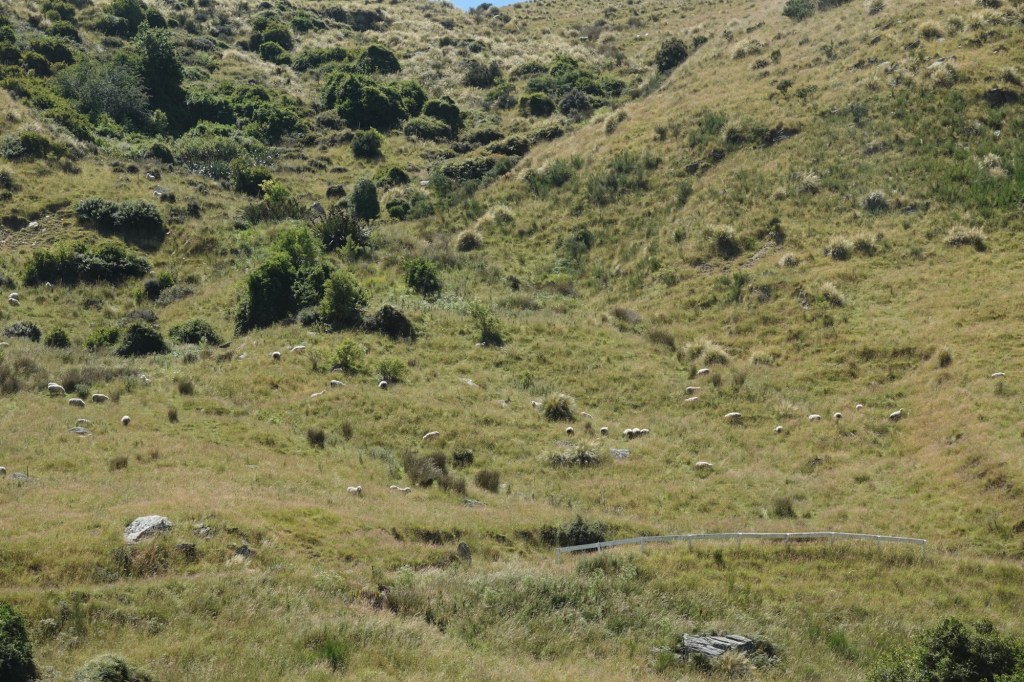
It’s far too easy now to take for granted this incredible infrastructure, and quite hard to imagine the manual labour required to create it.
Building the rails through the rock was “hard yakka” (hard work).
After getting back to Dunedin, only four of us chose the albatross colony excursion so we had virtually a private tour with Trevor as our leader, and our driver just for the day Antonio (Steve needing a day off after a week of driving) narrating the journey.
On our 21/22 World Cruise, naturalist Stephen Marsh gave a talk on “High Fliers – Albatrosses of the World”. We learned then that than an albatross can have a wingspan of over 11 feet (3.3 metres), and when not breeding can fly for months at a time without ever touching land. Off the coast of Uruguay, Ted was lucky enough to photograph one in flight (Episode 192).
The colony on New Zealand’s South Island is located at the end of Otago Peninsula, and protected by rangers operating out of the Royal Albatross Centre.
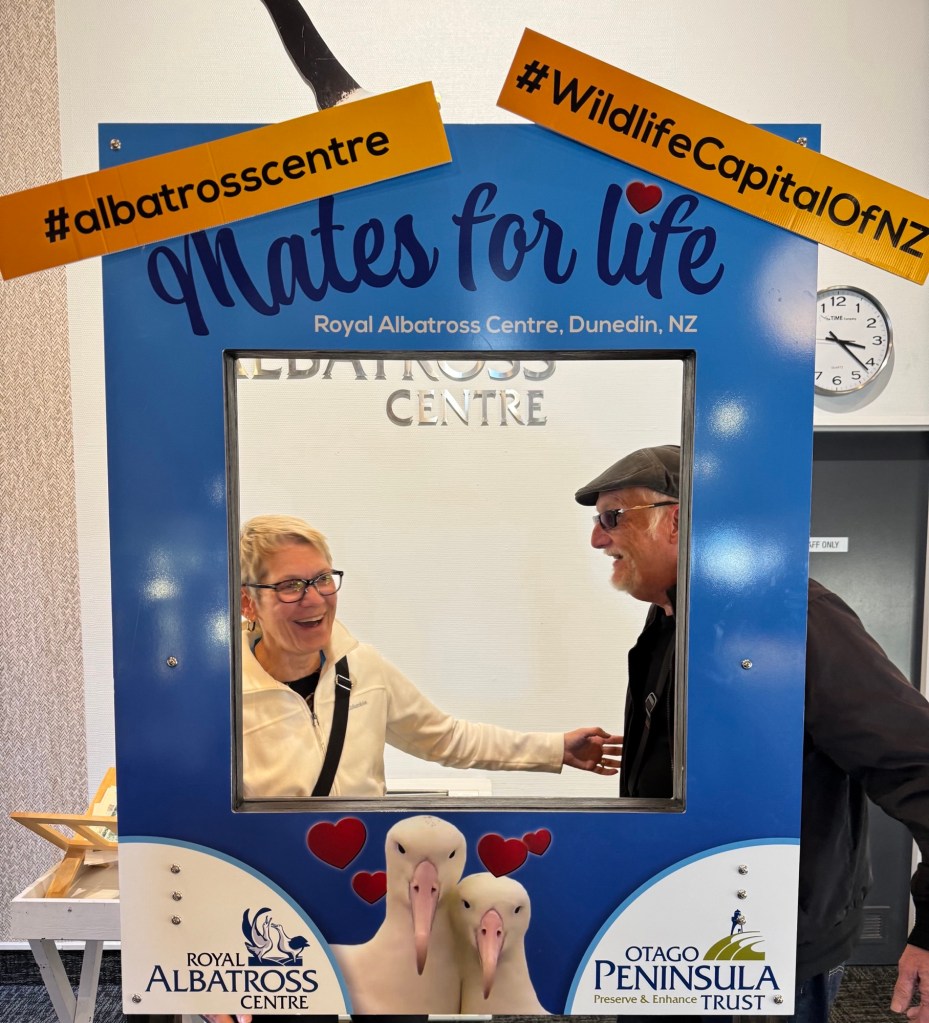
Here the albatross type is the Northern Royal, with wing spans typically 3m/10ft. 99% of Northern Royals still live in the Chatham Islands. The Otago Peninsula has only been home to the albatrosses since 1919, when a small number arrived here, perhaps to avoid crowding; there are about 17,000 in the Channel Islands.
This place has ideal conditions: powerful year-round winds, and plentiful food.
At the Royal Albatross Centre we learned that the windier it is, the more likely we’d be to see albatrosses. The birds stay aloft just soaring on the wind currents – up to a year or more in the air without ever landing unless it is their biannual breeding and egg incubating season; their huge size makes it impractical to live on land.
If the wind is fast enough, albatrosses have been clocked at as high as 100km per hour/63mph.
For a while, we thought we were only going to see the couple of albatross sitting on their eggs. The absolutely will not move until their mate returns to take their turn, so watching stationary albatross was going to be pretty boring.
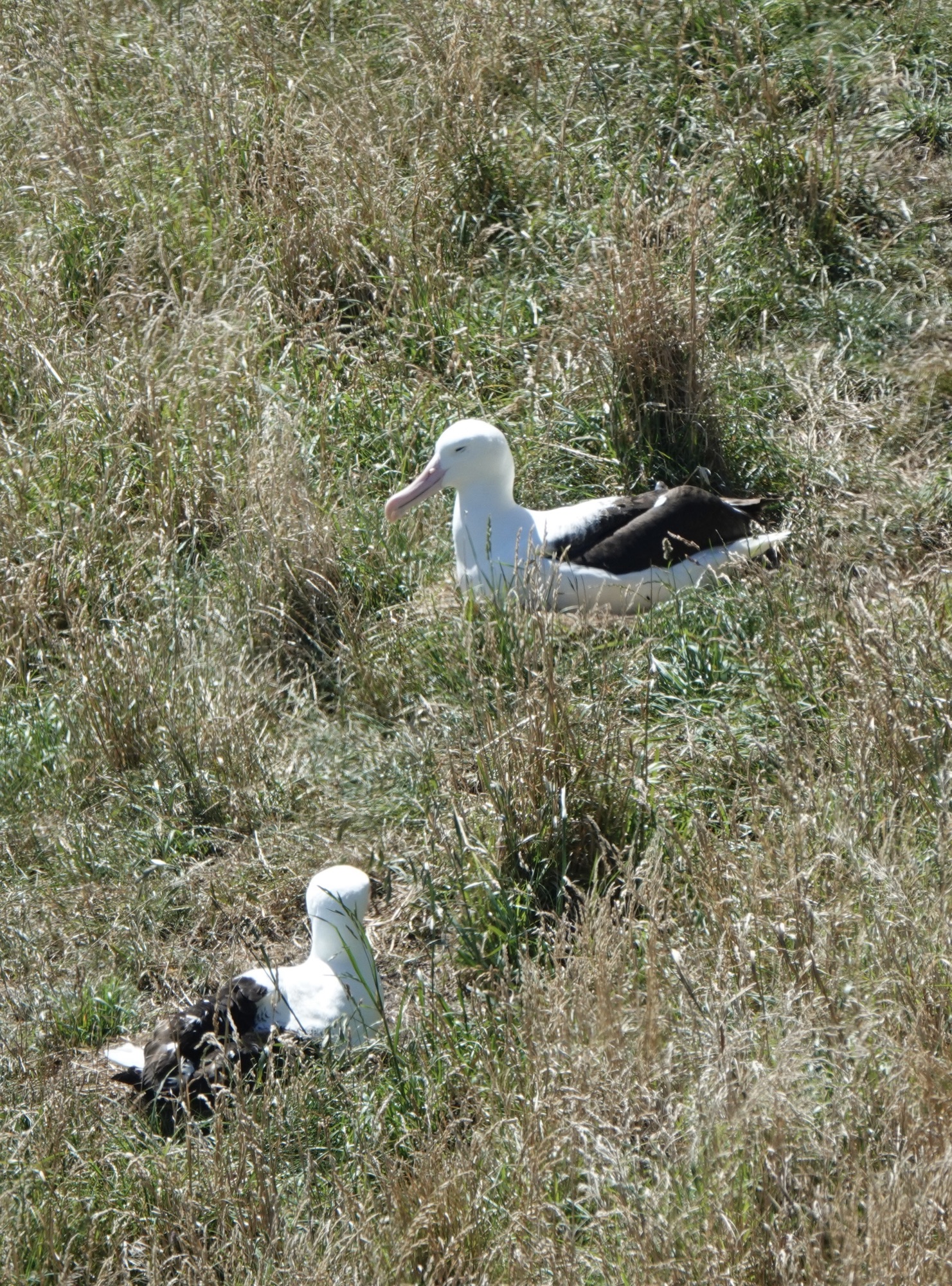
But then the wind picked up.
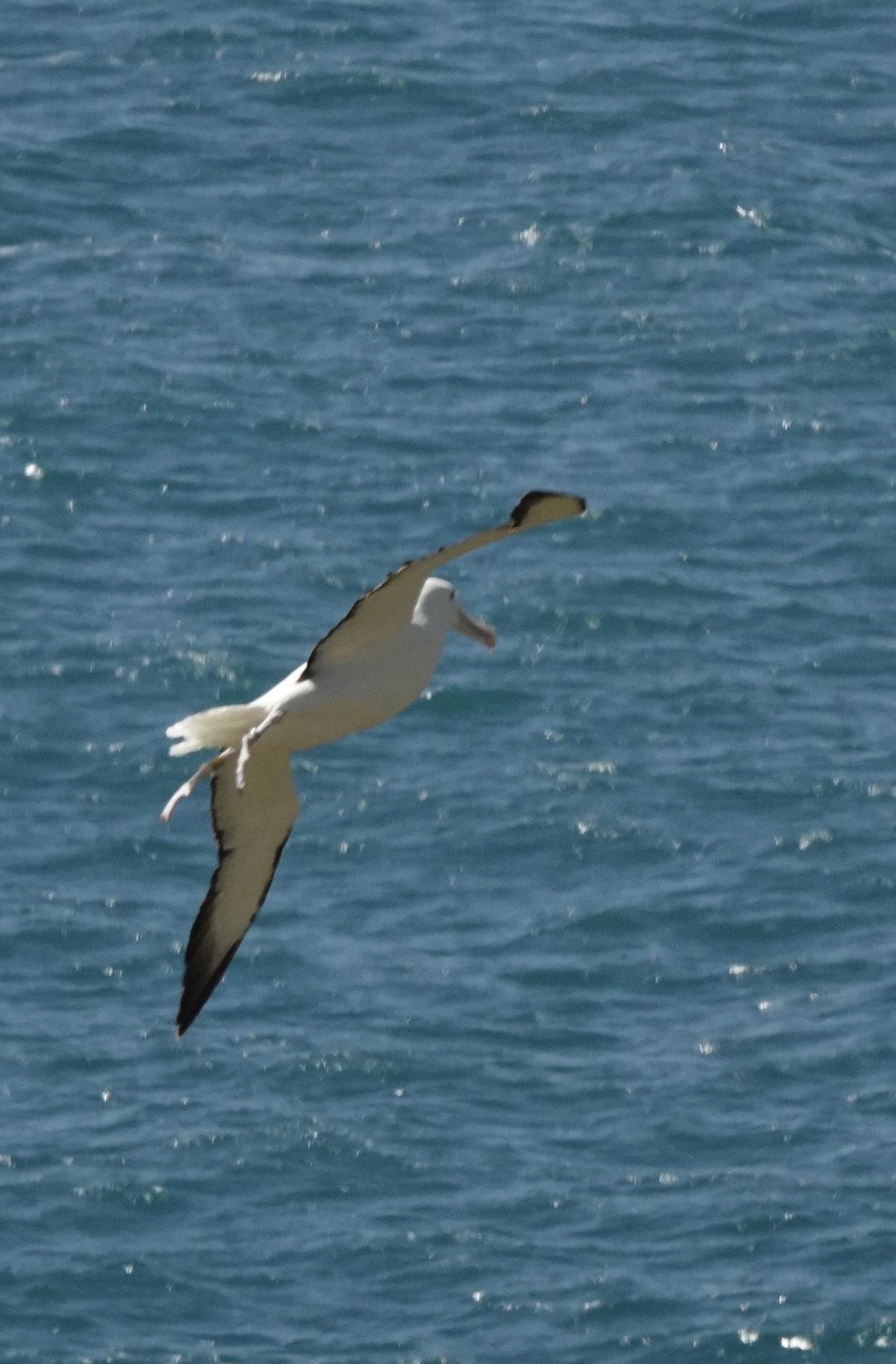

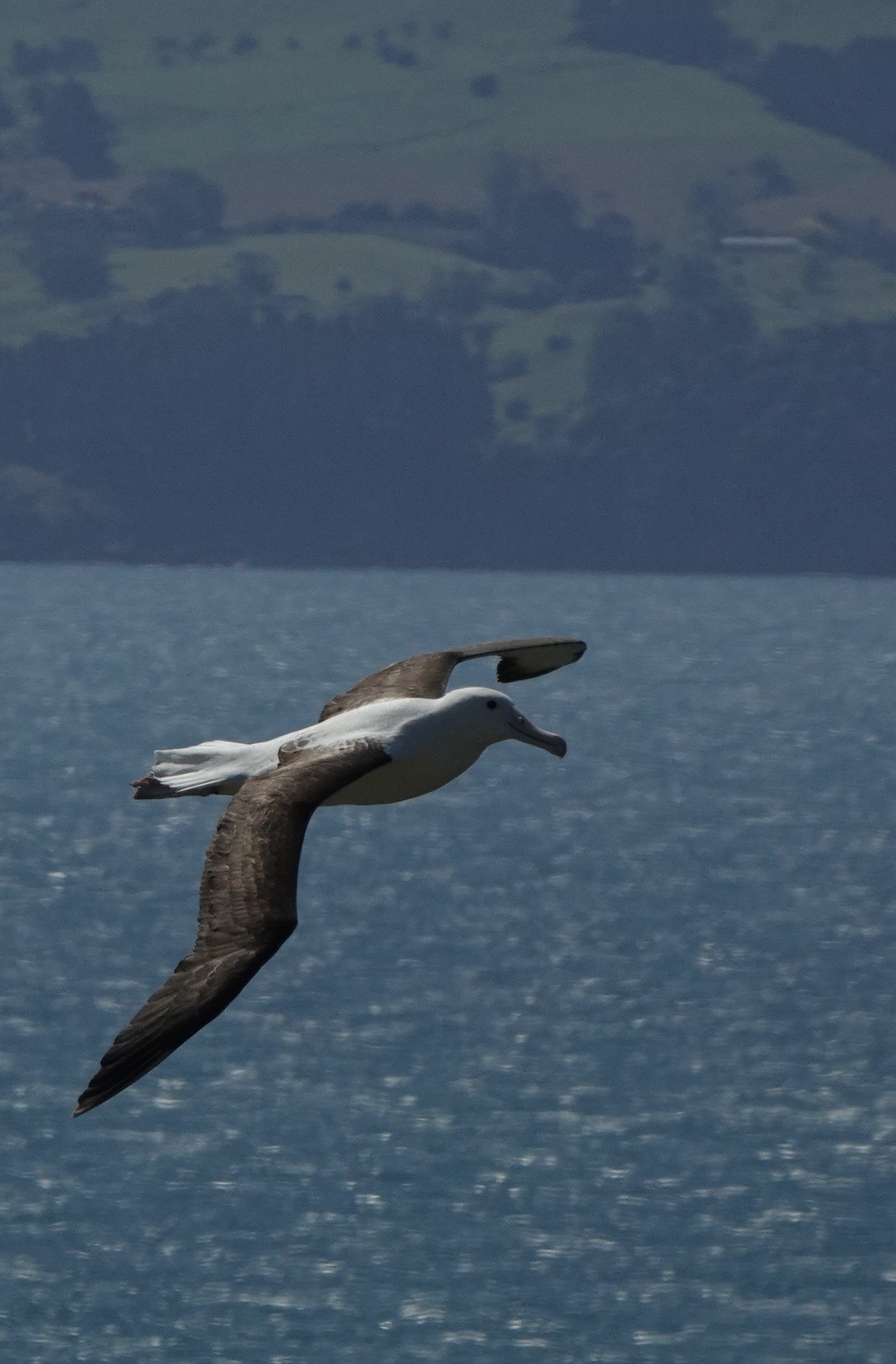
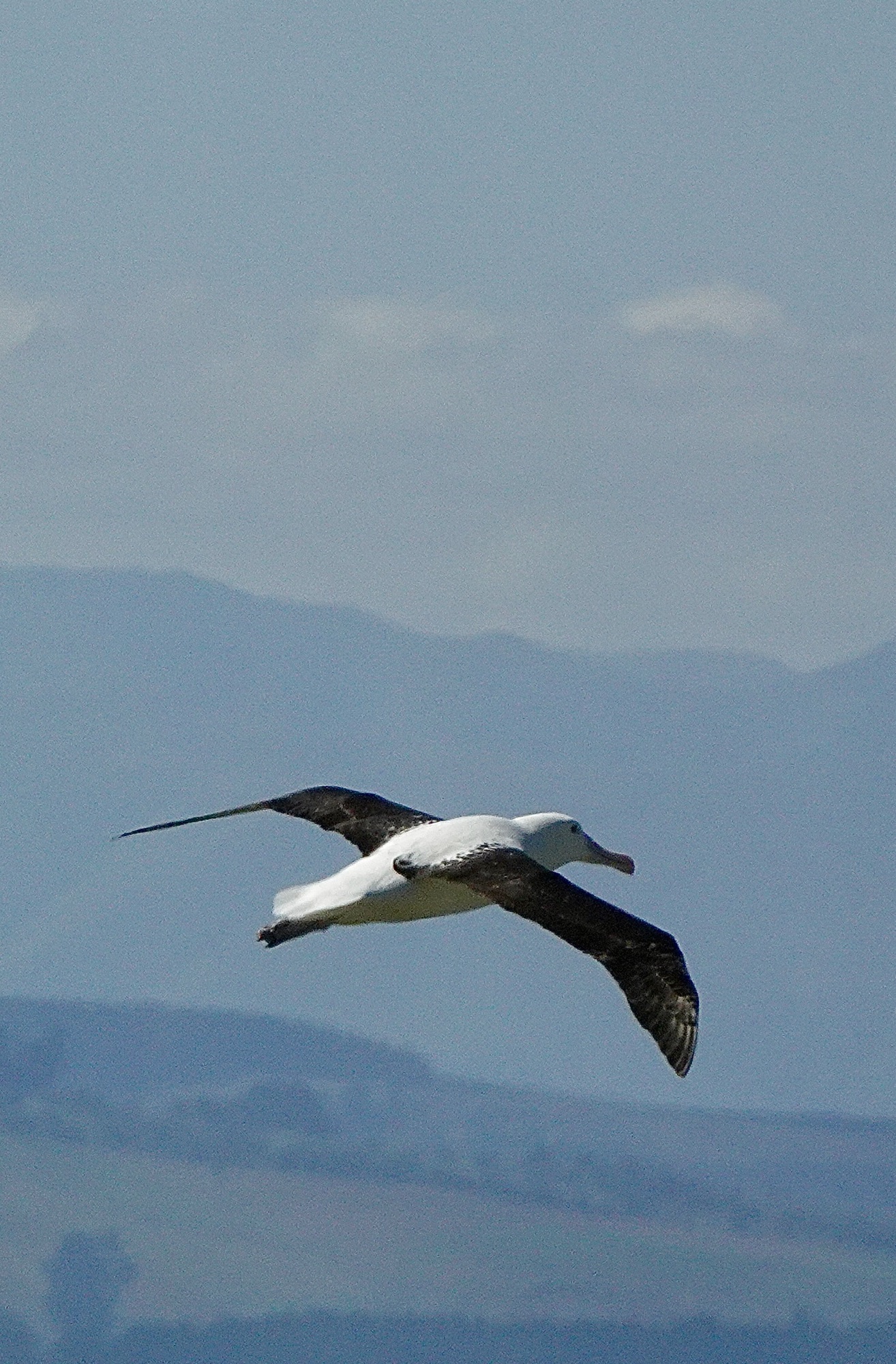
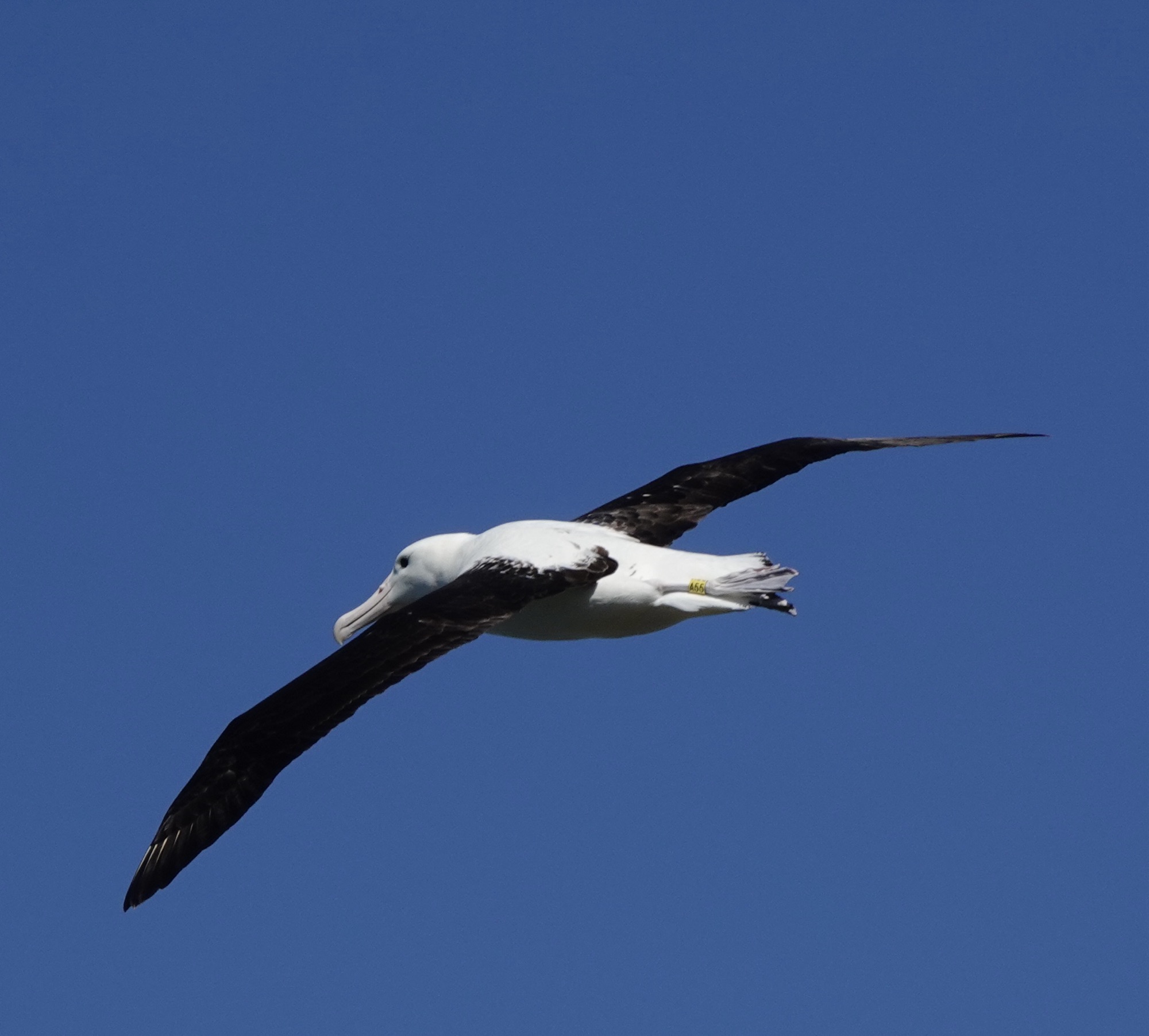
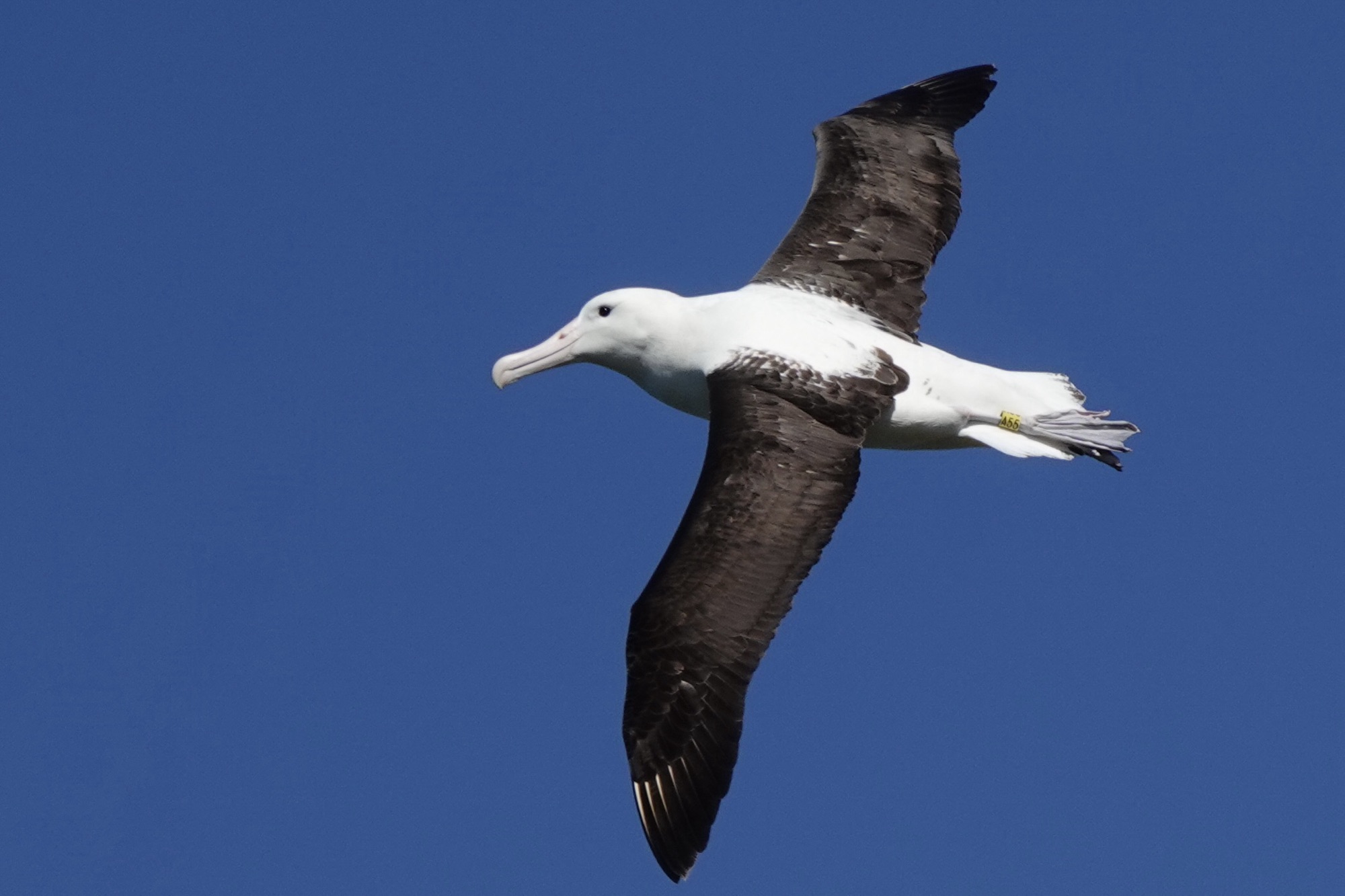
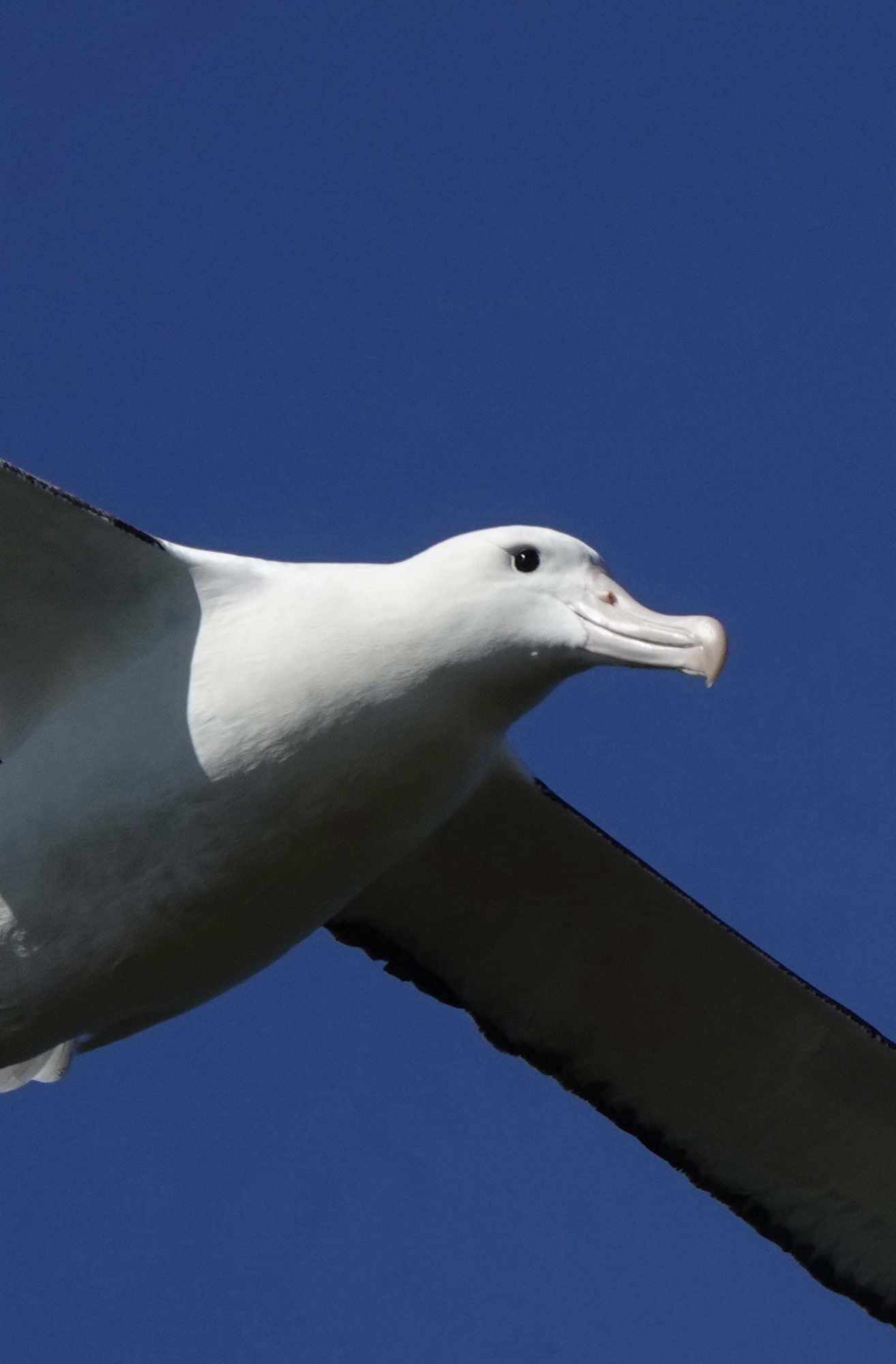
We also got a brief tour of Fort Taiaroa. The gun station now located within the albatross colony is one of 38 on the peninsula built during colonial British times when there was a fear of potential coastal invasion. Although no invasion ever occurred, the threat of the conflict between England and Russia in the late 1800s spilling over into this island colony was very real.
The only 6” 360° Armstrong Disappearing Gun still left in operating condition in the world is located here, and the way it could “pop” up to fire and then very quickly be underground and out of sight again was quite fascinating. It could fire as quickly as once every minute with a 45kg shot and 8km/5mi range.
Photos? Ted took a few, but after seeing those magnificent albatrosses, I couldn’t get enthused about saving fort memories.
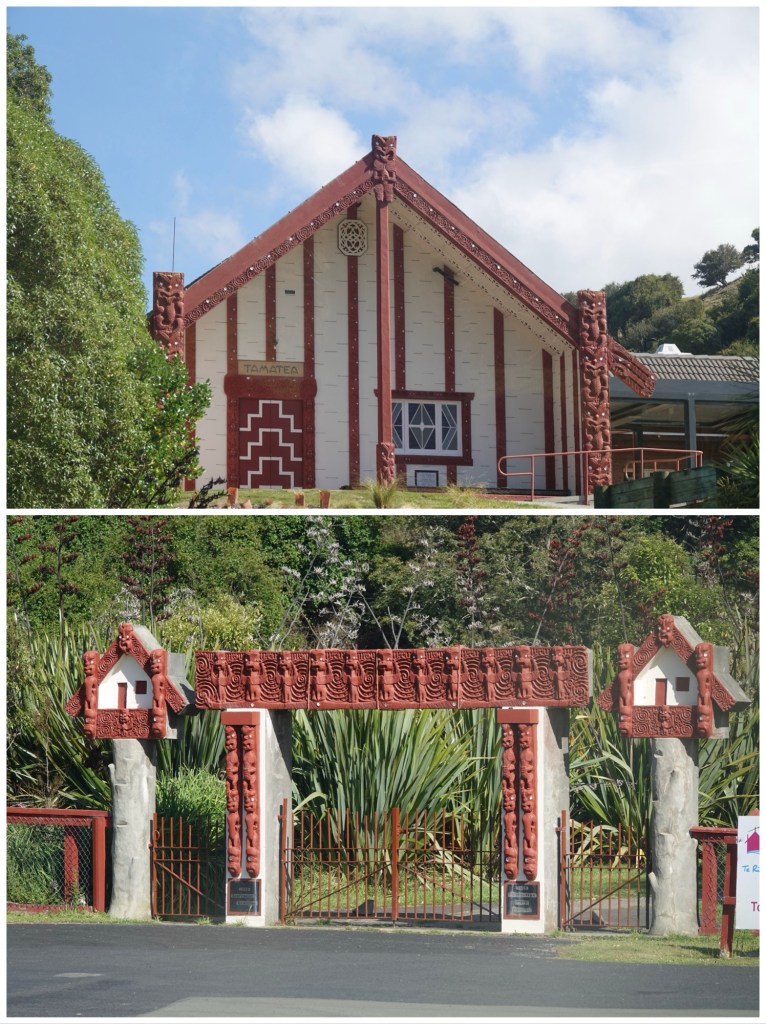
En route home we detoured to the Māori marae (meeting ground) of the wealthiest iwi (tribe) in New Zealand. Their wealth came largely from how wisely they invested the money they were given after resettlement of the Waitangi Treaty, using it to purchase and protect resource land.
We were on our own for dinner, so chose to have a bite at Speight’s Ale House. Speight’s is New Zealand’s oldest brewery, operating in Dunedin since 1876. Portions were huge, and the dry hopped Pilsner cold and delicious.
Tomorrow we head to Mount Cook.
 Rose and Ted’s Excellent Adventure
What a great day and fabulous photos. The weather looks perfect. Continue to enjoy.
LikeLiked by 1 person
Did you find out how/what the albatrosses eat when spending a year in the air?
LikeLike
Although they don’t dive, they can dip below the water’s surface to eat fish near the surface
LikeLike