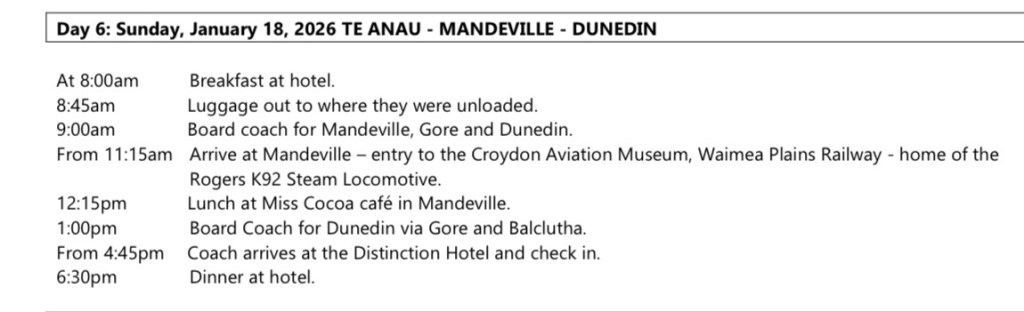
After another lovely breakfast at the Distinction Luxmore Hotel in Dunedin, we all piled back into the coach for the trip to Mandeville.
Ted commented last night that we had more coach travel and less train travel than he’d expected on this tour, and rightly so. Our train stretches are short, while the distances being covered by coach are long. (Back to yesterday’s blog about the large area of the south island versus its small population;passenger trains are just not economically – nor topographically – feasible in this mountainous, sparsely populated place.)
Nonetheless, we’re never short of breathtaking views.
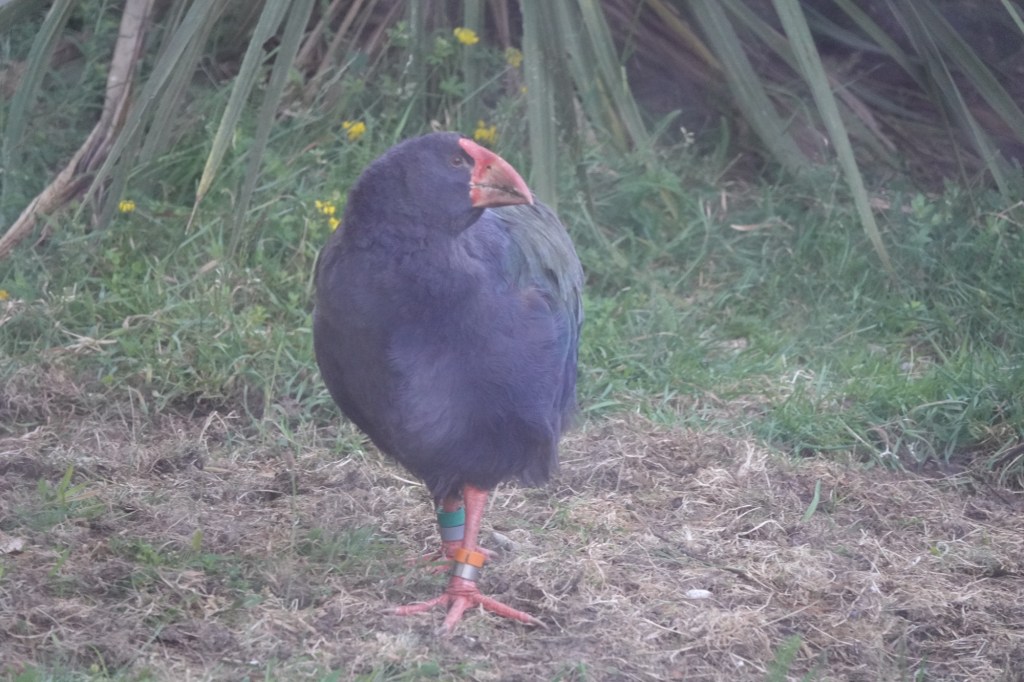
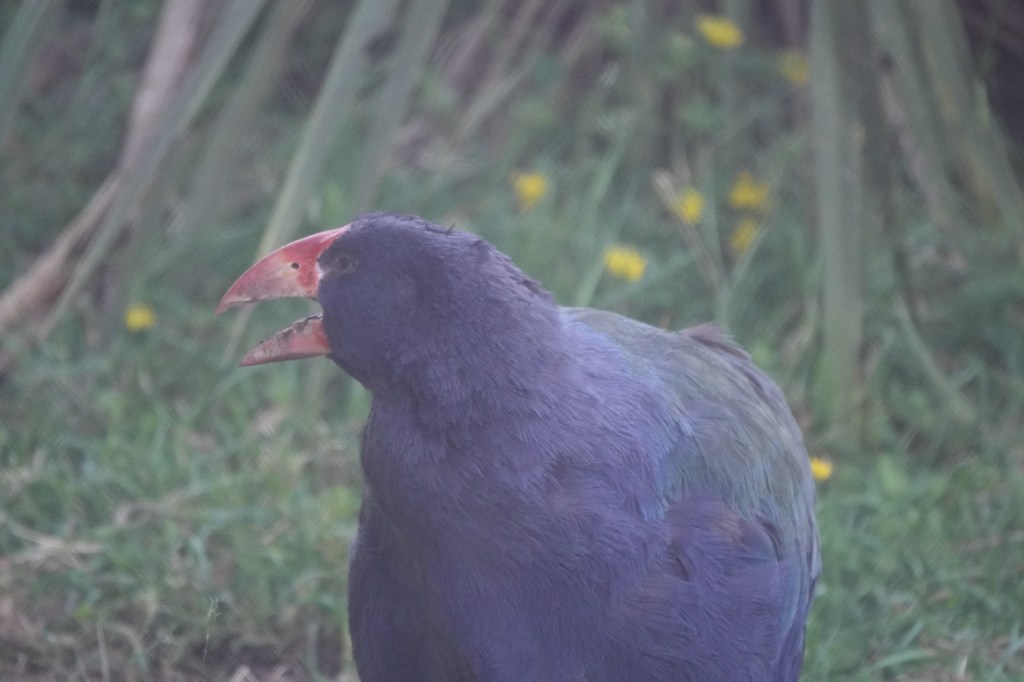
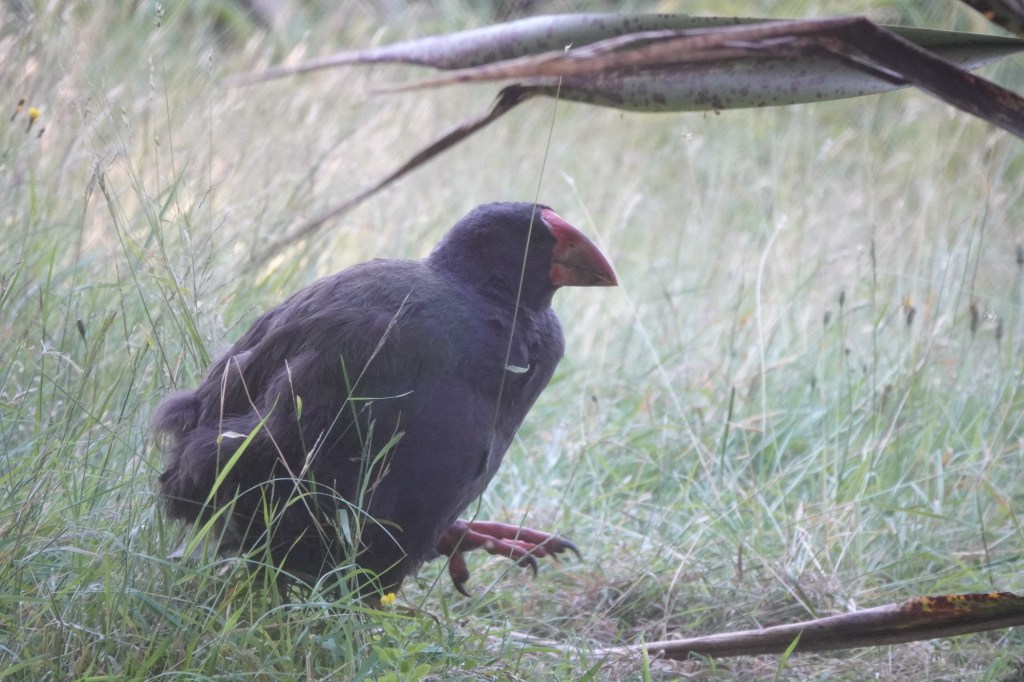
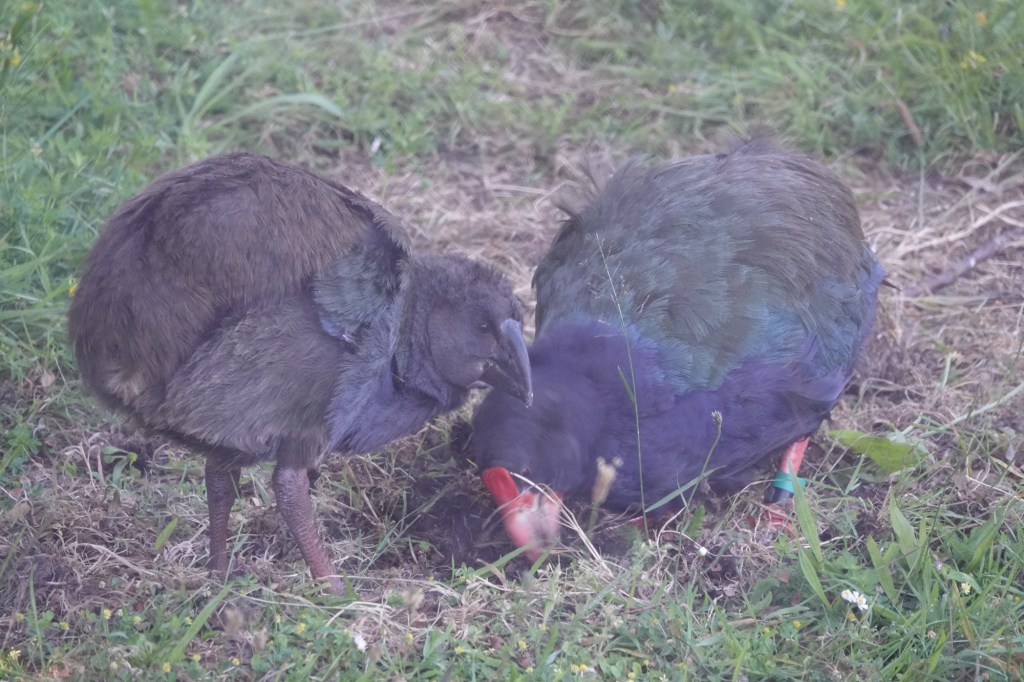
But first, a flightless bird. Before beginning today’s itinerary, we made up the stop we missed on Day 4: Te Anau Bird Sanctuary.
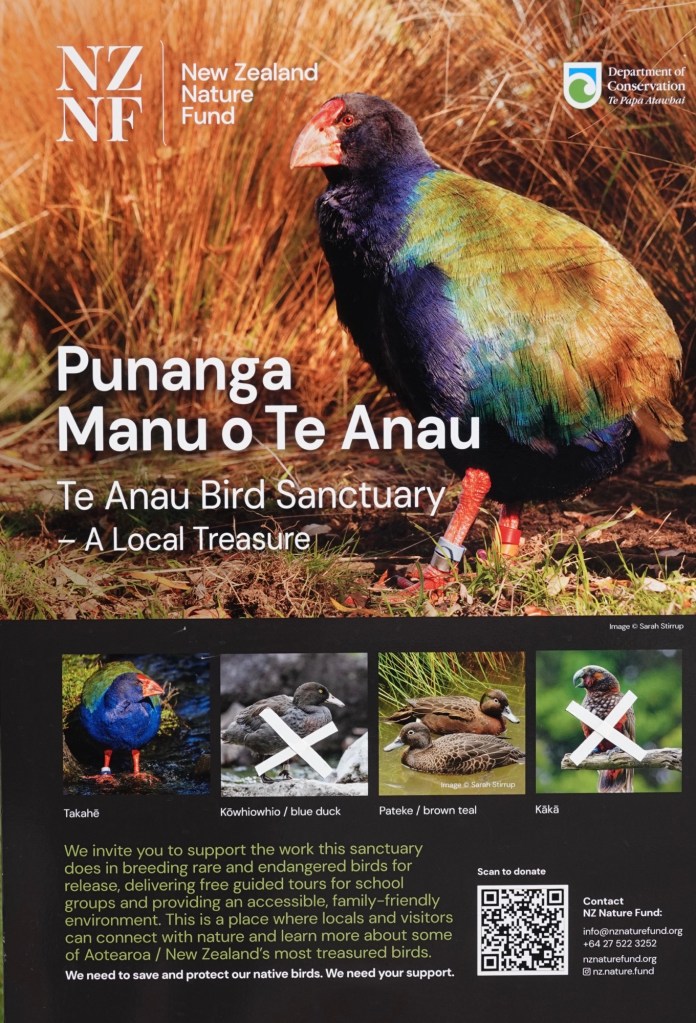
The takahē were thought to have gone extinct in 1898, but in 1948 in a remote valley in New Zealand’s Murchison Mountain they were rediscovered. Since then, several have been relocated to predator-free islands off New Zealand’s coasts. They are still classified as endangered; there are fewer than 500 in existence, a handful of those in captivity.
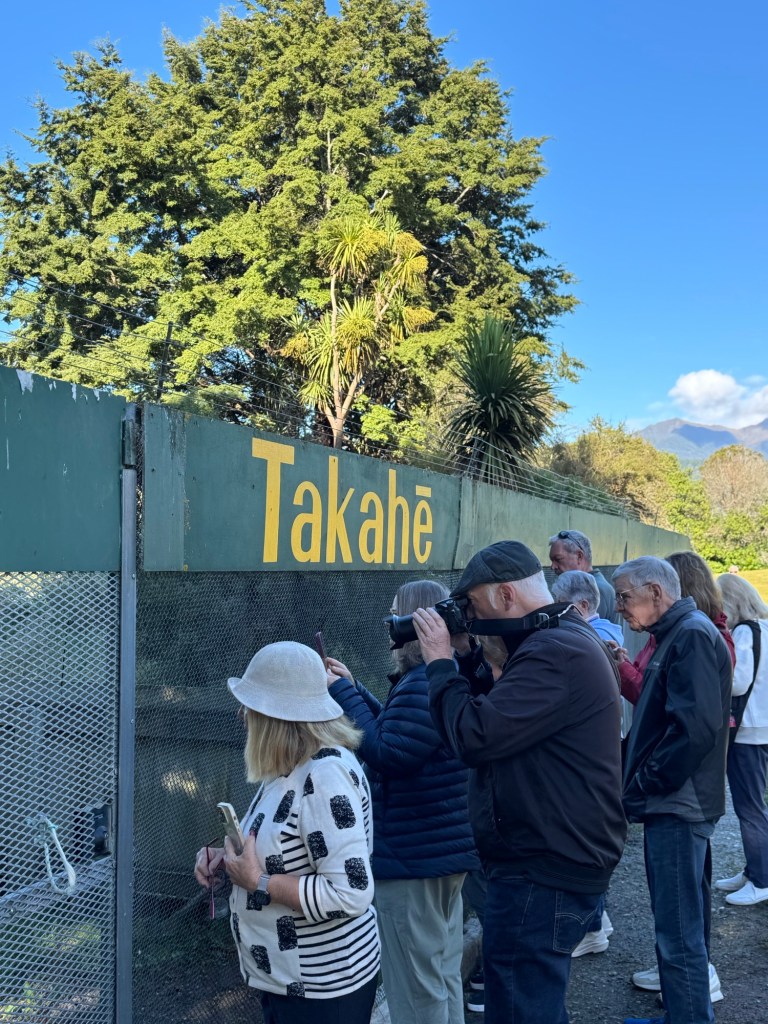
After walking all around the sanctuary and seeing no birds, we were about to give up when suddenly there were three of them, right under the sign bearing their name. Who’d have thought that they could read?
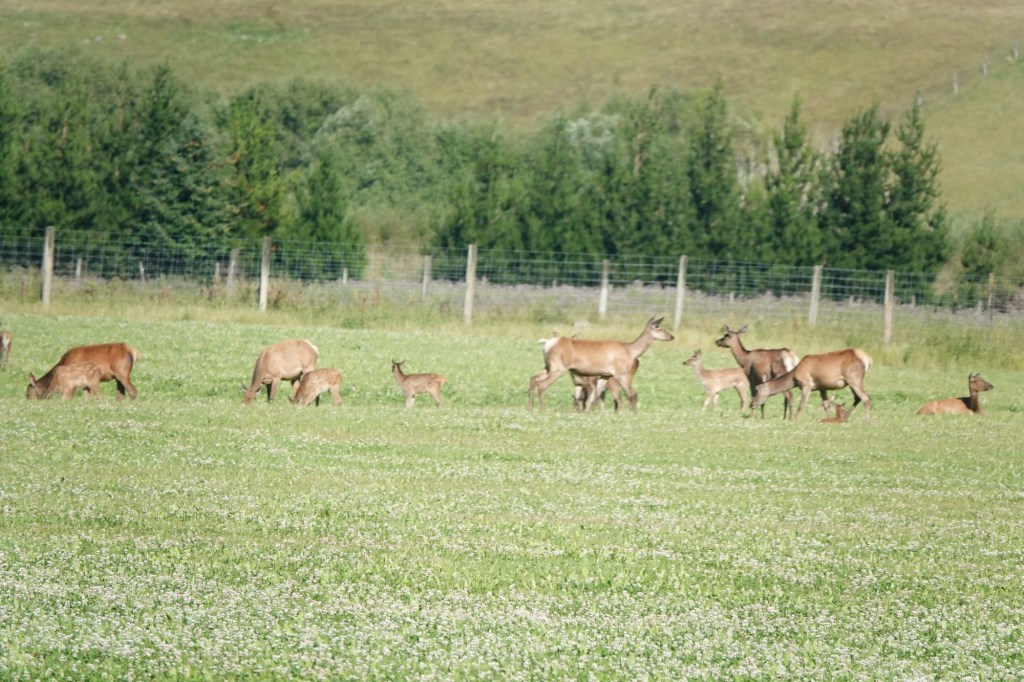
En route to our next stop we passed several deer farms.
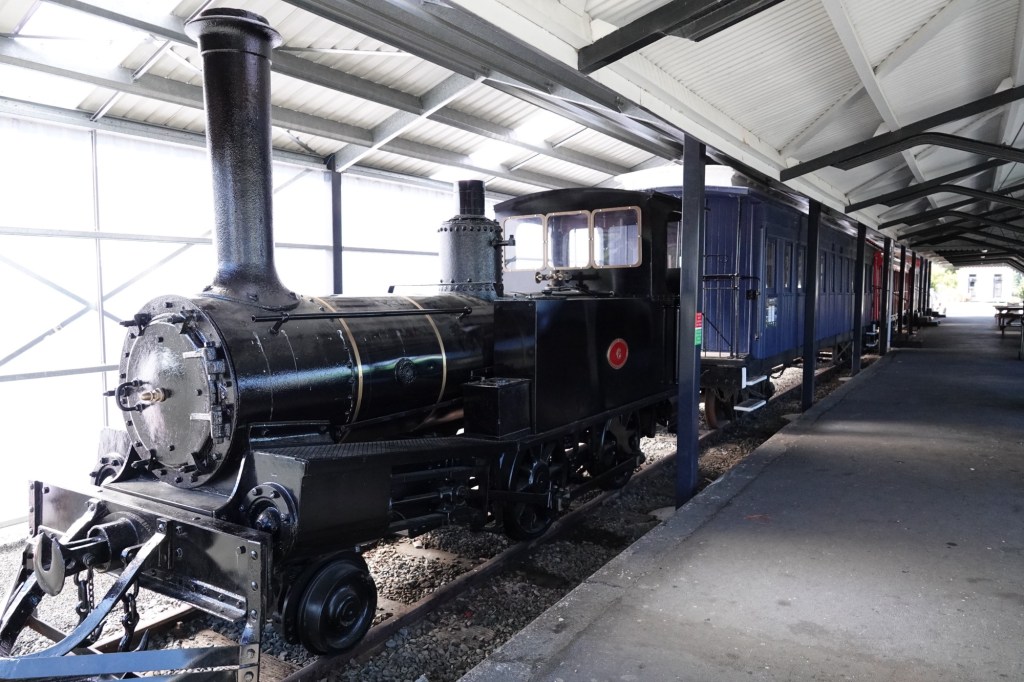
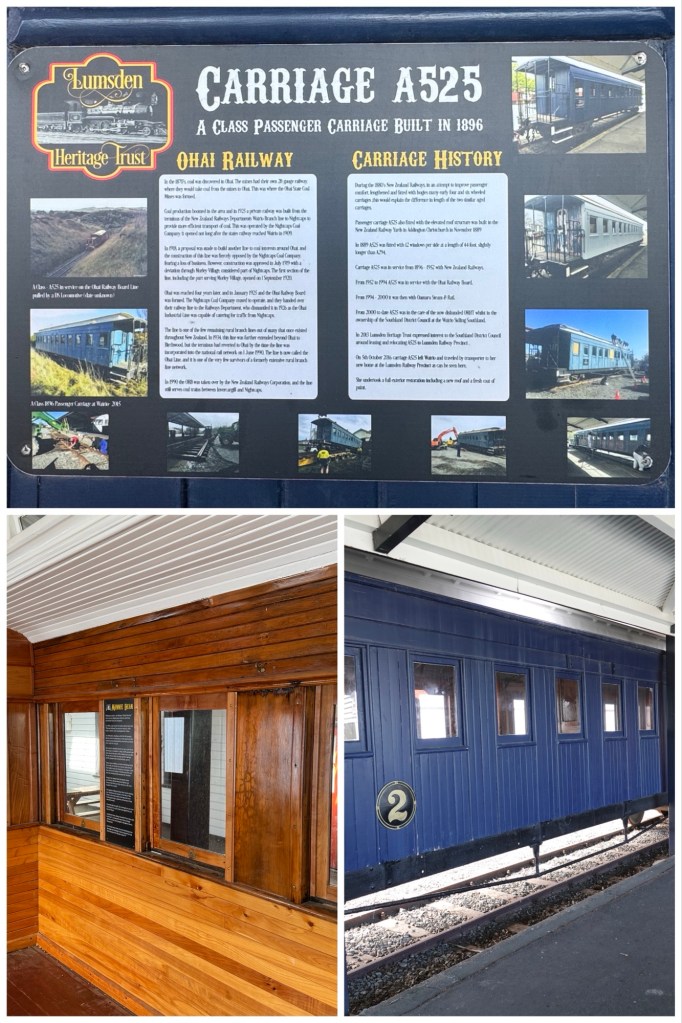
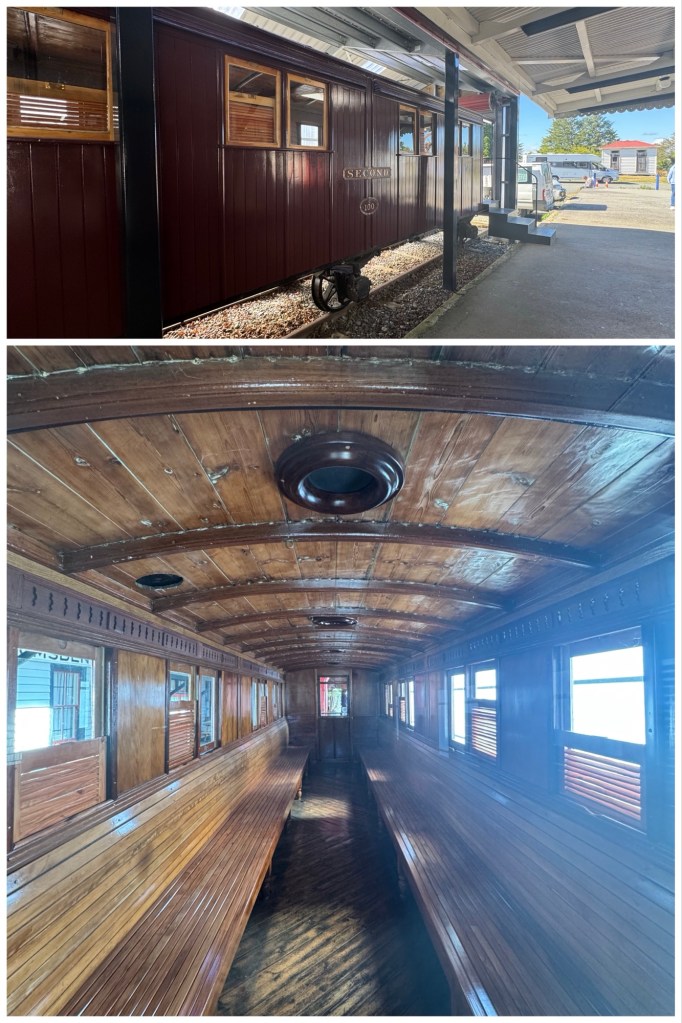
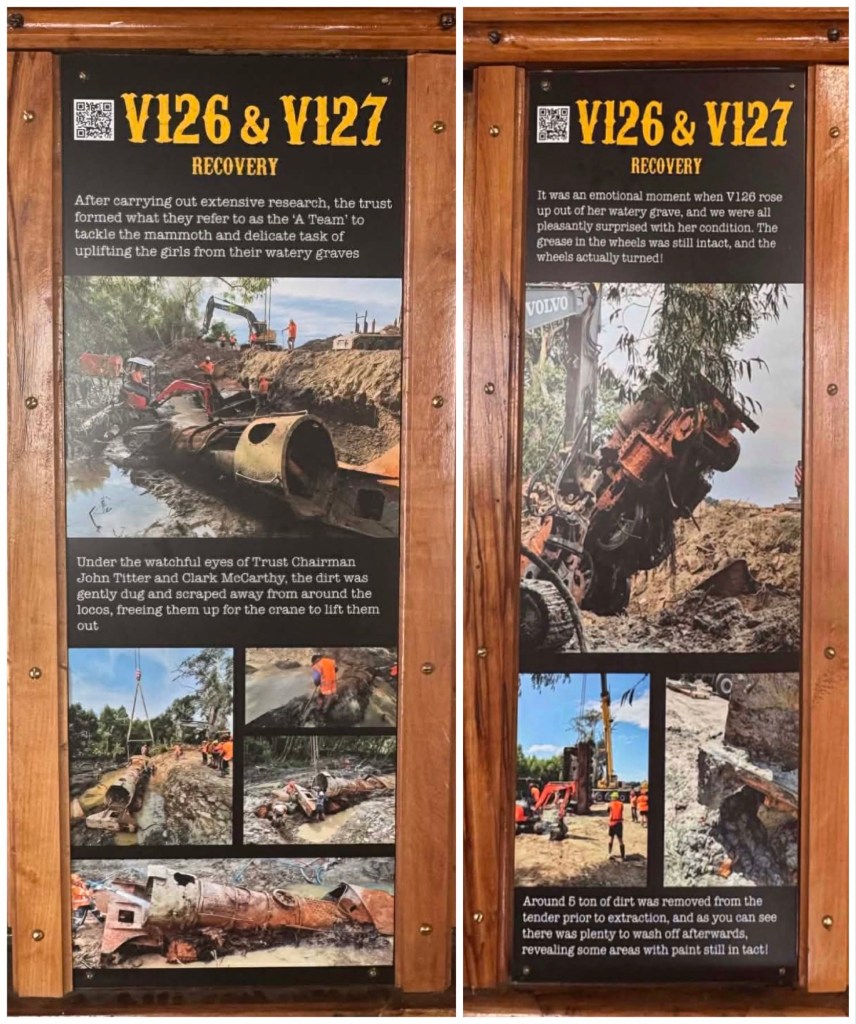
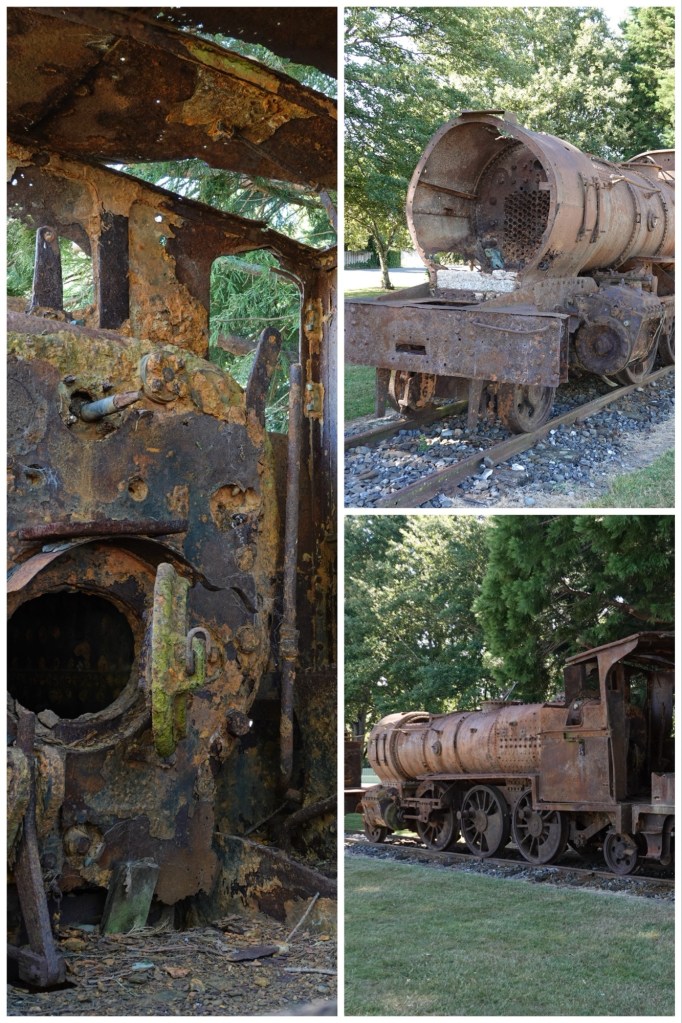
At our Lumsden coffee/comfort stop we saw both a restored locomotive with train cars in a shed, and an unrestored train that was recovered from the river in 2019 by the Lumsden Heritage Trust . The two 1885 V-class steam locomotives were pulled from the Oreti River, where they were dumped as flood barriers in 1928. After years of campaigning, the trust used heavy machinery to extract V-126 and V-127, which are now displayed at the Lumsden Railway Precinct as a major tourist attraction, alongside other restored rail items like the A199, 525,and 100 carriages.
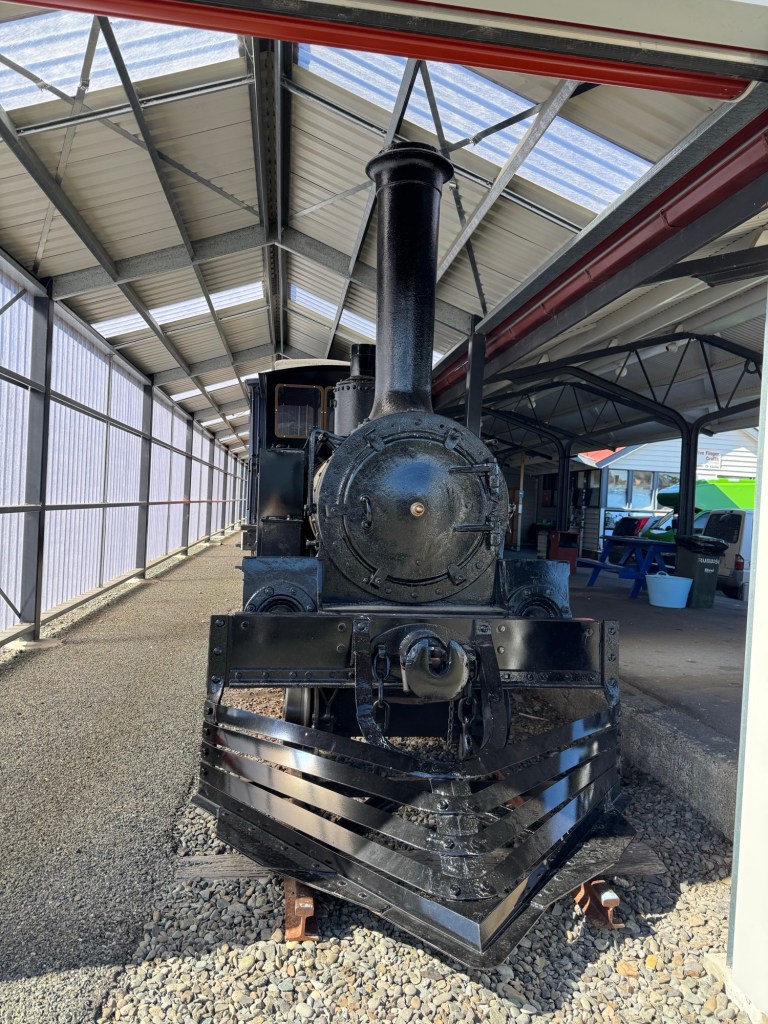
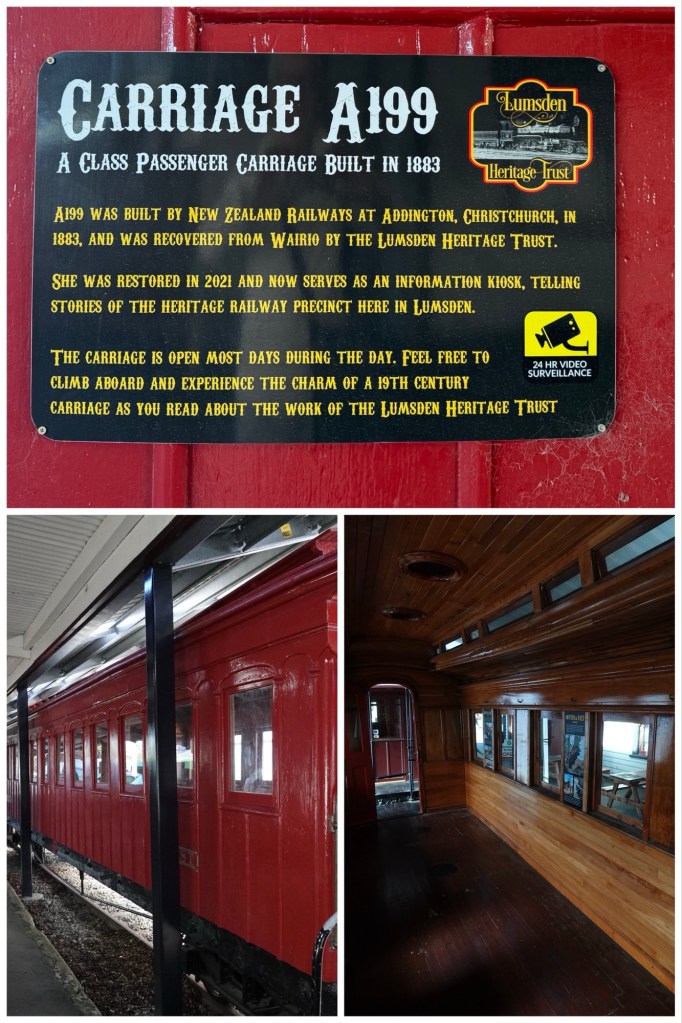
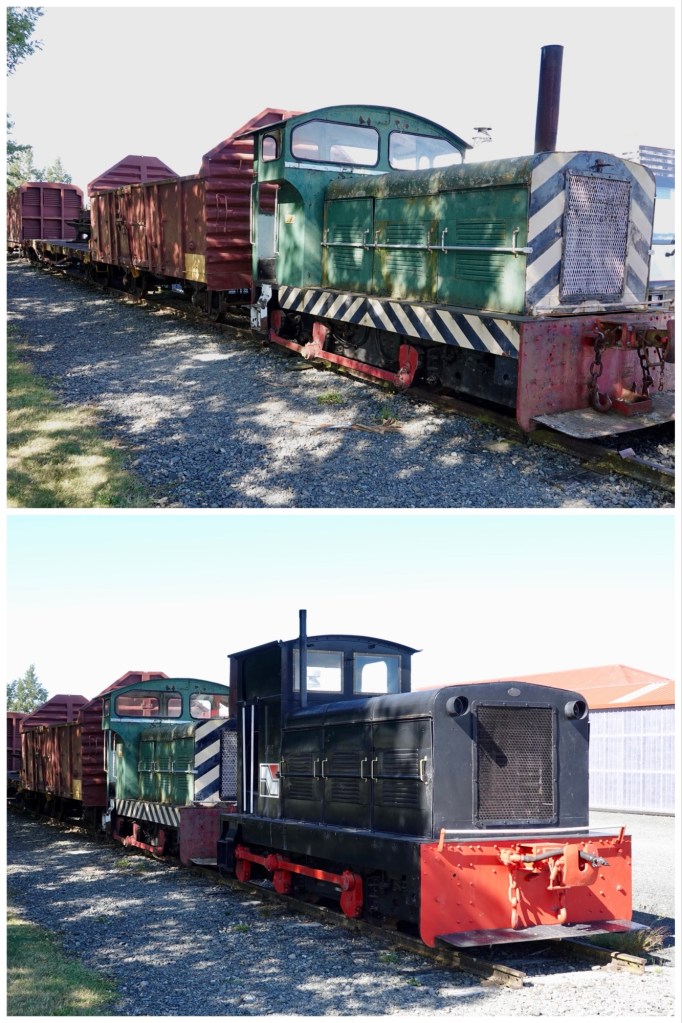
Behind the shed were some of the recovered but less restored locomotives and train cars.
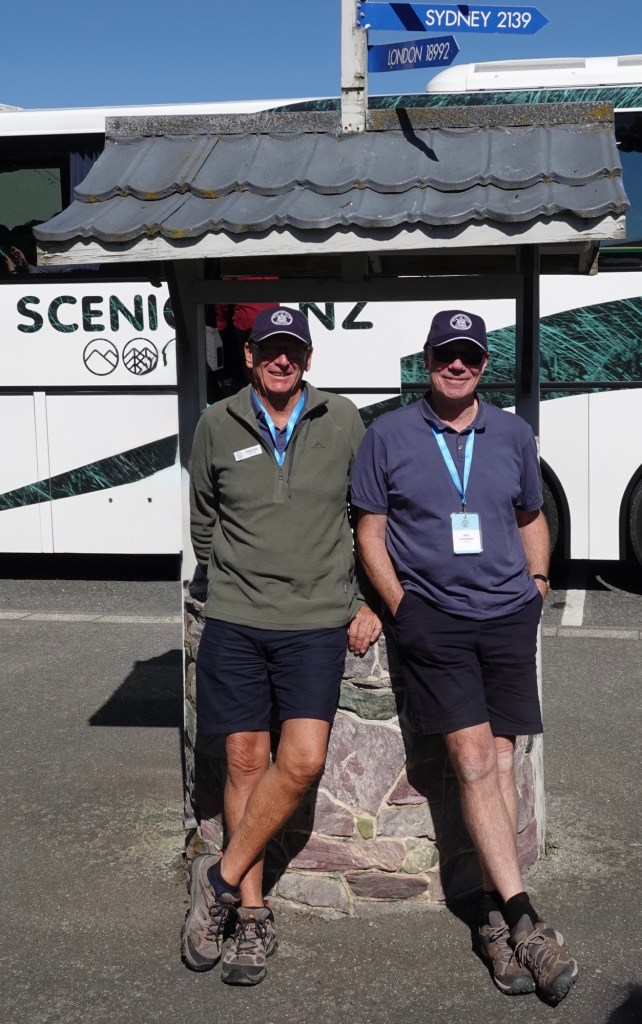
Take a squizz at our cool Kiwi guides lounging patiently outside the Lumsden station while we toured the trains: Trevor Ingham and Mike Heinemann, who both continue to humour me by sharing Kiwi-isms like squizz (a quick look or once-over) and cool (cool!).
Our featured stop in Mandeville was to visit the Croydon Aircraft Museum. Using information gleaned from “Mr. Google”, as Trevor calls the search engine, we learned that: “The Croydon Aircraft Company’s main activities are restoring vintage aircraft, providing scenic and aerial experience flights in vintage aircraft, and providing pilot training in vintage aircraft.”

The company and the museum are owned and run by Colin and Maeve Smith. For his service to the aviation and tourism industries, Colin Smith was made a member of the New Zealand Order of Merit in 2011.
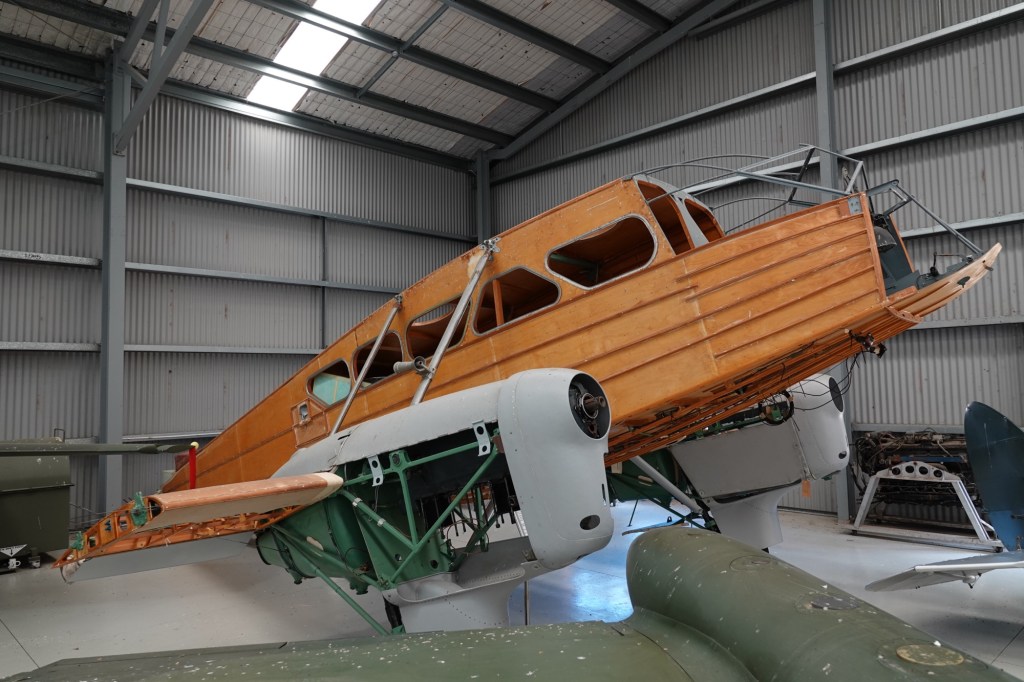
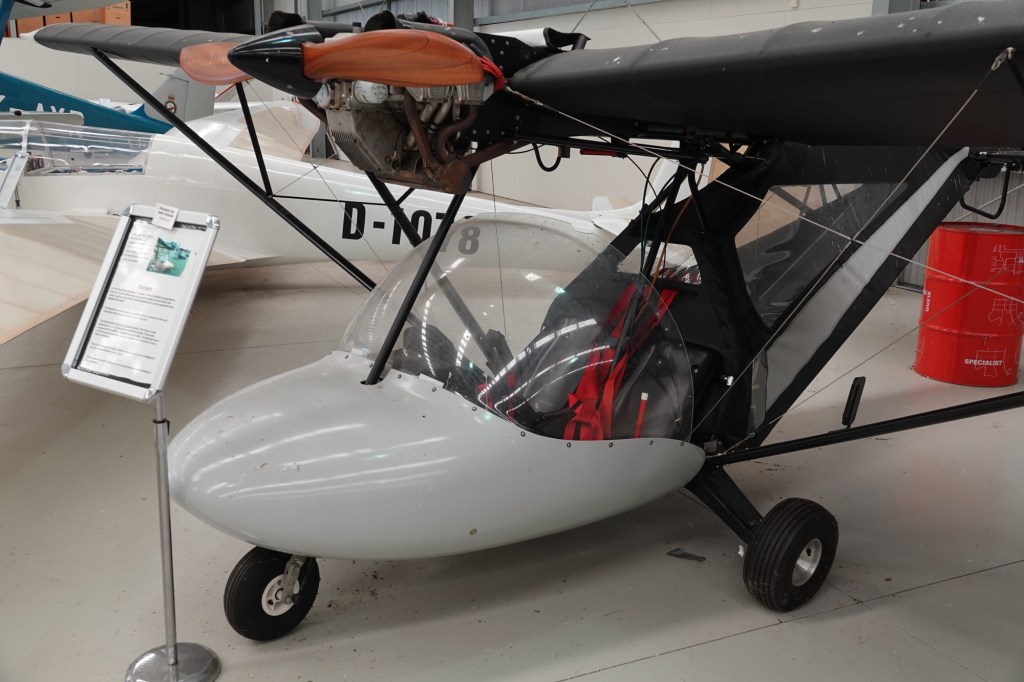
Aircraft on site and stored in the adjacent museum include several de Havilland Tiger Moths, a Fox Moth, and a very rare de Havilland Dragonfly, all of which are regularly flown.
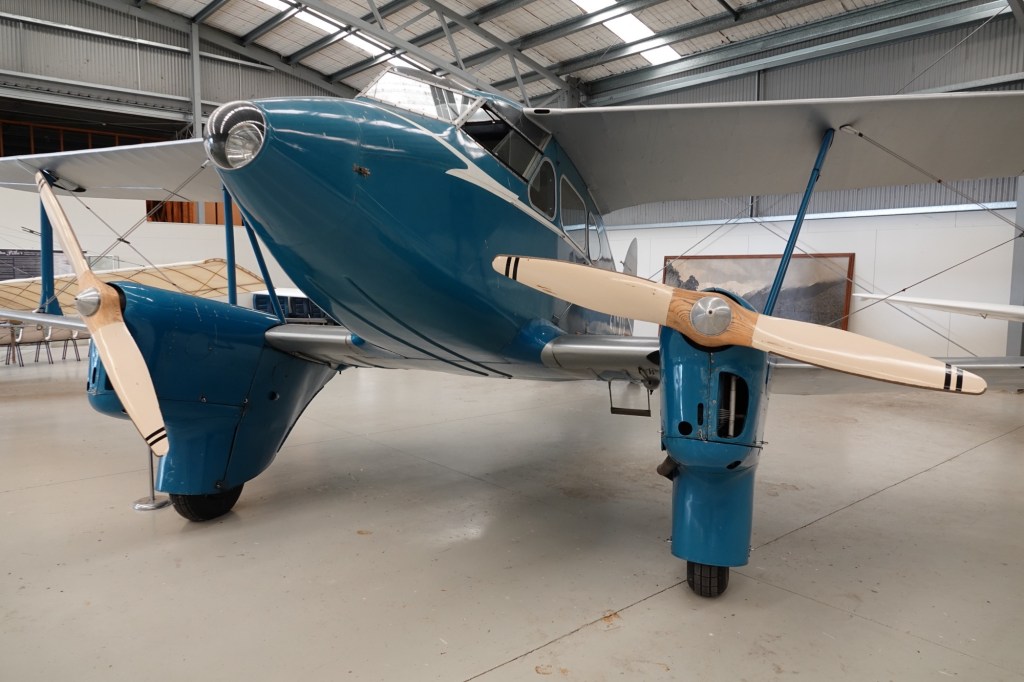
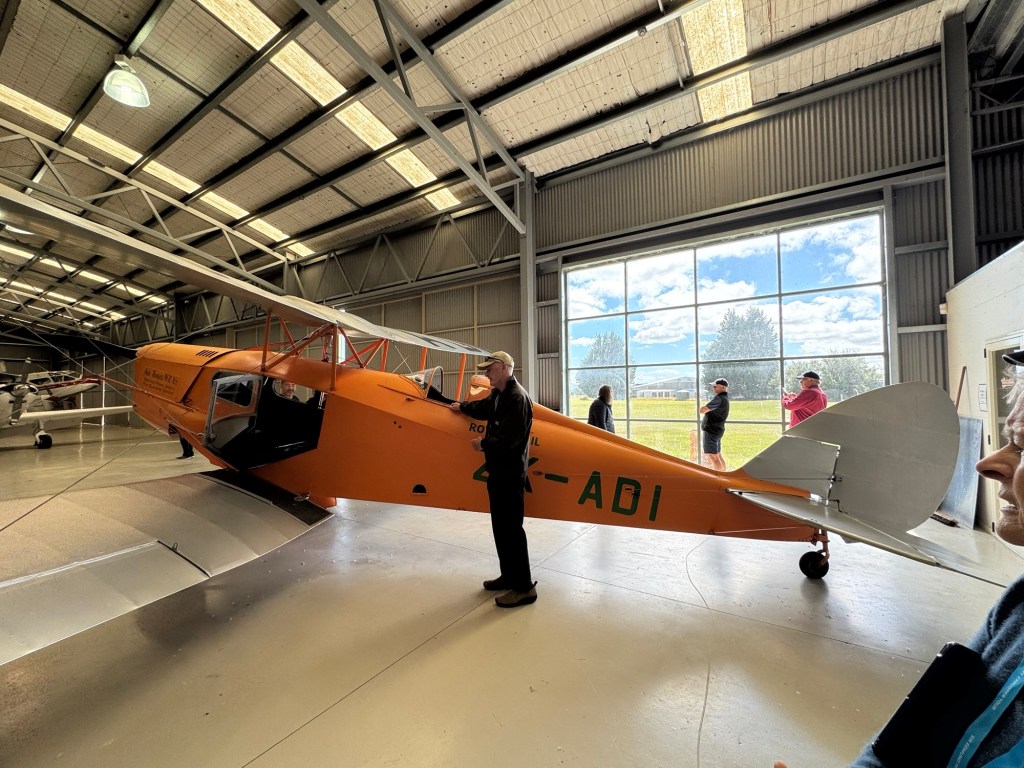
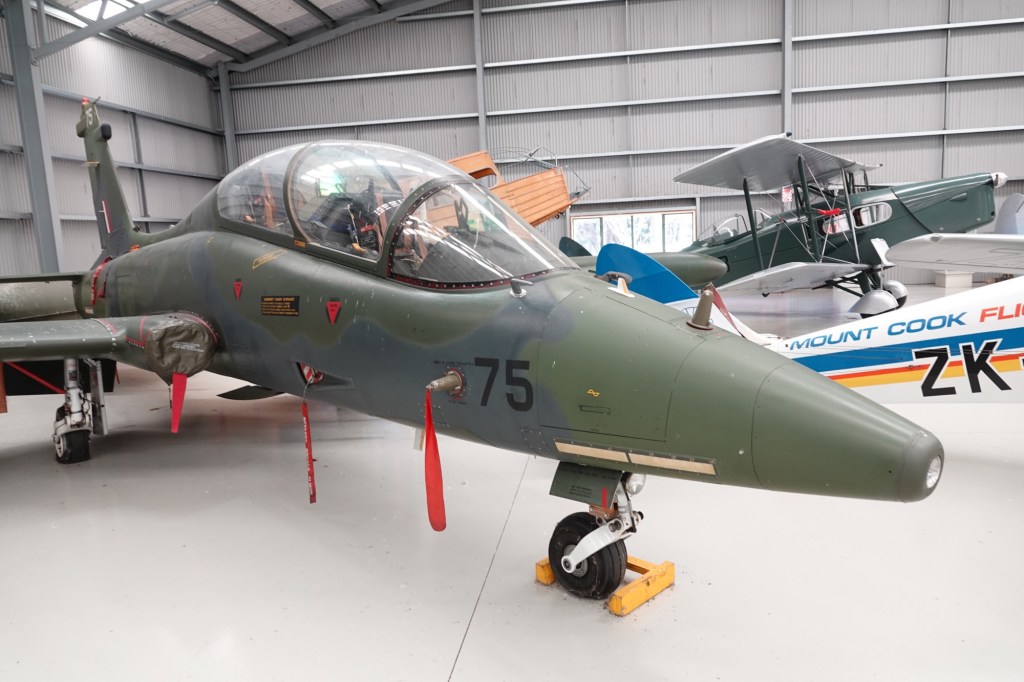
This specific aircraft was previously operated by the Royal New Zealand Air Force (RNZAF).
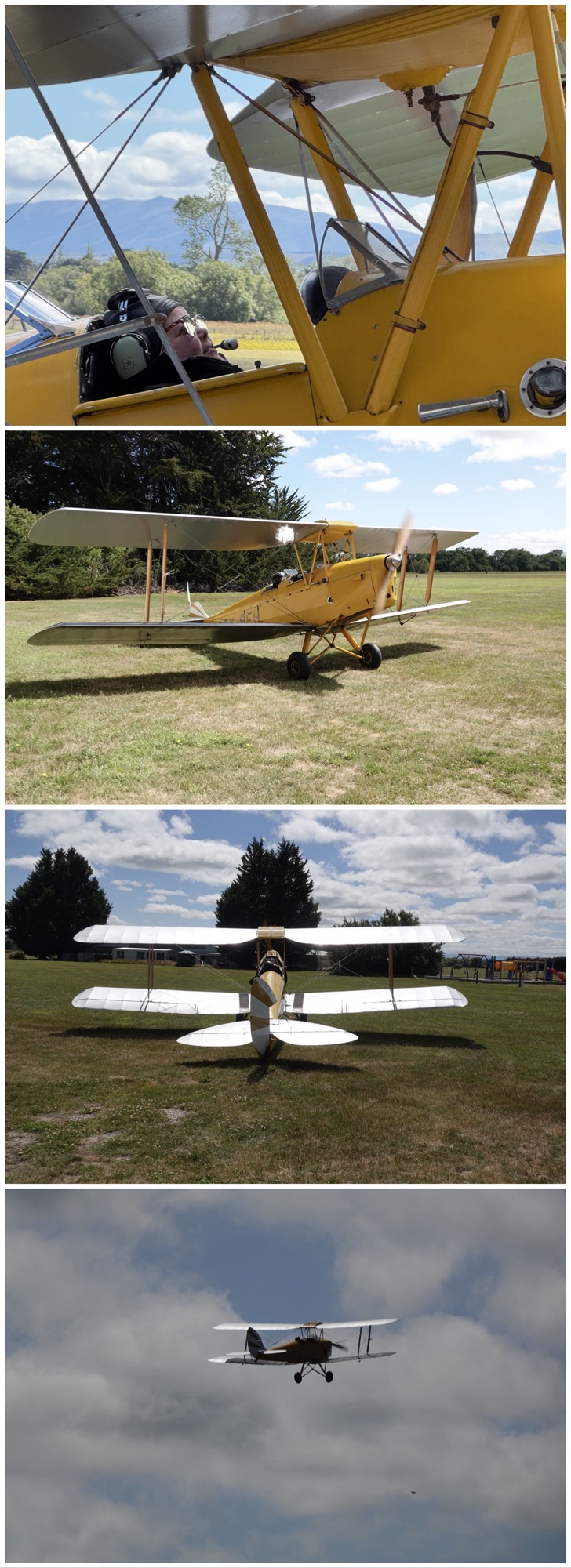
One of our group, another Rose (below)went up in the Tiger Moth, and then another (Maria, whose father was a WWII pilot in Poland, France, and the RAF) soared heavenward with the “aerobatics” option and we watched her flip, roll, and even do a suicide spiral!!
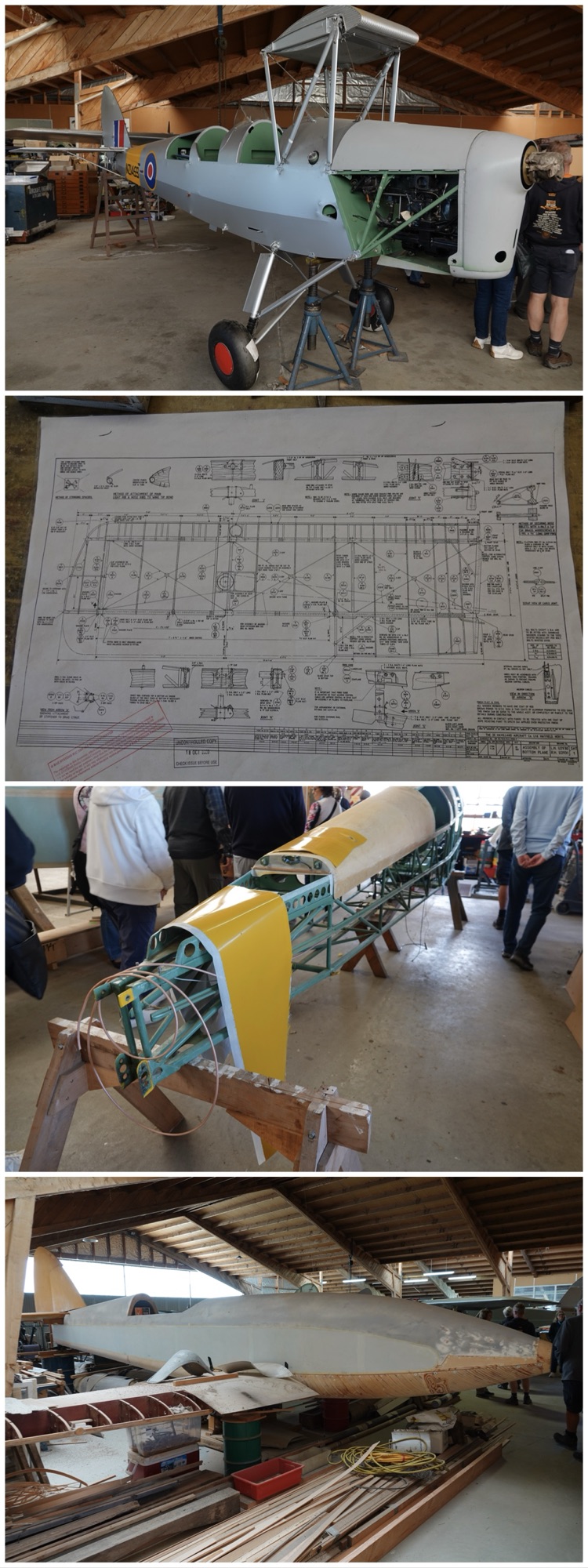
Ted headed to the workshop where these amazing planes get restored. Aircraft are shipped here from all over the world to be brought back into working condition. It can take a year or more to complete a restoration.
There were several aircraft bodies and engines in various stages of restoration l
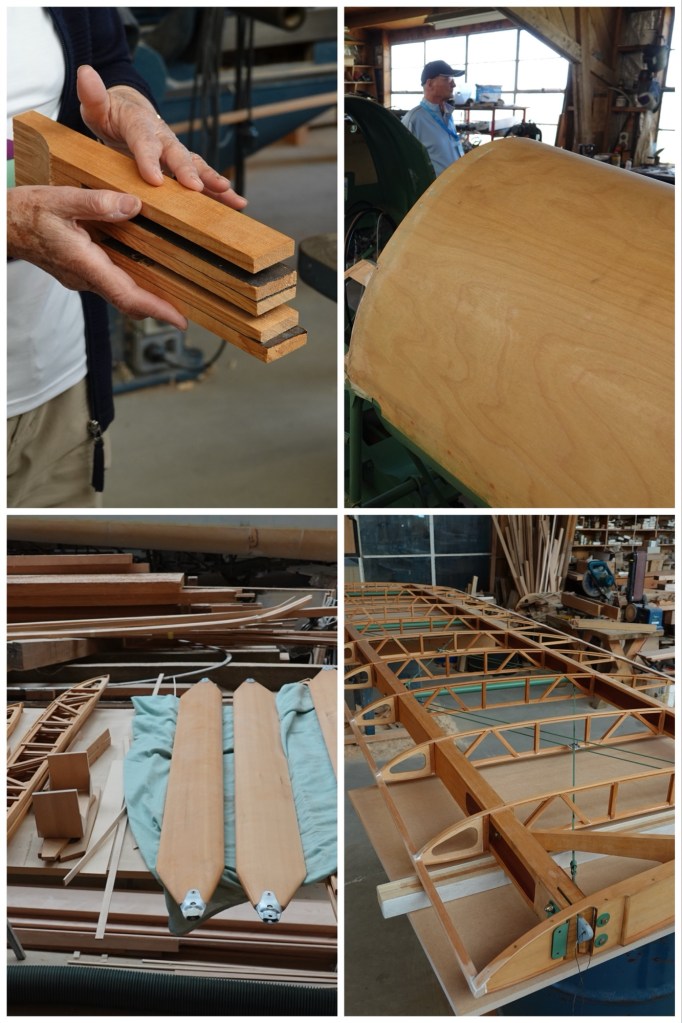
Four hundred year old British Columbia Sitka spruce is the only wood used in rebuilding the vintage wooden planes – a nice Canadian connection!
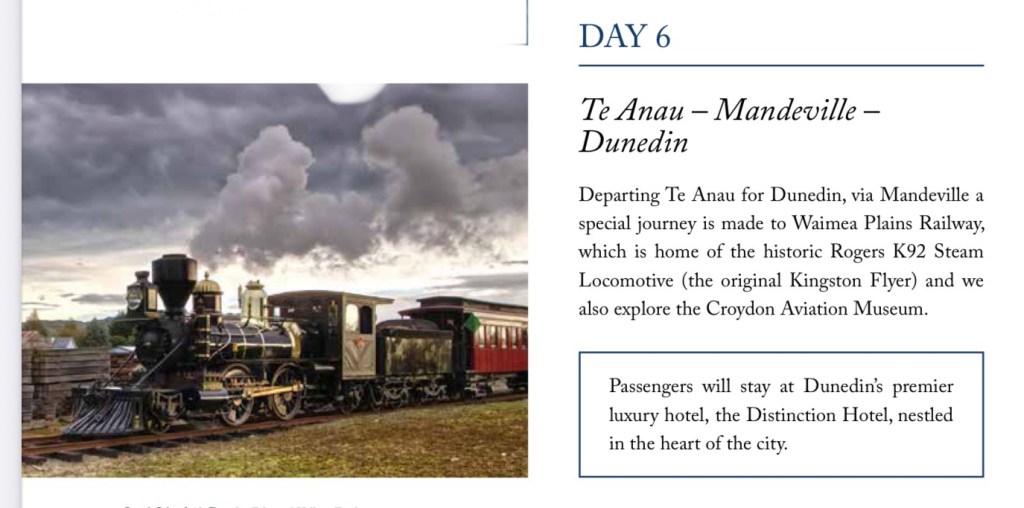
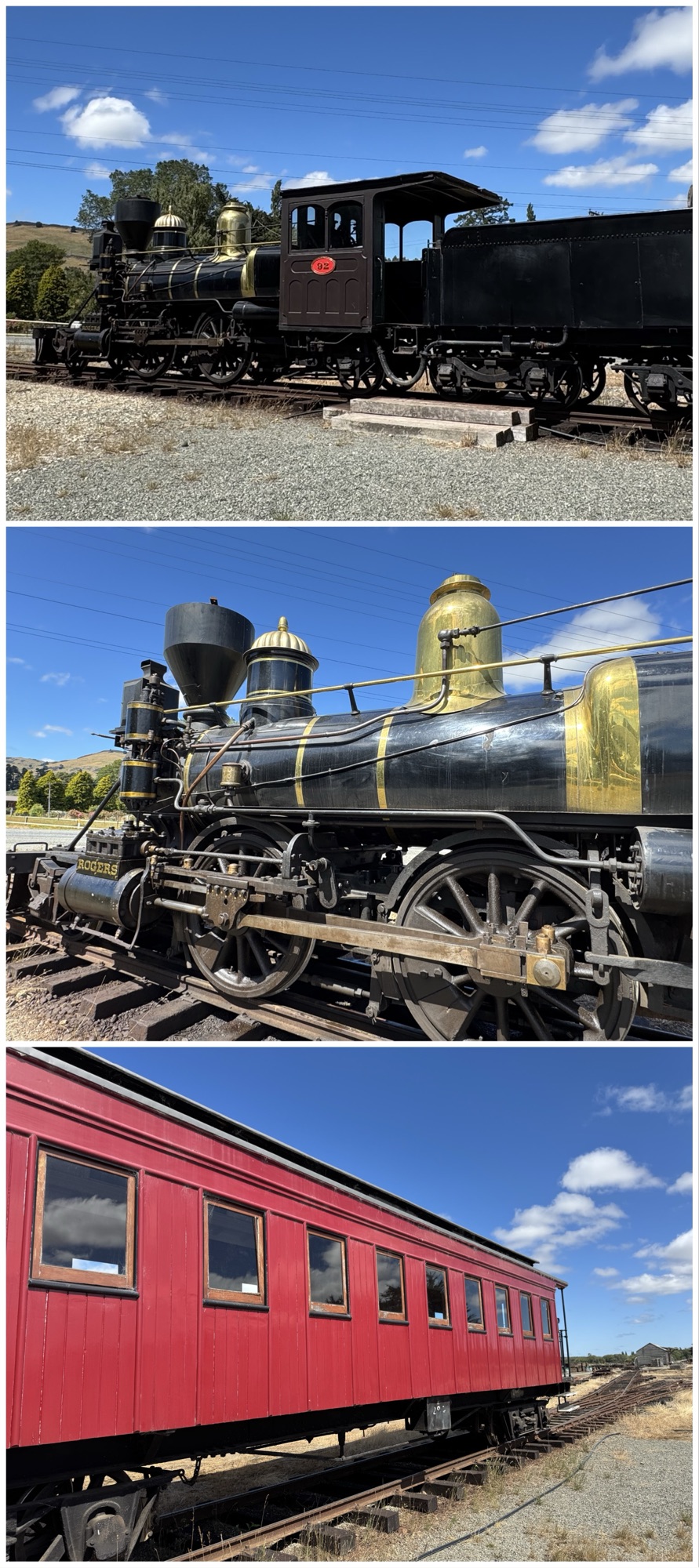
The heritage centre property is also the site of the restored original K92 Kingston Flyer locomotive.
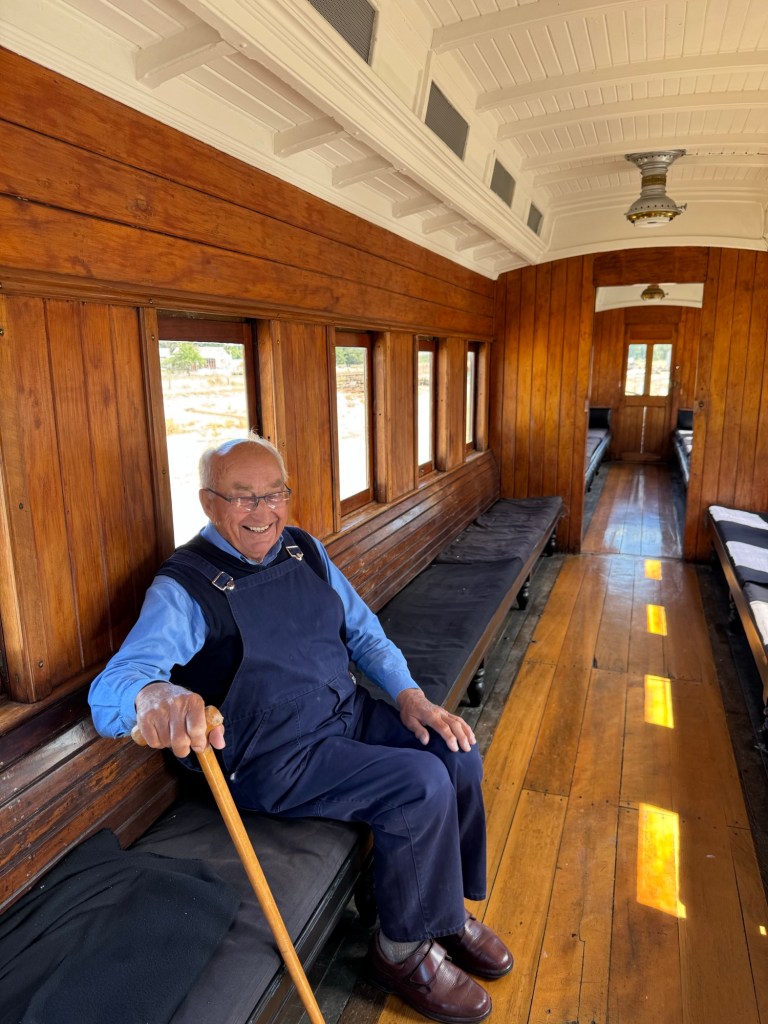
While Ted and the group were in the workshop, I was all by myself in the carriage of the Kingston Flyer with the conductor, who had some great stories to tell.
These locomotives were built out of iron by the Rogers Locomotive and Machine Works in Paterson, New Jersey, USA in 1878. Six of the total of eight built to NZ rail specifications and weighing 50 tons each, came as deck cargo on a barque (a sailing ship with 3 or more masts) in 1879.
A brief history of all eight can be found here: The Kingston Flyers
They had to be unloaded at Dunedin by floating crane in order to take cargo off the ship, and then reloaded for their final journey to Lyttleton. After delivering the locomotives , the barque hit an uncharted reef and sunk en route to Wellington.
The locomotives got the name Flyer because they were able to do a phenomenal 60 mph!
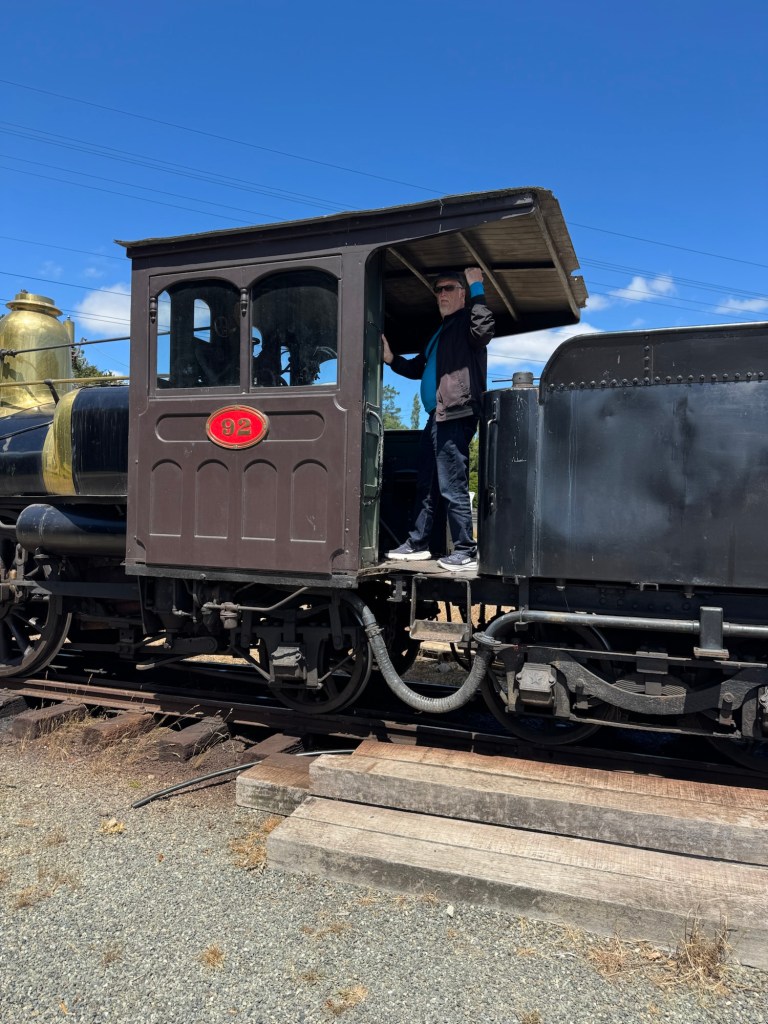
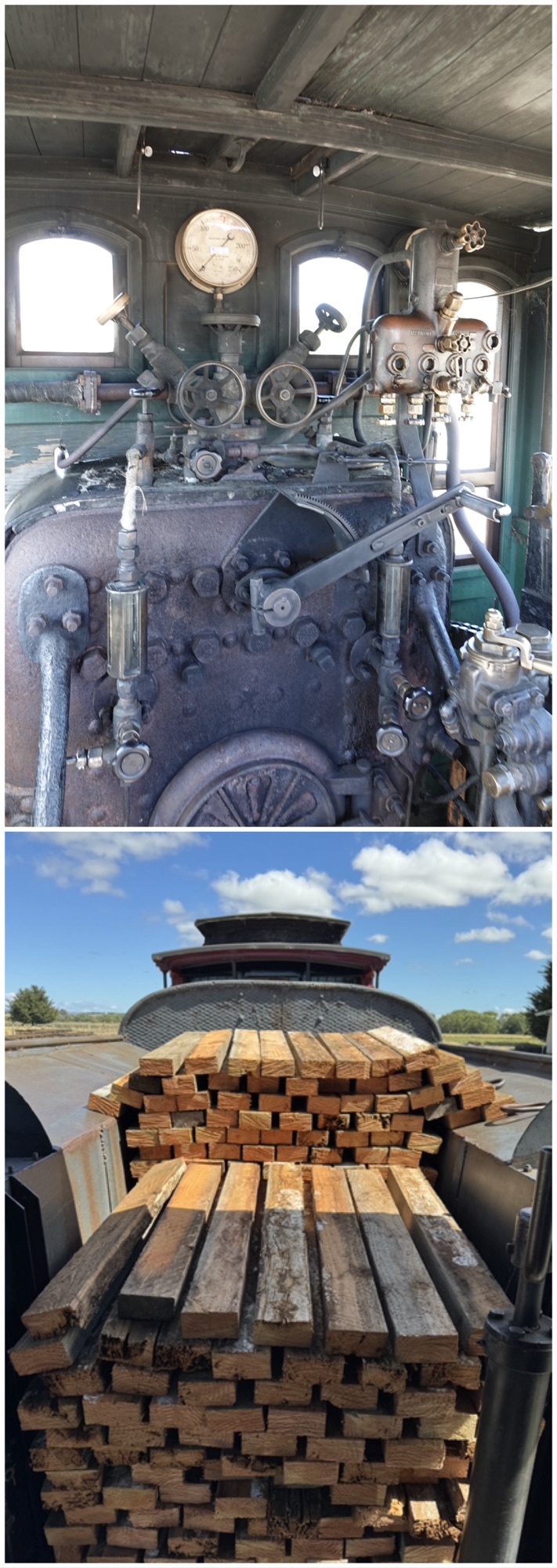
In 1926 these majestic locomotives were declared redundant/obsolete, so they were included with other “scrap” metal vehicles and farm equipment that was toppled gently off a temporary line built beside the rail/road bridge between Mossbank and Te Anau to prevent the rail line from being undercut by the adjacent glacial river. With each flood after that gravel accumulated on the metal, so that by 1985 it had disappeared under stones and mud, and willows were growing through the ruins. Fortunately the mud kept oxygen off the metal, preventing much of the rust. The braided river had also changed course by then, so permission was received to dig the Flyers out, with the newer less rare steel locomotives simply left there.
Our included lunch was also in Mandeville, at the Miss Cocoa café on the museum’s site.
We passed through Gore, the country music capital of New Zealand, before reaching Balclutha for a comfort and ice cream stop. I love that our guides always point out the availability of ice cream!
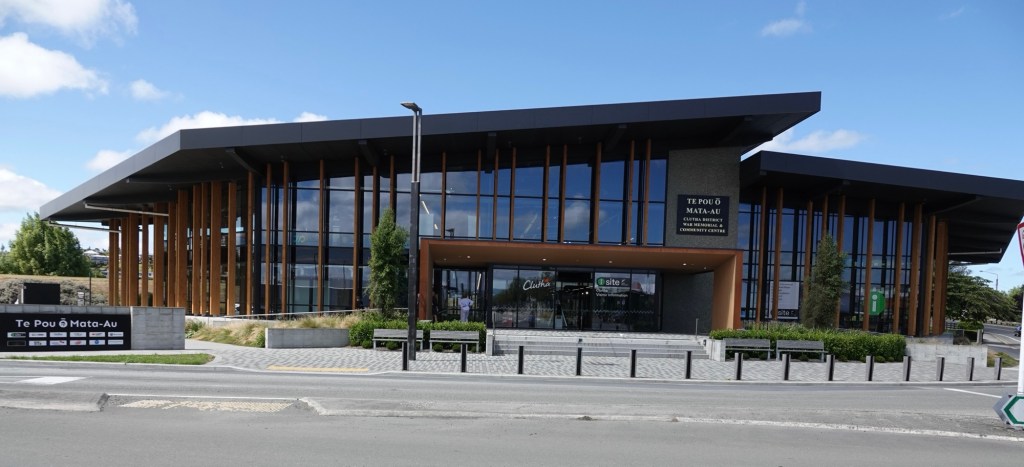
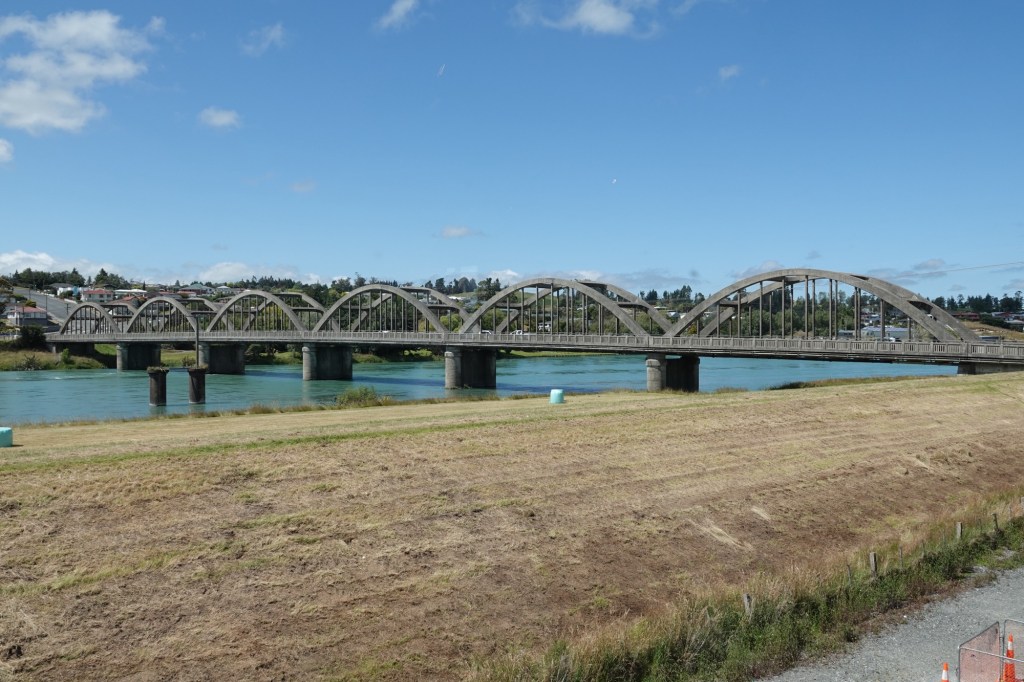
From inside the Balclutha Community Centre (our source of chocolate covered jaffa orange ice cream!) we got a great view of the bowstring design concrete arch bridge over the Clutha, which is the second longest river in NZ at 338 km/210 miles.
Then it was on to Dunedin.
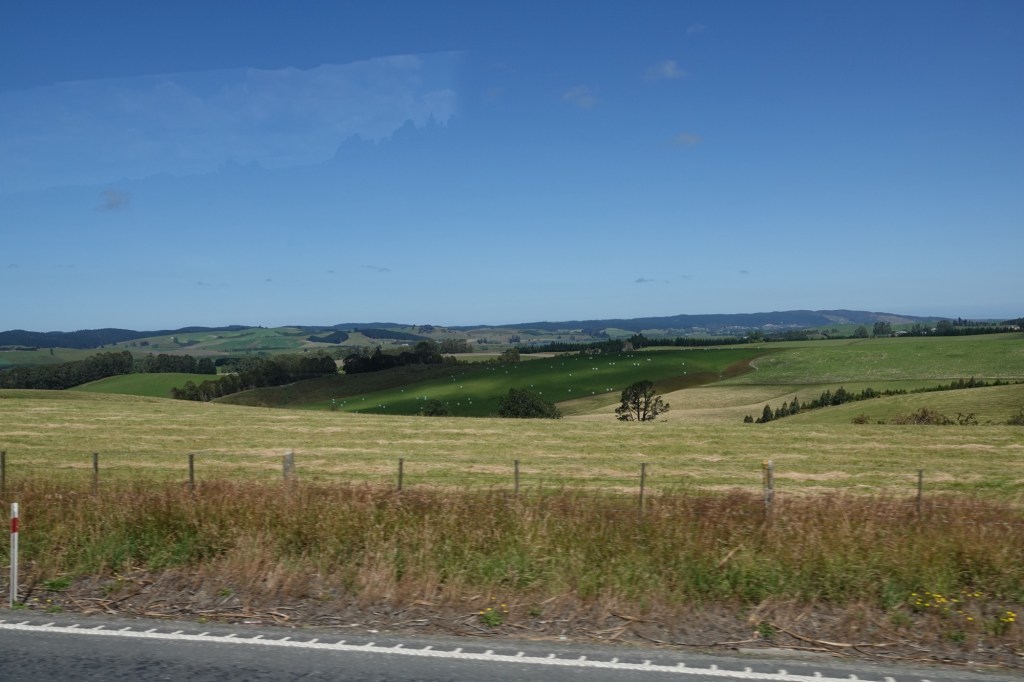
Between the towns en route were rolling hills of grazing land as far as the eye could see.
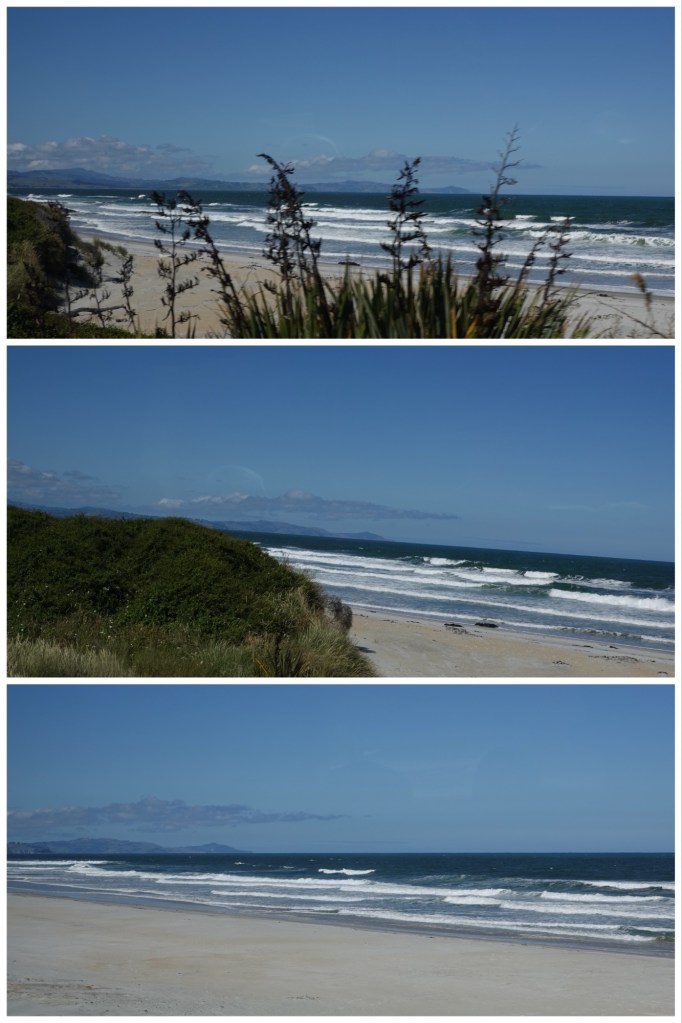
As we got closer to the city, in the area of Brighton Beach, there were – true to the name – gorgeous sandy beaches visible from our coach. Unfortunately, despite this being the height of summer, the ocean is COLD – only about 15°C/59°F !
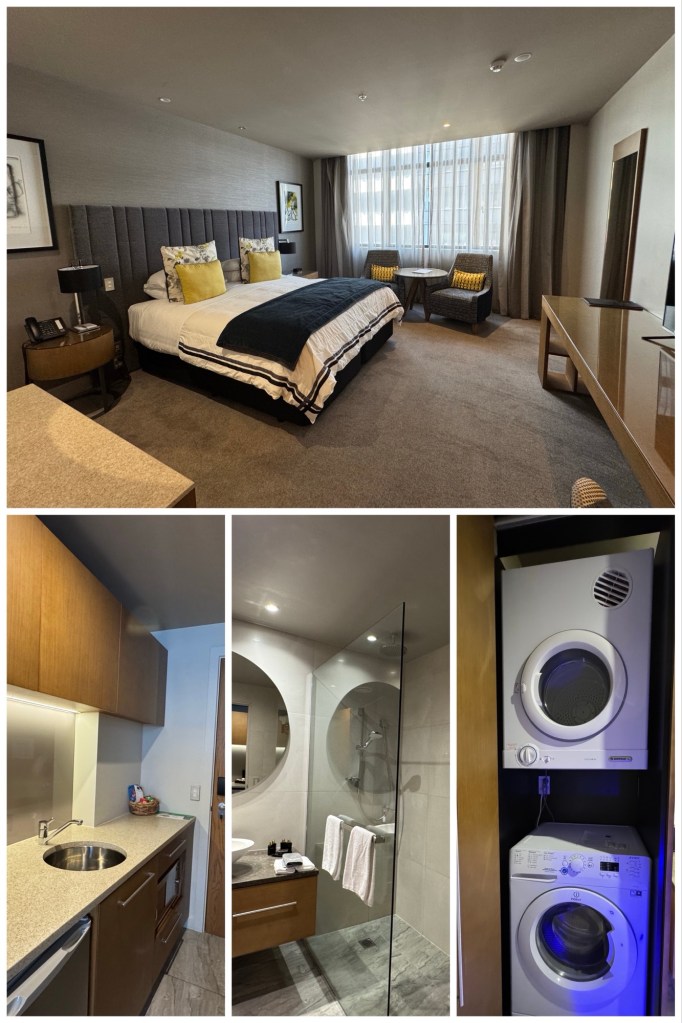
For the next two nights we’re at the Distinction Hotel in Dunedin, where our dinner was delicious, featuring (among other things) some wonderful roast lamb with rosemary jus, and passion fruit Pavlova for dessert.
Tomorrow we’re back to train travel.
 Rose and Ted’s Excellent Adventure
This portion of the trip sounds fabulous, Rose! Astoundishingly so, in fact! LOL! What a blast!
LikeLiked by 1 person
Indeed!
LikeLike
What did the other passenger say after the acrobatic flight? Or was she speechless?! Enjoying all your detail, thanks! Are either of you birders with a life list? I’ve never heard of a hotel with w/d in every room. What a great idea! We are going to miss the laundry room on our Douro cruise, especially cruising in summer…
LikeLike
She was exhilarated! (i’d have been green). There are lots of hotel suites with w/d in countries that have eschewed the Airbnb model. When we look for our own, we just choose an “apart-hotel”. This particular hotel is a mix, but our tour company intentionally chose the mid-way point with this upgrade. It’s also a HUGE room!
LikeLike
Did you know the hotel had w/d before you packed?ClayFollow and keep up with our retirement adventuresInstagram: @ClaynMike
LikeLike
We did! But since we’re on a 5 month trip, we’ve got the overnight washing of unmentionables routine down pat, so almost didn’t need it! Most of the places we’ve booked on our own after leaving the tour have a w/d too.
LikeLike