
Another day with no train, but there was a steamship! There was also time to explore Queenstown on our own.
Unfortunately, today the weather changed from uncharacteristically dry and sunny to the more typical South Island “some rain every day”. Fortunately we escaped with nothing more than threatening skies until a wee bit of drizzle after we were back in our hotel.
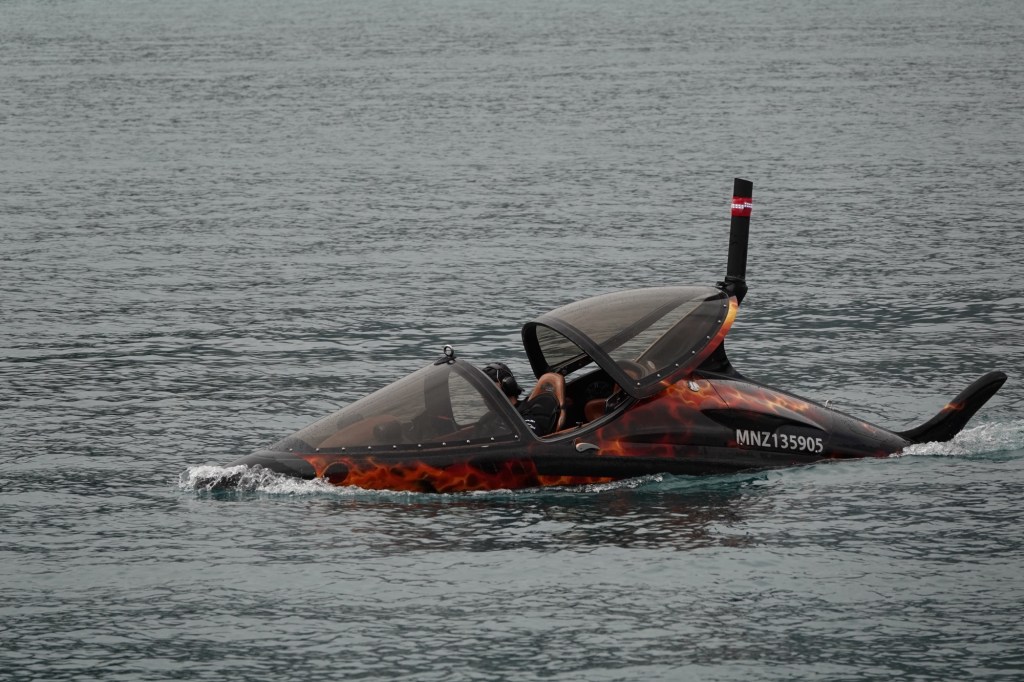
There was lots going on along the waterfront promenade, as well as lots of interesting permanent attractions.


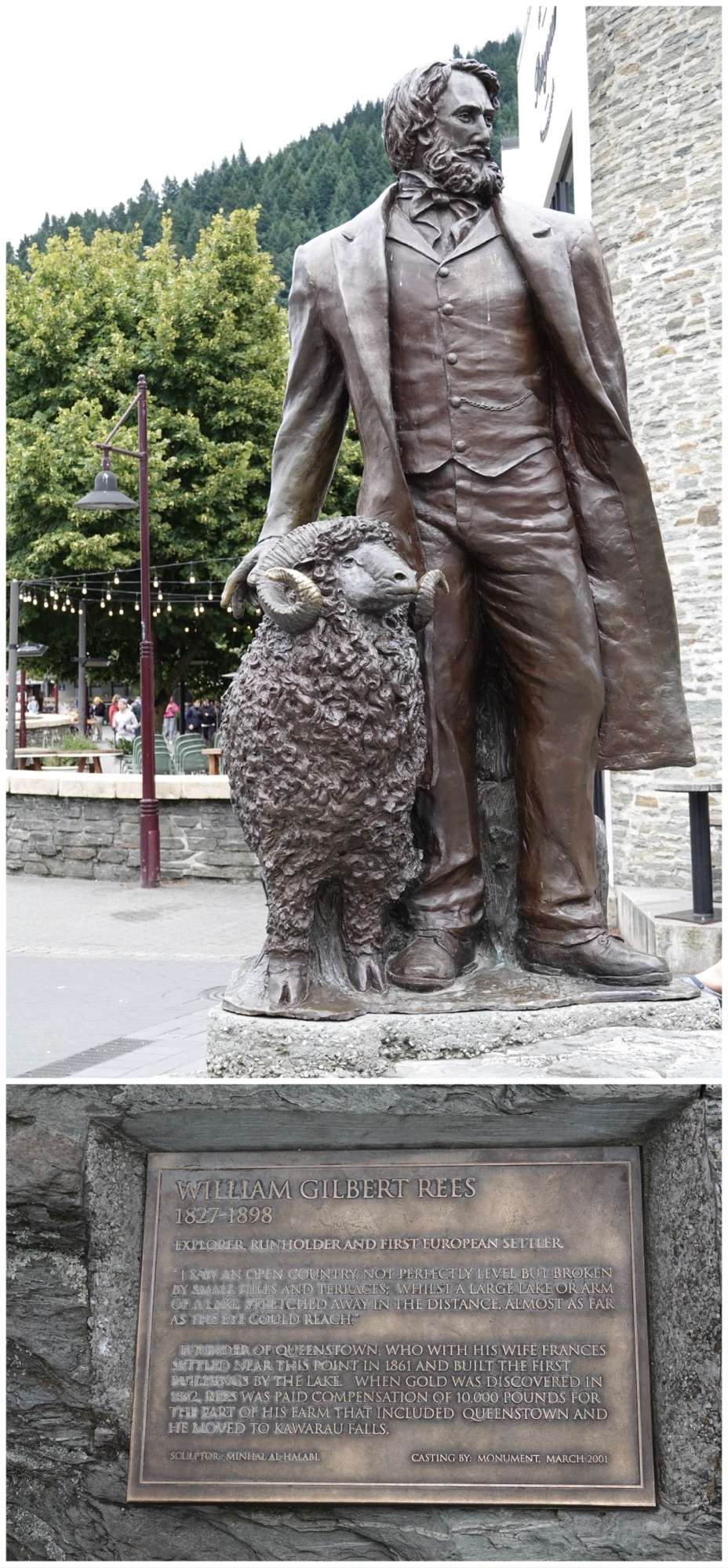

poem by acclaimed New Zealand poet David Eggleton, which chronicles the history of the surrounding Otago region. Some excerpts from the poem include:
“Hoisting history on his back like a sugar – sack, The swagger strides along greenstone trails”, “Ice crystals, turning weeping willows into frozen chandeliers”.
“In the forgotten graveyards, hair grows into grass. While wind sifts the sweet vernal over and over”.
Centre: a kiwi, carved in the same style as the moa we saw in Franz Josef.
Bottom: Steamship Wharf.
Queenstown sits on the shore of Lake Wakatipu, a 12000 year old glacial lake whose turquoise waters contrast starkly with the surrounding green foothills of the Southern Alps; the colours were especially vibrant under the overcast skies.

The lake is 80 km / 50miles long and 400m/1300ft deep at its deepest. It is popular with speed-boaters and pleasure cruisers.
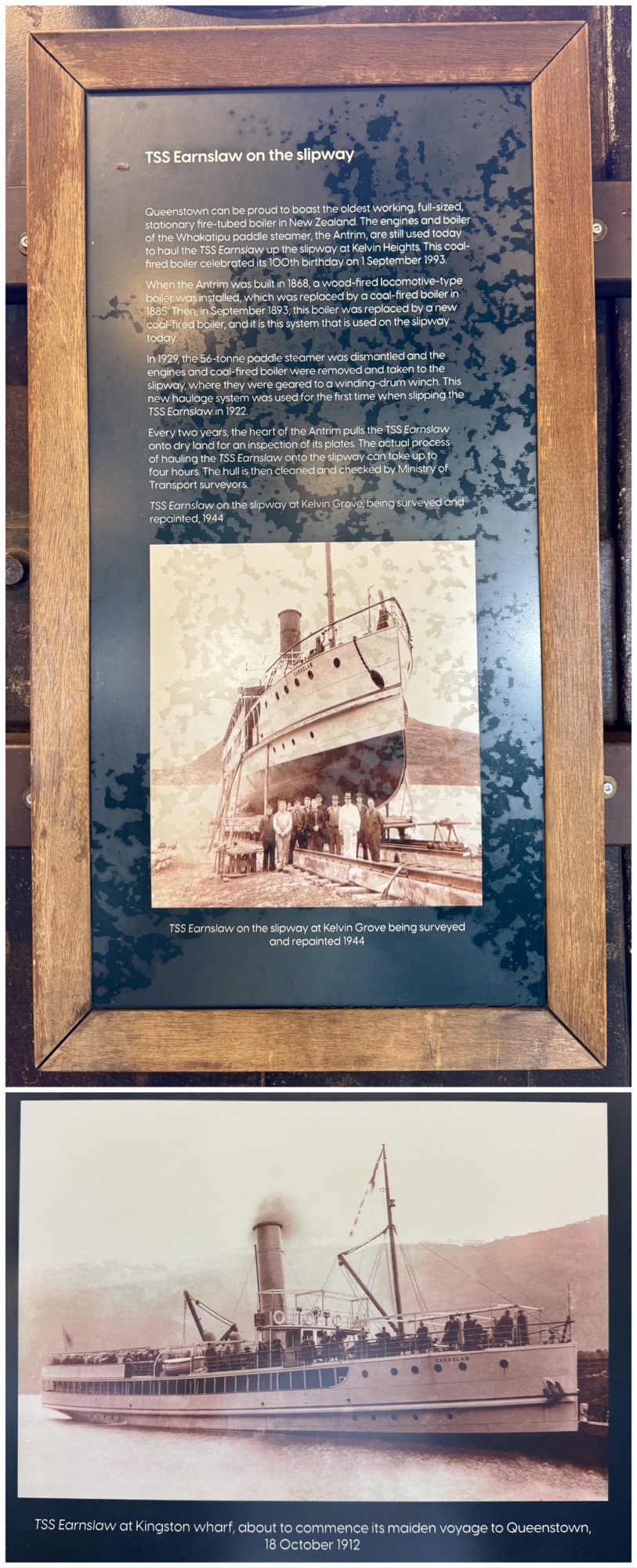
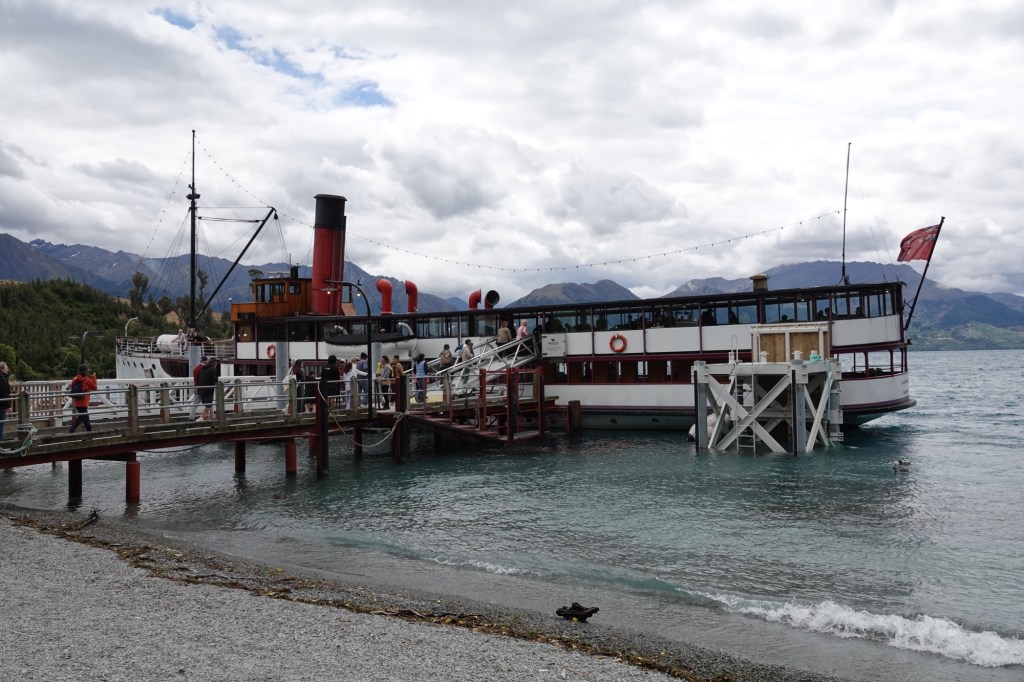
The TSS Earnslaw is the only remaining coal-fired ship operating in the Southern Hemisphere.

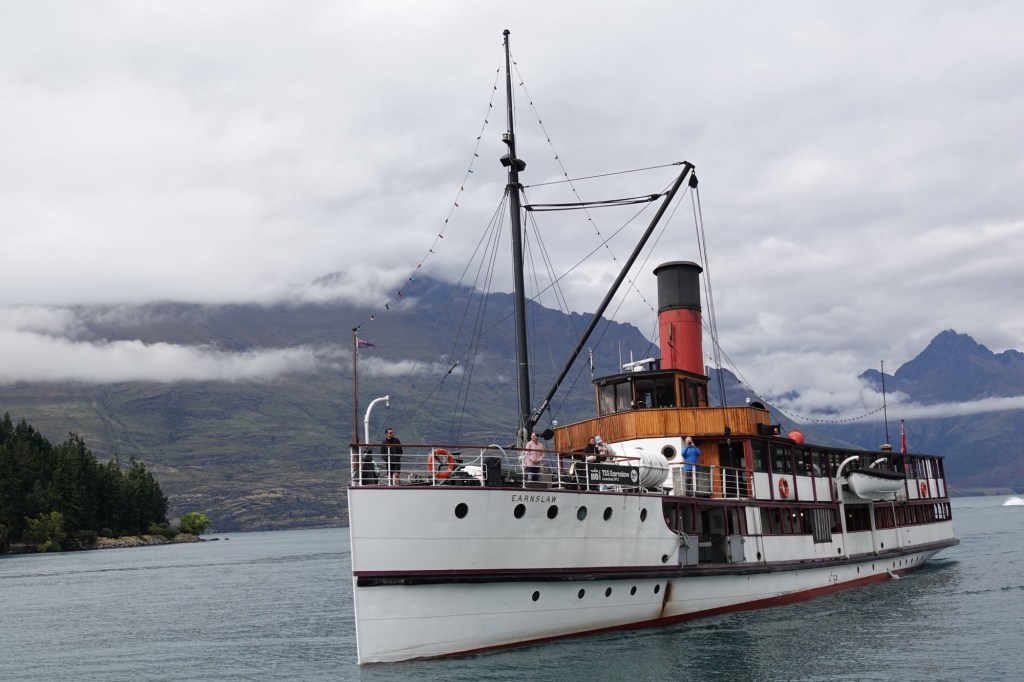
As we waited in line to board, we watched coal being loaded into the chute leading from the first deck to the engine room below.

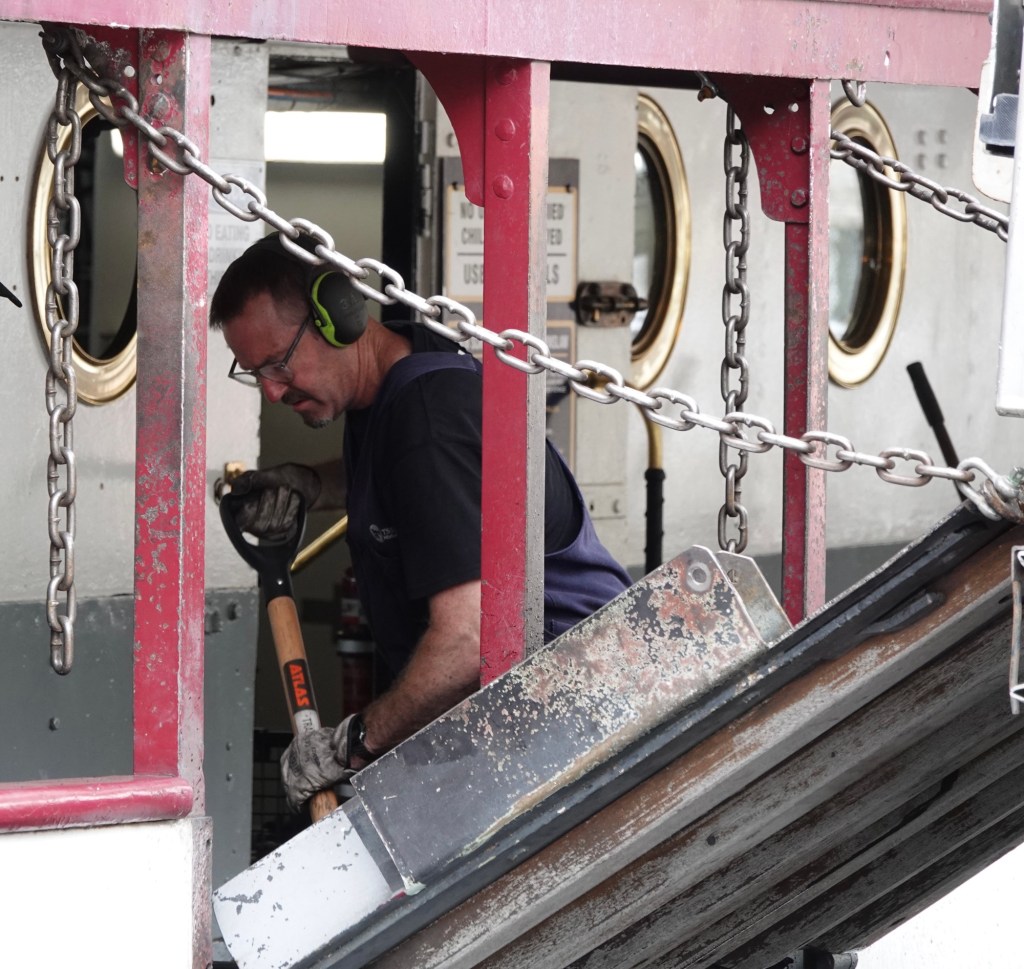
Just after boarding, we got the chance to speak to one of the crew members who were swabbing the decks clean of coal dust. He described the ship as “a good old girl” who was “a workhorse rather than a show boat”… and told us that she burns 1 tonne of coal every hour!
We stood at the bow and watched the Captain prepare to sail.
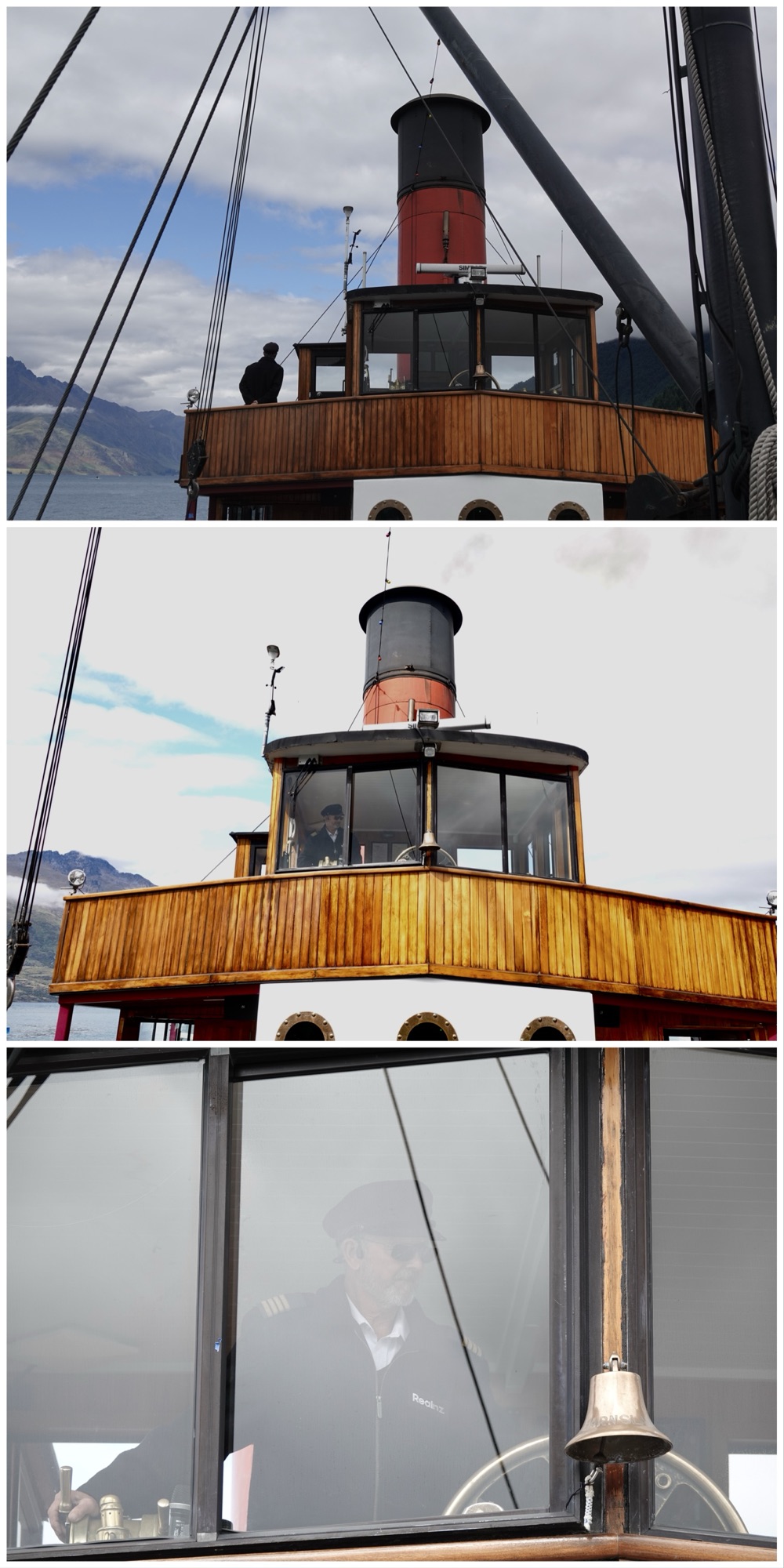
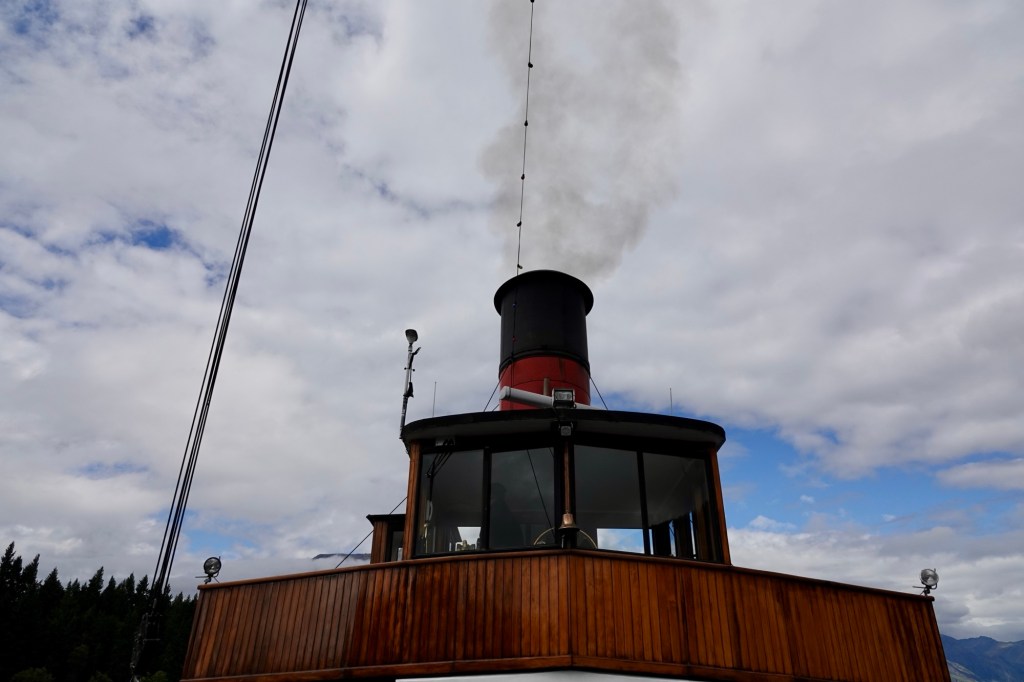
Then, with a blast of her horn and a puff of smoke from the stack, we were off!
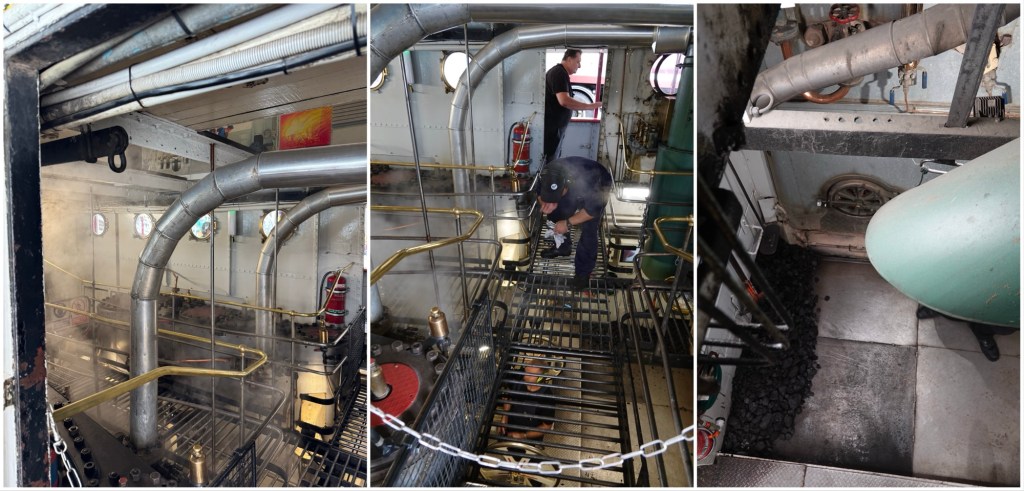
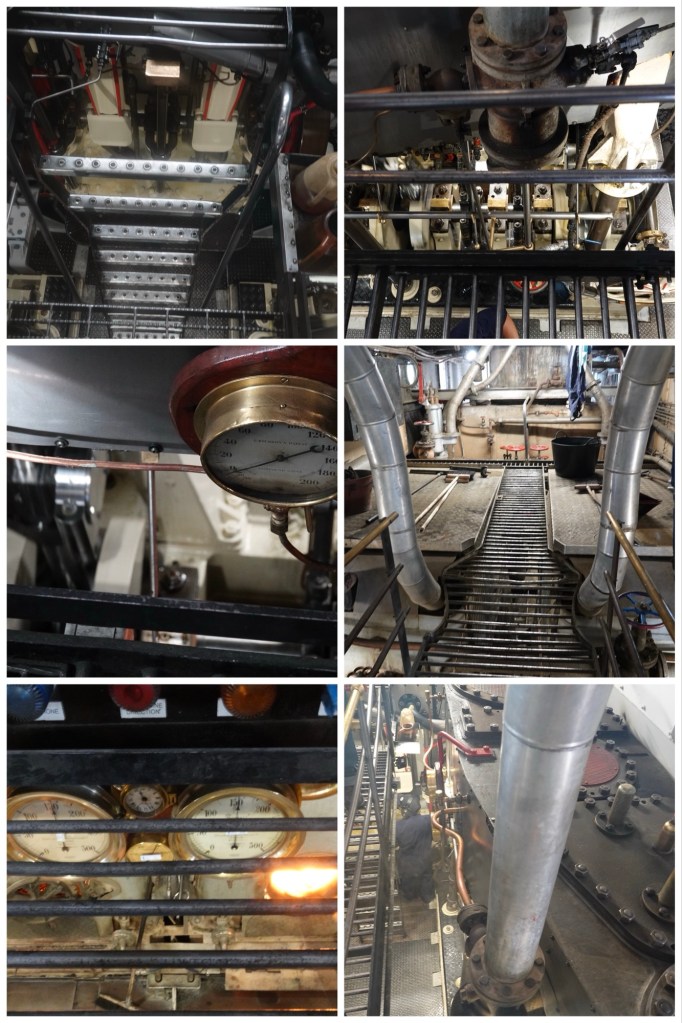
Once underway, we were allowed onto the catwalk on Deck 1 to look down into the engine room. This ais a working ship, so there was no narration to explain what we saw.

In addition to a café and saloon on board, there is also a small shipboard museum of sorts at the bow that details the ship’s history.


Ted took a few photos of the shore and mountains during the 45 minute crossing to Walters Peak, where our excursion included lunch and a sheep farm show.

Our destination was soon in sight.
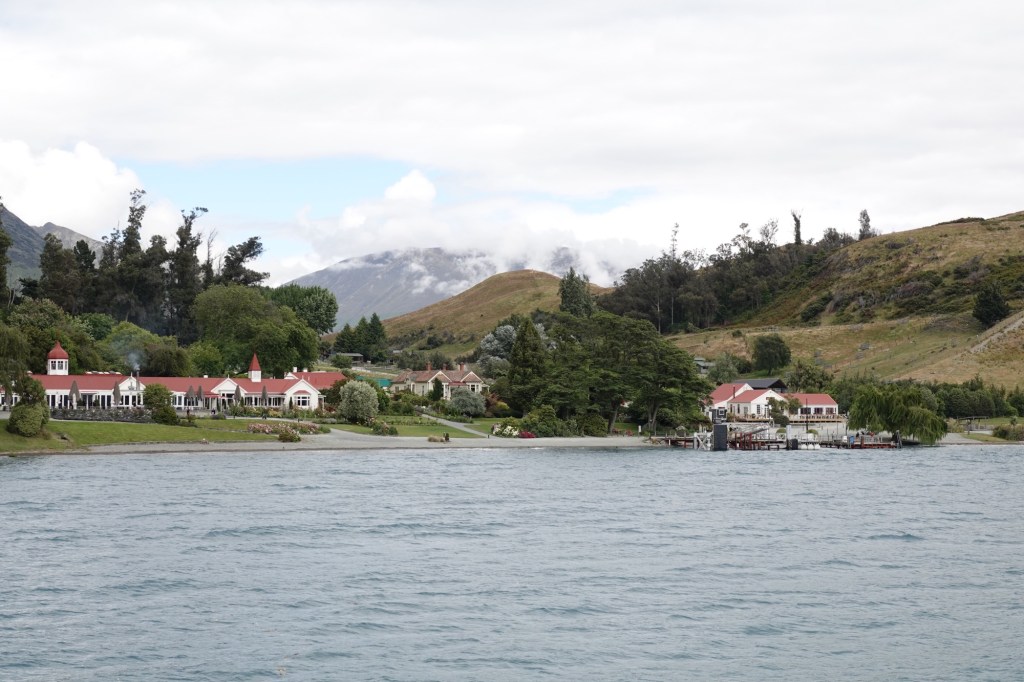
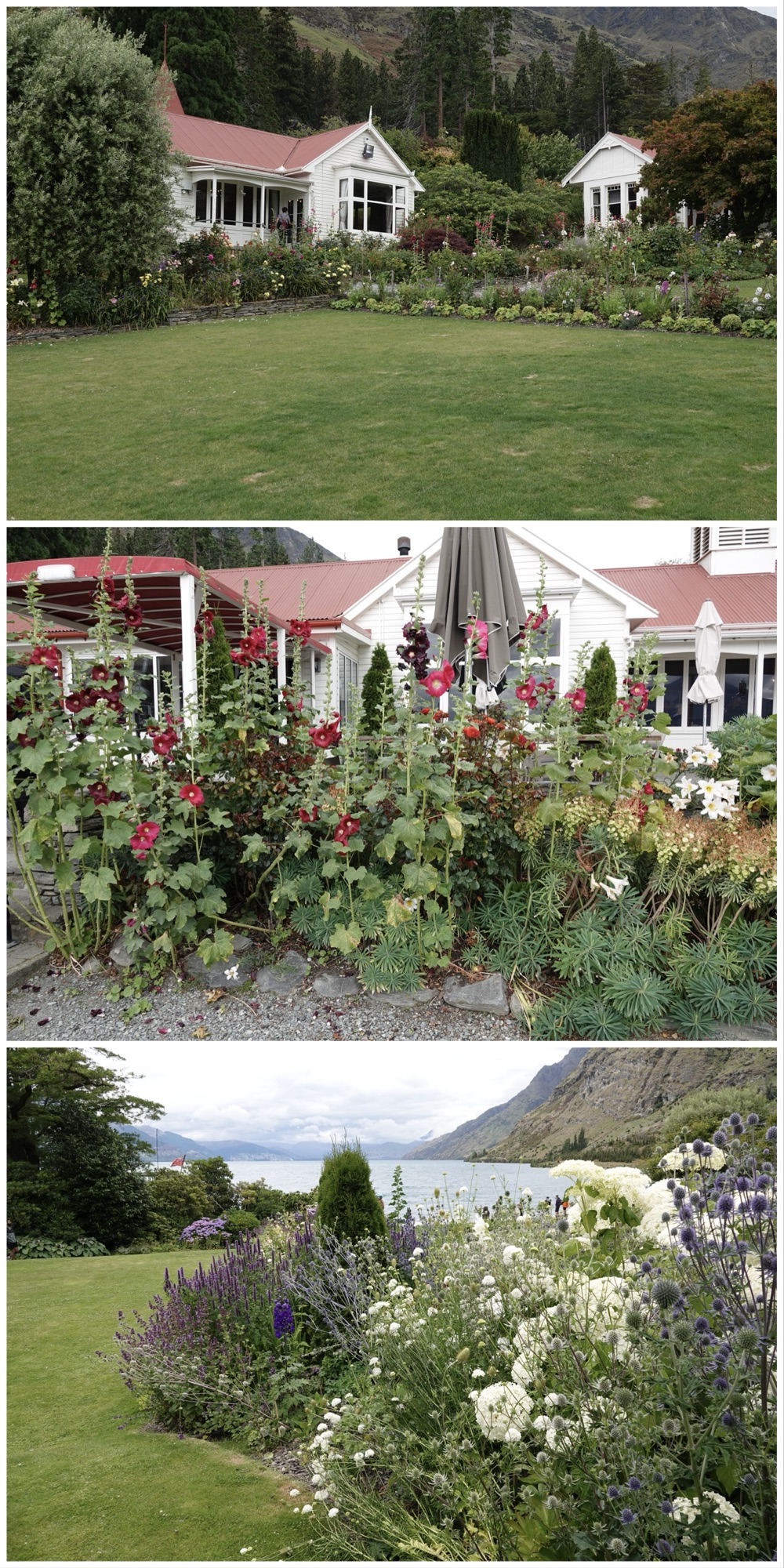
The homestead restaurant and its adjacent café/giftshop brought to mind the Victorian garden tea house at Butchart Gardens on Vancouver Island: a sprawling English-style cottage surrounded by hydrangeas, lilies, roses, zinnias, and pink and deep crimson hollyhocks.

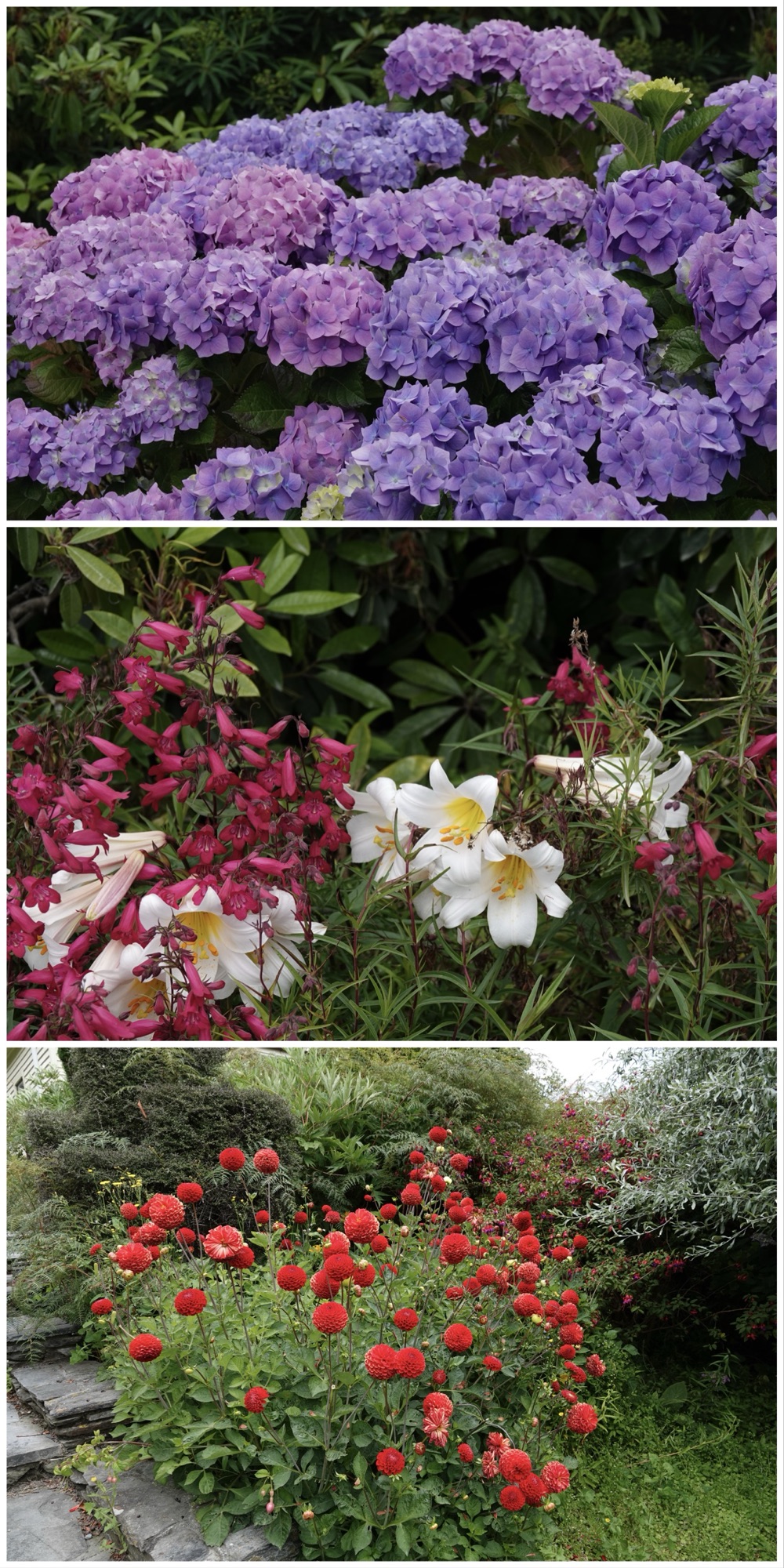
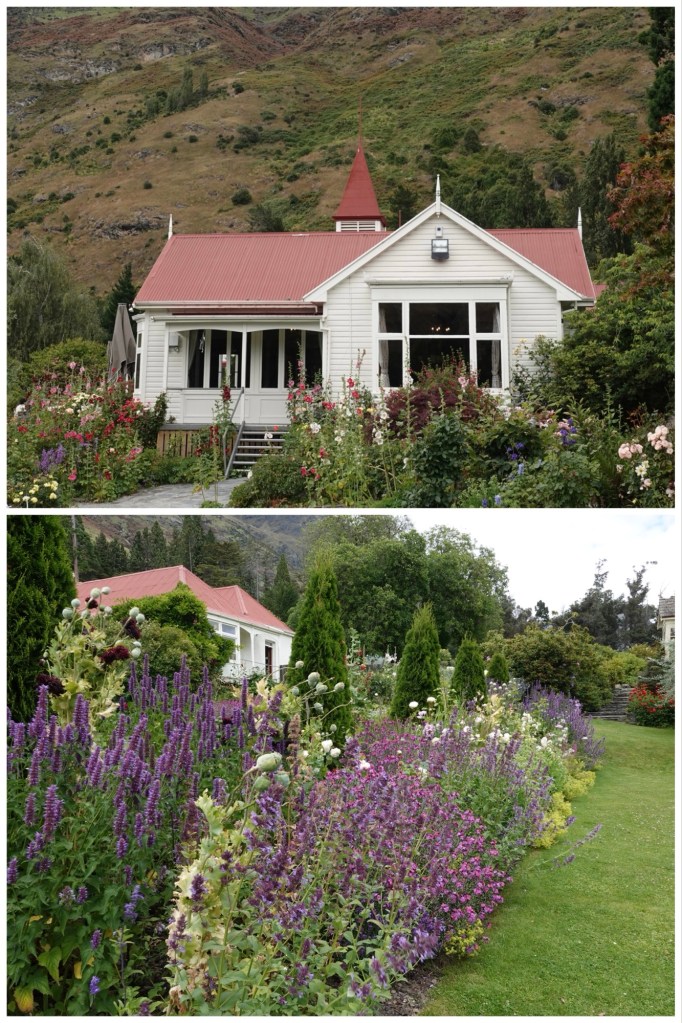
The lunch was incredible! Free range chicken, beef, pork, and lamb were featured, along with locally caught fish and NZ green-lipped mussels, but there were delectable appetizers, salads, and side dishes, as well as a delicious variety of desserts (including one of Ted’s favourites: sticky toffee pudding). While the food was presented buffet style, it was done so beautifully. New Zealand wines and beers were available, although not included in our tour price.

After lunch, we walked to a stage built on Walter Peak Farm, the smaller of two agricultural enterprises there. The farm has about 155 hectares/380 acres with 600 sheep, but their main business is tourism, since the price of the wool of a “normal” sheep is actually less than the cost of shearing them.
Nearby Walter Peak Station (a station being more akin to a ranch than a farm, with much larger land holdings) has about 18,000 merino sheep on its 26,000 hectare/64,248 acre property, and the high price of merino wool makes it quite a lucrative business. The station also runs about 300 Angus beef cattle.
At the “farm show” we were introduced to Josh, a sheep farmer, and Mia, the short haired border collie who Josh explained does all of the hard work.
Before seeing a demonstration of what Mia does, Josh sheared one of the sheep. He described the process as akin to taking a child for their first haircut – unpredictable. The sheep gets sheared while being held upside down, because “when they are on their backs they basically give up on life”. I have to say, the sheep looked simultaneously docile, confused, and ridiculous.

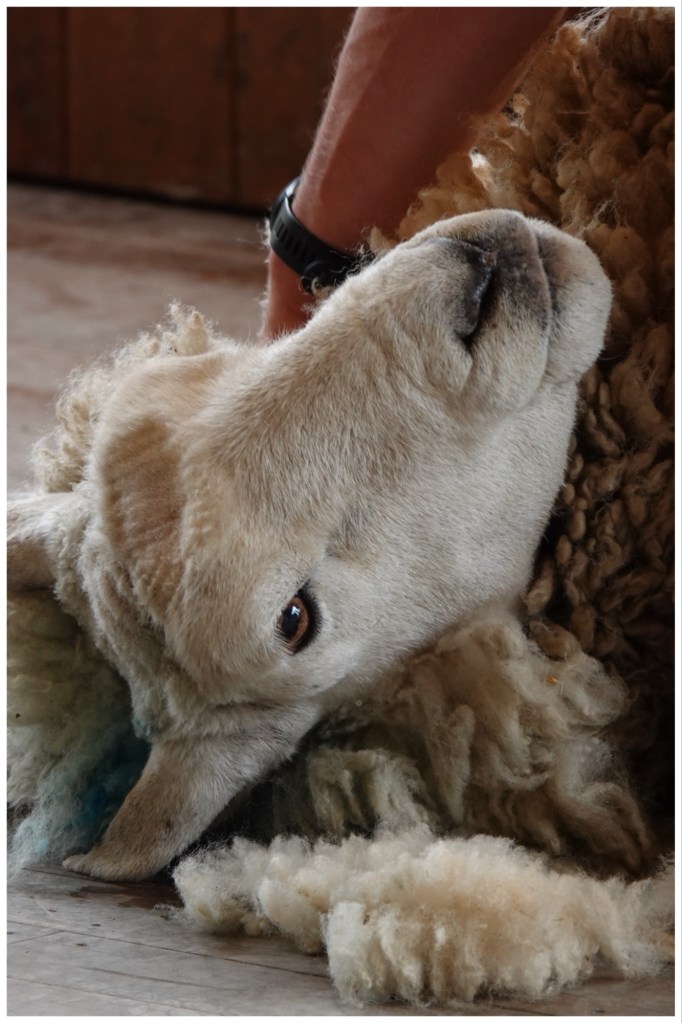

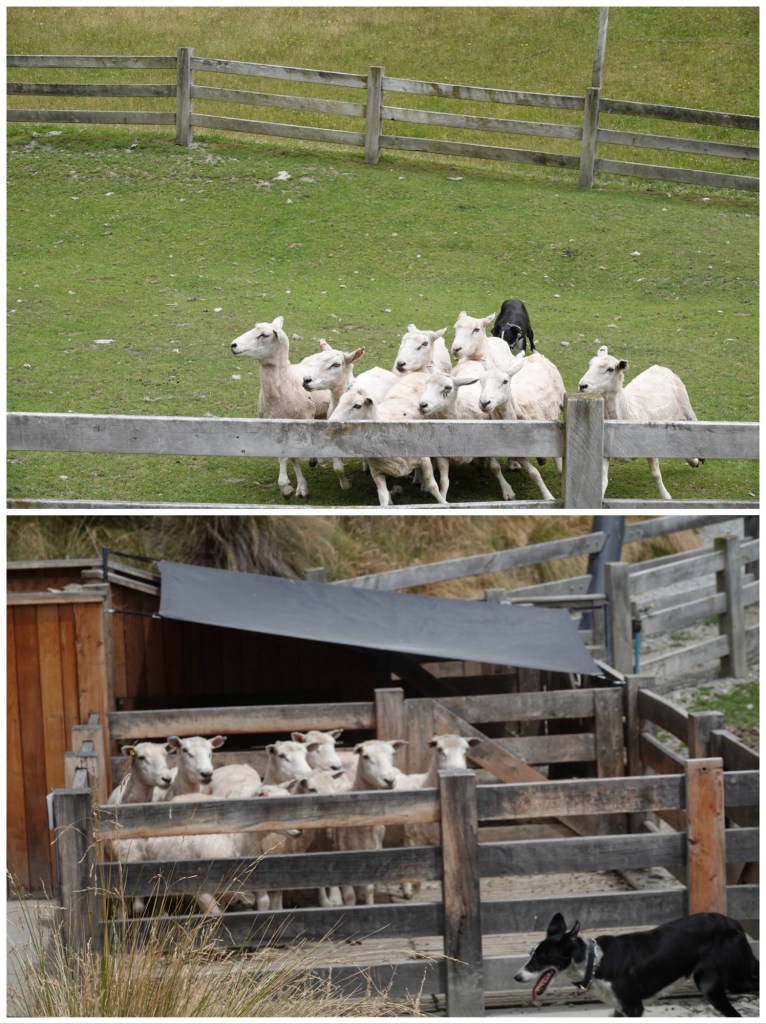
Once the sheep had been “fleeced”, it was time for the sheep herding demonstration. At Josh’s quiet command “get out of here”, she ran up the mountainside out of our sight line to collect the sheep grazing on the other side. Guided by whistle commands which Mia understood to mean right, left, hold, and drive, she brought the sheep into the pen. Mia did all of this completely silently – absolutely no barking (and no touching) just glares. Josh joked that this was a skill any good spouse has perfected.
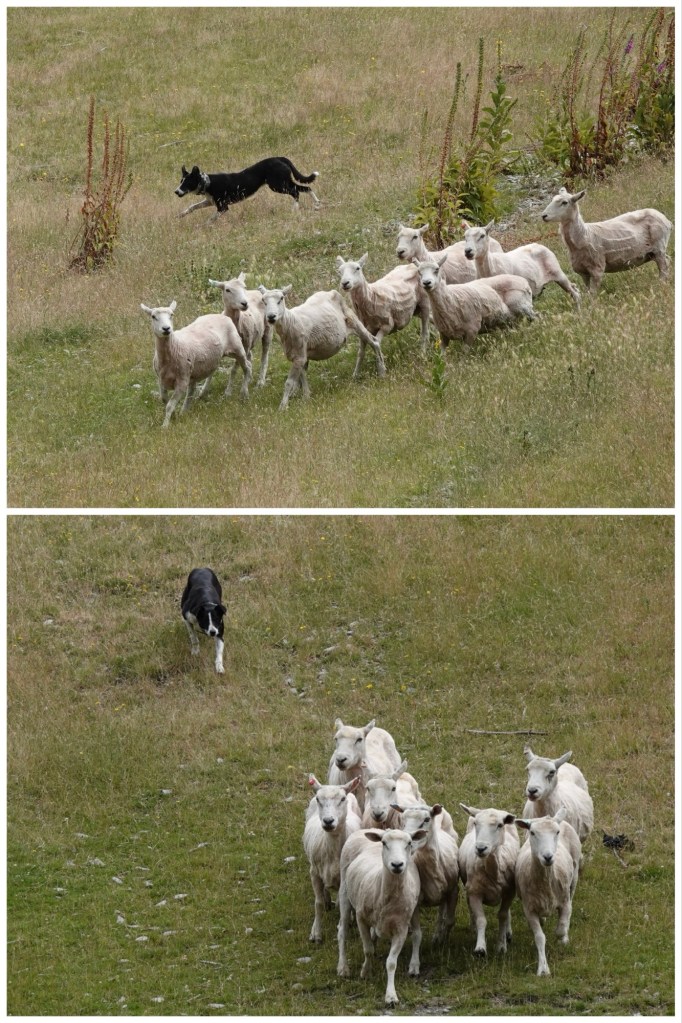
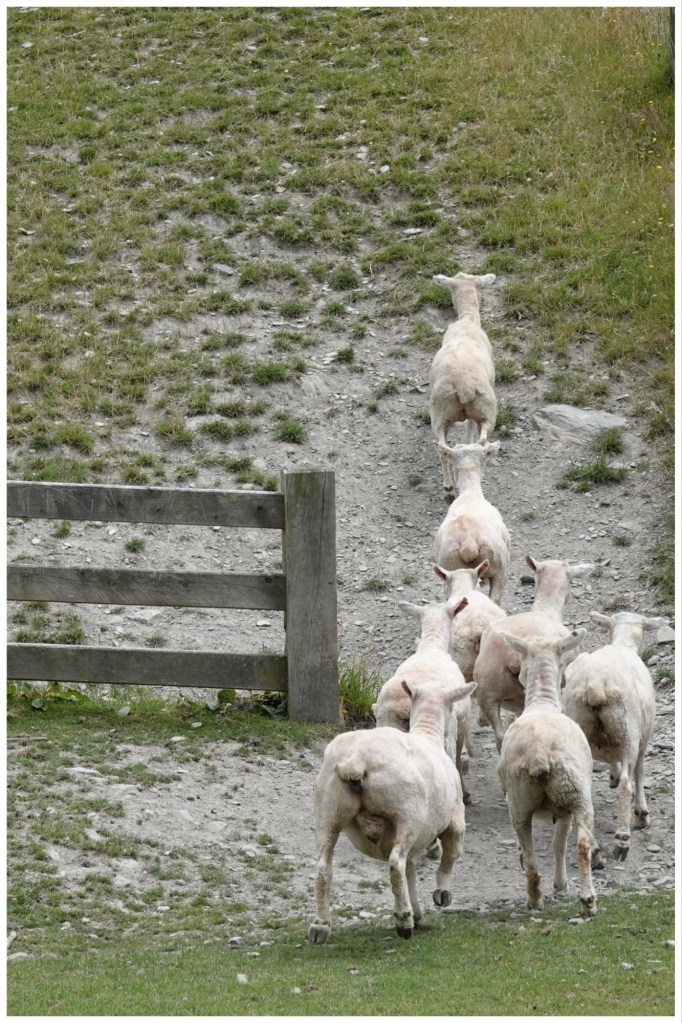
Once the sheep had all been successfully collected, Josh released them to run up the mountainside again. He opined that this demonstration of ingratitude for her herding work in daily shows is why Mia thinks he’s a jerk.
Gratitude was actually demonstrated with words and vigorous head rubs; not food, since feeding times are carefully managed. Herding dogs are generally fed in the evenings, since a dog expected to herd sheep, which can mean running 100km or more per day, could get severely sick if asked to work right after eating.
We re-boarded the steamship for a second picturesque cruise, this time back to Queenstown.

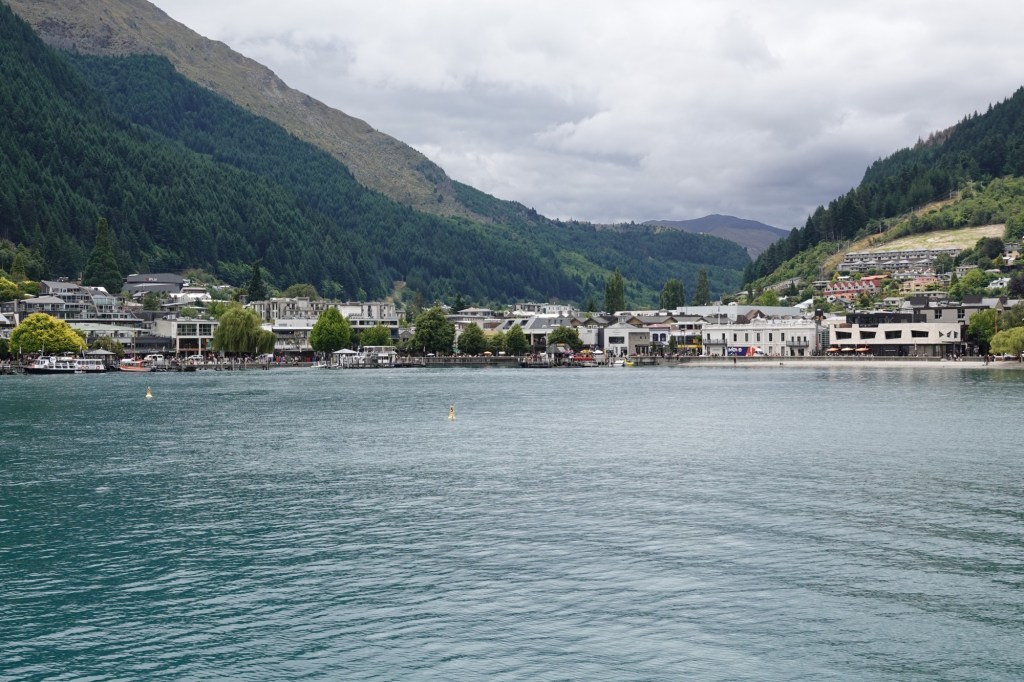
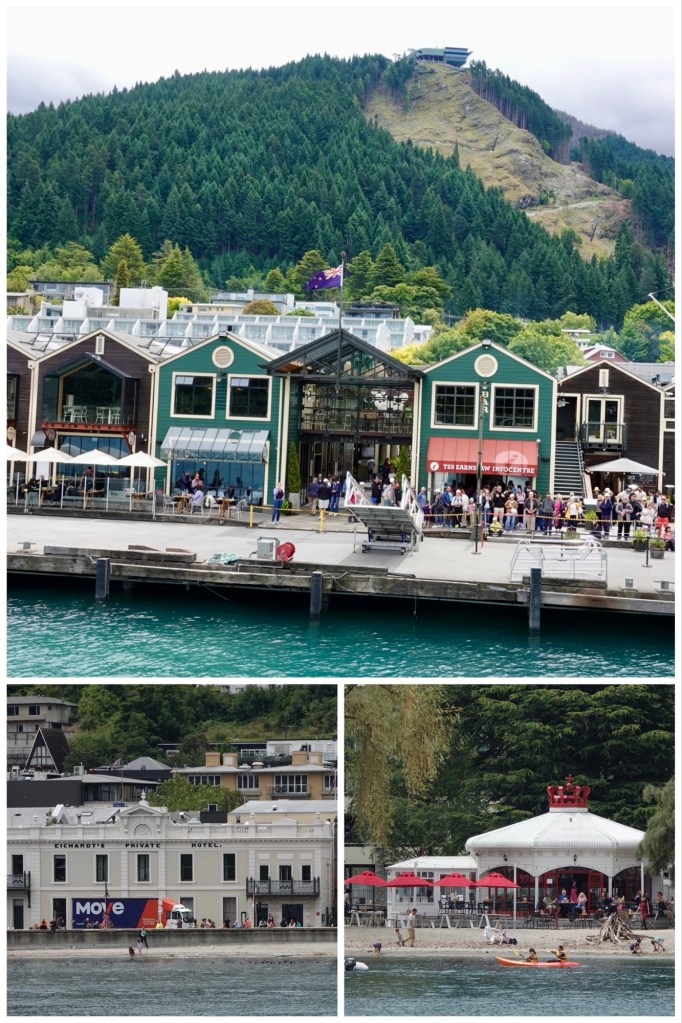
Ted and I walked around town for about an hour, marvelling at the sheer number of eateries and outdoor gear retailers there are. It’s very clear that tourism is a major industry here.
After our huge lunch, dinner was flat whites from a quirky little coffee caravan serving Black Lab coffee.
 Rose and Ted’s Excellent Adventure
I’m enjoying your travels as always. We also had a lovely cruise on the same Vancouver Island boat — from Alberni many years ago. We saw a mother whale and her calf! I also agree that the homestead you visited resembled that tearoom in Butchart gardens, but I liked the more natural gardens there in NZ much more than the over the top displays in Butchart. You finally got a meal worthy of your palates!
LikeLiked by 1 person
It was a great day – and I completely agree about the gardens!
LikeLike