We’re just over halfway through our Pharoahs & Pyramids cruise, and while it has been so packed with activities that it feels as if we’ve been here much longer than 6 days, conversely it also feels as if the time is flying by,l
We really needed a low-key day to get caught up, so today we’re just doing a short included tour. It was the only thing offered anyway, since we sailed for Aswan mid morning.
The temple at Esna was designed and built in the second century BCE during the Roman period. Nonetheless, it is truly an ancient Egyptian temple which depicts Egyptian gods not those of Rome. We walked about half a kilometre from our ship to the temple, but at the time of its building, this temple would have been right on the bank of the river.
The temple is dedicated to the god Khnum, the ram-headed god. The ancient Egyptians believed that he was the creator god. They believed that children were born as malleable clay, and the creator god put that clay on a pottery wheel and used his 10 fingers to create the features of each human.
The temple is located about 9 m (approximately 30 ft)below street level, accessible by a very modern, very safe staircase. This lower level would have been the level of the entire city in 200 BCE, but centuries of sandstorms buried the temple. The modern city is located those 9 metres higher than it was in ancient times. It was another sandstorm that uncovered the top of the temple in 1812 CE, during the reign of Muhammad Ali, who commanded his soldiers to remove the sand from the temple. The king had no interest in the cultural significance of the temple, but decided that this would be an excellent place to store cotton.

Walid told us that the famous French Egyptologist Auguste Mariette was the first to read the hieroglyphs on the temple, although Serge Sauneron is credited with documenting them.

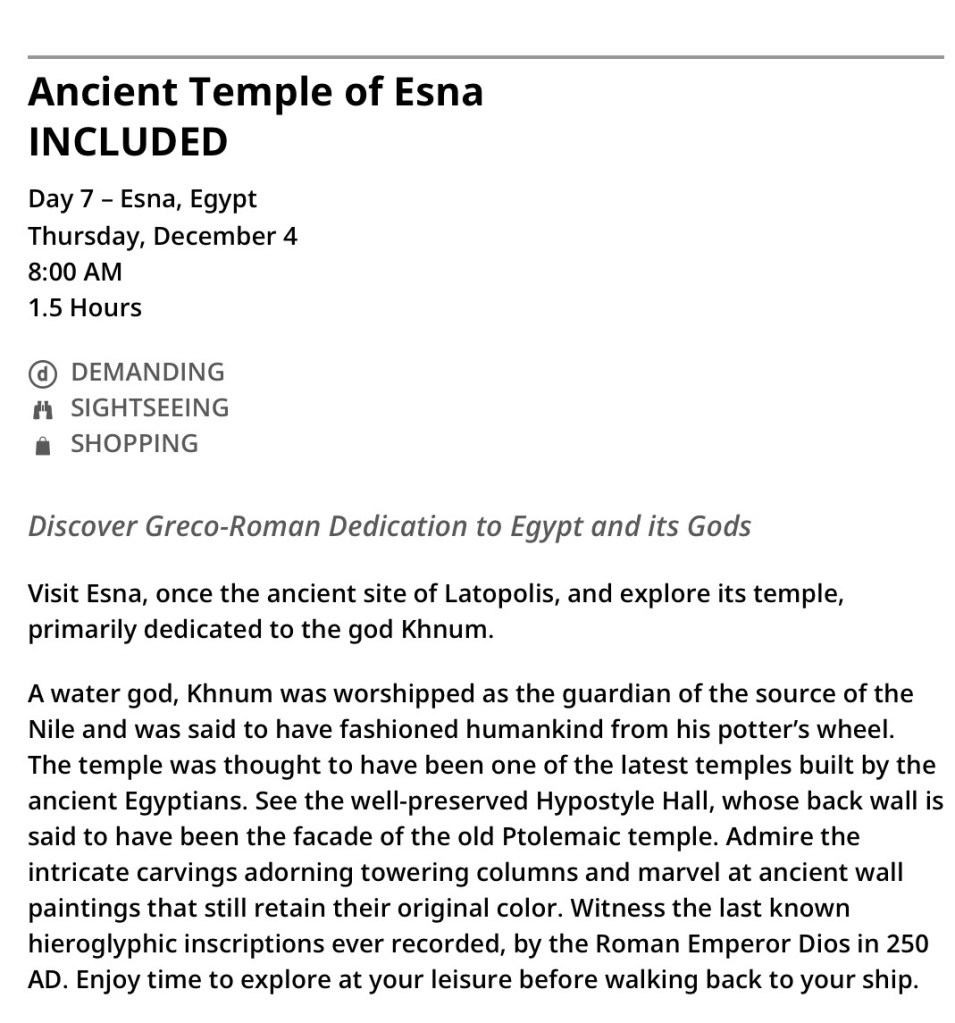
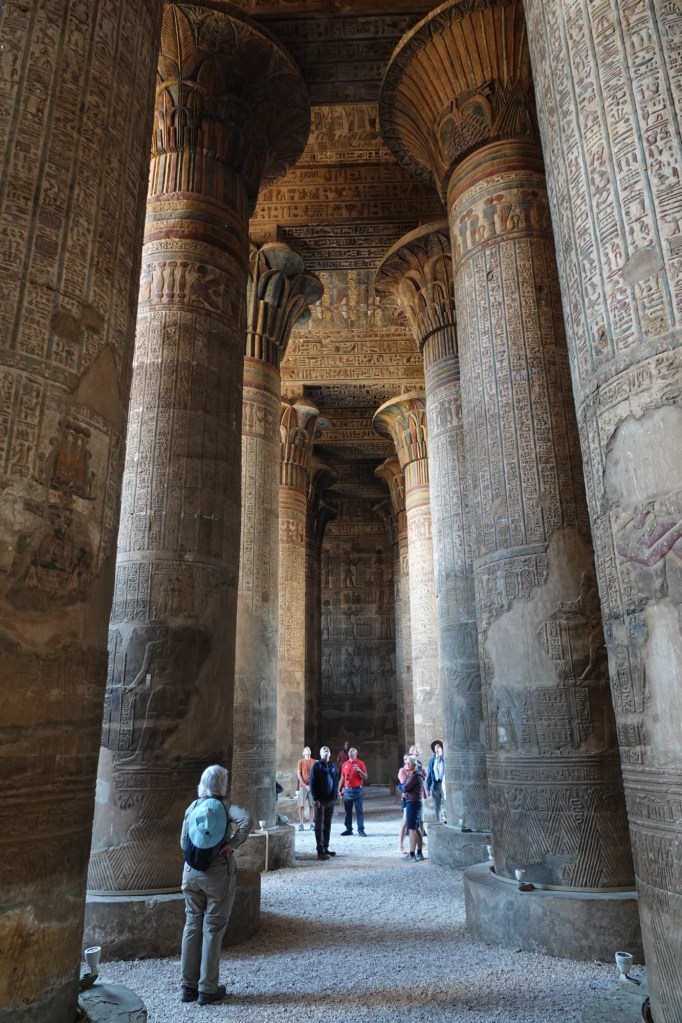
The colours on the exterior of the temple are quite spectacular, with the capitals on the columns, decorated in red and blue that is still unbelievably vibrant. The columns include designs of papyrus and lotus, representing upper and lower Egypt united as one.
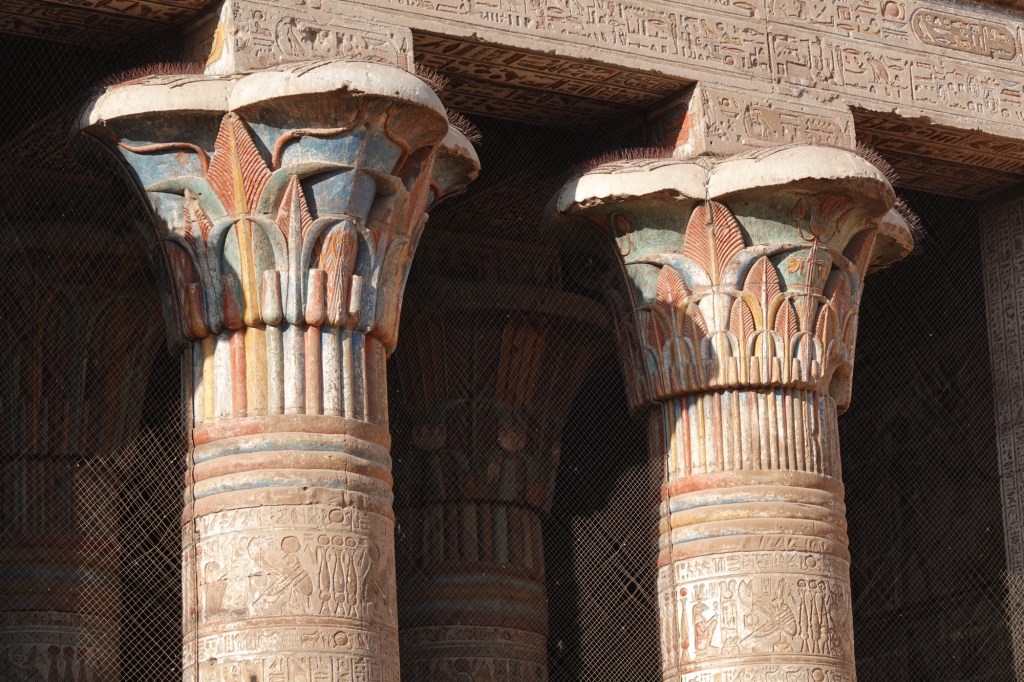
Exterior reliefs show the coronation of the pharaoh, in which the pharaoh is flanked by the twin goddesses Isis and Neftis, watched by Khnum, the god of the temple.

The mud brick walls surrounding the temple are still the originals. Much of the structure is incredibly intact, but there is damage evident in the form of bullet holes. That was done in the early 1800s by bored soldiers in the act of digging out the temple.
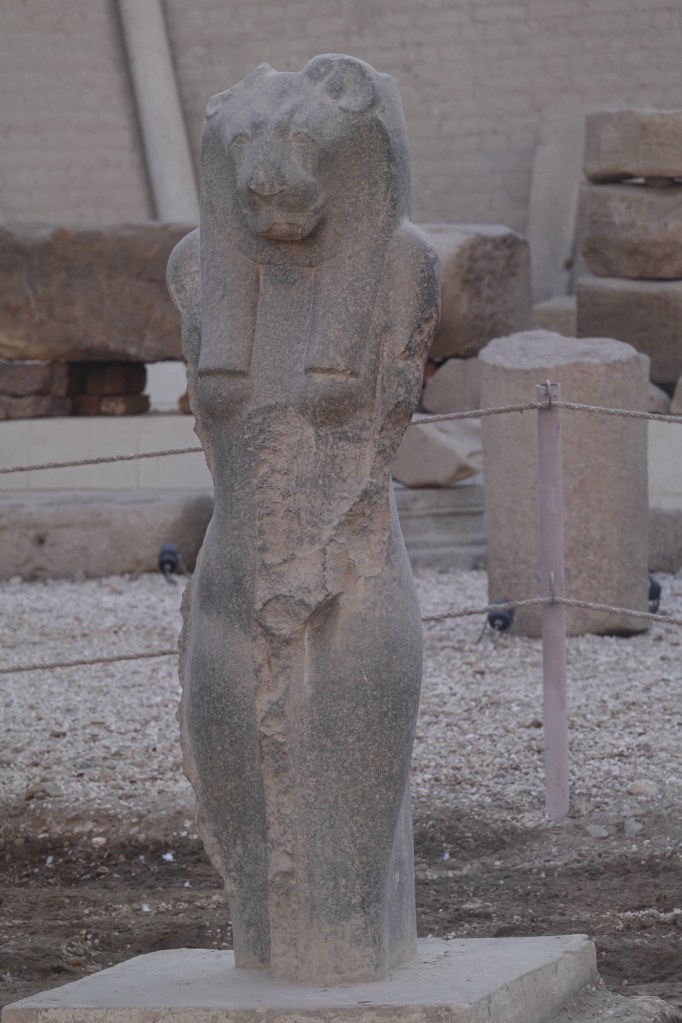
Outside the temple is a small statue of the lion-headed goddess Sekhmet, goddess of war, fire, and heat.
On this site is an ancient “Nile-ometer”, which was used to measure the water level of the Nile before and after each flood season. 87 of these have been found near other ancient temples. The priest used the water level to set the annual taxes: high water equals more crops equals higher taxes; low water level equals less crops equals lower taxes.

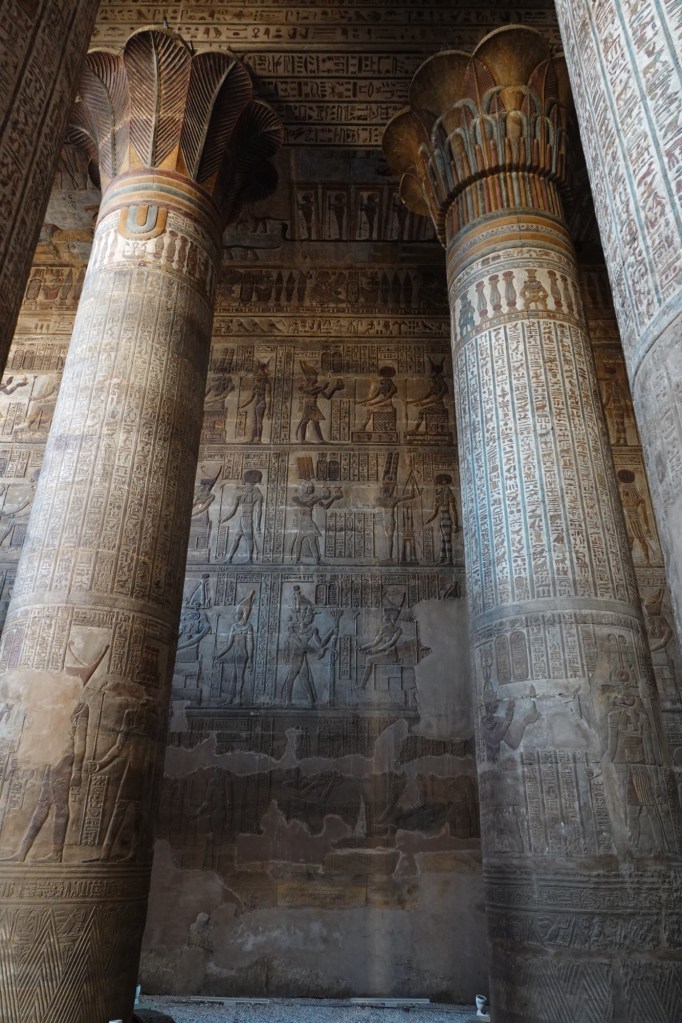
The interior of the temple was largely covered in black soot, which might date to fires used in the temple by the ancient priest, or by early Christians lighting fires for warmth while seeking refuge in this temple. Restoration of the interior in this site was funded through USAid. The current restoration work is a joint project of the Esna Temple Ministry of Tourism and Antiquities, Egyptian Antiquities Registration Sector, and the university of Tübingen Germany.
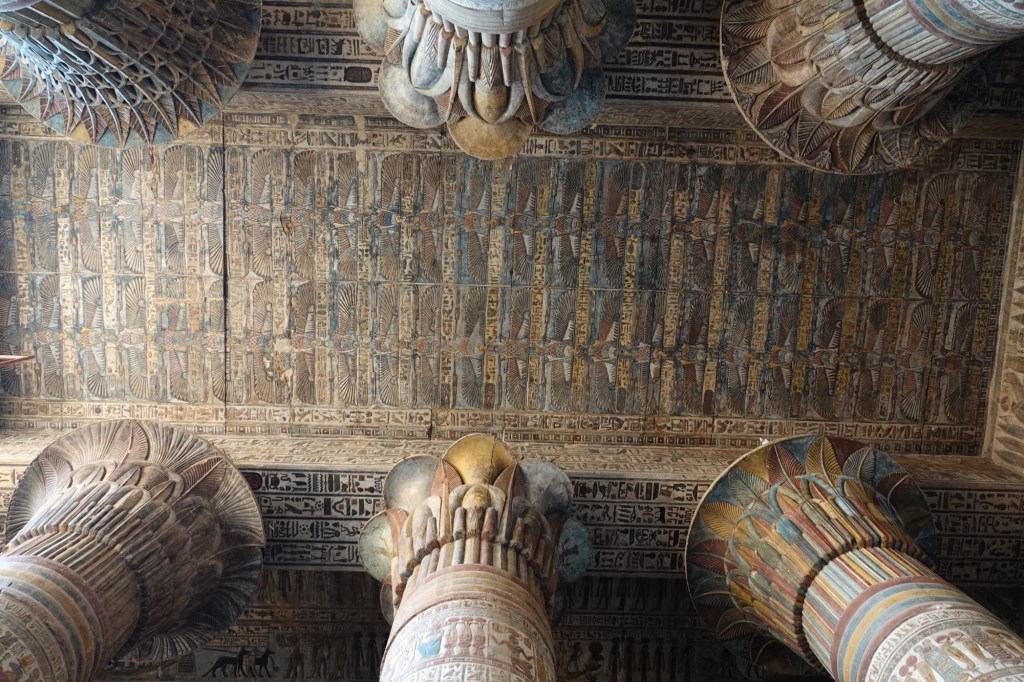
The colours revealed under the soot are spectacular. The soot may actually have protected the pigments.

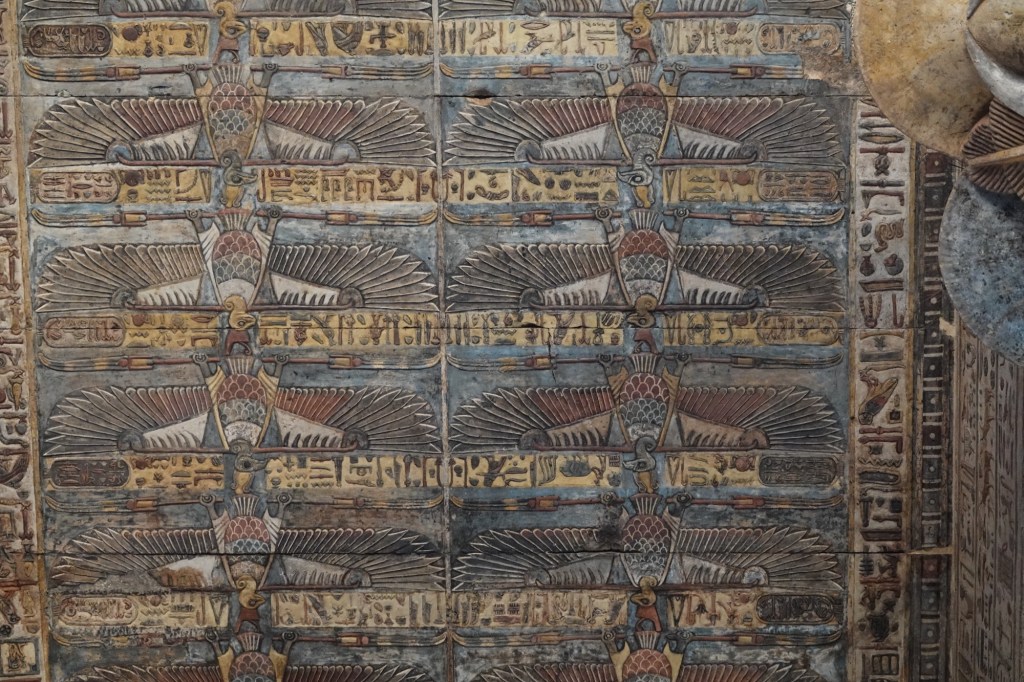
On the ceiling are two rows of vultures with wings spread, symbolizing protection of the interior.
Above the rear entrance is a large circle representing the sun. Inside the circle is the ram-headed god. On either side are four figures representing humankind with arms raised in worship.
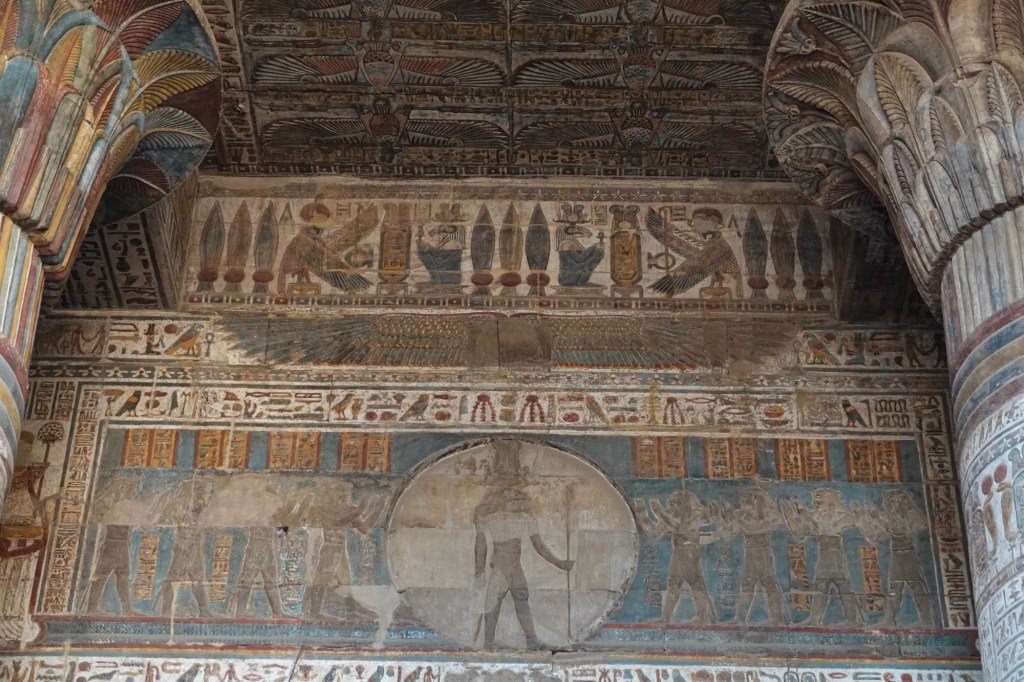
Also above the doorway is a relief of the god Horus. Horus always appears above temple doors as a representation of protection.
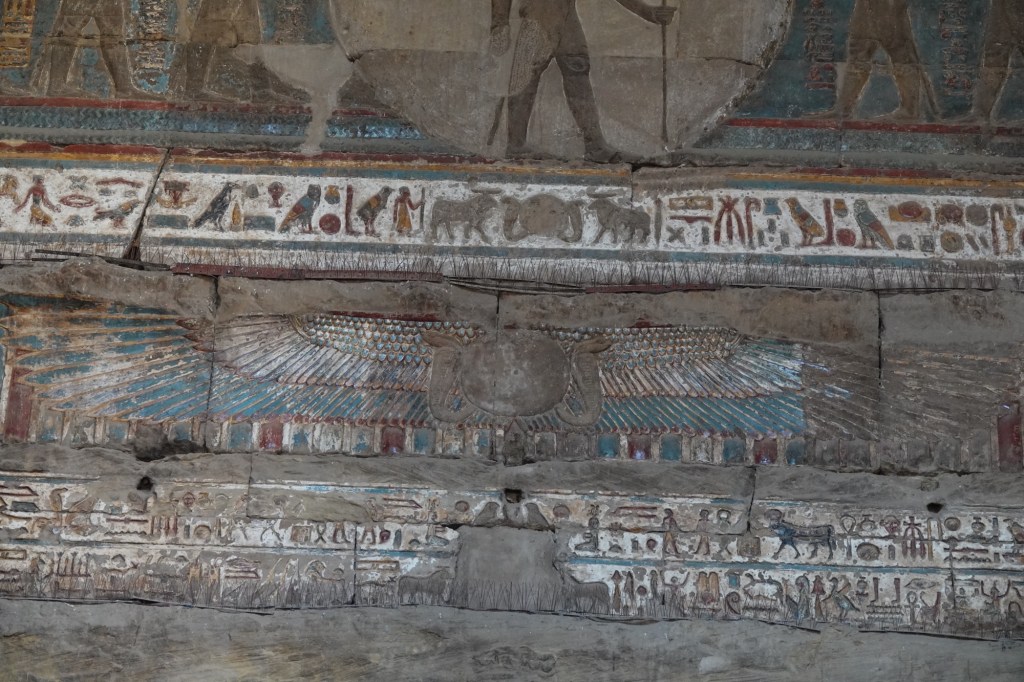
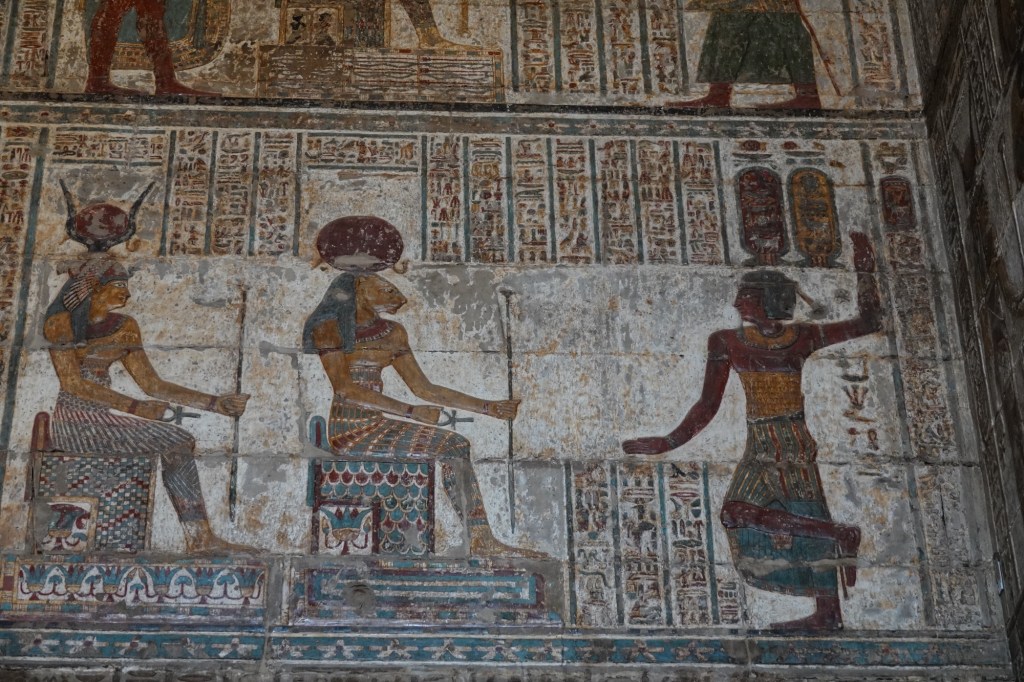
The spectacular reliefs on the interior of the temple include the first known depiction of a pharaoh dancing, in this case in front of the goddesses Hathor and the Sekhmet.
The highlight of the temple is actually uncoloured. It is comprised of four figures: the ibis god of wisdom Thoth, the ram-headed creator god Khnum, the pharaoh, and the falcon god Horus. It appears that they are holding a rope towing a fishing net filled with all of the “evil” in the temple to remove it.
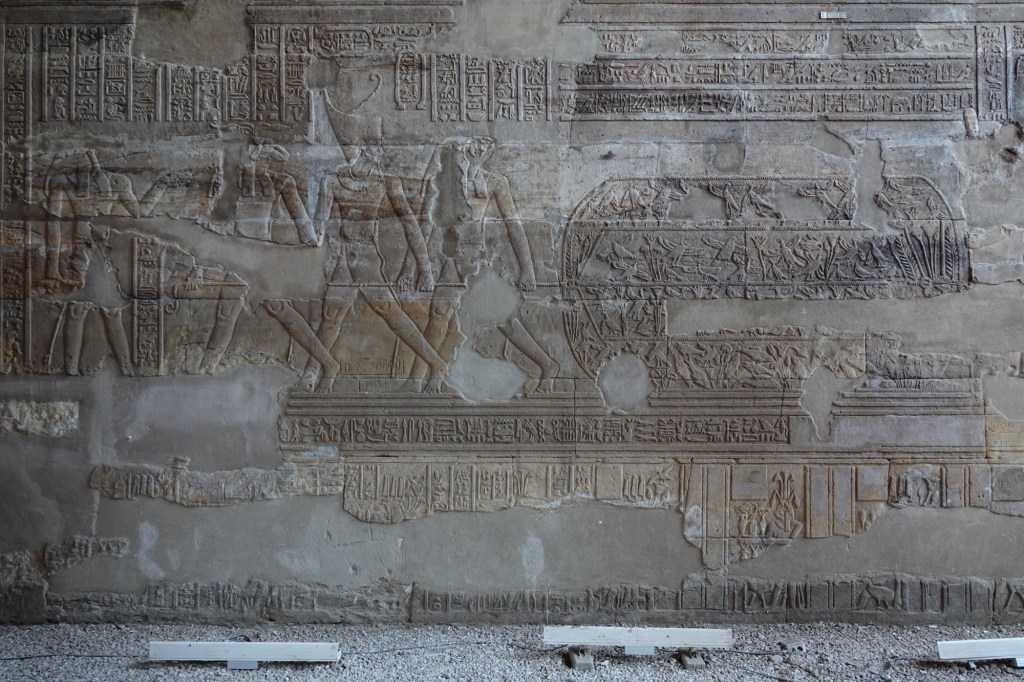
The fish in the net symbolize evil because they recall the story of Set, who killed and dismembered Osiris; the only part of Osiris that could not be recovered by his grieving wife Isis was eaten by a fish.

A door at the front of the temple leads to the temple’s library, and when opened held a cache of papyri which have been translated to create a record of everything that happened in this temple. Those papyri are now in the old Egyptian museum in Cairo.

Ultrasound and x-ray has revealed that behind and below the temple of Esna there is another temple dedicated to Tutmoses III , which would date to around 1400 BCE, making it the oldest temple at this site. That archeological site is currently closed to tourists since it is an active dig.
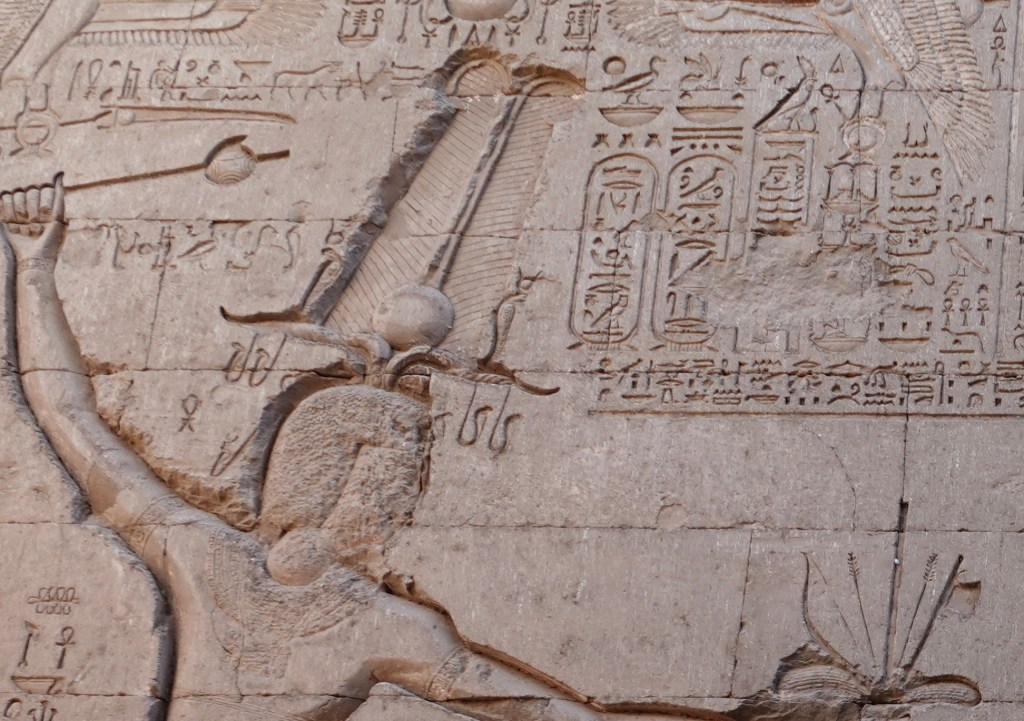
Back outside after touring the interior, we walked to the south side of the temple to find another beautiful scene. At the left is the Roman emperor holding a group of enemies by their hair. We can tell from their facial features that they are Hittites. The Hittites are raising their hands for mercy. To the right is Khnum conferring victory on the pharoah, backed by Isis.

This depiction of the pharaoh victorious was prevalent on the exteriors of temples, which was the only part of the temple that ordinary people could see.
Walid told us his to differentiate between gods and pharaohs in carvings: gods always hold an ankh, because they can bestow long life on humans.
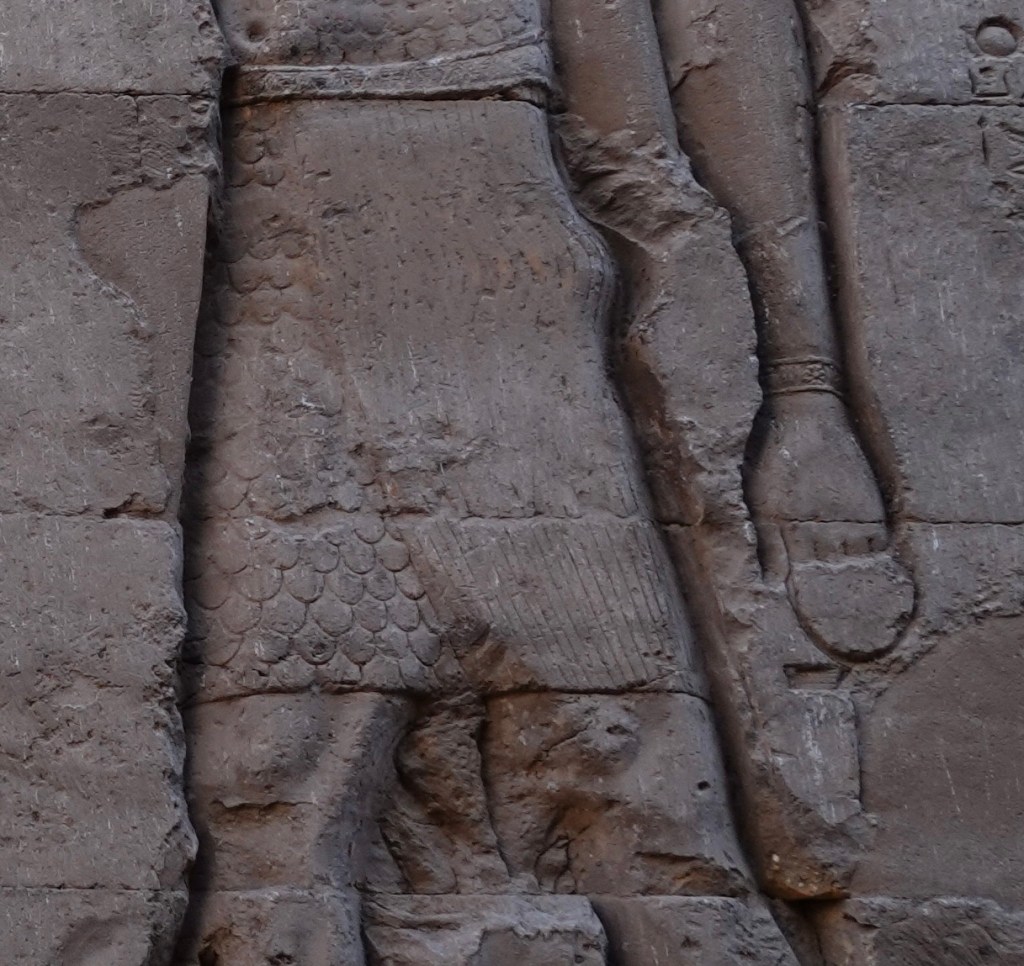
I noticed that the pharoah’s crown looked like Amun Ra’s headdress. Walid explained that over a period of almost 4000 years there were 23 different crowns: 11 for each of upper and lower Egypt, plus the famous double crown.
We had an early 09:30 sail away, during which Maître-d Christina and Hotel Manager Milena tried to convince us that “it’s 5 o’clock somewhere”.

It was absolutely lovely just to have a scenic sailing day.

Before lunch, Walid gave a talk about hieroglyphics. He reminded is that no one today, not even the most famous professors, can read hieroglyphics with 100% accuracy; the best scholars can claim is about 80%.
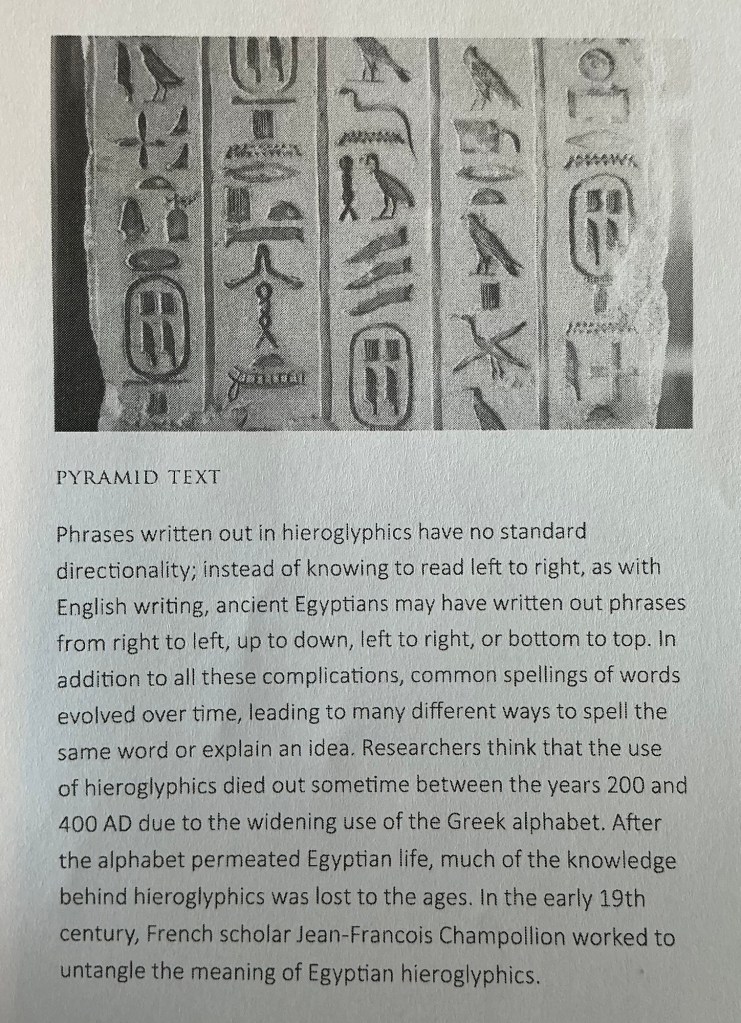

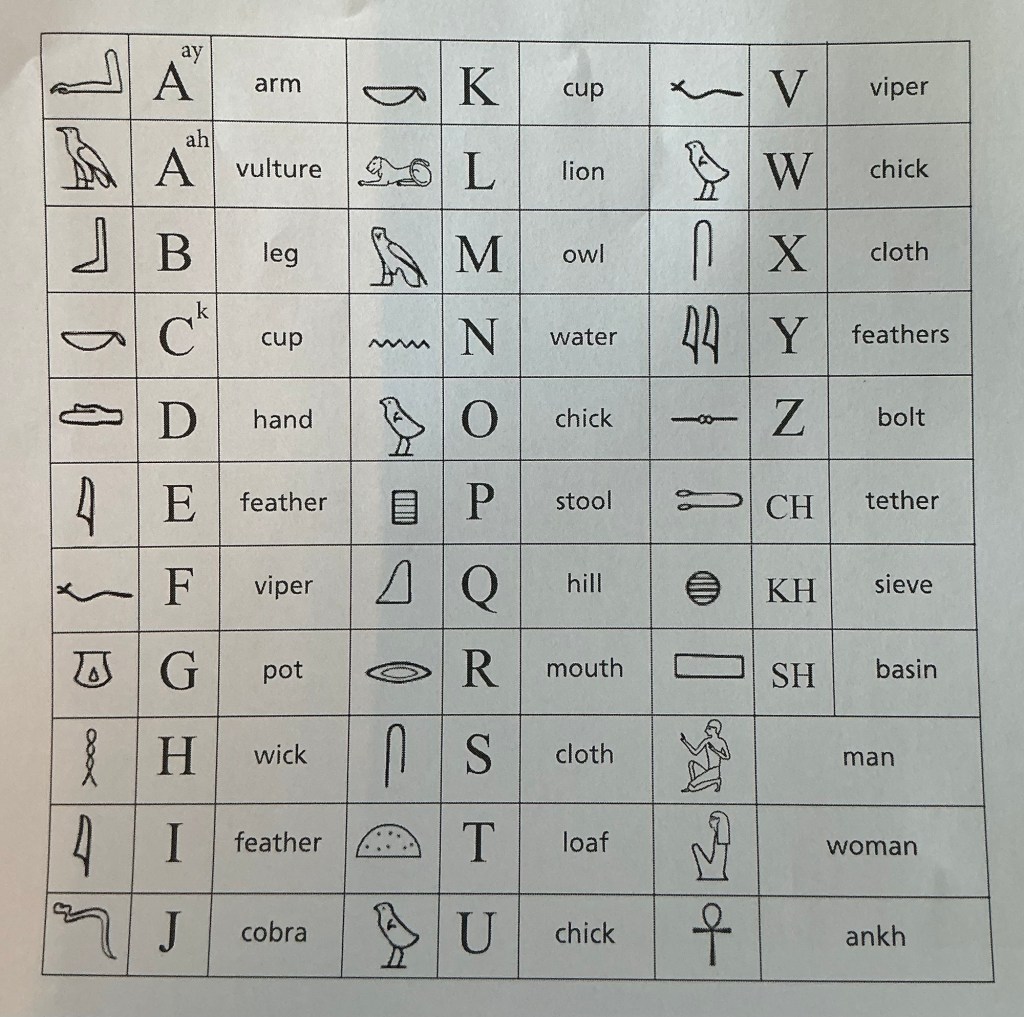
Each letter/symbol is also associated with a characteristic. It was fun to see whether our names matched our personalities.
A=powerful, B=travelling, C=goodness, D=generosity/giving, E=fairness, F= stability, G=cleverness, H=diplomacy, I=fairness, J=bossiness/ruling, K=goodness (having thesame “sound” as C), L=leadership, M=wisdom, N=moodiness, O=happiness and/or stubbornness P=groundedness, Q=stability, R (the mouth)=talkativeness,S=mercy/firgiveness, T=gluttony, U=happiness and/or stubbornness,V=stability,W=happiness and/or stubbornness, X=mercy, Y=extreme fairness, Z=cooperation.
ROSE = talkative, happy/stubborn, forgiving & fair. That first letter definitely rings true.
EDWARD =fair, generous,happy/stubborn, powerful, talkative, doubly generous. mostly right, but that letter R near the end of his name is clearly overshadowed by my leading R!
We had some lovely travel related conversation over lunch, and then a bit of relaxing with my glass of very tasty Egyptian white wine (Omar Khayyam Sultanine Blanche blend) before the afternoon cooking class.
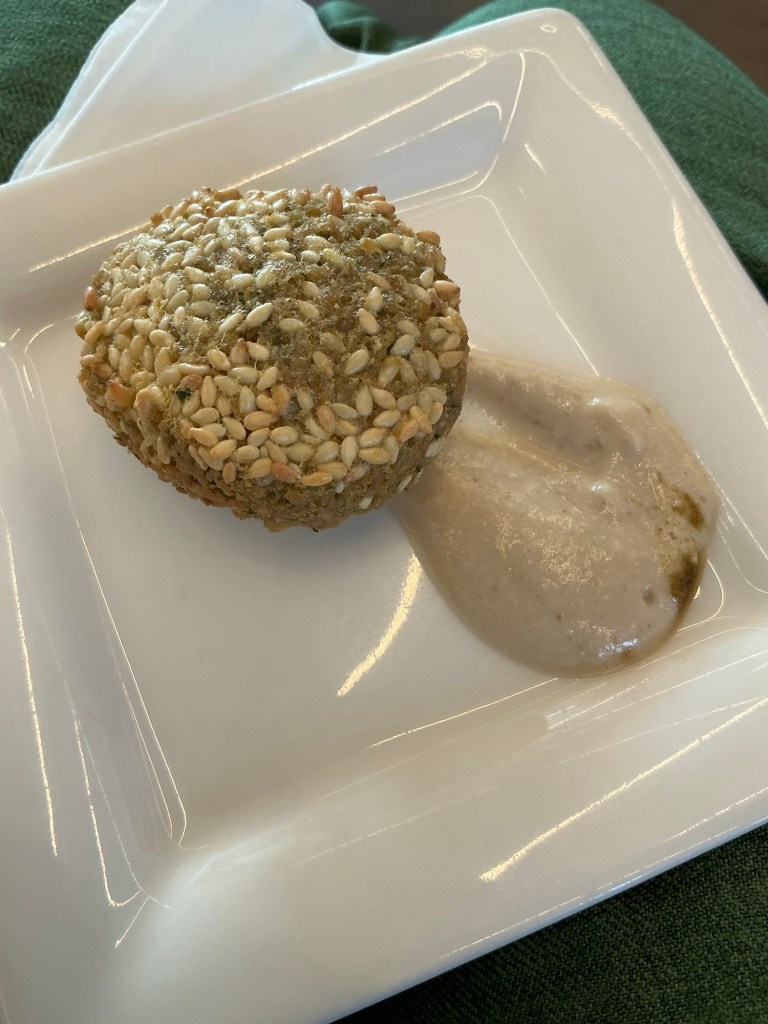
I’ve been really enjoying the falafel on board. Apparently the secret is using fava beans! Of all the countries in the Mediterranean and Middle East, Egypt is the only one that doesn’t use chickpeas. There’s also the addition of a bit of baking powder to make the end product fluffy. We also learned that the Ra is the only Viking Nile ship that makes their falafel from scratch!
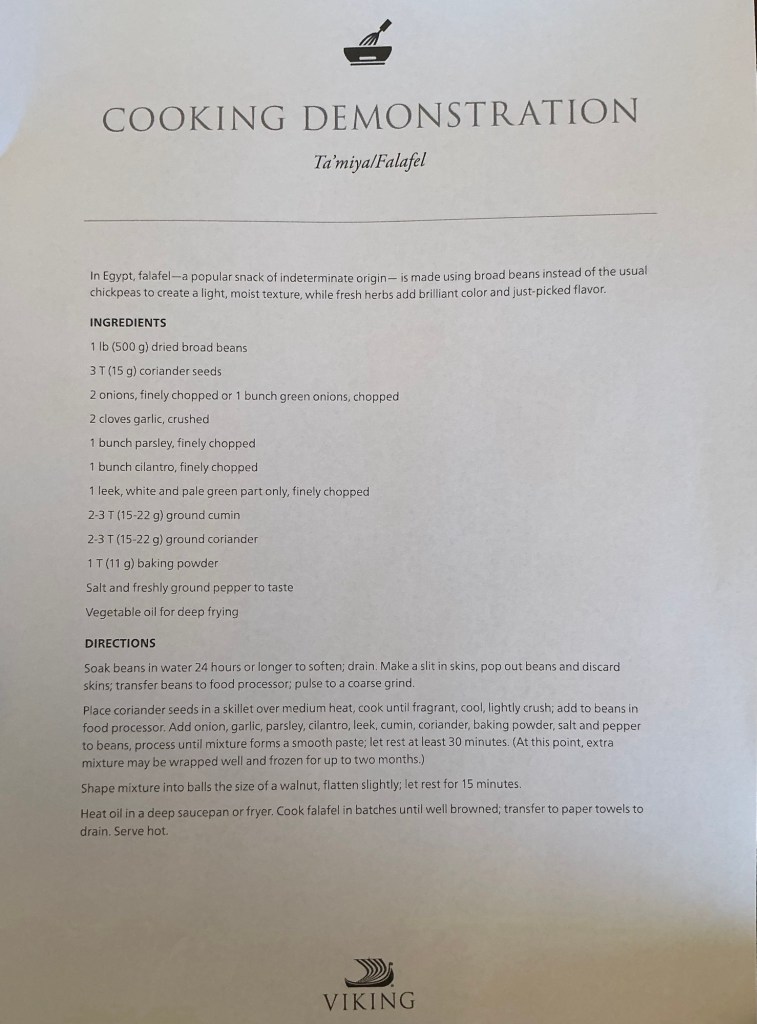

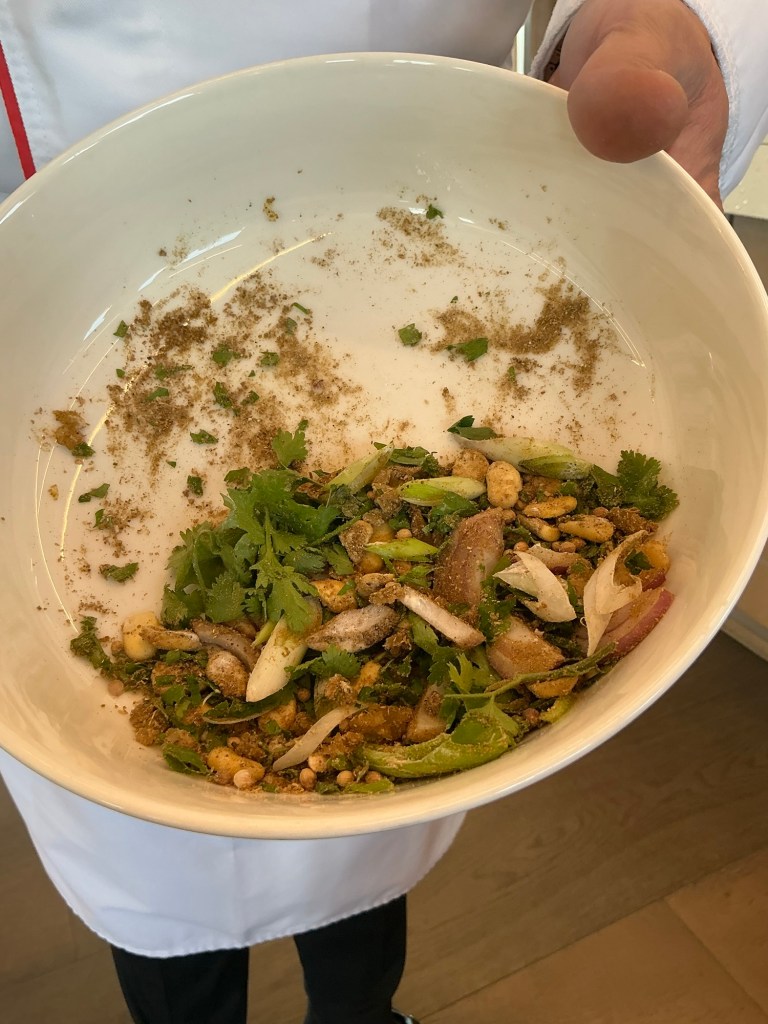
In Egypt, falafel is eaten at breakfast, lunch, and as an afternoon snack. Chef suggested it is too heavy for a late meal.
Chef’s finished product, garnished with tahini. Crispy outside, and soft and delicious inside. Yum.
The lesson was followed by an afternoon tea, but honestly how much can one woman eat in a day? I skipped the event.

After tea time there was a fascinating lecture about medicine in ancient Egypt.
Tonight was the cruise’s one Egyptian themed dinner, when everyone was encouraged to dress in Egyptian garb. I even convinced Ted to join in!
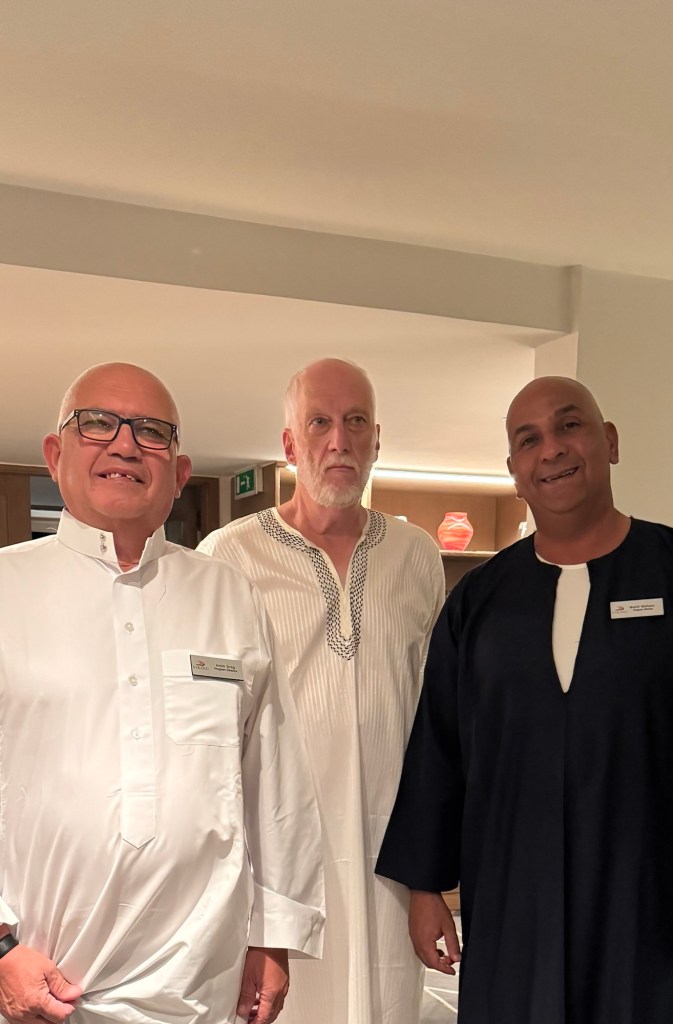

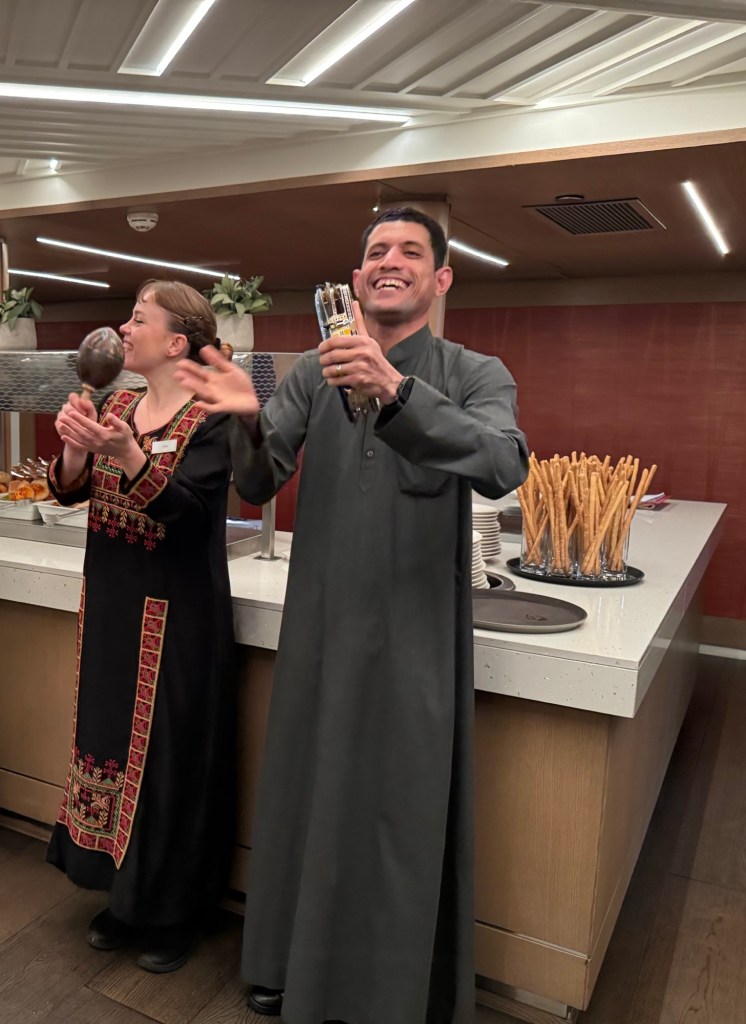
The menu was also “A Taste of Egypt”, something to which I had very much been looking forward.
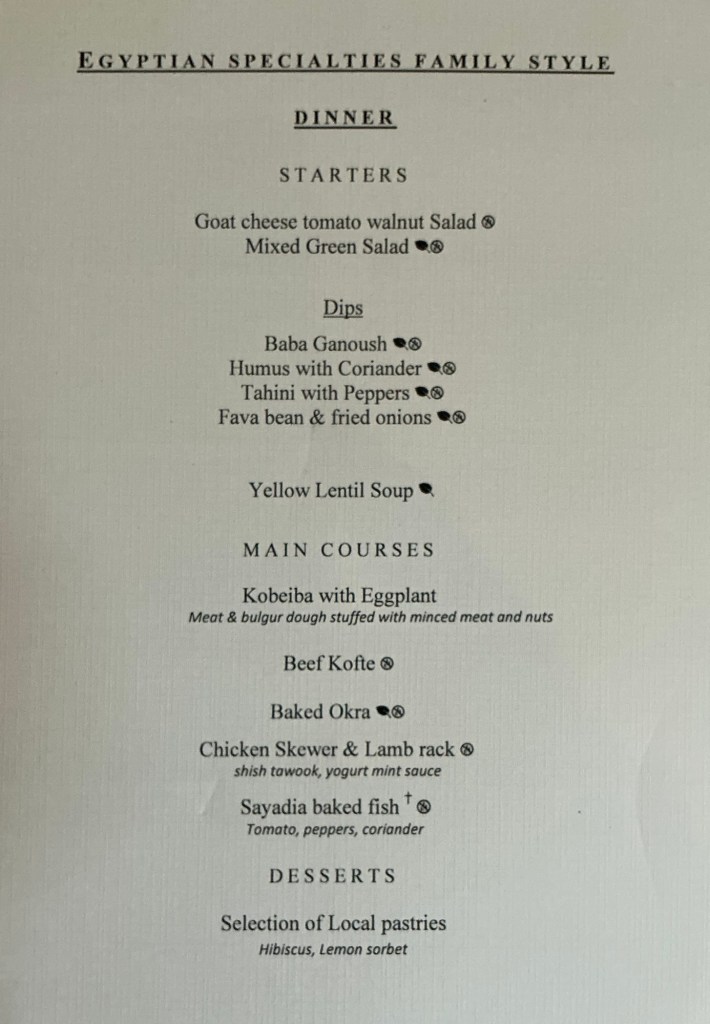
Tomorrow is an early start, headed for a charter flight to Abu Simbel, so we called it an early night.
 Rose and Ted’s Excellent Adventure
The temple of Esna is a hidden gem! Of course, the bucket list locations of Egypt are a must-see, but this temple is the sort of lesser-known site I’d choose to visit. Although it is the newest of the Egyptian temples, it is still plenty old, and the carvings and colors are spectacular! I’ve always been fascinated by ancient Egypt, and if we were both ten years younger, I’d be quite tempted by this cruise. Alas, age catches up with us all, so I’m enjoying Egypt through your blog posts and photography. Thank you!
LikeLiked by 1 person