Ted and I visited the Great Pyramids of Giza in 2022, when the GEM was not yet completed (Episode 246), as part of a tour that also included Memphis, the necropolis and step pyramid at Sakkara, and the Sphinx.
After that visit, I wrote: “… one of my bucket list items was the Great Pyramids of Giza. They were definitely impressive, but in hindsight I’d recommend visiting Sakkara if you had to choose just one ancient site.”
Today we got to revisit that statement and decide of it still held true.
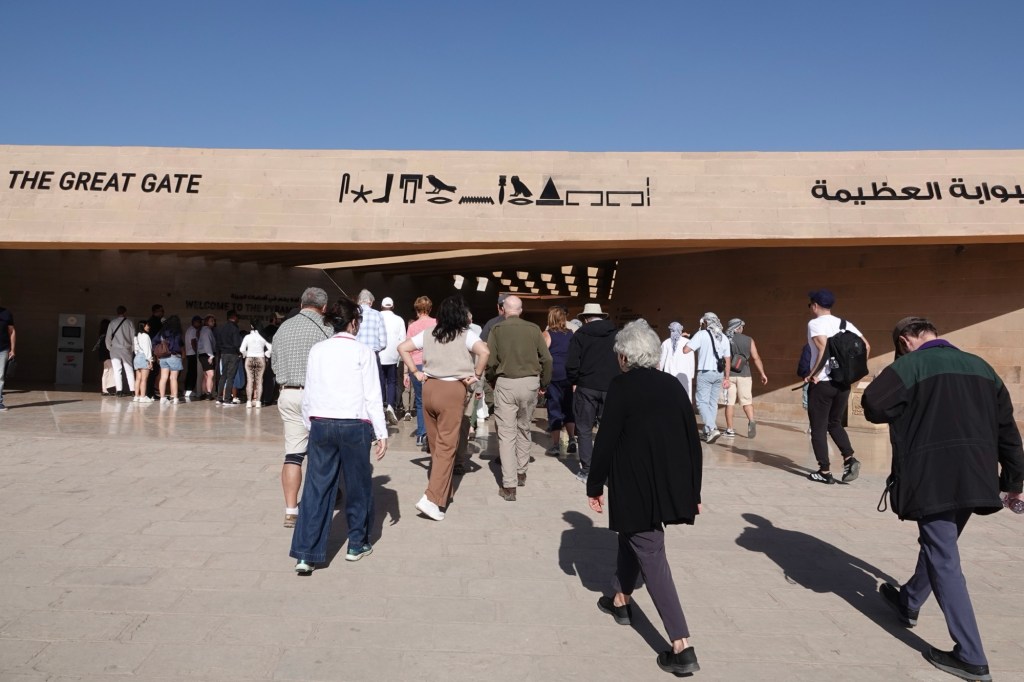
Our first stop today on the Giza plateau was at the Visitor Centre, which had not yet opened when we were here in 2022. We stopped only long enough for a security check, ticket scan, and a quick orientation using a 3-D model to show us the relative locations of the pyramids and the Sphinx on the plateau.
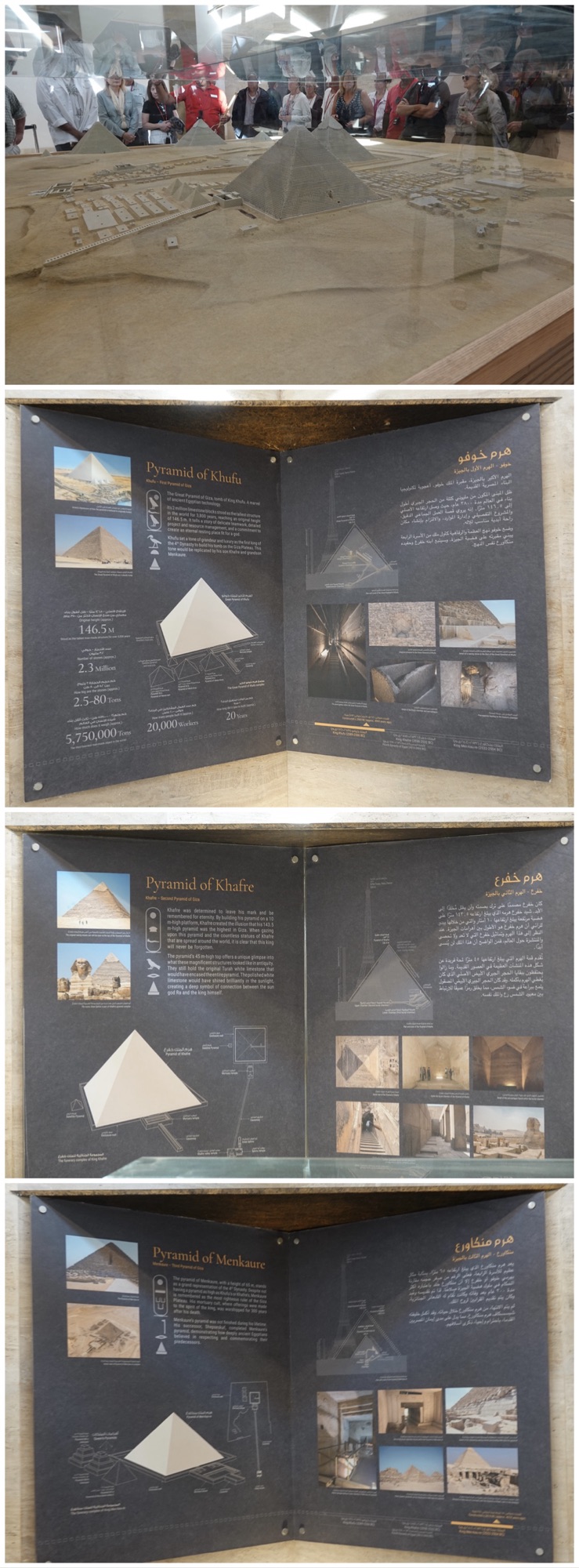
Next, the largest pyramid ever built, the tomb of Khufu, on the Giza Plateau. It took 20,000 workers 20 years to complete the construction, using limestone blocks cut from the mountain on the other side of the river. In the time of these pyramids’ construction, the Nile was adjacent to the plateau, so the blocks could be ferried across.
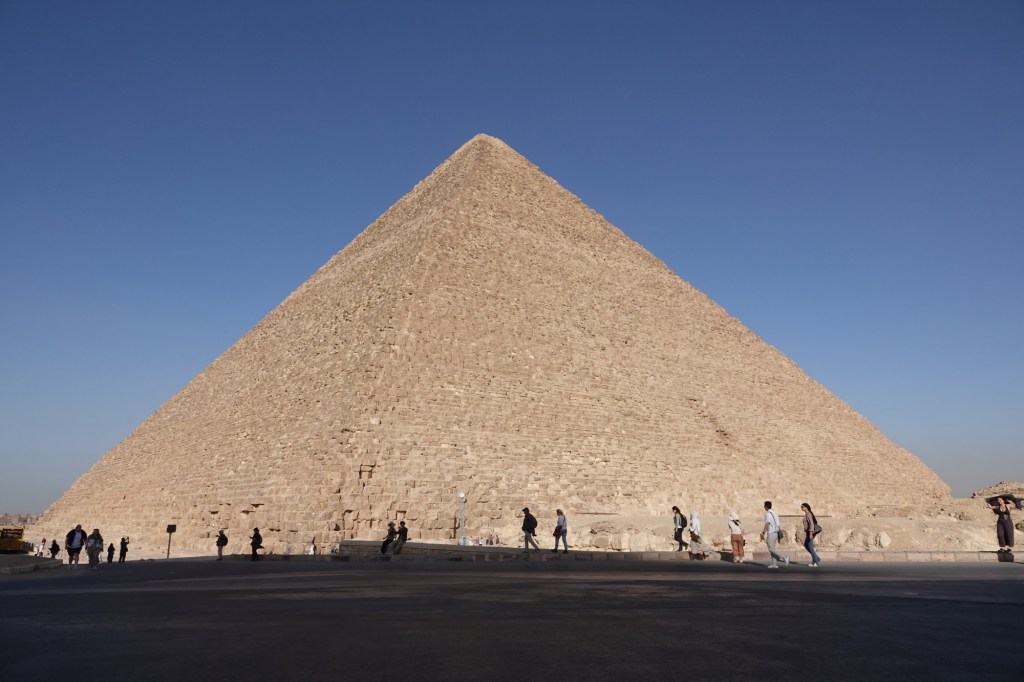
It took 2,300,000 blocks, weighing a an average of 10 tons EACH, to build the great pyramid.


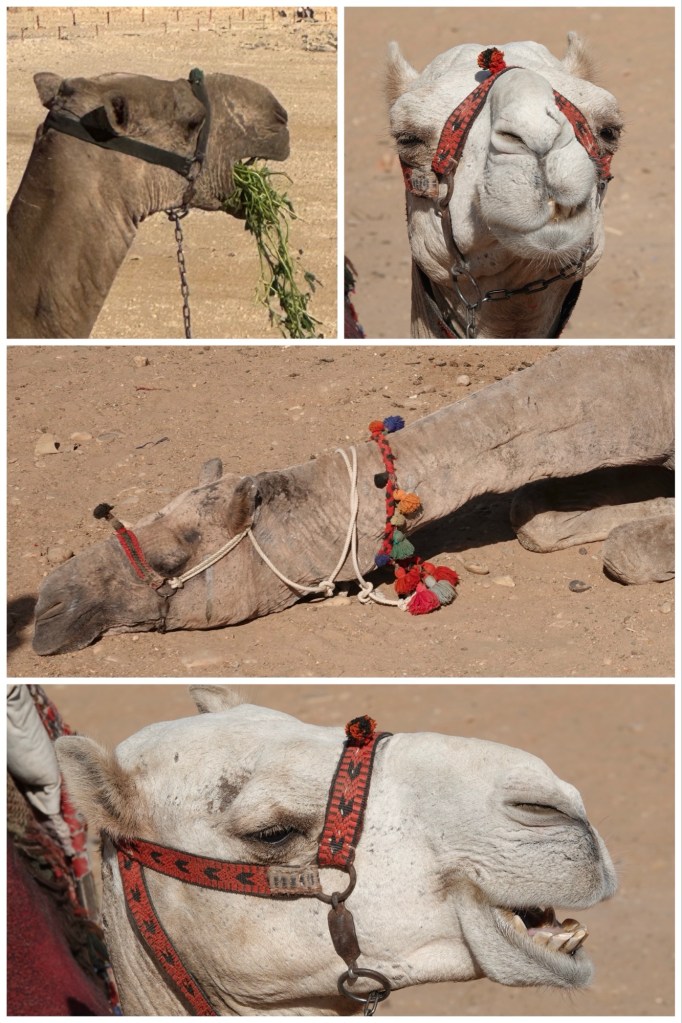
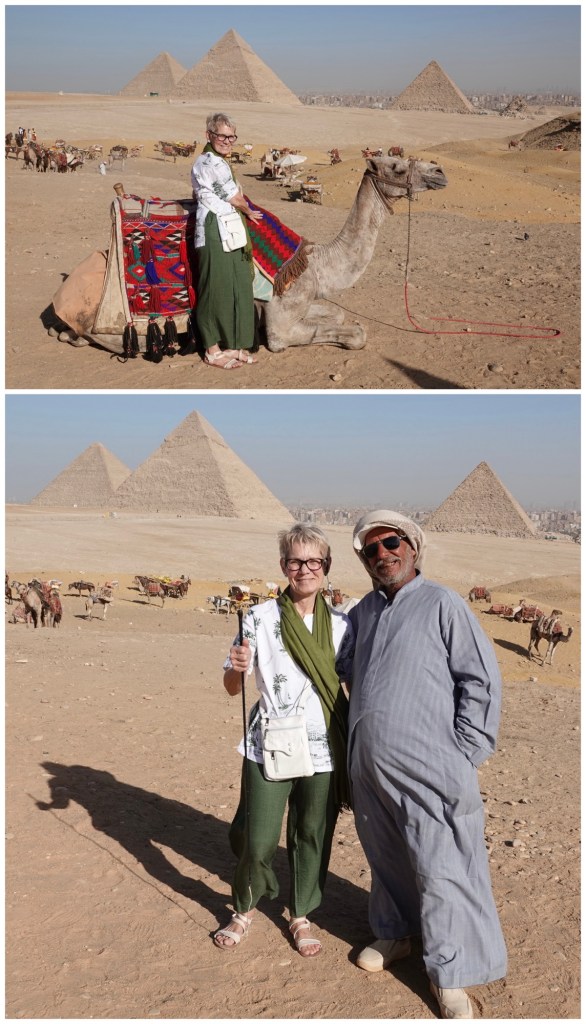
There were included camel rides for those who chose. Been there, done that on much more beautiful animals in the Moroccan Sahara, so I asked Ted to simply capture a few faces, plus me with a camel and driver.
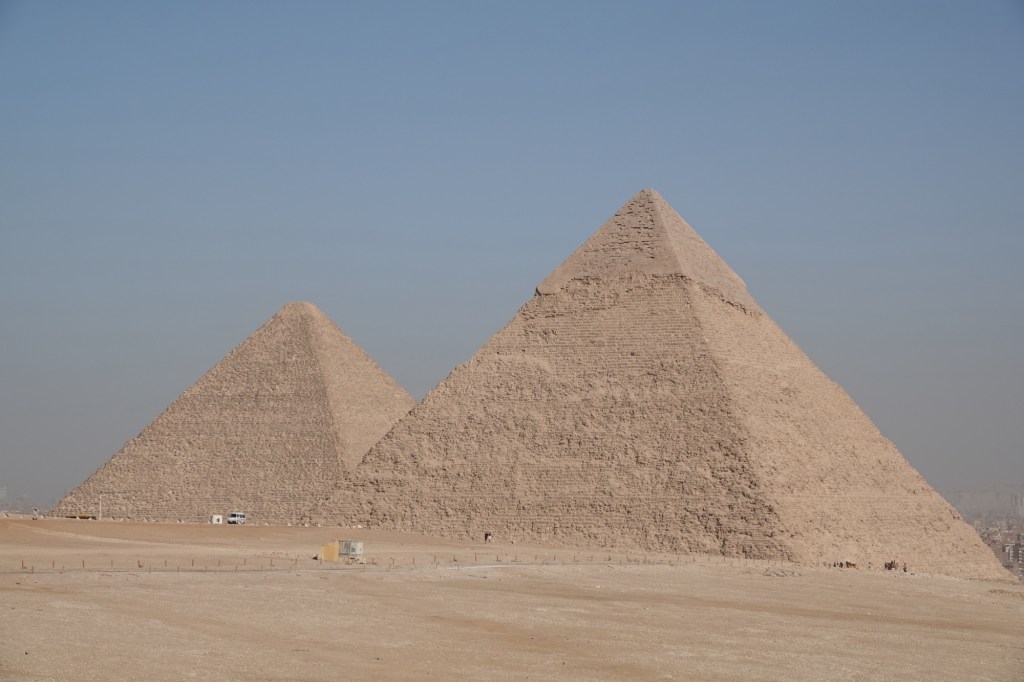
Next a photo stop between the first and second pyramids. We were reminded that they did not originally have this rough shape with the stone blocks visible, but were covered with limestone cladding that made the sides smooth. The limestone would also have shone in the sun making these monuments particularly beautiful.
A fellow passenger kindly took a memory photo of Ted and me backed by Khufu’s pyramid (the “Pyramid of Cheops”)


Only on the top of the second and third pyramids is any of the smooth limestone cladding visible, looking a bit like snow caps on mountain tops. It should be no wonder that over a period of 3000 or 4000 years the cladding has worn away.

And then, we headed for the Sphinx and the Valley Temple. The 20m tall 71m long sphinx was originally carved from a single block of stone. That is not evident now because it has been restored.
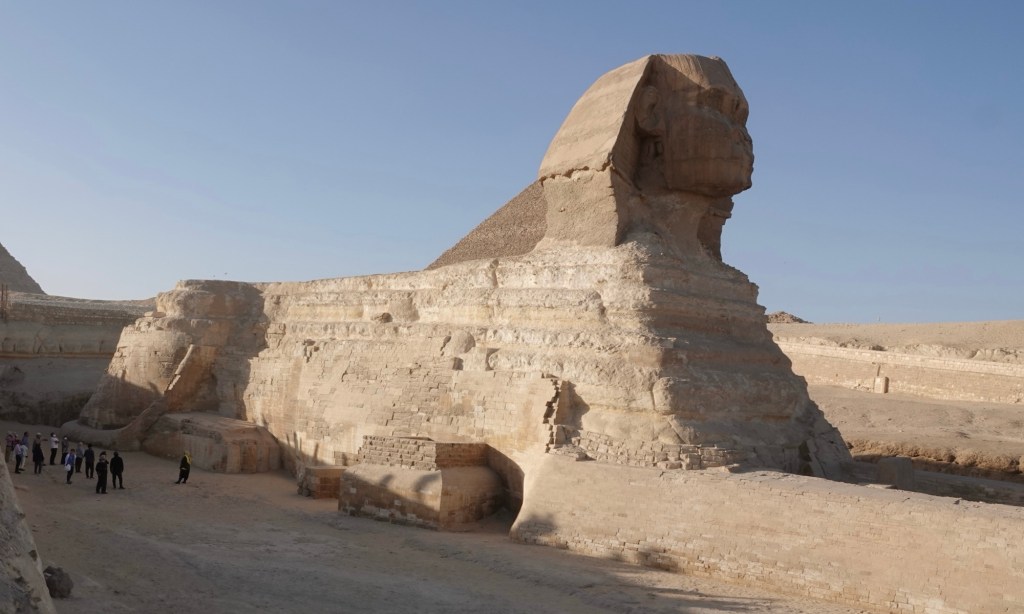
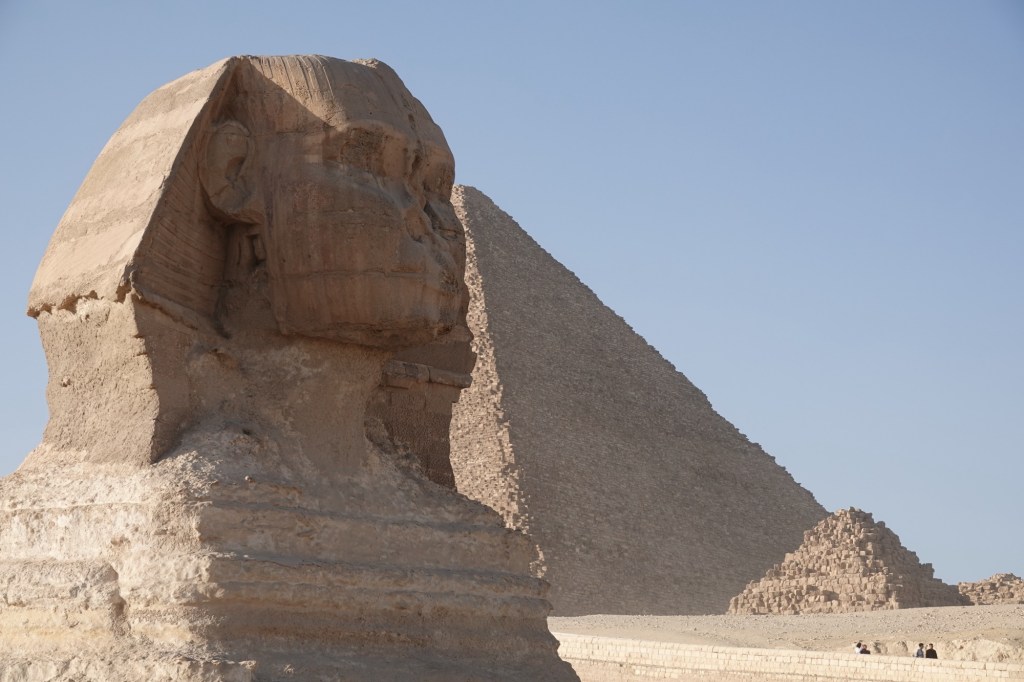
The sphinx has the body of a lion and the head of the pharaoh. Sphinx were always created in pairs, set up as guardians, one facing east and one west. This particular sphinx was discovered by Napoleon; there should be a second buried somewhere here just waiting to be discovered.
Where is the sphinx’ nose? Apparently pieces of it are in the Louvre. Rumour has it that Napoleon‘s soldiers used the sphinx for shooting practice, causing the nose to come off. We could find no verification.
The Valley Temple, originally clad in granite blocks from Aswan was originally on the banks of the Nile river. The Giza plateau which now seems to be in the middle of nothing but sand was once the west bank of the Nile.
The floor of the temple is made of alabaster, and the granite pillars originally supported a limestone roof.

This temple was not for worship, but was specifically a mummification temple for Khafre, the pharaoh buried in the second temple.
The valley temple closes at 4:30 every day. That reminded me that the last time we were here was also at the end of the day and there were tourist police blowing whistles to “encourage” everyone to leave. We were gone well before closing today.
Walid shared that new exploration via xray and sonar indicates there may be a library underneath the sphinx; it is not expected that the sphinx will be moved to find out for sure, since it is considered the more important artefact.
Back to my 2022 opinion. I now realize that having a certified Egyptologist as a guide makes a huge difference to experiencing the archeological sites. That said, while Giza provides the iconic photo opportunities, Ted and I both still preferred Sakkara.
Dinner tonight was in the hotel on our own in the buffet restaurant Rawi.


Tomorrow we’re up at 4:30 a.m. for an early flight to Luxor where we’ll meet our waiting river boat.
 Rose and Ted’s Excellent Adventure