(From internet sources) Viking Longships officially require a minimum water depth equal to their 5.24-foot (1.6-meter) draft to float, though the actual water needed under the hull can sometimes be less than a foot due to the ships’ extremely shallow drafts, allowing them to sail when heavier commercial barges may be unable to.
Sailing from Budapest to Bratislava overnight Captain Yuri at times only had 20 cm (8 inches) of water beneath our hull. Today’s forecast rain was desperately needed to begin bringing the levels of the Danube back to anywhere near normal for navigation. We’ve been incredibly lucky not to have any of our itinerary rerouted by bus, which we know has happened during low water periods this year, and are feeling quite grateful.
Today’s regional breakfast specialty was Kukuričná Kaša with Brinza Cheese, which translates to creamy corn porridge with sheep cheese.
Nope.
But seeing the Slovak words on the menu card was a bit of a “lightbulb” moment.
Growing up, my mom’s family all called corn a word that sounded like “kukurutz” (with slightly “oo” sounding u’s). It most definitely wasn’t the German word for corn, which is Mais, and I didn’t know at the time that the Hungarian word was kukorica. Now it all makes sense – that blend of Austro-Hungarian Empire languages that encompassed Slovakian, Hungarian, and my family’s ancestral Swabian German.
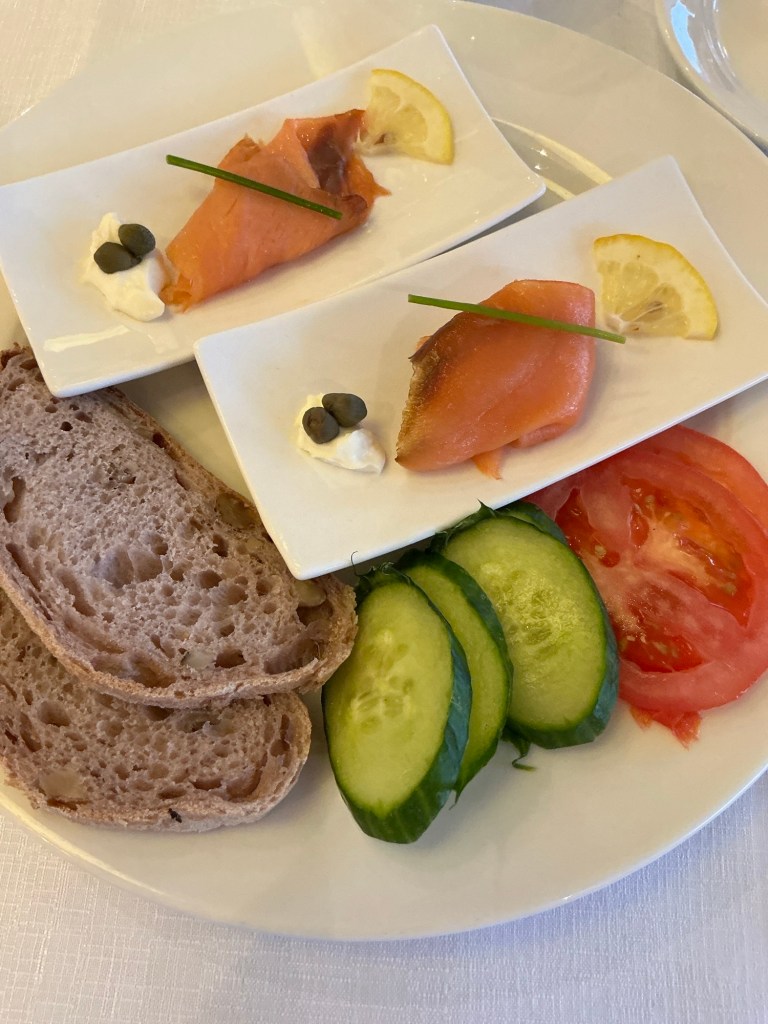
Nonetheless, geräucherter Lachs und Frischkäse (smoked salmon and cheese) for me this morning.
I wasn’t sure, based on our only other visit to Bratislava, that I was thrilled to be returning (Episode 99). My strongest memory from that visit was of the anger at the Soviet regime expressed by our tour guide, which came out most forcefully when showing us beautiful old buildings stripped of their “Western” decoration, and pointing out the Soviet-era apartment block where her family lived. I still vividly remember how emotional she was when describing what it was like to discover, when the Soviet Union collapsed, how very different her “equal” life was to that of people living just 200 kilometres away in Budapest, which had been used as the “poster child” for communism in propaganda releases (hardly in real life, though, given the brutal quashing of the 1956 rebellion). Talking about her circumstances compared to Vienna – just 80 km away in the “evil” west – brought her to tears.
I remember Bratislava mostly as sad.
Then again, that visit was 13 years ago, and a lot can change in that time, especially if a country and city are intent upon restoring historic sites and cultivating tourism.
So, we signed up for the included excursion: “Discover One of Europe’s Most Intimate Capitals by Foot”, guessing that it would revisit the places we’d seen before.
It did, to some degree, but with a young enthusiastic guide born in 1988, who grew up in a post-Soviet Czechoslovakia/Slovakia learning English instead of Russian, and who demonstrated a fabulous sense of humour about his city’s history and culture, we saw Bratislava today in whole new light – and it was wonderful despite the rainy skies.
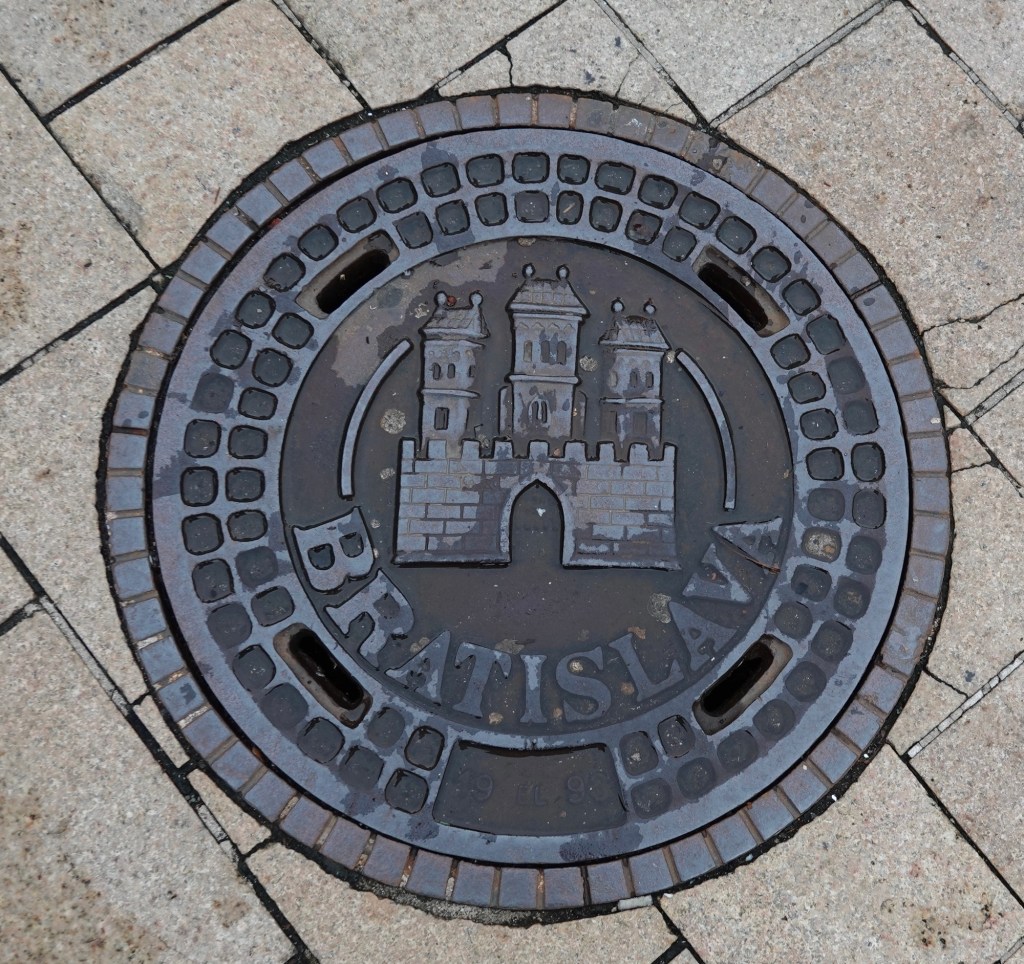
I’ve gotten into the habit of quietly dictating notes into my phone when we’re on tours, so that when we get back from an excursion I can transpose them into our journal. Because it was raining today, and I was concentrating on carrying my umbrella, my phone stayed in my purse, so … lots of pictures, very little commentary.
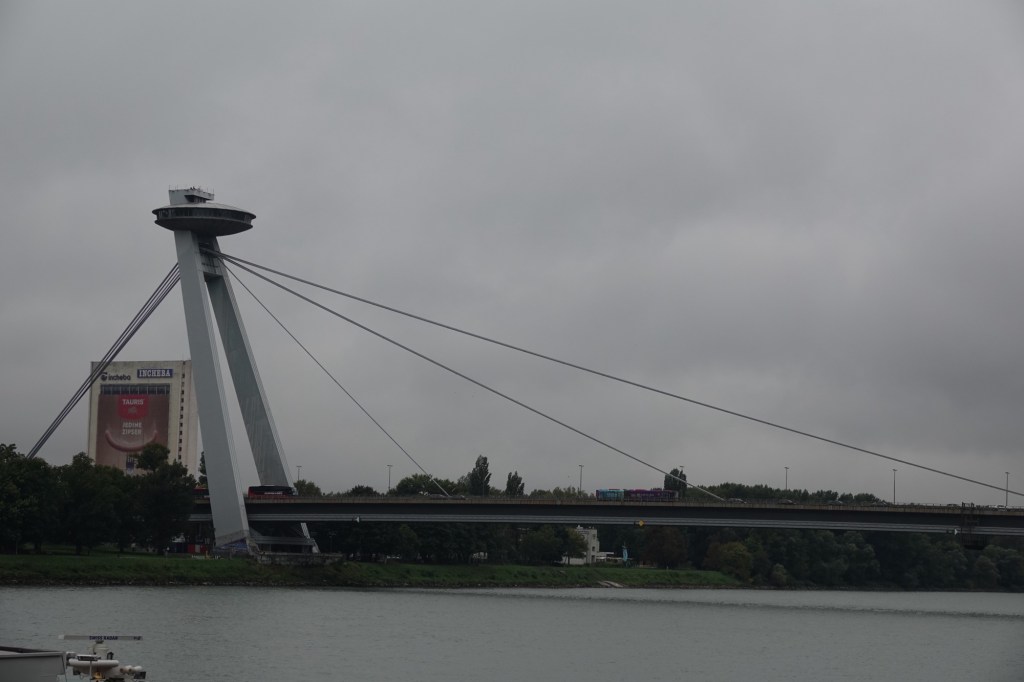
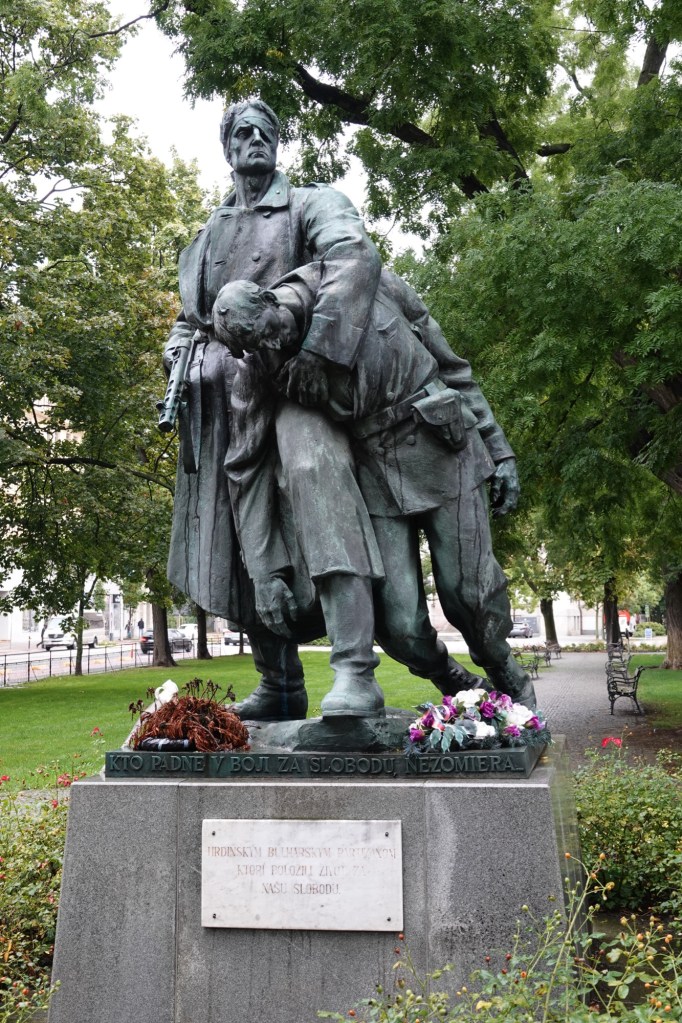
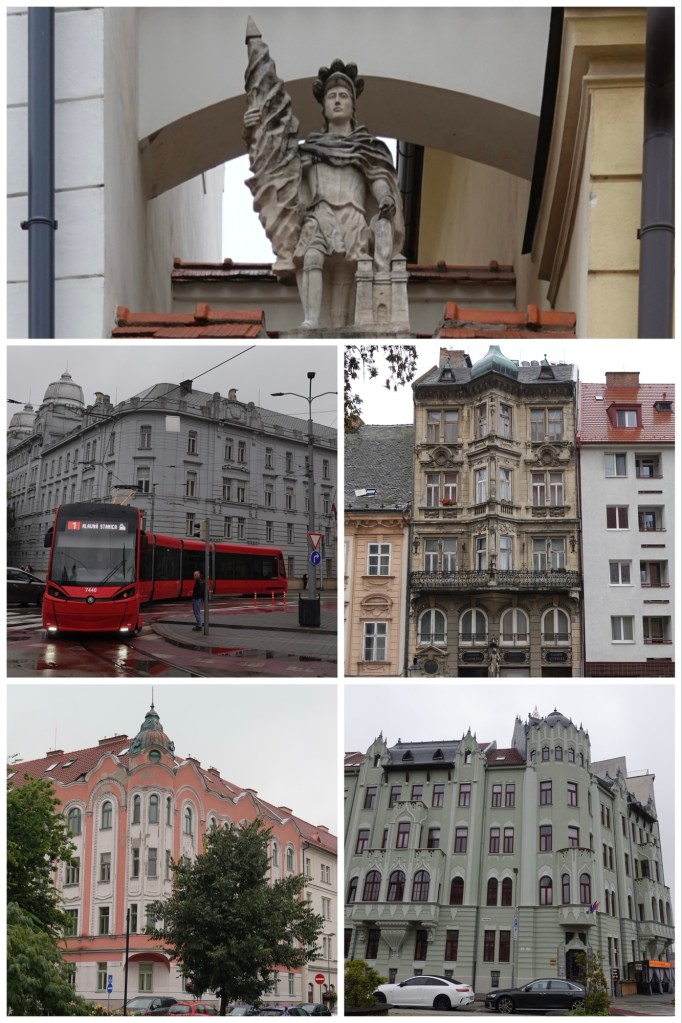
There were a lot more interesting monuments, statues, and fountains than I remembered. Then again, today’s tour was both longer and took a different route than our previous one.
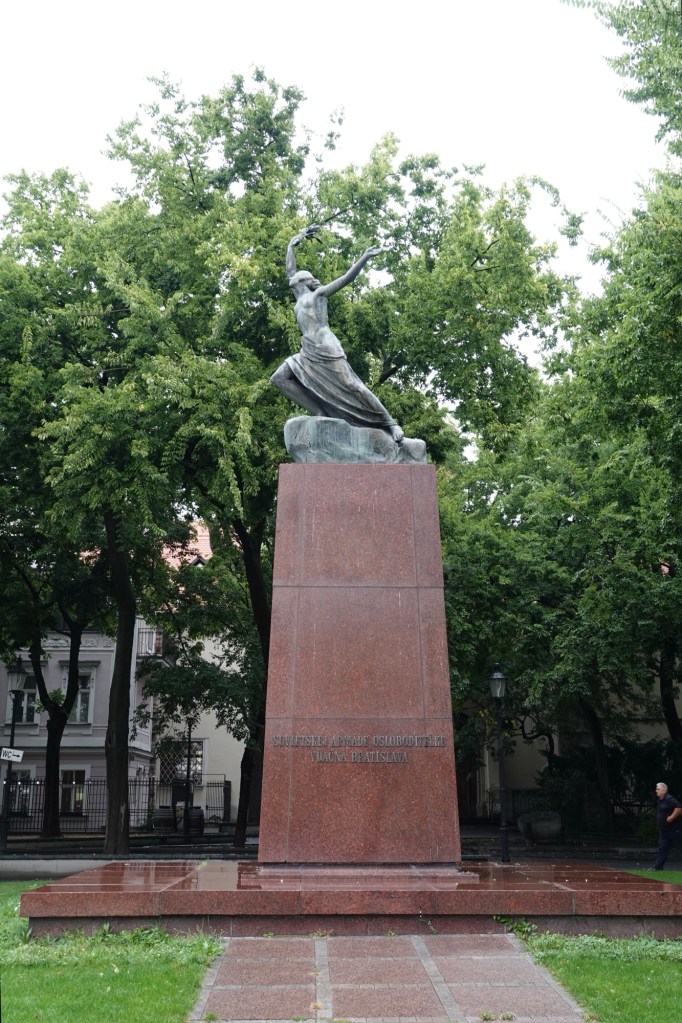
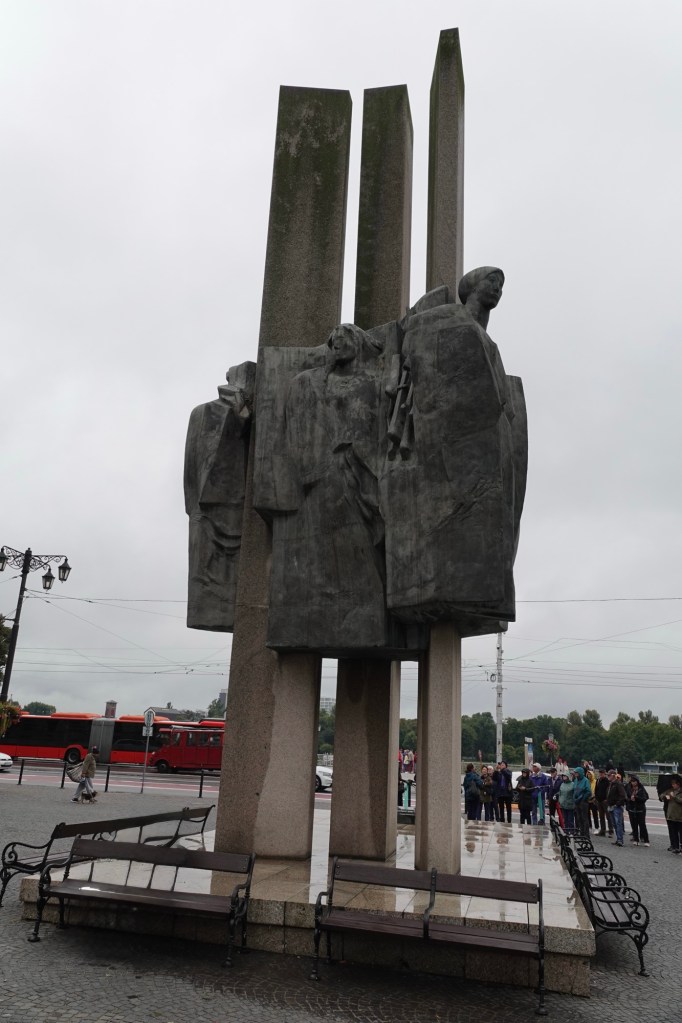


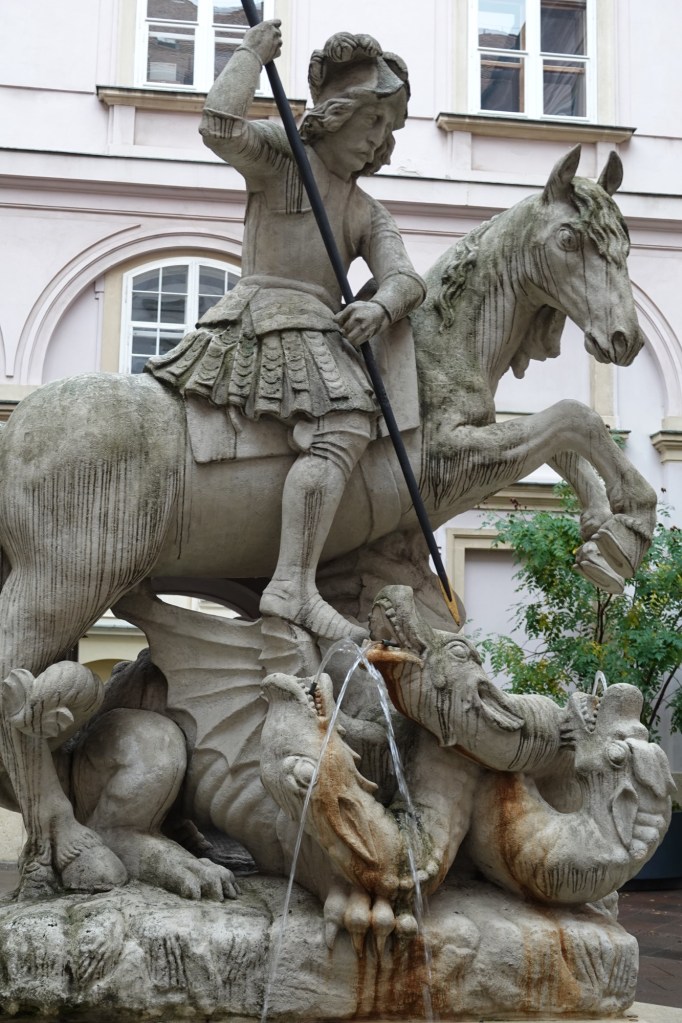


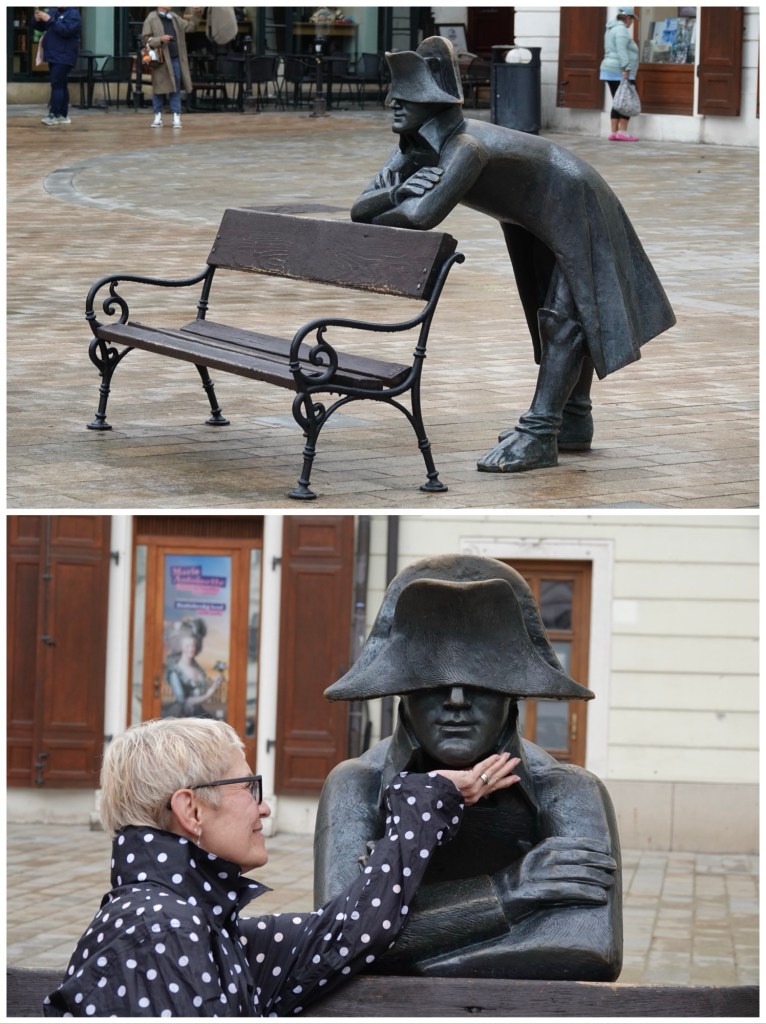

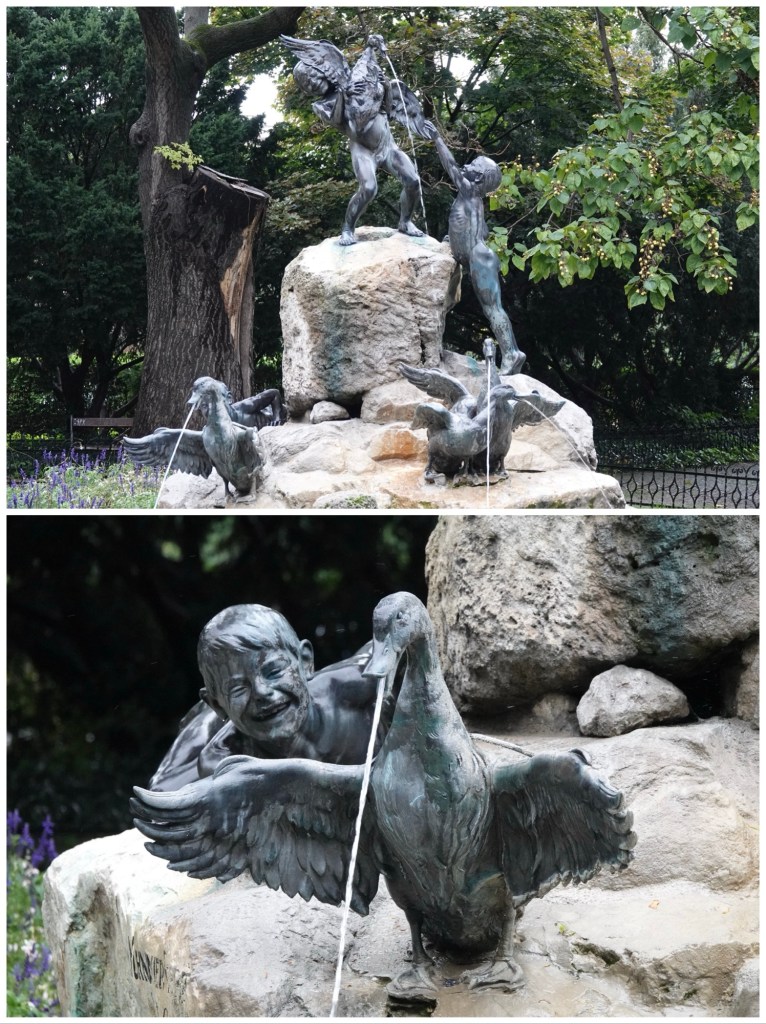
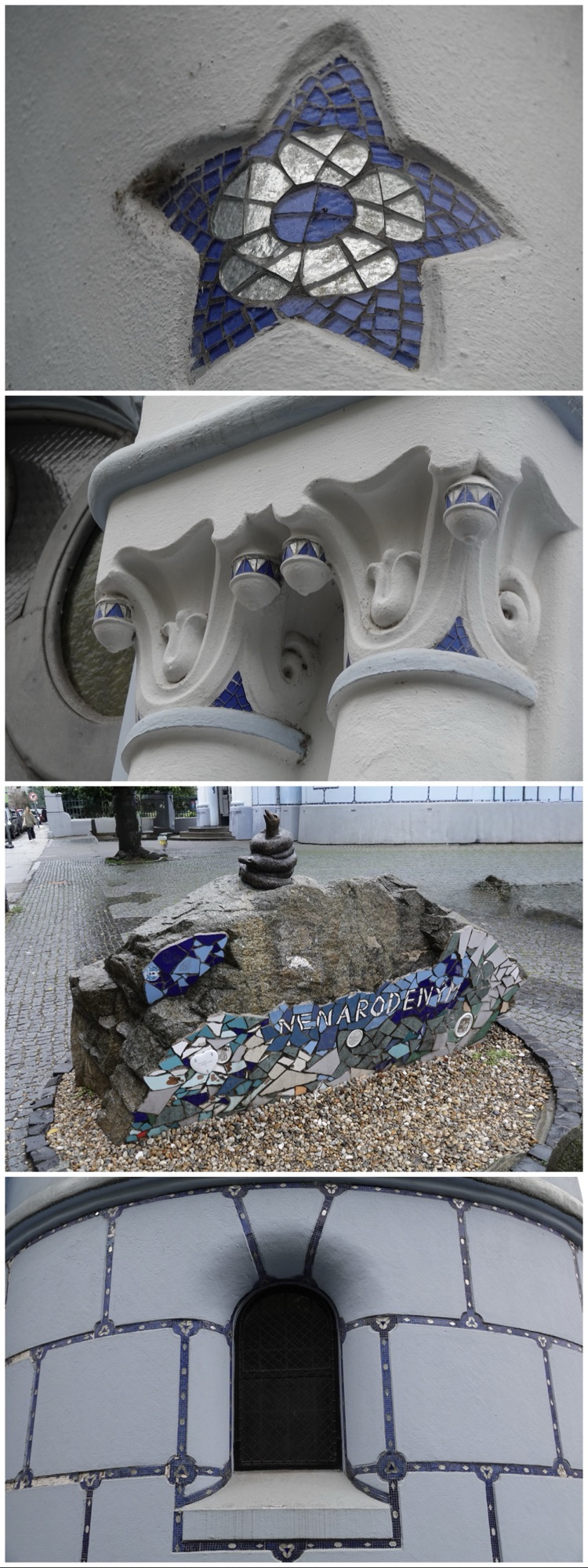
It is inspired by an old local legend about a waterman and petrified boys.
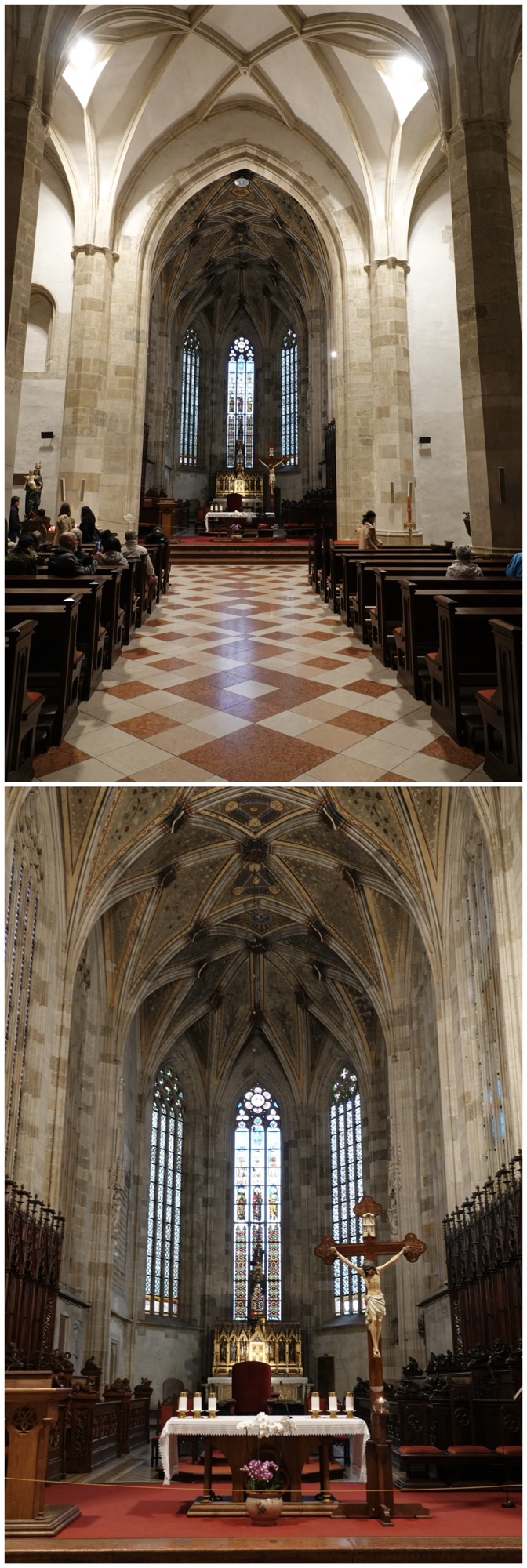
We were treated to a brief visit inside St. Martin’s, the city’s neogothic cathedral.


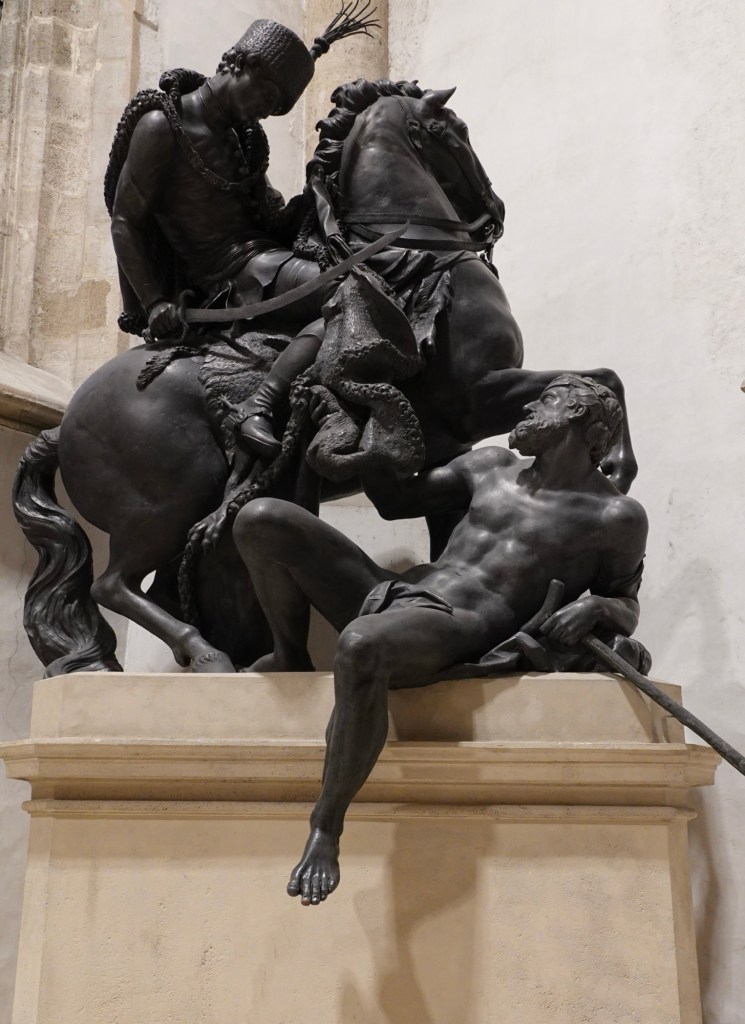
The cathedral’s statue of St. Martin of Tours dividing his cloak to give part to a pauper features the face of Count Esterhazy depicted as St.Martin. As we’ve seen before in paintings, it was common practice for the person commissioning a sculpture or painting to insert themselves as a central character.

Bratislava also had far more gorgeous examples of undamaged 18th and 19th century architecture than I’d remembered. The city was not significantly damaged during either world war; the last major damage done here was by Napoleon.

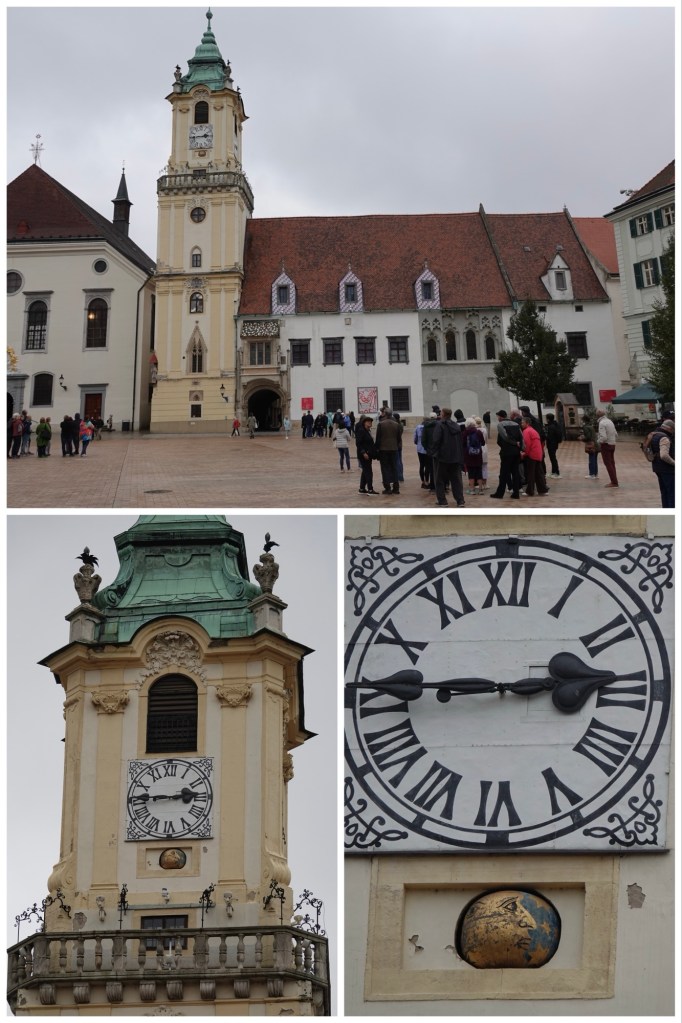
The old town hall clock tower is adjacent to the a portion of the oldest building in the city (the stone arch). The orb under the clock shows the phases of the moon, and used to be adjusted by hand daily – it no longer is.
The Bratislava concert hall flies the flags of all the nations whose orchestras are playing in this year’s music festival.

The Bratislava Opera House was designed by the architect who also designed the concert hall in Vienna.


After our guided tour was completed, our guide suggested we walk to the Church of St. Elizabeth, the “blue church”, before returning to our ship. The architect was Ödön Lechner, Hungary’s answer to Antoni Gaudi.

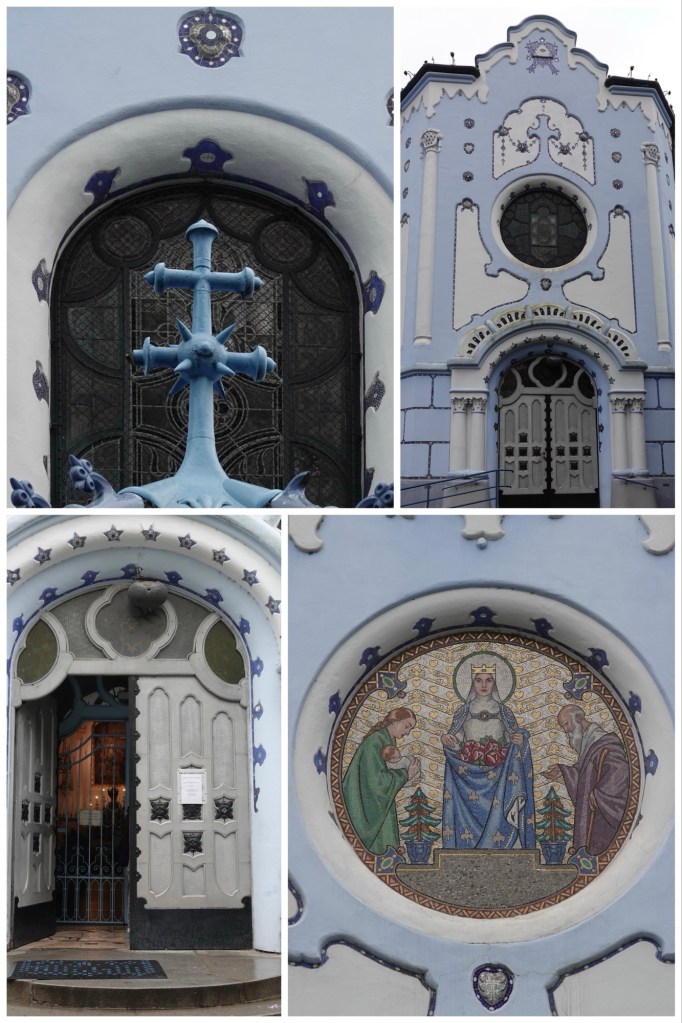
The church was closed to visitors , but Ted was able to take a couple of photos of the interior through the grates of the entrance.

The rock in the church garden also echoed a Gaudi-esque quirkiness.

Viking’s local onboard entertainment was a talk on the evolution of music, musical instruments, and traditional costumes in this area, presented by two wonderful mezzo sopranos, Maida Karišik and Maria Droulou. They not only talked about the music we now consider iconically Austrian, Hungarian, and Slovakian, but sang many examples. It was lovely, as were the sopranos themselves – and I got to don a flowered and beribboned headdress and dance (badly) a czardas with them. Don’t judge.

And then it was time for a delicious Slovakian inspired dinner and conversation with fellow passengers.

Am I blue? Only that we didn’t have more time here!
 Rose and Ted’s Excellent Adventure
Rose, I.ve been following your river cruise with interest as we did Viking’s 22-day European Sojourn in July last year.
LikeLiked by 1 person
That’s a great itinerary too!
LikeLike
Love the dance! I admire you and Ted so much; you guys don’t just “go on a cruise.” You experience and learn about the local culture to the max. Thanks for sharing it all with the rest of us!
LikeLiked by 1 person
Love having folks to share it with!
LikeLike