No breakfast “pie” today. The filling of ham and cheese didn’t appeal to me, so it was yogurt and fruit, bread, cold cuts, and cheese instead. A quintessentially “German” breakfast., minus the obligatory eggs.
I wanted to see something today that we’d not seen on a previous visit, so I chose an excursion for us to Gödöllő Royal Palace & Gardens.
The description was interesting in itself, but the idea of a Hungarian Count’s palace from the 1760’s intrigued me specifically because that’s the time period during which my maternal ancestors arrived in Hungary from Swabia in southwestern Germany. (Episode 67).
My ancestors were farmers and wine-makers, who most definitely would not have lived like a Count; more likely like a Count’s serfs. My mom, however, always liked to dream that somewhere in her ancestry her family had ties to the royal house of Hohenzollern. That dream was realized in a love for palaces (Schönbrunn in Vienna being her favourite) that – just maybe – I’ve inherited.
But before reaching the palace we had to get through the protest in the city that blocked several routes, including the city’s main thoroughfare.
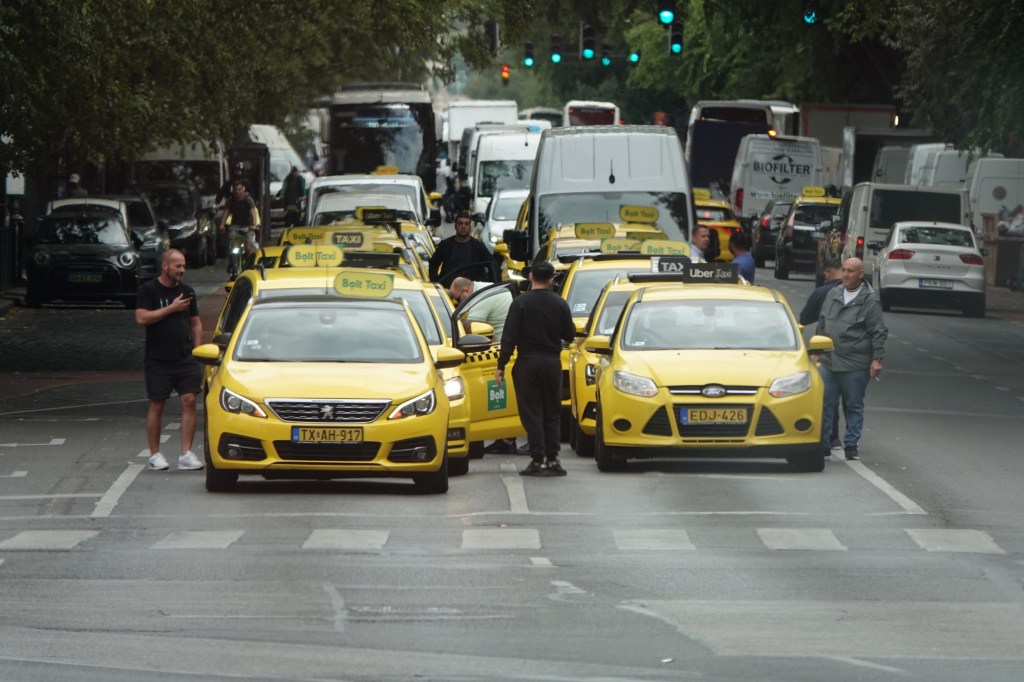
Budapest is nicknamed “the Paris of the Danube”, and today’s protests by the yellow taxis were almost hilariously like the “yellow vest” protests so common in Paris.
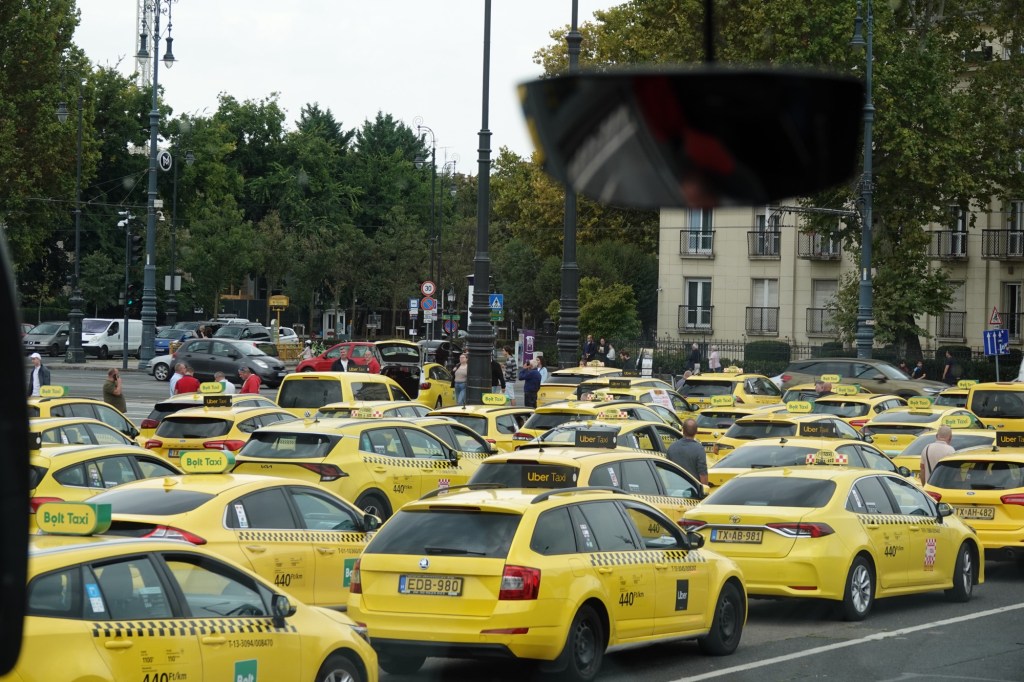
Our guide explained that the issue is not competition with independent drivers like Uber, since that was already resolved years ago by mandating standard rates, but about wages. Since the after tax annual income for taxi drivers is already above both the average and the median Hungarian wage, they’re not getting much sympathy.
En route out of the city we passed by many Soviet era apartments that still house about 1/3 of the area’s population despite being “past their best before date; electrical problems and crumbling infrastructure are common problems. When they were built, the average size of an apartment for a couple was 40 square metres (about 430 sq ft), consisting of a living room, bedroom, bathroom, and an intentionally tiny kitchen to discourage entertaining – because getting together for meals might encourage complaining. The buildings originally had asbestos insulation; when it was discovered to be a carcinogen, it was removed but was not replaced with anything! No wonder the apartments were notoriously too hot, too cold, and lacked any soundproofing.
Yesterday our guide used the term “Soviet Baroque”. Today our guide called it Soviet “archi-torture”.
It was the complete antithesis of 18th century palaces.
The Gödöllő Palace is one of Hungary’s most beloved monuments, built in the 1700s for Count Antal Grassalkovich, well-respected among the monarchy and a confidante of Empress Maria Theresa.
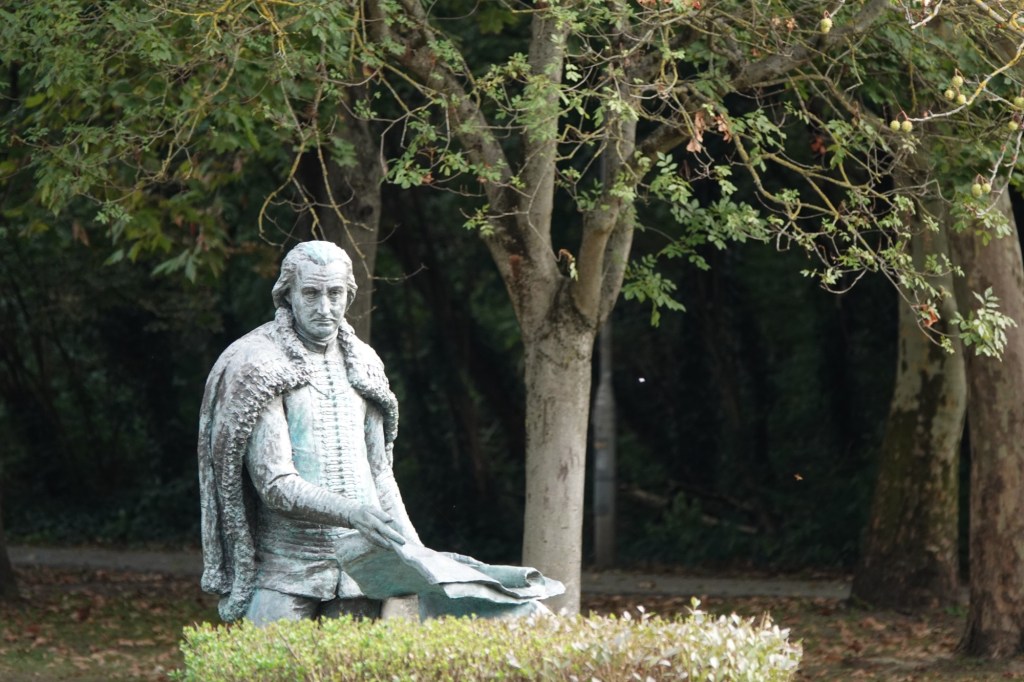
The construction began around 1733, under the direction of András Mayerhoffer, a famous builder from Salzburg who worked in Baroque and Zopf (a version of Rococo) styles.

Despite being quite a modest size, the palace was called the Hungarian Versailles because of its architectural style. In addition to the main residence there is an Orangerie and a bathhouse that are still under renovation; tourists will be able to see those in a couple of years.
During the first world war, parts of the palace were used as a hospital. Between the wars a portion was used for Hungarian administration offices. During the Soviet era, it was used occasionally as barracks, and the royal children’s wing as a senior citizens residence and hospice. The restoration begun in the 1990s is ongoing. During our visit several painters were doing exterior restoration on some of the windows.
As we arrived, there was lovely baroque era orchestral music playing.

The black and gold family crest of the Count is above the door.
The pink mauve and gold colours on the exterior and on interior ground floor staircases are restored to the Habsburg era.
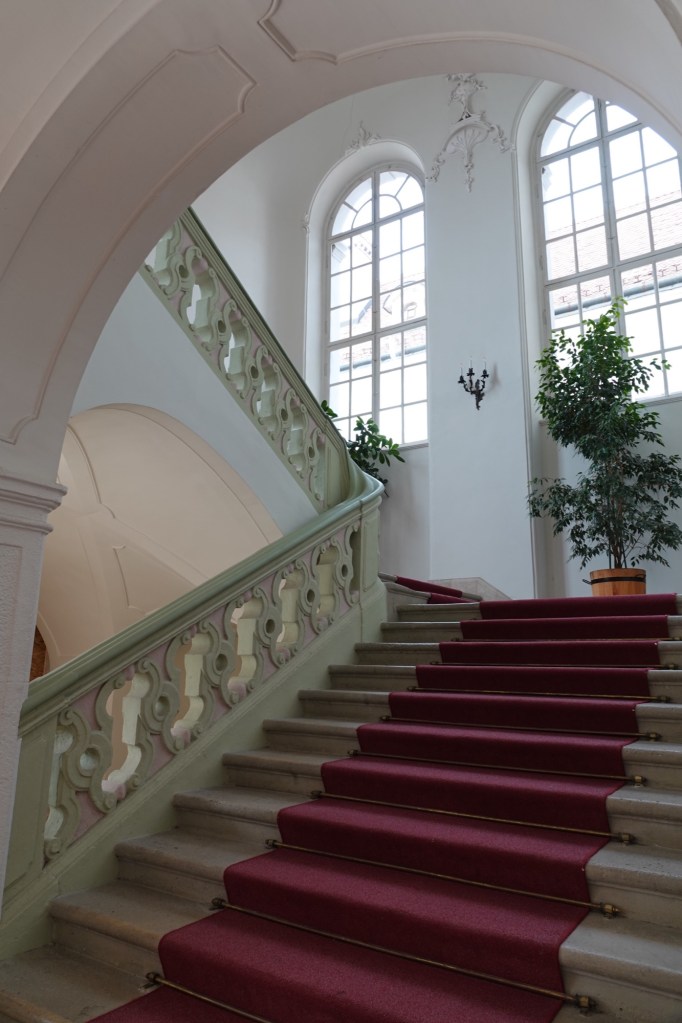

As is the case for places like Versailles, the objects here are “of the period” of the palace, but not always original to this palace the way they are in Schönbrunn, for instance. This palace has had a very turbulent history, especially during the Soviet era, which means that many original items could not be found to be put back into the restoration.
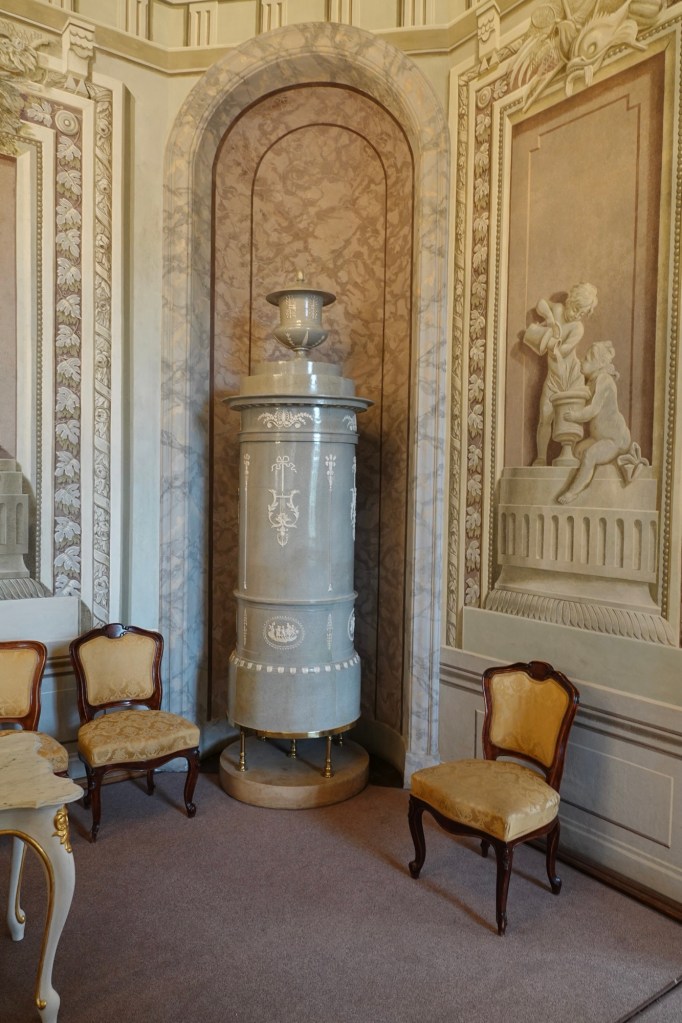
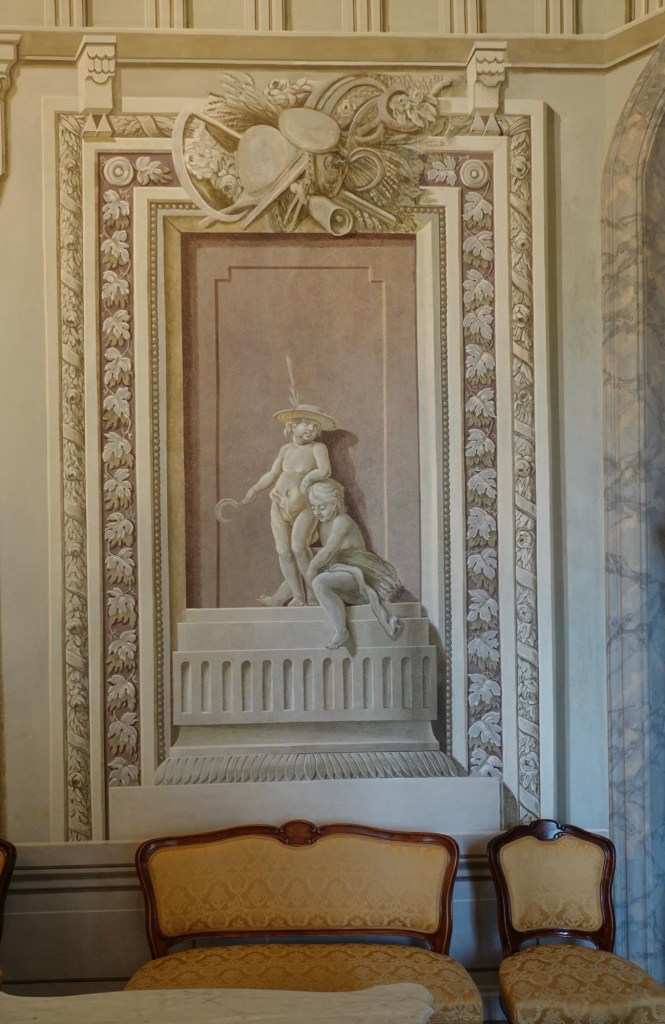
Our tour began in the entrance to the banquet hall, where the walls are painted in representations of the four seasons rather than bas reliefs.
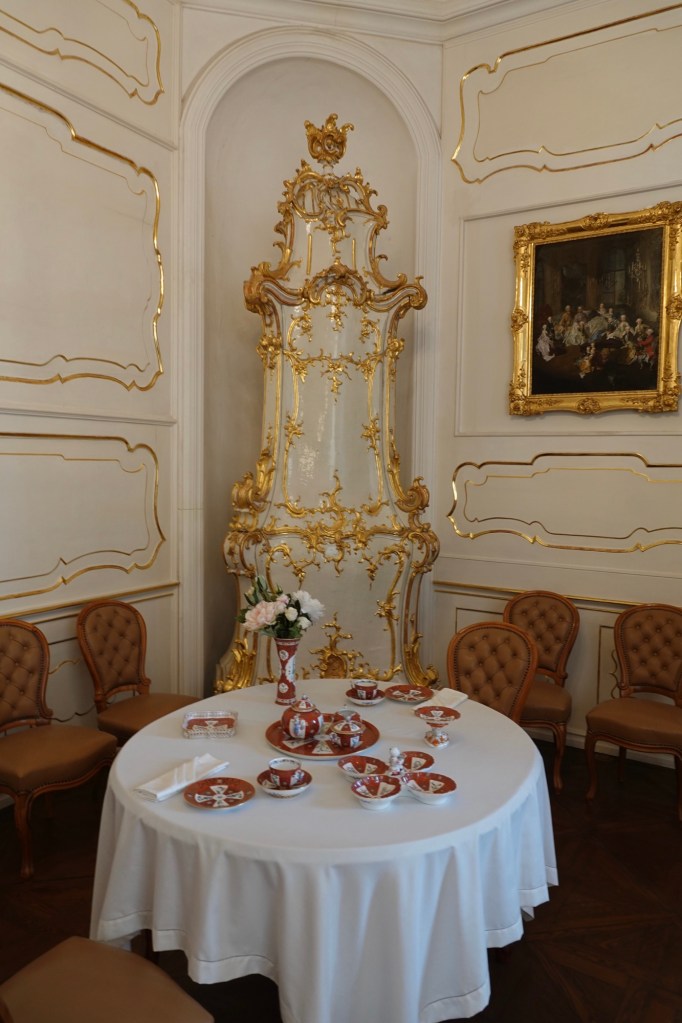
The small dining room has a huge ceramic rococo style fireplace. The Herend porcelain tea set on the table dates to the Habsburg era and is in the specific pattern of this palace. The pieces on the table are recent reproductions, but the pieces displayed in a glass case in the room were actually used by the Emperor and Empress.
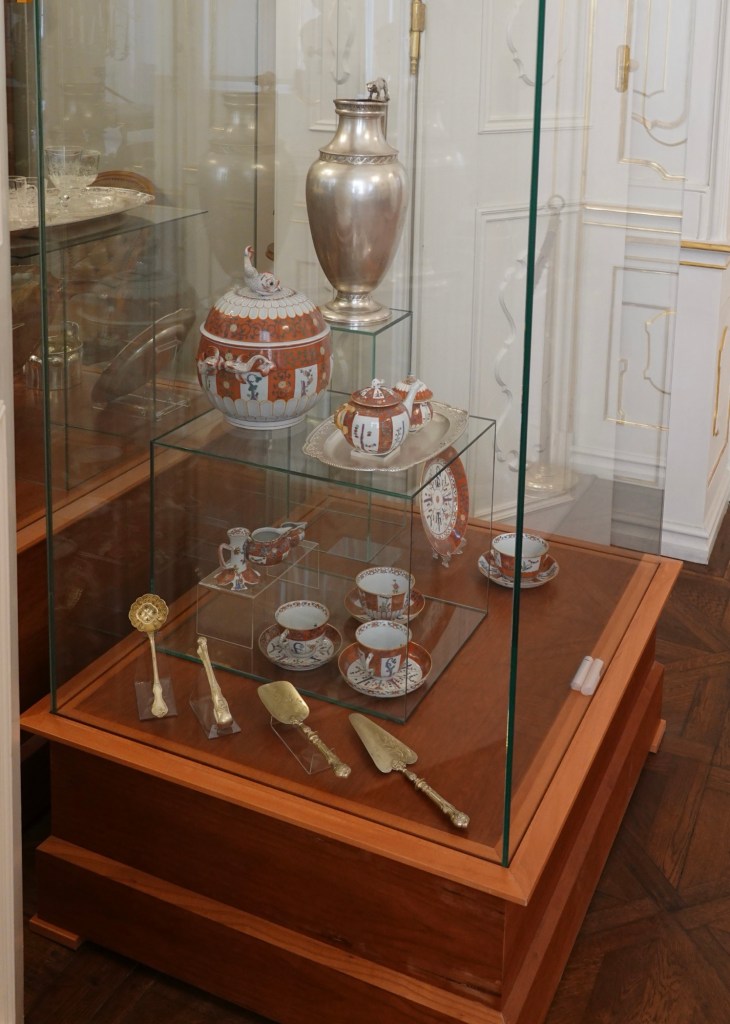
The butler’s pantry now holds examples of silver and china from the palace in wooden cabinets.

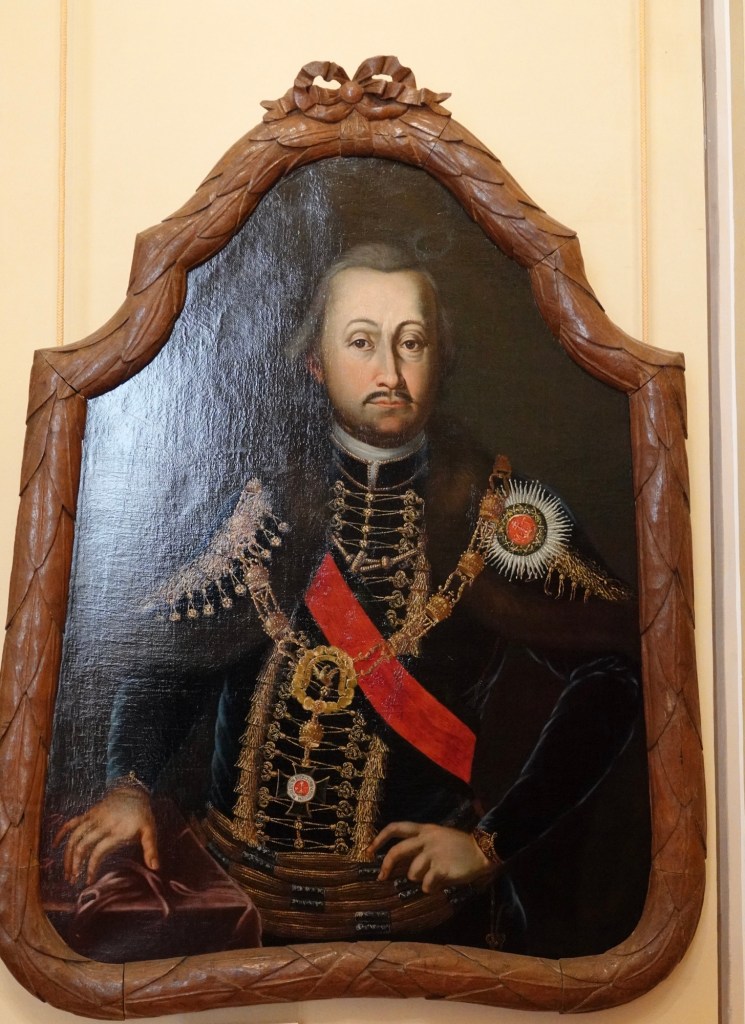
There are two separate eras represented in the palace. The rooms decorated to show the Count’s era have a lot of trompe l’oeil decoration, rather than the more ornate decoration created for the Habsburg monarchs. The room featuring the Count’s portrait is one of the few where the wall decoration is still original, although not particularly fancy.

In an otherwise unfurnished space we saw the multigenerational gown belonging to the Countess Klara Rhedey; the room also featured portraits of various inhabitants of the palace.

A stunning crystal chandelier and a huge tapestry dominate a small sitting room.
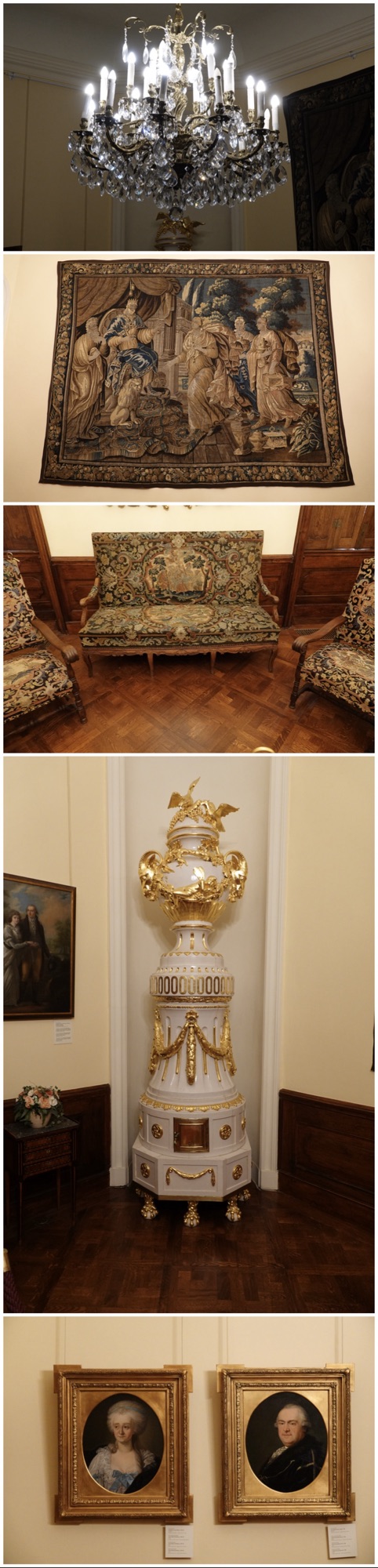
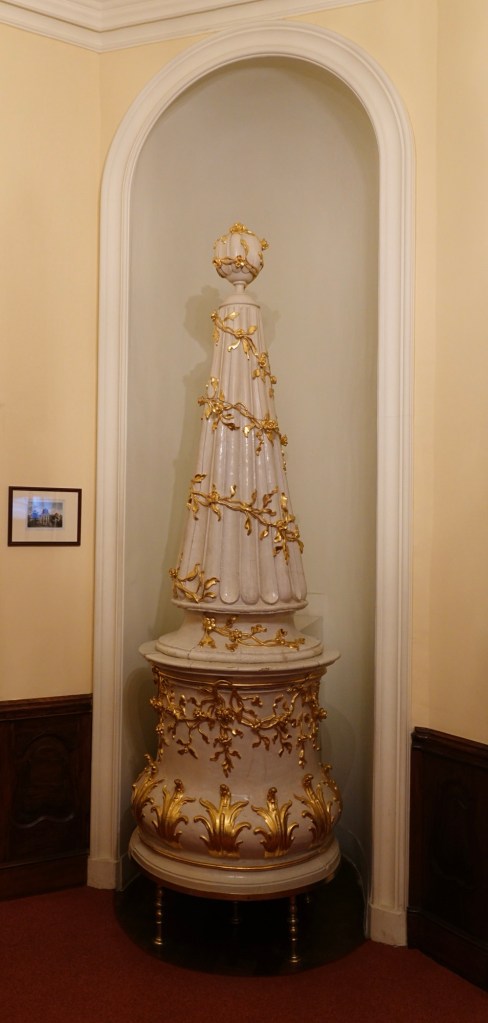
Each room has its own fireplace, each unique, but almost all rococo style.
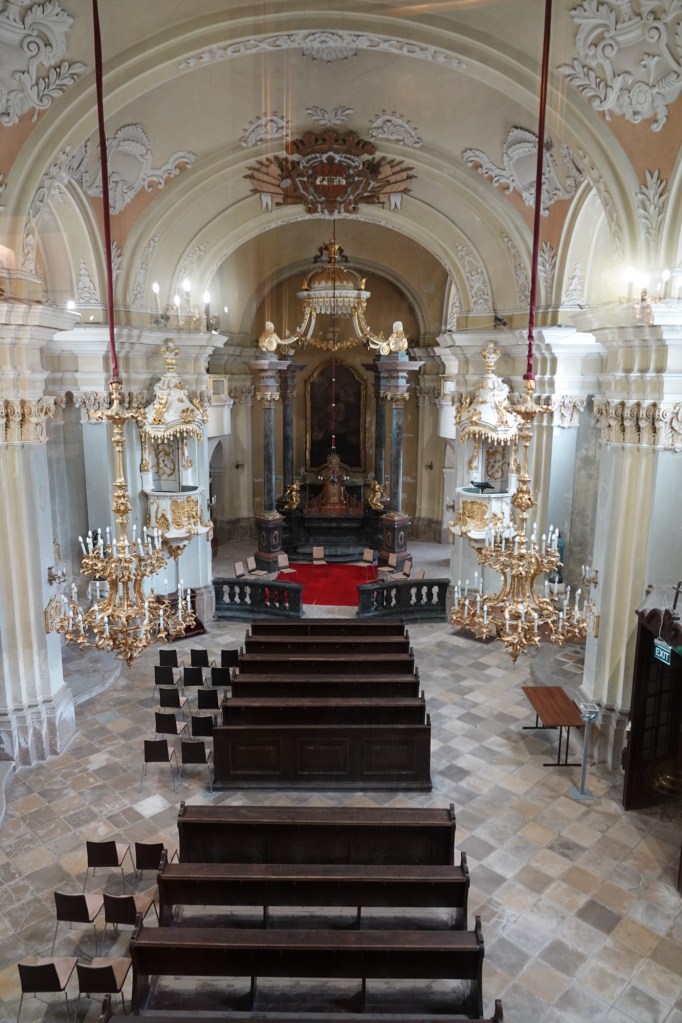
An incredibly ornate chapel has its own small wing of the palace. It still functions as a parish church. There is stunning papier maché reief work here, as we’ve seen in places like the Bishops Residenz Palace Würzburg, as opposed to faux sculpture painted surfaces, and the count’s coat of arms is prominently displayed in the arch above the altar. We were only able to photograph it through the glass windows in an upper hallway.
There is an interesting small toilet with a comfortable horsehair (!) seat displayed in an alcove (with a door) to the side of one room. This would only have been used by men, since women in their huge hoop dresses would have had a completely separate room.
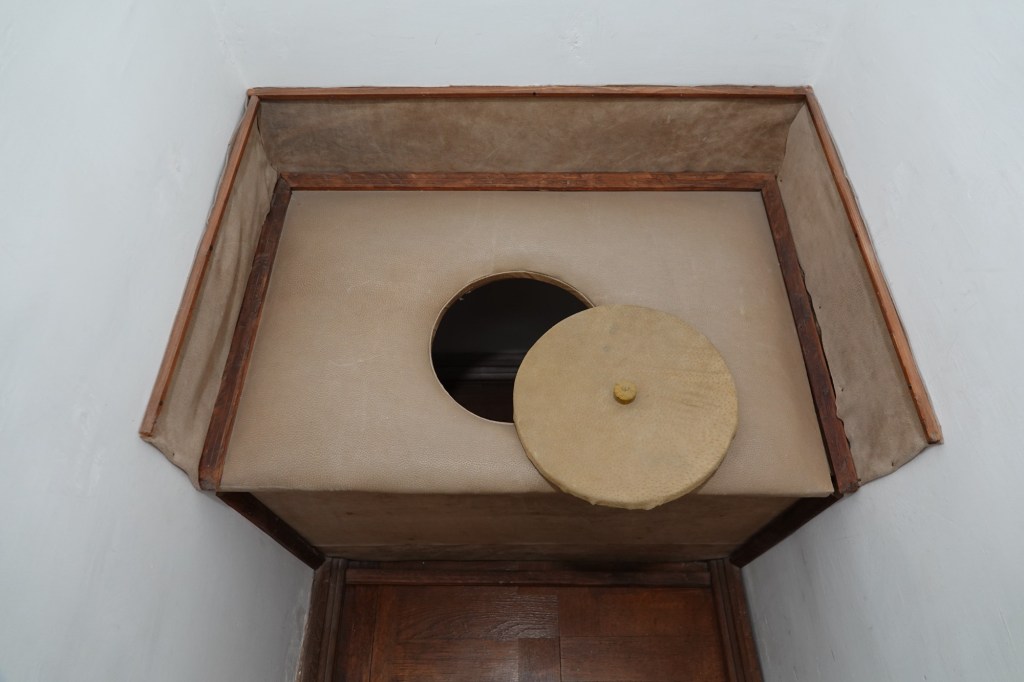
The highlight of the tour was not the indoor plumbing, but the apartments used by the Emperor and Empress.
We had read that when the last direct male descendant in the Count’s family died in 1841, the palace was bought for the crown as a residence for the King of Hungary, Charles IV. Our guide (who had to take an extensive course in order to be allowed to guide here) said that the palace was not in fact subsequently gifted to Emperor Franz Josef and Empress Elisabeth, but rather they were given the USE of the palace as a coronation gift.
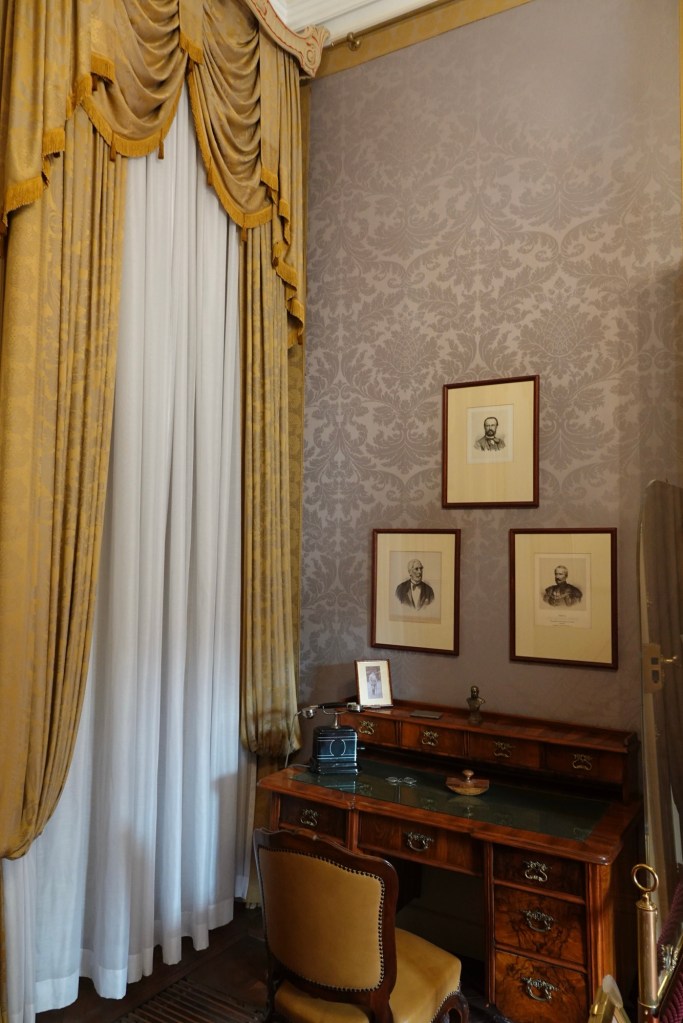

A gigantic painting of the coronation is in what was originally Emperor Franz Josef’s bedroom is interesting because it was not done by an artist who actually attended the coronation. That is made obvious by the fact that the church depicted looks nothing like the Matthias Church where the coronation took place.
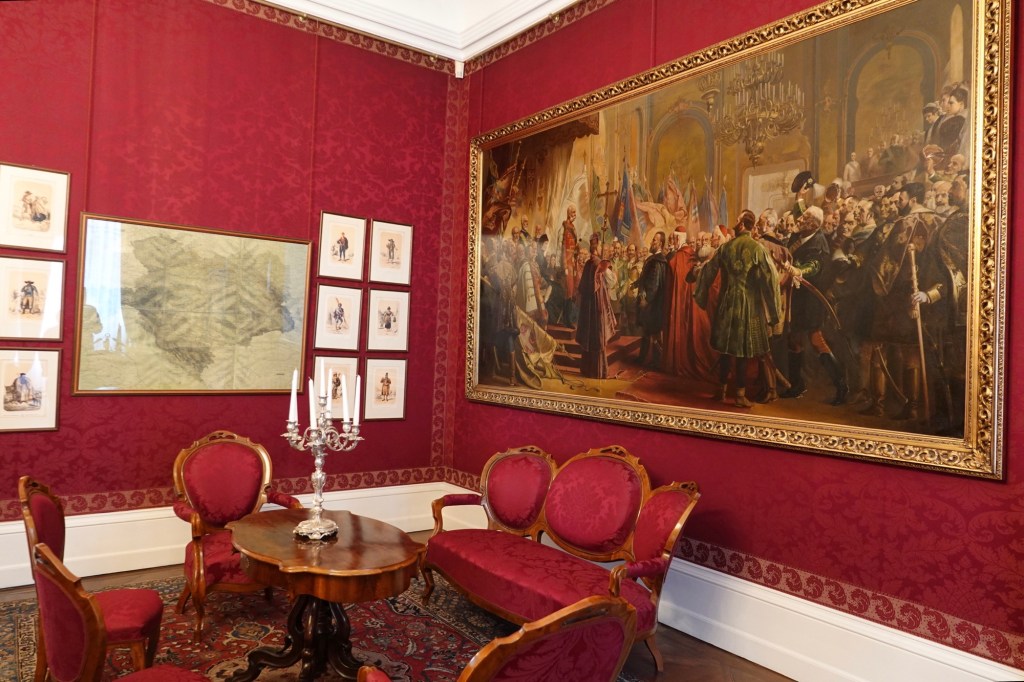
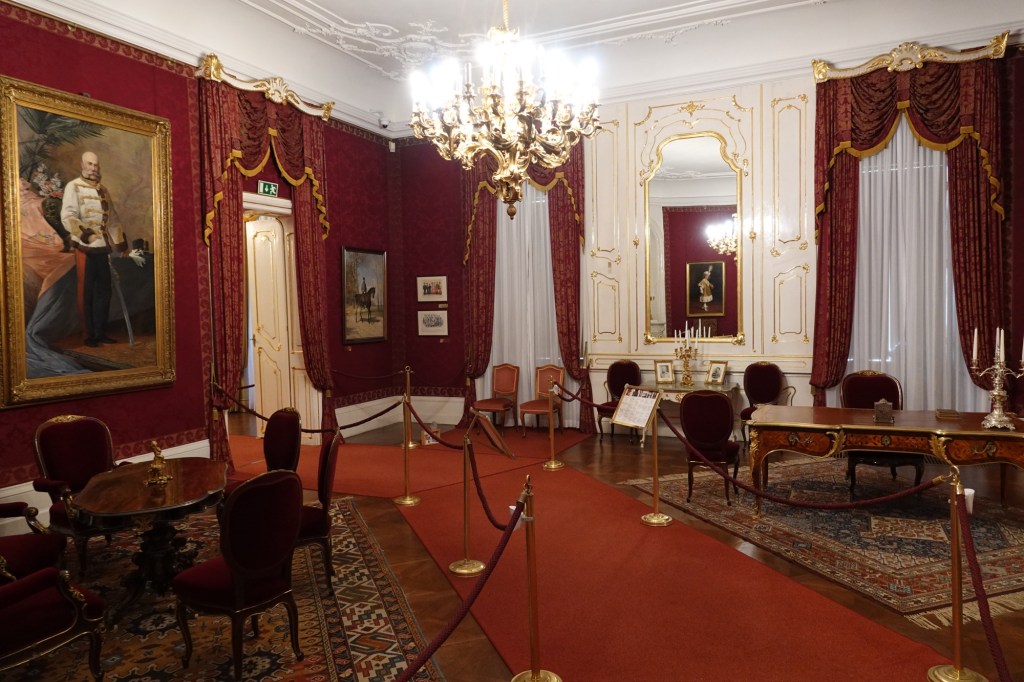

In a red-wallpapered room with a beautiful gilt chandelier, there was also a very ornate multicoloured fireplace that is original to the palace, although it was damaged and had to be reassembled. The scenes depicted on it are of the reconquest of Hungary.
Today the banquet hall, which is in the centre of the palace in the portion that juts out from the front façade, was being set up for a wedding.

We had pointed out to us the grated opening, behind which the musicians would be hidden upstairs so as not to take up space in the ballroom below.

After passing through the ballroom, we were able to see the lush furnishings and finely detailed woodwork of Empress Elisabeth’s private apartments, on the opposite side from the Emperor’s rooms.
In the first room, there was restoration going on that meant that the large portraits of the Empress were covered up.

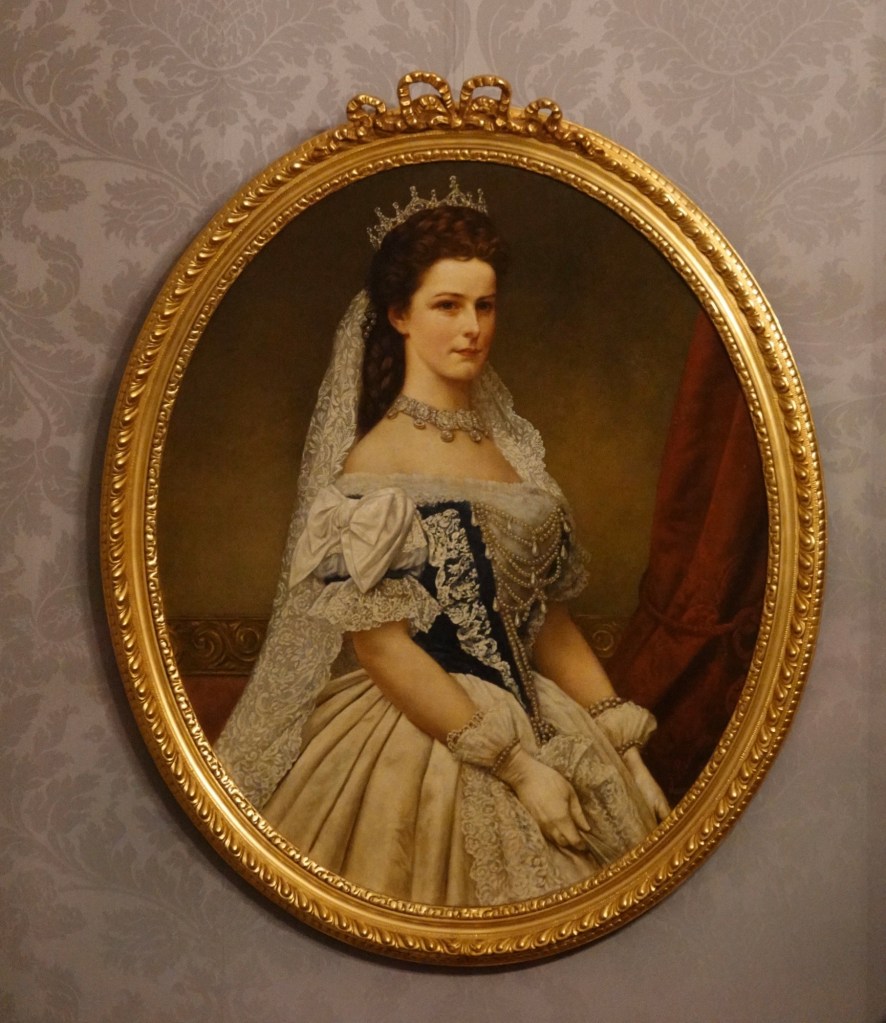
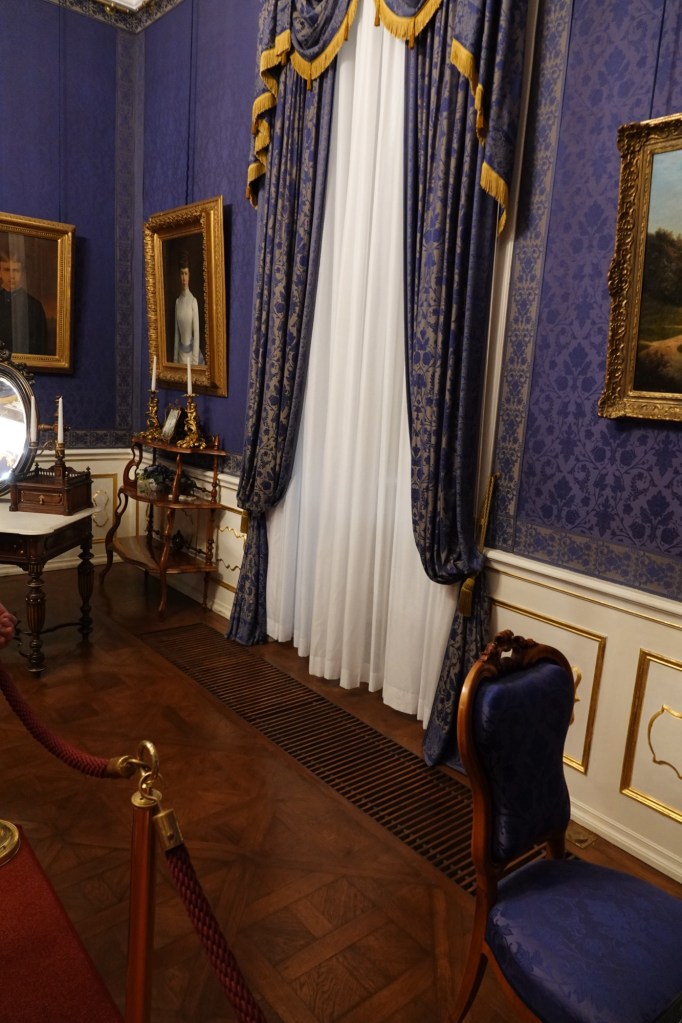
The Empress’ apartments were a violet-hued blue as opposed to the emperor’s Schönbrunn red. We learned that the 174 cm (5’8”) Empress weighed only 47kg (104 lb) – think Audrey Hepburn – and indulged her passion for horseback riding and power walking when she was in Hungary away from the influence of rules, routines, and the judgement of her mother-in-law in Vienna.
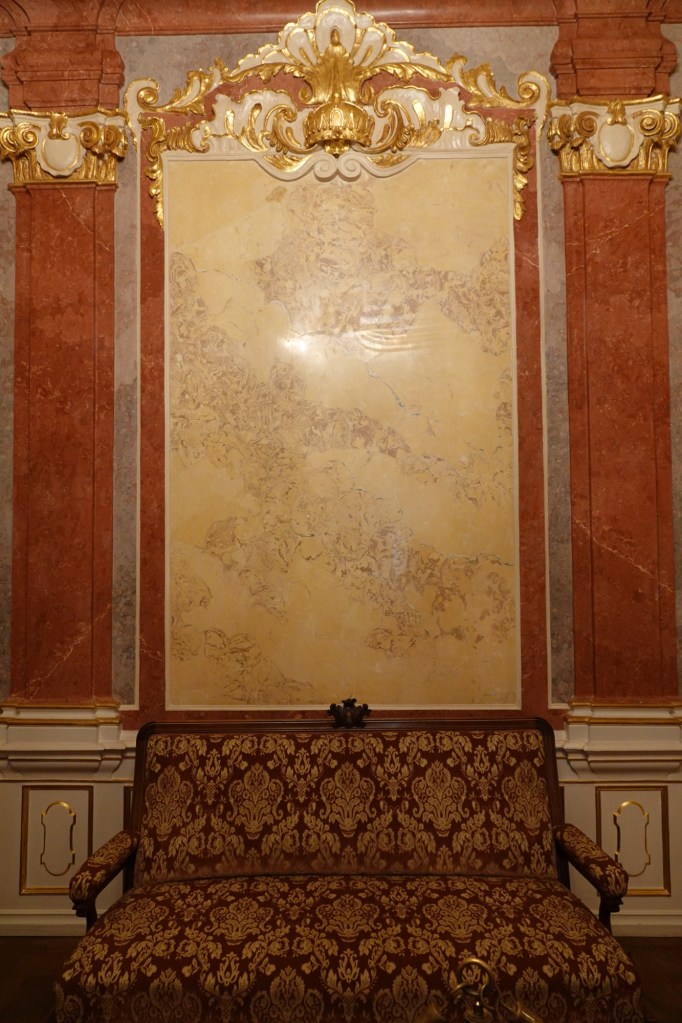
The exception to the colour theme was the Empresss’ bedroom, where the walls were of real Hungarian red marble, and faux grey and cream marble. The room is as yet unfurnished, but we were told that the Empress had a very comfortable queen sized bed, in contrast to the Emperor’s preferred narrow military-style cot. Her bed would have been located under the marble panel topped by a crown, where a settee has temporarily been placed.
Next, we entered three rooms that host the Empress Elizabeth Memorial Exhibition.
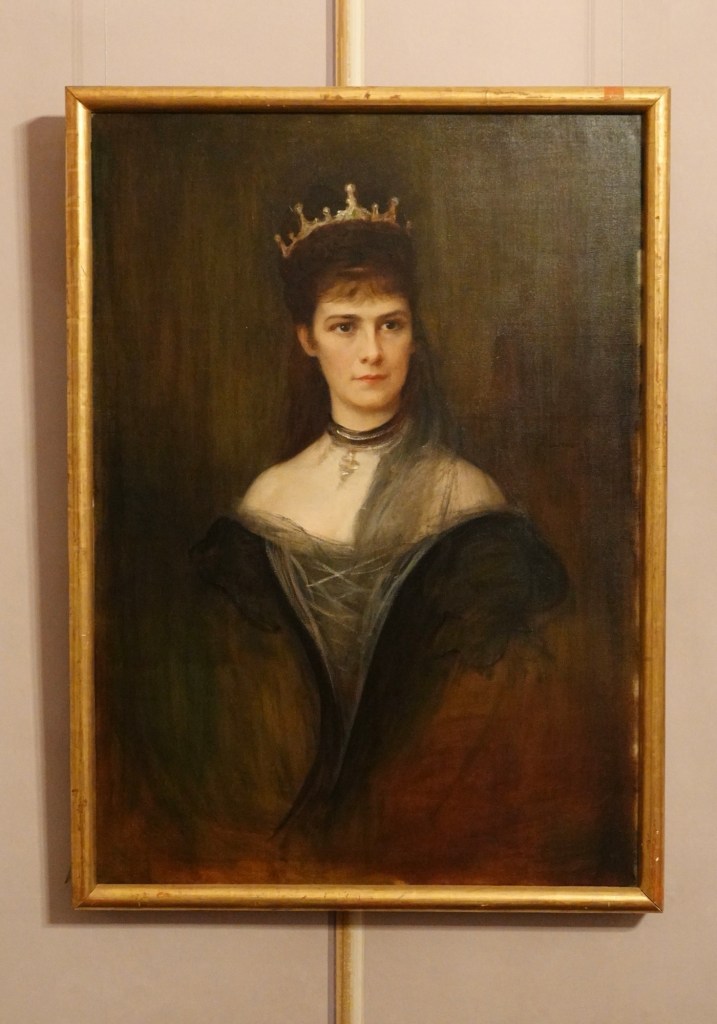

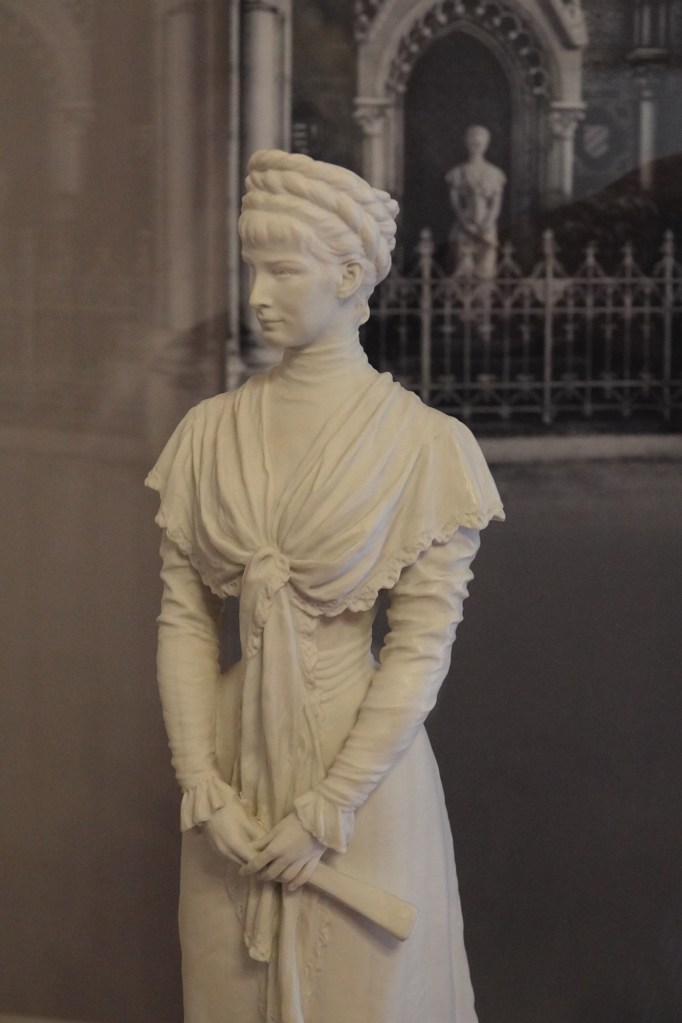
The Empress never wanted to be depicted looking anything other than perfect. As a result, there were no photographs taken of her after about age 35, nor paintings made of her at an older age. That’s why in later depictions of the royal couple the Emperor has aged, but the Empress has not. The stained glass windows below are a perfect example.

In the huge portrait gallery were depictions of the Empress mourning at the bier of Ferenc Deák (after whom the subway station we took yesterday was named), and a gigantic portrait of emperor of Franz Josef I.


A wing of this palace that was originally the children’s wing was used for the negotiations for the entry of Hungary into the European Union. The famous Hungarian porcelain house Herend was commissioned to create this vase to mark the occasion.

The children’s wing was decorated in a vibrant sky blue, trimmed in ivory and lots of gold. This is the area of the palace in which about 120 senior citizens were housed during its time as a Soviet era seniors’ residence. By this time we were moving through rooms far too quickly to get many photos.
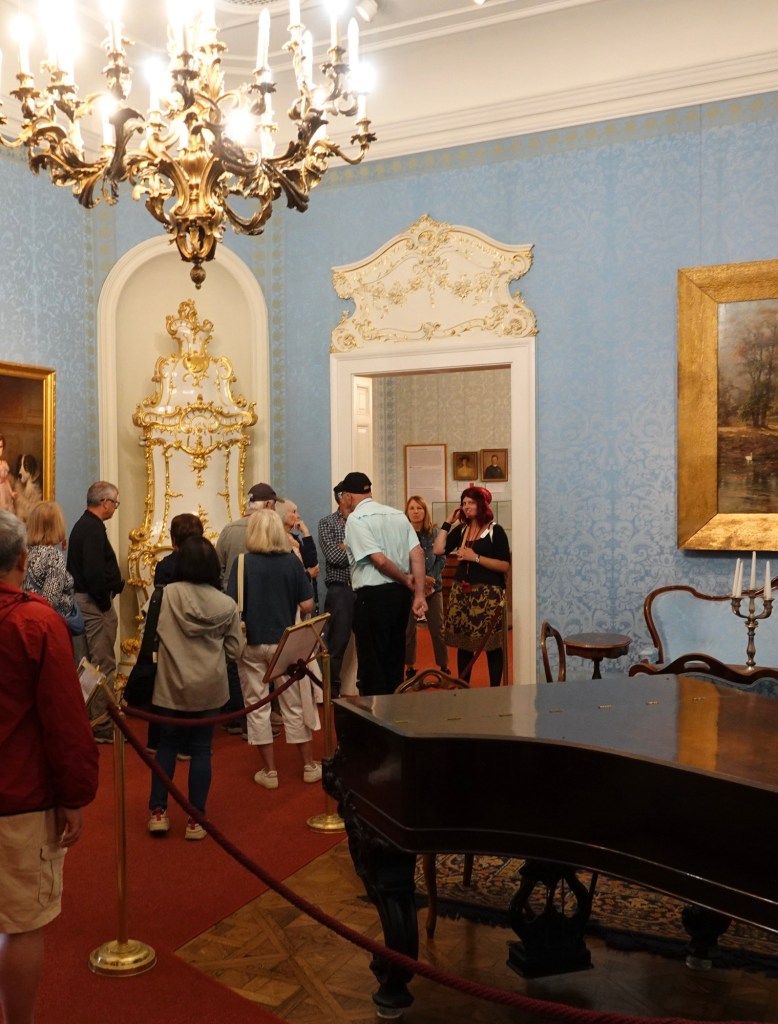
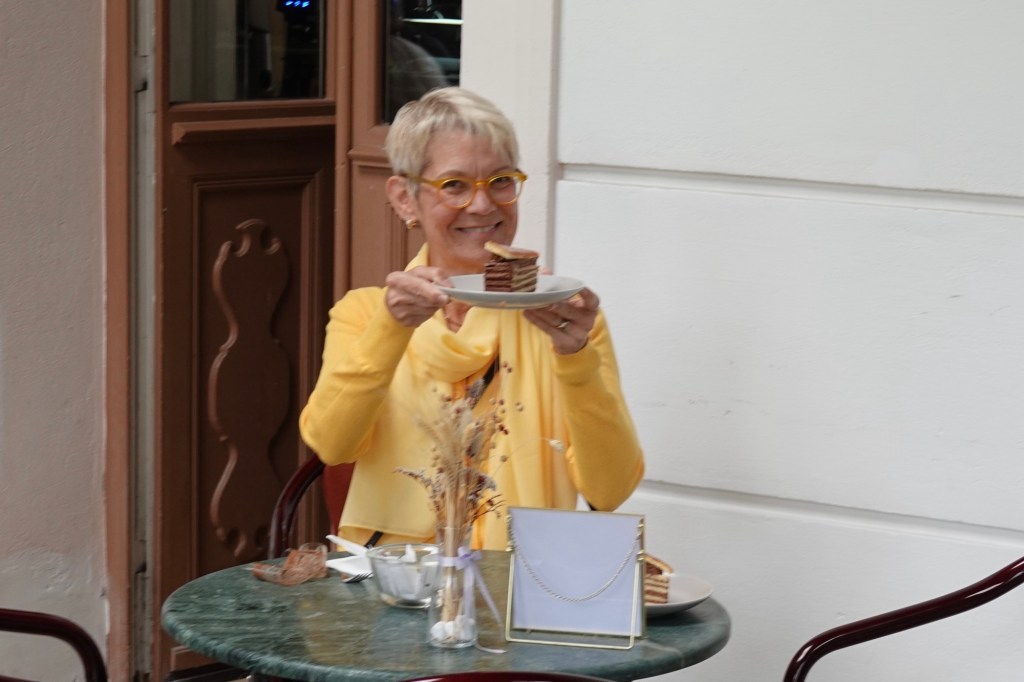
After our tour, we were treated to Hungarian coffee and 11-layered dobos torte (!), and a bit of time to look at the gardens.
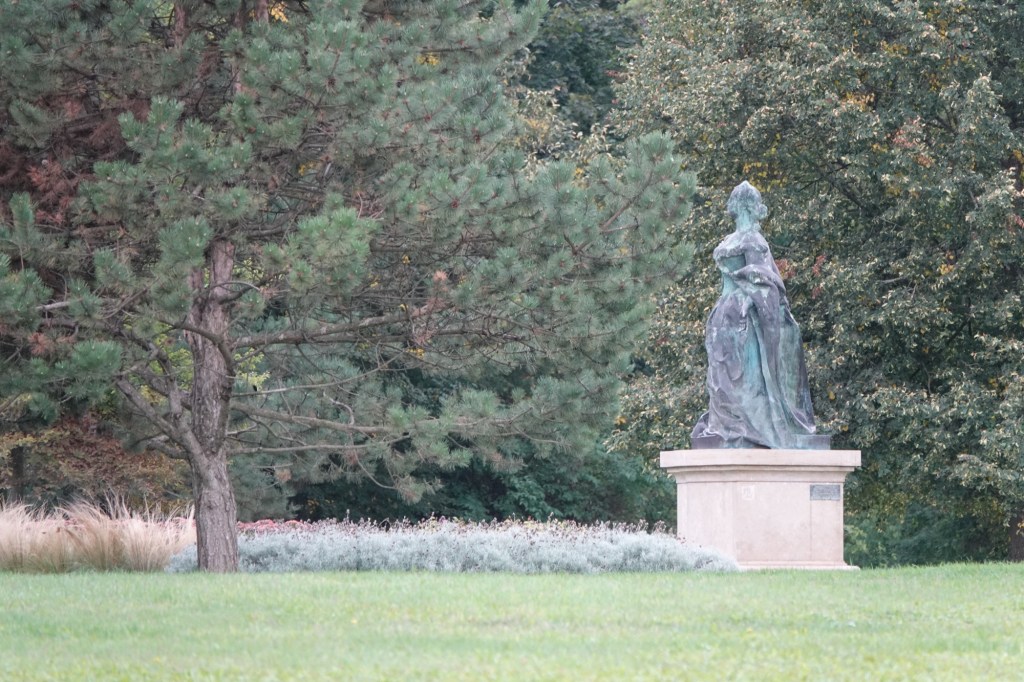
The palace originally had a French baroque garden, but later the garden was converted to a more informal English garden, which is the way it still looks today.


We had a 45 minute drive back into the city, where we made a quick pit stop on our boat to grab umbrellas, and headed back out on foot.
On our afternoon independent walk to the Central Market Hall, which we missed yesterday, we passed lots and lots of beautiful Habsburg era villas along the Danube, and both the Elizabeth and the Liberty bridges.

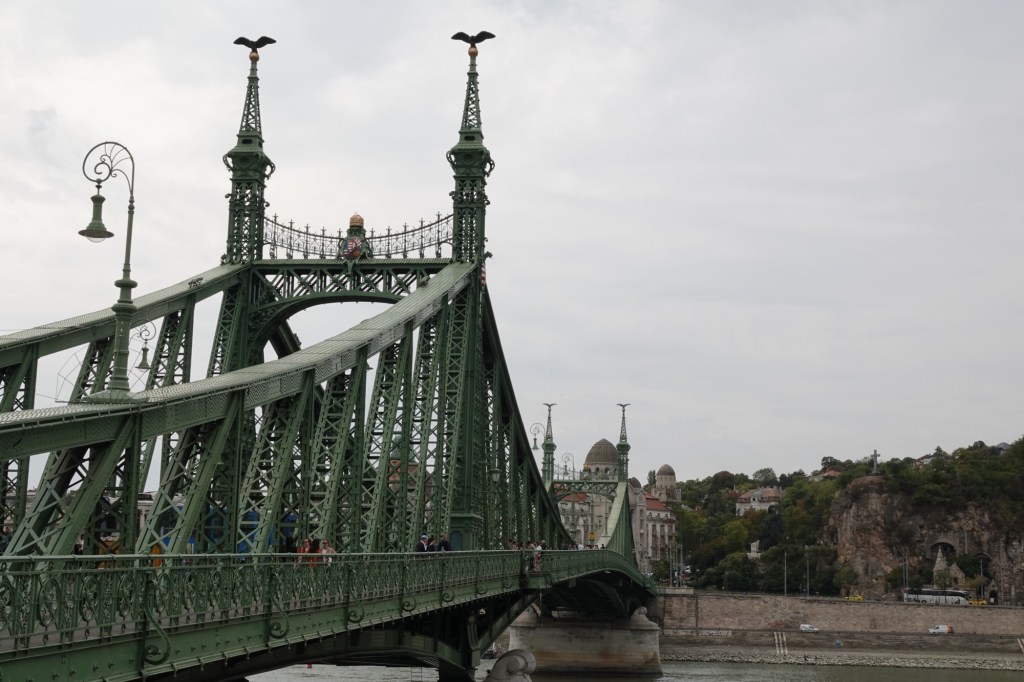
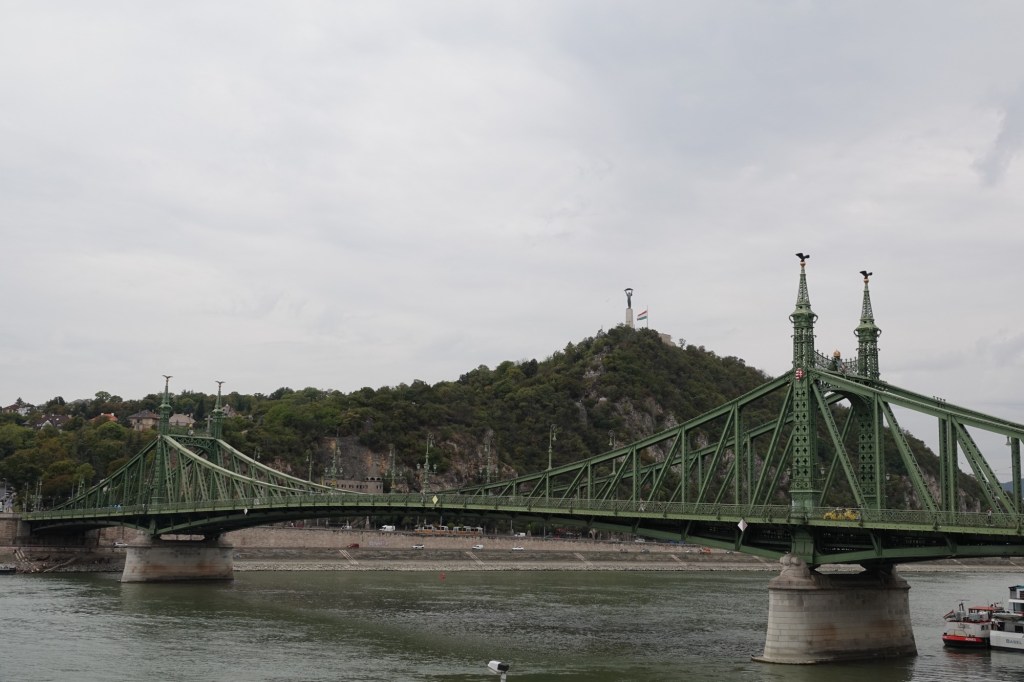
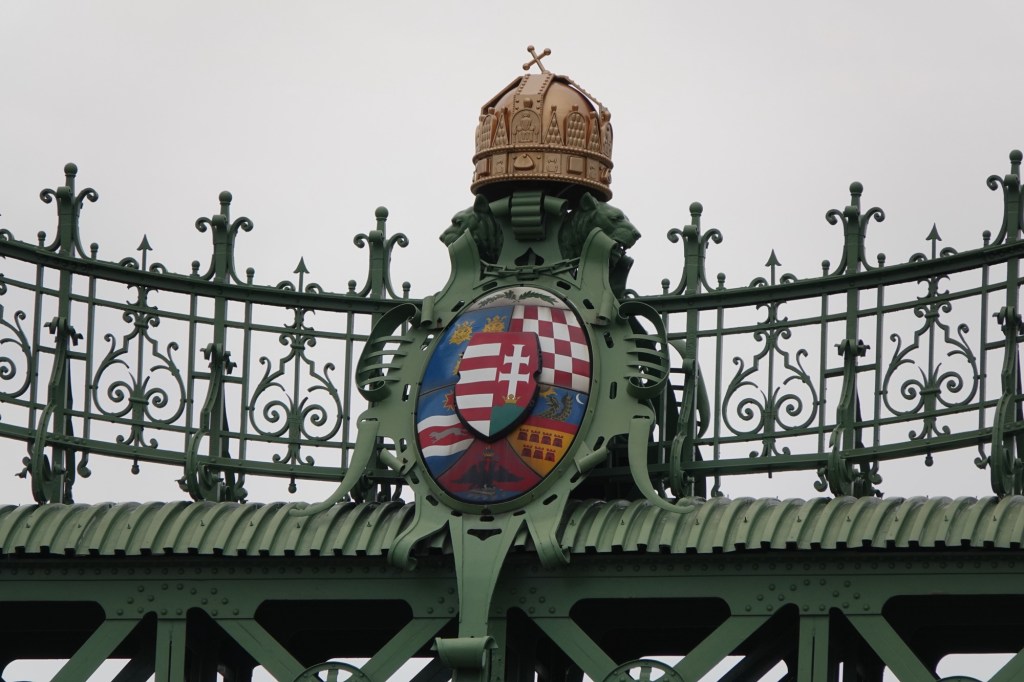

On the Pest side of the Danube at the Liberty Bridge at the corner was an incredibly huge building with Greek and Roman statues above the entrance along a columned balustrade. We were curious as to what this building could be, because it had not been pointed out to us on any of our panoramic drives. It turned out to be the Corvinus University of Budapest, a small 10,000 student private university founded in 1920 and specializing mostly in business related courses. The impressive Neo Renaissance main building dates to 1874 and was originally the main customs “palace” of Budapest. It is now a UNESCO designated world Heritage site.

The central market is much the way I remembered it: a huge beautiful 2+storey building housing lots of shops selling tourist items, but also many many booths full of fresh local Hungarian produce, paprika at real (i.e.non-tourist) prices, and lots of butchers with wonderful Hungarian sausages as well as local organic free range meats.
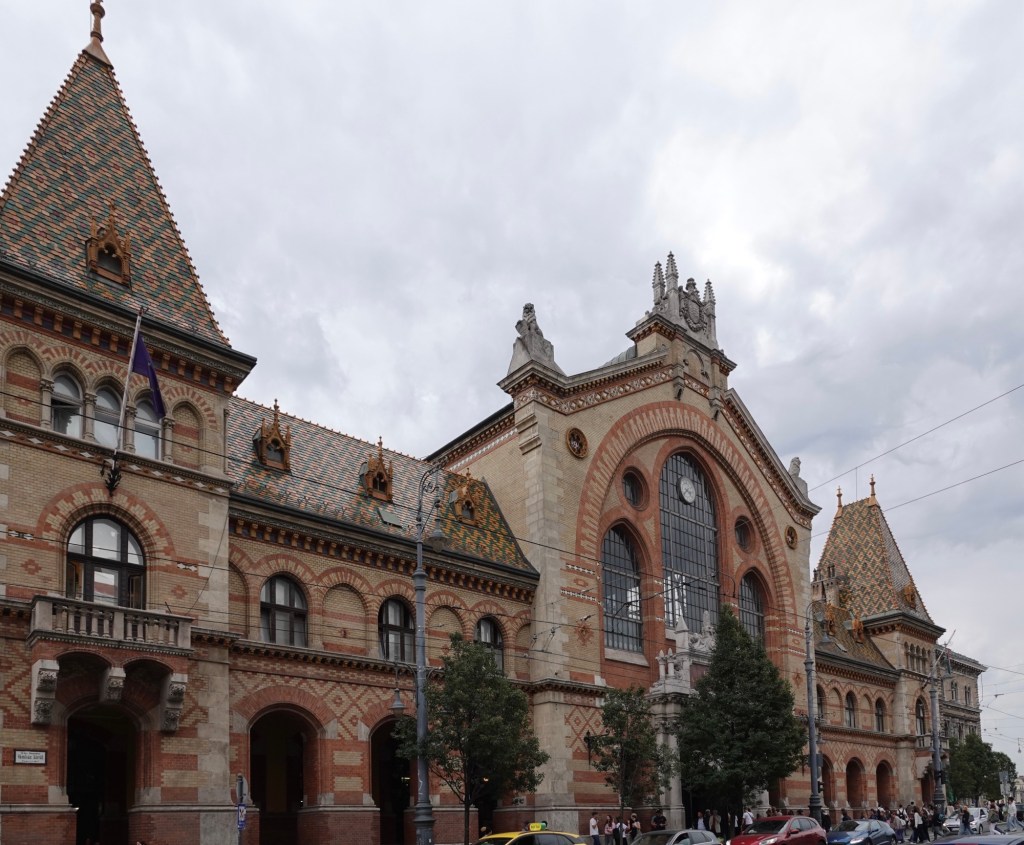
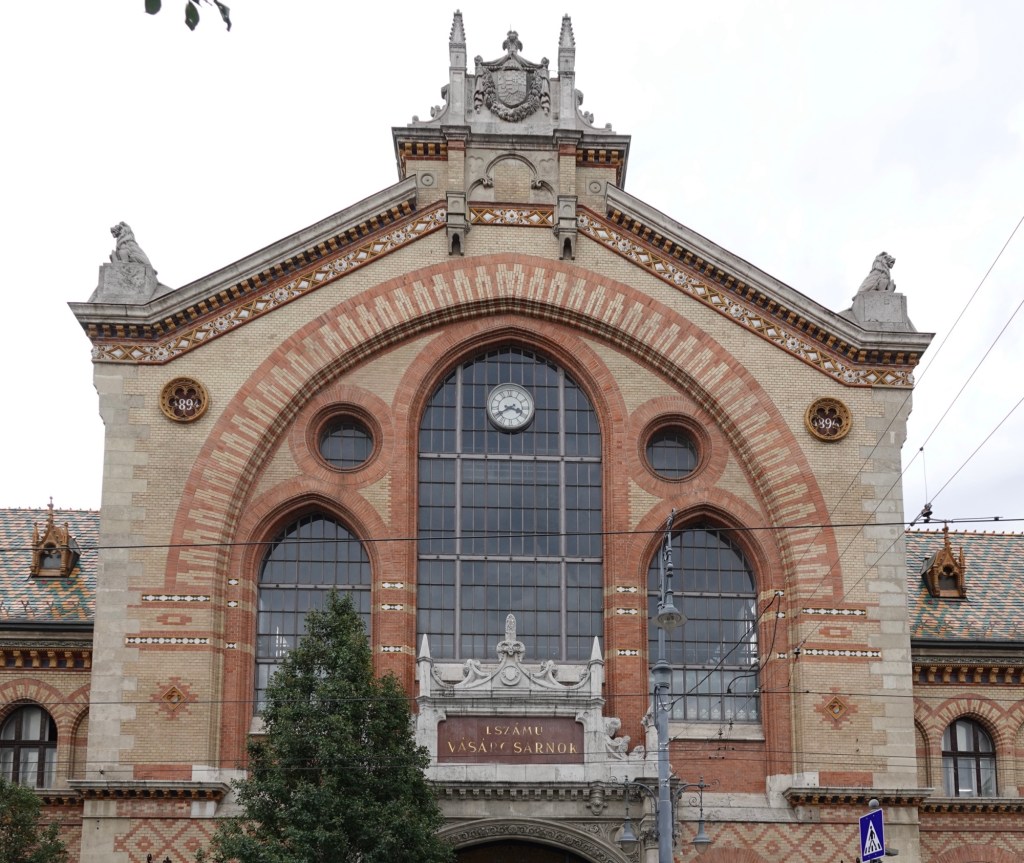


We bought two Hungarian csabai (smoked sausages, heavy on the paprika and with a bit of black pepper), and unpackaged and ate them as we walked around. Does eating while walking make us locals?

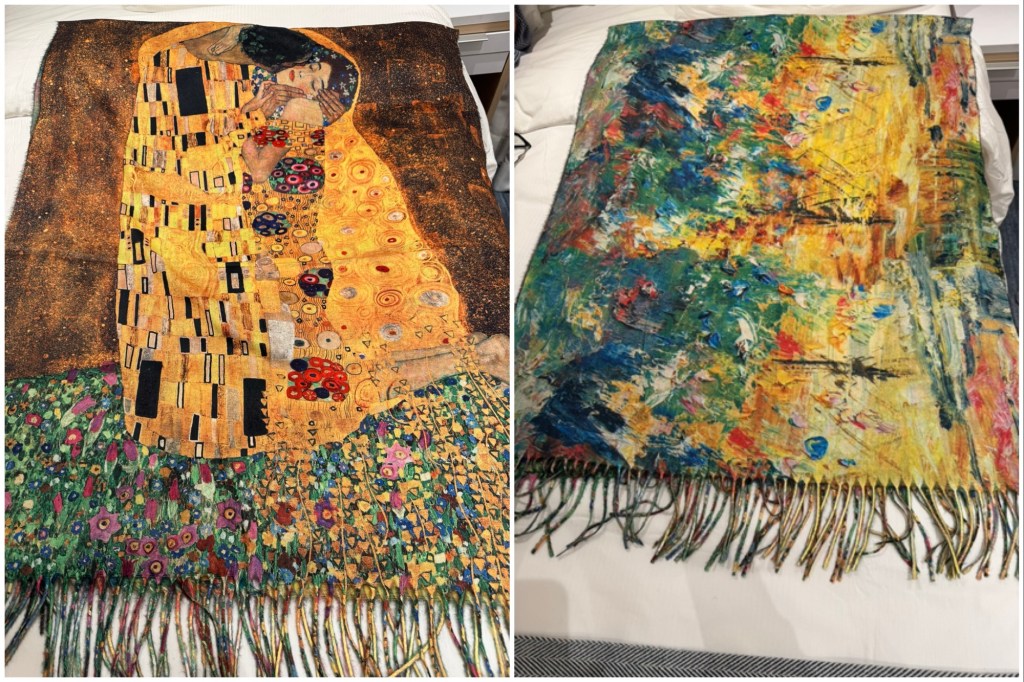
I was sidetracked by Budapest-themed tea towels, international tea towels being the traditional items that I bring back to Canada for my daughter-in-law and my friends, and then got sidetracked again by some beautiful art print scarves. I picked up one that really has nothing to do with Hungary, since it featured Austrian Gustav Klimt’s The Kiss on one side and reversed to Van Gogh’s Poppy Fields. I’ll just pretend I bought it in Vienna.
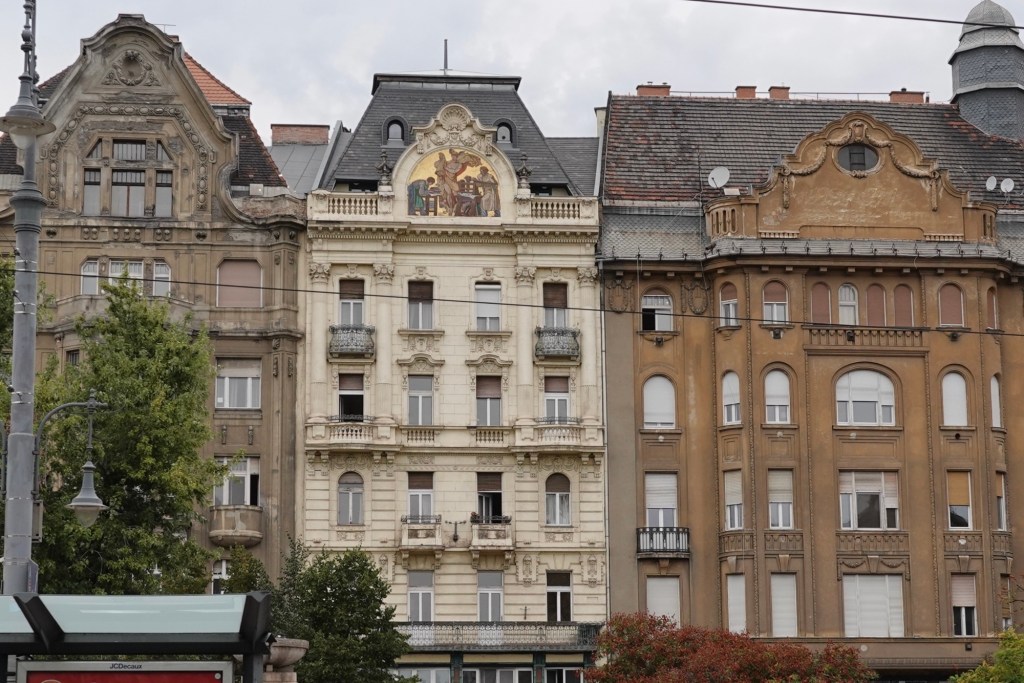
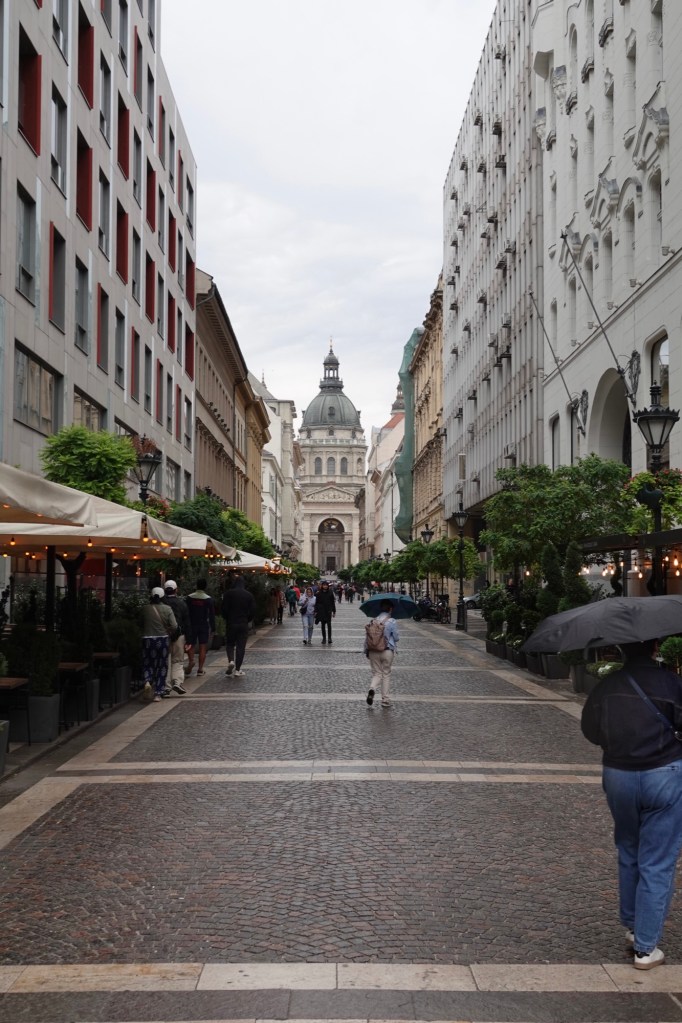
En route back to the ship, sidetracked only for a cone of gelato, we walked through a gorgeous pedestrian mall lined by breathtaking architecture.

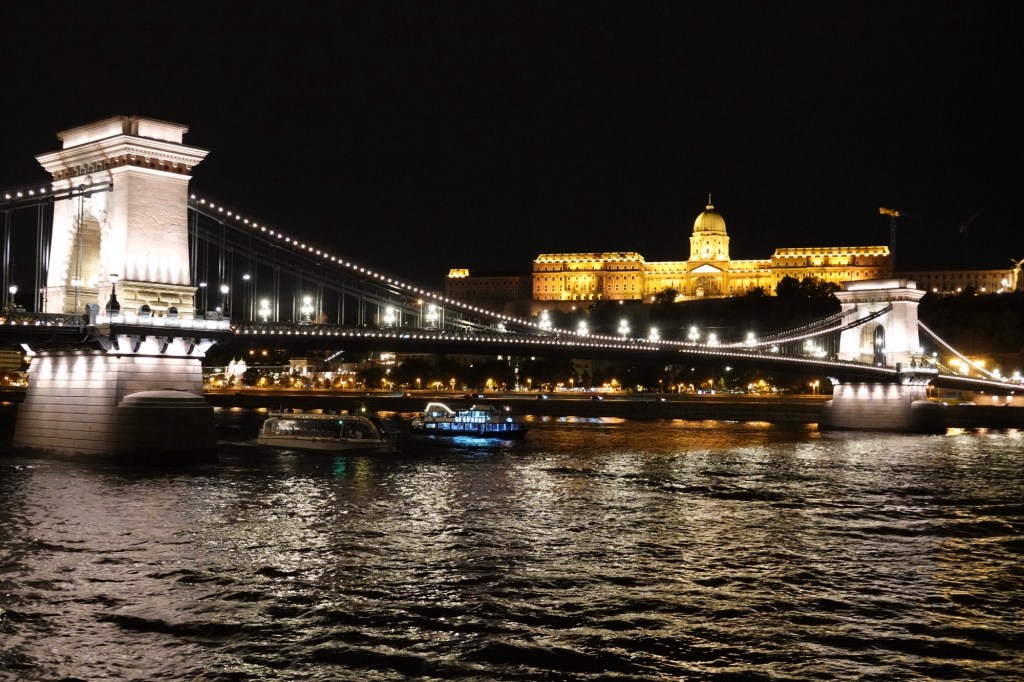
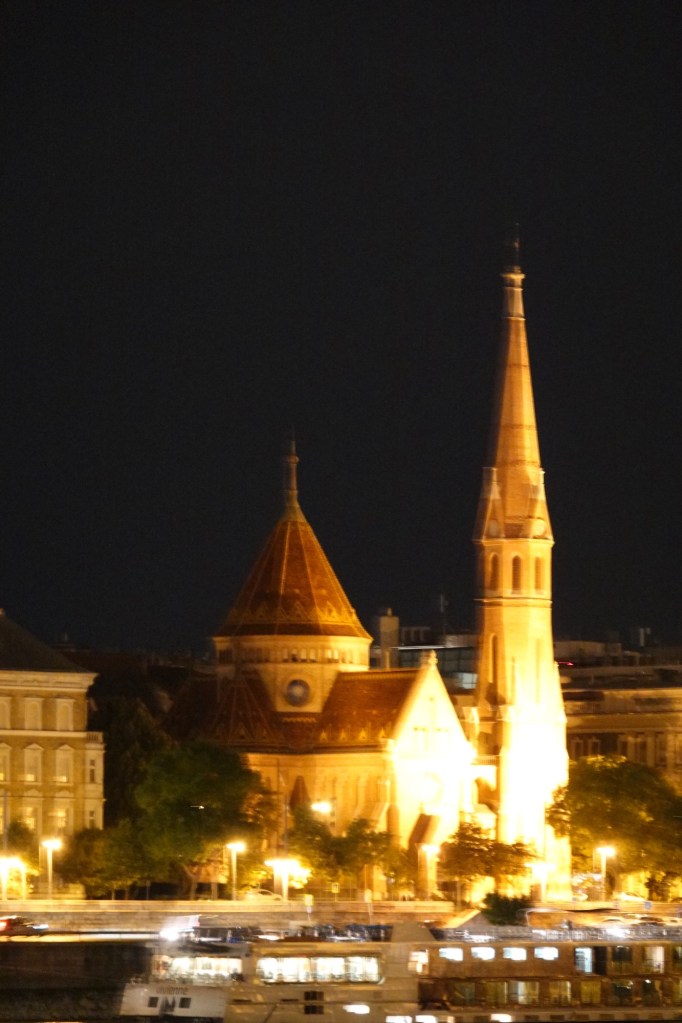
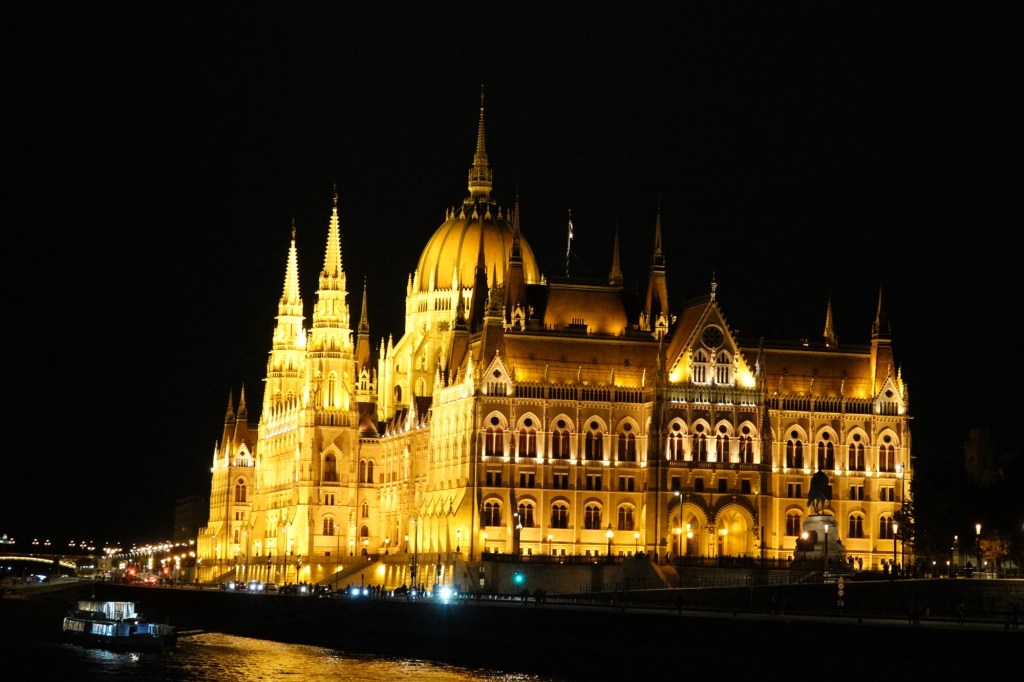
Our sail-away under Budapest’s sparkling lights was accompanied by a glass of Tokay, Hungary’s iconic sweet dessert wine.
PICS


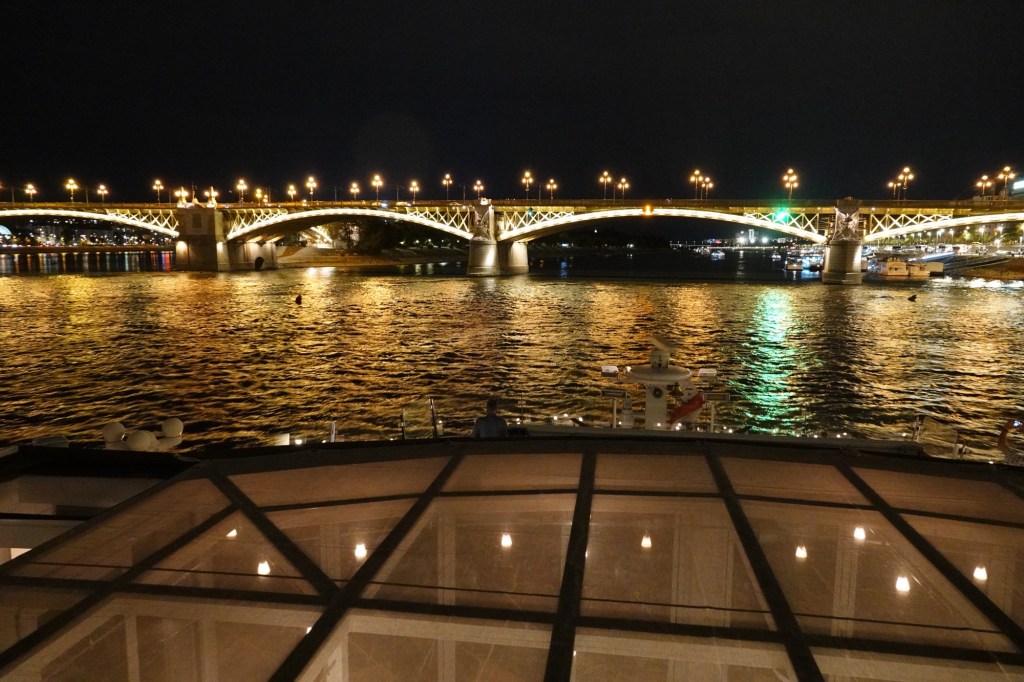
Budapest has been a treat. I can hardly wait to come back!
 Rose and Ted’s Excellent Adventure