As always, I started with the regional “pie”for breakfast. Today’s was „KÁPOSZTAS RÉTES” filled with cabbage, mushroom, leek and paprika, served with stewed tomato sauce.

A bit of history:
Hungary as a kingdom in the Carpathian Basin was founded by the Eurasian Magyars in the late 9th century; around 900CE the country became Christianized. But there were Roman Christians here in the 4th century, as we would discover on this excursion.Hungary was invaded in 1241 by Ghengis Khan, rebuilt, taken over by the Ottomans 300 years later, and eventually became part of the Habsburg Empire before becoming independent again – although with much altered borders – after WWI.
It’s a turbulent history.
We’re docked in Mohács, site of the battle in 1526 that saw the Kingdom of Hungary defeated by the Ottoman Empire under Suleiman the Magnificent.
Mohács is also the site of the “Second Battle of Mohács” in 1687 when the Ottomans were decisively defeated by the forces of Leopold I, bringing a re-established Kingdom of Hungary into what would become known as the mighty Habsburg Austro-Hungarian Empire until its dissolution after WWI.
Until the end of World War II, Danube Swabians (like my mom!) comprised the majority of the inhabitants in this area – called locally Stifolder, because their ancestors came in the 17th and 18th centuries from Fulda. They were largely here by invitation from Empress Maria Theresia, as a way to restart viticulture and agriculture after the defeat of the Ottomans. Most of those former German settlers – exactly mirroring my mother’s situation – were expelled to Allied-occupied Germany and Austria in 1945-1948, in accordance with the 1945 Potsdam Agreement.
In fact, we’re docked just 100km/62 miles from my mother’s birthplace.
Nonetheless, we were not offered a tour in Mohács, where apparently today there is not much to see beyond a church and the battle monument.
Instead, we were taken to Pécs.
Pécs is another UNESCO World Heritage Site, which is something Viking seeks out on their itineraries. It’s almost surprising that this is only our second one on this trip, but that speaks at least in part to the ravages of war in Eastern Europe that destroyed many wonderful places even as it devastated the peoples of these countries.
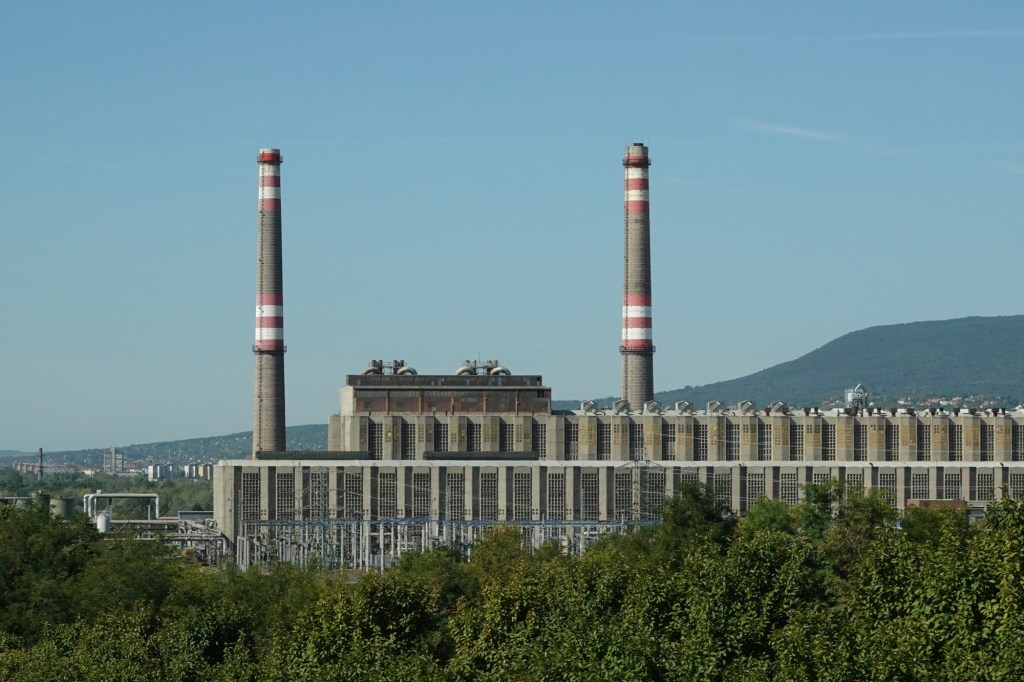
As we approached Pécs, we passed huge stainless steel pipes leading from what was originally a coal fired generating station. Those pipes still carry heat via steam throughout the city. They were erected during the Soviet eta when it really didn’t matter whether things looked good as long as they worked. The power plant has since been converted to use bio mass instead of coal.

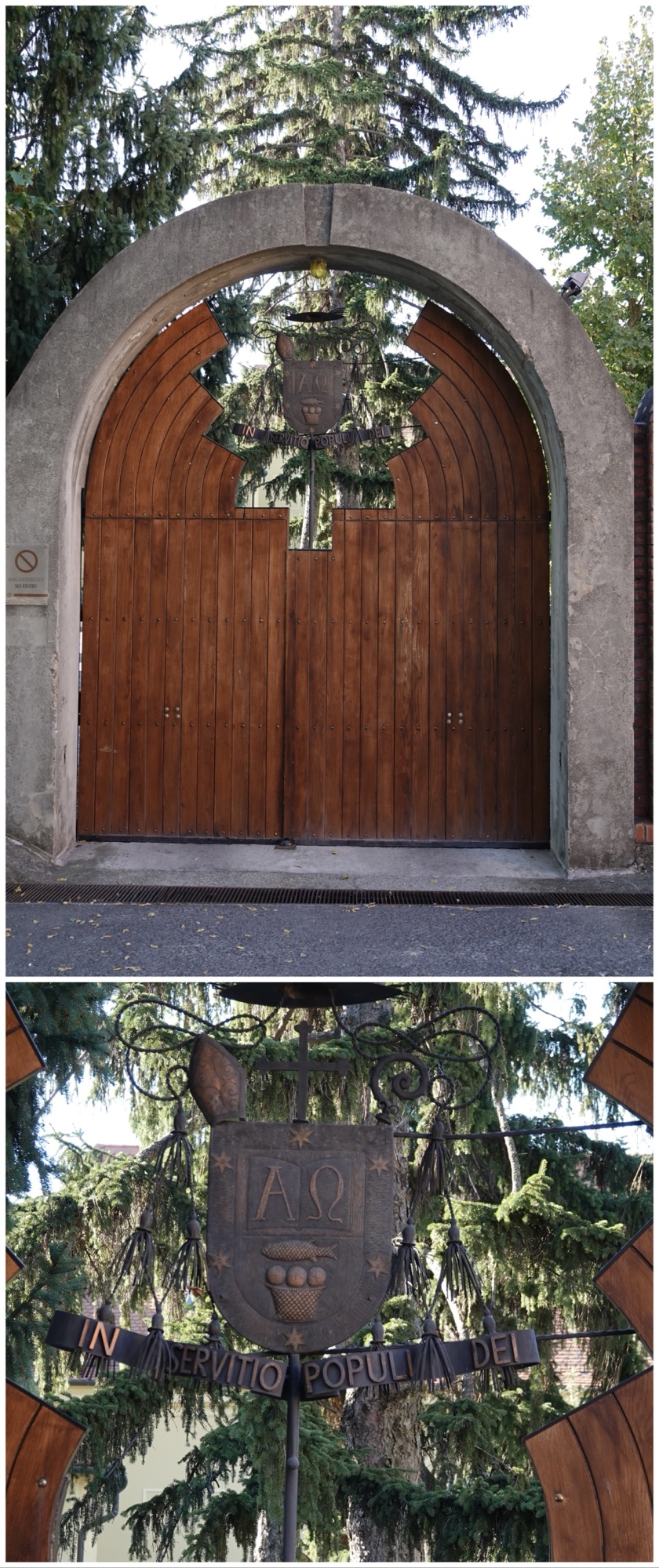
We strolled inside the old city walls , where the buildings all belong to the Bishopric of Pécs. The bishop still lives here in the Bishop’s Residence.
The shield on the gate has a Latin inscription that translates to “in the service of the people of God”.
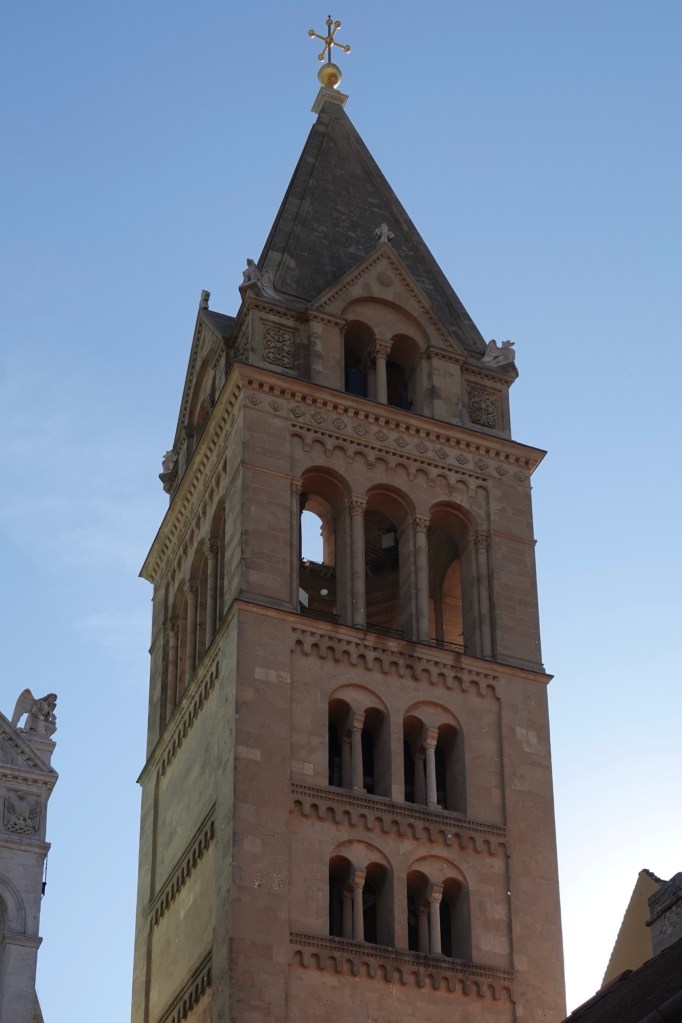
Pecs cathedral, dedicated to Saints Peter and Paul, was erected on the site of a 4th century early Christian church. The first bishopric here was founded in the year 1009 CE.
The cathedral is unique for its four towers. The two towers on the west side of the Cathedral (below) are the oldest portion of the building.

Under the Turkish occupation (1543-1686) the cathedral was not destroyed, but instead used as a mosque while Islamic mosques were being built. Once mosques had been constructed, this building was used for storage. After the defeat of the Ottomans, successive bishops oversaw renovations in a mix of styles; it regained its original Romanesque form during the restaurations from 1882 to 1891 under the direction of architect Friedrich von Schmidt.
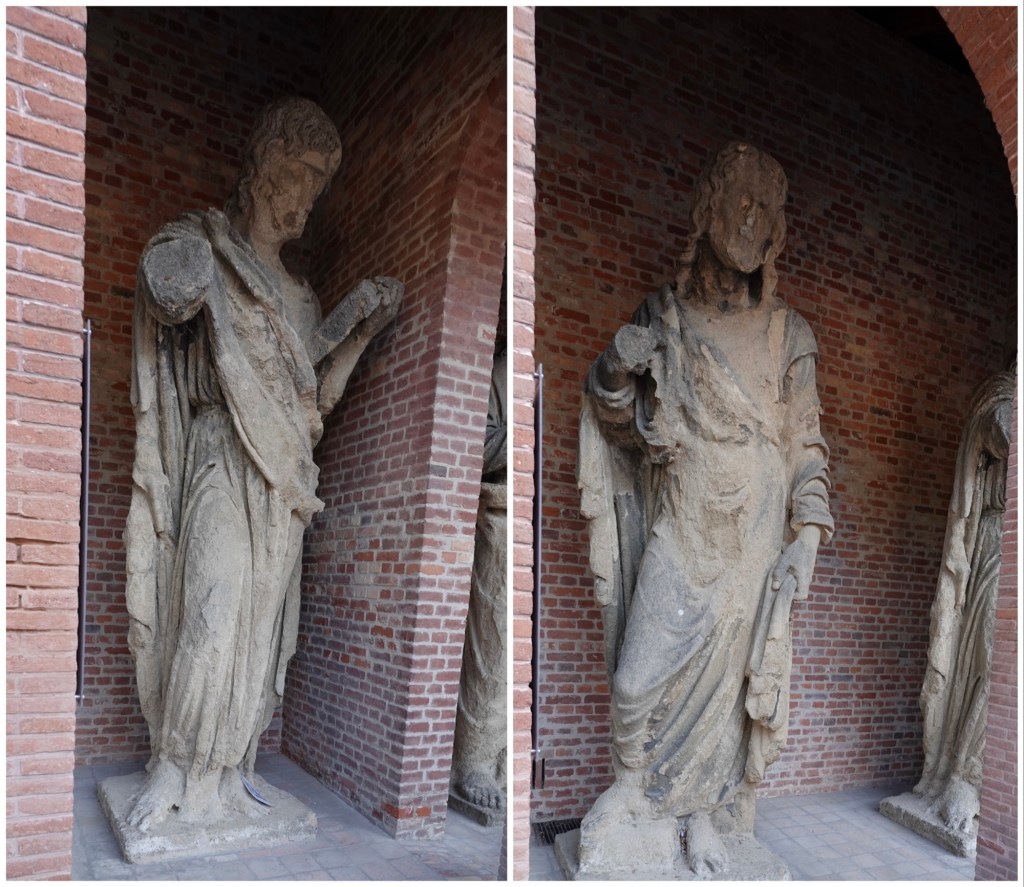
There are 12 sandstone statues of the apostles under arches beside the parking lot. They were carved in the mid 19th century, and are very eroded because they were on top of the church for many years, moved only in the 1960s.
The current façade of the church was restored in the middle of the 19th century.

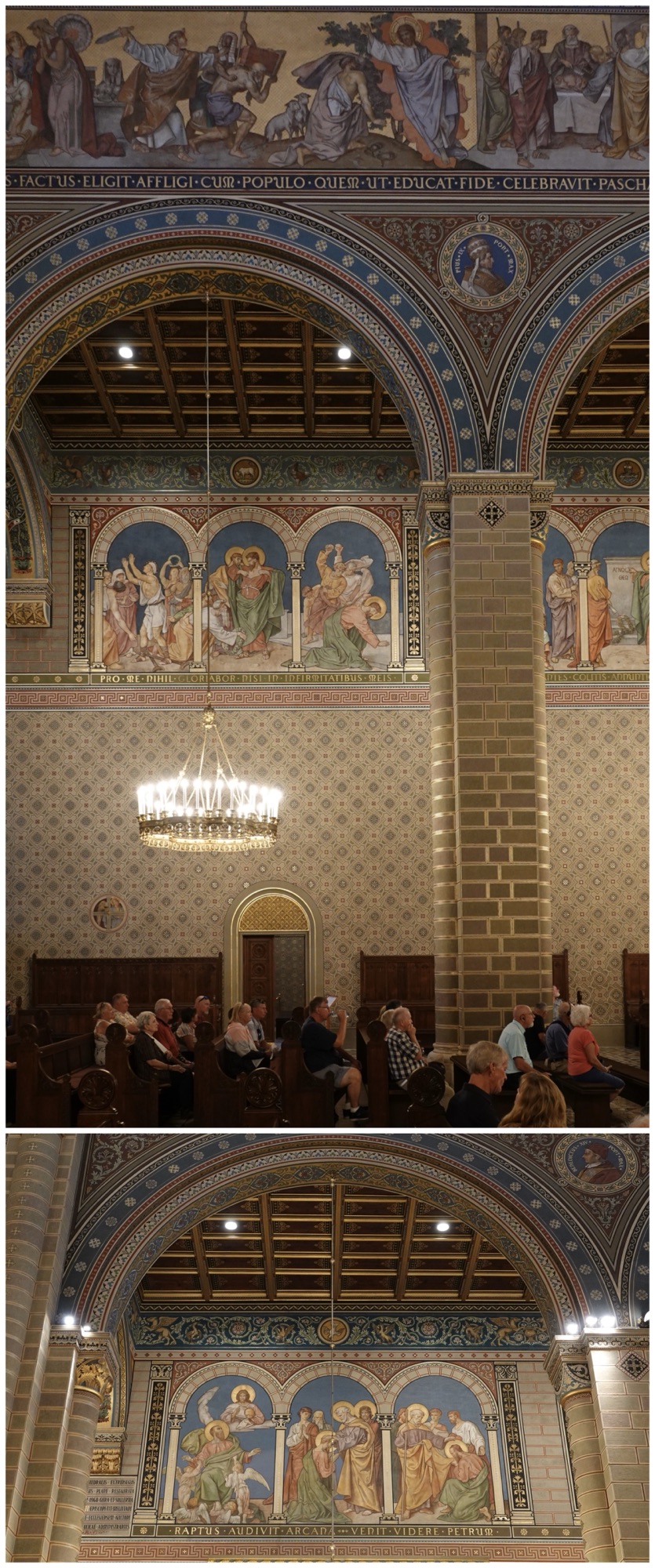
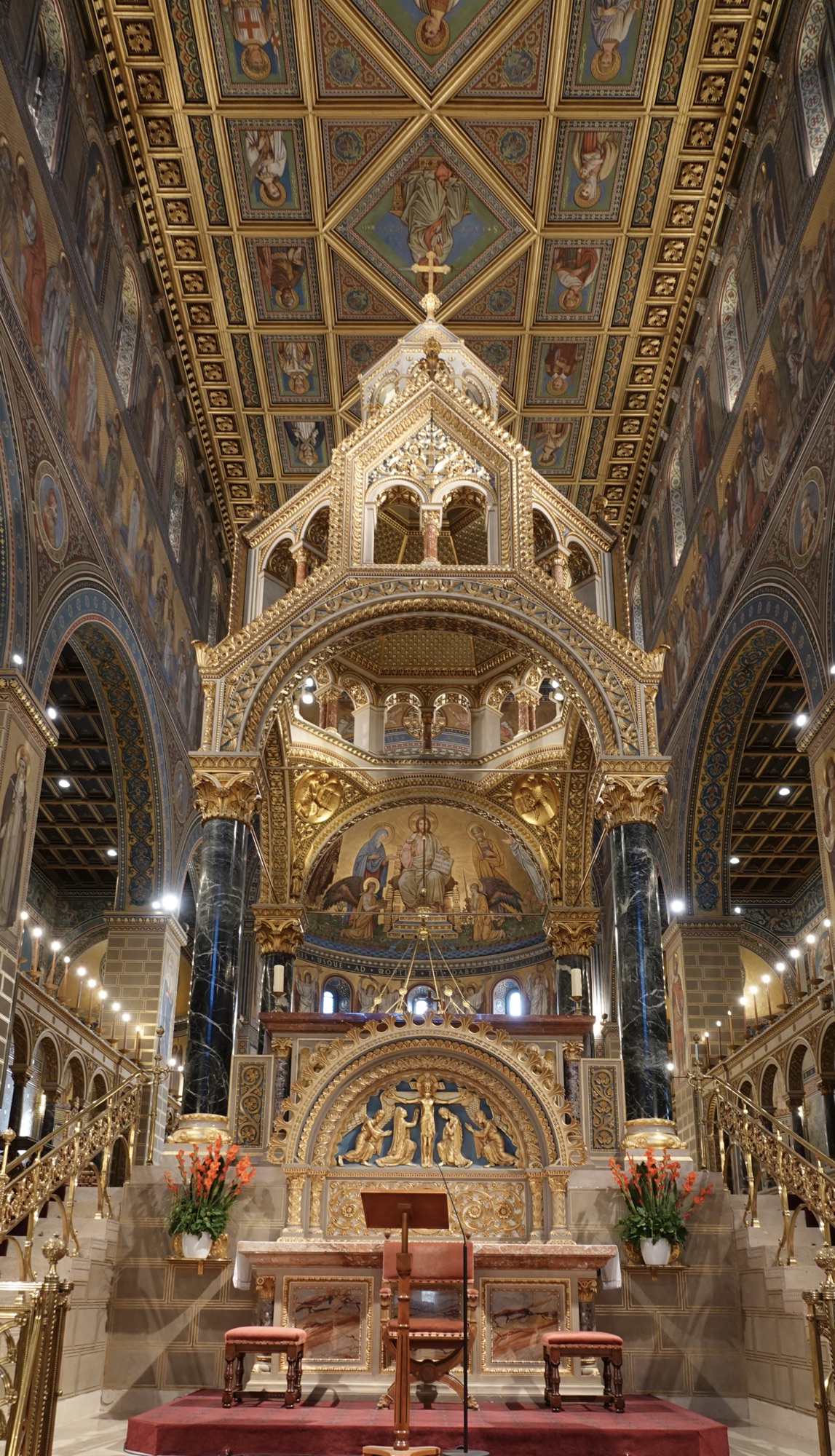
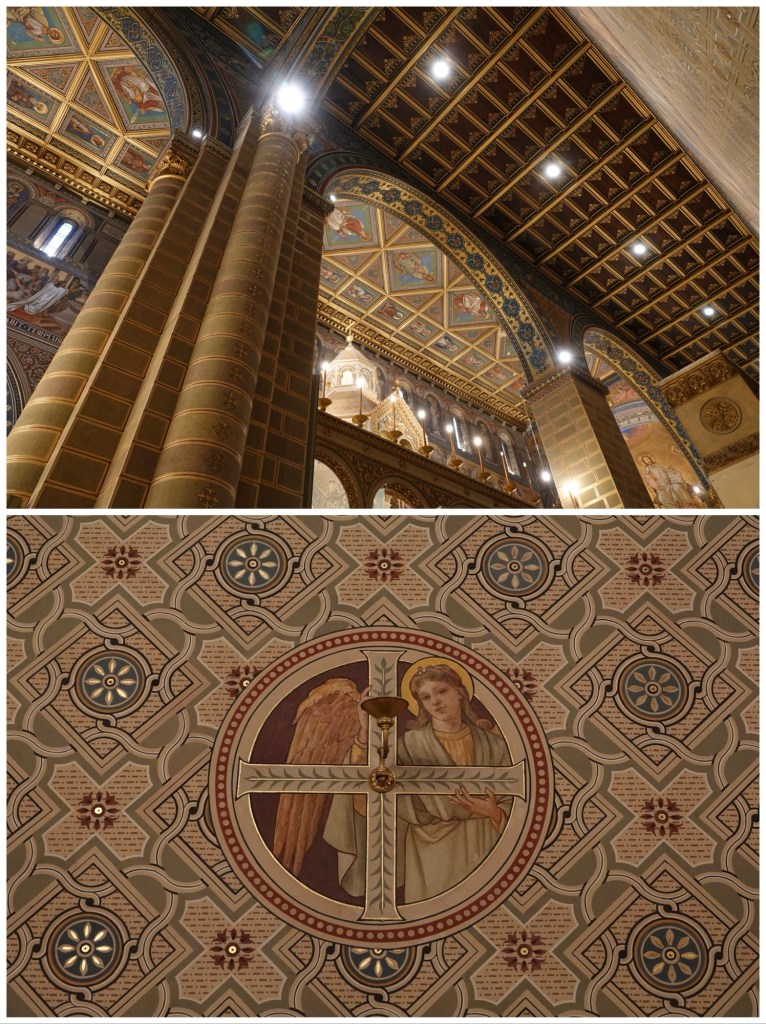
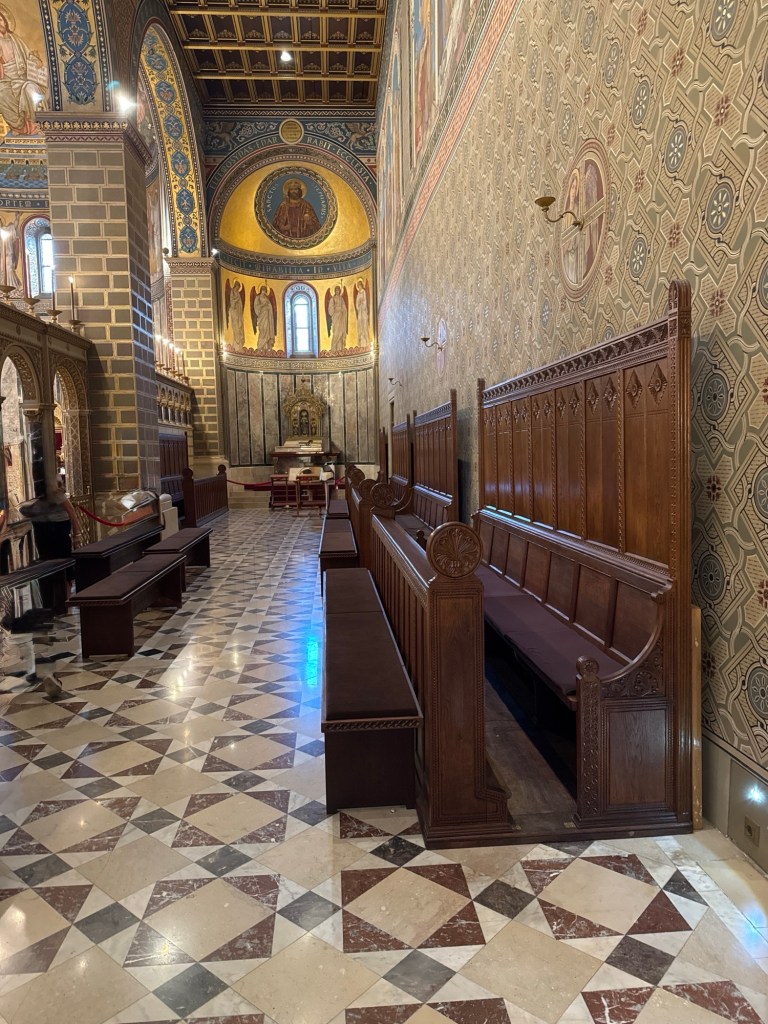
The interior of the church is beautifully decorated much in the mode of Saint Matthias on Fisherman’s Bastion in Budapest, although this church is better lit. There are marble columns, richly patterned walls in beautiful muted colors, trompe l’oeil features on walls that look like bas reliefs and windows, and on pillars that are intended to look like bricks.
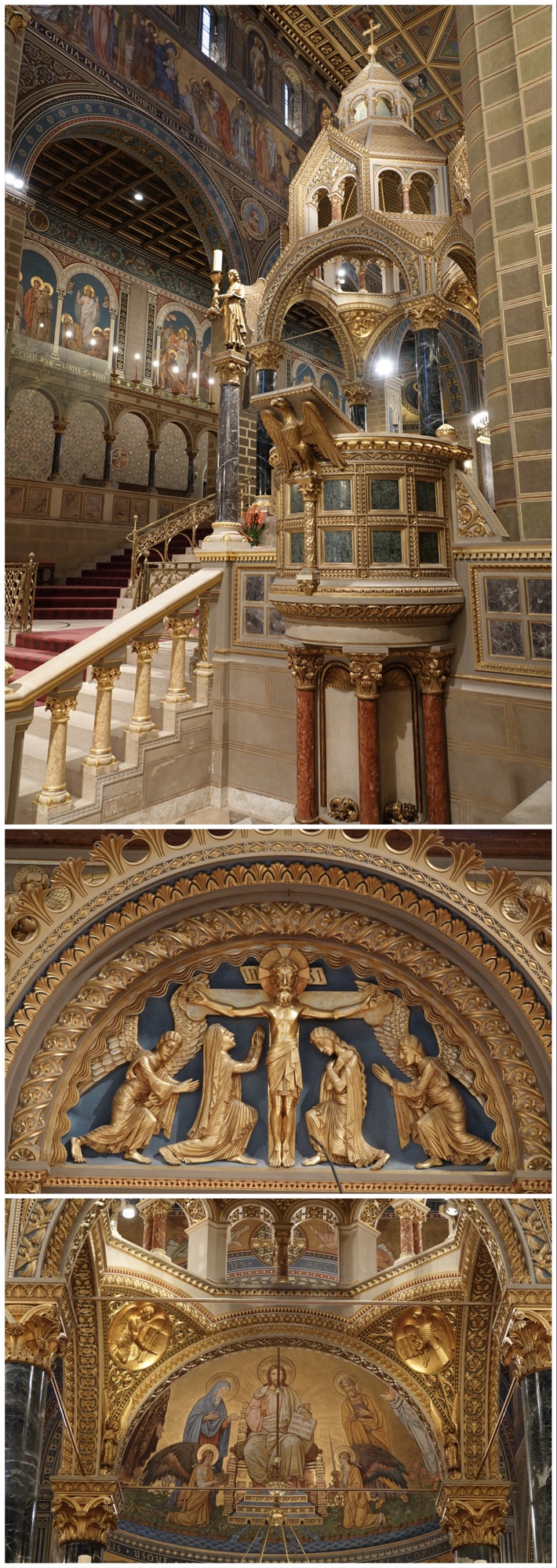
The church has what is fairly unusual for a Roman Catholic Church: a covered main altar with four pillars around it.
All of the paintings on the walls that look like incredible silk wallpaper is hand painted. It looks so perfectly fresh because the most recent repainting was done in the 1960s, using stencils to aid the painters.
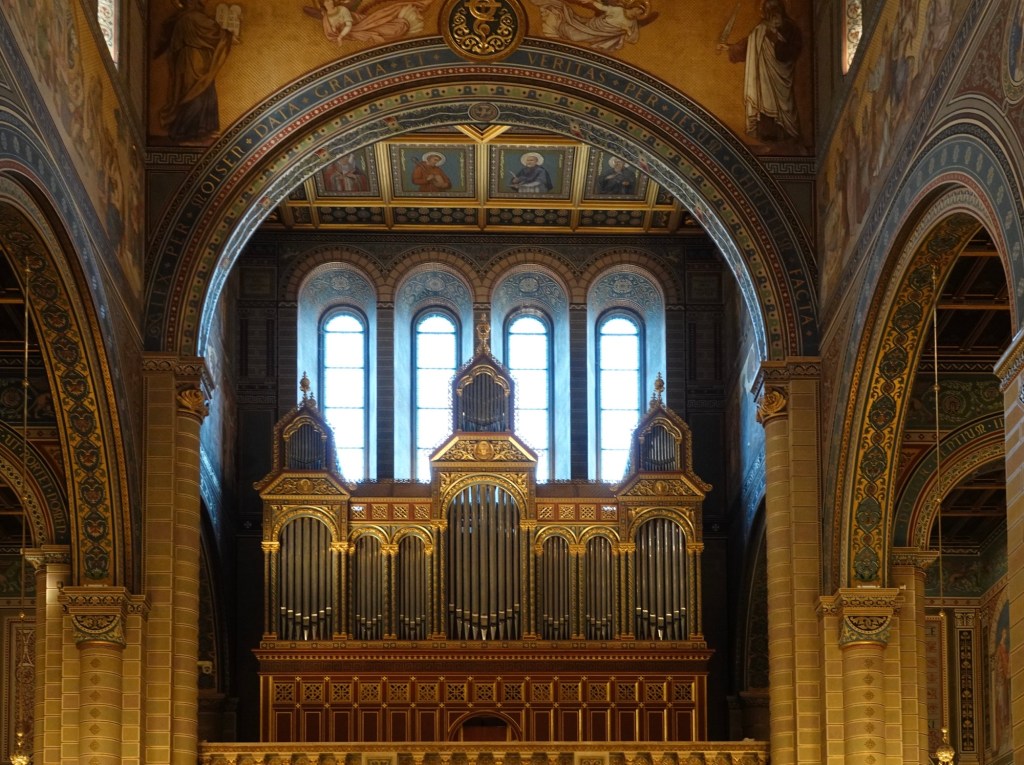
The pipe organ with 6601 pipes is one of the largest in southern Hungary.
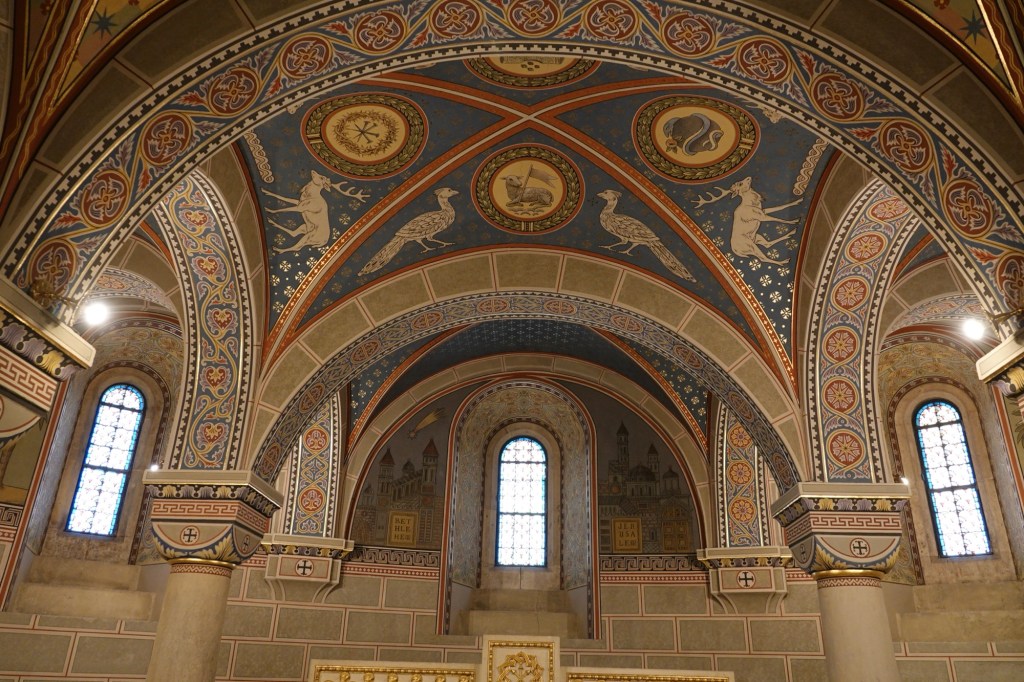
The foundation/crypt of today’s Cathedral is the original early Christian church from around the fourth century.
We had the chance to walk into the area underneath the church, which is the original Christian church here dating from the fourth century.

On the way down into the crypt are three-dimensional reliefs created by sculptor György Zala. He made them as copies of the original 11th century reliefs that are exhibited in the Dom Museum near the cathedral.

Walking into the underground, it immediately became noticeably cooler. Our guide opined that the chill we were feeling was simply the very special atmosphere of being in an ancient place of worship.
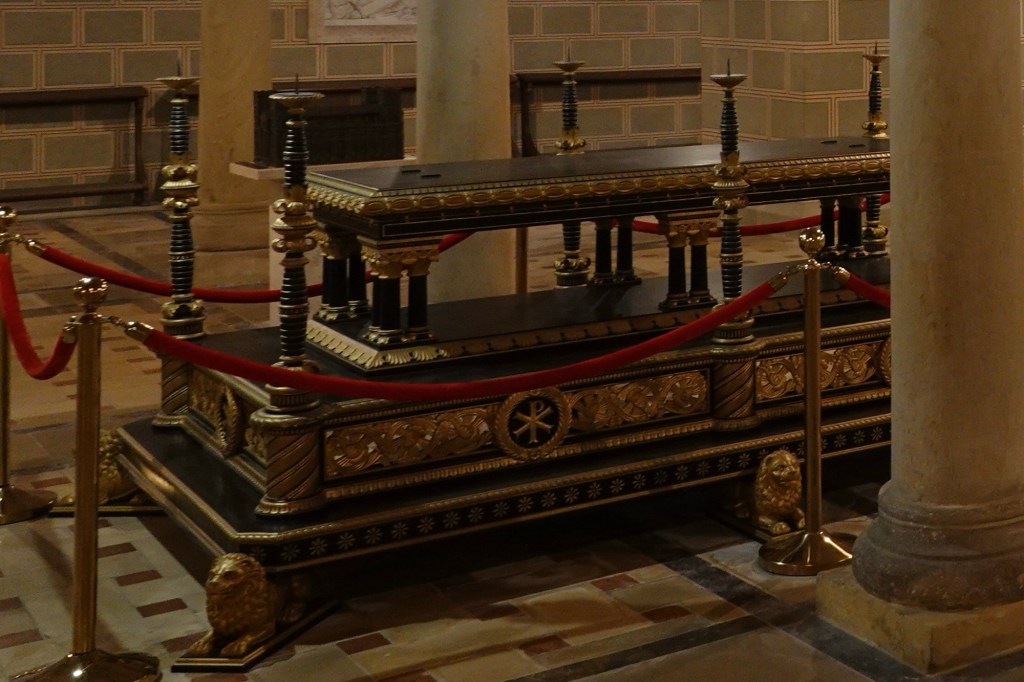
In the centre of the undercroft is a stand intended to hold a coffin. The most important religious figures here, including bishops, would have their funerals in this undercroft with their coffin placed on this stand.
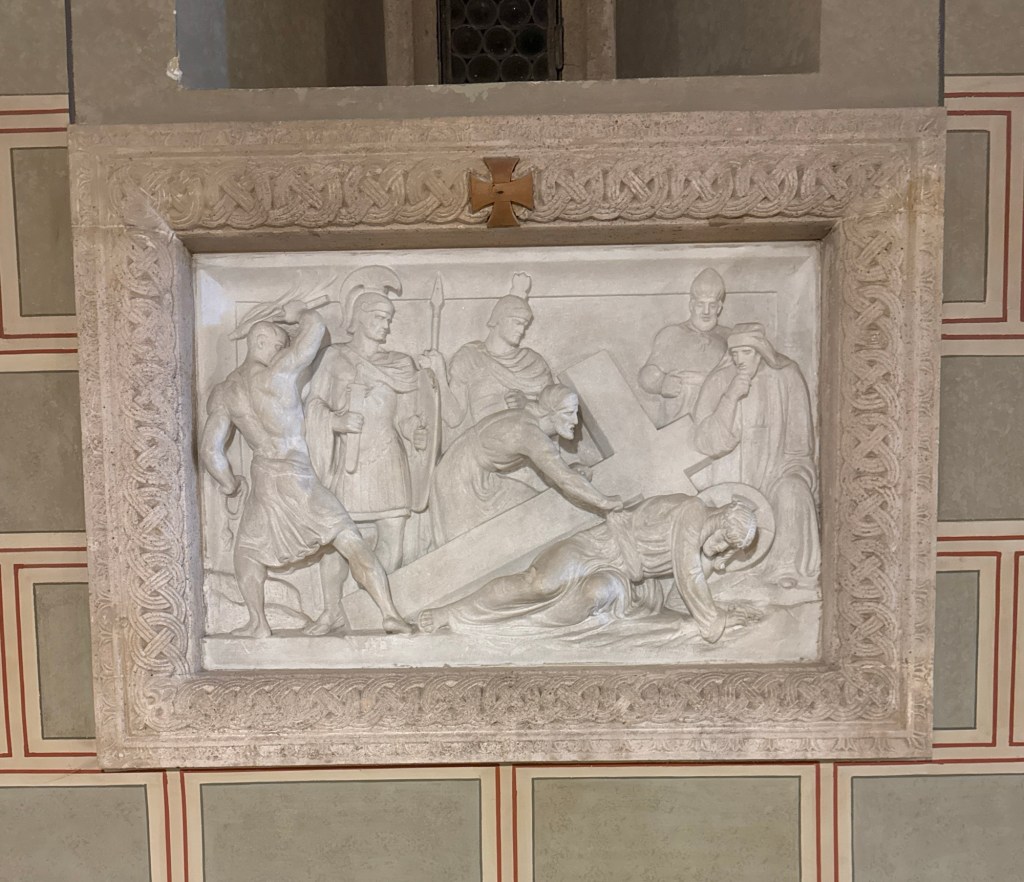
The marble stations of the Cross were re-carved during the restoration in the early 19th century.
We were also able to walk up one level above the main floor of the cathedral to get a better view into the altar area which was cordoned off on the main level…

…and a small side chapel with its own altar and another smaller pipe organ.
As we exited the cathedral and passed by the stunning southern façade, a huge stage was being set up for a music festival. Partly because this is a university city, there are festivals all the time.
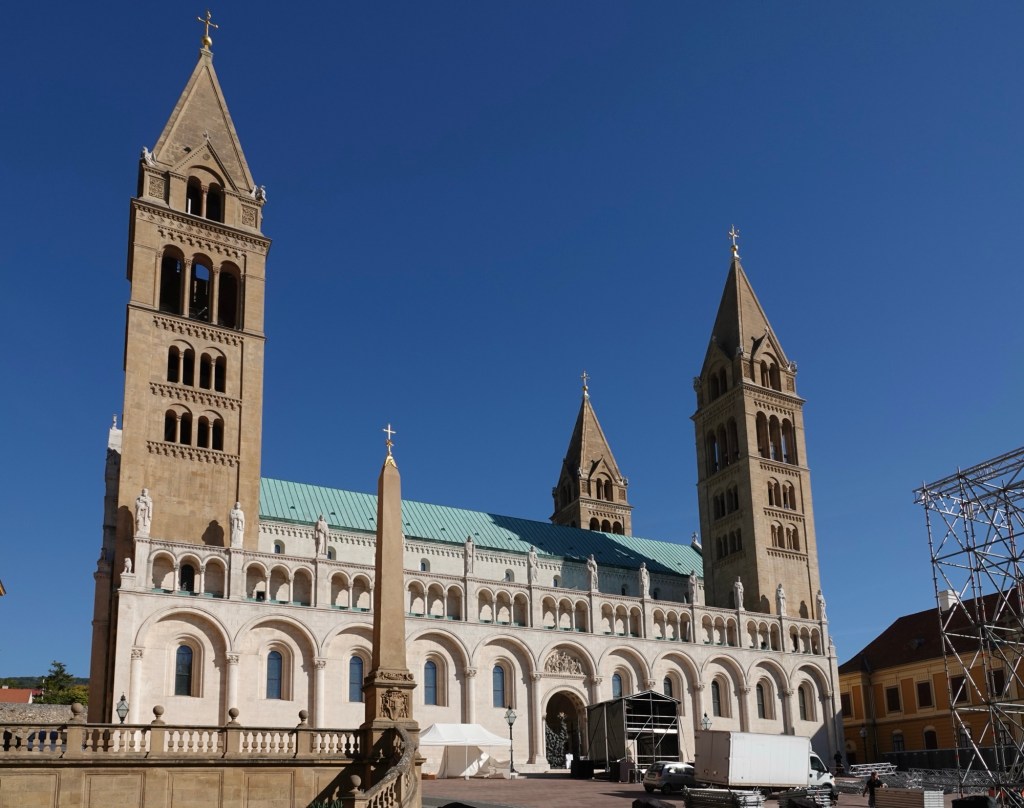
Even though the cathedral looks like it is made out of two completely different kinds of stone, one deep yellow and one white, it is actually the same stone but different ages by several centuries.
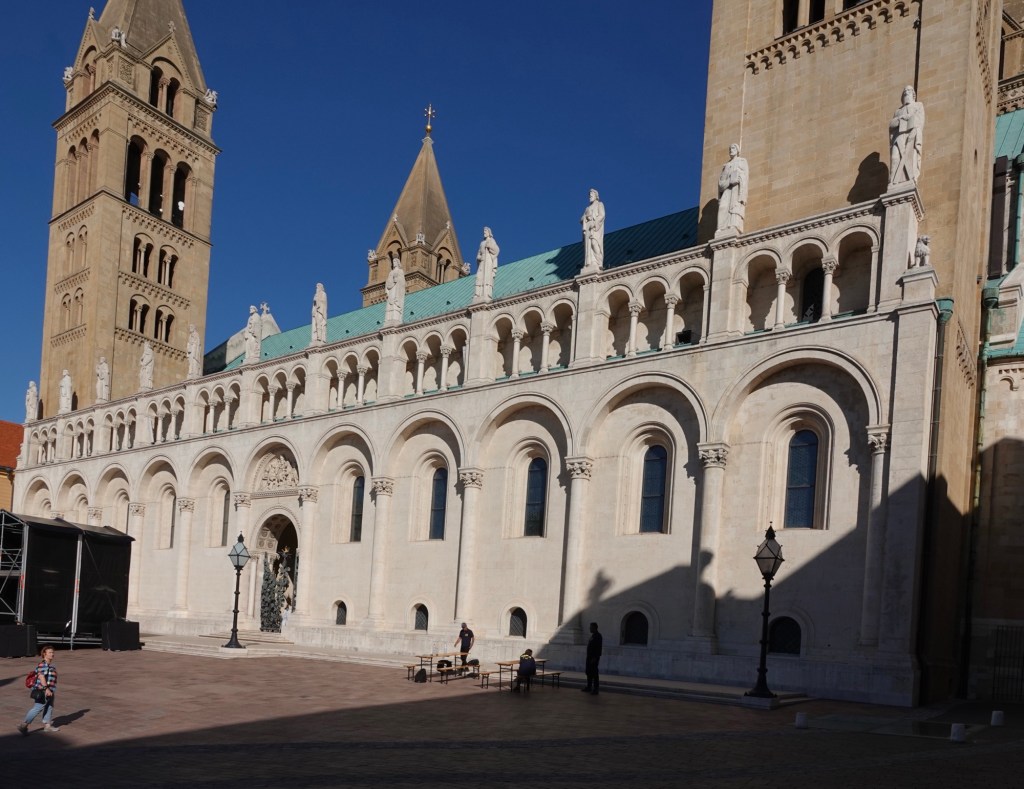
The relief over the entry depicts Mary, who is Hungary’s patron saint.

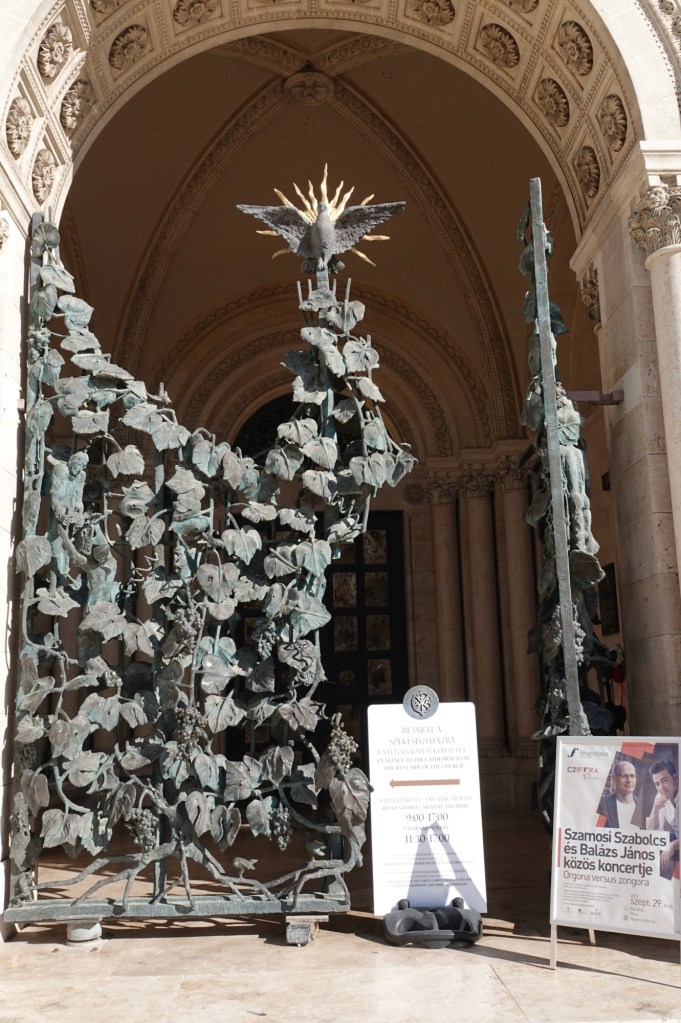
The central gate of the south façade is really quite unique. It is made of intertwined grape leaves. At the top of the gate is the Holy Spirit depicted as a dove with gold sunshine above it.

A statue of Franz Liszt is located on the balcony ofthe Bishop’s Residence. The composer was a close friend of the Bishop, and occasionally played concerts on the Cathedral organ.
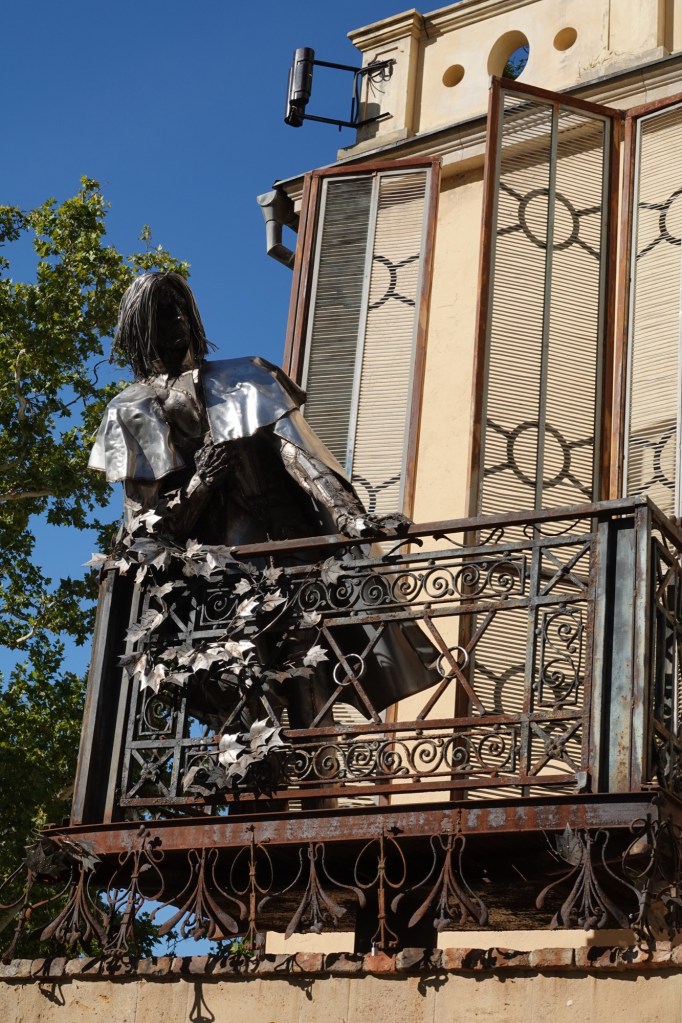
The bishop’s residence is painted deep yellow with a central white section featuring a steeple and cross.

We walked around the corner from the cathedral to Cella Septichora, a historic Christian necropolis awarded UNESCO World Heritage status in 2000. It was built in the 4th century as a funeral basilica, but was never completed. When the Huns arrived, they drove out the early Christian Romans.
This is the largest Roman necropolis outside of Italy.
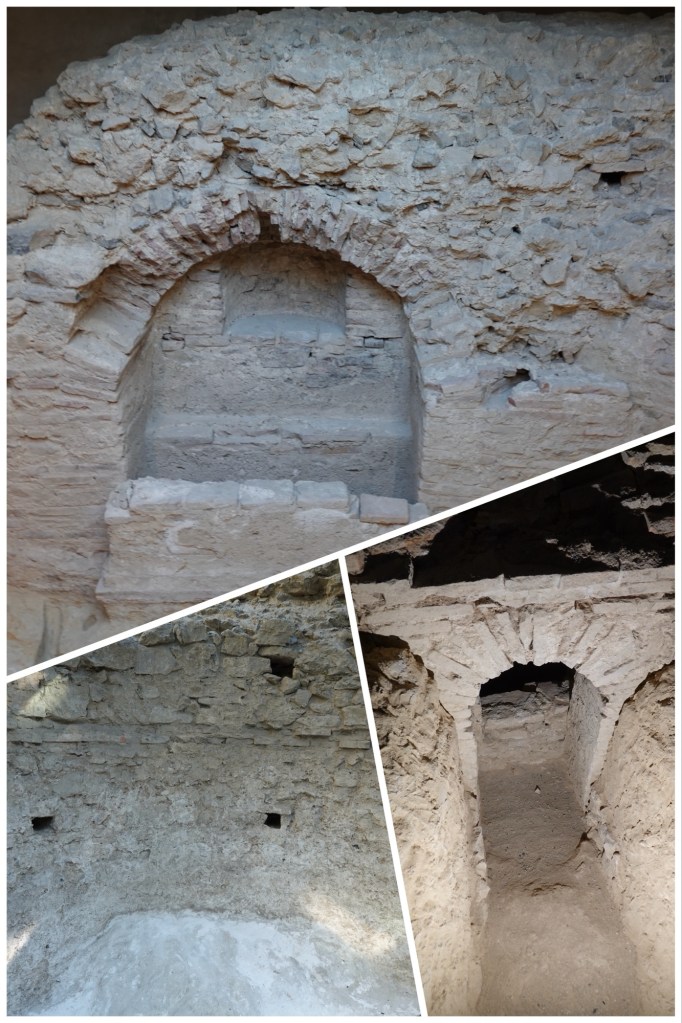
Although it is now underground catacombs, it would not originally have been. The area was simply gradually covered by earth over the centuries. The ruins were first uncovered in the 17th century during one of the renovations of the cathedral. Actual archeological excavation began in the 1960s.
Our last stop was in Széchenyi Square, the city’s main plaza, where we were able to explore on our own.
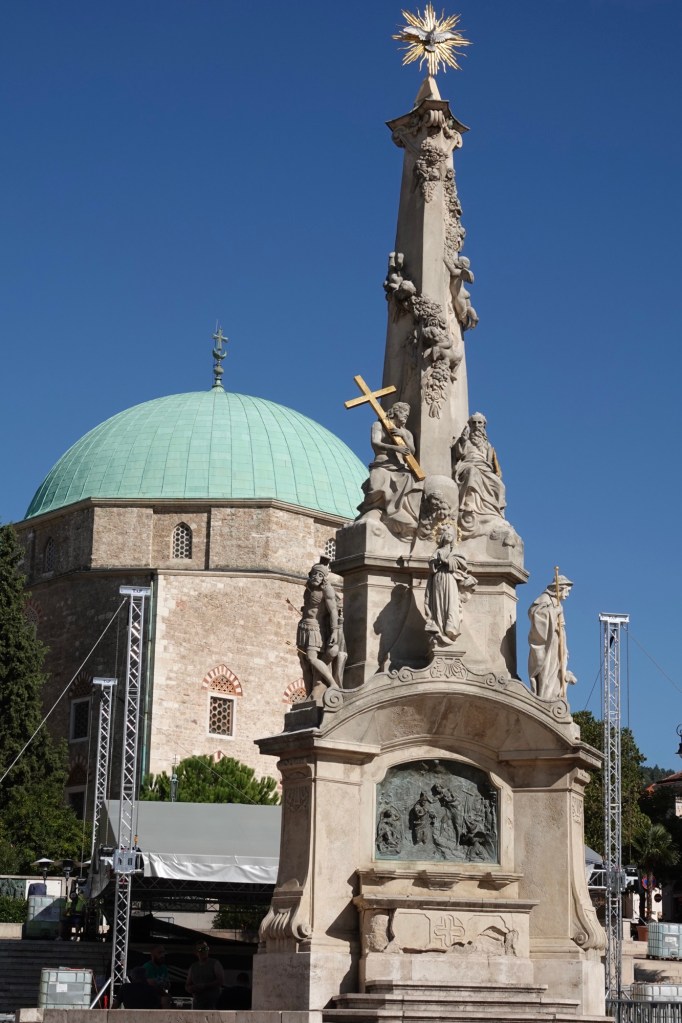
This is the location of a 16th century mosque that is now a Roman Catholic Church. On top of the dome can be seen both the Islamic and Christian symbols.

Colourful Zsolnay tiles decorate some of the buildings. These tiles were made here in the most important ceramic factory of the Austro-Hungarian era.
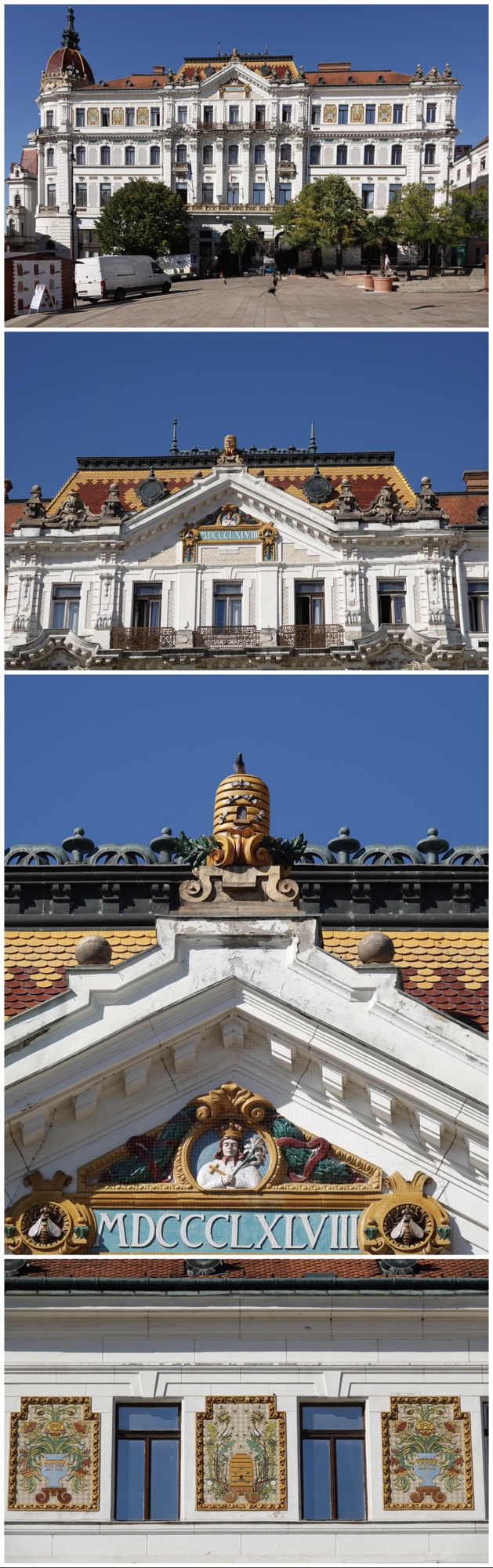
The large yellow building decorated in secession style is the City Hall.
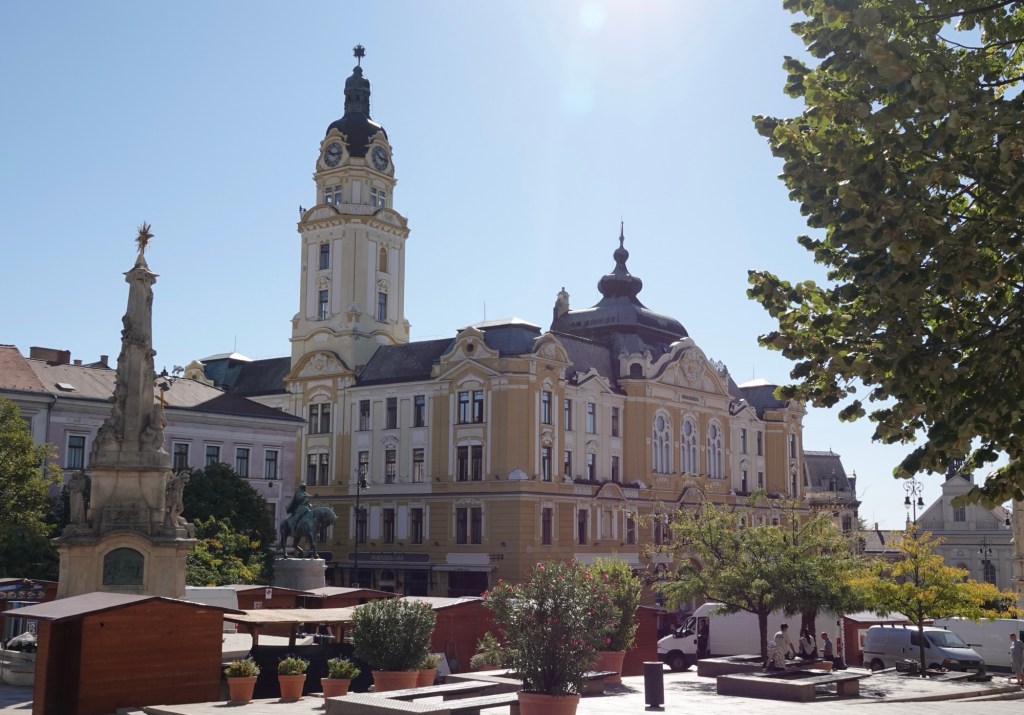
In the square is a Holy Trinity statue like the one we saw yesterday in Osijek, but slightly smaller.
Another statue in front of City Hall depicts Janos Hunyadi, the famous 15th century Hungarian warlord, on his horse.

We enjoyed our 45 minutes of free time just gawking at the ornate Habsburg era architecture.


The iridescent metal on the fountain in front of the Church of St. Sebastian is unlike anything we’ve seen before.

While a part of me wishes we had been able to spend time in Mohacs learning about the important battles there and what made it such a significant site, I understand why we were taken to Pécs instead, given the size of the city and the significance of the cathedral there.
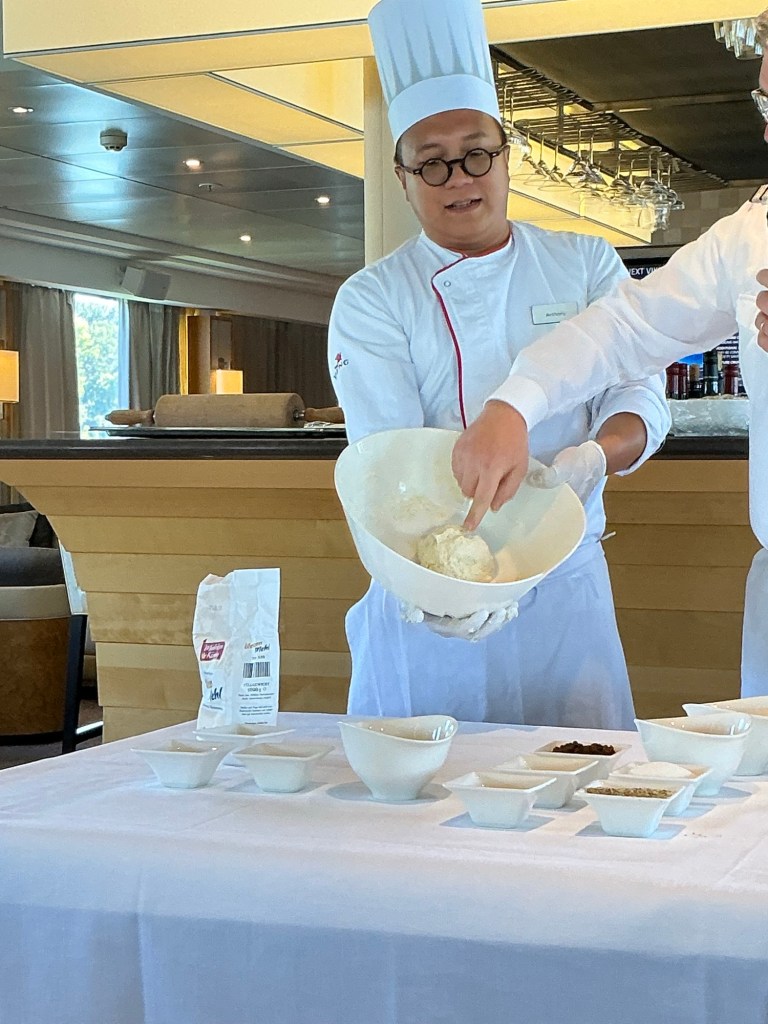
In the afternoon, while some passengers headed off on an optional wine tour, we were treated to a demonstration of making Viennese apple strudel, by our pastry chef Anthony. We got the recipe that he uses, but the very first written Viennese strudel recipe apparently dates to 1692, and is still on view in a museum in Austria.
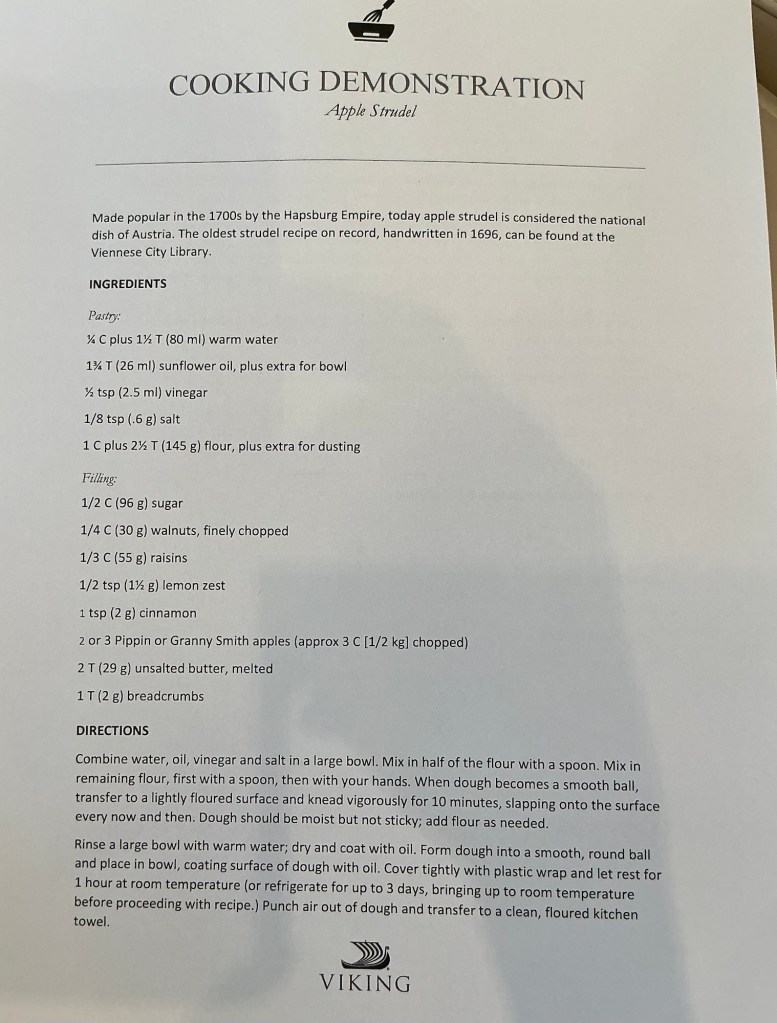
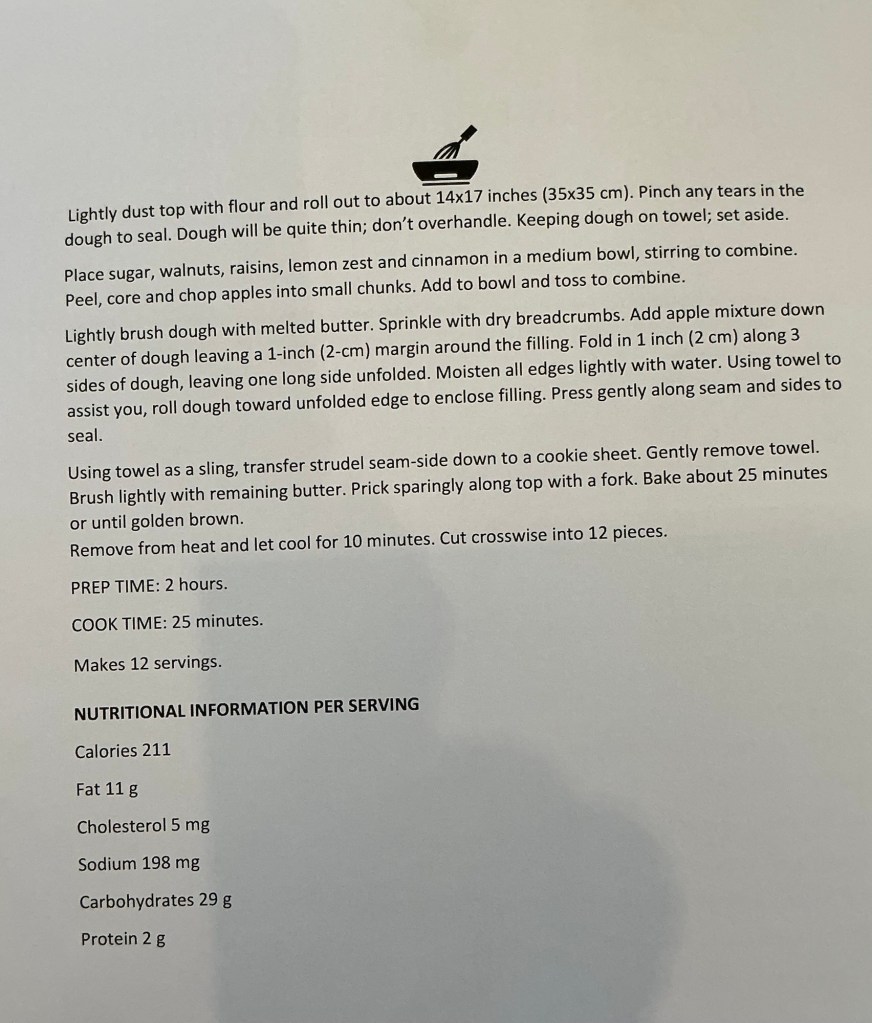
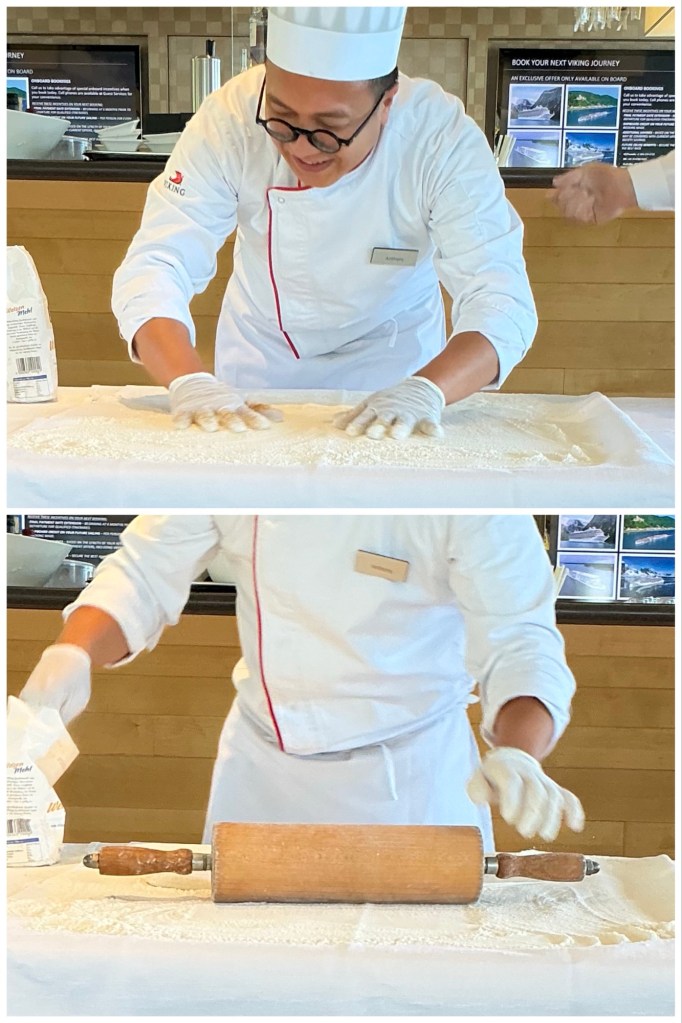
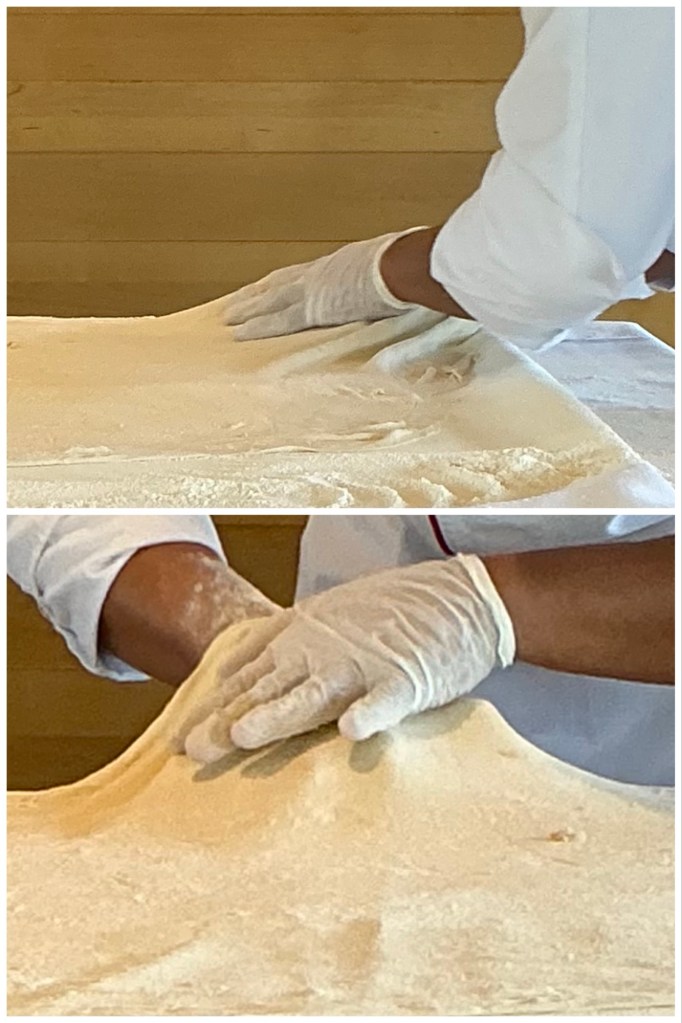
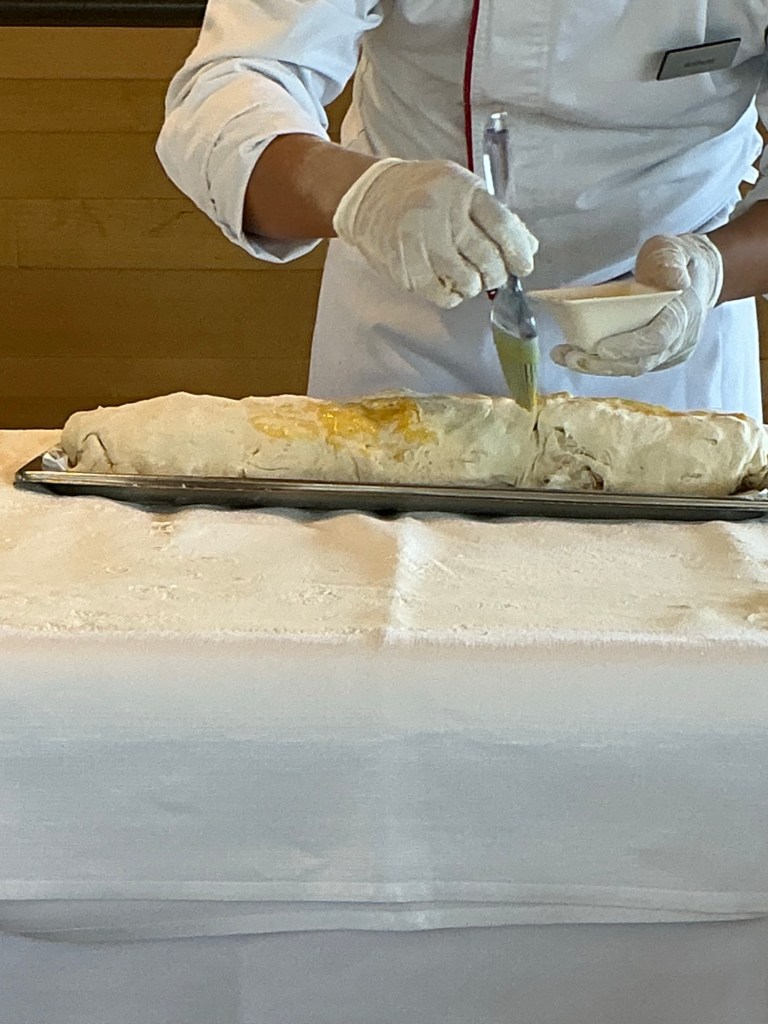
The finished product was delicious – a typical Viennese strudel. What it was NOT was my mother’s or grandmother’s strudel with their multiple layers of translucent dough separating layers of shredded fruit or vegetable filling. The difference is likely my family’s Hungarian influence.

After an afternoon spent curating photos, we had the pleasure of sharing a dinner table with Barbara from Melbourne Australia for this evening’s destination dinner accompanied by Tüzkö Cserszegi Füszeres Hungarian white wine.

It was a lovely way to end our day.
Tomorrow: Budapest!!
 Rose and Ted’s Excellent Adventure