In the afternoon, we chose a tour of the Royal Palace of Serbia, a tour called “Opulent Home and History of Country’s Royal Family”.
The royal palace here is still the private home of Crown Prince Alexander II and his family. As such, it is not generally open to the public, but Viking has arranged many “privileged access” excursions all over the world, and this is one of them.
The castle was built in the Serbian Byzantine Revival style after World War I for King Alexander and Queen Maria.
It was interesting to learn how new this royal dynasty was. The current dynasty of Serbia is not related to the Nemanjić dynasty, which ruled medieval Serbia 1166 to 1373 when the Ottomans displaced them, but rather the Karađorđević dynasty, which first began to rule in the early 19th century and remains the royal family to this day – although the royal family currently has no political role at all; their titles as Princes and Princesses are purely honorary.
The castle became the residence of President Tito before being returned to the royal family after the fall of the communist regime.

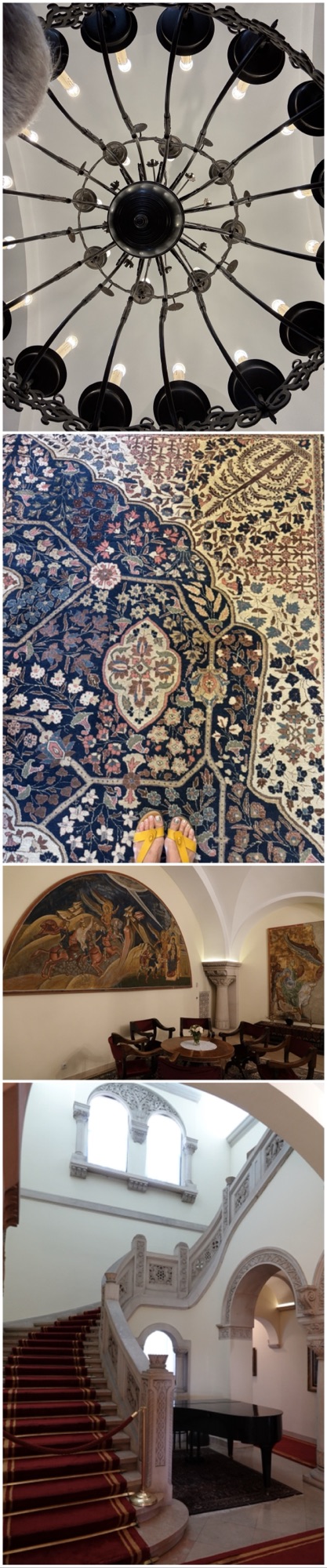
We began in the Formal Entrance Hall, paved with stone and decorated with reproductions of medieval frescoes.

It features a huge iron chandelier and gorgeous carpets over the stone floor.

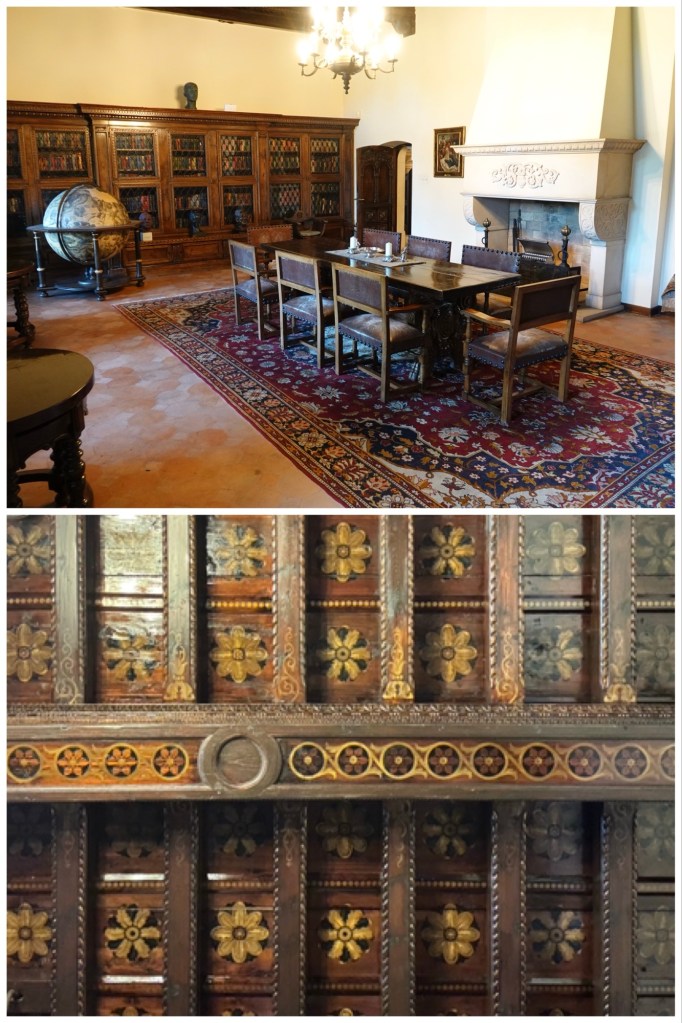
From there we entered the library, with its renaissance style wooden ceiling that was carved by the official carpenters of the Habsburgs.
In the library is a Cornelius globe, which does not show the continents and oceans, but rather the constellations as they are placed over the earth – I’m not sure which season is represented..
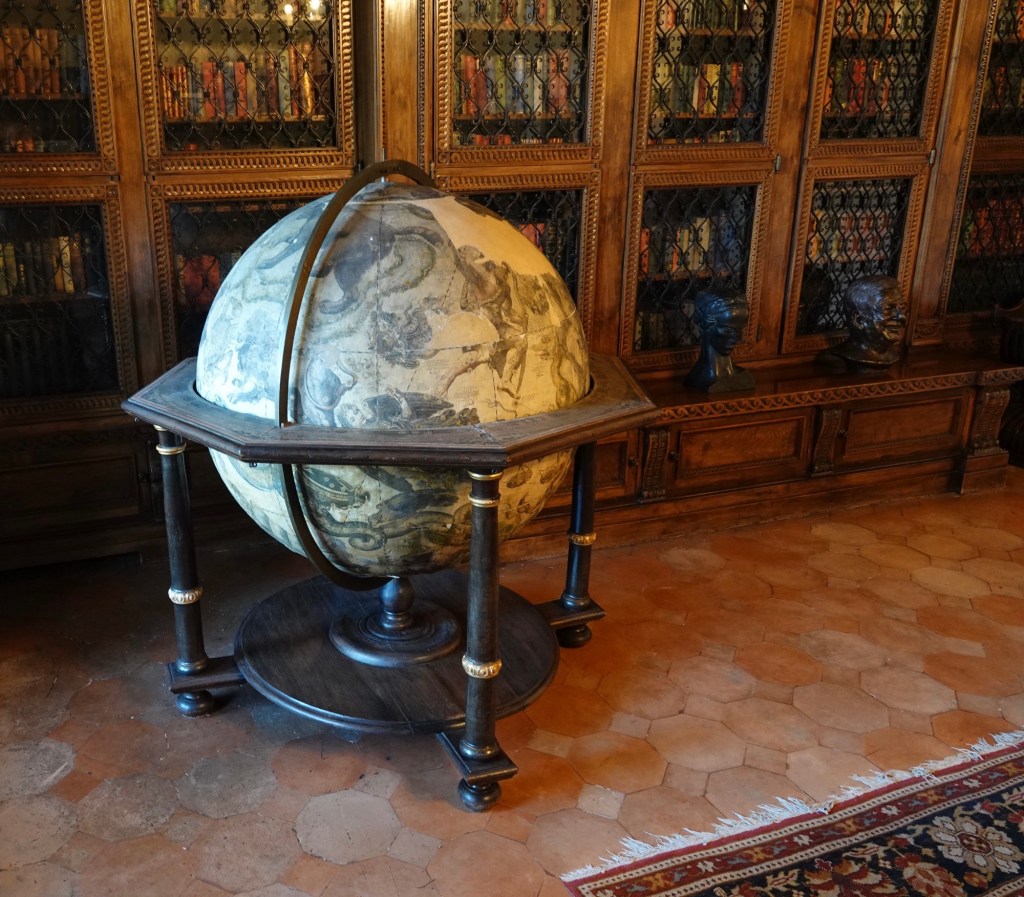
There is a bust of inventor Nicolae Tesla in pride of place, as well as photos of the royal family.

The “blue hall” is arranged in the French Baroque style, complete with large Sevres vases.


In the “golden hall” (also known as the hall of the wedding gifts), named for its golden ceiling, Viking set up a champagne reception for us!
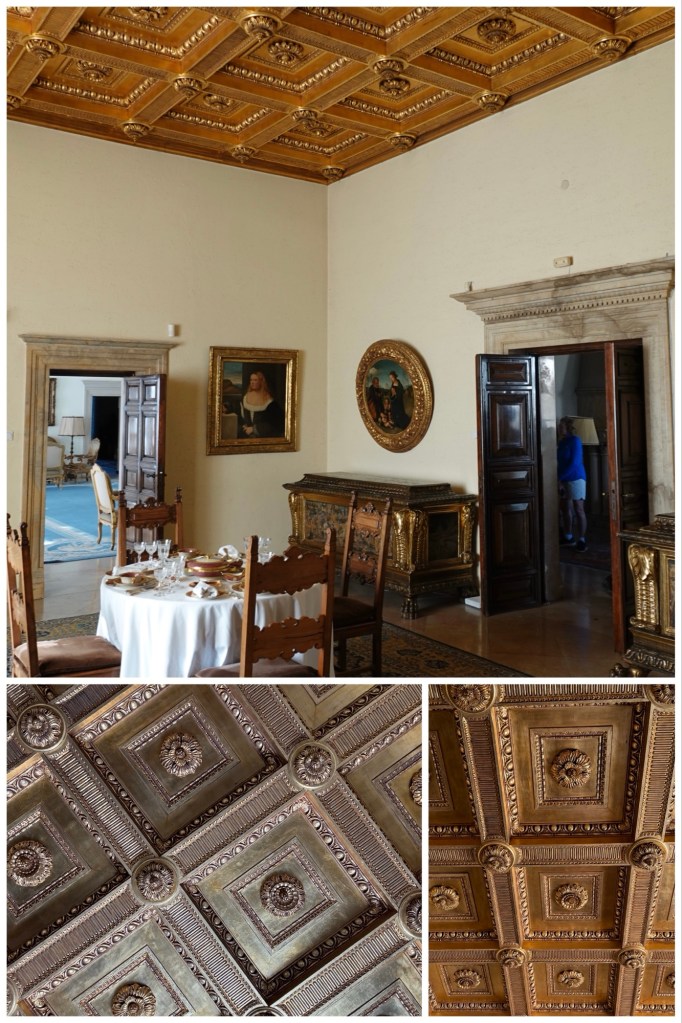
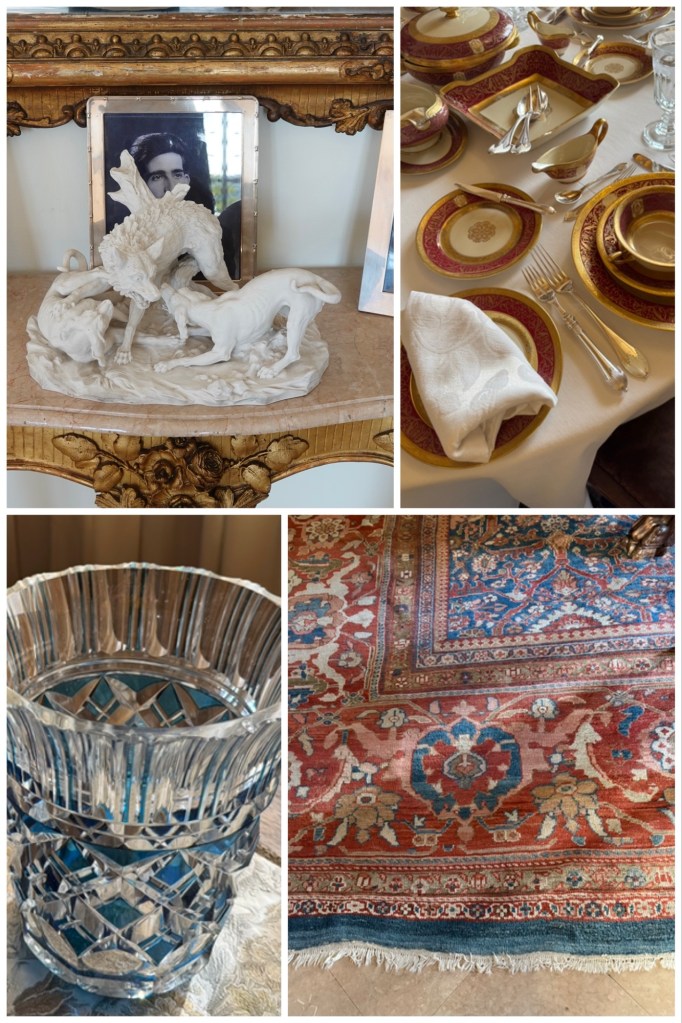

The paintings in the hall are Italian old masters, gifted to the Serbian royal family by Italy’s.

The dining room has a renaissance ceiling, French Lebrun tapestry, and beautiful carpets.


While the ground floor rooms were “official” reception spaces, we were also led down into the “basement” which was created as private family area.
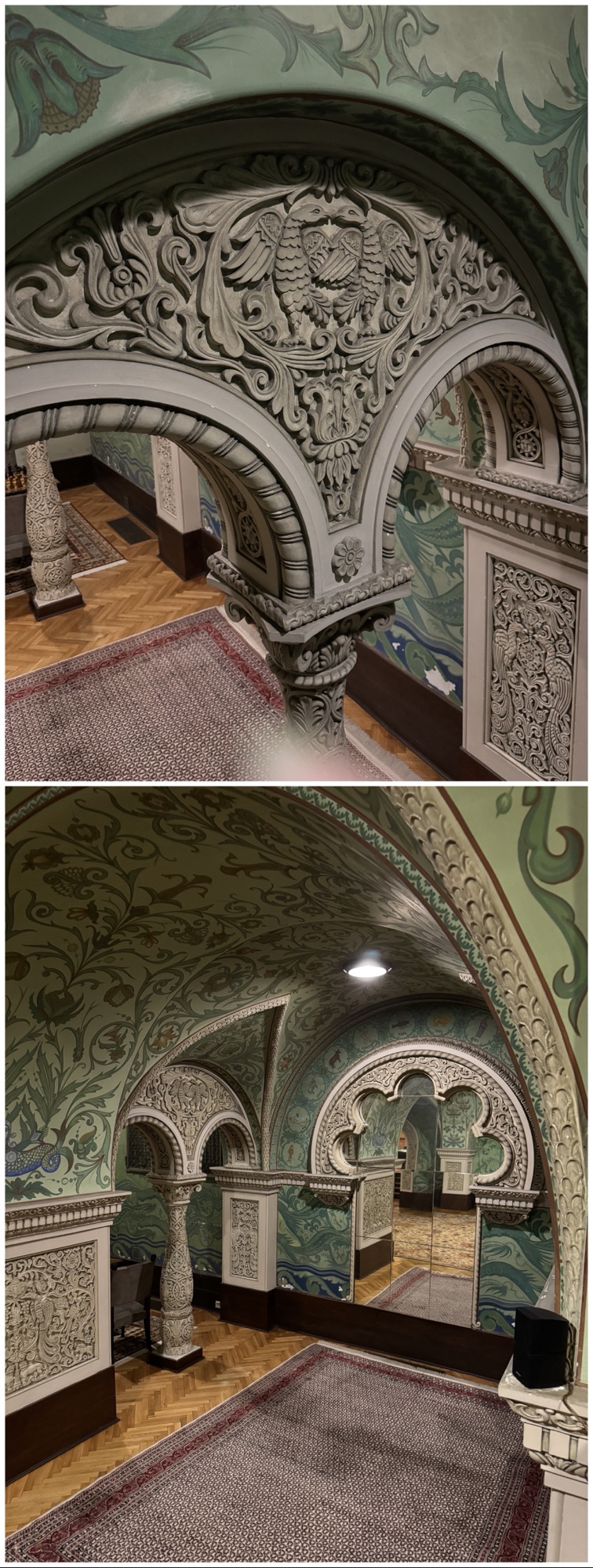
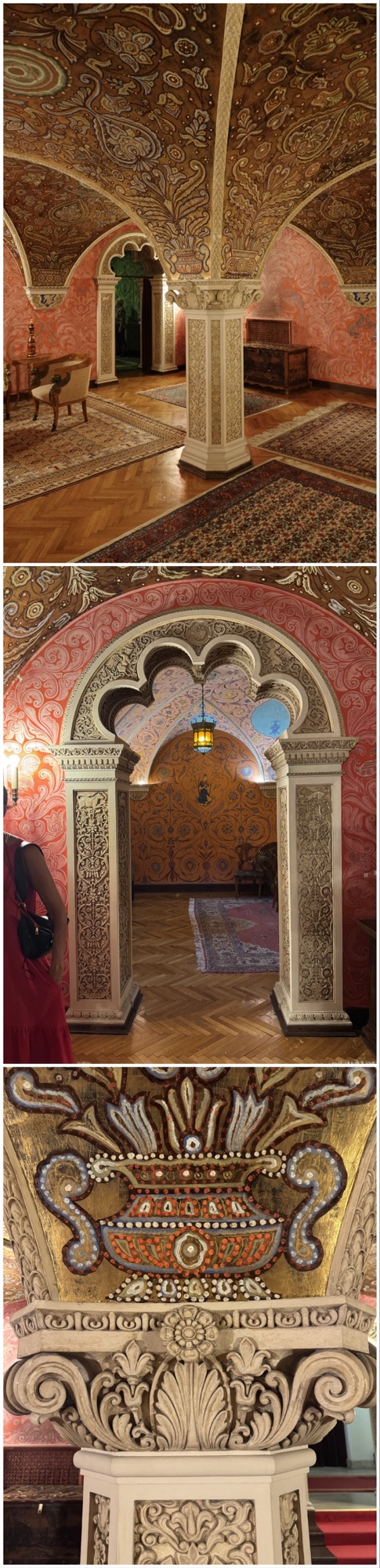
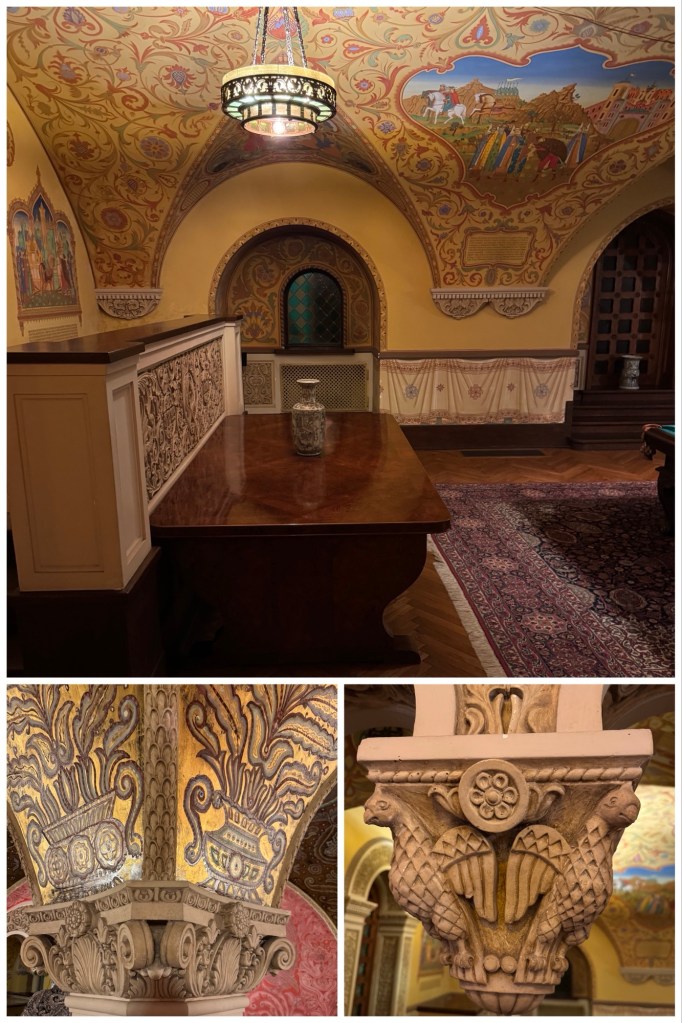

The space was designed by a Russian architect and the walls were hand painted 100 years ago by Russian painters – there is no “wallpaper” here.

It’s an incredible space, and interesting to see that its games room houses not just a billiards table, which might be expected for wealthy families, but also a more modern foosball game. The Crown Prince’s children and grandchildren play here.

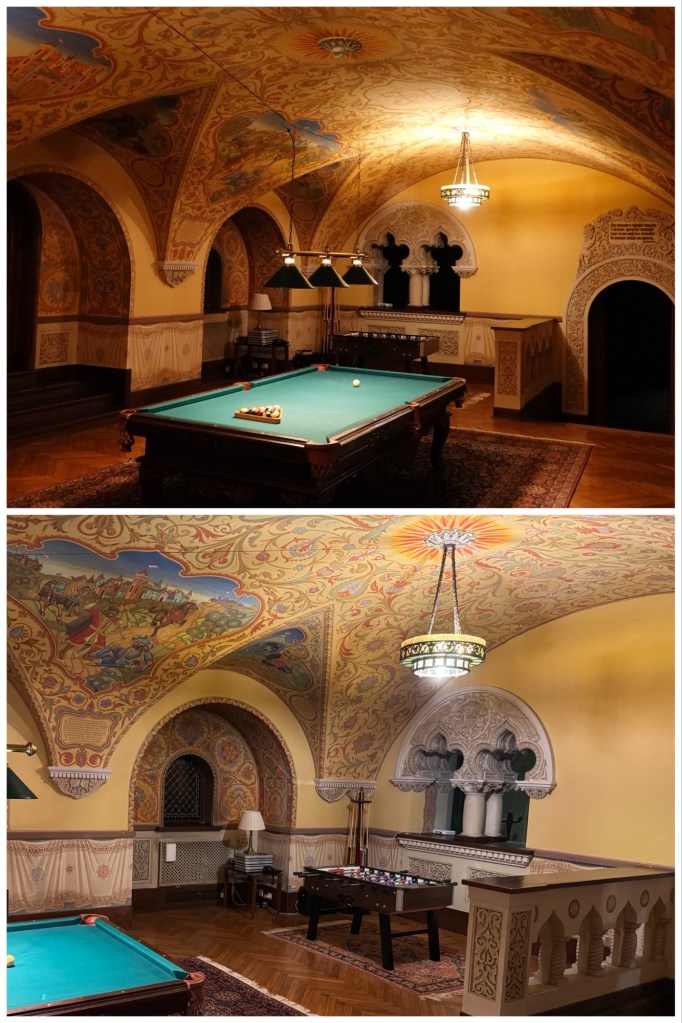
The marble fountain is a reproduction of one in a Russian palace in the Crimea.it seems the Russian designer REALLY missed his homeland.

The palace security guard noticed Ted taking pictures, and pointed out the faded image of a double-headed eagle on one of the walls. We’ve seen that image on flags and coats of arms many times, and been given many explanations as to what it symbolizes. The historian that gave our evening lecture on board explained that it originated with the Eastern Roman (Byzantine) Empire to represent the Emperor’s authority over both secular and spiritual matters and a claim to rule in both the East and the West. In effect, it represents the synergy of religious and political power.

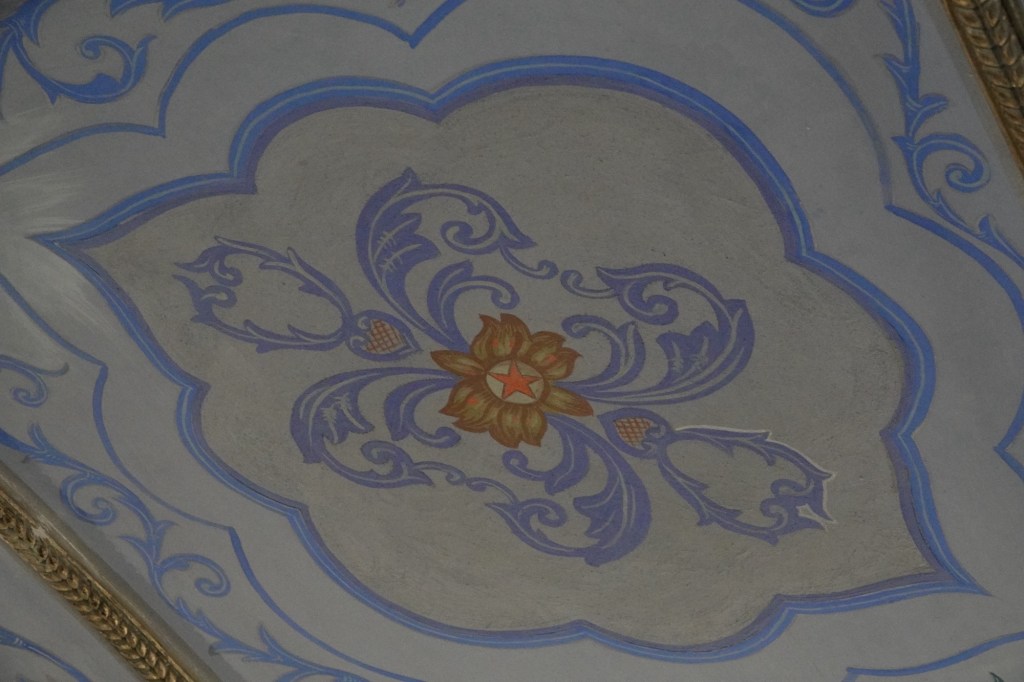
We also had pointed out to us a couple of “anti-monarchist” red communist stars inserted into the painted designs during Tito’s time.
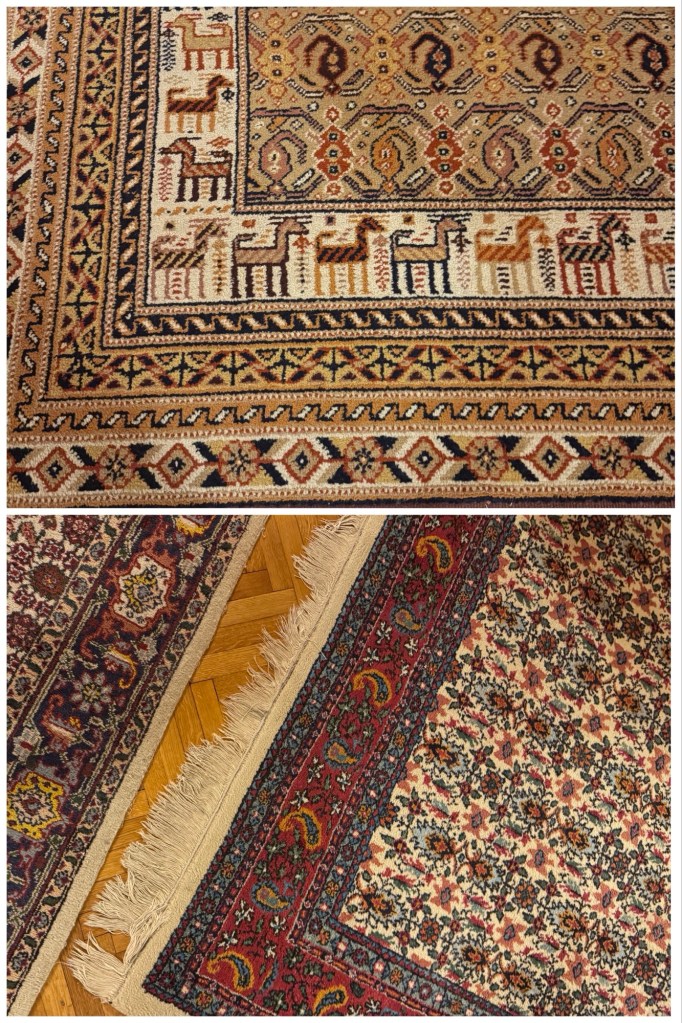
There were more beautiful woven Turkish carpets.
The basement contains Serbia’s first private cinema, which was apparently film buff Tito’s favourite place.the arrangement of the theatre seats, unchanged since his time, certainly says something about “power”. The six seats on the lower level were reserved for Tiro’s frequent guests, the presidents of the 6 states that comprised Yugoslavia. The single padded armchair on a “balcony” behind them was Tito’s, presumable not just to remind them who was actually in power, but also so that he could observe their interactions. Movie night as political strategy.

The beautiful blue “man cave”, adjacent to the cinema, was apparently Tito’s favourite room because it was the only basement room with a window, so was the only place he could smoke his beloved Cuban cigars – gifts from Fidel Castro.

From the palace we walked under an archway that reminded me of the Moorish garden walkway at the Alhambra, and from which we could appreciate the stunning views that were the reason this location was chosen for the palace.
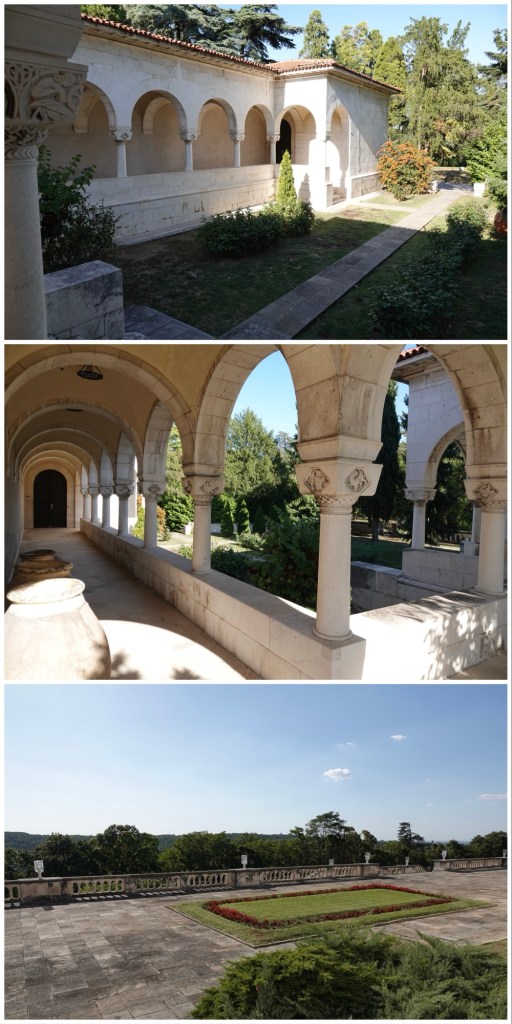
We were able to visit the Royal Chapel, dedicated to Saint Andrew, and connected to the palace by that arched walkway.
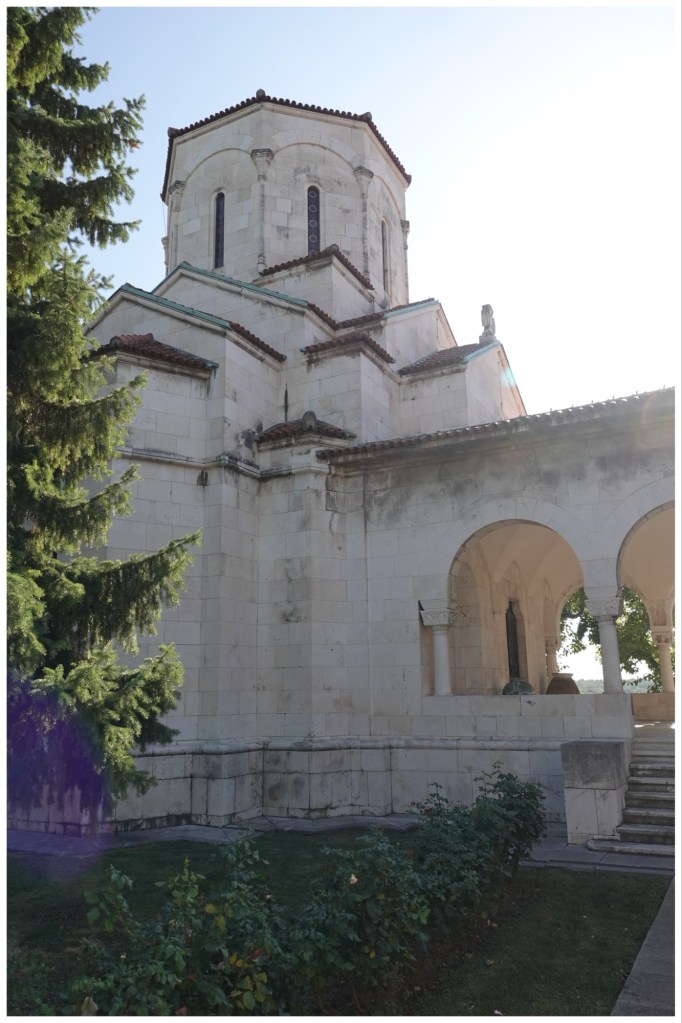
This lovely chapel was used as storage during the communist era. It was reconsecrated after the breakup of the USSR when the prince returned to live here.
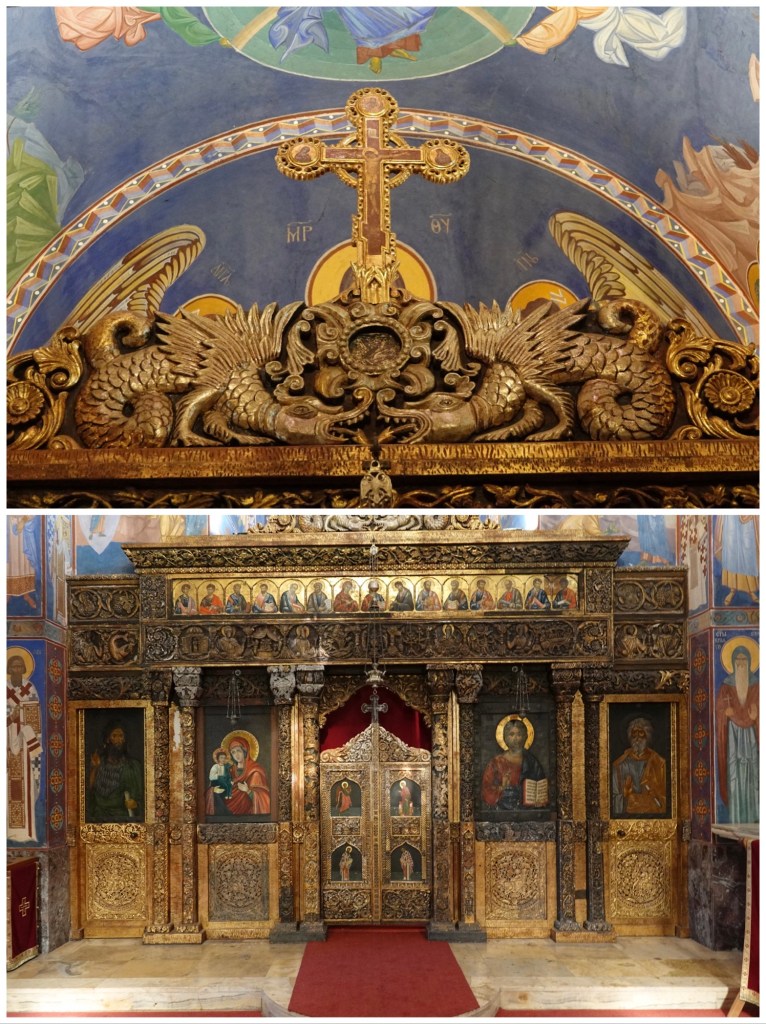
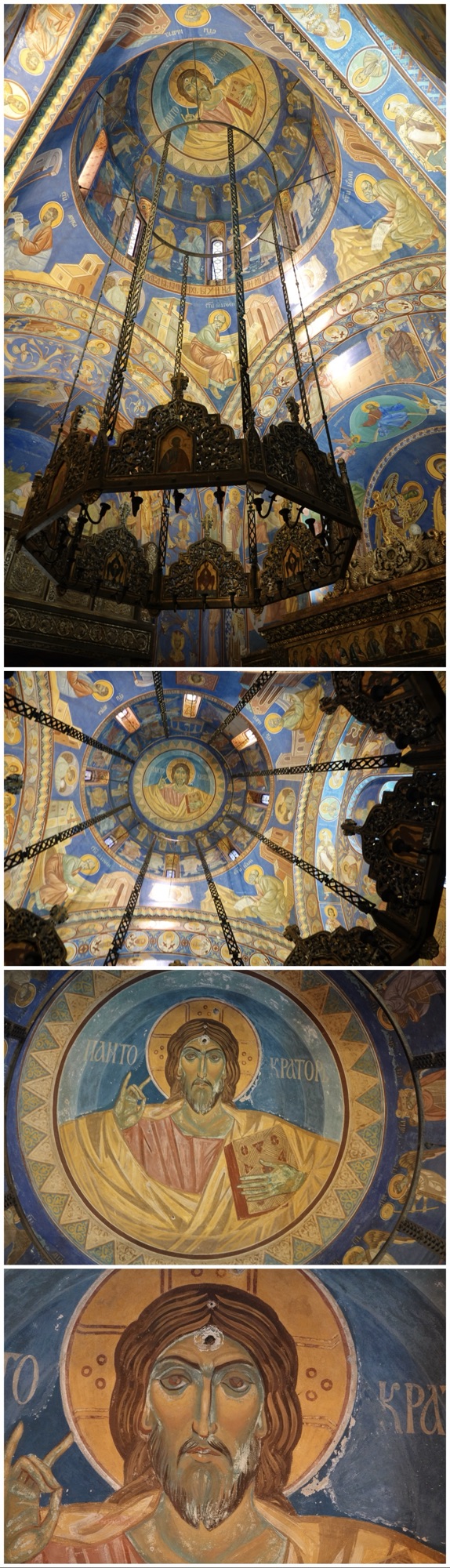
Our guide pointed out the bullet hole in Jesus’ forehead, a remnant of Partisan gunfire during the period of Tito’s resistance movement during WWII.
When we got back after our tour, there was an enrichment lecture on “Serbia today”, followed by a dinner of regional foods accompanied by Serbian cuvée blanc wine. Tonight’s photos weren’t great, because we ate on the terrace under the heat lamp, which gave everything a strange orangey glow, so here’s just the equally orangey menu:

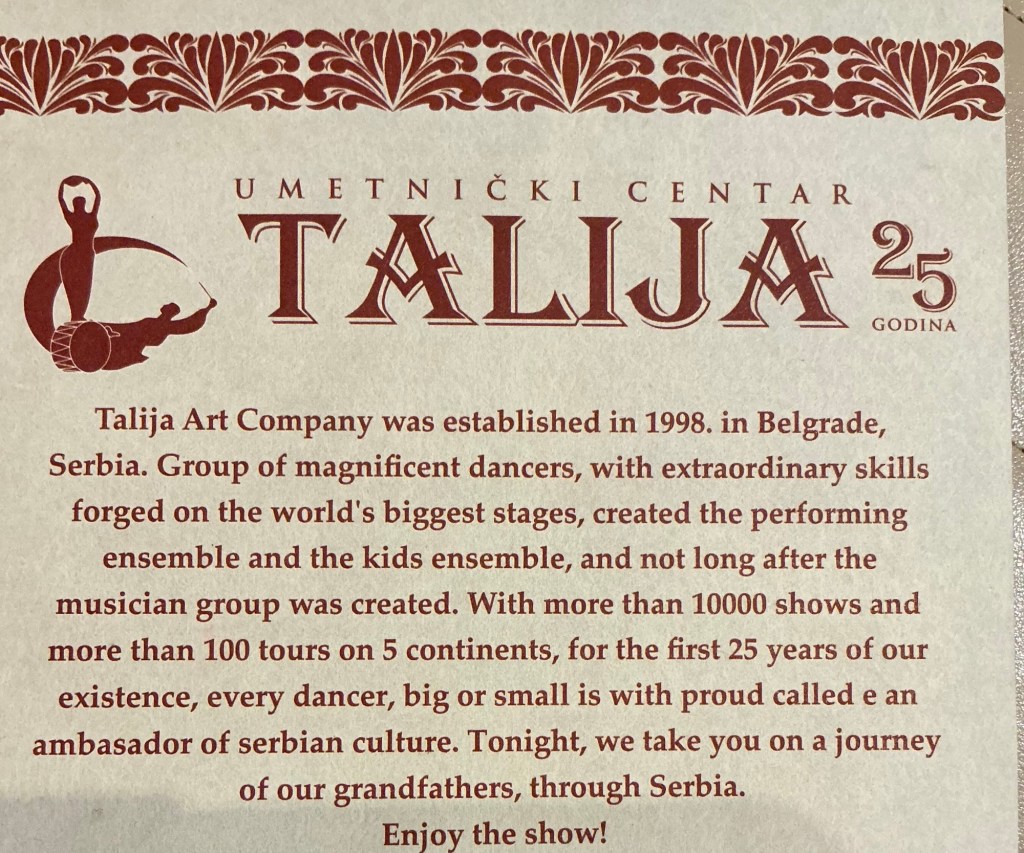
The evening ended with a wonderful Serbian folkloric presentation.
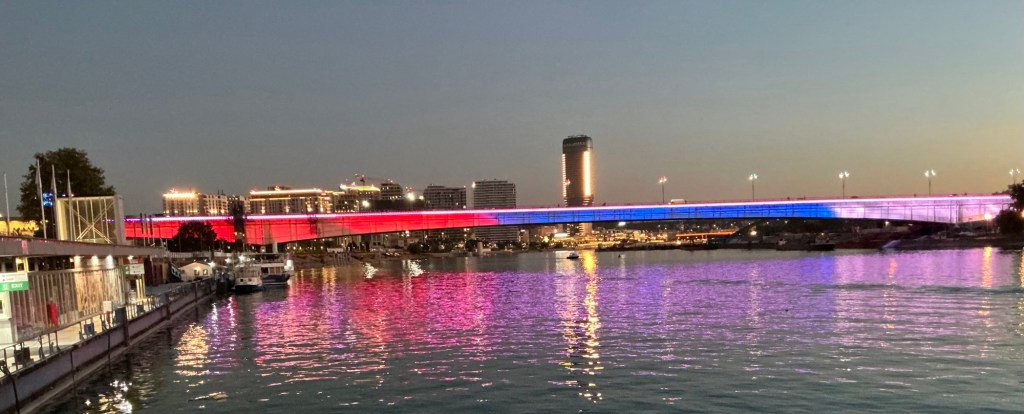
As we were enjoying dinner and the sunset, lights in the colours of the Serbian flag came on, lining the bridge across the Sava River. Sailing under them made for a beautiful departure from Belgrade.
Tomorrow, a walking tour of Novi Sad, and a poppyseed strudel-making workshop!
 Rose and Ted’s Excellent Adventure