Note: the T with the accent below it in Constanța is pronounced like a soft S/Z.
Today we were to board our ship, settle in, and then enjoy our only scheduled activity, Viking’s included tour, “Constanța on Foot”, described as: Explore Romanian Cultural Highlights.
But… river levels. We know from previous river cruises that itineraries can be impacted by weather-related water levels. Too much rain and the rivers can flood their banks, or simply end up so high that ships cannot fit under the bridges. Drought conditions and water levels can be too low to support boat travel.
Just before we left Toronto we got notice that due to current low water levels on the Danube River between Pleven, Bulgaria and Constanţa, Romania, our ship would be unable to sail to Constanţa for embarkation. As a result, we would now be spending an additional hotel night in Bucharest.
We’ve learned from past experience that Viking has the experience and ready strategies to deal with these eventualities, and we’ve always ended up very happy with the alternatives offered.
To that end, our included shore excursion was now being operated by motor coach from Bucharest, a distance of 225 km/140 miles. That meant our original 3 hour tour becoming a full 10-1/2 hour day. To ease the pain of a 3 hour long – albeit scenic – bus ride (in both directions!), we’d get a complimentary lunch and an added wine tasting at Murfatlar Winery.
We boarded our bus at 8:00 a.m.
A long bus ride is always useful as an opportunity to learn about where we are, and today we again had George as our guide, so we knew we’d get plenty of information.
Romania‘s geography is 1/3 mountains, 1/3 plateau 1/3 plains, ideal for growing Canola, sunflowers, corn, and wheat. We drove through seemingly endless fields in a landscape very reminiscent of the Canadian prairies.
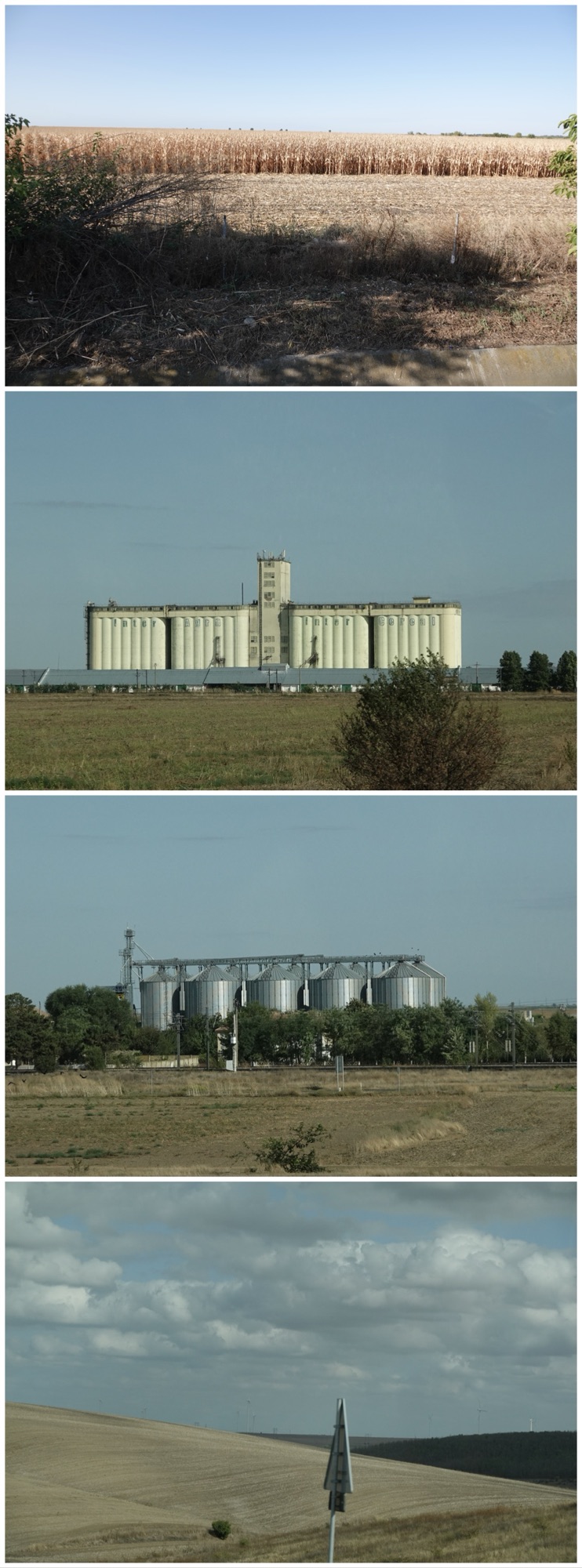
Romania received significant support for their agricultural industry from the EU. George quipped that Romania joined the EU originally to get British humour, French food, and German precision, but what they got was British food, French precision, and German humour. Ouch.
Romania has a professional army of 80,000. They are actively recruiting, but with a war being waged just across their border with the Ukraine, few young people are volunteering for a high risk low wage job. When we stopped for our comfort stop this morning, we arrived just before several hundred young soldiers. They were all laughing and kibitzing with each other, so we assumed they were not on active duty, but disturbingly we had heard this morning that just yesterday Russian drones had breached Romanian airspace above Constanța, and Romania had scrambled two F-16 fighter jets in response. Because I showed them a photo of son#2 in his Canadian uniform, a group of them allowed me to take a photo, but only if I didn’t publish it. Obviously, it”s not here.
En route to Constanța we crossed the Danube, moving from the province of Walachia to the province of Dubrogea. Dubrogea was Ottoman for over 400 years; it is one of the only areas of Romania which has mosques, some of which we would see later on.
The construction of the the Fetești-Cernavodă railway bridge (1895) over the Danube, the longest bridge in Europe at that time, was tendered to several high profile engineers including Gustave Eiffel, but in the end it was Romanian engineer Anghel Saligny who won the contract to build the bridge.

This is the region, near the very old city of Cernavoda, in which we passed Romania’s nuclear power plant.

25% of Romania’s energy is still provided by the CANDU reactors on whose construction my childhood best friend, a chemical engineer, worked and with which I was very peripherally involved (selling the project the reactor demineralized water cooling pumps) in the 1980s; we drove right by that power plant. Another 40% of the country’s energy comes from hydroelectric power via the Iron Gate power plants on the Danube; a further 12% is wind, 2-3% is solar, and the balance is still coal. Romania exports energy to both the Republic of Moldova, and to the Ukraine.
I was pleased to learn that 2 new reactors are under construction in cooperation with Canada, to be fully commissioned in 2030, providing clean cheap energy for almost 50% of the country’s needs.
We also crossed the “Danube-Black Sea Canal”, third only in size to the Suez and Panama Canals in man-made canals. It was begun in the Soviet era using forced labour. Between 5000 and 20000 political prisoners, activists, and those considered “enemies” of communism were sent to the region to hand excavate the canal over a 5 year span from 1949 to 1953. Those who didn’t die of exhaustion ended up too physically damaged to be considered a “threat”. Work on the canal stopped after 1953 and was not resumed until 20 years later during Ceauşescu’s regime.
George told us that despite being a crucial waterway, allowing large cargo vessels to access Central European ports revenues from the canal’s limited ship traffic will not pay for it for another 600 years, demonstrating the poor economic decision-making that accompanied the human cruelty. I tried to verify that information in Wikipedia, where it states: “The cost of building the canal is estimated to be around 2 billion dollars, and was supposed to be recovered in 50 years. However, as of 2005, it has a yearly income of only a little over 3 million euros.” That does indeed translate into more than 600 years.
And then we finally reached Constanța, an important port city on the Black Sea.
The city was originally settled by the Greeks and Thracians in the 6th century BCE, making it the oldest continuously inhabited city in Romania, and among the oldest in Europe. The area was originally called Dacia, after the Thracians. The Romans eventually conquered it around 29 BCE.
Roman connection here is commemorated by a statue of Romulus and Remus donated to Constanța by the mayor of Rome.

The Greek connection remains in baklava and Greek pastries!
The city was the summer home of King Karol (Charles) I.
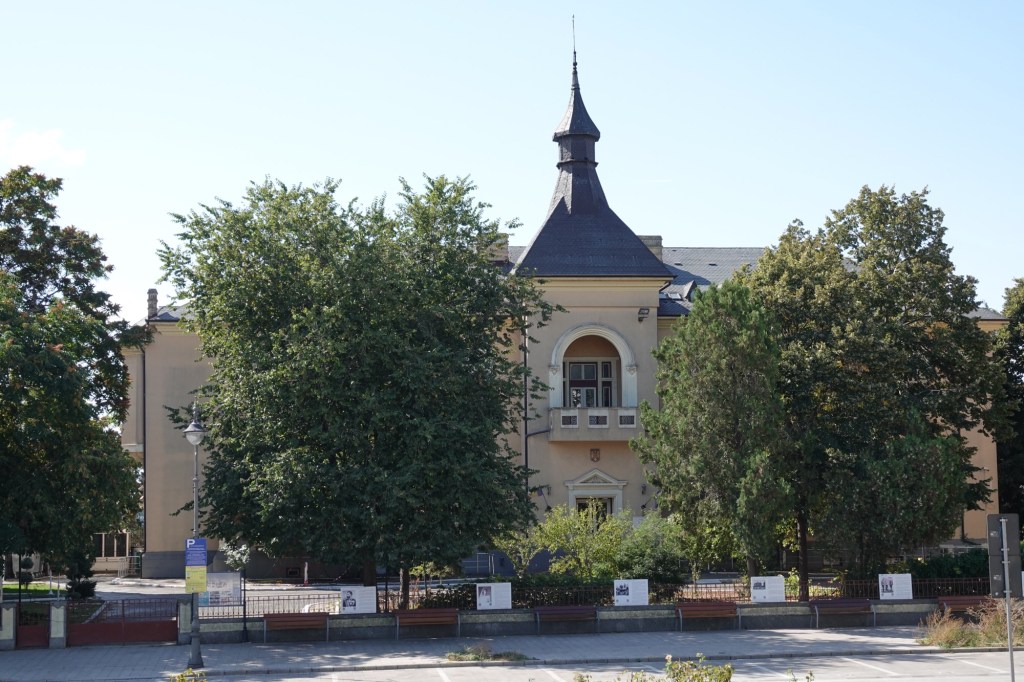
The former post office is now a museum featuring historic costumes and icons.

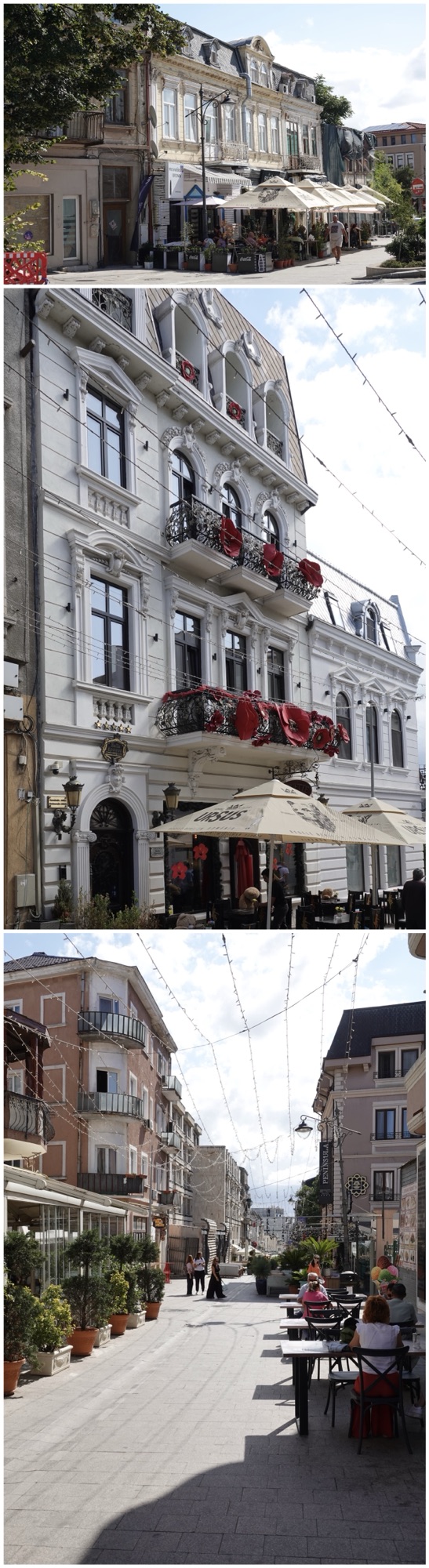
A beautiful pedestrian mall leads to the Black Sea.
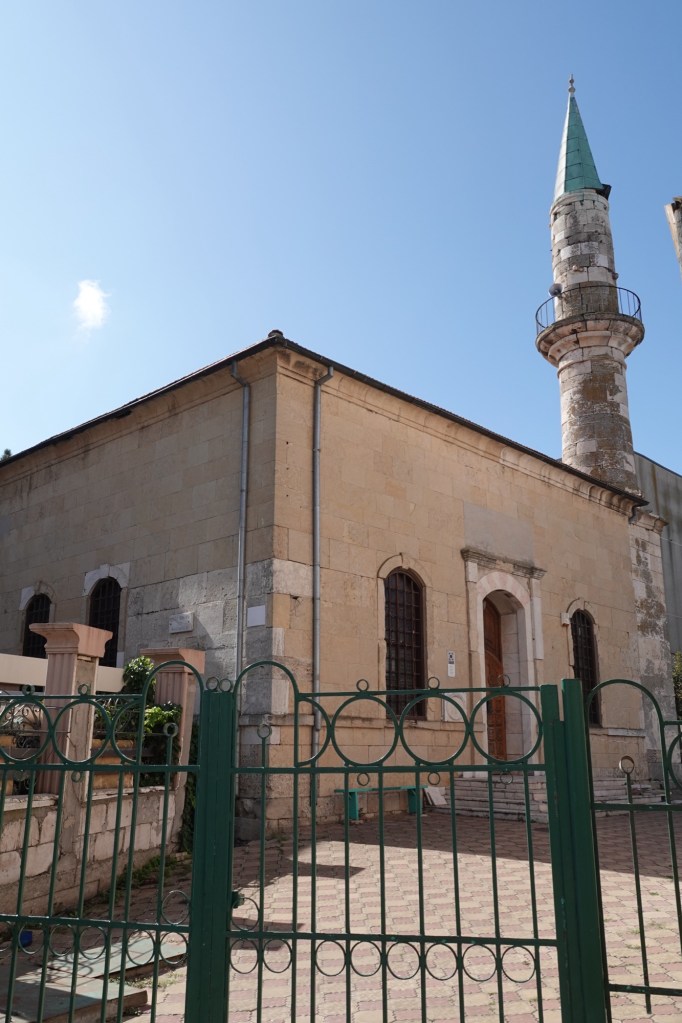
Blocks retrieved from former Greek fortresses were used to build some of the mosques erected during the Ottoman era.
The museum of history and archeology is in what was the old city hall, begun in 1911. On this site, during construction, statues from the second century BCE were found. Some had Indian provenance, others Egyptian, speaking to the importance of this port.
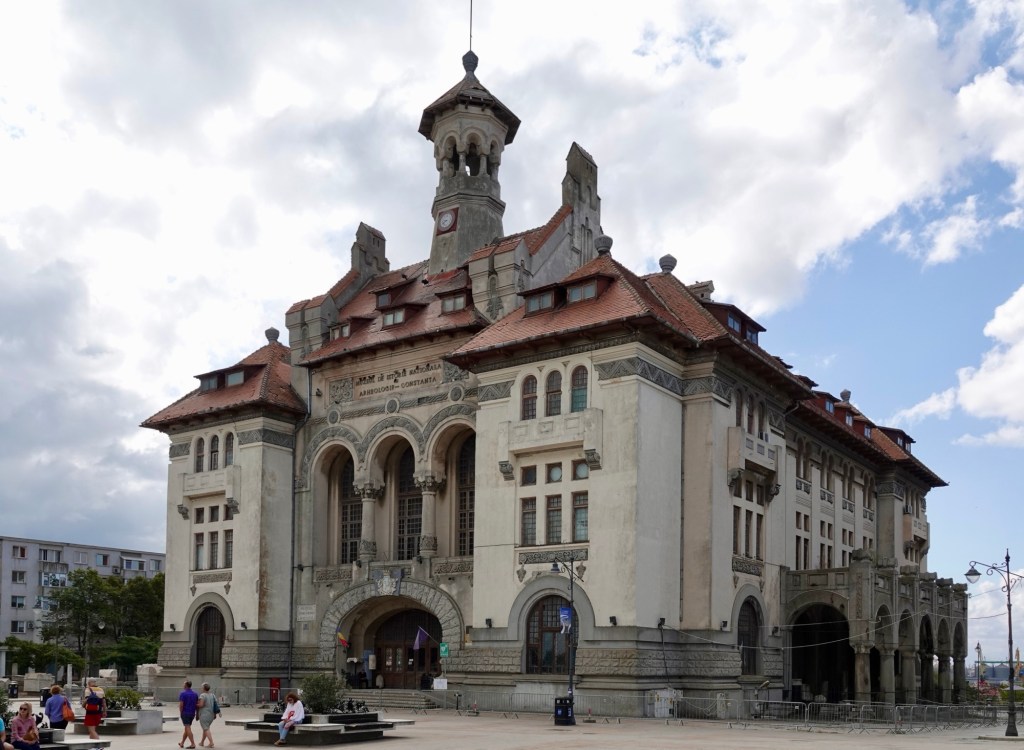
Monuments and sarcophagi from the first to third centuries CE are on display beside the museum. Next year a 2400 square metre mosaic will be unveiled; one of the largest intact Roman mosaics ever uncovered.

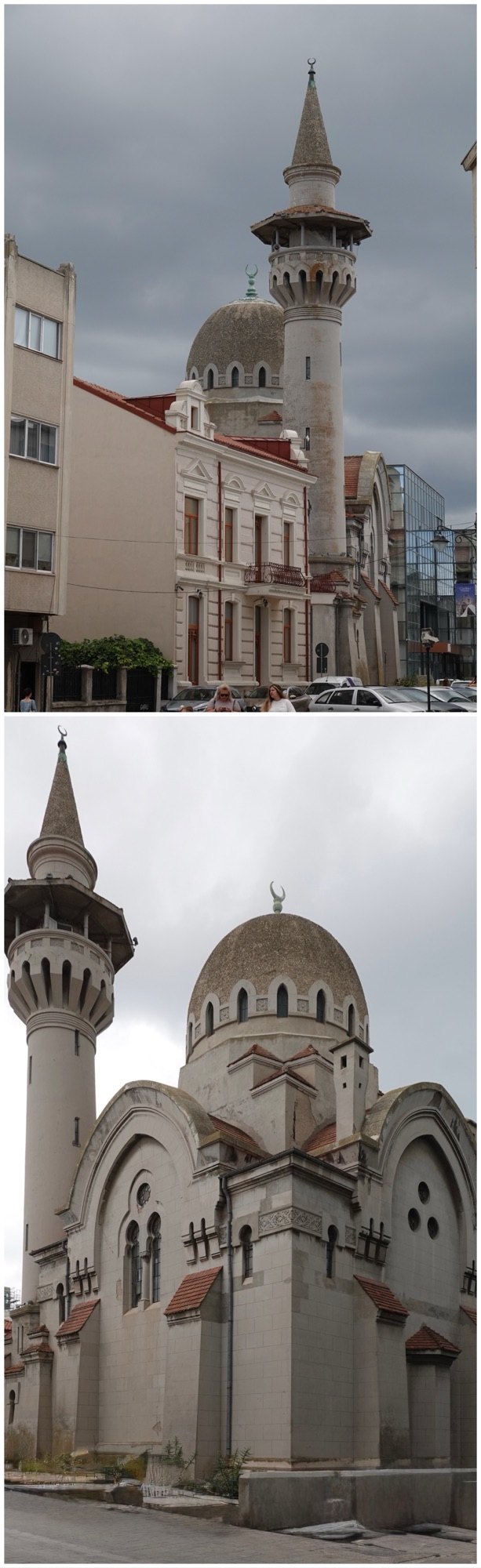
This huge stone mosque dates to 1823 and was not built by the ottomans, but rather gifted by Habsburg King Karol 1 to the Muslim community here during the period of Romania’s German rule.
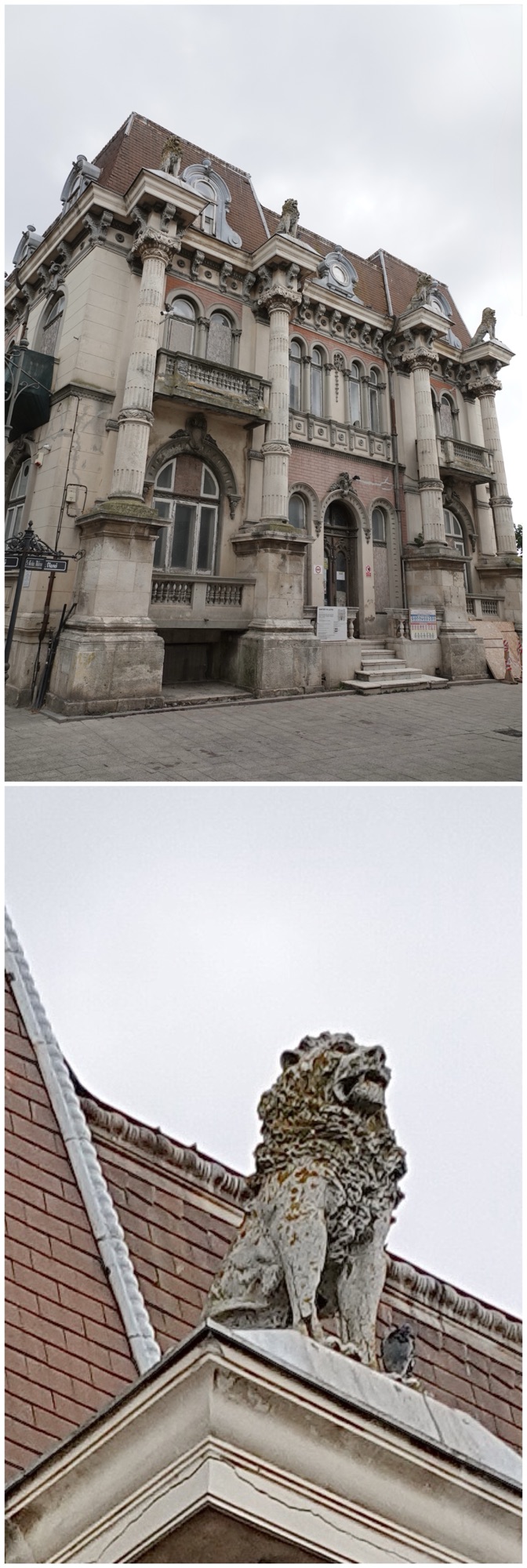
The “house with lions” was built between to 1898 and 1902.
Saint Anthony of Padua Roman Catholic Church reflects the religious diversity of this port city.
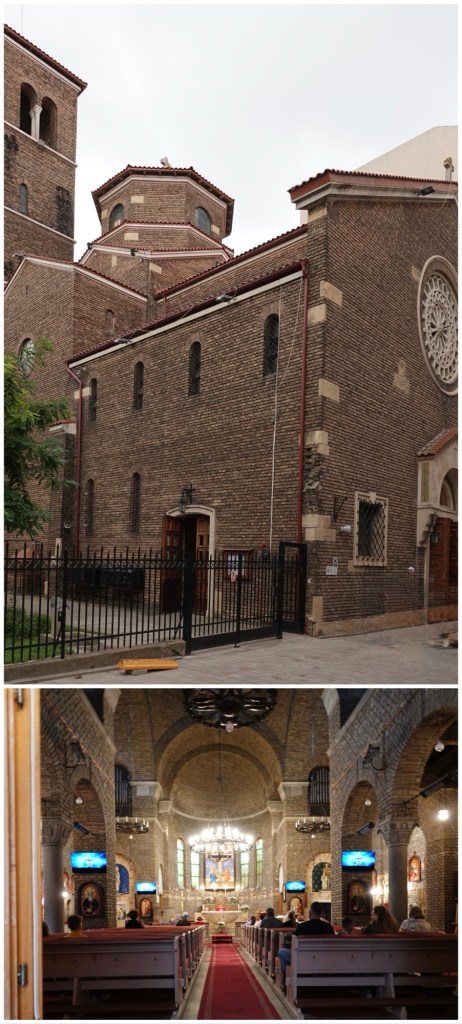
Saints Peter & Paul Greek Orthodox Church is Constanța’s main church, completed in 1884.
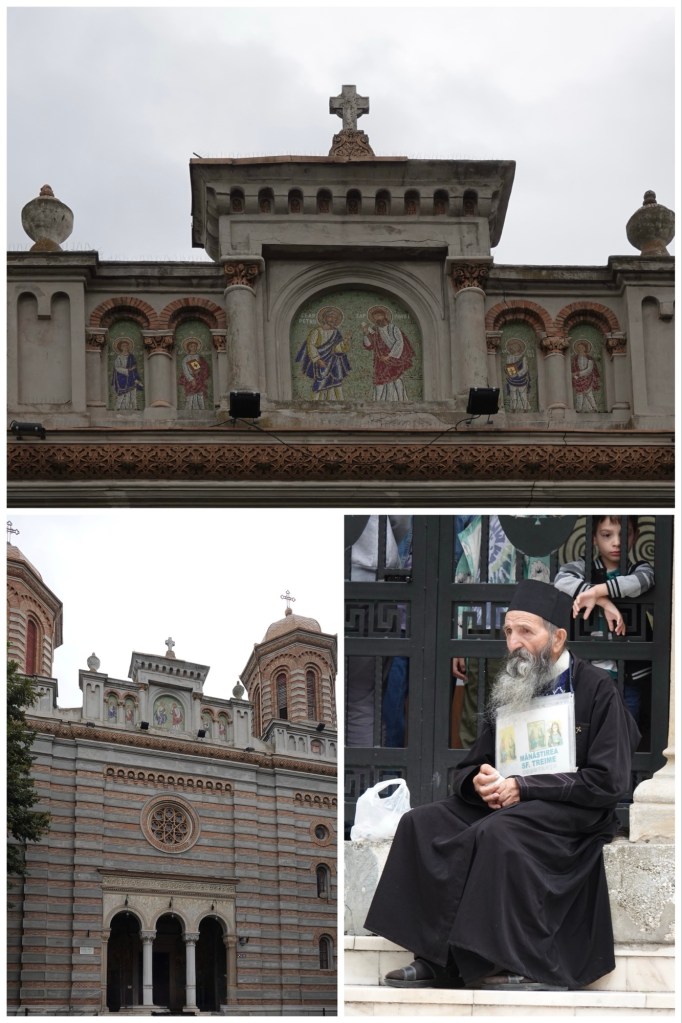
Beside the church is an archeological dig, where 12 levels of artifacts, ranging from the 6th century BCE through to the 6th century CE were found.


And then, suddenly, we were at the shore of the Black Sea and beside Constanța’s impressive white stone art deco style casino. The original was built out of wood, but after two consecutive buildings burnt to the ground, a sturdier material was decided upon. This site is supposedly where Medea, of Greek legend, killed her children.


Constanța is currently the easternmost Black Sea port in use, since Odessa in Ukraine is under siege. We saw many, many ships waiting for an available berth.
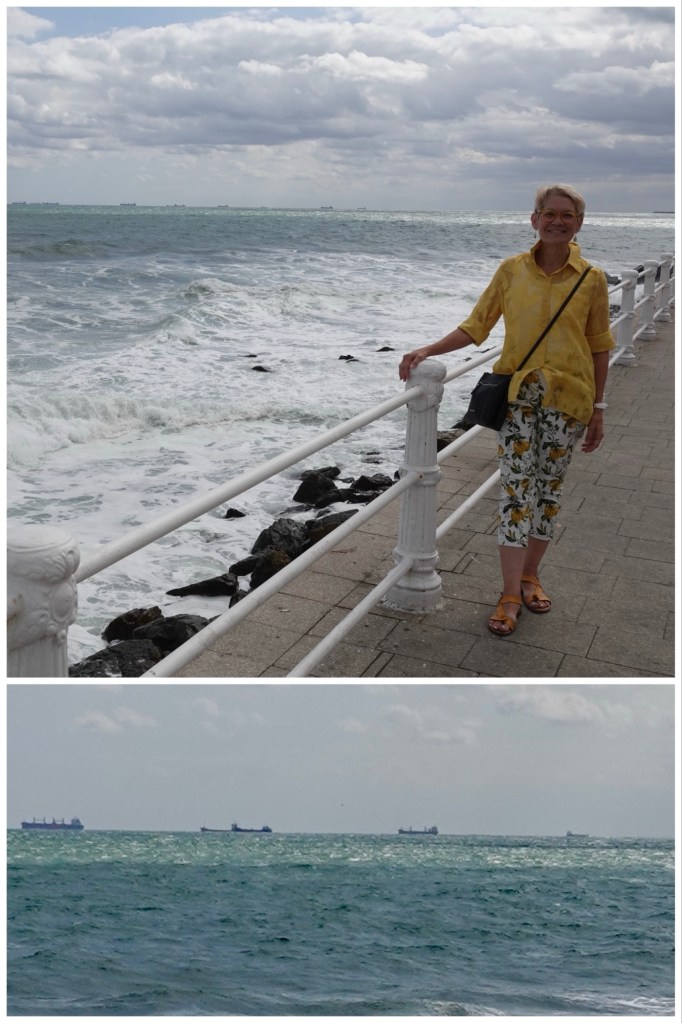
The Genoese lighthouse once safely guided ships into port here. The original was built around 1300 CE by the Genoese; the current rebuilt structure dates to 1858.

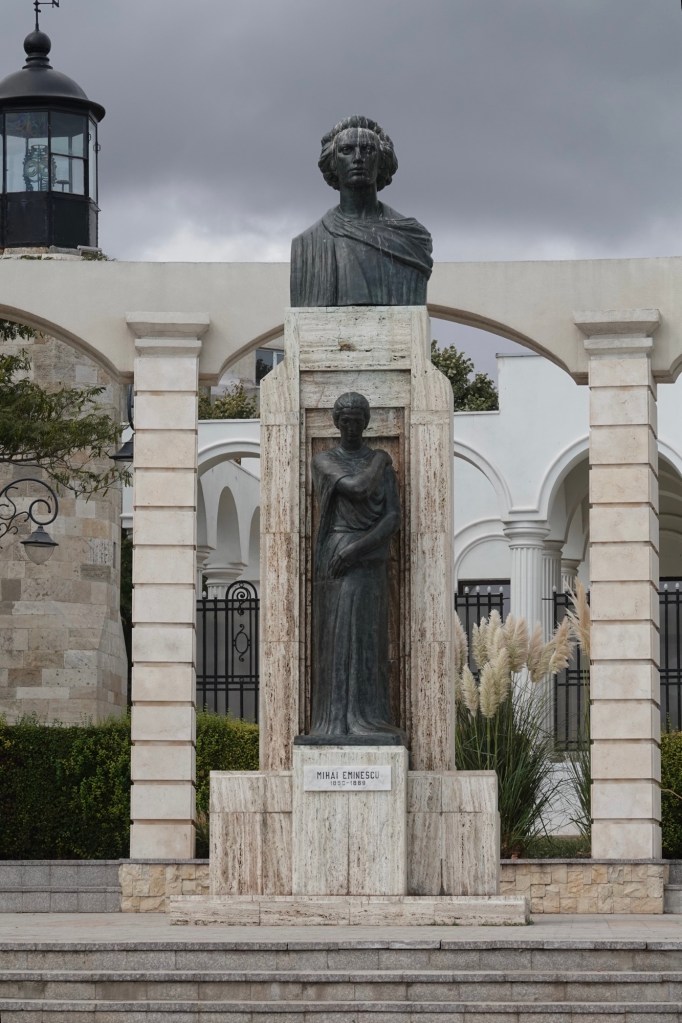
There is a statue along the waterfront of Romania’s national poet Mihai Eminescu.
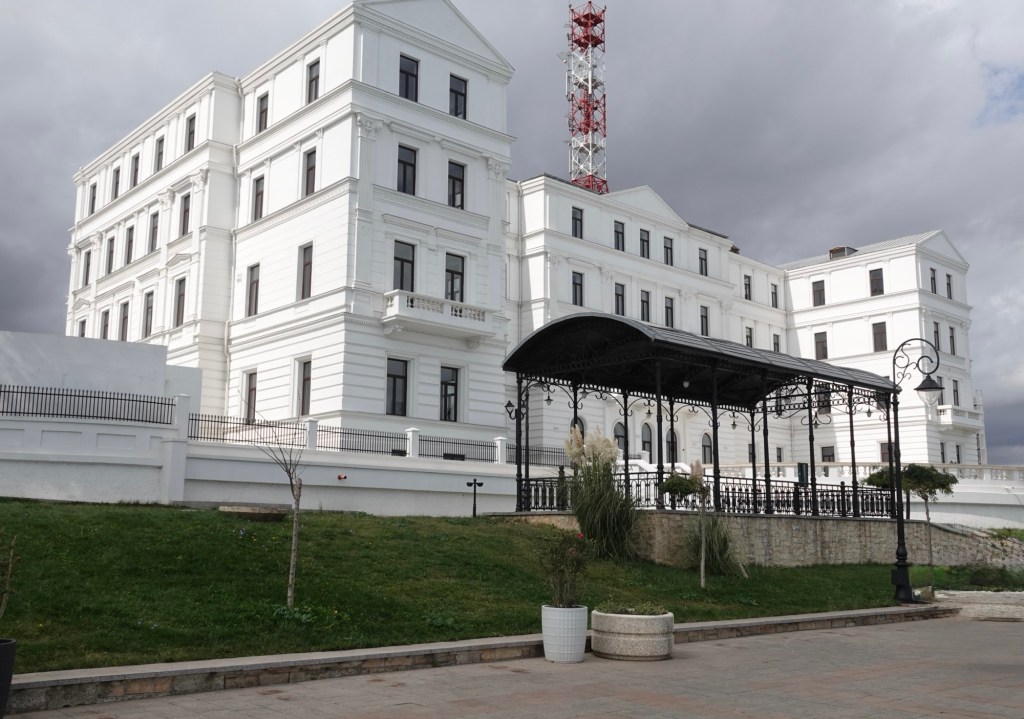
The impressive former Hotel Terminus now belongs to the Romanian Navy.
The wind along the coast demonstrated why Black Sea resorts have such a short “season”, really just July and August. That also explains the high resort prices. George was only half joking when he said that poor Romanians vacation in Austria instead of here.
We chose to leave a bit of money behind for two lattes and the chance to simply sit on a patio on the harbour to people and bird watch. Ted caught a cormorant taking off from the harbour waters.

Then it was back onto the bus for the 30 minute drive to Murfatlar.
Right from the beginning of the region’s settlement, this part of Romania was a grape-growing and wine-making region, so a wine tour and tasting was pretty appropriate.
Murfatlar is Romania’s largest winery, with 3102 hectares (7660 acres) of vines, making about 24 MILLION litres of wine annually. It opened officially in 1907.


We toured the underground storage facility with its massive wooden barrels and huge steel tanks. The handmade barrels are so big that they had to be assembled in place. Each can hold between 6000 and 12100 litres of wine; individual construction means nonstandard sizes. They are no longer used, because EU rules mandate the use of stainless steel tanks.

The smaller Canadian, French, and American oak barrels are still used for specialty vintages sold directly to restaurants.

78 stainless steel tanks on each of 4 floors store 40,000 litres of wine each. That’s 12,480,000 litres, or 16,640,000 750ml bottles!!! At one bottle per week, that would take 320,000 years to drink. Ted says I need to bump my consumption to 2 bottles per week.

Despite sealed steel tanks, there was a definite delicious smell of wine.
From the storage facility we headed to wine tasting, featuring 2 whites, 2 reds, and a rosé, paired with cheeses. Before that, we were welcomed with bread and salt, a shot of Romania’s fiery plum brandy, and a trio of live Roma musicians.

We tasted from right to left based on bottle placement on the display table pictured below.
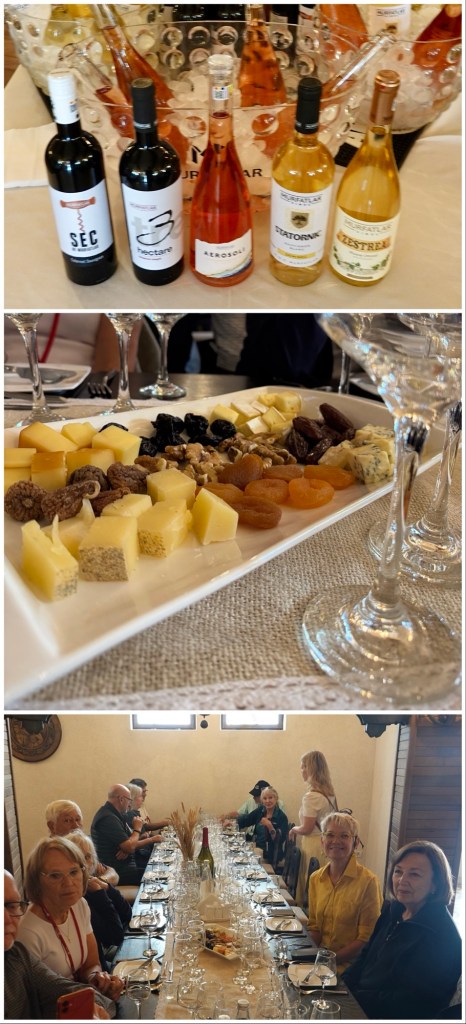
First was an icy cold sweet white muscat (9 grams of sugar per litre), called Zestrea. We paired it with the Brie.
Second was a 6 gram of sugar semi-dry Sauvignon Blanc called Statornic, paired with a smoky yellow-rinded Romanian cheese. We also, much to Johnny’s dismay, tried it as a spritz.
Next was the rosé called Aerosoli, which had an uncharacteristically high (for a rosé) 12.5% alcohol content. This was paired with dried apricots, prunes, and figs.
Our first red was a medium bodied fruity fetească neagră, which is a grape I’ve never heard of, paired with a small chunk of Parmesan.
Our last wine, also red, was a Cabernet called Sec de Murfatlar, paired with blue cheese.
My favourite, surprisingly, was the rosé!
Johnny, the winery’s marketing representative, directed the tasting event at breakneck speed. No time for savouring or reflecting between pours! He joked that there are 4000 years of wine making – and wine drinking – history here.
All that drinking deserved lunch, accompanied by more live music. With about 250 people in a low-ceilinged stone hall it was LOUD!! (Too loud, although I really enjoyed the polkas, czardas, and mazurkas as the trio worked their way through the music of the various cultures who influenced this area, from the Greeks, through Turks, Hungarians, Germans, and Russians)
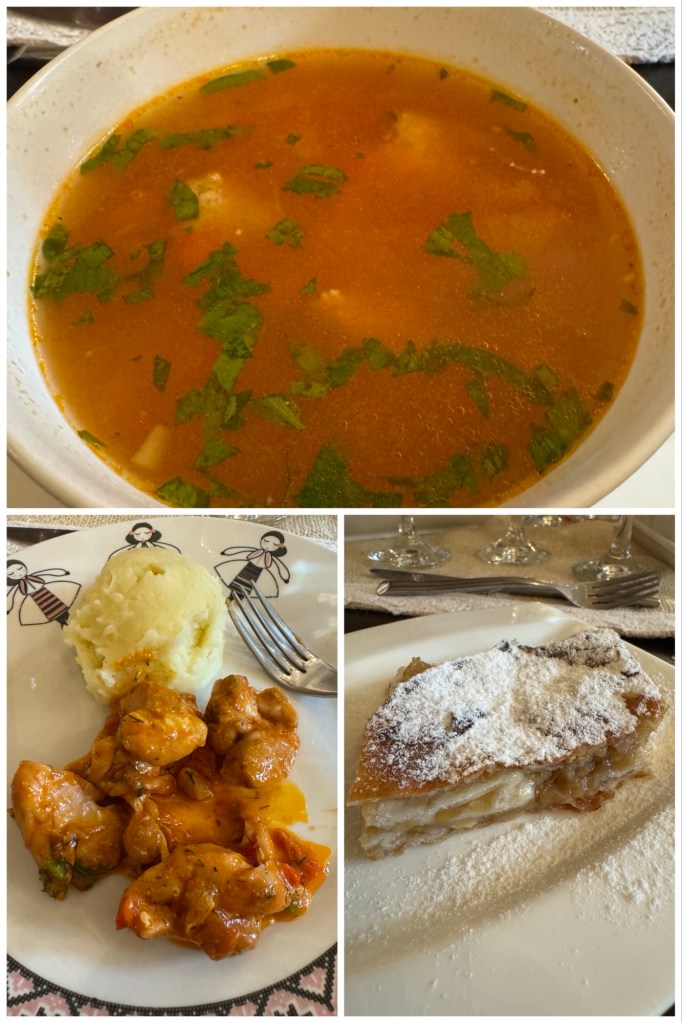
Lunch was vegetable soup with crusty bread and a hot pepper, a fish similar to chicken paprikas with added dill, served with mashed potato, and a dessert of apple strudel. The 5 wines were left on the table for us to pair as we wished.
After all that, the drive home was relatively quiet, with our guide foregoing narration in favour of answering individual questions.
We arrived back at our hotel right around 7:00 pm, just in time for a group “welcome” dinner for which none of us were the least bit hungry.
Serendipity struck, though. Because our departure from Bucharest was delayed by a day, our itineraries meshed for a few hours with friends Joanne and Eugene from our 21/22 world cruise. It was great fun to catch up over drinks.
Sadly, our two days based in Bucharest were so full, and our hotel so far out of the old city centre, that we missed our chance to catch up with 24/25 world cruise friends Joe and Anthony.
Tomorrow, we’ll finally check of our hotel and travel by coach the 135 km/85 miles to Turnu Măgurele, Romania for embarkation. Lunch will be on the Rinda.
 Rose and Ted’s Excellent Adventure
I hope this goes thru. We liked this city. Dan was here 9 years ago and said it was really bad. Now is delightful. Sure since joining the EU has make an hugh difference.
Sent from my iPad
LikeLike
I’m glad to hear there’s been progress. I’m definitely hoping the same is true when we reach Bratislava, which was so very sad back in 2013.
LikeLike