Anyone who knows me knows that I always have a plan. Today’s, after breakfast at the hotel, was to check out Munich’s statues and fountains, the Karlsplatz area, the Frauenkirche, the Wittenberg dynasty Residenz Museum, have a beer at the iconic Hofbräuhaus, and eat huge crispy pork hocks at Haxengrill – not necessarily in that order.
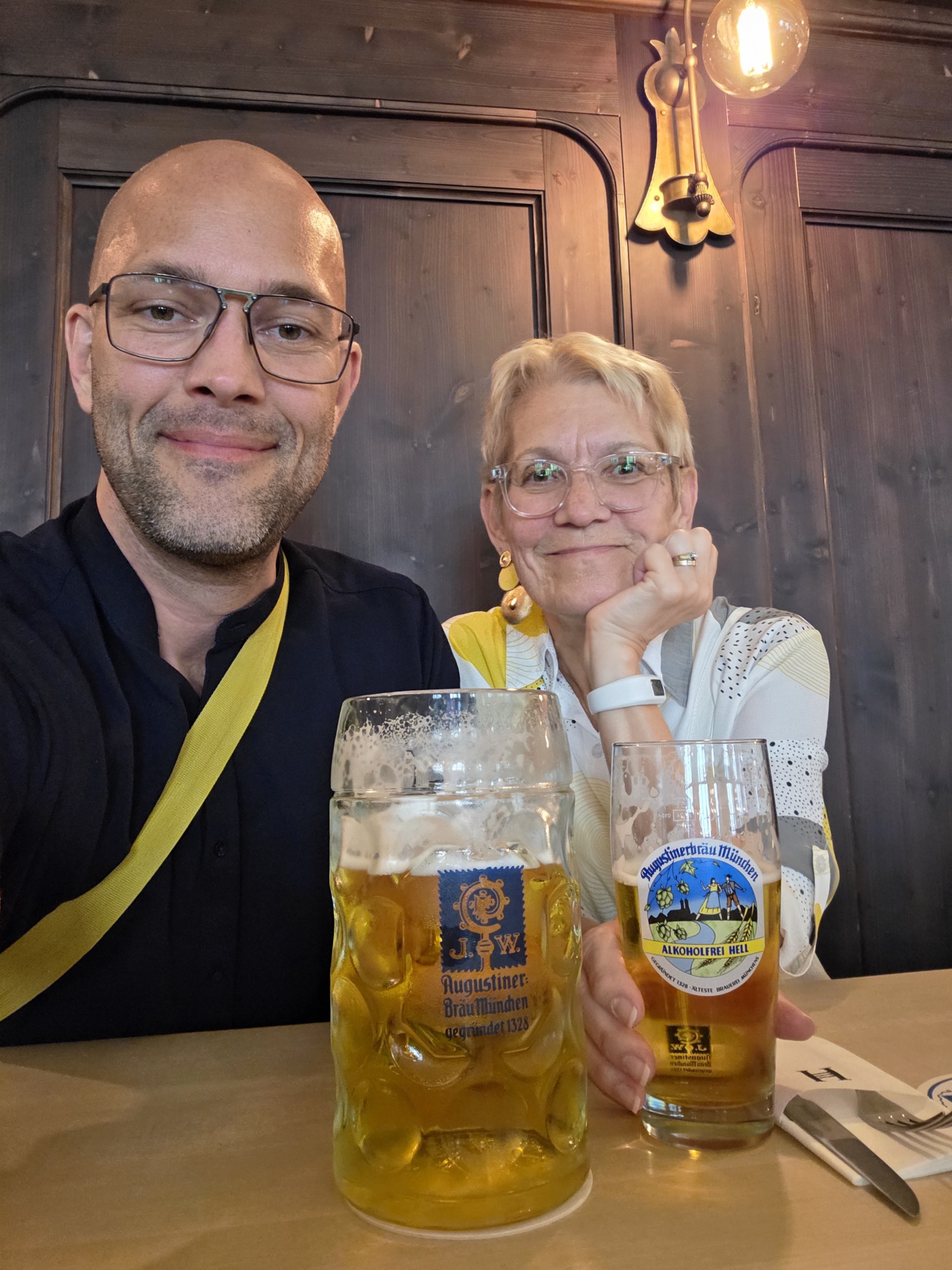
We switched up those plans a bit, deferring Karlsplatz to tomorrow and having the chance to take in the city hall glockenspiel today, plus we enjoyed our beer in an outdoor beer garden along the Isar River with #2’s local chef friend instead of at the Hofbräuhaus.
Only 23,000 steps today.
Breakfast at our hotel was nowhere near as nice as that in Berlin. #2’s main complaint was the coffee machine, but there was also a lot less variety here. The nh hotel chain will be the one I’ll want to remember to use again.
Leaving our hotel’s immediate neighbourhood and entering the Altstadt (old town) renewed my appreciation for Munich. The buildings are still gorgeous, the parks still green, and the streets still bustling with activity. There was a lot more road repair and building restoration going on than I remember from 9 years ago, but the city had plenty to wow us.
We began at the Residenz Museum, home to the Wittelsbach ruling family. En route, we passed the Wittelsbacher Fountain.
Poor #2. I make him take pictures of me posed on every fountain, just the way I do with his dad.

Given the unsuccessful breakfast coffee experience, a priority was finding #2 something better. He did some research and discovered Kanso, a new shop just recently opened by a young barista who participated in the German Latte Art Championships. pricey, but success.

The Residenz Palace complex takes up several blocks, has multiple wings, and a variety of courtyards. Despite signage, finding the ticket entrance was complicated. This gorgeous courtyard was not the right one, although it did belong to the Residenz complex.
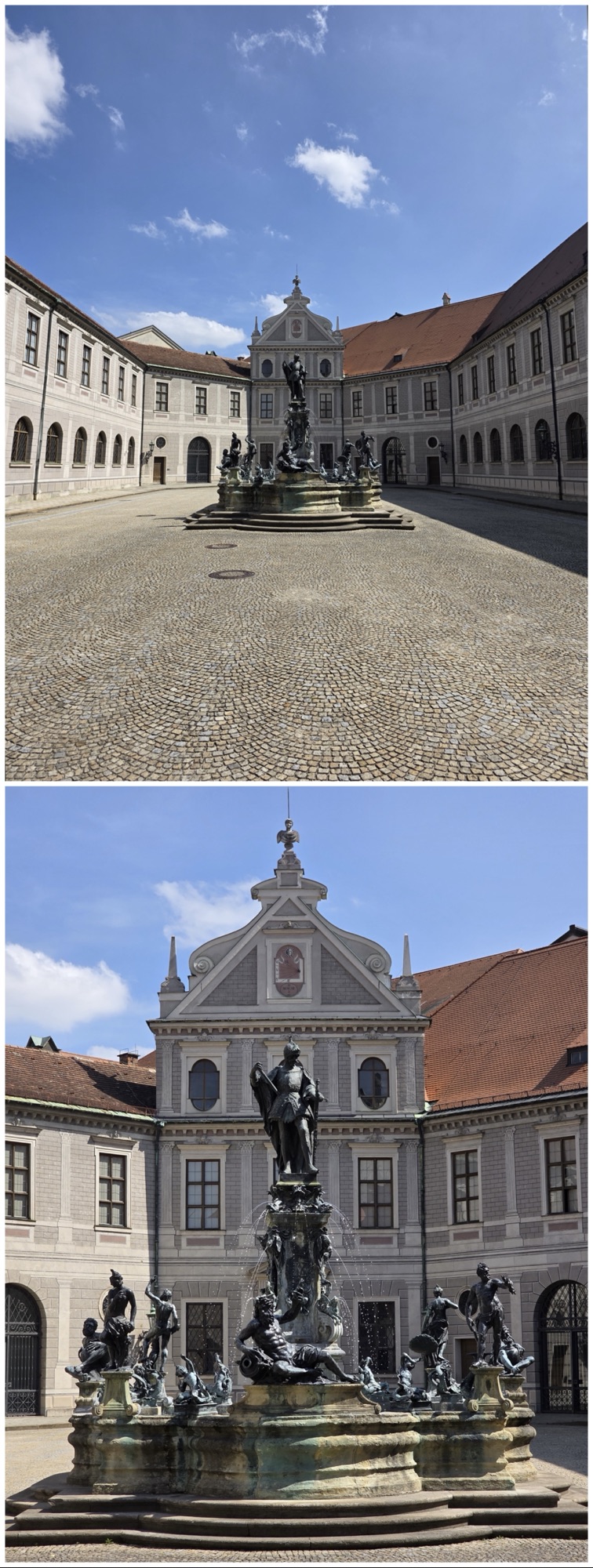
The public entrance ended up being at the end of a different courtyard featuring bronze statues of Poseidon, putti, and lasciviously leering satyrs.


Founded in the 11th century by Otto the first, the Wittelsbach dynasty ruled in Bavaria, Cologne, Holland, Zeeland, Sweden, parts of Finland, Denmark, Norway, Hungary, Bohemia, and Greece. Three Wittelsbachs were elected emperors and kings of the Holy Roman Empire. Their 738-year rule only ended in 1918.
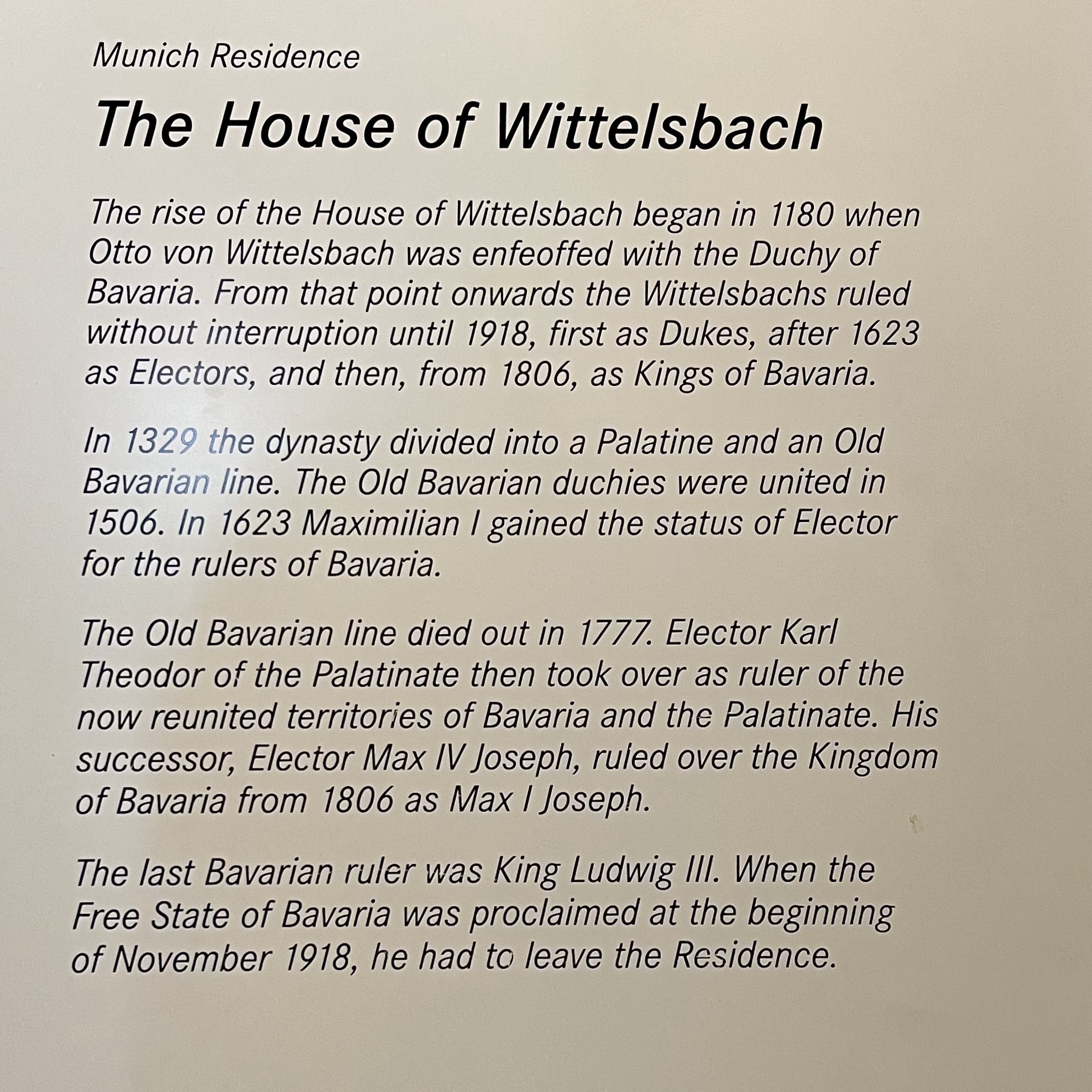
In WWII their anti-Nazi activities led to emigrations, arrests, and internment in concentration camps.
Today, the evidence of their long rule is found in museums throughout Bavaria, with many here in the Residenz.
We (well, son #2) decided not to use the free audio tour, so I can’t label a lot of his wonderful photos, but they certainly show the over-the-top opulence of the place. Once inside, it was room after room of gilded and silk-covered walls; frescoed and carved stuccoed ceilings; magnificent tapestries: Chinese porcelain; inlaid marble floors, walls and columns: inlaid, ornately carved, and lacquered furniture; crystal chandeliers; opulent fabrics; sweeping marble staircases; statues, paintings, mirrors, thrones … it just went on and on.

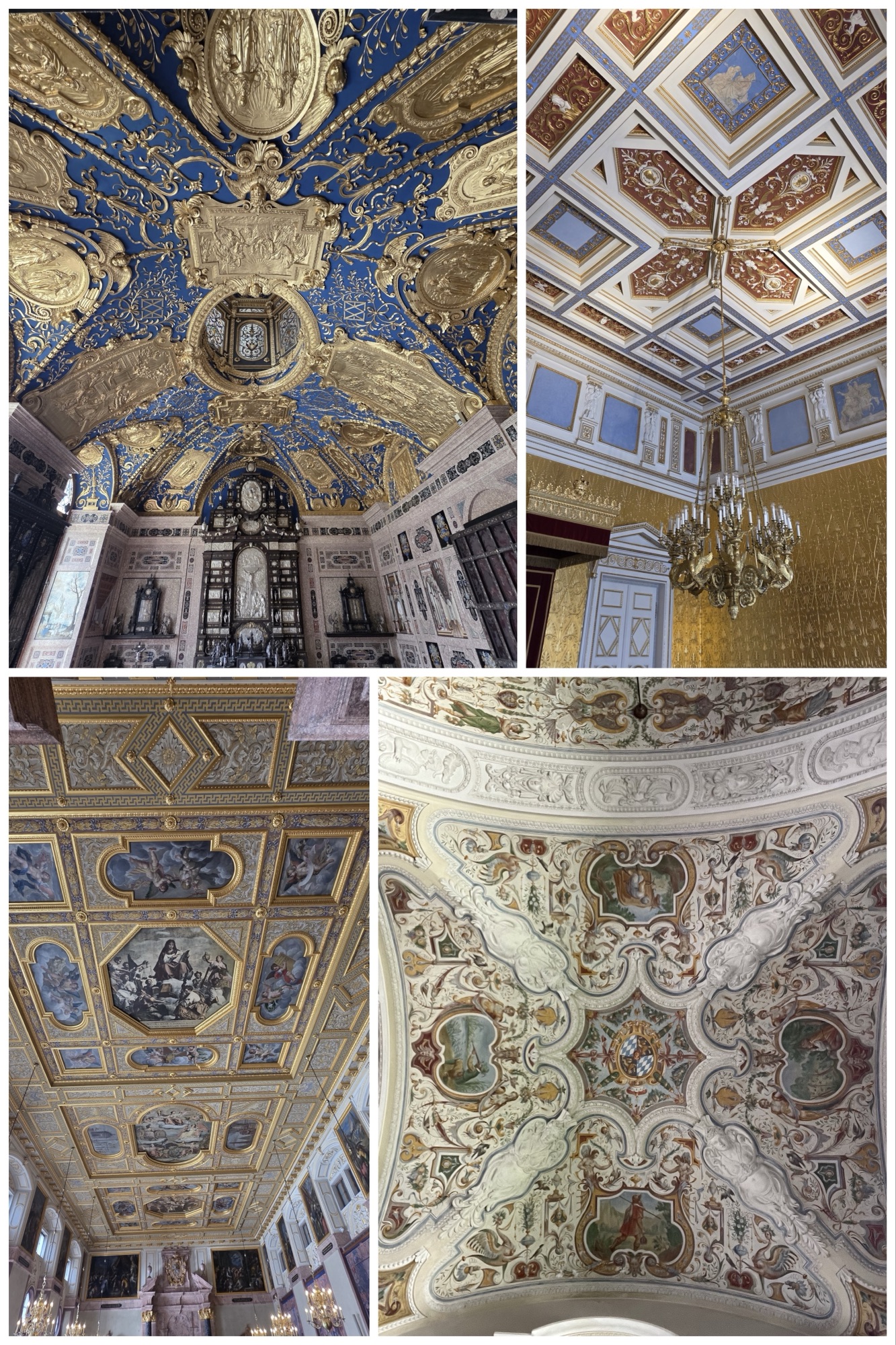
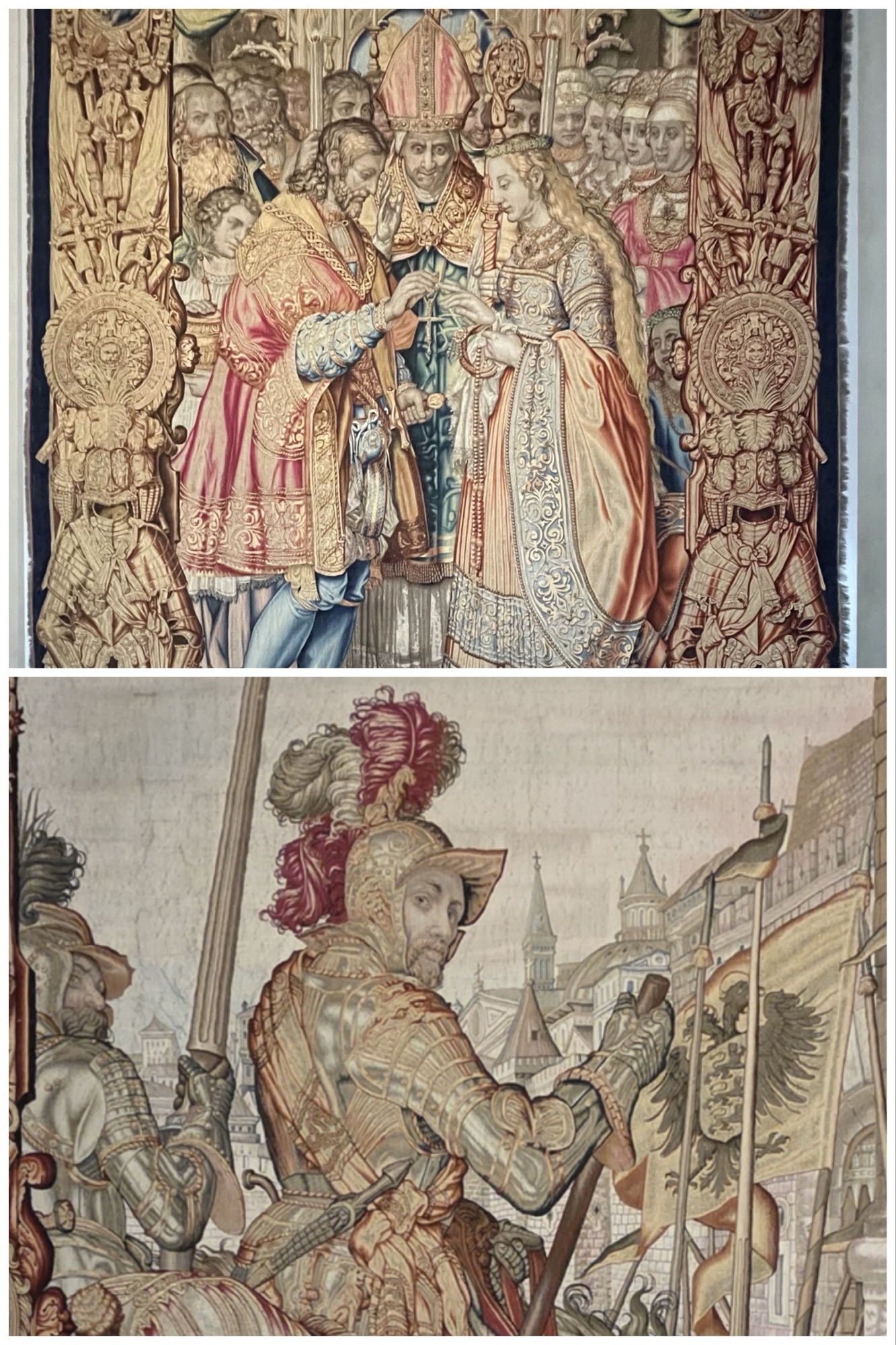
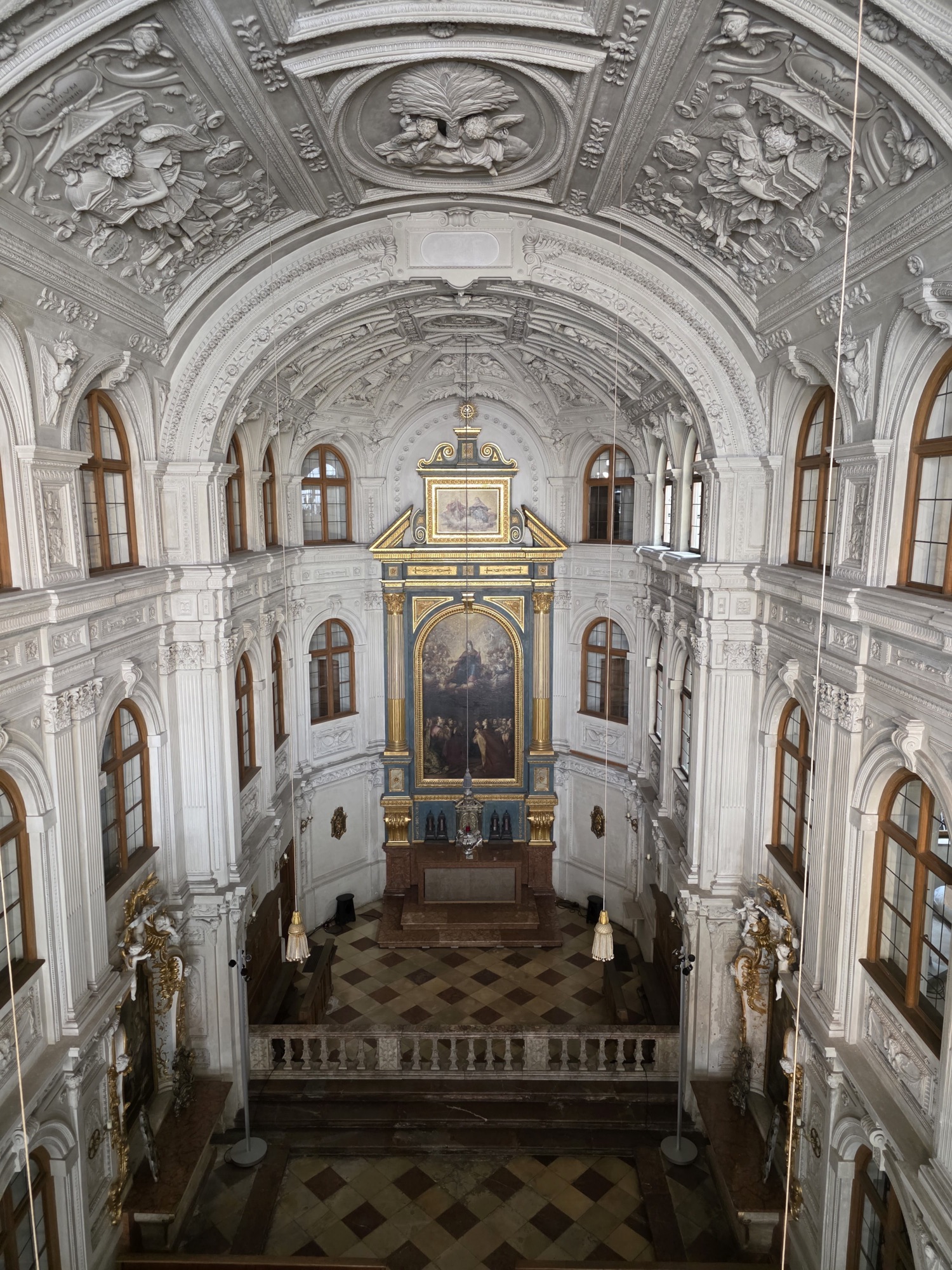

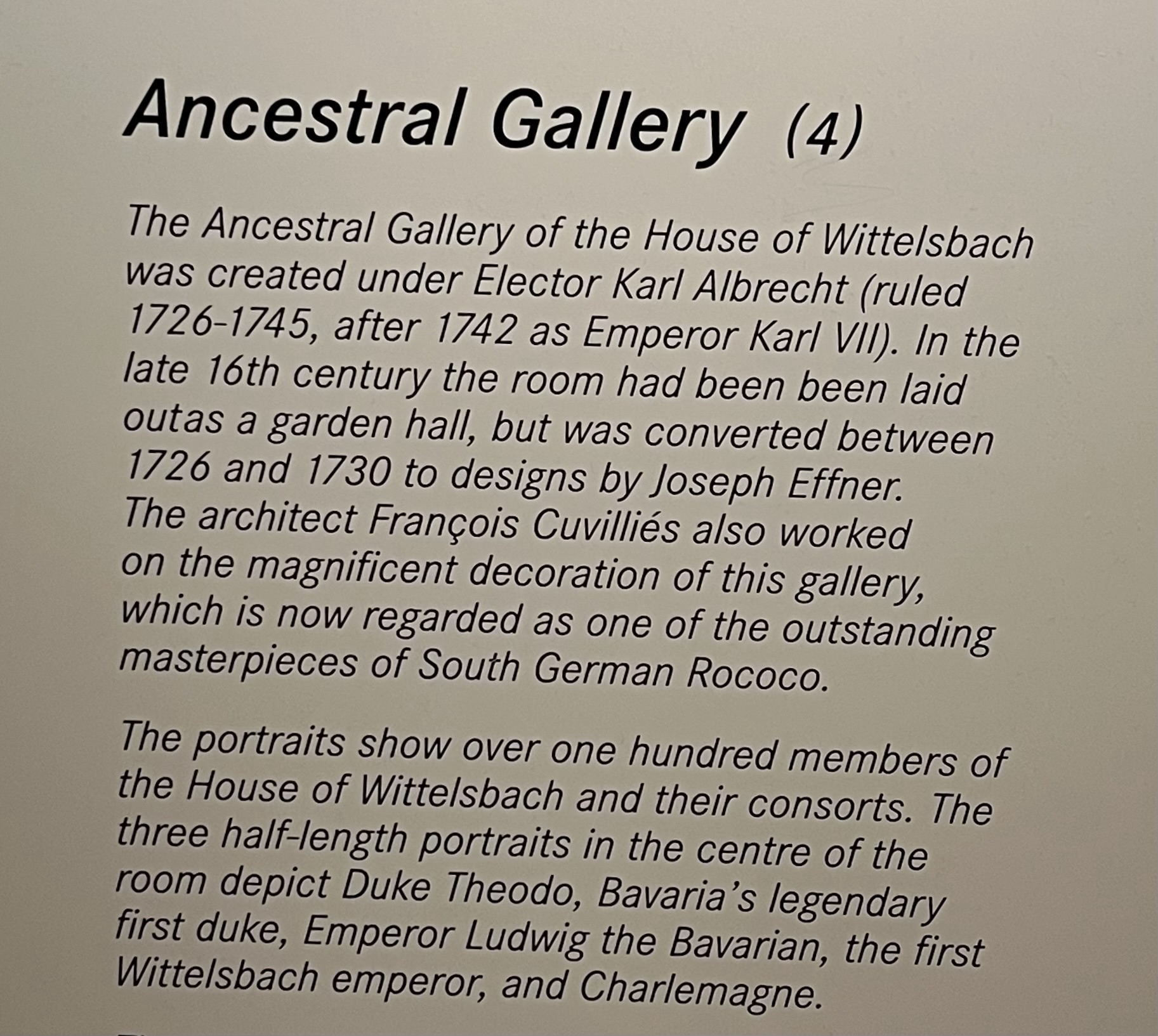


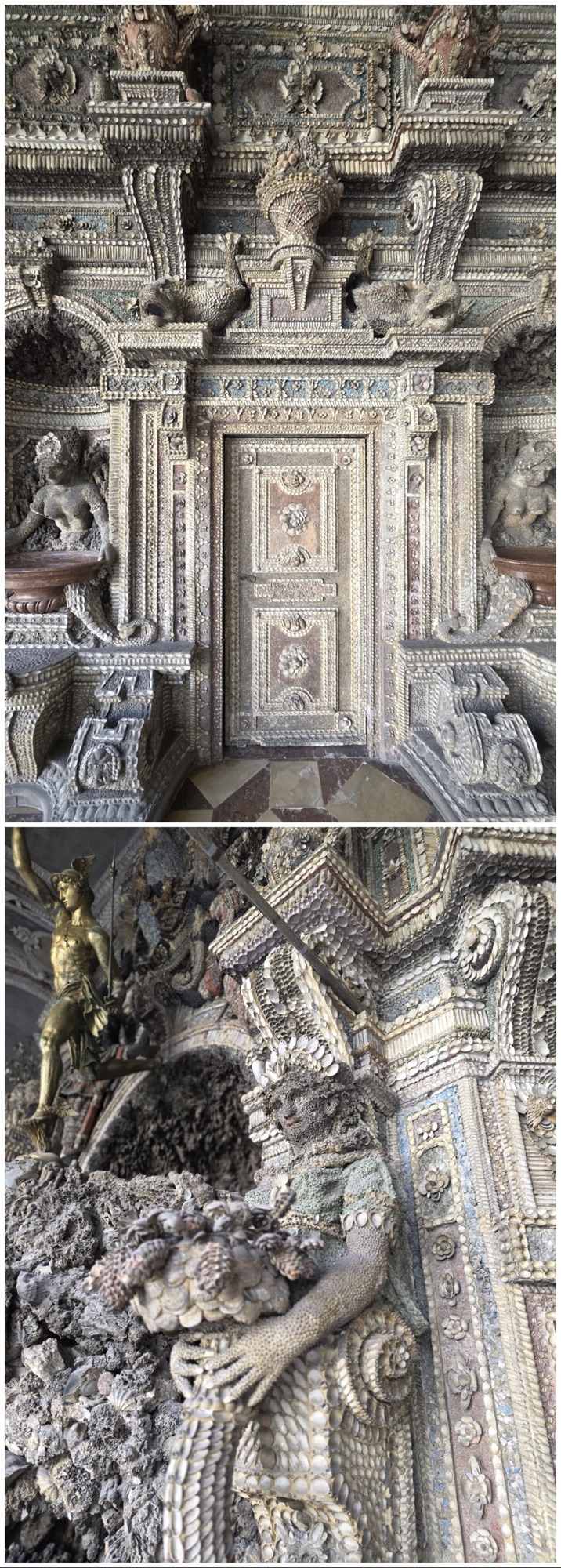

The Antiquarium, lined with busts of Greek and Roman famous leaders. At either end, a raised platform for the king or queen – everyone else stayed at floor level.


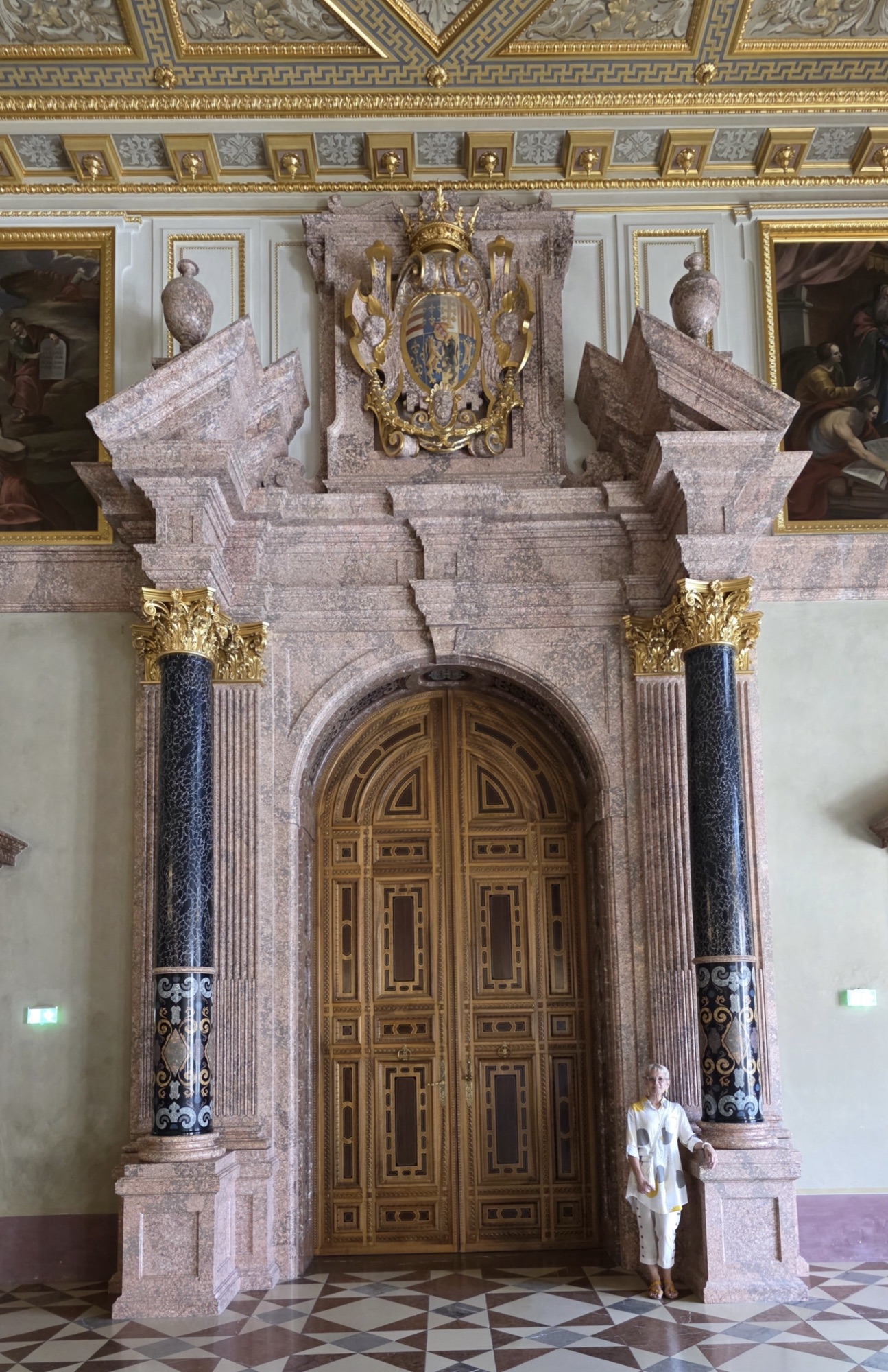
What looks like inlaid marble in the columns is an Italian faux marble inlay technique, known as Scagliola, originating in Europe in the 1600s, that involves creating a decorative stone-like surface using plaster, glue, and pigments to mimic marble or other precious stones.


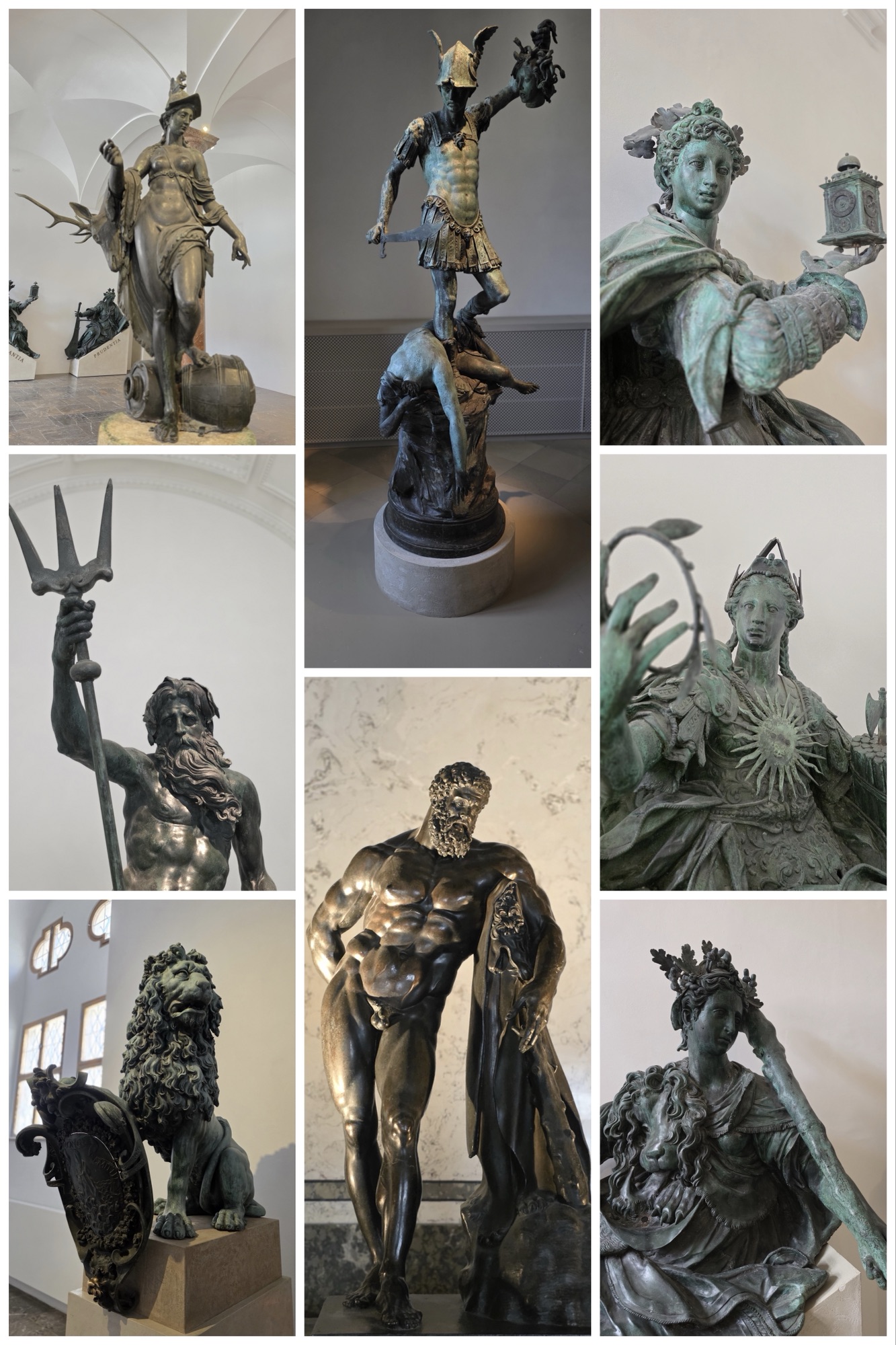
An entire set of rooms was devoted just to bronzes commissioned by the Wittelsbachers.
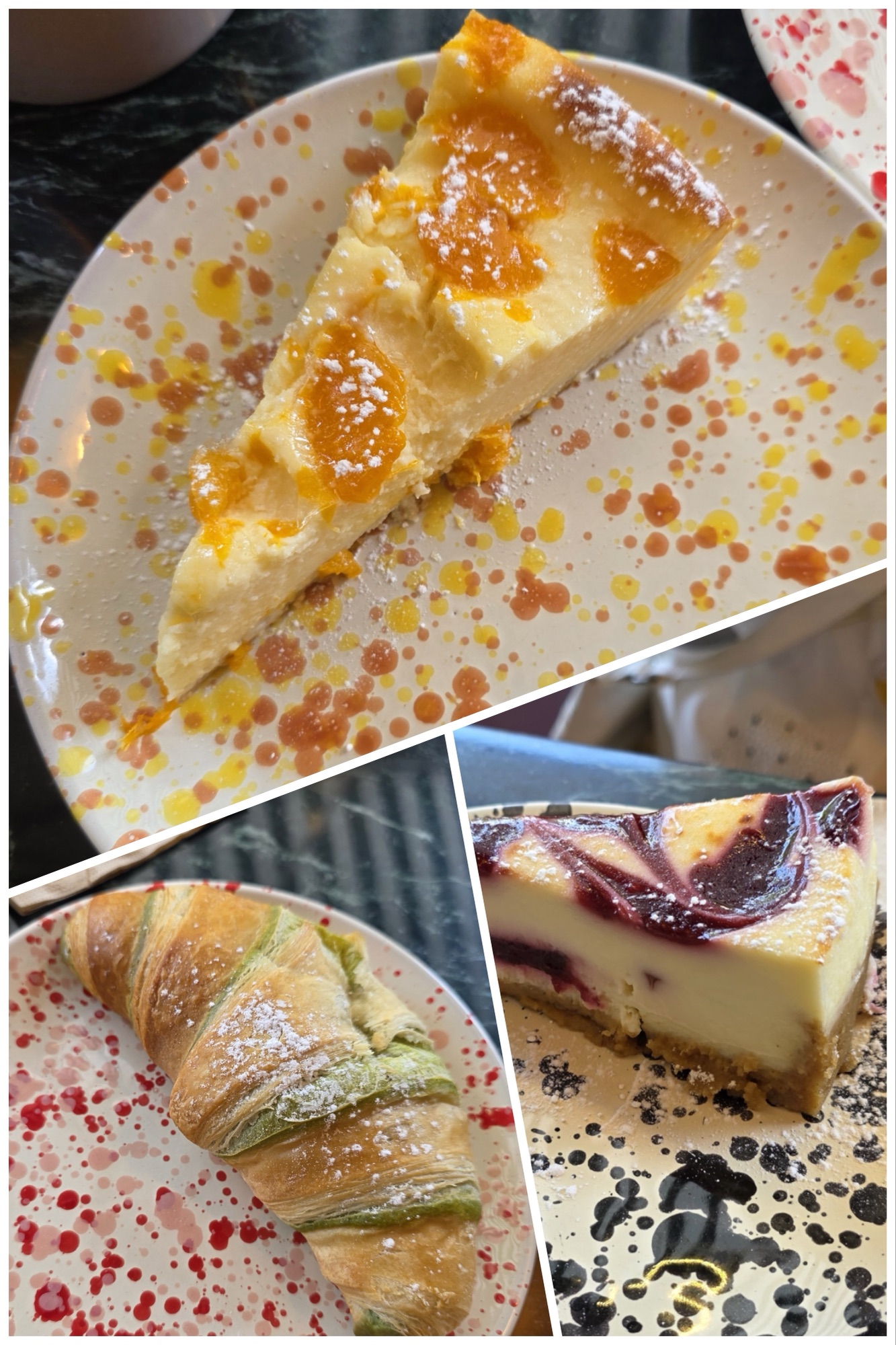
Son #2 and I were both over-stimulated by all that splendour. Cake and coffee were called for, so we walked a couple of blocks to Markt Lehel. #2 pronounced the coffee “better than at Einstein” (weak praise indeed), but I really enjoyed my cold Ingwer Schorle (ginger spritzer). No question we both enjoyed the apricot cheesecake, raspberry and white chocolate cheesecake, and pistachio croissant.
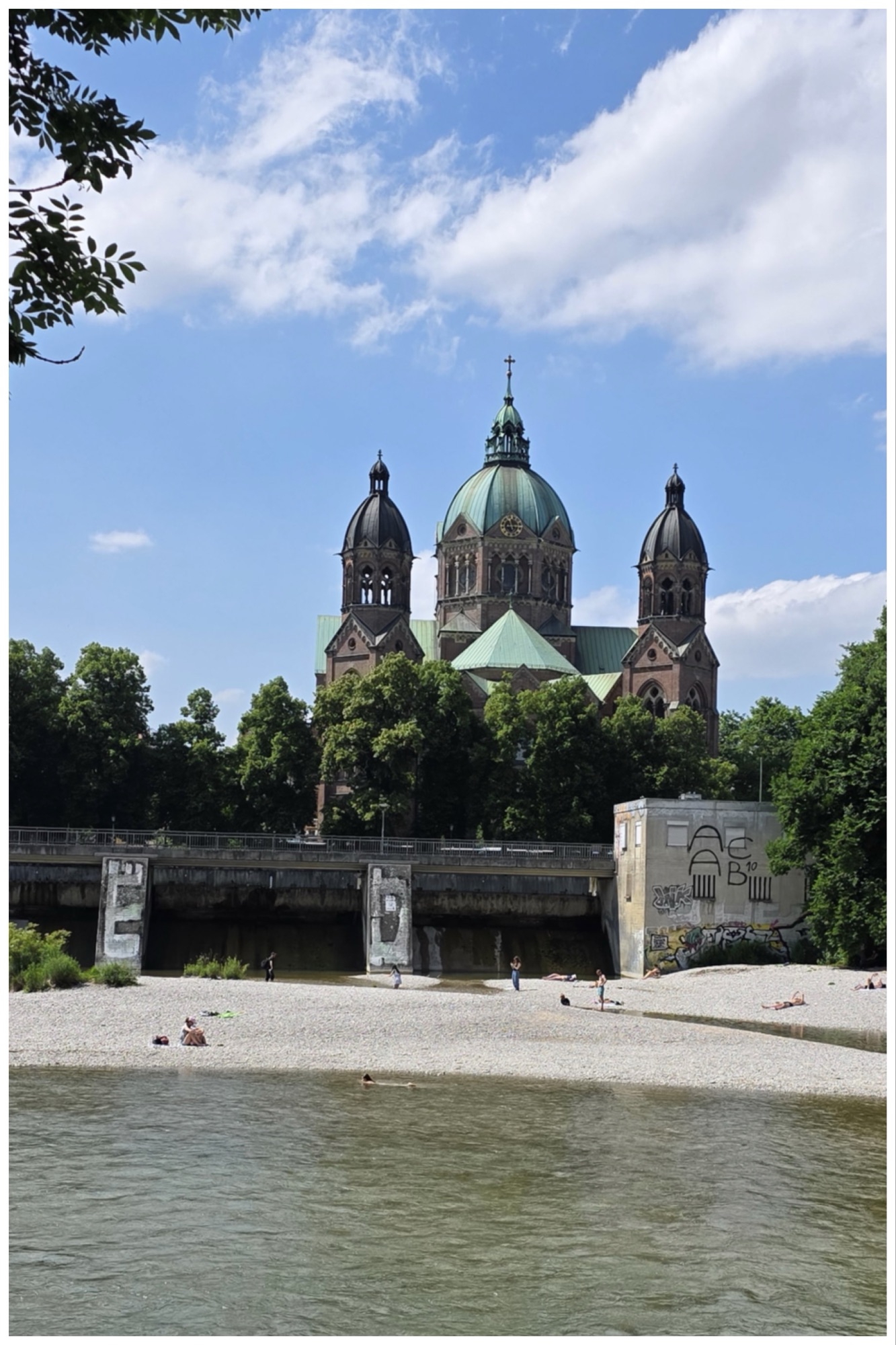
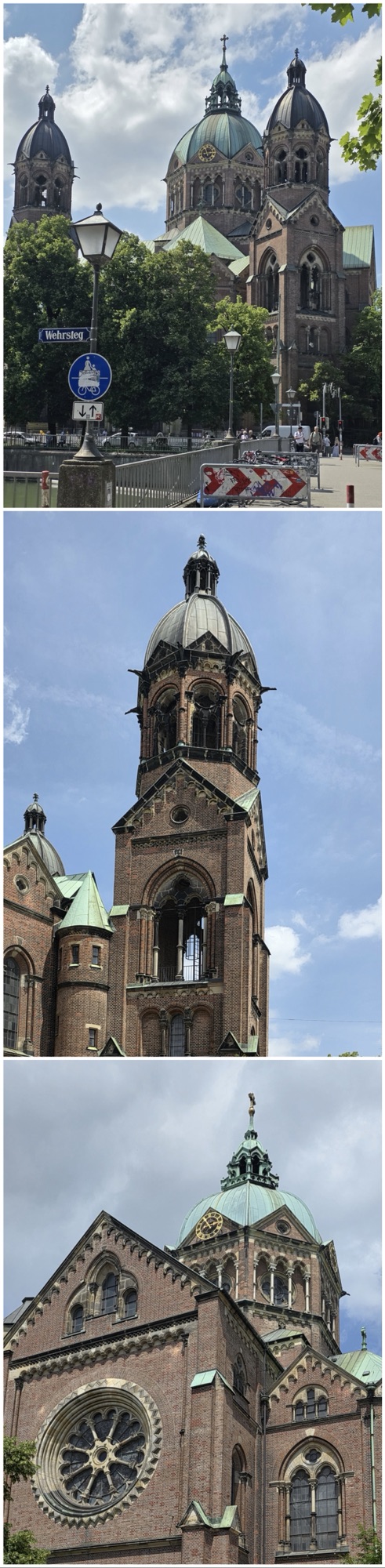
We were planning to go right back to the Residenz to tour the Schatzkammer (treasury), but a friend of #2, Benjamin, is Chef at Showroom, a Michelin star restaurant here in Munich (we couldn’t afford to eat there) and was free to meet us for a beer, so instead we walked over the Isar River to the Biergarten am Muffatwerk. Our route took us past St. Lukas, the largest Protestant church in mostly Catholic Munich. It is currently surrounded by scaffolding, so inaccessible, but what we could see of the exterior was impressive.

Since Benjamin needed to get to work to prep for the dinner seating, #2 and I returned to finish our tour.
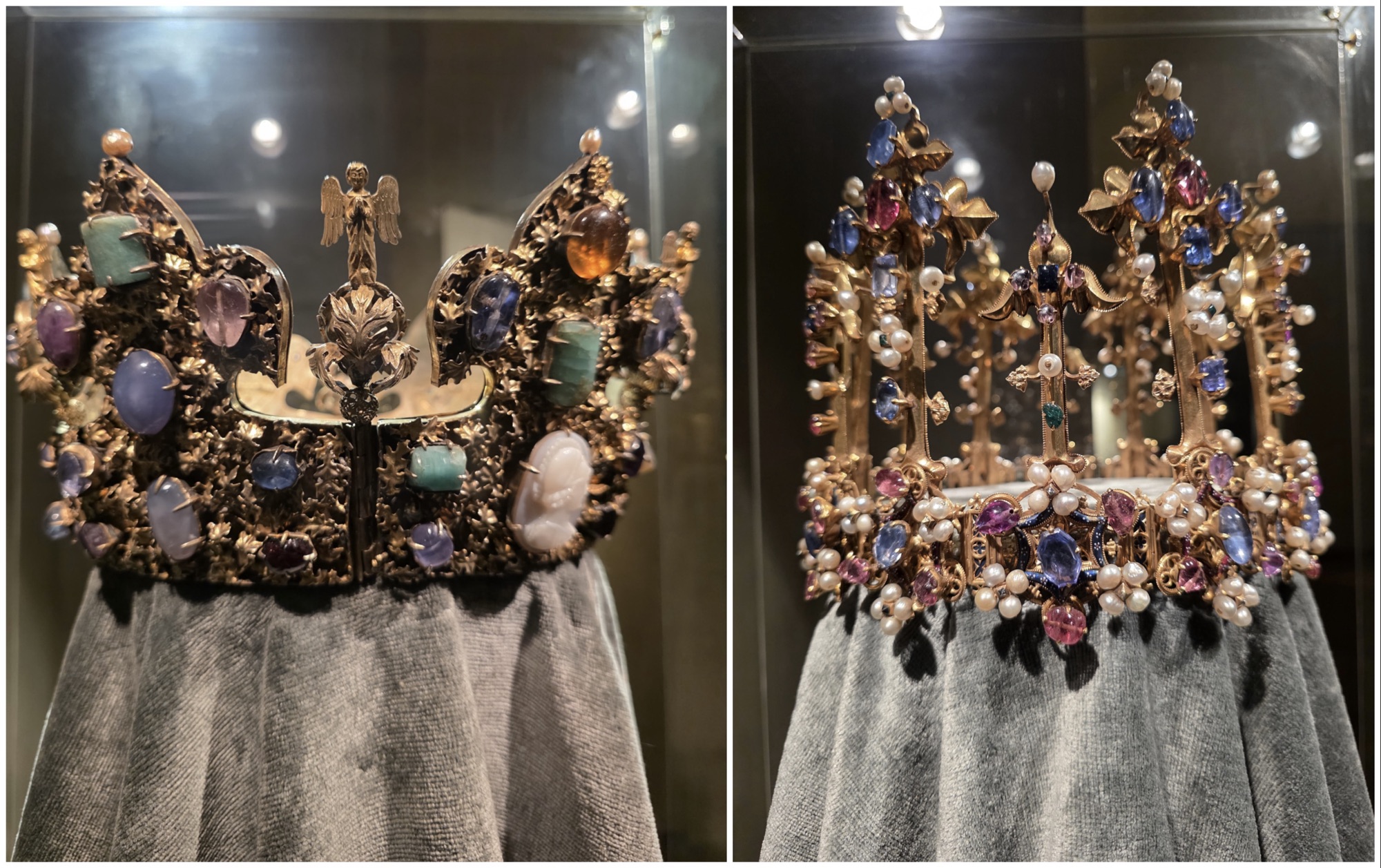
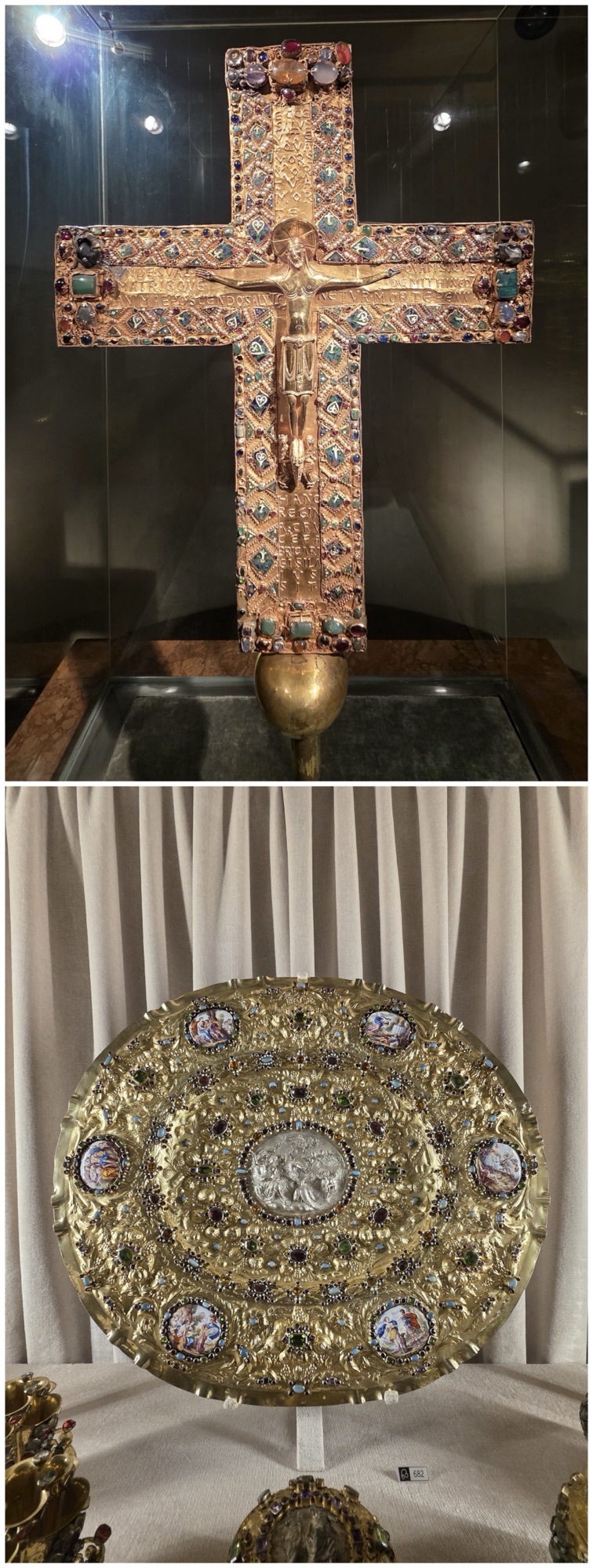
The Schatzkammer holds the truly opulent dynastic items: personal altars, sceptres and maces, crowns and jewels that rival what I’ve seen in the Tower of London.

I think by the end of our 2 hour morning tour, and our return to tour the Schatzkammer (treasury), #2 was actually almost disgusted by the sheers scope of wealth on display. He certainly was beyond taking photos – especially of the carved rhino horns, ivory, etc.
We were within sight of the Frauenkirche, Munich’s cathedral with its two iconic towers, so took a few minutes to look inside.

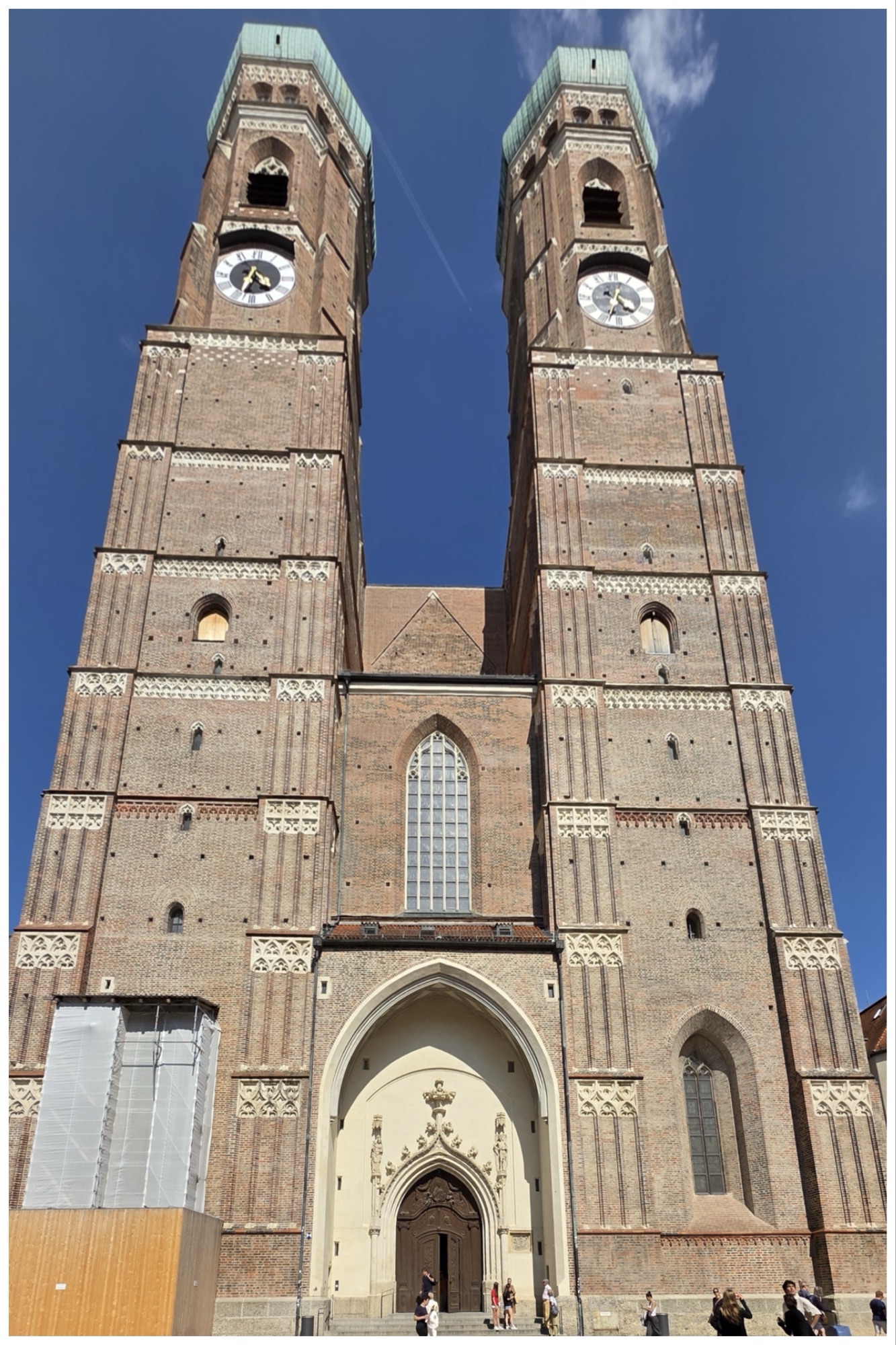
Like many Gothic churches, its interior is quite plain – just soaring light-coloured walls and not much embellishment.

On our way to dinner, serendipity! I’d thought we’d need to be at City Hall at exactly noon tomorrow to hear the glockenspiel and see the automatons in the tower, but there’s a 5:00 p.m. presentation in the summer for which we were just in time.

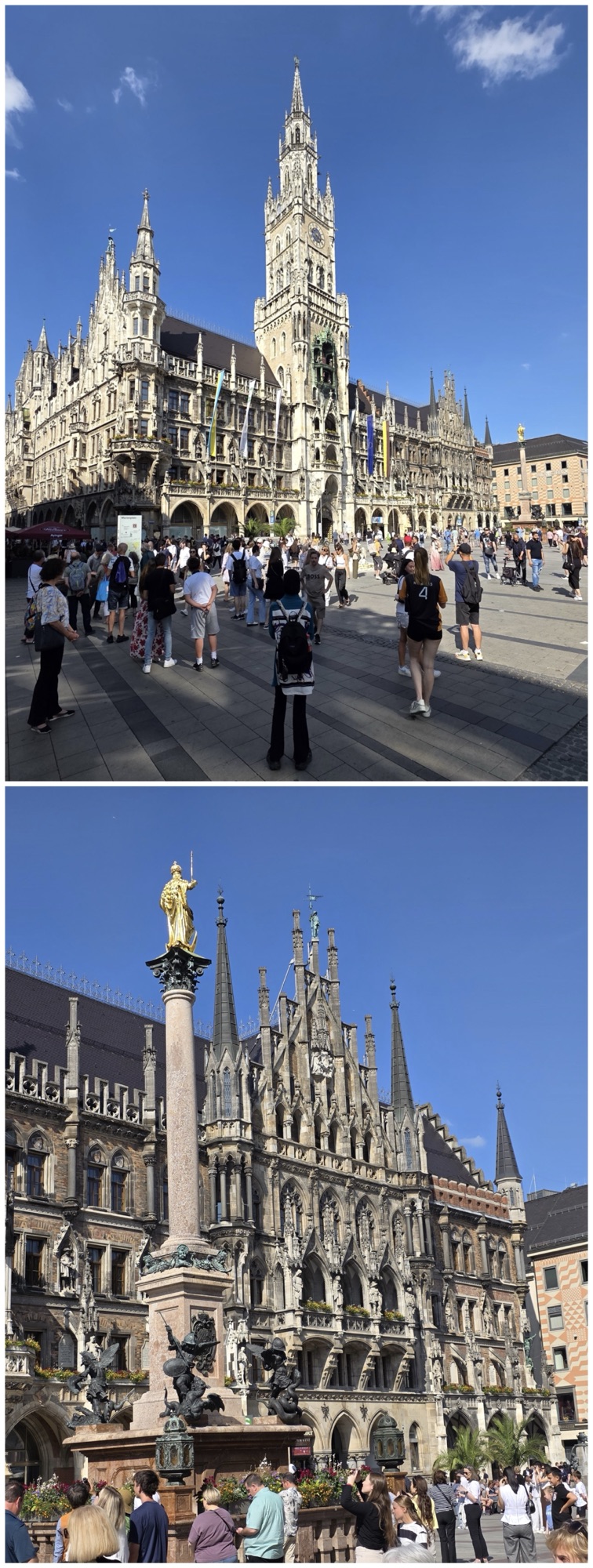
Munich’s glockenspiel dates from 1908; over 15 minutes it re-enacts two 16th century stories using 43 bells and using 32 gorgeously painted life-size figures of people and horses that move on two separate levels. The top half tells the story of the marriage of Duke Wilhelm V to Renate of Lorraine, complete with a dance by the court jesters and a joust with life-sized knights on horseback representing Bavaria (blue and white) and Lothringen (red and white). Bavaria always manages to unseat Lothringen. The bottom half depicts the Schäfflertanz (the coopers’ dance). According to myth, during Munich’s 1517 plague the coopers danced through the streets to cheer up the population. At the end of the show, a small golden rooster at the top of the glockenspiel chirps 3 times. Of course, the hours also chime!
Then on to #2’s undisputed favourite event of the day: dinner at Haxengrill, where slow-roasted crispy-skinned pork hocks are the house specialty.


I called it a night by around 11:00 p.m., while #2 and his friend reconnected for a nightcap and chat in our hotel’s courtyard garden.
It was a good day.
 Rose and Ted’s Excellent Adventure
I have to agree with your son – after a while the “wretched excess” on display becomes disgusting. Especially in this day and age feeling what the level of inequality is doing to my country, it’s not hard to imagine something of what fueled ordinary Germans’ sense that something had been stolen from them over the centuries. Imagine how people would have lived if all that wealth had been better distributed. Still, the level of craftsmanship is extraordinary in some of the pictures. Thanks for so much food for thought and eye candy!
LikeLiked by 1 person