Our plan had been to touch base with my cousins for two days when we arrived in Germany, and then continue on to Bremerhaven and Bremen. When I contacted my cousin to confirm that it would still be okay to impose on them, and that on day three we’d be out of her hair and headed for our Bremen hotel, she responded in a way that reminded me of the little girl in the remake of Miracle on 34th Street (“I’m very sorry, mother, but you are completely wrong”). In this case, it was more along the lines of “I’m very sorry, Rose, but unfortunately you’ll have to cancel that hotel.”
Apparently, once a year – for six days – almost unbelievable things happen in Verden: There are vehicles that throw people through the air, a Ferris wheel that is higher than houses, spaceships landing on the street, children’s mouths sticky with cotton candy and ice cream. A market where you can find things you never knew you needed, but always wanted to have. Verdeners who can’t find their beds for six days.
In short: The city is upside down.
And that’s exactly when we are going to be there.
For all those who celebrate at the Verdener Domweih (Cathedral Consecration) year after year this is nothing new. For everyone else – #2 and I included – it’s a different story. How do you explain to someone who has never been here before what makes Verden’s cathedral dedication so special, and what makes acquaintances, friends and relatives flock to Verden?
The fact is, according to my cousins, you just have to have done the whole thing once.
We’ve been to our share of fairs. The Canadian National Exhibition has been going strong since 1879.
This is different.
Almost a millennium different.
The beginnings of celebrating the Verden cathedral’s consecration go back to the Middle Ages. In 985 CE, in addition to other privileges, the bishop of the time was also granted “market rights”. What today is a great folk festival in (almost) the entire city centre was originally a free market, where tradespeople from surrounding areas could come to sell their wares, and pay a tithe to the church. This market atmosphere is channeled today in the “Pöttcher-Markt”, a specific section of the cathedral square, where household goods and small items seek buyers.
The “Fifth Verden Season” was so important to the locals that even in times of war it was rarely dispensed with. Even today the city hums with excitement when June rolls around.
Apparently there was some historic conflict around “ownership” of the celebrations surrounding the commemoration of the cathedral’s consecration.
Until the 17th century, Verden existed as a city with two independent halves – and they were definitely not of one accord. Things that pleased the cathedral lords in “their” southern city annoyed the merchants and craftsmen around the town hall in “their” north. This eventually affected the cathedral consecration, which originally took place only around the cathedral. As it expanded more and more in the direction of Norderstadt (“northern city”) the northern city council simply took over the leasing of trade stalls. However, since these revenues were firmly planned for in the budgets of the southern city, they argued about it – on the streets and in the courts – for centuries. It was not until 1905 that Mayor Schorcht created a distinct “festival mile” around the town hall and along the city wall.
Fairgrounds and folk festivals have their origin in the festivals in memory of the church consecration. Since the 10th century, the anniversary of the church consecration was also celebrated as a secular festival with a market and popular pastimes. This applies to almost all old folk festivals. A well known example of another occasion becoming a festival is the Munich Oktoberfest, begun as the celebration of the wedding of the Crown Prince in 1810.
Verden’s original cathedral burned down around 850 CE, meaning that the first cathedral consecration must have taken place before that date, but for the Verden Cathedral consecration as a market and folk festival the year 985 is considered to be the significant one because that was the year Bishop Erpo was granted the market, coinage, and customs rights for the city by Empress Theophanu (mother of the later Emperor Otto III).
There are no “official” lists of the oldest folk festivals in what is now Germany, but unofficial ones indicate that Verden’s is probably the third oldest, behind Liborifest (Paderborn’s celebration of the transfer of the Relics of St. Liborius to Paderborn, dating to 836 CE) and Lullusfest Bad Hersfeld dating to 852 CE.
What was it like? Imagine a German Christmas market, transposed into summer: rides, vendors, FOOD! The decor, of course, is pure summer fair instead of snow, stars, creches, and elves.
It was fabulous fun.
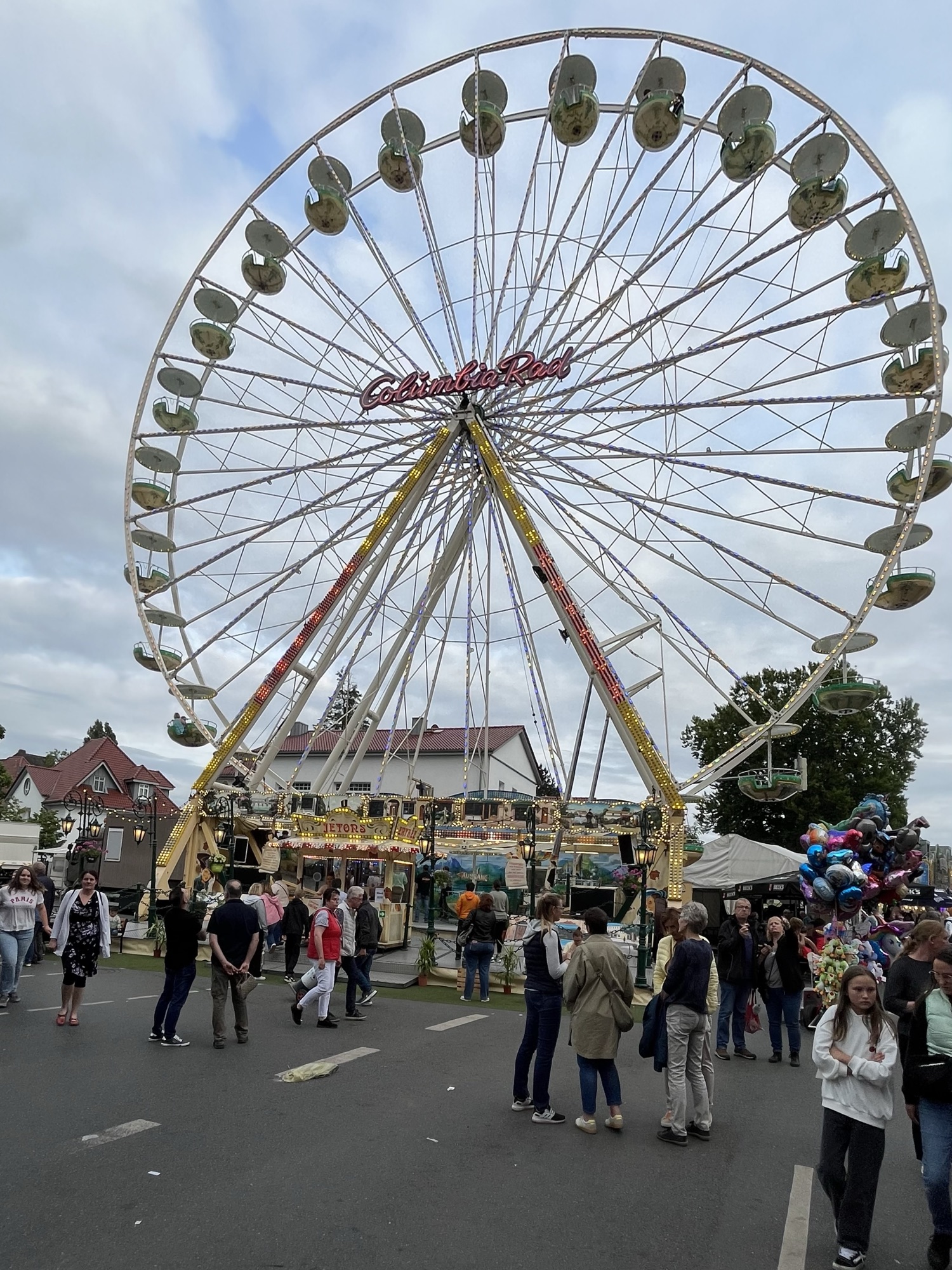


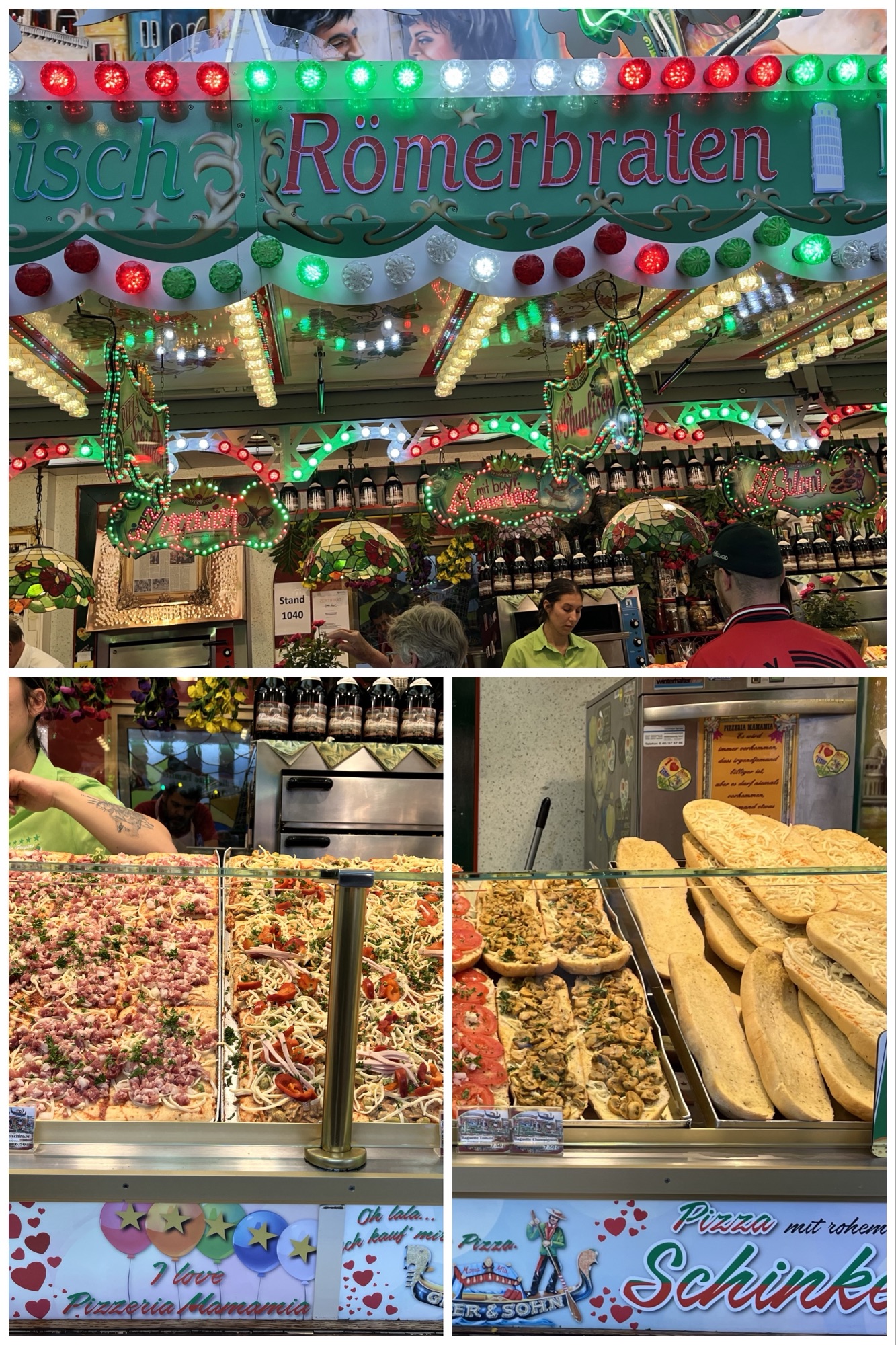
For us, the highlight was food, drink, and live music.
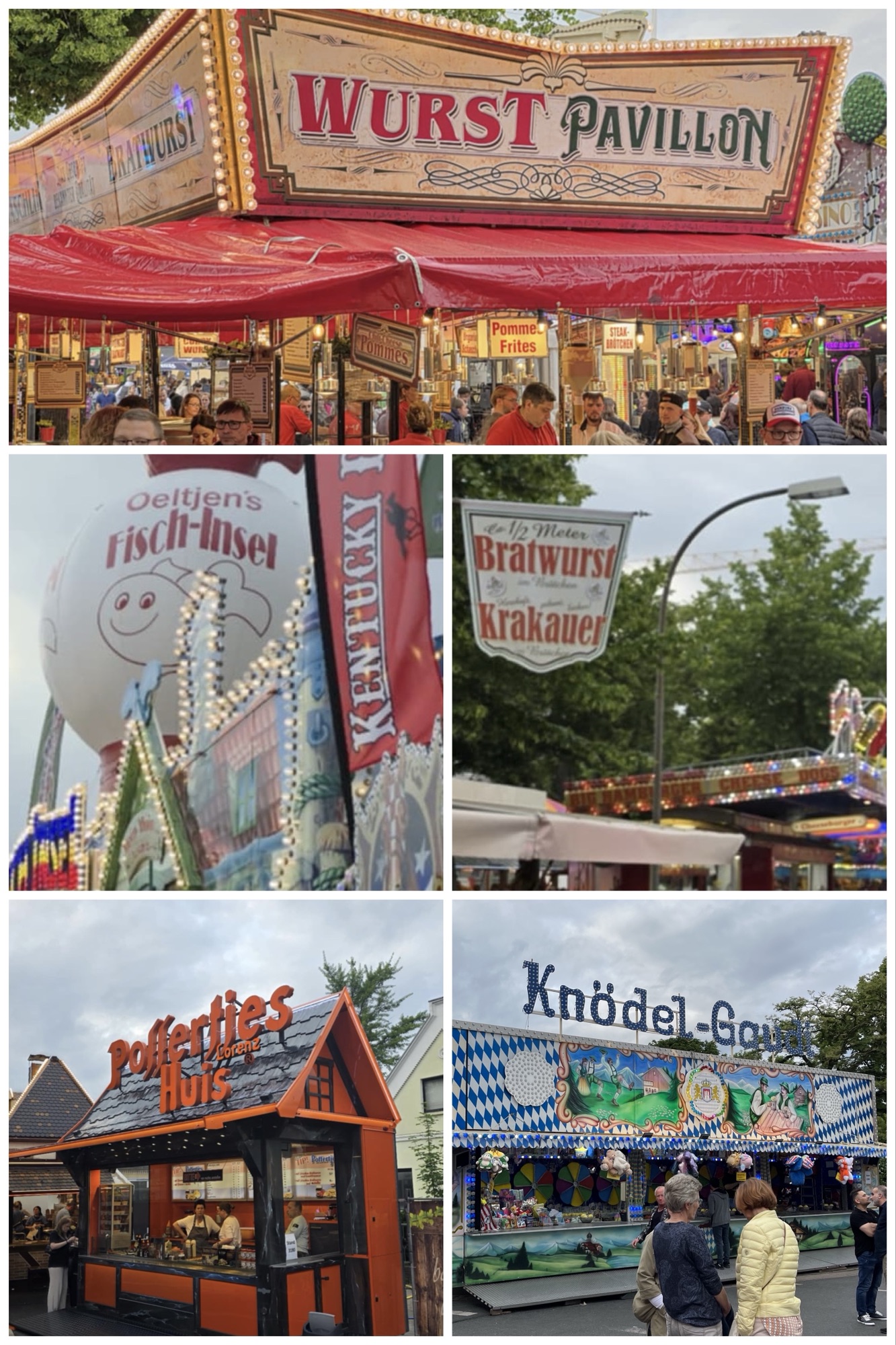
Son #2’s priority was clearly German sausage: a Krakauer,and a hakf metre long bratwurst!

It wouldn’t be a German celebration without beer and love music. We found a bar near the main stage, where Helga convinced me to try an Altbier Bowle, which is a dark beer with fresh strawberries in it. The strawberries soak up beer. The first one tasted strange. The second one tasted much better. Funny thing.

The Donweih starts with a parade and a speech by the mayor of Verden, but when it is over it gets “buried”. On the last night of the fair, at midnight, pallbearers – accompanied by a band – carry a coffin to the Weser River and dump it in, the fair is officially “dead”.
(Don’t worry – the coffin is retrieved a short way down river).
We missed the closing ceremony because we were prepping for an early start, but we certainly enjoyed our experience of Verden’s Domweih.
 Rose and Ted’s Excellent Adventure