I’ve been here before, with Ted and my cousin Helga and her husband Manny, back in 2016 (Episode 83).
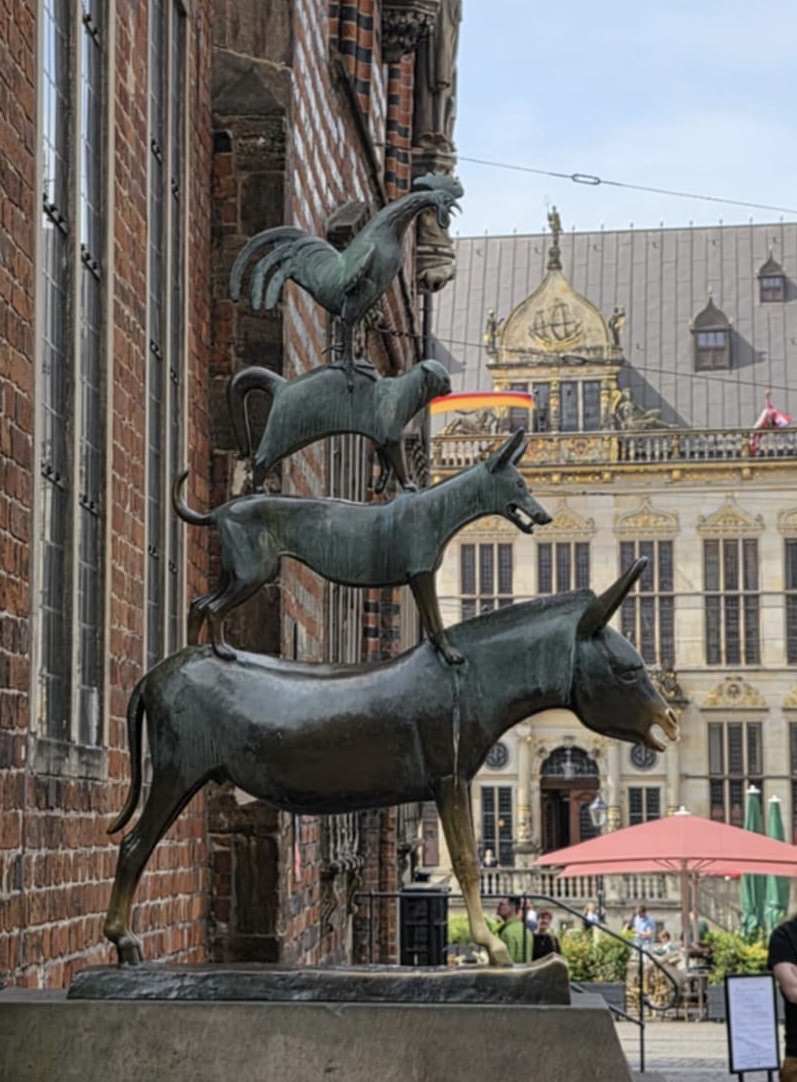
Bremen, folkloric location of the famous Grimm tale “The Bremen Town Musicians” (Die Bremer Stadtmusikanten), is the historic seat of commerce for the Hanseatic guilds and maritime trade. It is completely separate from Bremerhaven – the port city, “Bremen’s Harbour” – on the north sea, although connected to it by the Weser River.
Today, son #2 and I visited it with Helga and her daughter-in-law Natalie, who lives only half an hour outside Bremen’s old city, but – like most of us – has never been a tourist in her own town.
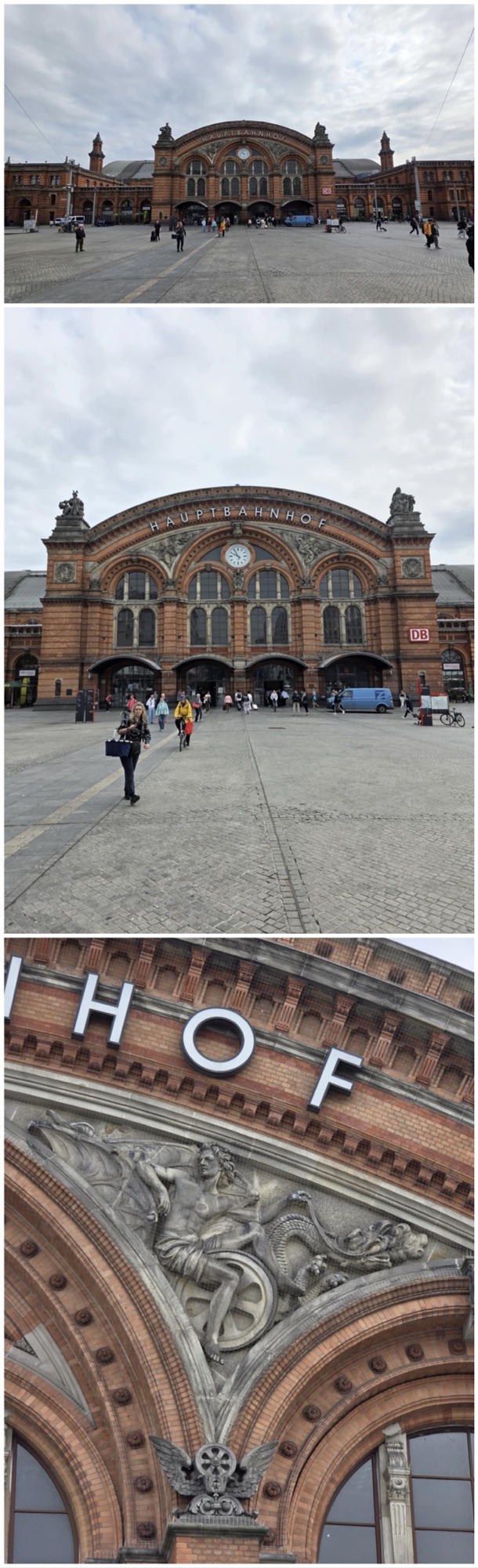
We met outside the Hauptbahnhof (main train station), built from 1886 to 1891 after plans by Hubert Stier, with sculptures by Diedrich Samuel Kropp and Carl Dopmeyer. Even though the station hall has been remodeled several times due to war damage and modernisation, its exterior still looks much like the original building.
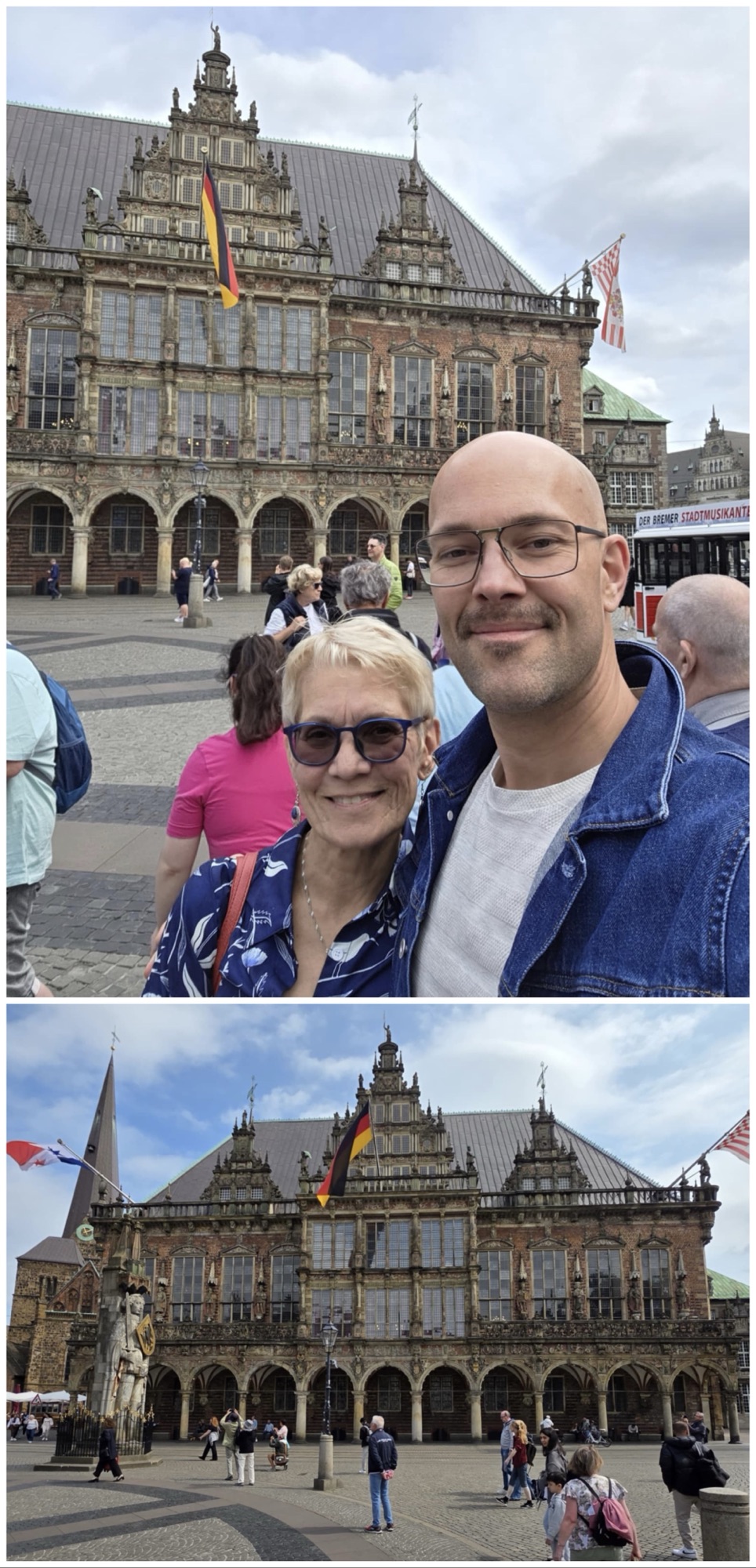
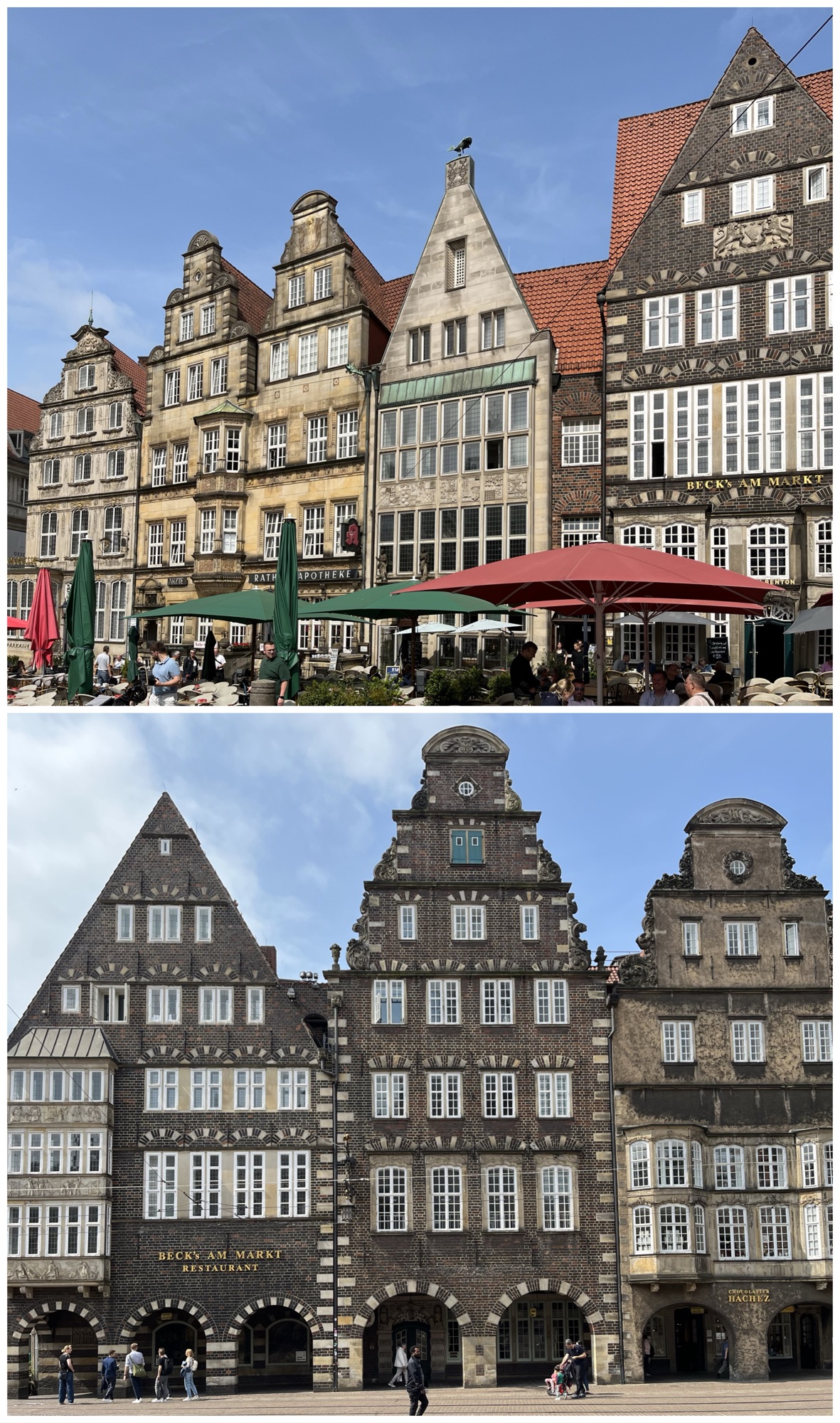
From there we walked the short distance into the city centre, where the 3,484 m2/37,500 sq ft market square was originally bordered by the old town hall, the former archbishop’s palace palace, the stock exchange, the Church of Our Lady, and a row of buildings housing banks, shops, and restaurants, some of which have retained their original uses since the 16th century. The square itself has been in use as a market from the time of Charlemagne right up until the middle of the 20th century.
I remembered Bremen as having a charming city centre, and I was not wrong.

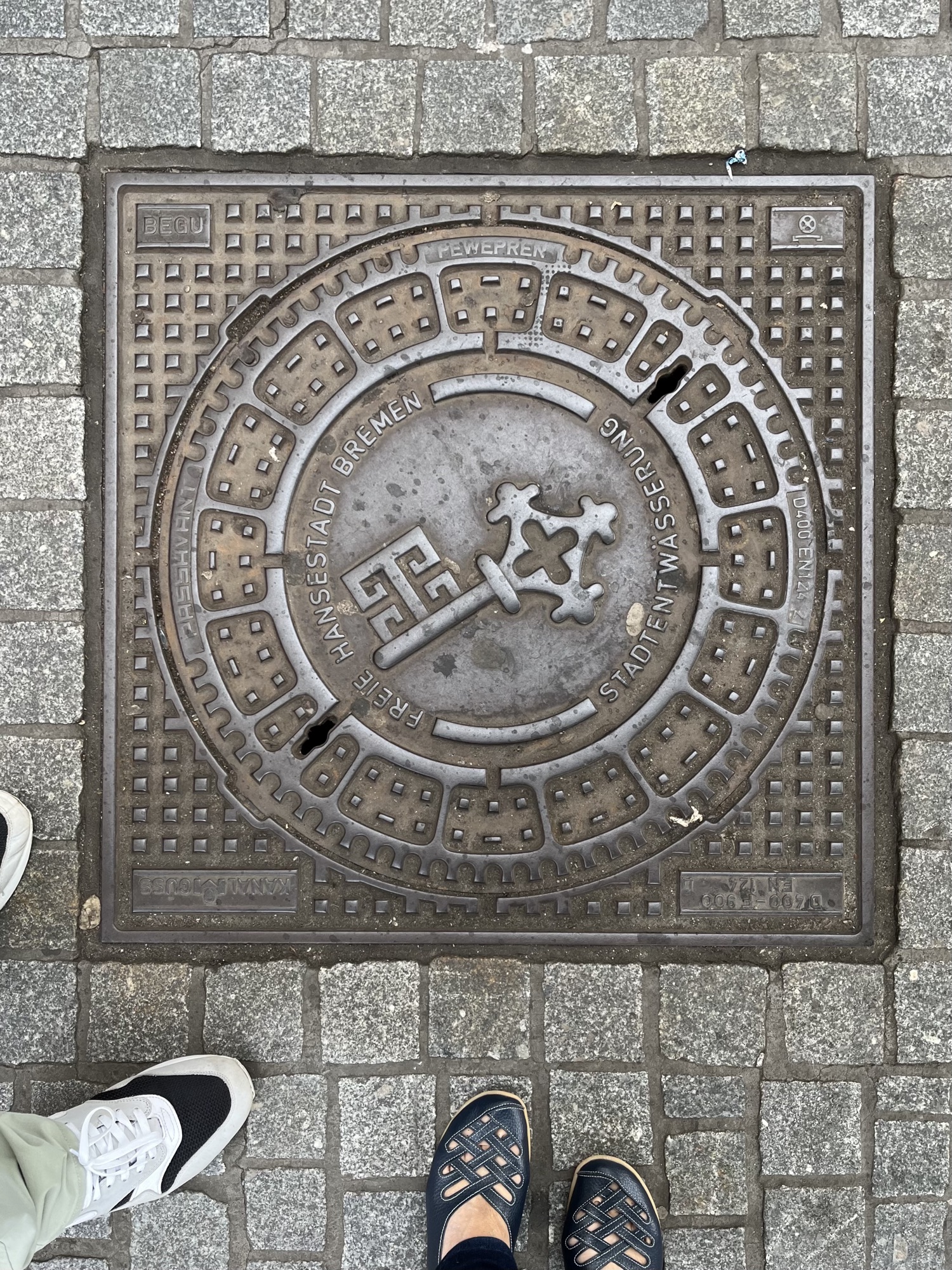
In Germany, it is said that Hamburg is the door to the world, but Bremen holds the key. To that end, the city’s symbol – a key – is everywhere, including on the manhole covers.
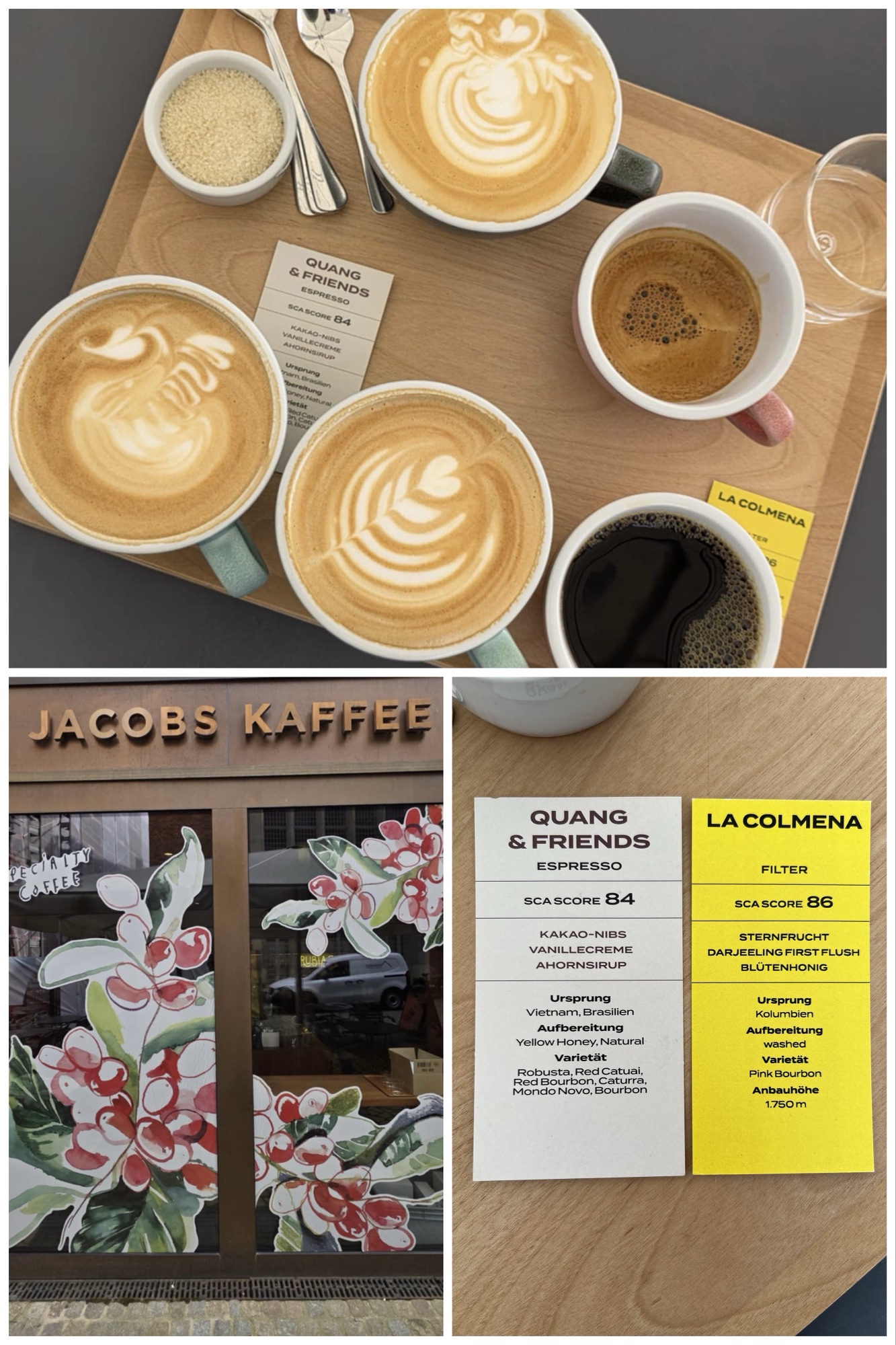
Before beginning our explorations … coffee! We enjoyed wonderful brews at Jacobs Kaffee (coffee), right next door to the building erected in 1615 CE where the Jacobs Coffee Company established their head office in 1895.
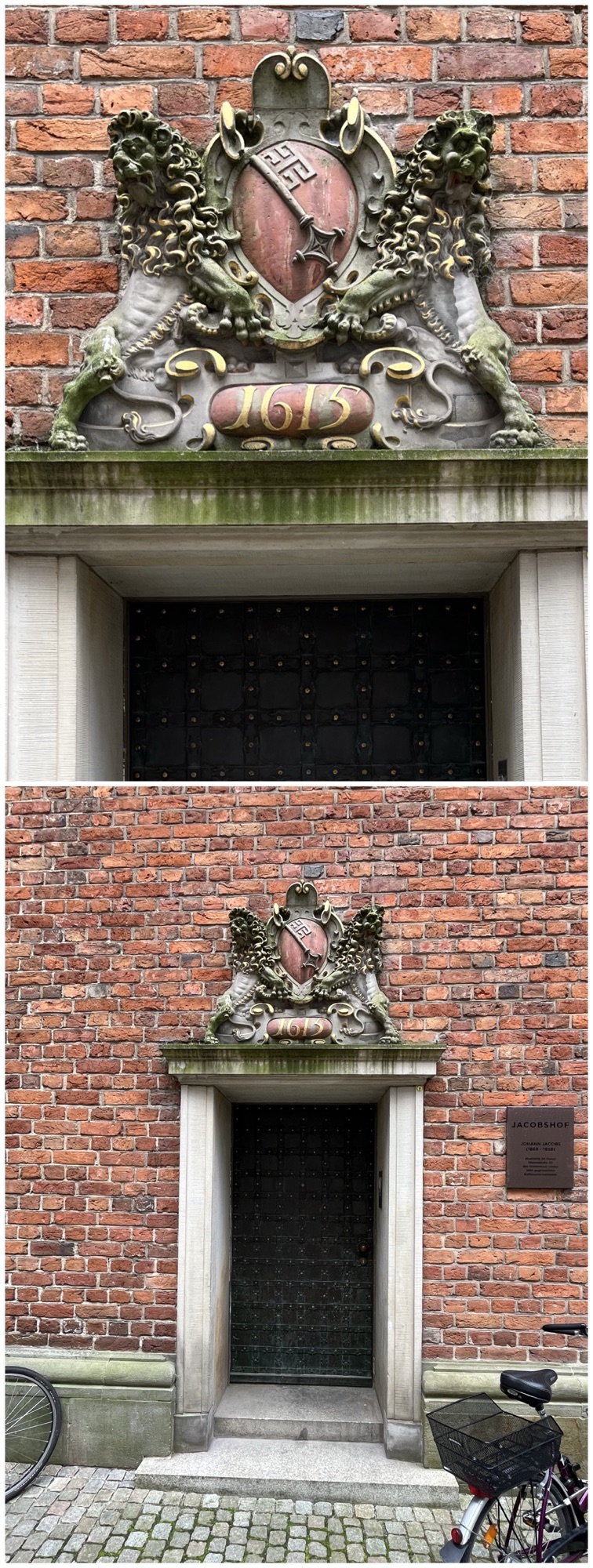
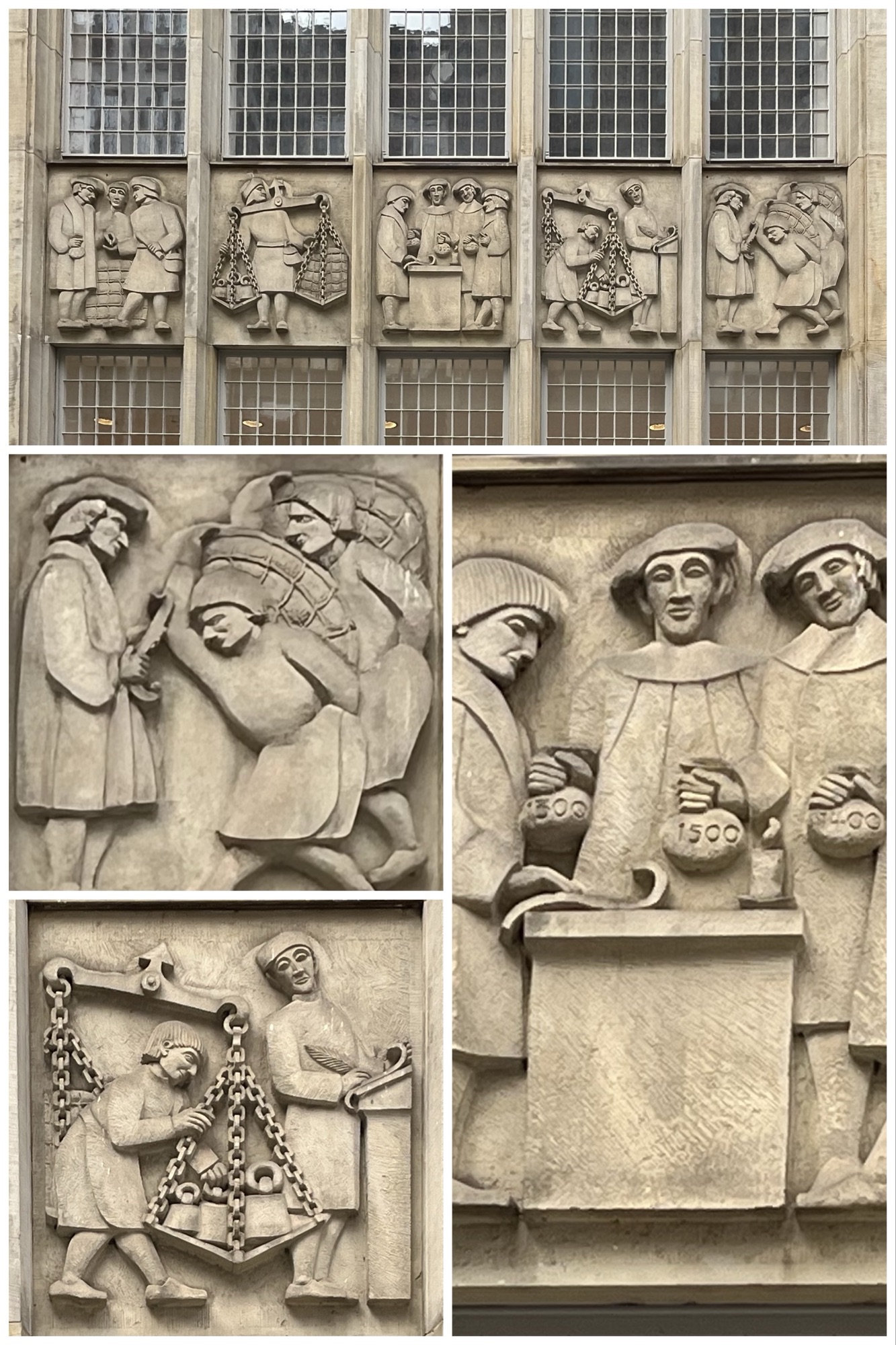
The building features sculpted stone friezes depicting the arrival and weighing of sacks of coffee.
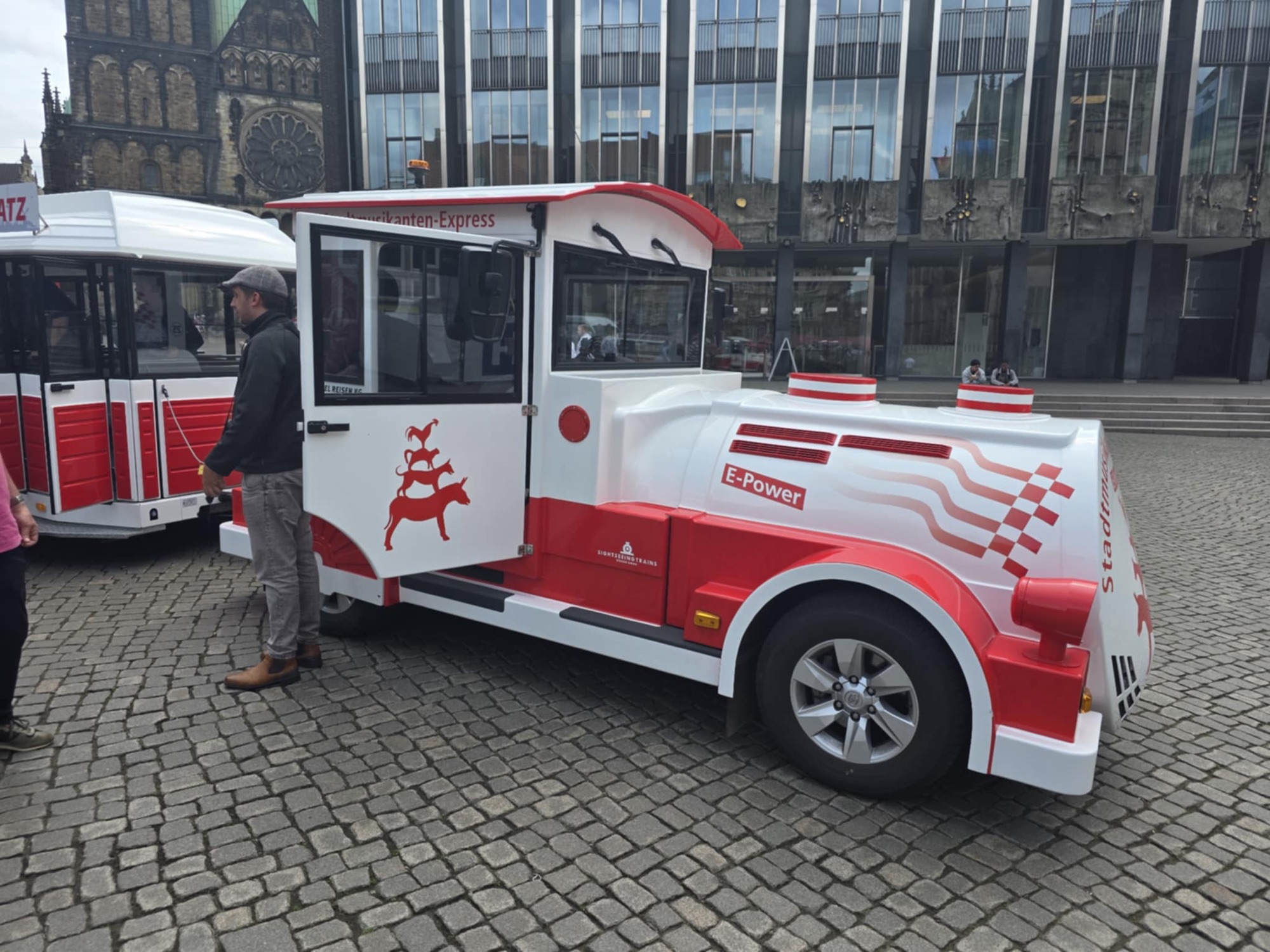
Well fortified with caffeine, we opted to take a short narrated miniature train ride around the old city’s perimeter and along the banks of the Weser River.
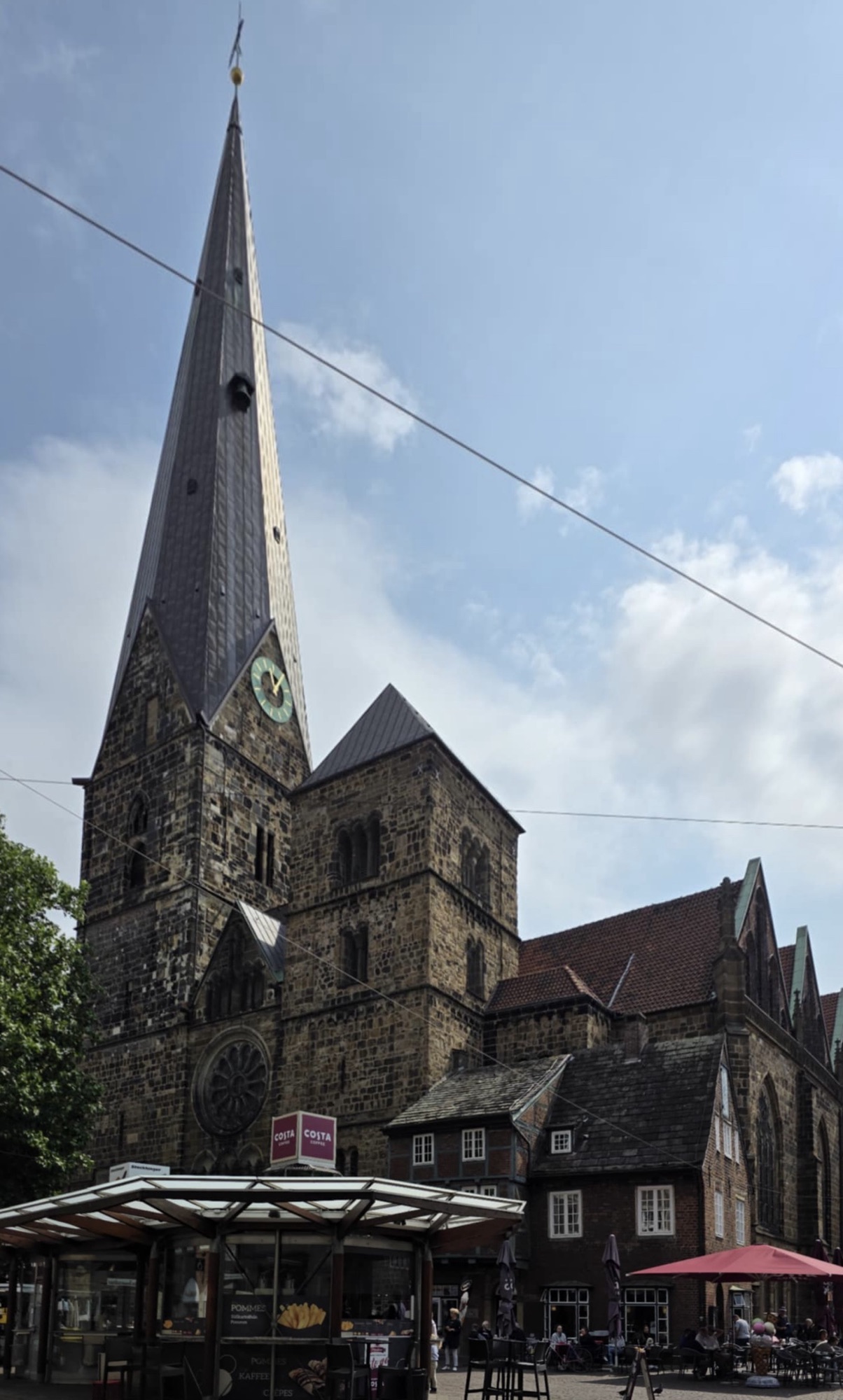
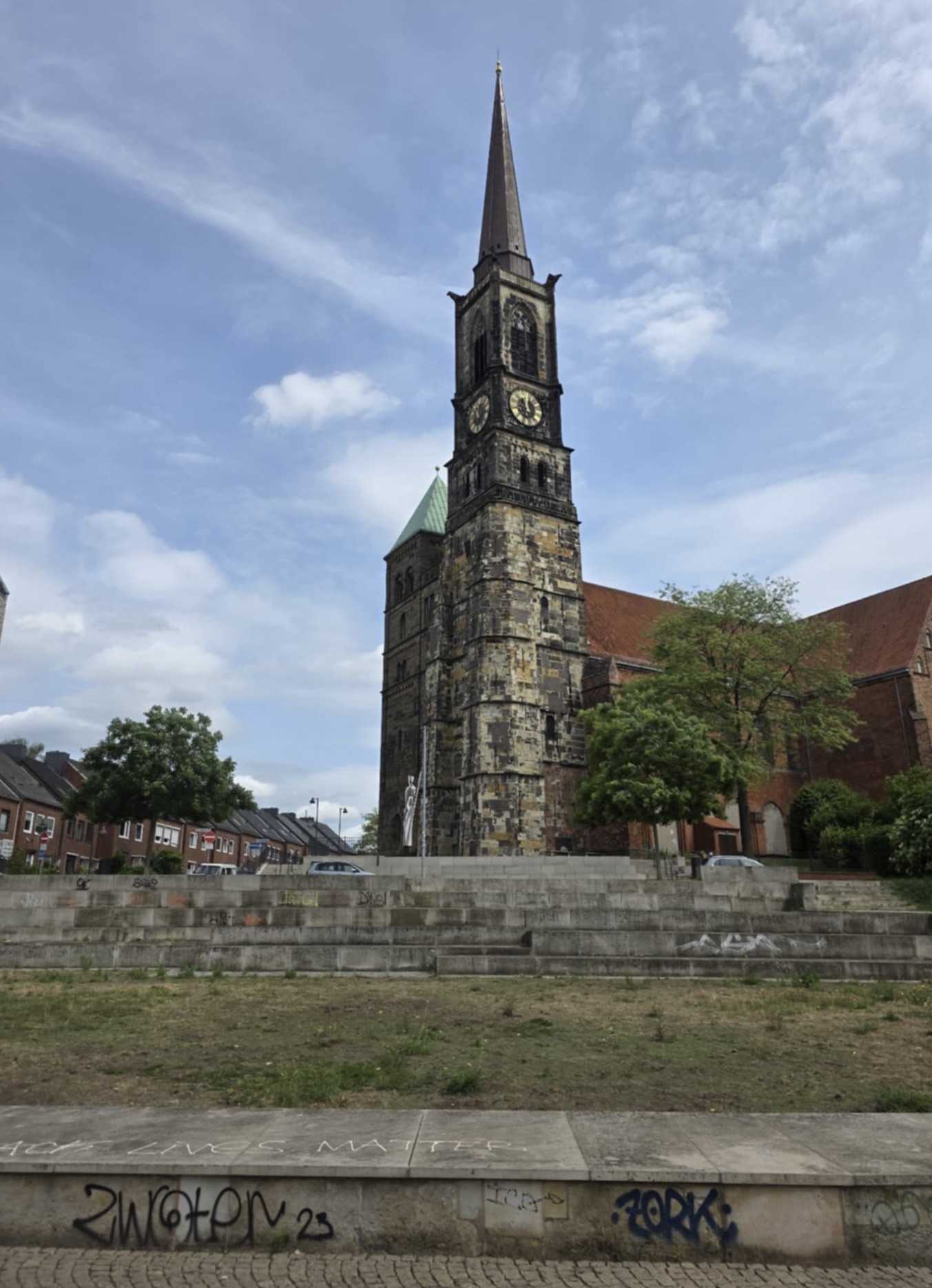
One of the places we passed was the gothic style St. Stefani Church, dating to the early 1300s. What makes this church remarkable is that it suffered no damage at all during WWII, thanks to the fact that its spire was used by Allied pilots as a marker against which to align themselves in order to have a perfect aim at Bremerhaven, which was the major port they wished to disable.
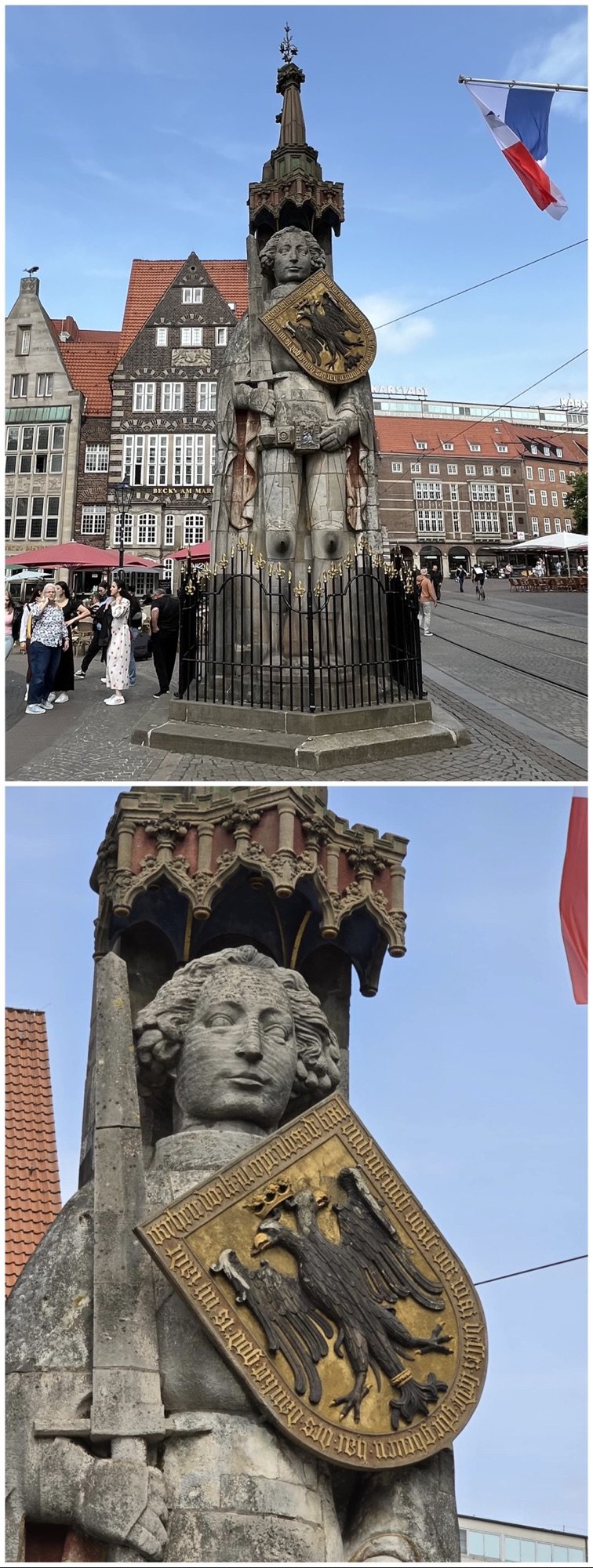
Then it was back on foot to get a closer look at some of the ride’s highlights: the Schnoor, Saint Peter’s Cathedral, and the Roland Statue, pas well as simply exploring the interesting architecture on all of the side streets.
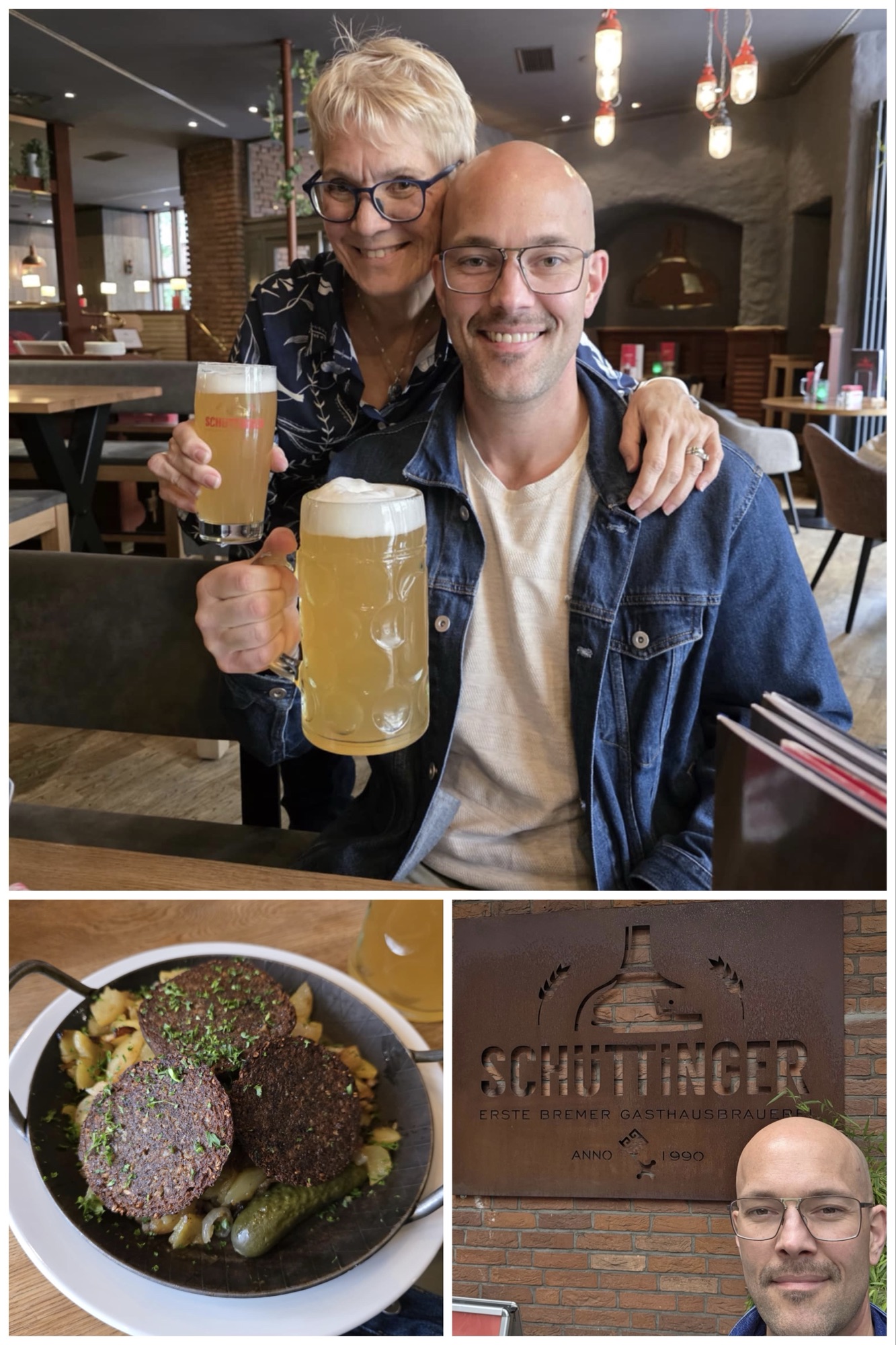
We were feeling a bit lazy ourselves – or perhaps just thirsty – so we walked to Schüttering Brewery & Guesthouse for some liquid refreshment. Son #2 also tried fried slices of “knipp”, a traditional German sausage made from oat groats, pork head, pork belly, pork liver and broth and seasoned with salt, allspice and pepper, and served over fried potatoes and onions, accompanied by pickle. It was tasty!
After beer and a snack, our next priority was walking through Bremen’s famous Schnoor district, which during the Middle Ages, when 1/3 of Bremen’s population succumbed to the black plague, became notorious for its cramped living conditions.
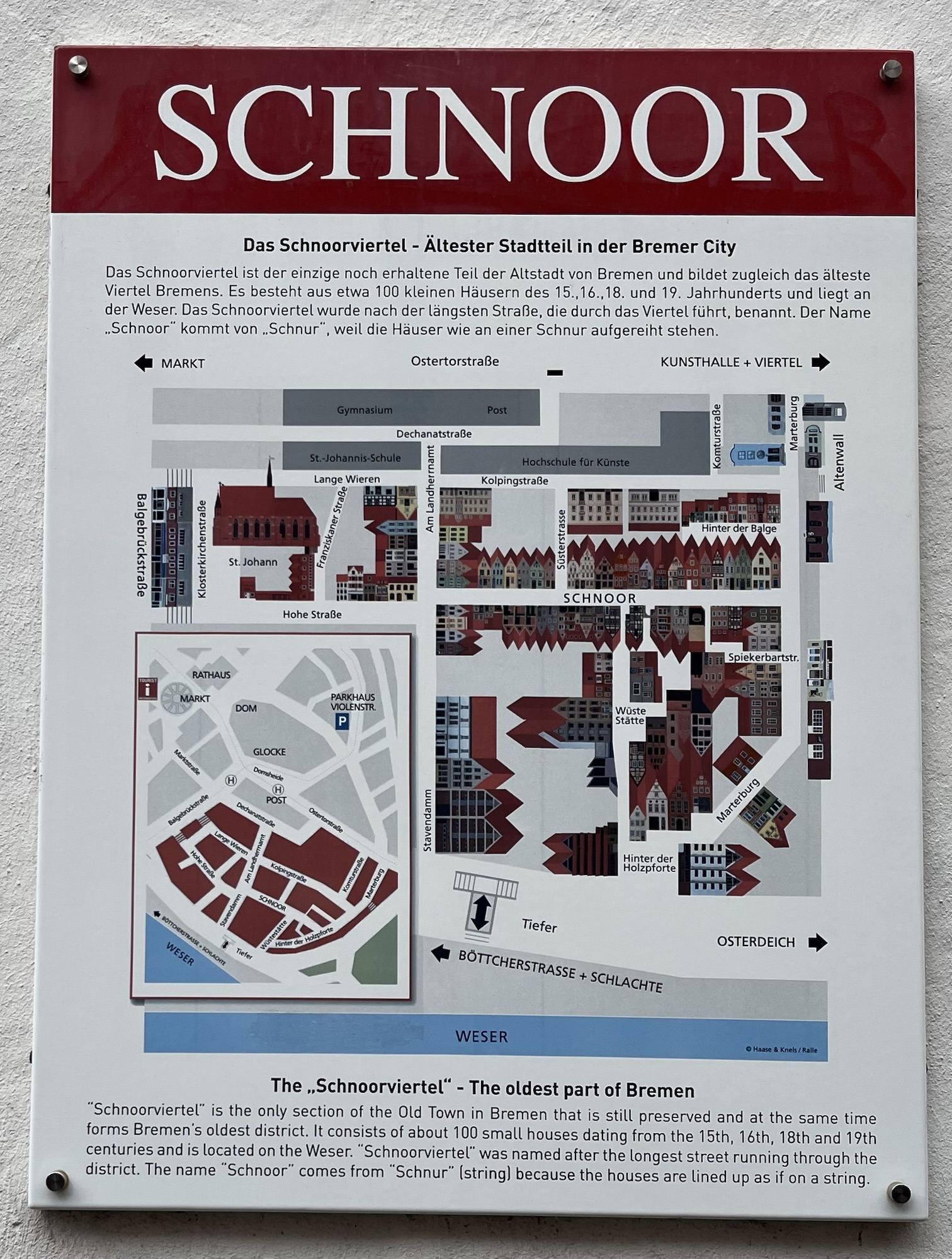
As we explored the Schnoor, we found progressively narrower and narrower passageways. The plague years rule of staying a broom handle’s length apart would have been completely unenforceable.

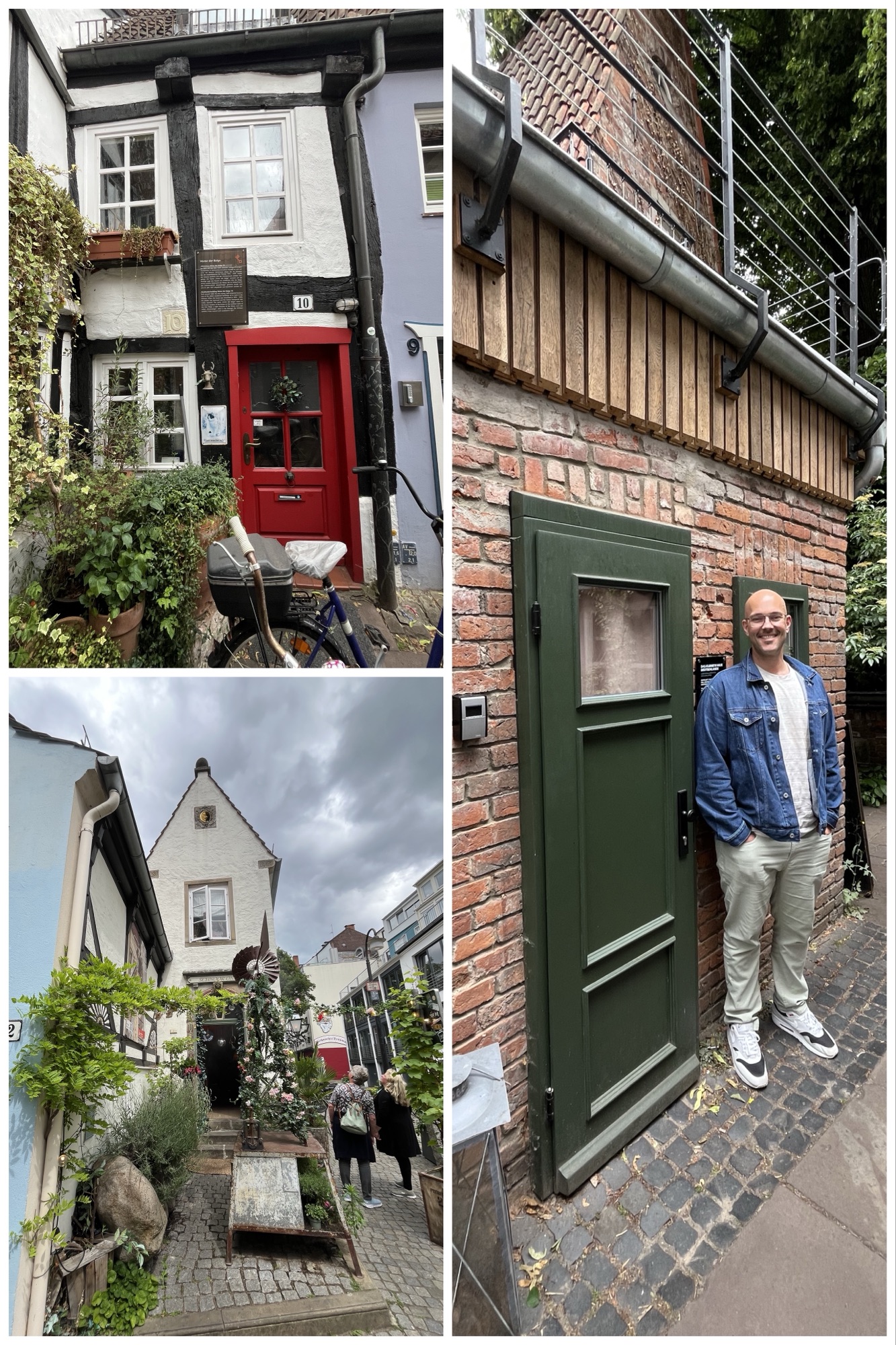
We walked past what is probably the smallest hotel in the world. According to the sign on its wall, “ In the Middle Ages there were probably several wedding houses in Bremen, as in every big city at that time. They were also necessary, because couples who came from the countryside to get married in the cathedral, for example, had to prove their residence in the city. For this purpose, a wedding house was moved in for one or more nights. But even city dwellers rented a suitable wedding house to hold the celebration there, because the medieval apartments were often too small for that.” It is currently available to rent by the night.
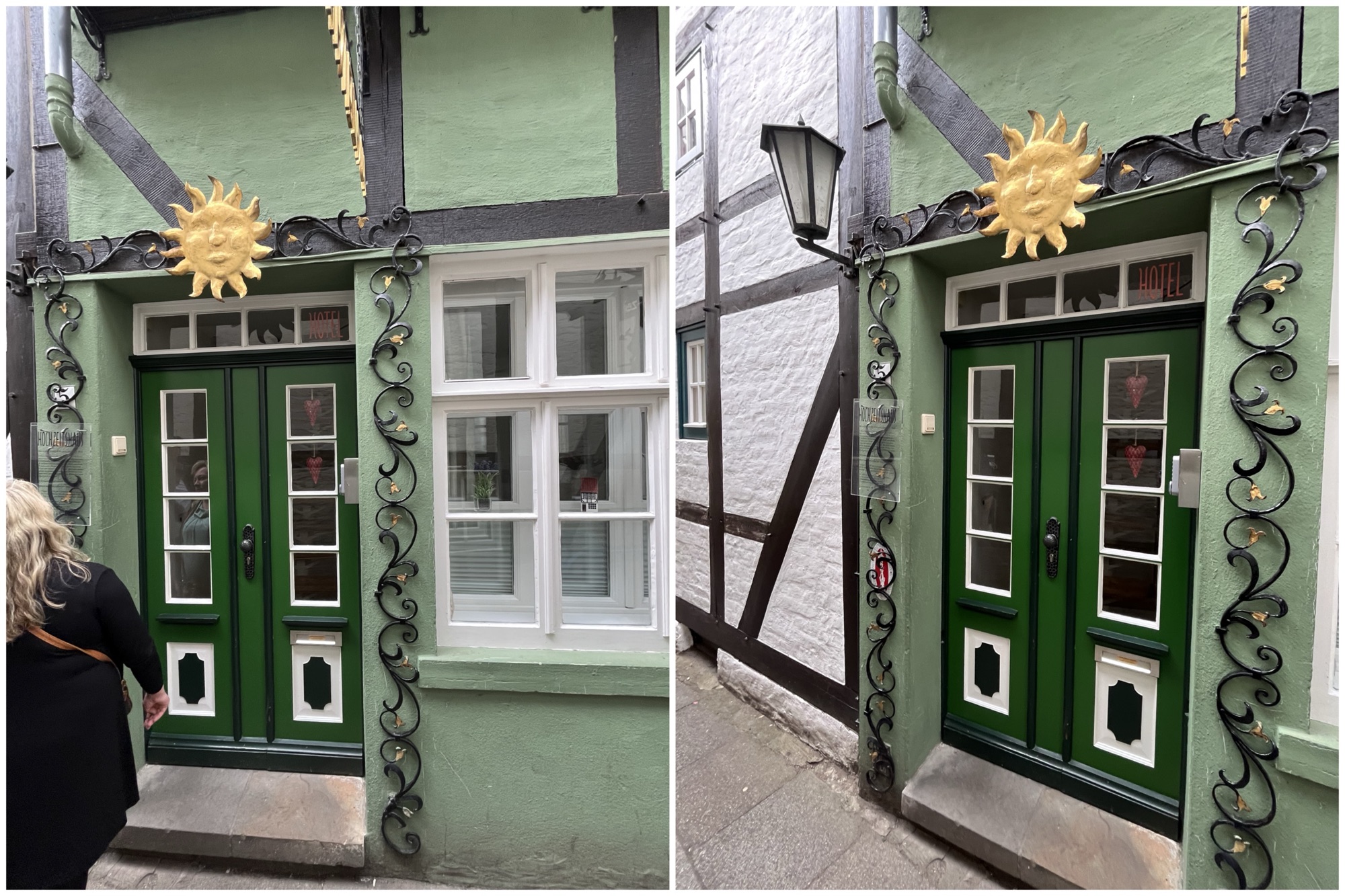
After a couple of false starts (the 2 photos on the left below), we finally found Germany’s smallest house (on the right) clocking in at just 4.5 square metres/48.4 square feet. It, too, is rentable!
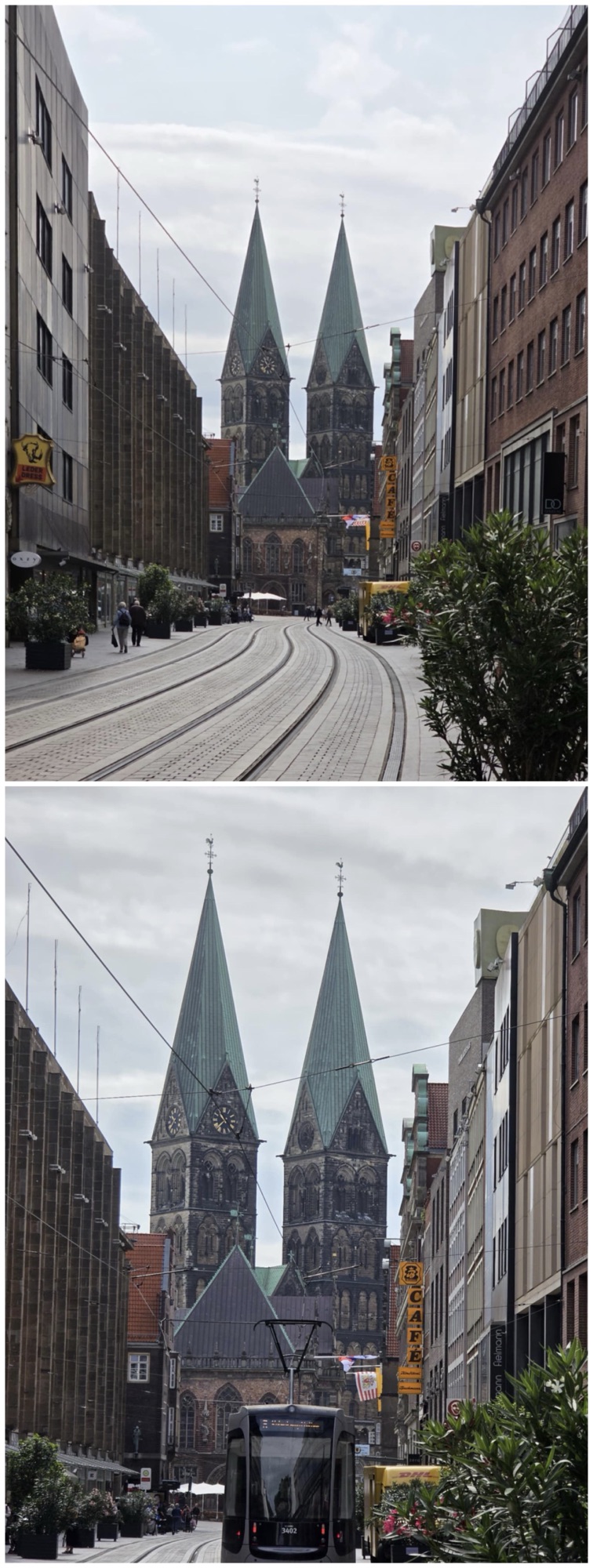
From the Schnoor, we walked to Saint Peter’s. Our phones were all running low on power, and we agreed that there was so much to photograph that it was impossible to decide what to prioritize. Hence, our combined photo collection is quite eclectic.
We did choose to walk the 265 stones steps to reach the top of the bell tower 98.5m/323 ft above ground.
Our first views of the imposing cathedral:
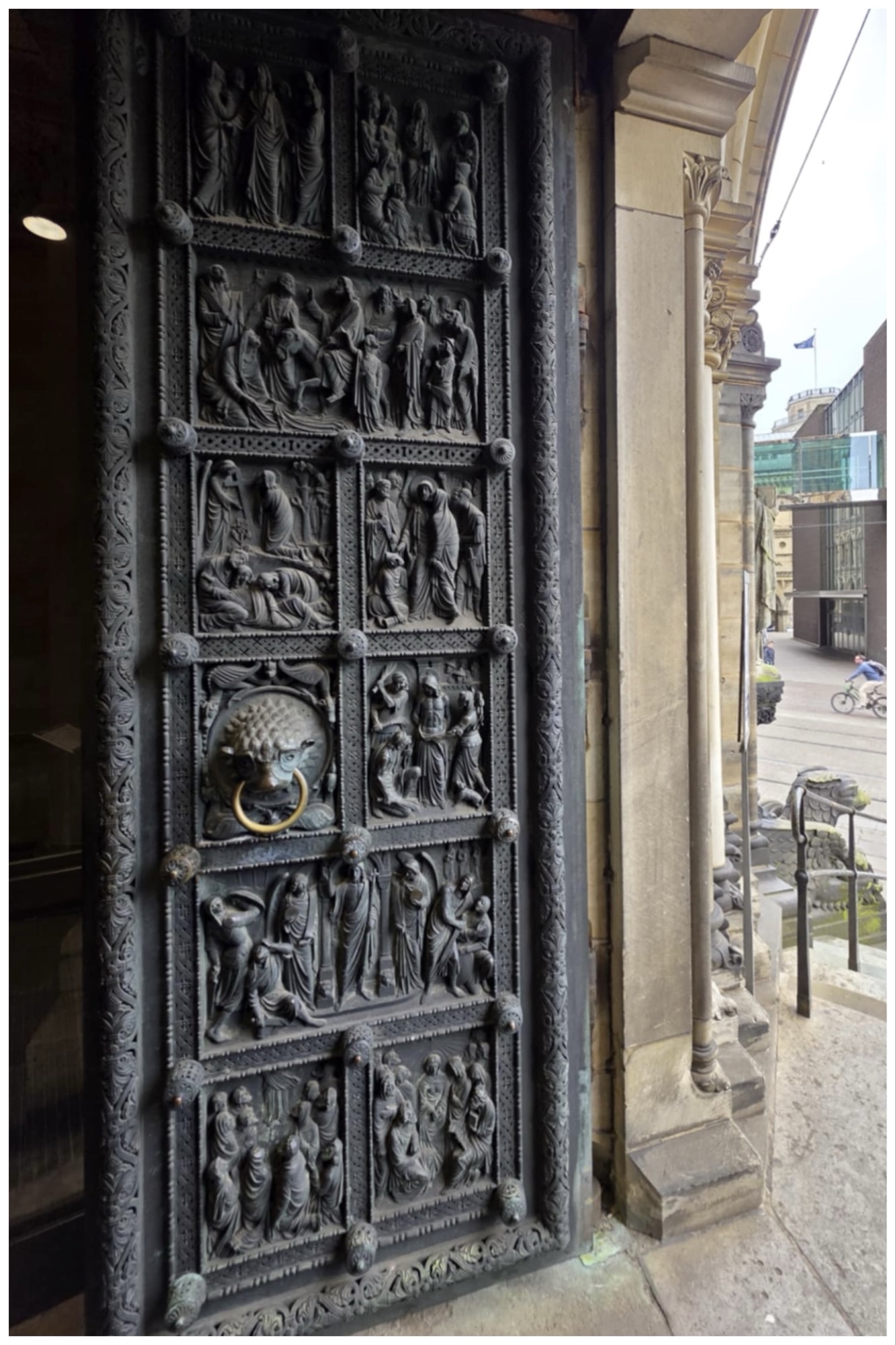
One side of the massive bronze entry doors:
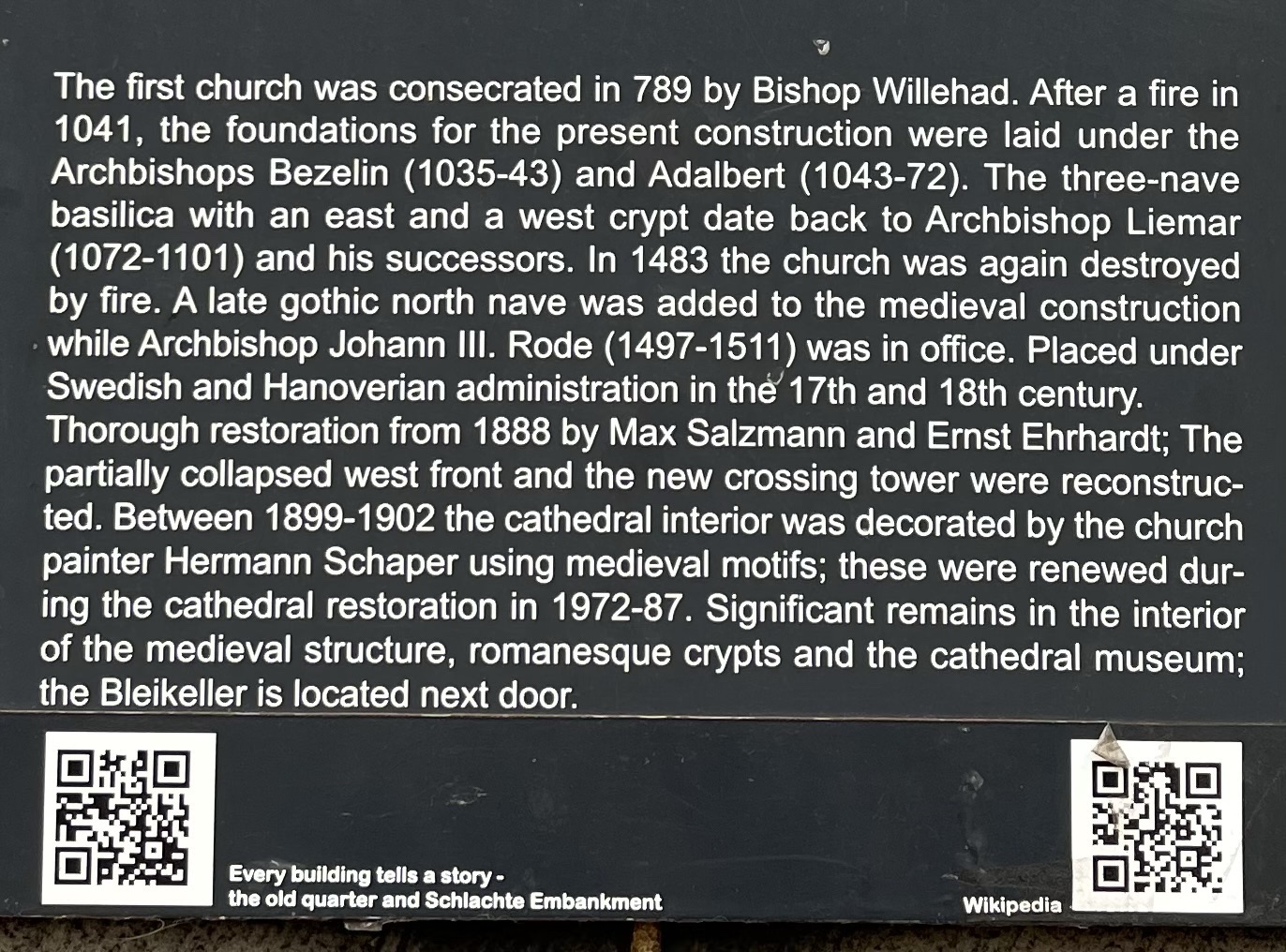
Outside the main doors was a brief history, in both German and English:
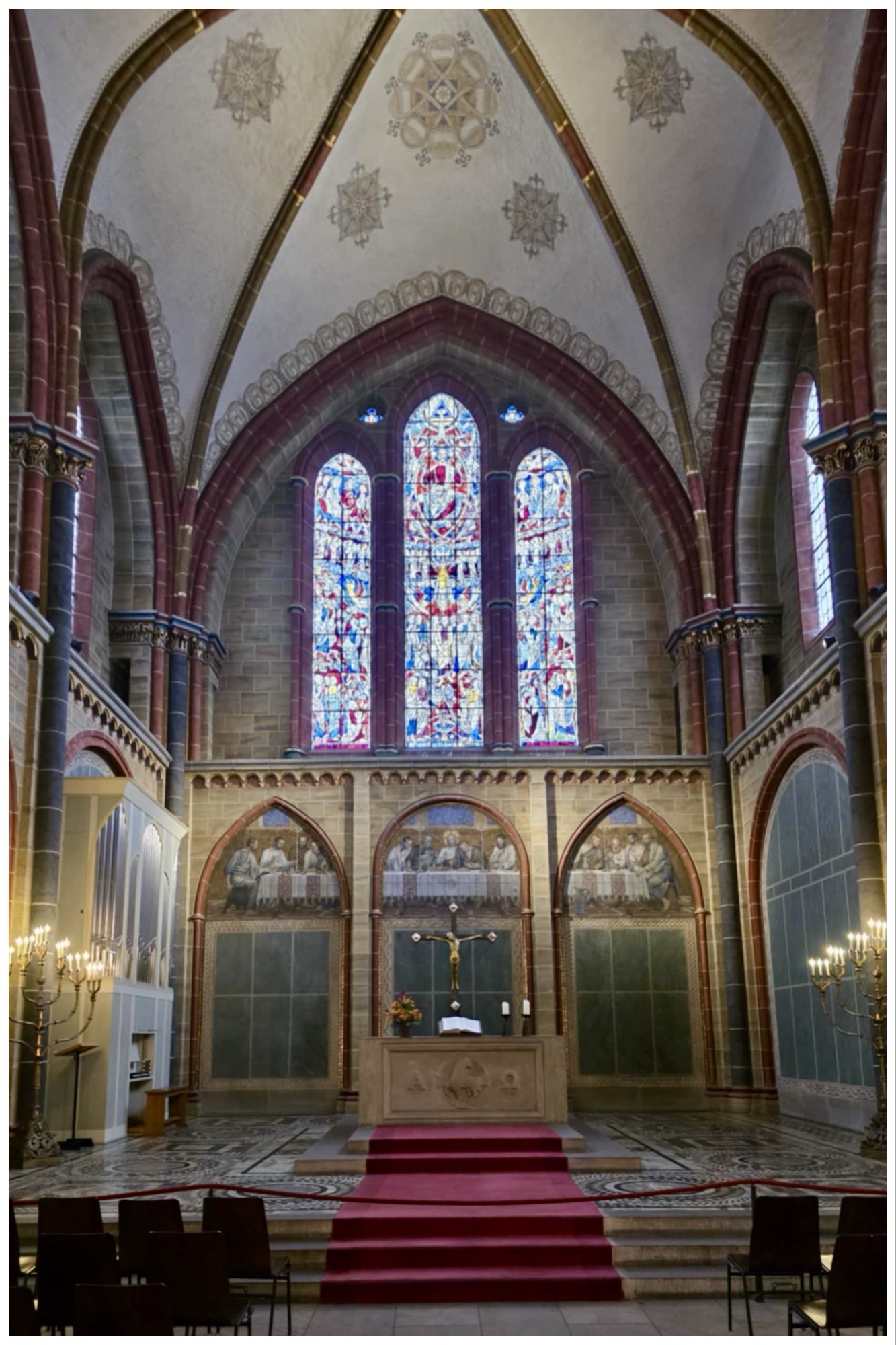
The (eastern) altar nave:
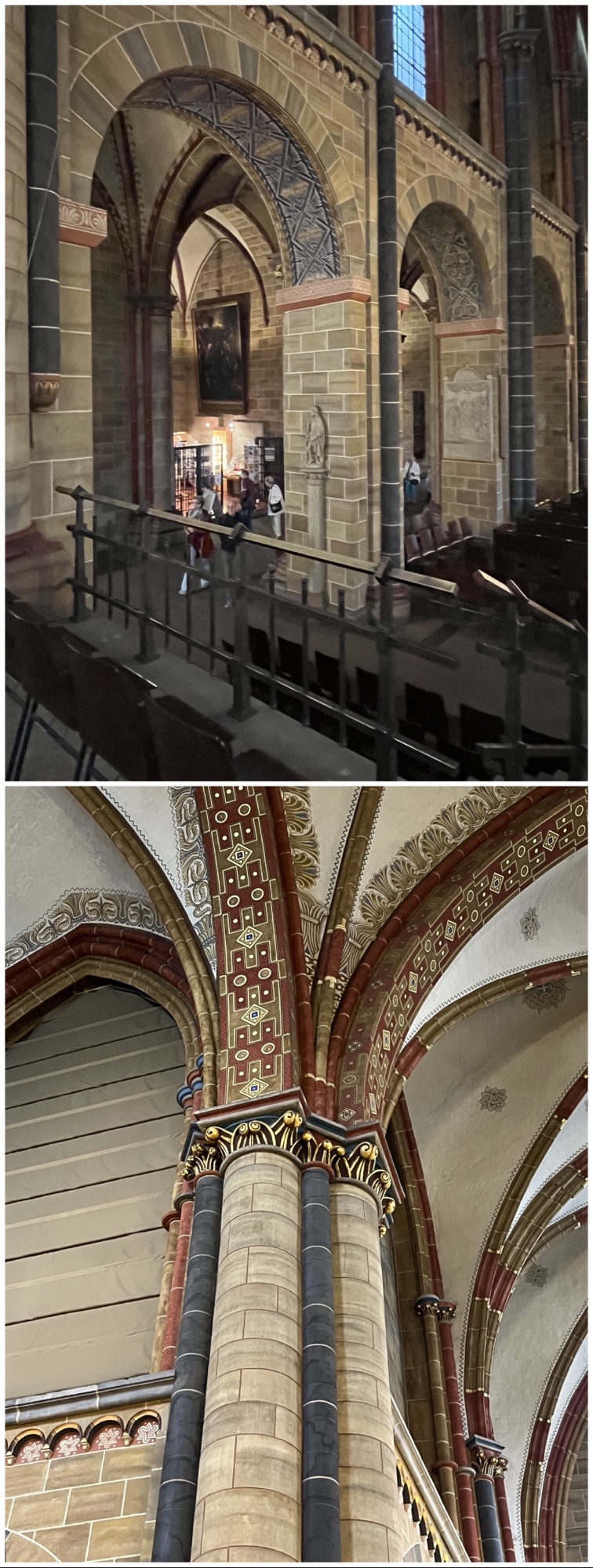
Some of the mediaeval motif arch decoration:
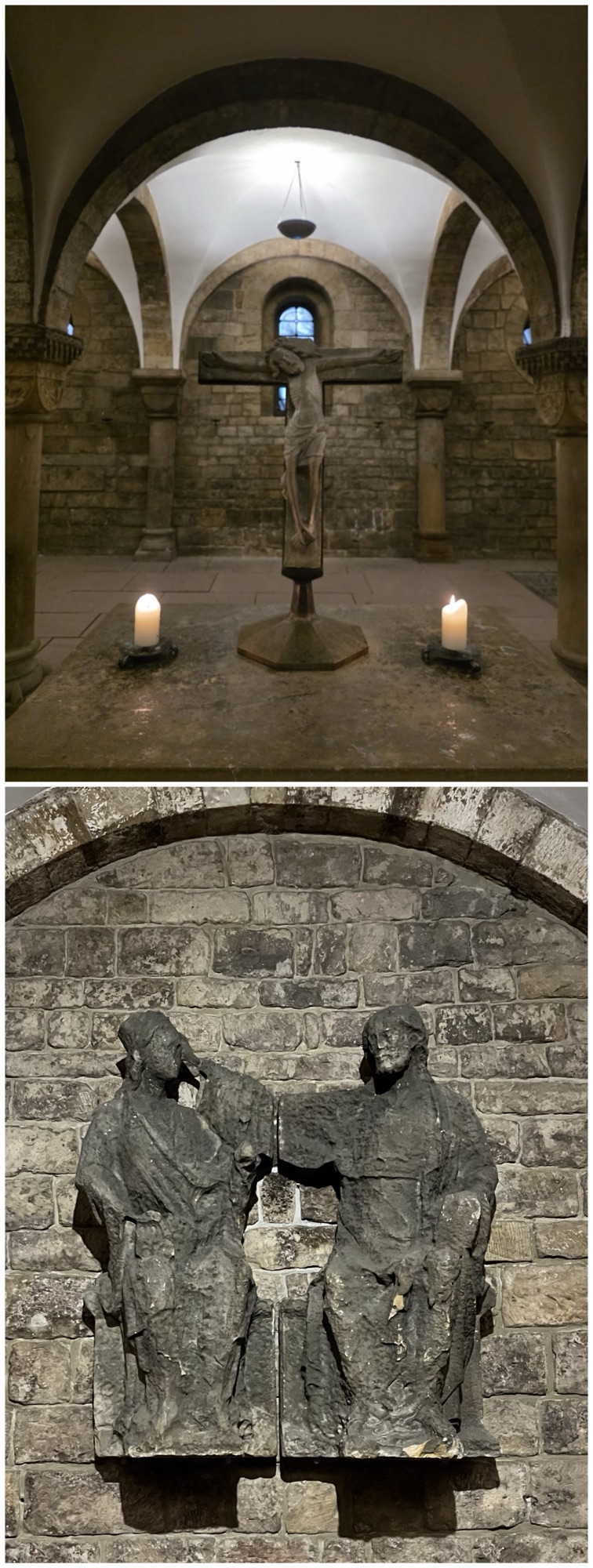
One of the Romanesque crypts:
A few of the other things that particularly caught our attention:
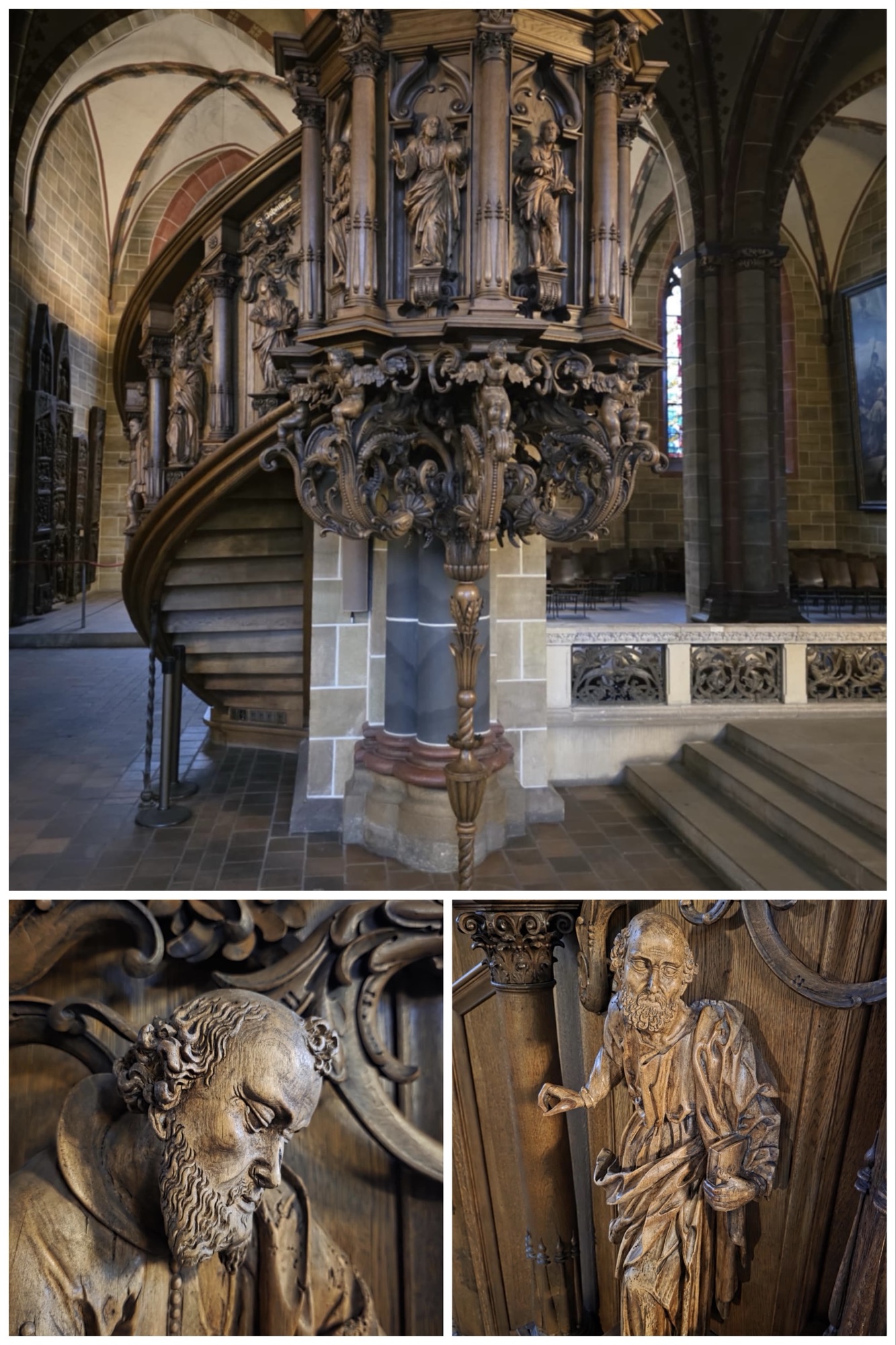
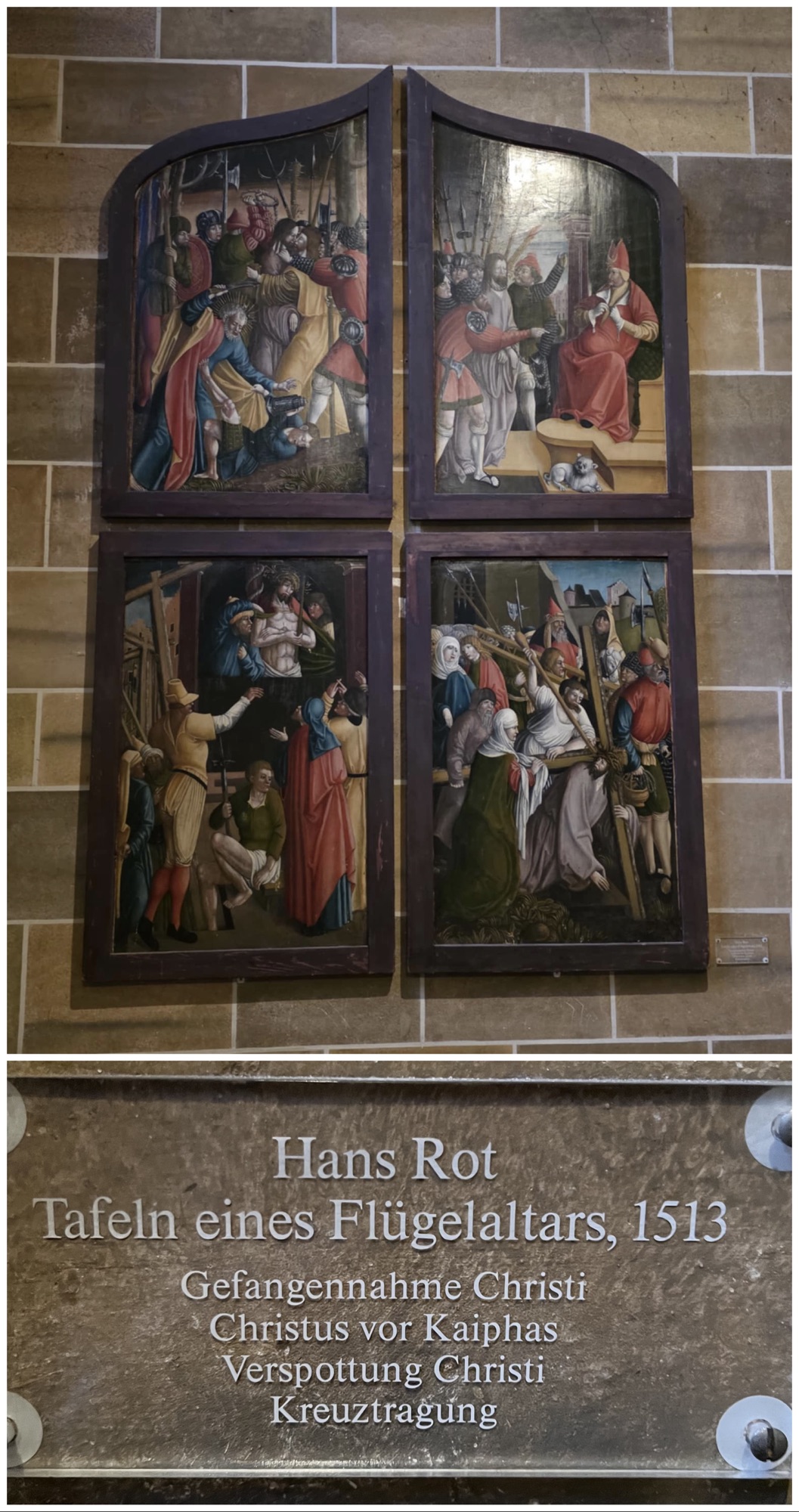
Capture of Christ
Christ before Caiaphas
Mockery of Christ
Carrying the cross.
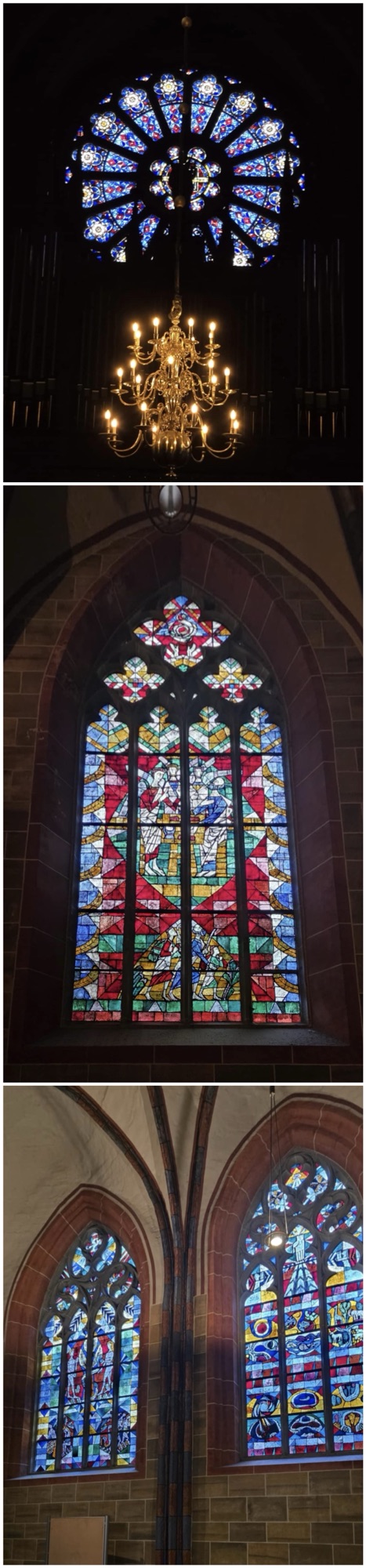
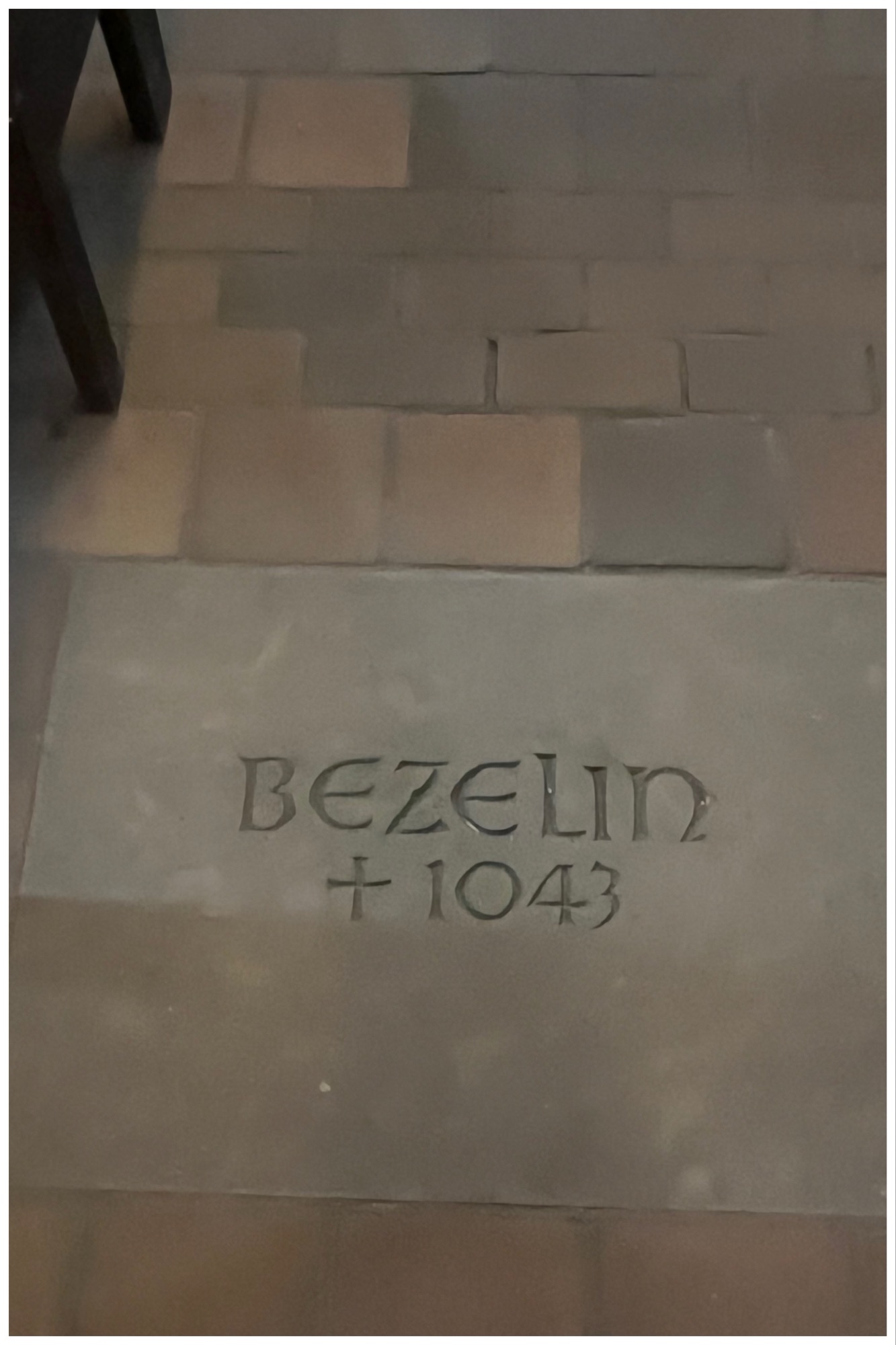
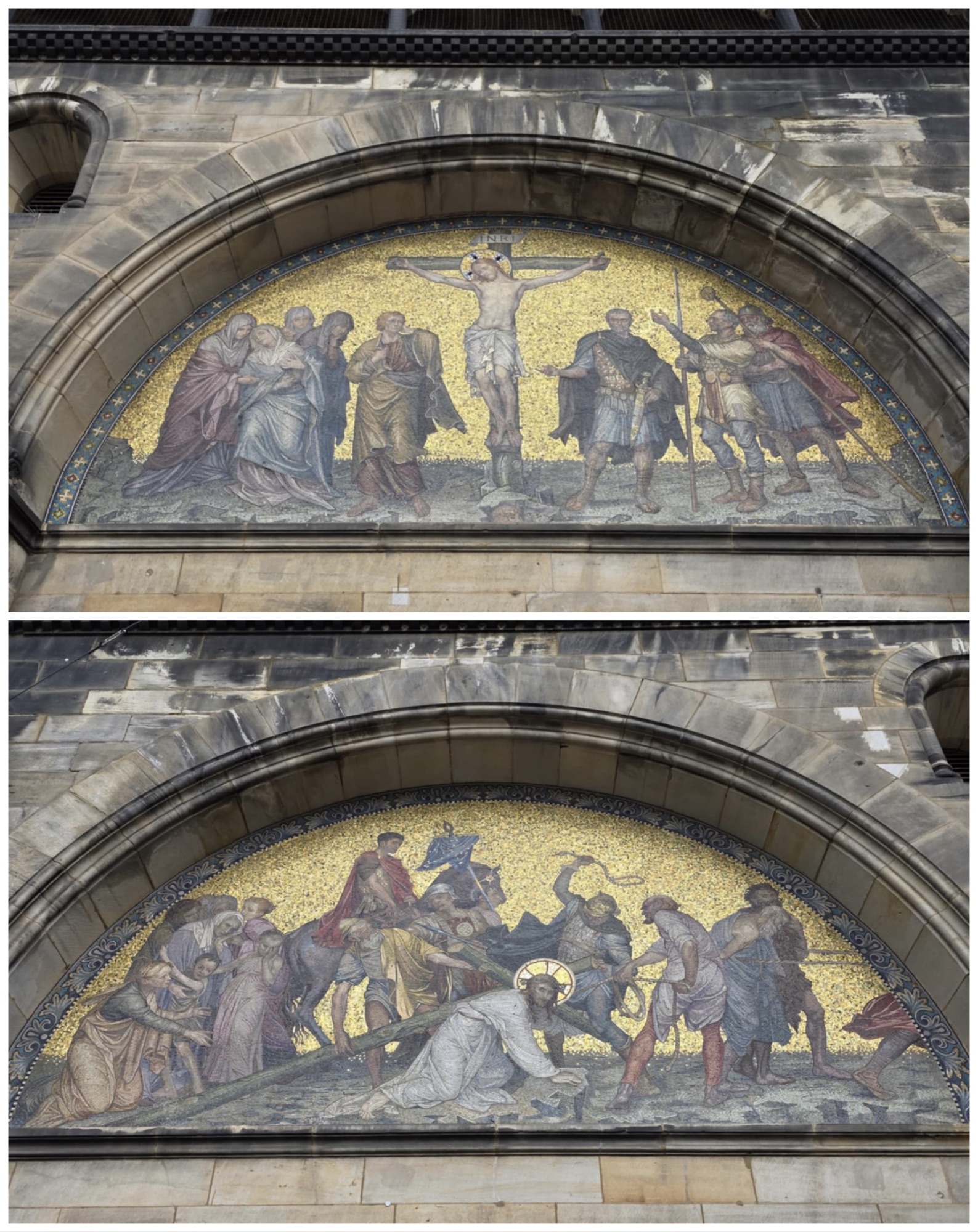
I had to keep reminding #2 that this church is actually very plain compared to the renaissance, baroque, and rococo architecture we will see in Berlin and Munich. Nonetheless, this was certainly not like anything he’d ever seen. Canada has no 13th or 14th century buildings!
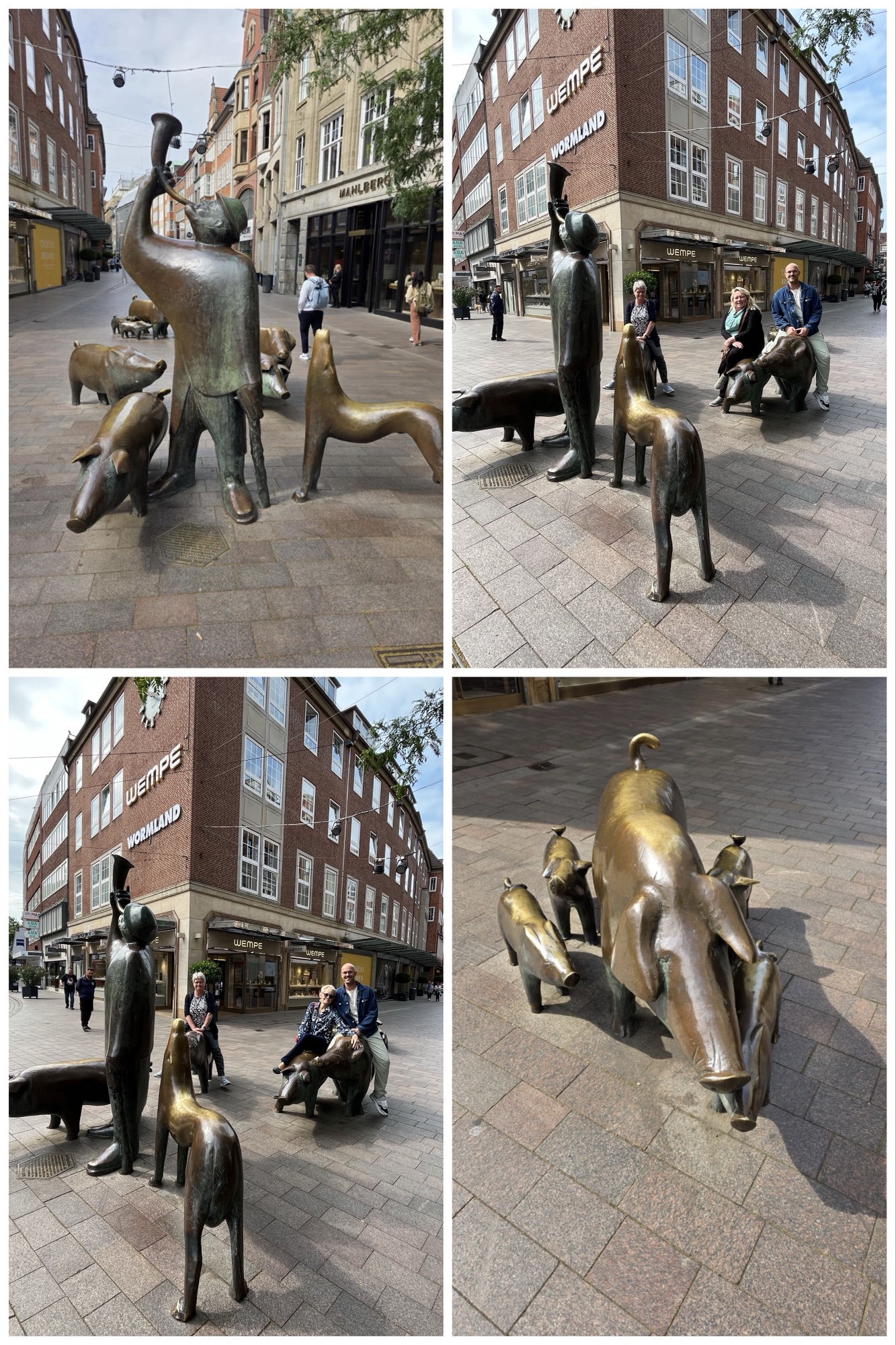
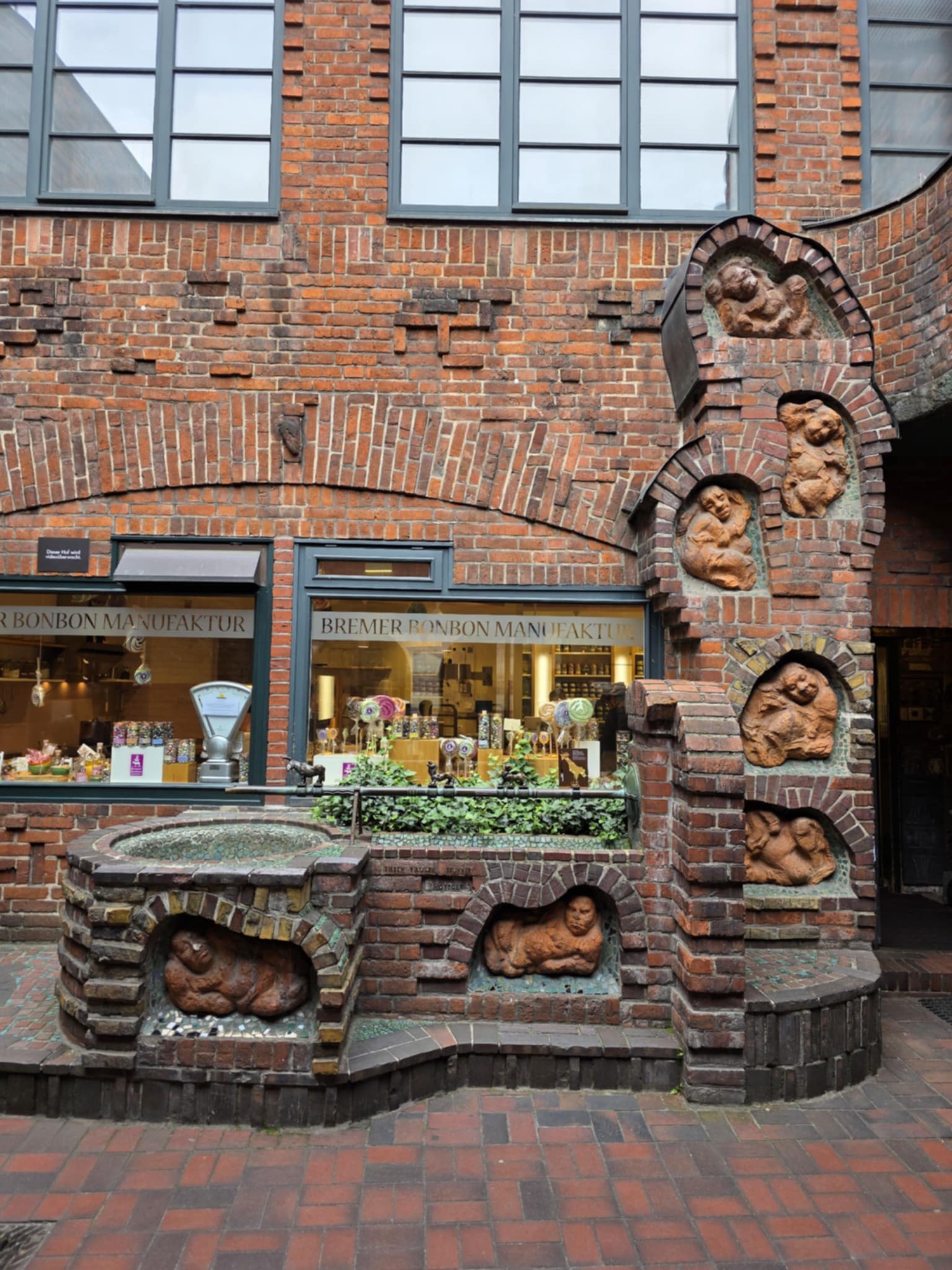
There were a number of other beautiful buildings, plus fun and interesting statues…


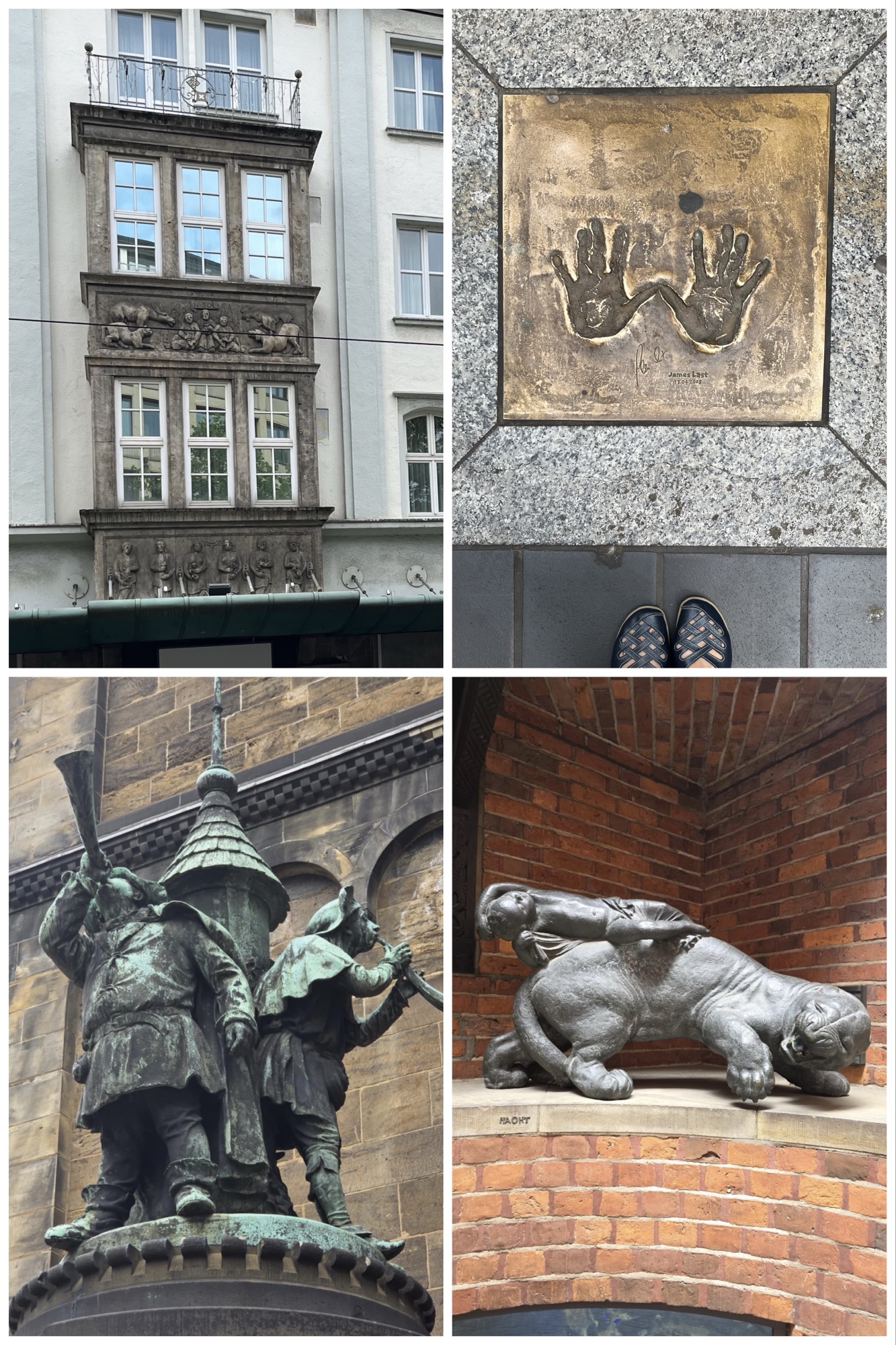
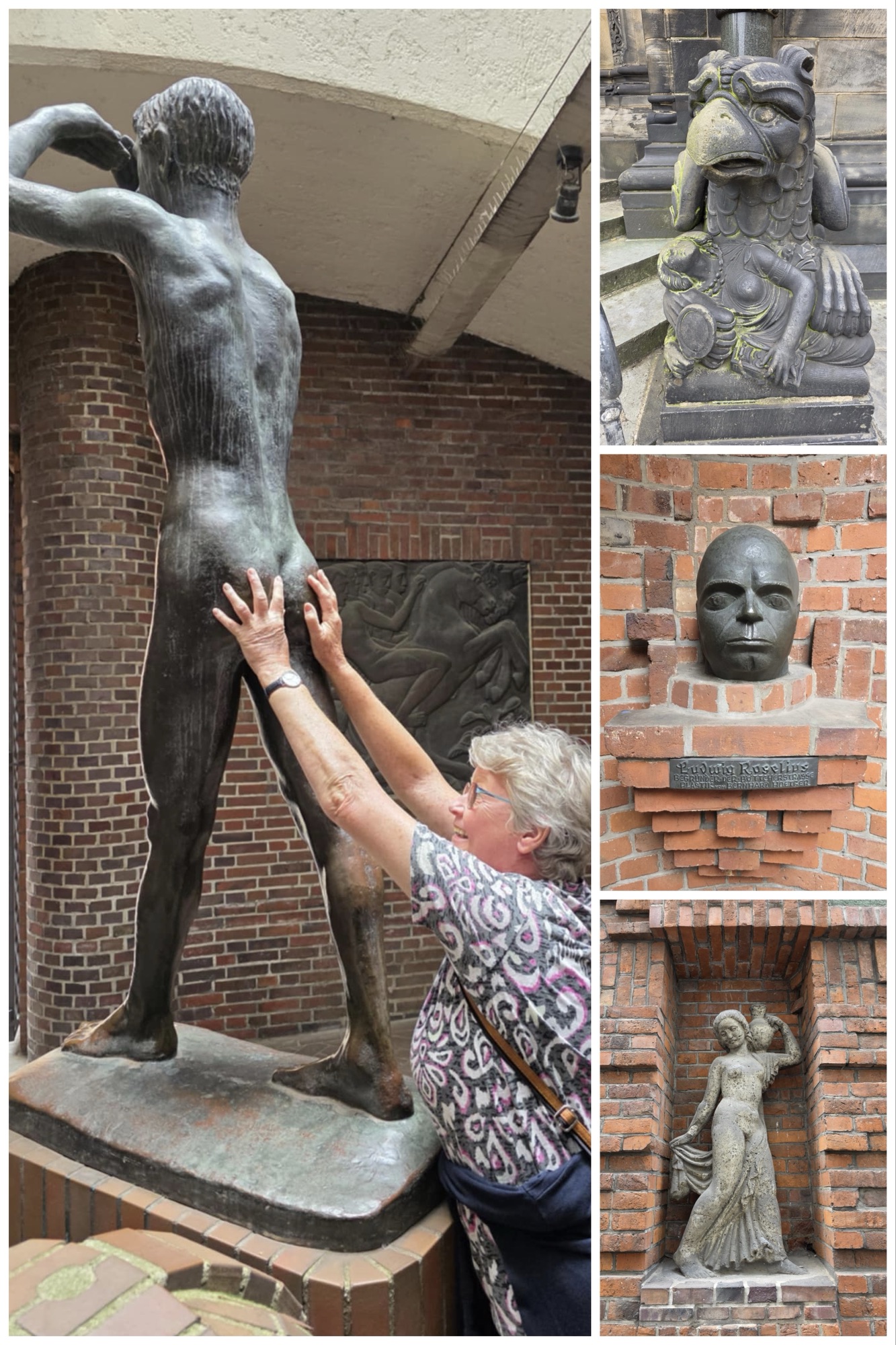

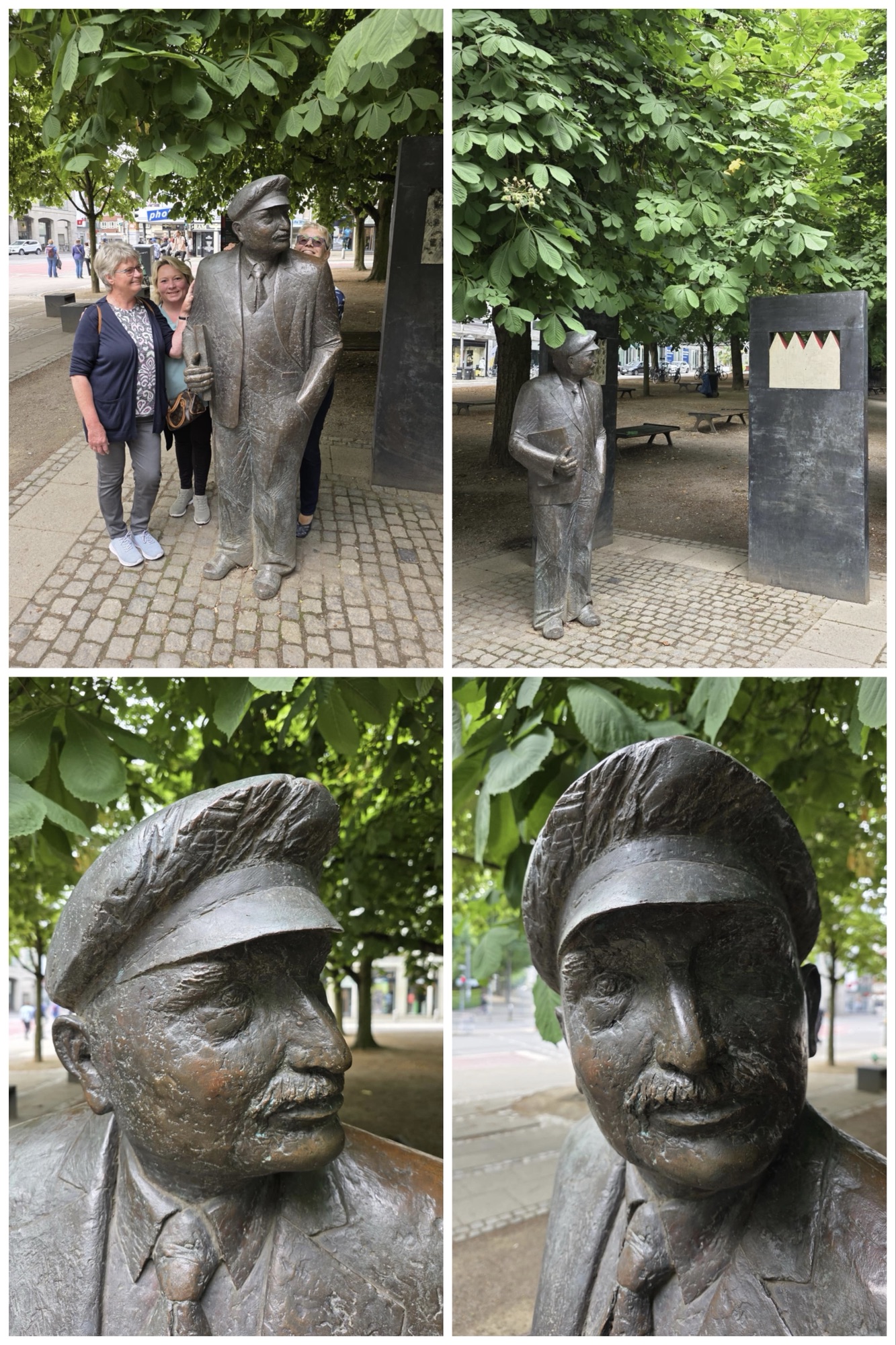
… and we absolutely had to take a photo of at least one of the city’s many, many depictions of the famous Bremen Town Musicians.
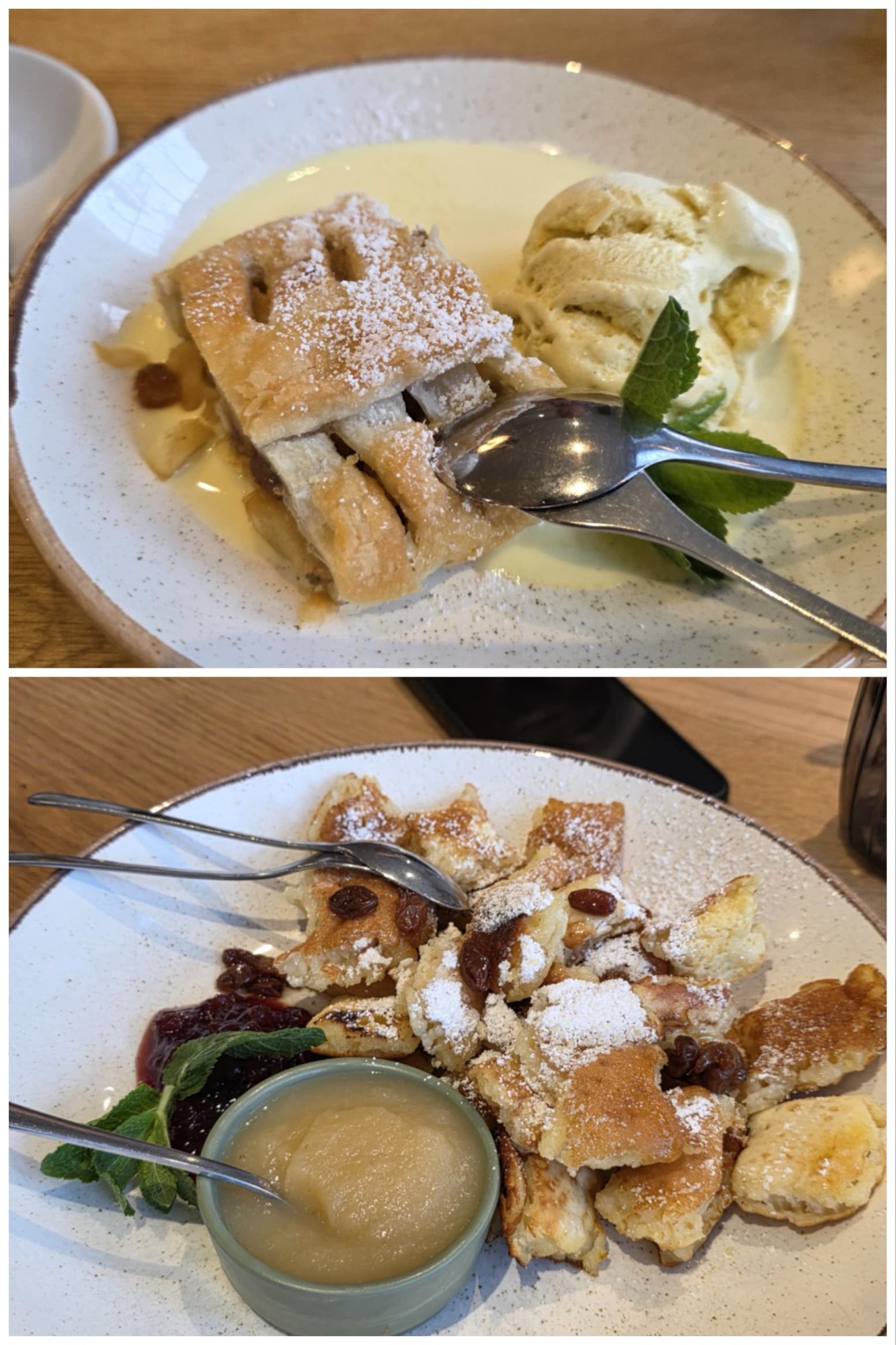
To end our day in Bremen, cake and coffee (or in my case, Kaiserschmarrn and coffee).
What a fun day – and it wasn’t over yet!
But that’s a separate episode.
 Rose and Ted’s Excellent Adventure
Some great photos of you and son#2. Weather looks great and I hope it continues.
LikeLiked by 1 person