Being home for three weeks has meant laundry, re-packing, connecting with family, and getting back to reading.
I made a “soft start” by selecting what I thought would be some easy summer reading type books.

I haven’t read a David Baldacci book in years, and this is a new one (2024) from this prolific author (50 novels, plus 7 for young readers). So much for reading “fluff”. Here’s a book set in 1968 in Richmond, Virginia that deals with racism, and ultimately the power of education – and specifically books – to change people’s minds. The comparisons in the story line to Harper Lee’s To Kill A Mockingbird are surely not coincidental. In his foreword, Balducci talks about having begun this book around 10 years ago and set it aside. I can understand why he was inspired to finally write the story now.
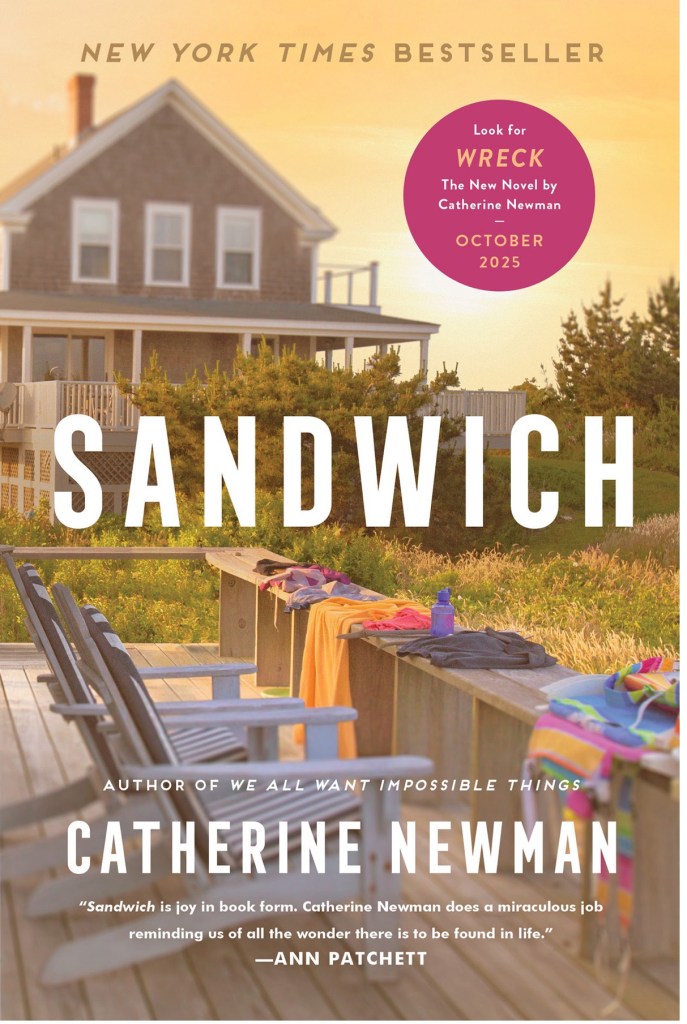
A wonderful read, both funny and heartfelt, Sandwich’s plot is centred around a woman “in the middle”: adult children, aging parents, and menopause as the icing on the cake. So much – from how she feels about the memories of their babies, to how she feel about her husband, to her relationship with her parents , to the impossibility of balancing her own needs with those of everyone around her – resonated, and made me laugh and feel grateful.
Before picking up (figuratively, since I read everything in Libby on my iPad) my next read, I had the rare opportunity and real honour this May to read a new manuscript written by a friend. Without spoiling it: part history, part ghost story, part memoir, and all riveting. Hopefully it will be published before too long.
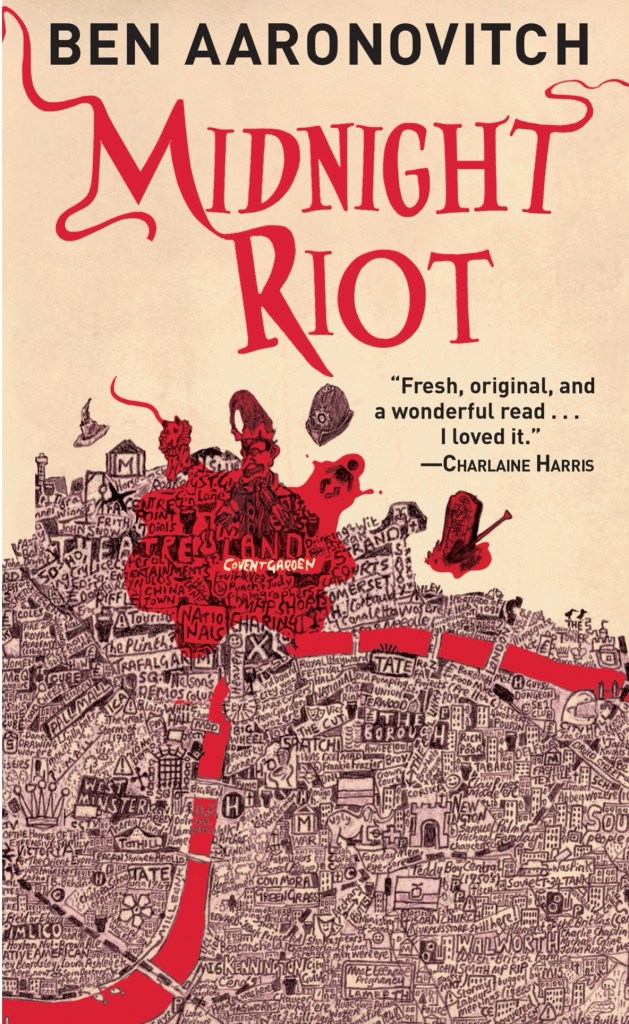
Described variously in its cover blurb as “what would happen if Harry Potter grew up and joined the fuzz” and “an invocation to everything that is hidden, haunted, and forgotten in London”, Midnight Riot was a satisfyingly creepy fantasy that made the perfect antidote to real life. Detective Chief Inspector Nightingale, despite being a wizard, really doesn’t like the comparisons to Harry Potter, since – obviously – Harry Potter is a fictional character. The London river gods… also not “fictional”. Hmmm. Honestly, it was just plain silly (if a bit grisly) fun. I’m glad it’s just the first in a series of 9 novels, because now I have a binge-worthy set of books to read.

Back to real life. I was inspired to read Obasan after walking past the author’s childhood home in the neighbourhood in which we’re currently staying.(Episode 688)
While not technically a memoir, the novel clearly draws on the author’s own family’s experiences, shedding light on what it was like to be Japanese Canadian during World War II when our country made the shameful decision to disenfranchise and intern both Japanese immigrants and its citizens of Japanese descent, and confiscate all their property. Many were “repatriated” to a Japan at war. Written as seen through the eyes of a child, the resilience of an entire people is given voice. The writing is beautiful, and the story heart wrenching. It’s no wonder it garnered critical acclaim all over North America.
In my opinion, it’s a must-read for every Canadian.

Absolutely NOT my usual kind of read, but a friend (whose usual reads are rom-coms, also not generally my cup of tea) thought it was interesting enough to recommend. It’s not a biography of Swift; closer to being a biography of her songs.
I’ve got to admit that, while I’m a lukewarm fan of her music, she has undeniable talent (writing chart-topping songs since she was a young teen), and the kind of “spunk” that sets a pretty great example for young women of how to get beyond the nay-sayers and critics and simply get the job done. There’s no doubt that she has already inspired a whole new generation of female singer/songwriters. I finished the book a bigger fan than when I started – not a huge leap given where I started.
My only issue with the book was that 59-year-old author Rob Sheffield – a long time contributing editor at Rolling Stone, writing about music, TV, and pop culture – writes like a gushing fan-girl. Maybe that’s why I don’t generally read “celebrity” books.


In the same entertaining way that Bryson is known for when writing about his world travels, language, or science, here he takes a look at the evolution of houses as we in the Western world know them, from the basement to the attic and every room in between: a “journey” through a house instead of a country or continent. It’s a book full of curiosities, balanced with anthropological insights into what makes a “house” a “home”. Since Ted and I have become very used to living in tiny spaces, this really was like reading a travelogue!
Especially fun are Bryson’s meanderings away from his central topic. Early in the book he has almost an entire chapter devoted to what Anglican clergymen did in their copious spare time, another on London’s Great Exhibition of 1851 and the Crystal Palace, and yet another on archeology related to the Neolithic period.[These meanderings do, in an entertainingly roundabout way, relate back to “home”.)
…and that’s it for now. In 3 days I’m off to Germany, so reading is being replaced by finalizing packing and trip plans. Ted is staying behind to continue taking in local music events, and keep track of me through the blog (which for two weeks will, I suppose, be just Rose’s Excellent Adventure!)
 Rose and Ted’s Excellent Adventure
Thanks for the Baldacci and Newman to add to my reading list. Obasan is already here, waiting for me to finish This Tender Land (my second time through, but this time for book club).
Barbara
LikeLiked by 1 person