Last fall Ted and I binged on all 9 seasons of the World War II detective series Foyle’s War. One of the very earliest episodes featured the flotilla of civilian boats that crossed the channel to rescue thousands and thousands of soldiers from Dunkirk.
Today our full day excursion took us to the port from which those boats sailed and to the front lines of World War II on England’s coastline.
But first… we docked this morning at Admiralty Quay, the oldest in Dover, and almost right up against the famous white chalk cliffs. Here England and France are only 21 miles apart.


Dover Castle, built high on the cliffs in 1195 CE, has been watching over and defending the coast here since the Middle Ages. It was an important site in the Napoleonic Wars, and its secret ancient tunnels were used in WWII as both a hospital and headquarters for Operation Dynamo – the initiative to rescue the stranded troops from Dunkirk.

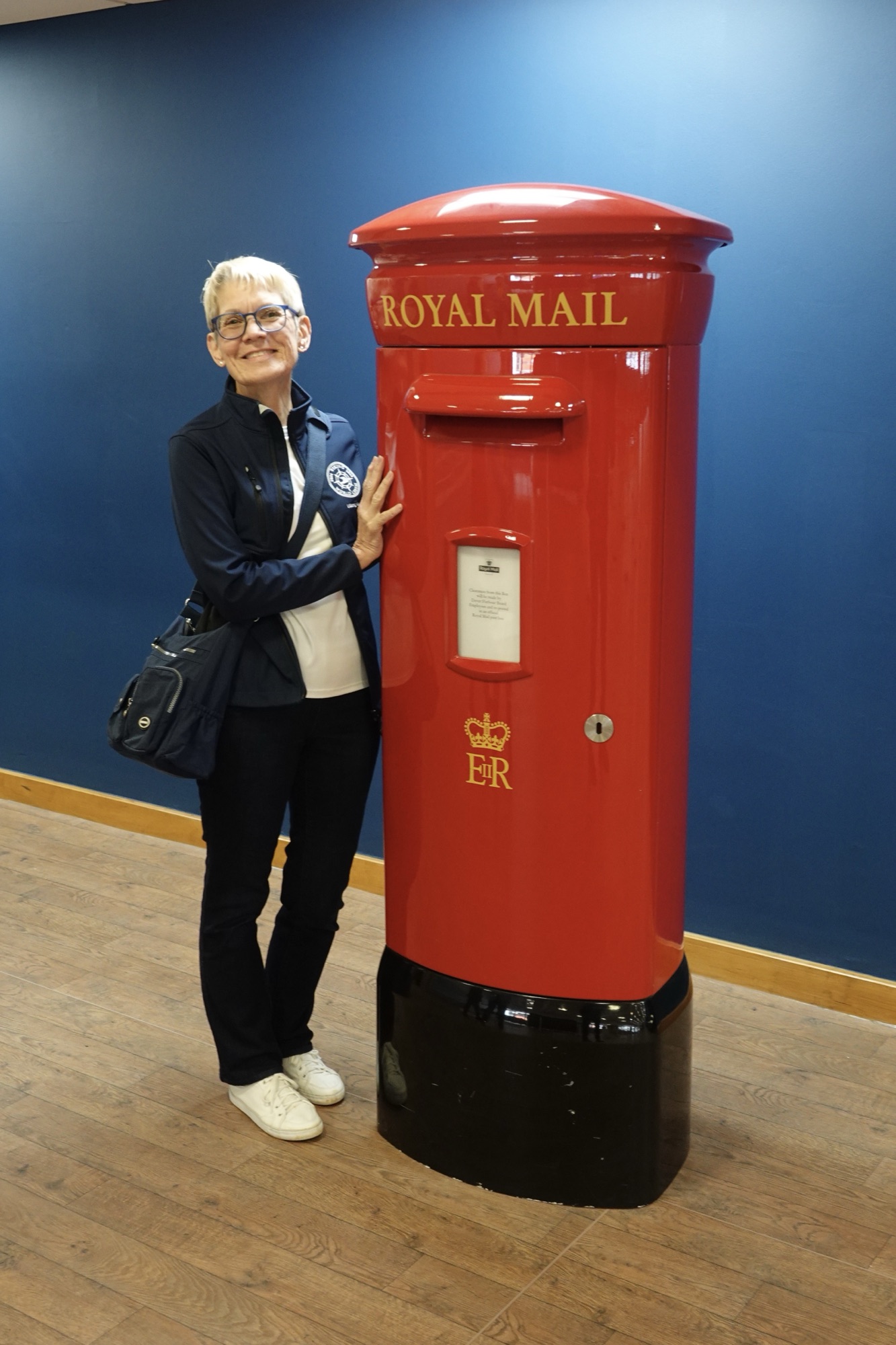
We had to go through face-to-face immigration in the terminal this morning, which went surprisingly quickly. I was sidetracked, however, by a very pristine condition Royal Mail postbox.
It was another excellent tour today, completely personalized by our guide Karen, a woman in her 60s. She explained that she was the daughter of a German mother and an American father, and spent her early years in Germany before her parents split and her mother remarried, to a Brit. Her interest in WWII came from the desire to understand why her British classmates mocked her. She certainly was very well informed, and also very passionate about her topic.
One of the first things Karen did was disabuse us of the idea that there are ever “bluebirds over the white cliffs of Dover”. She quipped, “That’s what happens when you let an American write your lyrics.”
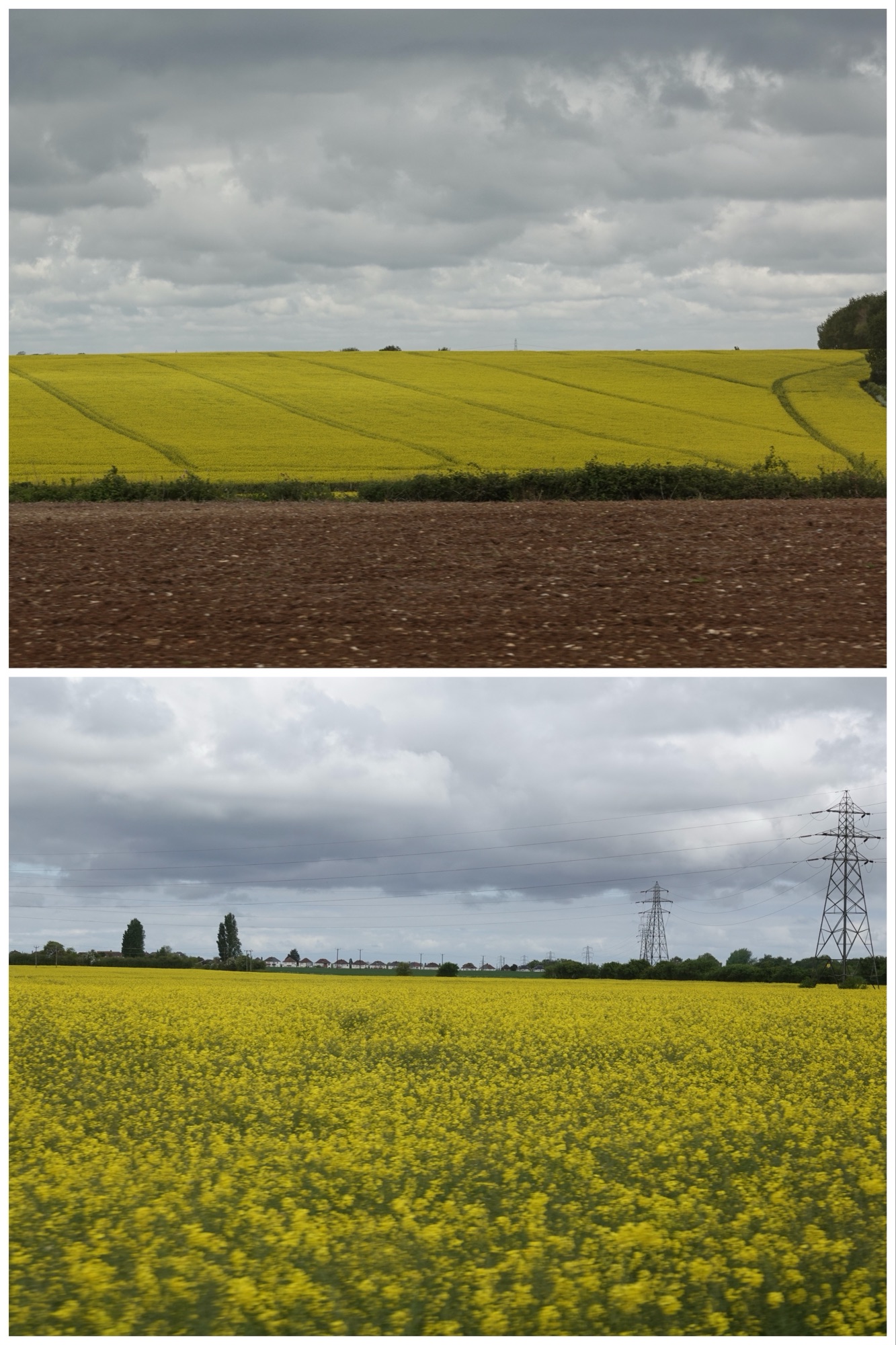
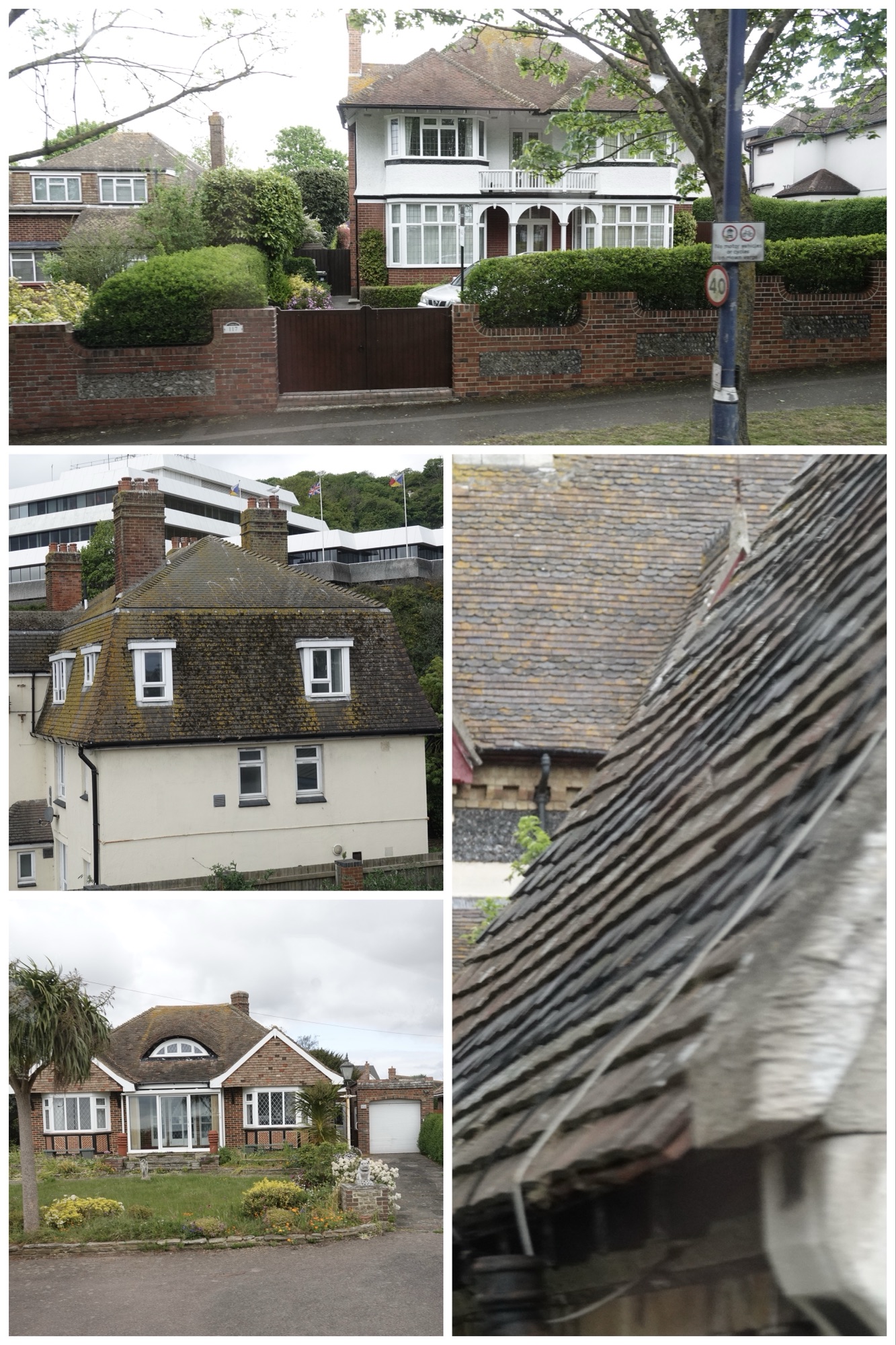
Our short drive to Ramsgate took us through bucolic green countryside, past typical old English homes, and alongside broad fields of bright yellow canola. It’s fully spring here already, with all the trees in bloom.
As we drove by street signs, Karen talked about the many strategies people used to thwart invasion, including removing all street signs, making fields unusable as landing strips, and painting actual landing strips green to make them look like fields.
Our first stop was at Royal Ramsgate Harbour, where 850 to 900 “Little Ships” departed to rescue more than 330,000 Allied troops stranded in Dunkirk across the English Channel. When Winston Churchill called on every available boat to mobilize, the expectation was that perhaps two or three thousand troops would actually be rescued; in the end, it was a testament to the tenacity of the British that they kept going until every possible man had been ferried to one of the larger troop ships that couldn’t navigate the shallow waters.
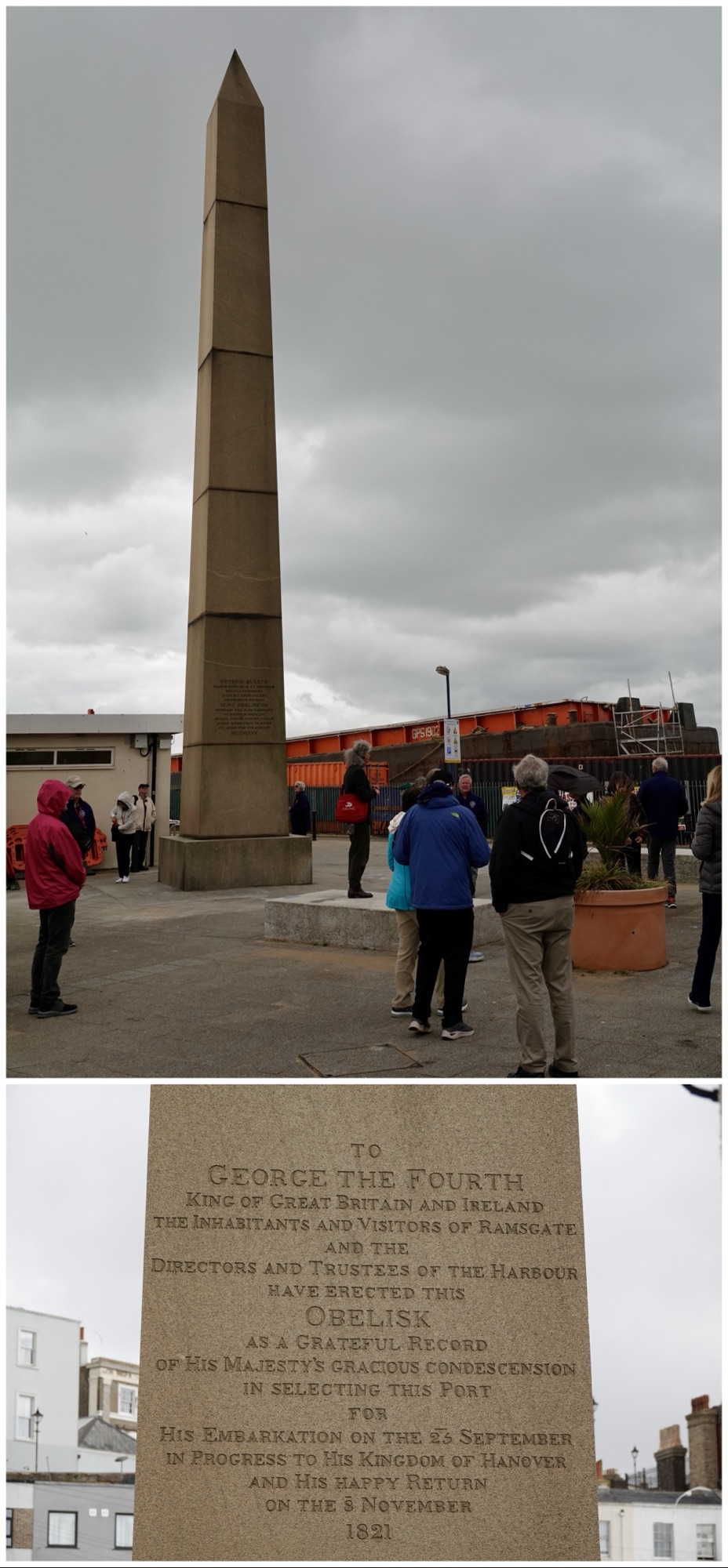
While its claim to fame now is as a seaside resort and WWII memorial site, Ramsgate has been an important harbour for centuries, as attested to by the King’s Obelisk on the waterfront.
It’s quite a pretty town, with some very modern seaside condos also being built.

The Little Ships monument here is being replaced with something much more suitable in the next couple of days, so the current monument was behind barriers.
Karen hesitated very little before climbing over them to read the inscriptions to us, assuring us that she was friends with the local authority.

Her boldness got us a bonus when Small Ships Fleet Commodore Kevin Flynn came to see what she was doing. In addition to being the Commodore, he and his wife are also the owners of Brown Owl, a 97 year old boat that was part of those fateful rescue events. He described the boat as having been “shot to death”, and restored. Brown Owl is now considered the “grandmother” of the ships that patrol the Thames.

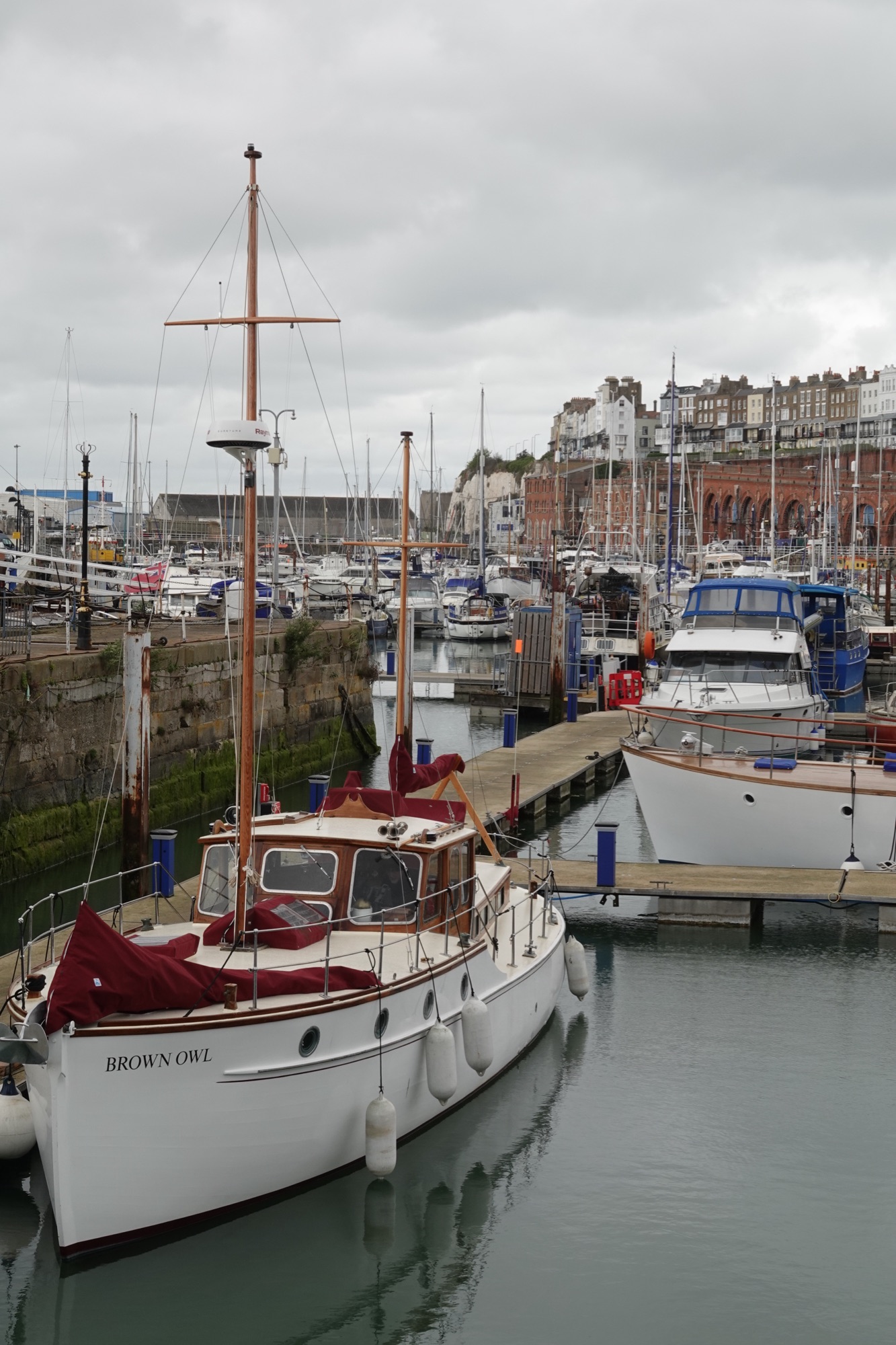
Kevin told is a bit more about the upcoming commemoration of the 85th anniversary of Operation Dynamo. The Association of Dunkirk Little Ships (ADLS) will be sailing as a fleet – including Brown Owl – from Ramsgate to Dunkirk over the weekend of May 21-26, 2025, and the new monument will be unveiled to coincide with that event.
There will be 74 Dunkirk Little Ships in the fleet, the largest number seen in the modern era.
He explained that the commemoration is not just about remembering a military operation, but is important as a symbol of an entire country getting together and the boost to the nation’s morale that resulted.
Because of its strategic location, County Kent was regarded as the UK’s “Bomb Alley”. Ramsgate is at the end of that alley. There are stories about raids over the town when enemy aircraft returning from failed missions would just “unload” over the town rather than take their bombs home. On August 24, 1940, the town was hit by more than 500 bombs – the townspeople’s lives were saved by an underground Air Raid Protection system of tunnels.

We were able to tour the largest tunnel, which was at one time an underground train station.

The actual tunnels that people used were accessed by 11 entrances at strategic points in town reachable by most people within a 5 minute walk. The tunnels were 6 feet wide, 7 feet high, and located 50-75 feet underground. They had chemical toilets, bunk beds, seating, lighting, and a public announcement system. We can attest to the fact that they were cold and damp. It probably didn’t help that the outdoor weather today was too.
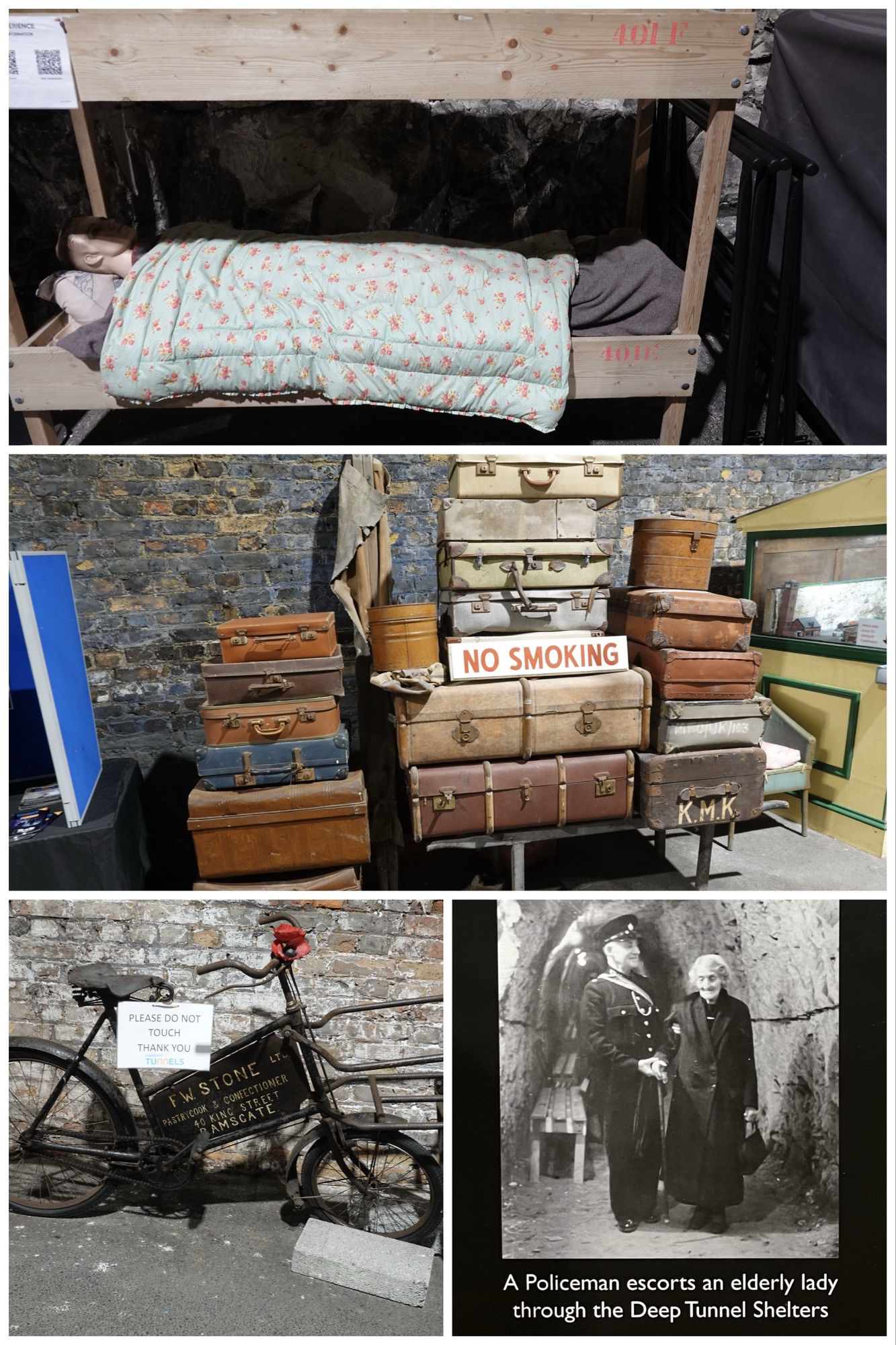
Probably the saddest thing we’ve seen in a long time were these coffins:

Our second stop was the small Spitfire and Hurricane Museum not far from Manston Airfield, one if the “forward” airfields intended to get military planes as close as possible to the coast.
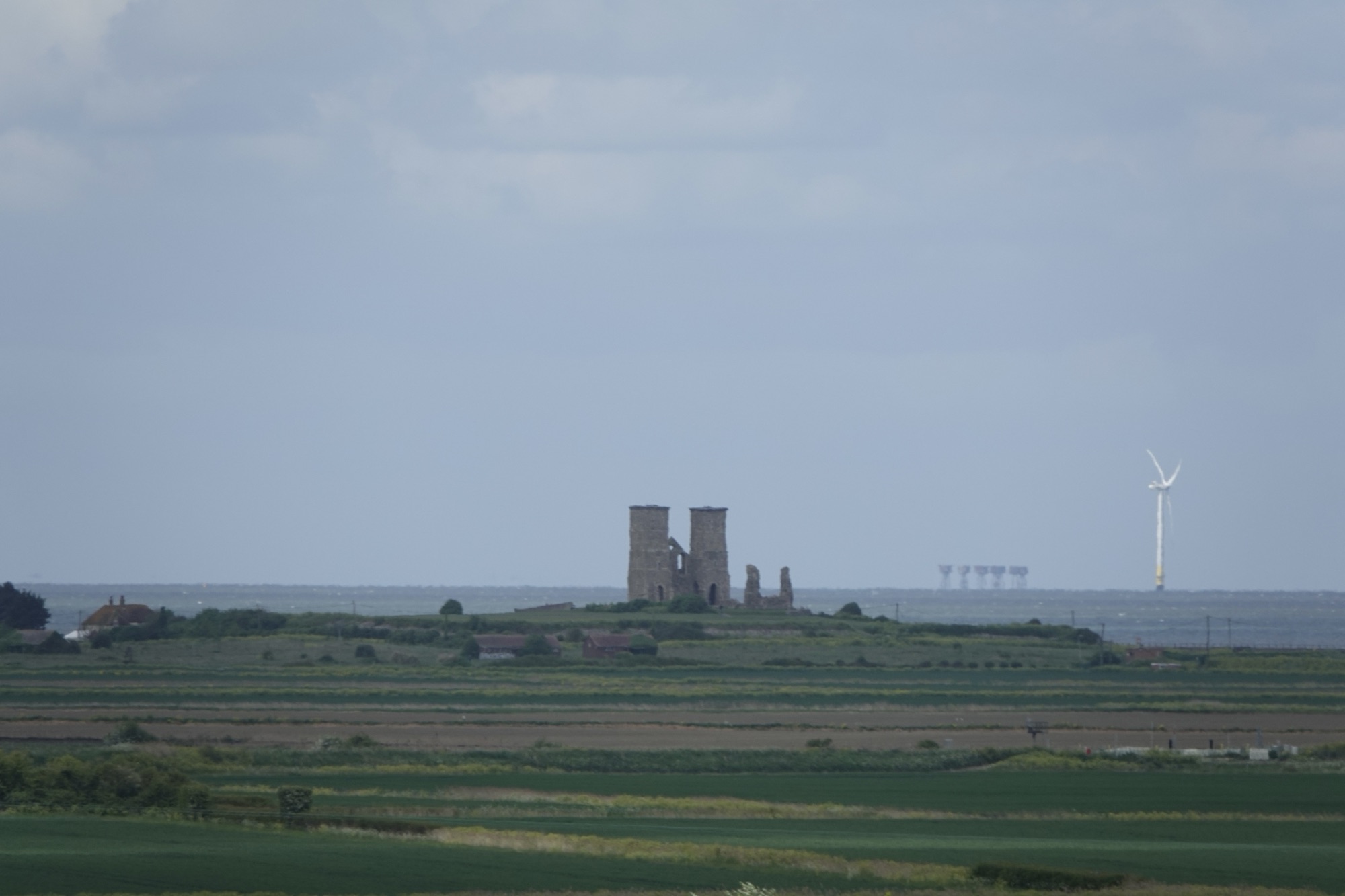
One of the interesting things we saw on our drive there was the pair of towers at Reculver, near the Manston Airfield, that were used as practice goals for the Dambusters: pilots training to drop special bombs that “bounced” across the water in order to blast holes into dams. Those bombs were successfully used to damage dams in Germany’s industrial centres. There’s a Canadian connection here: of the 133 airmen who were involved in the mission, 30 were Canadian.
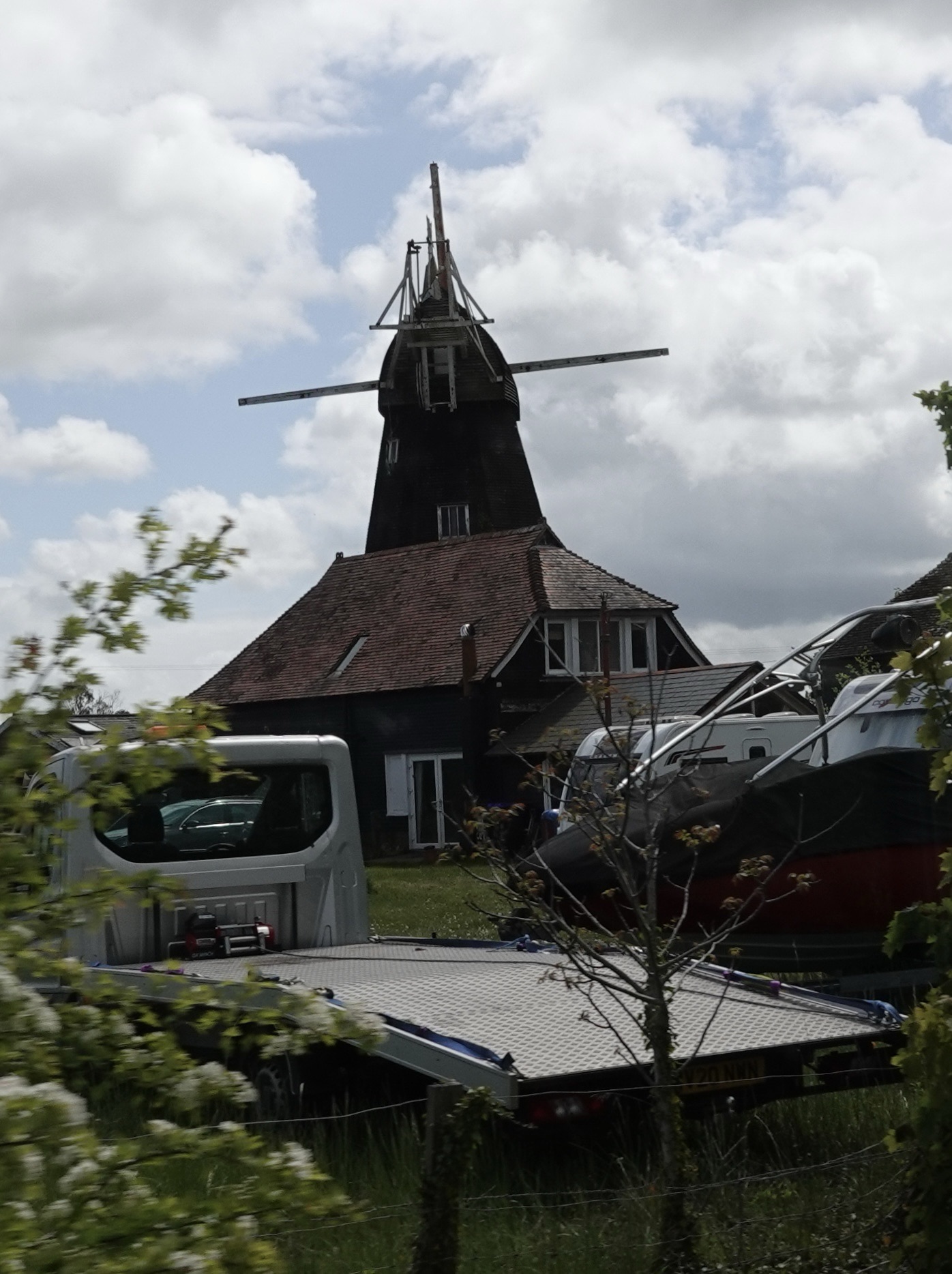
We also passed by a “smock” windmill, called that because of its dress-like shape. The house below it is a later addition, and its roof would actually prevent the windmill’s vanes from turning.
The museum was a self-guided tour of the many WWII artifacts, including iconic Spitfire and Hurricane fighter planes.

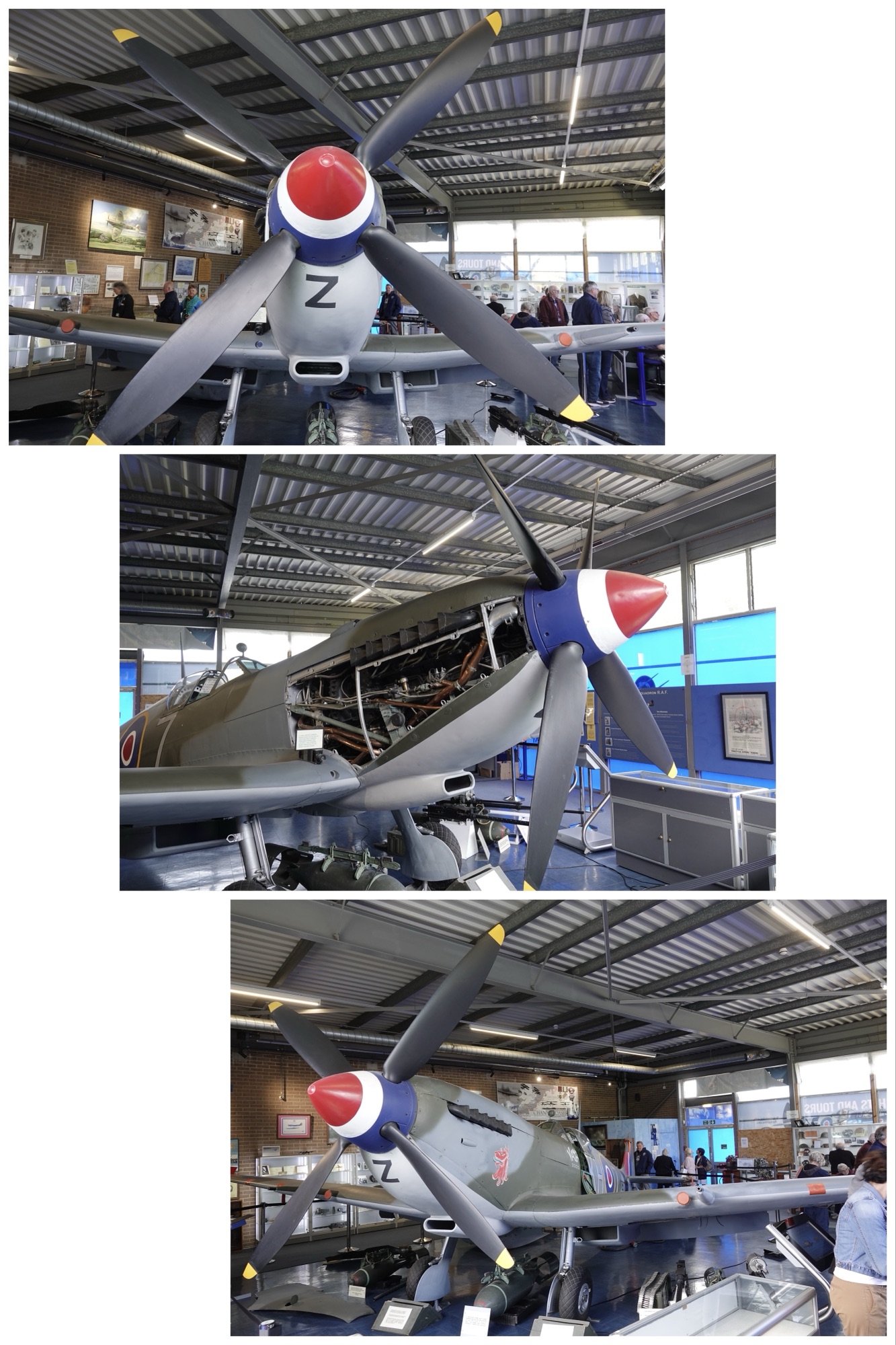
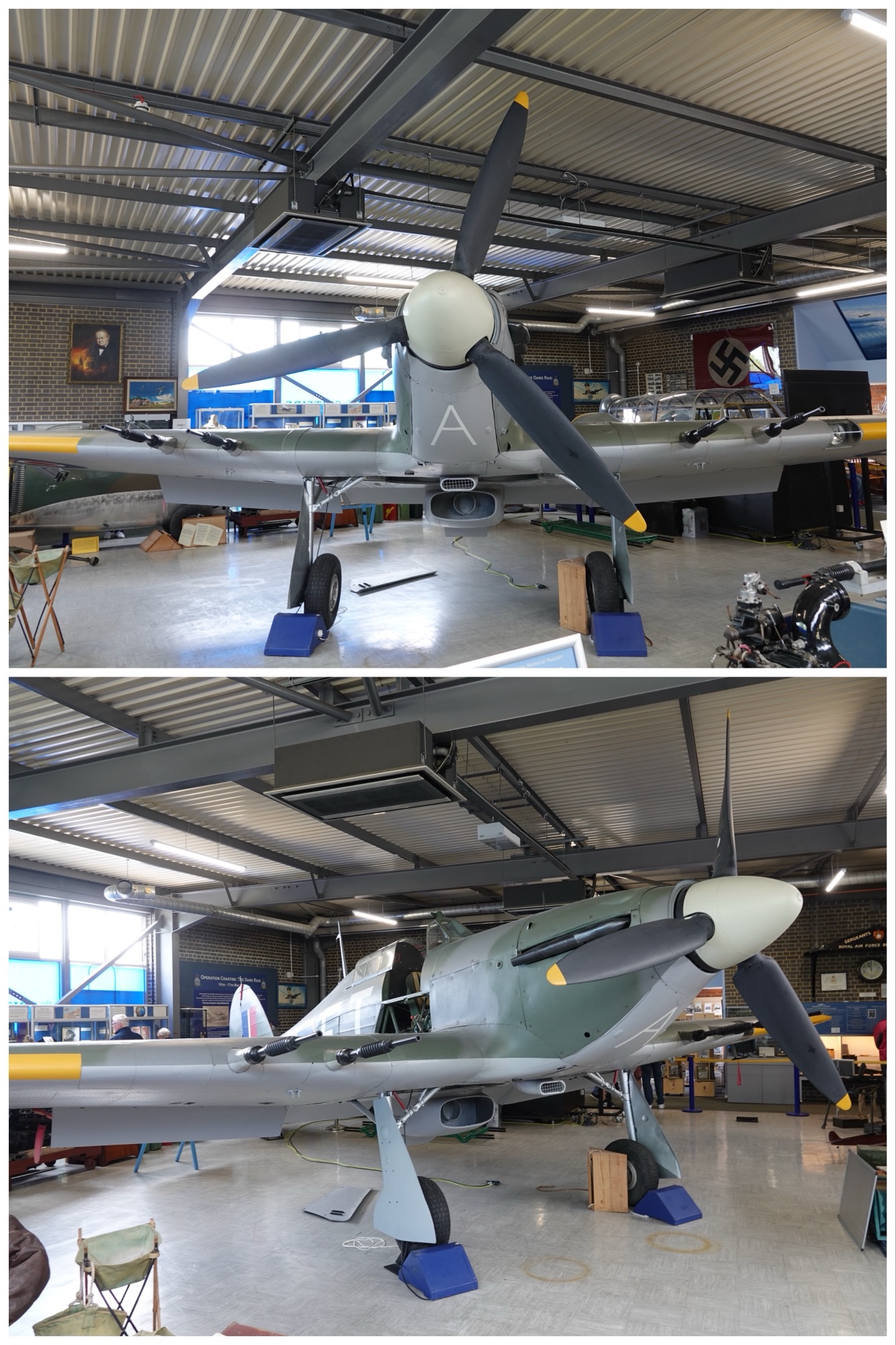
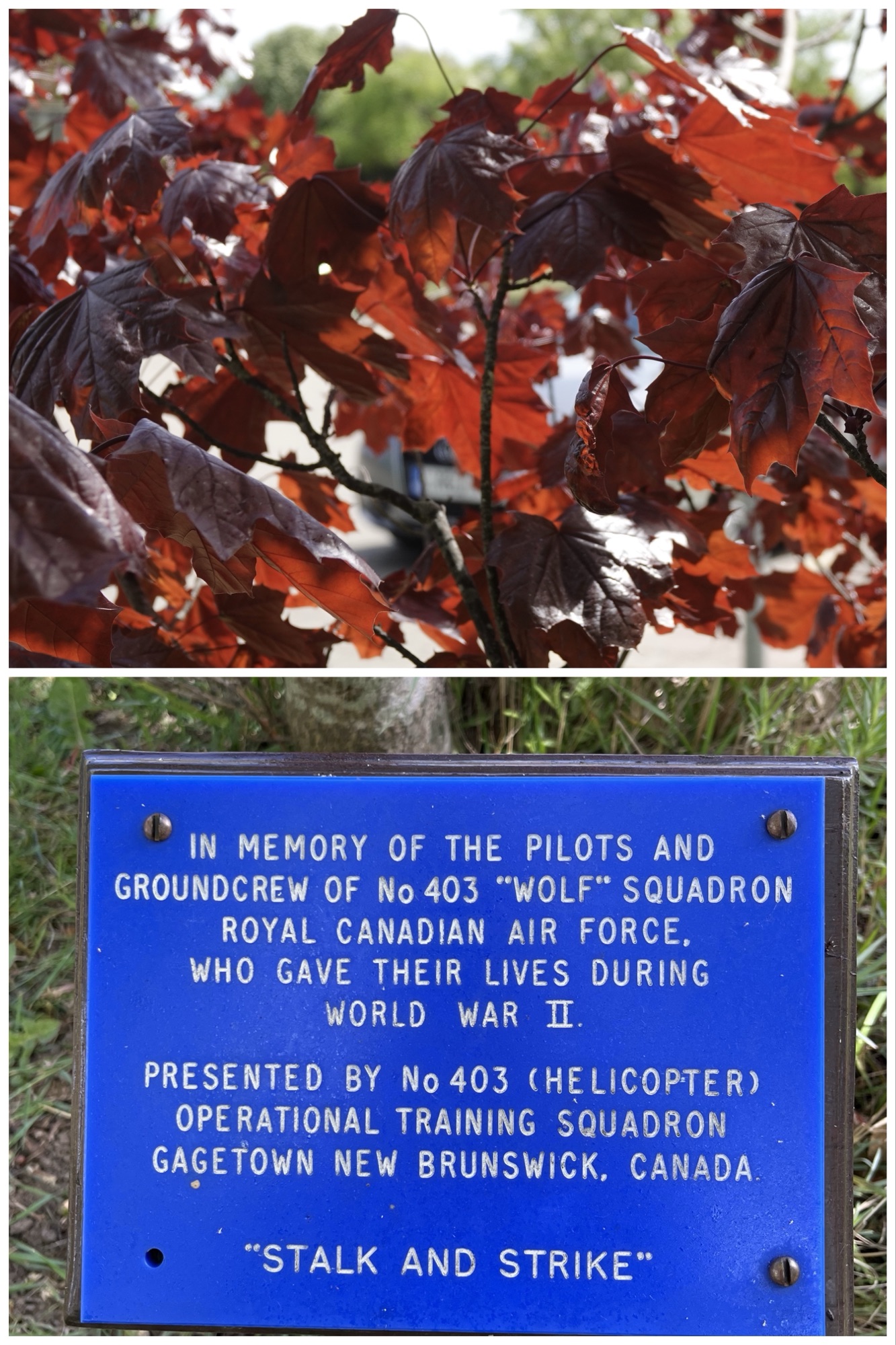
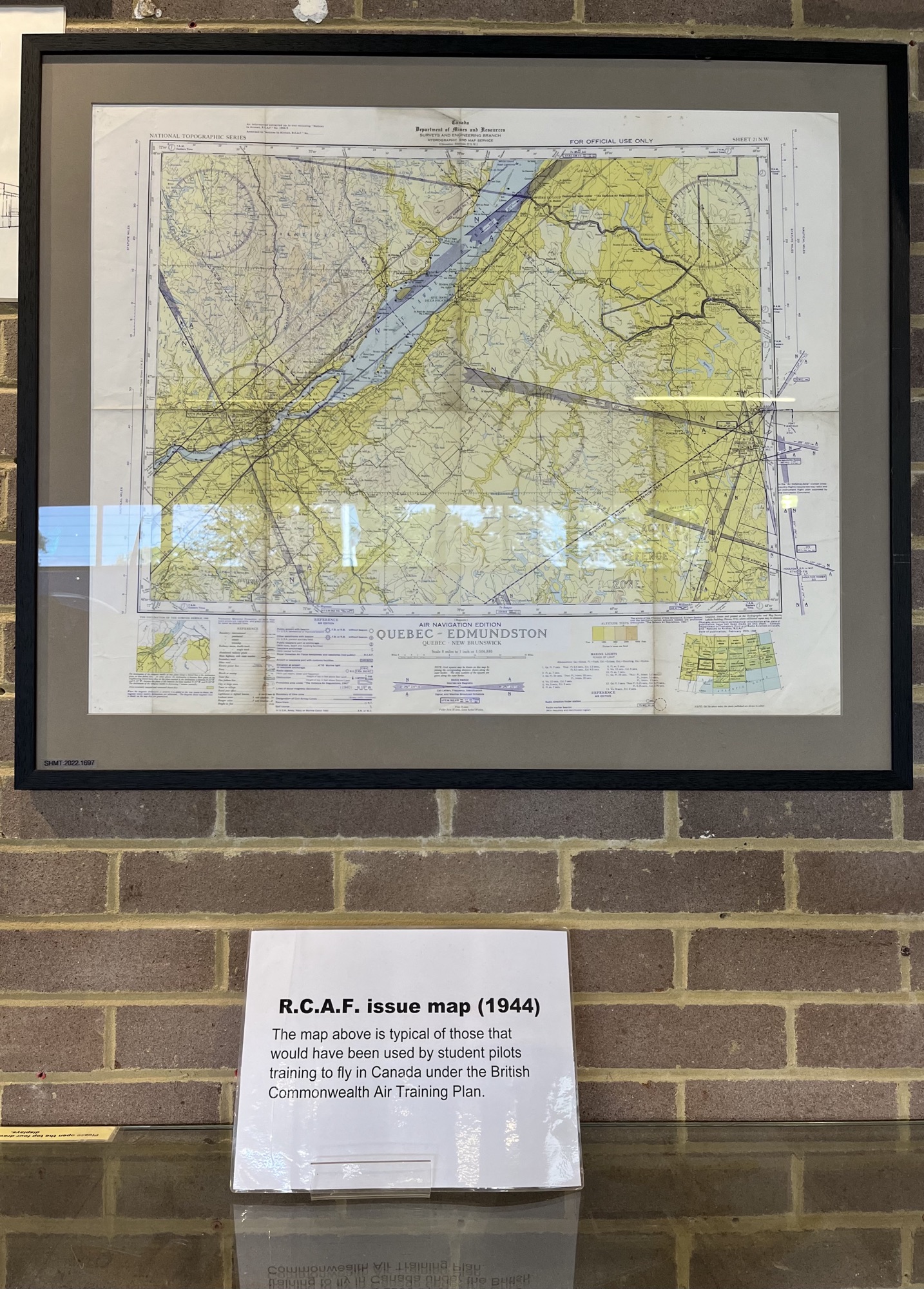
I focused on the items related to the RCAF pilots that were integrated into Britain’s Royal Air Force.

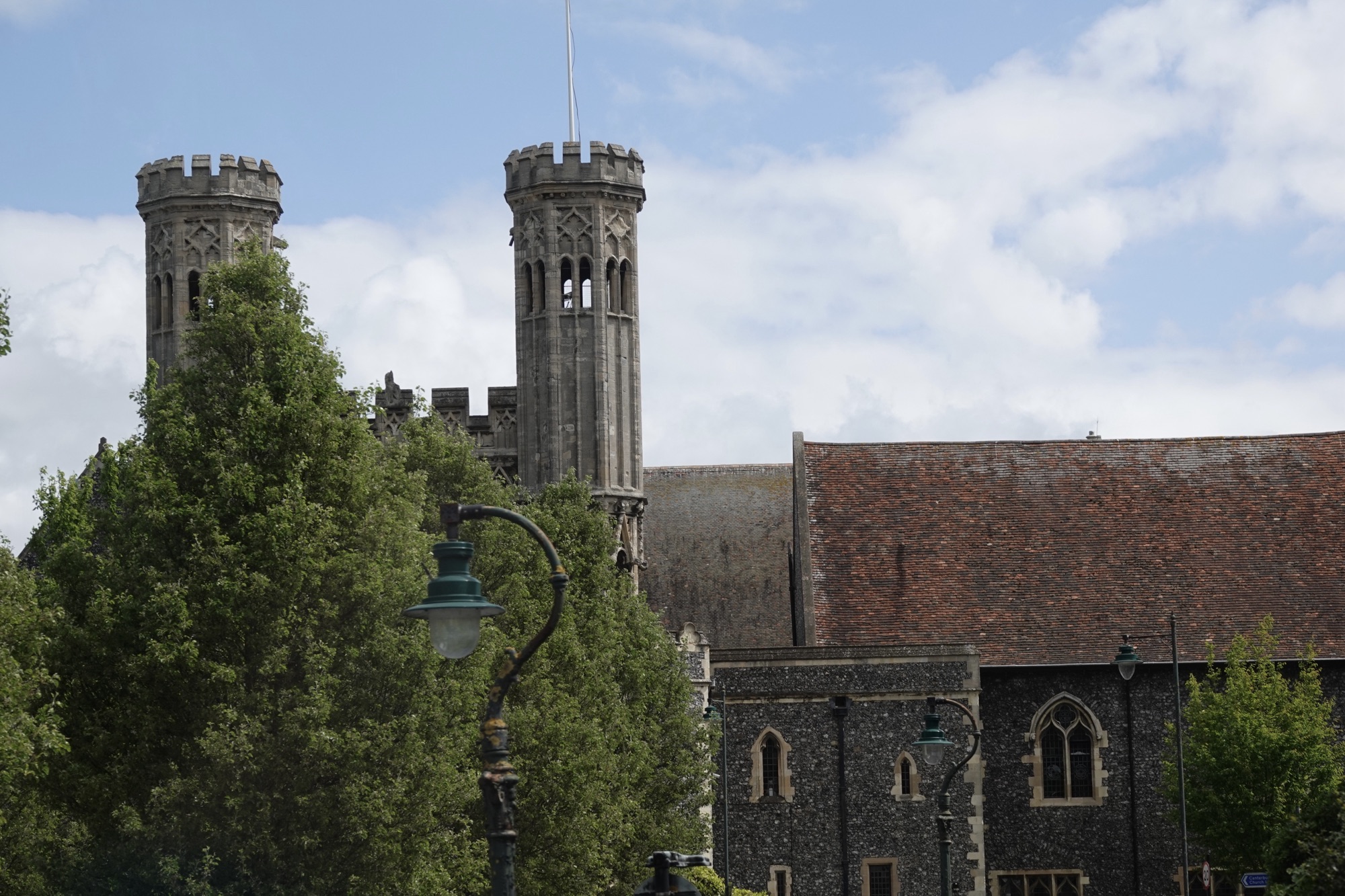
Although Canterbury Cathedral was not pertinent to our tour, Karen decided that a short detour “drive-by” was required on our way to lunch. We couldn’t stop, but at least we got a glimpse.

We also got a peek at the towers of the Augustine monastery opposite the cathedral.
Lunch was in a charming local pub, The Jackdaw, in the village of Denton. This pub, in its original iteration as The Red Lion, was the watering hole for pilots from Hawkinge, another forward airfield. After its renaming as The Jackdaw, it was used in the 1969 movie Battle of Britain.
In recognition of VE Day coming up on Thursday May 8th, two local men dressed as WWII Local Defence Volunteers (“Home Guard”) were watching for suspicious activity outside the pub.

We had delicious crispy fish and chips, with mushy peas, a pint of the local bitter, and a dessert of apple crumble doused in vanilla custard. Mmmmmm.

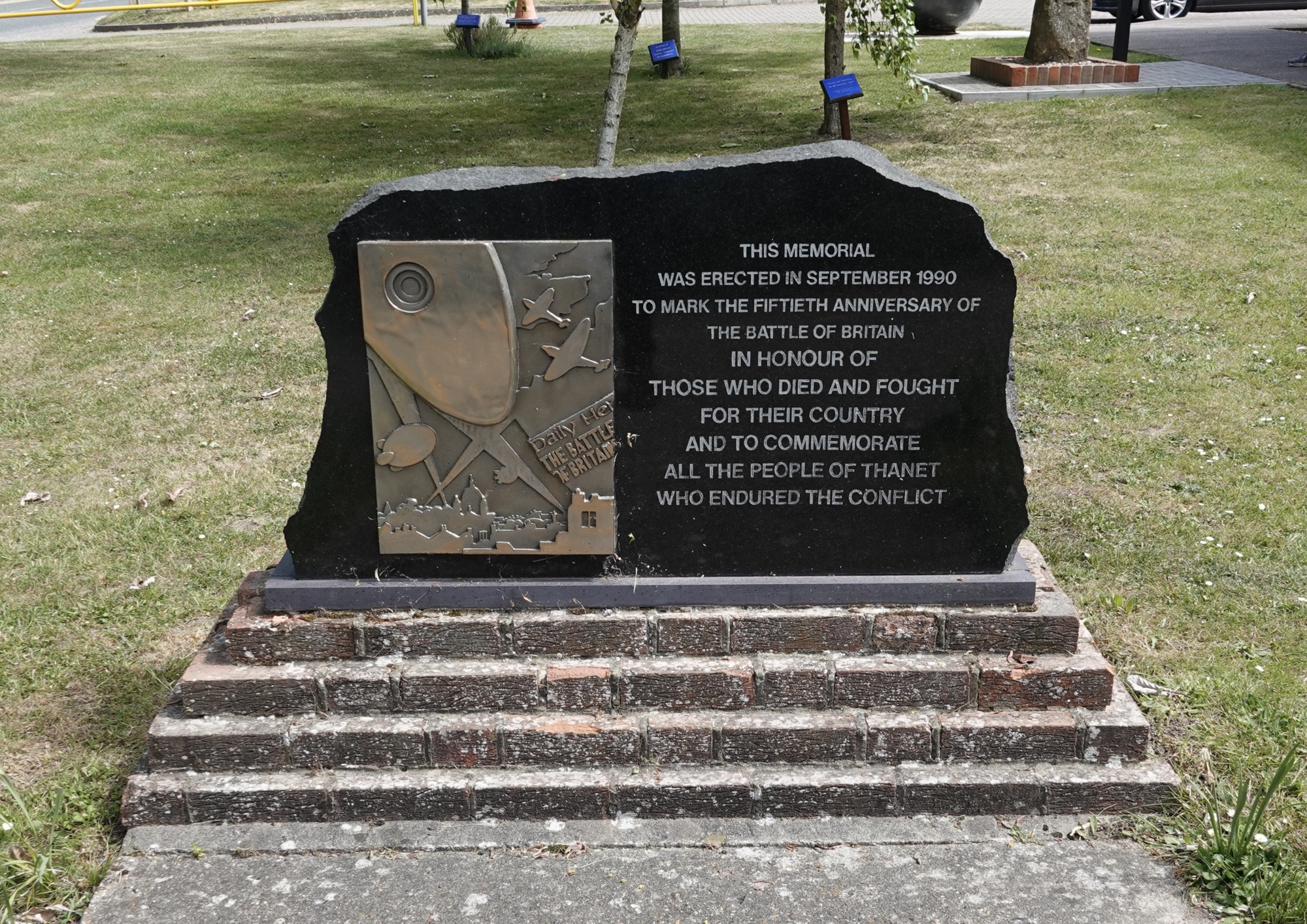
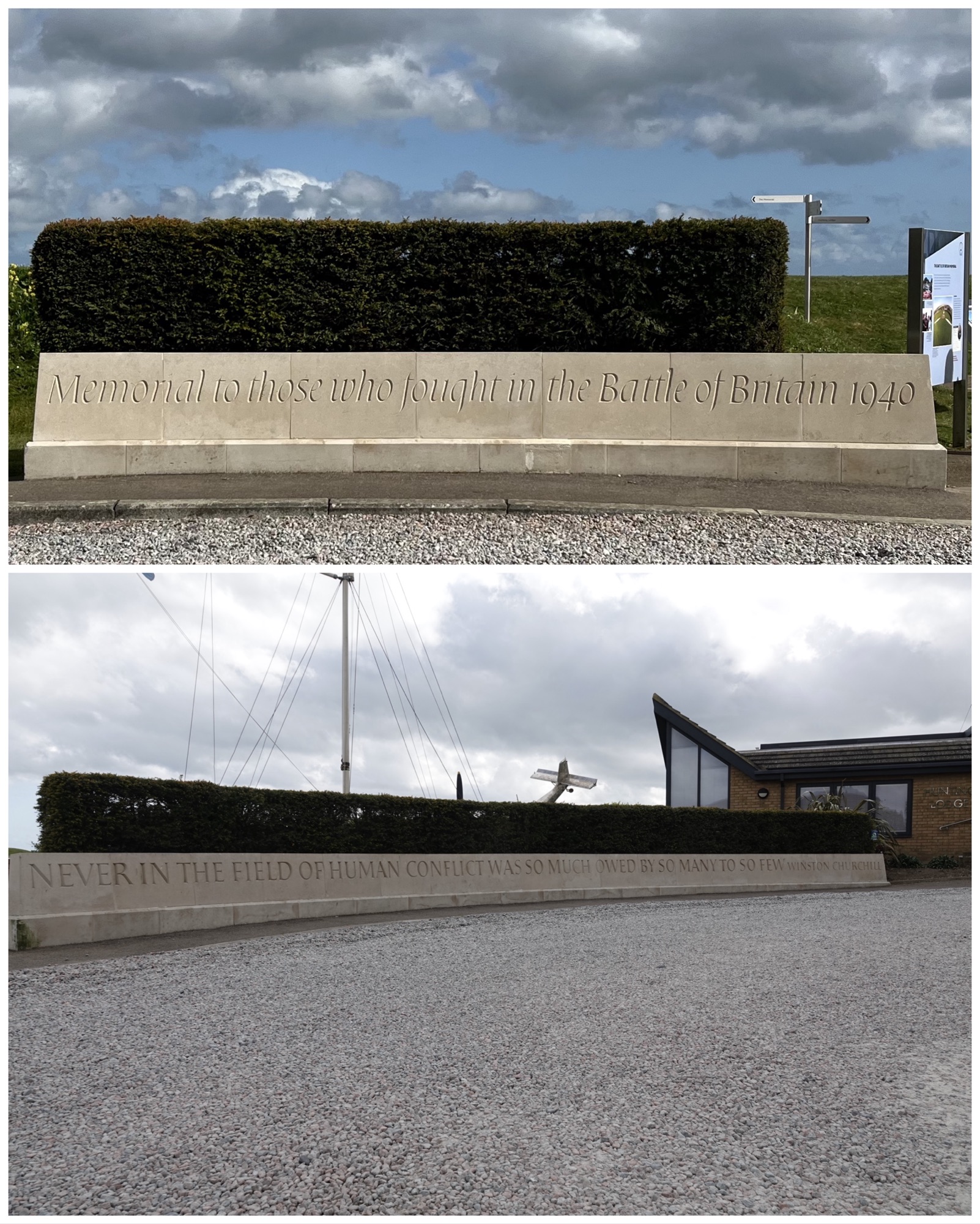
In Folkestone – Capel Le Ferne, we visited the Battle of Britain Memorial and immersed ourselves in “The Scramble Experience”, an interactive exhibit, to get a better idea of what life was like during the war. Photography was only allowed outside.
The walkway on the property, when viewed from the balcony, is shaped like a propeller.
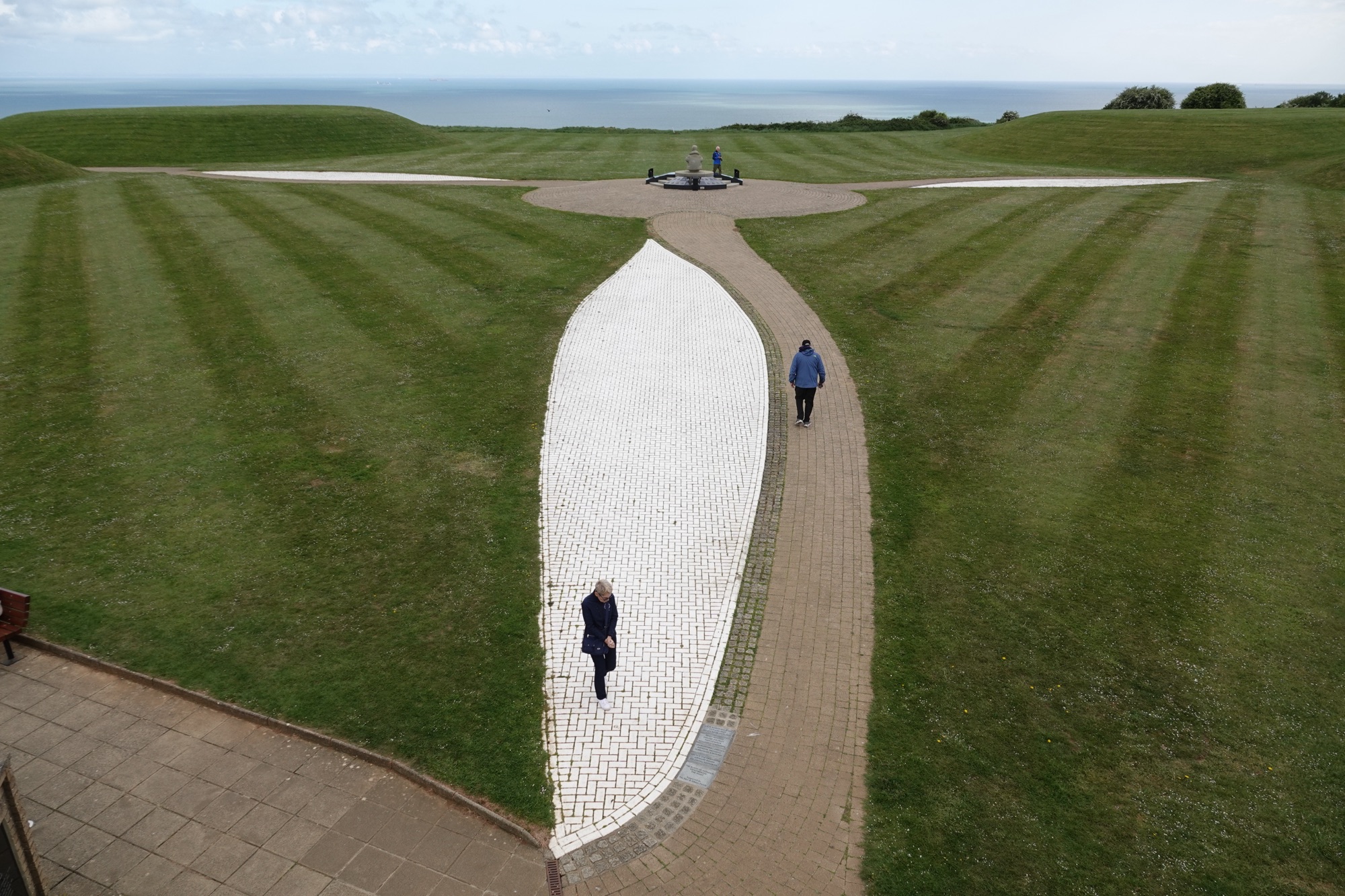
In the hub of the propeller, a lone fighter pilot looks out over the channel. Squadron badges from all the units involved in the Battle of Britain surround him.


The last pilot who flew in that 1940 battle, at only 18 years old, died just a few weeks ago in Ireland at the age of 103.


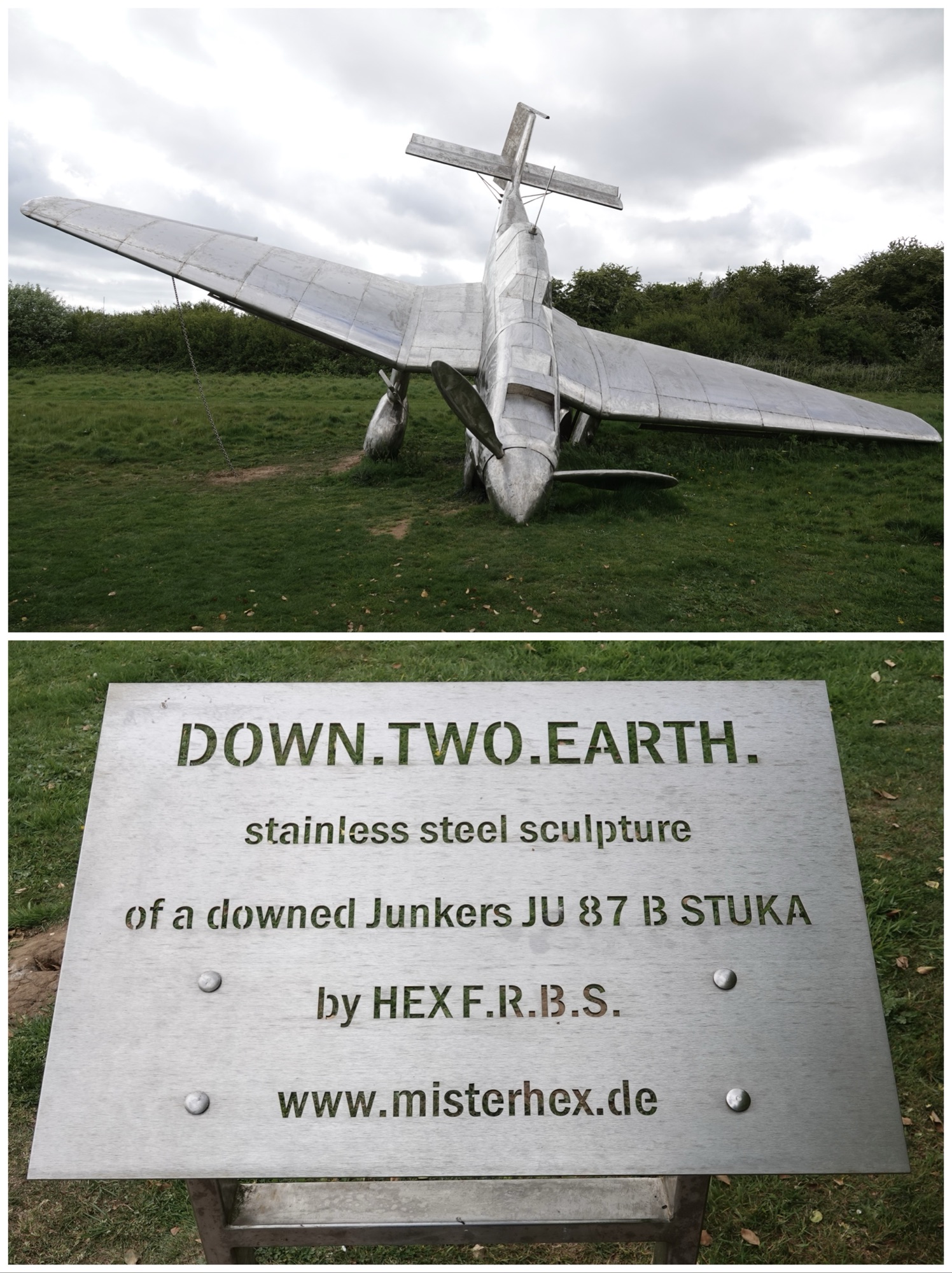
There were several aircraft, and sculptures, on the property.
When we returned the port after our tout, the angle of the sunlight had turned the cliffs sparkling white.

Tomorrow marks the last day of this incredible world cruise. We’ll be spending at least part of it in Greenwich with friends from our previous cruise.
 Rose and Ted’s Excellent Adventure
So emotional!! Must be very personal! #1 s
LikeLike
It looks like a good day! So much, so few etc. Gary’s dad Ted Ancell, watched the Battle of Britain as a boy, lying on his back on the garden shed. Gary did the same when they made the film.
LikeLiked by 1 person
Malcolm and I really enjoyed your vacation. We are following Ted and your advice on traveling . (We met on Viking Rhine/ bus cruise)
LikeLiked by 1 person
Happy travelling!!
LikeLike
what an interesting day! (And Foyle’s War, such a great series.)
LikeLiked by 1 person