We’ve been in this port before with Viking, but that time we left Cádiz for a full day tour exploring Seville (Episode 211).
This time, we chose a full day (7 hour) combination sightseeing and culinary tour in the Andalusian city of Jerez, simply doing a quick panoramic drive-through of Cádiz at the end of the day.
From the port in Cádiz to reach Jerez we drove along an isthmus, with the Bay of Cádiz on one side and the Atlantic Ocean on the other. This is an area of sea salt farming; we saw drying pools and huge piles of salt.
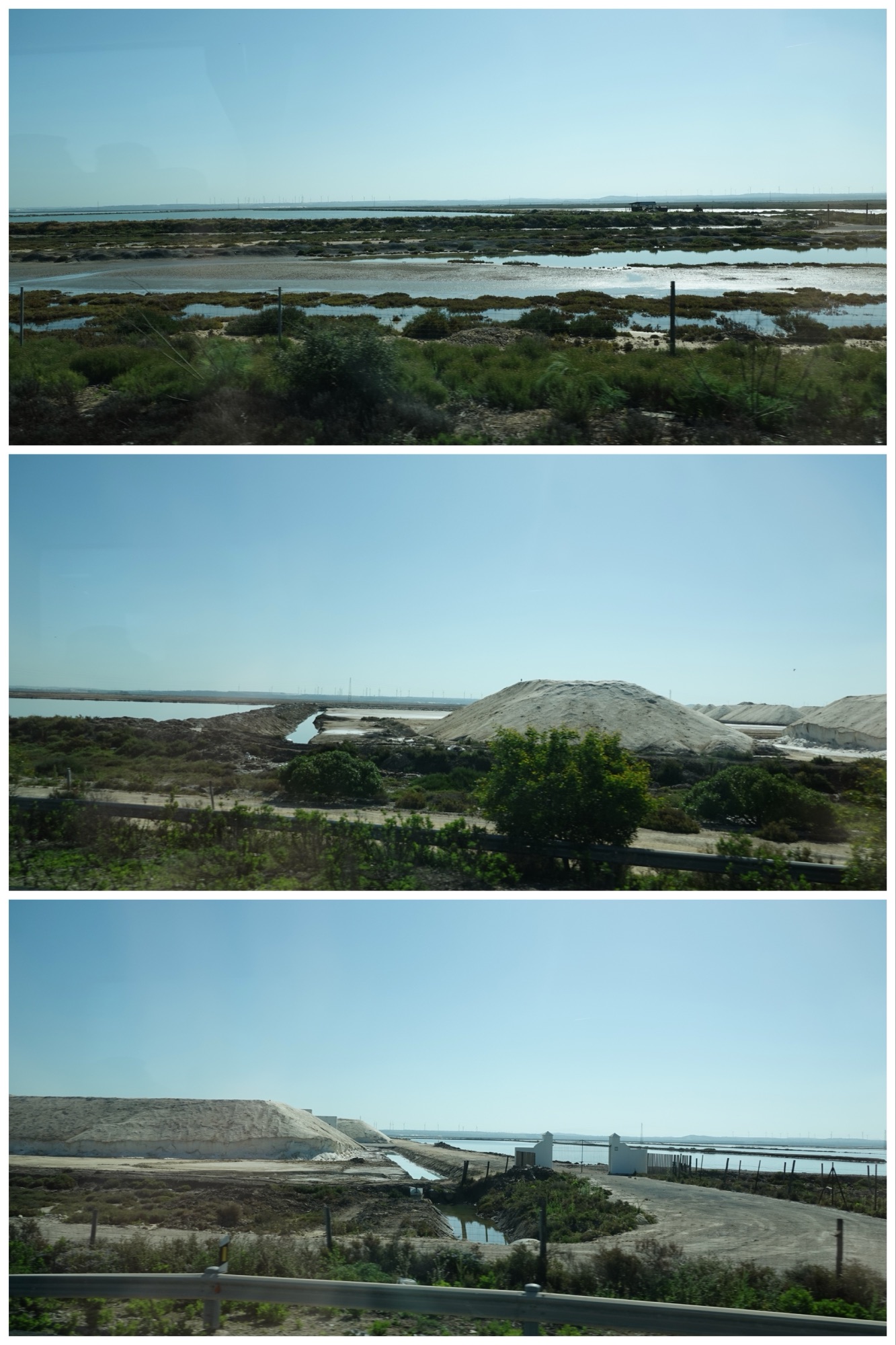
The entire drive was only about half an hour through picturesque countryside. We caught glimpses of seaside resorts as well as agricultural land.
Our excursion guide Angel kept warning us that Jerez might not be as clean on this Sunday morning as it usually is. This weekend and coming week it is home to the Spanish Motorcycle GranPrix “MotoGP”, an annual event that sees up to 125,000 spectators descend on the city centre, and yesterday was the opening concert event. Surprisingly, other than a few flyers on the sidewalks, there was very little mess in evidence.
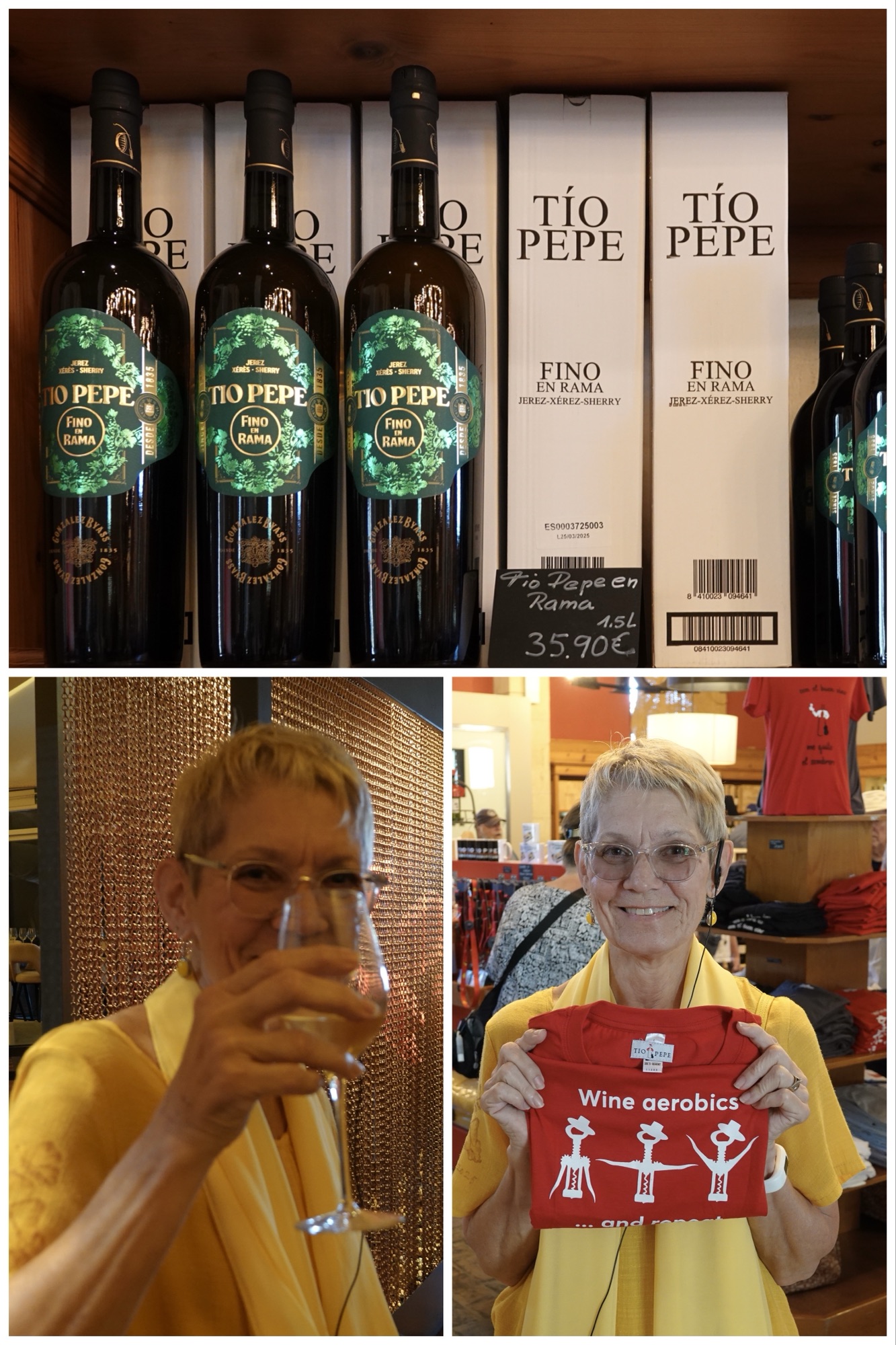
We began our visit in Jerez with a wonderful guided tour of the flagship location of Gonzales Byass, famous producers of Tio Pepe (“Uncle Peter”) sherry.

I didn’t know until today that Gonzalez Byass is the largest Sherry producer IN THE WORLD and also has wineries in every major Spanish wine region. The bodega (wine cellar) is located adjacent to the Cathedral of Jerez and the Alcazar – and in fact takes up several city blocks of what once were private homes that are now offices.
The winery was founded in 1835 by Manuel María González Angel, who was subsequently joined by his English agent, Robert Blake Byass.

After entering through the stone and iron gates Angel turned us over to Antonio, who was one of the facility’s English guides; they also offer tours in German, Russian, Italian, and of course Spanish.
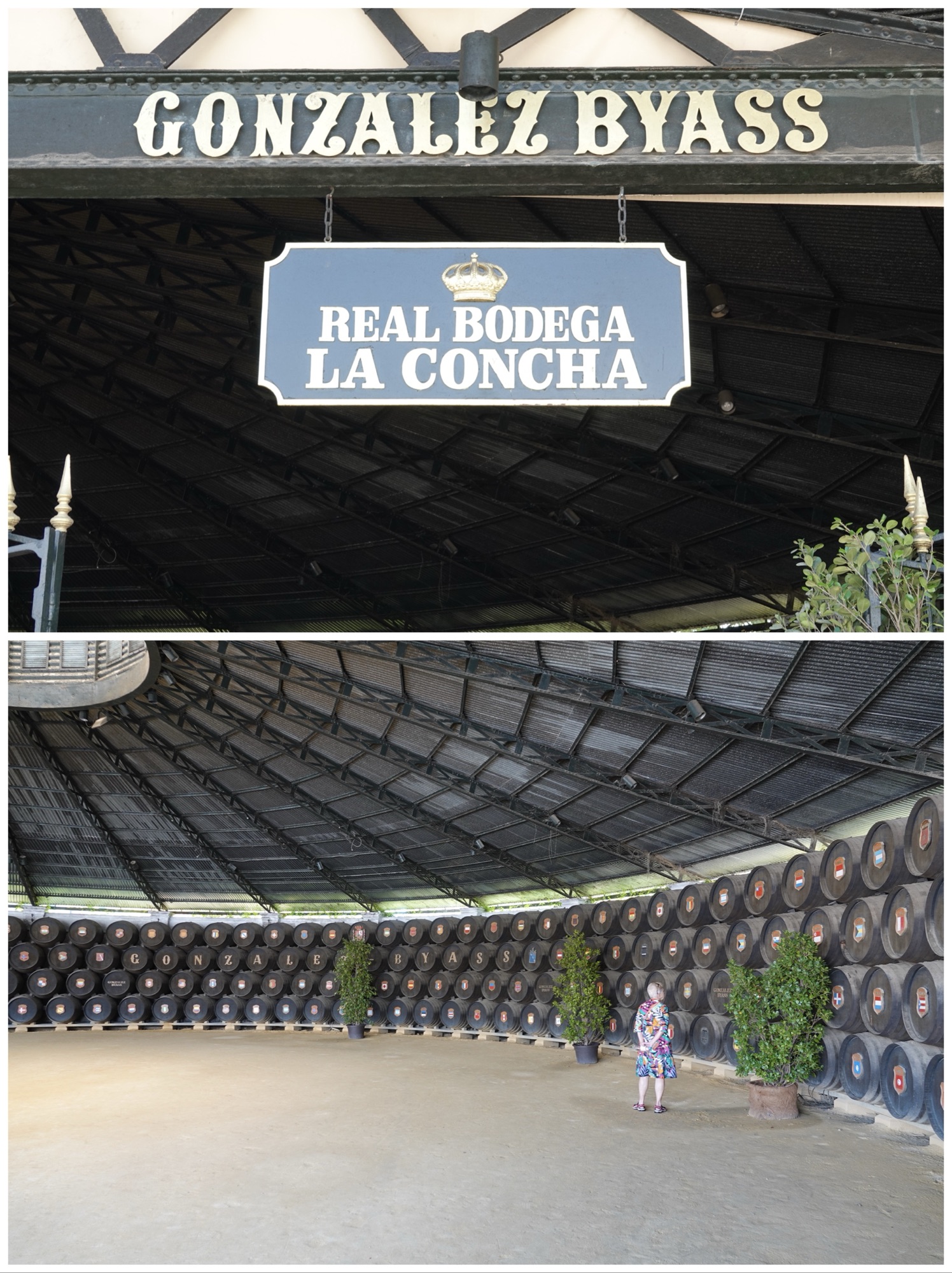
We walked down stone lanes lined with bitter Seville orange trees, into the Royal Winecellar “The Shell” where Antonio began his introduction to the winery in front of barrels bearing the flags of every country to which GB’s sherry is exported.

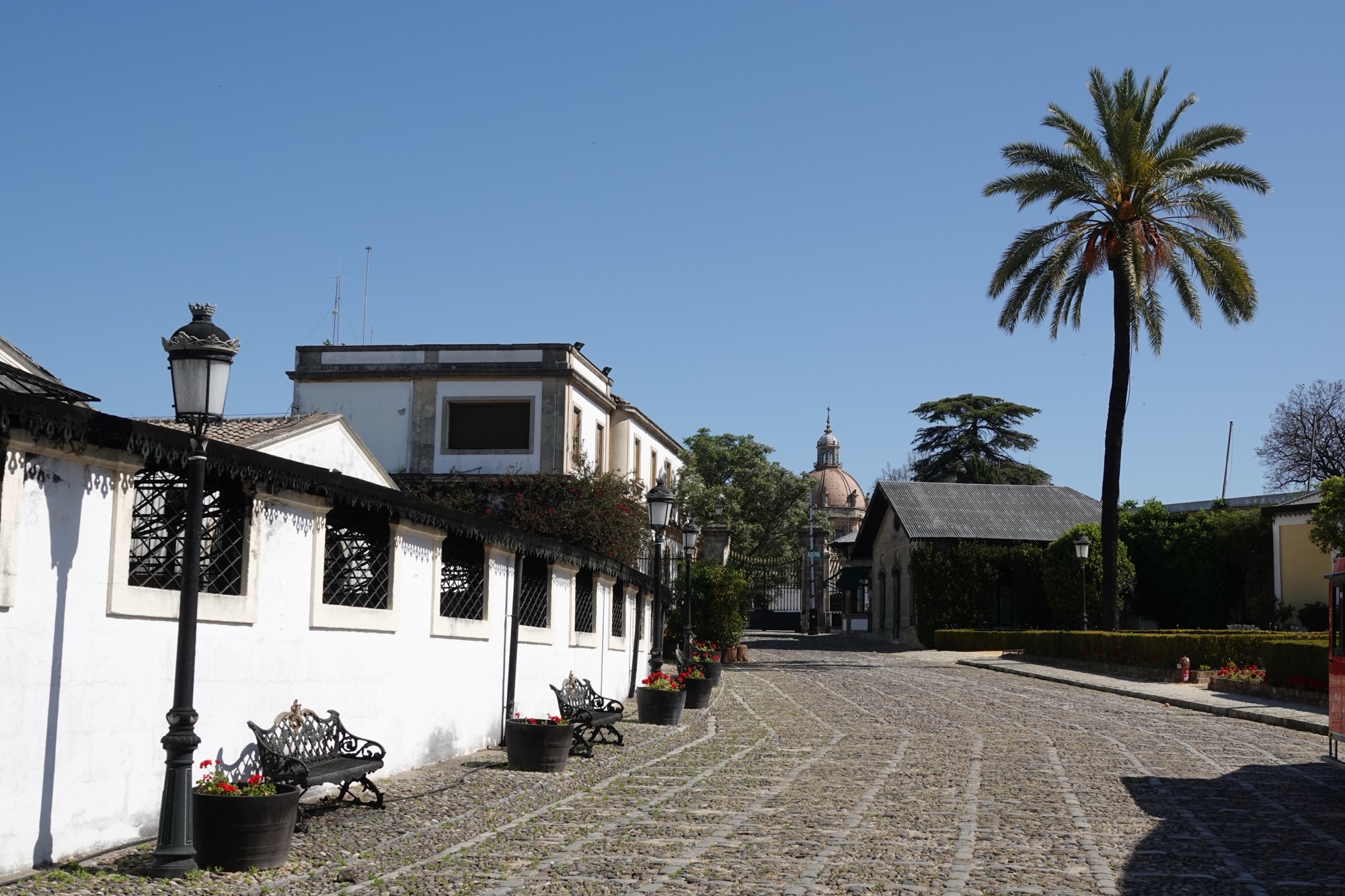
We crossed the laneway – a former city street – down which we could see the Jerez cathedral.
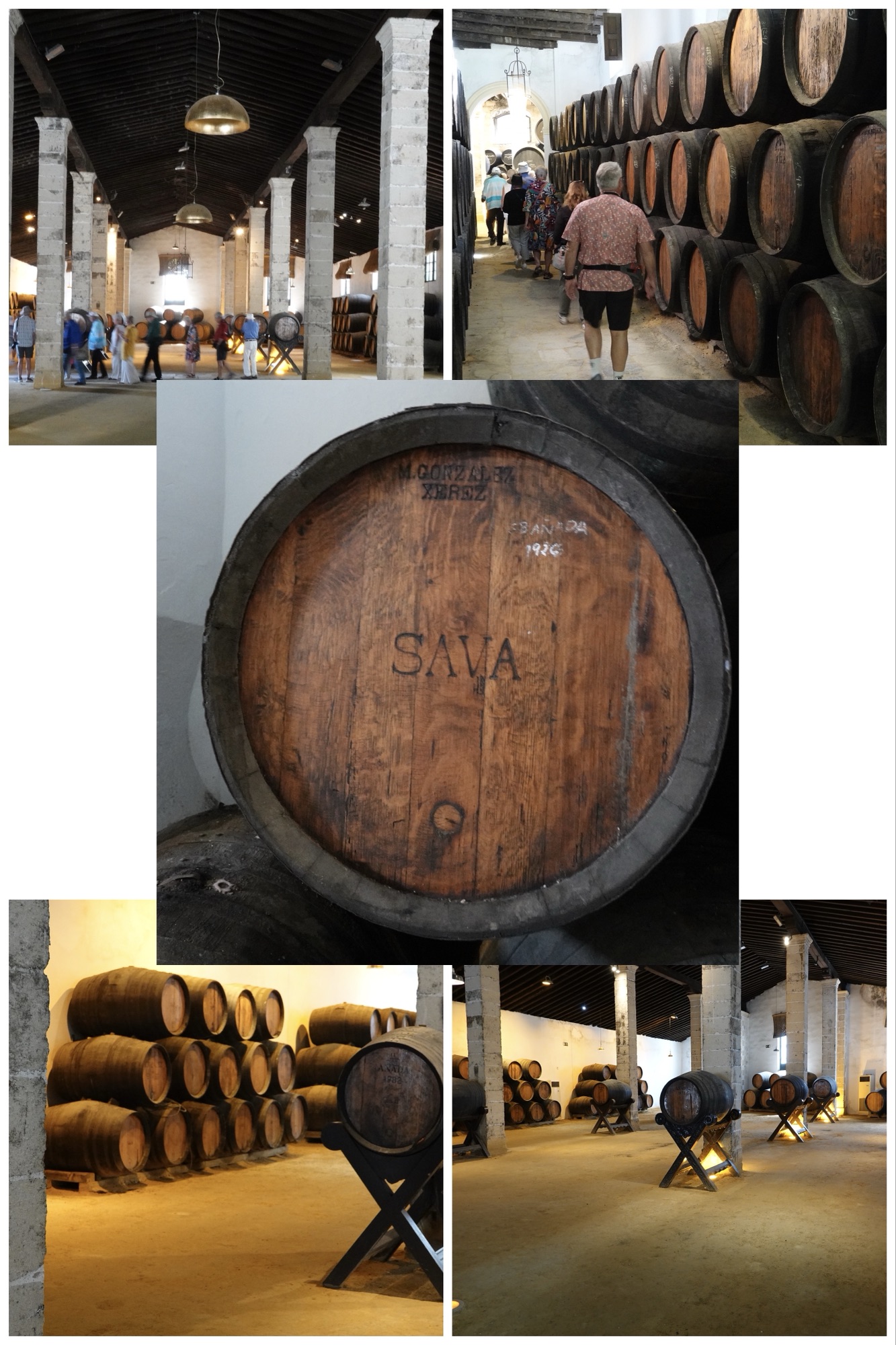
Next we entered the “bodega odorífero”, the “smelly warehouse”, where the delicious scent of sherry seeped into the air from the rows and rows of black barrels: 5 million litres of sherry in this bodega alone. Since each barrel holds 500 litres, we were looking at 10,000 barrels.
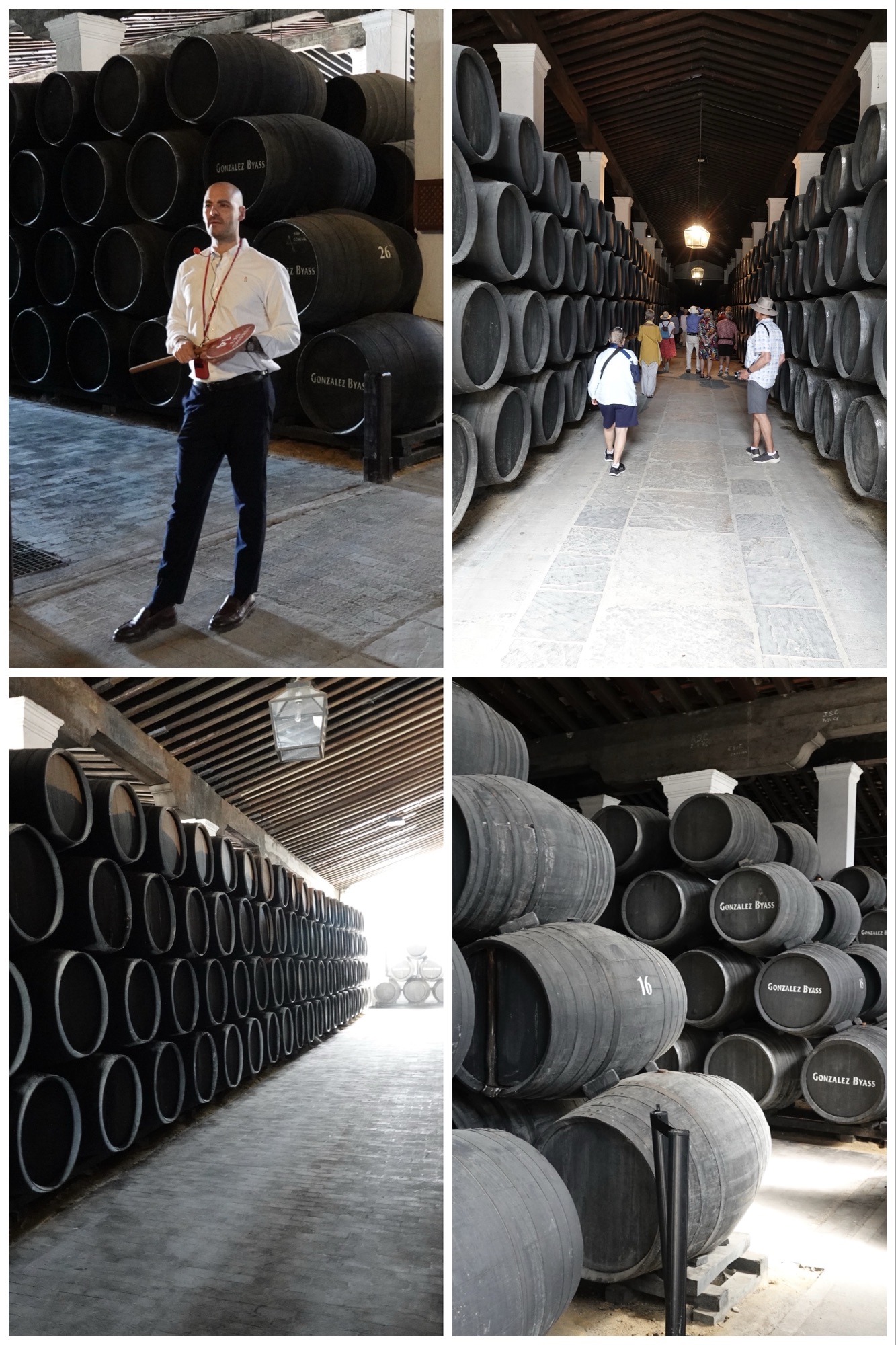
All the barrels are painted black as a temperature control measure.
In total, Gonzalez Byass has over 50 million litres of sherry in various stages of production here in Jerez.
Antonio told us a bit about the sherry-making process, which for Tio Pepe uses white palomino fino grapes and the traditional Solera process, a type of non-oxidation fermentation.
Oak barrels are continuously used for up to 50 years, with new wine added on top of the older wine in a process of “dynamic aging” that can take up to four years. I’ll admit, despite the visual aid below, to still being confused.

After 40-50 years of use, the sherry barrels are sold to whiskey distilleries all over the world.
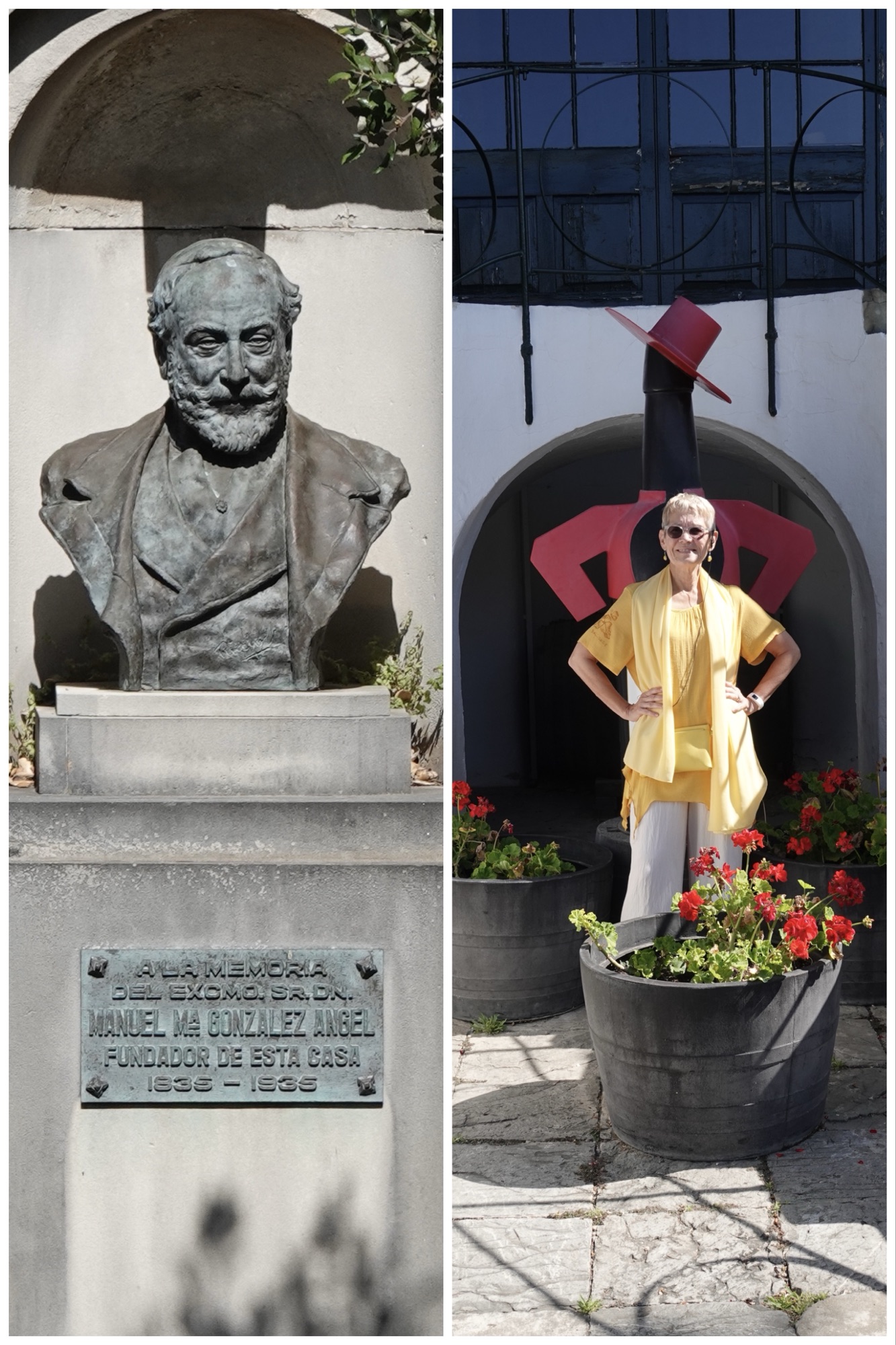
Across another laneway in which a bust of the winery’s founder competes with the Tio Pepe logo, into a building that once housed the Danish, Swedish, and Italian Consulates.
Here there are more barrels, including a very special group of 13 representing The Last Supper. The central (Christ) barrel holds 16,500 litres. Each of the “Apostles” holds 6,000 litres, with the exception of the empty “Judas” barrel; superstition holds that any sherry in that barrel will turn into vinegar.


Another stone street, overhung with grape trellises, leading to more warehouses. By summer, when temperatures here soar to 40°C/104°F, the vines will provide shade for what becomes an outdoor event space.

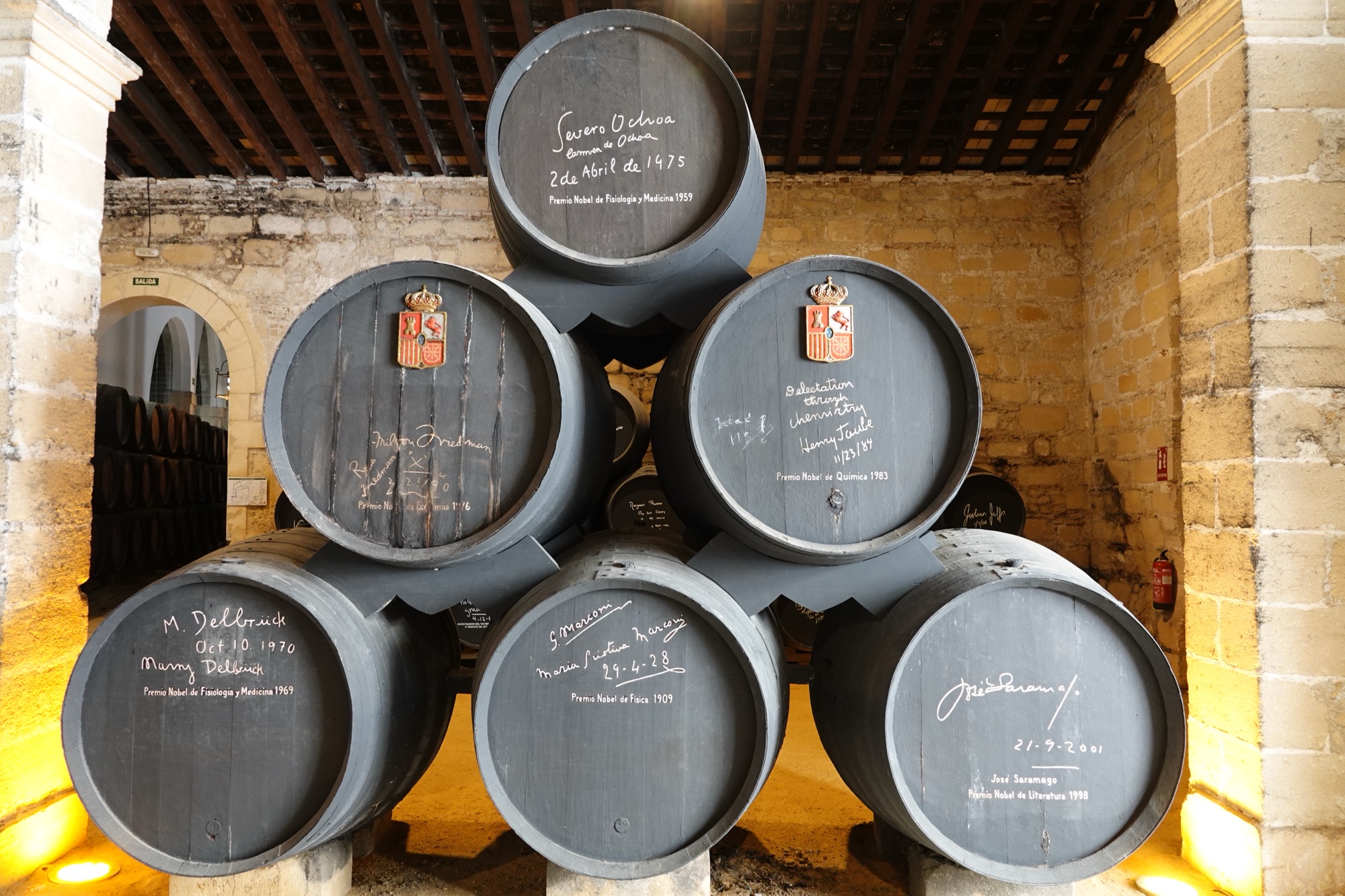
There was a large collection of barrels that had been signed by notable visitors to the winery. Antonio said that the sherry from those would not have labels reflecting the signatures; it was just a fun thing for celebrity visitors to be allowed to do.
The Bodega Real (royal warehouse) had signatures of Habsburgs, Bourbons, and Windsors!

It also had barrels dedicated to various Spanish monarchs.

There were Nobel prizewinners too.
A second warehouse area featured less than royal celebrities.

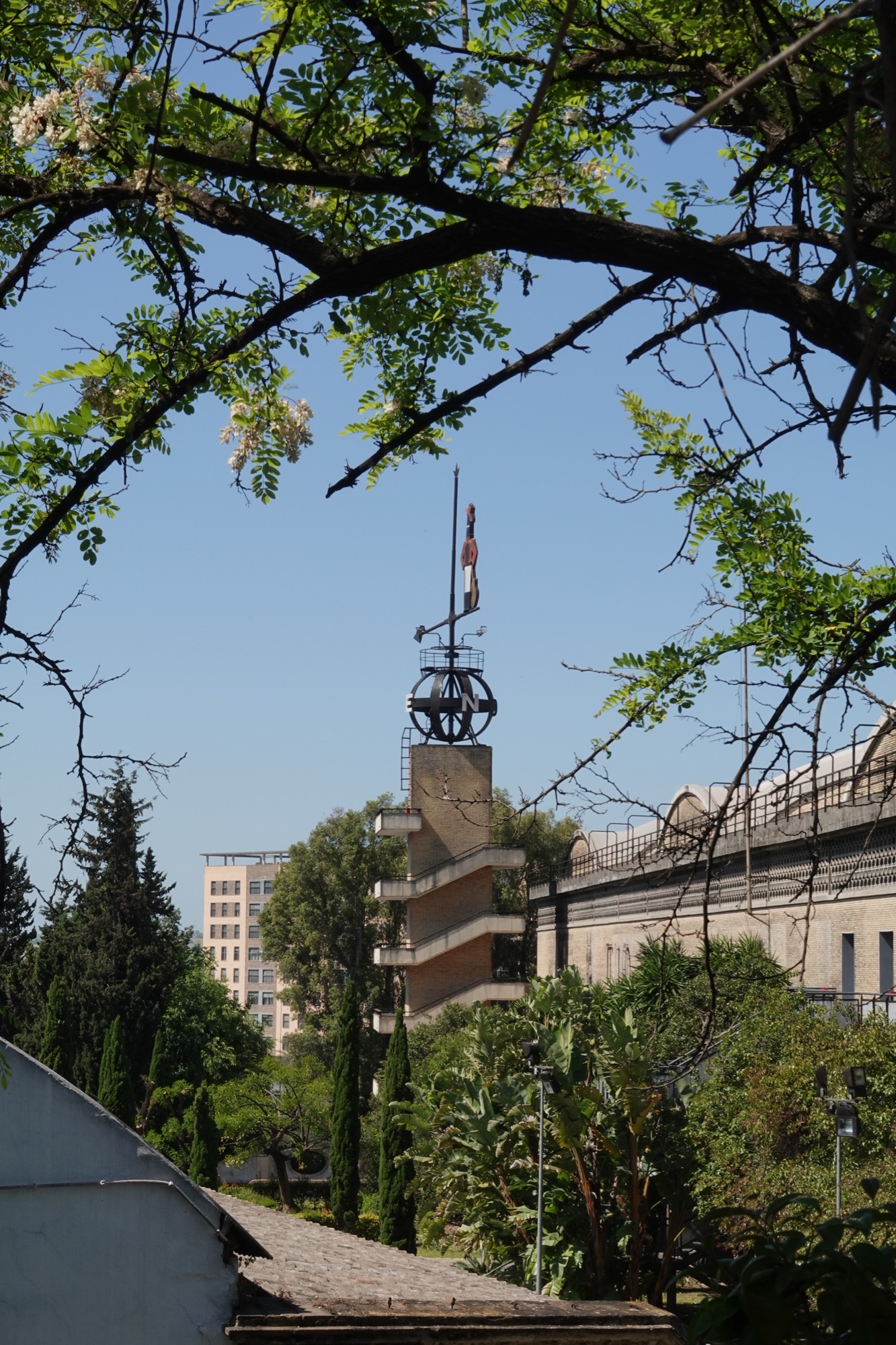
On our way to the tasting room, Antonio pointed out the bodega’s weather vane. (According to the Guinness World Records, the world’s largest weather vane is this Tío Pepe sherry advertisement located in Jerez, but there are challengers in North America)
And at last…. tasting. Unfortunately, I didn’t love it (way too oaky for me), but it might be better with tapas.
After our tour and tasting, our excursion guide Angel rejoined us and took us on a stroll around Jerez “Old City”, where he pointed out not only its most interesting buildings, parks, squares and monuments, but also his own elementary school and his family’s former apartment. He still lives in Jerez, and constantly reminded us that it was the most beautiful city in Spain – and maybe in the world! I wouldn’t go that far, but Ted and I both agreed it seemed worth revisiting for an extended exploration.
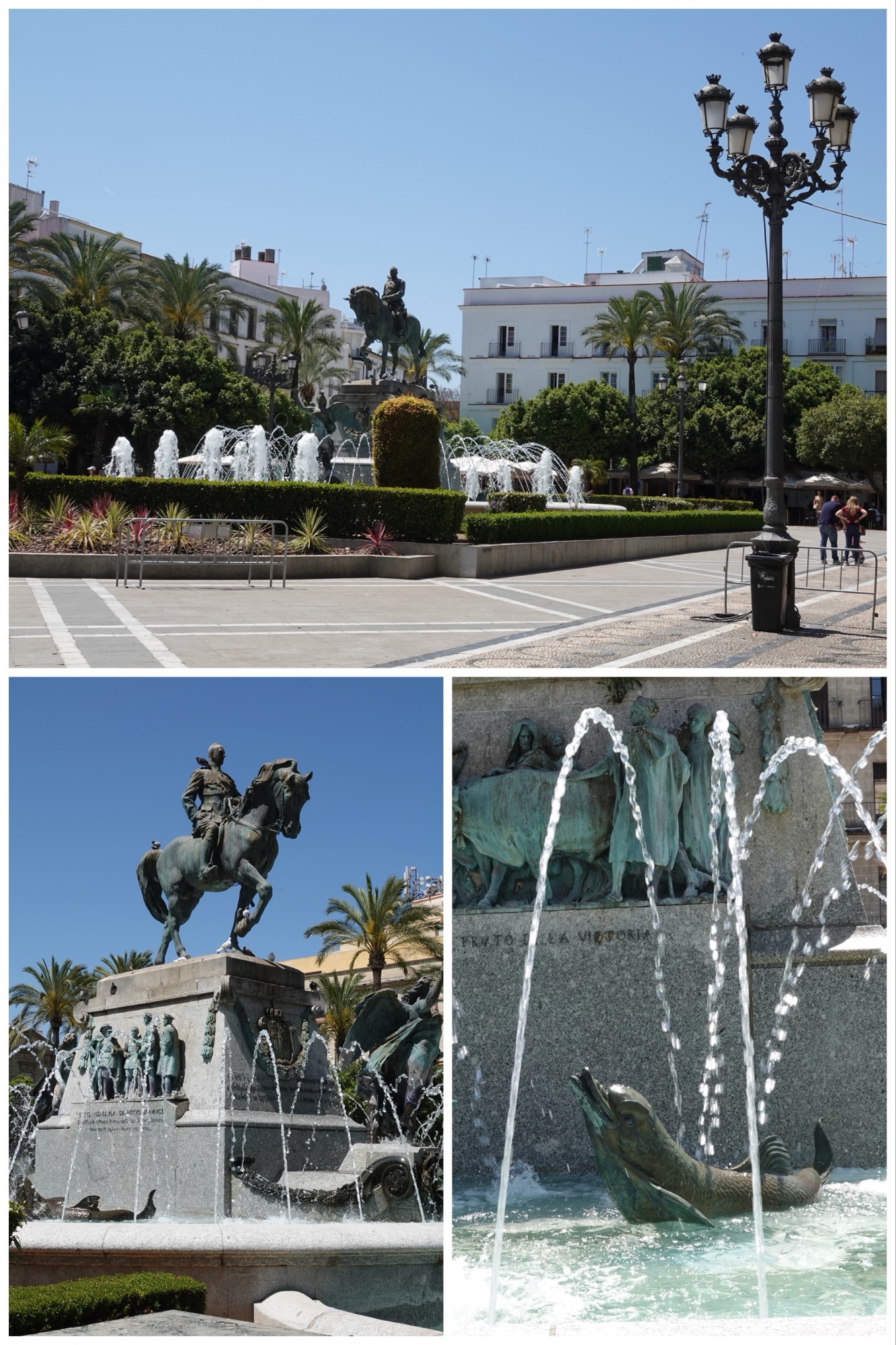


As we walked, Angel talked about the strong Moorish influences here, from the cathedral bell tower which is actually a minaret from the mosque that once stood here, to the gardens and squares of the city.

He talked about the fact that the bitter oranges we know as Seville oranges were brought here during the Islamic period, to become part of gardens that were designed to enchant all five senses: the beautiful smell of orange blossoms, the sound of running or splashing water, the sight of colourful flowers, the tastes of fruits, and the feel through thin leather soles of intricately designed walkways made of smooth river rocks.

The Jerez Cathedral is Renaissance outside, has Baroque doors, and is Rococo inside. Today a special mass for the Pope was being held, so no tourist entry was possible. Our glimpses of the cathedral were from a side street patio.


By that time it was past 2:00 p.m. and none of us had eaten since light breakfasts because our excursion description talked about stopping at a local restaurant to savor a delicious Andalusian lunch accompanied by an authentic flamenco performance.
We hadn’t realized how late lunch would be, and certainly none of expected the feast we got!
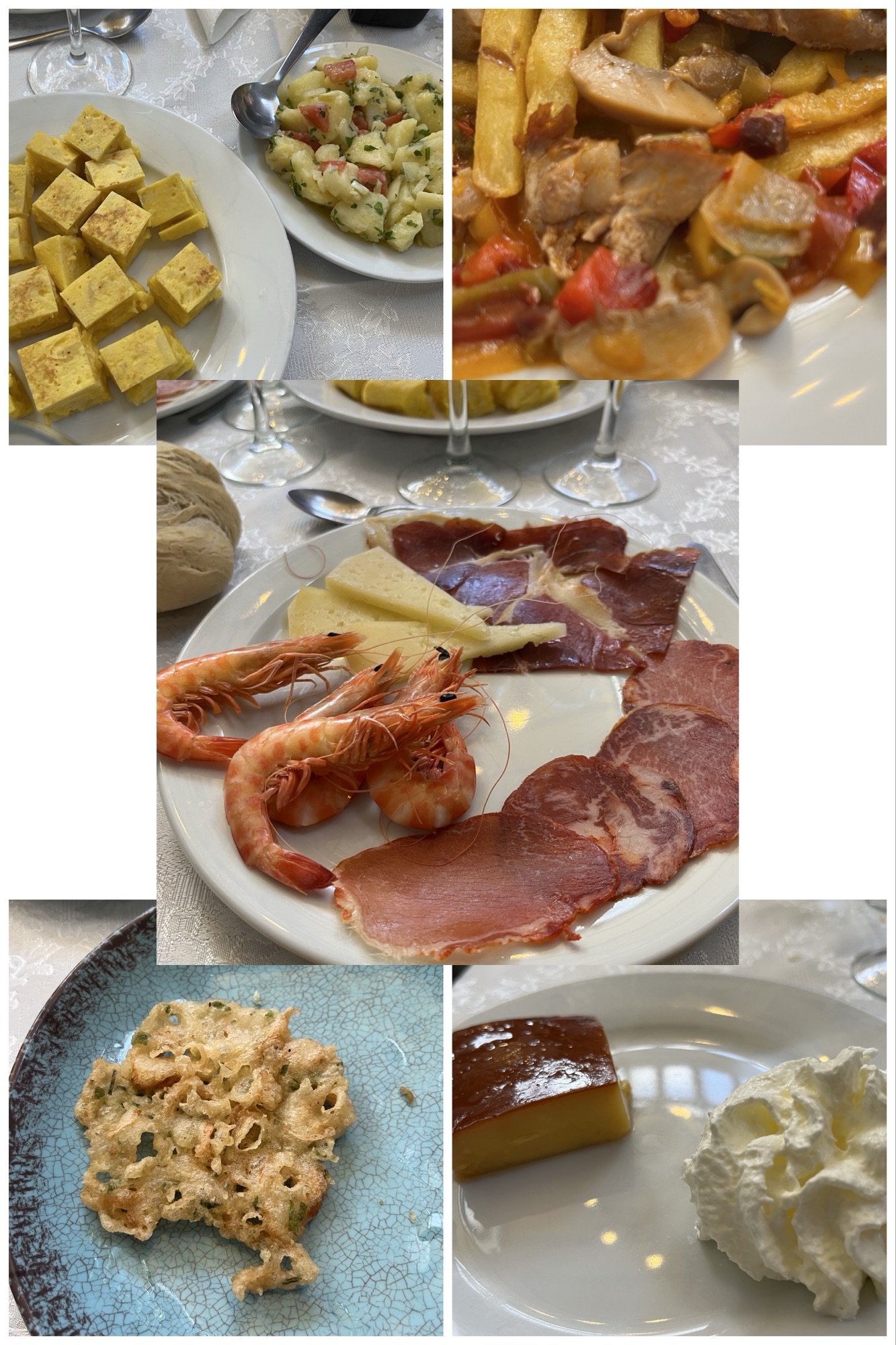

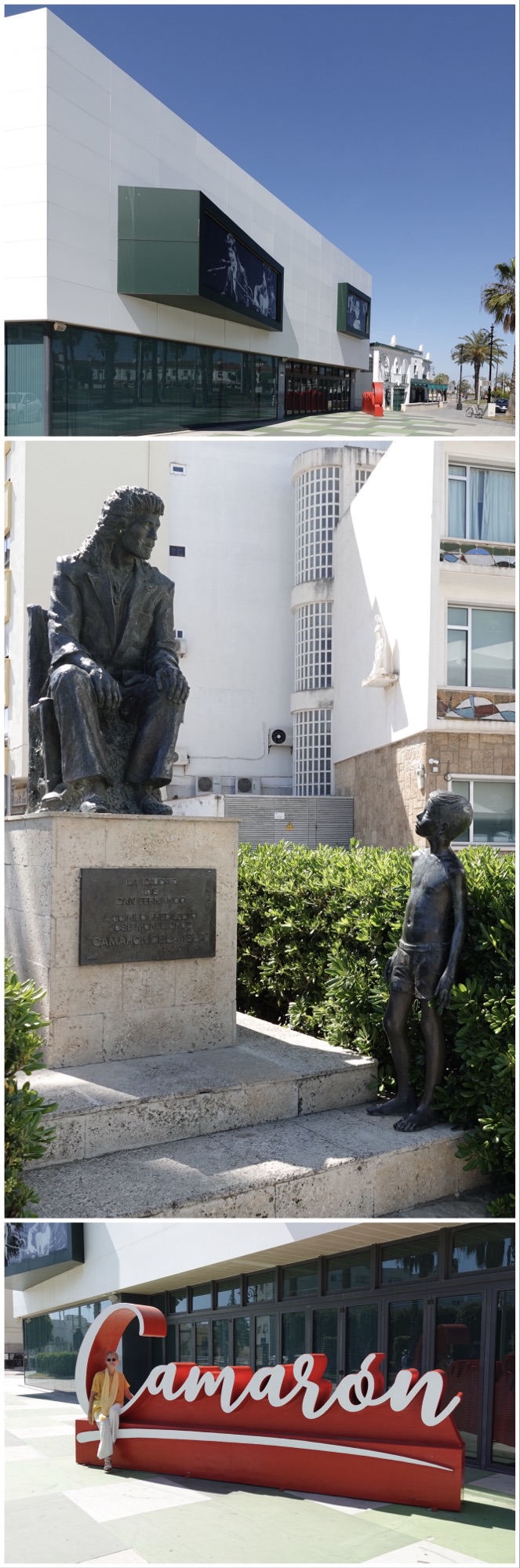
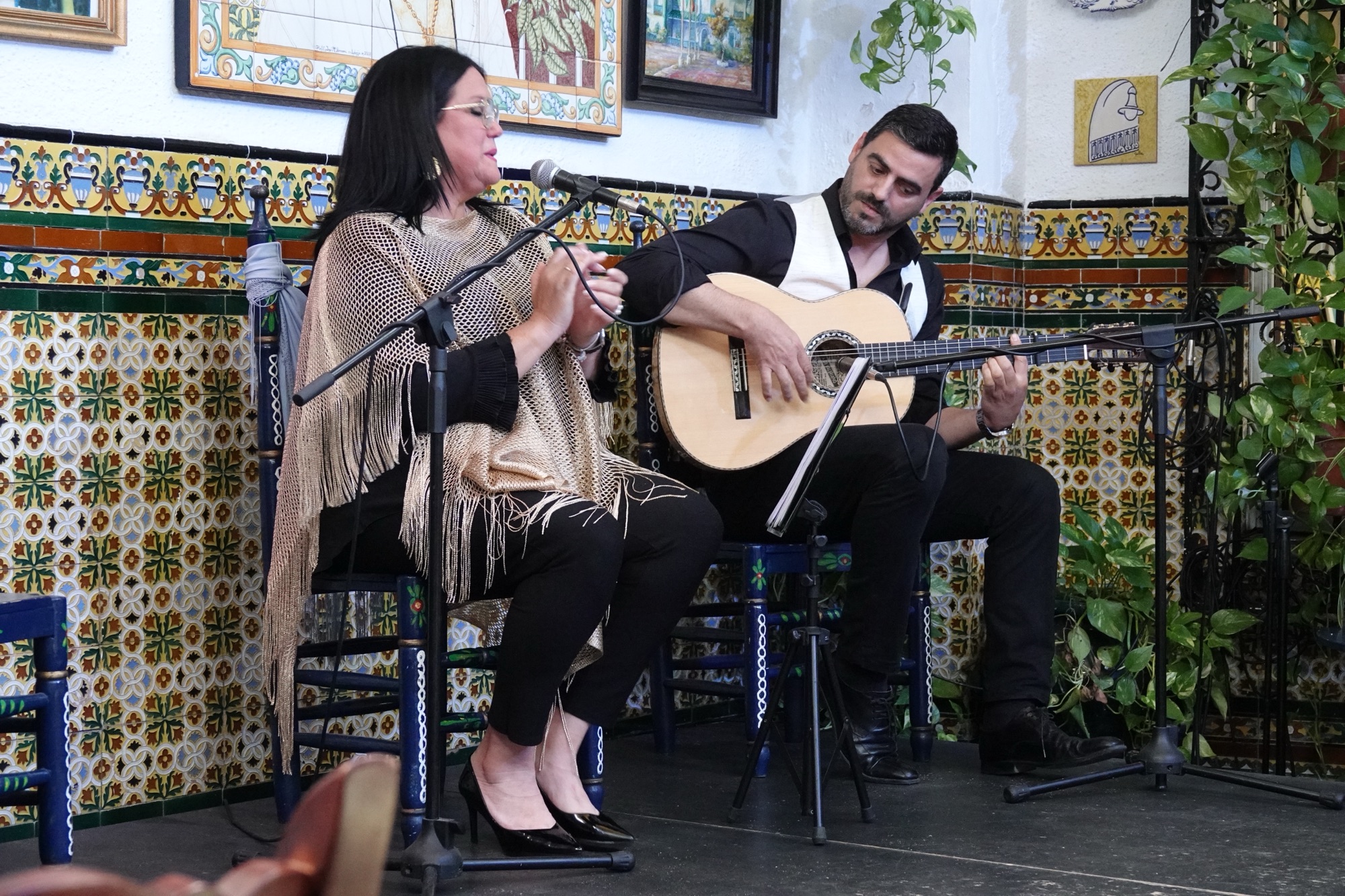
The restaurant – Venta de Vargas – had special significance: it is where famous flamenco guitarist Camaron del Isla got his start. There is a music museum dedicated to him beside the restaurant.
After our feast, we got a very intense 45 minute flamenco performance, demonstrating several iconic styles (“palos”): Sevillana, Bulería, Solea, Fandango, and Tango. The guitarist was excellent, and the singer incredibly emotional, but it was the young dancer who wowed us. Her intensity of expression really helped tell the story of each dance.


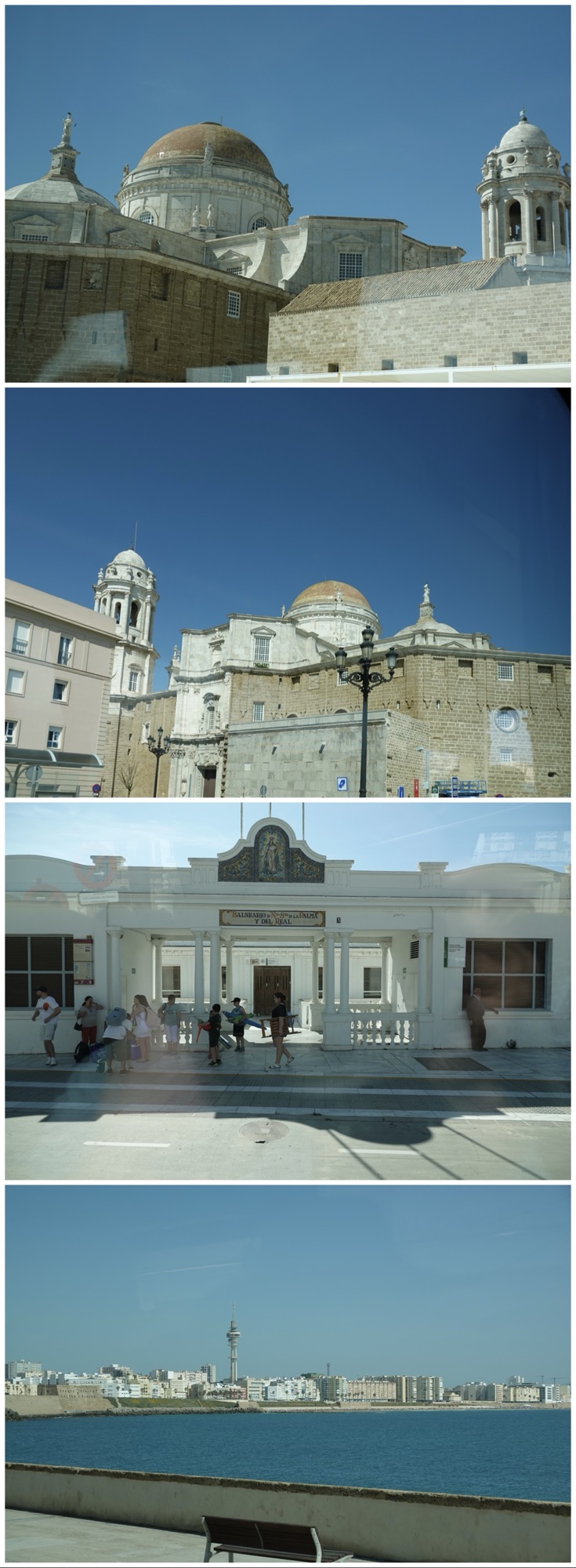
Back in Cádiz, albeit on the bus, we got glimpses of the baroque exterior of the golden-domed Catedral Nueva (New Cathedral) and the remnants of the former city wall dating back to the 16th century, but after all that food we weren’t paying enough attention to Angel to really keep track of what we saw – beyond the lovely looking waterfront.
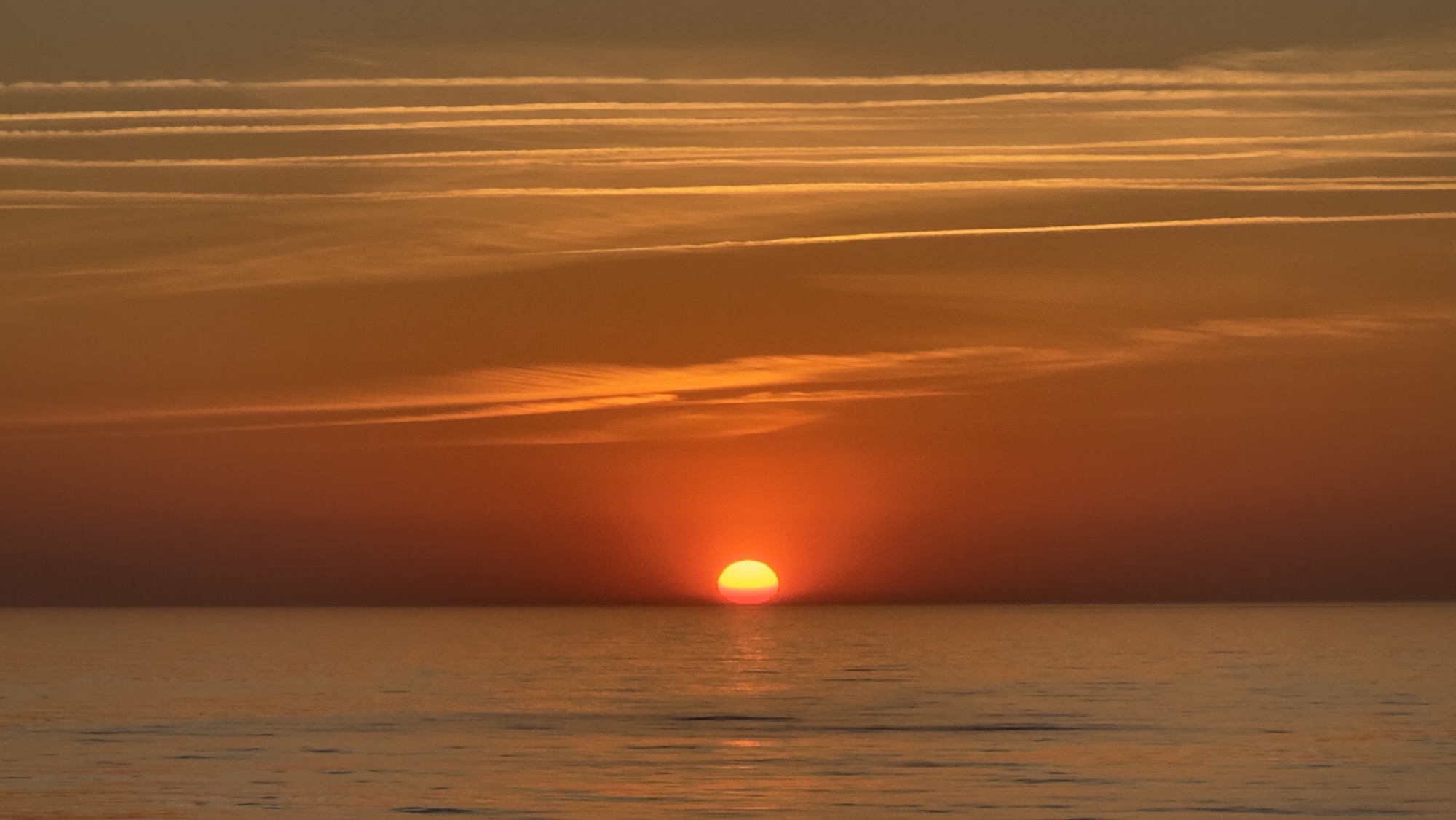
We were too full to eat dinner, but did grab a drink and a guitar interlude with Alan, as well as taking in an absolutely spectacular sunset.

Portugal tomorrow, and more regional music.
 Rose and Ted’s Excellent Adventure