To prepare passengers for our arrival in Casablanca, yesterday there was a cooking demonstration featuring a Moroccan chicken tagine by Chef Alistair, and an evening showing of the classic 1942 movie Casablanca.
When we were here in 2023, we visited the market, toured the city, and spent time at the magnificent Hassan II mosque (Episode 435), where we overlooked the ocean from the mosque. We’d never had the opposite perspective though.
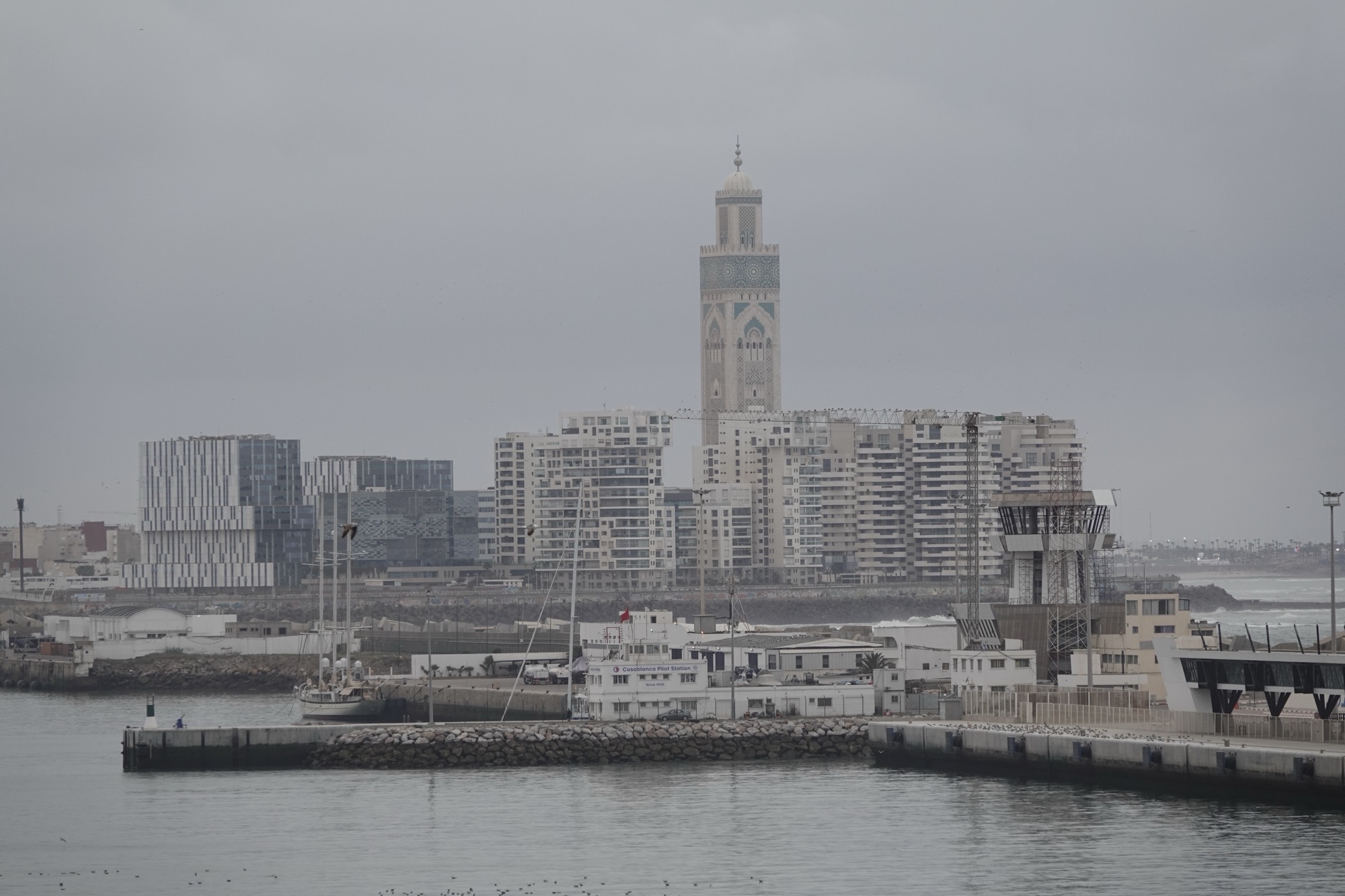

So as not to duplicate recent experiences, we ventured outside the city on a 6-hour excursion to the UNESCO World Heritage Site of Mazagáo, or El Jadida, an old fortified Portuguese city with a fascinating blend of Moorish and European influences. It was a bit reminiscent of the seafront medina in Essouaira in its structure, although less filled with shops.
We met our guide Lahrby (with a rolled “r”) and drove just over an hour past hotels, business districts, and LOTS of ongoing new construction of both apartments and roads.

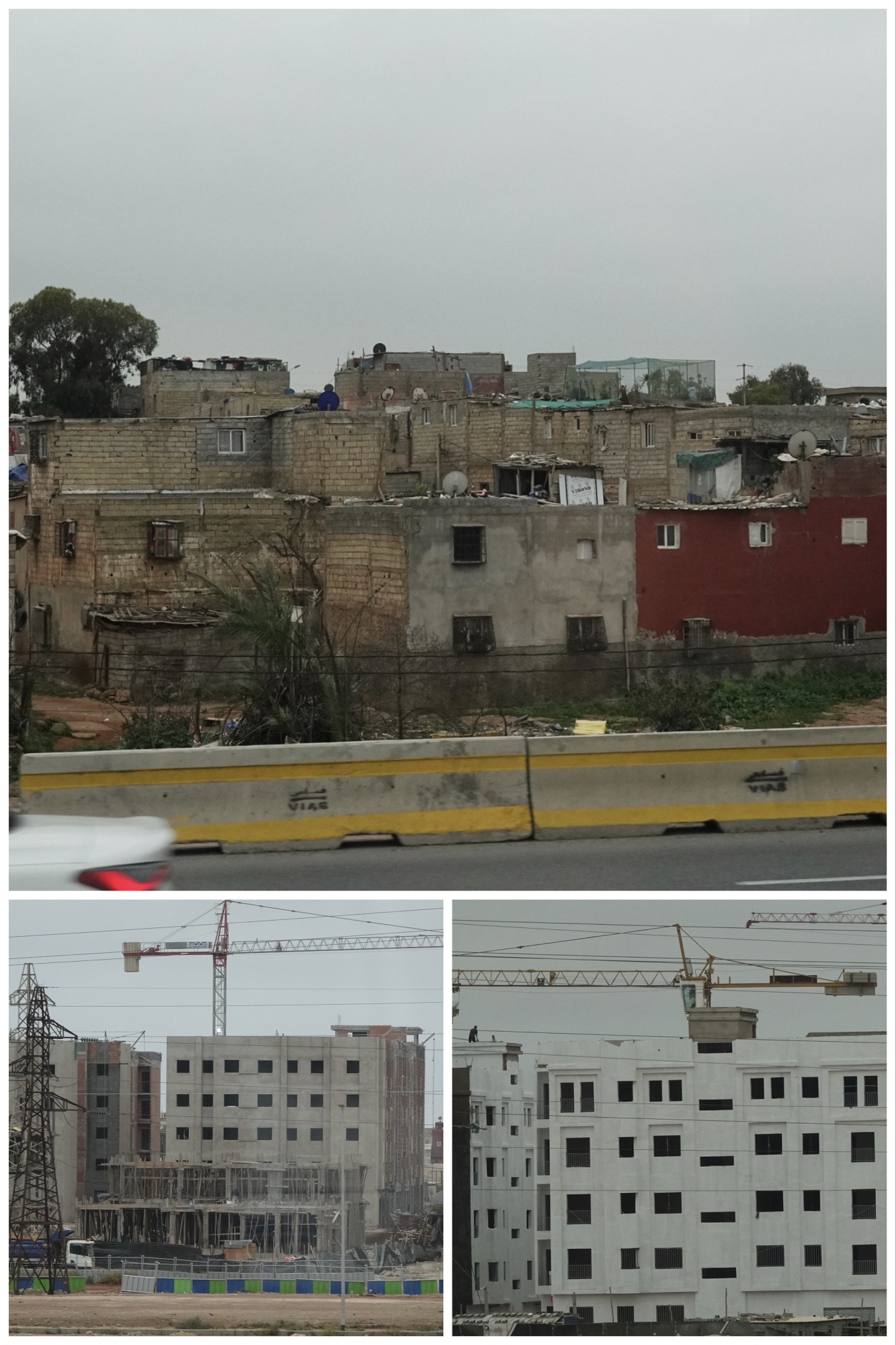
Just outside the city were grazing livestock, and lush agricultural fields. As we’d already learned in the market of Agadir, Morocco is pretty self-sustaining when it comes to food.

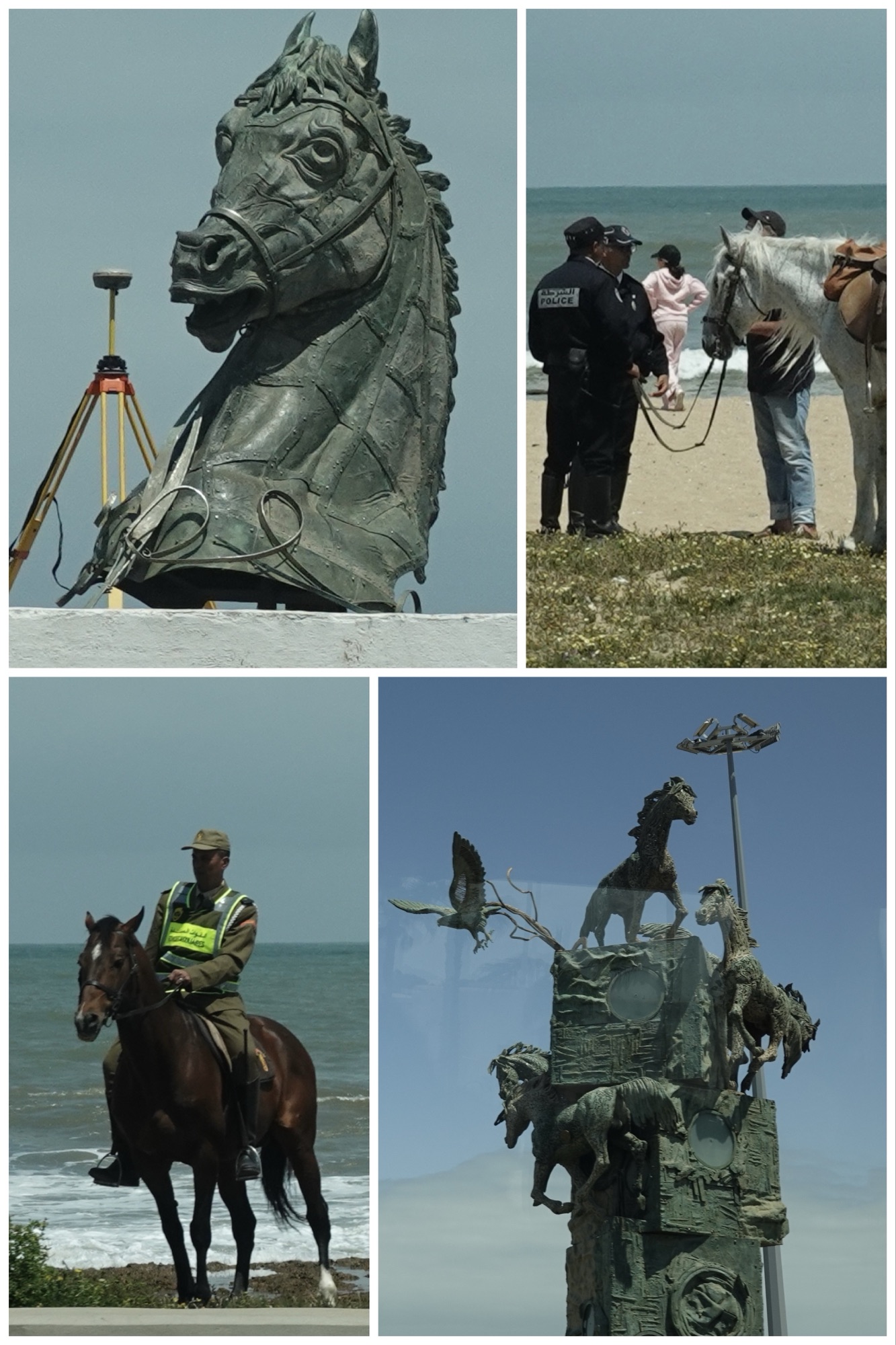
El Jadida is also known as “the city of horses”, and has erected a couple of roadside statues to celebrate the fact. We also saw local police on horseback on the beach.
When we reached the main gate of the Old Town, the first thing we saw was its UNESCO World Heritage declaration.

The original walled city was begun in 1504 and completed in 1512, but the larger yellow limestone walled city with its four bastions took until 1541 to complete.

At its peak, the walled colony housed 5000 people; now there are just a few Moroccans running shops with their homes above or behind them.

The Portuguese Church of Our Lady of the Assumption (below) was used throughout the Portuguese era and again briefly after Morocco became a French colony in 1912.

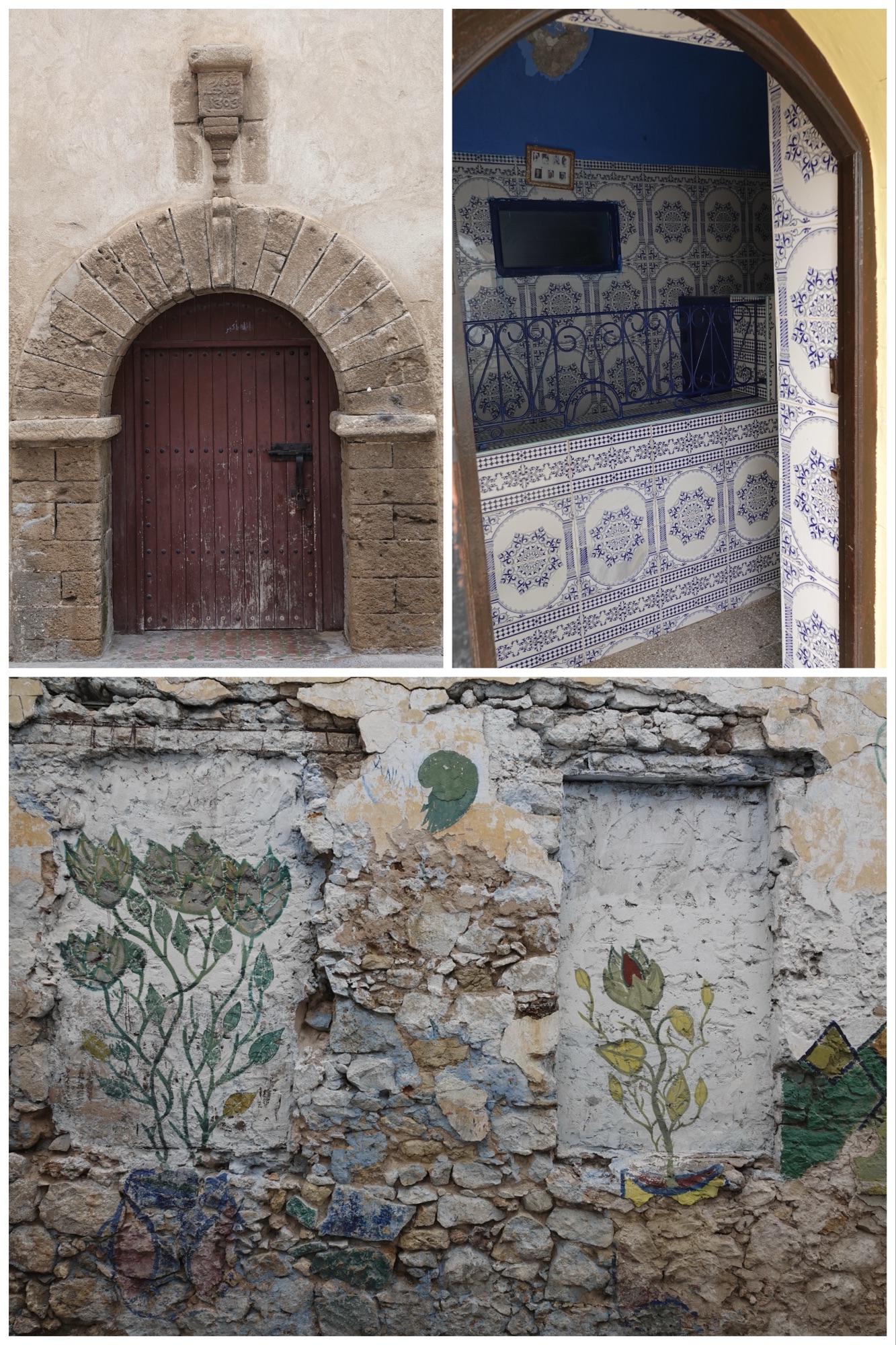
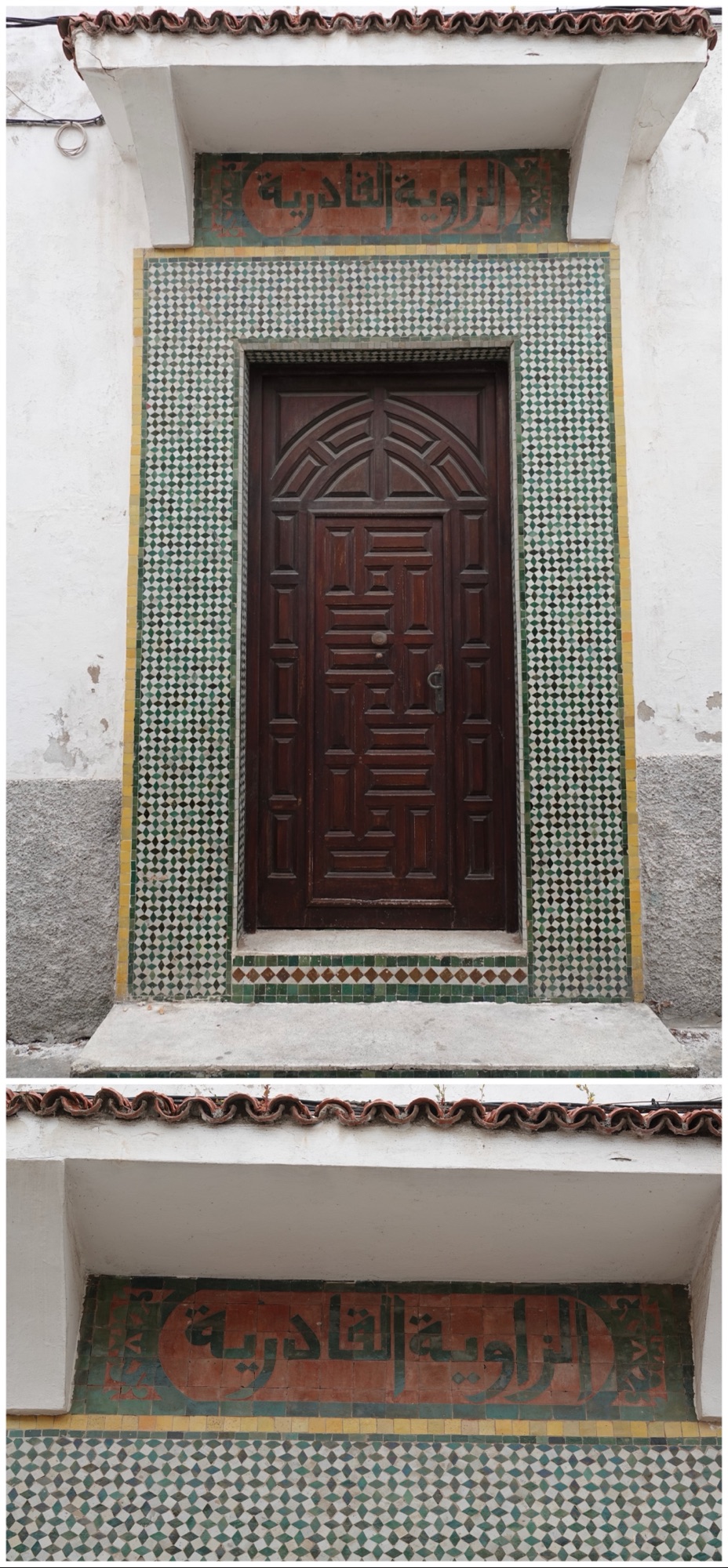
As we strolled through the medina (old city) we were treated to the sight of picturesque narrow streets, arched doorways with beautifully carved doors, painted walls, and intricate tile-work – both Portuguese style (larger printed tiles) and zellige (the tiny intricate individual tiles in the Islamic geometric patterned style).

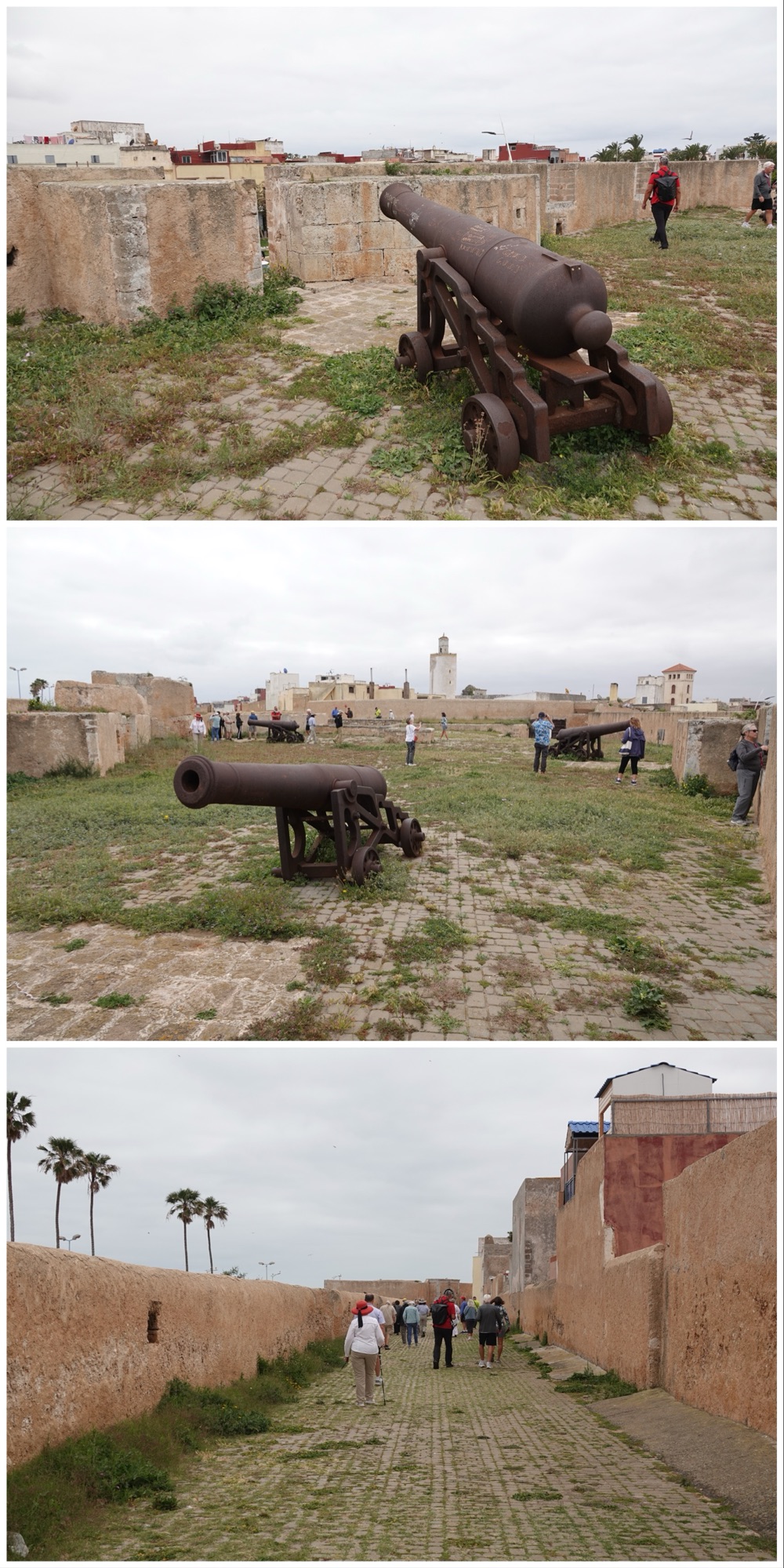
The first of the four armoured towers that we visited was the Bastion of St. Sebastian, where Portuguese cannons still look out over the ocean. This bastion is currently the shortest, because part of it was intentionally destroyed by the Portuguese when they left; they filled the storehouse with barrels of gunpowder and exploded them.
This area behind the red door in the collage below was once home to the Tribunal of the Inquisition, although our guide simply described it as the courthouse. Its old prison was turned into a synagogue in the 19th century, as its Star of David on the rear wall attests.

The Portuguese lived in the city continuously until it was taken over by the Moroccans in 1769. For some time it housed mostly Jewish Moroccans, with a mix of Muslims and Christians. The first buildings erected outside El Jadida’s walls were granaries, in the 1890s. Only when the French arrived in 1912 did their portion of the city outside the walls begin to grow. Most of the Jewish population left in the period from 1948 into the 1960s, headed for the newly established State of Israel.
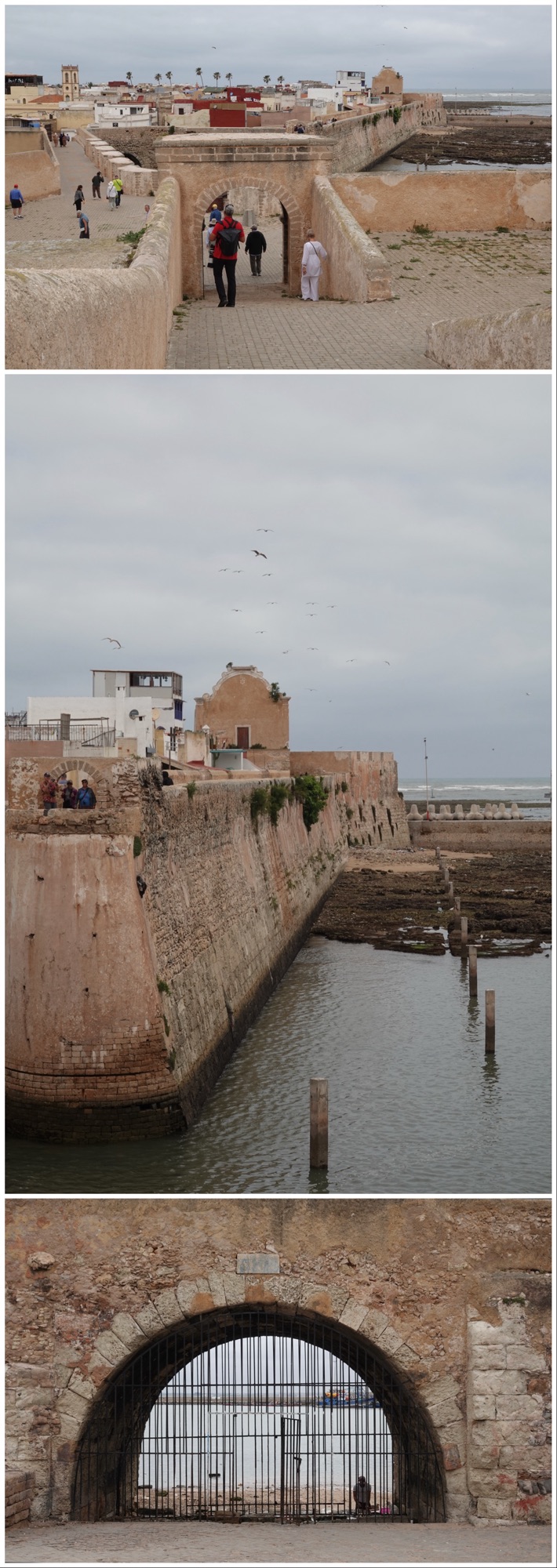
We walked along the wall to the second tower, the Bastion San Antonio, through the Gate of Saint Anthony.

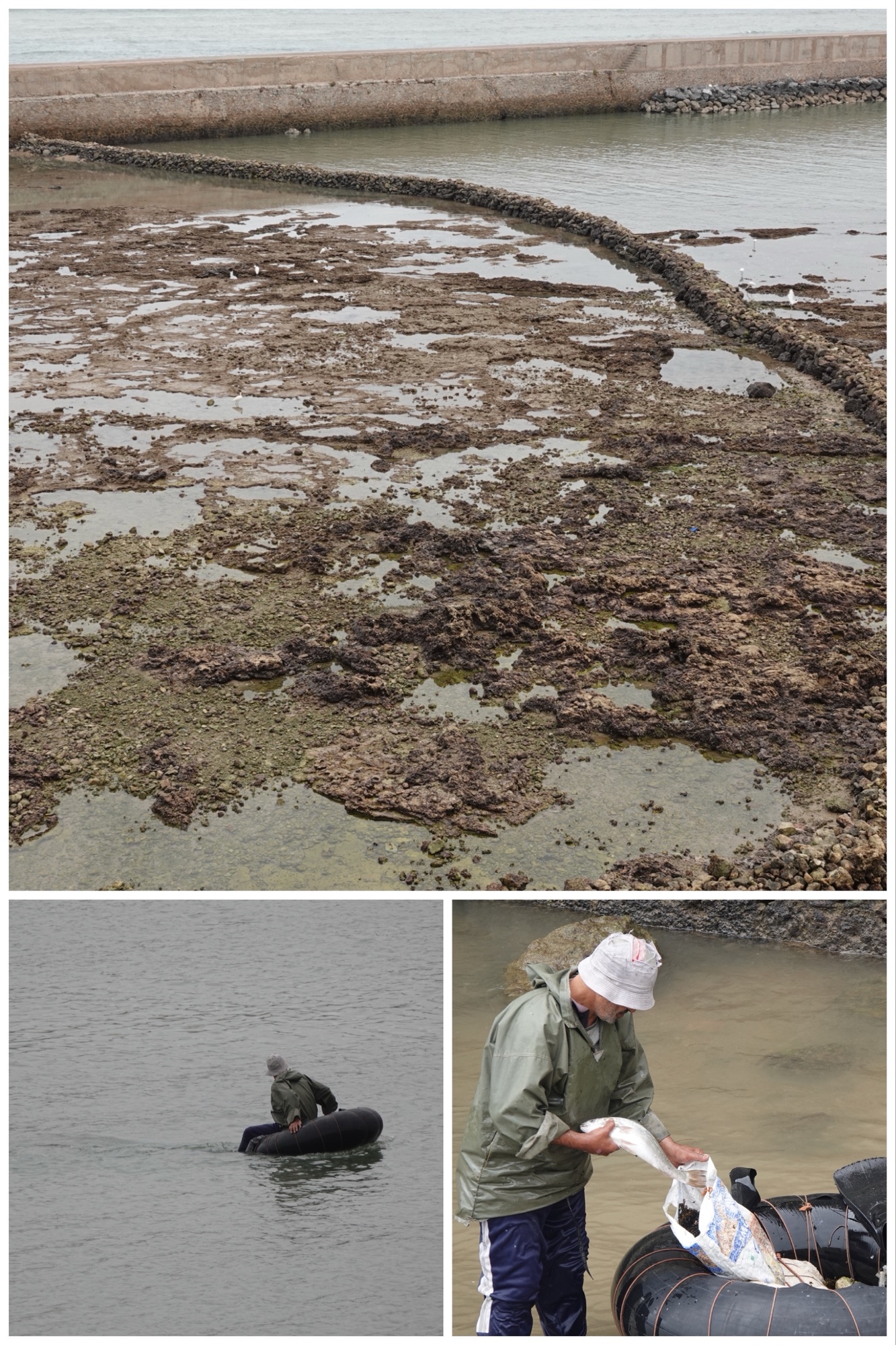
From the bastion we had a good view of the stone “fish trap”. Fish would swim near shore during high tide and at low tide be “caught” inside the wall, making it easy for fishermen to net them. We saw one enterprising man, wearing swim fins and sitting on an inner tube, catching sardines and anchovies by hand!
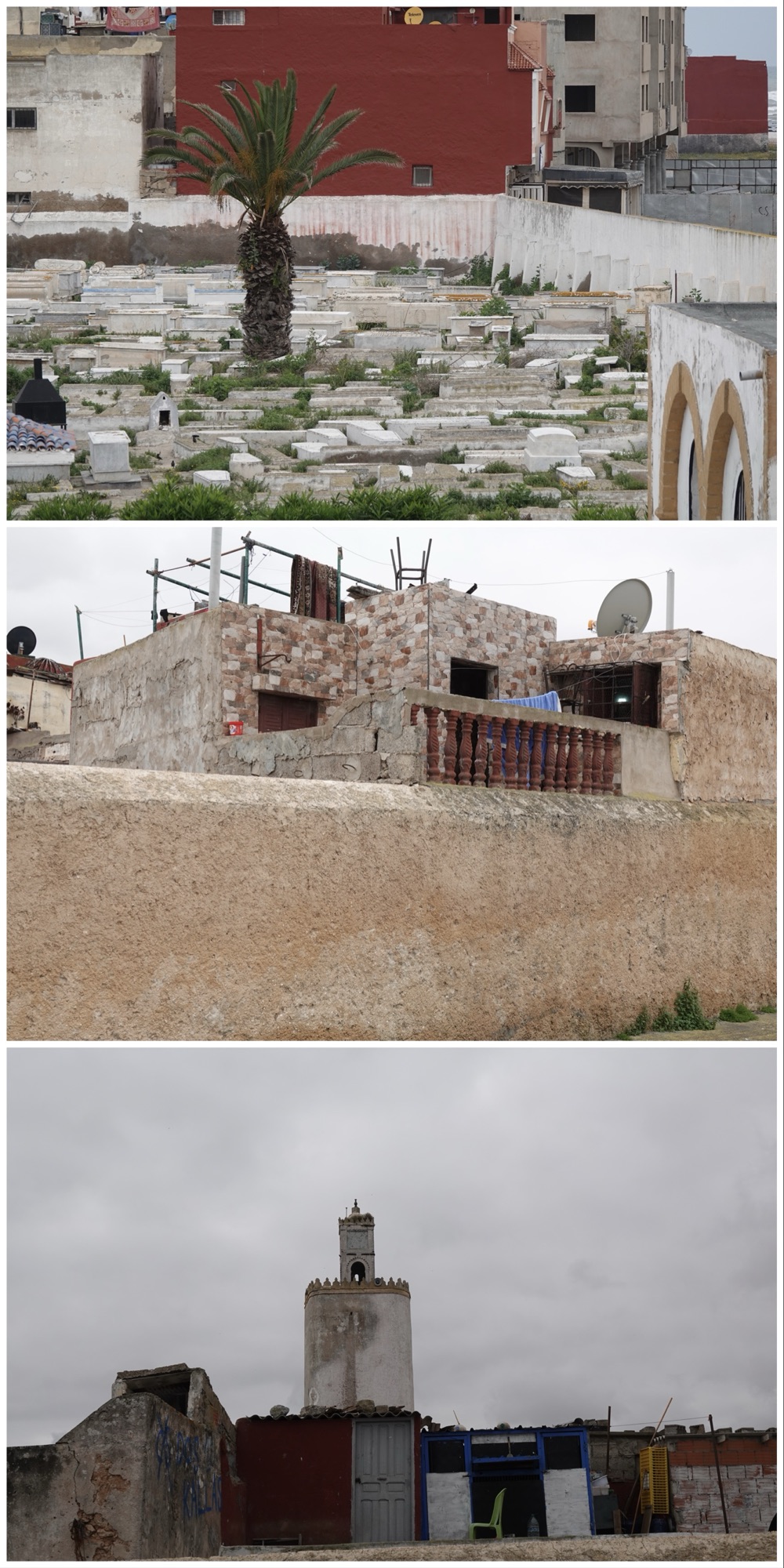
In the opposite direction from the ocean, we could look down into the walled city…

… and toward the Bastion of the Angels, where we walked up another stone ramp for more panoramic views in three directions (the fourth being back down the ramp).

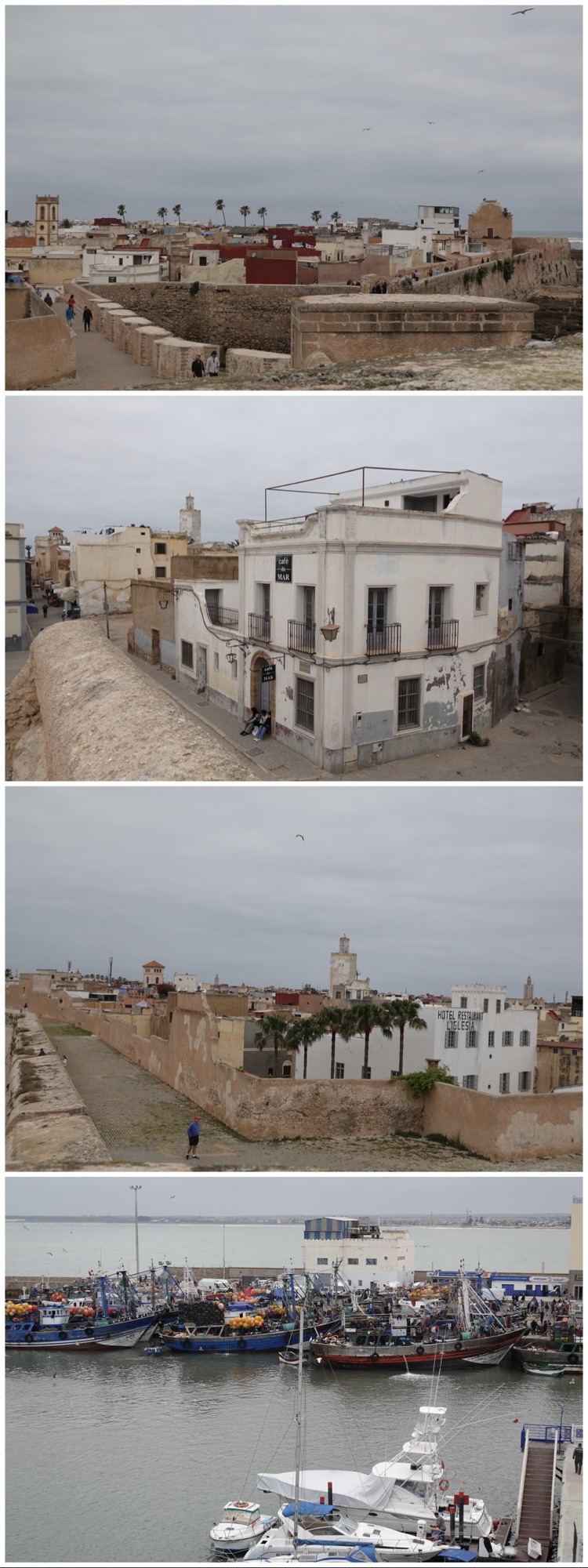
Back down the ramp to the Sea Gate, where maritime shipments would have been accepted..
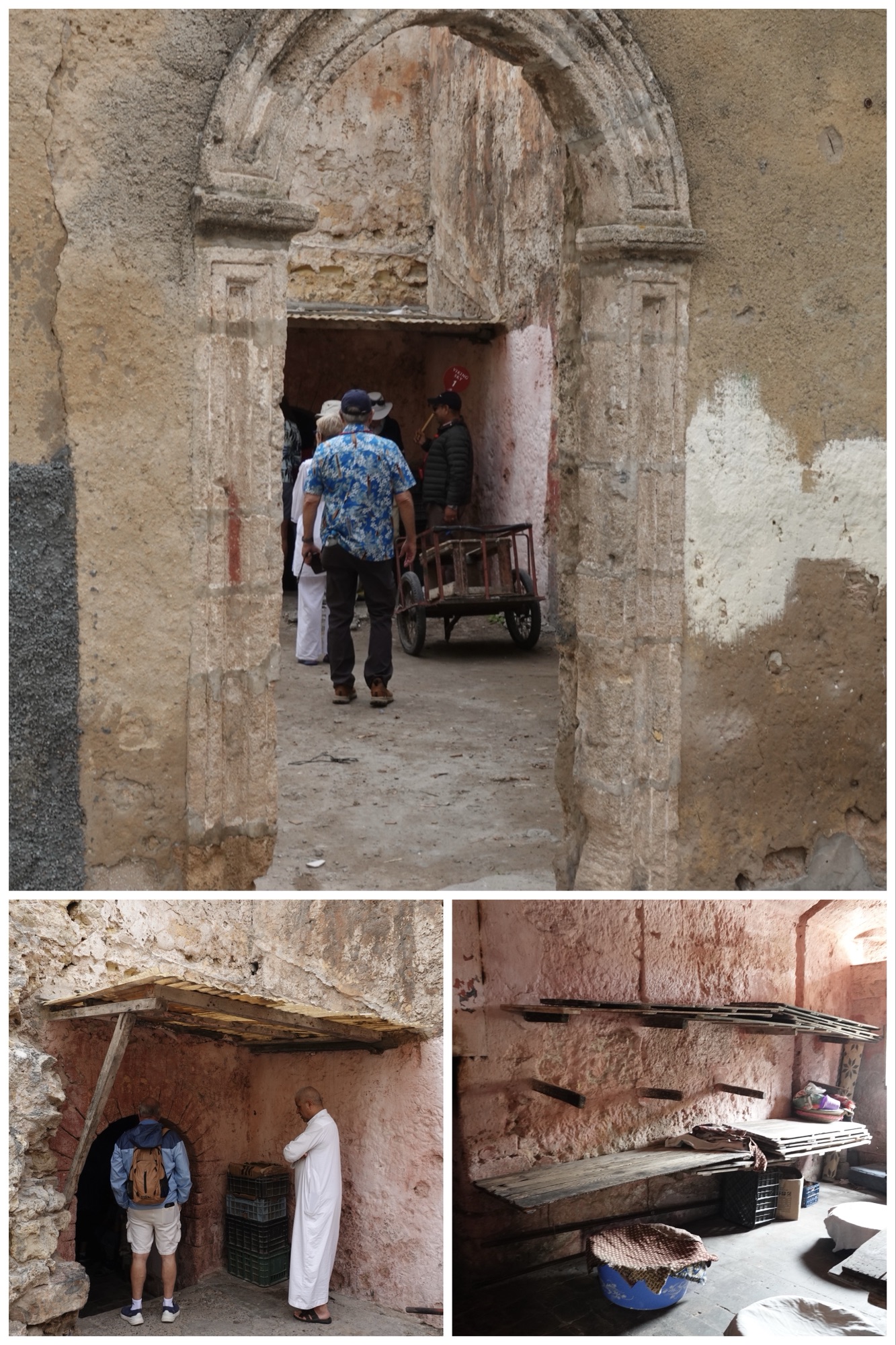
Back at ground level, we got a closer look at the various architectural styles, as well as some of the modern-day elements.


Here, a communal oven still bakes dough that local women bring from their homes. We were able to walk in just ahead of several women bringing proofed loaves to go into the wood oven.
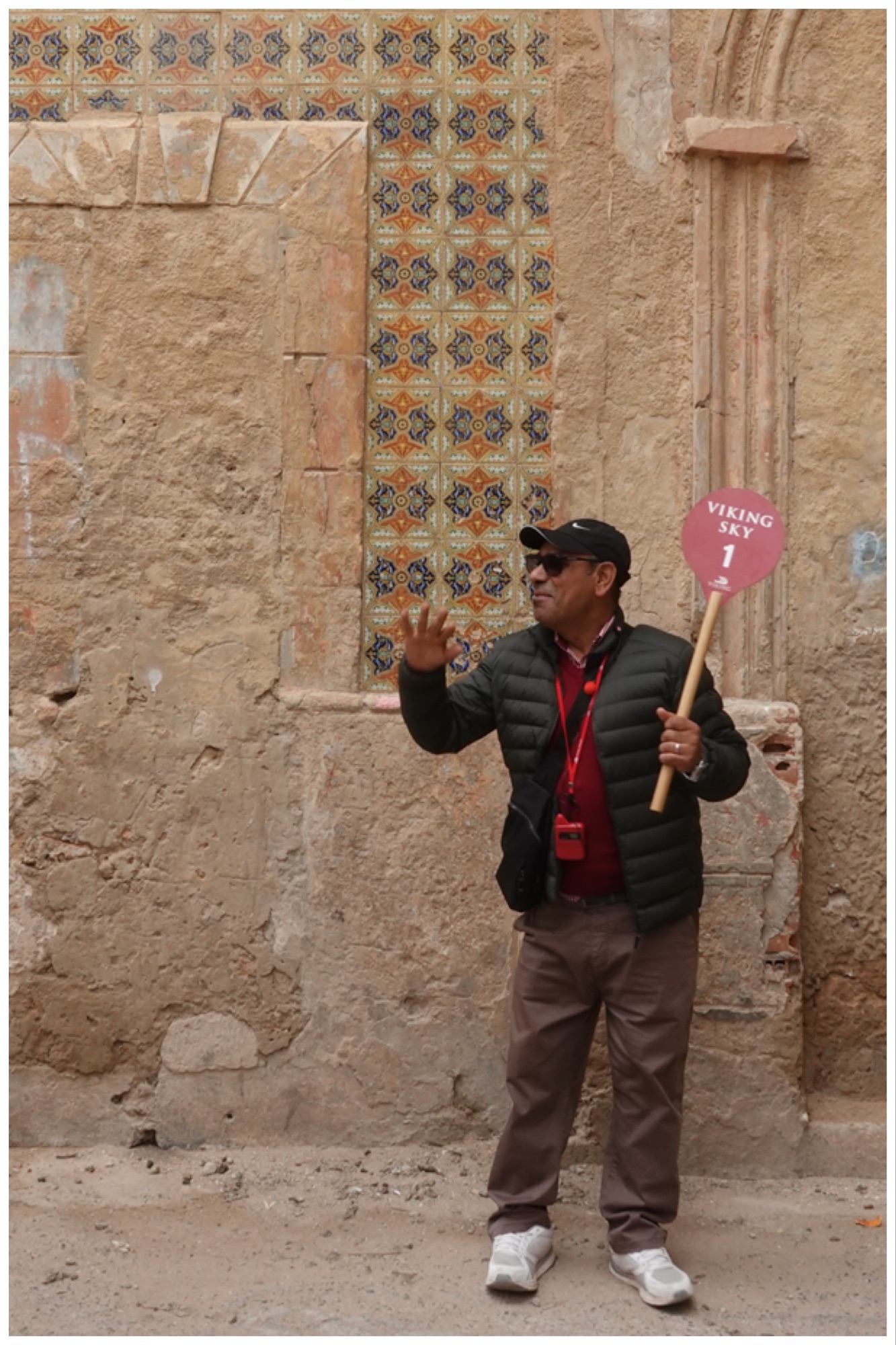
Lahrby explained that classic Moroccan architecture always has 4 elements: Atlas cedar ceilings, plaster walls with calligraphy, tiles/zellige, and marble flooring. The marble historically came from Italy; one pound of Italian marble for one pound of Moroccan sugar. He quipped that the Moroccans were clearly the better businessmen, since Morocco still has all the marble, but the Italians long ago ate all the sugar!
We had hoped to go inside Portuguese cisterns, a massive underground chamber originally built in 1514 as a warehouse, but it is undergoing restoration and not currently safe to enter. There was a photo of the interior and a description posted on the outer wall.


After our tour of the walled city we had a break at a restaurant called La Portugaise for sandwiches, sweet mint tea, and cookies before returning to the ship.
We had a lovely dinner with friends Judi and Joe, who shared the highlights of their overland trip to Marrakech, as well as some hilarious stories from Joe’s childhood. We’re really going to miss them when we disembark in London,
Our evening entertainment was a guitar set with Alan, during which bar server extraordinaire Gede treated us to a song! He’ll be getting off tomorrow in Cadiz, just in time to get home for the birth of his first child.
Spain tomorrow. Time is flying!
 Rose and Ted’s Excellent Adventure