We spent two weeks in Morocco in October of 2023 (Episodes 434 – 447), but did not visit Agadir.
On our first port day here, the only excursion being run was the evening departure of a $2000 per person (and sold out!) 3-day overland tour to Marrakesh and Essouaira which would meet our ship again in Casablanca. We had wonderful days in Marrakesh (Episode 444 )and Essouaira (Episode 446 ) so definitely didn’t feel the need to visit again so soon, although Essouaira was one of my favourite places on our 2023 trip’s itinerary.
Due to extremely rough seas, we arrived late. The port is a commercial one, with its grain silos painted to look like the Moroccan flag.

From our berth we could see the beautifully lit kasbah on the top of the hill.

Agadir, like Essouaira, is a seaside resort city, and very welcoming to tourists.
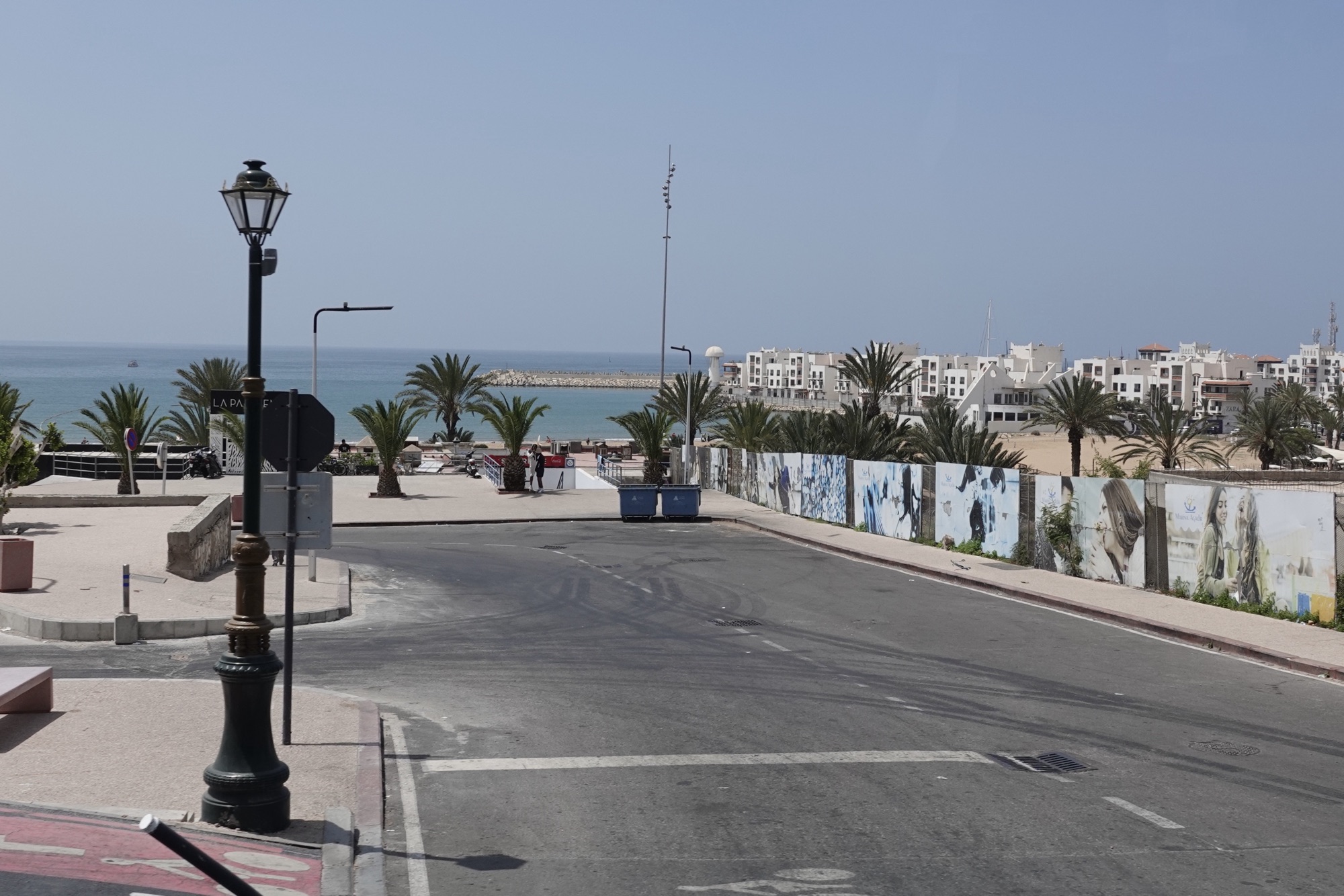
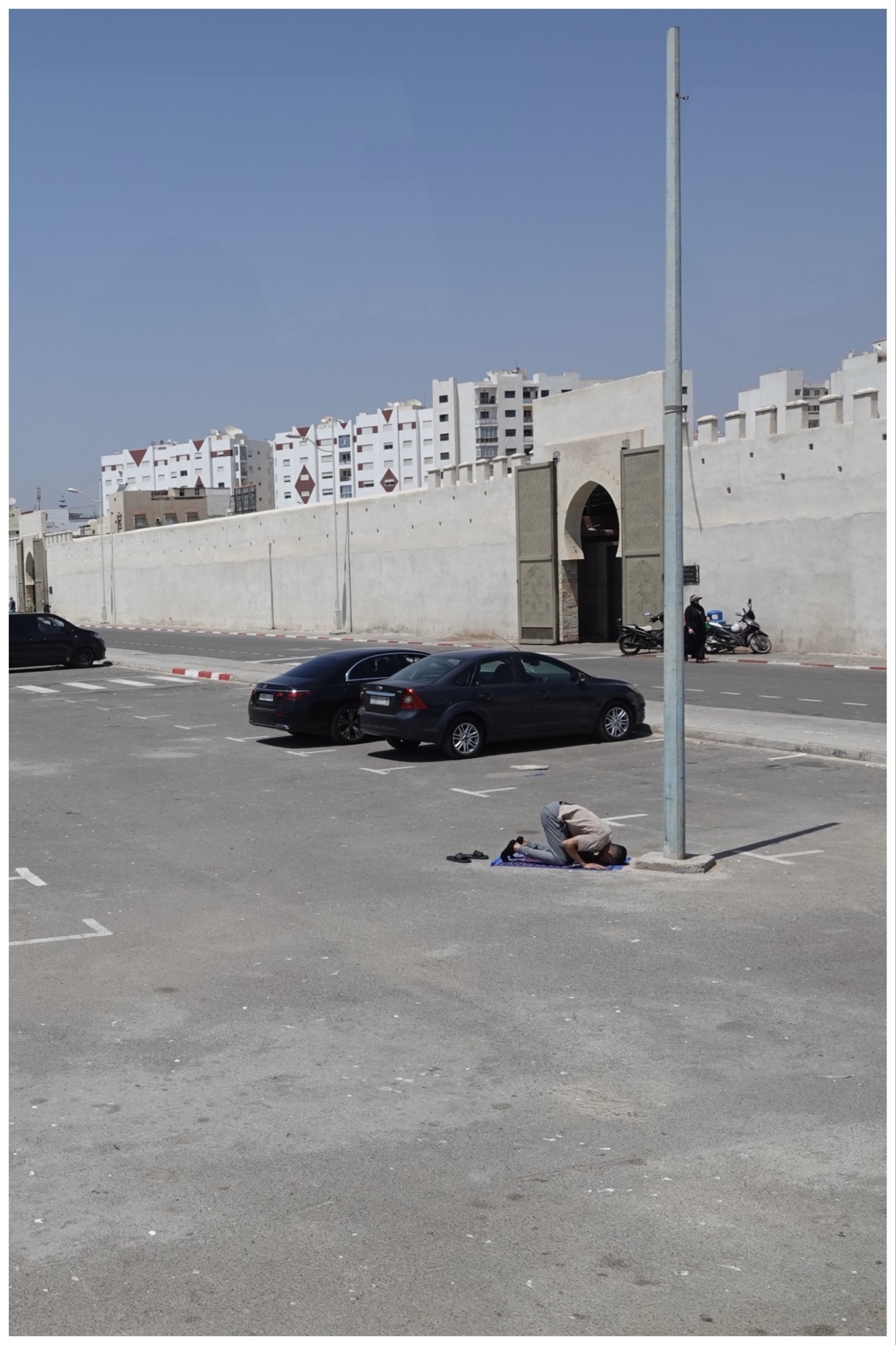
Morocco in general is welcoming; King Mohammed VI is a very progressive ruler, known as a reformer, and welcomes the world. We’d heard in 2023, and our guide reiterated several times today, that he is both a good and a very popular monarch. During his reign he has promoted education for women (the literacy rate is 95%, with that 5% being in the nomadic Tuareg and Berber tribes high in the Atlas mountains), built desalination plants, dams, and infrastructure, and generally promoted the idea of Morocco as a “modern” Muslim country. We were told that the country is 97% Muslim, but only about 85% “observant” Muslim. Certainly the dress was modern; young women mostly wore head coverings, but with jeans and modestly cut tops, or pretty sleeved maxi dresses. The young men could have been young men anywhere in their jeans and hoodies; older adult men were a mix of work uniforms, suits, and djellabas – the latter make it easy to pull up the hood and have their head covered during prayer.
We took the included excursion called “Postcards from Agadir” which promised to show us a few of the many faces of this seaside city perched between the Atlantic Ocean and the Atlas Mountains.
First, a cable car ride to the top of Agadir’s Kasbah hill, 236m/776 ft above sea level. The cable car ride is a mile long, overlooking terraced hillsides, palm trees, and winding roadways.
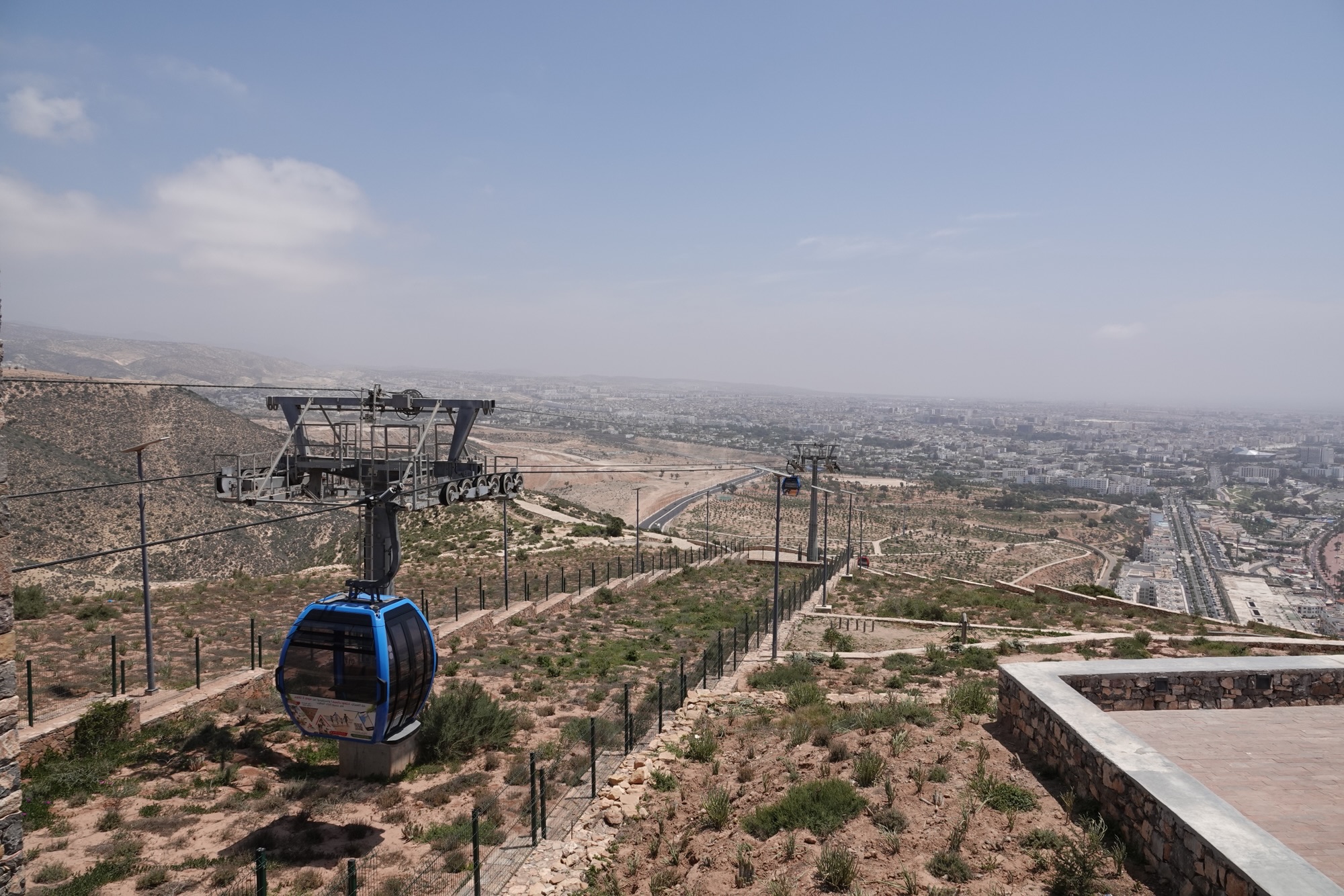
On the side of the hill, in huge white tile letters, three words in Arabic: God (Allah), Country, and King.

The hilltop is being developed as a massive waterpark, Danialand, open from June until September when the weather is hottest and children are on vacation. The resort includes two “airplane restaurants”, which explained the confusing sight of two jumbo jets parked on the hilltop with no runway in sight.

Bottom 3: ads at the cable car platform for the new restaurants.
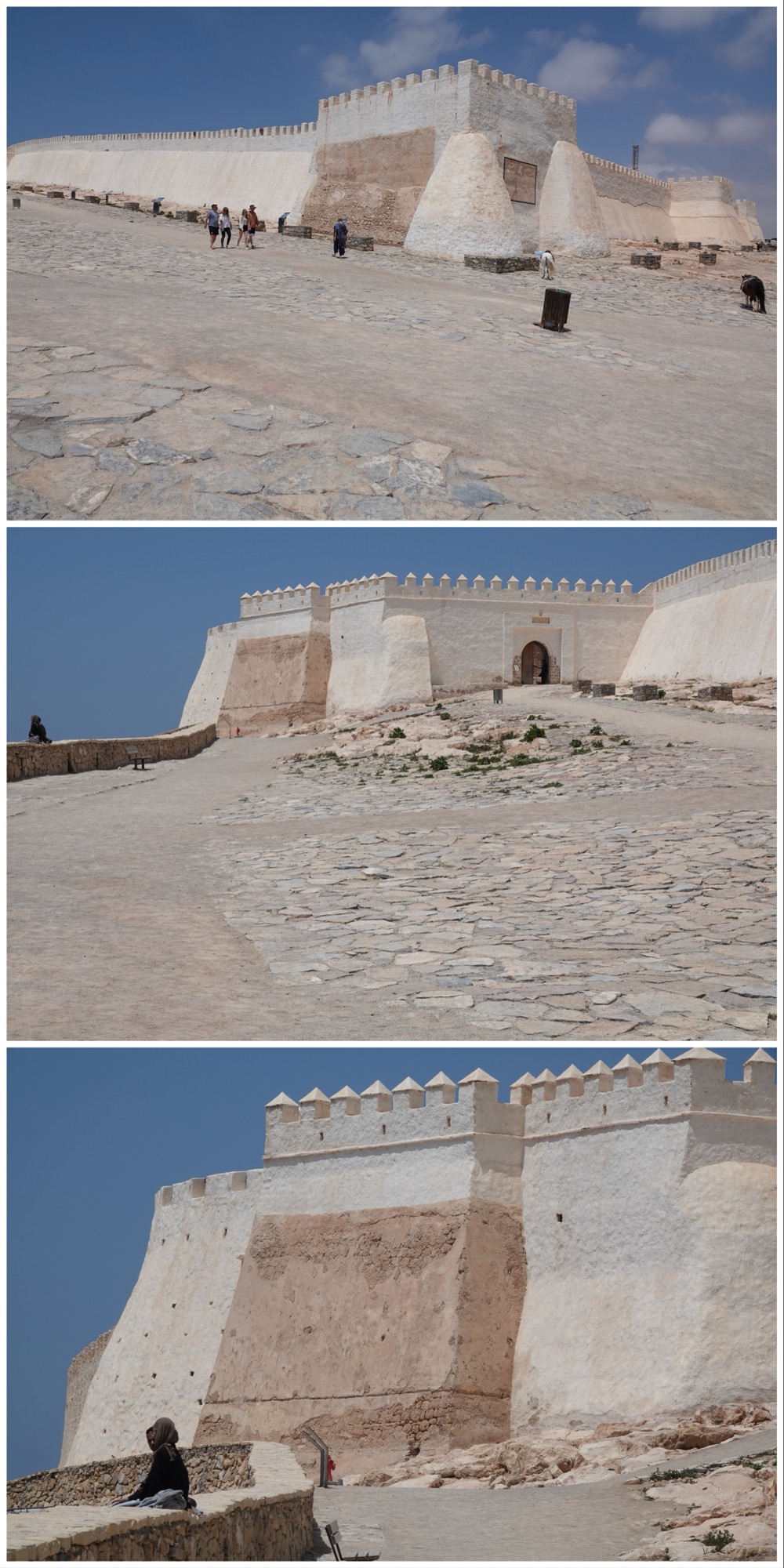
The cable car took us to the ancient fortress (“kasbah”) featuring massive, whitewashed walls and sweeping views over the city, its beautiful beaches, waterfront promenade, and the turquoise waters of the Atlantic.
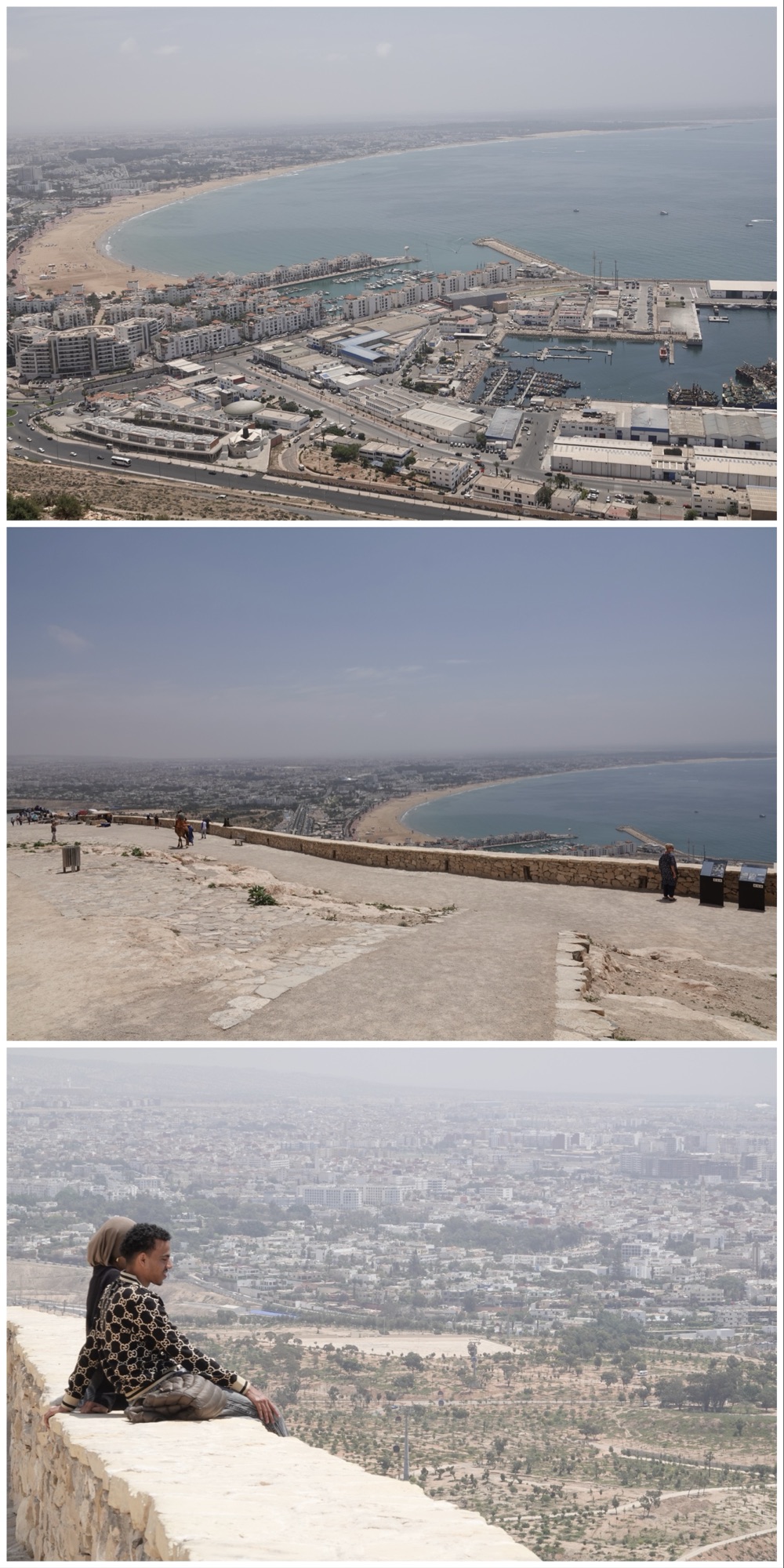
The beach stretches around 10 km/almost 7 miles. It was easy to see why this was the perfect location first a fortress.
The kasbah was damaged during the February 29, 1960 earthquake that killed between 12,000 and 15,000 people (about a third of the city’s population of the time) and injured another 12,000 – with at least 35,000 people left homeless – making it the most destructive and deadliest earthquake in Moroccan history. It has been beautifully restored.

(From the interpretive plaque at the site) The South wall of Agadir Oufella was partially destroyed by the 1960 earthquake and its main structures were deeply affected. Rehabilitation conducted in 1998 rebuilt the entire length of the wall with composite materials including stone elements placed on a reinforced concrete structure in regular chains, this structure itself leaning against or enclosing more or less original rammed-earth sections. Near the gate stone elements had slipped and blocking elements had disintegrated, with some sections partially collapsed. It was decided to rebuild the whole wall in the 2020-2024 heritage preservation program using as a model a clearly visible archaeological section of the wall to guide its integral restitution.
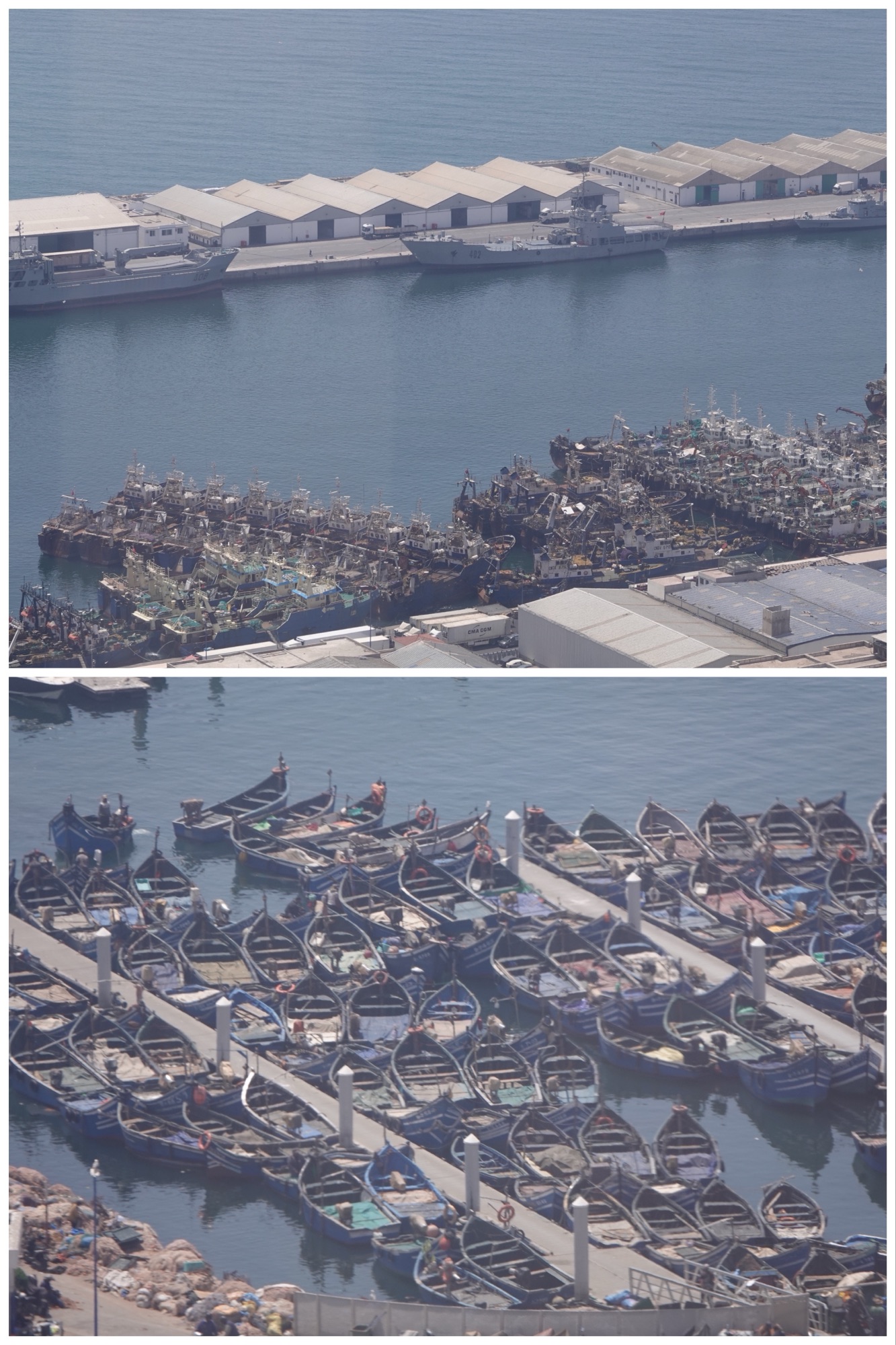
One of the things we could see from thevfirtress was the fishing port. Port activity has been subject to the ebb and flow of history: flourishing in the 17 century, Agadir port was forced to close in the 18″ century to accommodate Mogador (Essaouira), and then reopened in the early 20th century to become what is today a large fishing and container port leading the economic boom of an entire region.
Around the kasbah there were also a few vendors, camel and pony rides, and a snake handler.


After returning to the city centre, we first passed the Lebanon Mosque…
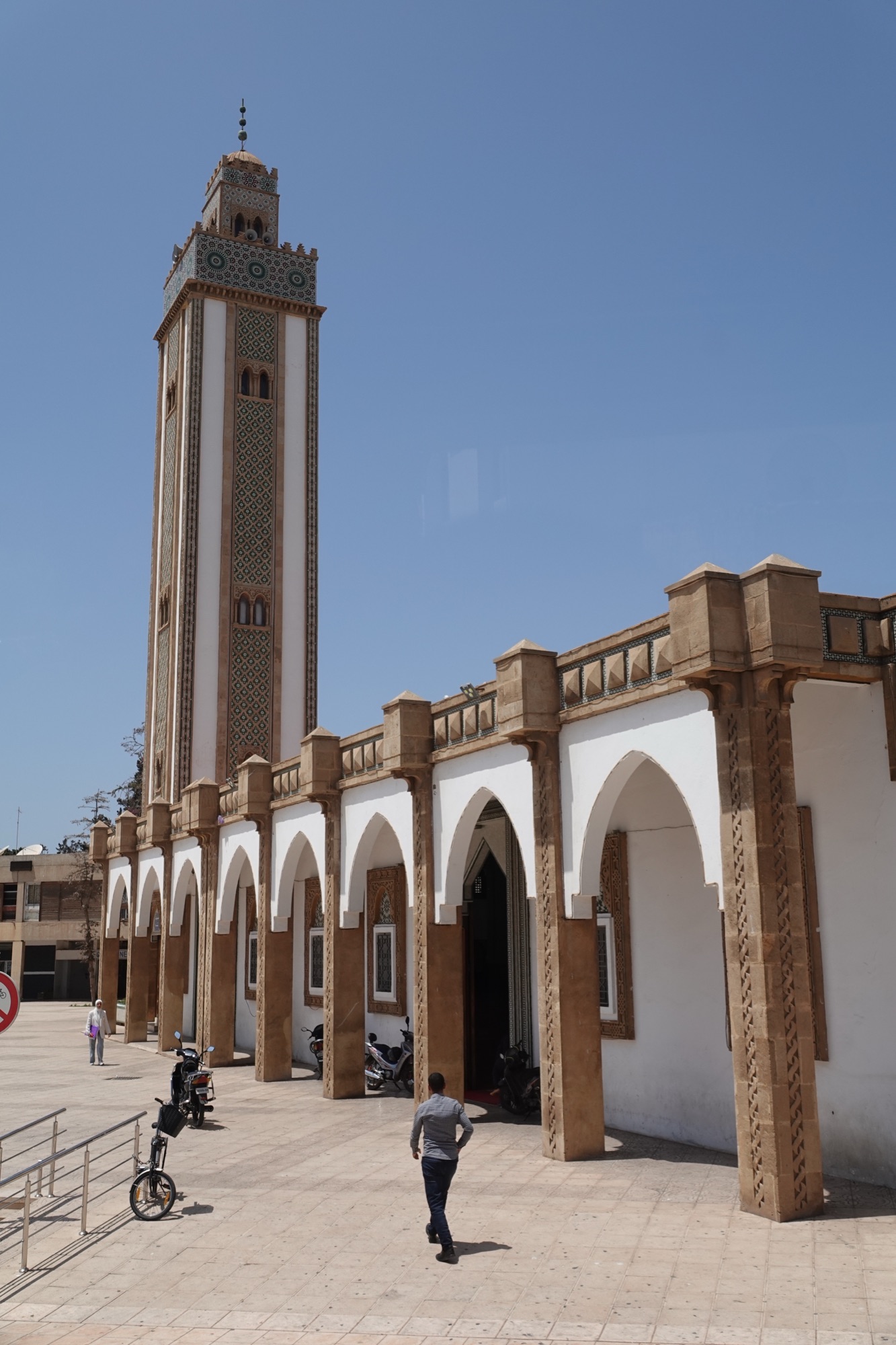
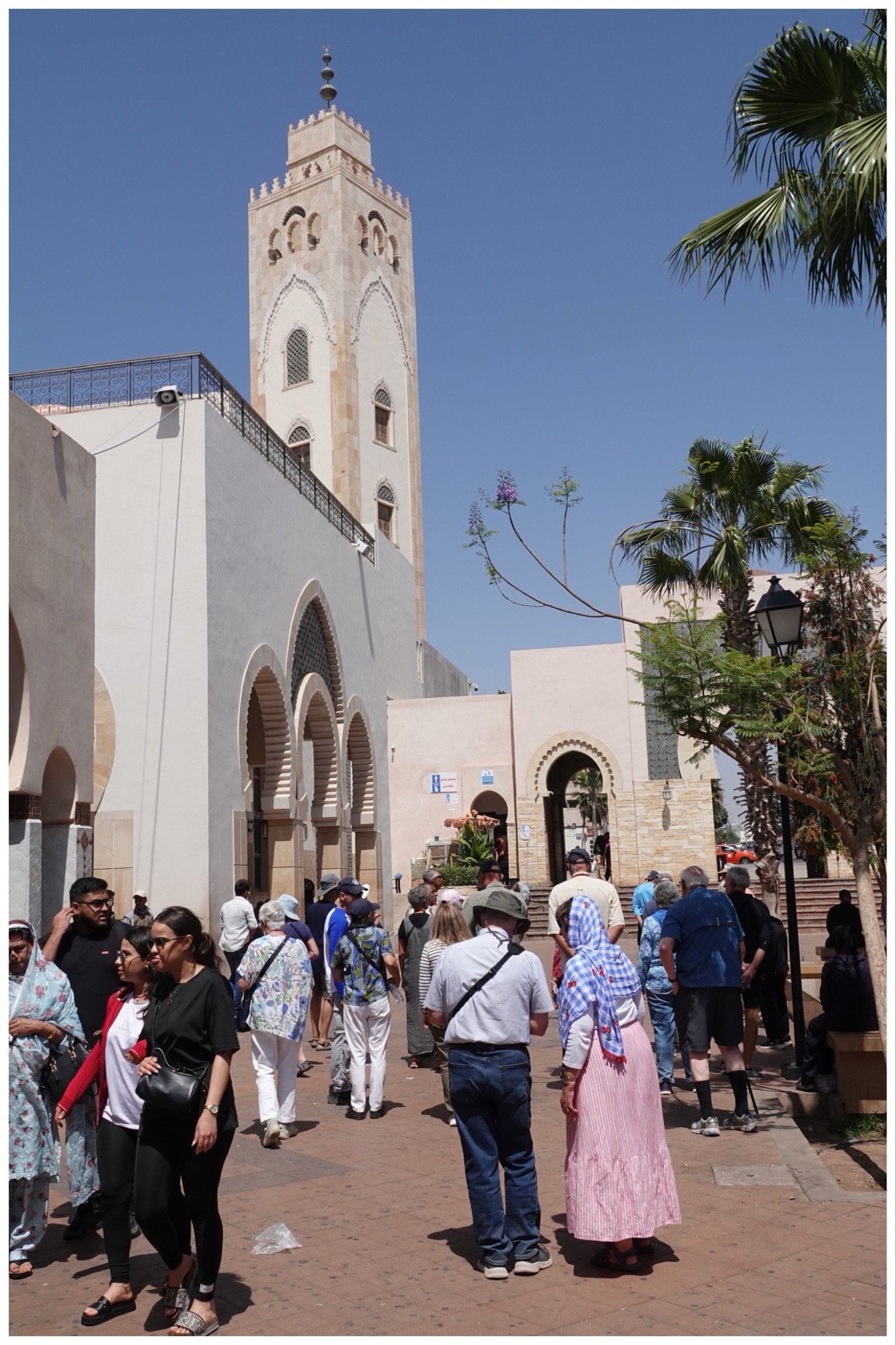
… and then were able to visit the exterior of the Talborjt mosque (also known as the Mohammed V mosque) with its intricately decorated facades and ornate doors. The mosque is only about 12 years old, and is located among modern shops.


From the mosque we headed tonight the huge Souk El Had, where we strolled for half an hour under the leadership of our guide. Given that the souk covers 17 hectares/42 acres/1.8 MILLION square feet, has 16 entrance gates, and houses 6,000 stalls, we would certainly have gotten lost without him.
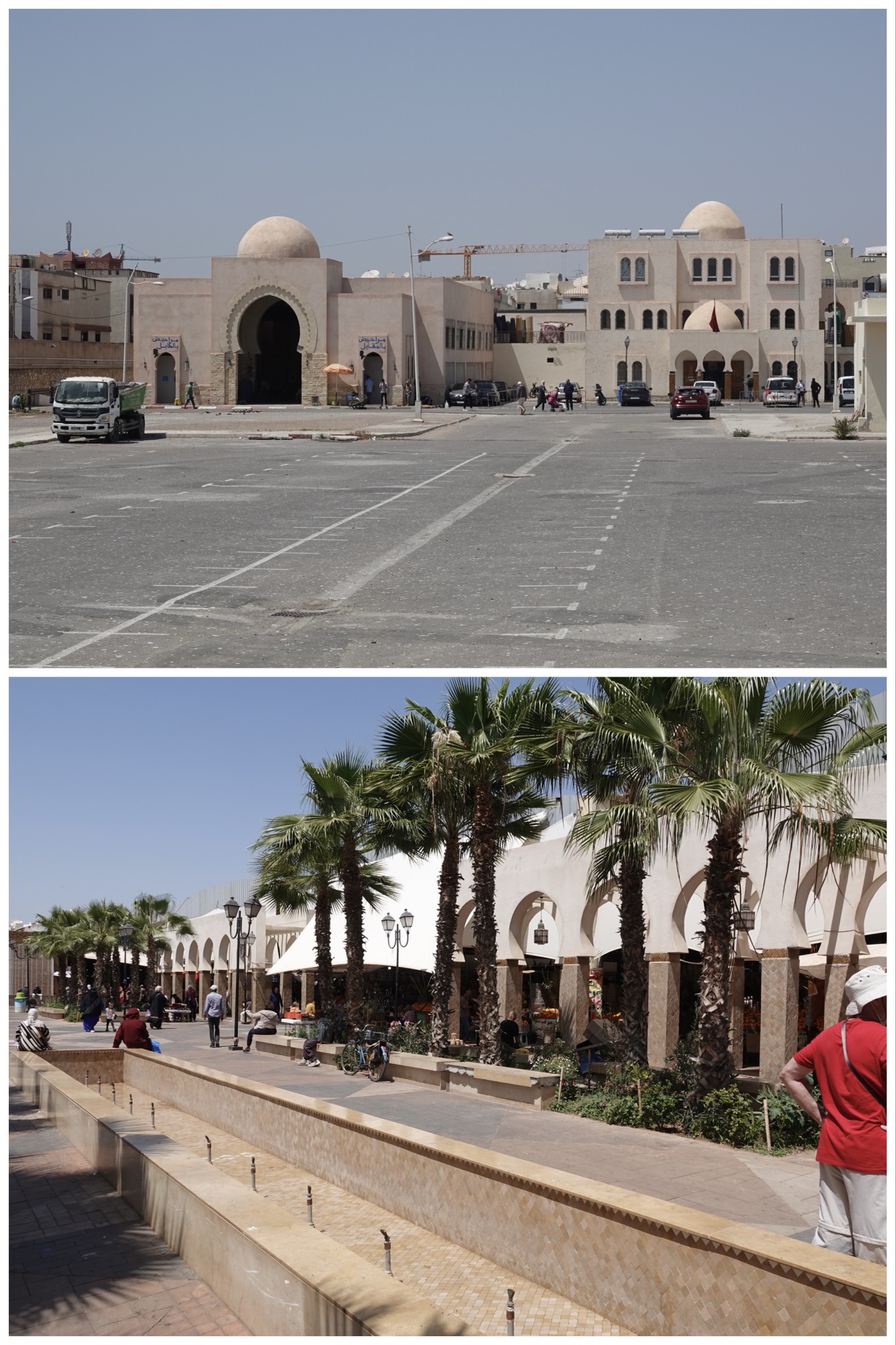

We were wowed by the variety and quality of fresh fruits, vegetables, nuts, and dates … so many kinds of dates! Everything looked fantastic! We know that Moroccan oranges are delicious, because we buy them in Canada, but we’ve never seen oranges as big as those piled in the market stalls here.


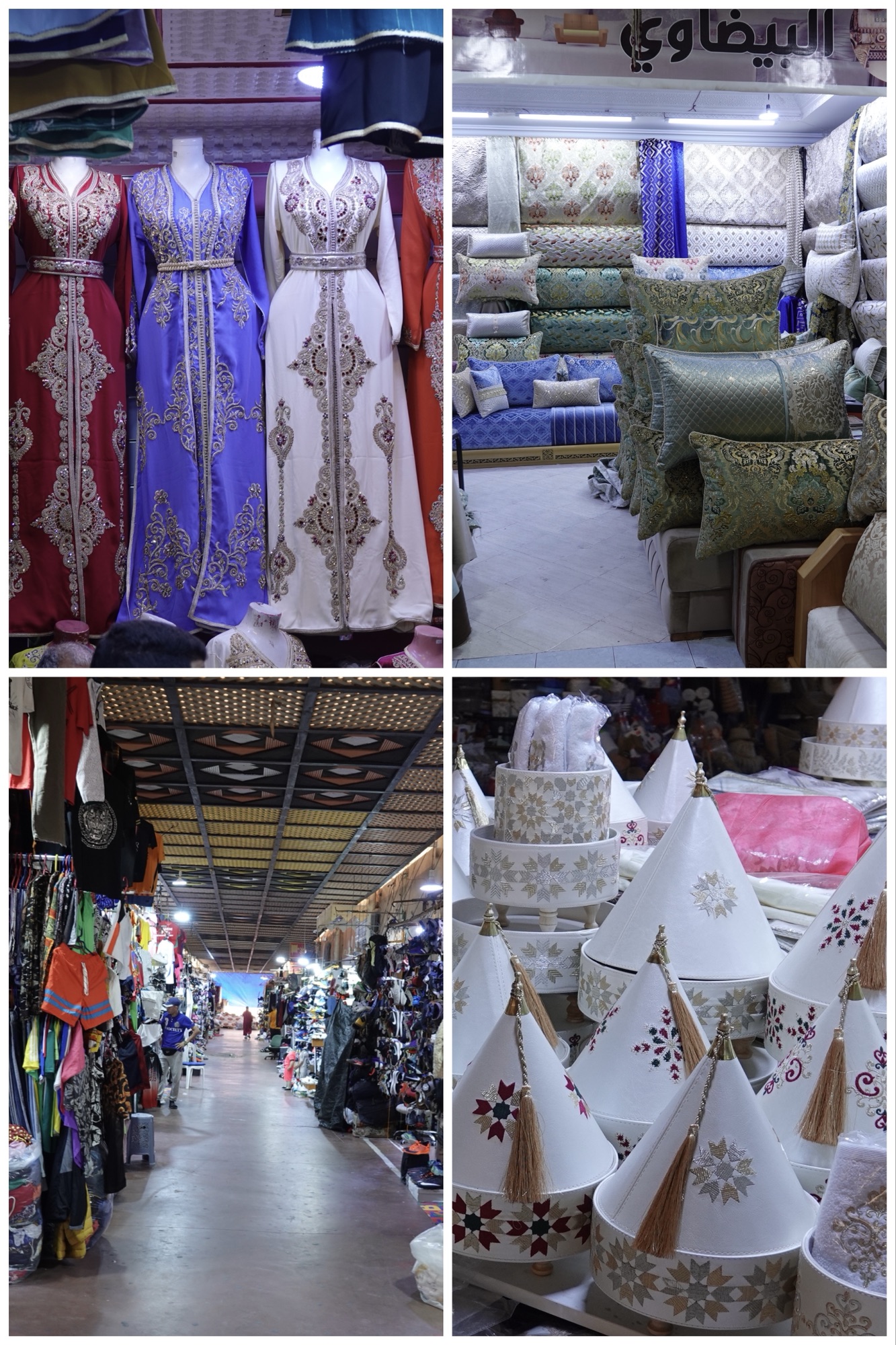
There truly was everything available: food, spices, meats, ready-made clothing and custom tailoring, furniture and upholstering services, luggage, housewares, linens, and even a large second-hand area. Prices were very inexpensive by North American and European standards, but not necessarily cheap for the people who live here.
There was a brief stop at a shop that sold beauty products made from argan oil produced by a women’s cooperative near Essouaria. We felt they missed an opportunity by not talking more about the women whose lives have been so positively impacted by this initiative.

Our final stop was a brief stroll in the Jardin Olhao, a garden donated to Agadir by the city of Olhao in Portugal.

The most impressive feature of the gardens were the incredible shale walls, pillars, and archways that looked like weathered wood.


While the tour really only gave us the most cursory overview of the city, its cleanliness, excellent market, and prevalence of both French and – surprisingly – German (Agadir was once known as “little Germany”) make it an attractive option to return to in the future.
We ended our day with dinner in the main restaurant, where I enjoyed the “destination menu”: hmiss (a grilled pepper, tomato, onion, and olive stew, served cold with flatbread) chicken pastilla, and rice pudding scented with orange and cardamom. Then it was off to the theatre to take in Charley Blue’s violin and vocals, and up to the Explorers for our daily dose of Alan’s amazing guitar.
We reach Casablanca late tomorrow afternoon.
 Rose and Ted’s Excellent Adventure
Sent from Yahoo Mail for iPad
LikeLike