In 2022, when we reached São Vicente it was after 9 sea days crossing the Atlantic from Montevideo Uruguay, and we were beyond thrilled to see land. (Episode 208). Today we simply arrived via an overnight cruise from Ilha Santiago.
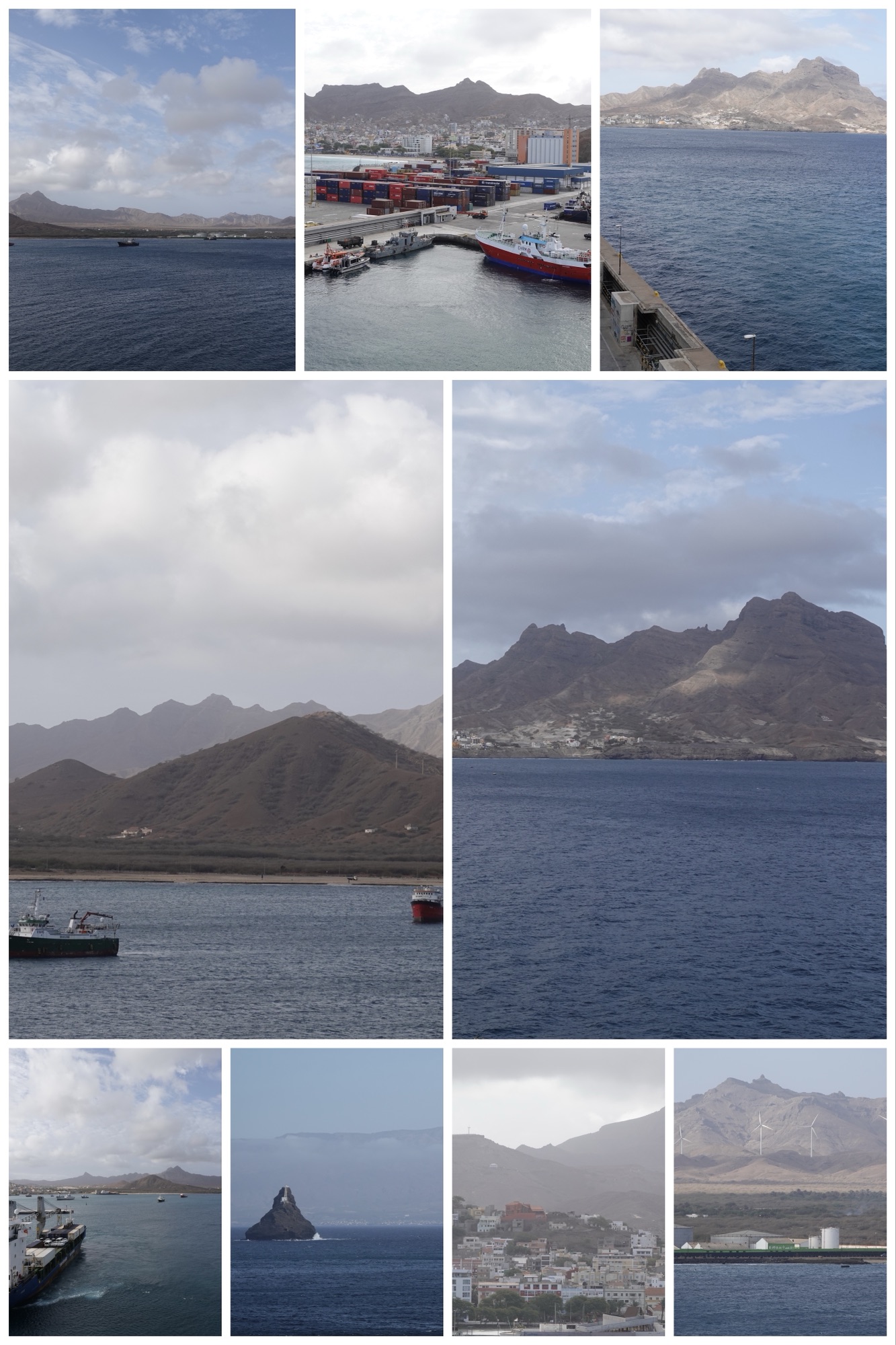
The views at the port in Mindelo were quite different from yesterday’s in Praia – lots of peaks in almost every direction.
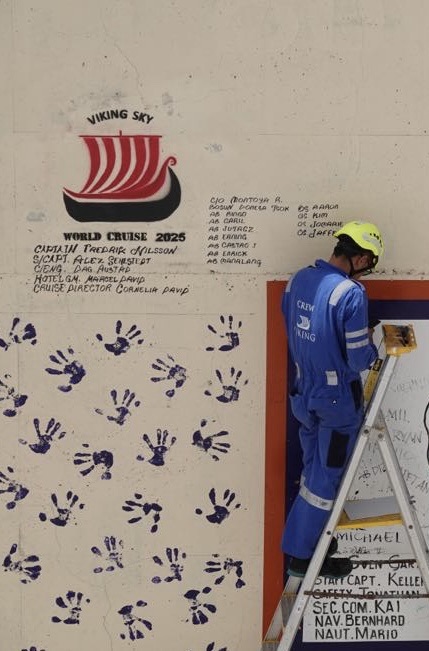
One of the neat things about this port is that various ships have left behind their logos and crew names on the wide cement pillars. Our own was being added today, and once the crew was done, a few lucky passengers got to add their names!


Our excursion was once again an included island panorama, but this time focussed more on physical features – mountains, lagoons, and beaches – than history; history is really the purview of Ilha Santiago. São Vicente is all about its volcanic mountains and, apparently, music and partying, although we didn’t experience that beyond a bit of silliness on the bus with our guide Liliane Cruz.
We did some of the same things as on our last visit here (taste-testing the local Ponche and liqueurs), and saw some of the same places, but also got a new experience (turtles), so it was a pleasant – if unexciting – visit.
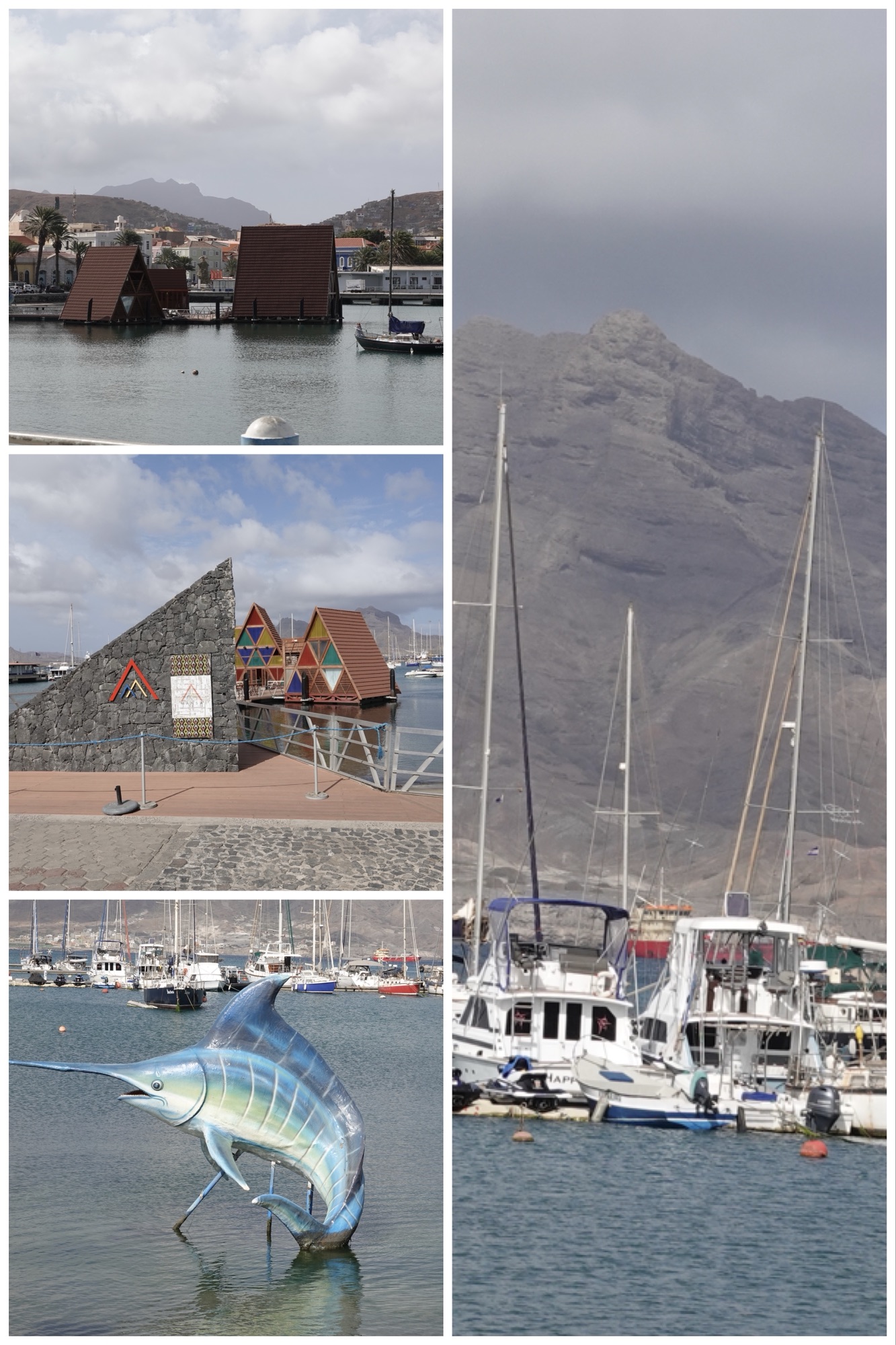
We drove along the waterfront past the fish statue, A-frames, and sailboat marina that we remembered from our last visit to reach the stone road that would eventually take us to the top of Monte Verde at 744m/2441 feet above sea level.
The road out of town, while fairly new, was still built in the same way as Roman roads and early colonial roads were: simply a bed of smooth stones. Traditional paved roads are still very much the exception here.

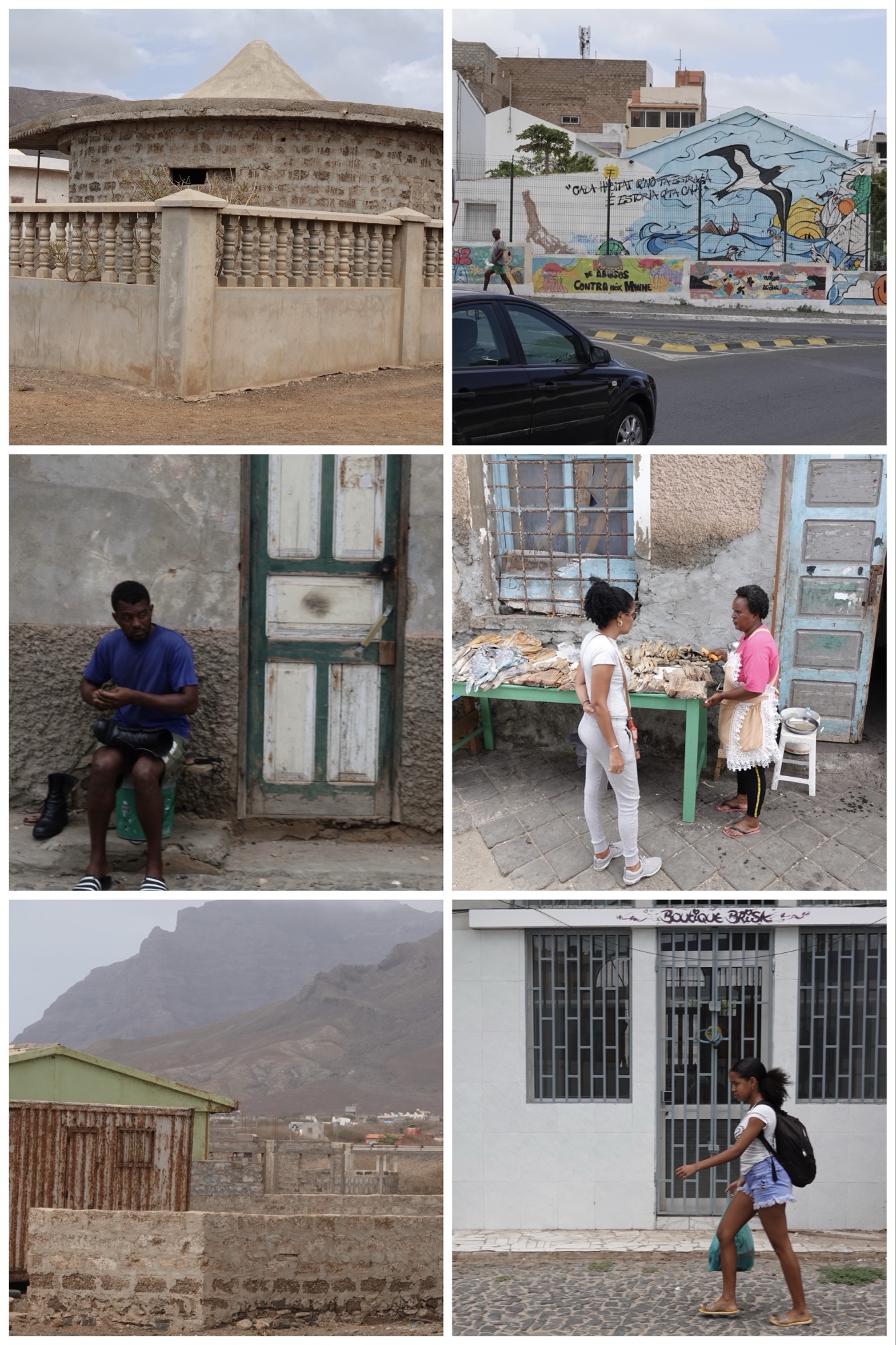
Cabo Verde is suffering an almost decade-long drought. Every property has a cistern to collect the bit of rainwater that falls on two or three days in October, but the islands are dependent upon their desalination plants. What agriculture there is, is at a subsistence level. Over a 3 hour drive we saw only one small farm, although we were told that people (mostly women) do manage to grow a few crops and take them to market. We saw many people carrying water jugs to be filled at central distribution centres.

Hardy goats graze on the mountainside and anywhere else they can find scrub (although three were running along the road…). Our guide told us that when even a small amount of rain falls, the island turns green.

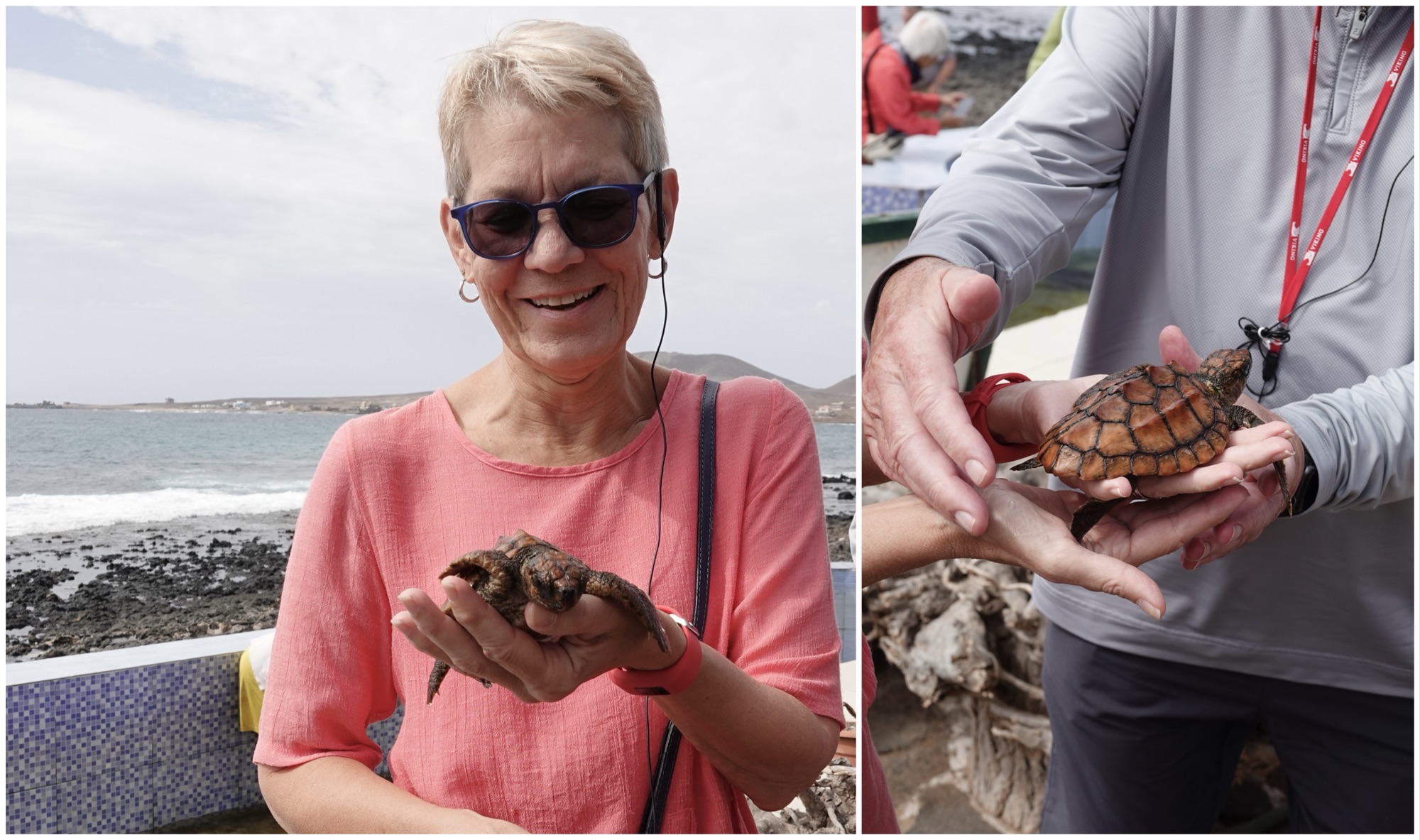
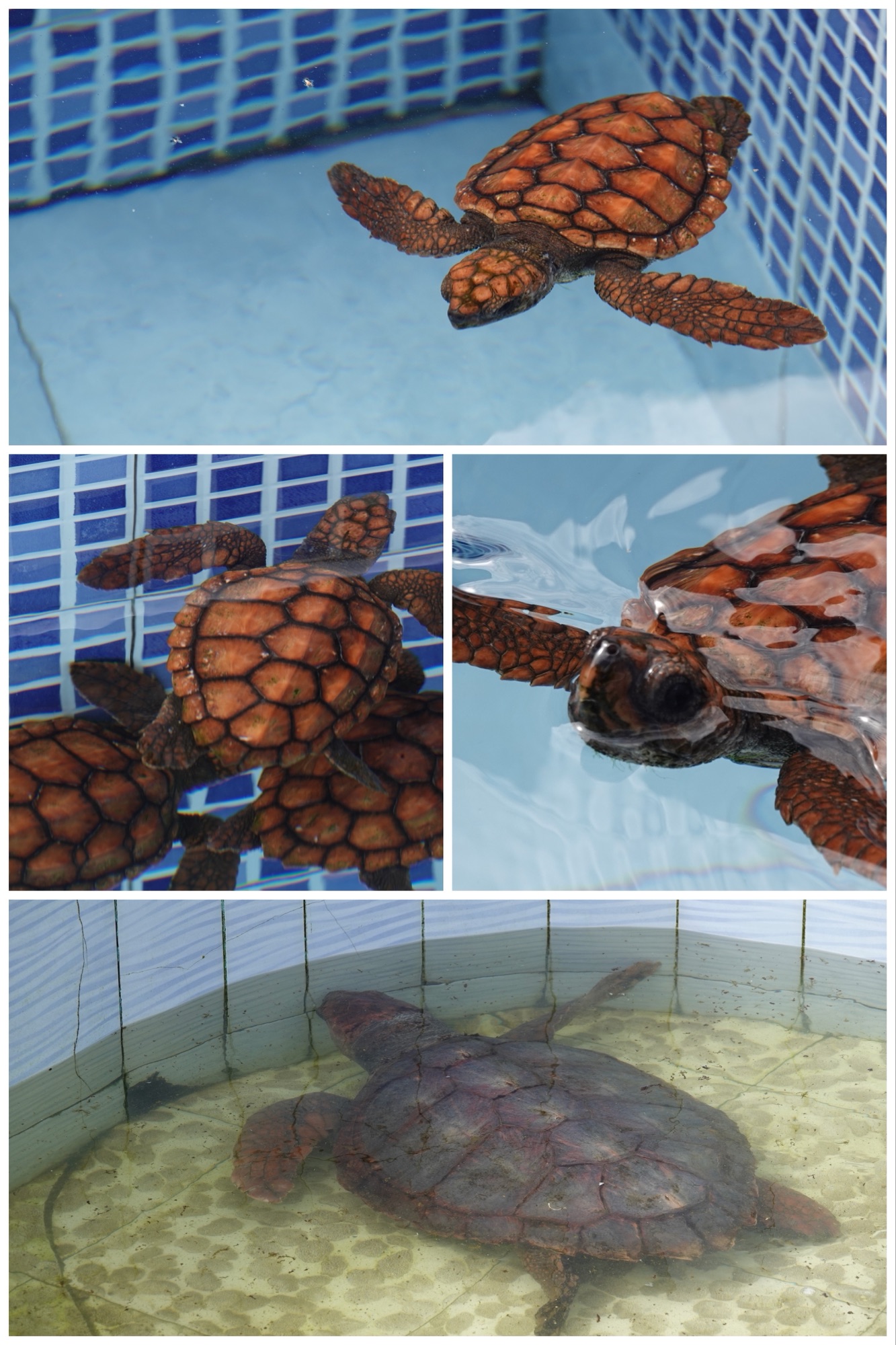
Our first stop outside of the city of Mindelo was at a privately owned turtle rehabilitation centre. The beach here is rocky and wild. When we arrived, the owner was just scrubbing algae from the tiled walls of the larger turtles’ pool.

Green turtles are indigenous here but endangered, and protected. The two large turtles at the facility were about 26 years old; they’d been injured (likely caught in fishing nets, since fishing is the main industry here) and were recuperating. We were also told that dogs are a problem; people abandon their animals, which then end up foraging on the beaches. The wee turtles that we were allowed to hold were only 6 months old, and almost ready to be released back into the ocean.
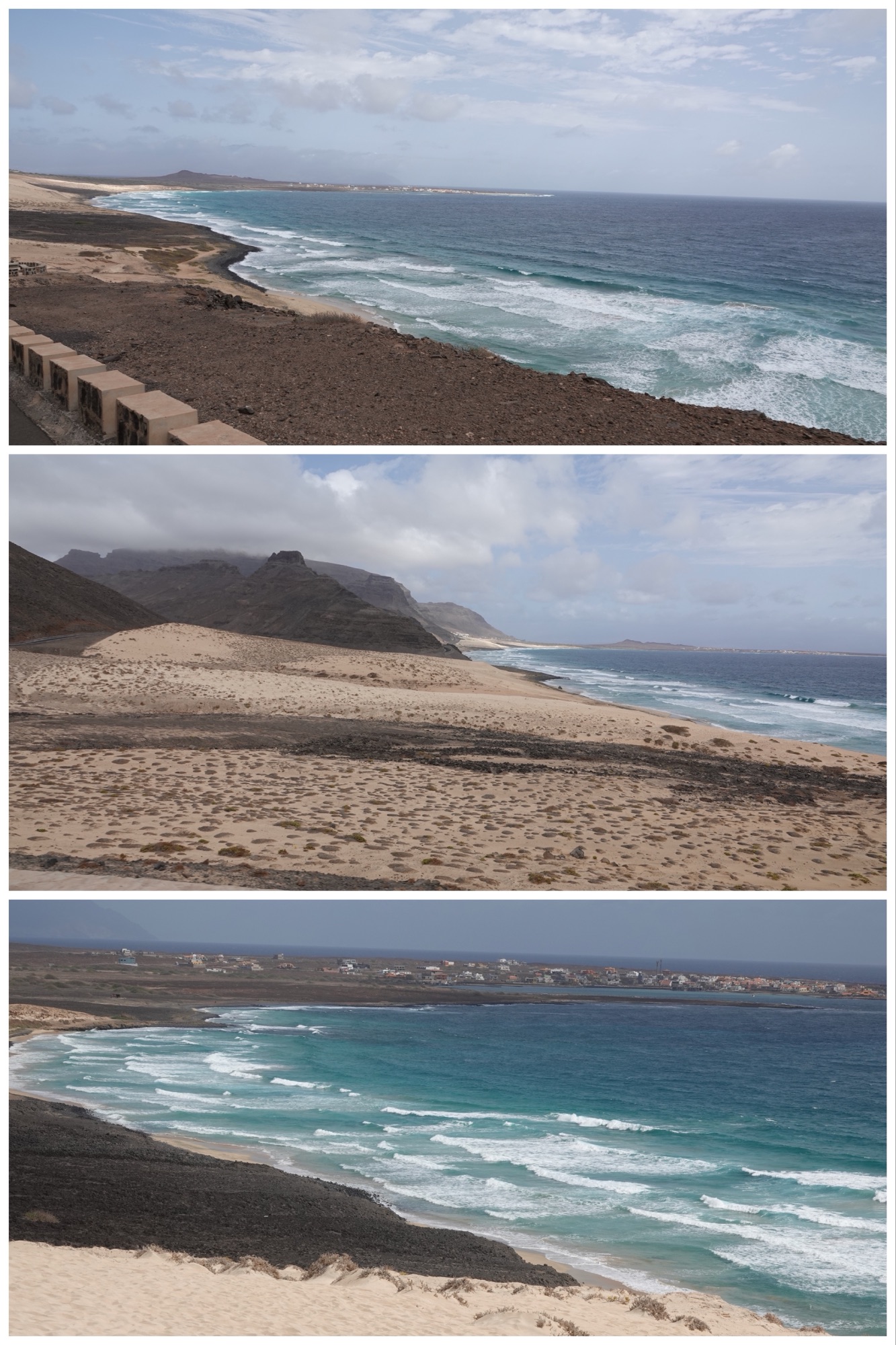
The next brief stop along our route was at a spectacular lookout near Praia Grande (“Big Beach”) where the turquoise ocean waves lapped against impossibly soft sand that gets blown here from the Sahara, interspersed with the island’s naturally occurring black volcanic sand and rocks.

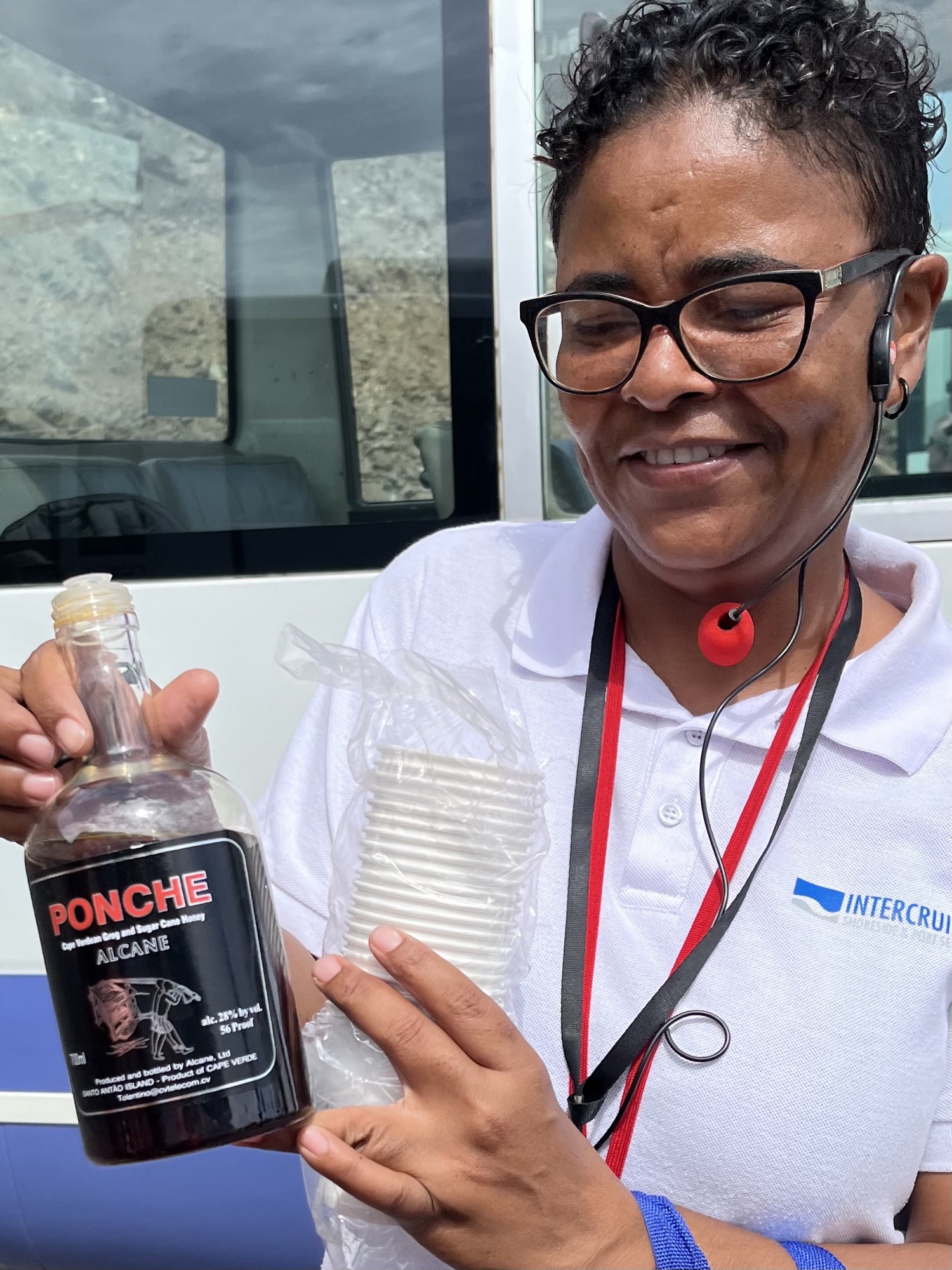
During our stop, we were treated to our first taste of the Cabo Verdean sugar cane Ponche, a strong liqueur that tasted (to me) like peanut brittle without the peanuts – and packing a punch of alcohol. Liliane was quite generous with her pours, so we were all a bit silly on the next leg of our drive. Liliane tried teaching us the chorus of a famous song by Cabo Verdean music icon Cesária Évora, with predictably hilarious results.
Our driver, Nelson, explained that our relatively slow pace was as much to do with safeguarding our bus’s suspension as it was to do with the steep angles and blind turns heading up the mountainside.
This mountain defines the island’s topography. Its peak is made invisible by clouds when trying to see it from the shore; at the top, those same clouds make the view hazy.
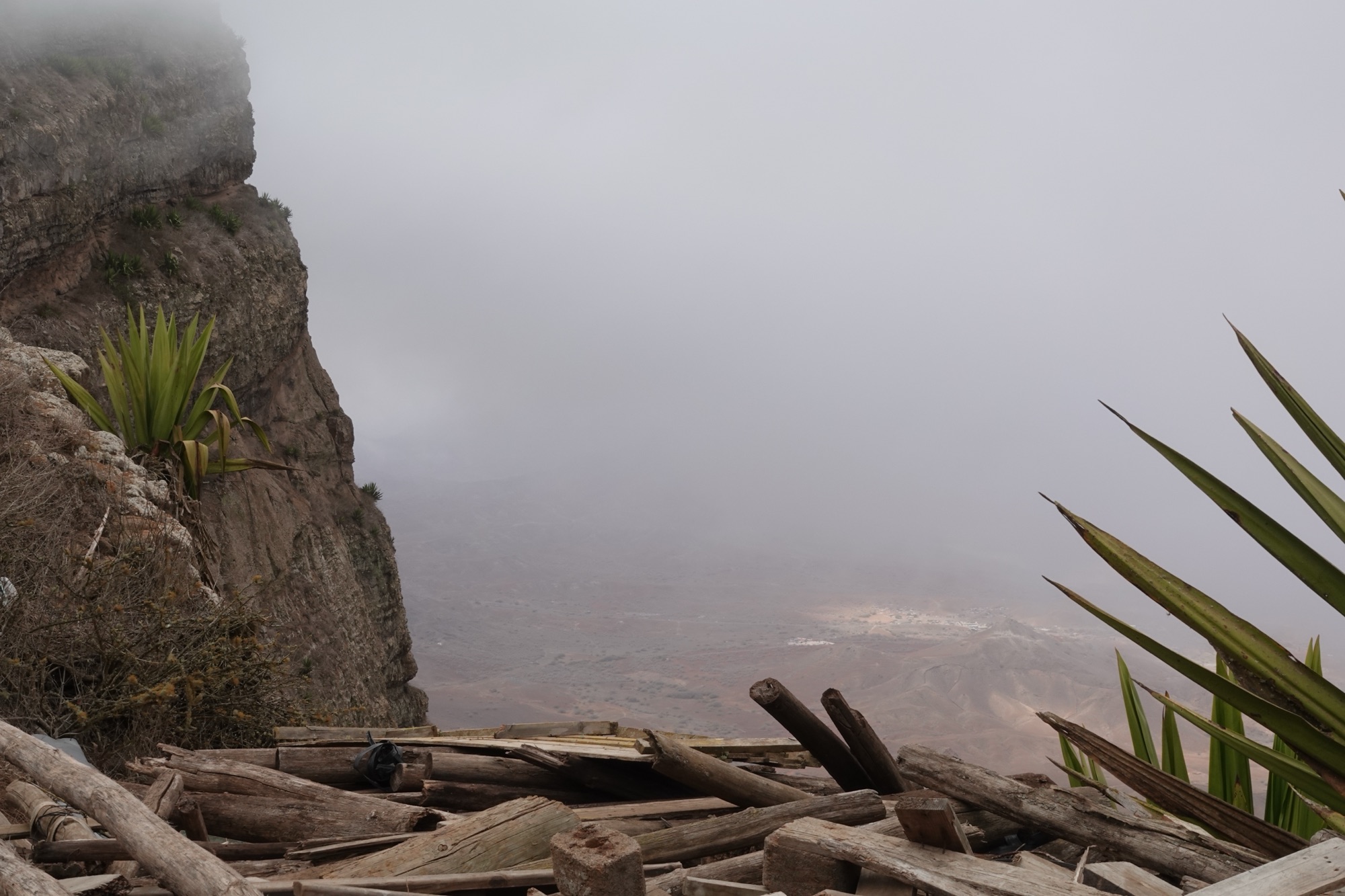
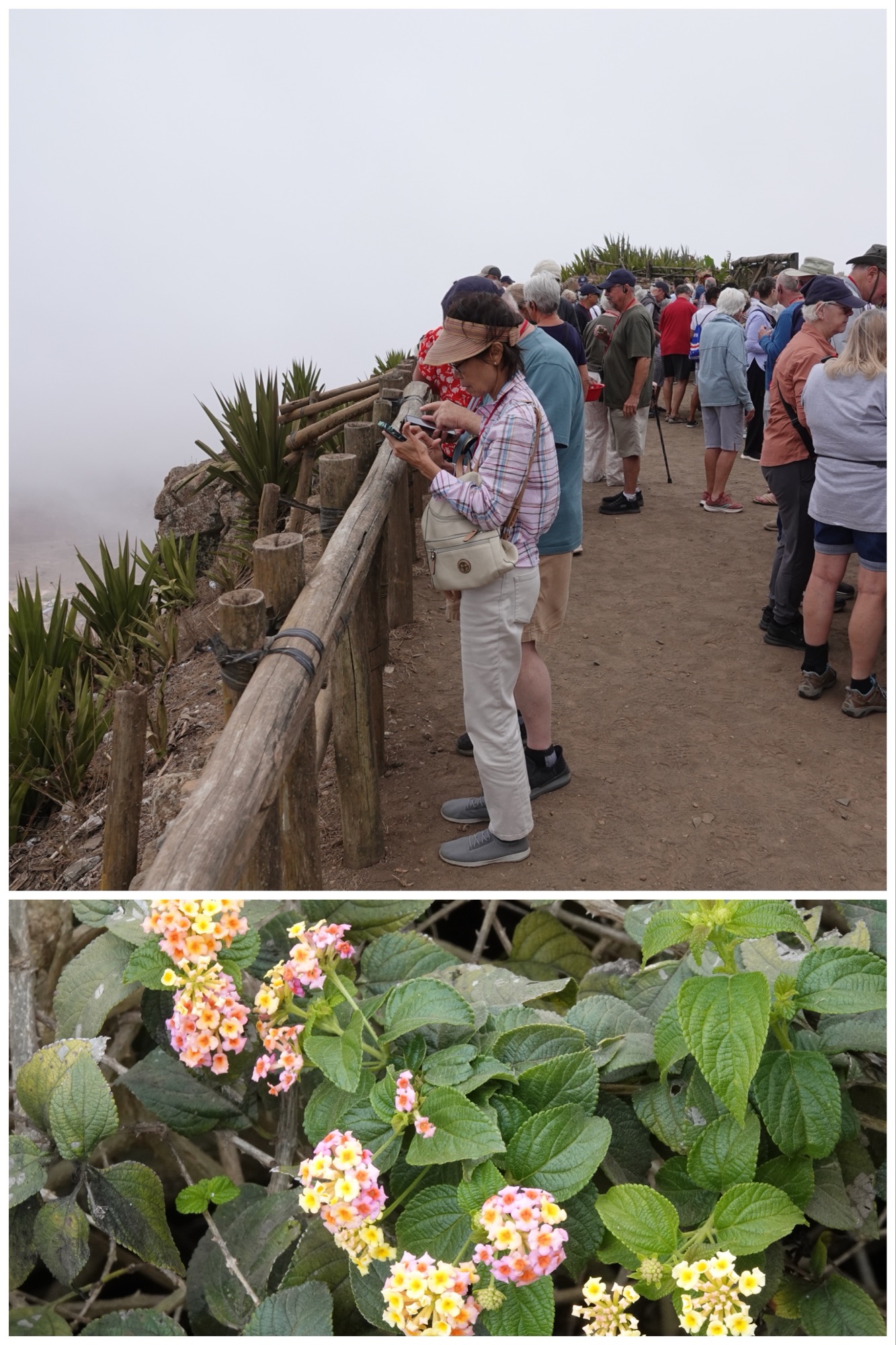
We had the chance for a “coffee break” here, taking in sweeping views of São Vicente and the neighboring islands of Santo Antão and São Nicolau. The coffee was supplemented by shots of the island’s three iconic alcohols: clear sugar cane “grogue”, a green liqueur made with citronella and anise seed, and the syrupy dark Ponche, each with about a 40% alcohol content. I can vouch for the fact that the green version, reminiscent in flavour to Yucatecan Xtabentun, tasted great in the delicious Cabo Verdean coffee.

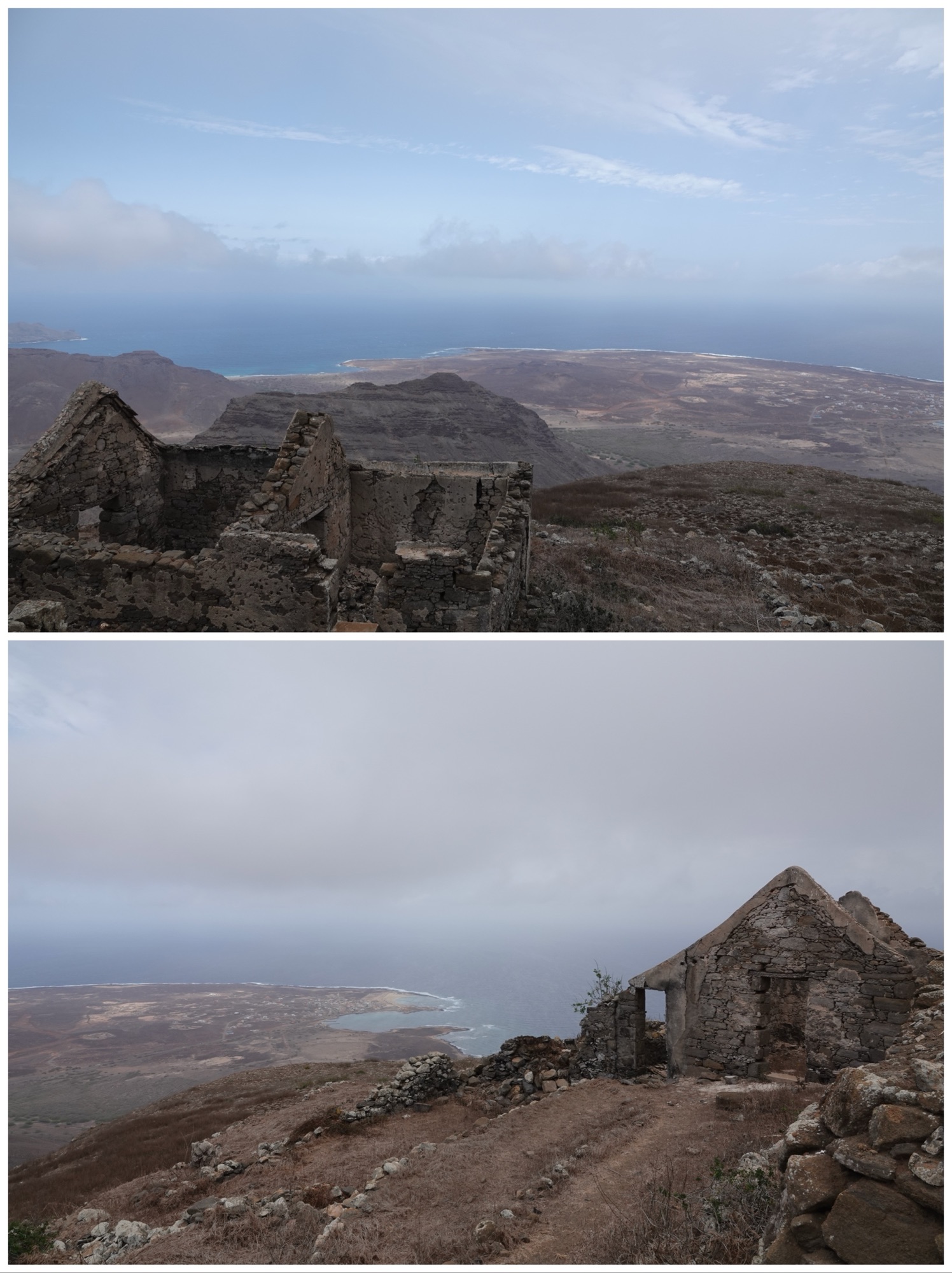
On our way back down the mountain, we passed by a couple of abandoned homesteads. Perhaps a century ago, before the cycle of droughts, it made sense to live way up on the mountainside herding goats.
Our drive back to Mindelo gave us a glimpse into the lives of the people living here. While it is much, much better than anywhere else we’ve visited in Africa, with the exception of Cape Town, it can’t be easy.


Before returning to pier, we had one more photo stop on the hill in Mindelo to take pictures of the waterfront and our ship.

We also had a final chance to photograph the beautiful blue lagoon adjacent to the port.

We had a lovely relaxing afternoon, which allowed me to stay caught up with blogging, and ensure we could attend both Russell Lee’s excellent lecture on how absolutely everything we were taught about Christopher Columbus was wrong AND the evening cabaret by Viking Vocalist Amy Margaretta AND still get enough sleep.
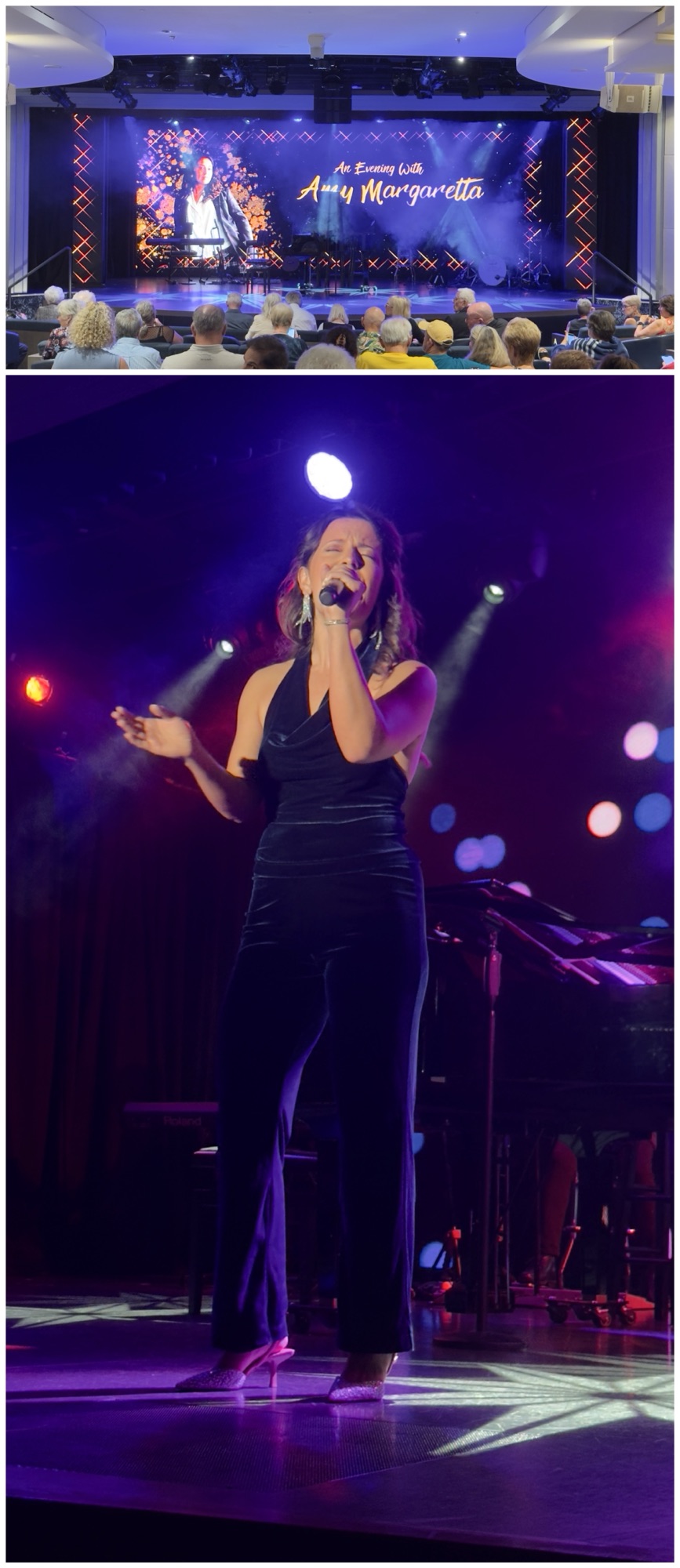
Amy was AMAZING, surprising and wowing us with her fabulous musical theatre and operatic tones. Her Masters degree in musical theatre really shone tonight.
Clocks go ahead one hour overnight, which means a lost hour of sleep, and I seem to be perpetually tired – yet I don’t want to miss any lectures or events. It’s a tough life, I know. An acquaintance would call it a “champagne problem”.
The next two days are at sea again, headed for the Canary Islands. Since tomorrow is also Easter Sunday, there’s a chocolate buffet planned for noon. Not being able to resist that is yet another champagne problem.
 Rose and Ted’s Excellent Adventure