Today is the first of two port stops in Cabo Verde, this one on the island of Santiago.
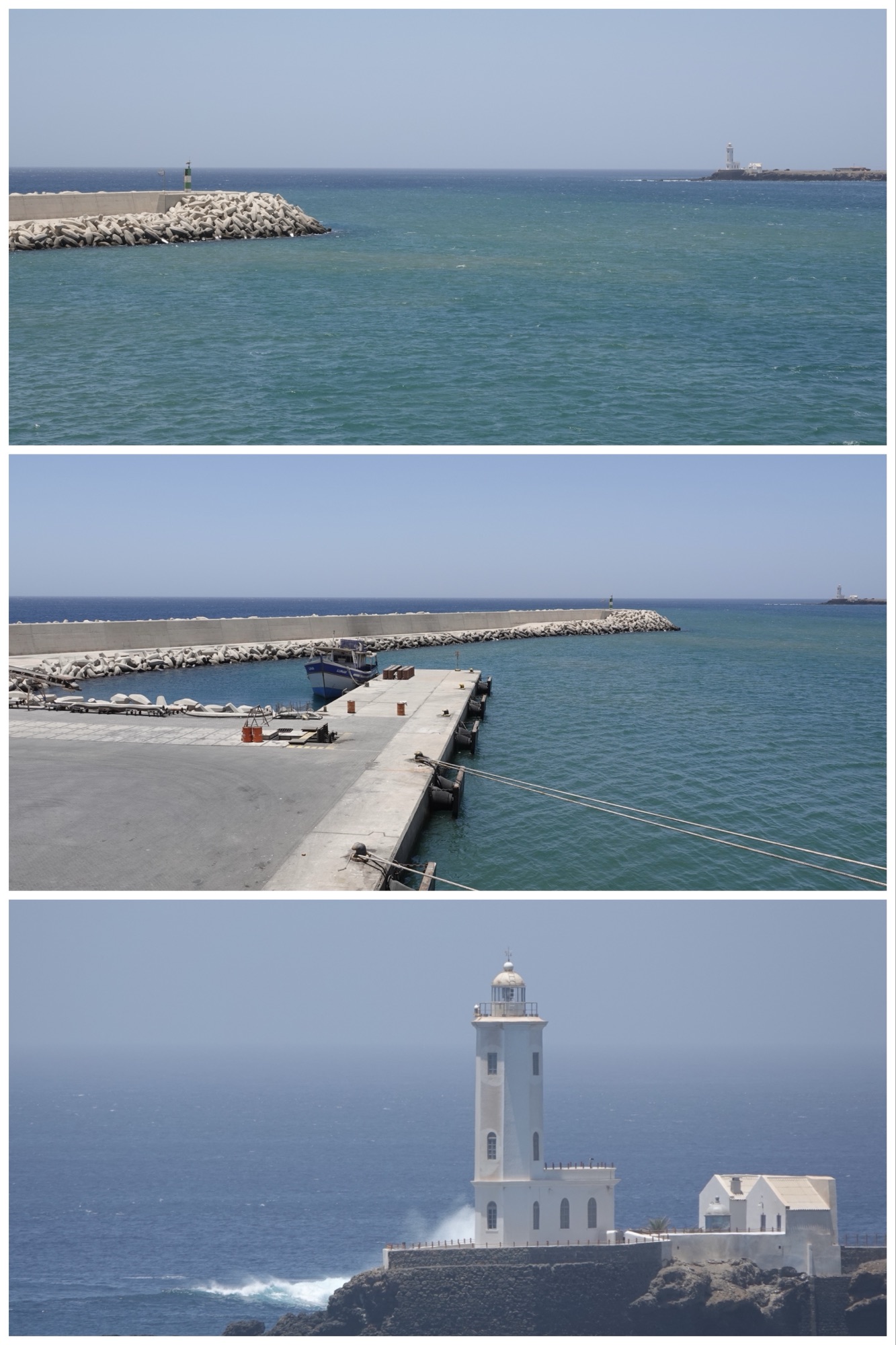
This is not a tourist destination, the way the islands of Sal and Boa Vista are, and the port is not a passenger terminal but an industrial port, albeit a very clean one. There are no giant piles of coal or magnesium here – mostly just containers, plus a couple of silos, a small mound of crushed stone, and a few small storage warehouses.


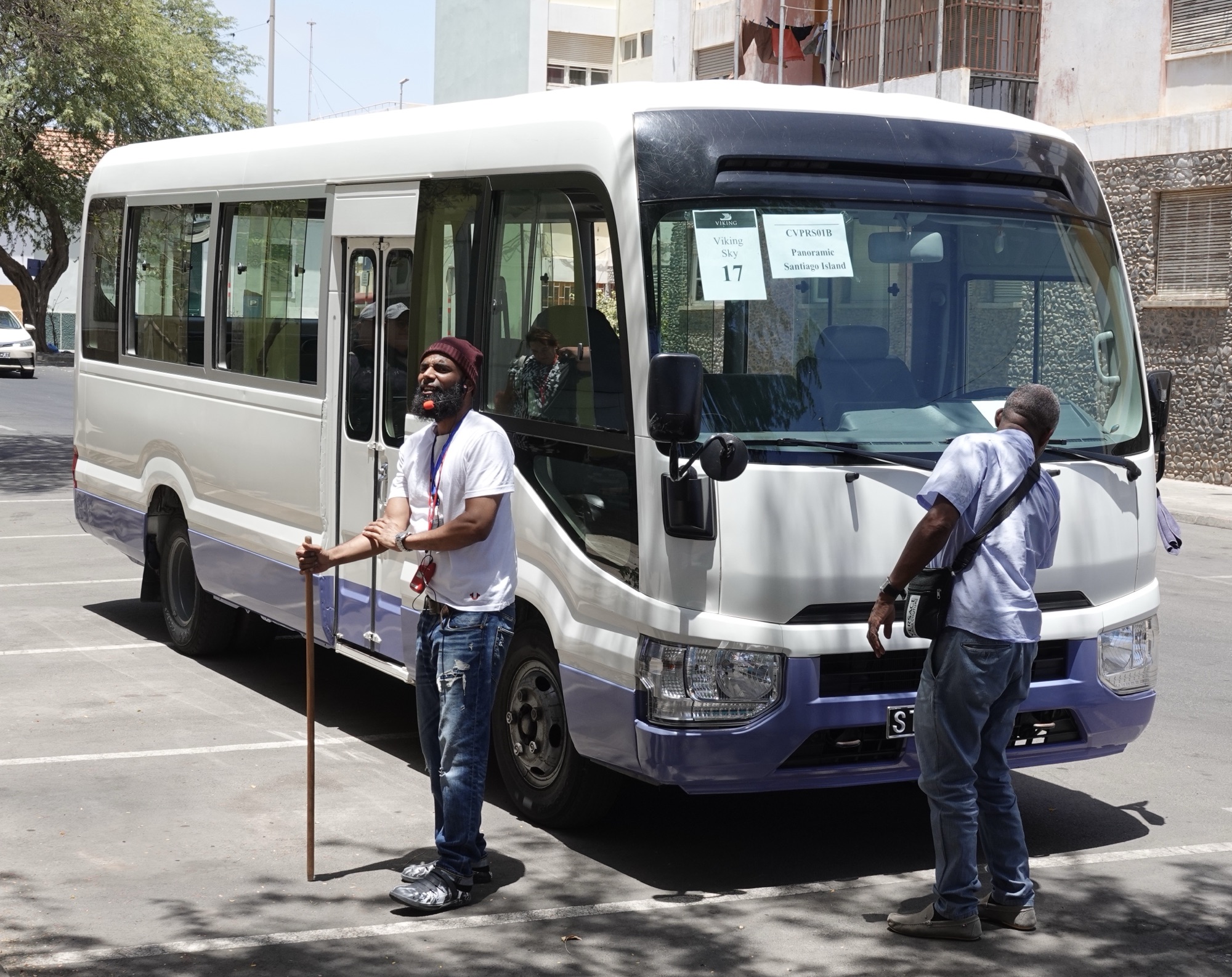
Our tour buses, parked on the pier under the supervision of port and traffic police, were small format transport: 22 seaters, with the option (when used as local transit) for an extra set of seats that fold down into the centre aisle. Ours reminded me of being in one of Harbour Air’s deHavilland Twin Otter planes, albeit the bus was much, much less noisy.

It was a short stop here, just 6 hours, but that was enough time to take the 4-hour included tour to discover the history of Ilha Santiago and visit a few of the notable landmarks around the island. Today was Good Friday, so we expected that some places might be either extra crowded, or even closed.
Our charming guide, Walter, was working at a disadvantage. Just a day ago he missed 3 steps on his stairs at home, and sprained his ankle. With pharmacies closed for Good Friday, he couldn’t get a tensor bandage – and he didn’t want to cancel his guiding job because he knew there wouldn’t be a replacement for him – so he improvised. He had a “cane” made from a broom handle (he quipped that his wife wasn’t going to be able to sweep), and he delivered our tour at “hobbling” pace. That was just perfect for us!
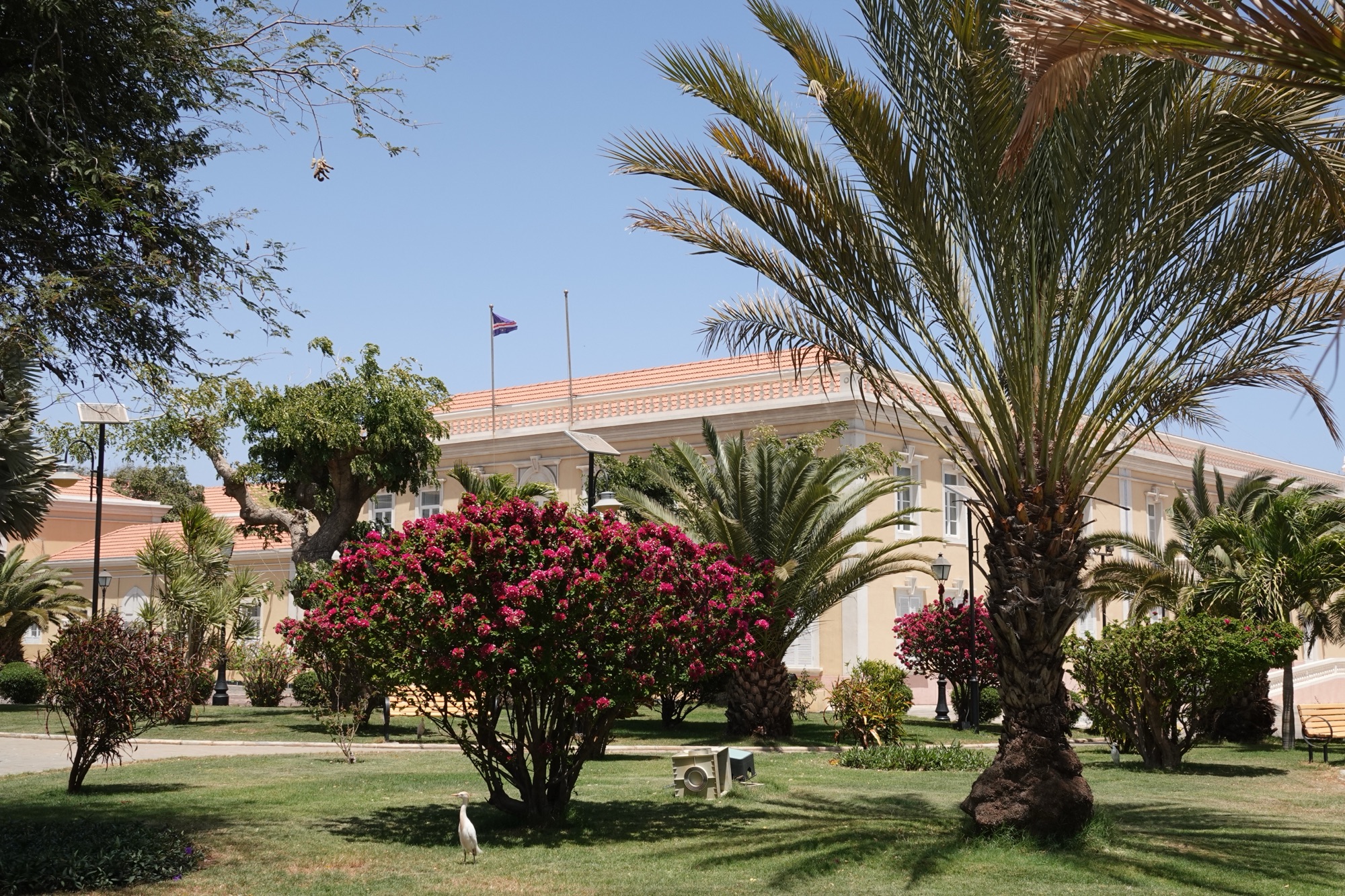
Praia is the capital of Cabo Verde. Although each island has a mayor and local government, the military base, President’s palace, and the Judiciary branch of the government are all here, and all in the town centre, the “Plateau”.


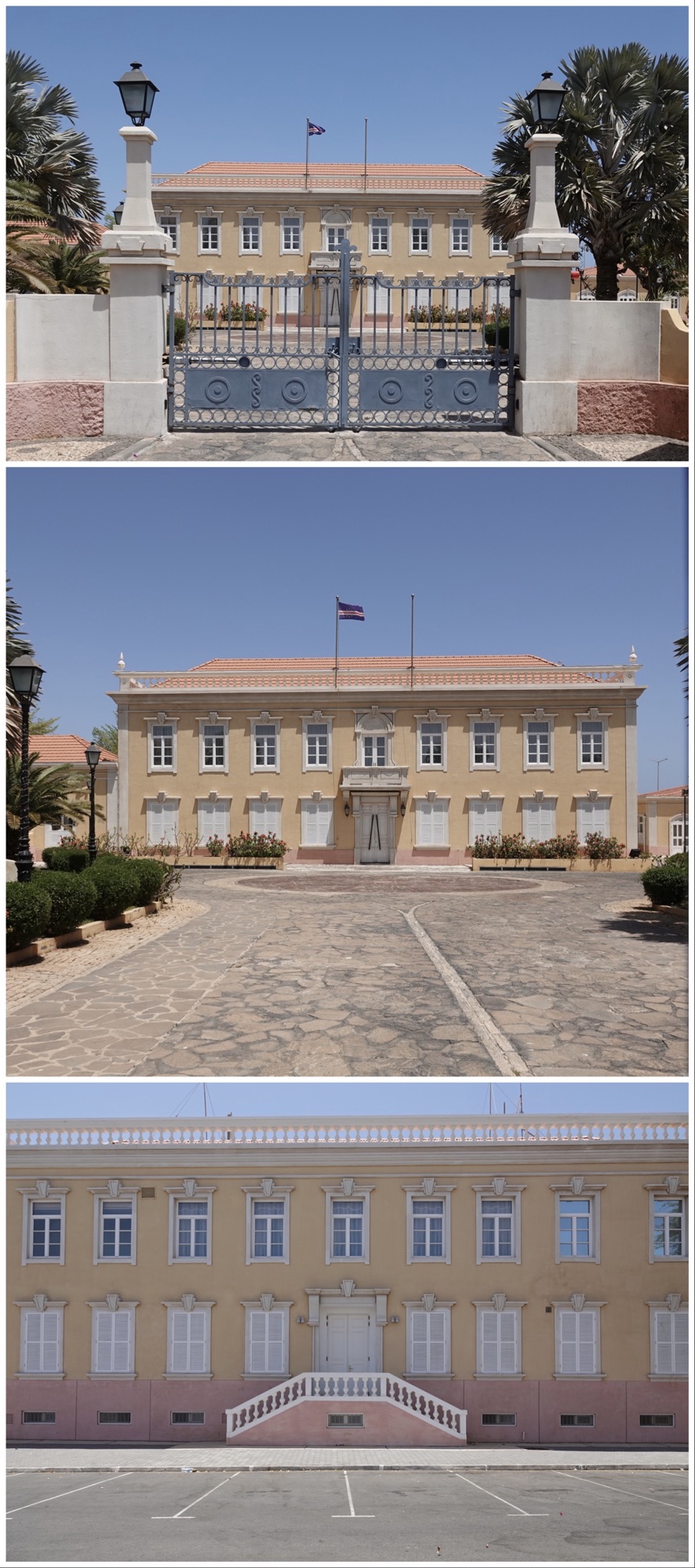

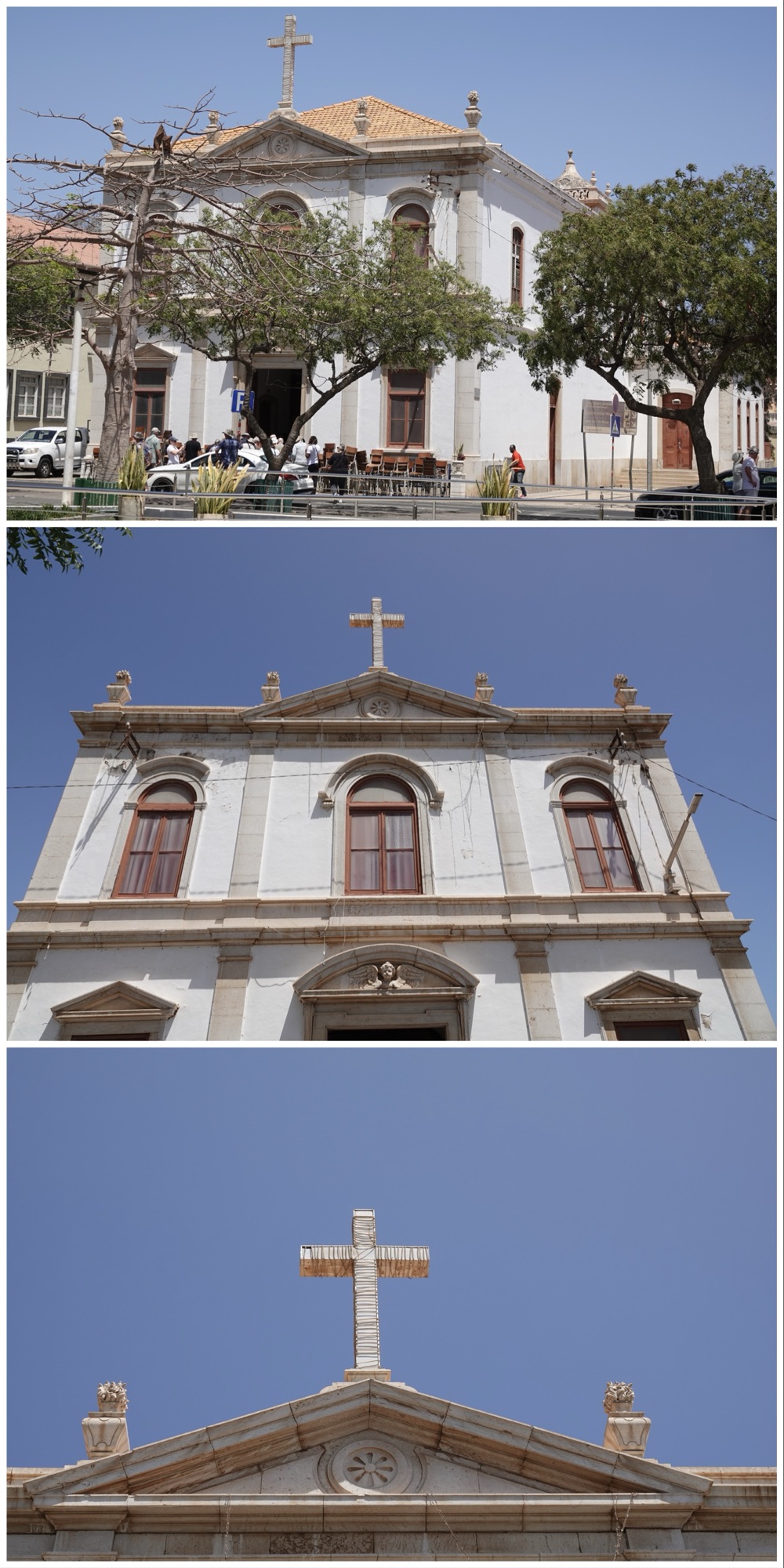
Beside the Palace of Justice (above) is the neoclassical Our Lady of Grace Church (below) which was completed in 1902, in part using marble from the island’s original cathedral. The proximity of the two buildings caused some humorous commentary about “saints and sinners”.

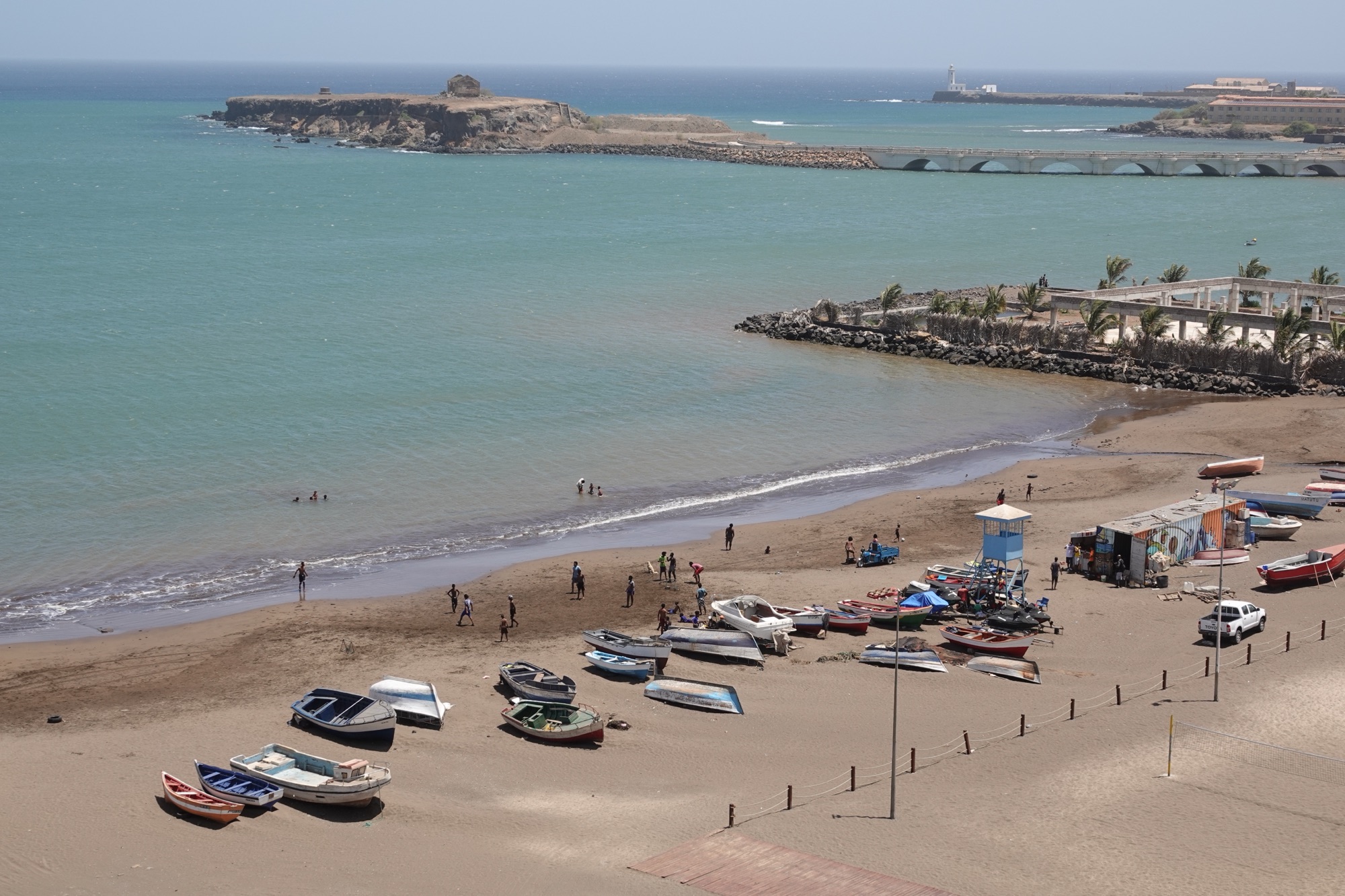
From our high vantage point in the Plateau, we were able to see the monument to the biggest disaster in Cabo Verde’s history (with our beautiful ship in the background).

Called the “Monument to the Victims of Hunger and the Disaster of Assistance of 1949” it specifically commemorates February 20, 1949, when a wall collapsed on hungry people lined up to receive food assistance during an extended drought and famine that plagued Cape Verde in the 1940s. The disaster killed 232 people.
The wider disaster was the drought itself, exacerbated by the fact that no foreign aid was offered because all supplies were being re-directed to the WWII war effort. Cabo Verde was still Portuguese, and Portugal was officially “neutral”, but still had nothing to give to Cabo Verde. Although official records range from 50,000 to 100,000, our guide posited that up to 200,000 people died during the drought. Ilha Santiago alone experienced a 65% decrease in population between 1946 and 1948.
On the Plateau we admired the statue of Diogo Gomes, the Portuguese navigator, explorer and writer who – as servant and explorer of Portuguese prince, Henry the Navigator – discovered Ilha Santiago in 1462.

From that viewpoint we could also look out over the ocean.
The main square of Praia is named after Caetano Alexandre de Almeida e Albuquerque who was a Portuguese colonial administrator, military officer, and governor general of Cabo Verde from 1869 to 1876.
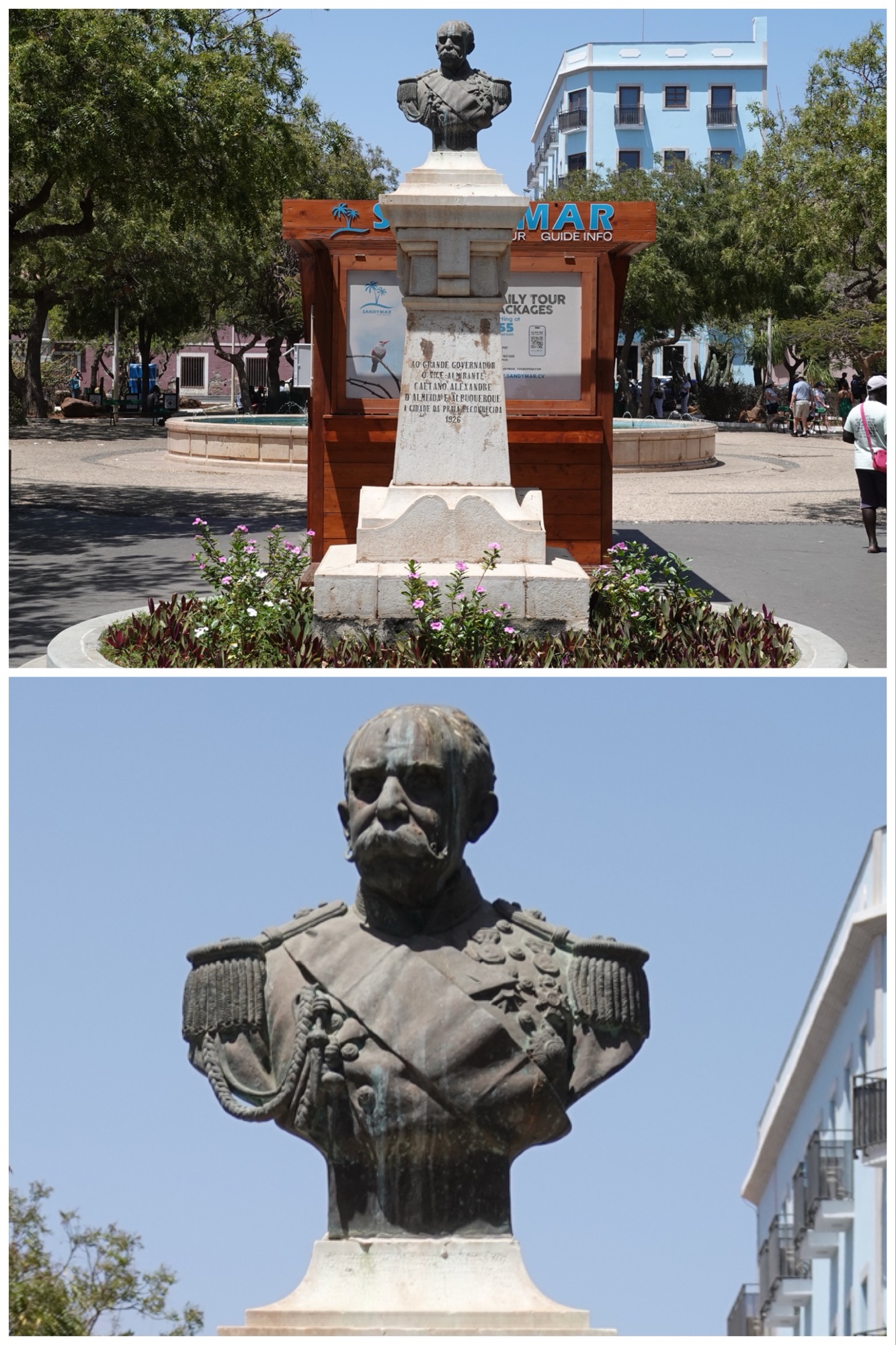
He was apparently known for sitting in the town square all day every day playing cards; the square is laid out with gardens shaped like the 4 card suits, and each of the 4 sidewalk corners surrounding the park are inlaid with those suits as well.

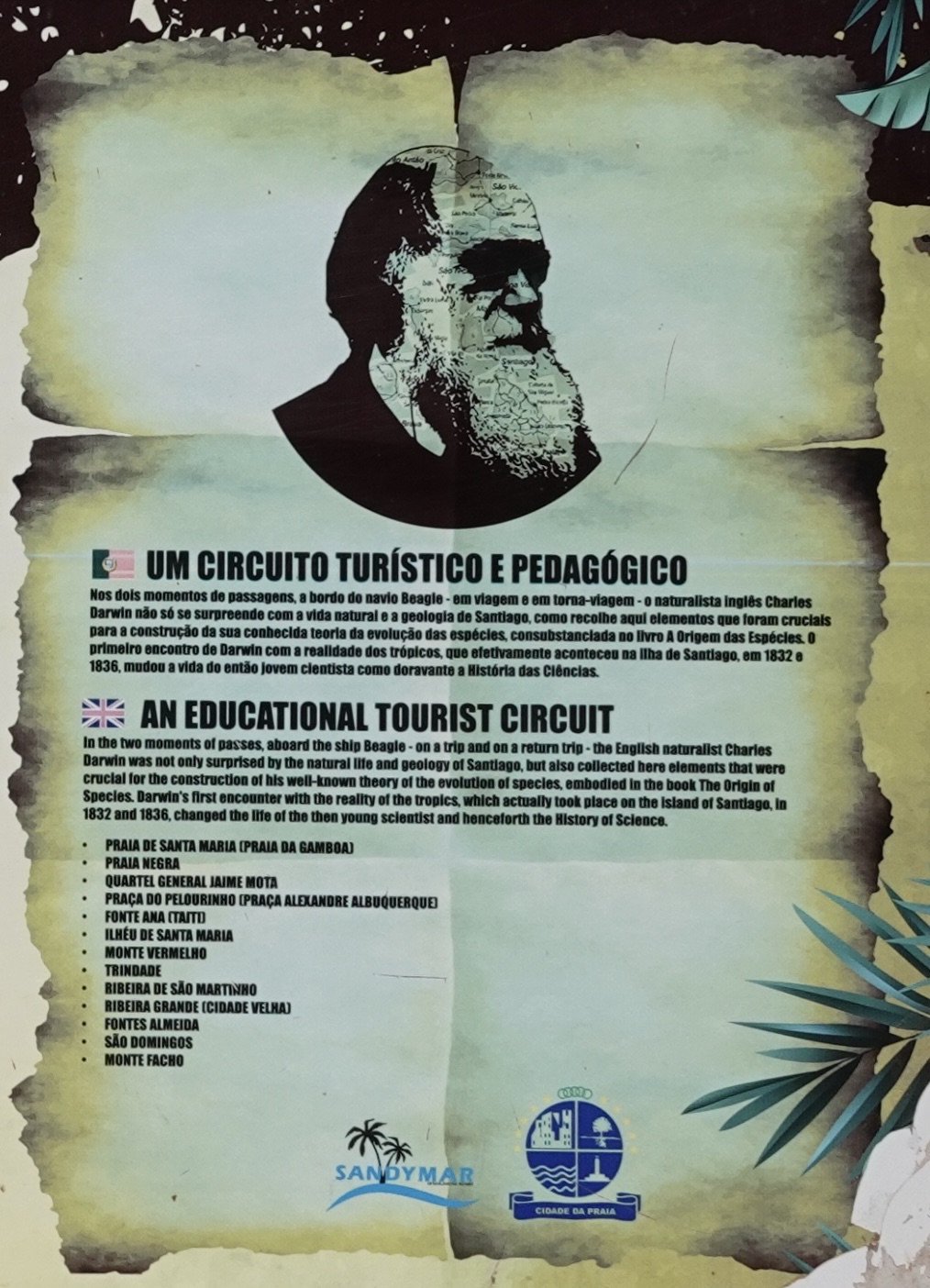
Also in the park, a notice commemorating Charkes Darwin’s visits here.
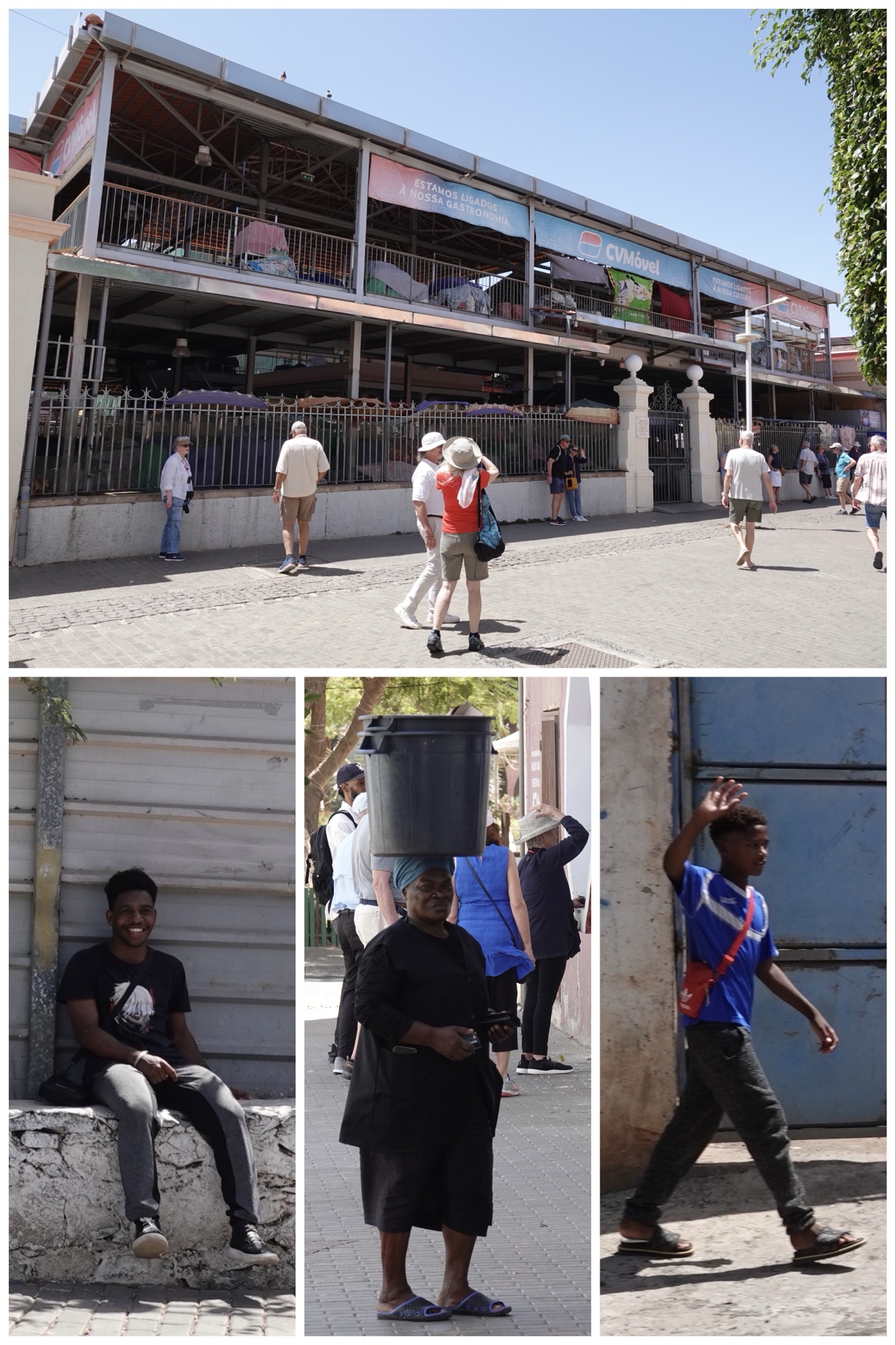
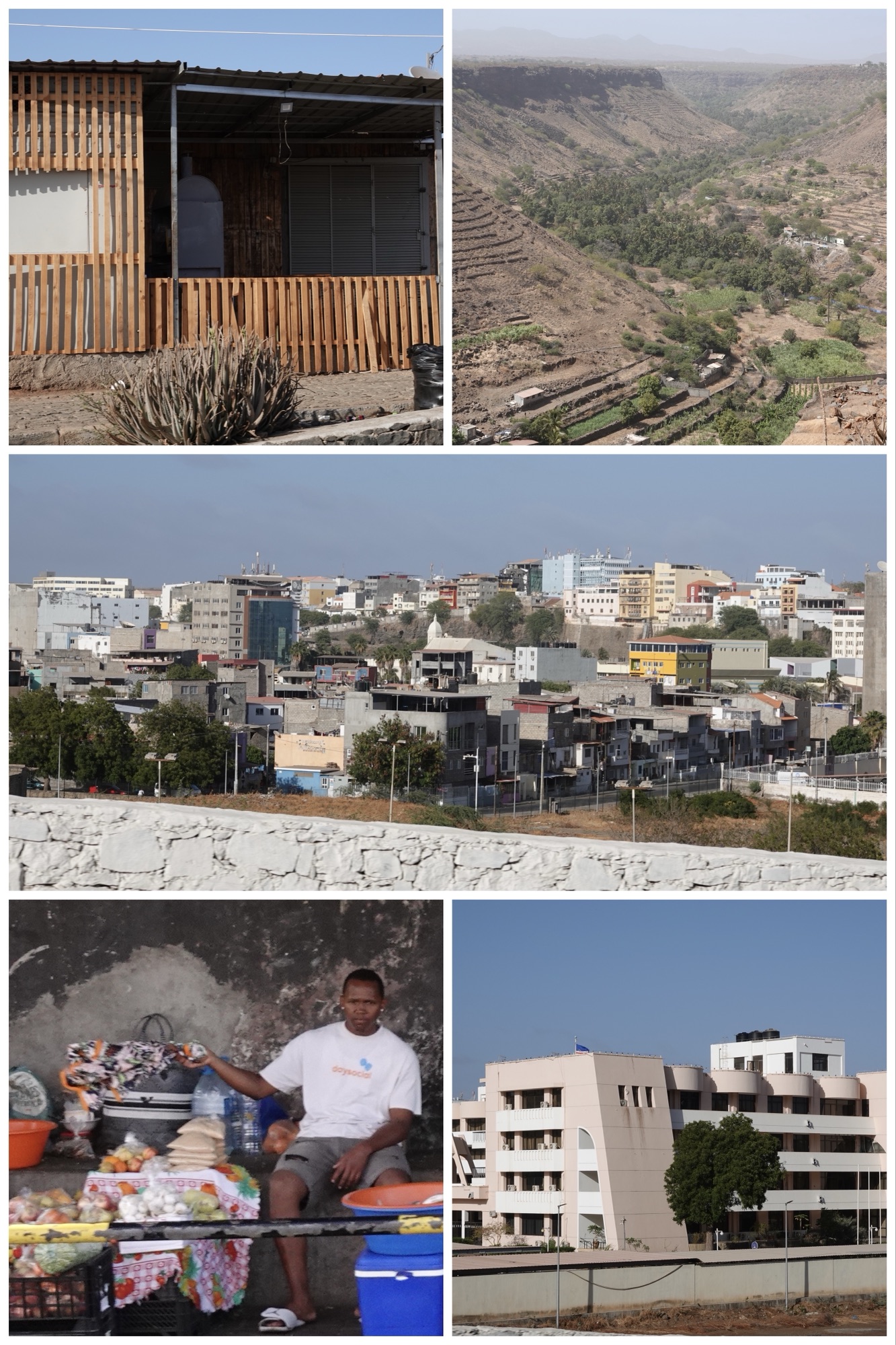
On any other day, we would have taken a stroll among the colorful stalls at the vibrant Sucupira Market, but it was closed for Good Friday observances. A quick photo of the exterior was all we got.
Cabo Verde achieved independence from Portugal on July 5, 1975. The African Party for the Independence of Guinea and Cabo Verde, led by Amílcar Cabral, played a key role in the struggle for independence.
We made a quick stop beside the Amilcar Cabral Museum (closed on Good Friday) to see the mural painted in his honour. Cabral, a Cabo Verdean, was one of Africa’s foremost anti-colonial leaders, and although his fight for freedom physically took place in Guinea-Bissau, the work he did is credited for winning Cabo Verde’s independence as well. He is commemorated each year on January 20th, the date of his assassination.

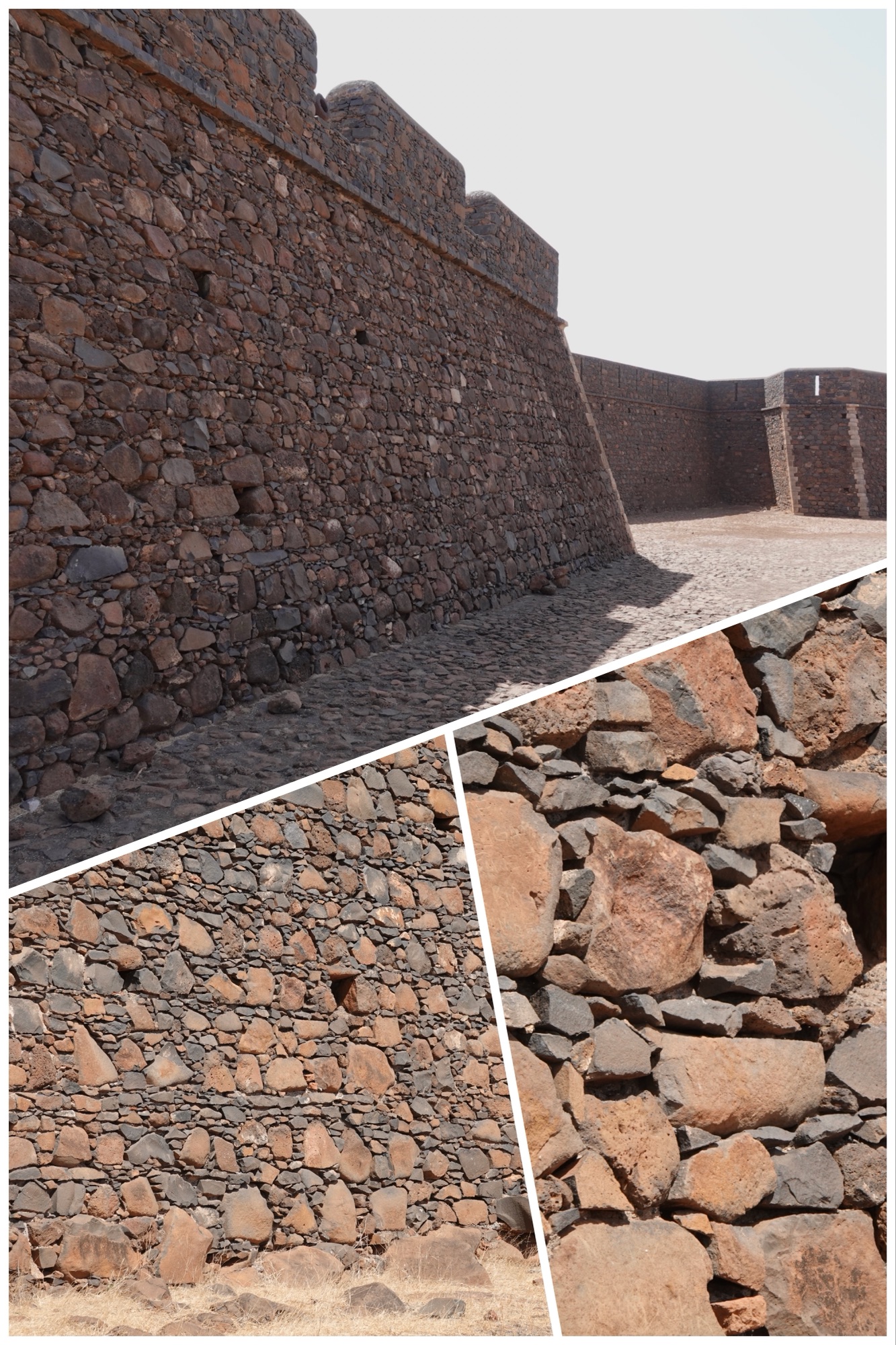
Our next stop was at the imposing São Filipe Royal Fortress, perched on a plateau and overlooking the city since the 16th century. Many of the walls have been restored using original stone, but despite a couple of raised walkways the inside of the fort is still quite a rugged place to explore. It was certainly not ideal for a guide with a sprained ankle!

Where the exterior walls were damaged they’ve been reconstructed using original stones.
We were impressed with the well-preserved (no pun intended) cistern, which could apparently fill with rainwater to a depth of 100ft (approx 30 metres). There were new wooden stairs allowing access into the depths of the now empty cistern, but our schedule didn’t allow for us to climb down.

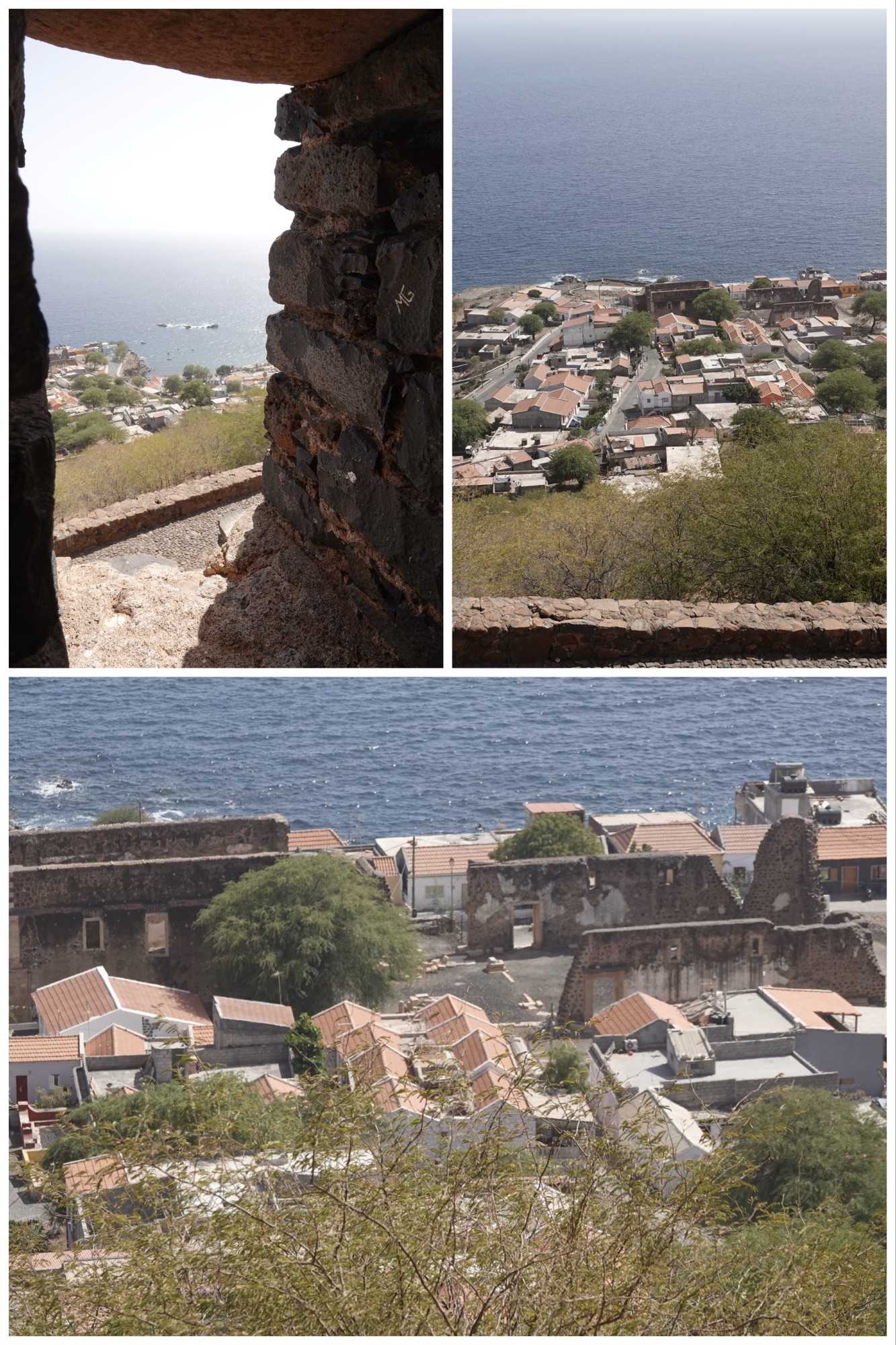
From the ramparts, we could see the ruins of the impressive Sé Cathedral, built over a period of 150 years from 1550 to 1700 CE, and then burnt down in 1712 by Jacques Cassard. This is the cathedral whose marble was reused in the Church of Our Lady of Grace. The cathedral was exclusively for the use of Europeans. The ruins are surrounded by modern homes.
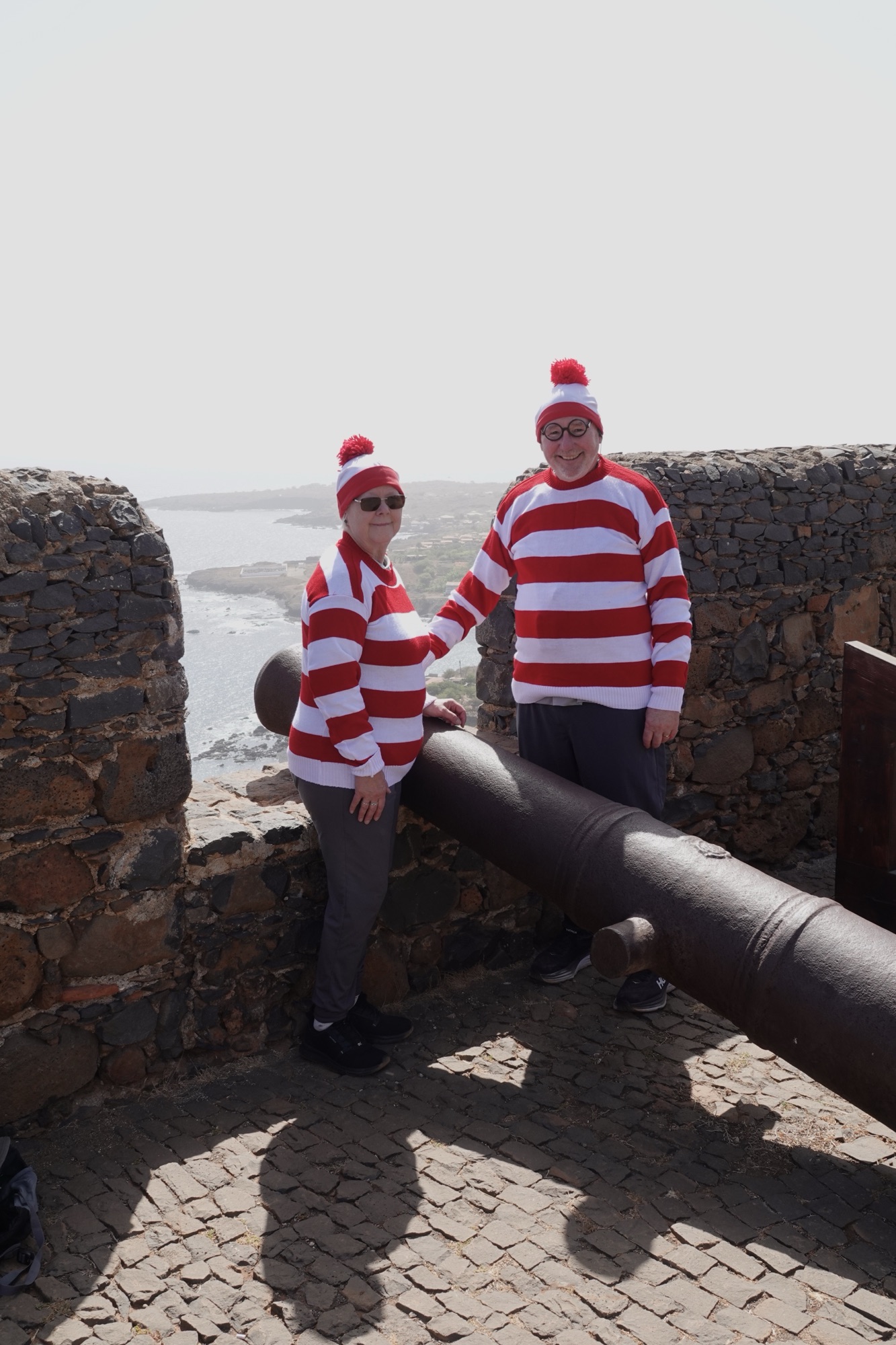
We could also see Waldo! In stereo! (Fellow world cruisers and 21/22 World Cruise alumni the Wezwicks)
We took a short drive to Cidade Velha (the old city), the first city built by Europeans in the tropics and a UNESCO World Heritage Site.
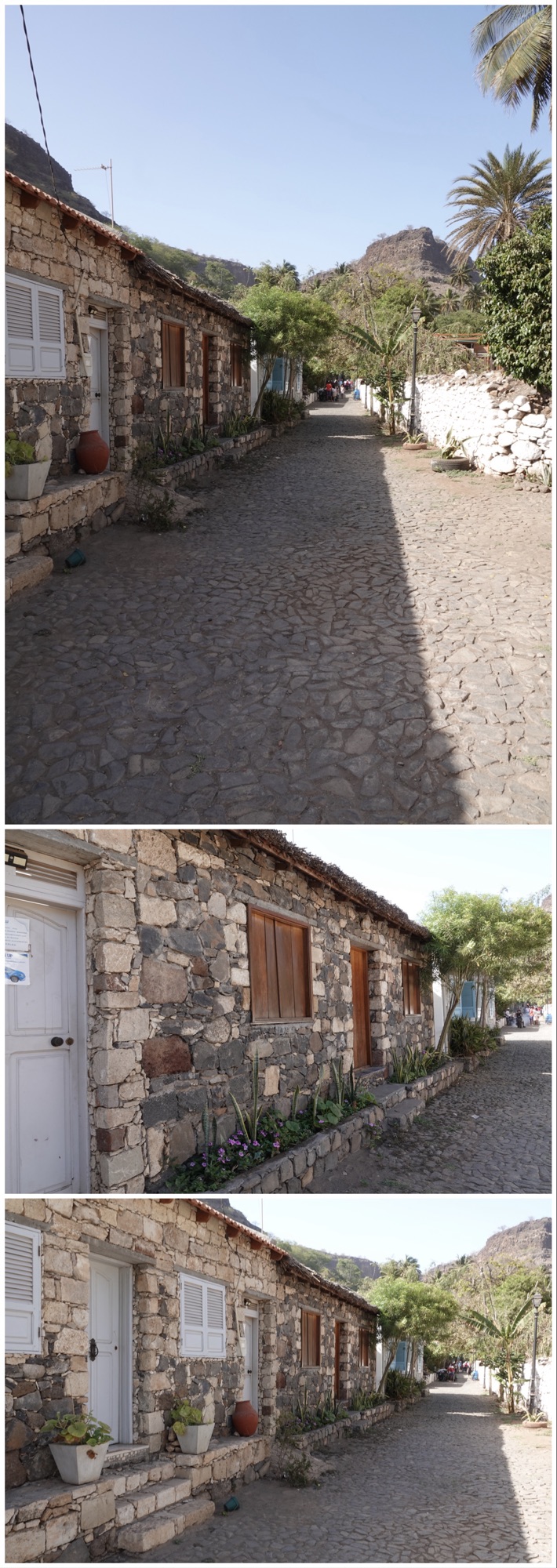
Along Rua da Banana, the oldest street in Cabo Verde – which may in fact make it the oldest colonial street in Africa – the shops were closed but we got a great view of the homes. Since this is a UNESCO World Heritage site, the exteriors may not be altered, but the interiors have been modernized for 21st century family life.

Cidade Velha has the oldest colonial church in the world: Nossa Senhora do Rosário (our Lady of the Rosary Church), which was constructed in 1495 CE. We were told that this church was built specifically for the enslaved peoples living here.
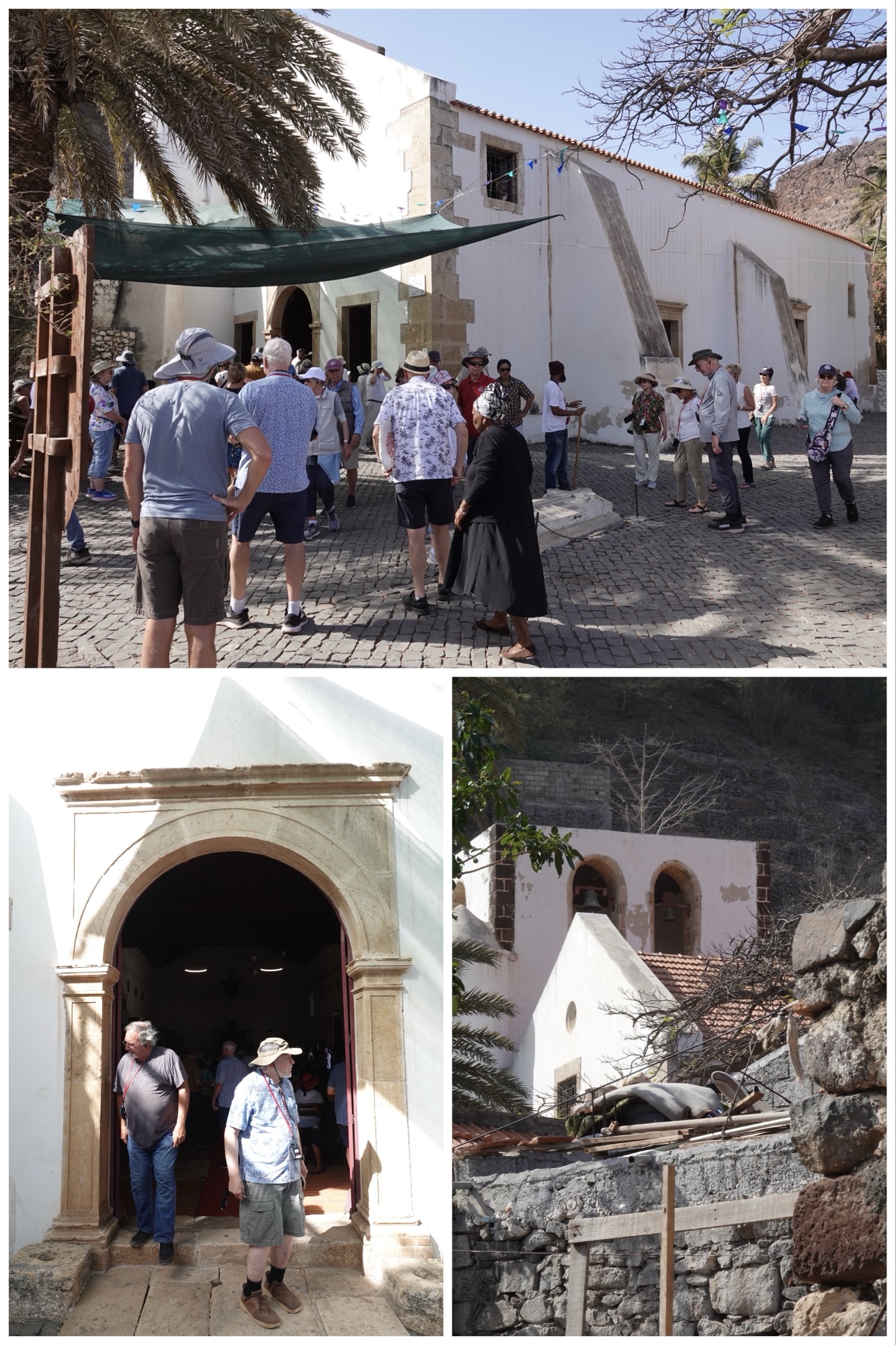
The interior featured a main nave, side chapel/grotto, and colourful tiles imported from Portugal. The Church always wanted to make a big impression.


In the churchyard is the burial plot of Antonio B. Ferreira, who our guide told us was one of the Roman Catholic priests/monks leading this church in the post-slavery period. Rumour has it that he fathered over 30 children, and in the ensuing 100 years is now in the DNA of thousands of Cabo Verdeans.

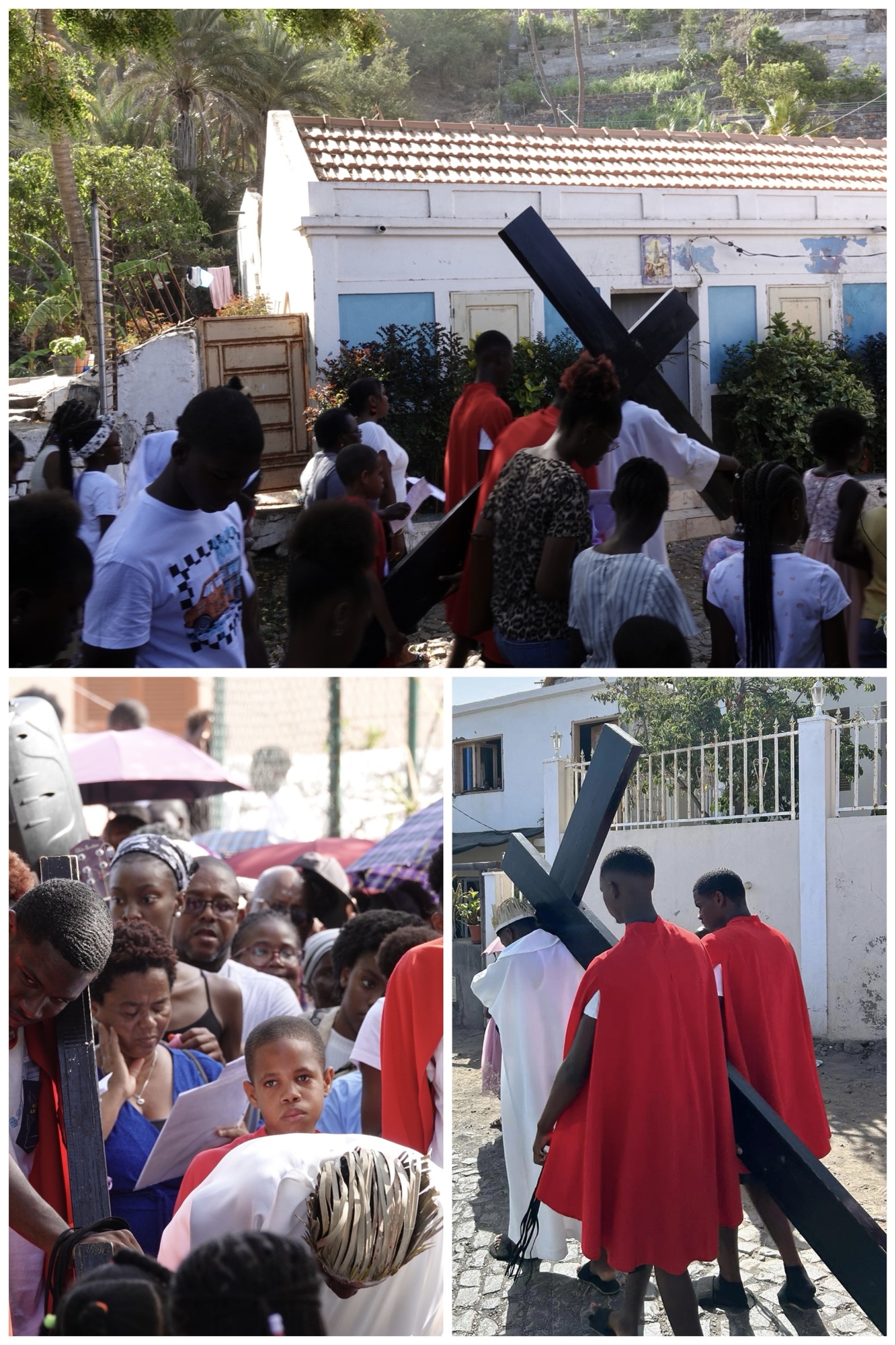
On our walk from the church to the outdoor vendor stalls, we passed by a Good Friday passion play procession.
The small outdoor vendor market in the old city was in the infamous Pelourinho (pillory) Square, where enslaved people, and later also military personnel, were publicly punished. Our guide told us that, ironically, this square was also the favourite place for enslaved people to socialize.
The white marble pillory pole was erected sometime between 1510 and 1520 CE. Walter, our guide, said he knew we all understood its horrible significance, so he did not explain it again.

While I browsed souvenirs, Ted walked to the beach and got a great perspective looking up at the cathedral ruins.

Our half hour drive back to the ship afforded us a few last views of Praia’s diversity, plus this brand new technology university, funded by China!


Our evening on board featured a fish and chip event on the pool deck, with musical accompaniment of course.
Ted then headed to the Explorers Lounge to enjoy what must have been an incredible jam session featuring Resident Guitarist Alan, guest performers Harry the Piano and Nate Simpson, and our own Viking Vocalist Harrison. I stayed in our room to sort through photos and journalize our day. We’ll shortly be moving into a final stretch of intense port days, so I don’t want to get behind in recording our memories.
I finished my evening watching the port talk for Mindelo, São Vicente. We head out at 9:00 a.m. tomorrow morning for our panoramic tour of that city.
 Rose and Ted’s Excellent Adventure