How can it already be day 108? It’s hard to believe we have less than a month left on this incredible world cruise.
Today we sailed into Lüderitz Bay, under misty skies. Morning mist and fog are typical here, where the landscape is sometimes called “sea desert” and most of the year the only moisture it receives is in the form of fog. We experienced such heavy fog during our cruising yesterday that the Captain had to constantly use the ship’s foghorn.
The harbour was full of fishing boats; oysters, crayfish, lobsters, kingklip, and hake are plentiful here. Fishing and fish processing are the two biggest employers, and much of the catch is exported to China, Spain, snd even the USA.
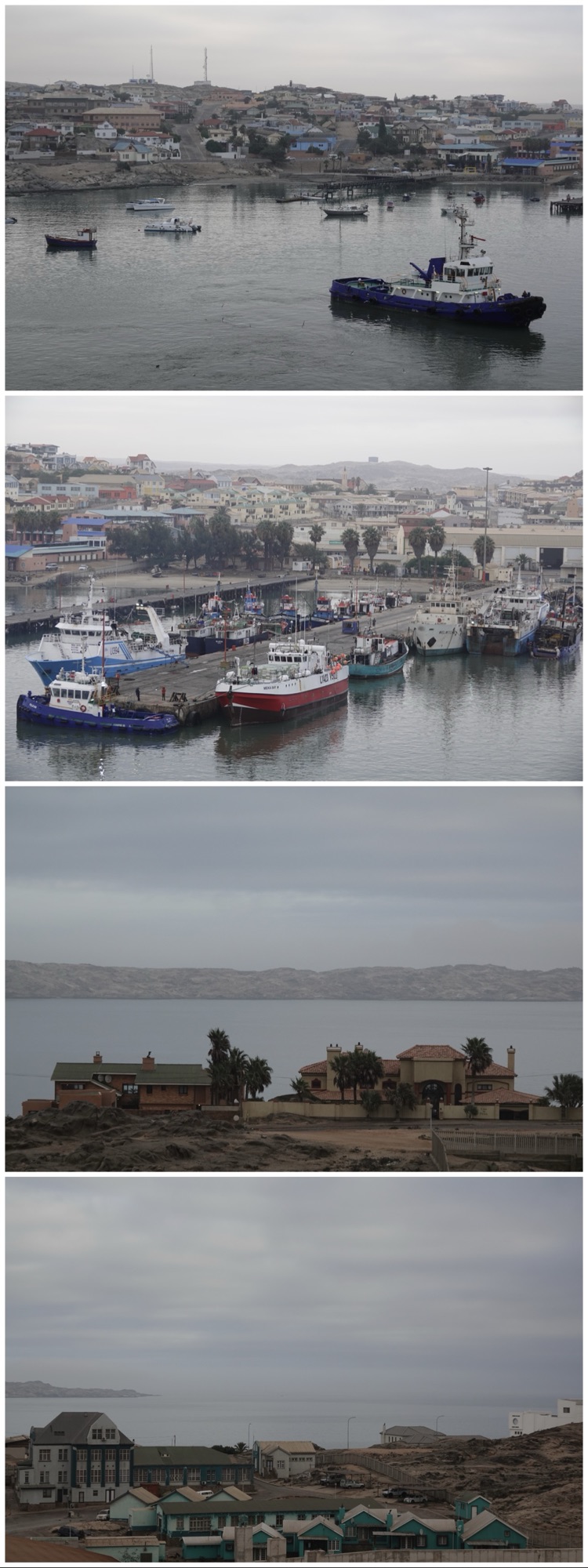
One of our fellow passengers commented that the colourful buildings and rugged shoreline reminded them of Lunenberg and Peggy’s Cove in Nova Scotia. Eliminate the palm trees here and I’d agree.

We know that the continent of Africa was treated like Europe’s jewel box through much of its colonial history – exploited for its mineral resources, and its human resources treated like products instead of people. Every country we’ve visited was once considered a “possession” of a colonizing power, with much of Africa “claimed” by Portugal beginning in the 16th century. Then from 1895 – 1963, Kenya was British East Africa; Tanzania (Tanganyika & the Zanzibar islands) were colonized by the Germans (1880s until 1919) followed by the British (1919 to 1961); Mozambique was Portuguese until 1975; South Africa was occupied by the Netherlands (1652-1795 and 1803-1806) and Great Britain (1795-1803 and 1806-1961); and the Portuguese finally withdrew from Angola in 1975. It’s the continent that – probably because of its rich natural resources – the colonizers were most reluctant to leave.
But today and tomorrow we’re in Namibia, formerly known as German South West Africa (1884 until 1915). The years between 1904 and 1908 saw an uprising that was put down by a campaign of retribution and “ethnic cleansing” that ranked as one of the first attempts at genocide of the 20th century. In 1920, after the end of World War I, the League of Nations mandated administration of the colony to South Africa, but Namibia’s troubles were far from over. Beginning in 1948, apartheid was applied to what was then known as South West Africa. Uprisings and demands for political representation resulted in the United Nations assuming direct responsibility over the territory in 1966. Namibia finally gained independence from South Africa on March 21, 1990, following the South African Border War. However Walvis Bay, which we’ll visit tomorrow, and the Penguin Islands remained under South African control until 1994.
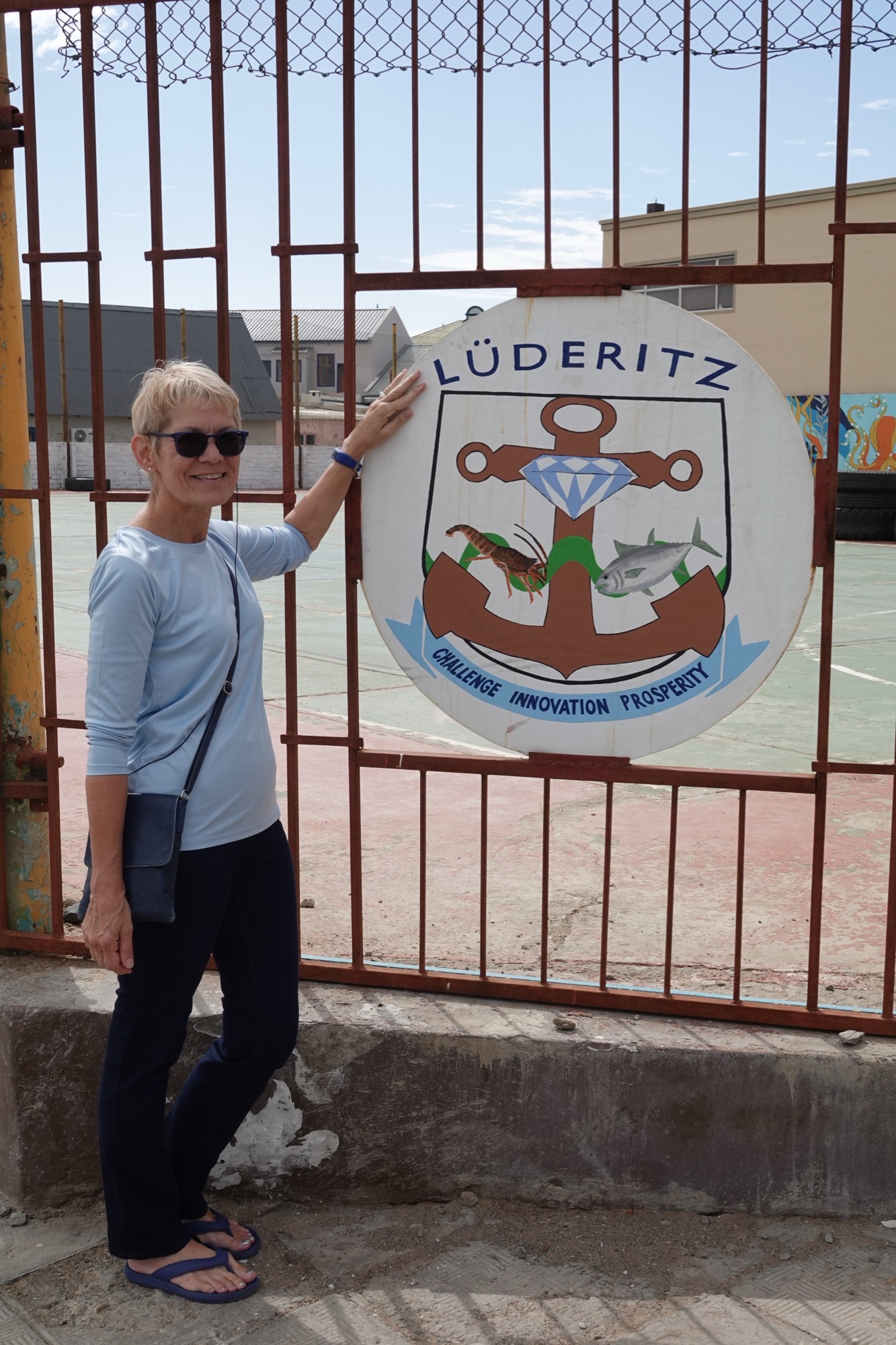
Given its tragic history under the German Empire’s rule, it’s somewhat amazing to me that Lüderitz’s German art nouveau architecture remained intact after independence. If I’d been a Namibian, I might have been tempted to burn it to the ground, but here – tucked between the barren Namib Desert and the windswept South Atlantic coast – is a colonial relic scarcely touched by the 21st century.
We opted for a guided 2-1/2 hour walking tour of the city.
In this unique town, the German colonial buildings are reminiscent of a Bavarian village, with churches, bakeries and cafés.


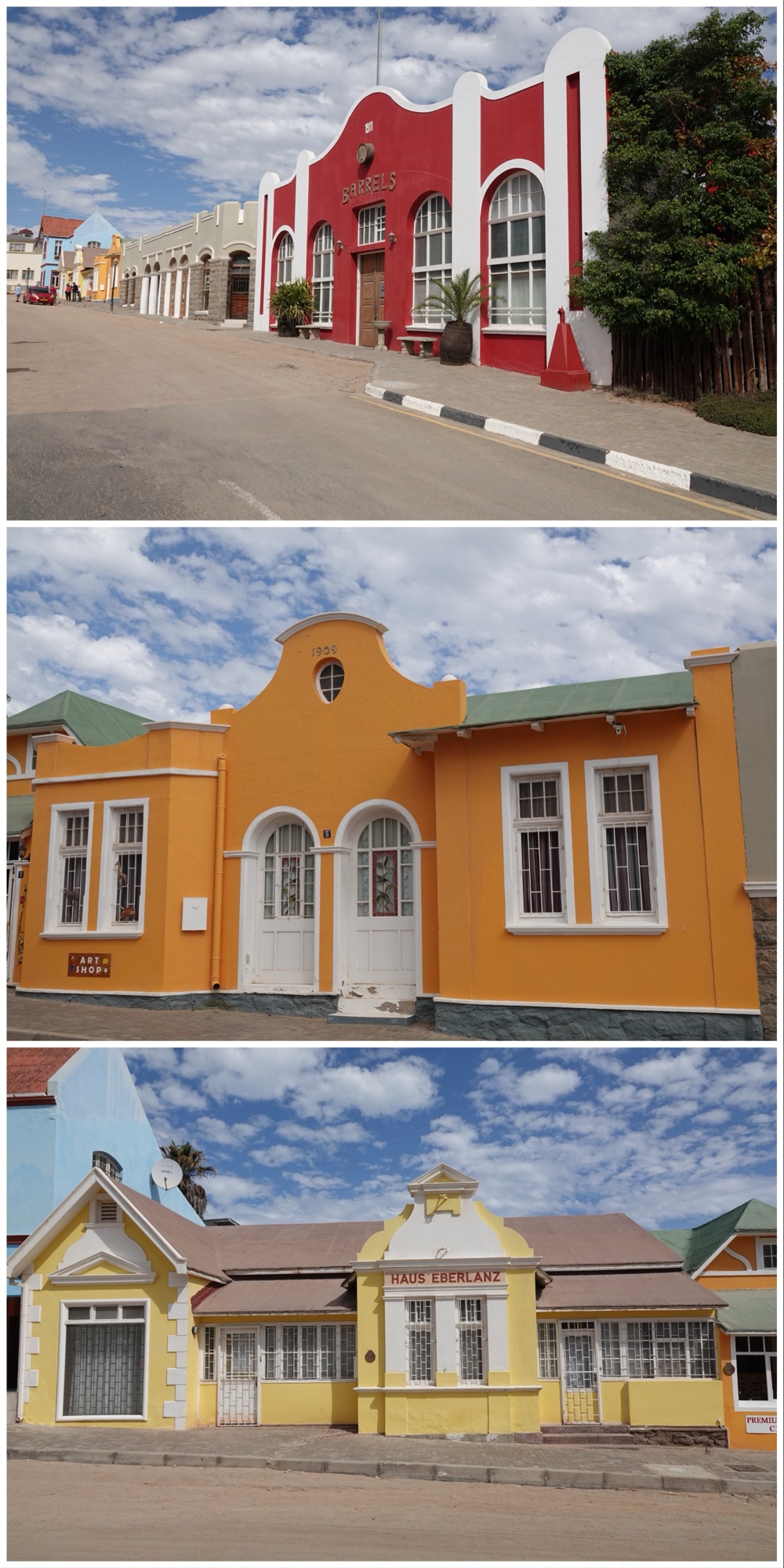
Many of the 1909/1910 buildings have been designated as heritage sites – IF their exteriors were not modified prior to the heritage program being implemented.

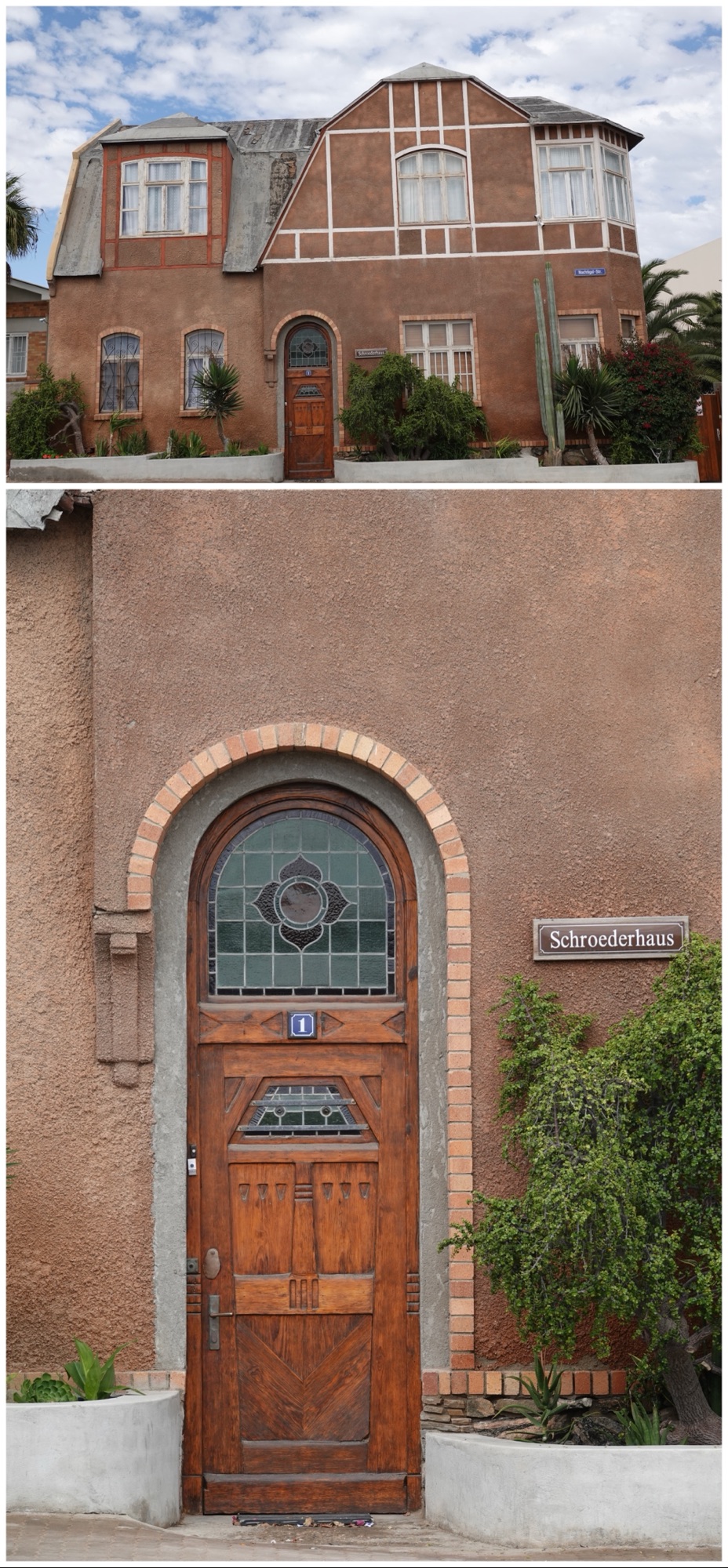
Some homes have been too modified to be heritage designated, but this one, now a B&B, still features its beautifully carved original 1909 front door.

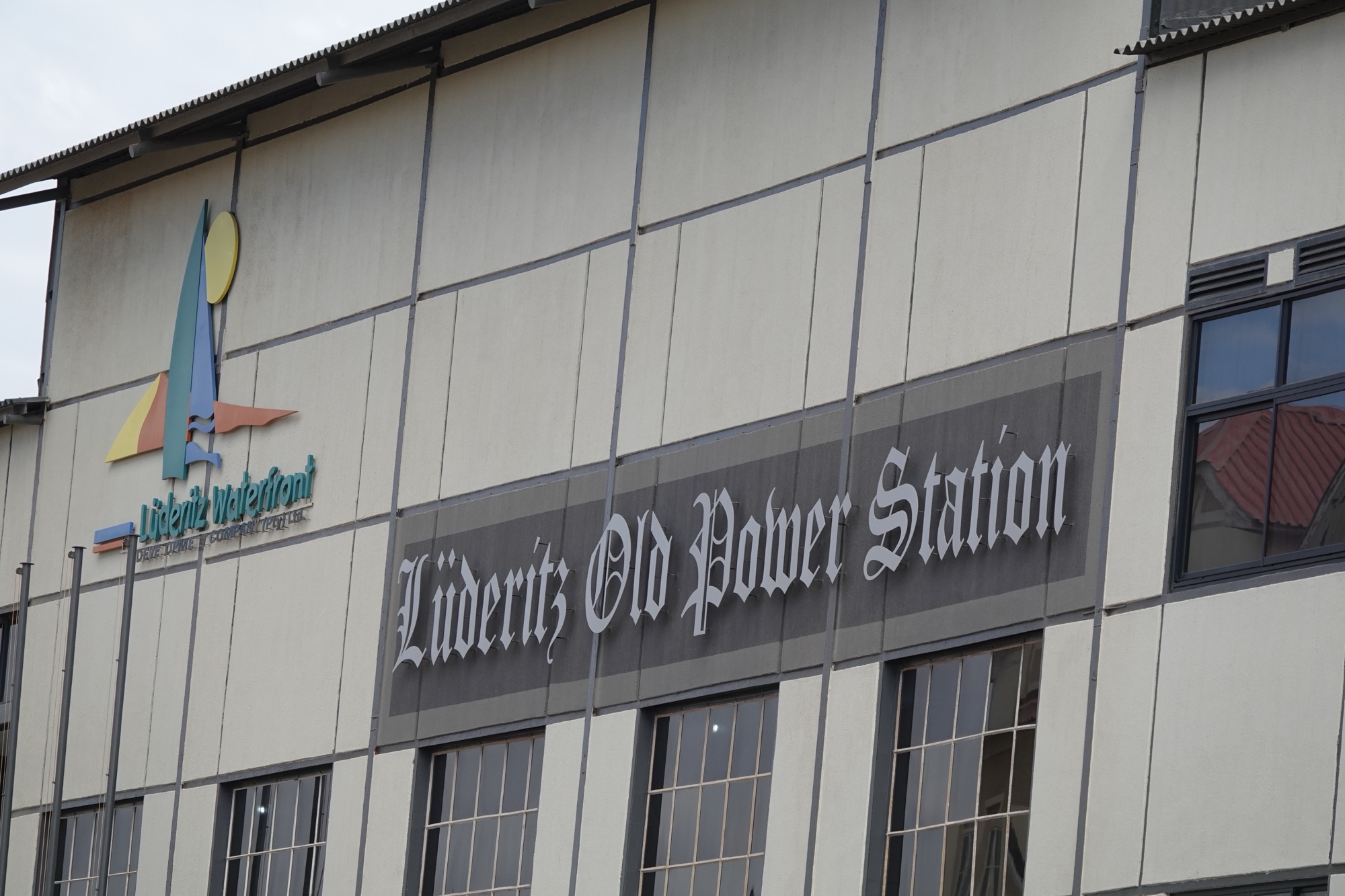
The largest building in Lüderitz is now Africa’s largest maritime museum, but it was originally a power plant (dating to 1913). An explosion, apparently caused by a night worker’s negligence, rendered the plant inoperable. The worker survived, although he needed to be hospitalized for about 3 months, and lost his job.

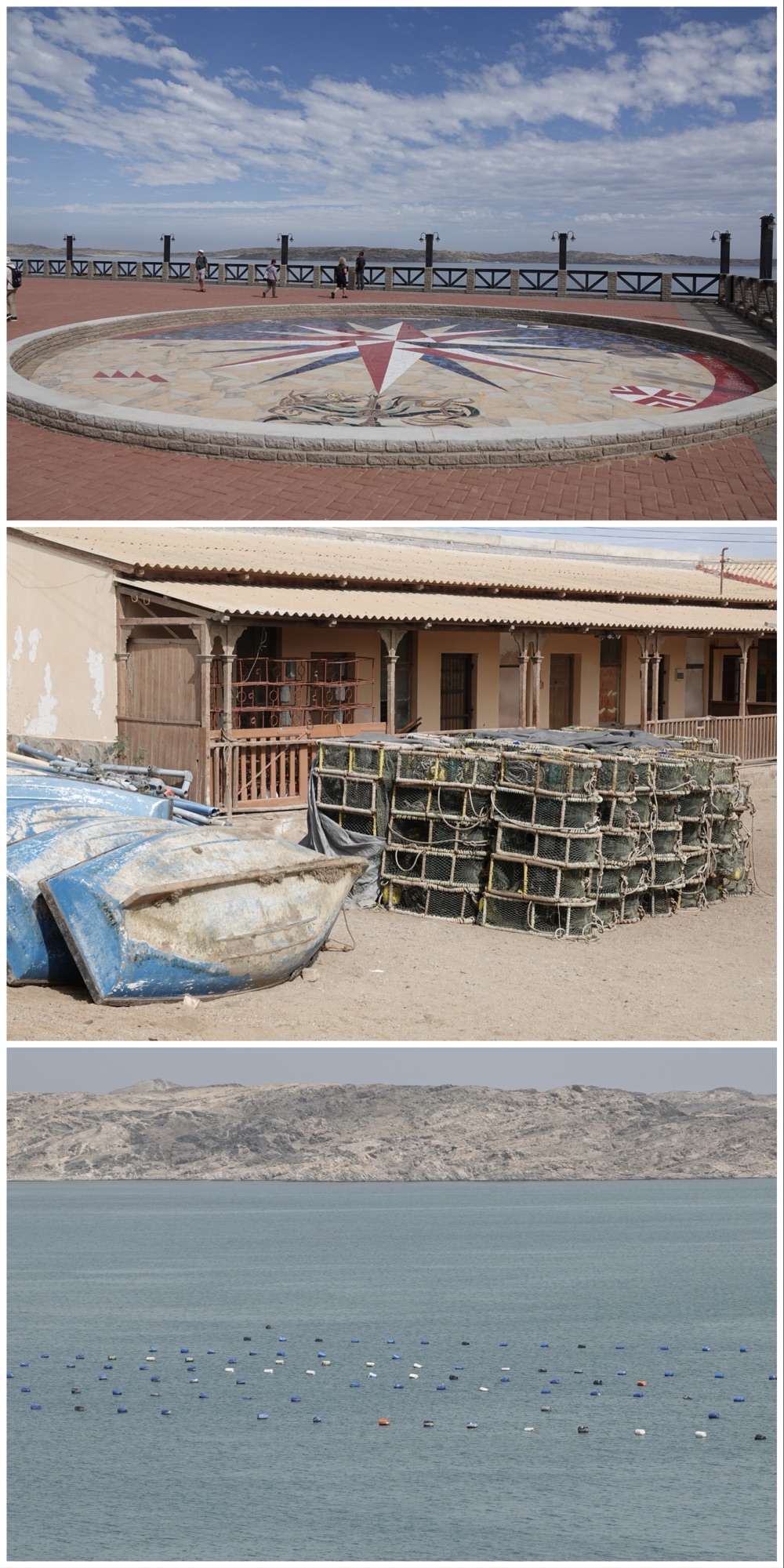
There is a fountain in the centre of town dedicated to J.G.H van der Wath who engineered the 130km/80mile long pipeline which supplies the town of Lüderitz with fresh water from the seepage of the Koichab, a stream that terminates in the dunes.

The hilltop Felsenkirche (rock church), one of Namibia’s oldest Lutheran churches, is a national monument.
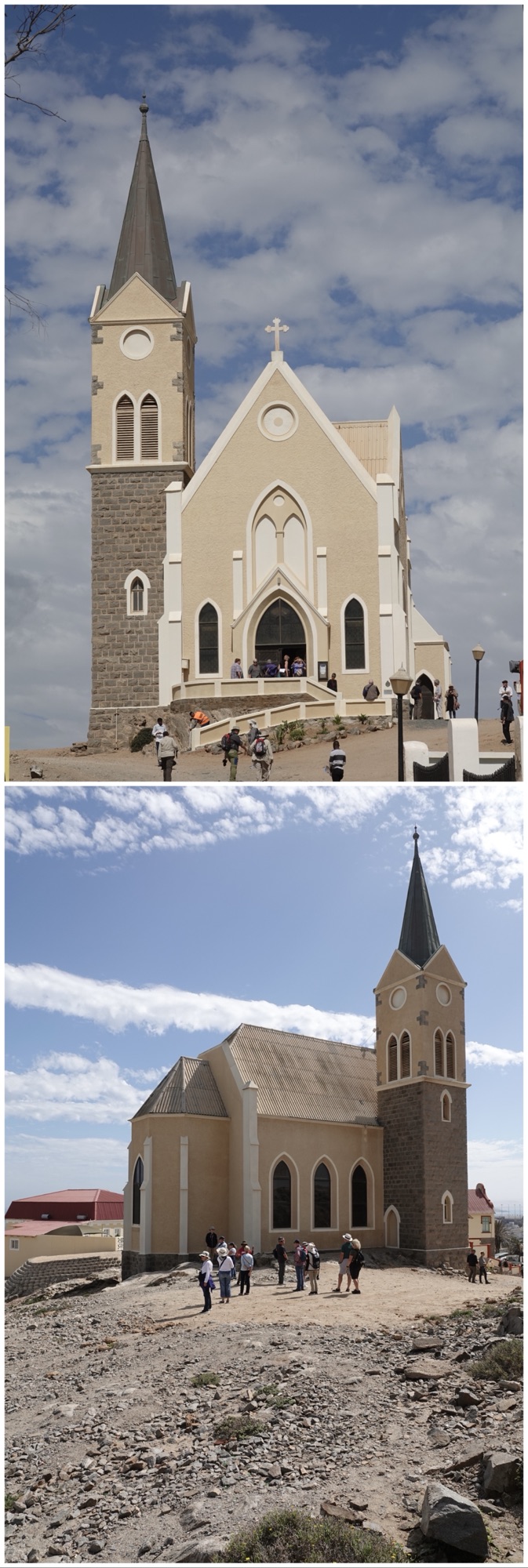
Inside, the gorgeous stained glass windows tell a story of the German colonial era.


Kaiser Wilhelm II, the last German Emperor and King of Prussia.


During the diamond and gold rushes, Lüderitz boomed. the yellow building below (the Turnhalle, or “sports hall”) was a men’s gymnasium; the terracotta coloured one (the Lesehalle, or “reading hall”) was the first library.
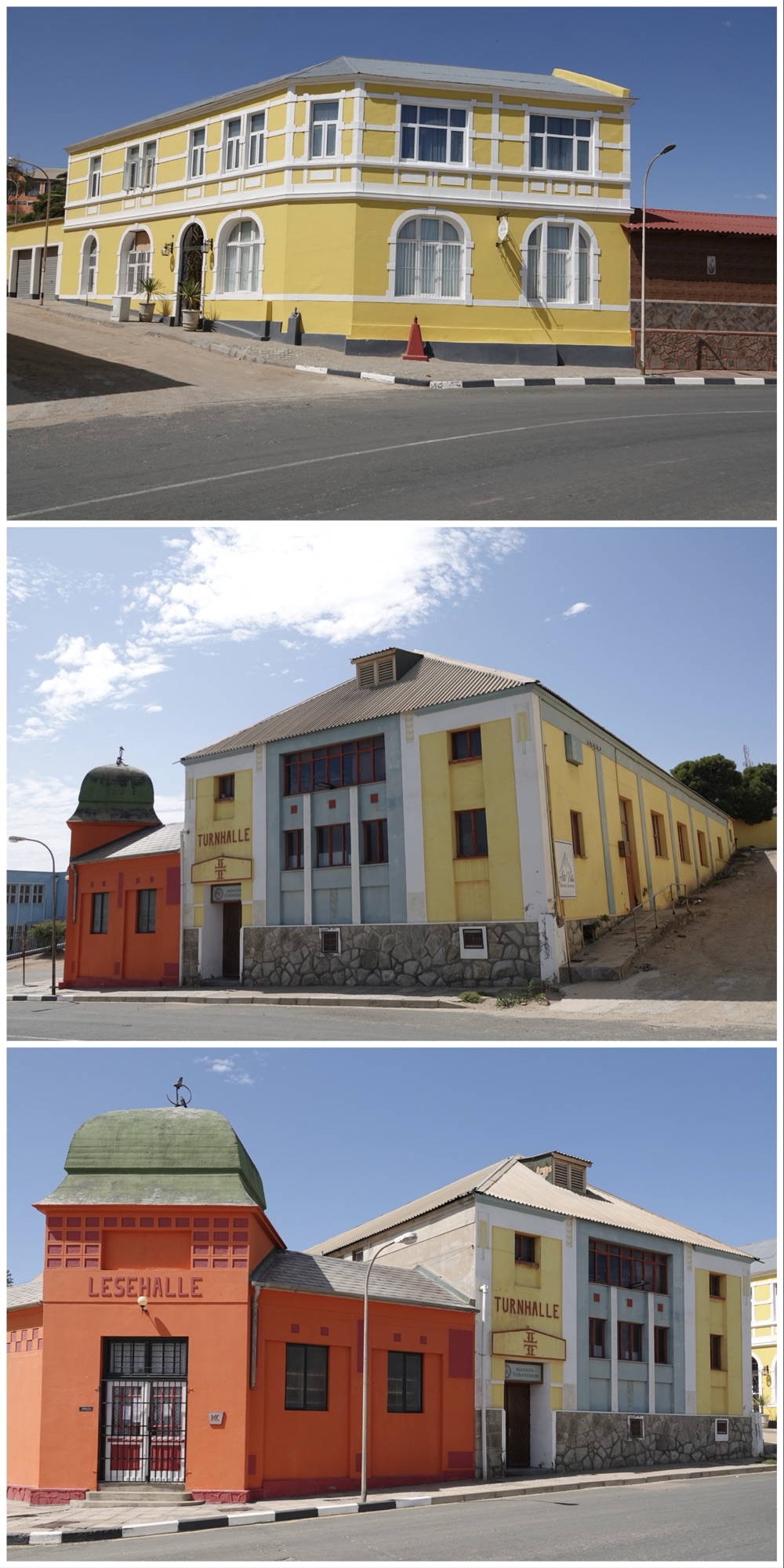
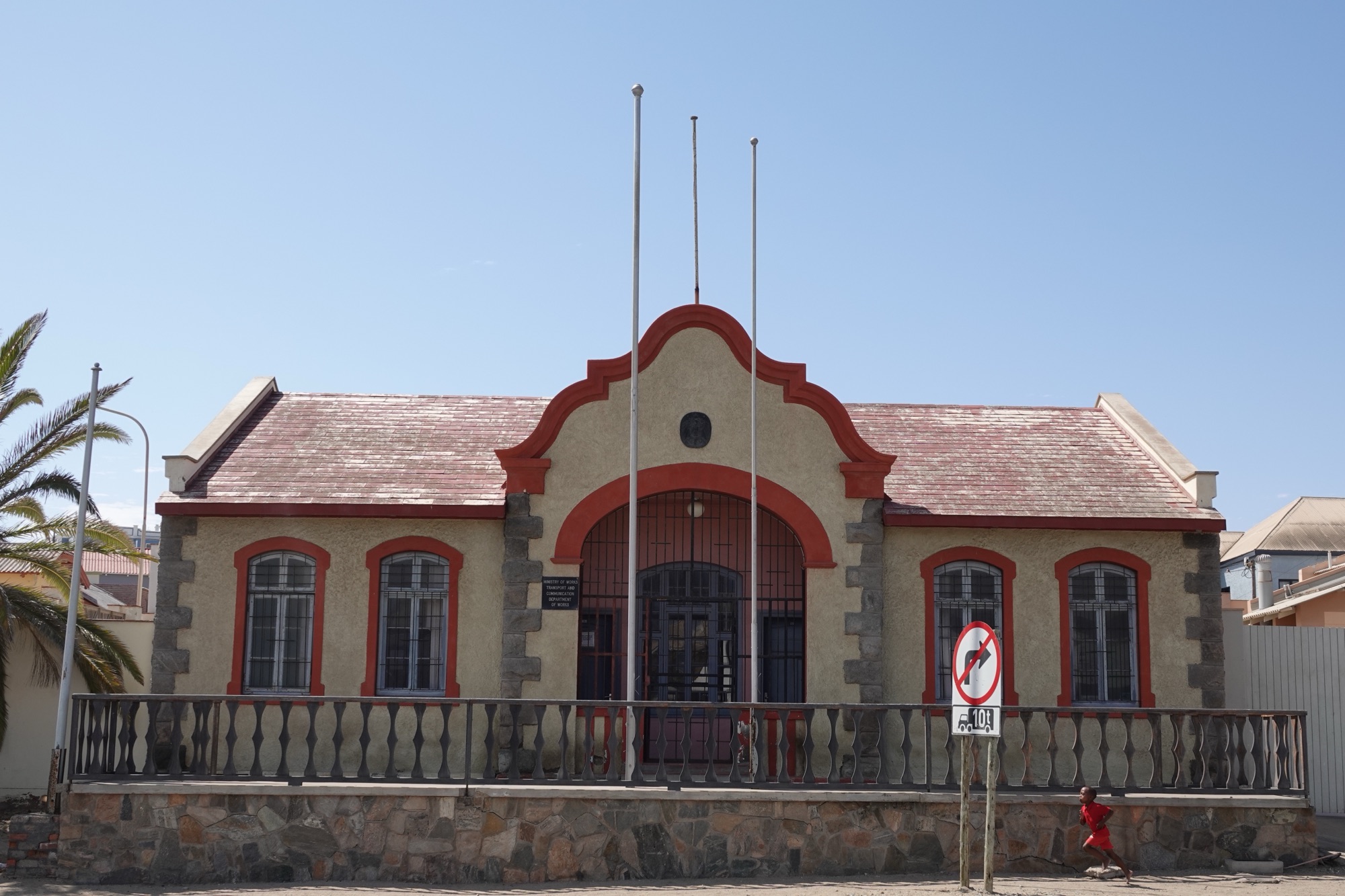
The original post office is now a government ministry, but in its heyday it had a direct connection to the railway station, which was how parcels and letters got to and from the miners and their families.

Until just a few years ago, the train and train station built during the diamond and gold booms was still operational, carrying manganese mined inland to the port.

Frequent sandstorms have made the track difficult to keep clear, so trains have stopped running (replaced by huge trucks) and the train station has been abandoned. There is some hope that, with increased tourism and foreign investment, train service might resume.

We had the chance to learn about the town’s history with a visit to the Lüderitz Museum. Here, there were displays on local Indigenous groups, natural history, and the town’s diamond mining past. Nary a mention of the Herero and Nama Genocide, which was not surprising considering the museum was created by a German businessman in 1966. The current curator and I had a brief conversation in German as she walked me through artifacts from the local tribes.
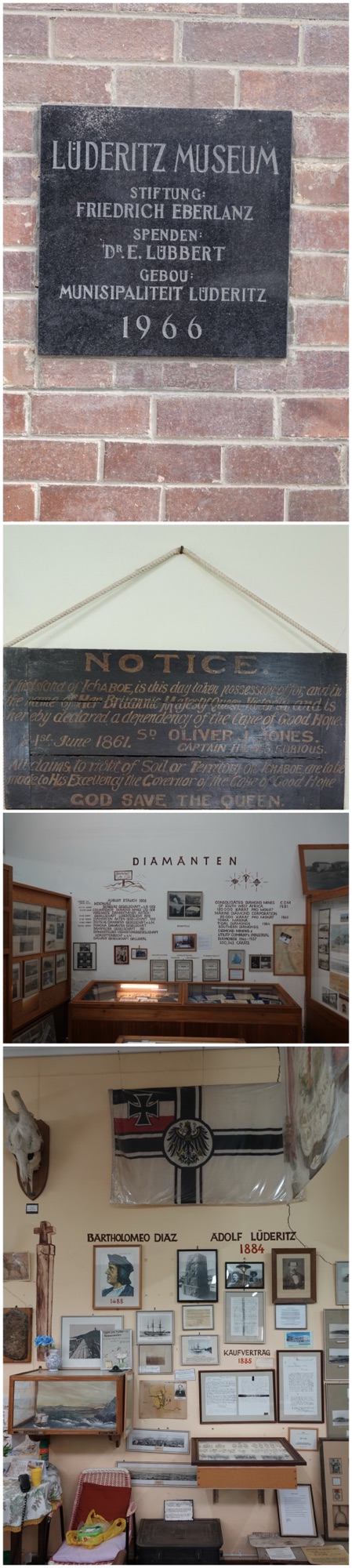
One of the things she showed me was a bag of empty ostrich eggs (just the intact shells) that one of the desert tribes (the Nama, if I remember correctly) used as water canteens. After poking a hole in the shell and eating the egg, they flushed out the shell, leaving the interior moisture-proof membrane intact. The shell was then filled with fresh water, the hole stoppered with dry grass, and the egg 3/4 buried in the sand. Nomadic tribesmen needing water would look for a bright white “bump” in the sand, and if the stopper was intact they had hydration available to them. Ingenious! The museum curator commented that there was a lot the colonists could have learned from the native peoples.
The Goerke Haus, one of the town’s most extravagant mansions, was built into the rock face on Diamond Hill at the turn of the 20th century during the diamond mining boom. The mansion really looks as if it is emerging from the rock itself.
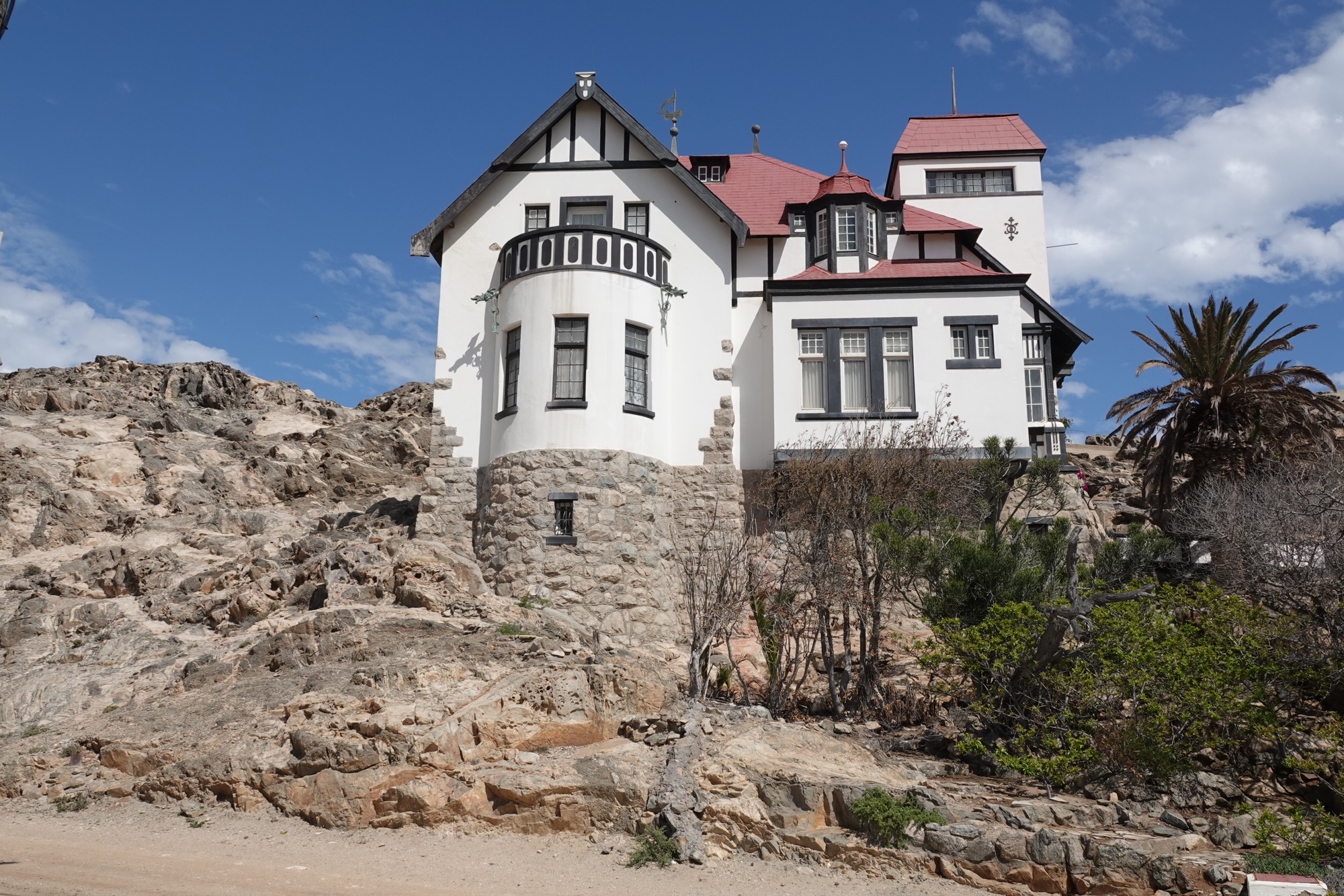
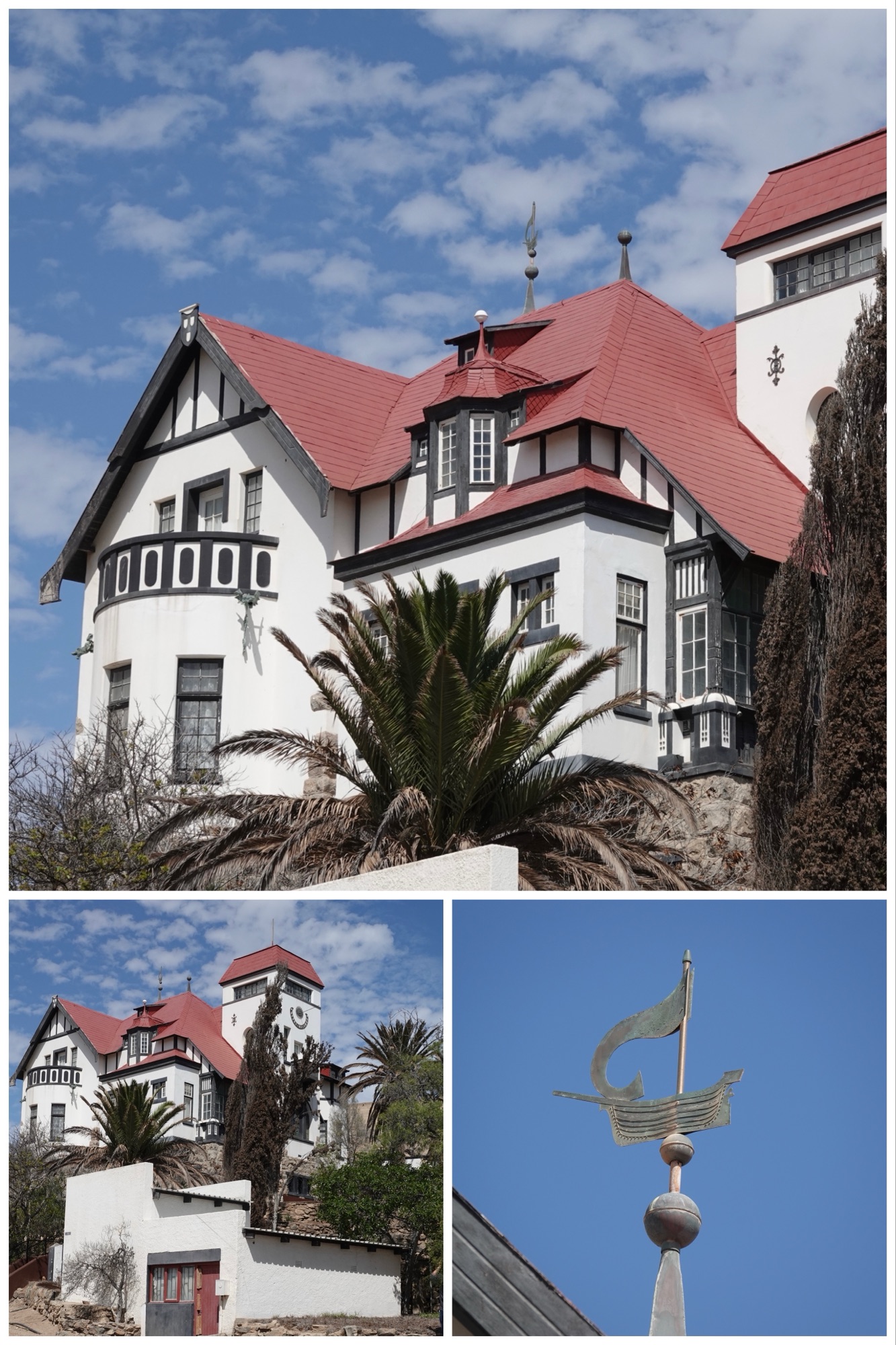
Ted and I really enjoyed our well-guided walk; our guide Sophia was knowledgeable and enthusiastic.
We returned to the ship in time for pre-dinner drinks in the Explorers lounge listening to Alan play guitar, dinner in the restaurant, a performance by powerhouse vocalist Anelisa Lamola in the theatre, and a set by the band in Torshavn. We didn’t need an early night since we don’t dock in Walvis Bay until noon tomorrow.
Here’s a link to Anelisa’s rendition for us of “The Circle of Life” from The Lion King. She sang the role of Rafiki in both Paris and on London’s West End.
 Rose and Ted’s Excellent Adventure