Viking planned to be docked here for 16 hours today, giving everyone loads of time to go on one of the many safari excursions offered. After researching all of them as best we could, we chose a relatively short excursion (6 hours), but one that only involved an hour drive to reach our destination, and did not spend time on providing a meal. It was all about the animals for us today – visiting the Home of Africa’s “Big 7” – and the rare opportunity to spend the afternoon reviewing our excursion while it was still fresh in our minds.
Our day got an unexpectedly late start when the waters were too rough for us to dock until almost 2 hours later than scheduled. The wind had really picked up, and we could definitely feel the nip of fall in the air as we watched the waves.
But, once we were safely in harbour, Viking got things back on track, albeit with completely revised timings involved. In our case, our 9:55 a.m. departure was adjusted to 1:00 p.m. There were 33 excursions to reschedule on the fly; being the shore excursions team must be a daunting job.
We travelled inland to the Sundays River Valley to arrive at the park, a more than 463-square-mile bush-country reserve that is home to more than 450 Addo elephants – a far cry from that original eleven!
Addo Elephant National Park was built in 1931 to protect the 11 elephants remaining in the area from extinction by big-game hunters. Today, it is the third largest animal park in Africa and the only park in the world to include Africa’s “Big 7”—elephant, rhinoceros, lion, buffalo, and leopard, as well as the Southern right whale and great white shark (!) in their natural marine habitats.

At the park we boarded an open, canvas-roofed 4×4 vehicle seating 24 (the vehicles have gotten progressively bigger with each safari) for our guided tour on a well-maintained network of roads. This was a very different experience than driving across the veld at Tala Reserve in Durban, off-road through Zulu Nyala in Richards Bay, or even at Tsavo in Mombasa.
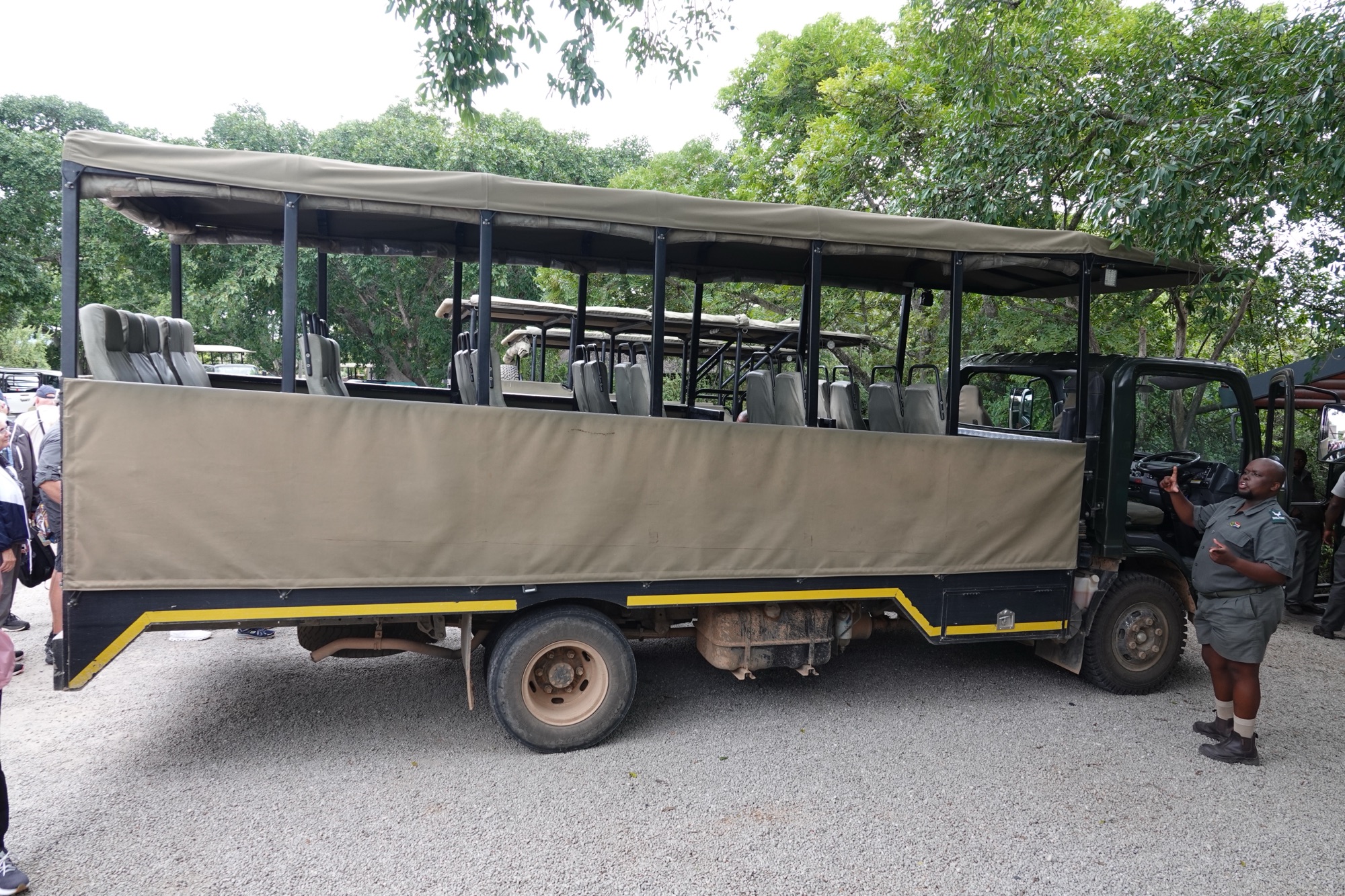
Unfortunately, Addo proved to be the least interesting of our game drives. Wild sightings can never be guaranteed. Folks a couple of hours earlier saw lions. We saw mostly elephants. Our guide kept reminding us that we were, after all, in Addo ELEPHANT National Park.
But, we did see a few other animals and a couple of birds, and I was pleased that we would be able to tell our grandsons, who we’re taking to a performance of The Lion King later this year, that we saw both Pumbaa (the Disney movie’s warthog) and Timon (the meerkat).
Among the birds we saw were (from top to bottom) acHadada ibis, a male ostrich, and a goshawk.

An adorable baby zebra (the adult females were grazing nearby)

A male and two female kudu.

A red hartebeest.

Warthogs. On every game drive so far, the minute the warthogs hear a vehicle they run away. Still, each of our drivers has neglected to simply stop. Today was no exception, but it was the first time Ted could get any kind of photo at all.

We spied the meerkats, and then suddenly… they spied us!

At a distance, we first thought these were more meerkats, but they are yellow/golden mongoose. While meerkats live in colonies, mongoose live in pairs. They hunt together, which means that if there are young ones, they’d be alone and easy prey. The solution is to have the meerkats babysit – which may be why the mongoose and meerkats often live close together. The “babysitting” is not necessarily intentional; our guide told us that the clever mongoose have been seen to sneakily place their babies on the backs of unsuspecting meerkats.

But today really was all about elephants, and they weren’t difficult to find.

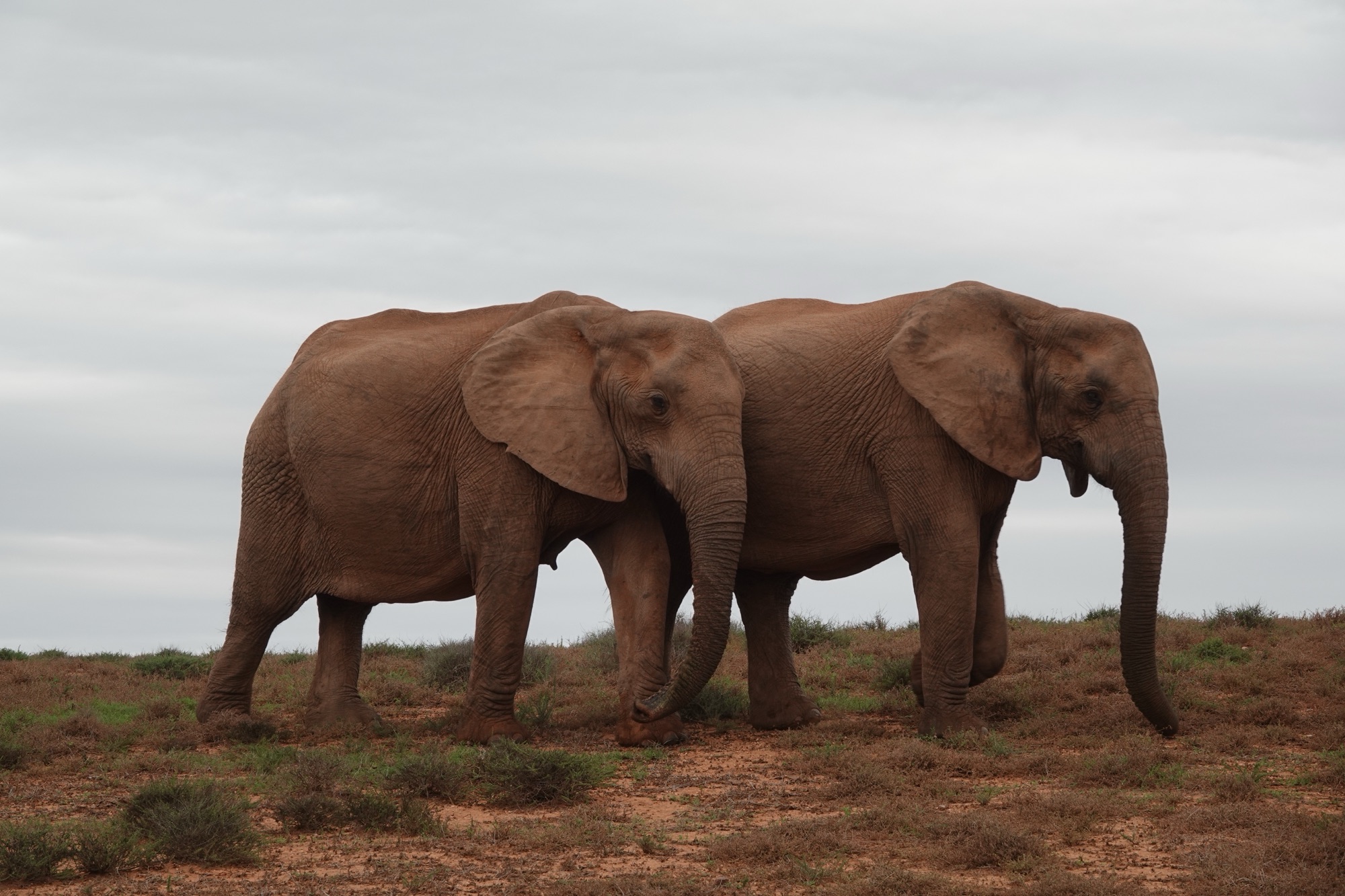
The Addo elephant is different from other African elephants because of its reddish color and rounded ears.
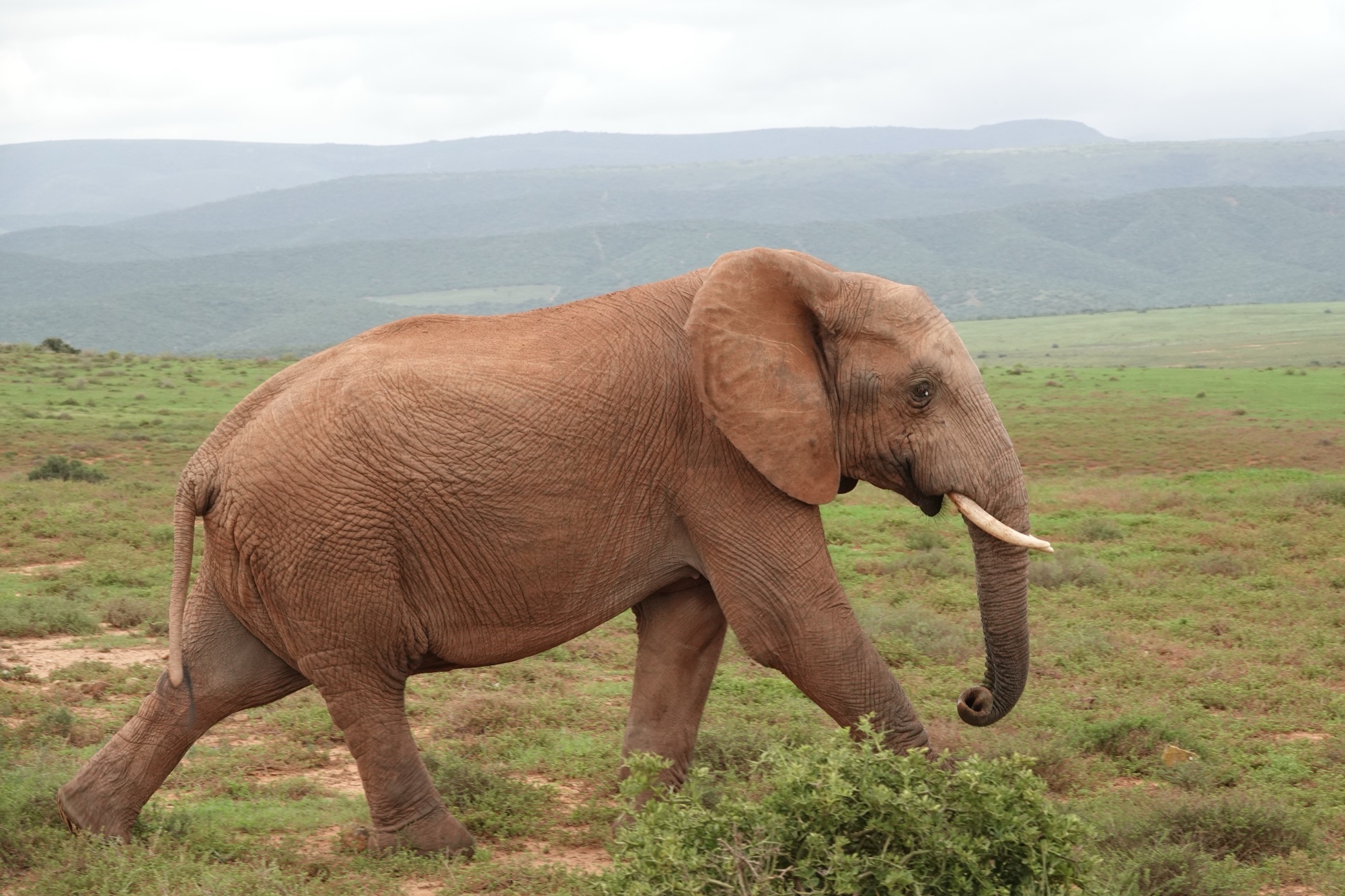
We saw a LOT of elephant backsides.
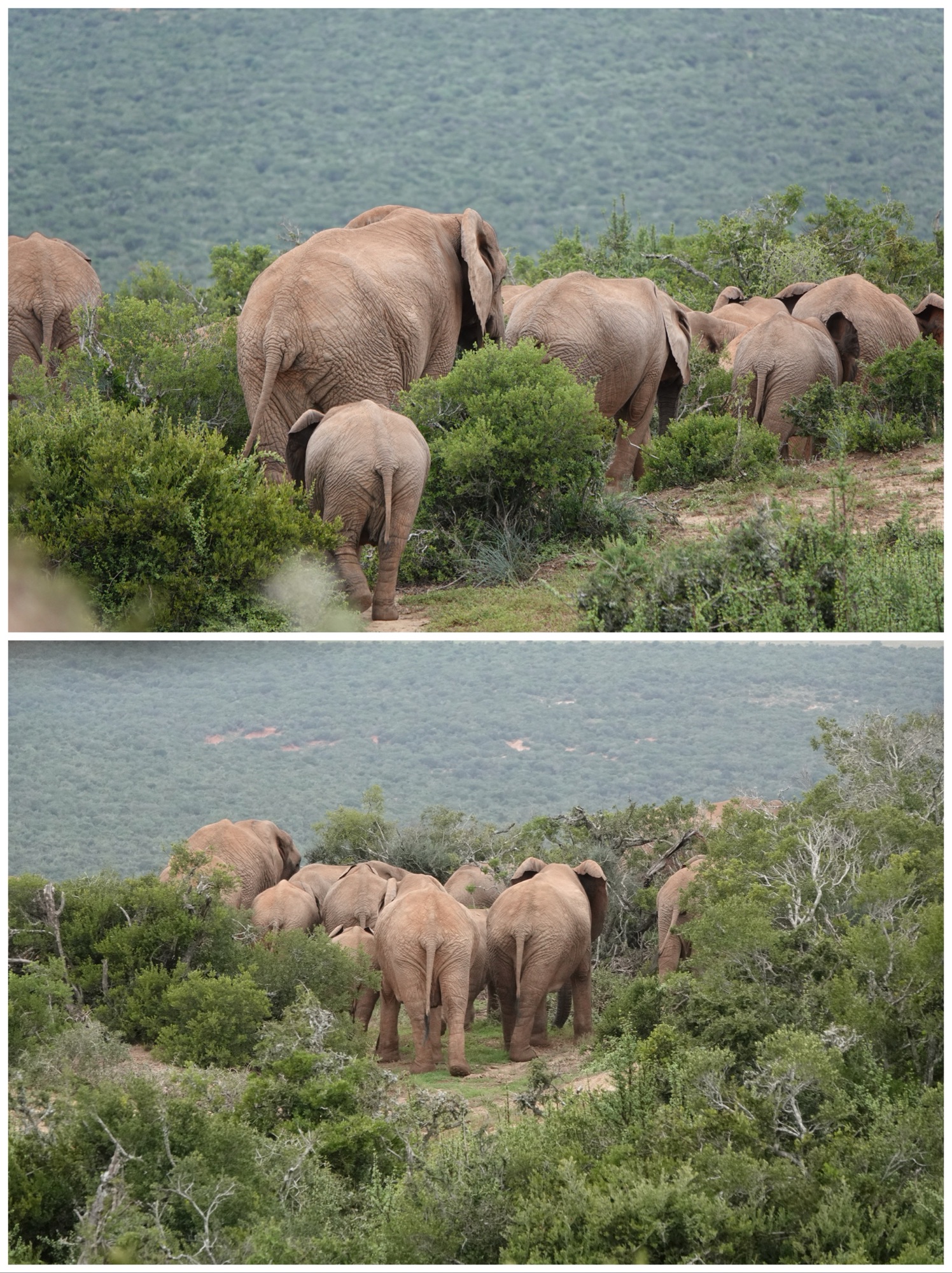
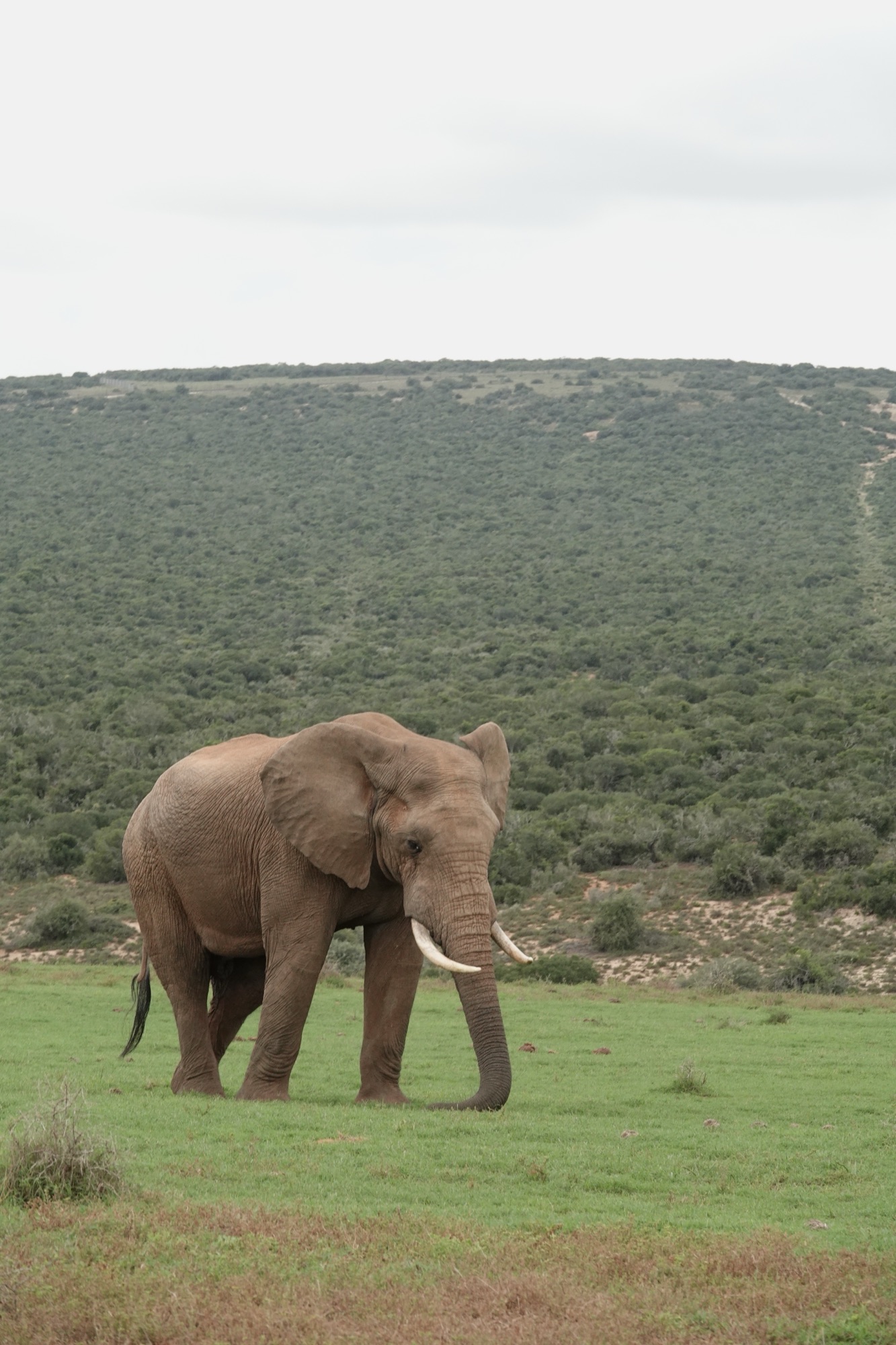
African bush elephants (Loxodonta africana), specifically the Addo herd, are known for having smaller tusks, a trait believed to be a genetic adaptation to historical hunting pressures.
This lone male got close enough to touch (we didn’t)…

… and simply walked around our vehicle and continued on.
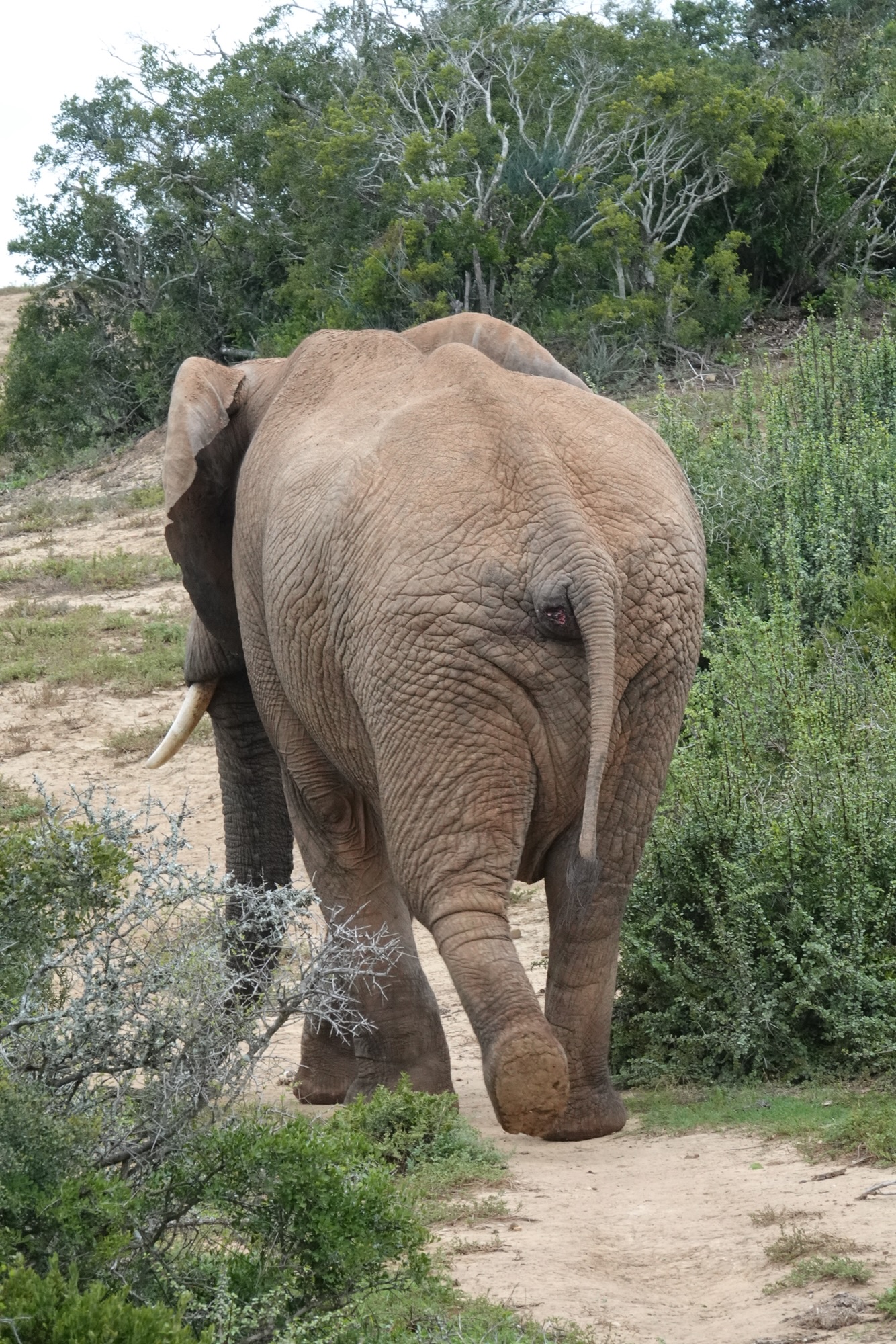
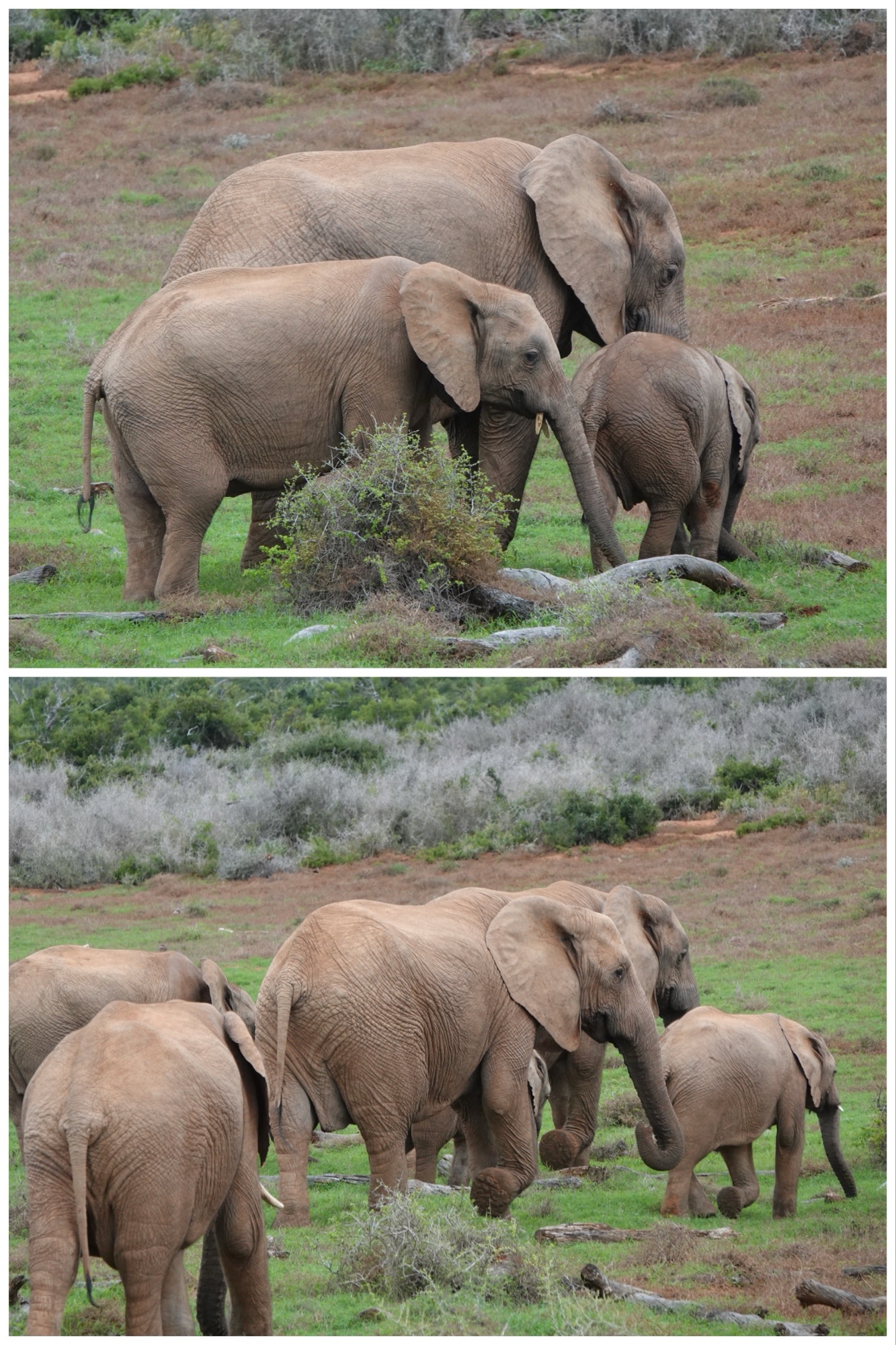
Normally, both male and female African elephants have tusks (while only male Asian elephants do). Between the time the original 11 elephants were protected here at Addo in 1931, and 2020, inbreeding was resulting in the female elephants being born without tusks.
The import of 4 adult males from Kruger National Park to Addo in 2005 has reversed that mutation, as evidenced by the young female in the bottom photo.
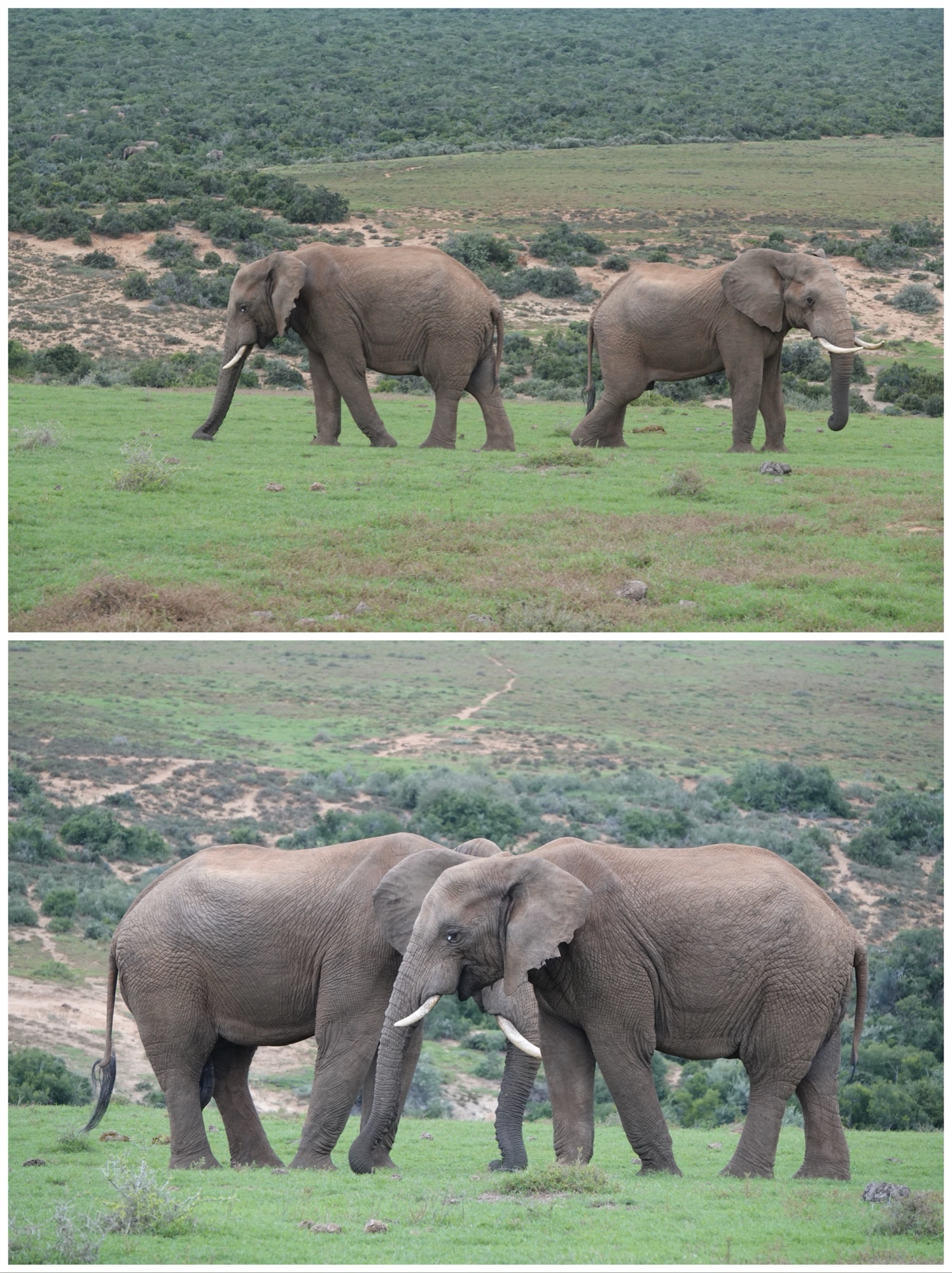
Like zebras, lone male elephants hang out in bachelor groups. They stay with their mothers for 12-13 years, but then are nudged out to fend for themselves and learn from each other.
We drove back to the port during a glorious sunset, ready for supper and a quiet evening.
Tomorrow is a sea day before two busy days in Cape Town, where Ted will have another full day safari while I do other things. We still haven’t seen big cats in the wild, but perhaps Ted still will.
 Rose and Ted’s Excellent Adventure