Yesterday we got a lecture by Dr. Bryan Babcock on “Madagascar: Island of Mysteries and Marvels” and another by Richard Lovelock on “Animal Adaptation” to prepare us for our first visit here. Otherwise, my only point of reference was going to be the animated movies – and I was fairly sure they weren’t an accurate depiction. If the lemurs here talk, sing, and dance, I’ll stand corrected.
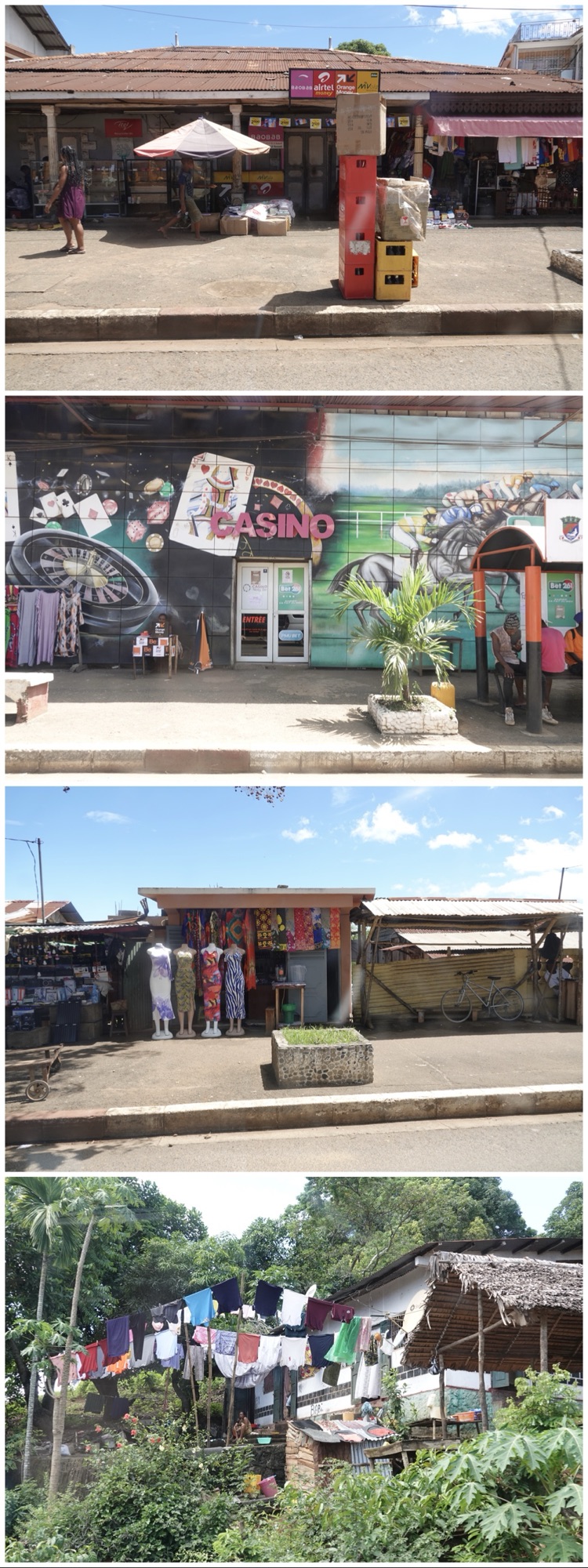
In Bryan’s 9:30 a.m. lecture we learned that Madagascar, which is the 4th largest island in the world, is a very poor country, even poorer than the other African countries we’ll visit. In fact, it is the 11th poorest country on earth. We certainly saw poverty, but – at least on Nosy Be – nowhere near like what we saw in Kenya. The other interesting thing was that there was very little visible garbage. We’d become almost inured to that ever since Bali, so its absence was actually noticeable. Honestly, this was exactly what I thought rural Africa would look like, based purely on Alexander McCall Smith’s No. 1 Ladies Detective Agency novels.


Madagascar has incredible diversity in ecosystems, incredible mineral and gemstone wealth, and unique animals (it is a world biodiversity hotspot with 200,000 endemic species) that should encourage eco-tourism. It begs the question: why is no one benefiting from those things? We were told that it is a case of corruption, weak infrastructure, geographic isolation, and environmental degradation (things like deforestation to allow planting of essential food crops).
In the 10th through 13th centuries, Madagascar was a hub for trade between Africa, Asia, and the Middle East. That continued for a while during its status as a French colony in the 19th century, but the completion of the Suez Canal in 1869 changed trade routes, and by 1960 when the country gained independence its importance as a trade hub had disappeared.
Tourism revenues, once there is infrastructure to support it, may be a godsend for the island, but it’s a bit of a circular challenge: tourism needs infrastructure, but without tourism there is currently no money for infrastructure. Madagascar’s isolated location does not put it on China’s radar for infrastructure creation in the same way as continental Africa.
Richard’s lecture yesterday at 11:00 a.m. covered more than just animals endemic to Madagascar, but as always left us in awe of nature.
Most relevant to our upcoming excursion, Richard shared that the reason lemurs have been so successful and prevalent in Madagascar is because there are no monkeys. The lemurs did not have to out-compete a smarter primate species for food or habitat.

Today were in Madagascar, but not on the large island. We were anchored off the shore of Nosy Be, a small island about 8 kilometres/5 miles from the northwest coast of Madagascar in the Mozambique Channel. Nosy Be is Madagascar’s largest and busiest tourist destination.

The port here, Andoany, was originally named Hell-Ville by the French colonists, in honour of Admiral Anne Chrétien Louis de Hell.
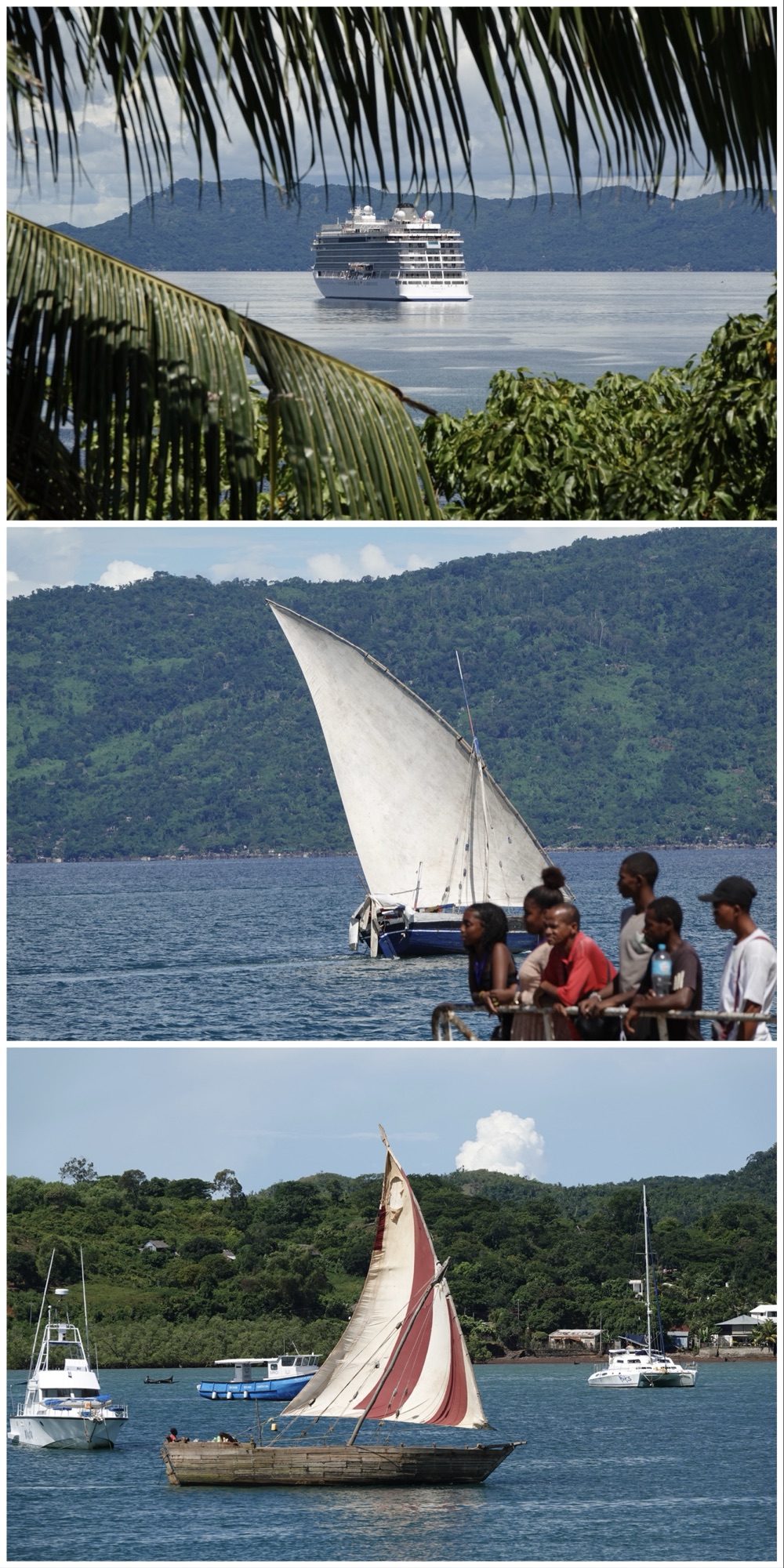
We met our driver, Gerald, and our guide Khodofi on the pier, where vans for 6 passengers were waiting for us. It was a bit like déja-vu, having just done 4×4’s in Kenya, but this time we had air conditioning and shock absorbers.
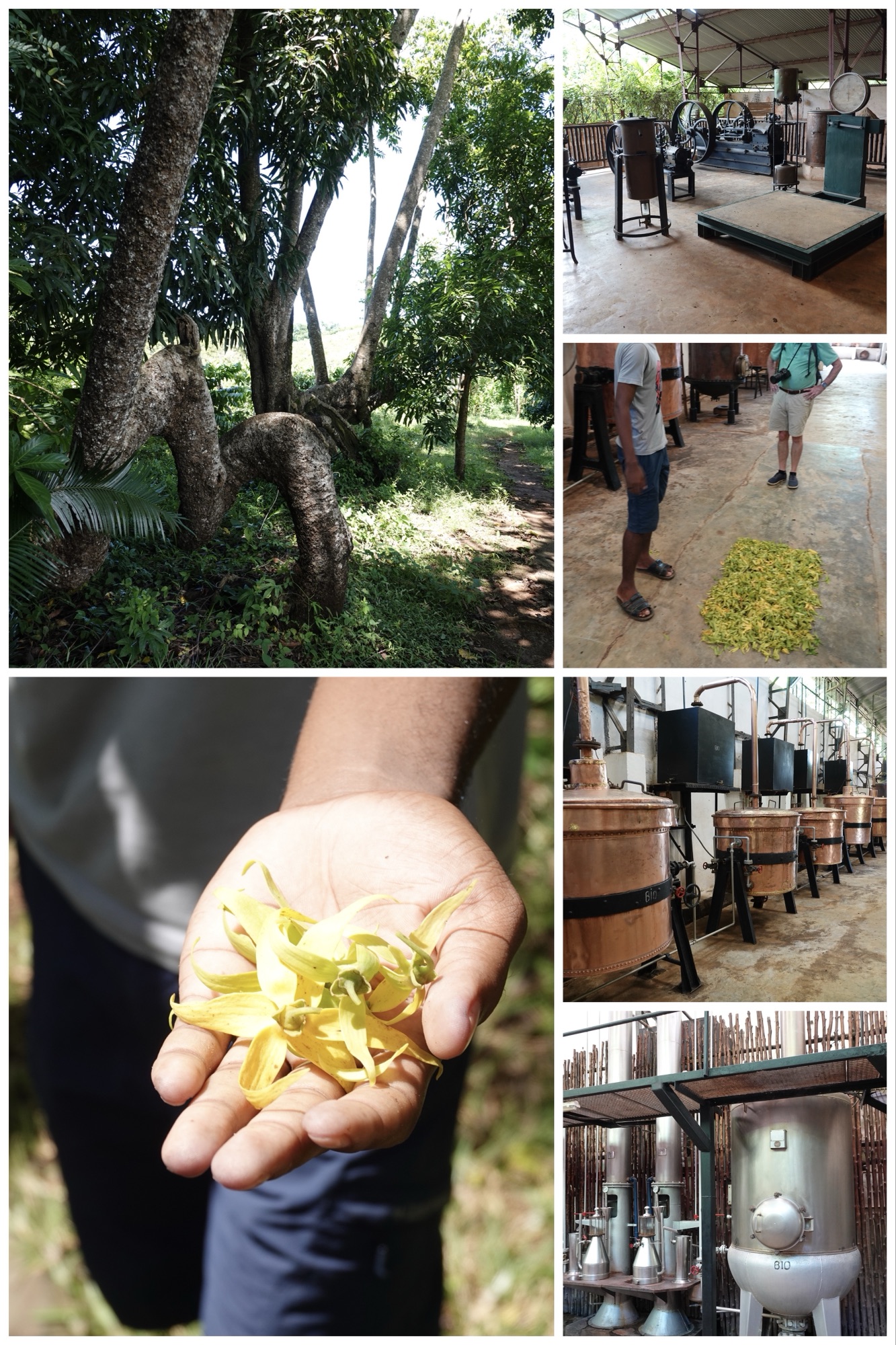
The first part of our excursion was a visit to Lemuria Land, a private wildlife reserve and ylang-ylang tree plantation where essential oils for perfume are distilled.
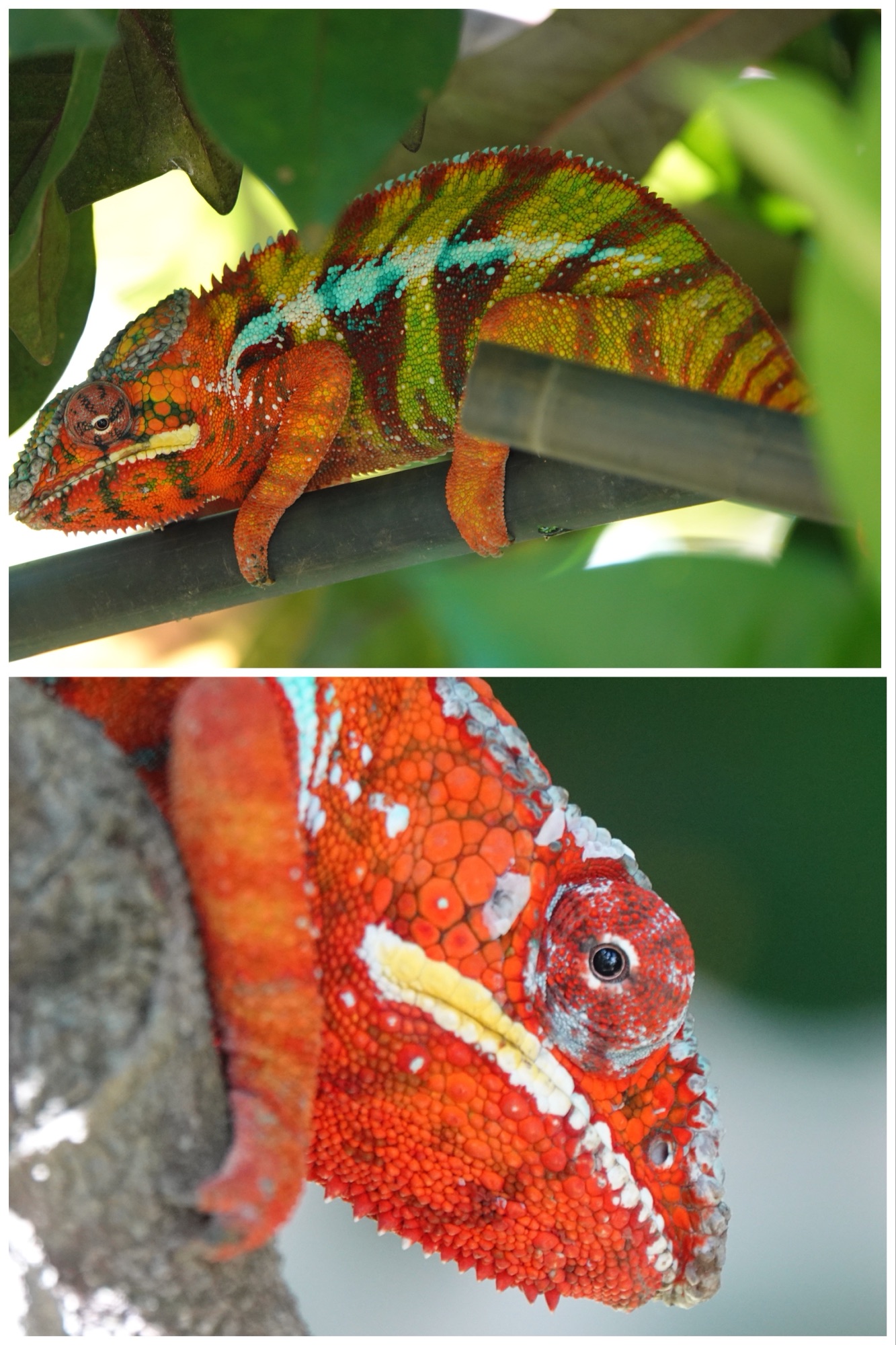
The reserve has a large population of free-roaming lemurs and other endemic Madagascan wildlife, such as color-changing chameleons, some of which we were told we could feed, if we chose to.
Lemurs are endemic to the island nation of Madagascar; there are 107 species of lemur that can be found on the island, but each individual species is often only found in a particular region. Lemuria Land is home to ten species, of which we saw six. Wild animal sightings are never guaranteed, but apparently if you carry a banana, as our guide Patrick did, that changes the odds significantly.

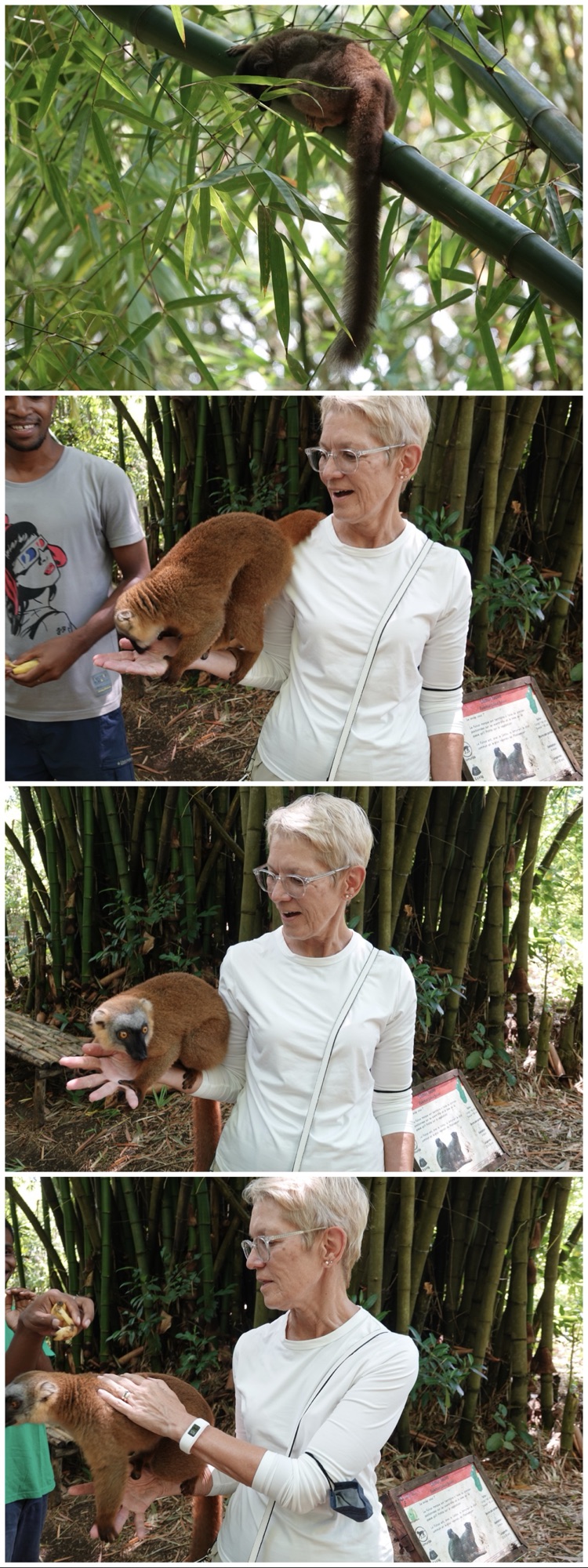

Black lemurs exhibit sexual dichromatism; the males have black or dark chocolate fur, while females have lighter brown fur.


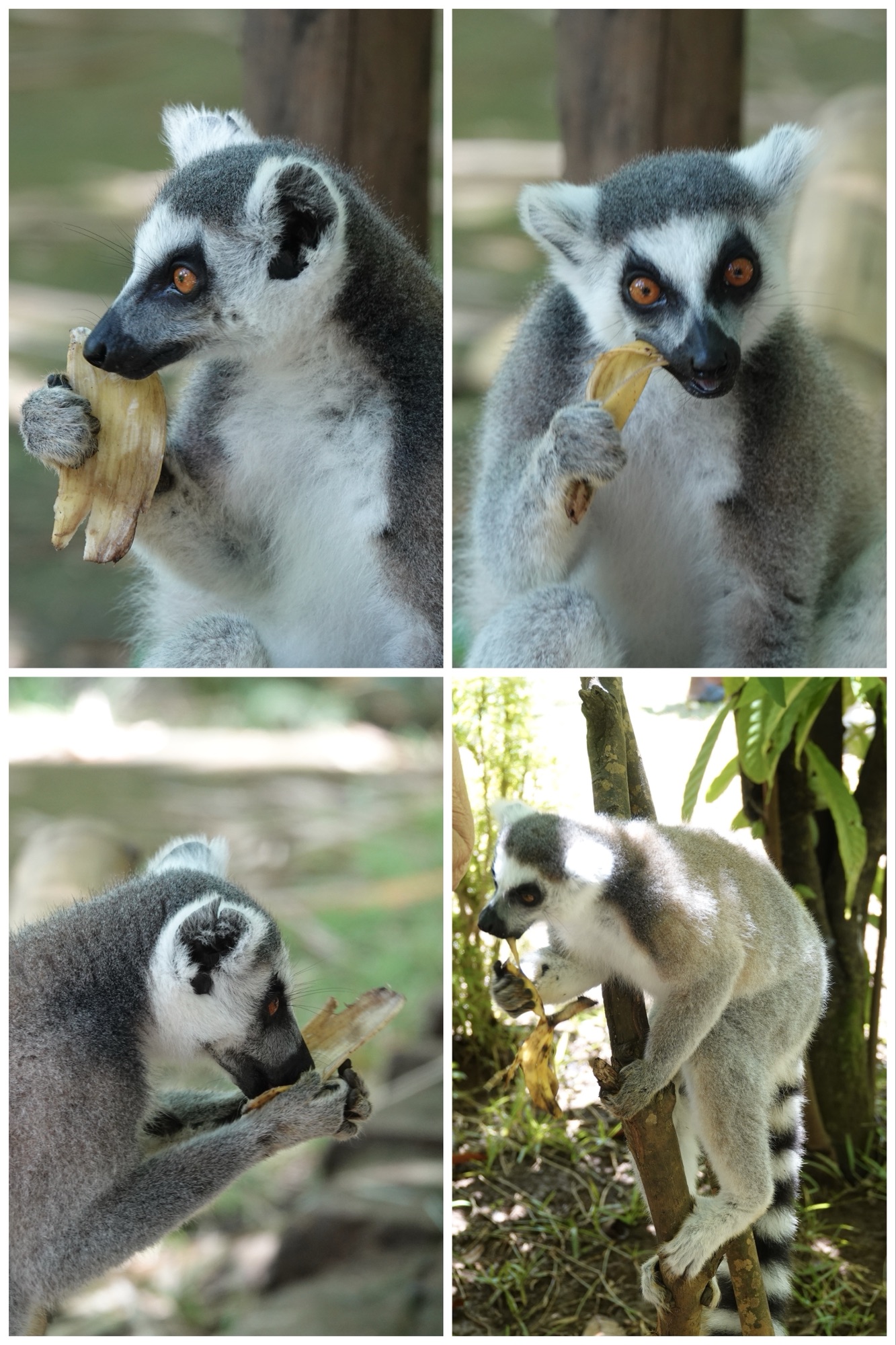
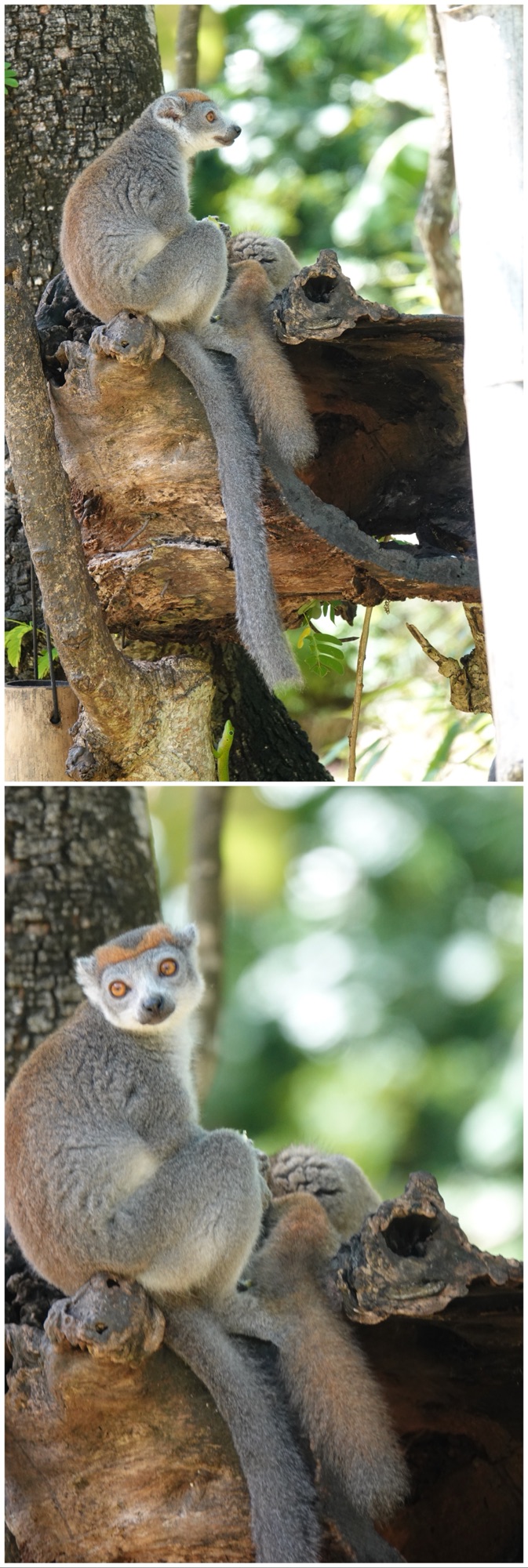

Lemuria Land is also home to tortoises, turtles, chameleons, iguanas, and crocodiles.
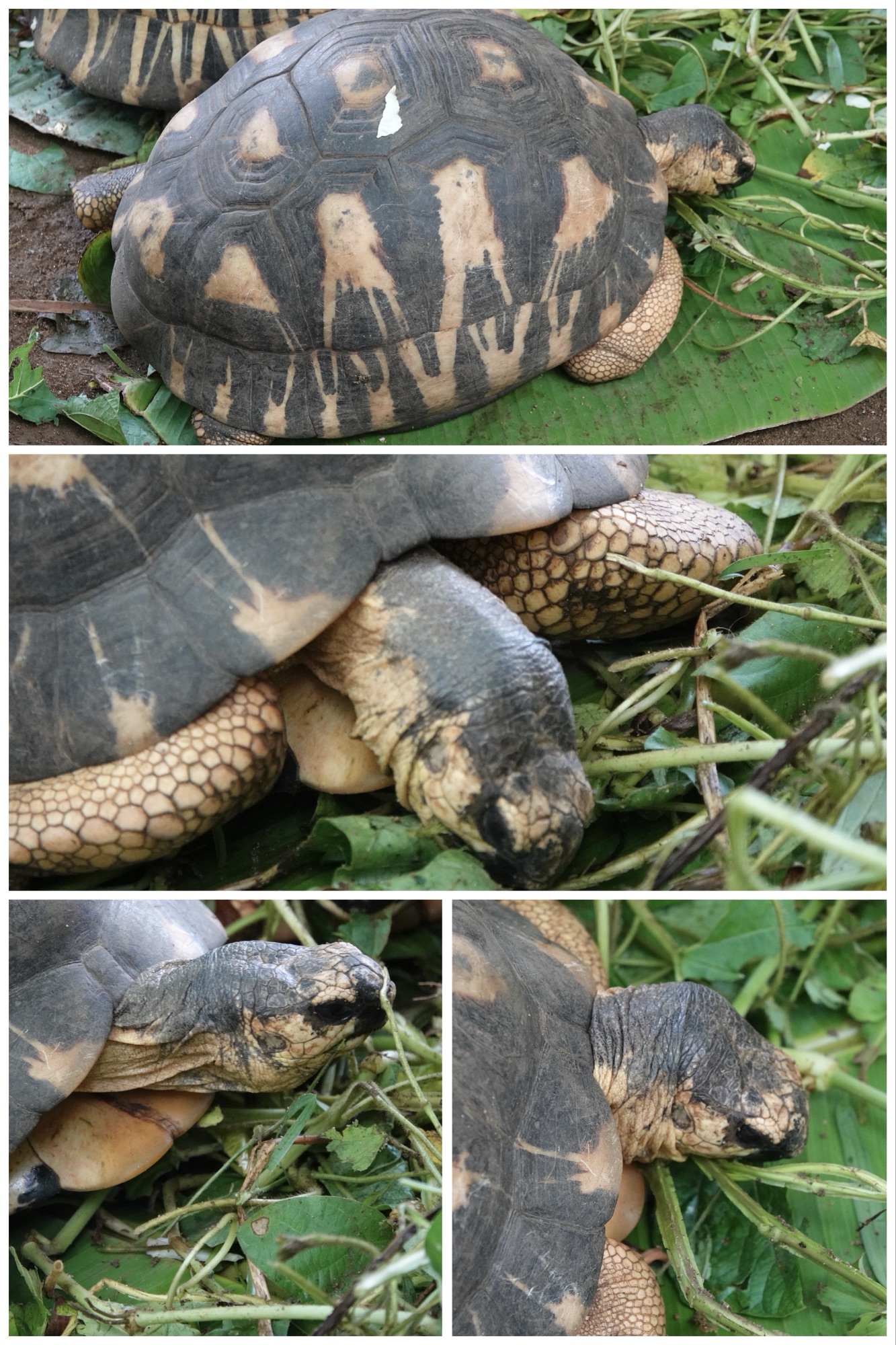
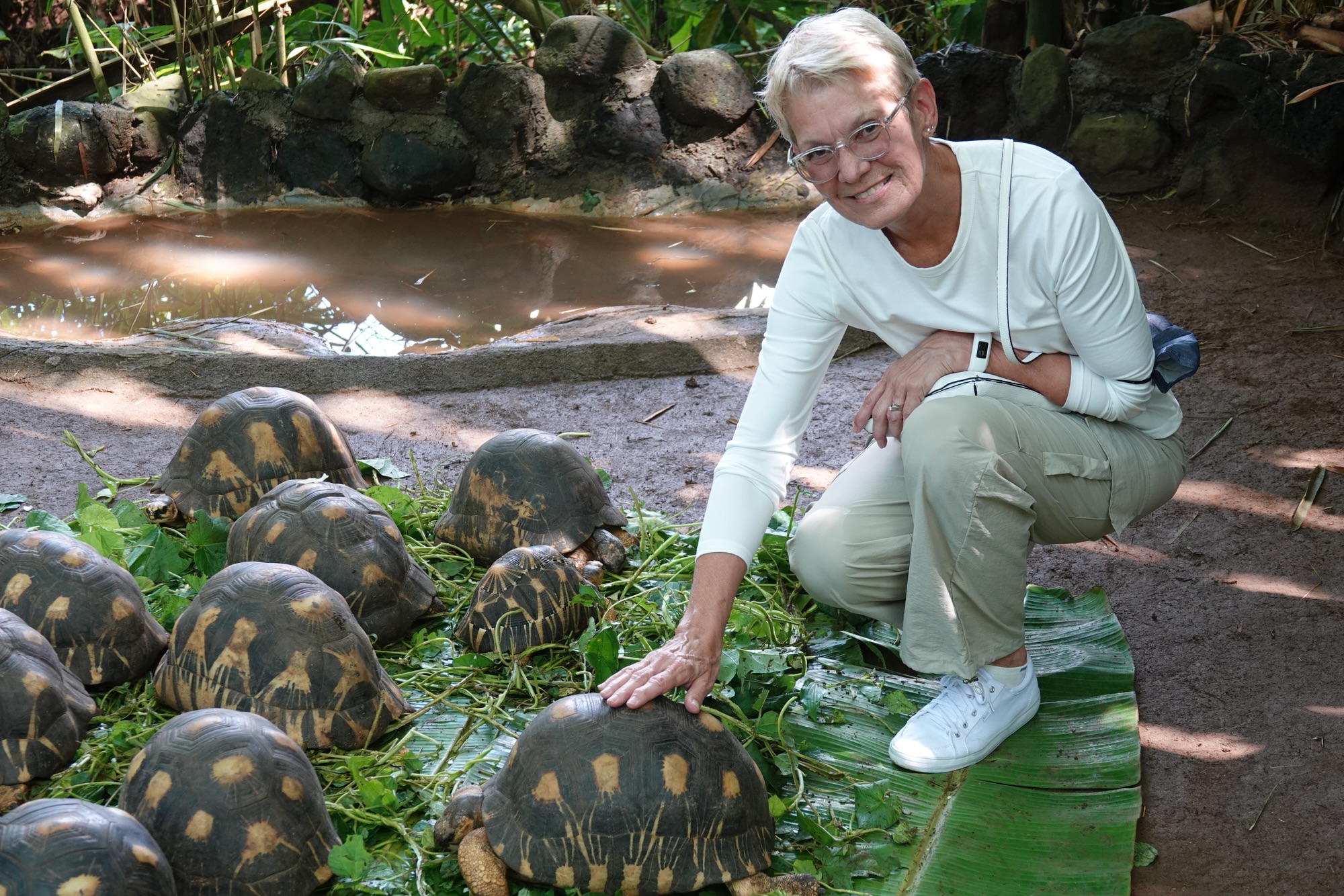
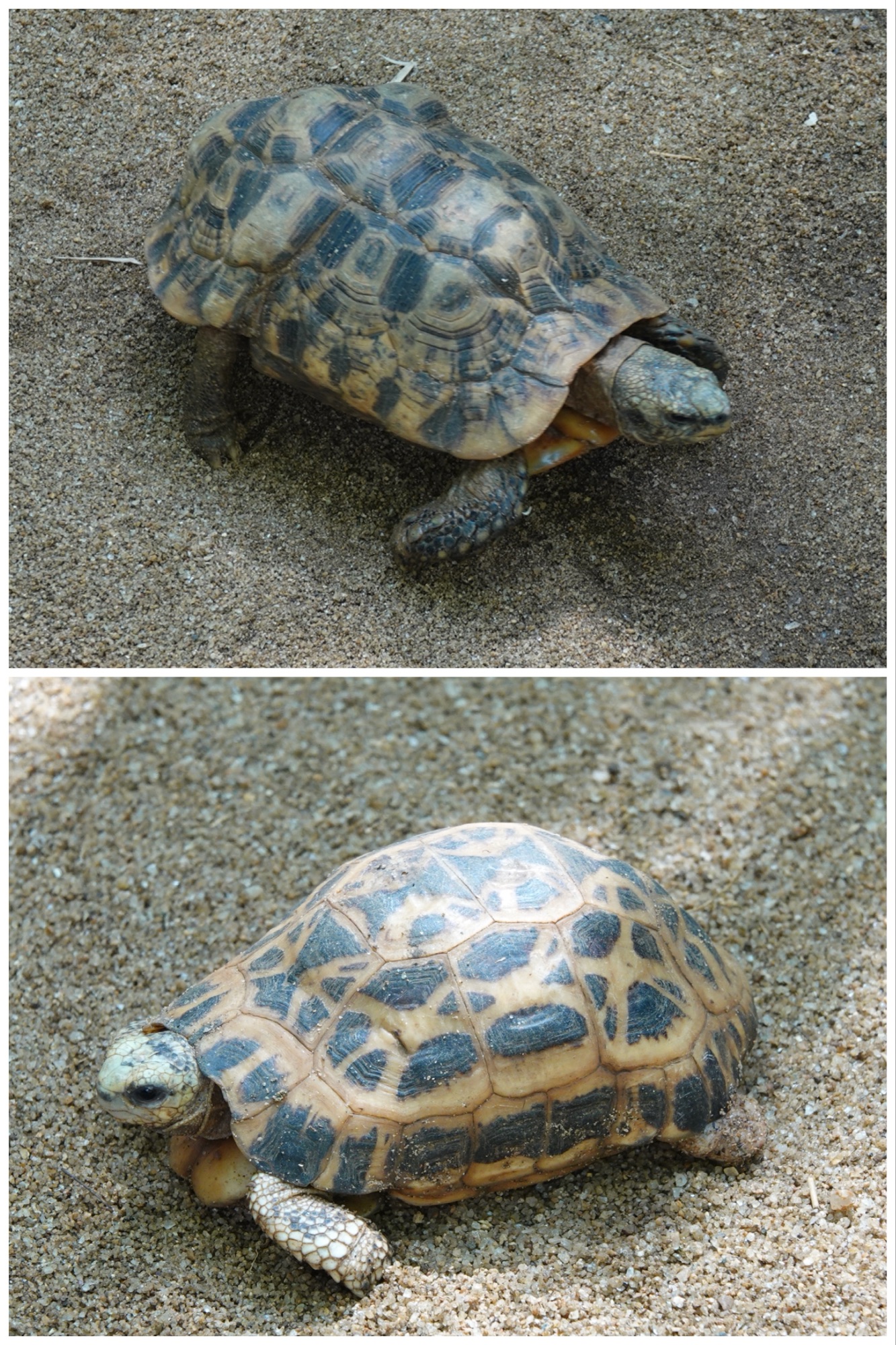


Although they are not native to Madagascar, there were two Aldabra (Seychelles) giant tortoises: 214 year old 300kg/660 lb Napoleon (top), who absolutely loved neck rubs, and his female much smaller and younger counterpart Josephine (bottom).

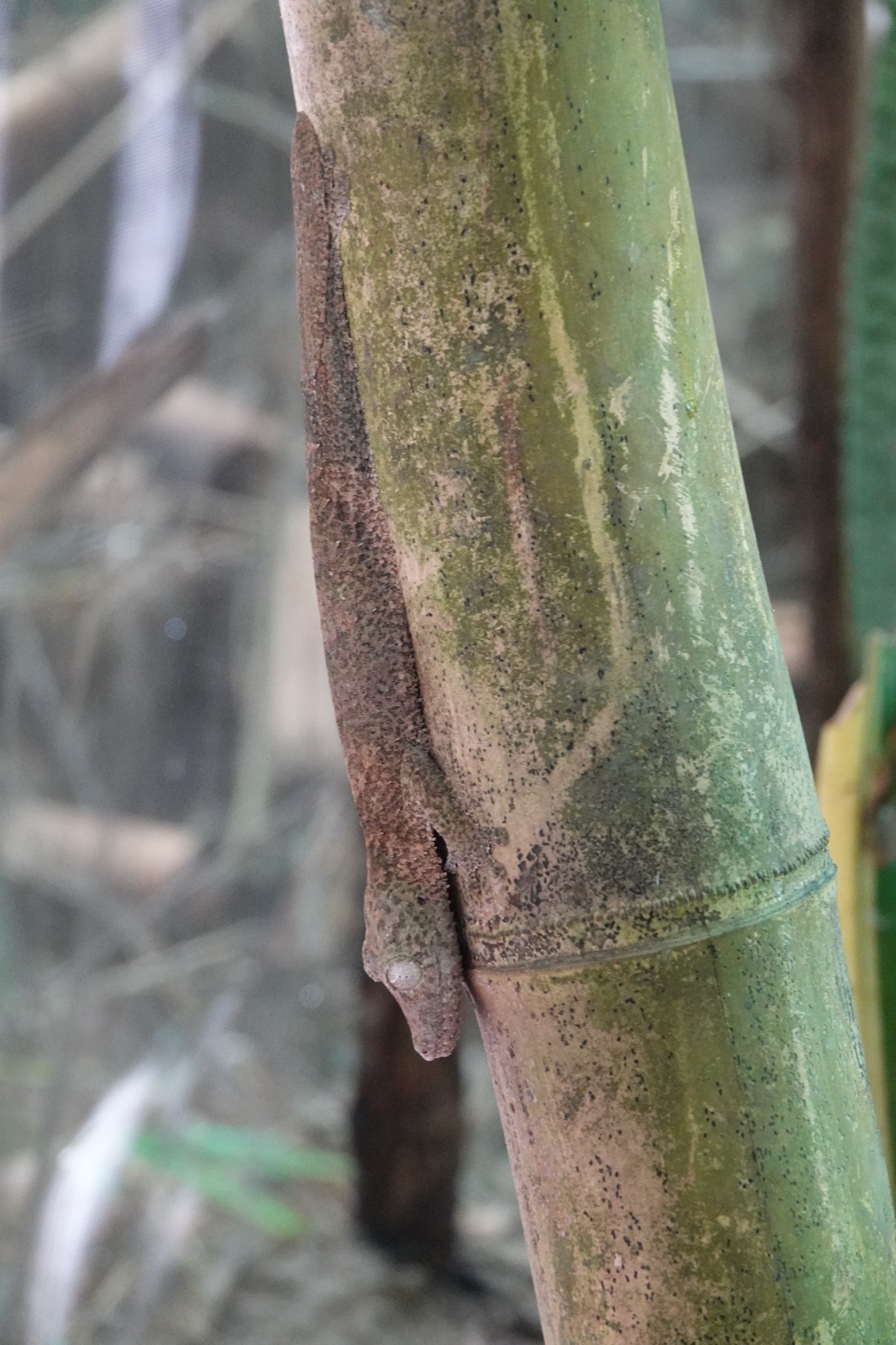
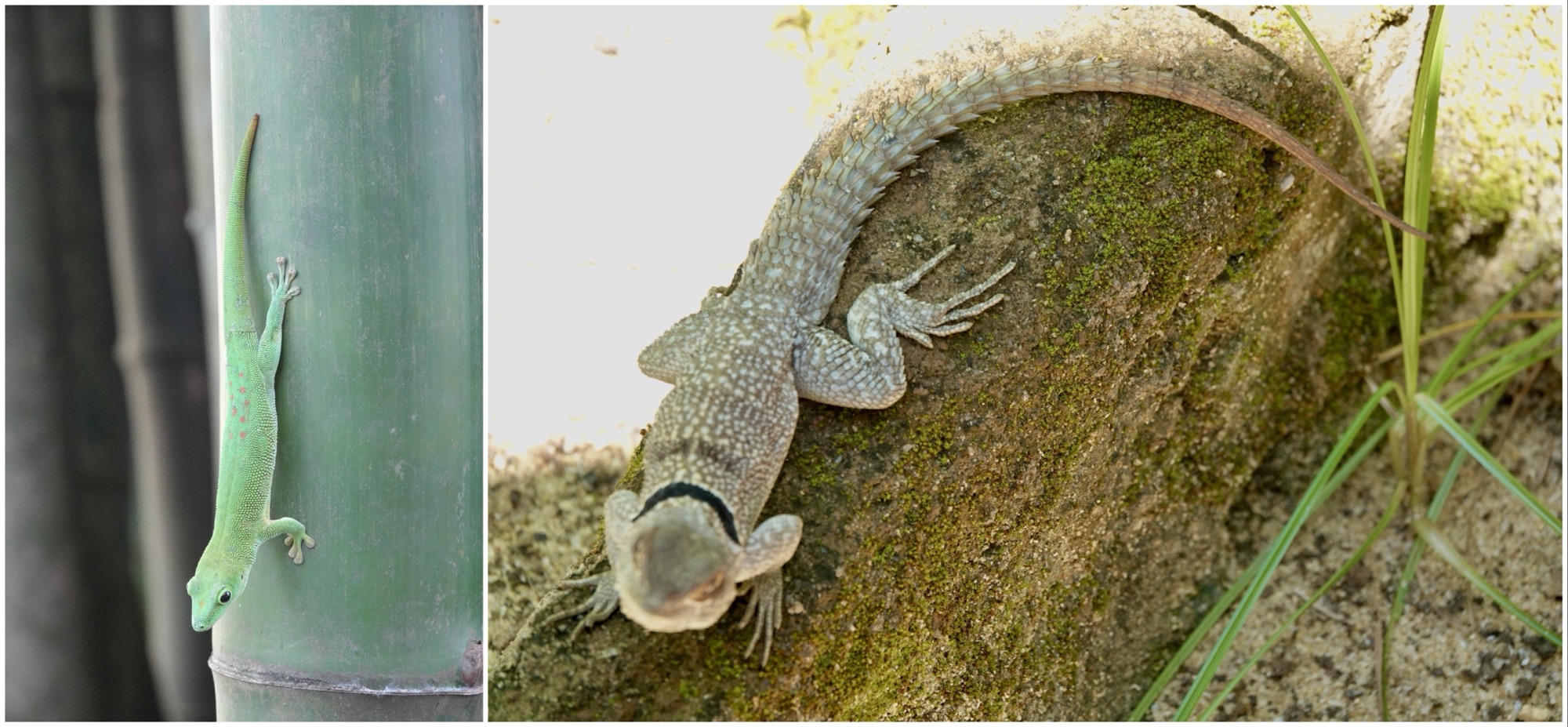

There were some really big crocodiles, but I much preferred the baby one that Patrick was holding; its jaws couldn’t open wide enough to bite a finger…yet.

Lemuria Land is also home to hundreds of ylang-ylang trees, whose flowers are used to create beautifully scented essential oils. We learned that it takes 1900 litres/ 500 gallons of water and 136 kg/300 lbs of ylang-ylang blossoms to distill down to just 12 litres (just over 3 US gallons) of oil.
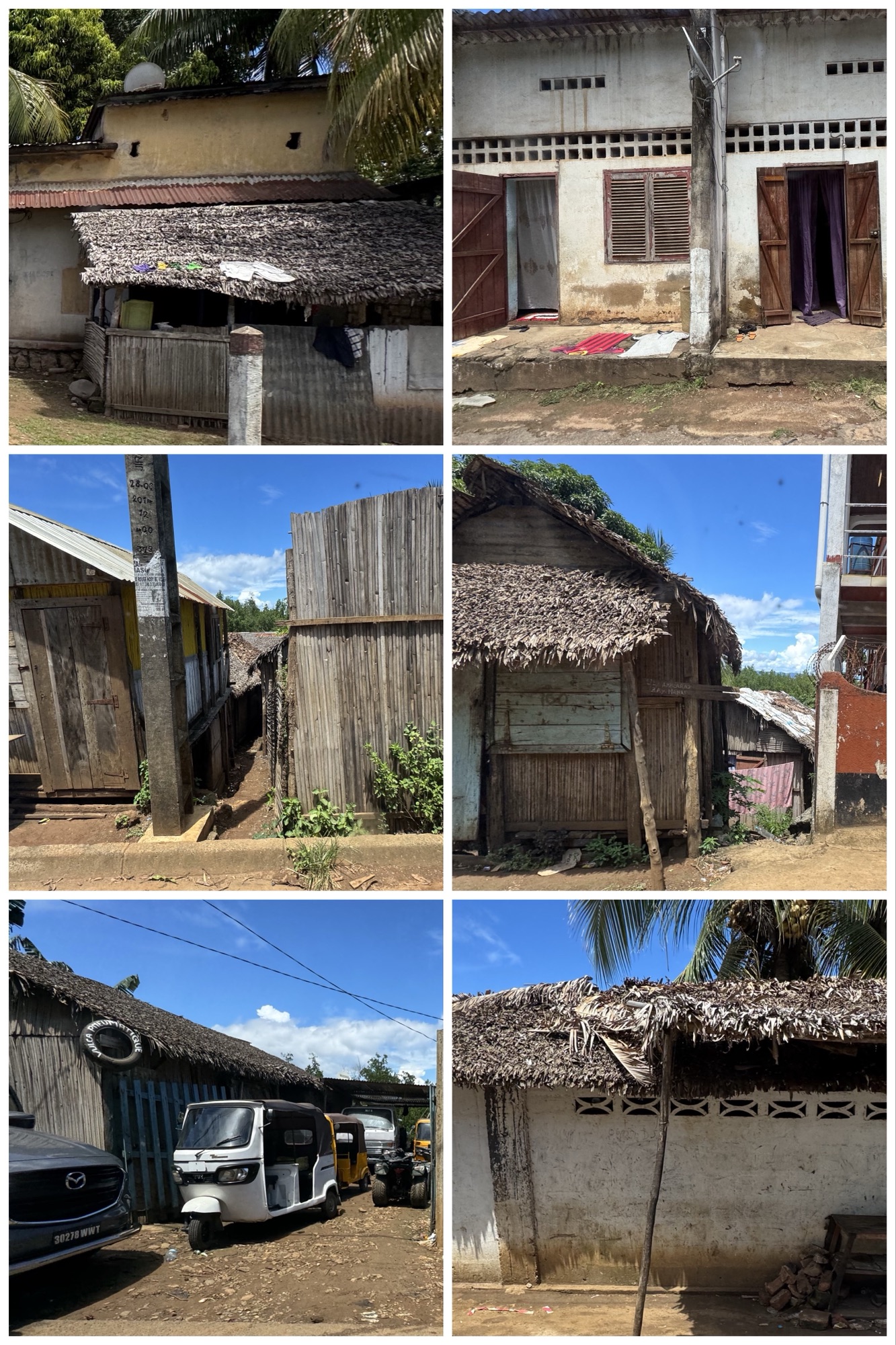
Our excursion wasn’t only all about the flora and fauna, though. This world cruise is a chance to learn about the people whose cultures shape their lands. Here we drove to Nosy-Be’s first village, the vibrant and multicultural Marodoka, which still retains remnants of colonial architecture and an ancient mosque (we drove by too quickly for a photo) among its inhabitants’ traditional, thatch-roofed wooden houses.
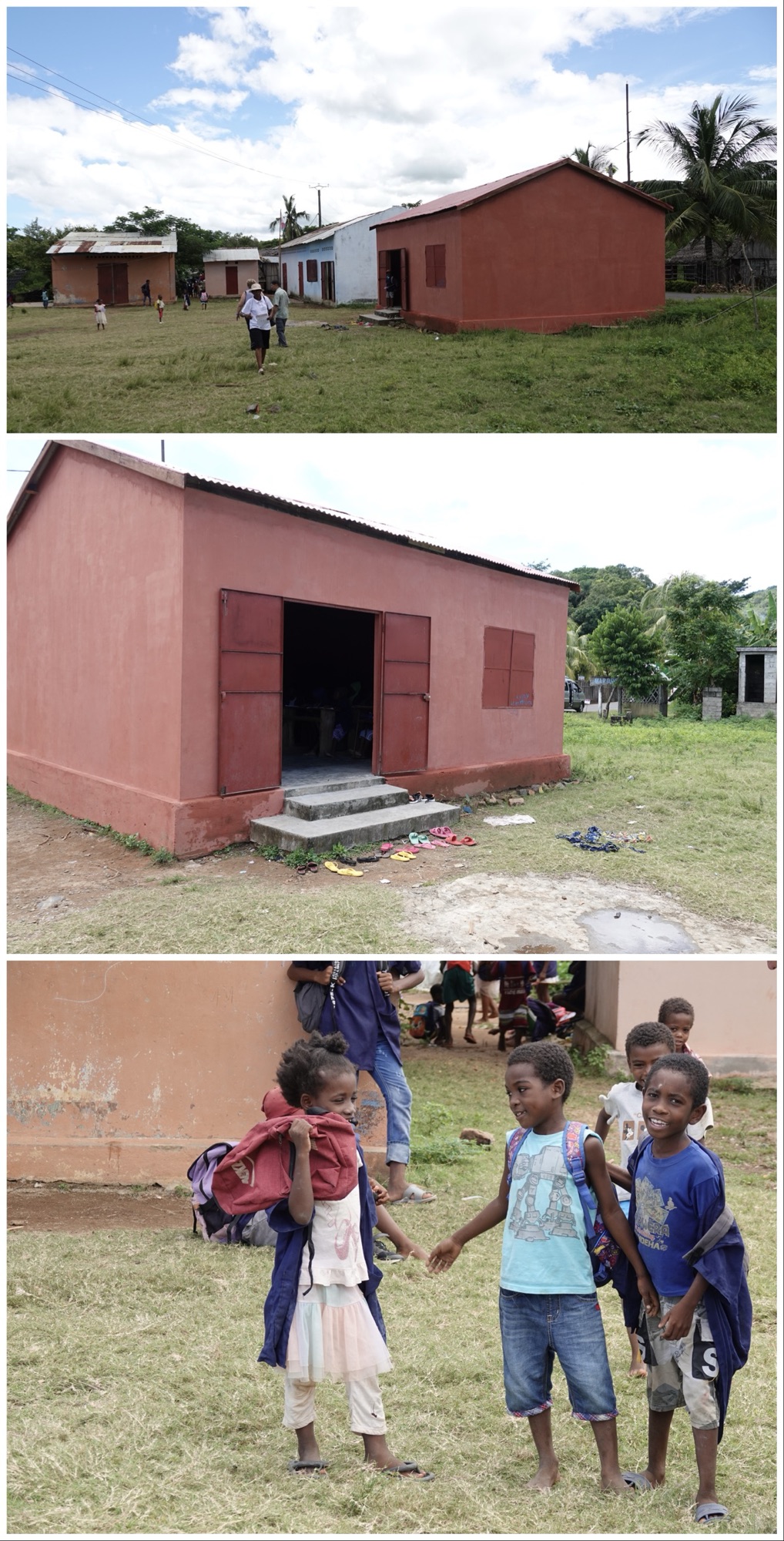
The tour description suggested an “immersive” experience with the local residents, but that absolutely did not happen. We were able to interact with the local school children – at least as much as it is possible for a bunch of white English-speaking tourists to do much more than take pictures and be giggled at.

We did hear the local superstition though. The oldest building here is a former mansion dating to the 15th century. All that is left now are exterior walls so tightly overgrown with ficus roots that it looks as if the walls have absorbed the trees. Legend has it that the owner, married but childless, and having a lot of slaves, made a pact with the Devil so that no one would ever benefit from his riches. When he died, his wife took up with the Devil, but then mysteriously disappeared. No one has ever been successful in digging up any treasure from the property, and those who have tried have all come to a bad end.

The children from the school right next door run past the house instead of walking, and our guide said that more than one child has died after falling while playing inside the house.
Our guide said we could take photos of the house, but only from outside its walls. The Devil is said to live in the ruins even now, and anyone who enters is cursed. Apparently the guide with the next group through didn’t warn them, so at least three Viking passengers are now under a curse. I’m wondering if I should tell them.
After lunch we visited a museum dedicated to one of the country’s smallest ethnic groups, the Sakalava people.
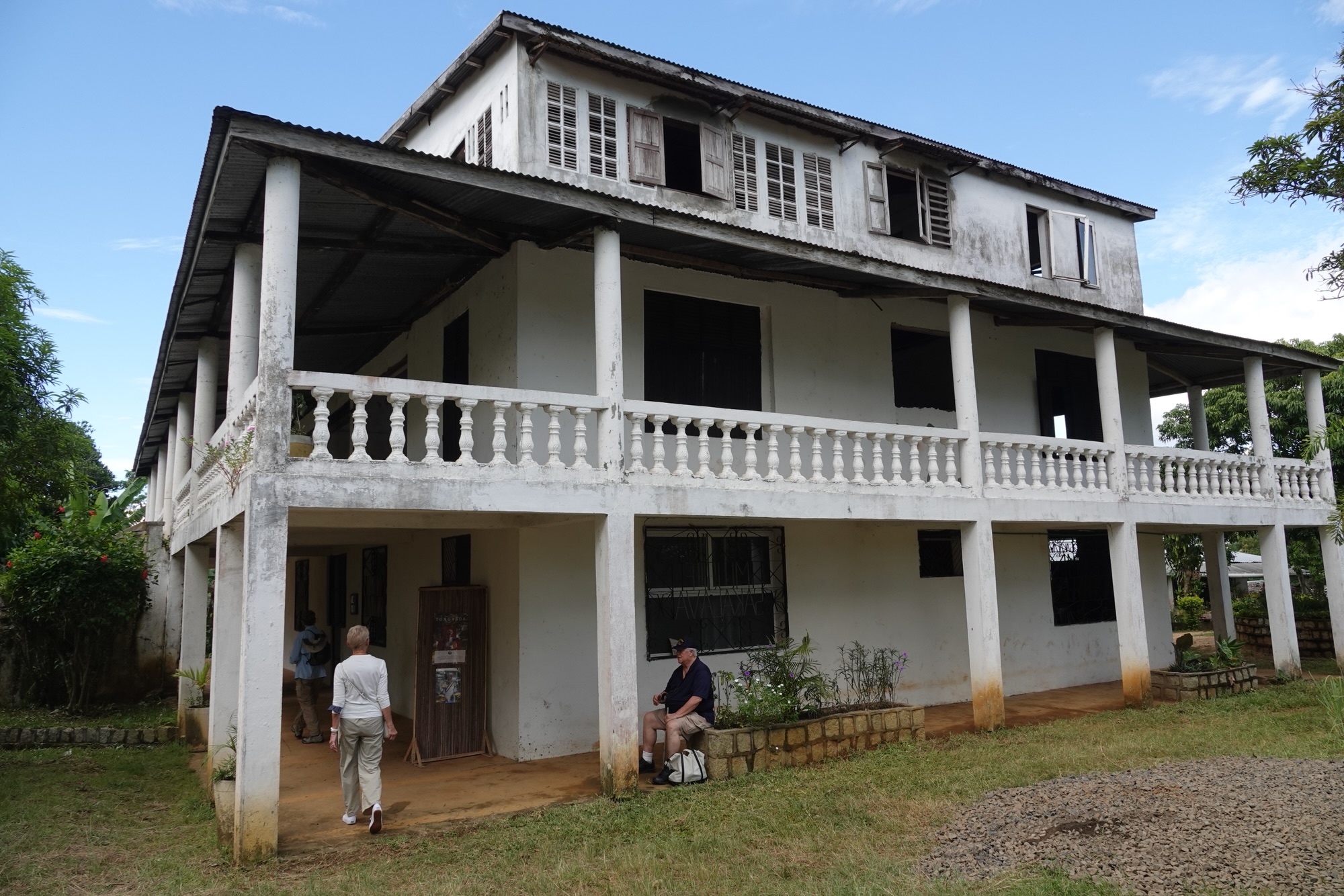
It seemed as if we were the first people to visit the museum in years. Everything was coated with a thick layer of dust. Our guide Khodofi spent some time explaining the exhibits relating to the Kings and Queens of the Sakalava tribe.

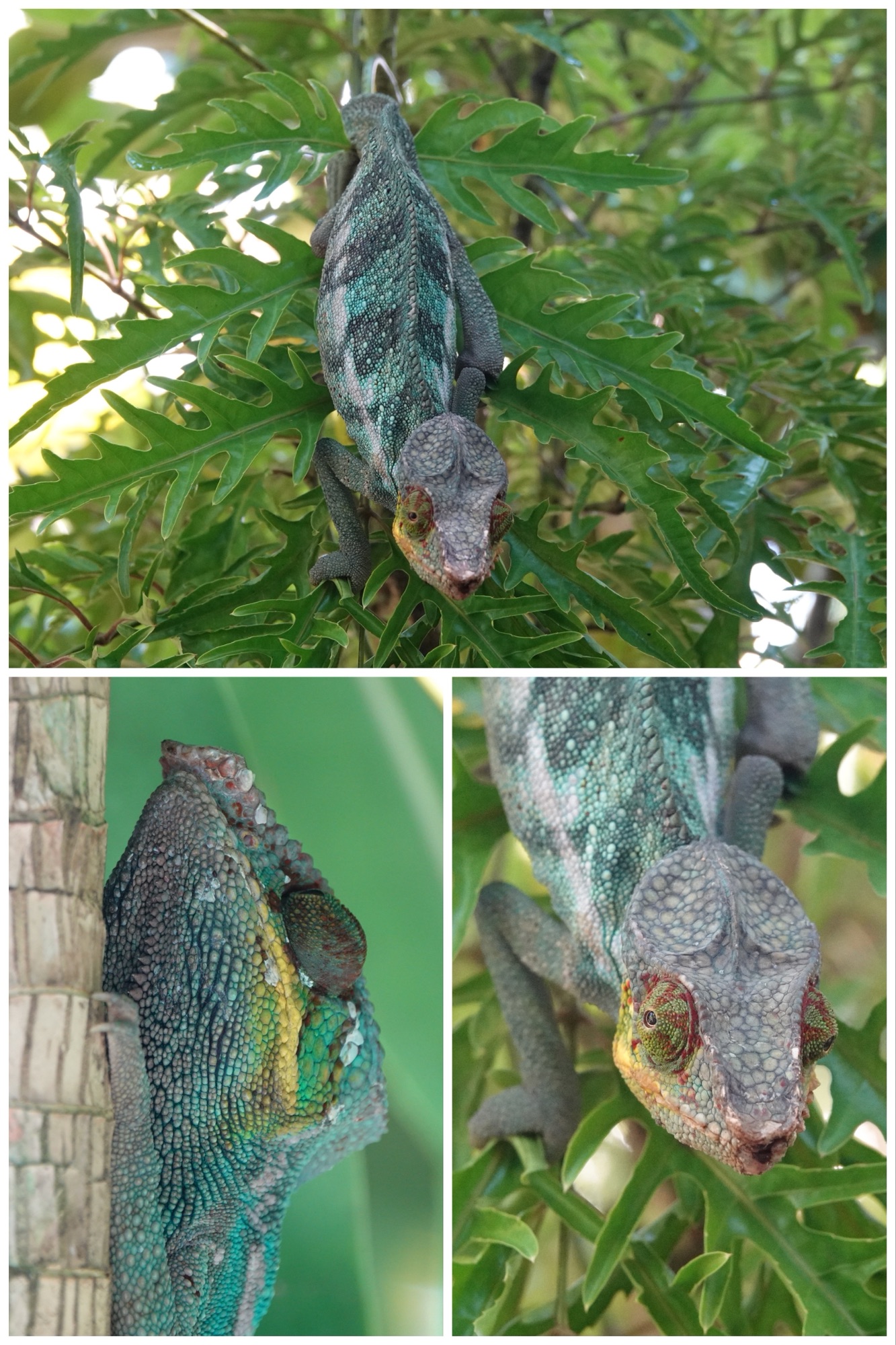
Outside the museum, we got to hold and be climbed on by a Panther Chameleon. They can really grip, and yet are incredibly gentle about it.

Our group of 6 collectively decided that we did not need to stop at the big market to shop, so we simply drove by it.

Frankly, we were all melting in the intense heat and humidity , and were glad to be back on board by 3:30 p.m. for a shower and our 6:00 p.m. sail away.
As sunset approached, we were accompanied by several jellyfish alongside the ship…

…followed by spectacularly glowering skies that led to a thunderstorm filled with flash after flash of lightning.

Not a soul on board is complaining about the upcoming three sea days en route to Mozambique. We’re mostly still recovering from Kenya. In my case, I’m also recovering from a sinus and ear infection. No idea how I got that, but a couple of low-key days with lots of sleep and the antibiotics the ship’s doctor prescribed should clear things up.
 Rose and Ted’s Excellent Adventure
Fascinated by the markings
LikeLiked by 1 person
Sorry to hear you are not feeling well – again. Hopefully, on the mend before too long. I love that you got to hold the lemur and pet that ginormous turtle! The chameleon, meh… LOL!
LikeLiked by 1 person
In about 1984 my parents had accumulated enough Pan Am miles to get to Kenya for a safari, then made their own way to see me at my first Foreign Service post in Antananarivo. We hadn’t gotten out of the city much at all — infrastructure was terrible — I used to say we needed a 4-wheel drive and a 4-day weekend to get anywhere off the central plateau. We took their visit as an opportunity to fly to visit the very new tourist “resort” on Nosy Be — taking our own butter, mayonnaise and flashlights along. We thoroughly enjoyed the lovely spot — and the amazing tiny oysters, big lobsters etc. available for meals. Next we flew down to a Lemur Reserve on the south coast where I had PhD researcher friends doing their work — private tour, and a night walk to see many of the lemurs. My understanding was that the island split off from the mainland and that the existing primates evolved differently on each land mass, from a common, ancient ancestor. What Madagascar lacked were the larger predators and some of the smaller cats, rodents etc., so lemurs evolved into every niche.
It’s so sad that corruption has stood in the way of progress. In the 80s, the Soviets were building large, non-sensical projects — like a sugar factory clear across the island from the cane fields! To do their work, the researchers I knew usually had to include a new Toyota Landcruiser in their grant funding to handover to some government official. Of course the French and British fighting over the place didn’t help their development or social cohesion — favoring the ethnic group on the plateau where the climate suited them better has led to bitter ethnic divisions. Still, a fascinating and beautiful place. If you can ever get back, head up to the plateau and don’t miss the markets! Wonderful handmade paper with flower blossoms embedded, great basketry, minerals made into orbs and eggs, embroidery. I think those white patches on one of the reddish walls in Ted’s picture might be paper drying — any idea?
Have a good rest during your sea days — hope the sea air clears up your cold.
LikeLiked by 1 person
What fabulous memories you have! Thank you so much for sharing them with us.
LikeLike
And yes, now that I look more closely, definitely paper drying! When we drove by we just thought it was paint….
LikeLike