After we got back to the ship from our fabulous day in the Seychelles, I commented to Ted that I felt uncharacteristically chilly.
I’d hoped that it was simply the result of too much sun and 36°C/97°F heat, but by bedtime I was feeling peaky, and by morning my sinuses were full and I was officially added to the ranks of coughing passengers (post-nasal drip having been the bane of my existence forever). Time to put a mask on (voluntarily), take an antihistamine, and start downing cups and cups of tea. We have two days before reaching Kenya for me to overcome whatever nastiness this is.
I avoided being in close proximity to anyone, which thankfully is easy to do on this ship, where nowhere feels crowded. That meant not attending the lectures, and sitting by ourselves at meals. The rest of the day I was masked unless eating or drinking.
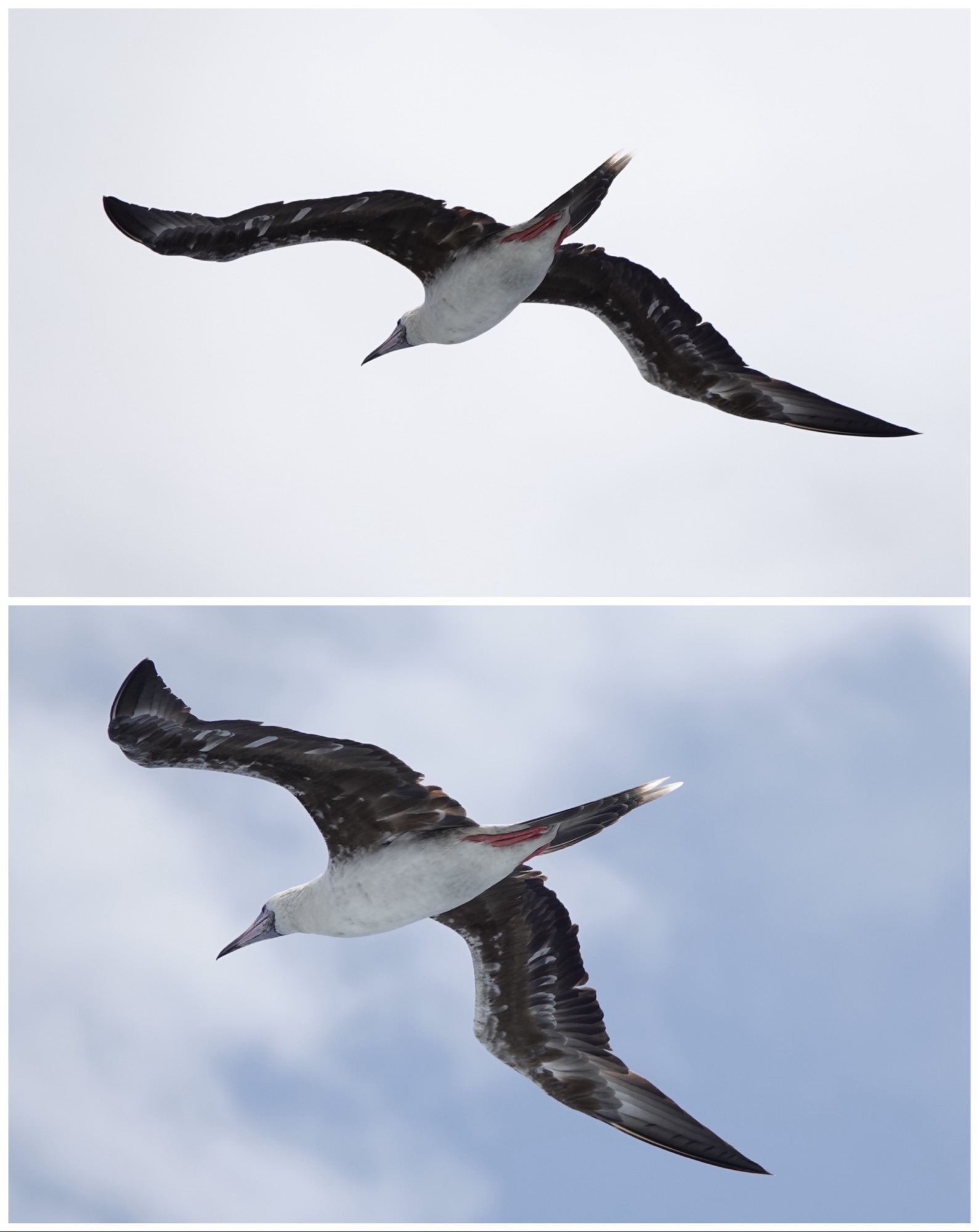
This was one of those times that I really appreciated that all of Viking’s ocean ship cabins – even ours which is the smallest configuration – have balconies. I could simply sit outside sipping my tea and just watch the red-footed boobies that are following our ship.
On a side note, our room steward John is THE BEST. Not only did he supply me with lots of extra tissues (including a box for my bedside table), and requisition some extra masks for me, but he also added some Schweppes bitter lemon to our fridge “until you’re feeling better” so I’d have something more interesting than just tea and water to drink. When we mentioned that we never drink pop (that’s soda to our American friends), he also replaced the standard Coke and Sprite with peach iced tea. As I said… the best.
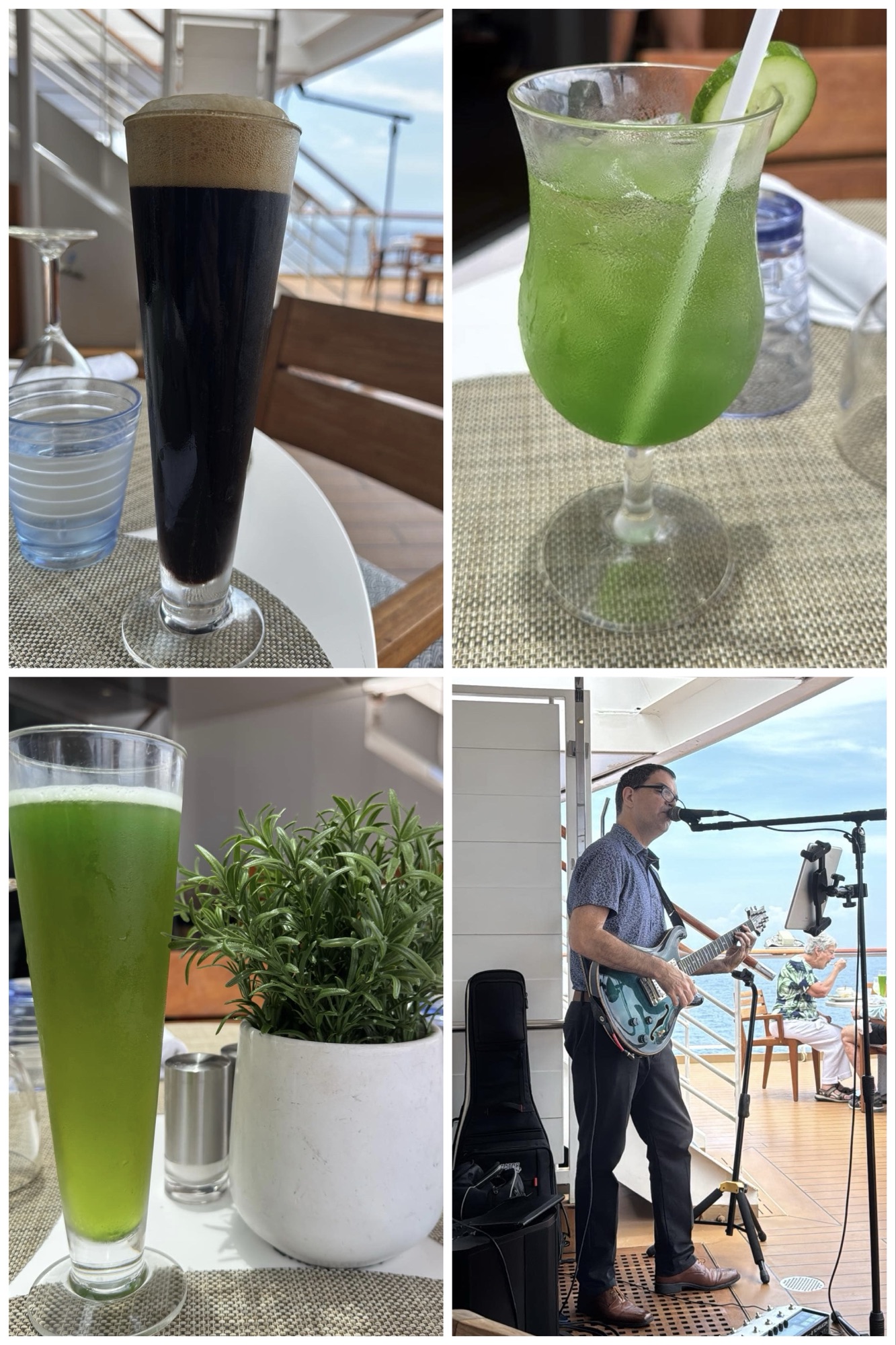
Trying to be considerate of fellow cruisers meant that, even though I was masked, I only popped into the St. Patrick’s Day event on the Aquavit terrace long enough to admire the display, and have a quick green drink and and some food at an outdoor table with Ted. Sadly, that meant Ted was on his own for dessert and Allan’s guitar accompaniment to the event.


Of course, there had to be green drinks too.
I took my own dessert – a couple of tiny custard and kiwi (green!) tarts – and tea back to our room, and then had a ridiculously long nap, which left me feeling much better by dinner time, but still not so great that I wanted to inflict myself on a crowded theatre.
Instead, I spent the evening watching the recordings of the lectures I’d missed, and the livestream of guest entertainer Harrison Treble’s piano show.
The day’s first lecture was by Steve Burrows CBE, and called “Kenya’s Architectural Melting Pot”. He began by sharing that this would be a difficult lecture, and perhaps make people uncomfortable.
Africa’s “issue” is that it has been colonized for so long that it has been almost impossible to undo the effects of colonialism. Steve reminded us that “cities” are a Western/European concept and construct, and imposing that construct on an agrarian and sometimes nomadic population has consequences. He also highlighted the devastating wars that we associate with much of Africa, most of which relate to the aftermath of colonialism.
The screen shots below are not great because taking pictures of a television screen warps the colours, but they give an idea of how the map of Africa looks now vs. colonial boundaries.

Some disturbing facts that Steve shared:
- Africa is earth’s continent that is the most vulnerable to climate change, which will create even more food and water insecurity.
- Africa is the poorest continent on earth despite having 30% of the world’s remaining mineral resources, including 40% of the gold reserves, over 60% of the cobalt, and 90% of the platinum.
- The highest Human Development Index (health, education, life expectancy, education) in Africa is still lower than the lowest HDI in North America and Europe.
Then he moved on to Kenya specifically, since it will be our first destination on the continent.
- Mombasa has existed since at least the 2nd century CE. It traded with China, India, Indonesia, the Middle East, North Africa, and Persia, and by the 9th century had its own distinct language and culture (Swahili, meaning “people of the coast”
- The Portuguese arrived in the 1490s; in 1890 the area was divided up by Germany (taking the south) and the UK (the north); in 1895 the British established the East India Protectorate which lasted until the Mau Mau uprising and independence in 1963
- Although Kenya’s economy is the largest and most developed in eastern and central Africa, 63% of the population lives in poverty.
- Just a few years ago the median age was just 13. The increase to 20 is in large part due to health initiatives funded by international programs like USAid. That statement was particularly relevant in 2025’s political climate. The leading causes of death are still HIV/AIDS and tuberculosis, both preventable.
So… the lecture topic was architecture? He came to that.
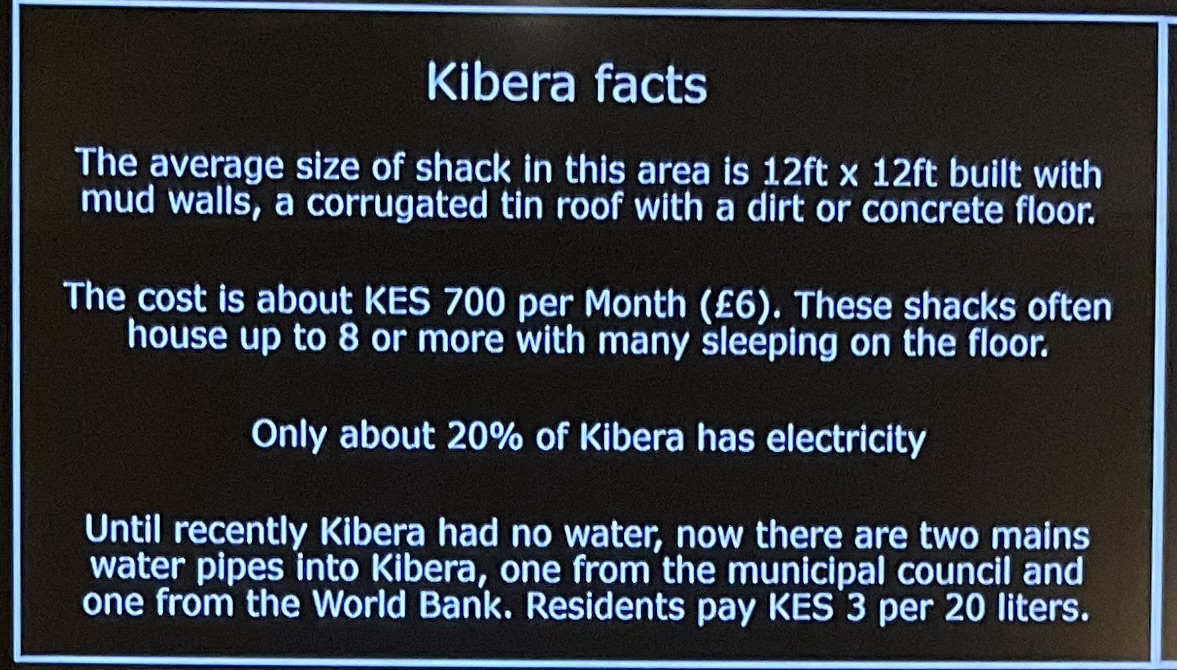
Nairobi is a colonial city, with colonial and western architecture. Its downtown looks like any metropolitan city. But just 6.6km/4.1 miles from the city’s centre is Kibera, the largest urban slum in Africa. The British “master plan” for Nairobi in 1900 included barracks for the army along the railway tracks – 100 years later that is Kibera, disconcertingly within sight of downtown Nairobi and its fabulous golf courses.


To end his very depressing lecture, Steve took us back to a Swahili “town plan” from the early 15th century, prior to colonialism. He left us thinking about what might have been had Europeans not arrived.

That was a lot to take in, so I broke up my lecture watching with a bit of checking out the live-streamed rock and roll piano, backed by the Viking Band. Lead guitarist Hentje always has so much fun when these live shows allow him to showcase his guitar-playing chops.
After that break, I pulled up Dr. Bryan Babcock’s lecture on “The Impact of the Triangle Trade on Africa: Unraveling the Historical Threads”.
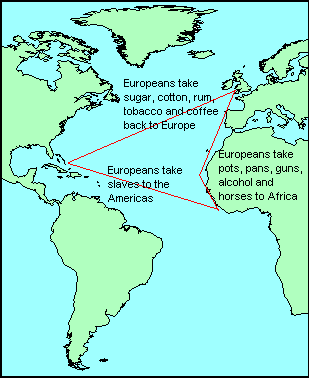
The triangle trade was a system of transatlantic trade between Europe, Africa, and the Americas, primarily focused on the movement of goods and enslaved people, that operated from the 16th to 19th centuries.
It’s possible to picture a triangle drawn in the Atlantic Ocean.
When talking specifically about slavery, Bryan talked about the fact that conquering/ruling cultures as far back as recorded history have enslaved others, but that the slave trade as we generally think about it was the first time that enslaving people was “industrialized”. Bryan explained it as all about a need for cheap labour in backbreaking agricultural jobs for which no one wanted to pay fair wages (although I have to say that his hopefully unintentional use of a “black” accent when talking about African chiefs trading people for guns made me cringe). He also talked about the huge profitability of this trade: 10 times the value of building and outfitting a ship in just the first 3-leg trip. Repeated trips made ship owners fabulously wealthy – and it took far too long for them to feel any moral compunction at all about what they were doing.
Twelve MILLION Africans were shipped as “cargo”, of whom only 10 million arrived alive. Of those, about half a million ended up in the United States. Man’s inhumanity to man apparently knows no bounds.
Why is it that rampant capitalism always seems to make things worse?
As we head into Africa, it’s important to know that it is a lot more than just a huge safari park to enjoy. Hopefully our small tourism contribution, and our shared stories and photos, will increase interest in and awareness of the continent at least a little bit. Viking, through their lecture series, is certainly doing their bit to make us better informed.
 Rose and Ted’s Excellent Adventure
Rose, Loving your blog …. following along. Hopefully we’re on board the World Cruise next year. Loved our 21/22 adventure.
LikeLiked by 1 person