Today’s 8 hour tour was called “Penang in a Day” and really did pack in a lot.
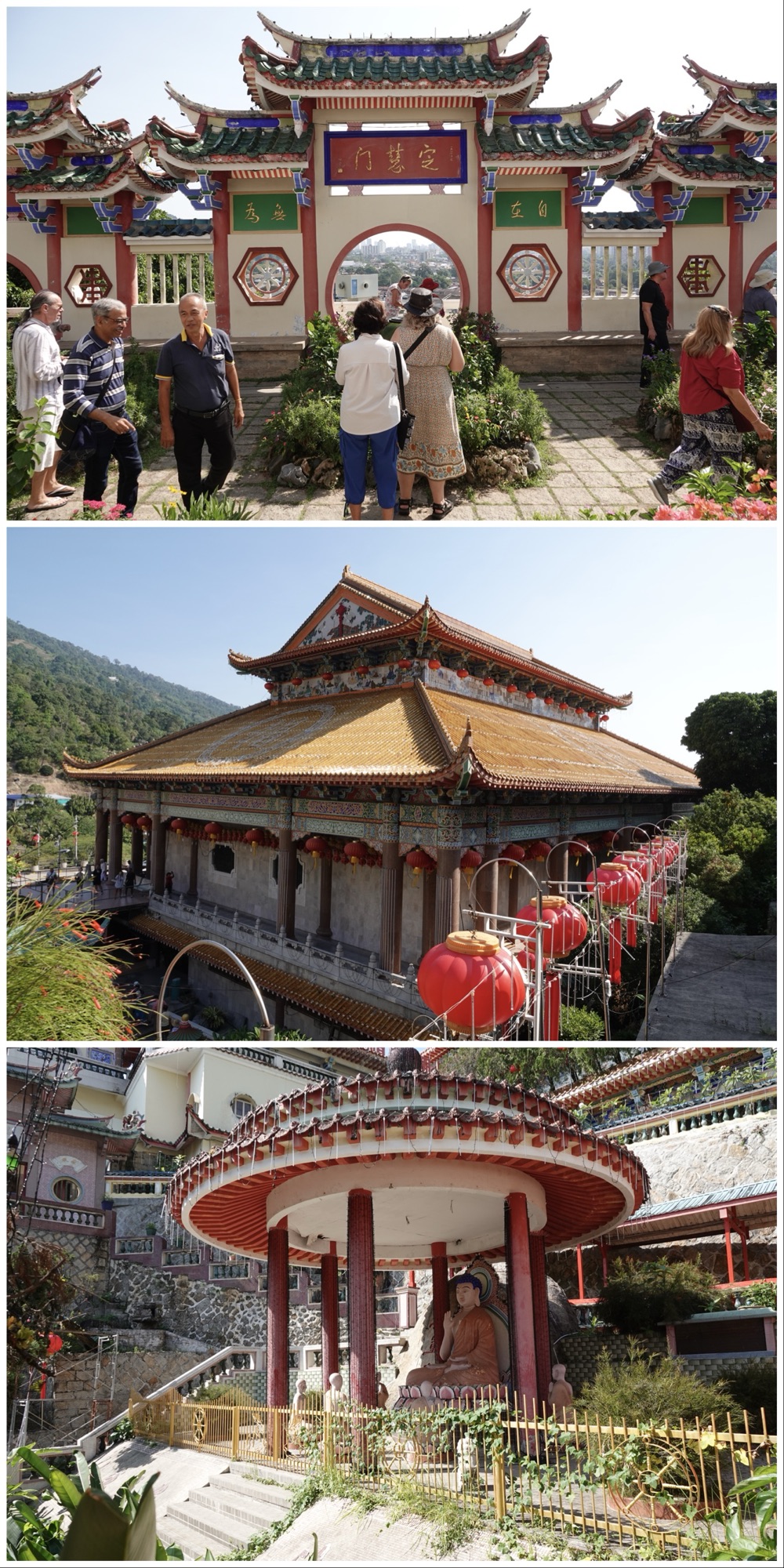
We met our guide and drove into the hills, where we visited Kek Lok Si Temple, the largest Chinese temple in Southeast Asia, located on Penang Hill.
I’m not sure what I expected, but I guess because I’d thought of Malaysia as predominantly Muslim, it certainly wasn’t this incredible and ornate place of worship. Our guide explained that Penang is the only one of Malaysia’s states that is predominantly Chinese, and since freedom of religion is enshrined in Malaysian law, it makes sense that the temples here outnumber the mosques.
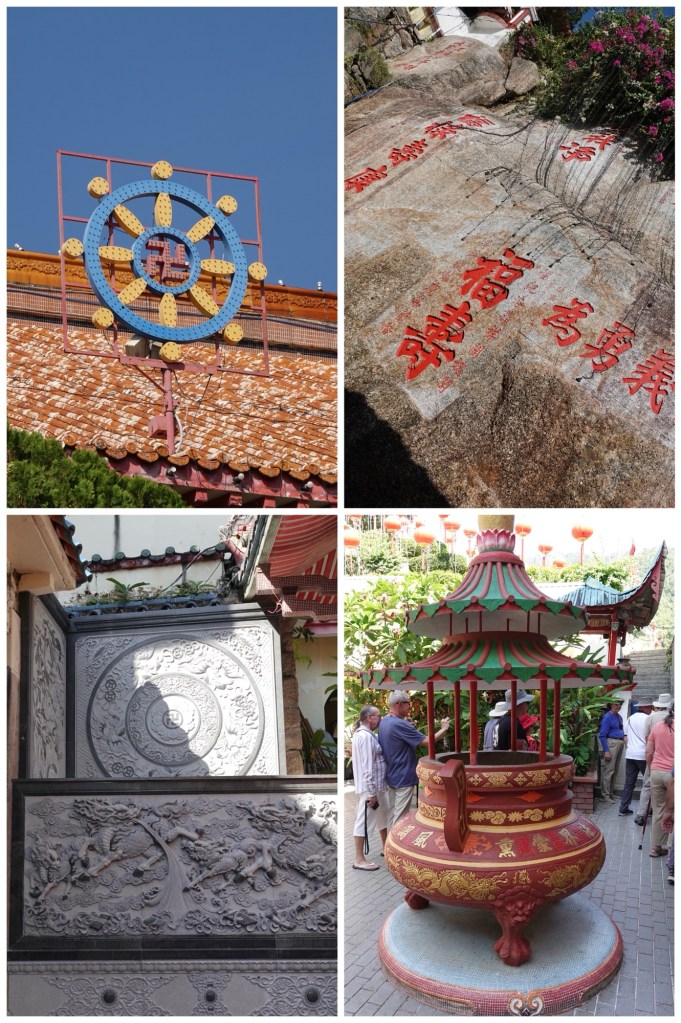
The type of Buddhism most commonly practiced here is Mahayana Buddhism, which is also the most common in China, and that is generally what this huge temple reflects.

We took a funicular to the first level of the temple building, but after that it was all stone stairs.

The pagoda at the very top of the hill, which we didn’t access, was the typical 7 levels. What was not typical were the multicultural elements in its construction: the top dome is of Burmese design, the centre round section is Thai, and the octagonal lower levels are Chinese.


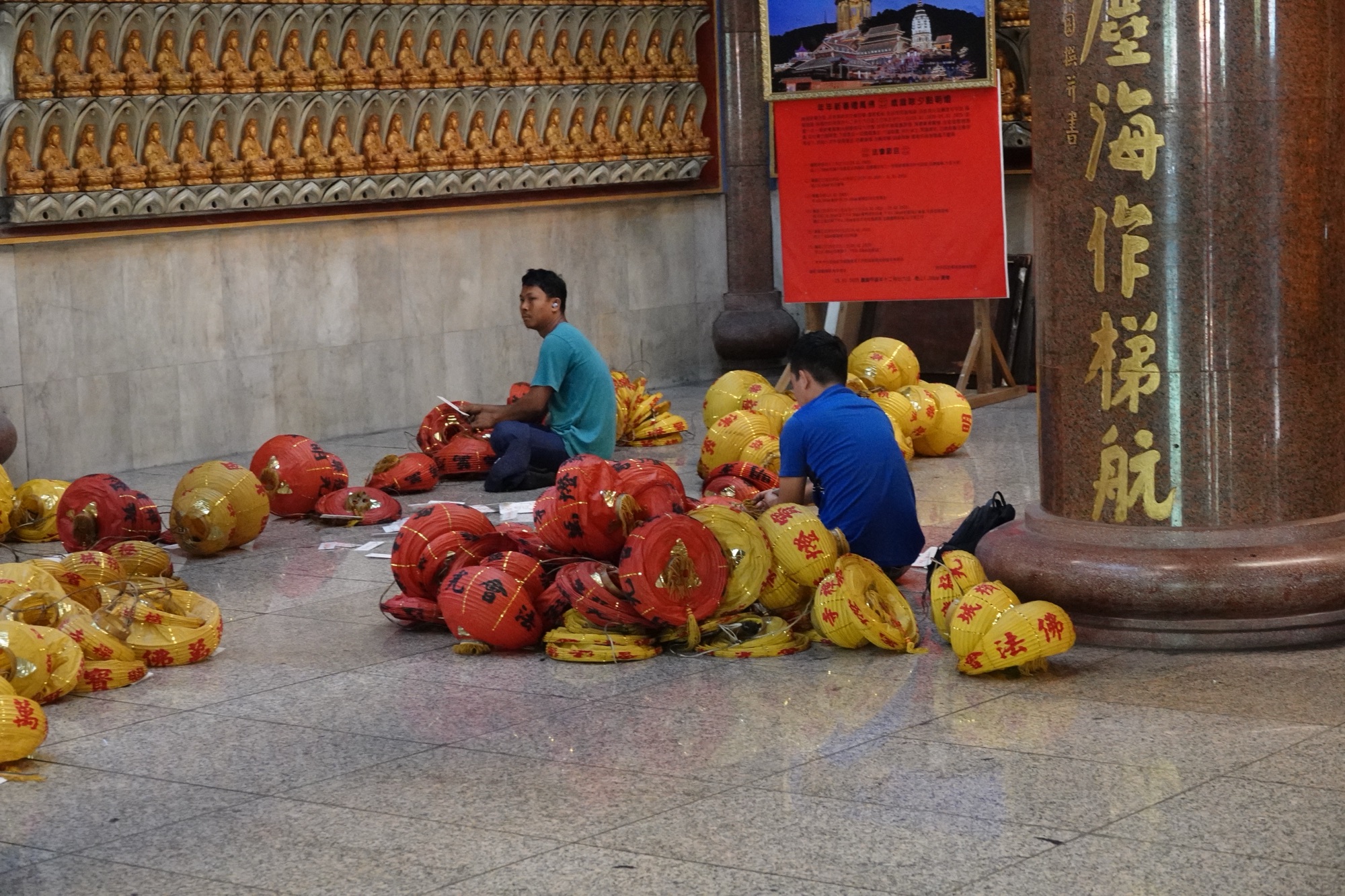
We explored the lower temples, where I thought this sign requesting quiet respect from visitors was perfect.

Kek Lok Si is known as the temple of 6000 Buddhas. We didn’t count them, but it’s definitely believable.
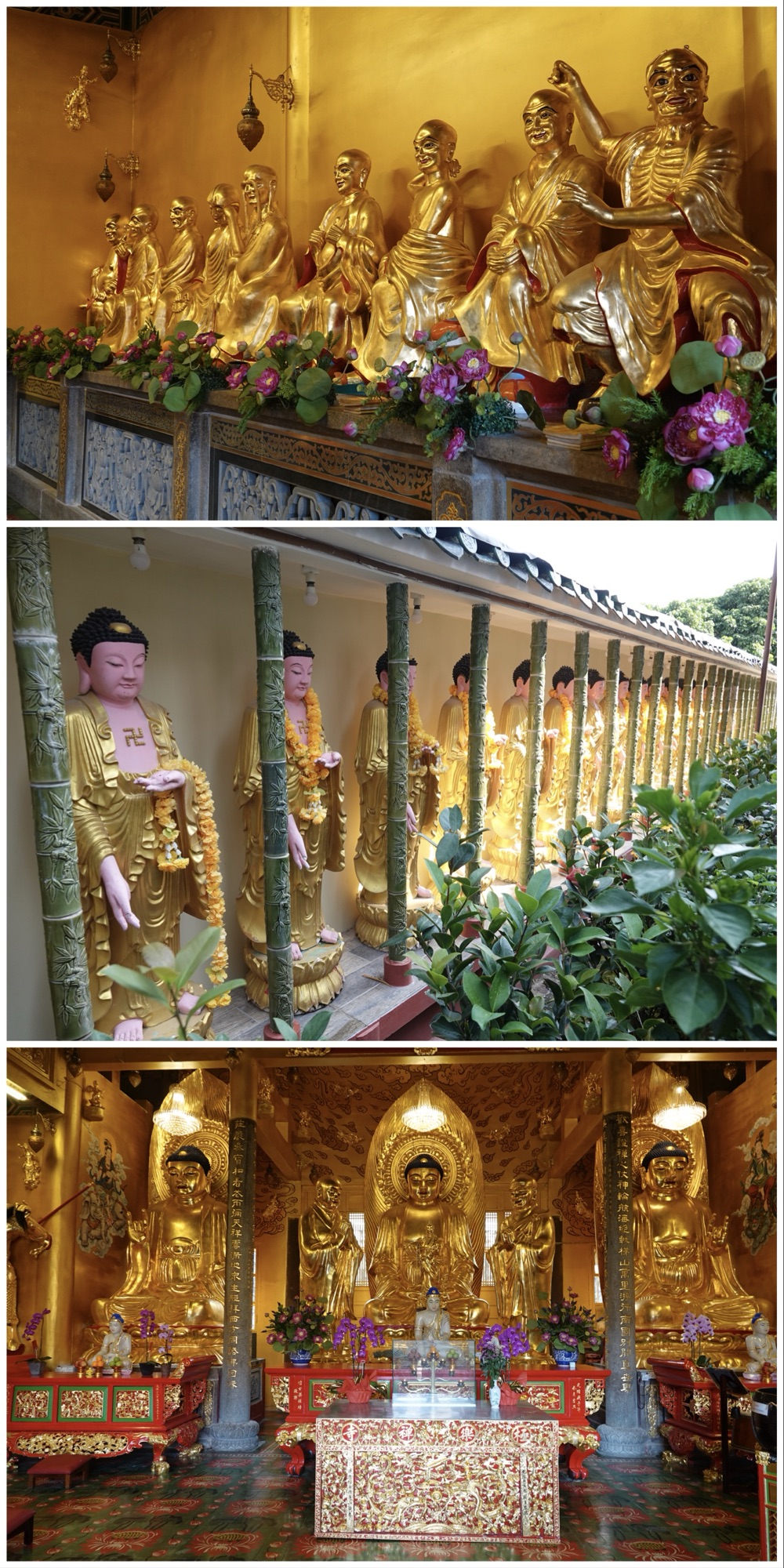

We saw the 4-faced Buddha in an outdoor shrine.

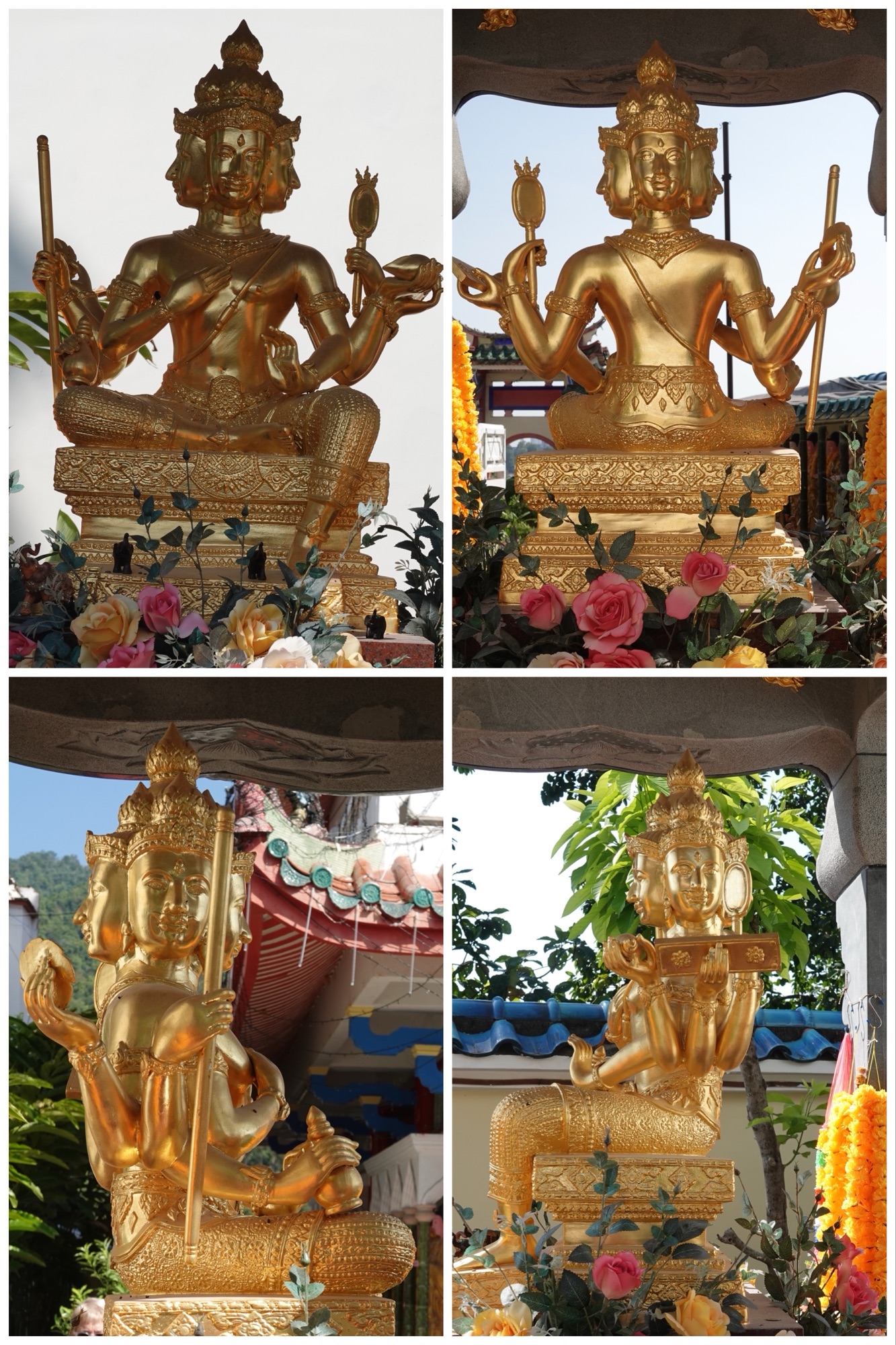
We visited (shoes off) the Laughing (Happy) Buddha, the wishing pool, and the chanting room inside the temple.

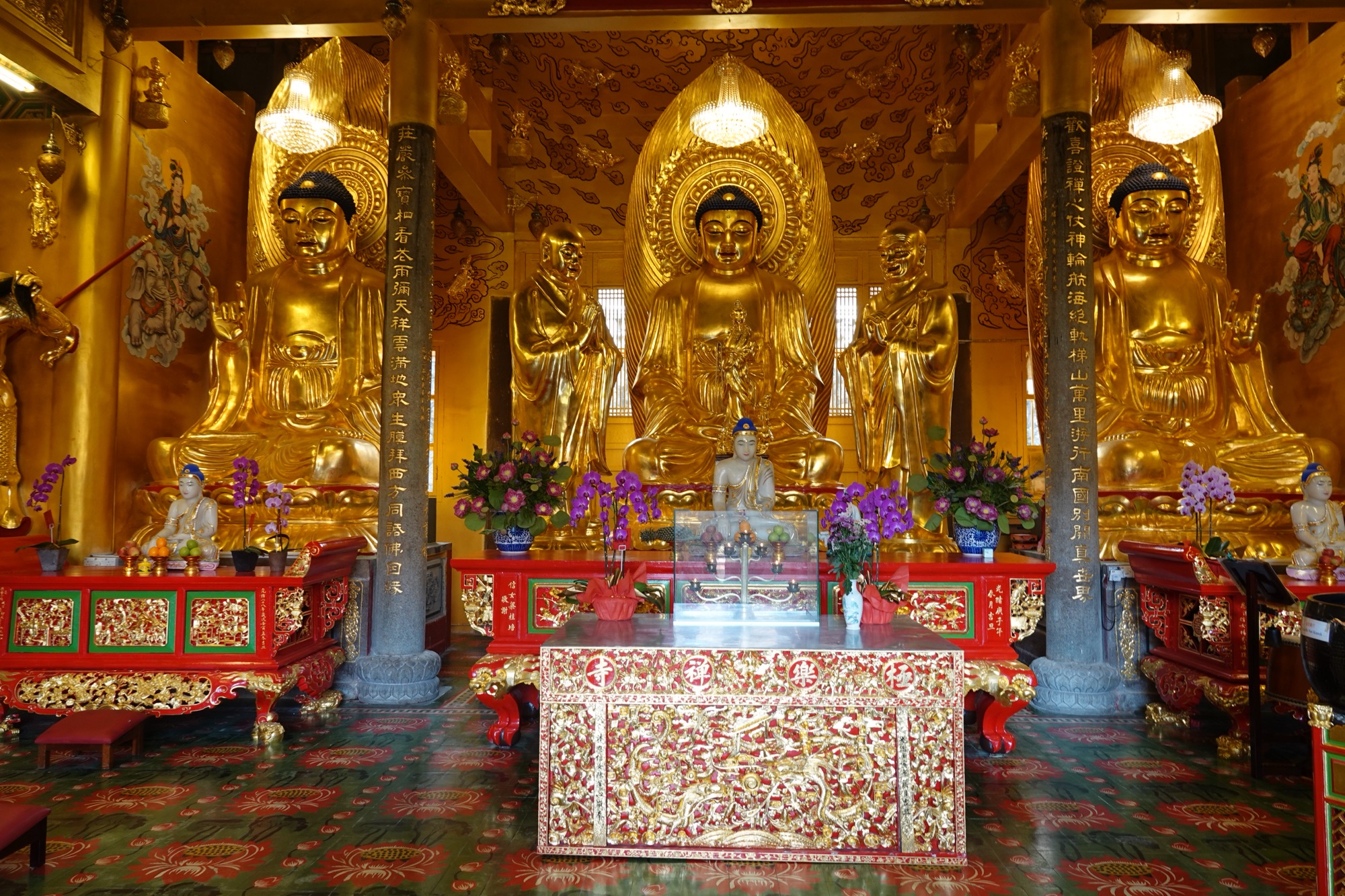

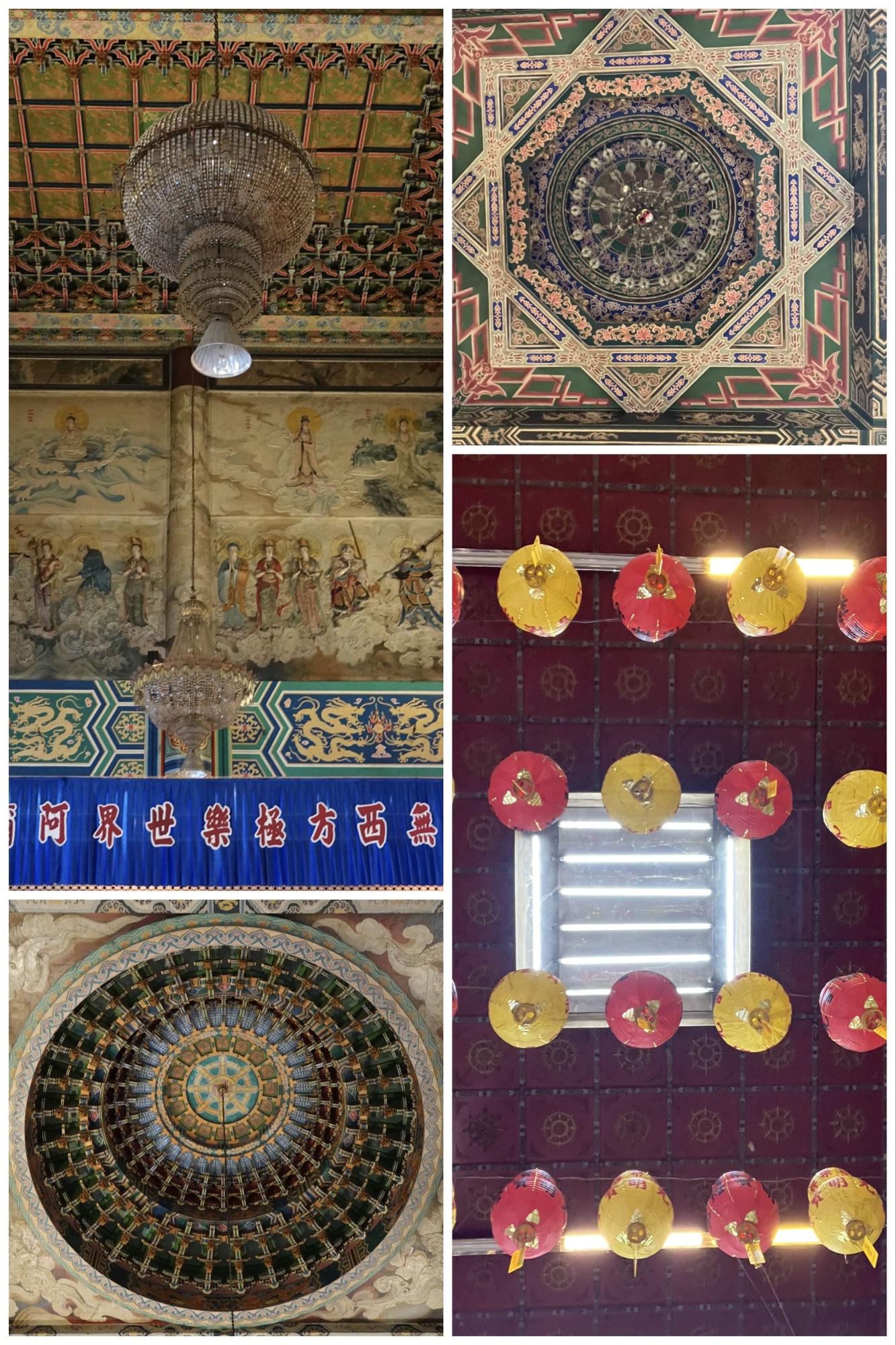
I’m always intrigued by the frescoed ceilings of European cathedrals. This temple’s ceilings were equally ornate.
Floors with lotus flower tiles are pretty interesting too!

Outside, there were so many smaller temples, statues, a small pagoda, the turtle pool, and more.



There’s just no preventing me from draping myself on any available bench, and after all I am born in the Chinese year of the monkey, so this bench was obviously made for me.

Just a short drive away in was the Thai Buddhist temple in Wat Chayamangkalaram.
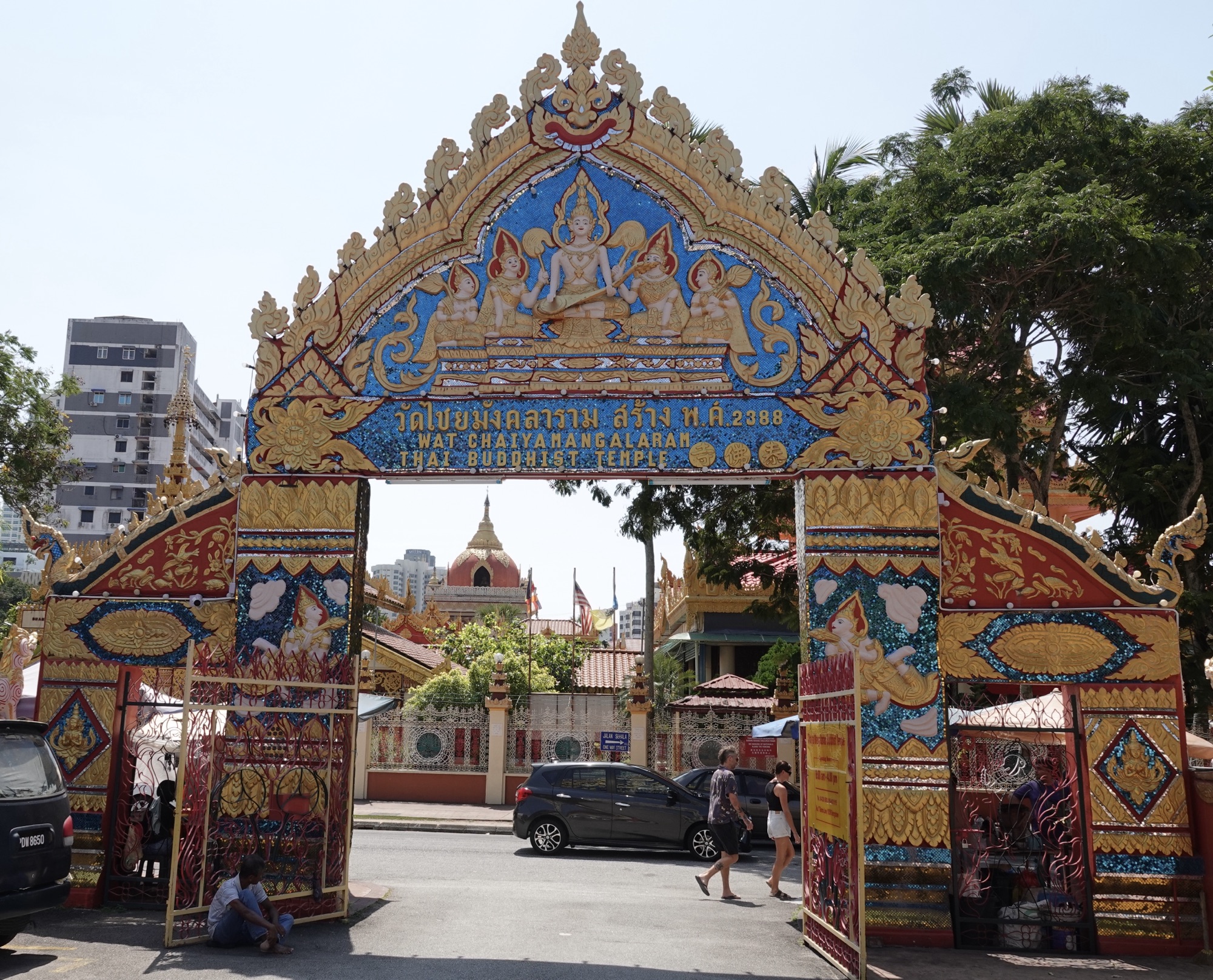
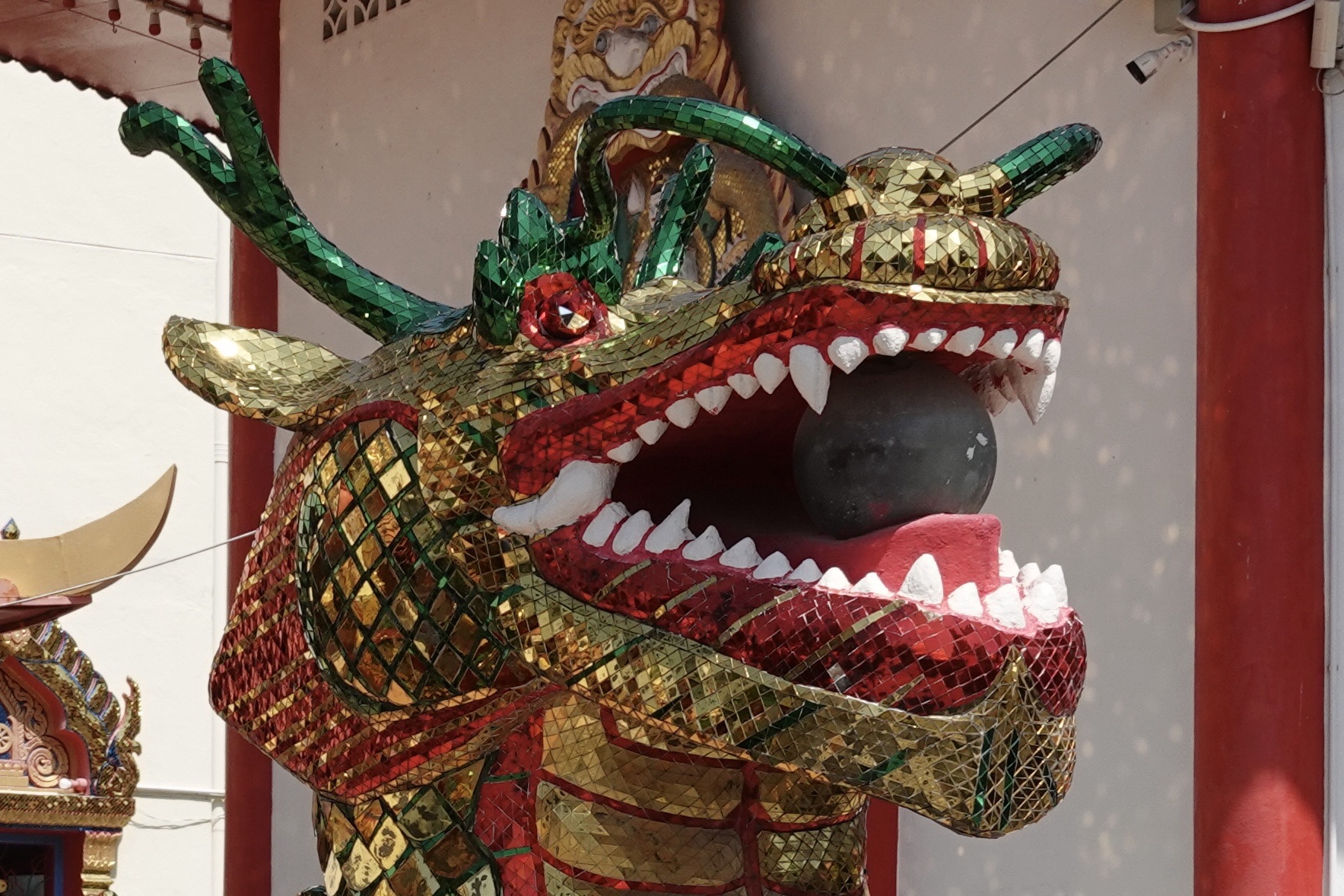
The entrance to the temple features four stunning mirrored glass mosaic Chinese dragons that gleam in the sunlight.There was a sign warning people not to touch them, since the mirror edges can cut.
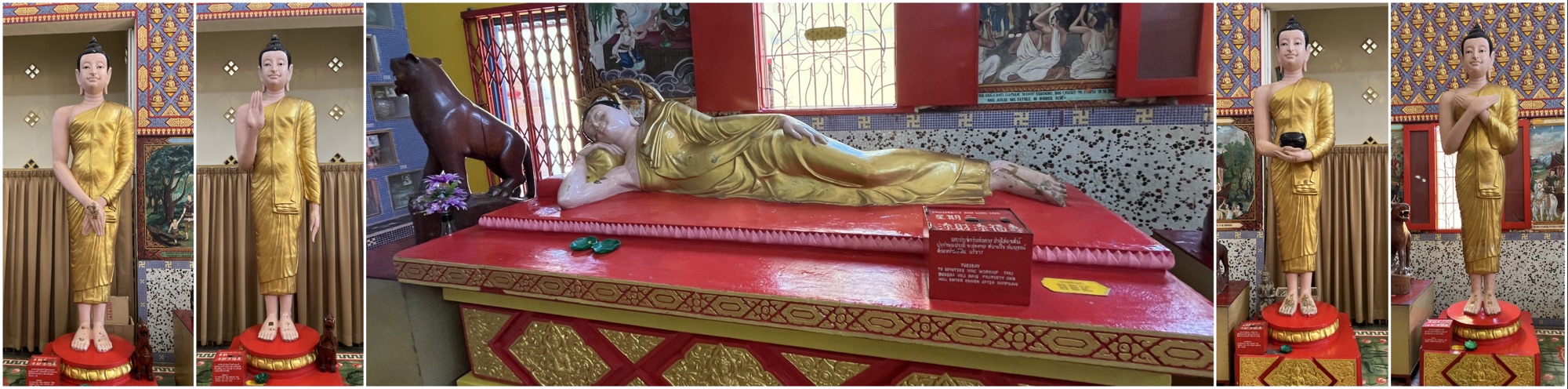
Buddhism in Thailand is largely of the Theravada school. This temple is famous for having one of the world’s largest Reclining Buddhas, measuring 33m/108ft long.

There are seven Buddhas at the entry, one for each day of the week.
In the alcove behind the reclining Buddha was a columbarium holding urns containing many, many people’s ashes.
There are also individual Buddha statues dedicated to each of the 12 Chinese zodiac signs. We found ours (fire monkey for 1956; wood horse for 1954), but didn’t spend the 12 Ringgit (less than $4CAD) to buy a flake of gold leaf to put in the offering box. Maybe that explains why Ted doesn’t own any property, and I am short on wisdom and fame.

Interestingly, since Buddha renounced all his money, all of these Buddhas require donations.

Lotuses again decorated the floor. (When I photograph floors, I always include my toes so I’ll know it’s not a wall or ceiling)

Our guide had arranged our time so that we could visit the Burmese Buddhist Temple across the road, although that wasn’t in the official itinerary. Burma (Myanmar) also practices Theravada Buddhism, but there must be some differences since there is a completely separate temple so close to the Thai one.
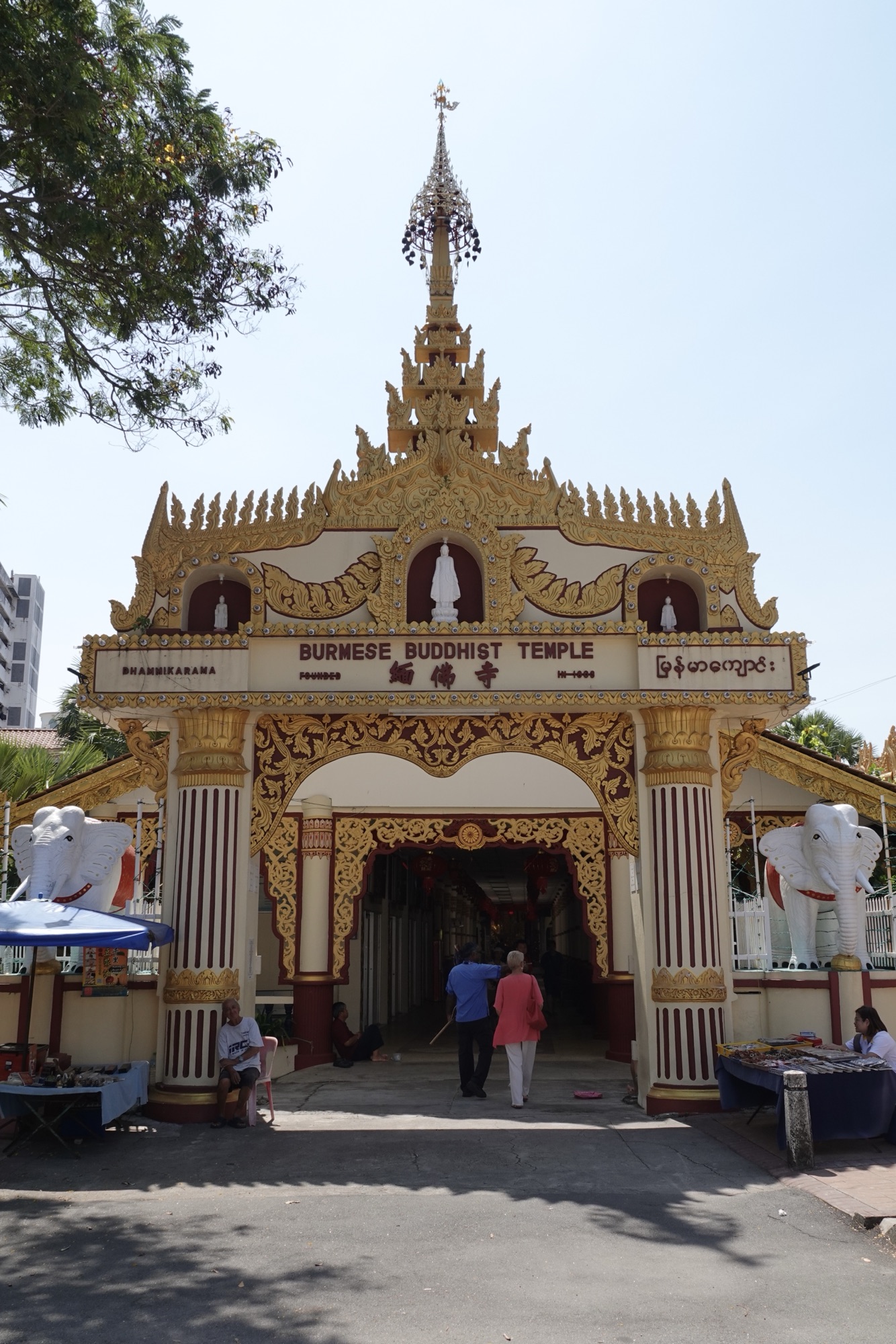


In Buddhist depictions, Buddha’s long earlobes symbolize his former life as a wealthy prince, where he wore heavy gold earrings that stretched his ears; they signify his abandonment of wealth and attachment to material things
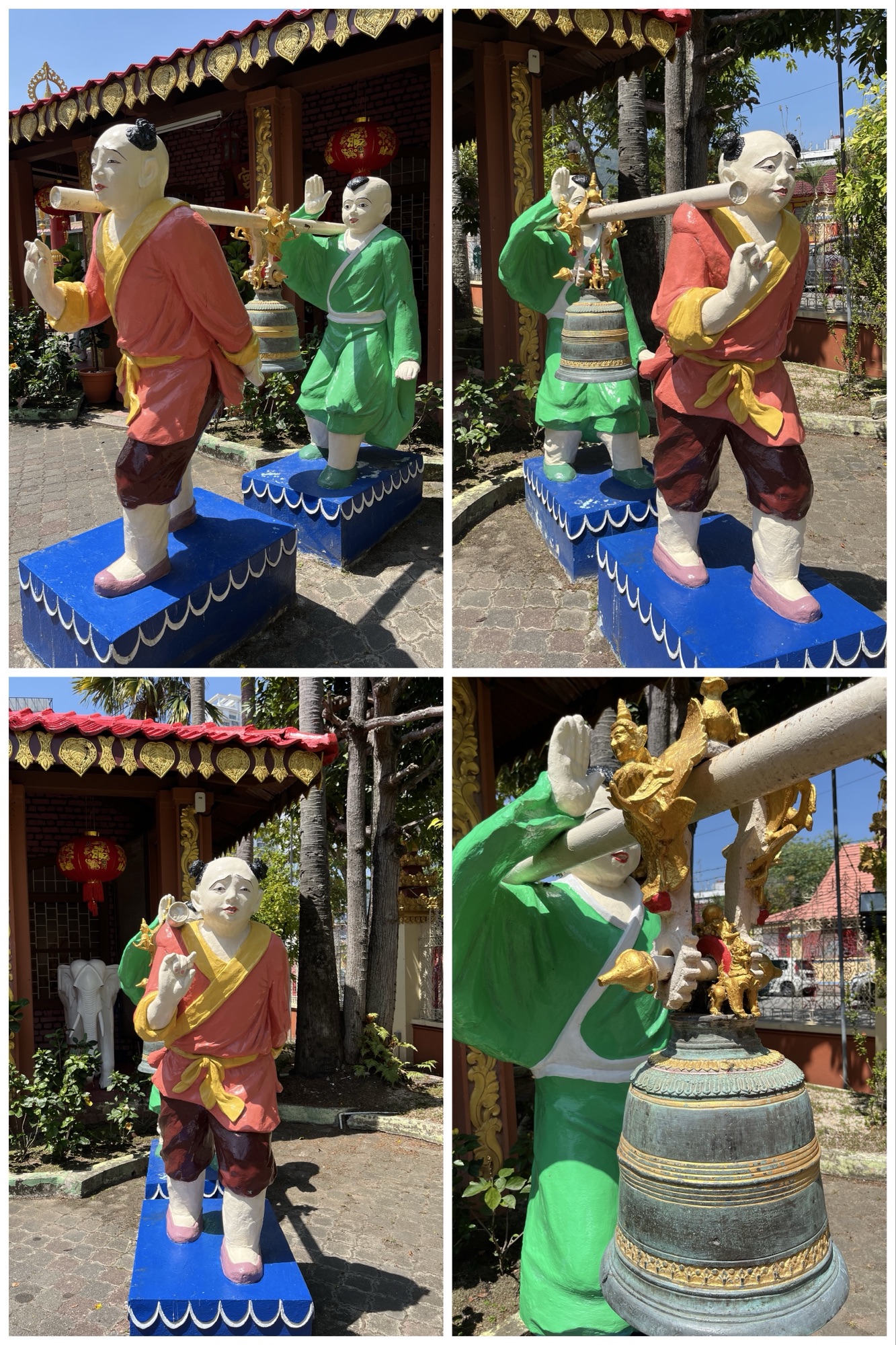
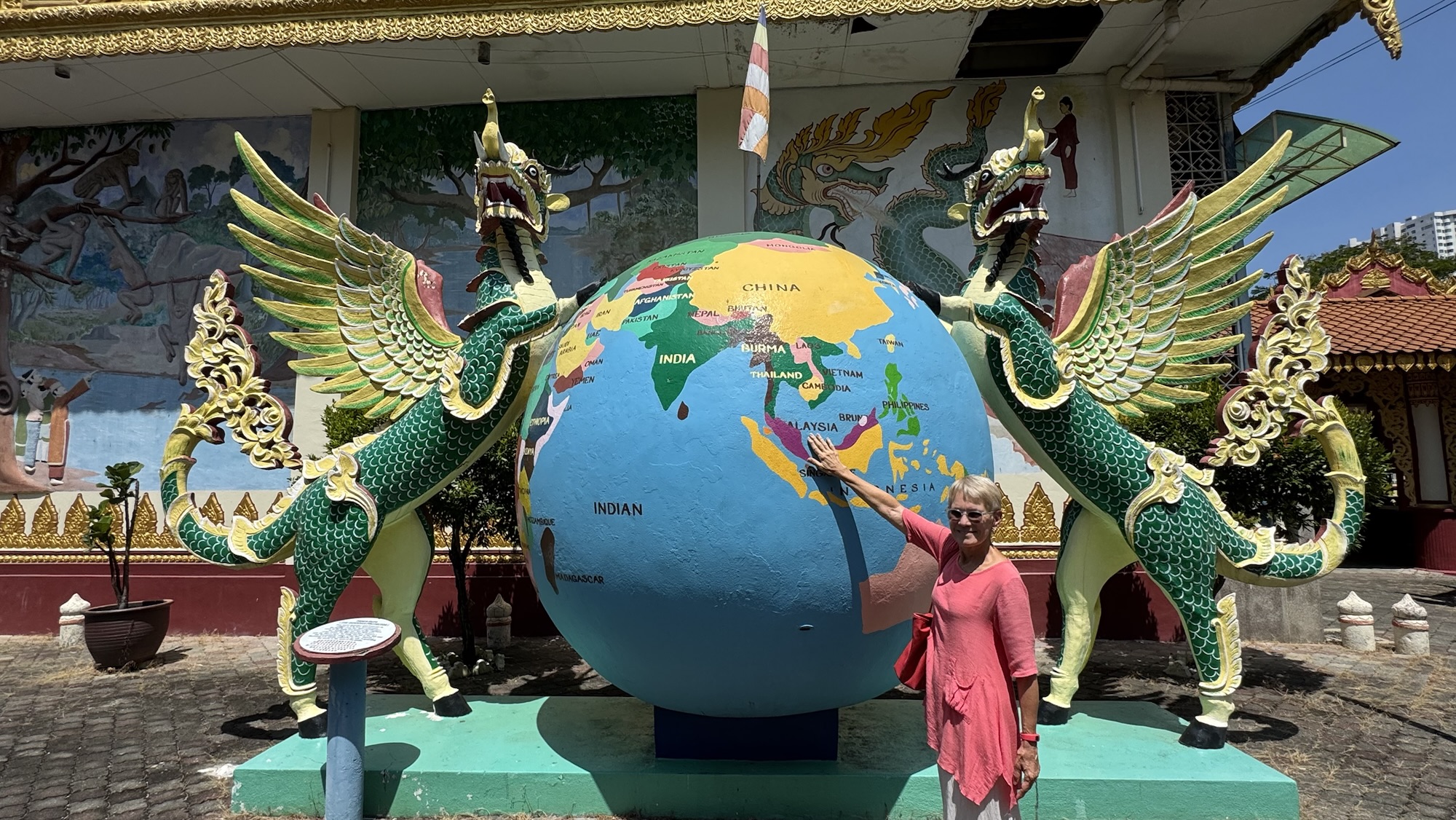
Behind the Burmese temple was a globe highlighting countries in which Buddhism is practiced.
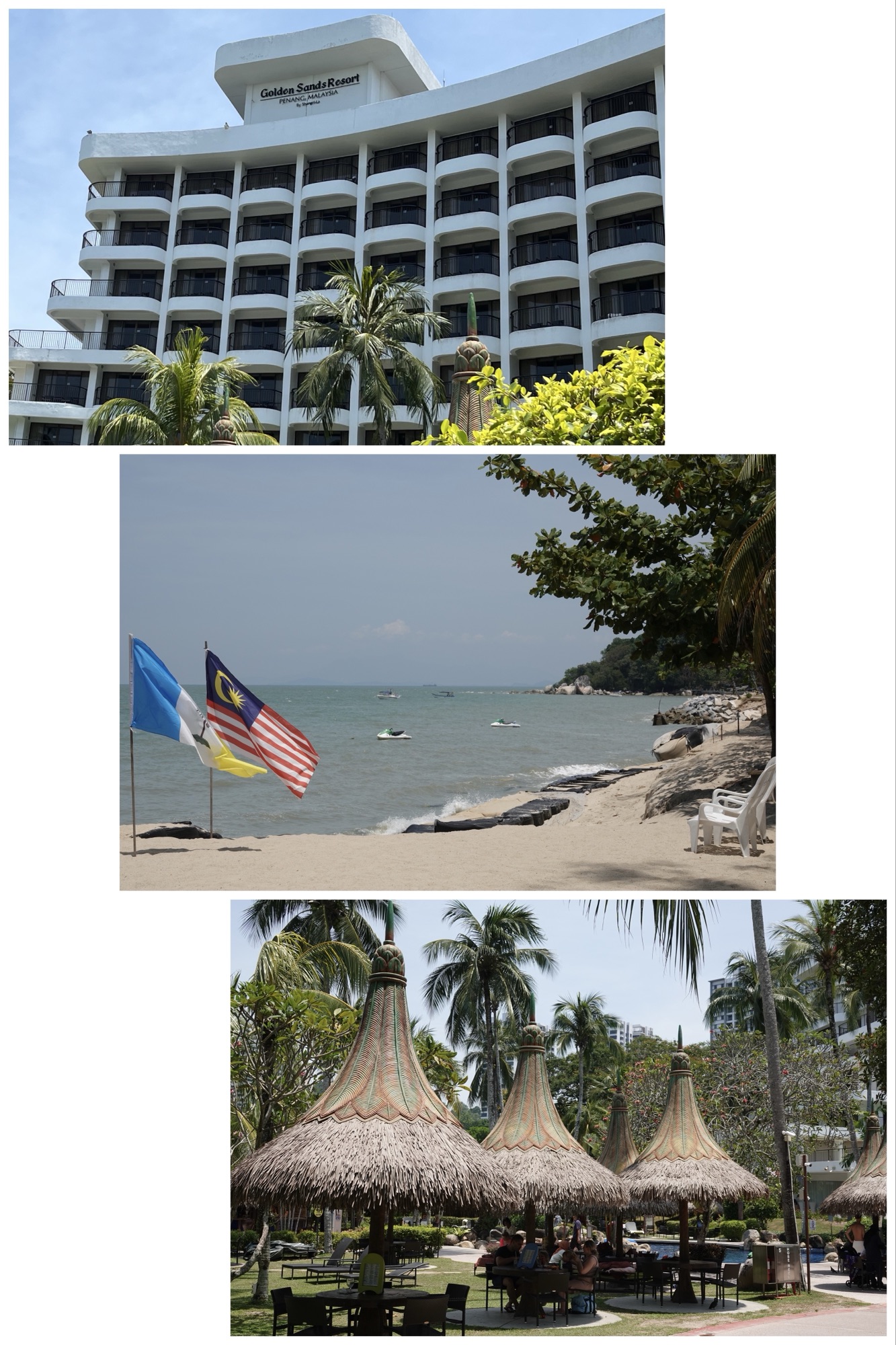
After golden temple overload, we were hot, sweaty, and ready for lunch. Viking had made arrangements with the spectacular Golden Sands Resort for our lunch, which offered a combination of western and Malaysian foods. The chicken and beef satay with cucumber, rice cubes, and peanut sauce were a highlight.
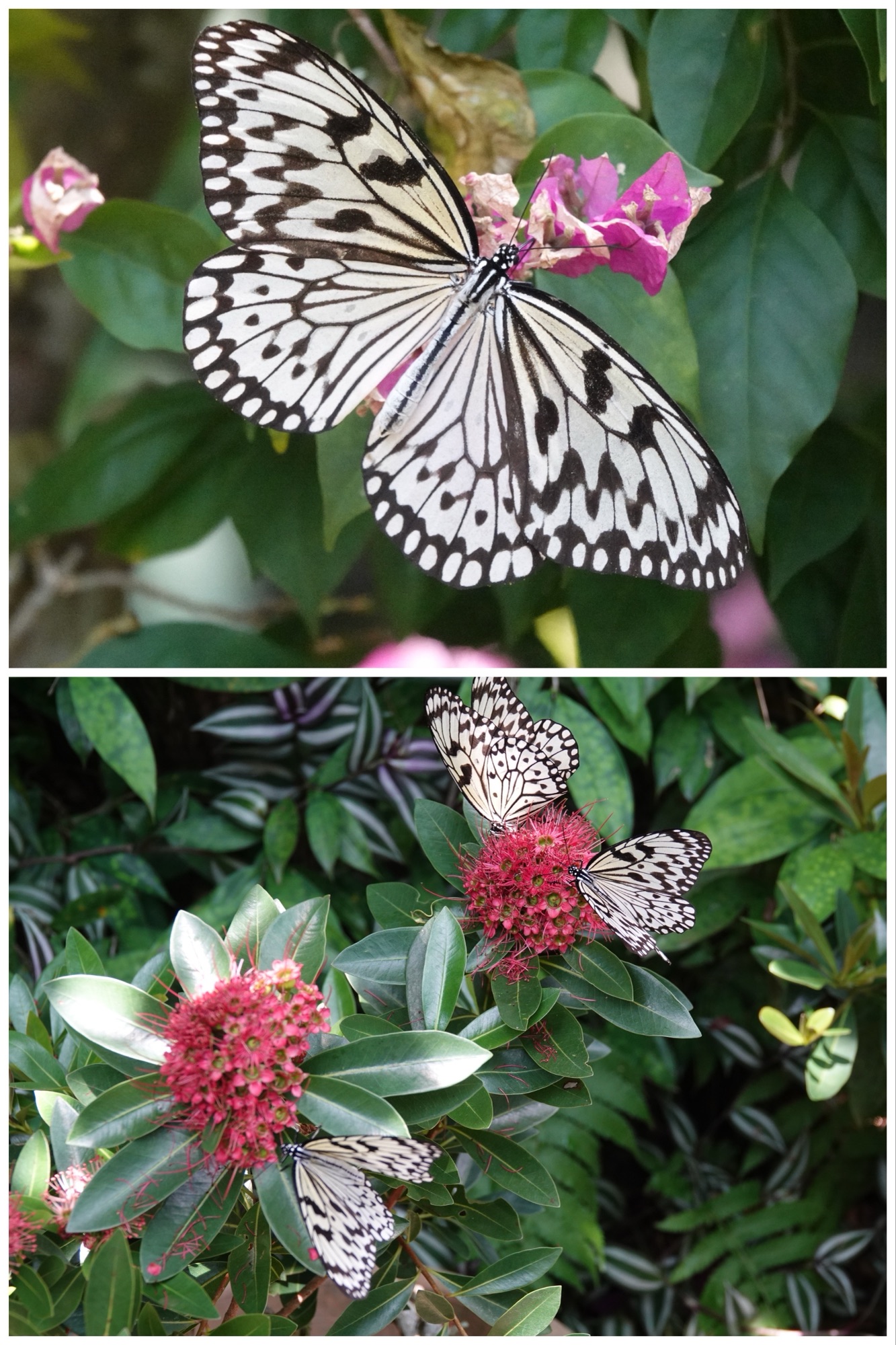
Our tour continued at Entopia in Penang’s northern Batu Ferringhi region. Entopia is predominantly a very large butterfly garden, although it also features insects, lizards, gorgeous gardens, and a large interactive educational area. I didn’t notice any identification charts, so these beauties are all anonymous (for now).


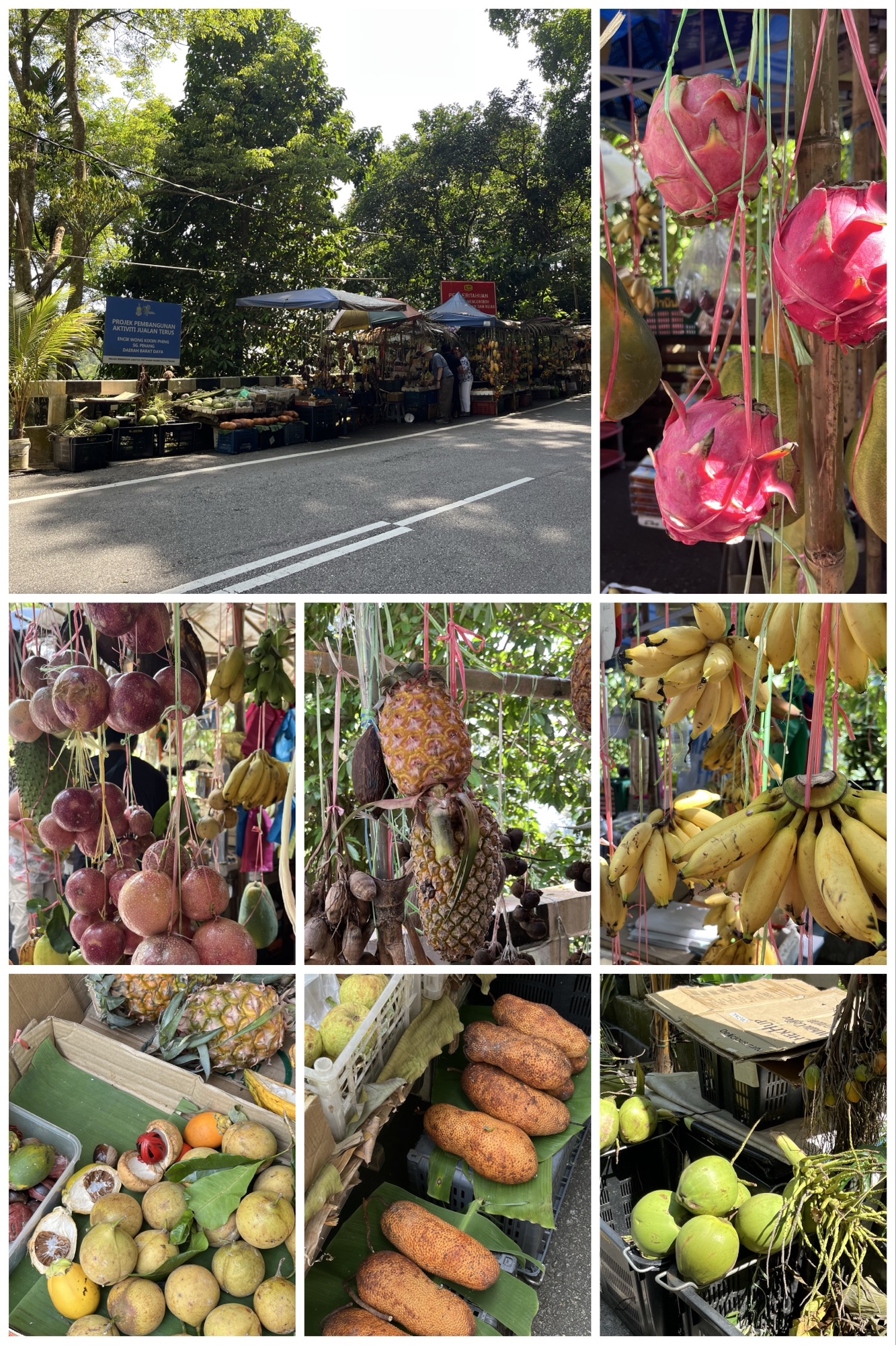
Our second last stop of the day was at a local fruit and spice stall in Balik Pulau, where we saw (and smelled) durian, mangosteens (not allowed in hotels because they stain so badly), pineapple, guava, coconut, small gold bananas, dragonfruit, papaya, and … especially … nutmeg. The vendor specialized in nutmeg in all its forms: the exterior (for tea), mace (the nut coating), the nutmeg seed itself, plus nutmeg candy, and nutmeg oil (apparently good for arthritis pain). We bought a bag of the candy and shared it with our bus.
I learned why my attempts at mango chutney have been unsuccessful; it needs green mangoes, not sweet ones.
Then, before starting the rush-hour drive back to port, we made a short visit to a typical Malay village to peek into their gardens. Traditional Malay houses were built on stilts, better to withstand monsoon-like rains and tsunamis.
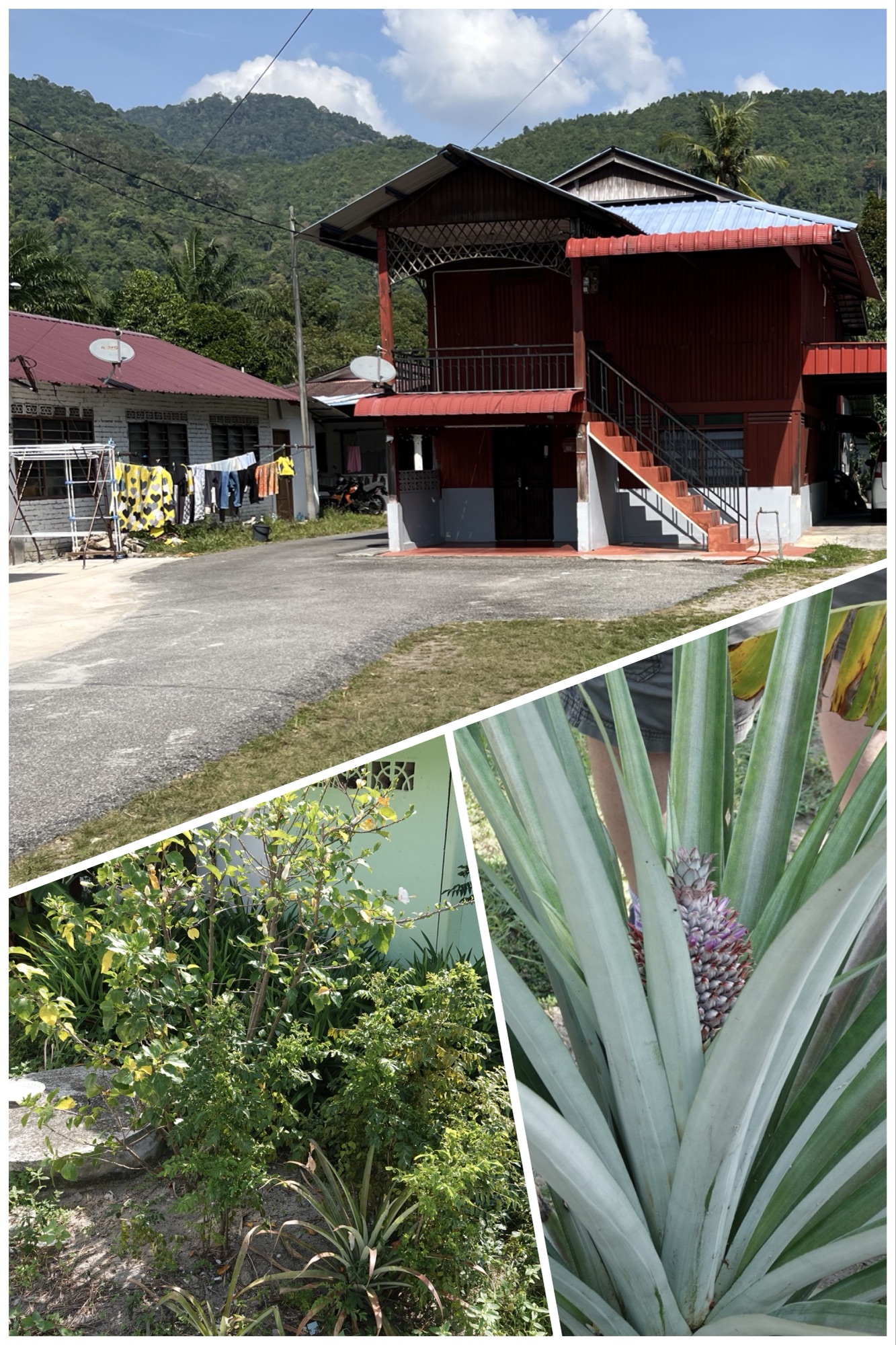
The gardens were not at all formal rows of crops, but had a wide variety of tubers, fruits, and herbs to make food delicious: tapioca (cassava), bananas, pineapple, coconut, sour mango, tamarind, lime leaf, curry leaves, and lemon grass. We got to crush and smell the fresh leaves; now I know better how I’ll use them in my own cooking.
We had an hour ride back to the ship, during which our guide – who had been excellent all day – continued to add to our knowledge about Malaysia.
With respect to education, he added that while university costs money, the government offers loans at very low interest, and students who maintain a 3.8 GPA have their loans automatically forgiven.
With respect to personal freedoms, since we already knew there was freedom of religion, he explained that Malaysians also have freedom of speech, except when it comes to the 3 R’s: rulers, religion, and race. That keeps society very civil.
Because we were here overnight, we had hoped to have the opportunity to catch up with Lynn & KB O’Brien, who we got to know as fellow nomads while we lived in Mérida Mexico in the winter of 2022/2023. Unfortunately, our (lack of) energy level after a long tour precluded that happening.
By the end of the day, we had circled the entire island, and sweated out all the water we’d drunk to stay hydrated in the 37°C heat. That’s 98.6°F, which is a temperature usually reserved for the inside of my body. A new acquaintance assured me we weren’t sweating, but “detoxing”.
All we needed to complete our day were some cold drinks and a couple of sets of Alan Jenkin’s guitar music.
Tomorrow we’ll get a closer look at George Town.
 Rose and Ted’s Excellent Adventure
What a fascinating day! Great pictures and details. I particularly like the idea of low student loan rates and loan forgiveness for high GPAs – what a motivator!
LikeLiked by 1 person
Amazing insight into the temples of Malaysia – thank you so much, wonderful photos
LikeLiked by 1 person