After two ports featuring scary giant reptiles, it was a relief to have two days focussed on culture and beauty, with no pervasive feeling of being potential food.
We didn’t arrive in port until noon on our first day, and were anxious to head out on our included full afternoon excursion as soon as we were given the all-clear. To pass the time before noon, we met again with Elena, the onboard cruise consultant, to book a Scandinavian itinerary in 2027 to replace the Princess cruise we cancelled this summer.
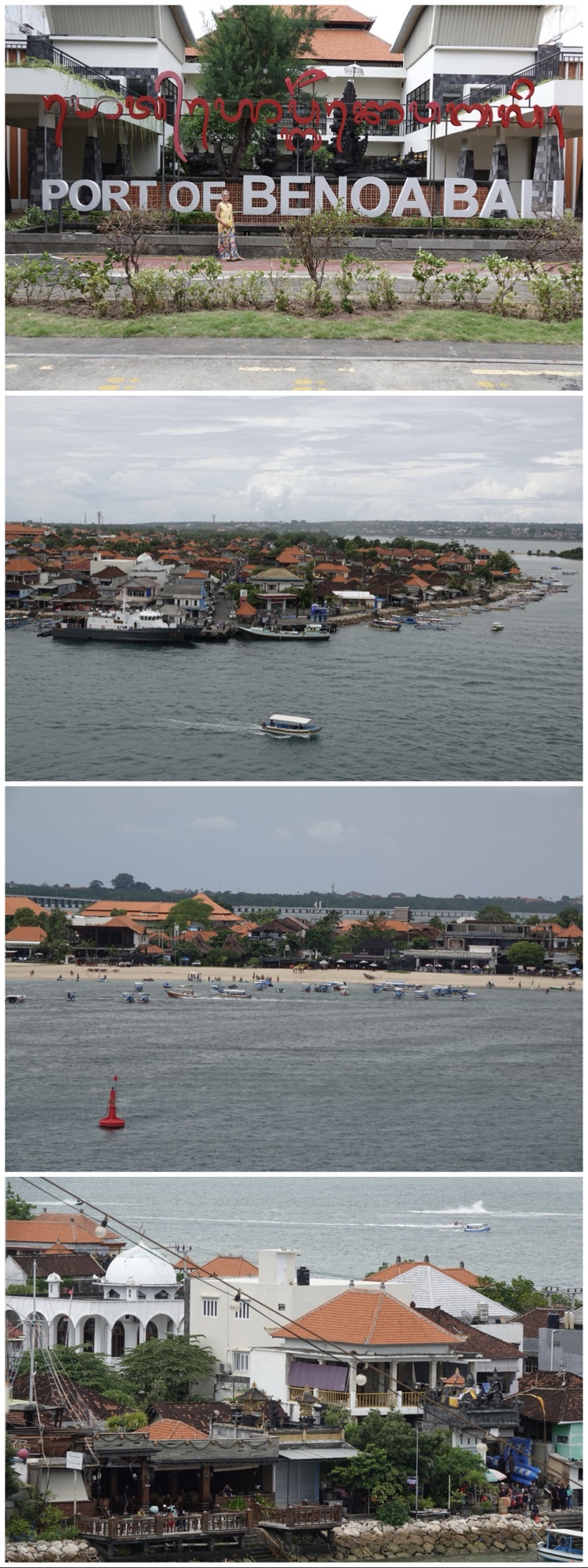
Then, suddenly, we could see Bali. Entering the port at Benoa was spectacular: a huge green lagoon to one side; planes headed to the airport soaring above us; a bay filled with sampans, parasailers, and jet-skis; waterfront buildings boasting deep orange tile roofs…

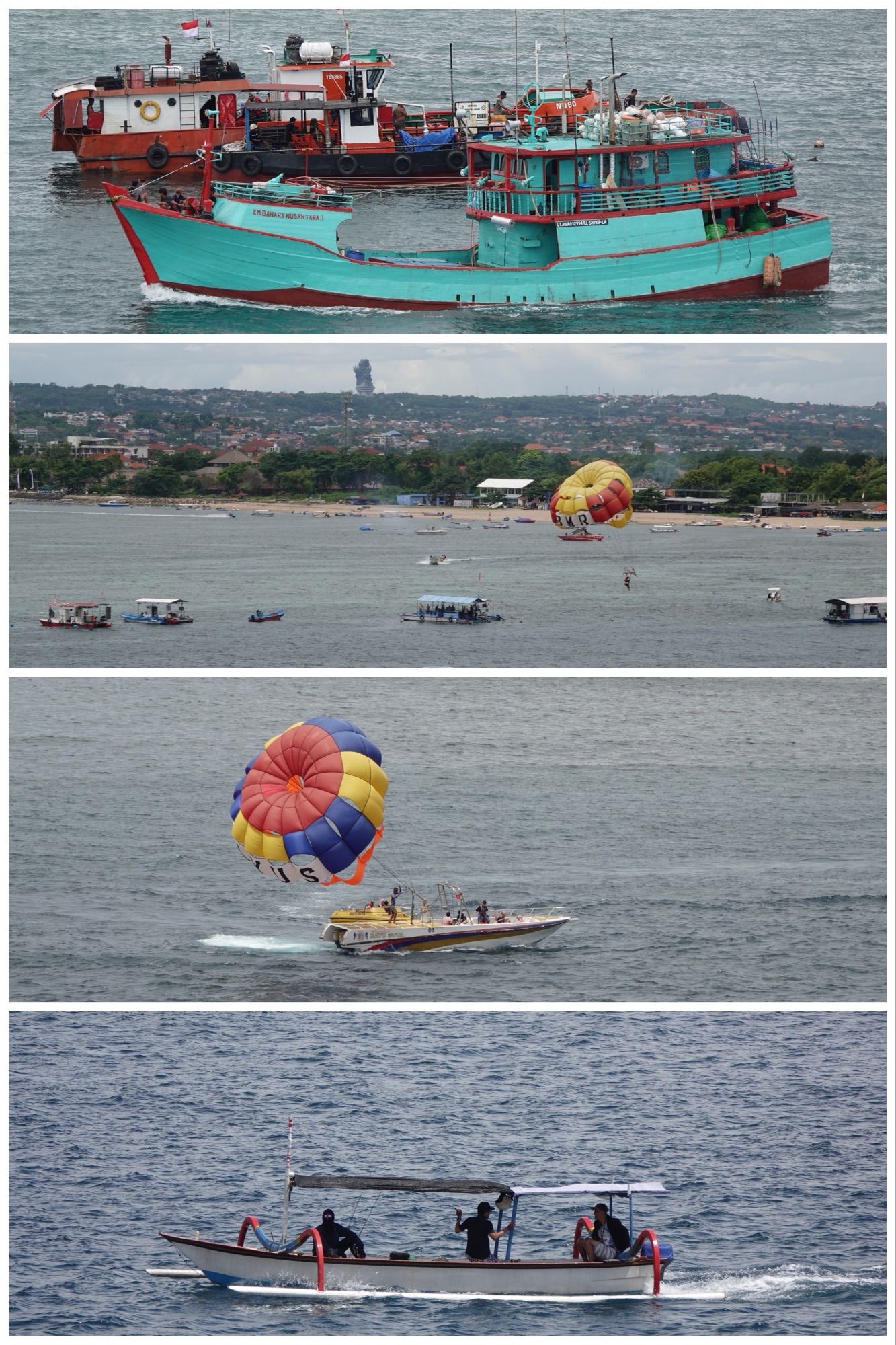
…and the huge Patung Garuda Wisnu Kencana statue.


There was also a noticeably large naval presence: 38 countries and 19 foreign warships are participating in the 5th Multilateral Naval Exercise Komodo 2025 (MNEK) in Tanjung Benoa Waters, Bali. The exercise runs through tomorrow (February 22nd).
Our first tour of the day promised to let us “Explore the rich history, revered temple, and busy markets of Denpasar.” It forgot to mention “enjoy the 35°C/95°F weather and the 86% humidity!”
We met our guide and drove into Denpasar, the capital of the province of Bali, Bali being just one of the provinces of Indonesia. The city of Denpasar (which means “north of the market”) has a rich history dating back to its days as the center of the Badung Empire, which once controlled the southern region of Bali.
The drive was full of interesting sights: uniquely Balinese architecture combining black sandstone, red brick, and carved teak; roadside shops and homes, often with ornate entryways; statues of Hindu gods in roundabouts, on roadsides, and at every T-crossing of roads; scooters everywhere; and wires that reminded us of Central American towns. (All the photos below were taken through the windows of a moving bus during our day. This is why I give Ted the window seat!)


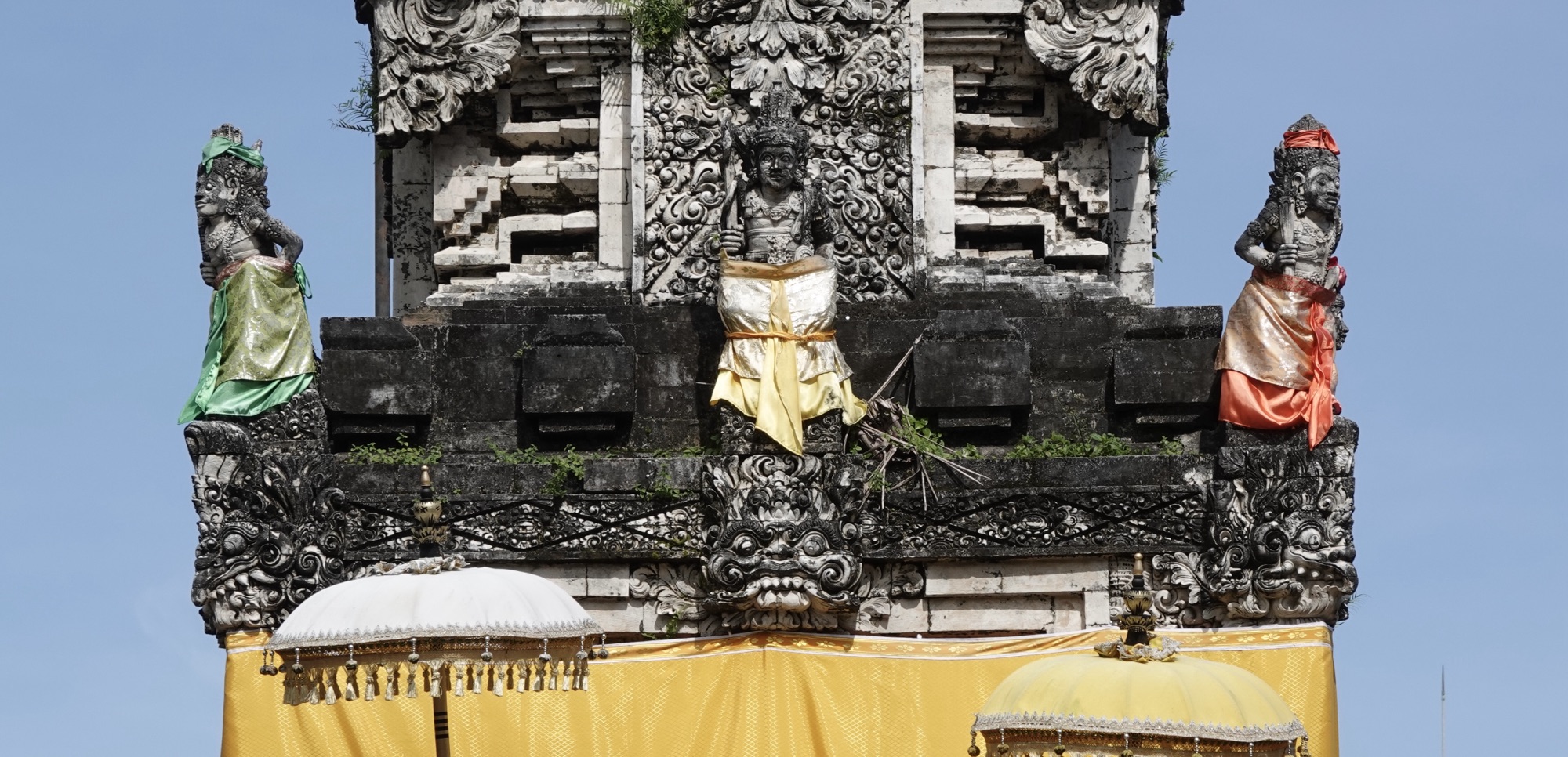
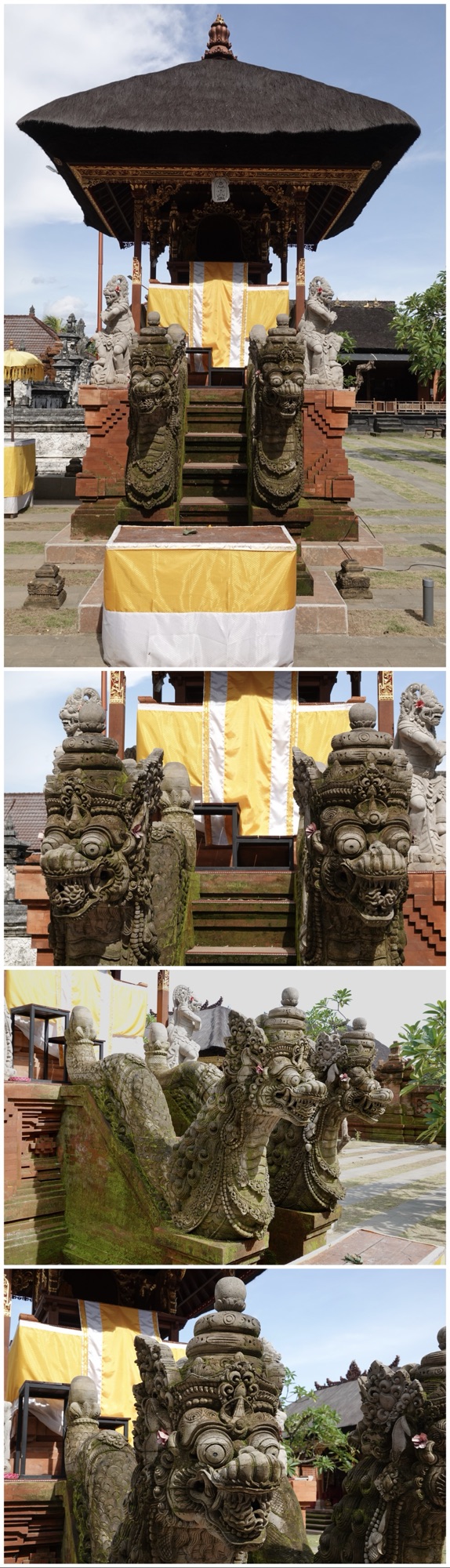
Bali is more than 90% Hindu, so there are shrines and temples everywhere. We learned that there are “practical” temples in places like markets, community/village temples, large public temples, and smaller temples or shrines in virtually every home.

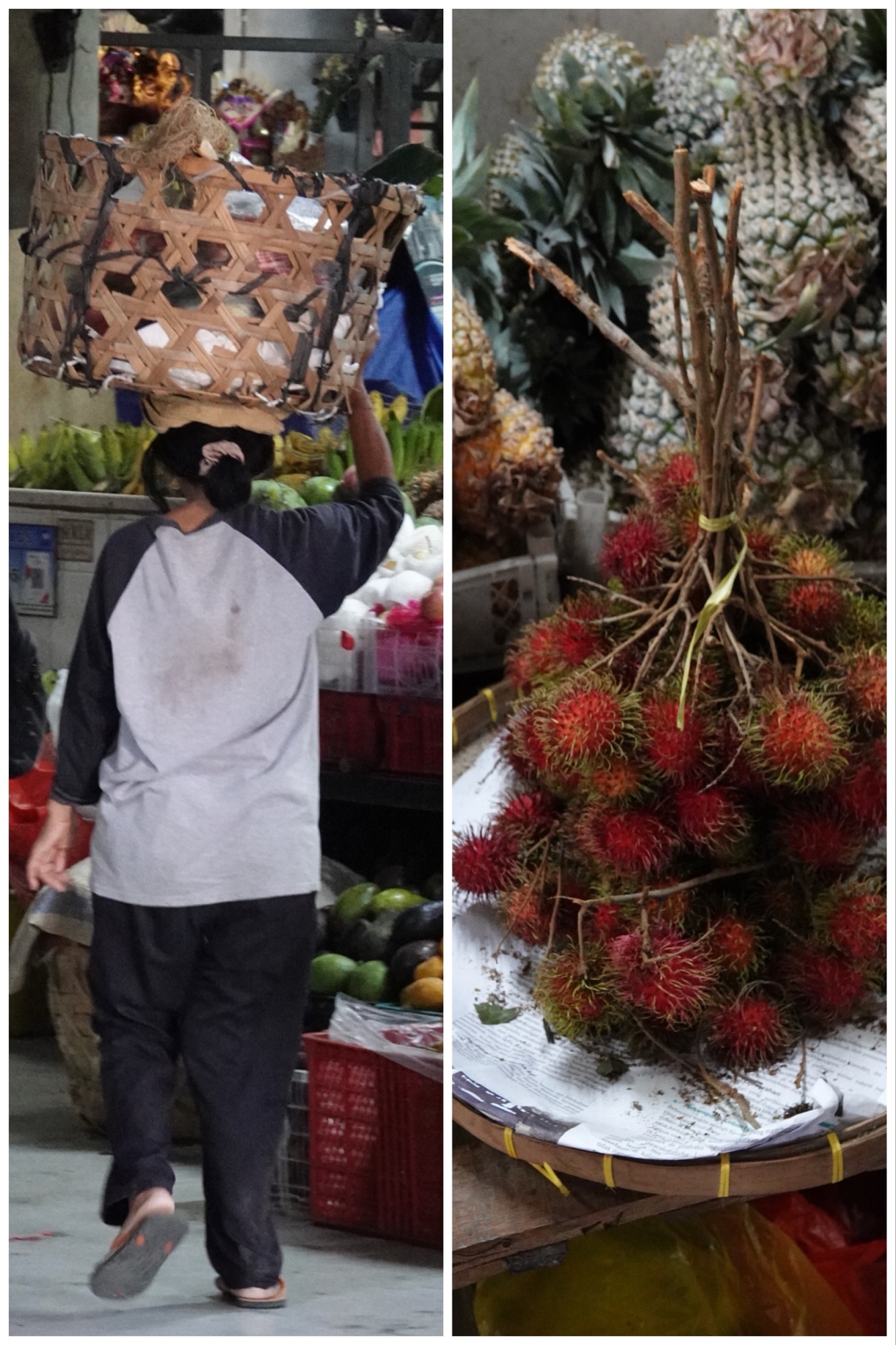
We had limited time to explore the colorful offerings at a traditional market, as our guide hustled us through 4 floors of produce, meat, vegetables, items related to daily offerings, and clothing.


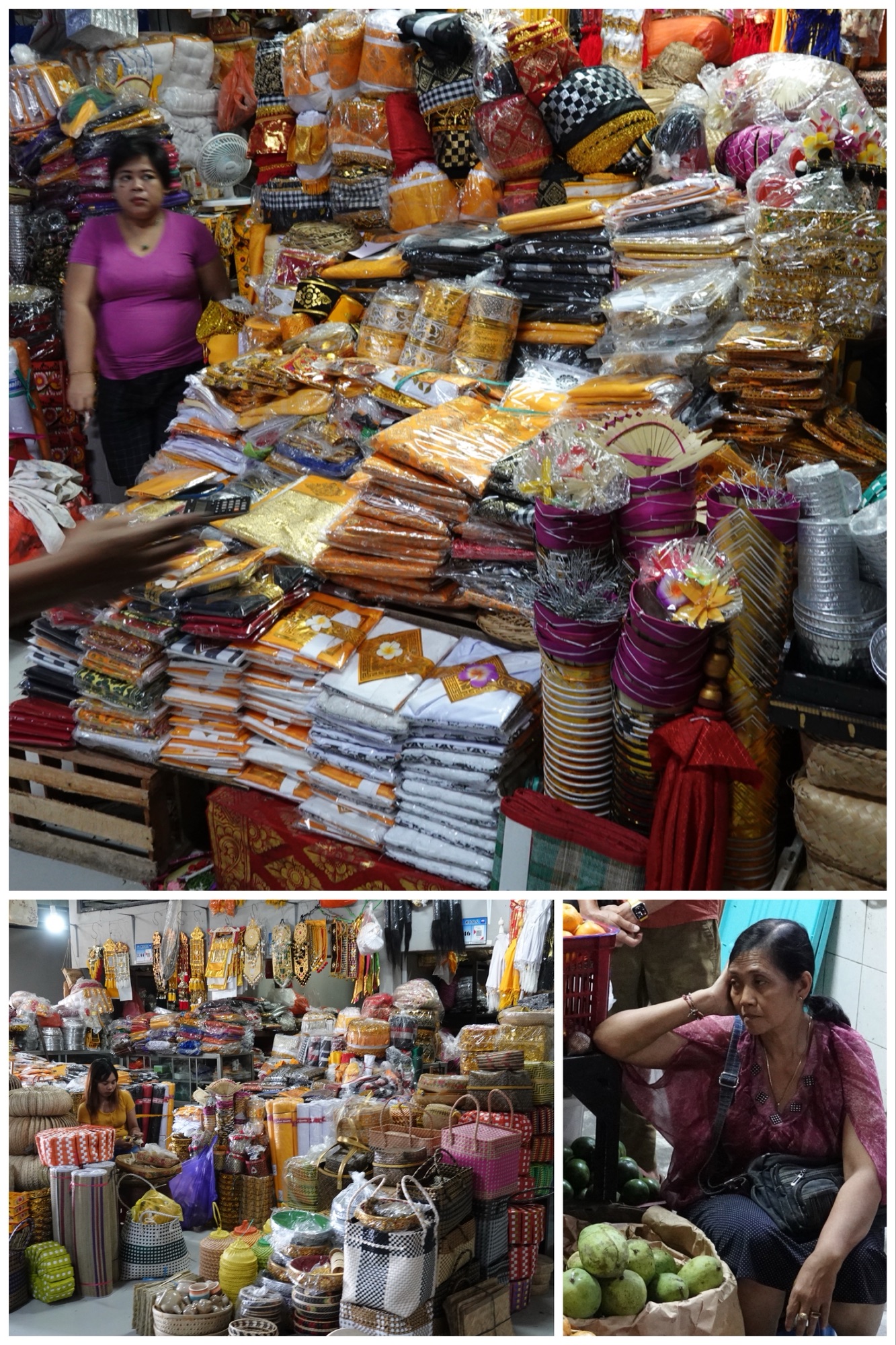
We did get to observe the market temple – with its individual shrines on which vendors make daily offerings of a sample of what they plan to sell (unless it is raw meat) , in hopes that the gods will give them a prosperous day.

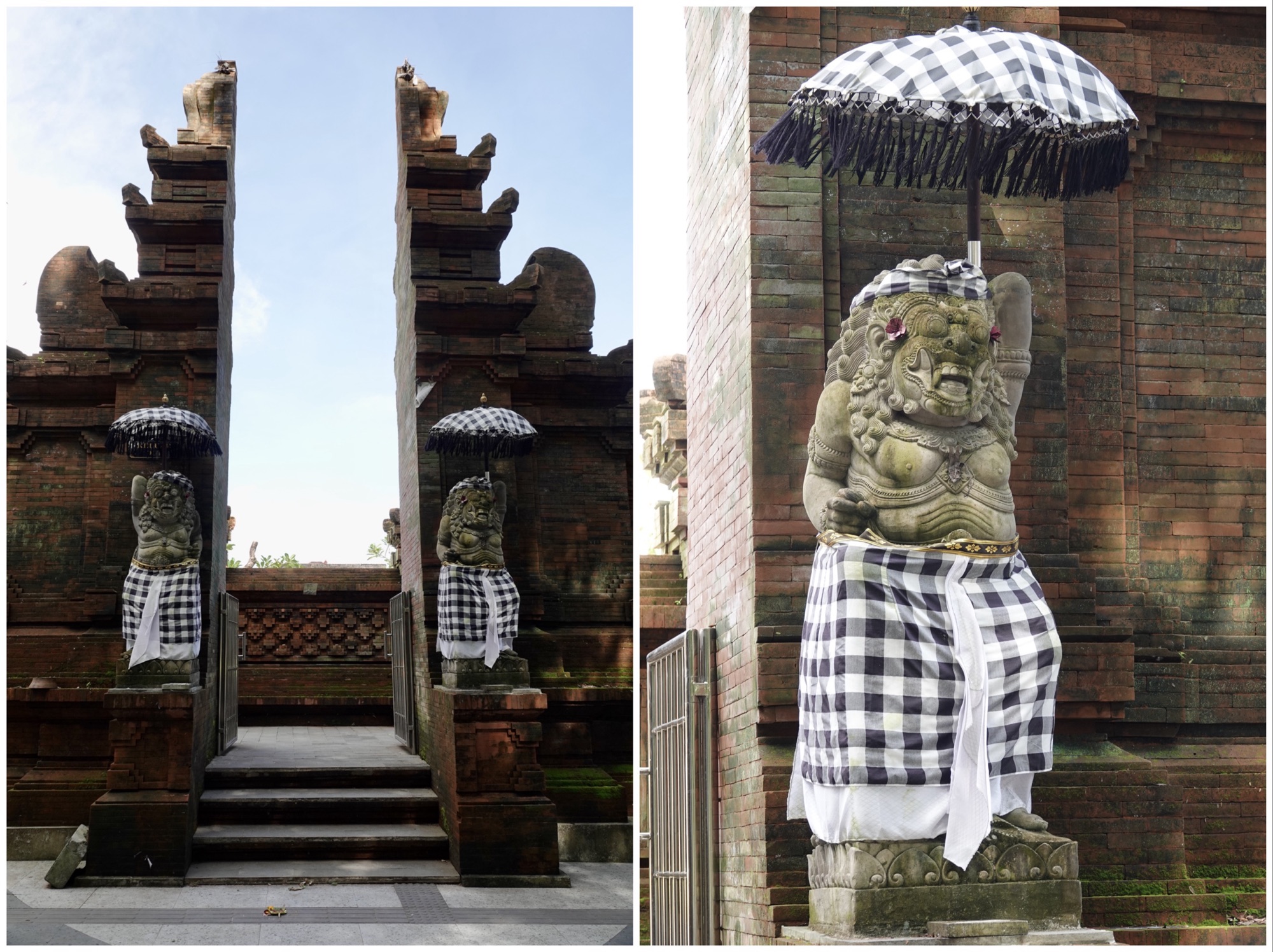
Our guide Dayu took the time to explain the symbolism of the textiles used in the temples. The black and white checked cloth wrapped around the statues represents a balance of good and evil. The plain yellow signifies a god, the plain white a goddess, and the combination of yellow and white show a balance between make and female deities.

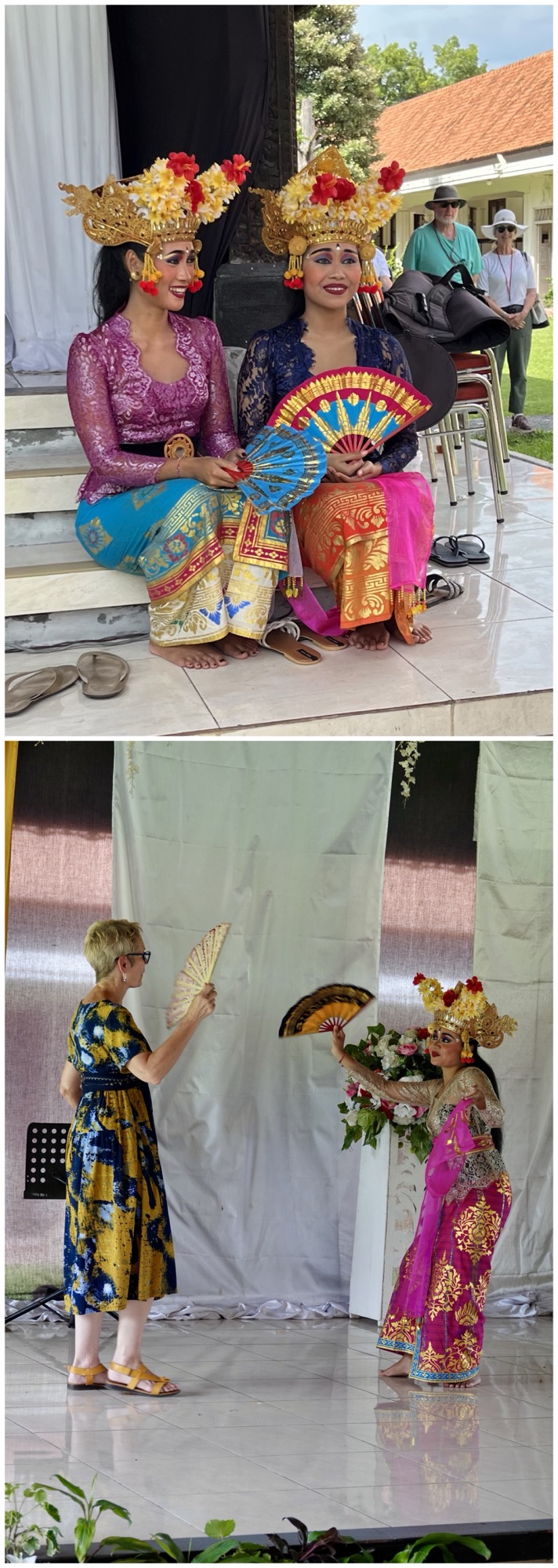
Next, we stopped for refreshment at the Inna Bali Heritage, a hotel that dates back to before Indonesia’s independence in 1945 and that has hosted notable figures including Queen Elizabeth. There, we enjoyed a brief interactive Balinese dance performance, while sampling traditional refreshments.

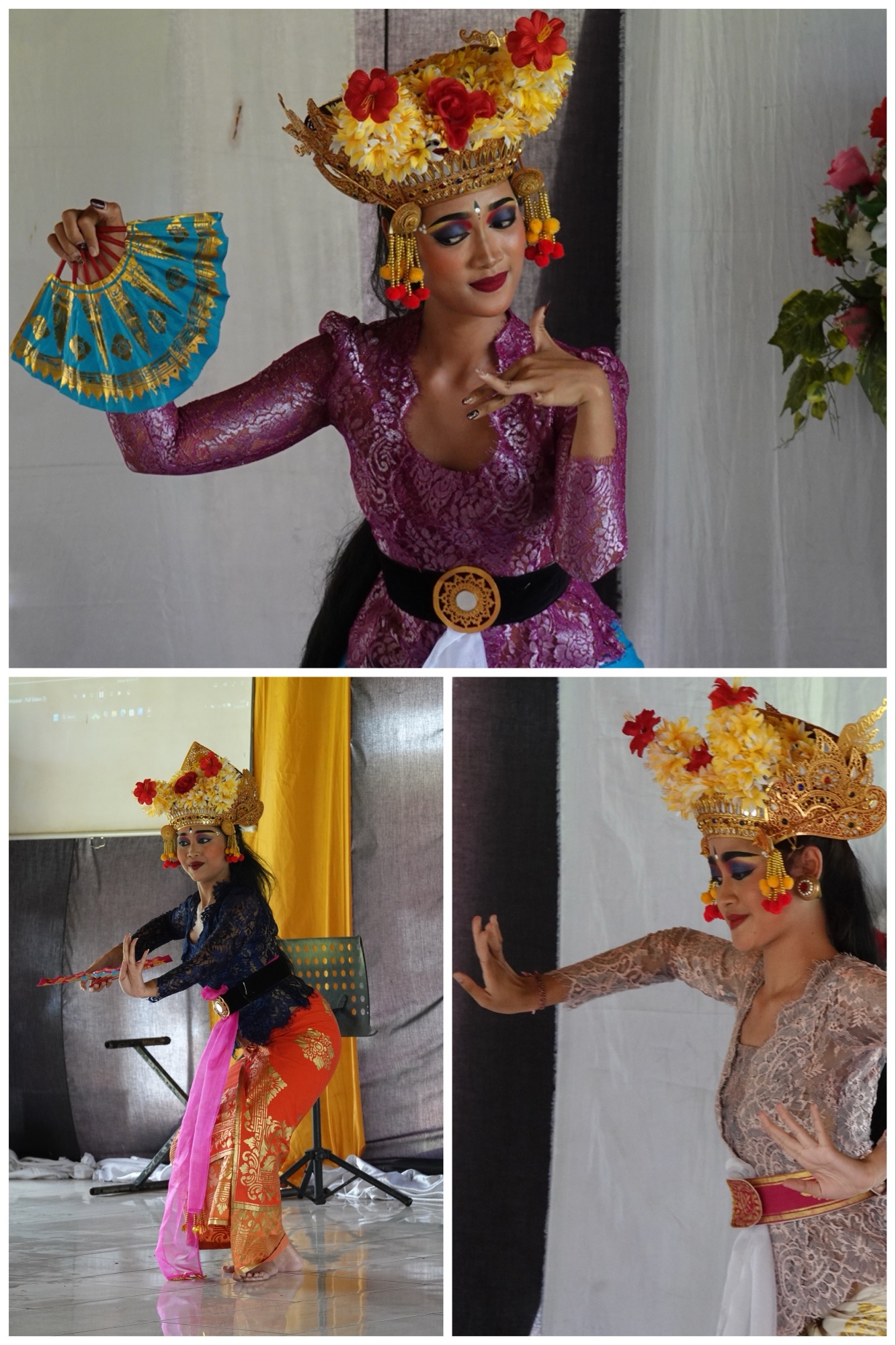
The dance features 2 dancers making movements which involve swiveling the hips, and posing the feet and hands. It is a common entertainment at weddings and celebrations, where the dancers will encourage those watching to dance with them. It is traditionally accompanied by musicians playing bumbung (bamboo) instruments.
From the hotel garden we walked through Lapangan Puputan Badung city park, featuring a large monument that was erected “as a memorial and expression of respect for the Balinese people who fought an all-out war against the Dutch to defend their honor and self-esteem. At that time, no less than four thousand people including the family of the king of Denpasar were killed. Now the Puputan Badung monument is a silent witness to the recreational activities of the Denpasar city community that every afternoon crowds the Puputan Field.” (Translated from https://www.denpasarkota.go.id/wisata/monumen-puputan-badung-i-gusti-ngurah-made-agung)

Our destination was the Pura Agung Jagatnatha, a sacred temple and important pilgrimage destination in the city.


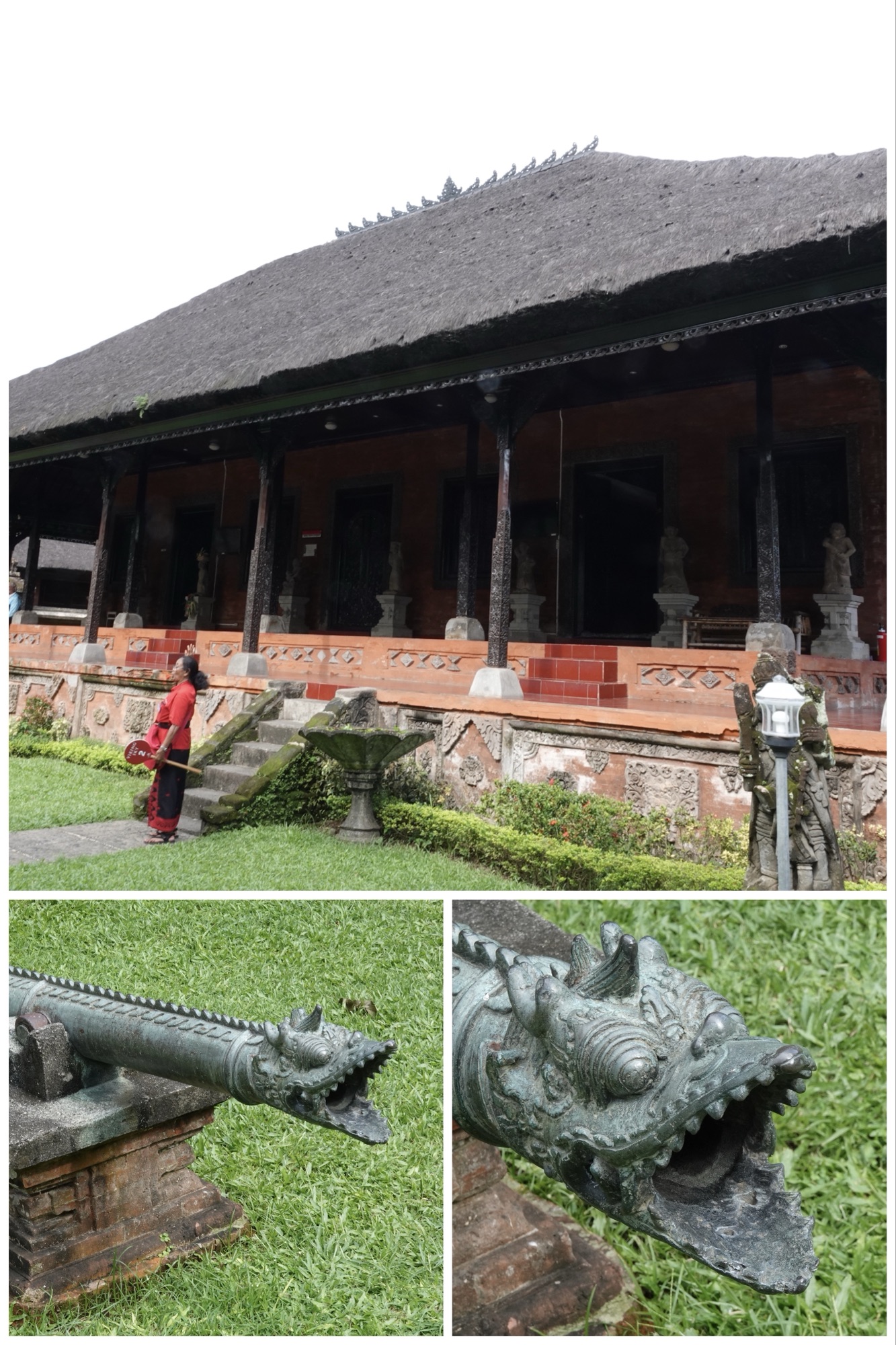
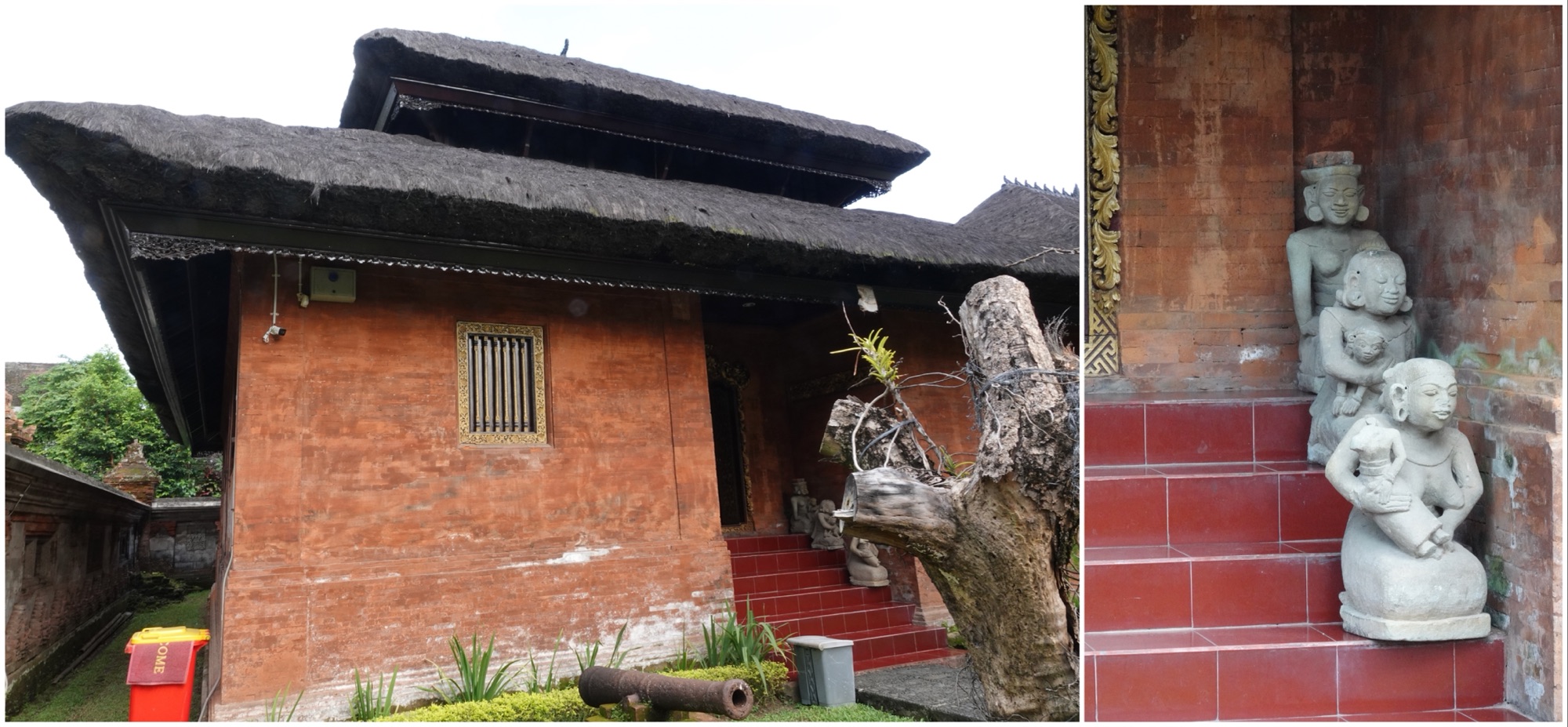
Our last stop was at the 3-gallery Bali Museum. The galleries are hosted in three buildings called Buleleng, Karangasem, and Tabanan, each featuring a different theme.
The first gallery, Buleleng, focussed on ancient Chinese coins that were once used in Bali. Buleleng was a regency of Bali that stretched along the north side of the island from the Bali Strait in the west (separating Bali from East Java) almost to the eastern end of the island. Our guide told us that this gallery was built to look like the bedchamber of the former Rajag of Buleleng.


The second gallery, Karangasem, named for another former Balinese regency/kingdom and built in that style, was dedicated to Cili (pronounced “chilli”), the symbol of fertility in both people and soil.

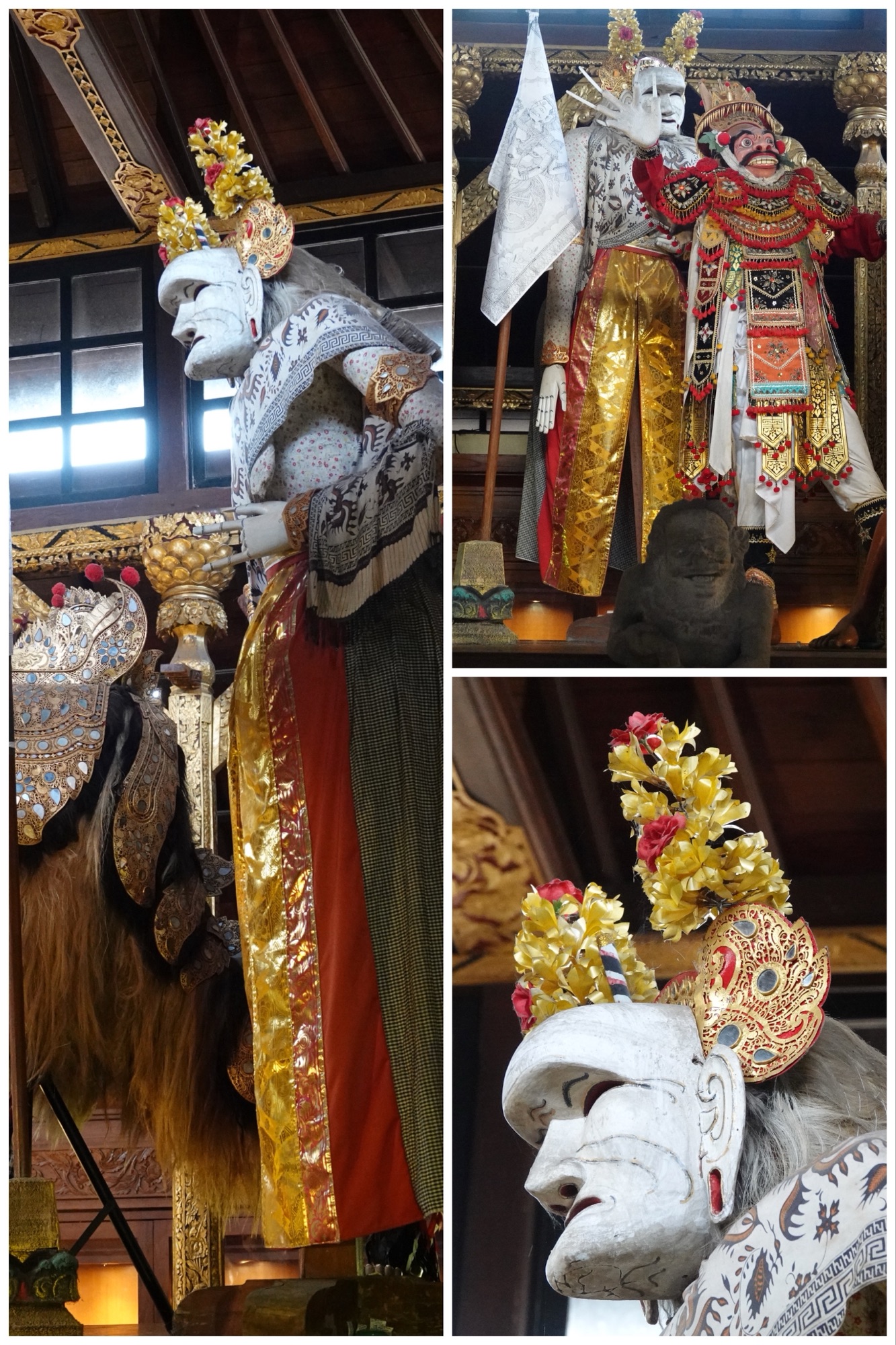
The third gallery, Tabanan, named and styled after yet another regency in Bali, contained costumes from traditional Balinese dances, where good and evil are always represented in balance.

After our museum visit, we returned to the ship, having packed so much into the afternoon 4-1/2 hour excursion that our second excursion of the day needs a separate post. Part 2 to follow.
 Rose and Ted’s Excellent Adventure