
We arrived in port in Darwin by 8:00 a.m.
The temperature today is 28°C/82°F, with 100% humidity – although the sun is shining. Our tour guide in the morning told us how lucky we were to be visiting on a “cool” day. These Northern Territory Aussies are hardy folk.
Darwin was a much prettier port than we expected.
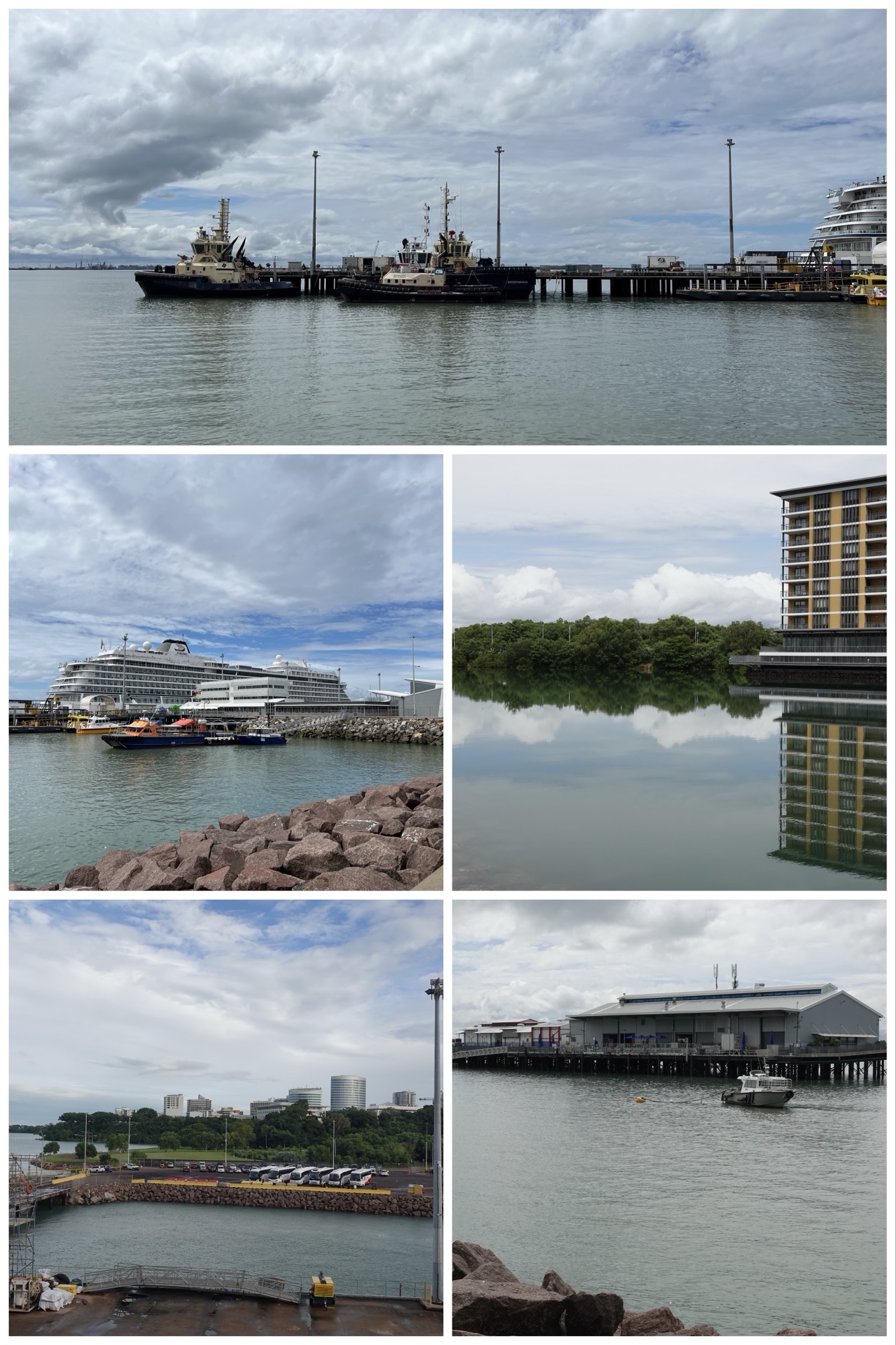
This morning, we enjoyed the 2 hour included tour of the city, during which we learned that Darwin is the largest city in the Australian continent’s thinly populated Northern Territory, and that it boasts a harbor almost 8 times the size of Sydney’s.
We met our guide and drove to the Northern Territory Museum and Art Gallery, where we had independent time to explore a collection of artifacts and exhibits that showcase Darwin’s history.
It is a museum largely focussed on natural history, with display cases filled with butterflies, birds, small rodents, and reptiles.
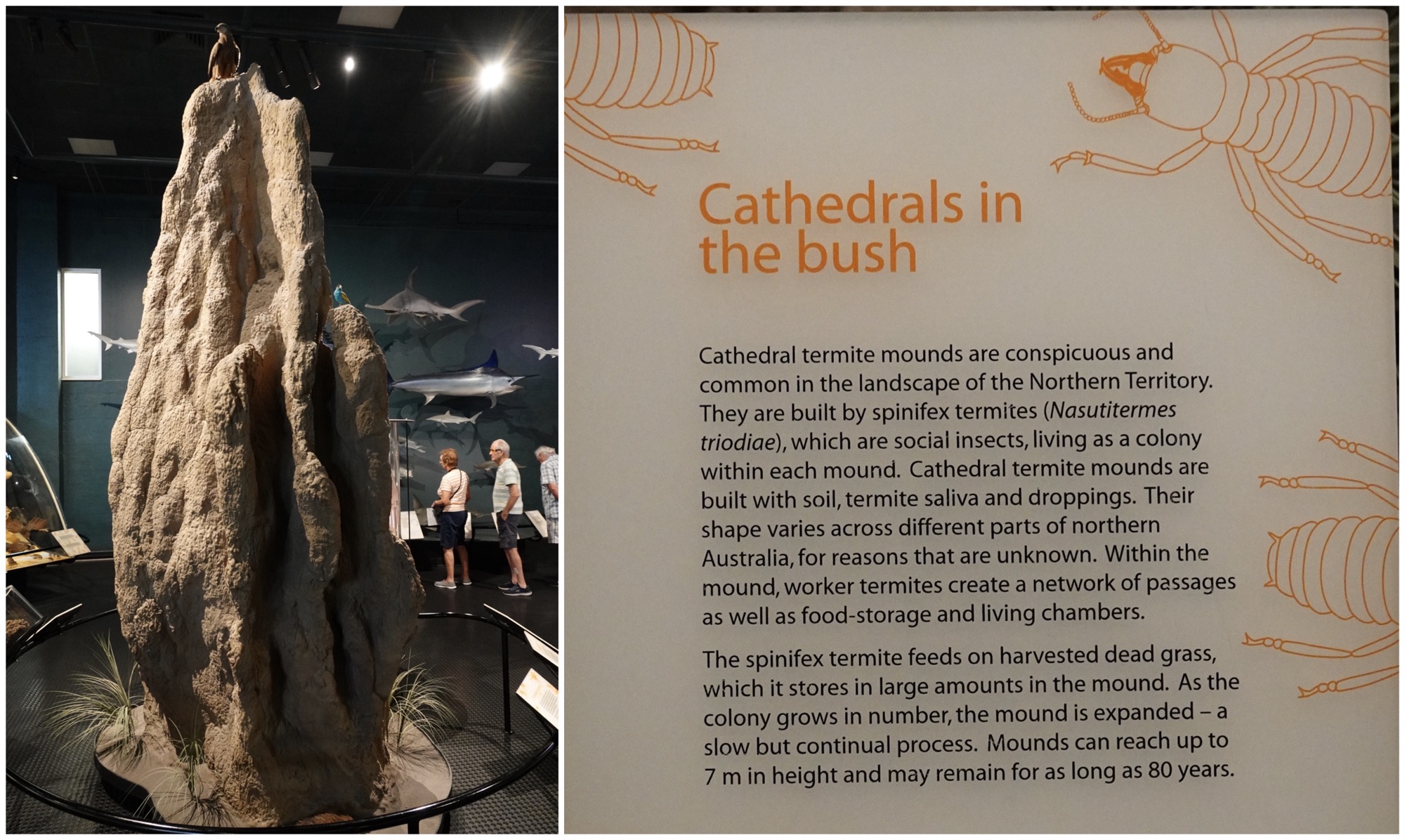
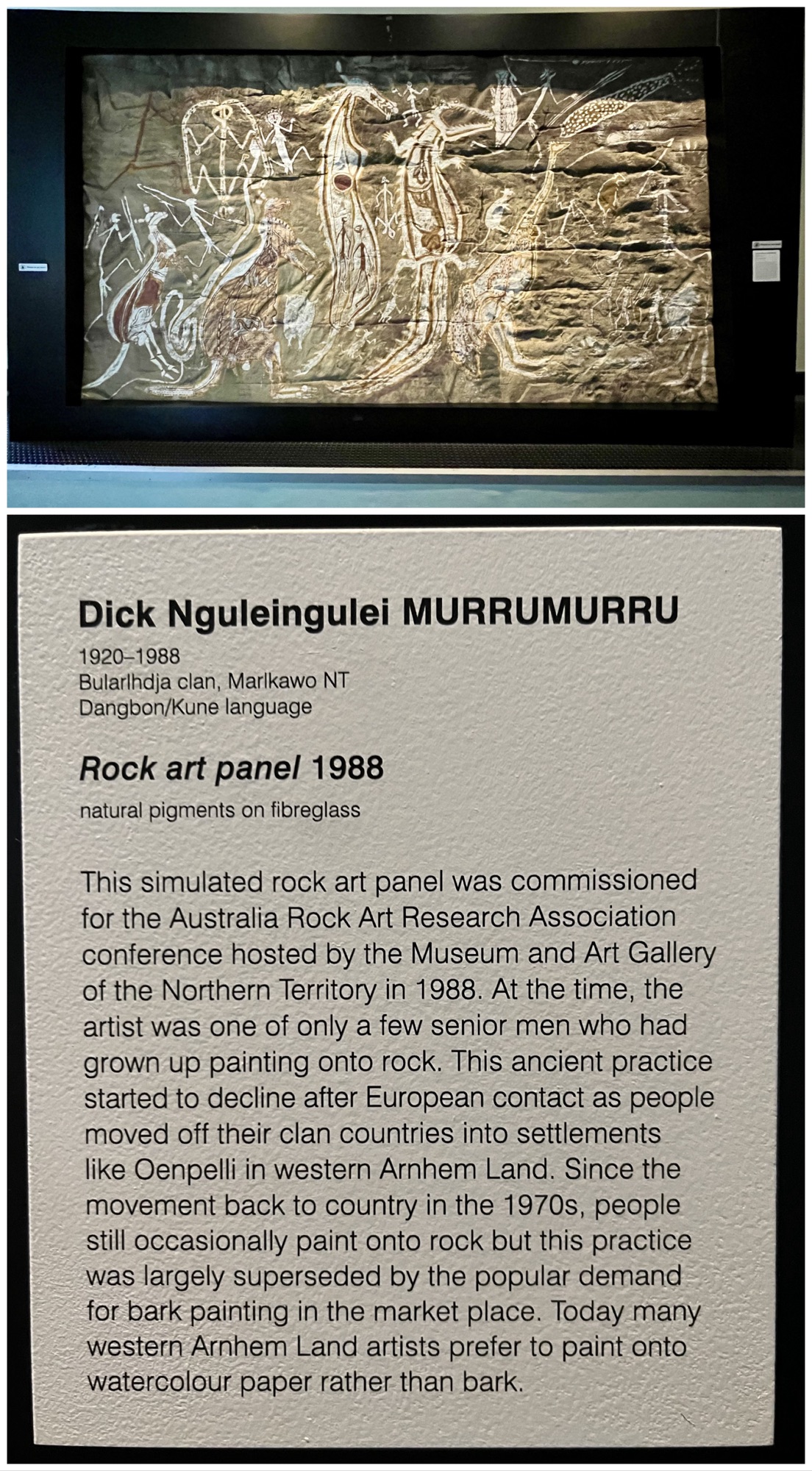
There were also exhibits about Aboriginal culture, and about the role the town played during World War II. The major aboriginal art exhibit was closed today, but this huge permanent piece was intriguing.
We discovered the stories of the devastating cyclone that struck Darwin in 1974, and how that event shaped the city we saw today. Inside the museum was a “cyclone room”, in which you could experience the sound of a cyclone as if it were just outside your door. It was scary.
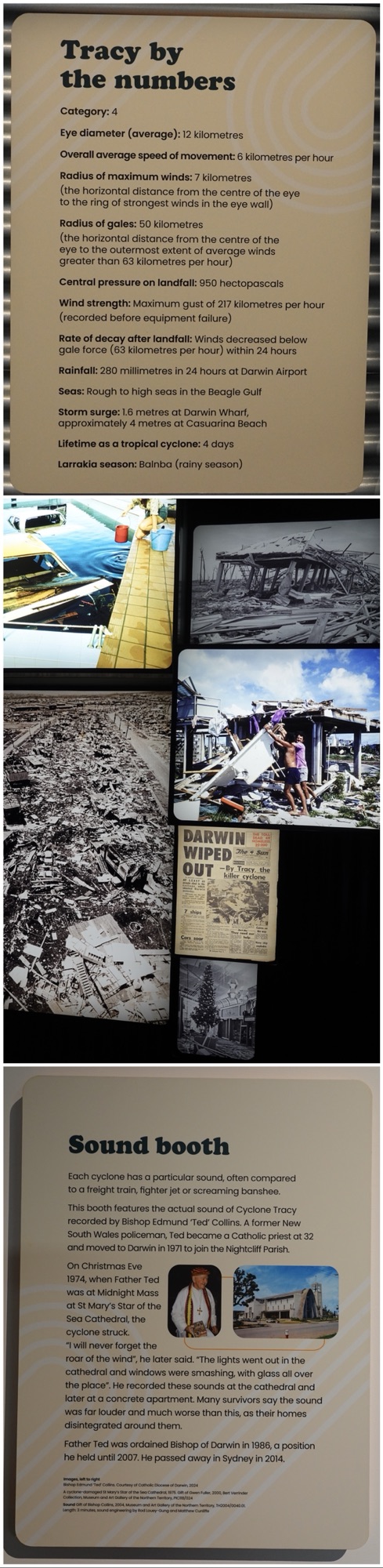
When we realized that Cyclone Tracy flattened 84% of Darwin, and displaced 94% of its citizens, whose homes were destroyed or uninhabitable, those facts put into stark perspective why the museum – built in 1981 – contains virtually no “old” items. They were all blown away, washed away, or otherwise destroyed.
Australians reacted to the disaster exactly to the type: angry, supportive, irreverent, and with a sense of humour.

The airport and military base required extensive restoration. At Darwin Airport, thirty-one aircraft were destroyed and another twenty-five badly damaged. Massive rescue and aid operations were flown using partially restored runways.
Fun fact #1: Darwin’s rebuilt airport has the longest runway in the Southern Hemisphere; it was built to accommodate the landing of a space shuttle, should that ever be necessary.
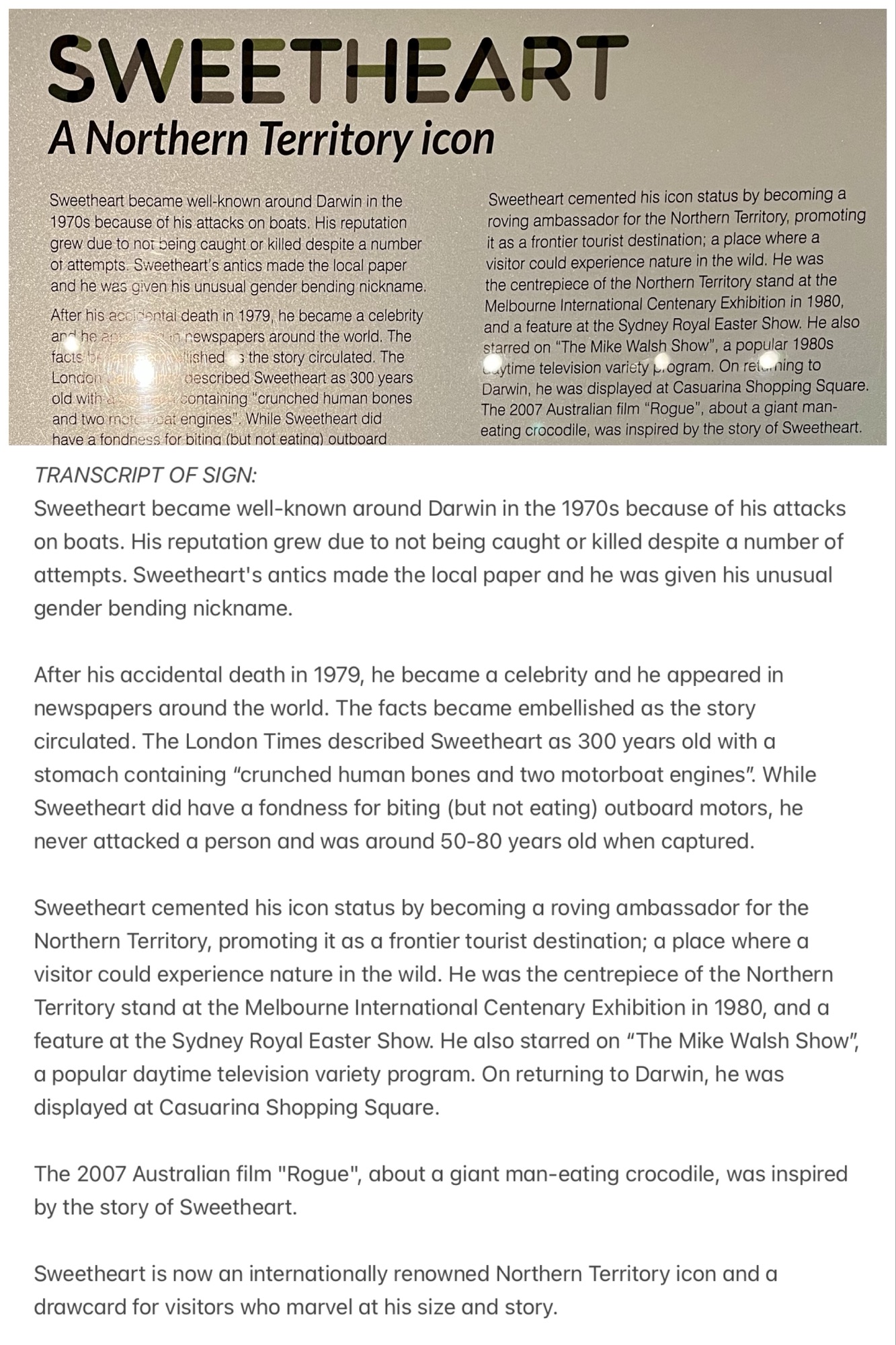
Given that we were going crocodile watching in the afternoon, one of the displays in the museum that grabbed our attention was “Sweetheart”. The crocodile was a legitimate icon in Darwin, but after his death turned into a much-exaggerated urban legend.

It only took about an hour to wander around the museum, since we glossed over the natural history and war exhibits. That left time to walk to the shore, where the numerous warning signs go a long way to explaining why Darwin is a better strategic military site than it is a tourist destination. (This warning is in ADDITION to crocodiles, venomous snakes, and spiders!)

Fun fact #2: Darwinians all carry jugs of vinegar in their vehicles.

Before returning to the ship, we took a short walk along Darwin’s Waterfront, where we saw birds, waterparks, and lagoons (with signs indicating that the precinct “does its best” to ensure the lagoon is free of jellyfish).
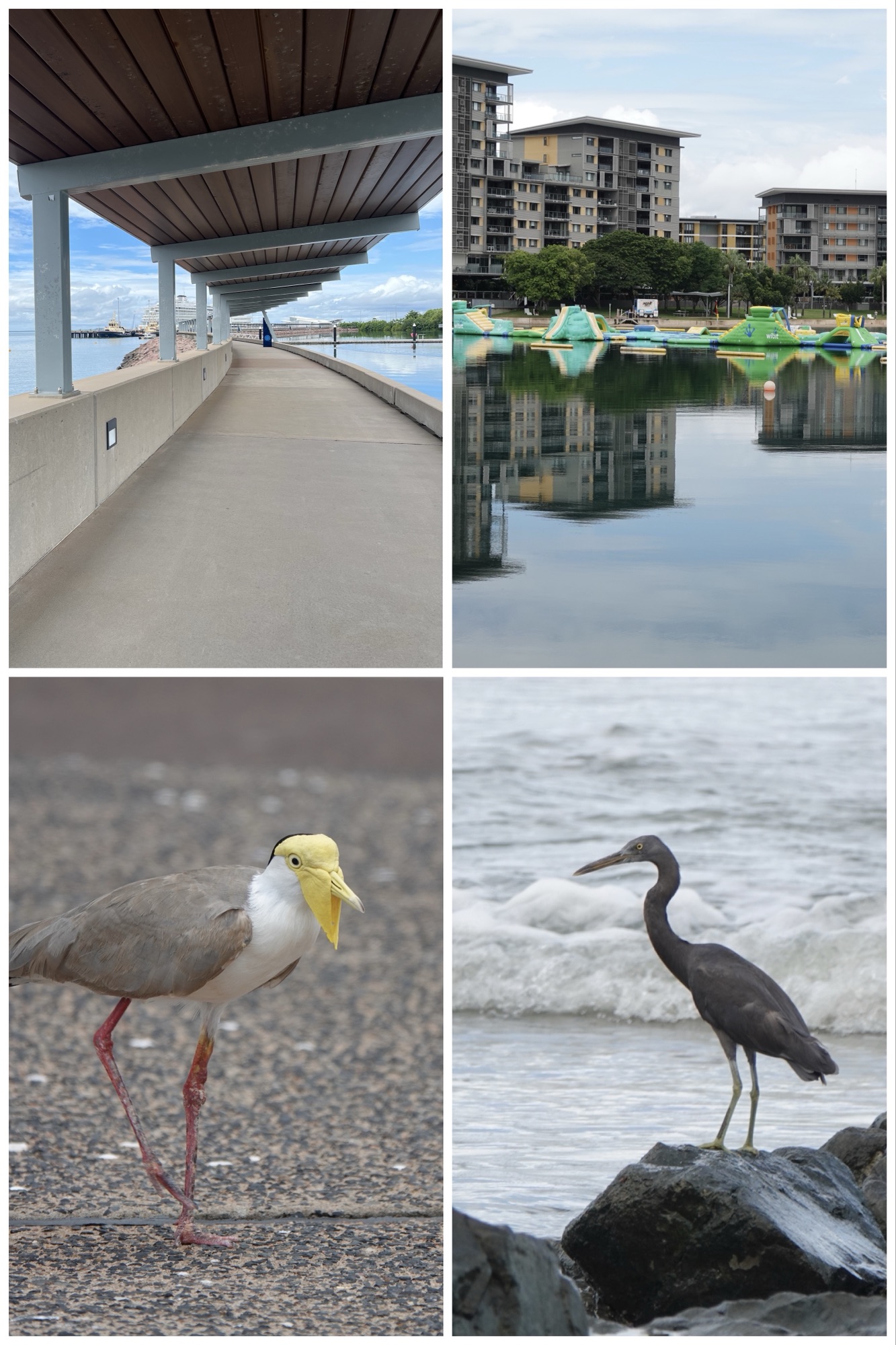
We also learned the story behind the gap in the wharf that remains unrepaired since it was bombed during WWII.

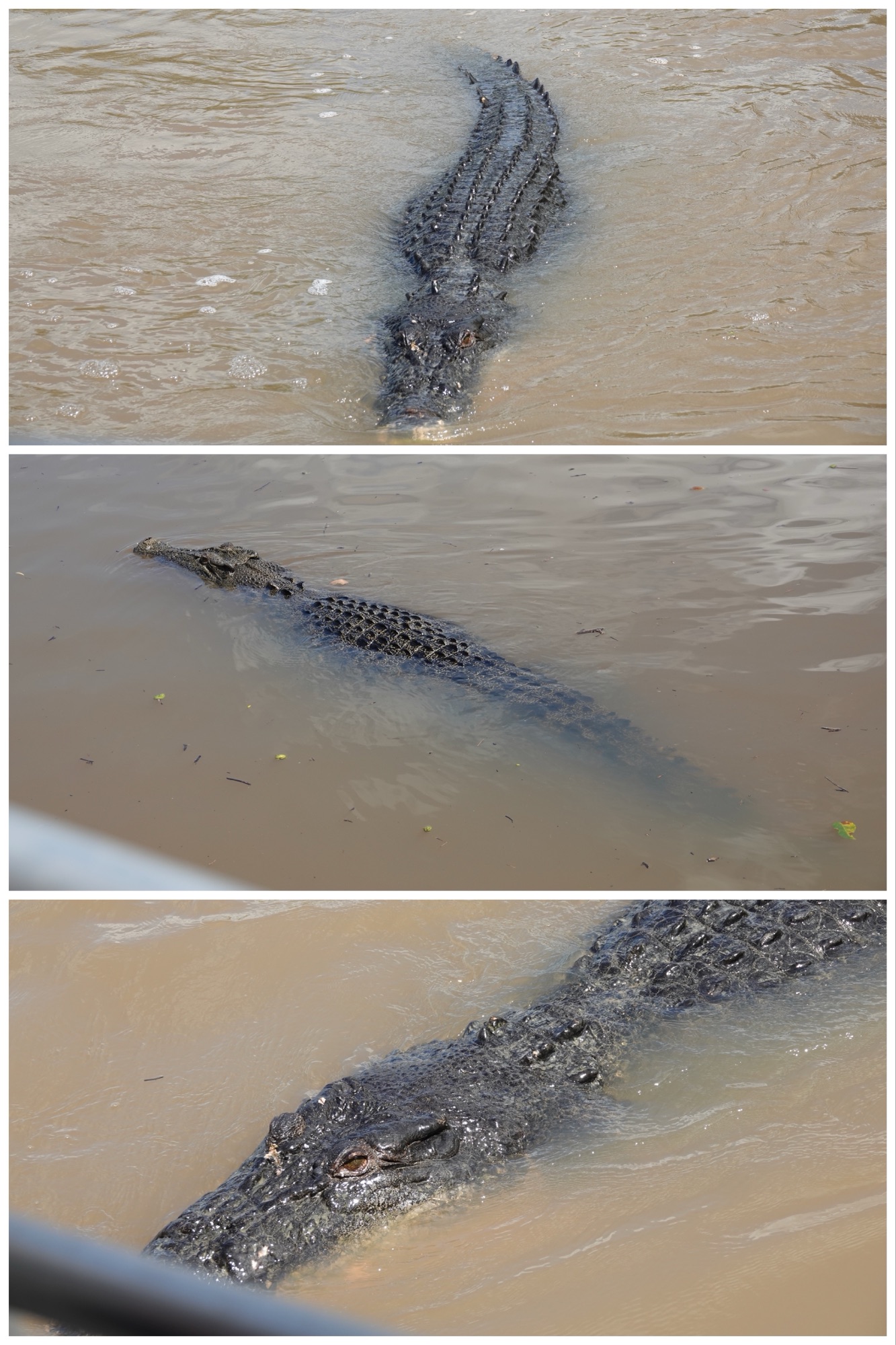
After a quick lunch and much-needed rehydration back on the ship, our afternoon activity was a CROCODILE CRUISE! We headed to the Adelaide River floodplains to witness one of Australia’s great natural curiosities, saltwater crocodiles, which are Earth’s largest living reptile. Although we didn’t need to expend any energy just drifting along in the river, there’s definitely an adrenaline spike involved in seeing up close these apex predators that can live in both marine and fresh water environments and are considered the modern crocodile that is the most dangerous to humans.
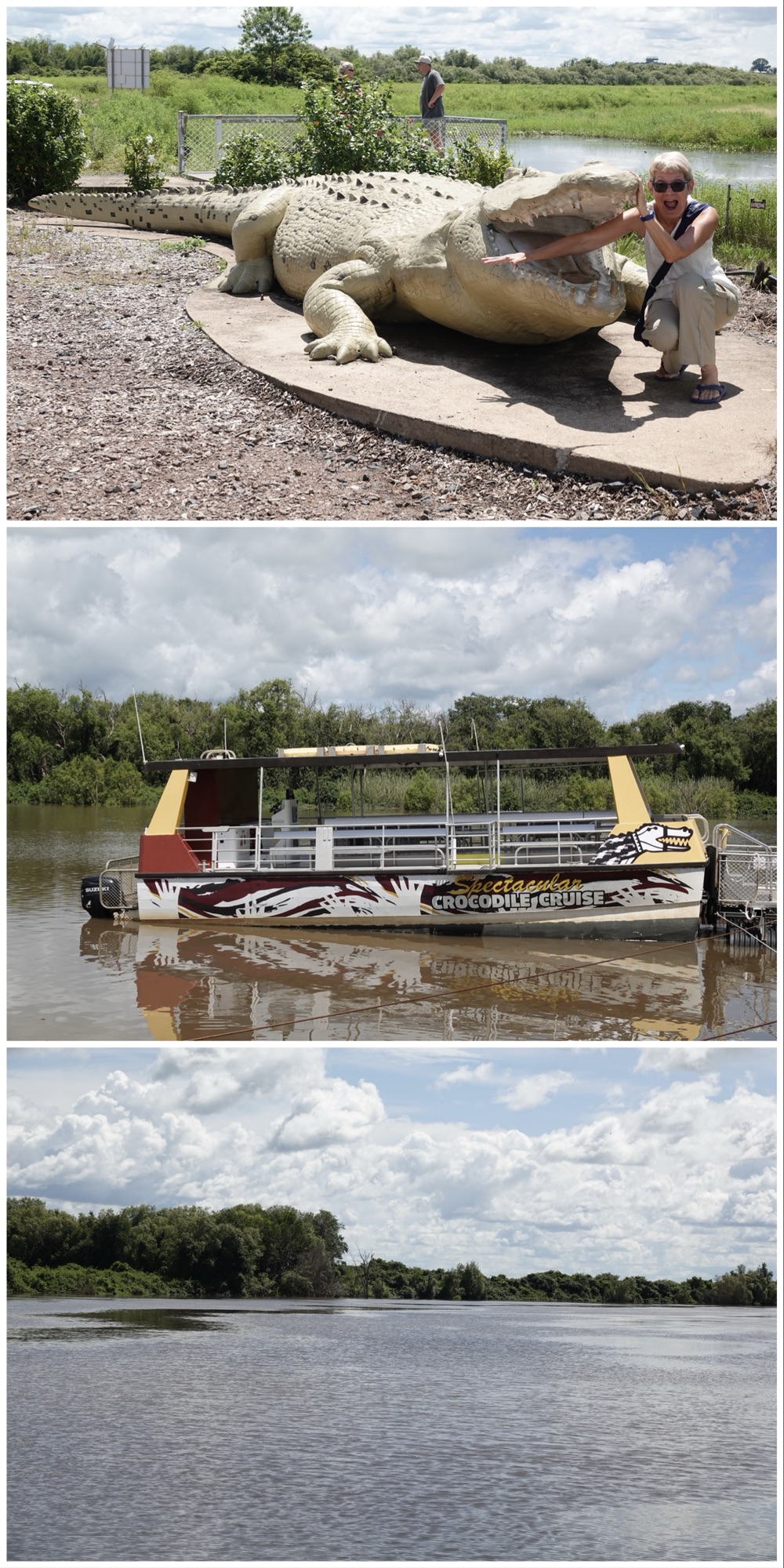
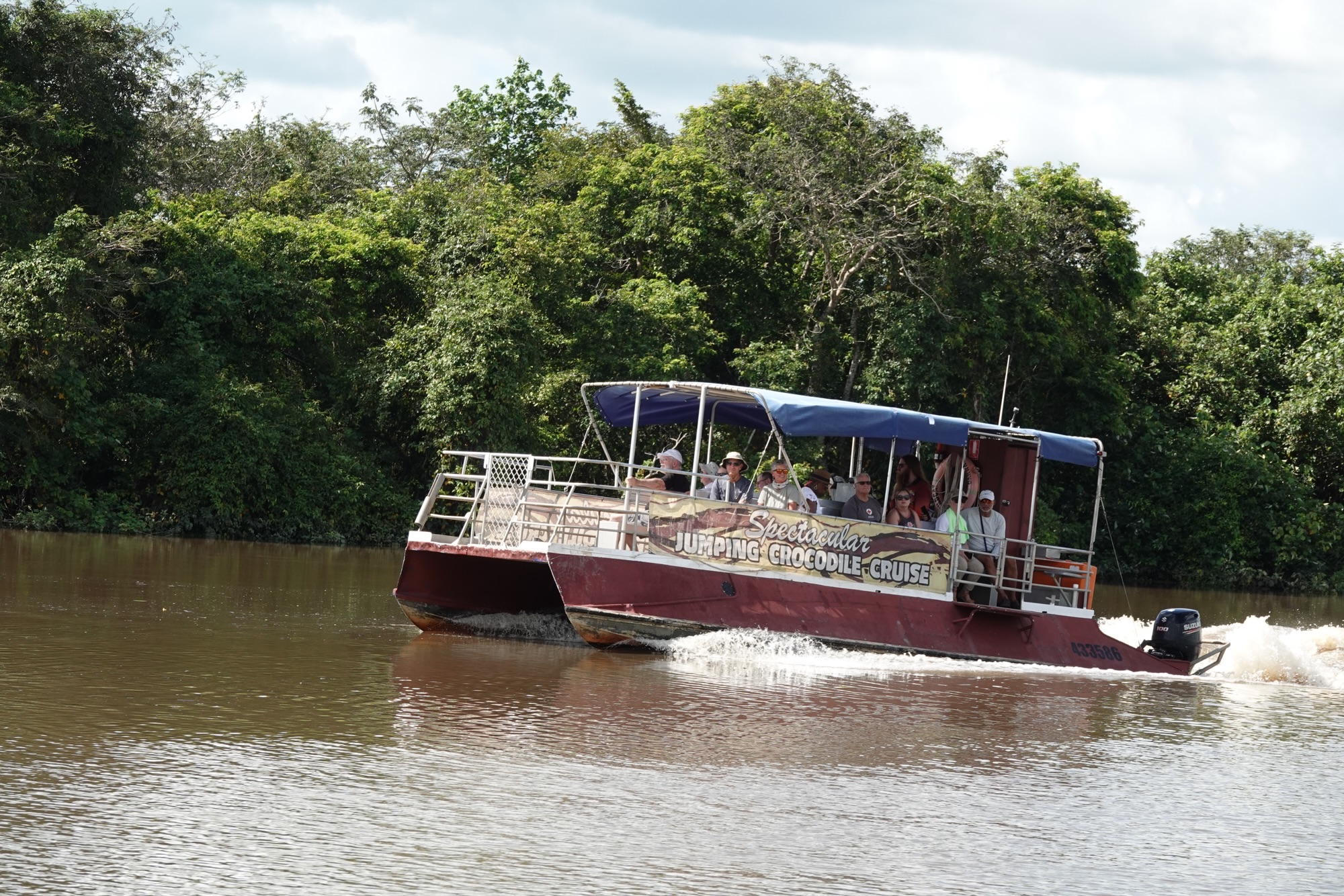
Centre: our crocodile cruise boat. Bottom: the stunningly beautiful Adelaide River, home to about 5 crocodiles per kilometre, for a total of around 1200.
It doesn’t ease your mind knowing that they can reach lengths of more than 6.4m/21 feet and weigh up to 1350 kg/3,000 lbs.
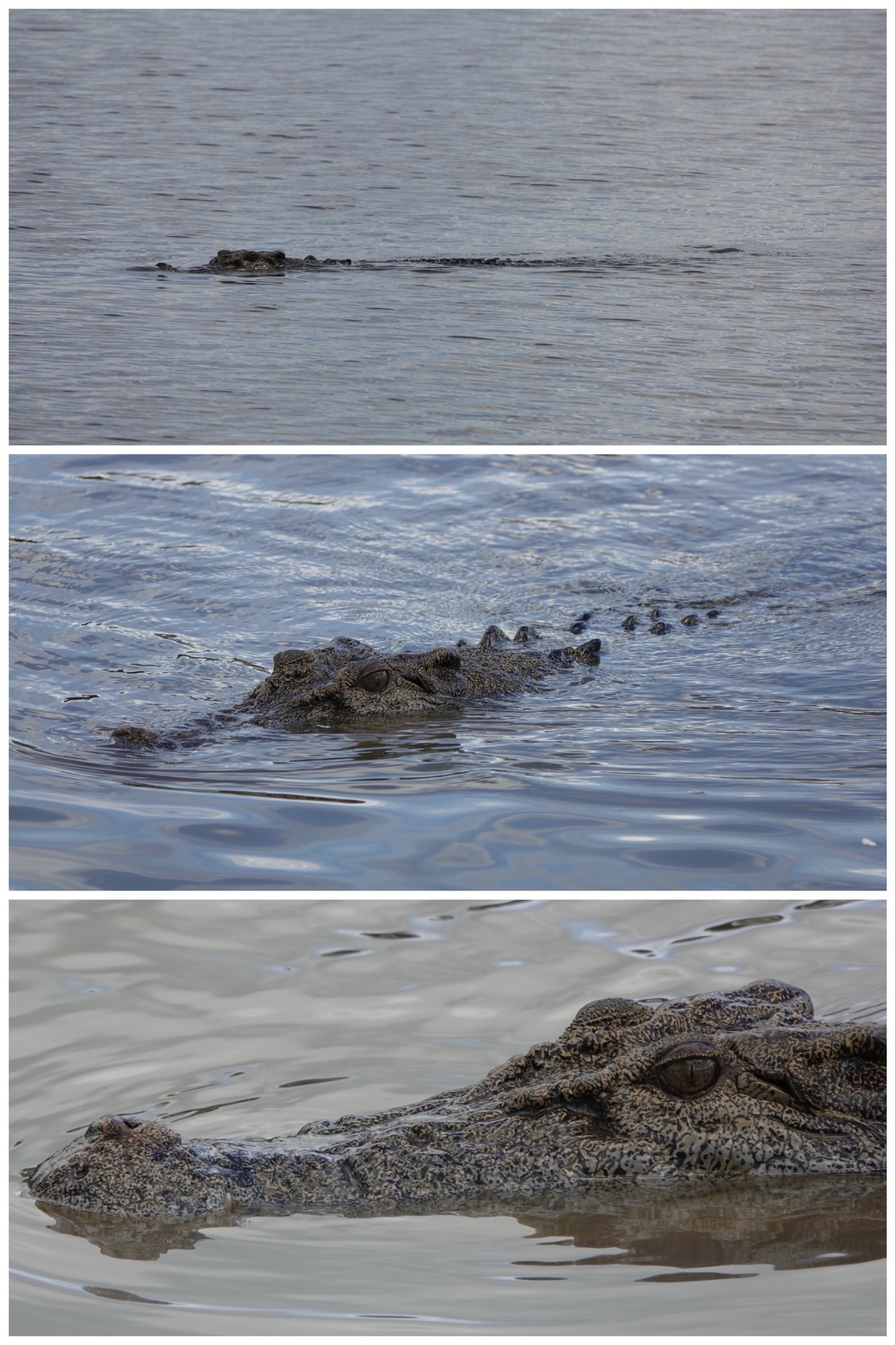
The crocodile cruise operators have been monitoring about a 7 km stretch of the Adelaide River for decades, and are very familiar with the individual crocodiles that inhabit this stretch of river. Each crocodile has a name, based usually on its physical characteristics, hence “Split Lip”, or “Stumpy”. Stumpy is a make between 50 and 60 years old, who has defended his territory against other males more than once, involving the loss of parts of each of his limbs (hence his name). We learned that crocodiles have extremely strong vaso-constrictors, which allow them to stop the blood flow to an injured area, ensuring that they do not bleed out.
Fun fact #3: the smaller of the 2 crocodile cruise boats used today (pictured below) was featured in the opening scenes of the movie Crocodile Dundee!
Over the past 30 years, the average works out to less than 1 person per year killed by crocodiles. The knowledgeable guide at the crocodile centre told us that most of those deaths involved alcohol – NOT being drunk by the crocodiles.
During the cruise, our guide shared lots of information about Australia’s saltwater/estuary crocodiles, and even showed is a crocodile tooth and scute. Crocodiles teeth get replaced as they fall out – up to 45 times! Their scutes, the solid bone plates that form the “bumps” in their dermal armour, are arranged in a pattern that allows water to flow across the crocodile’s back without causing ripples in the water. Sneaky!

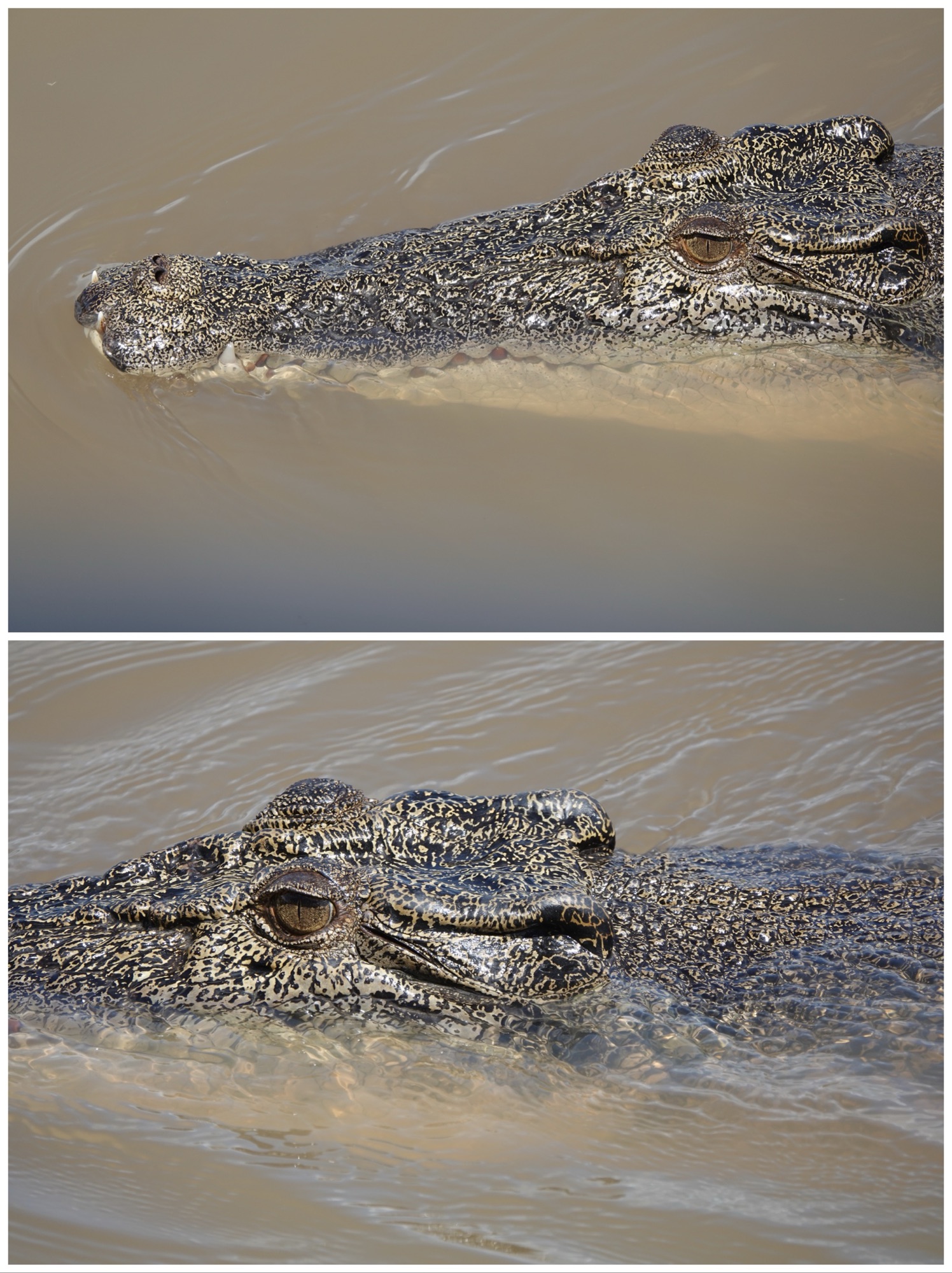
While we observed crocodiles in the wild, we were told about the crocodile “farms” that raise crocodiles specifically for Hermes and Louis Vuitton, to be “harvested” at 2-3 years old for their skin. The rest of the animal mostly becomes pet food and blood-and-bone fertilizer.
The sides of the Adelaide River are lined with mangrove trees, some of which are home to colonies of fruit bats. Our guide asked if any of us were curious about how an animal that hangs upside down poops, and then proceeded to demonstrate by hanging from his ankles and hands from a crossbar on the boat, and “flipping” his body upright while still hanging from his hands. It was a VERY unexpected addition to our cruise!
We were seated too far back to get a photo, but it was quite the acrobatic feat.
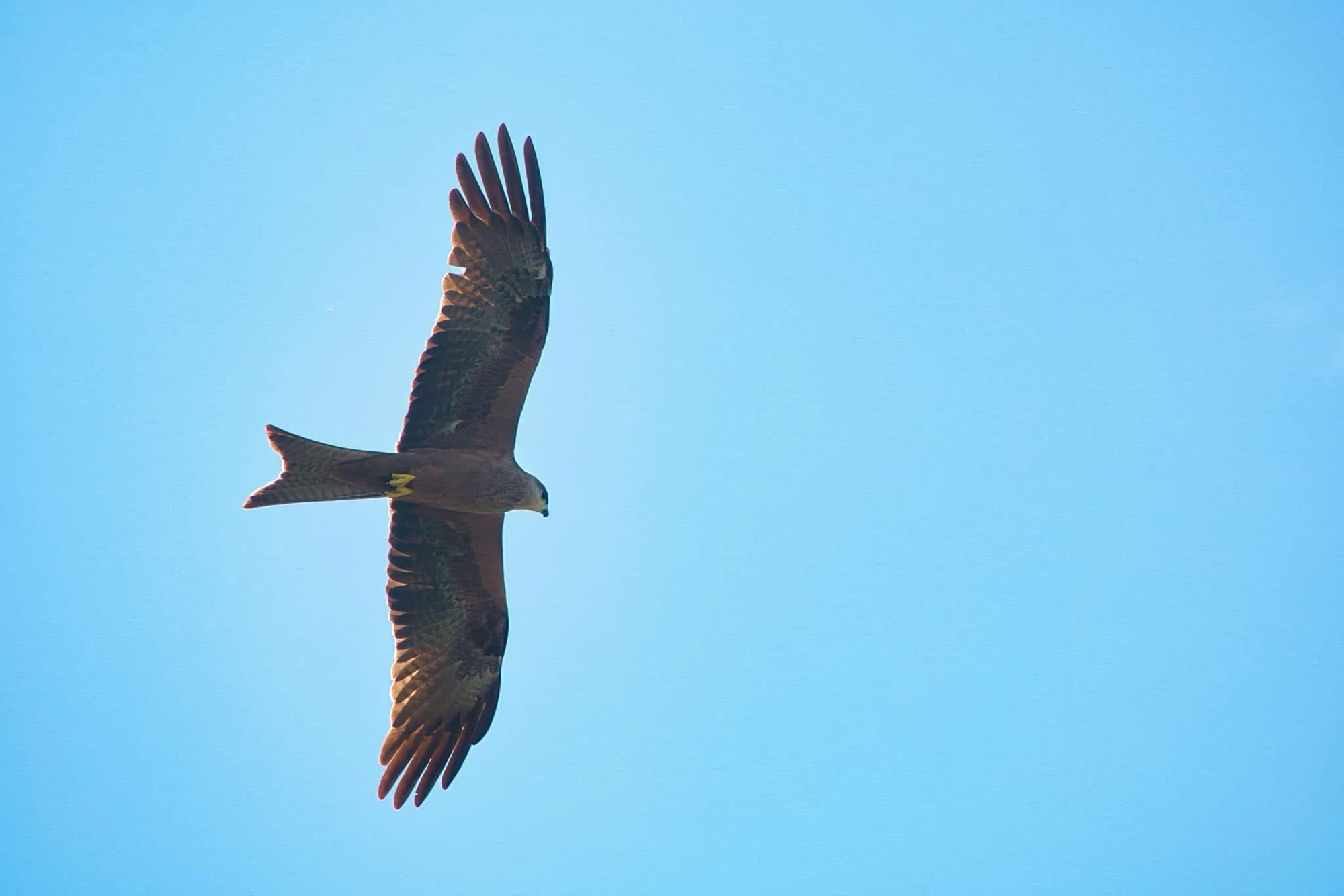
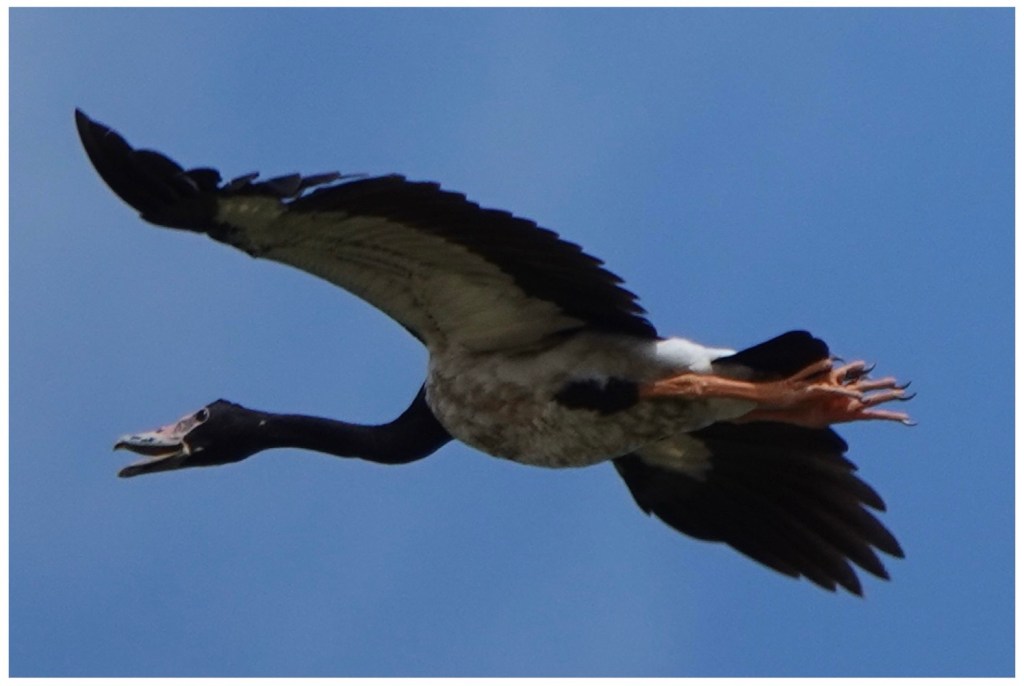
On our way back to the visitor centre Ted captured a couple of soaring birds.
Once back at our ship, showered, and changed, we headed to the main restaurant for dinner.
The clouds have been beautiful all day, and their silhouettes at sunset were no exception.

We chose not to go to the show tonight; the heat and humidity really wiped us out. After coffees and a set listening to the Resident Guitarist, we called it a night.

We’re headed into 2 more sea days en route to Indonesia
 Rose and Ted’s Excellent Adventure