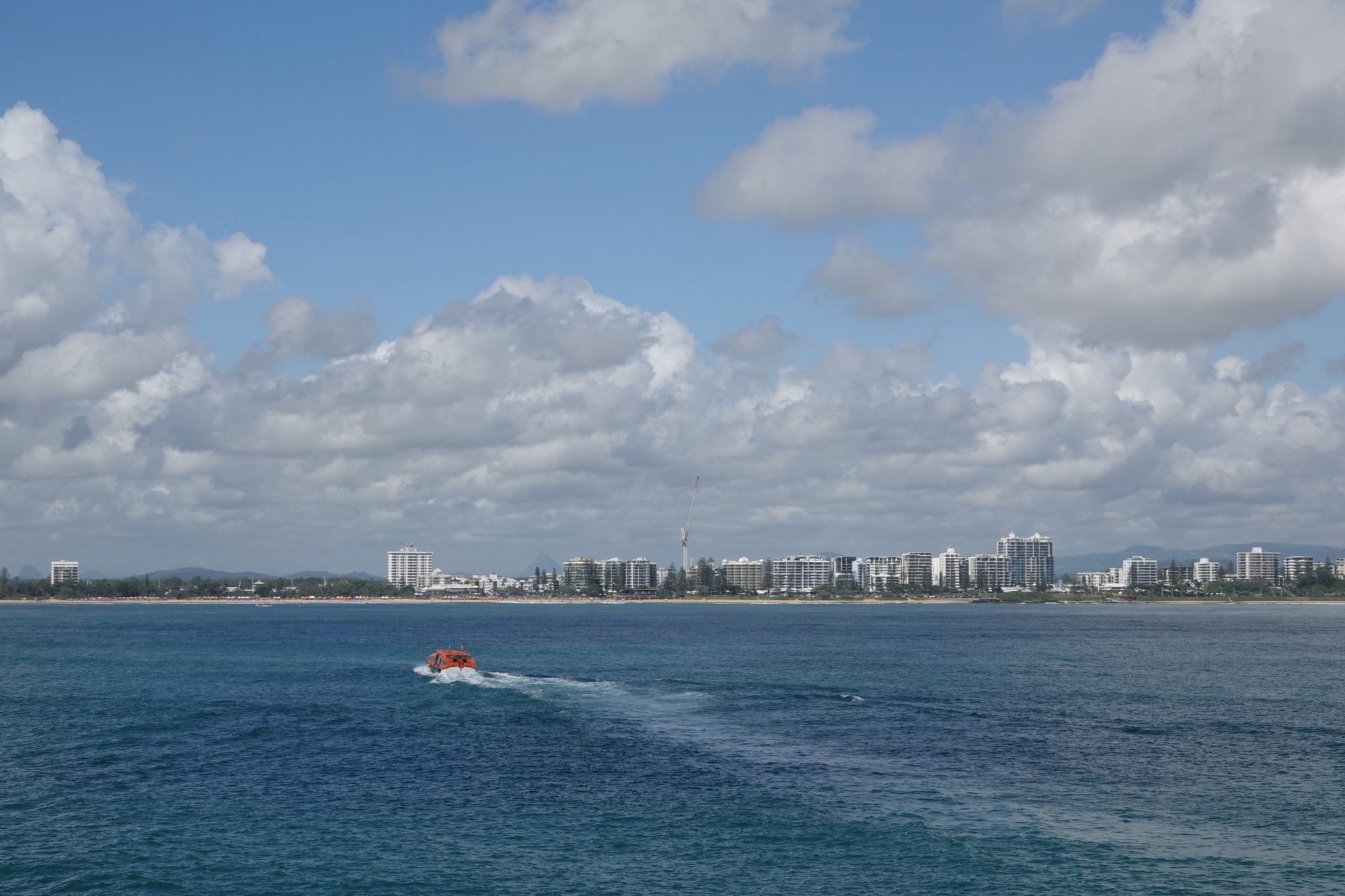
Mooloolaba is a coastal suburb on Australia’ east coast, about 90km/56miles north of Brisbane. Its interesting sounding name derives from the Aboriginal word mulu, meaning snapper fish, or mulla meaning Red-bellied Black Snake.
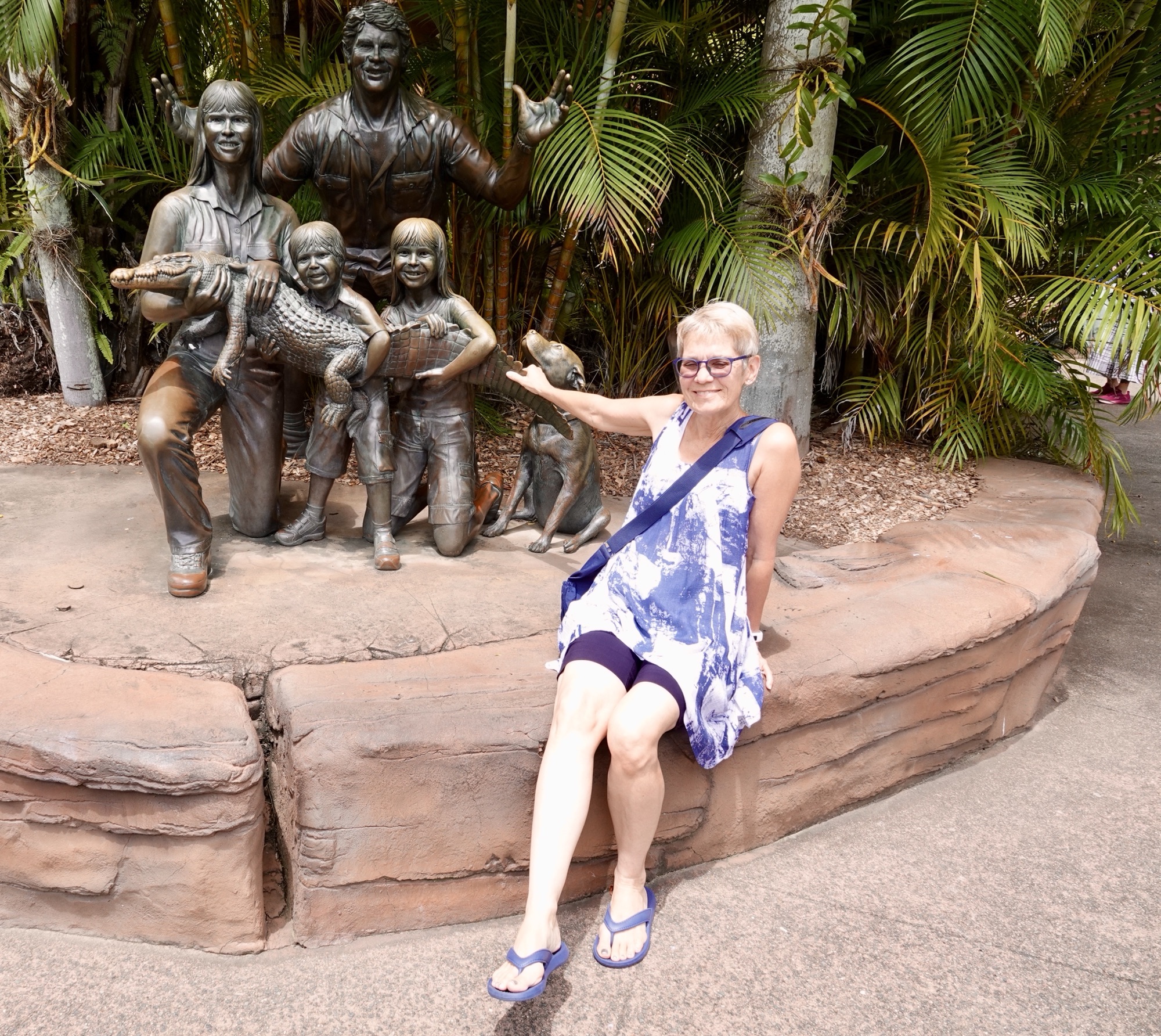
Our excursion here was a visit to Steve Irwin’s acclaimed animal sanctuary, the Australia Zoo, just south of Mooloolaba on Queensland’s “Sunshine Coast”. The zoo is still operated by Irwin’s family and includes on-site rescue and conservation programs. It is home to more than 1,000 animals, including koalas, wombats, crocodiles, snakes, and kangaroos.
We thought we’d be at dock, but actually were at anchor and were tendered into port on a half hour ride into the marina, so we needed to be off the ship by 9:45 a.m. for our 10:30 a.m. excursion, allowing for some quite choppy seas during out transfer.
From the pier, it was a 45 minute coach ride to the zoo. Once there, we were allowed to explore the entire zoo at our own pace for 3 full hours, although the focus of our visit was definitely seeing and supporting the koala.
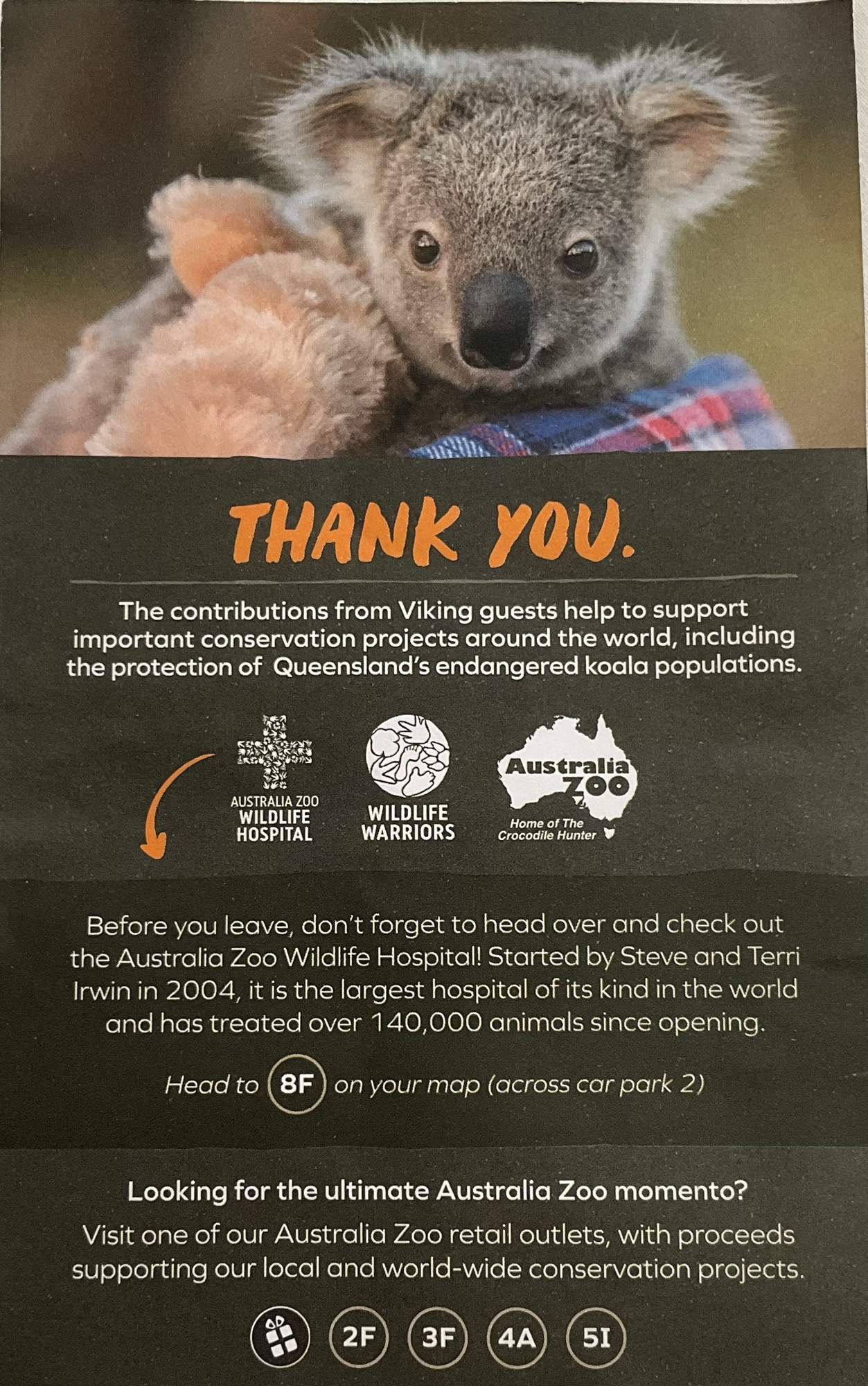
As part of our tour, Viking contributes funds to the Irwins’ Koala Hospital, which cares for and saves the lives of koalas across Australia. This nonprofit has been crucial to the species’ survival, especially after the recent fires that have devastated their natural habitat.
Koalas are normally solitary animals, but the zoo’s 6 females (all of them currently with a joey in their pouch which will be ready to make its appearance in around May) have adapted to living together, even taking turns at childcare to allow the others to sleep.
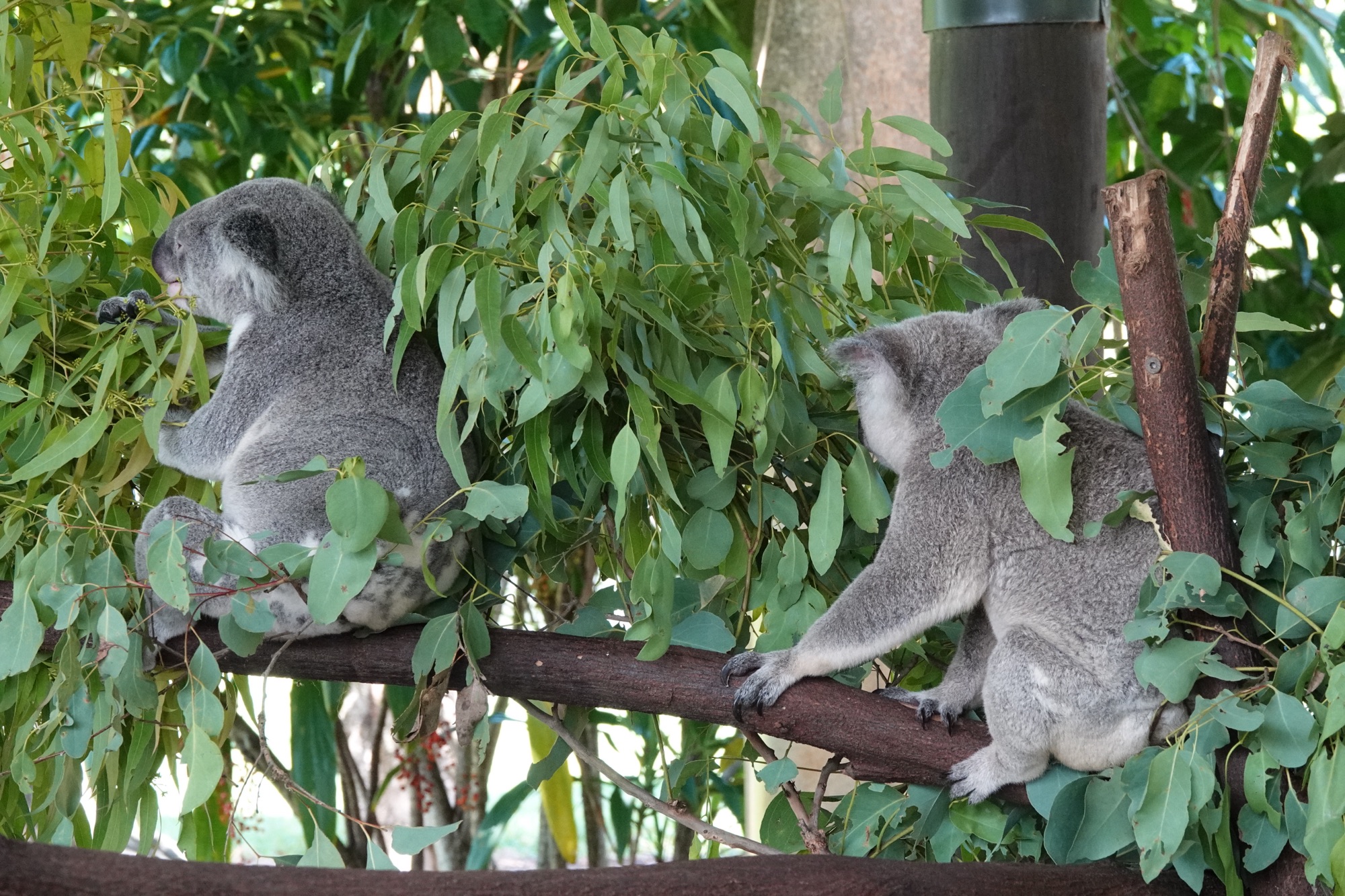
We learned that koalas sleep for 18-20 hours per day, with the time needed to digest the eucalyptus leaves on which they feed. Those leaves are their only source of food and water, and the koalas’ digestive systems have evolved to include a specific gut bacteria that can break down the otherwise toxic leaves. Baby koalas are born without that bacteria and have to ingest it from their mother’s stool. That fact was not so cute.
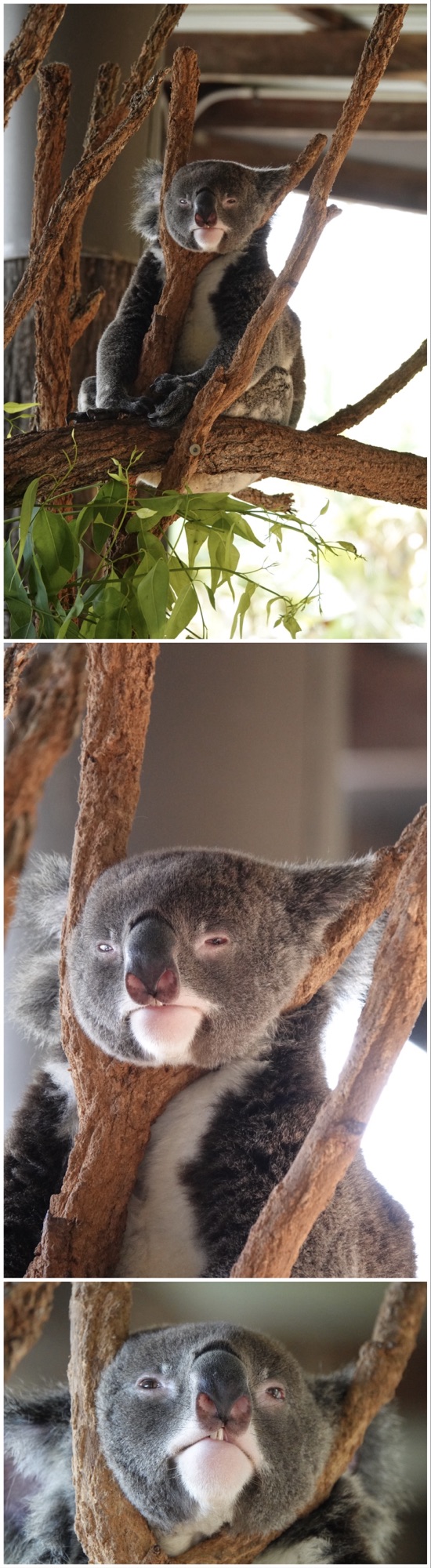
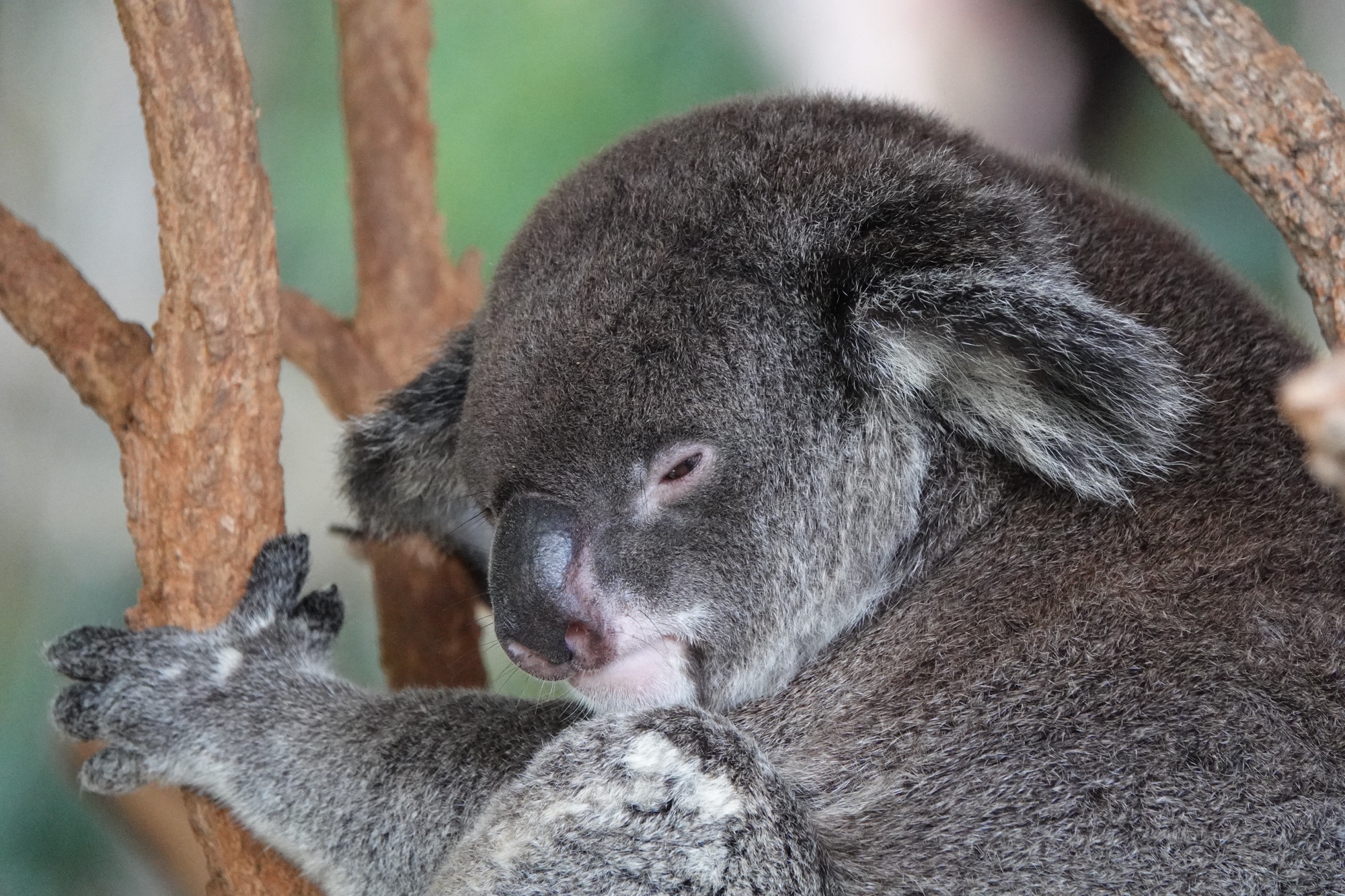
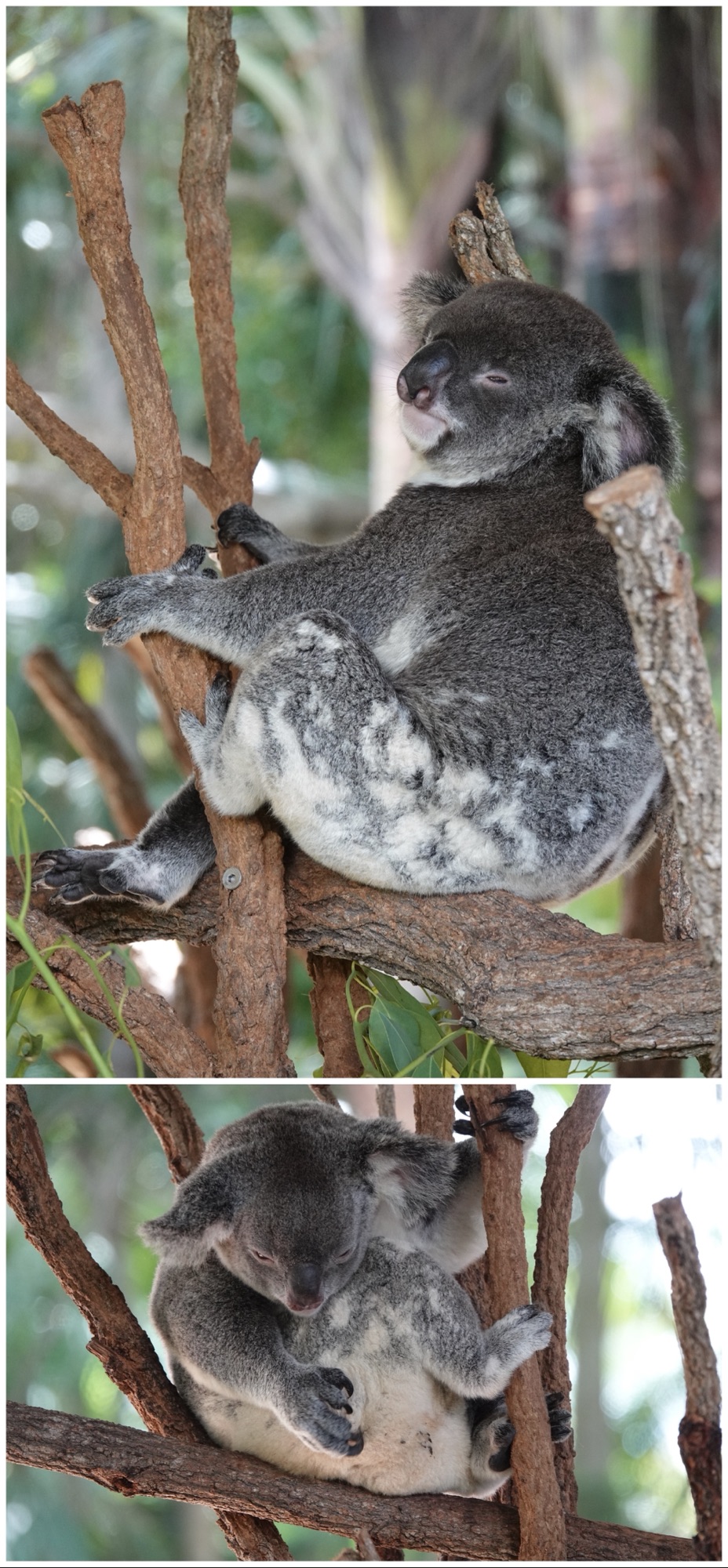

Once we were done with cuteness overload, we checked out the other Australian wildlife, skipping the African and Asian habitats since we’ll focus on those later in our itinerary.
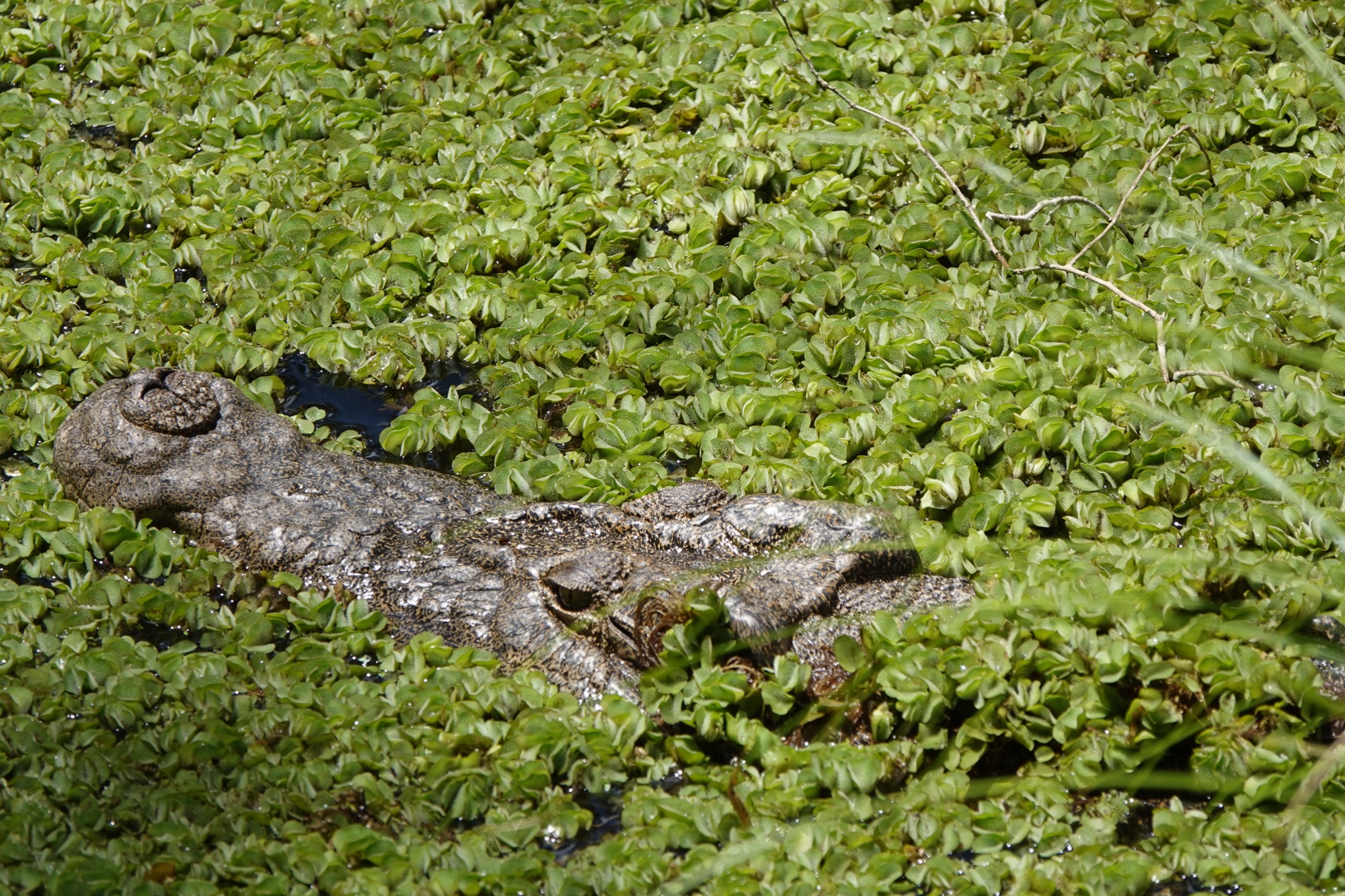
We saw well-camouflaged saltwater crocodiles…

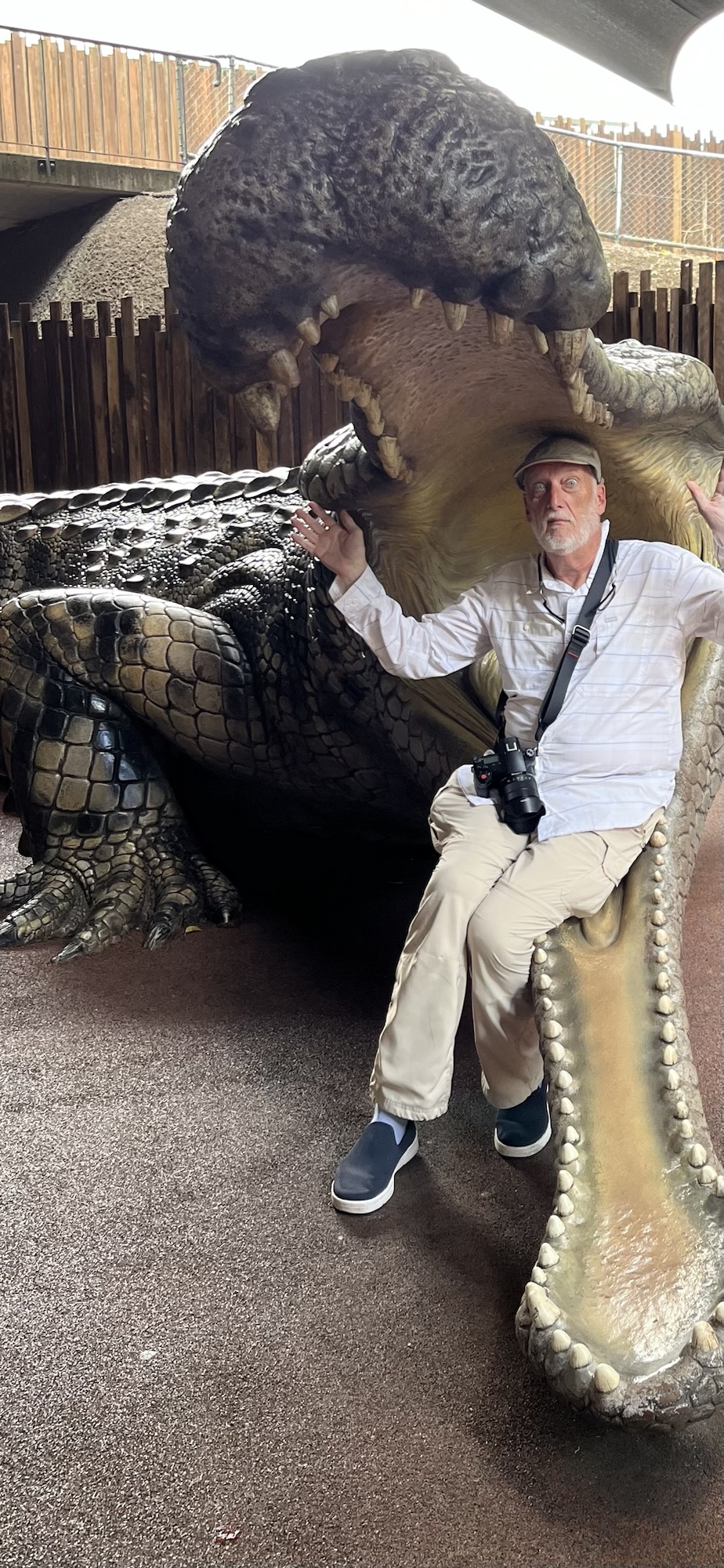
… plus a larger-than-life (we hope!) model that seemed intent on eating Ted.
We saw huge Aldabra tortoises.

Everywhere we walked there were “tripping hazards” in the form of Australian lizards on the walkways. I was trying (with my usual non-success) to read the zoo map, and look at animals, and Ted kept shouting “Rose, look out!” each time I nearly stepped on a lizard.

We learned what a Quokka was.

I’m not sure I’d ever heard the term “macropod” before, but it refers to marsupials with long powerful hind legs and feet. It turns out that kangaroos and wallabies are also macropods.
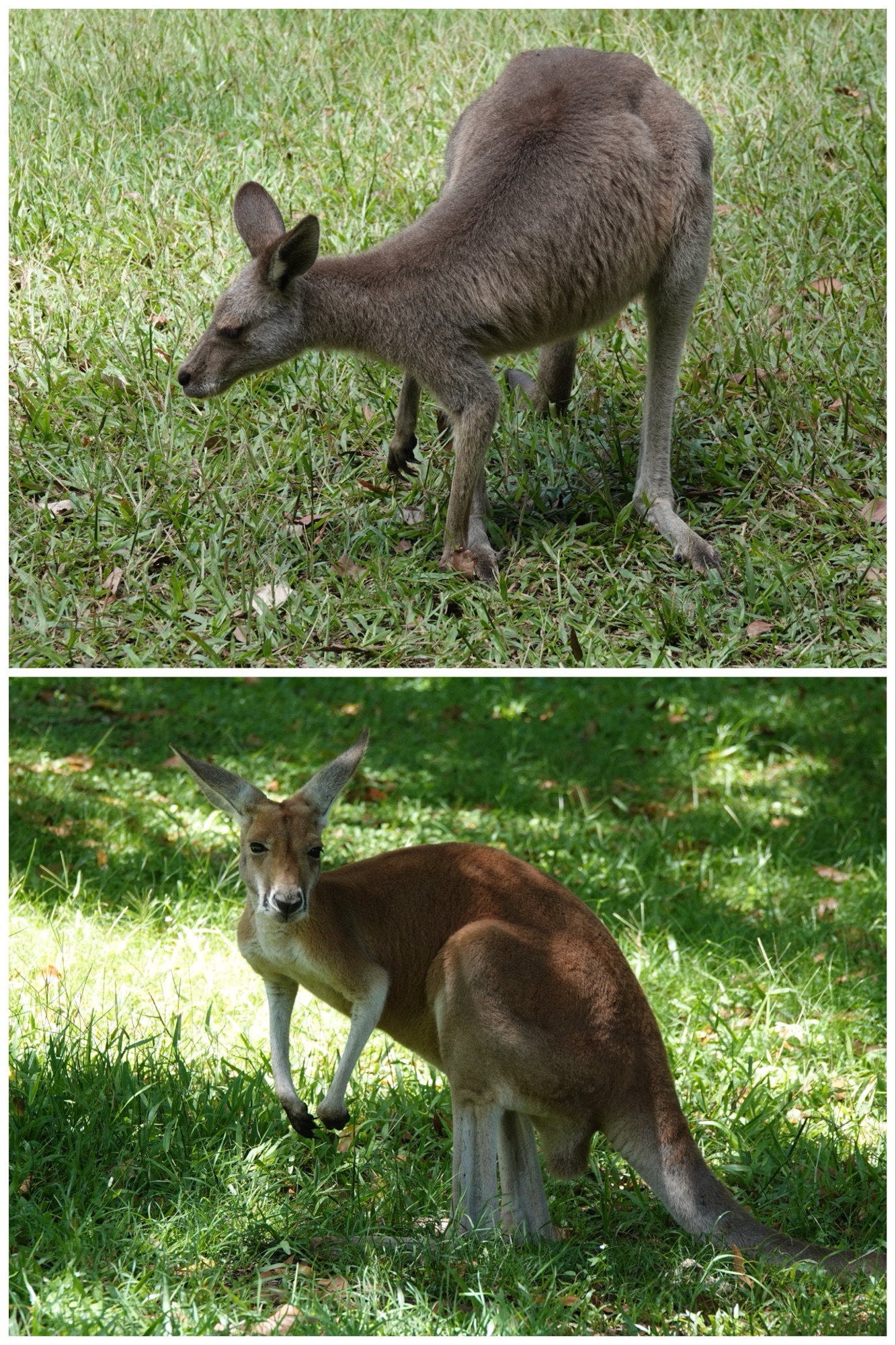
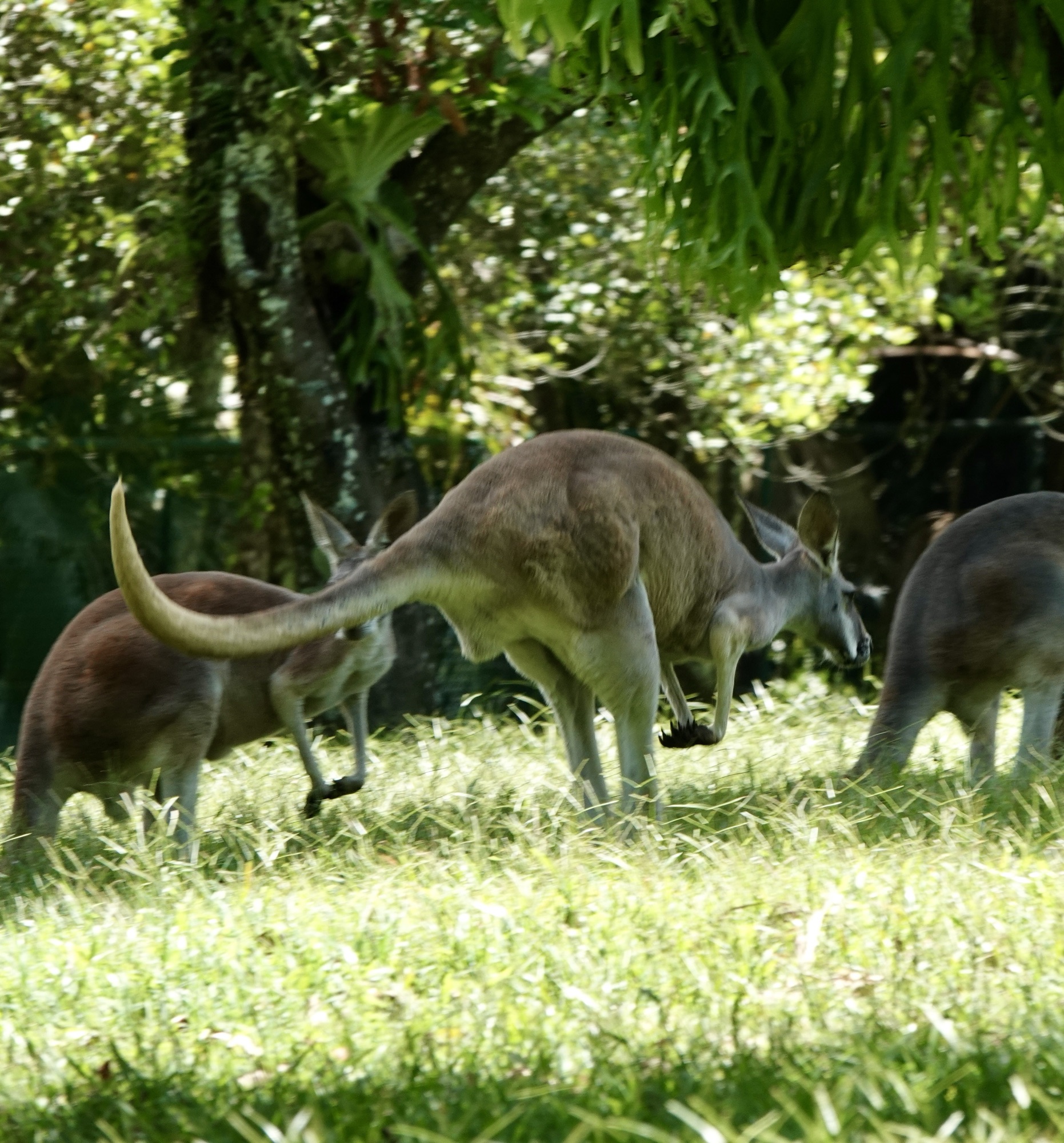
The Australian Zoo has the most laid-back red and grey kangaroos and wallabies that are imaginable. They loll around in an open field where even young children can go right up to them to feed or pet them. Do NOT try this in the wild!!
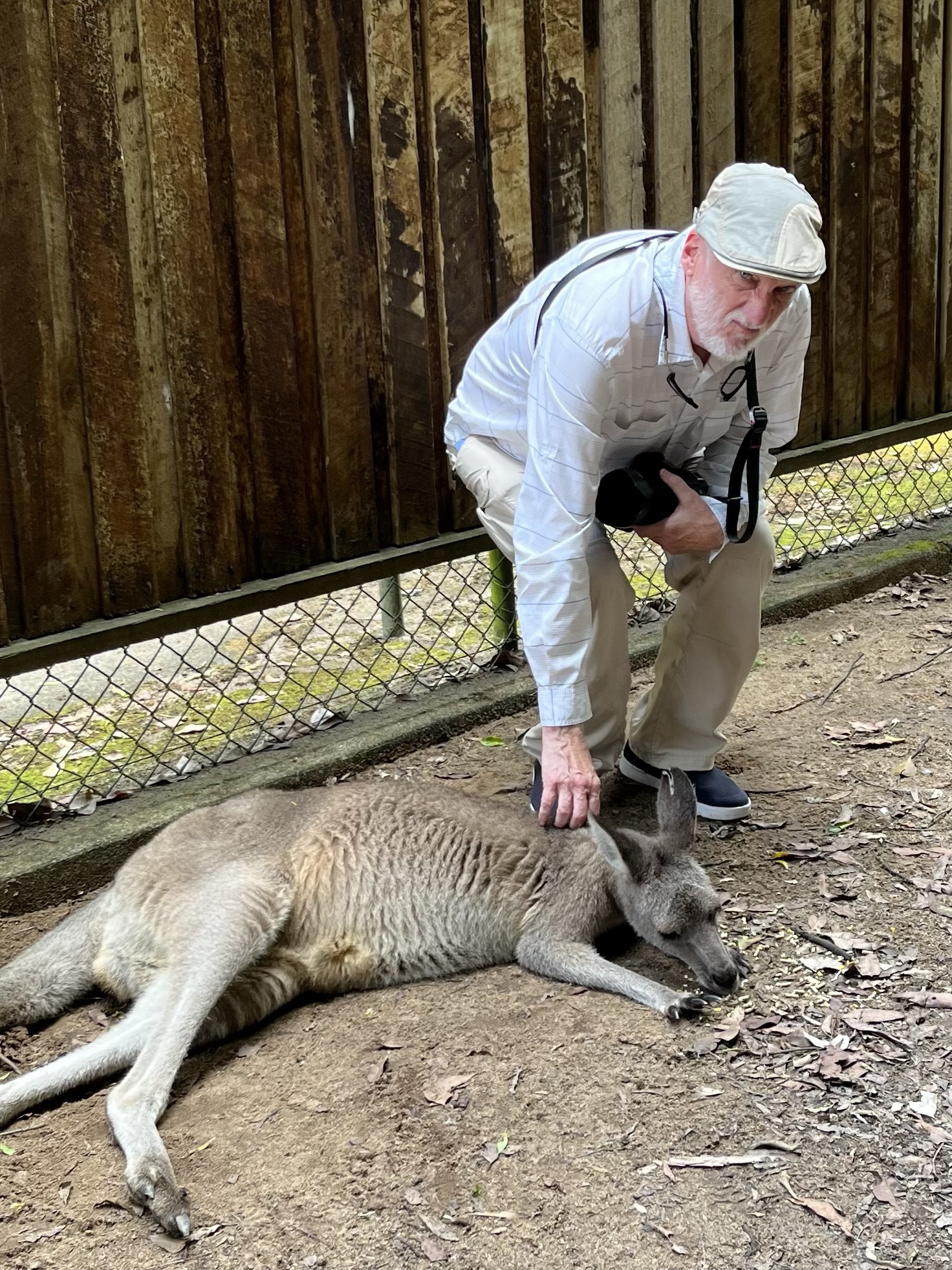
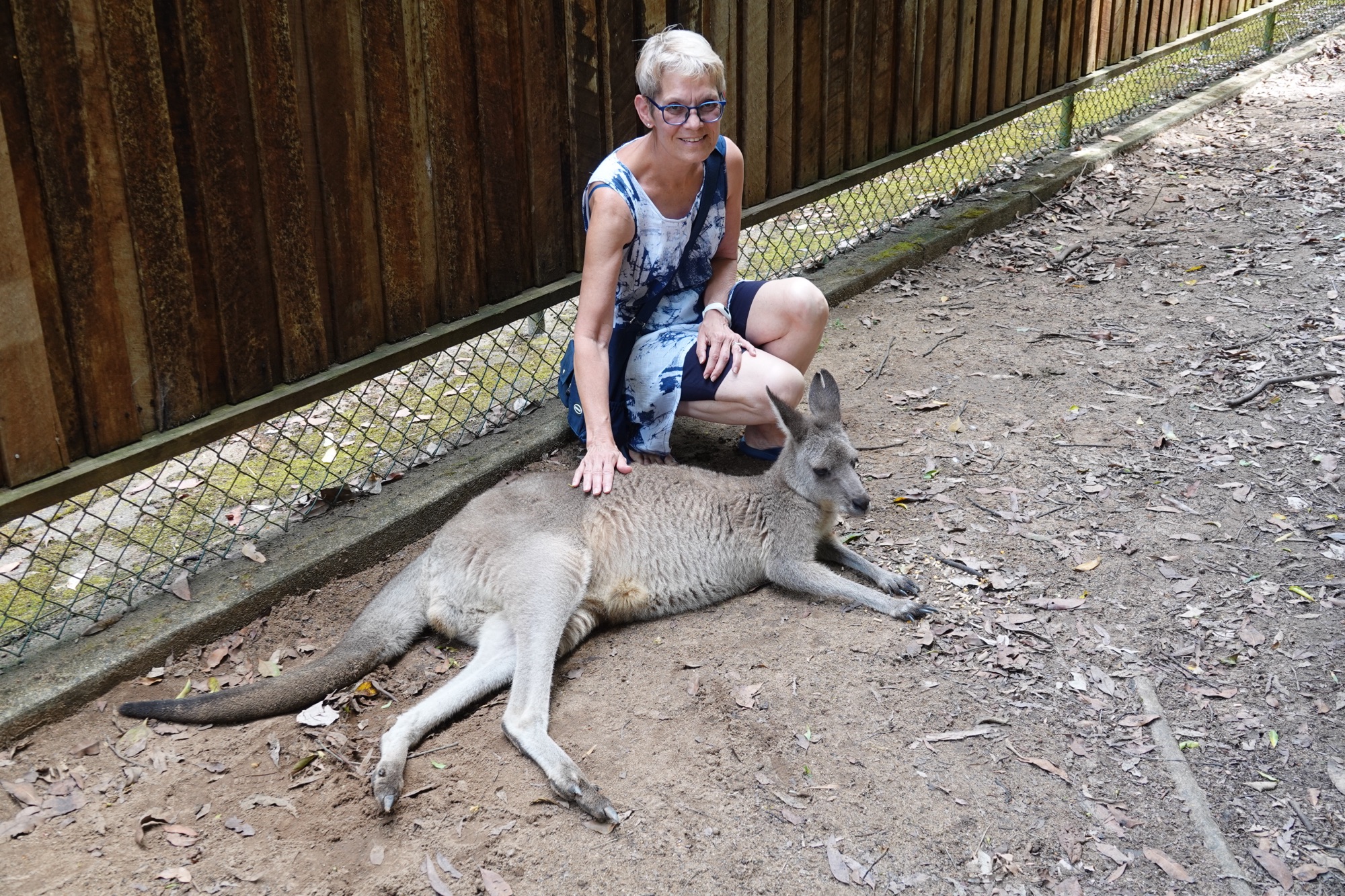
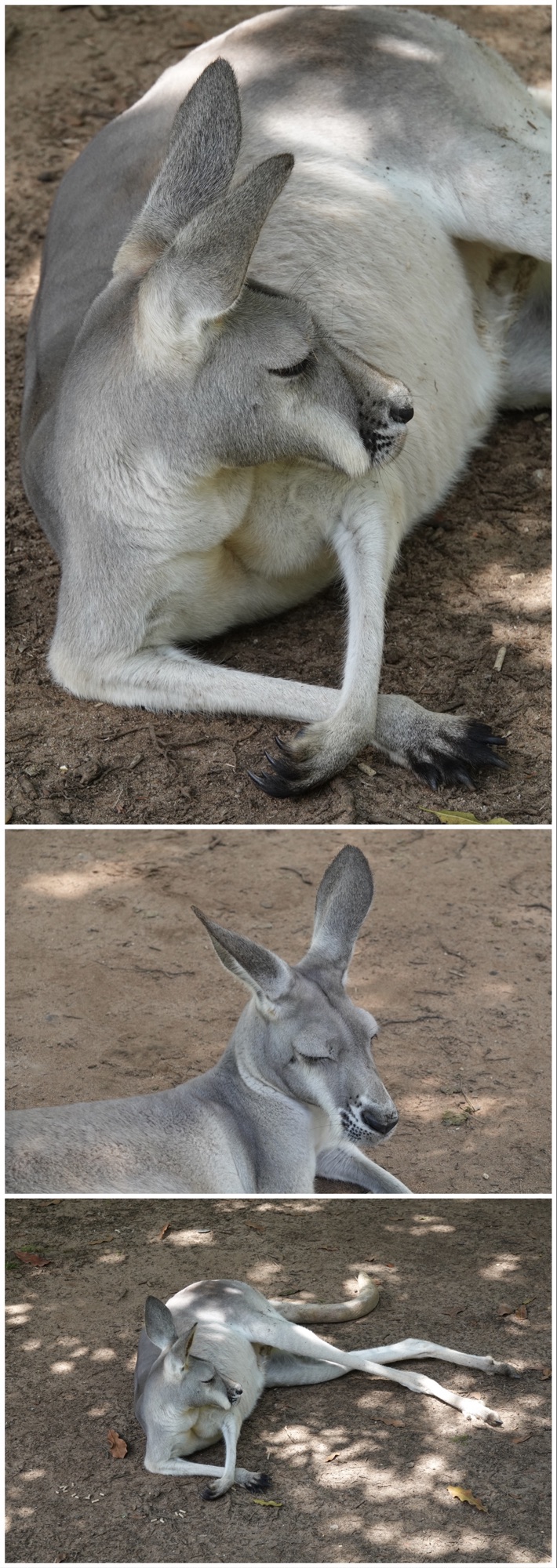

And we did see them all take off at a run when the stadium show next door began!
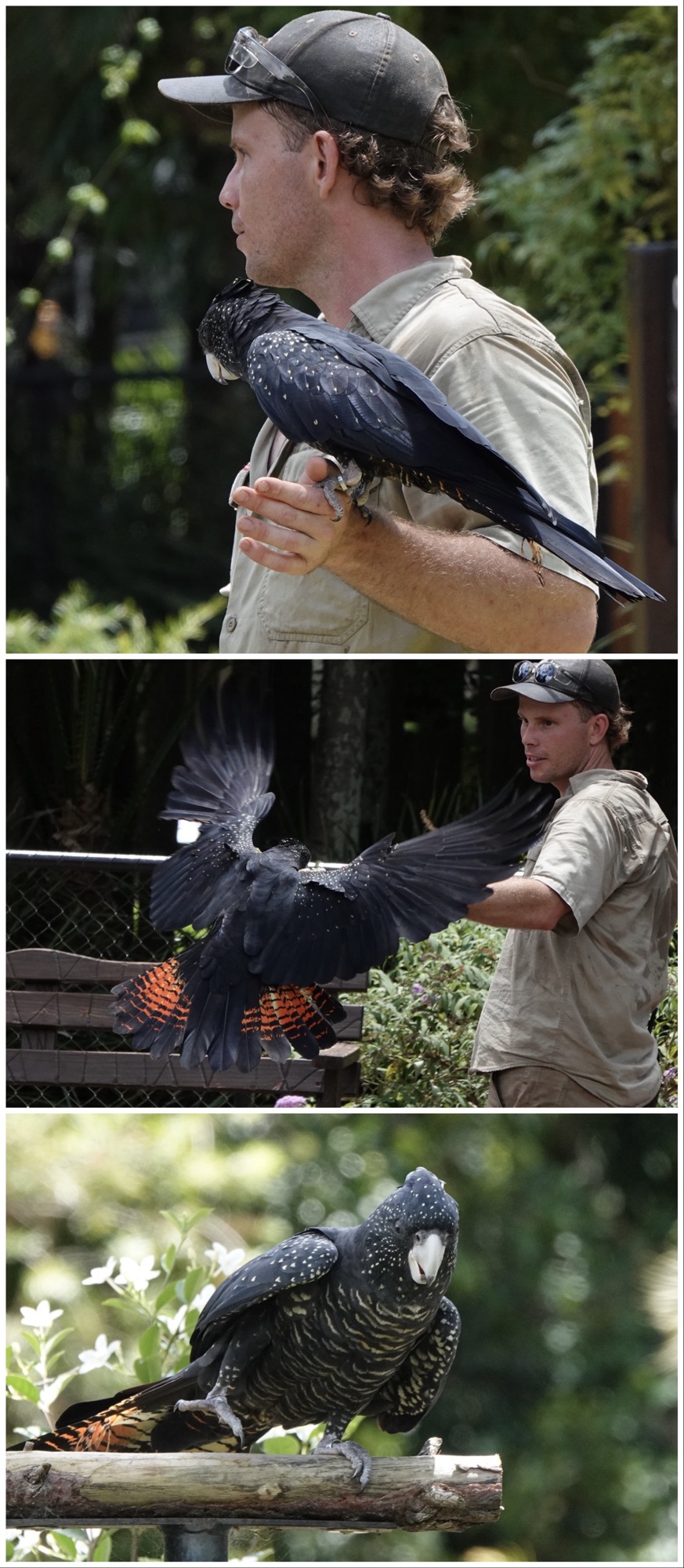
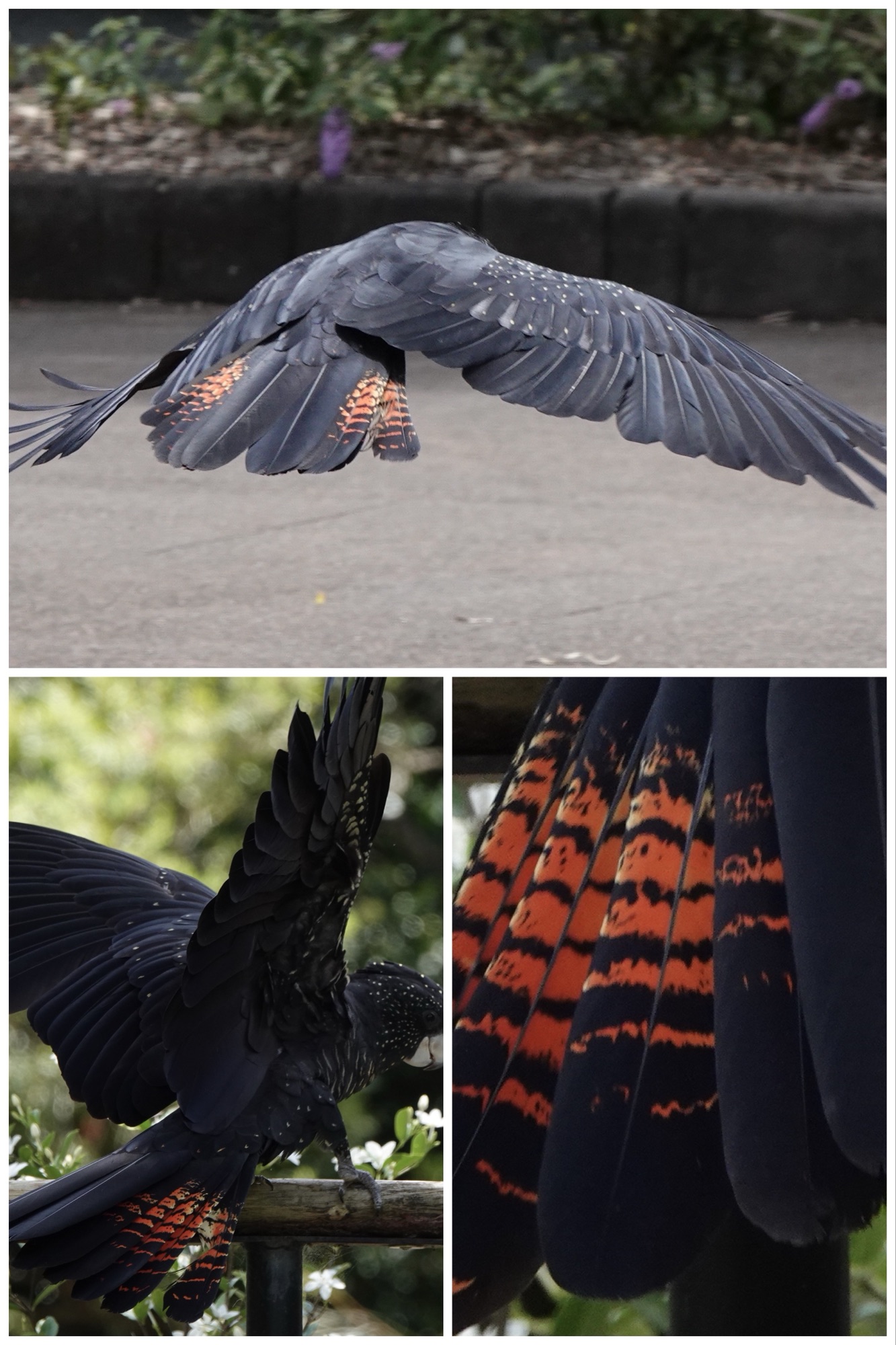
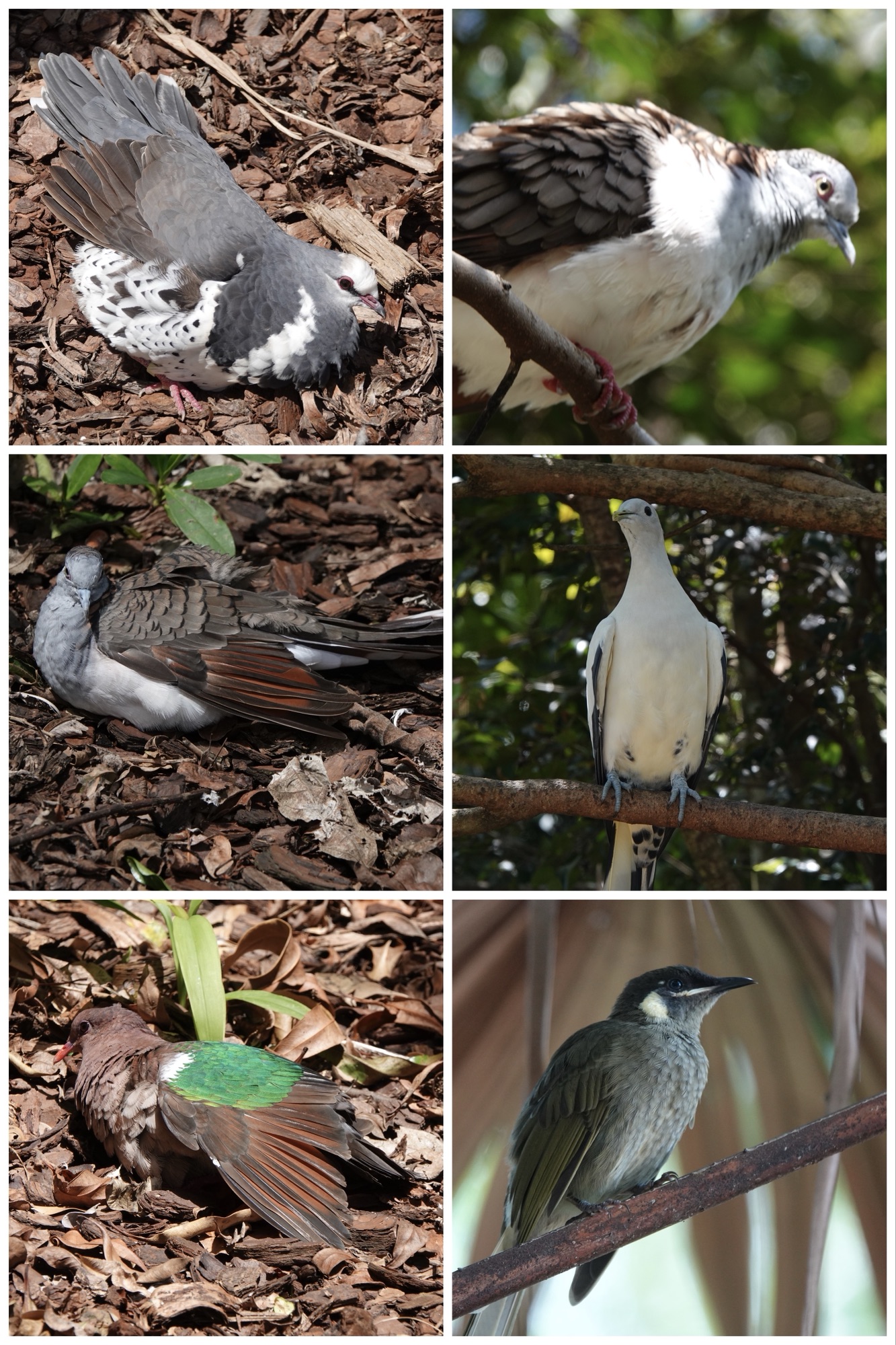
We also had the opportunity to see some more of Australia’s unique birds, although we were not there late enough in the afternoon to attend the Birds of Prey show.
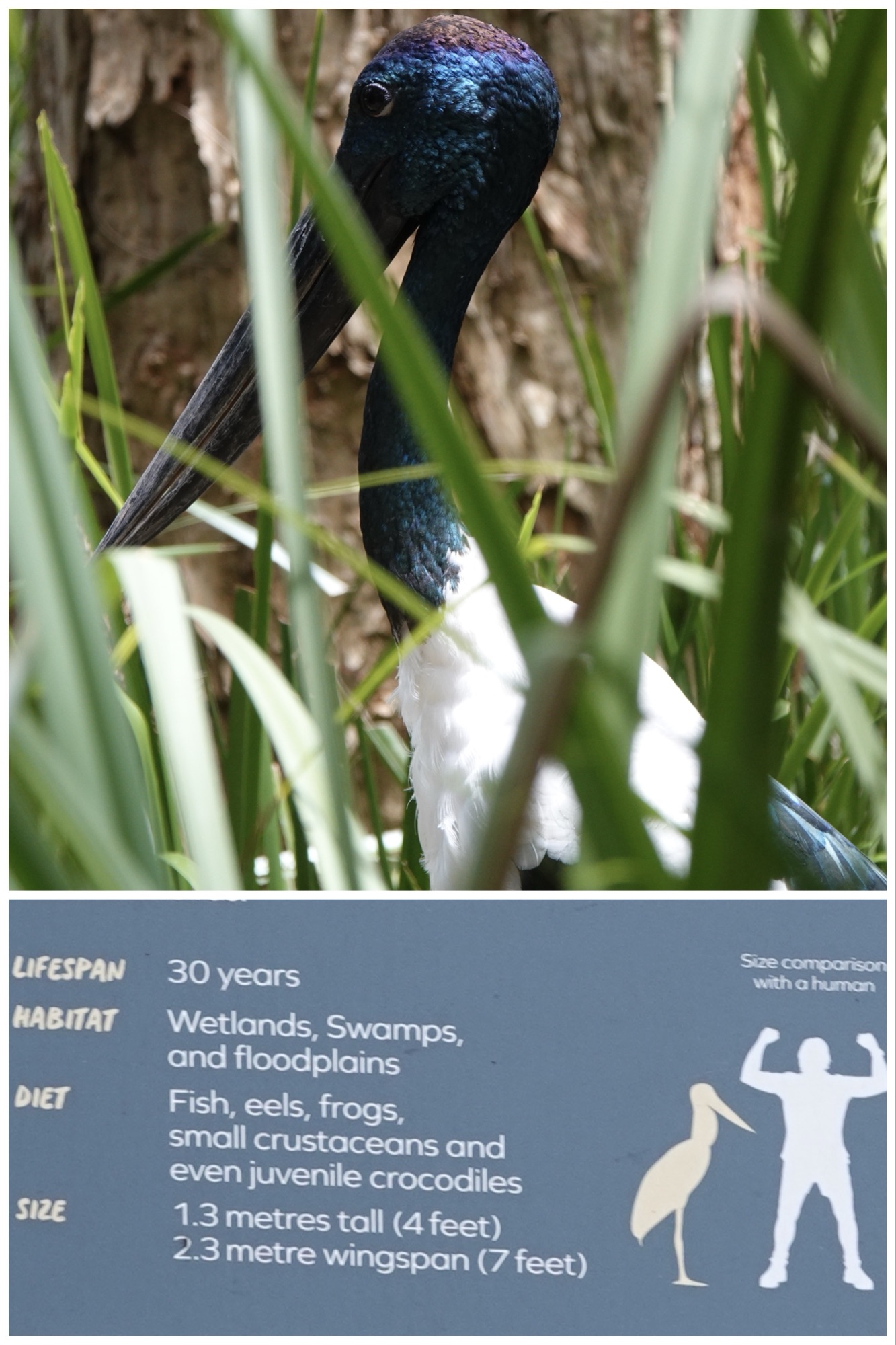
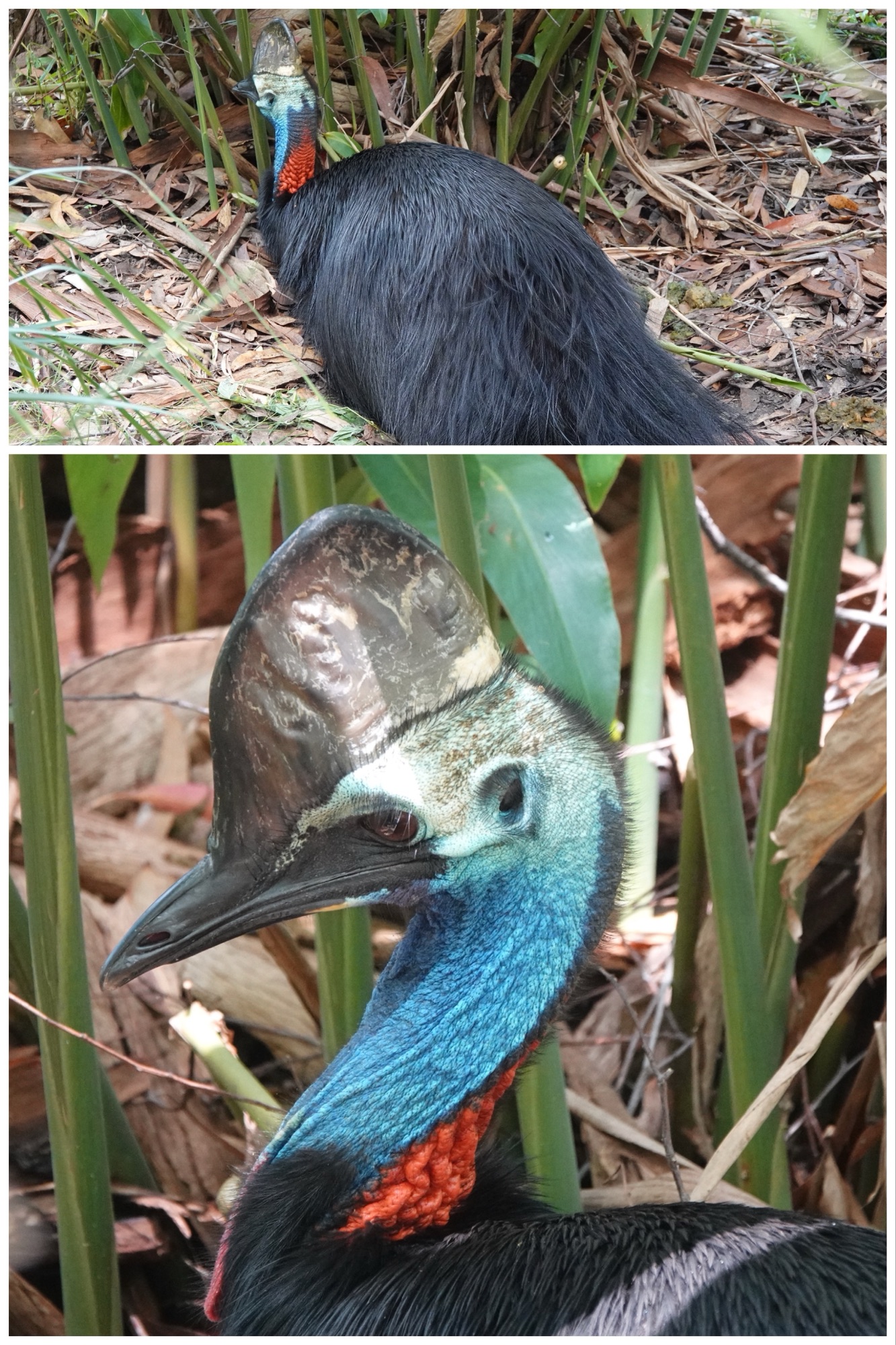
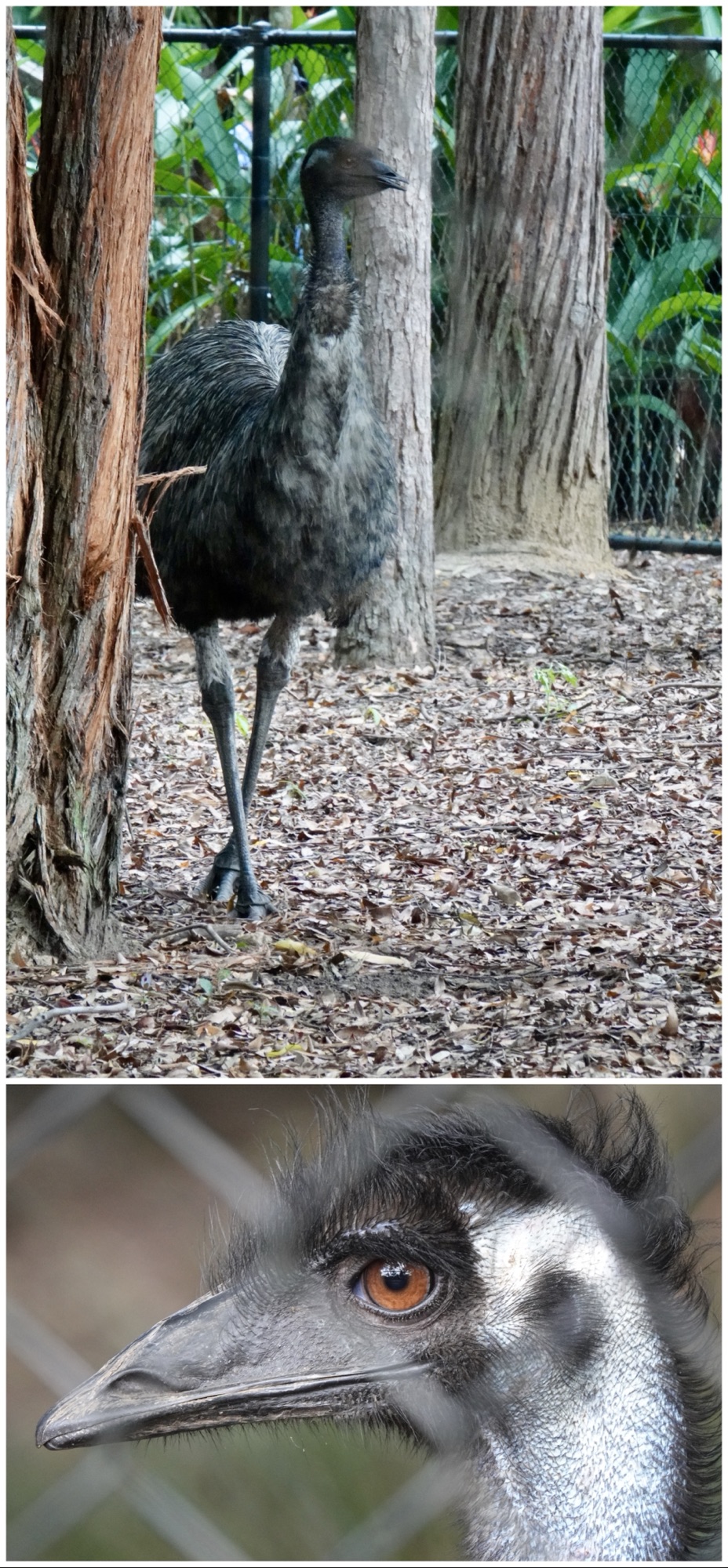

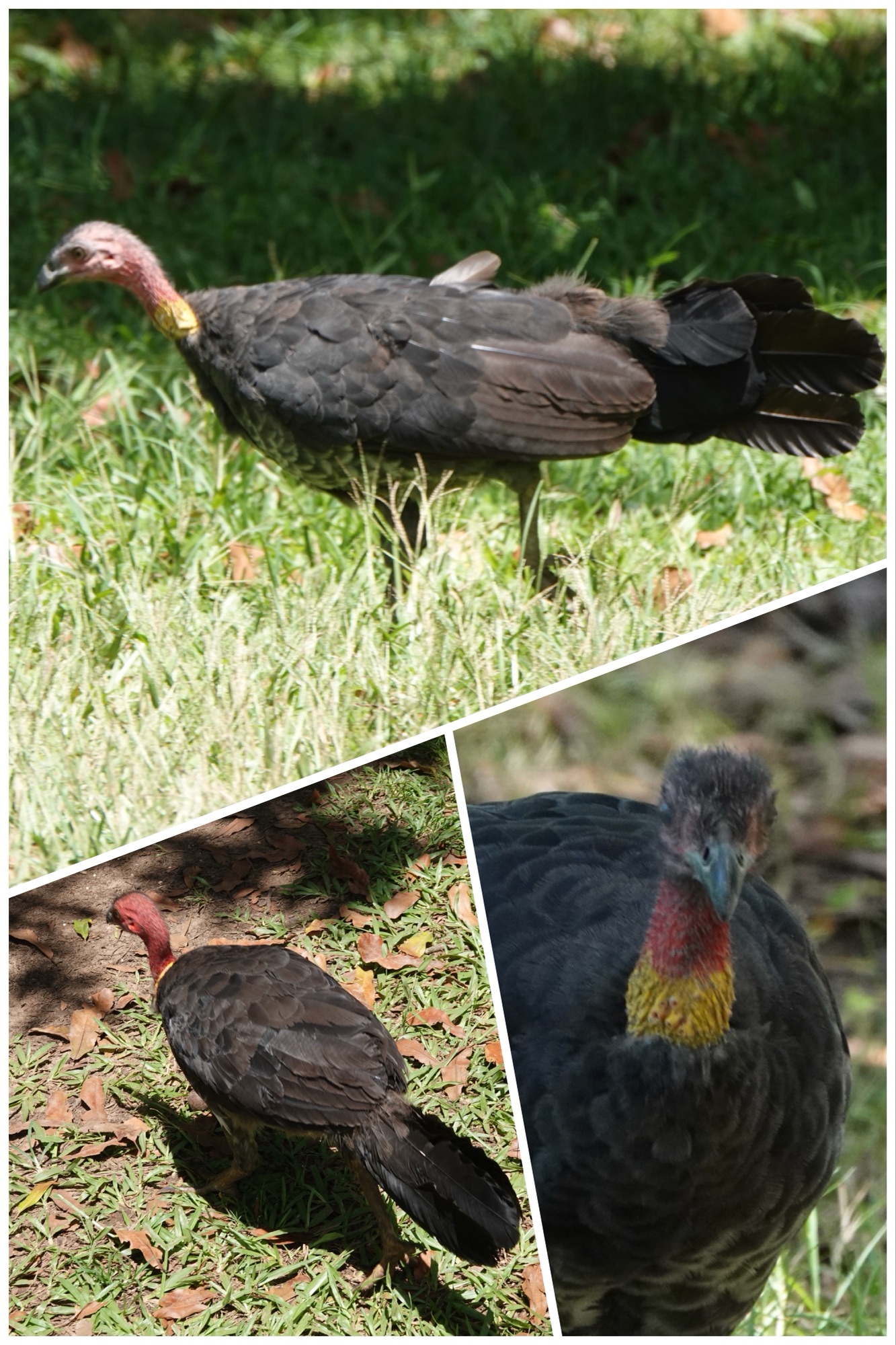

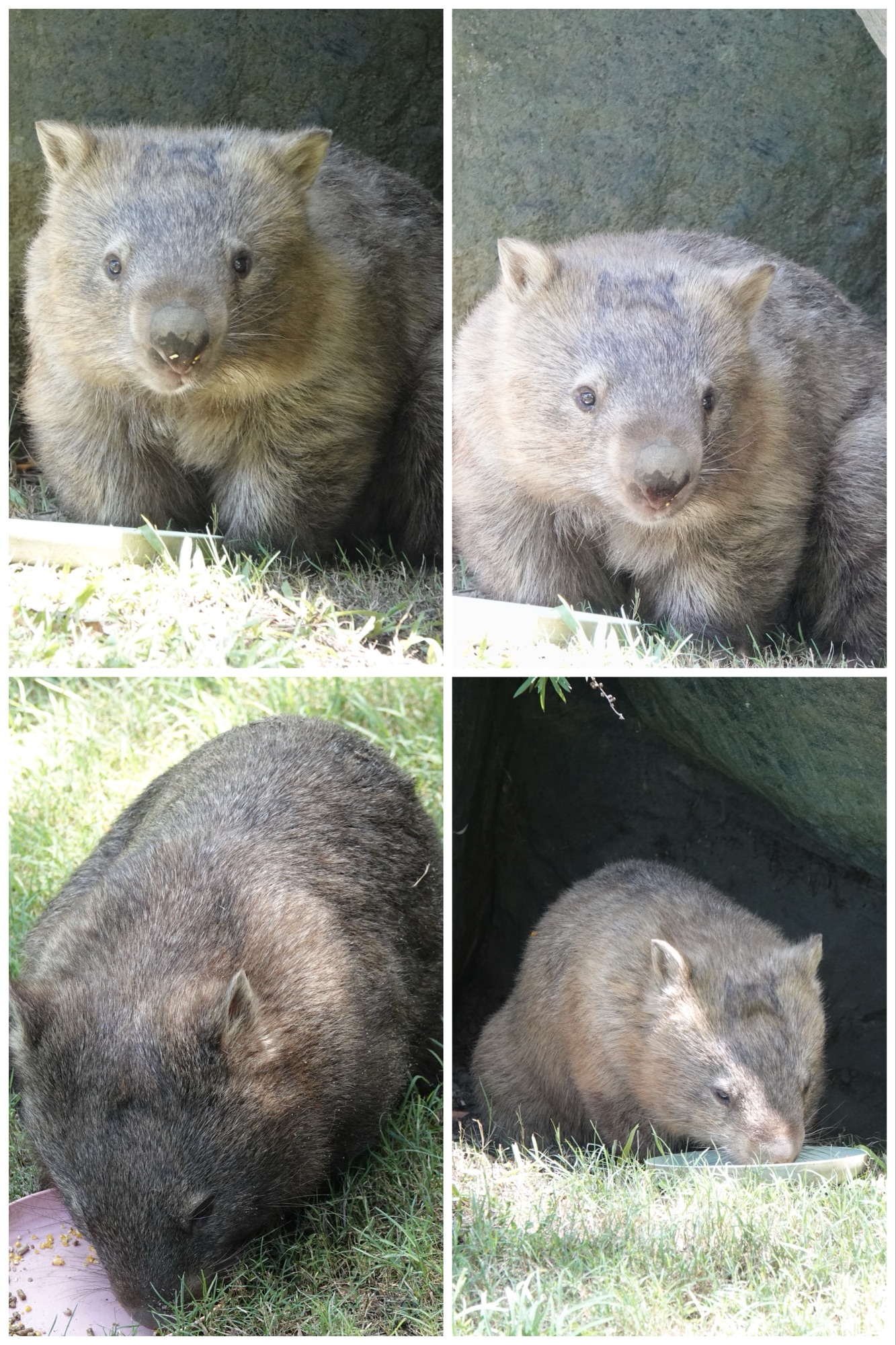
Then it was back to a couple of Australian mammals before ending our time at the zoo.
It was lunch time for the wombats…
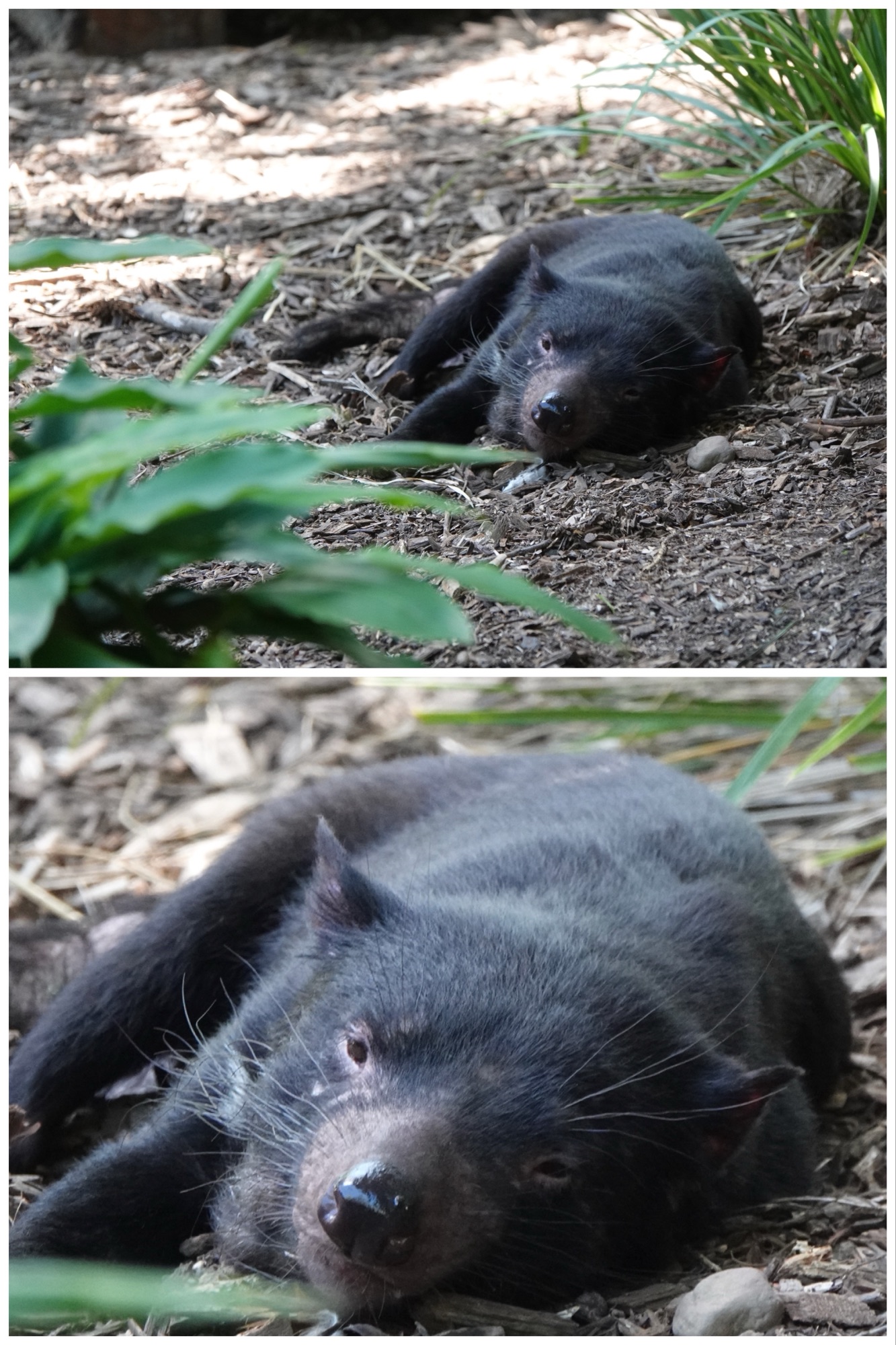
… and afternoon lazy time for the Tasmanian devil.
It was a truly beautiful zoo, with wide walkways, lots of covered rest spots for respite from the hot Queensland sun, well-spaced water bottle refilling stations, water features and places where children could play (a great idea to keep kids from getting cranky), and lots of opportunities for safe animal interaction (plus staff talks featuring those animals with which only experts should interact).
The plants and the massive tree canopy gave a glimpse into Queensland’s flora. I was especially fascinated by the gorgeous Staghorn Fern, which grows on the sides of trees with no visible root system. They propagate through spores produced on the underside of the fertite fronds.
I had to look up more (thanks Wikipedia!) and found out that they “have tufted roots, growing from a short rhizome, and bear two types of fronds – basal and fertile fronds. Basal fronds are sterile, shield- or kidney-shaped, and laminate against the tree, to protect the fern’s roots from damage and desiccation. In some , the top margin of these fronds will grow into an open crown of lobes; catching rainwater, falling forest litter, bird/animal droppings, and even an occasional fallen deceased animal, these plants build up their own “compost” system of nutrition over many years.”
The photos below show 3 stages of development, visible in different parts of the zoo.

After a wonderful zoo experience, we stopped at the very attractive Mooloolaba beachfront restaurant area for fries and Jarritos pineapple soda (me) and a Corona (Ted). As seems logical for a Mexican restaurant, the hot crispy fries came not with ketchup but with guacamole.
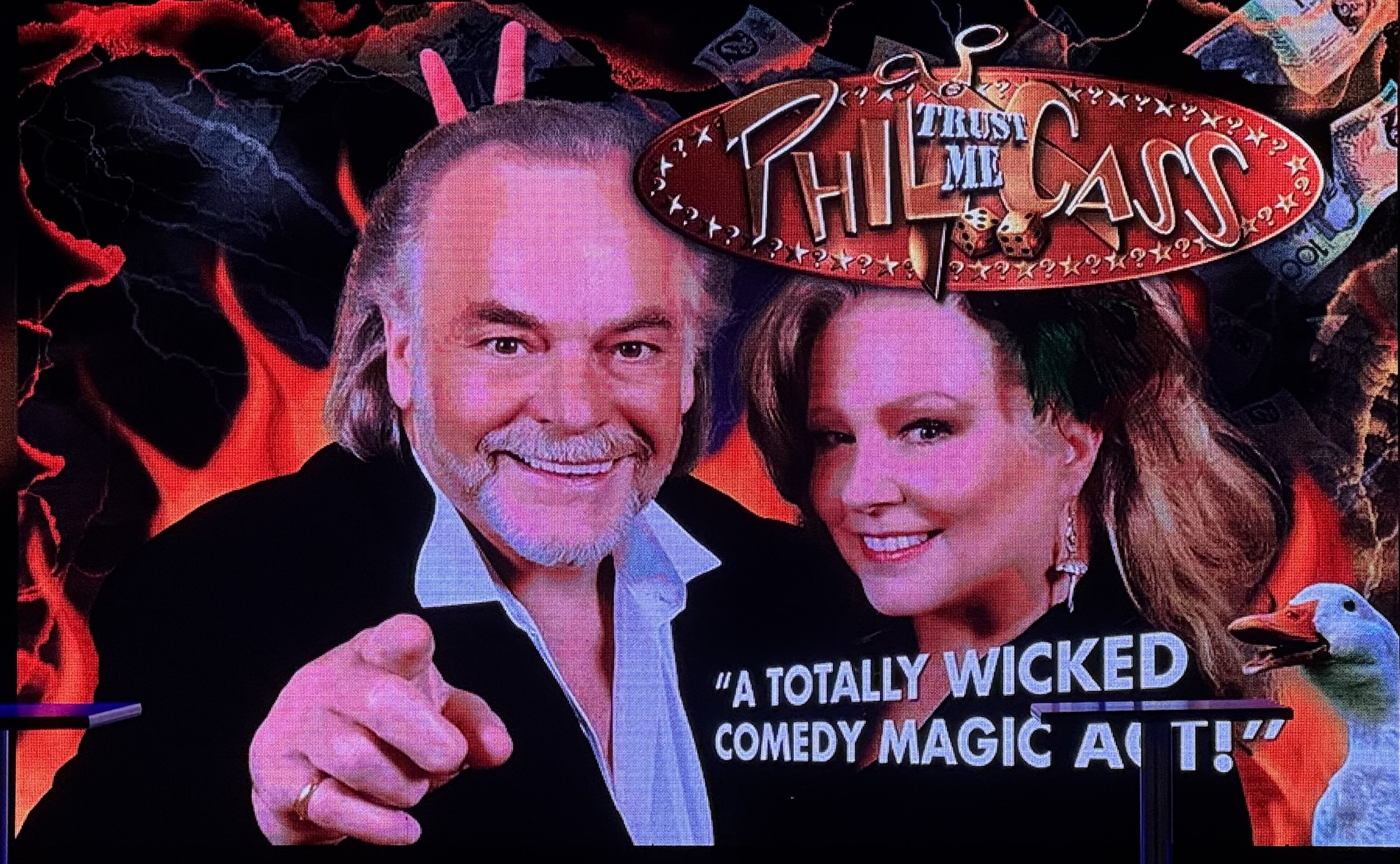
Then it was another bumpy tender ride back to the ship, and a quick shower and cool drink before dinner and the theatre show, which was an Australian comedy magician whose schtick is “trust me”. Hint: don’t.
After the show our conundrum was whether to head to Torshavn to enjoy the band, or head to the Explorers Lounge on deck 7 to enjoy Alan’s smooth guitar session.
Last night, the Viking Band won out. We really can’t say enough about how great this band is, especially now while resident pianist Enrico (Ric M Agudo) is filling in on keys, while his friend and colleague Hentje continues to rock lead guitar. JD on drums, and Des the the bass player are also amazing individually. The result is a quartet that can play anything, and when they simply have fun and jam, their joy is palpable.
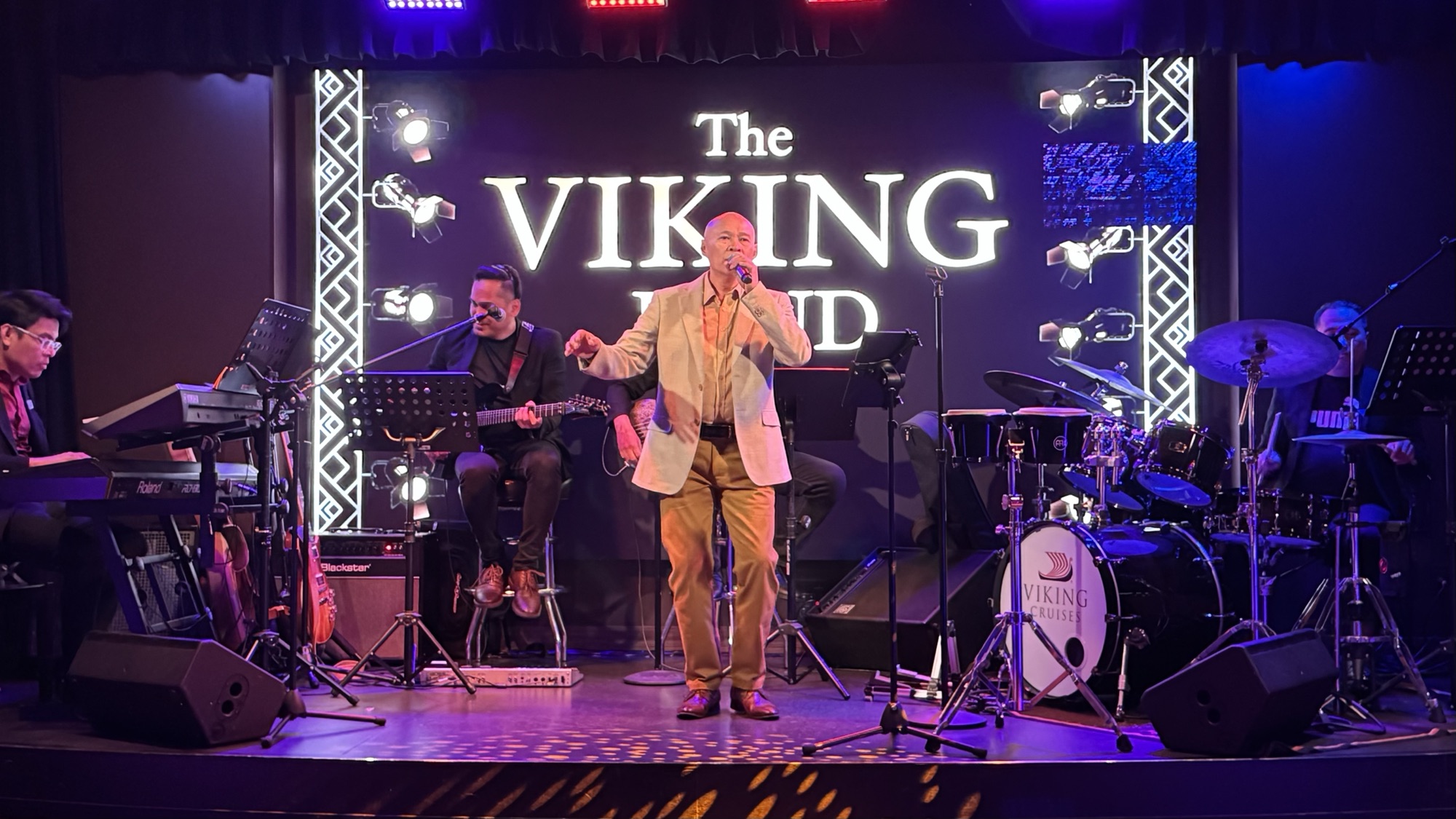
It was a fairly late night for us (well, for me), but with a sea day coming up as we head for Whitsunday Islands, it was great to be able to take advantage of all the great entertainment onboard.
 Rose and Ted’s Excellent Adventure
My accident prone little sister got up close with a kangaroo (or wallaby? I don’t know the difference) back in the late 60s who put its paws on her shoulders and kicked her in the stomach with those macropods! I’m glad these were sweeter! (She also managed to break her leg on a playground roundabout in Scotland and lose her glasses to a monkey in Bangkok… I’m not sure she’s left the US since we returned…) Thanks for all the great pictures — especially the birds!
LikeLiked by 1 person
Wow! That would certainly put a damper on travelling!
LikeLike