We’ve absolutely loved our time in New Zealand, and were almost sad to reach this last port.
In yesterday’s lecture, we learned about Wellington, New Zealand’s 3rd largest city, which is now the centre of government and cultural diversity.
For the Māori, Wellington (then called Petone) was one of the ports to which one of their original seven canoes of settlement travelled. It was then, as it is now, a hub for both communication and strategic control.
British ships began to arrive here in the late 1700s, also looking for a strategic site (a “New Britannia”), and those settlers began immediately to reshape the culture. The first British to arrive here were given free passage from Britain, “given” land, and had no knowledge at all of the Māori.
It didn’t take long for land disputes to occur, resulting in 1840 in the Treaty of Waitanga.
In Wellington, that treaty allowed urbanization; Victorian architecture, governance, language , style, and customs proliferated, but over the past two centuries Māori culture has been blended into all of those areas.
Wellington was not originally New Zealand’s capital. That honour goes to Russell. It was not even New Zealand’s second capital; that was Auckland from 1861 to 1865. Wellington became the capital in 1865 and remains the country’s seat of political power.
It was another relatively short day in port here, so we decided to go seal watching at Tongue Point. Our plan is to be in Wellington again next year, when we’ll have time to really explore the city’s landmarks and museums.
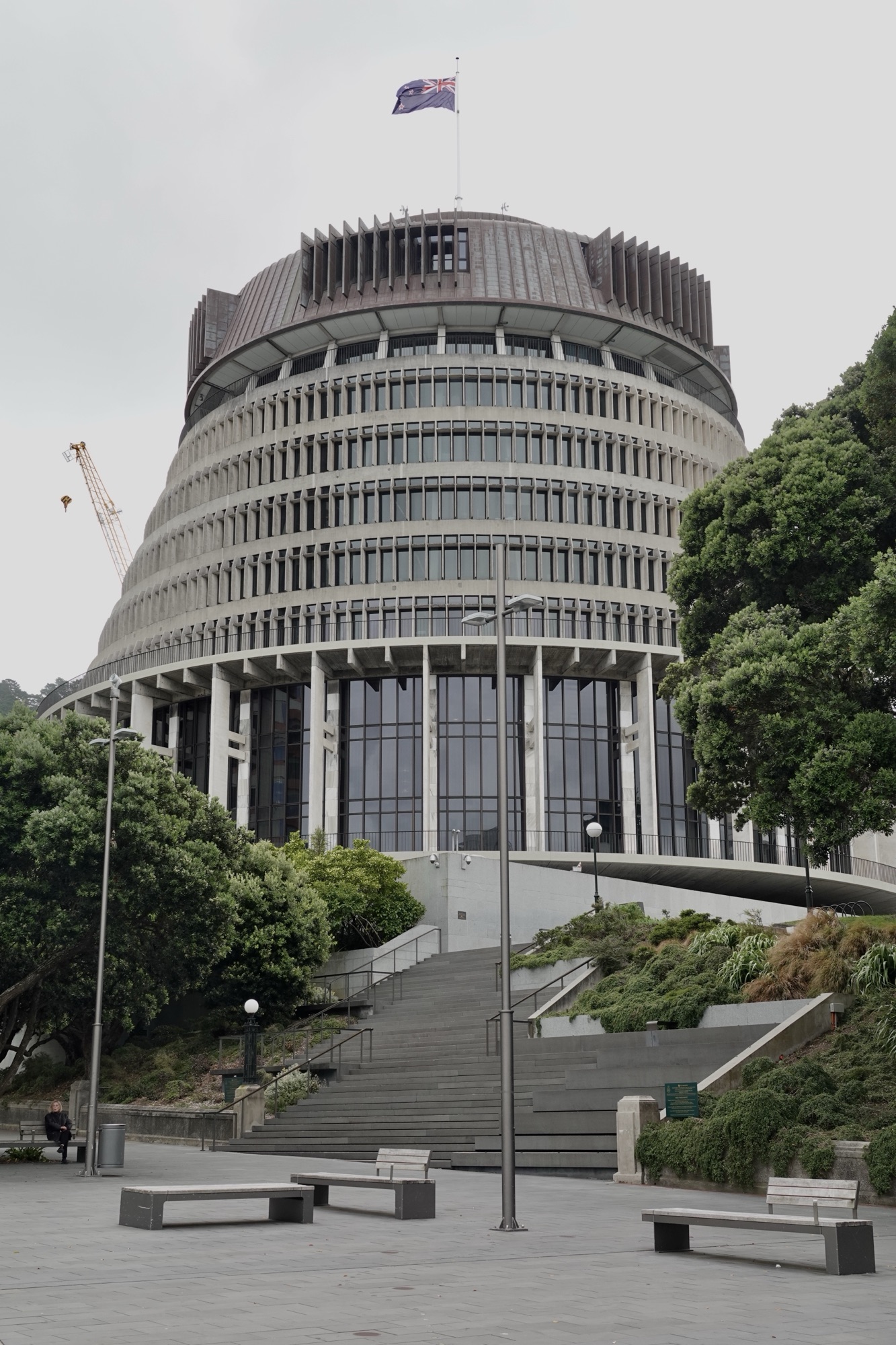
The main attraction today was, of course, the fur seals, but en route to them we passed through downtown Wellington. As we passed the “Beehive”, the nickname for the New Zealand seat of Parliament, our guide suggested that it was “obligatory” for each of us to light a match and toss it out the window. Whether that was a suggestion that it needed burning down, or a comment on the fact that right now their government “stinks”, he left to our interpretation.
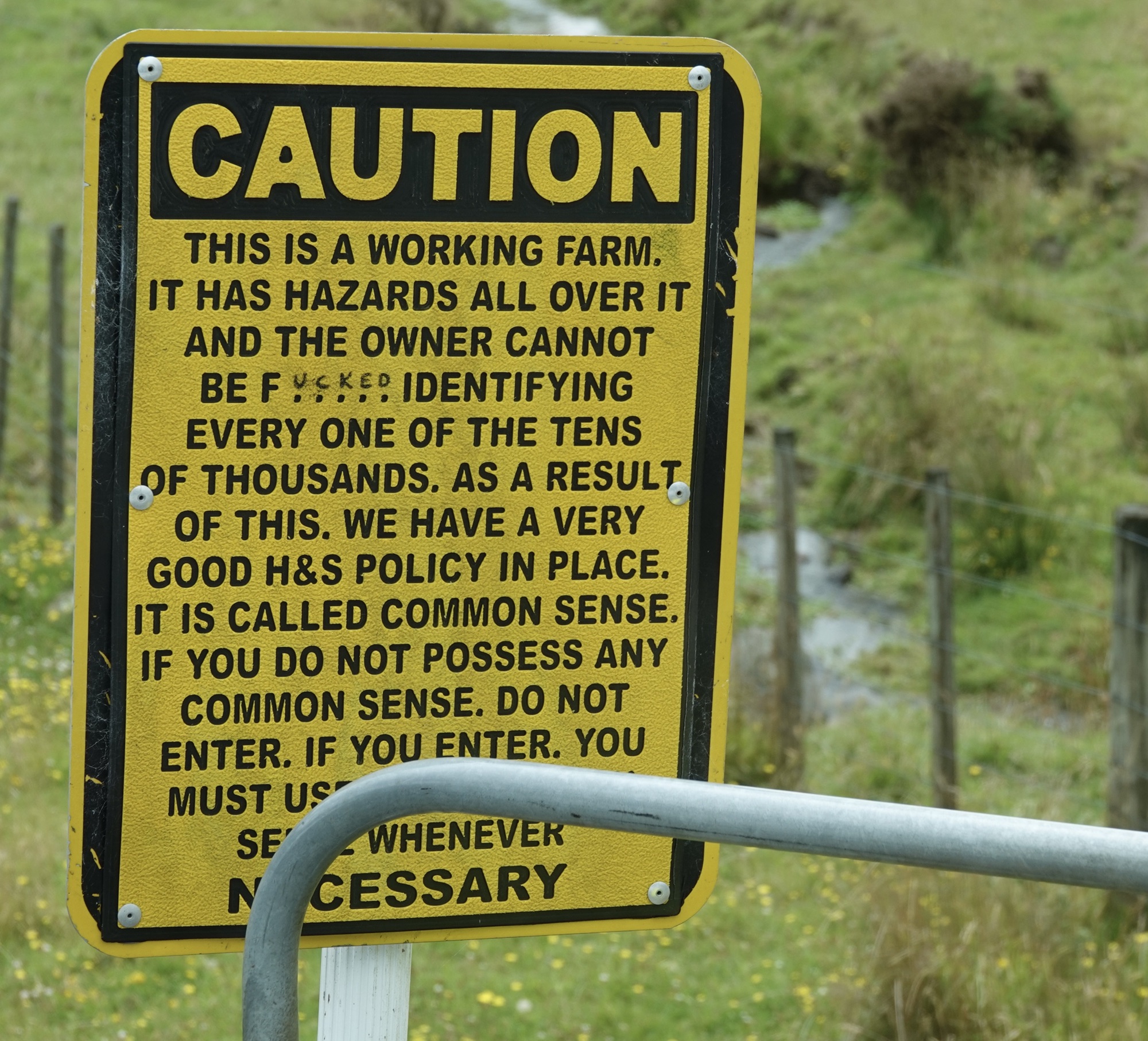
In order to reach Tongue Point, we accessed – by special permission – a roadway leading through a private “station” of 13,000 acres in Mākara, west of Wellington. It was explained to us that in New Zealand a farm of over 10,000 acres dedicated to the grazing of sheep or cattle is called a station or run, and cannot be subdivided for sale. The use of that word for the farm or farm buildings dates back to the mid-nineteenth century. The owner of a station is called a runholder.
The cheeky New Zealand sense of humour that we’ve come to love was in evidence on the sign at the station’s entry.
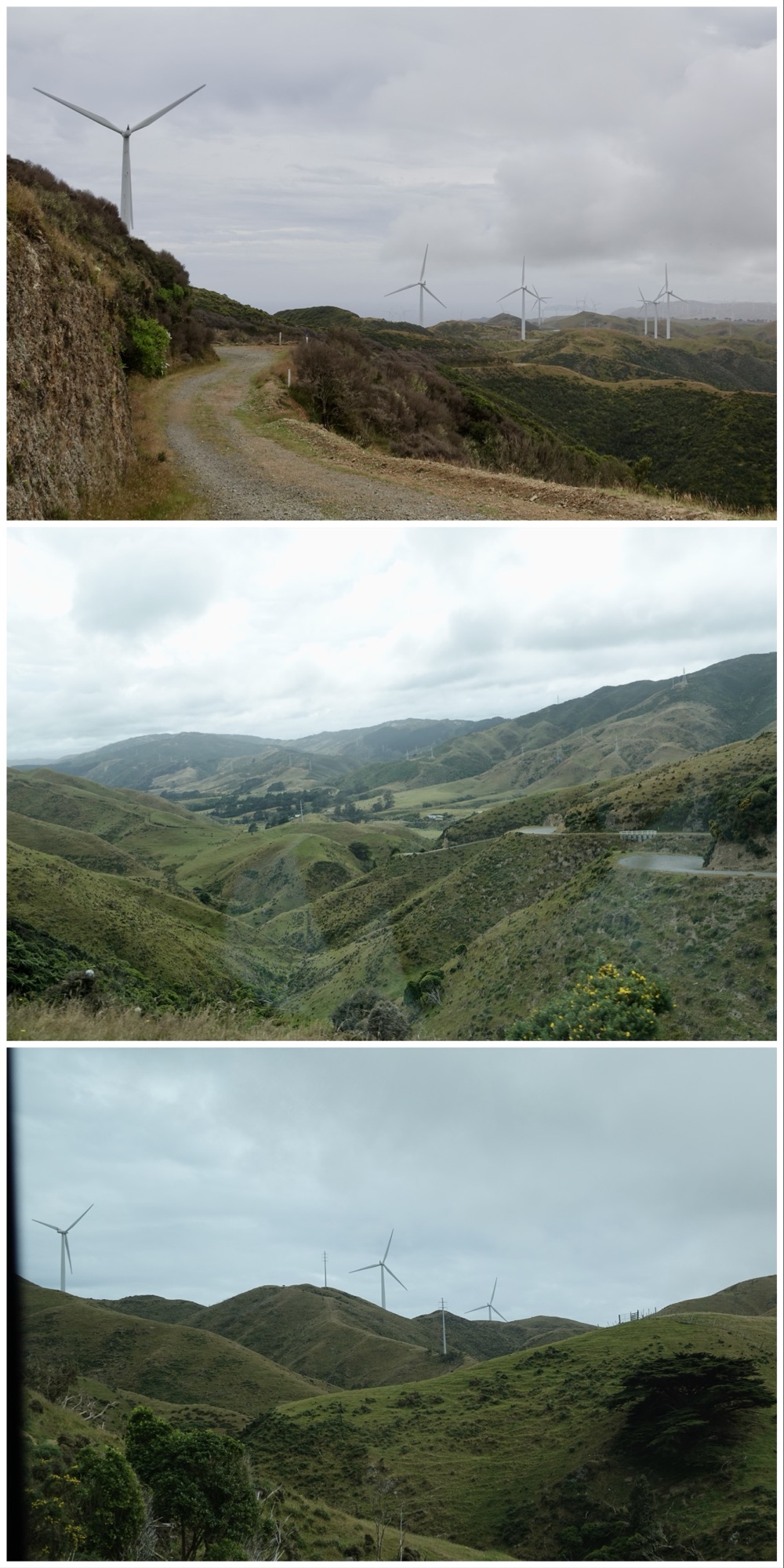
The stunning winding roadway through the farm was built by Meridien Energy when they leased land for 69 wind turbines from Terawhiti Station. At times it had us holding our breath – in fear as much as awe – as our driver guide Waiwai (a Māori name meaning waters) navigated the turns at speed in our Mercedes 4 wheel drive shuttle with – he made a point of telling us – an oversized Volvo engine.

Waiwai mentioned that the runholder gets paid $1 million NZD annually for his land lease, AND got the advantage of the road being built. He still raises sheep and cattle, but not because he needs to.
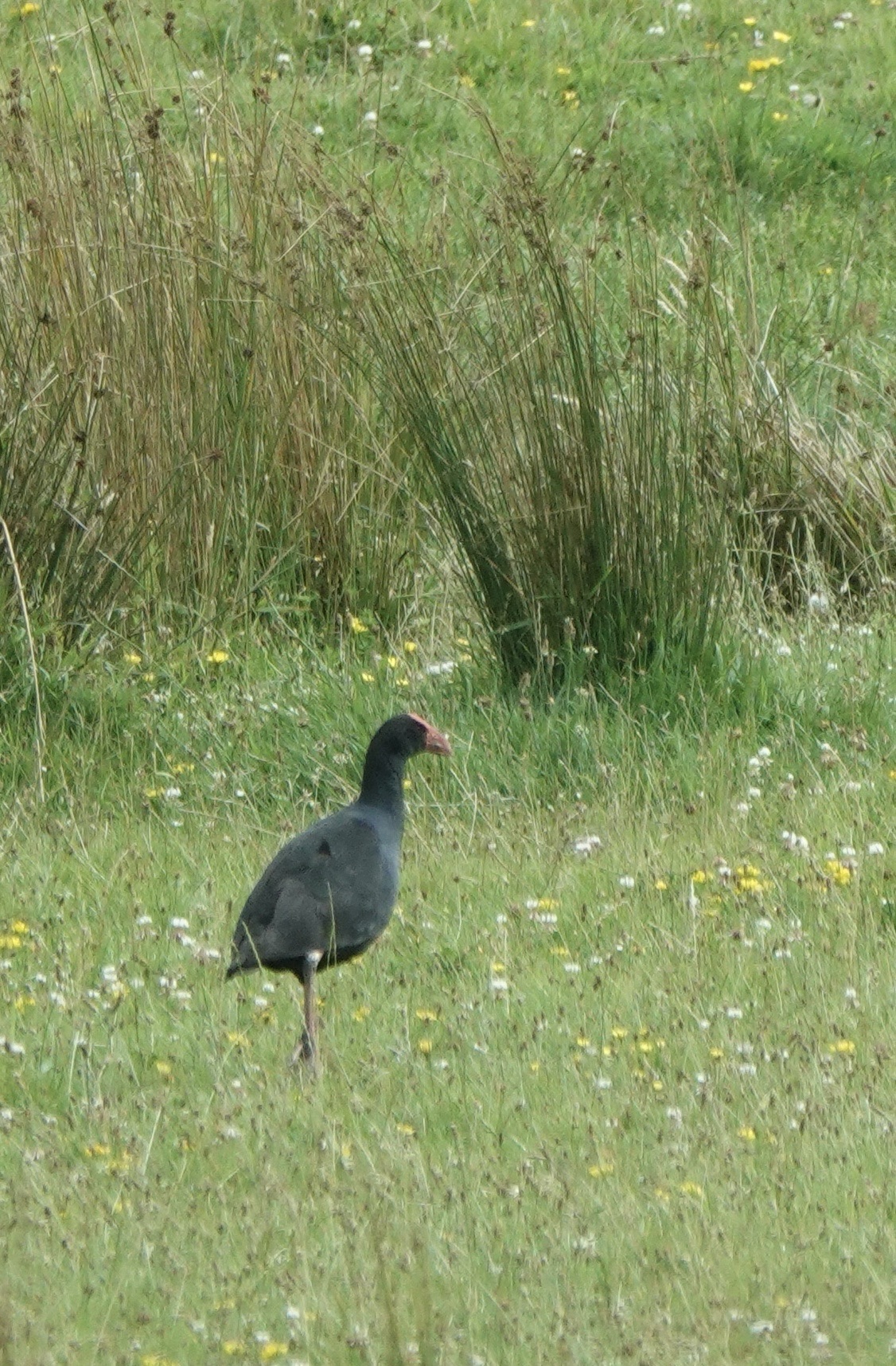
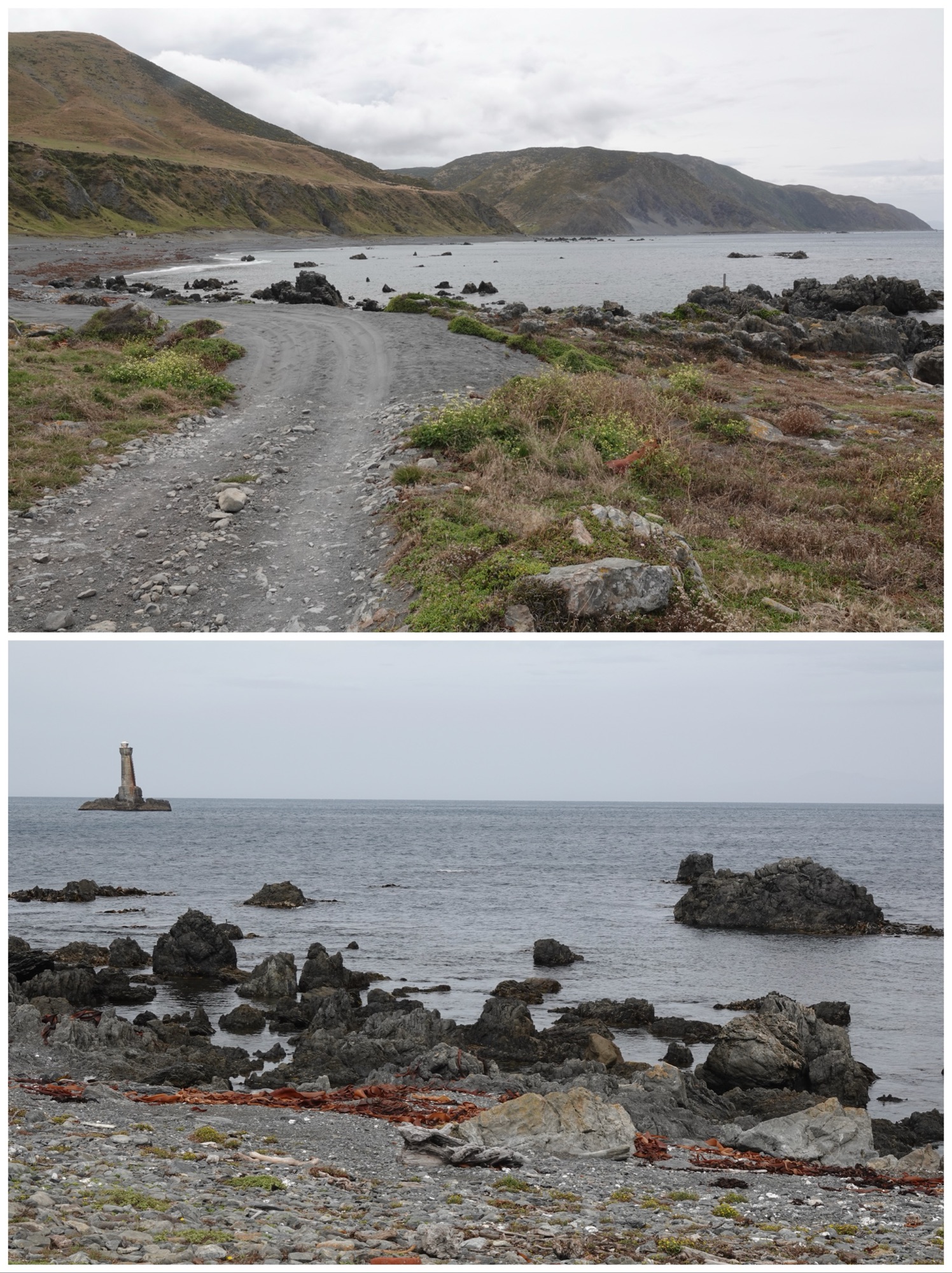
Once the power company’s road ended, we were on to stones minimally held down with tar, and then just stones – in which our vehicle left huge ruts as we bumped through. Waiwai encouraged us to be on the lookout for wild goats, Wiltshire “self-shearing” sheep, Angus cattle, horses, kāhu (swamp harriers), and kārearea (New Zealand hawks).

Honestly, though, it was the scenery itself and the spectacular vistas that wowed us.
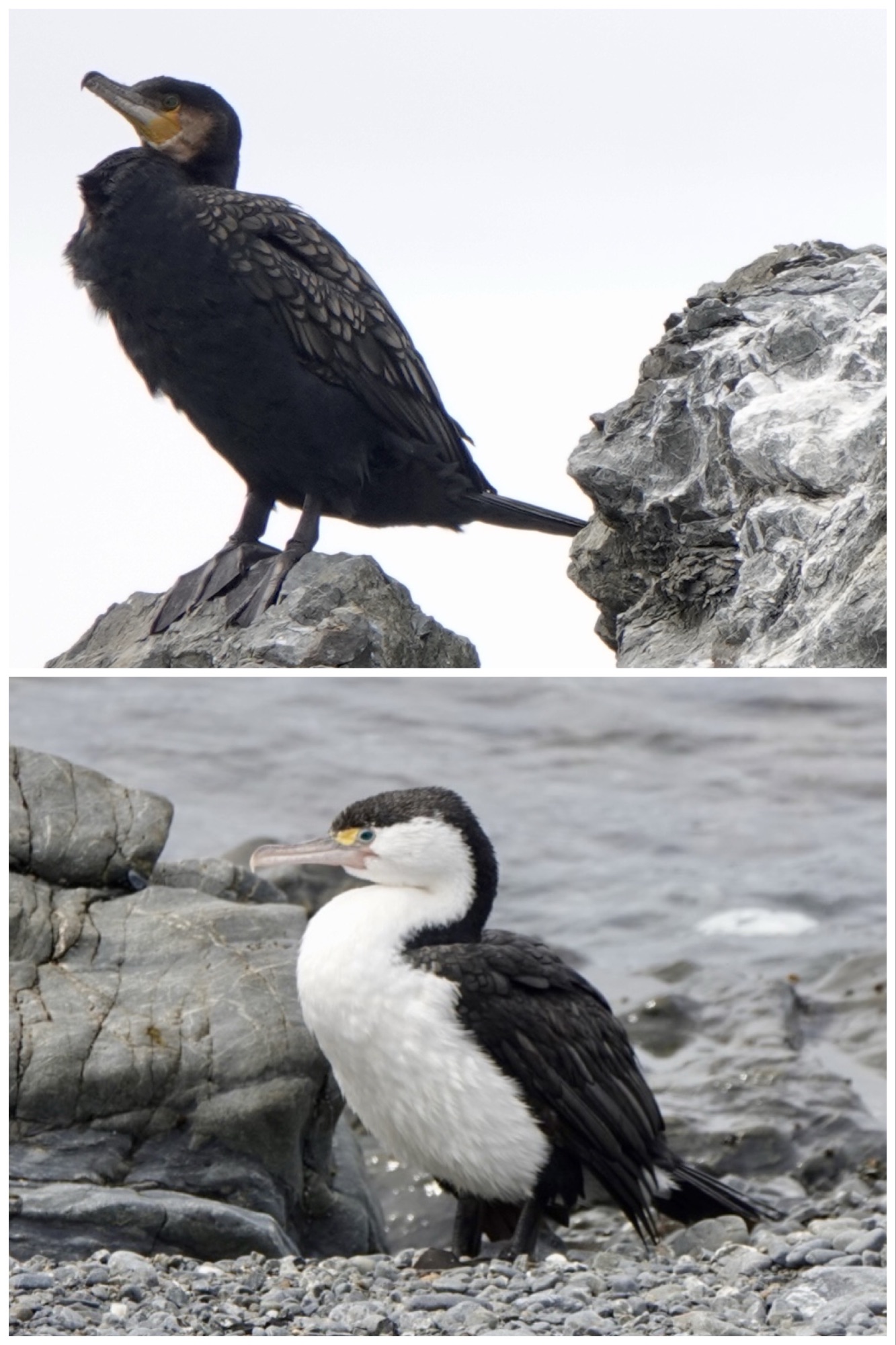
A few sea birds joined the seals on the rocks. They’re safe until the seals get hungry, at which point they fly out of range.

There are currently between 400 and 500 male fur seals here, although we only saw the “beach master” (the alpha seal) and about a dozen others. Their dark brown fur is remarkably well camouflaged against the volcanic rocks rising out of the water.
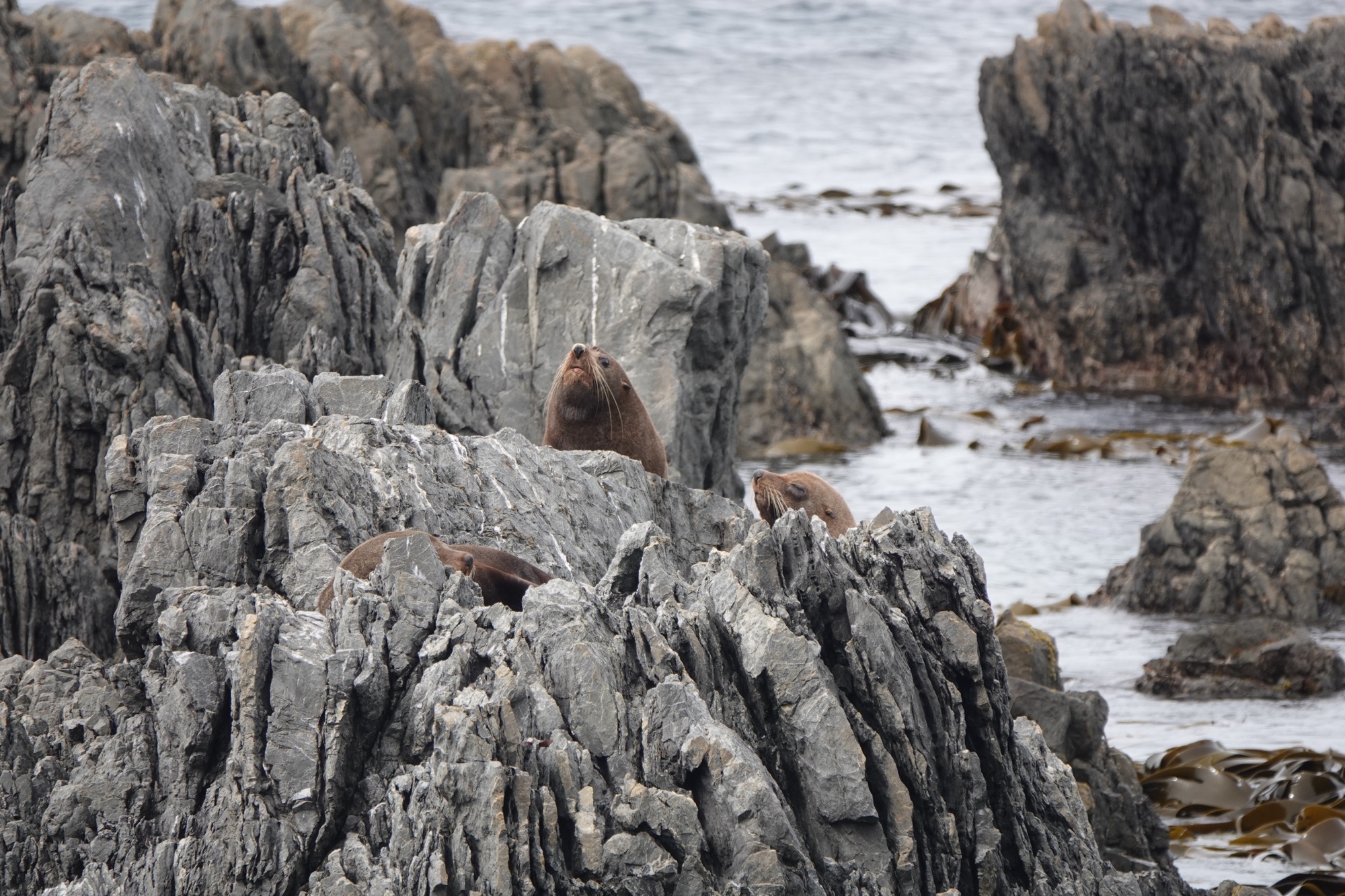
The rules in New Zealand are that you must stay 20 metres/65 feet away from the seals. They are very territorial, and if you get close they’ll feel threatened and roar at you. Our guide pointed out that they can move faster than you’d think, and can bite – or even kill – humans. He also pointed out that fur seals are a lot like cats, and even though they “can” do those things, “they can’t be assed to”. His words and colourful Kiwi colloquialism for “can’t be bothered”, not mine.
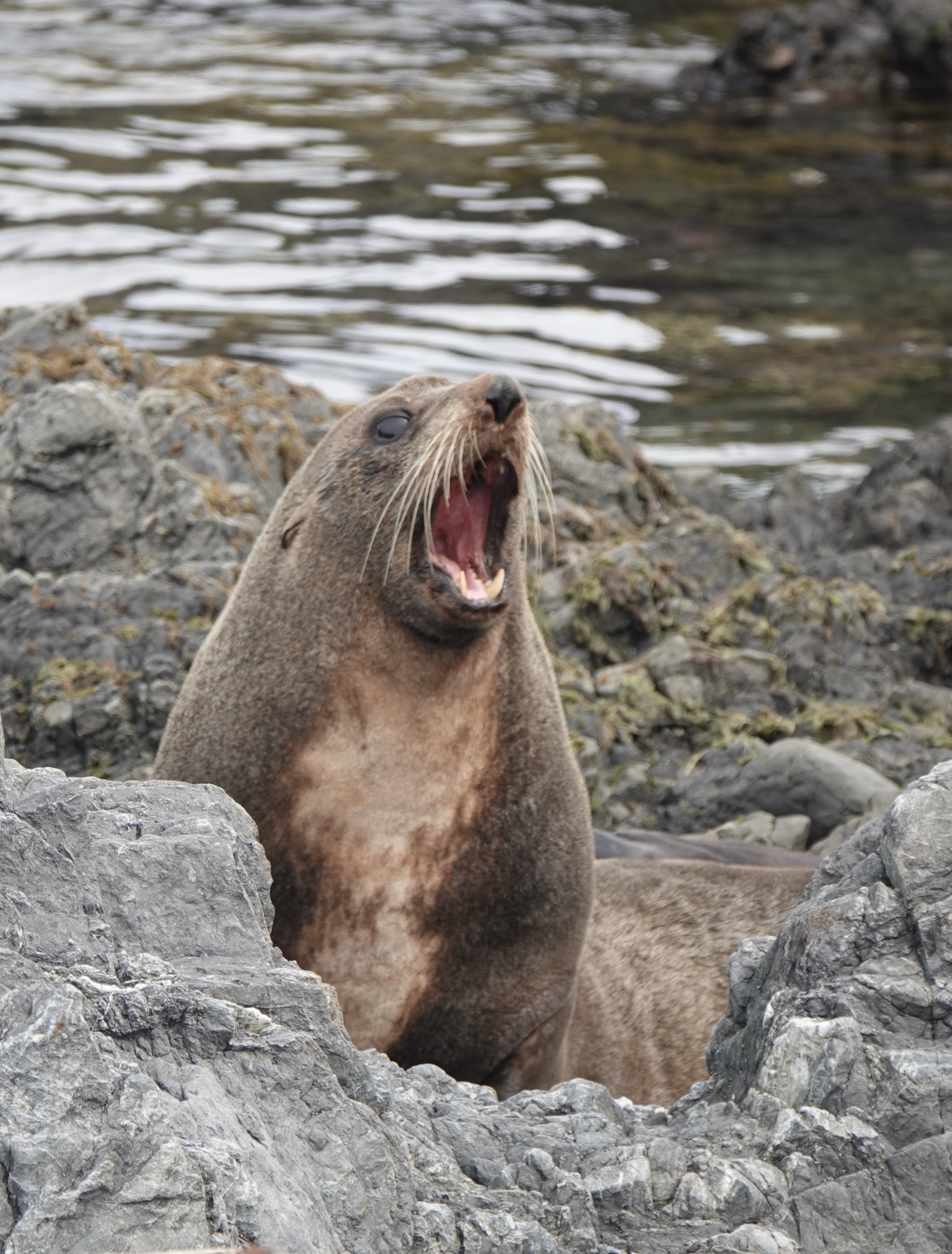
The seals are so much fun to photograph that Ted took over 100 pictures, and I had a great deal of difficulty culling, so have included WAY too many.
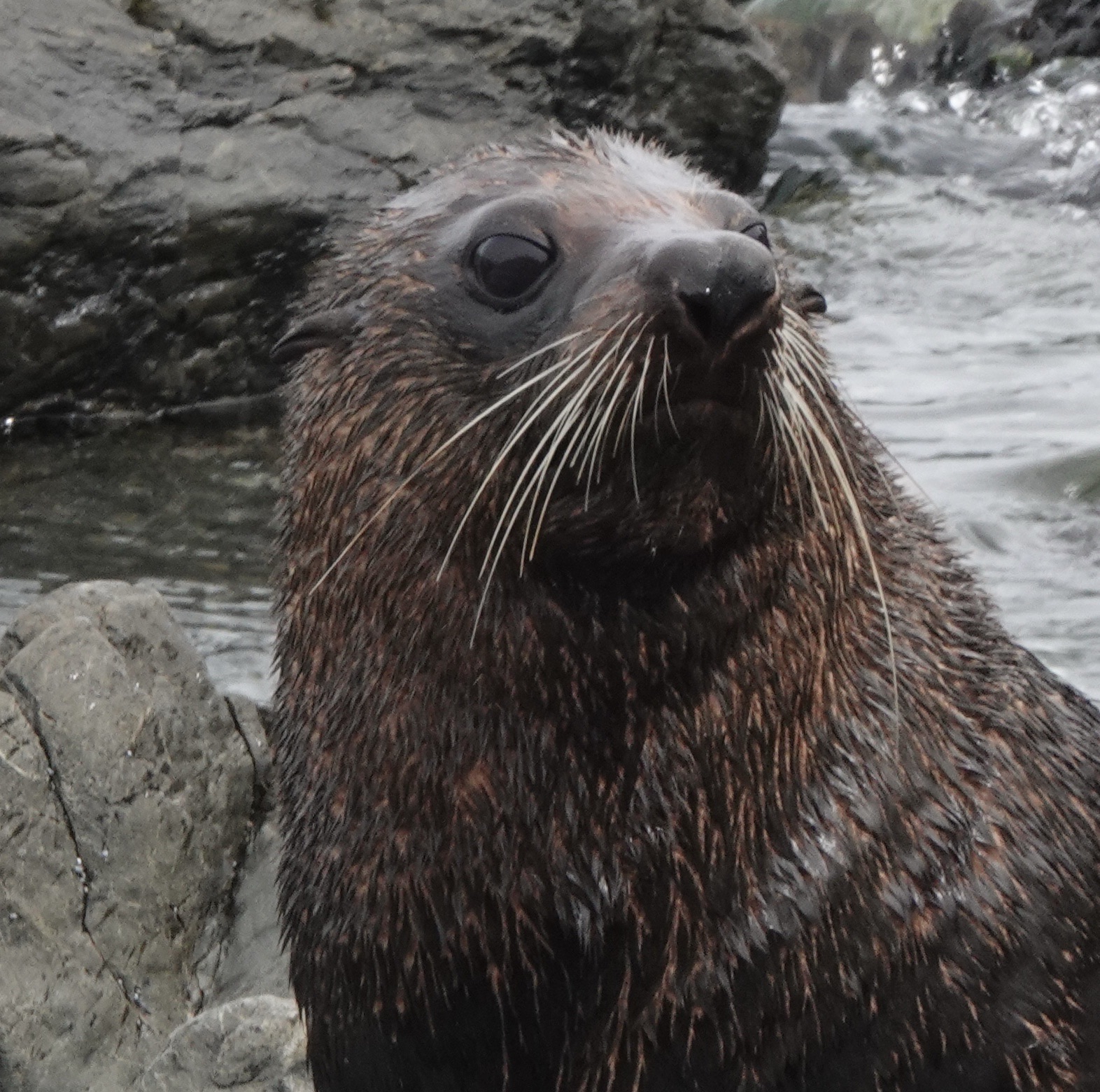


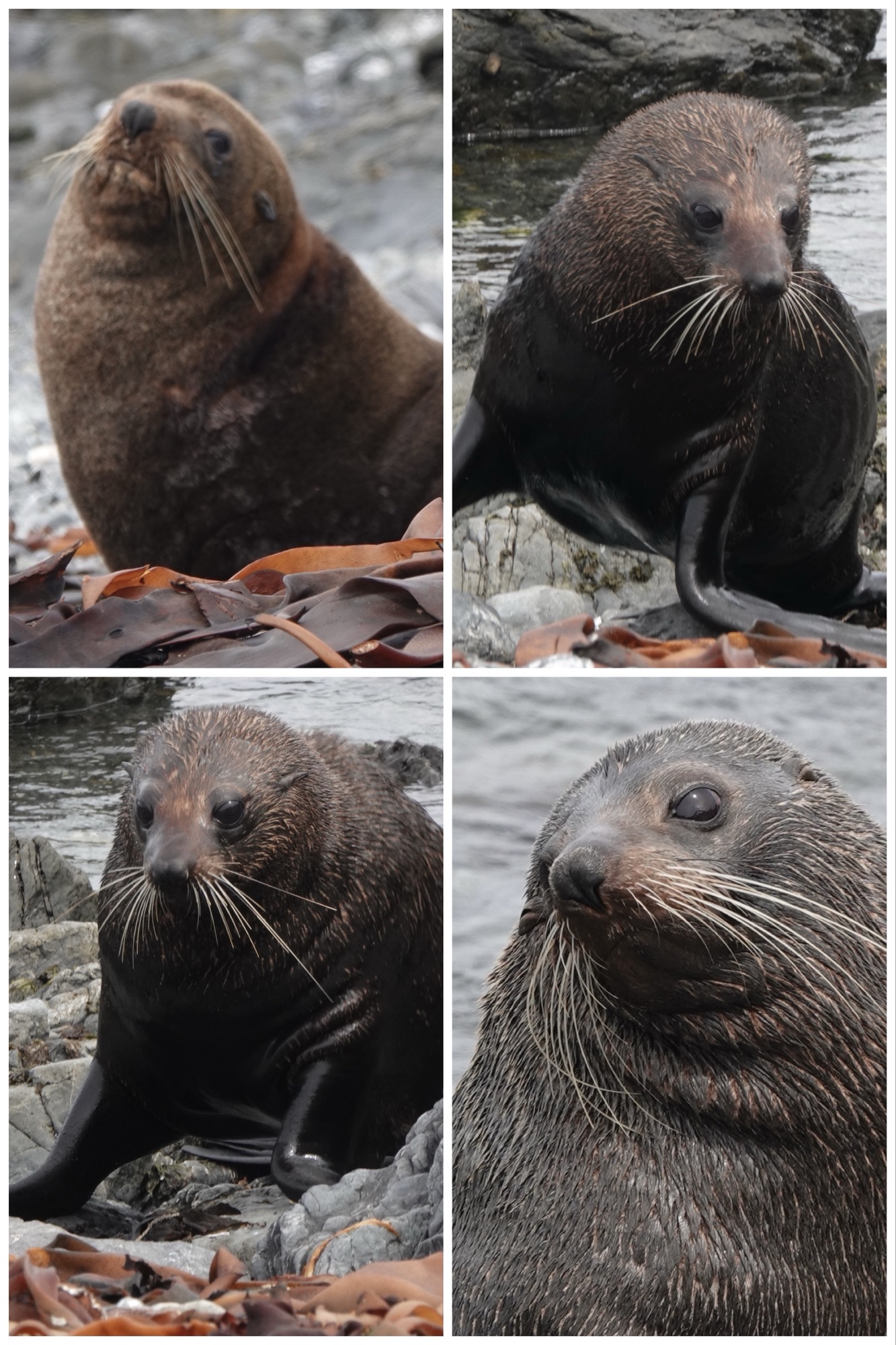
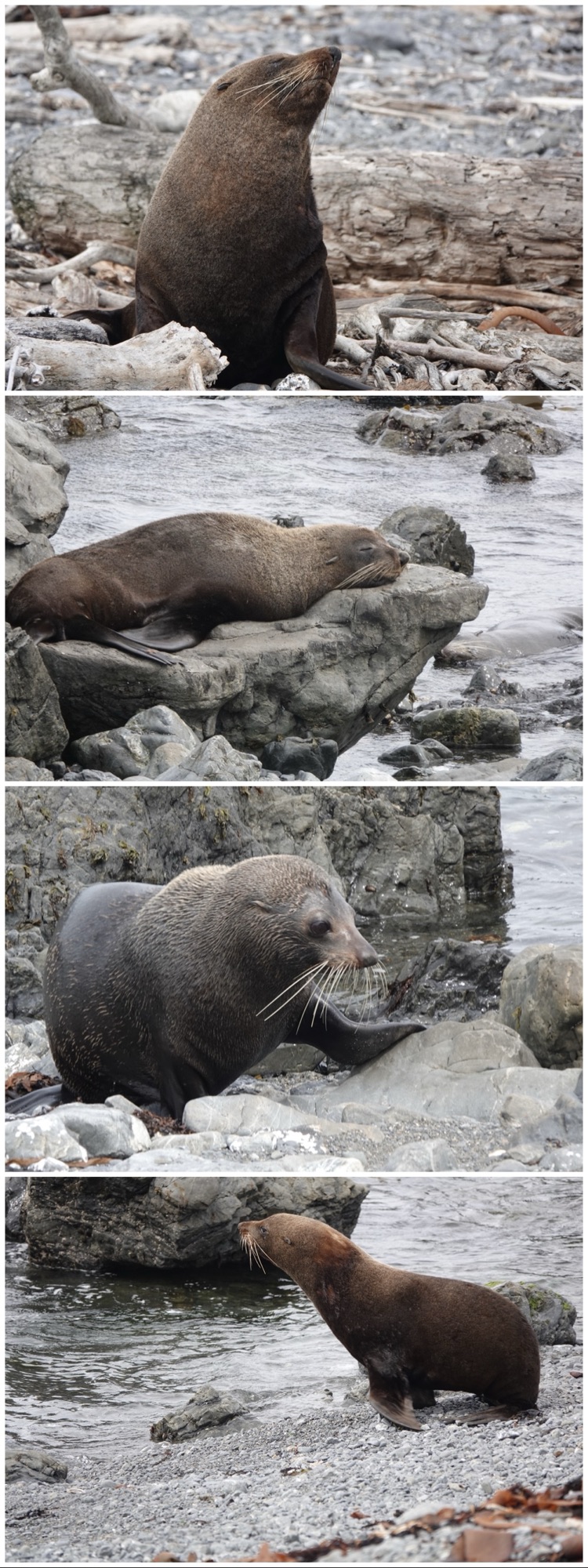
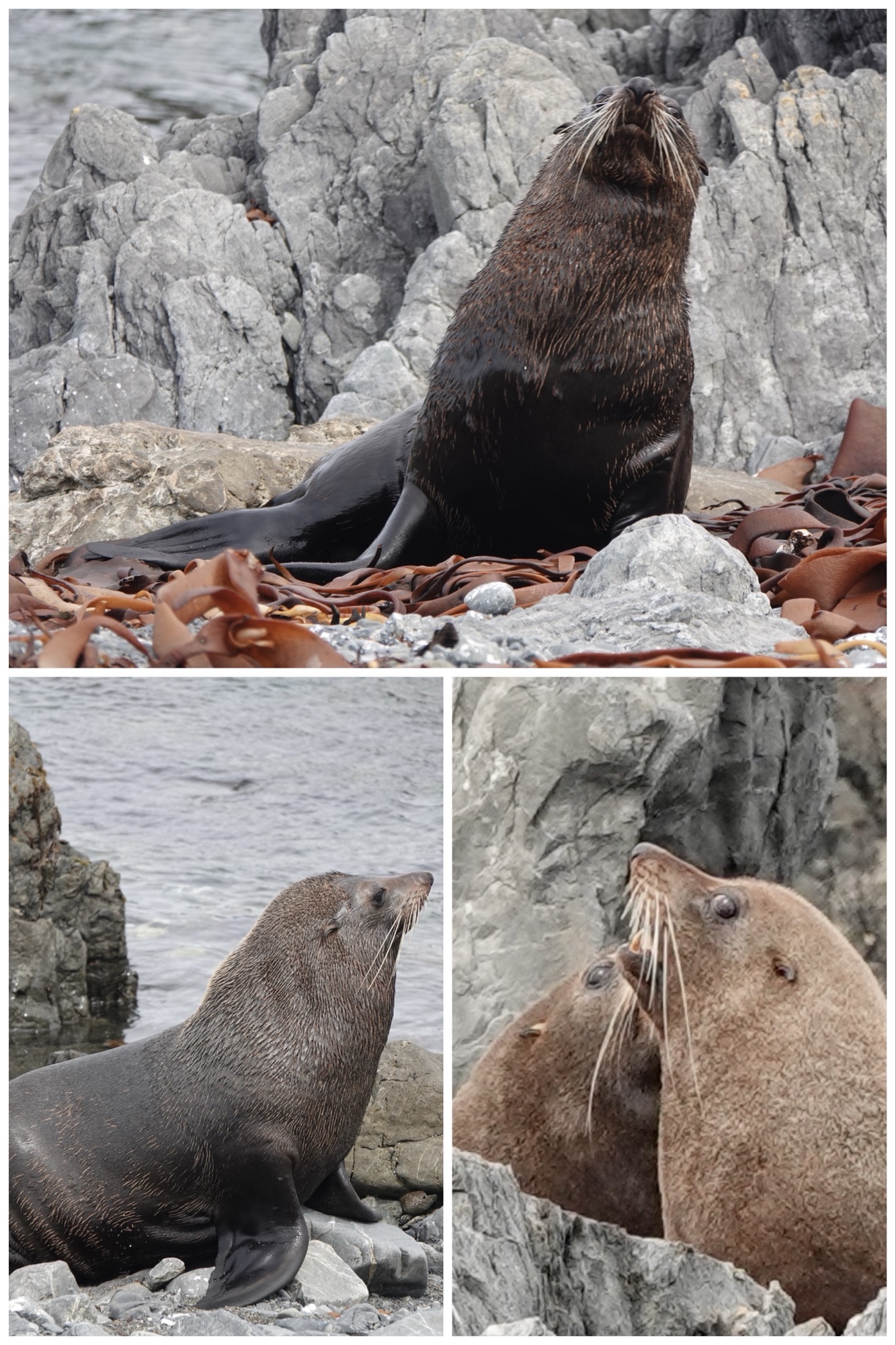
The alpha male, or “beach master” (below) weighs about 200kg /440pounds, and the other males range from 150-200 kg. They eat only about every fourth day, but when they do they take in up to 70 kg (154 lbs) of food. I guess it takes 3 or 4 days to digest that, and a lot of just sleeping in the sun.
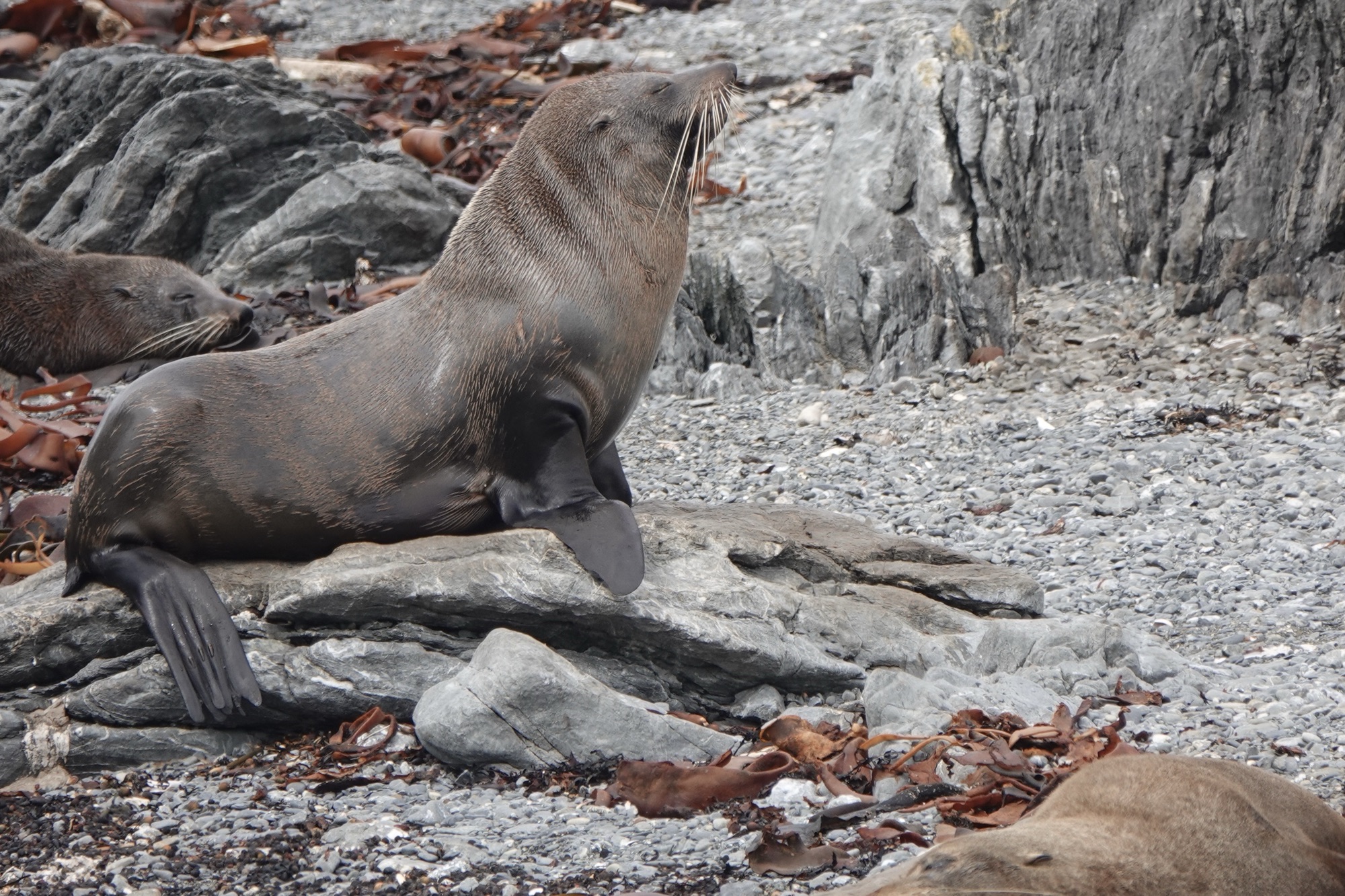
Females weigh about 2/3 of what males weigh, but since they spend the New Zealand summer on the South Island having “girl time” we didn’t see any. Maybe girl time is what makes the females live for 26-27 years, while the males, left to their own devices – and fighting each other not only for mates but also for things like claiming ownership of their specific sleeping rock – live only about 15 years.
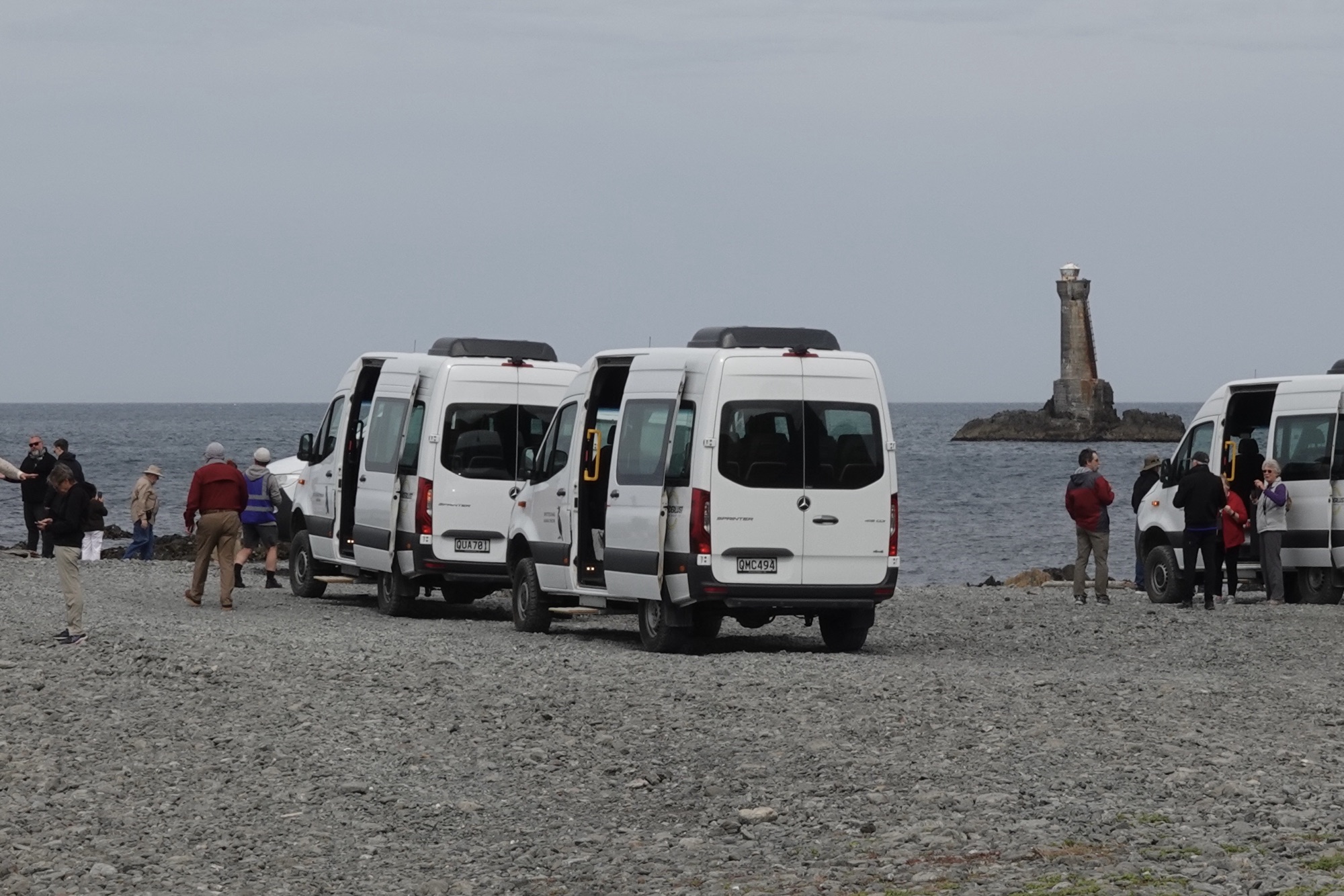
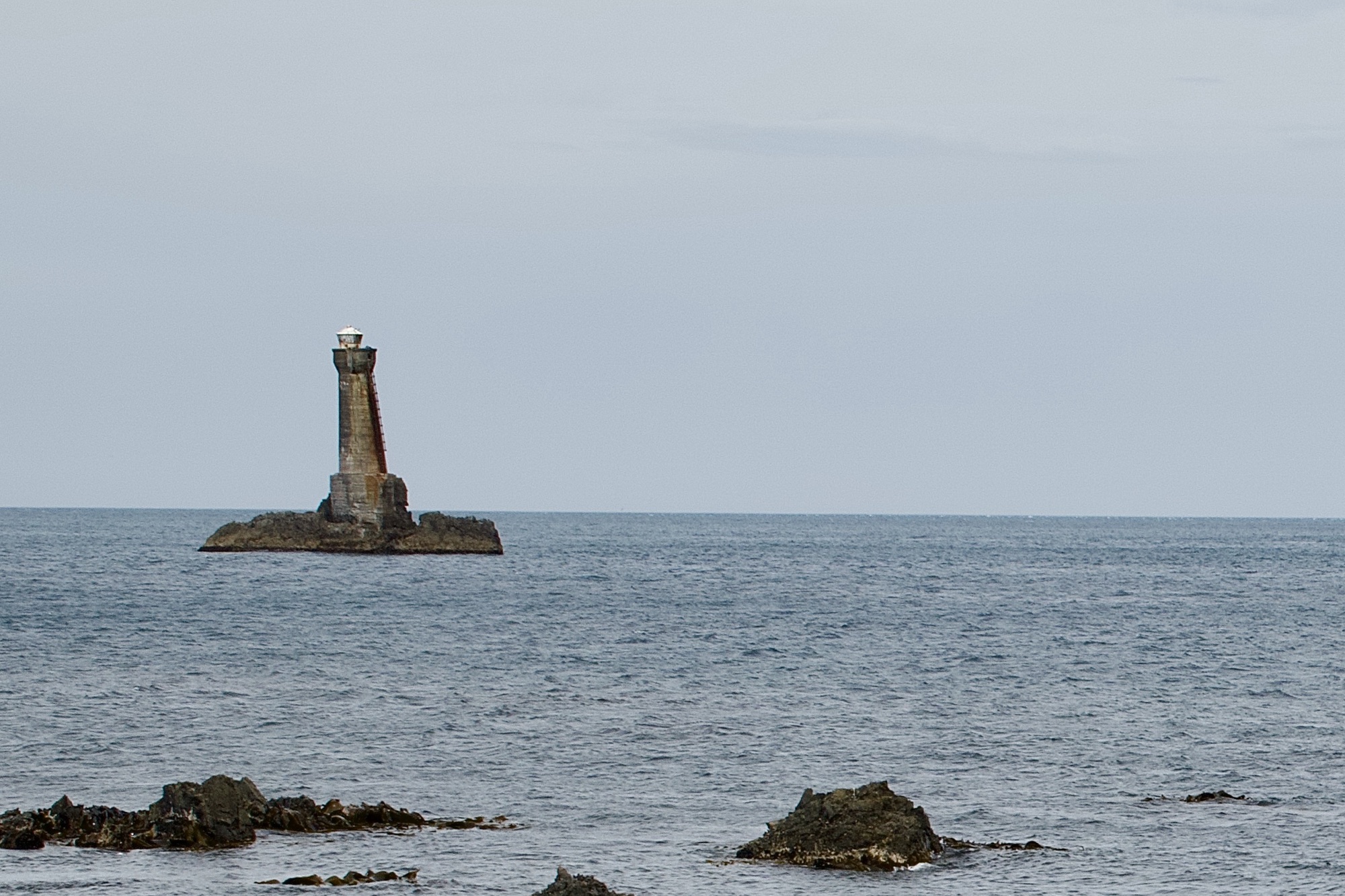
The famous Leaning Lighthouse also captured our attention. Waiwai assured us it had not been built by Italians.
Although the shoreline was rugged and very windy, Kiwis are nothing if not hospitable. Waiwai had tea and chocolate mint biscuits in the boot of his vehicle for us.
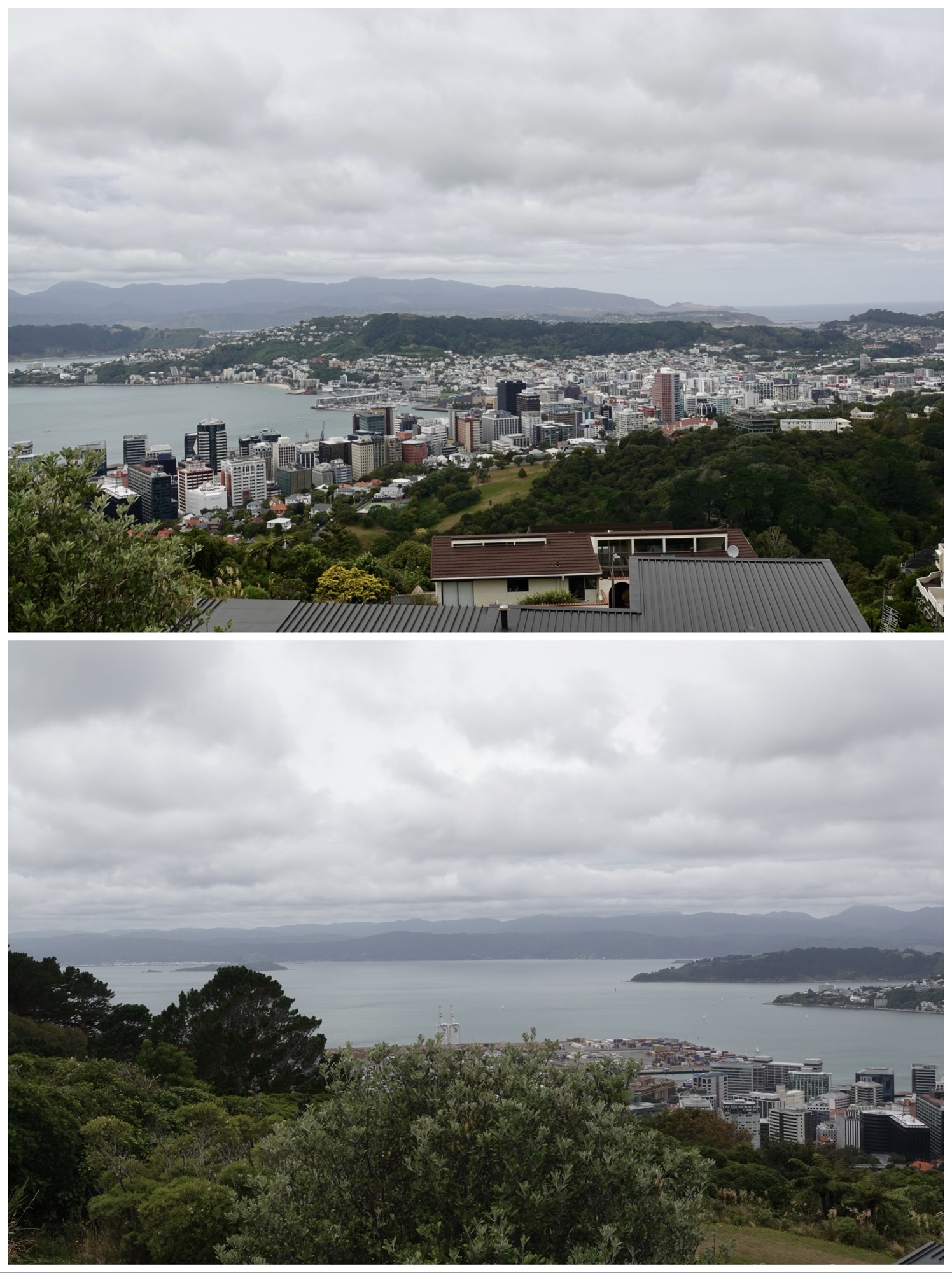
Waiwai had one more treat for us: a photo stop at Te Ahumairangi Hill Lookout in Stellin Memorial Park. From that vantage point we could see almost all of Wellington, plus the harbour and the Orongorongo Range.
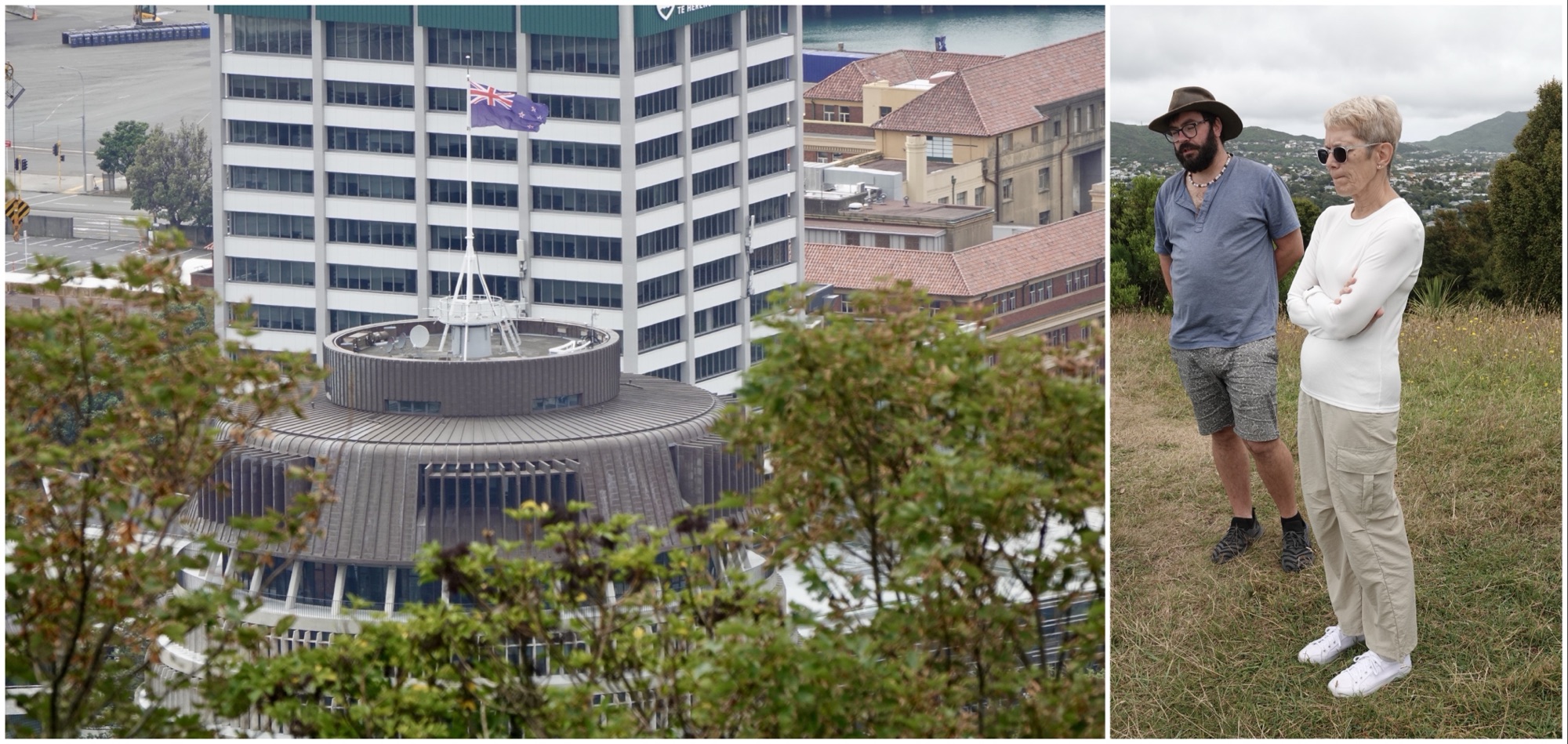
After returning back to sea level, and our ship, we headed back into the city on the shuttle bus provided by Viking, intending to walk to a local highly recommended “op shop” (charity/thrift store) so that I could look for another pair of hiking pants and a long-sleeved shirt. Unfortunately, I hadn’t checked the Saturday opening hours, so by the time we’d wandered around the government square taking pictures it was closed. I’ll get another chance in Cairns, where we have nothing planned.
Ted did get some lovely photos of the varied architecture of the 3 very different styles that make up the main New Zealand government buildings.

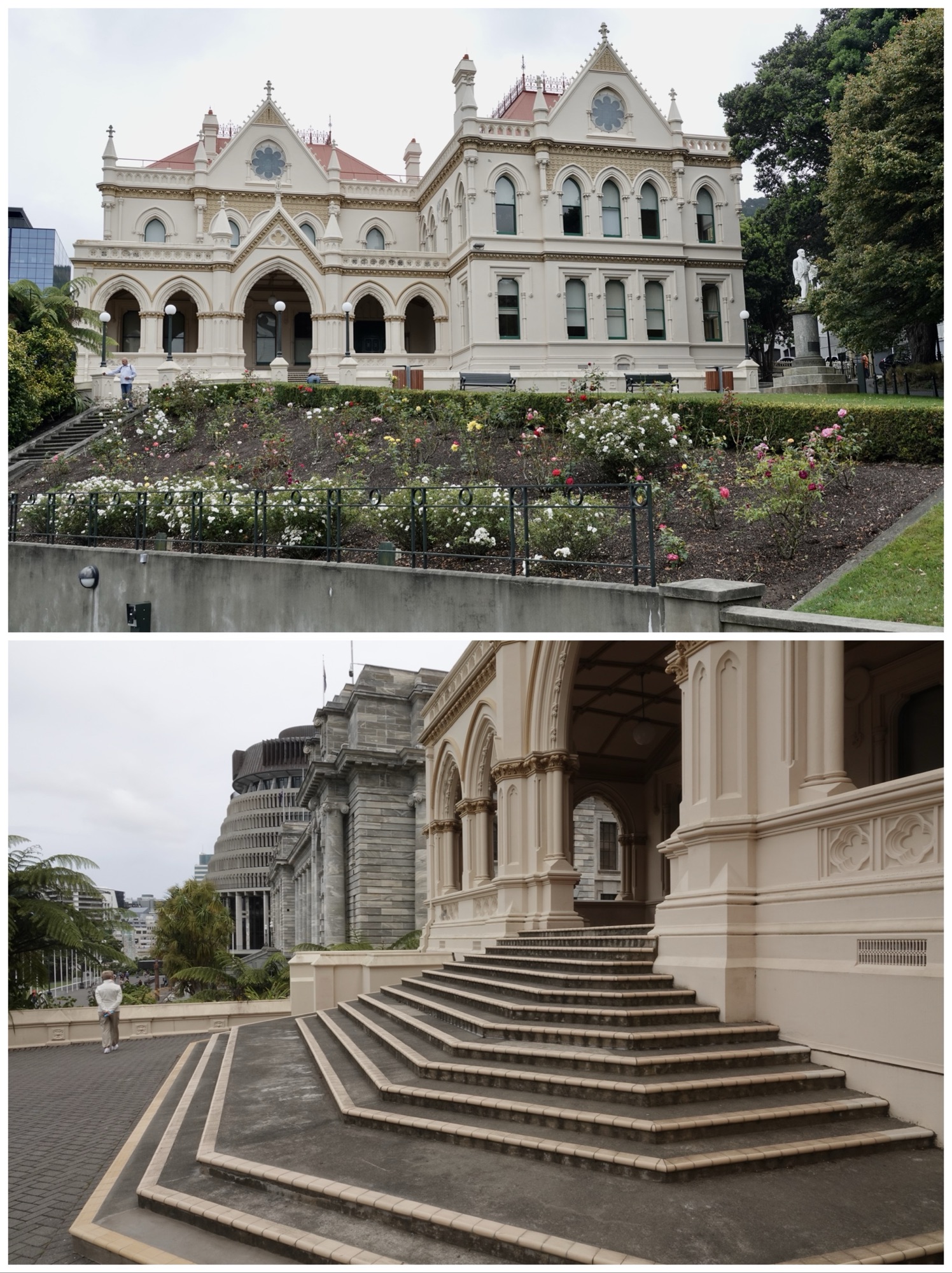
There are Māori elements incorporated into each of the buildings.

We strolled just far enough to also see the original parliament buildings, the two “national” cathedrals, and Waititi Landing.


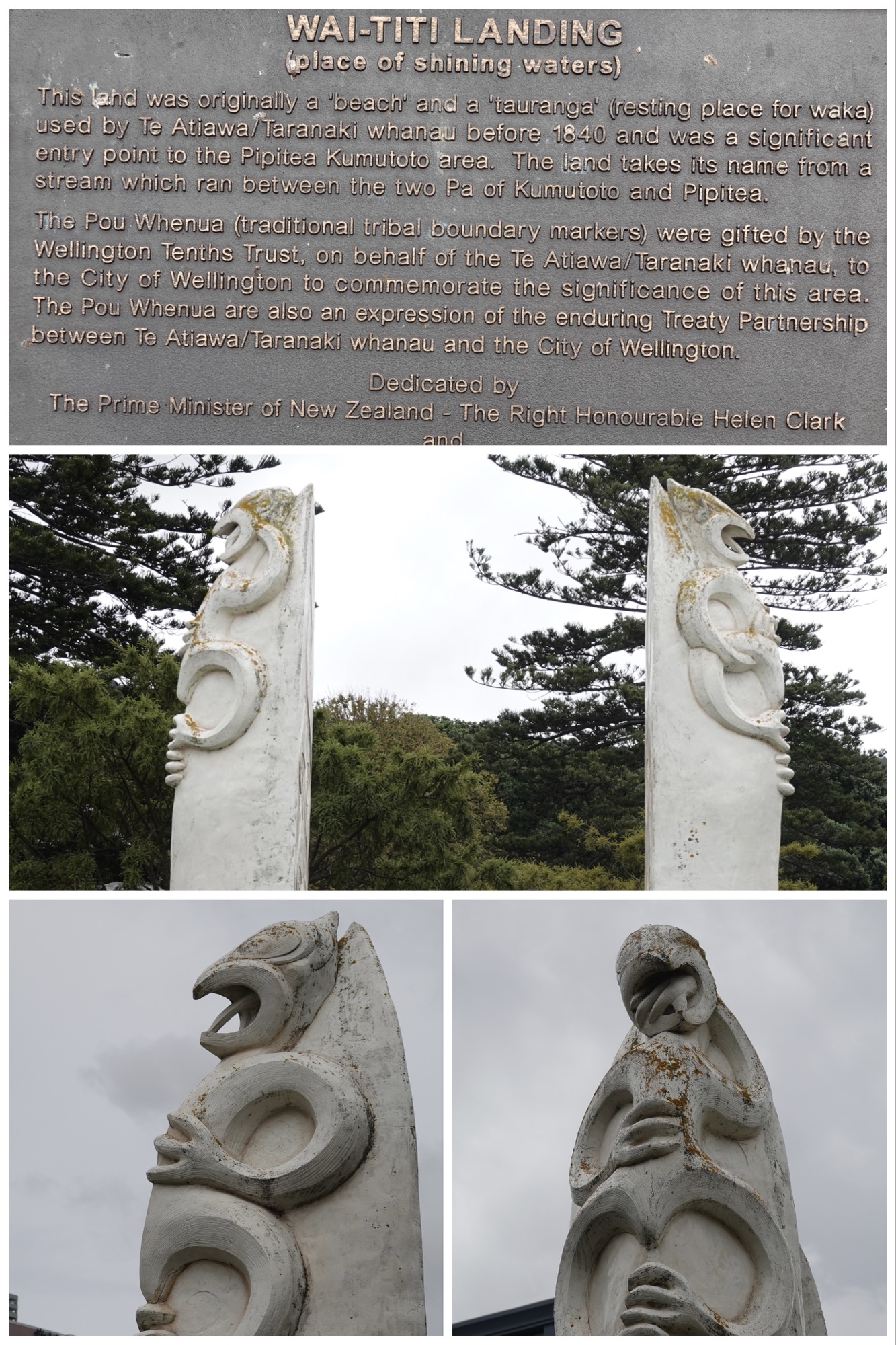
After 5 straight port days, we’re now ready for 3 sea days filled with lectures and entertainment as we head for Sydney, Australia, although I am NOT looking forward to spending those 3 days on the notoriously rough Tasman Sea. Fortunately, the roughest conditions are generally experienced during the southern winter (April to October).
Fingers crossed.
 Rose and Ted’s Excellent Adventure
Cool to see the pics of the carved Māori pau and entryway at the beehive. They were carved by the husband and family of the woman I’ve taken Māori basket making courses with. Thanks for sharing those! And seems like you had quite a crazy drive to see the seals! Wow!
LikeLiked by 1 person
Beautiful seal photos and great description’s as always.
LikeLiked by 1 person
love those seal photos.
LikeLiked by 1 person
When you are back, be sure and take the funicular up and walk back down (I guess one could do it the opposite way but I wouldn’t) through the beautiful botanical garden. ClayFollow and keep up with our retirement travel adventuresInstagram: @ClaynMikeTwitter: @RealClayClaytonBlog:https://CruisinWithClay.wordpress.com
LikeLiked by 1 person