We were only in port for 6 hours in Napier, but since we know we’re returning next year I chose an activity that just made me happy: “Gin Tasting at Napier’s Art Deco Gem”.

Since we weren’t arriving in port until 1:00 p.m., I had time to attend Suzanne Reiger’s lecture about Wellington, which is tomorrow’s port. What I learned will be in tomorrow’s episode.
En route to the National Distillery Company, we had a very proud Napier Resident, John Dobbs, as our driver and guide to his city. He shared a lot of history, and his love for both the city and its art deco architecture really came through. Unfortunately, it was impossible to take pictures from our 20-person coach.
One thing that we learned, and that really surprised me, was that the 1931 earthquake that devastated the city also “gifted” it a large area of usable land where there was previously extensive areas of wetlands, including Ahuriri Lagoon, popular for fishing and recreation.
The land and sea floor were raised by as much as 2.7 metres. As the land rose, sea water drained from the lagoon, creating more than 2,000 hectares (just under 8 square miles) of new land that allowed the city to spread out. I’d always thought of earthquakes as causing land to slide into the sea, and never about what would happen when one tectonic plate pushed under another.
When we reached the gin distillery, our guide was Ginny (her actual name!). She is one of just 8 employees – including the owners – at the facility.
We began our visit learning about the history of the building itself. Ginny joked that we needed to “earn” our gin by listening. Here’s what we were told:
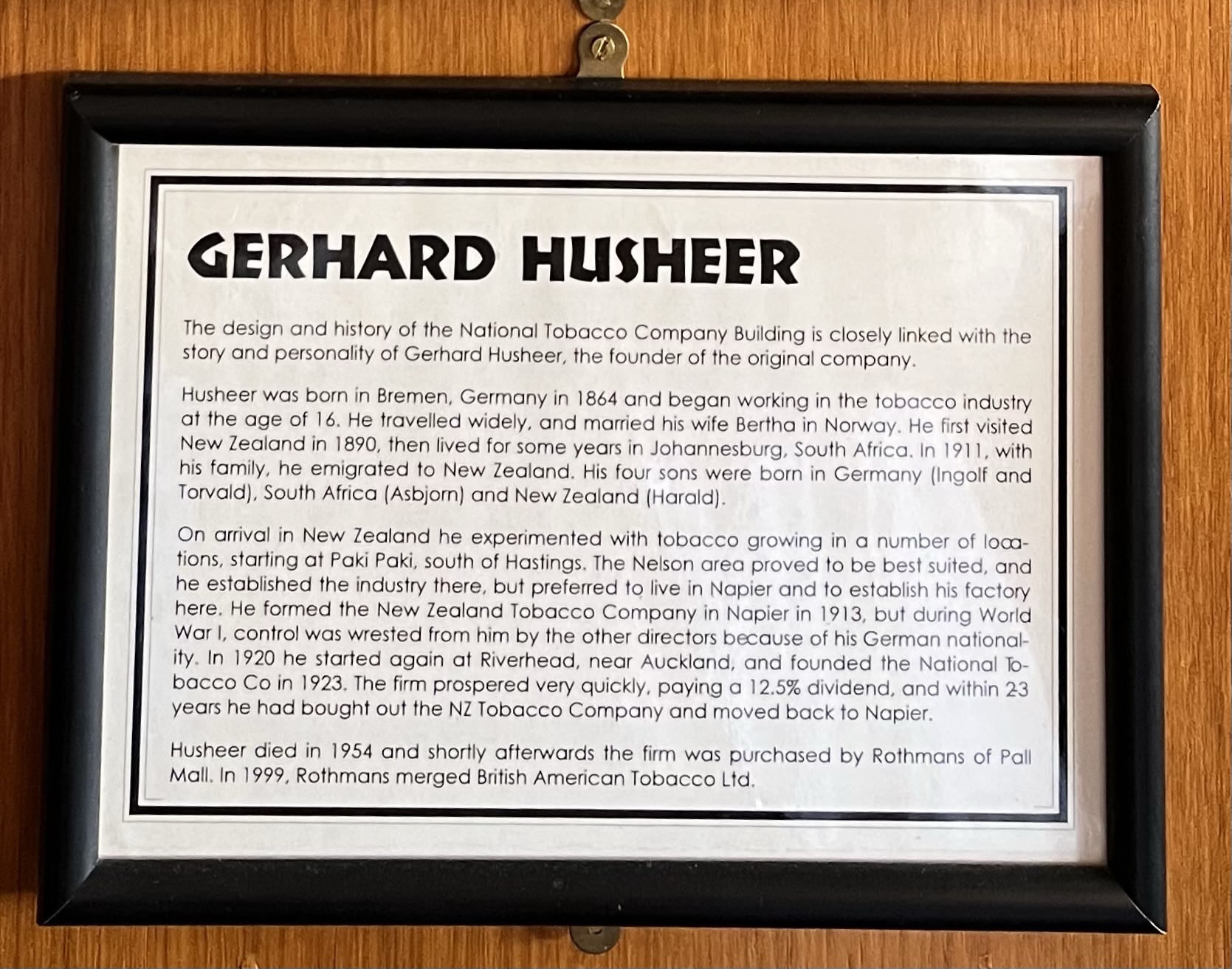
A young German/Dutch entrepreneur named Gerhard Husheer, who was headed to make his name in South Africa, intent on growing tobacco, ended up in New Zealand by accident. Although he and his young wife apparently liked New Zealand, they nonetheless did travel to South Africa to learn about tobacco planting, returning in 1911 to start his first plantation in Auckland. The climate proved unsuitable for tobacco, so he tried again – with no better success – in Napier.
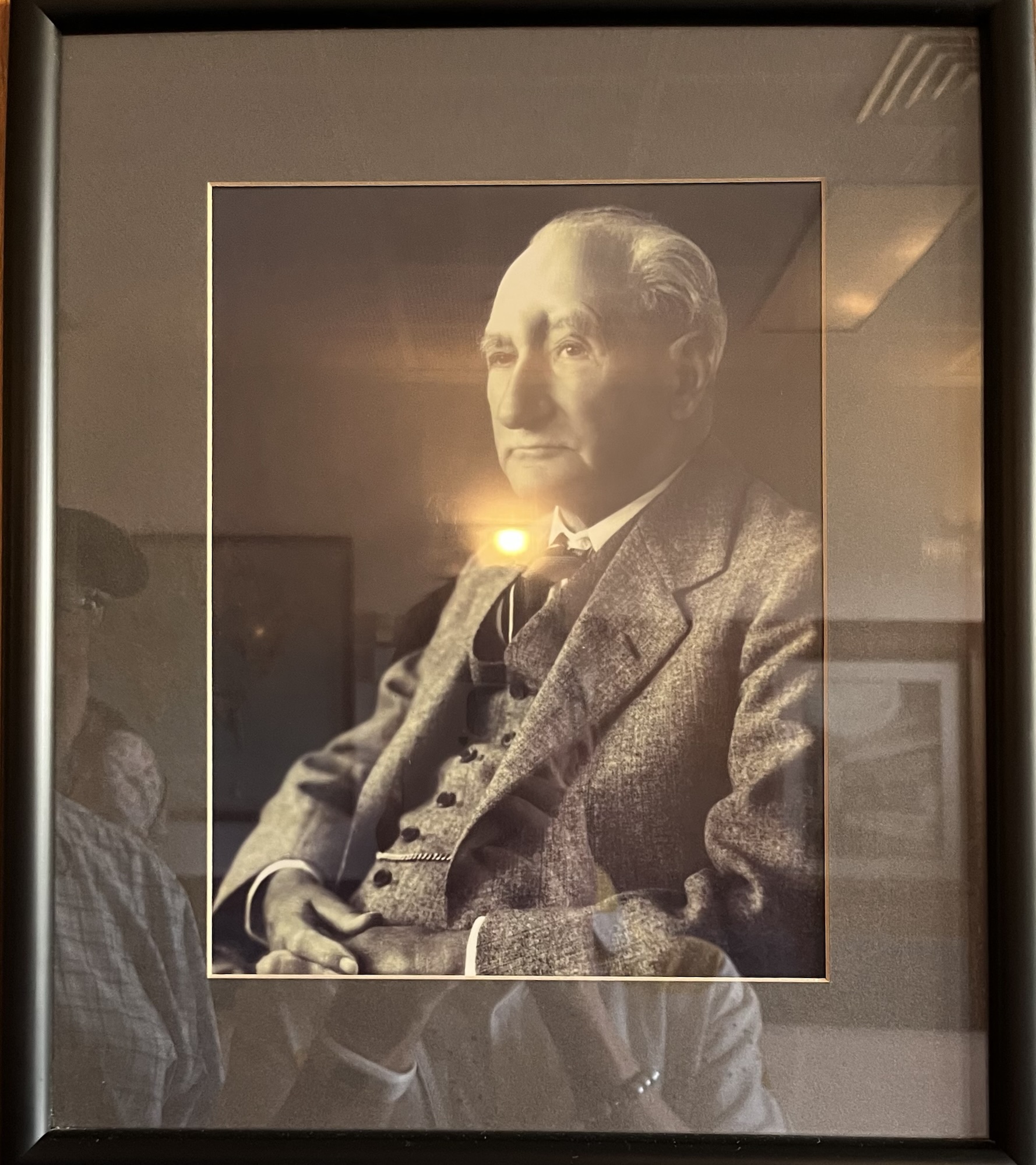
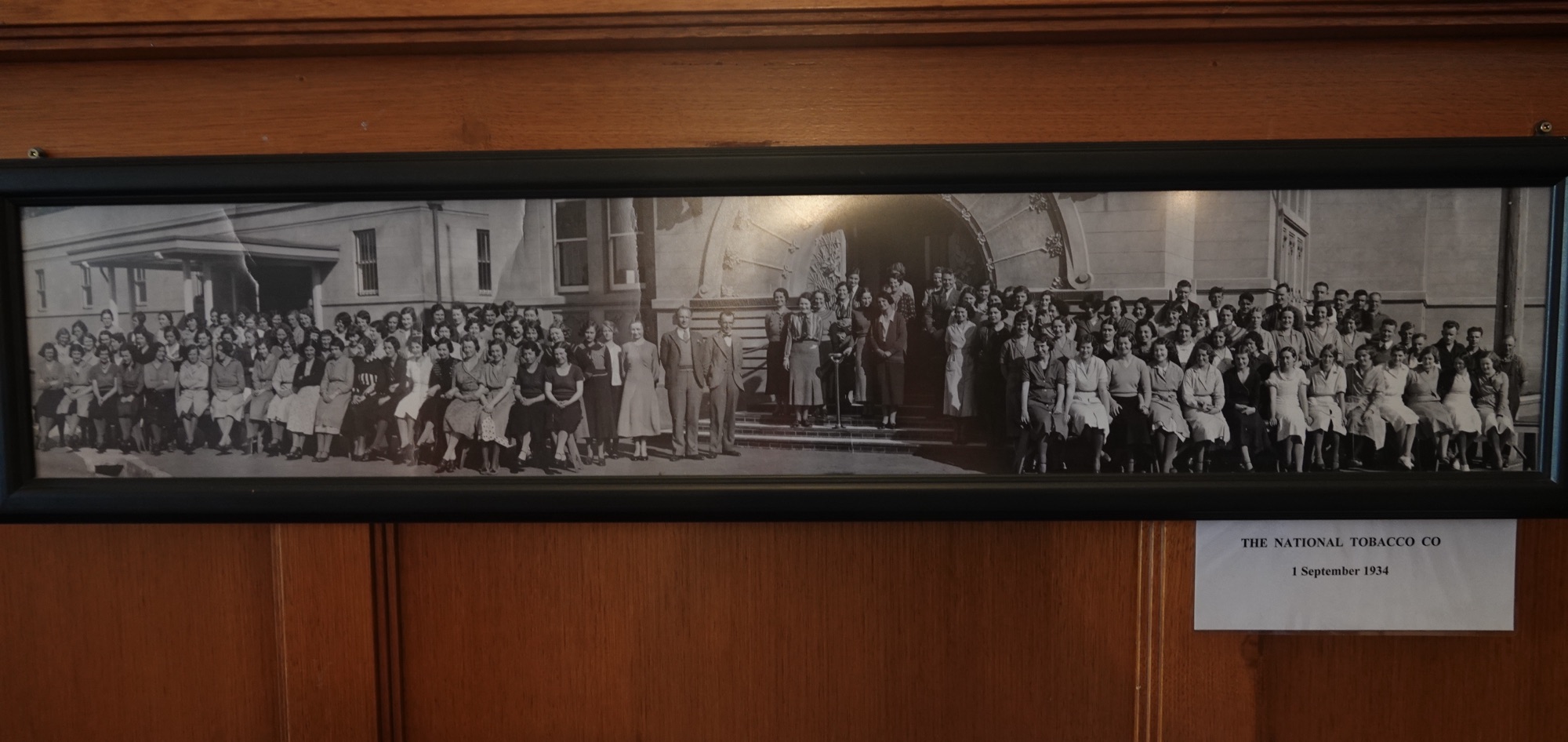
From there he went to the South Island to Motueka, where he established a successful plantation, but his wife and children wanted to return to Napier. The family did, and Gerhard bought land near the port, establishing the first location of the New Zealand Tobacco Company, which produced cigarettes using the tobacco shipped from his plantation. He was known for being one of the first employers to employ almost exclusively women, for their smaller hands which were suited to rolling cigarettes. They were well paid, including health and childcare, well before women were actively employed in manufacturing in other countries.
Everything went well until World War One broke out. The directors Gerhard had employed to work on his business model ousted him from the company because he was German. Gerhard simply moved north and diverted his tobacco to Auckland.
Upon his return to Napier after the war he fired those directors and made the decision not to hire new ones. In 1921 the company was renamed the National Tobacco Company. It flourished and was apparently an exemplary employer of over 700 employees. In fact, Gerhard was the richest man in NZ for many years.
Then in 1931, the earthquake completely destroyed his factory.
Gerhard not only supported his own employees after the disaster, but also stepped up and used his own money to rebuild Napier’s hospital and schools (which were a priority for occupying the children while the adults were rebuilding their city), and supplied hot food to the city’s temporary camps for three years. He became a local legend in Hawke’s Bay for supporting the community through the Great Depression.
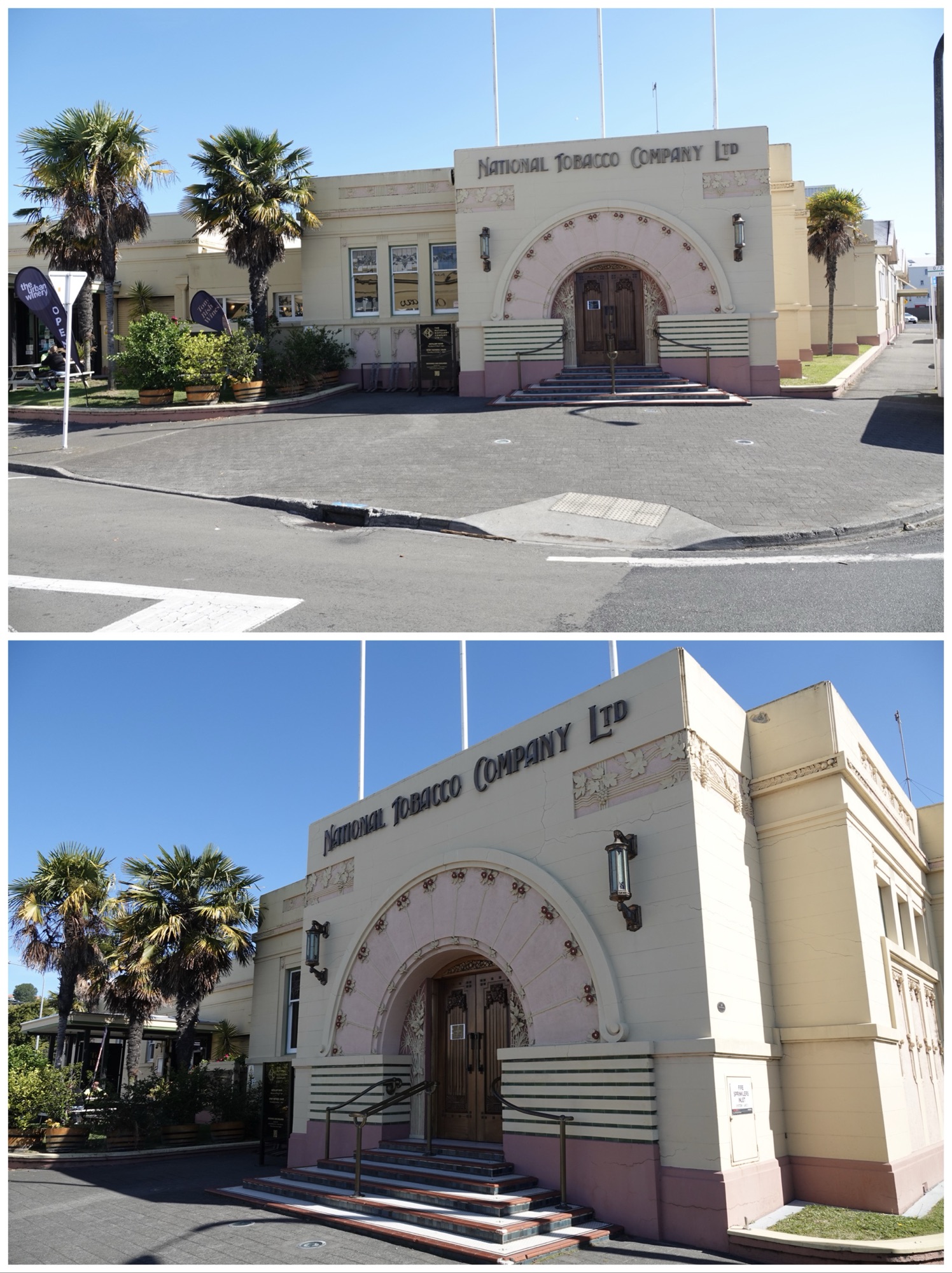
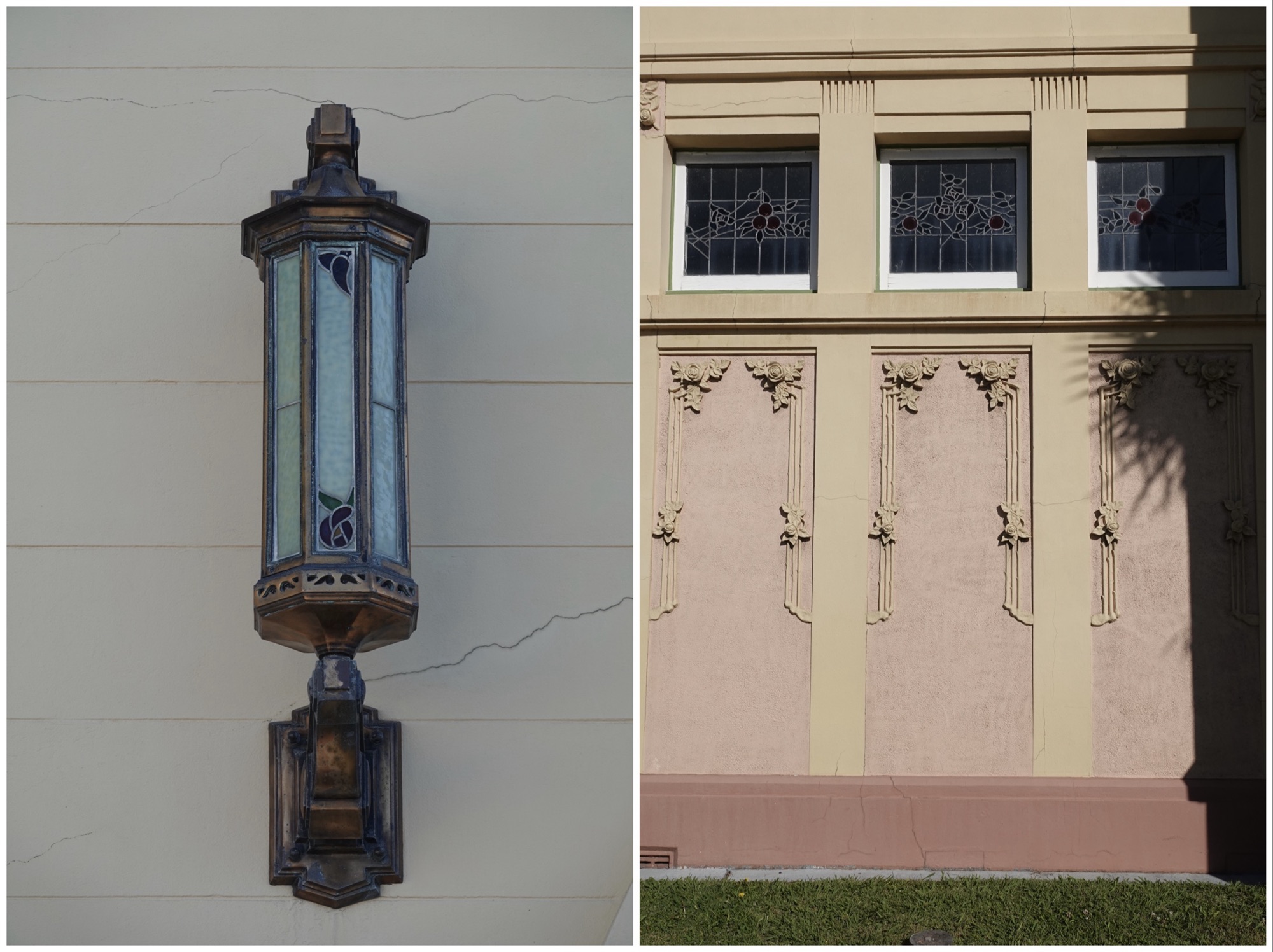
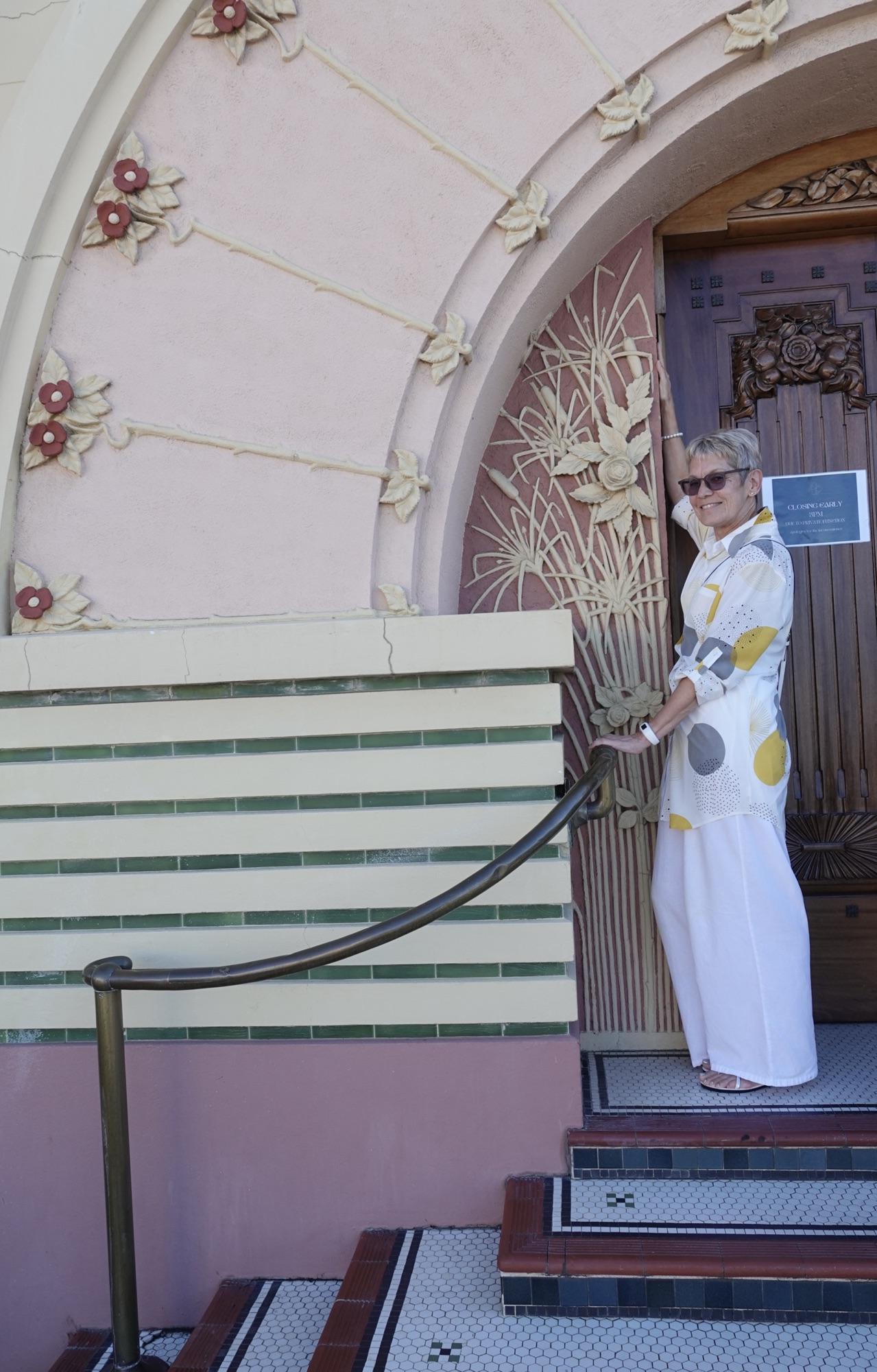
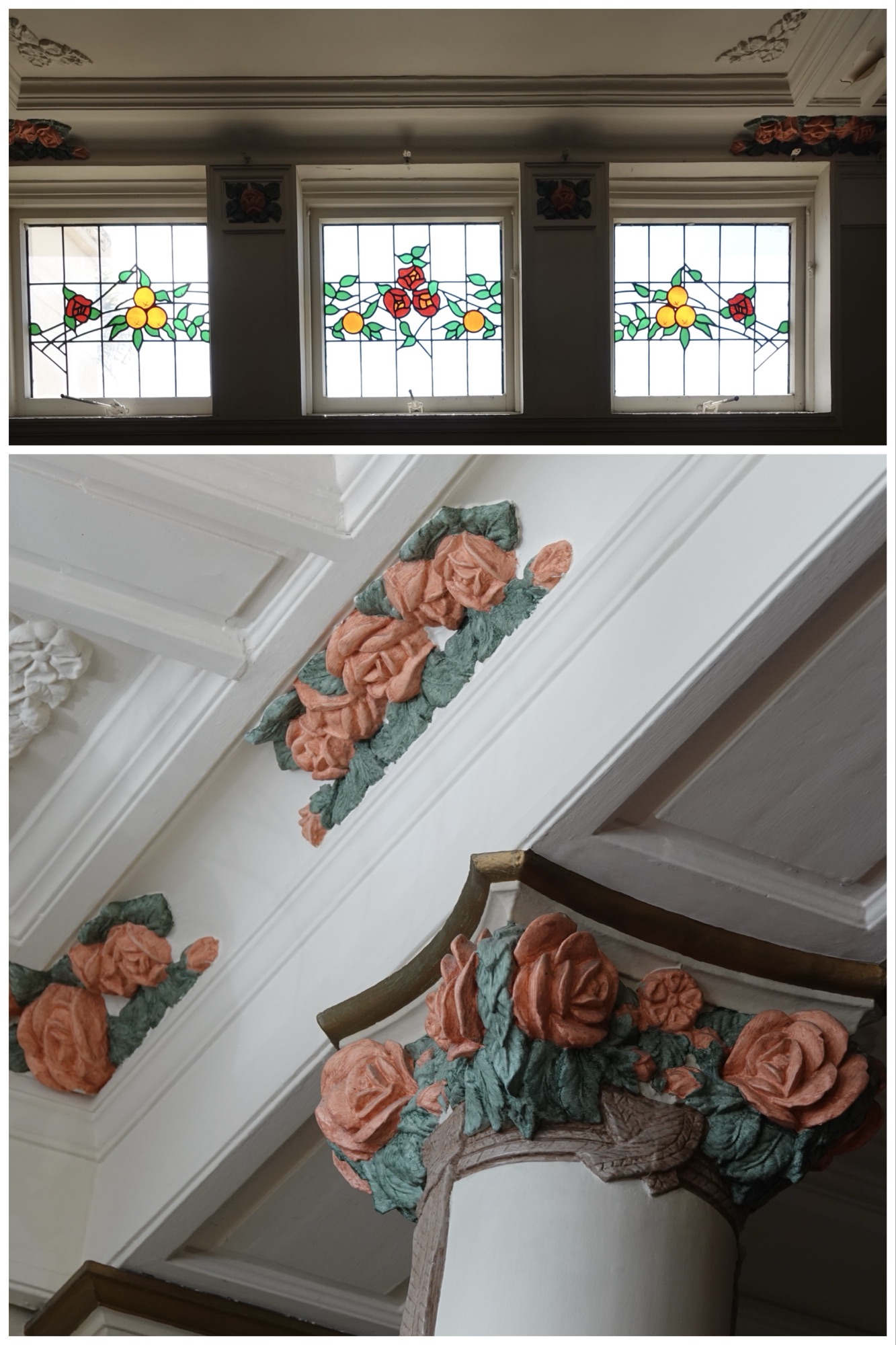
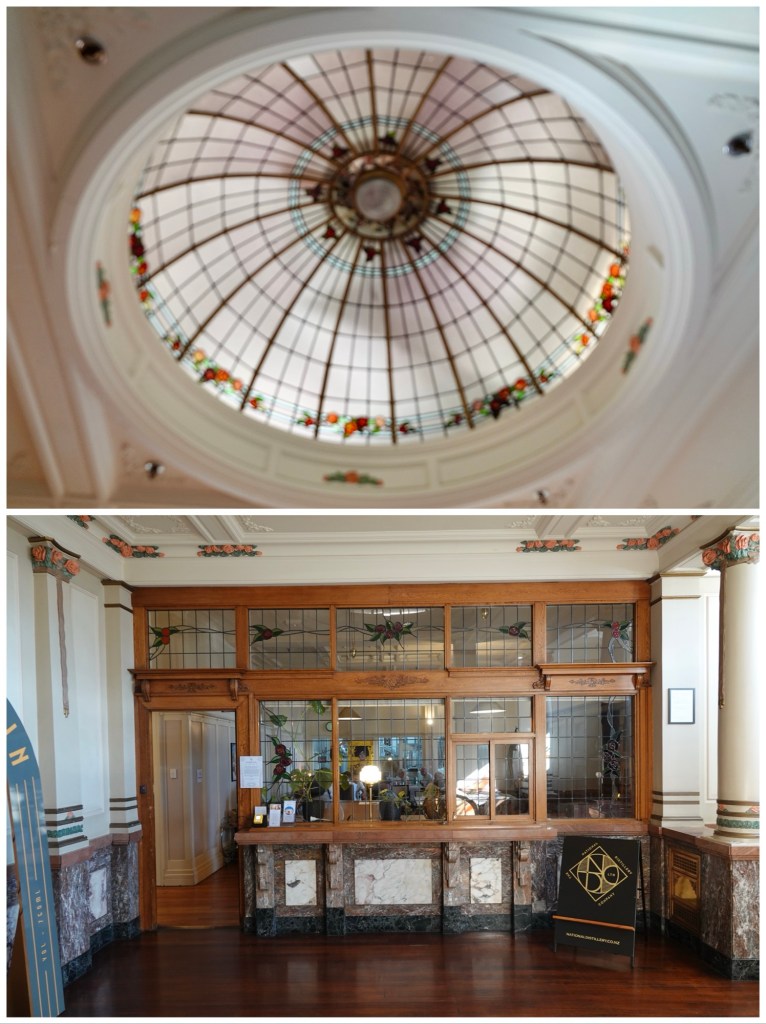
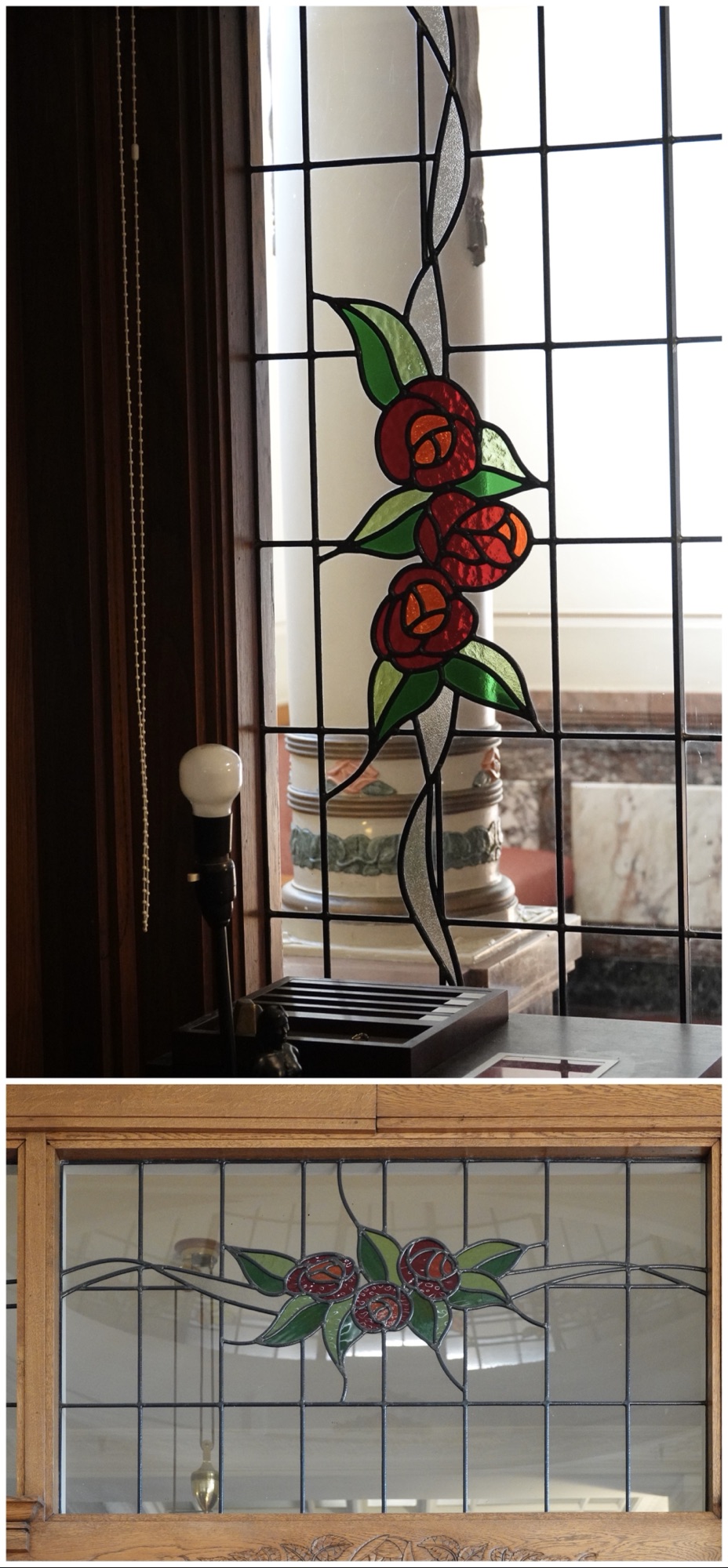
When it came time to rebuild the factory in 1933, architect Louis Hay, responsible for rebuilding much of Napier, proposed a wonderful Art Deco style building, but Art Deco was “too plain” for Gerhard. The result was an Art Deco building in geometric form but decorated in the more colourful and flamboyant Art Nouveau style, with an interior featuring Italian marble, English oak, and plaster decorations depicting oranges, apples, grapes, and roses. The wooden entry doors carved by Walter Isaac Marquand cost £600 in 1933, equivalent to 1 million today.
Gerhard died in 1954, and the company was sold to Rothmans in 1956. Rothmans kept Gerhard’s employees and business model, producing as many as 1 billion cigarettes per year for worldwide sale.
In 1999 the company was bought by British American Tobacco, but without no more tobacco being grown locally, the business was no longer successful and the factory closed.
The factory was sold in 2007, and bought by a NZ businessman simply in order to save the architecture. Eventually Tony Bish Winery moved into a portion, and a brewery into another, leaving the prettiest part available to be bought in 2019 by the New Zealand duo who started the National Distillery Company https://nationaldistillery.nz/. It’s the booze trifecta: wine, beer, and spirits.
Ginny joked that the property had changed from being a tobacco corner to being a booze corner! Just as cigarettes were ubiquitous during the world war years, this distillery which opened just pre-pandemic flourished during Covid.
Ginny joked that it was a clear case of “Vices in crises”.
Our tour of the tiny distillery was hosted by Matt, a young man who came from a stint in the wine industry, with a degree in viniculture. He has been crafting gin for just 7 months, and his enthusiasm showed.
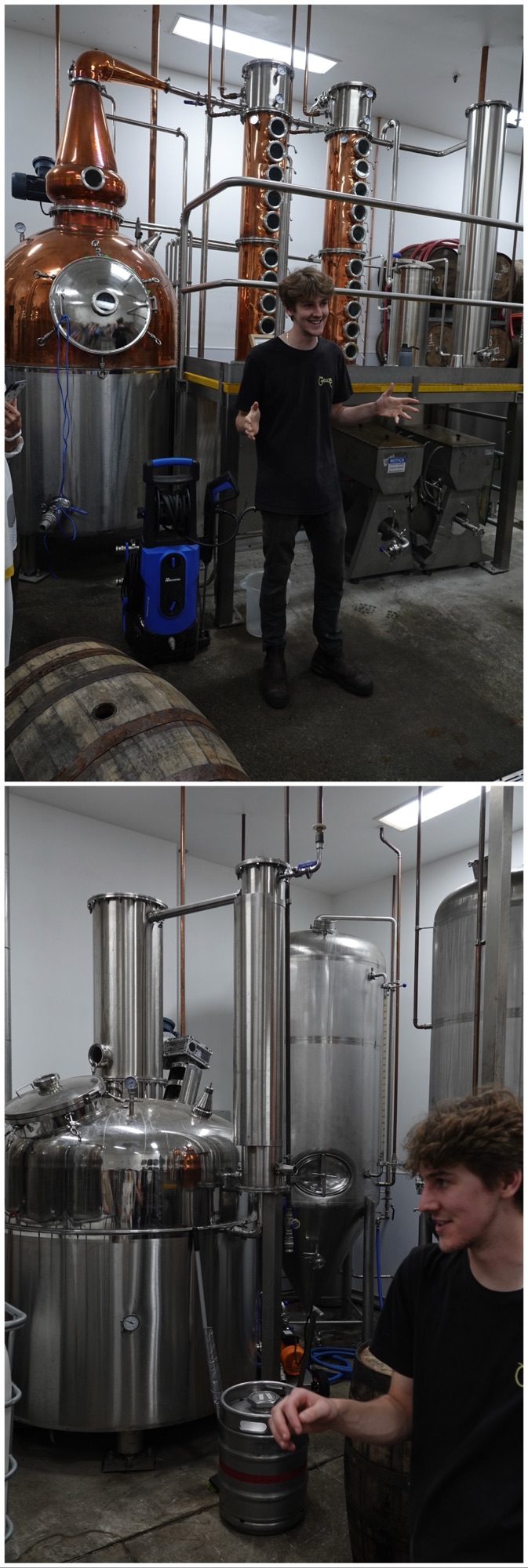
I didn’t realize until today that gin can be made in just a few days! They source 96% pure ethanol (lactinol or “whey spirit” taken from the milk pasteurization process and triple distilled to create pure alcohol) and add Macedonian juniper. I also didn’t know before today that what makes an alcohol “gin” is juniper. As long as juniper is the chief flavouring ingredient (by weight) it’s gin, no matter what other botanicals are added to change the flavour profile.
The single big copper still, named Bertha after Gerhard Husheer’s wife, was designed by a Canadian. Matt explained that copper is a purifying metal and so is preferable for distilling. The flavouring botanicals are soaked 12-24 hours in the 96% alcohol before the distillation process begins. A boiler generates steam to fill the heat jacket around the still, and as the alcohol evaporates off, the steam (alcohol vapour)travels along the swan’s neck to the “gin basket” where other botanicals are added. The alcohol strips the essential oils from the botanicals to create whatever flavours the distiller wishes to highlight. The steam is then cooled to condense it into the liquid which gets diluted from 96 to 40%, into drinkable gin.
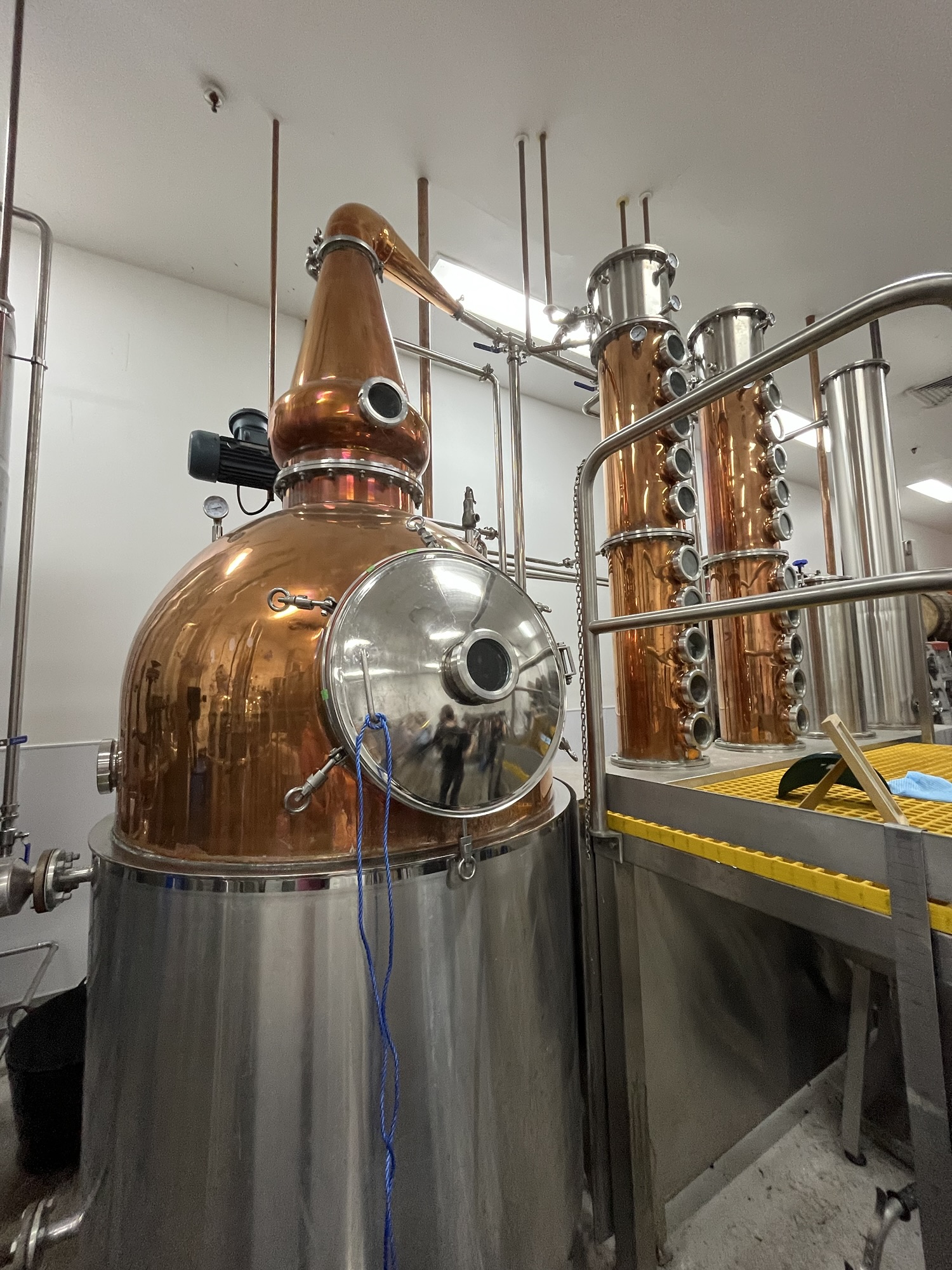
After taking a few photos our group moved to the tasting room to try 4 different gins.

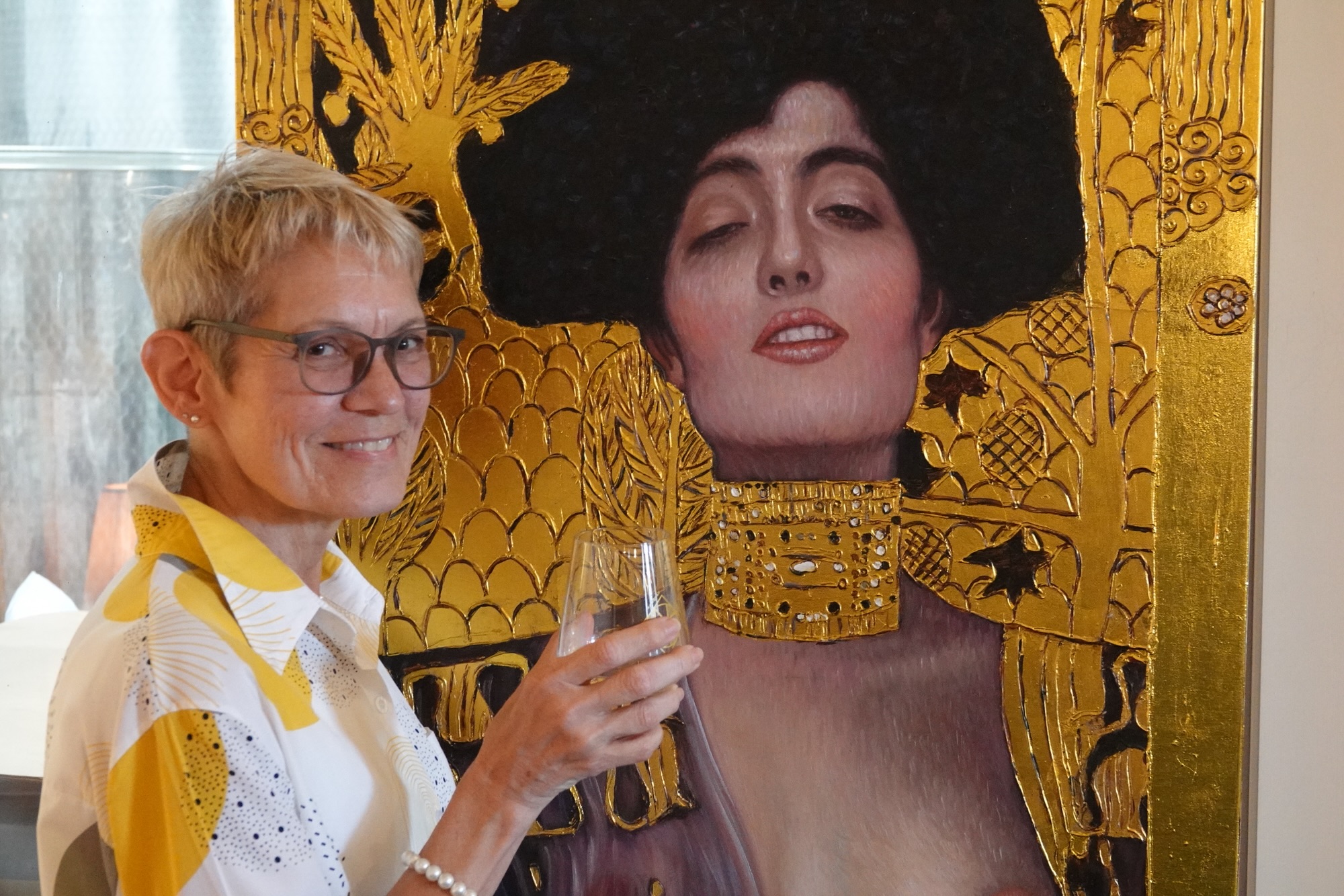
Our first sample was the Verdigris Dry, a “London dry”, with the juniper base enhanced with lemon peel and native flaxseed (harakeke). I enjoyed it, but it’s no competition for my Bombay Sapphire.
Our second taste was Hemp Gin, flavoured with juniper and toasted hemp hearts. Some folks at our table enjoyed the “toasted” taste, and it has won lots of awards, but I found it nothing short of disgusting.
Our third taste was Meow, Lucky Gin, with its juniper base supplemented by Szechuan pepper, ancient gingko, and citrusy yuzu. I could imagine drinking it as an accompaniment to sushi, but definitely not as an afternoon G&T.
Our final tasting was Damson plum gin, where the sourness of the plums was offset by orange, chocolate, and vanilla. For me, it was another miss.
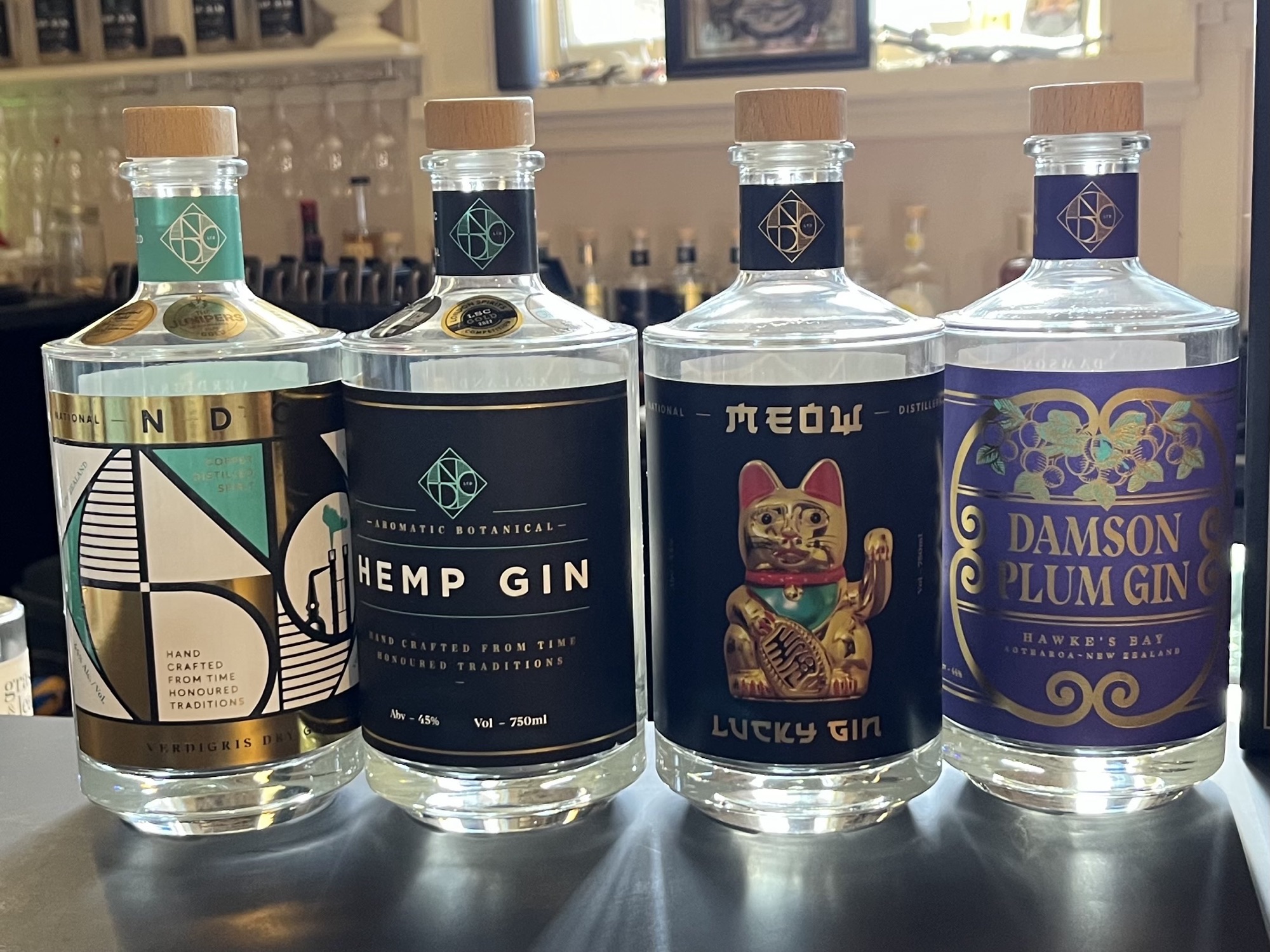
We didn’t buy any gin, but nonetheless enjoyed our afternoon.
We got back to the ship too late to see the vintage car display on the wharf, but in time to see Chef Alastair’s fresh fish display on the Aquavit Terrace.
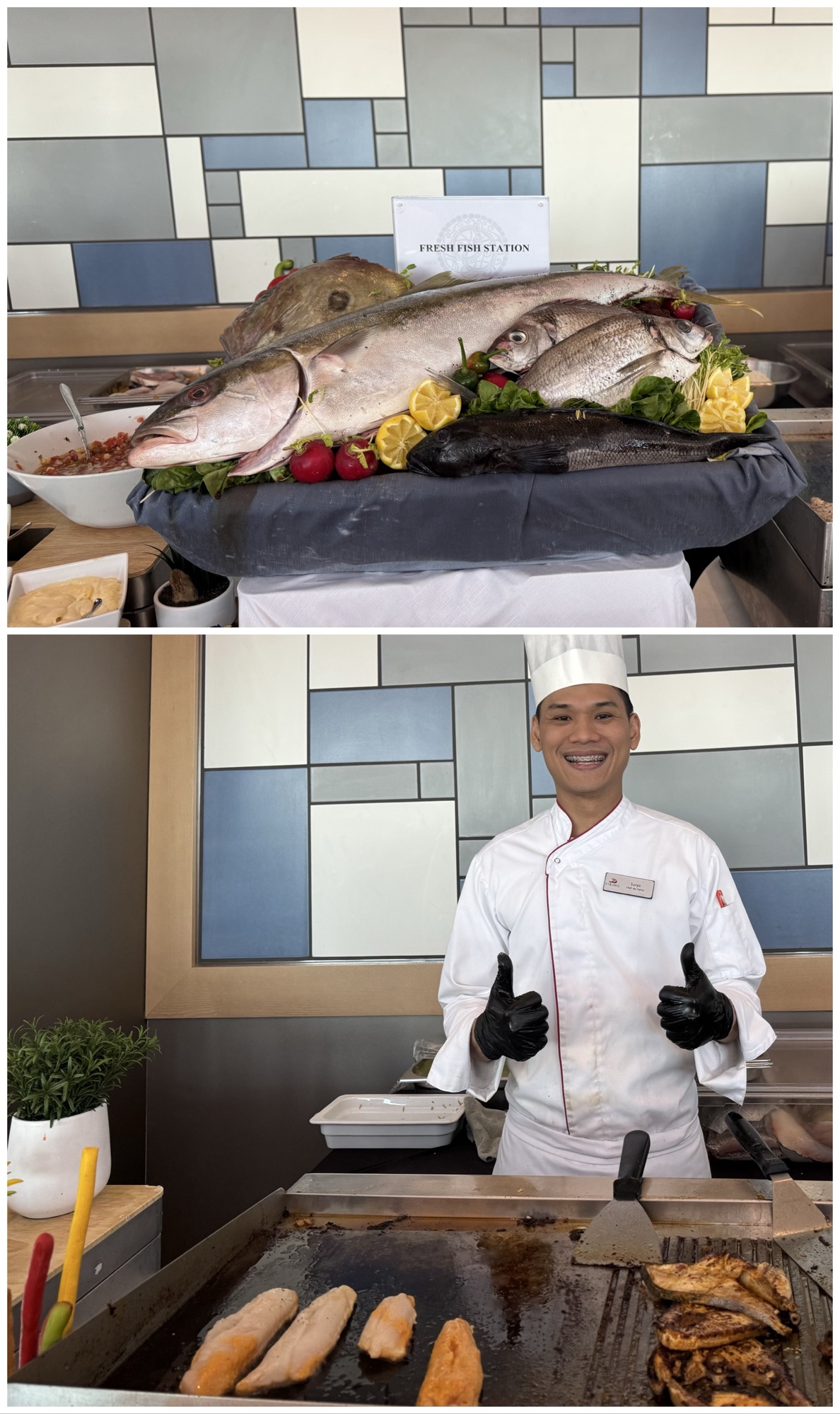
After dinner, we took in the performance by Tasmanian classical guitarist Thomas Ward before heading upstairs to do a load of laundry and then calling it a night.

Tomorrow we’ll be in Wellington, where we’ve chosen an excursion to go see New Zealand fur seals in their natural habitat.
 Rose and Ted’s Excellent Adventure
I’m not a fan of gin, though my husband does love a good G&T on a hot day! But the Meow gin sounds quite intriguing! We did get to Napier briefly, wanted to see the visitor center movie about the earthquake, but my timing was off and missed it. We stayed south of Napier in Clyde. I did like the area as a whole. Look forward to Wellington report!
LikeLiked by 1 person
You and your outfit are just adorable. Enjoy.
LikeLiked by 1 person
I hope they bought a bottle or two of Meow for the ship, so you can try it with the sushi sometime — sounds very interesting… Thanks for the tour of a place I’m unlikely to get to. I love the Deco/Nouveau combo. I’d be a little hesitant about moving onto that recovered land. Seems to me it could be even less stable in the next earthquake…
We now have a Mexican son-in-law and would like to do a Spanish immersion course in Mexico or Spain. Any recommendations?
Thanks for the tour!
LikeLike
The only Spanish lessons I’ve taken where at the English Library in Merida. They were really good, but not immersion – levels 1 & 2 spread over 6 months!
Interestingly, the Kiwis see that reclaimed land as pretty safe after almost 100 years. We’re noticing that they’re a pretty laid back yet pragmatic people
LikeLiked by 1 person
I am a gin drinker myself and enjoyed your visit to the distillery. My preference is The Botanist. A Scottish gin loaded with flavour notes. But perhaps I need to give Bombay Sapphire another whirl! Thanks again for the back seat tour of the world. I do enjoy your posts!
LikeLiked by 1 person
People keep recommending The Botanist. Might be time for me to try it!!
LikeLike
Comedy to interesting information! Love it
LikeLiked by 1 person