When each of our boys were very very small, I used to sing them lullabies every night until they fell asleep in my arms. It tended to be an eclectic mix of whatever I wanted to sing to them, but most often The Goodnight Song, Inchworm, Mockingbird, Du Du Liegst Mir Im Herzen, Sur le Pont d’Avignon, Edelweiss (#1 son’s favourite), You Are My Sunshine, The Beatles’ Golden Slumbers, Brahms Lullaby, Twinkle Twinkle Little Star (of course), and my all-time favourite: All Through the Night, the 1884 English translation by Sir Harold Boulton of the beautiful 18th century Welsh folksong Ar Hyd y Nos.
Sadly, by about 3 years old, both boys preferred being read to over mommy’s selection of songs. My voice has deteriorated over the years, and even more after thyroid surgery, which means that by the time my grandsons could talk, they made it clear that gramma’s lullabies were not highly appreciated. Now when I sing, the 10 and 13 year olds roll their eyes; the 8 year old just says “Gramma, please stop”.
Fortunately, son #2 has a really nice singing voice, so he was able to continue the bedtime tradition, although his song selection was just as likely to include Eric Clapton’s “Tears In Heaven” as Twinkle Twinkle.
What brought Twinkle Twinkle Little Star to mind tonight was standing on the deck of the Viking Sky in the middle of the Pacific Ocean staring up at the magnificent night sky.
As children, it was all about “how I wonder what you are”. As adults, we now know that stars are great luminous balls of gas igniting in almost constant nuclear fusion reactions, and that the light we see on any given night was generated trillions of miles and many years ago. I once read a Forbes article that stated “Looking At The Stars Is A Look Back In Time”.
The closest star to earth is Proxima Centauri, at 4.246 light years away (each light year is approximately 5.88 trillion miles). That means the light hitting my eye tonight from that star has been traveling for 4.246 years.
The brightest star in our night sky, Sirius, is 8.6 light years away. As the Forbes article explained: “When you look at Sirius tonight, you see it as it was 8.6 years ago.”
Apparently we all (at least those of us more than 4 years old) have a “birth star” – the visible star whose light in tonight’s sky was generated in the year we were born.
For me, one of the potential candidates is Aldebaren, in the constellation Taurus – the brightest star in Taurus and the 14th brightest star in the night sky.
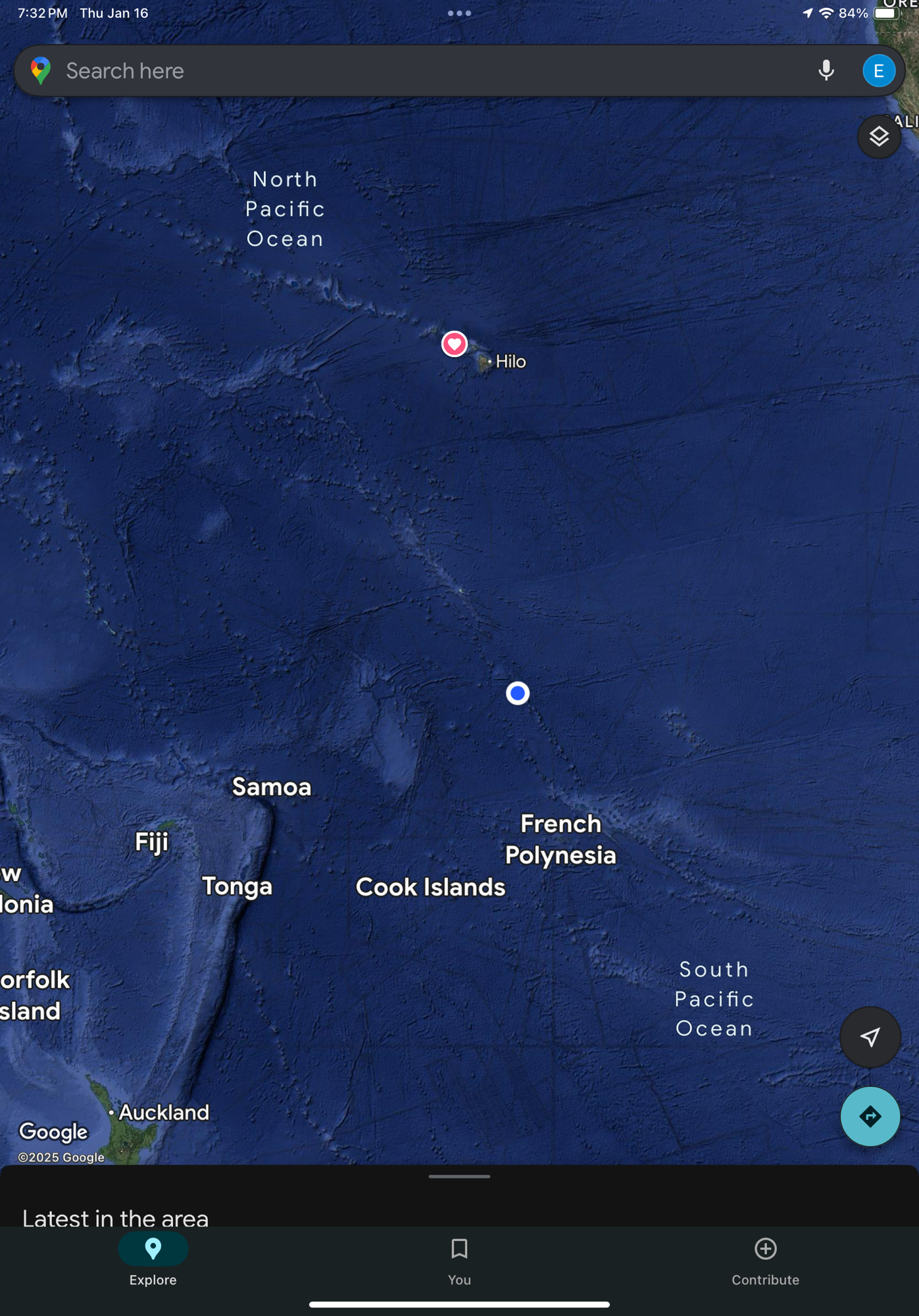
Tonight we’re at latitude -6.2430368, longitude -152.9040459 in the Pacific near Kiribati.
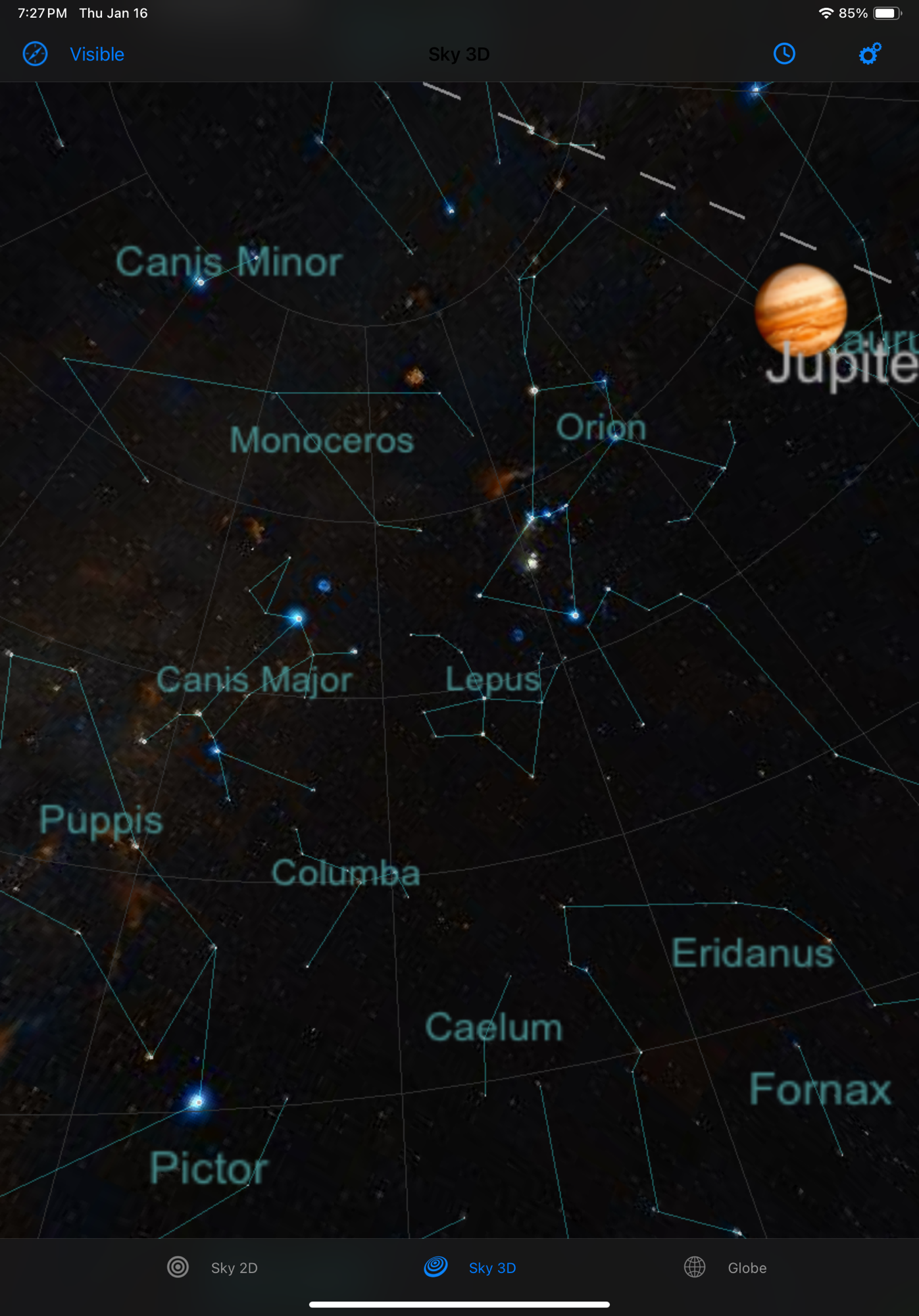
When we looked up tonight, our naked eyes could see a myriad of stars, with the Orion constellation almost directly overhead. Unfortunately, trying to photograph stars from a moving ship did not generate a useable image, but by pointing Ted’s phone camera a map of the night sky could be created using an app called “Planets”.
Far more beautiful than that map was tonight’s reality, even if our cameras only captured moonlight on the water.

Twinkle, twinkle, little star.
 Rose and Ted’s Excellent Adventure
Ended with wow! You get old when you st
LikeLike
Put the Atacama desert on your list for some astronomy nights, if you haven’t been… Do you think the Captain will give you a light off night somewhere along the way? On a moonless night? I think I read that this has happened — maybe on your previous WC?
LikeLiked by 1 person
We’ve actually been to the Atacama desert, back in early 2020. I’m hoping for a lights off night too (yes, there was one on the 21/22 WC)
LikeLike