The delicious panettone that was delivered to our stateroom last night sure made a tasty breakfast with a fresh latté this morning before heading out on our 9:00 a.m. tour.
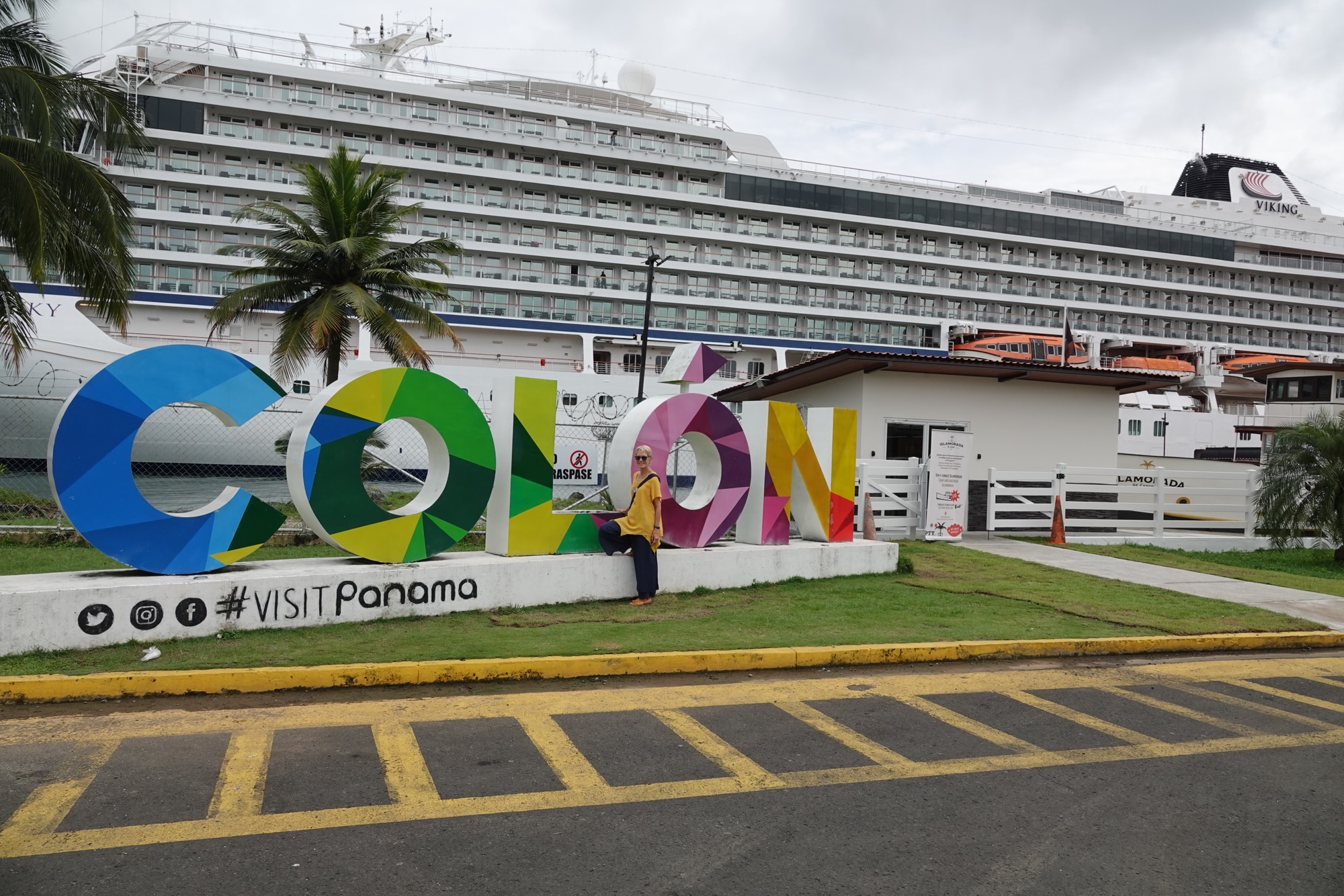
We sailed into Colón under overcast skies, with scattered thundershowers predicted all day, and a humid high of 27°C/80°F. Umbrellas were the order of the day, since in this humidity a raincoat just sticks uncomfortably to the body… but our cruising luck held; for the first time in 6 straight days (according to our tour guide) there was no “liquid sunshine”.
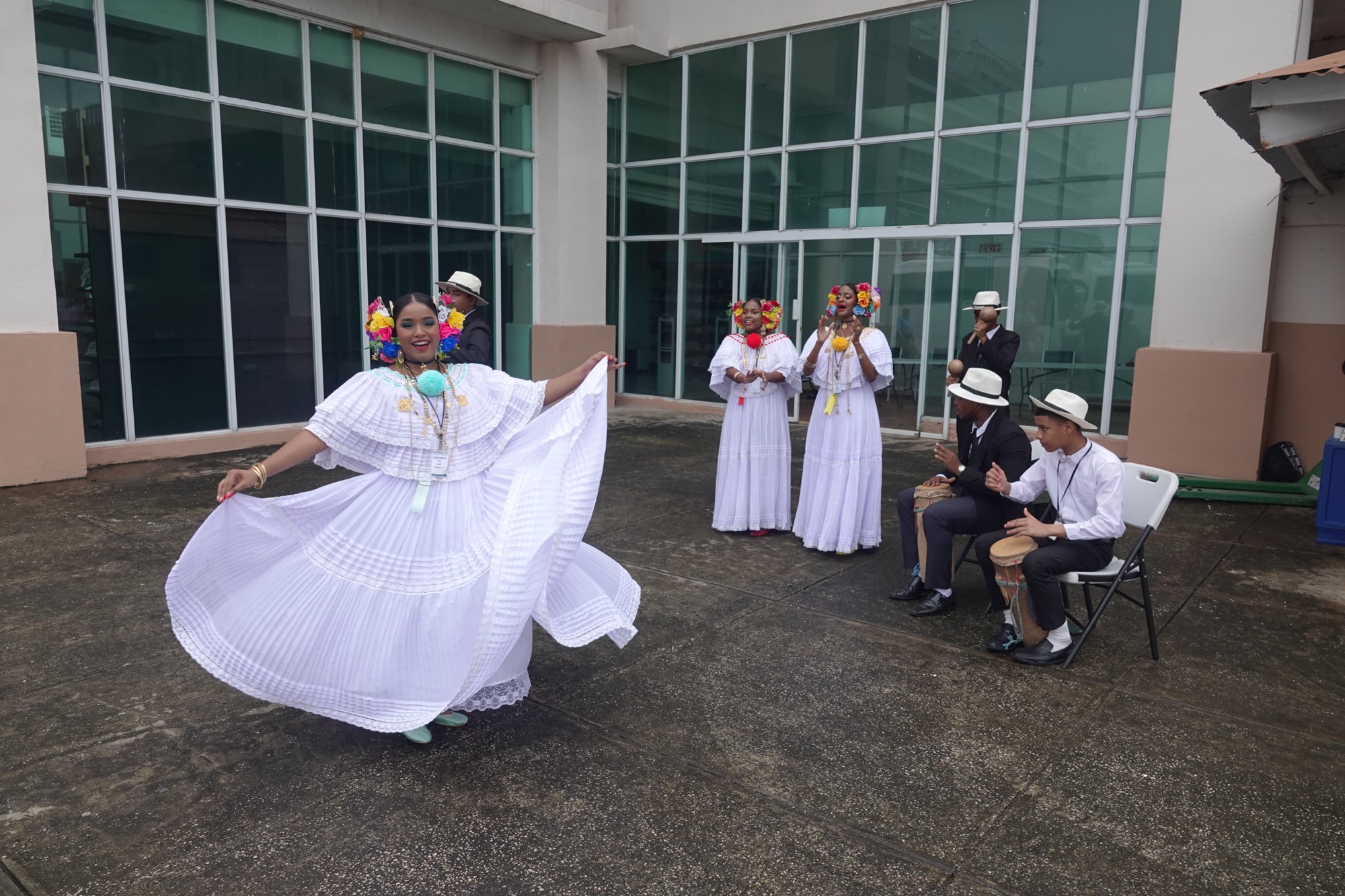
Three years ago when we drove through Colón (Episode 176), I wrote: “What was most interesting to me was the contrast between Colón and Panama City, given that both are major ports. Prior to the completion of the canal, Colón was the endpoint of the railroad that brought gold from the California gold rush to the ships waiting in the Caribbean to transport it to Europe. The city was a thriving centre, home to people and business interests from all over the world. After being almost destroyed in 1885 during the Colombian Civil War, it was rebuilt, but further damaged by a huge fire in 1915. By then, the Panama Canal was completed, and the railroad began to take a back seat to shipping. In 1940, 1/3 of the city was again destroyed by fire. Many of the wealthy inhabitants moved their homes and businesses to Panama City, leaving empty buildings behind to be taken over by squatters. In a tropical climate, with twice as much rain on the Caribbean side as the country sees on its Pacific coast, and high salinity in the atmosphere, buildings where no rent was being collected, and no maintenance done, quickly deteriorated. It was quite shocking to see the crumbling concrete, missing windows, and general squalor. Whether the city’s plan to demolish and rebuild as an economic centre is successful remains to be seen.”
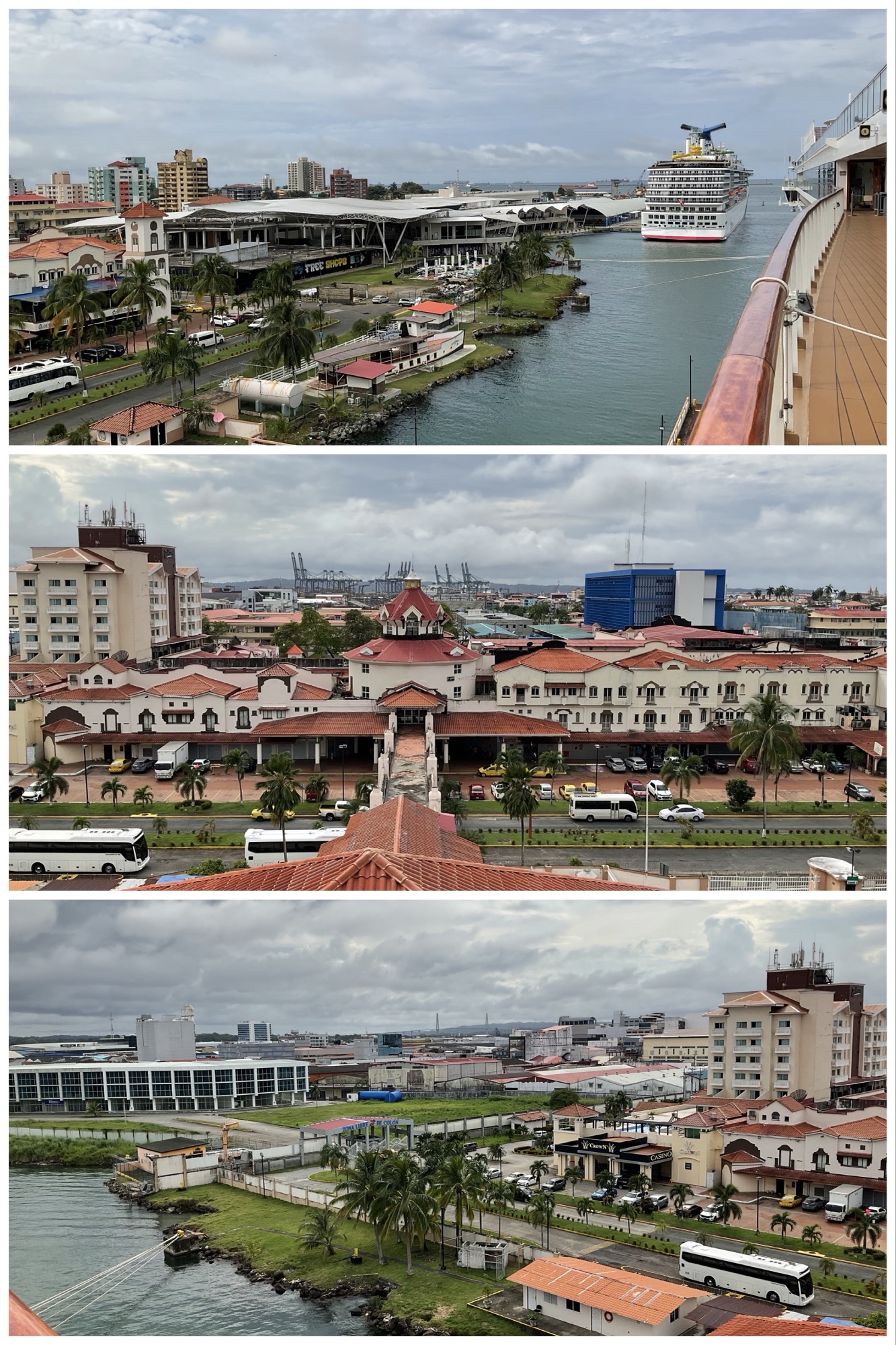
Our bus ride from the port this time sadly confirmed that not much has been rebuilt in the city, although as we got further out of Colón and toward the neighbourhoods closer to the Atlantic bridge we passed large new homes in gated communities. Our guide explained that most of these were foreign owned, and those that weren’t were judges and businessmen.

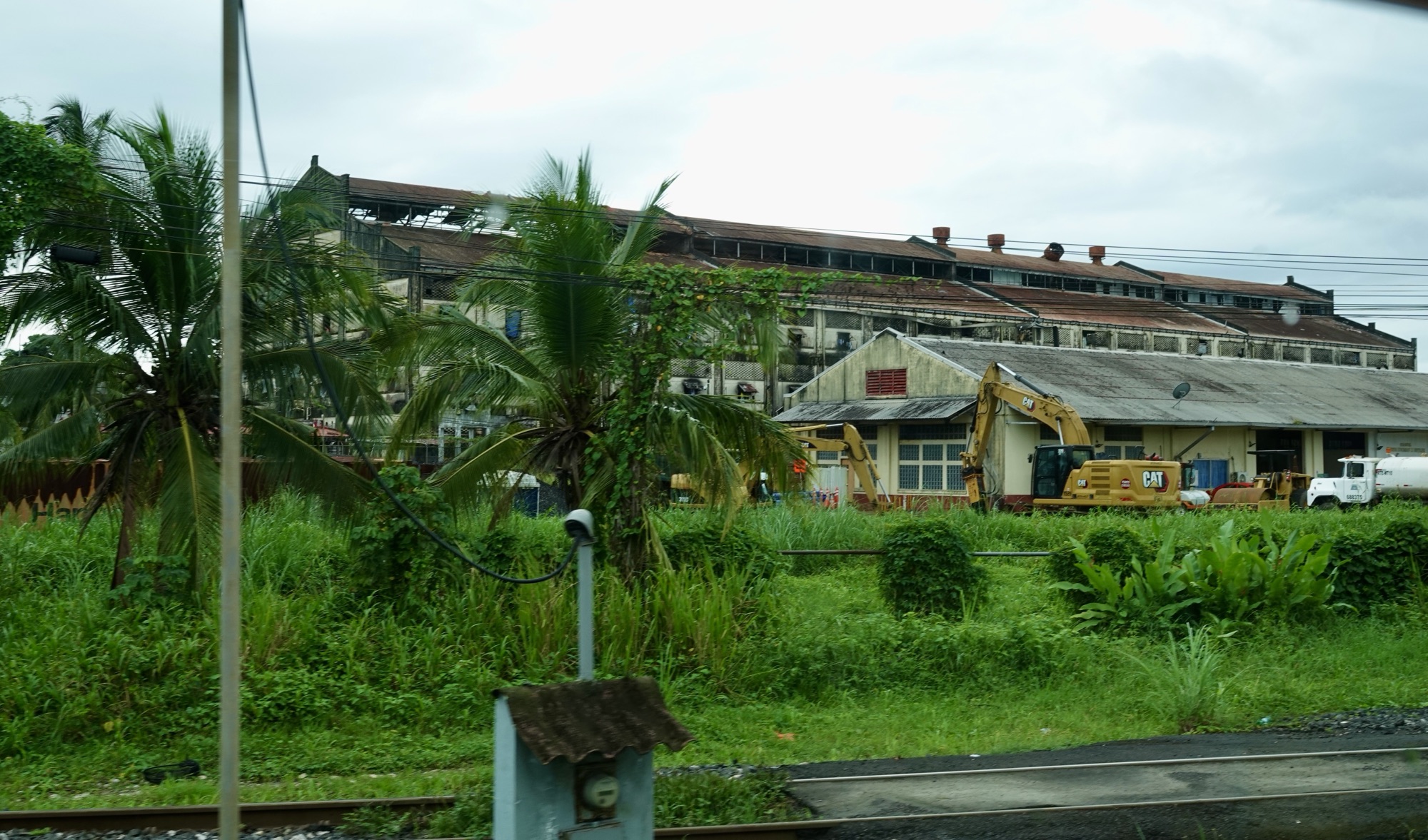
The former factory, below, is now part of a high security prison. I honestly can’t even imagine…
In order to do something different in Panama compared to prior visits, this time we chose Viking’s alternate included tour, described as: Sixteenth-Century Citadel and Modern Marvel.
Journey through Panama’s past while touring a once-mighty fortress and witness a feat of modern engineering. You will visit the ruins of Fort San Lorenzo, a 16th-century Spanish citadel that sits at the mouth of the Chagres River, overlooking the Caribbean Sea and surrounded by 30,000 acres of protected rainforest. Learn about the fortress’s turbulent history from your guide as you explore this UNESCO World Heritage Site and admire striking views of your surroundings. Afterward, embark on a panoramic drive to view a section of the Panama Canal and hear about the history of this mighty feat of engineering. You will also learn more about its recent expansion project, one that has resulted in doubling the canal’s capacity and allowing supersized ships to pass through its waterways.
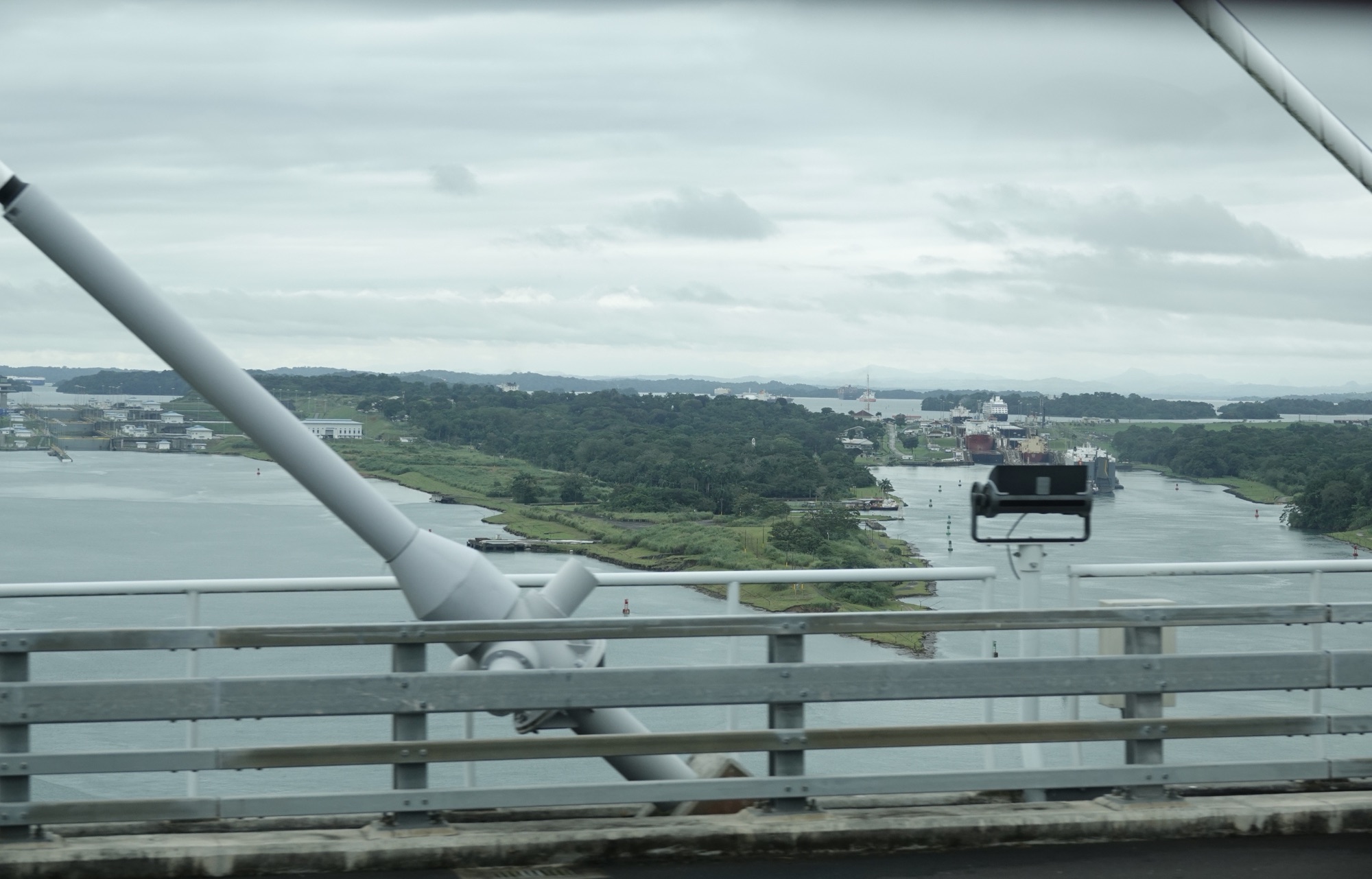
It was interesting taking a bus ride over the Atlantic Bridge, under which we’ve passed on ships transiting the canal. We got a completely different perspective of the waterway, although through the tinted bus windows everything took on a slightly bluish tint.

After about half an hour driving winding roads through lush, protected forests, we reached the former Fort Sherman, a U.S. army base active until 1999, when the Panama Canal and its adjacent were reclaimed by Panama. The base buildings have simply been left to deteriorate and be taken over by termites, as evidenced by this former staff housing.

We finally reached our destination, Fort Lorenzo, more properly called Castillo Real del Chagres (the royal fortress of Chagres), located strategically at the mouth of the Chagres River, which is part of the transisthmian route that connected Panama City with the Caribbean. This route started overland from Panama to the town of Cruces, near what is now known as Gamboa.
From there, small boats sailed downstream along the river to reach a vilage located at the mouth of the Chagres in the Caribbean, near the Castle of San Lorenzo.
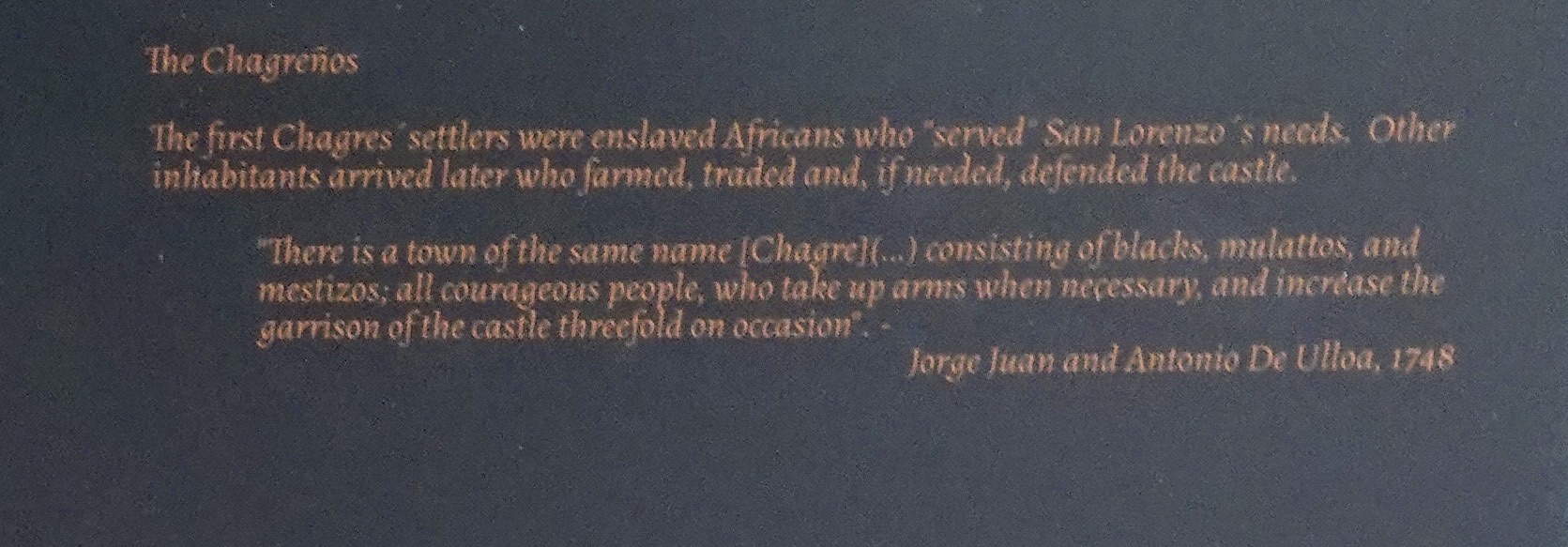
The city of Portobelo, San Lorenzo Castle and the city of Panama formed the so called “strategic triangle” that protected the access to the South Sea in times of the Spanish Empire domain of the America. Whoever attacked the mouth of the river caused a great impact on colonial trade.

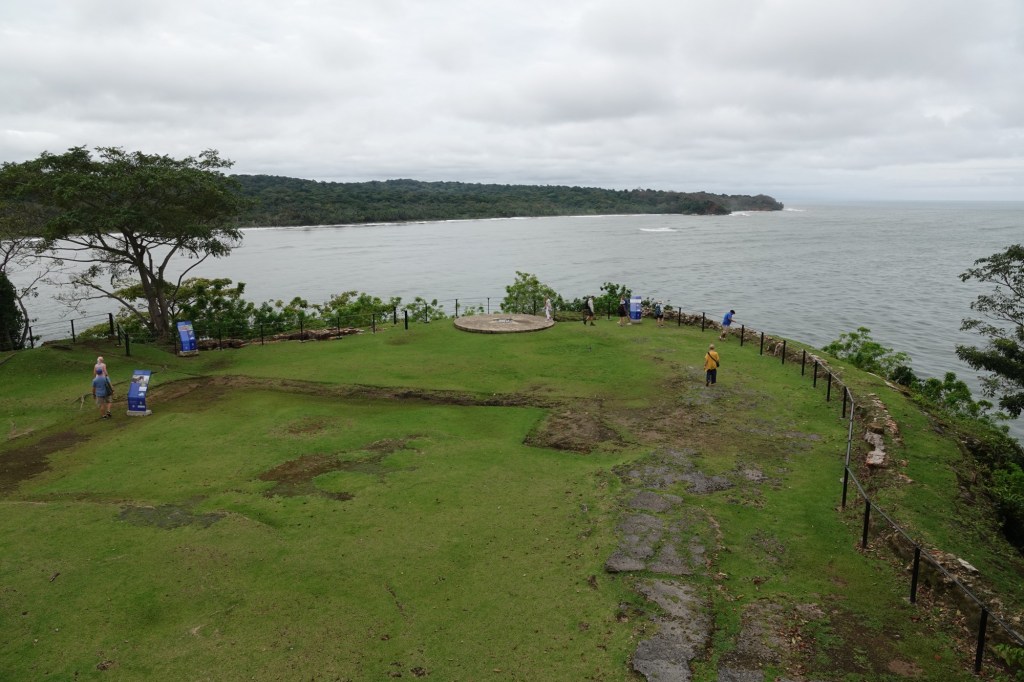
Strangely enough, Fort San Lorenzo did a less than stellar job of protecting the area. It was first conquered while still under construction, and then twice more destroyed during English attacks.
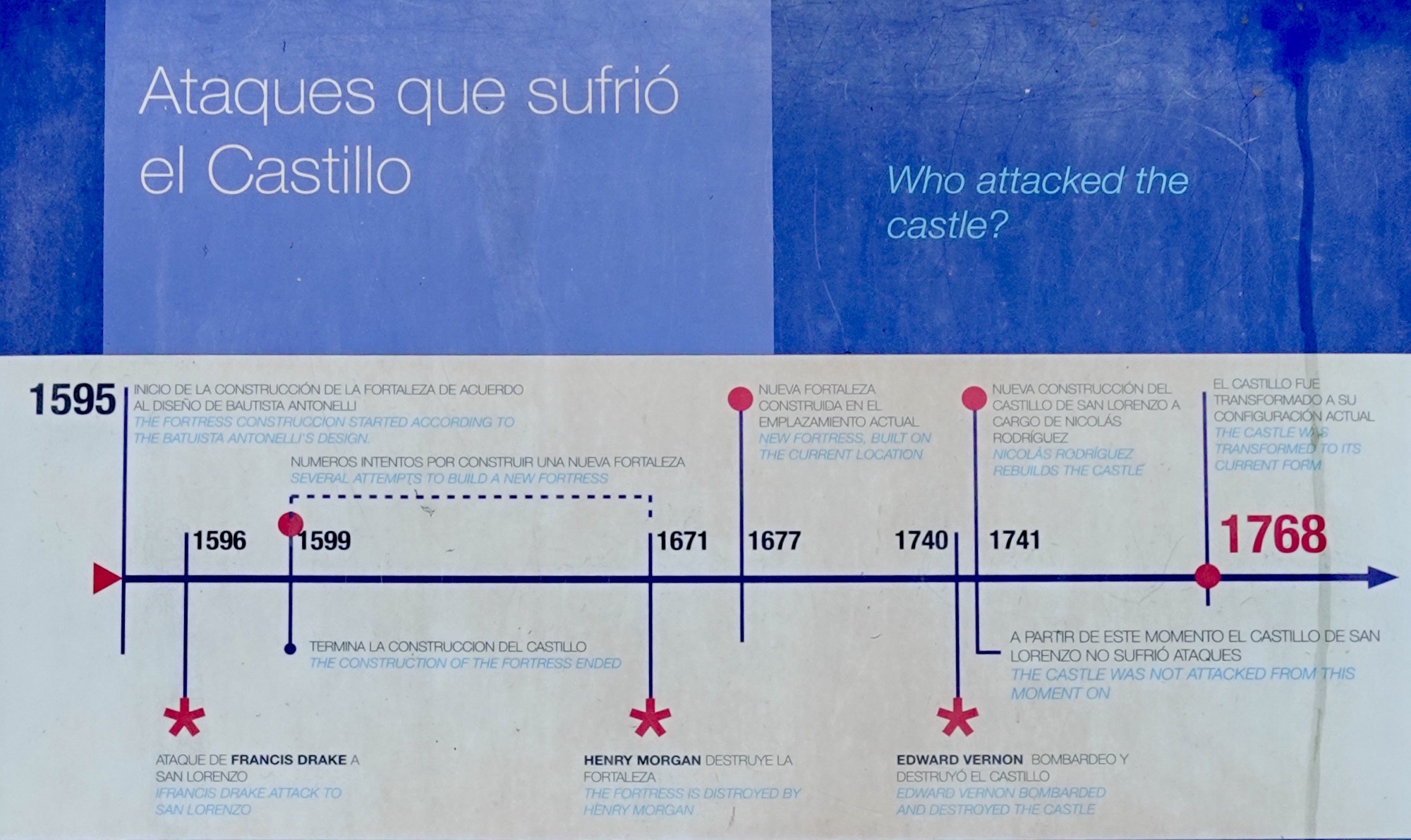
Nonetheless, despite being unsuccessful at its job, it is an interesting site to tour.
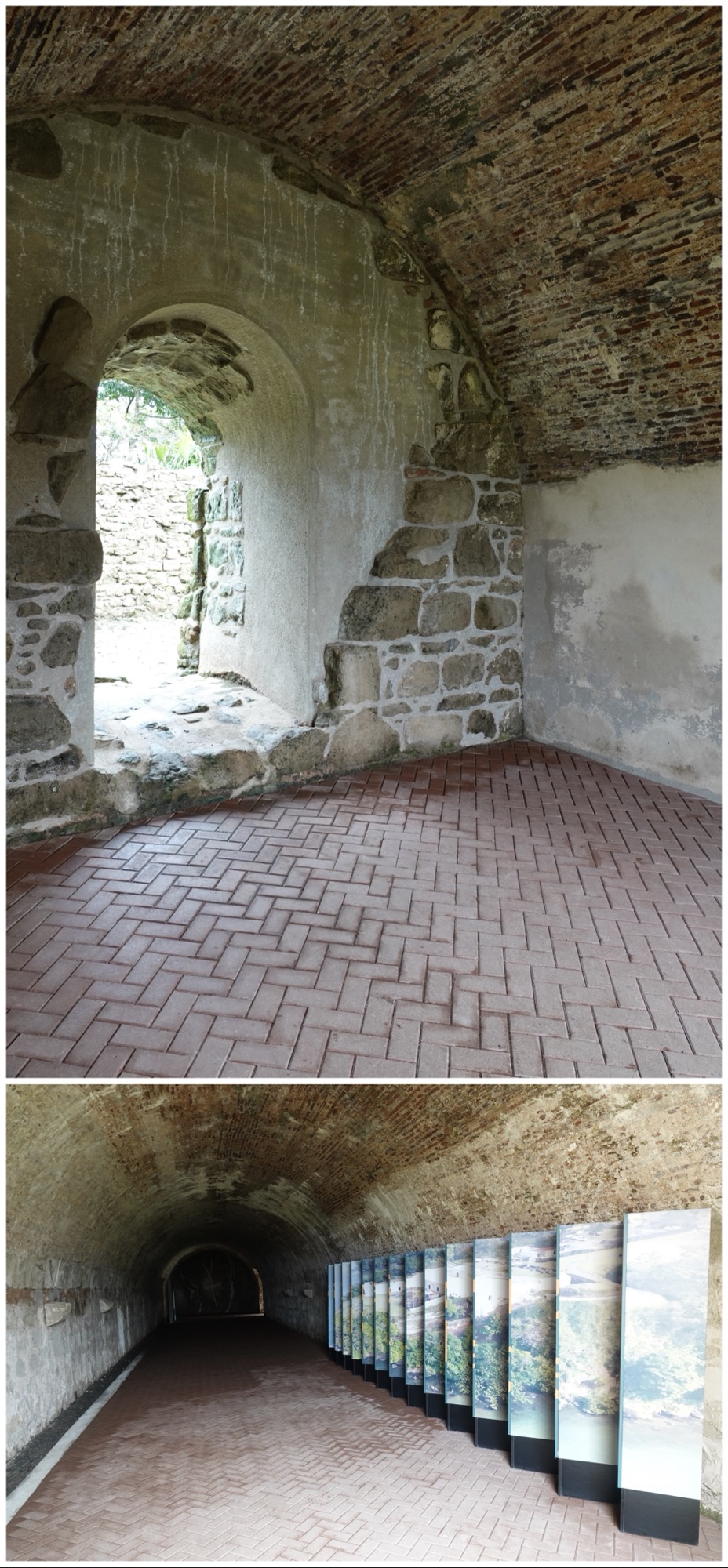
We had a full hour to wander the site, using the many plaques and interpretive signs to learn about its history.
Our first glimpse of the fort, below. It looks sturdy from this vantage point, and the round outer wall shape reminded me a bit of Fort George in Niagara-On-The-Lake, Ontario.
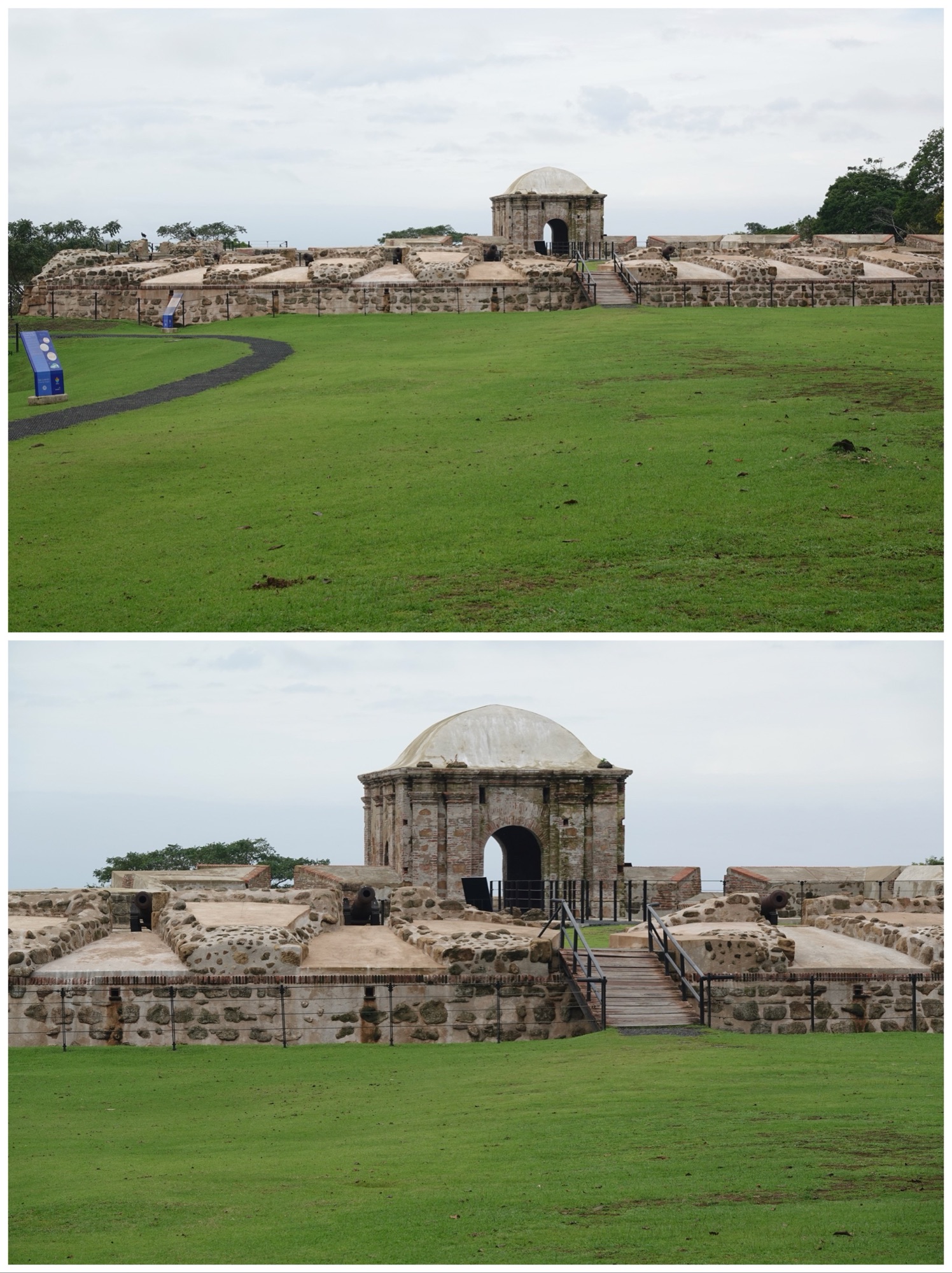

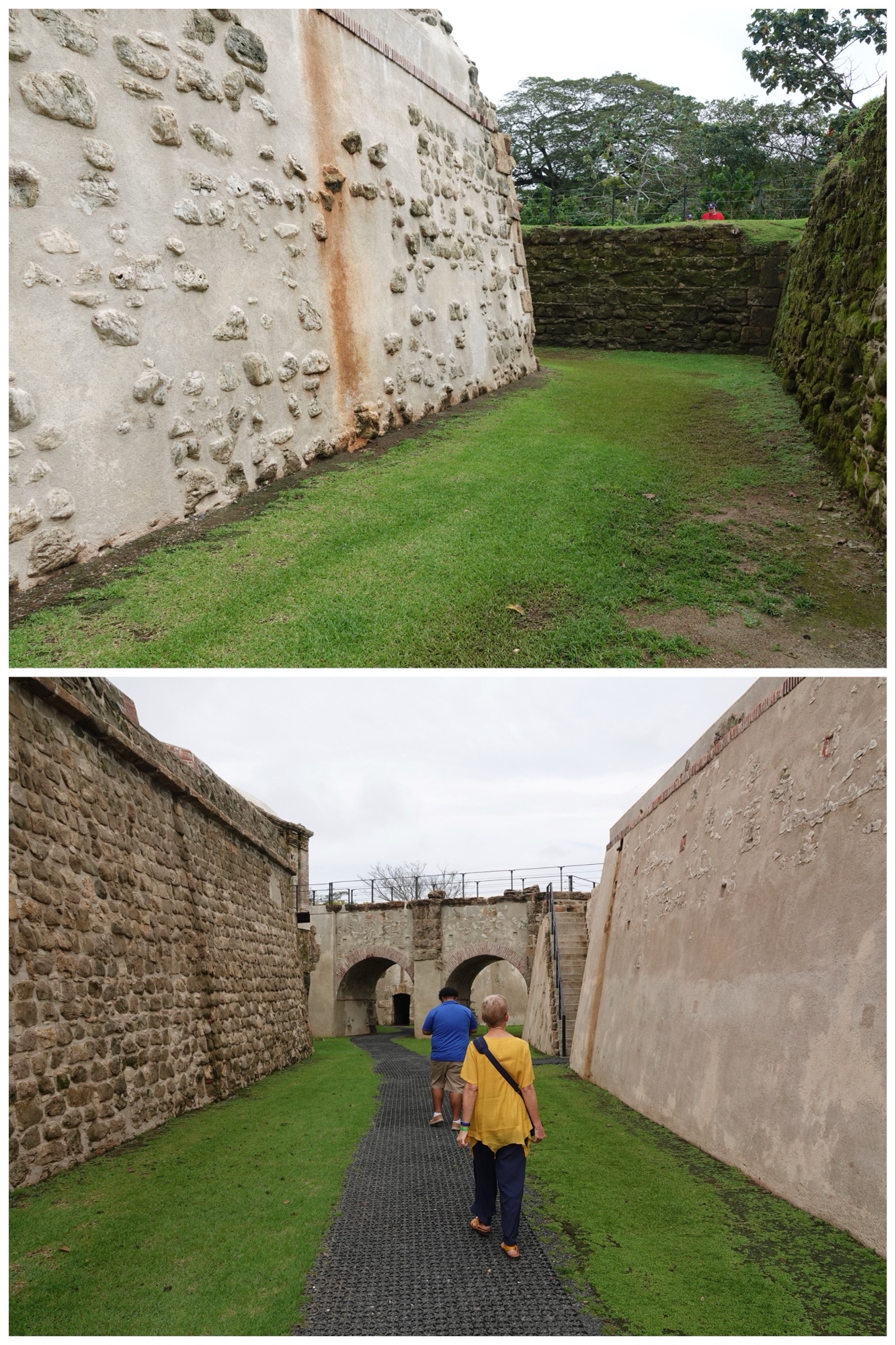
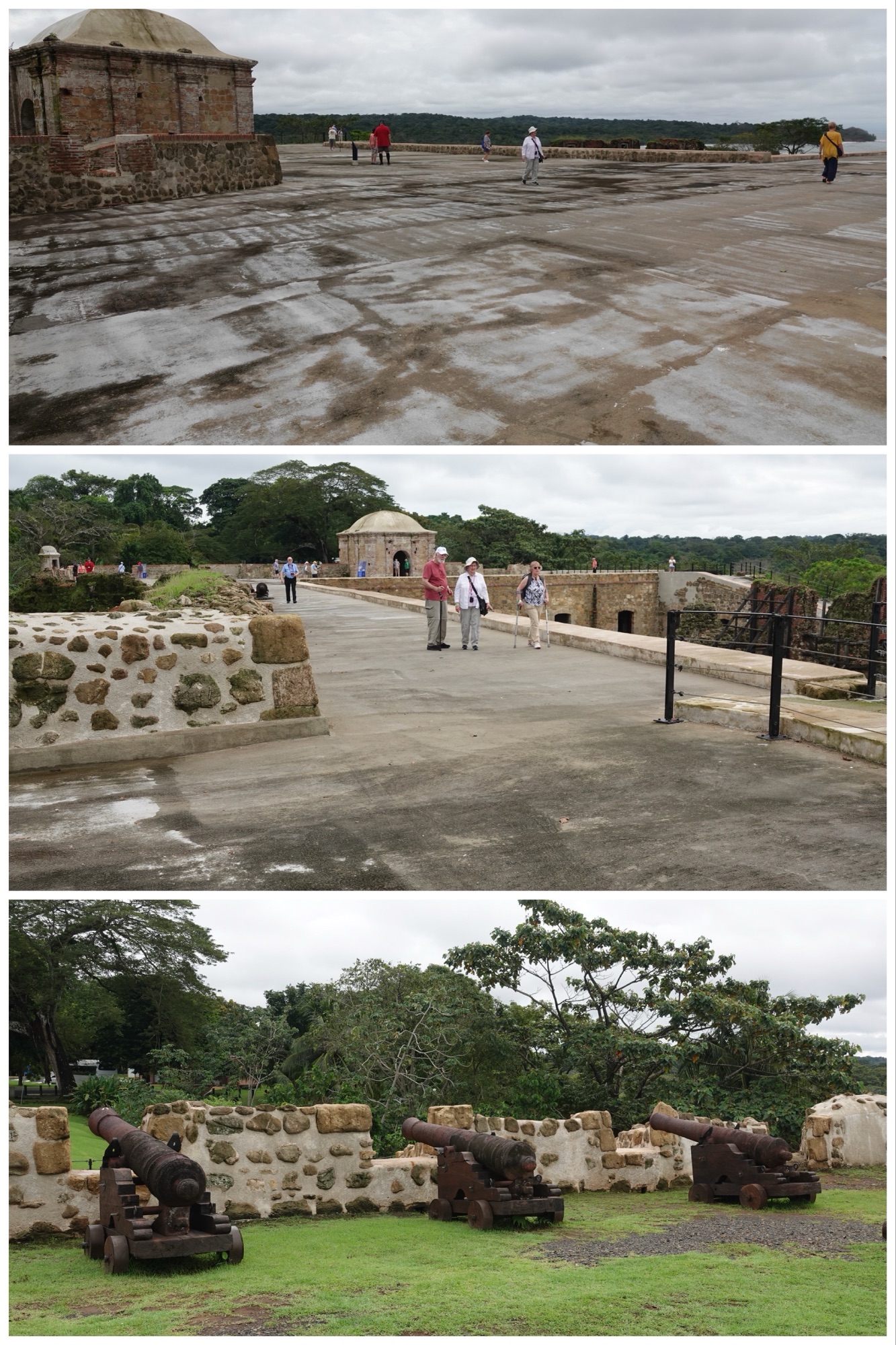
This range was effective both toward the mouth of the Chagres located to the south, and the Caribbean Sea to the west of the Castle.


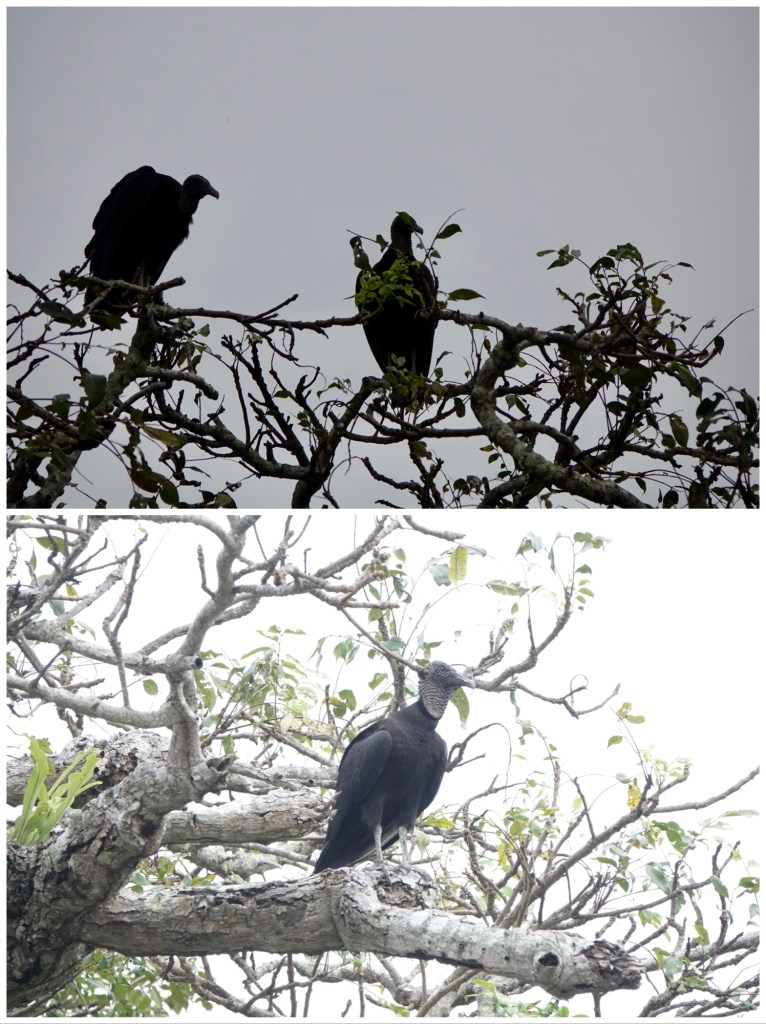
There was some “wildlife” at the site as well. Lizards and iguanas ran up and down the hills. We were too slow to get a picture of the ring-tailed coatis, but a few other people did. Ted was determined to get a good photo of the vultures roosting in the trees. In the end, he intentionally overexposed one shot to capture more detail – otherwise they were dark silhouettes against the sky.
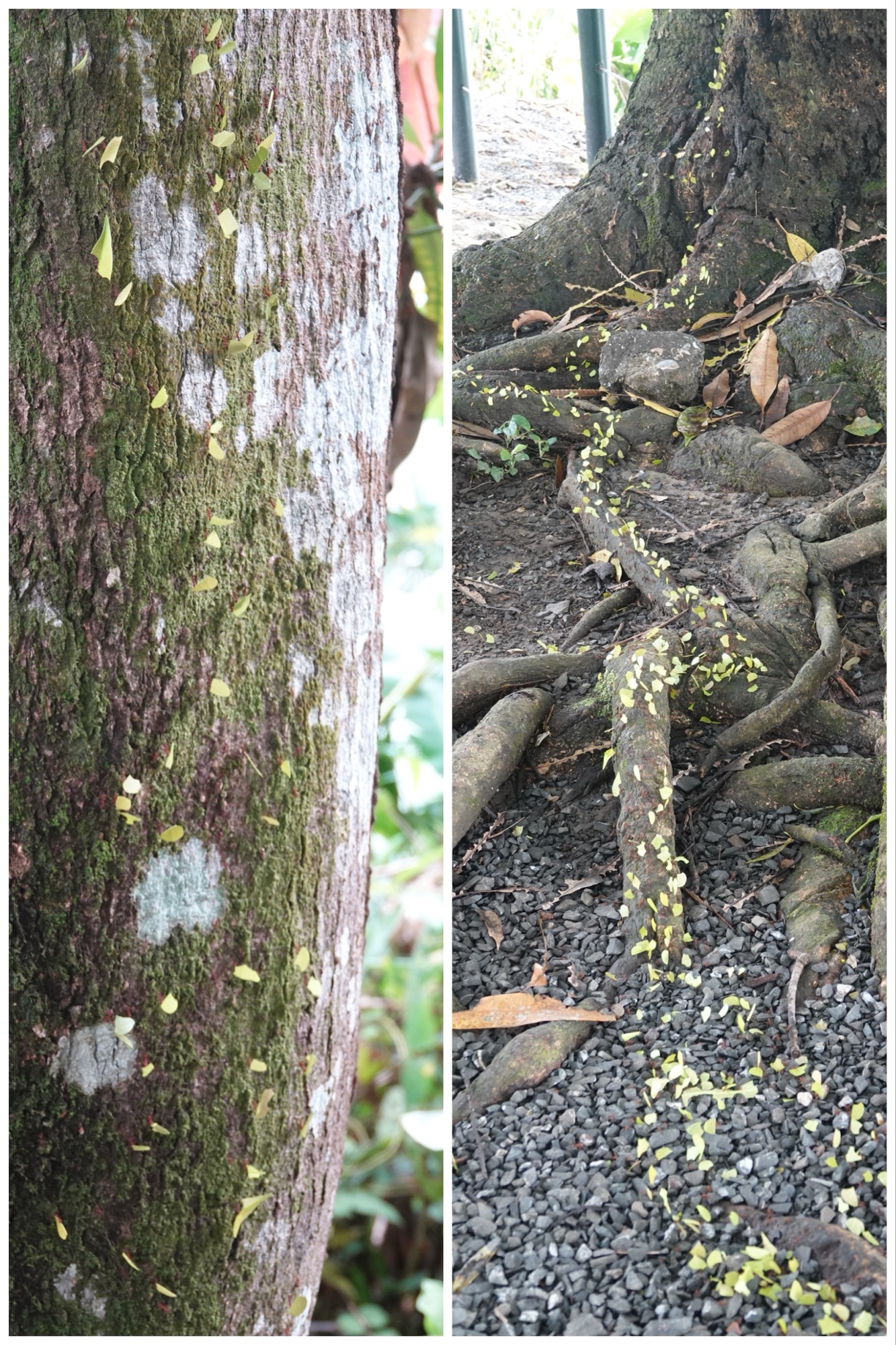
We were fascinated by the parade of worker ants near the site’s orientation centre. The line stretched for several hundred feet, and was in constant motion – ants with leaf pieces going in one direction, and “empty” ants returning in the other, ready to pick up a new “load”.

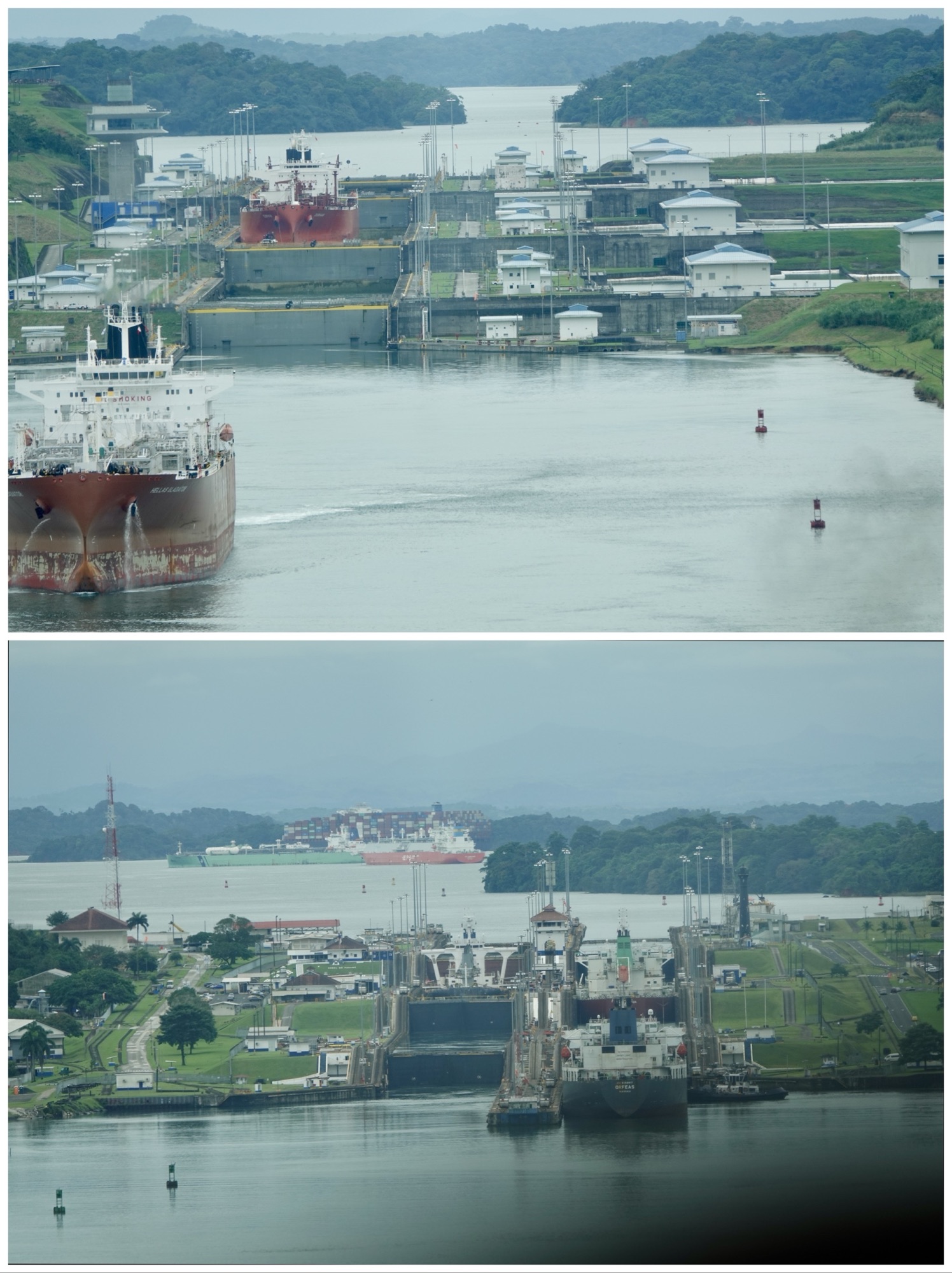
Our route back to the ship took us across the Atlantic Bridge again, but first detoured to a viewpoint from which we could get a good look at the Gatun Dam, which provides hydroelectric power for Panama, but was also integral to the formation of the artificial lake that allowed construction of the canal.

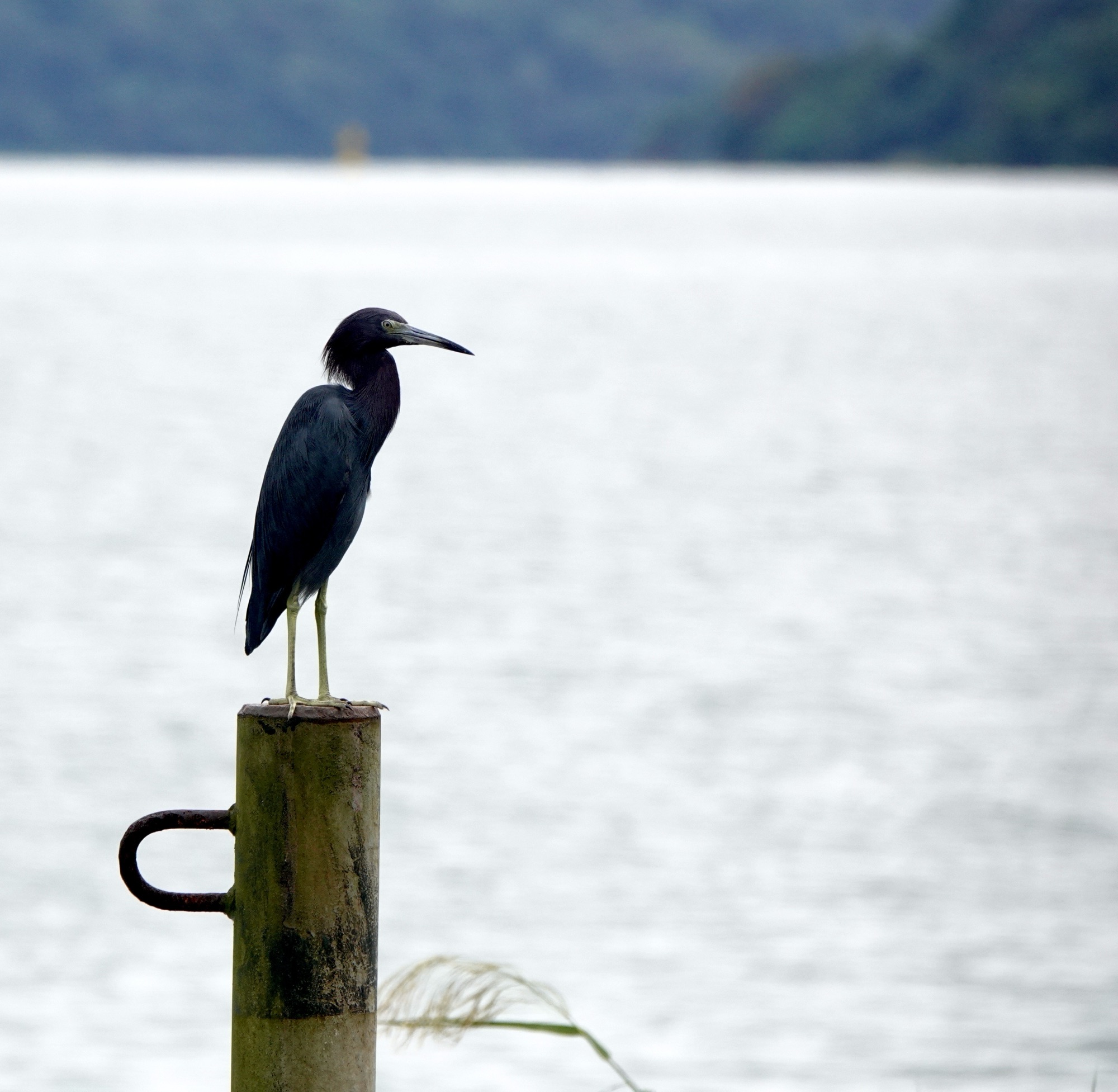
A Little Blue Heron seemed to find the view captivating too.
We got yet another perspective of the Gatun Locks on our return drive:
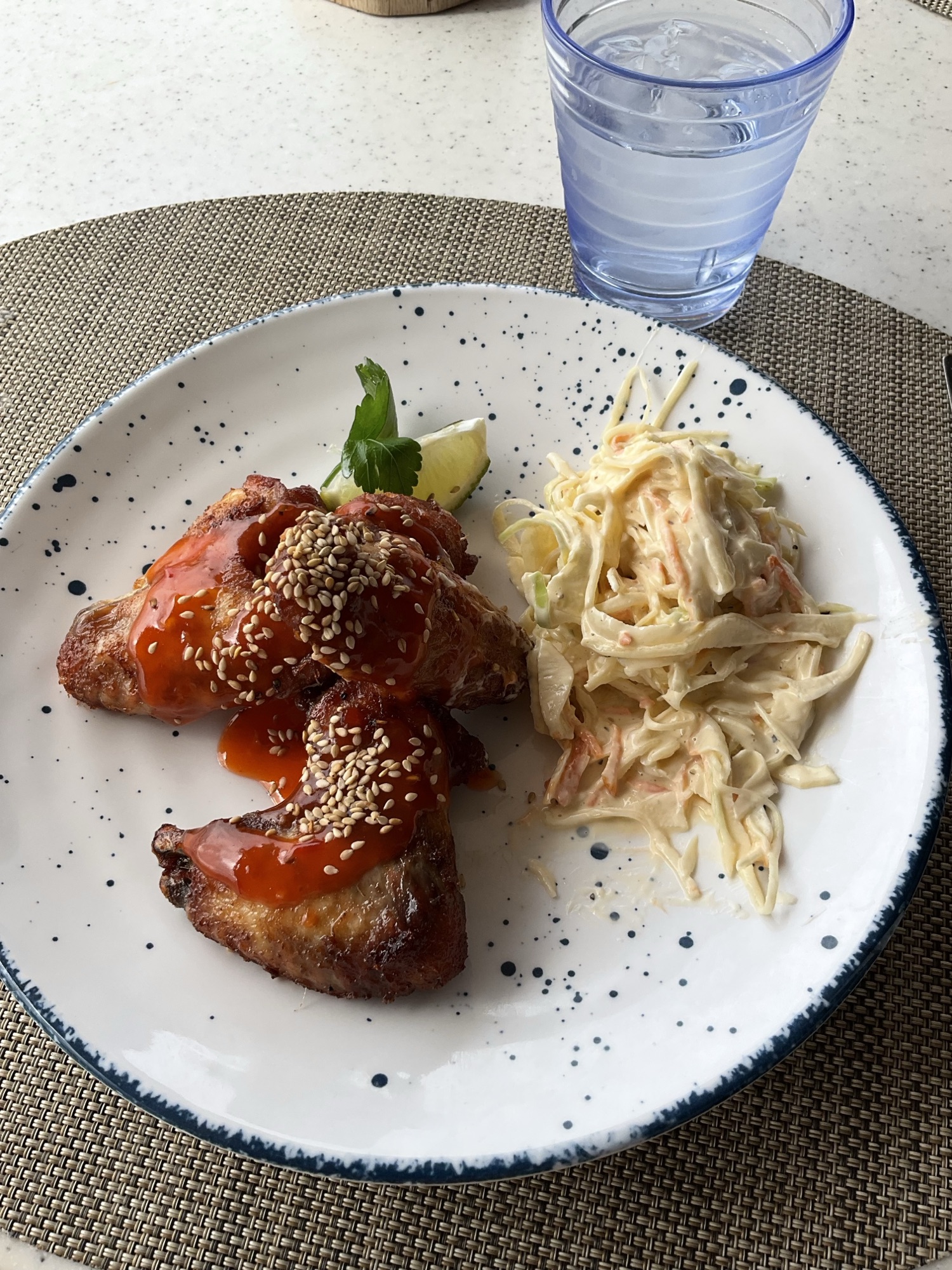
We returned ready for lunch, which we enjoyed in the warm breezes on the Aquavit Terrace. Asian sesame wings and coleslaw – and some icy cold water – hit the spot.
After spending the afternoon putting together today’s blog entry, it was time for Christmas dinner with our World Cruise “family”!


Wine: Donnafugata Sherazade Sicilia IGT red.
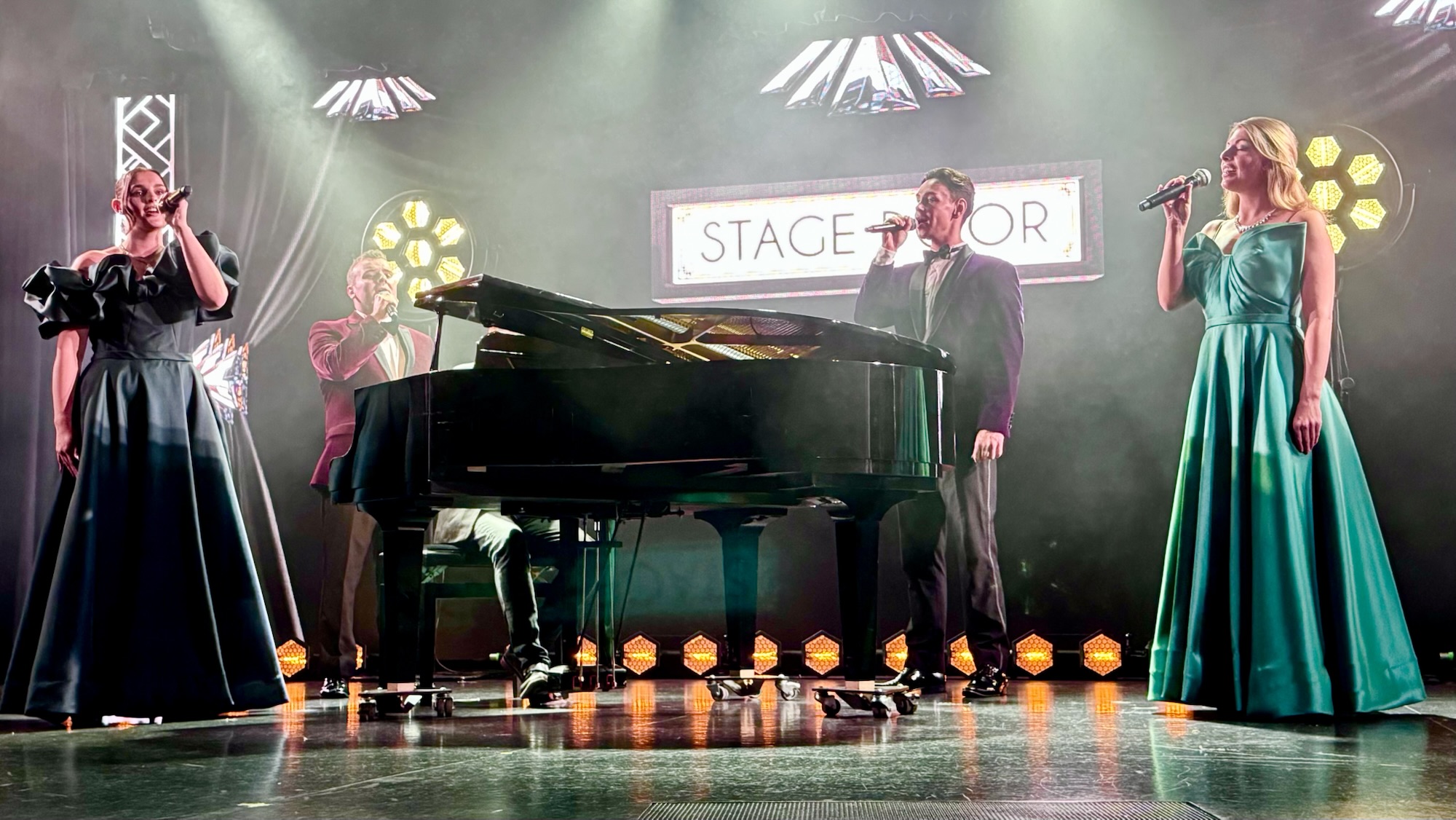
The evening’s theatre entertainment featured the Viking Vocalists in a show called “Stage Door”, featuring selections from over 20 of the world’s most loved musicals from film, Broadway, and London’s West End.
Tomorrow is our transit through the Panama Canal, followed by a sea day as we head for Puntarenas, Costa Rica. Since we’ve gone through the Panama Canal in both directions, this third transit will make for a lovely quiet day to catch up on my reading.
 Rose and Ted’s Excellent Adventure
Rather telling that the most interesting thing you found in Colon has to be the leaf cutter ants procession up that tree! Happy Boxing Day — though I have to wonder what you’ll find to box up and give to the needy on the ship! Just keep giving your insights, information and good cheer — that’s enough. Thanks!
LikeLiked by 1 person
Thank you Kathleen! (And I’m sure by the end of the trip someone on the crew will inherit at least part of my wardrobe!)
LikeLike
Thank you Rose! I had been wondering if Colon had been improved at all since we were there. Now I know. Very sad….
LikeLiked by 1 person
I had my hopes up – and dashed. Yet Panama City flourishes…
LikeLike