Arriving in Huatulco, a port we’ve never visited before, I was struck by how pretty it is. There are rocky crags along 22 miles of jagged coastline, pristine sandy beaches, green hills lush with trees, and a lagoon-like area full of small colourful boats. The waters are as crystal clear as anything we’ve seen in the Caribbean or Mediterranean.
Our guide later in the day very proudly told us that, unlike Puerto Vallarta and other cities along the coast, Huatulco does not release any waste water into the ocean; it is all processed and used for irrigation. That makes Huatulco’s sea life healthier, its seafood healthier to eat, and has earned the region multiple green eco-awards.

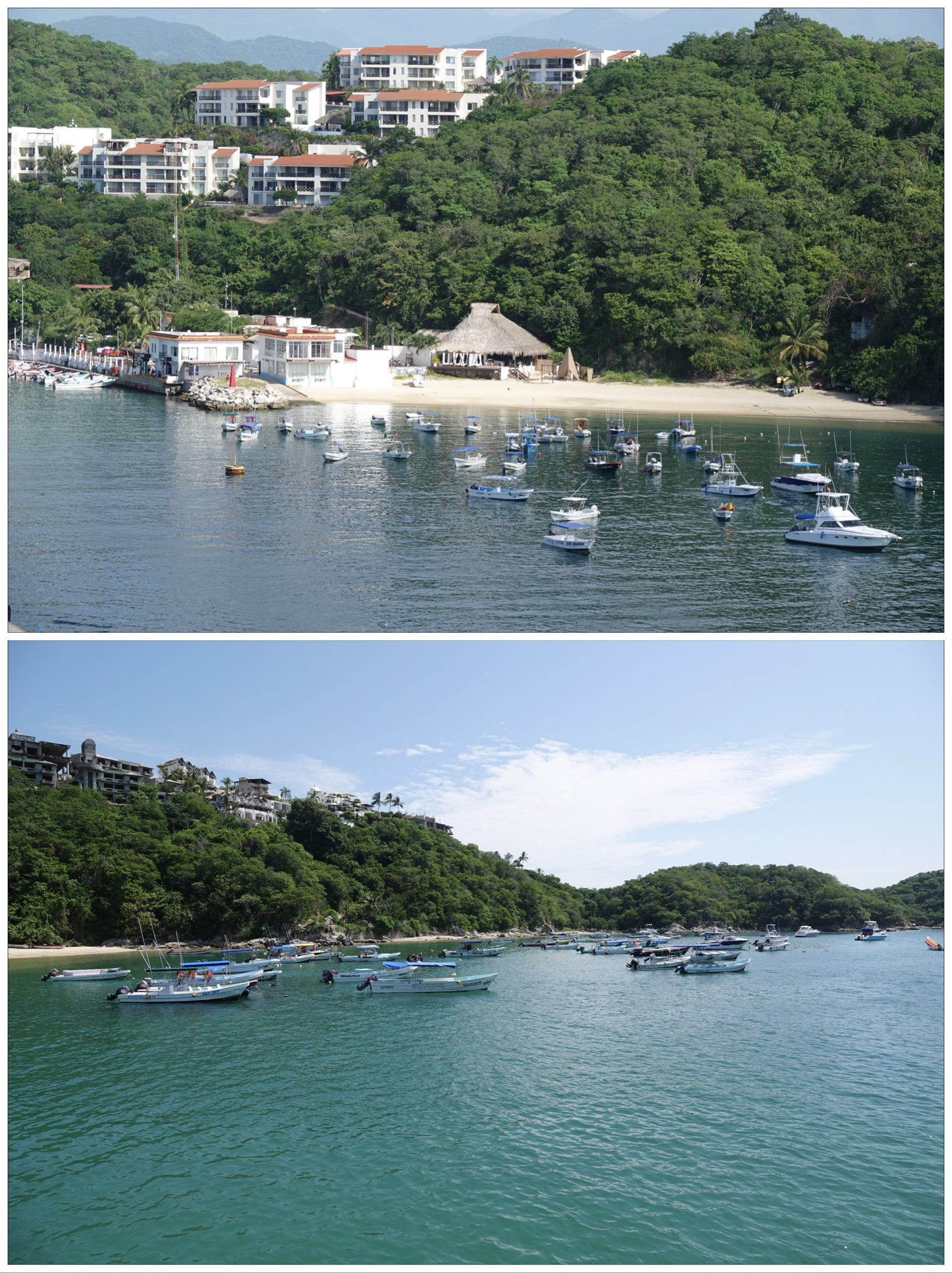
It’s a small enough port that only one cruise ship at a time can dock in Santa Cruz Bay, and not the really big ones (over 3000 passengers), so even with a ship in port it doesn’t feel overwhelmed by tourists.

There’s also a marked lack of the dozens of dockside souvenir shops and pharmacies advertising Viagra that we’ve seen in places like Cabo San Lucas. Instead there are jewellers, artisans, restaurants, and a small chapel.
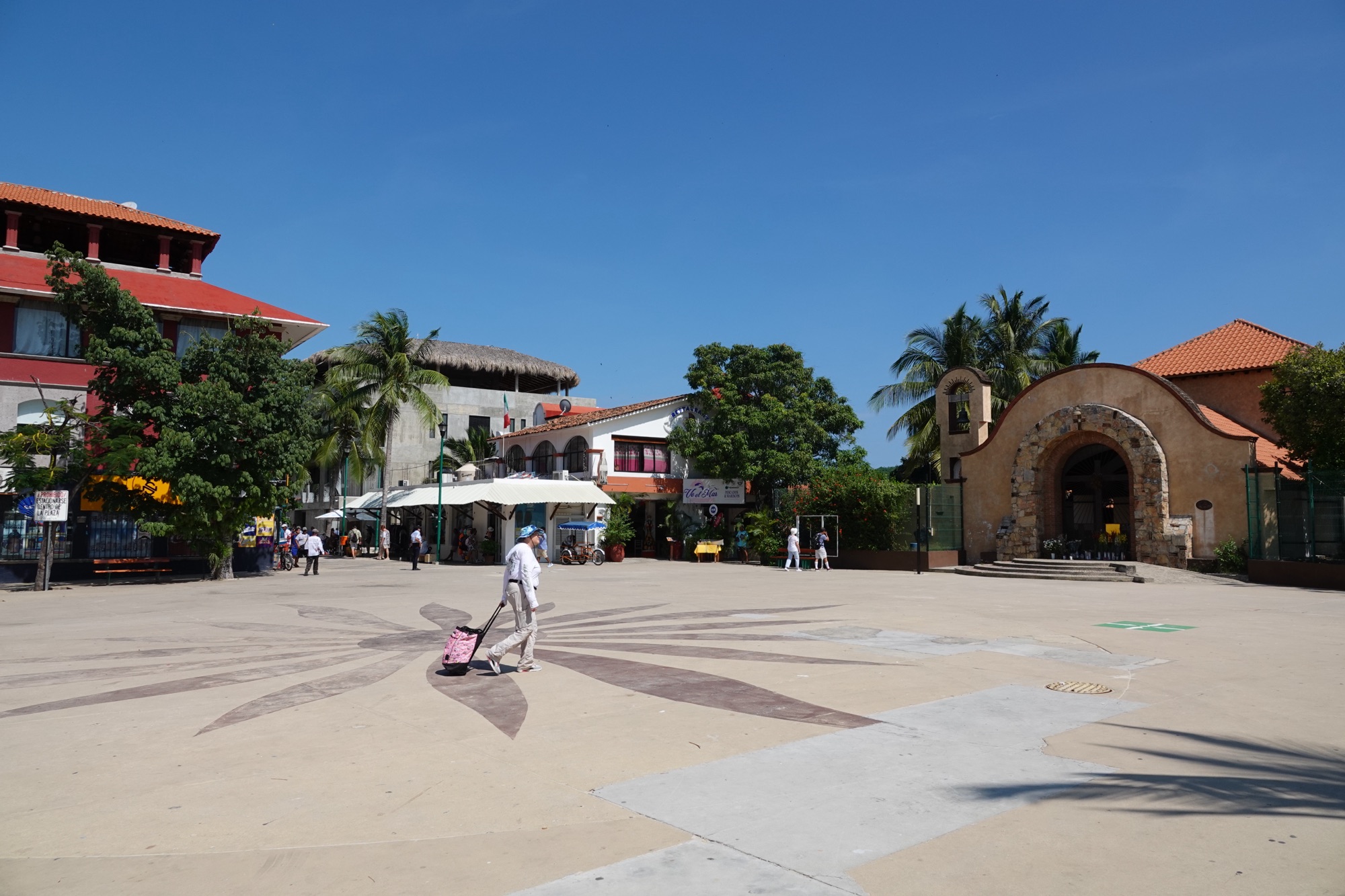
Huatulco, located in the Mexican state of Oaxaca, was one of the first destinations in the western hemisphere to focus on ecotourism and the protection of natural resources.

We signed up for a 3 hour bird-watching eco adventure, described as: Discover unspoiled, low-growth jungle, including cedar, mahogany, ficus, mocambos and almond. You will likely spy several of the region’s 227 bird species, including orioles, woodpeckers, egrets, seagulls, falcons, sparrow hawks, parrots and eight varieties of hummingbird. Keep an eye out for lizards, iguanas, deer, armadillos and squirrels.
The temperature soared to a humid 33°C/92°F with a 40% chance of rain, beginning early afternoon. We were hopeful that it would hold off until after our tour, scheduled to end around 2:30 p.m., because although we know that it’s sometimes possible to get a better view of birds sheltering in the trees during rain, it’s not great for Ted’s camera.
The rain didn’t appear, but neither did very many birds.
Our search for wildlife began in an urban park, Parque Rufino Tomayo, where our guide Oscar Aqile did his best to get birds to come out of hiding by issuing bird calls. It didn’t help much, but Ted and I found that detaching ourselves a bit from our group of 10 and being stealthy allowed is to see a few species.

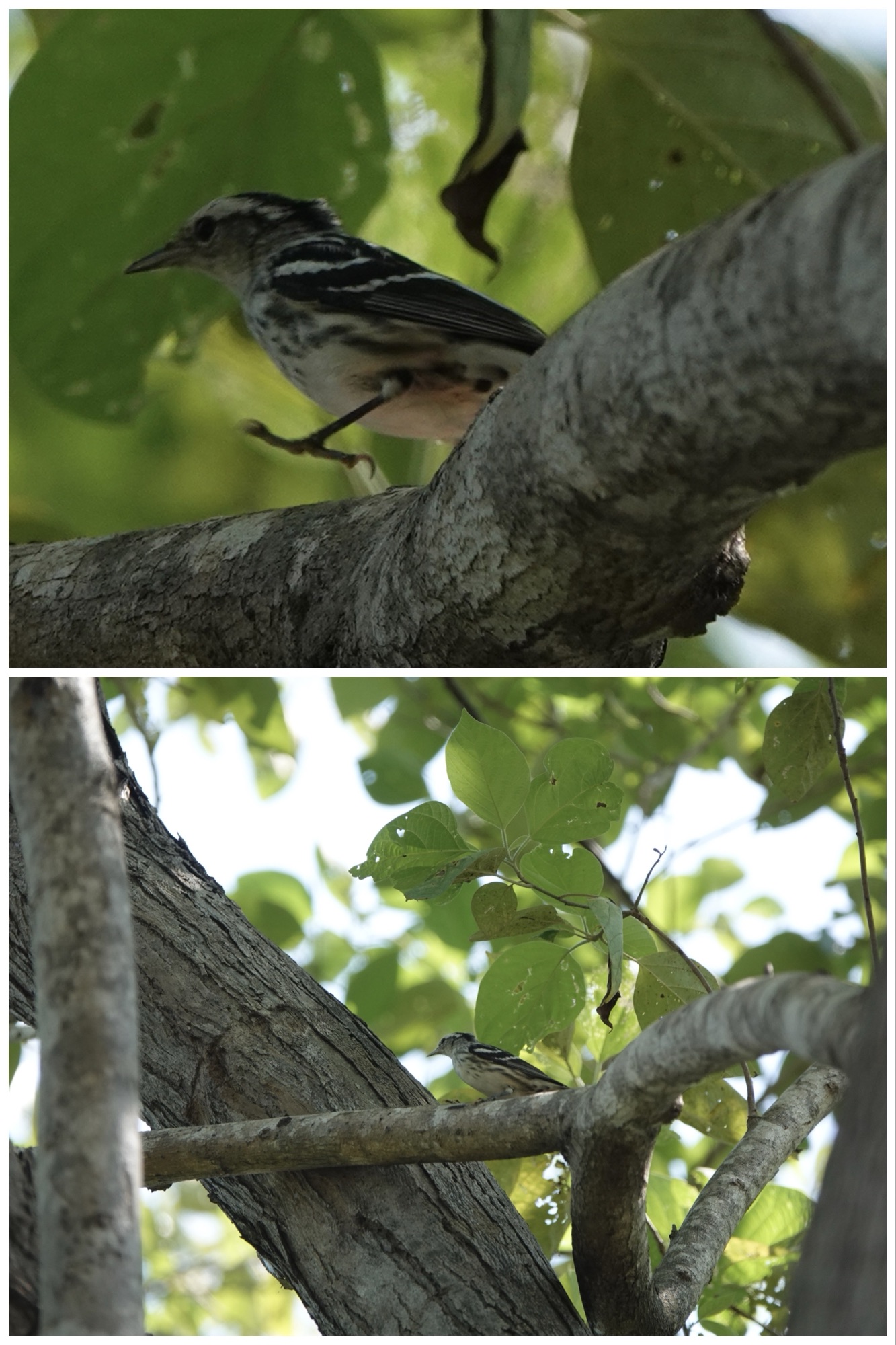


We did see a gorgeous white-throated magpie jay, but it was too fast for us. Darn those birds that won’t perch and pose!

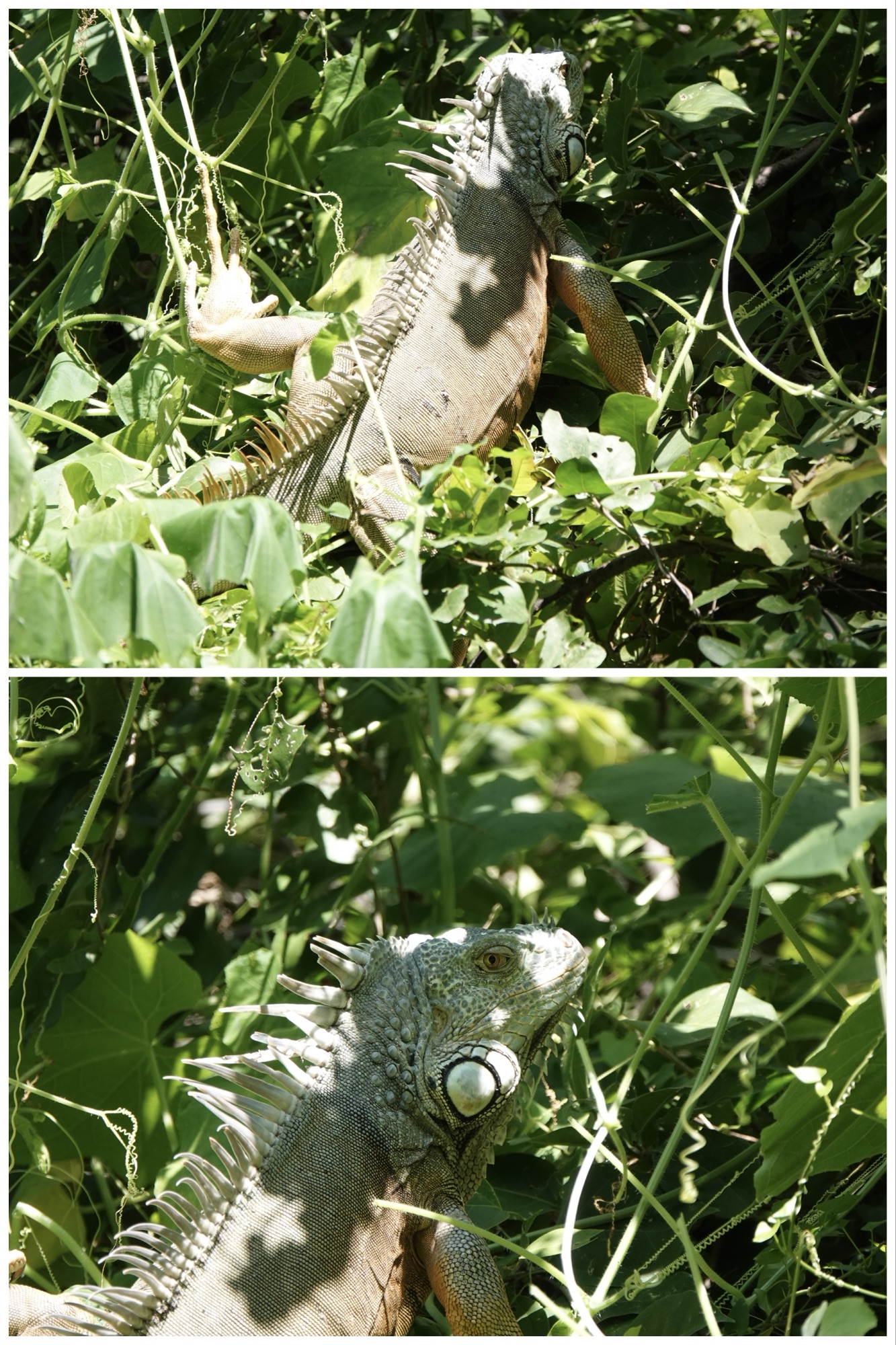
Also high up in the trees, but definitely not a bird…

Oscar then took us by van to one of the canals leading from the mountains to the bay in Tangolunda (which is Zapotec for “pretty face). Because we’re at the cusp of dry season, the water level was very low and sulphurous, but that certainly didn’t deter the wading birds.


We also saw snowy egrets and lots of cormorants, but since we already had good photos of them from Puerto Vallarta, Ted didn’t focus on them.
Once back at the ship, showered and cooled off, we headed for our favourite spots in the Crow’s Nest until dinner. Our shared table tonight was 8 people, three of whom were named Kim!

We skipped the comedian, opting instead for coffee and star-gazing.
Rough seas are predicted overnight, but tomorrow we make land in Puerto Chiapas, where we take a tour to some ancient ruins and watch Mexican chocolate being made.
 Rose and Ted’s Excellent Adventure