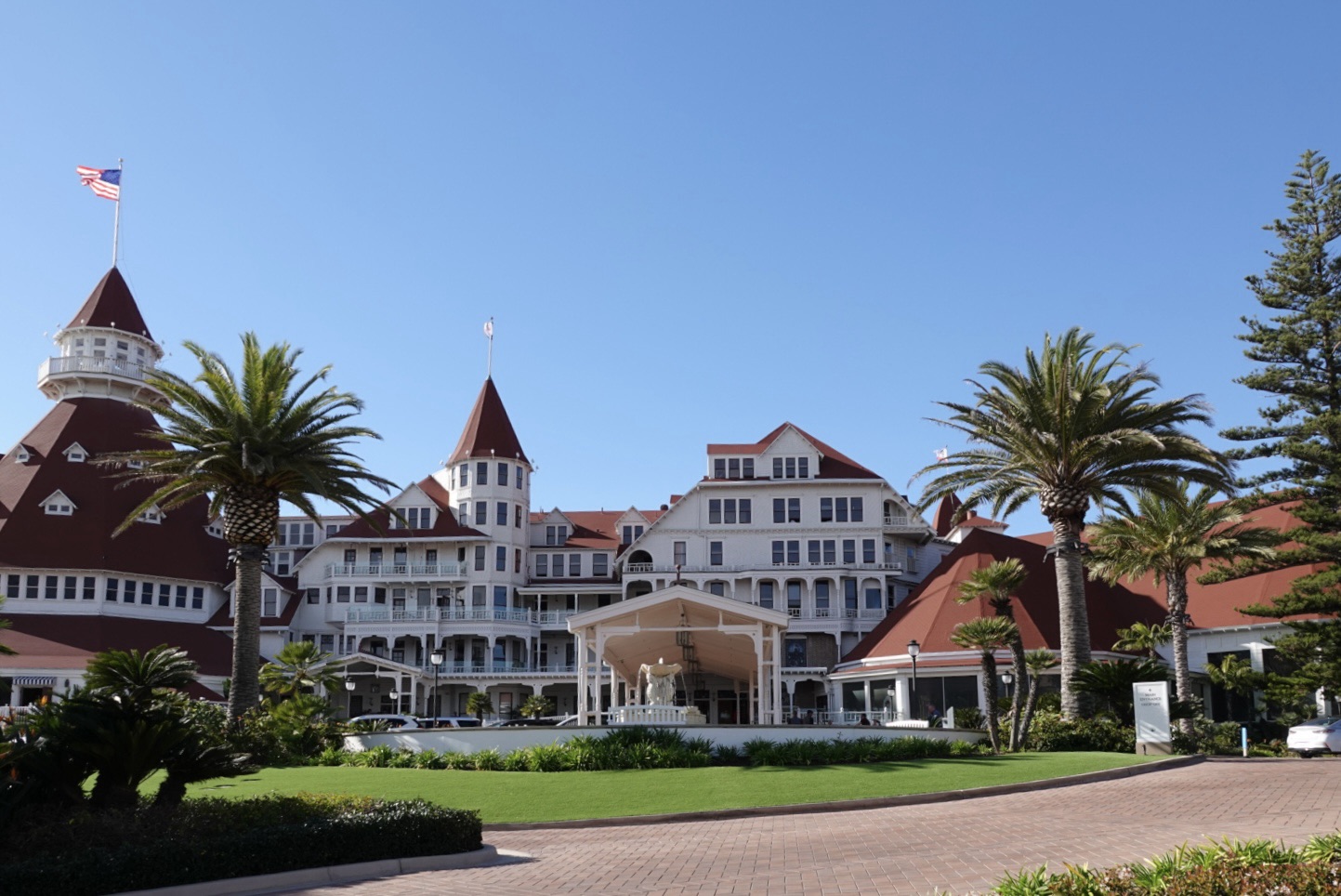
We hadn’t originally planned to return to the Del Coronado on this visit to San Diego. After all, we’d been there before, and it’s an expensive place to have a meal. Plus, we don’t exactly have dressy clothes with us that are suitable for the hotel’s dining room.
But … after visiting the organ pavilion in Balboa Park, I’ve become really interested in the Spreckels family legacy in San Diego.
So, overpriced ice cream overlooking the ocean it is – plus a guided tour and history talk.

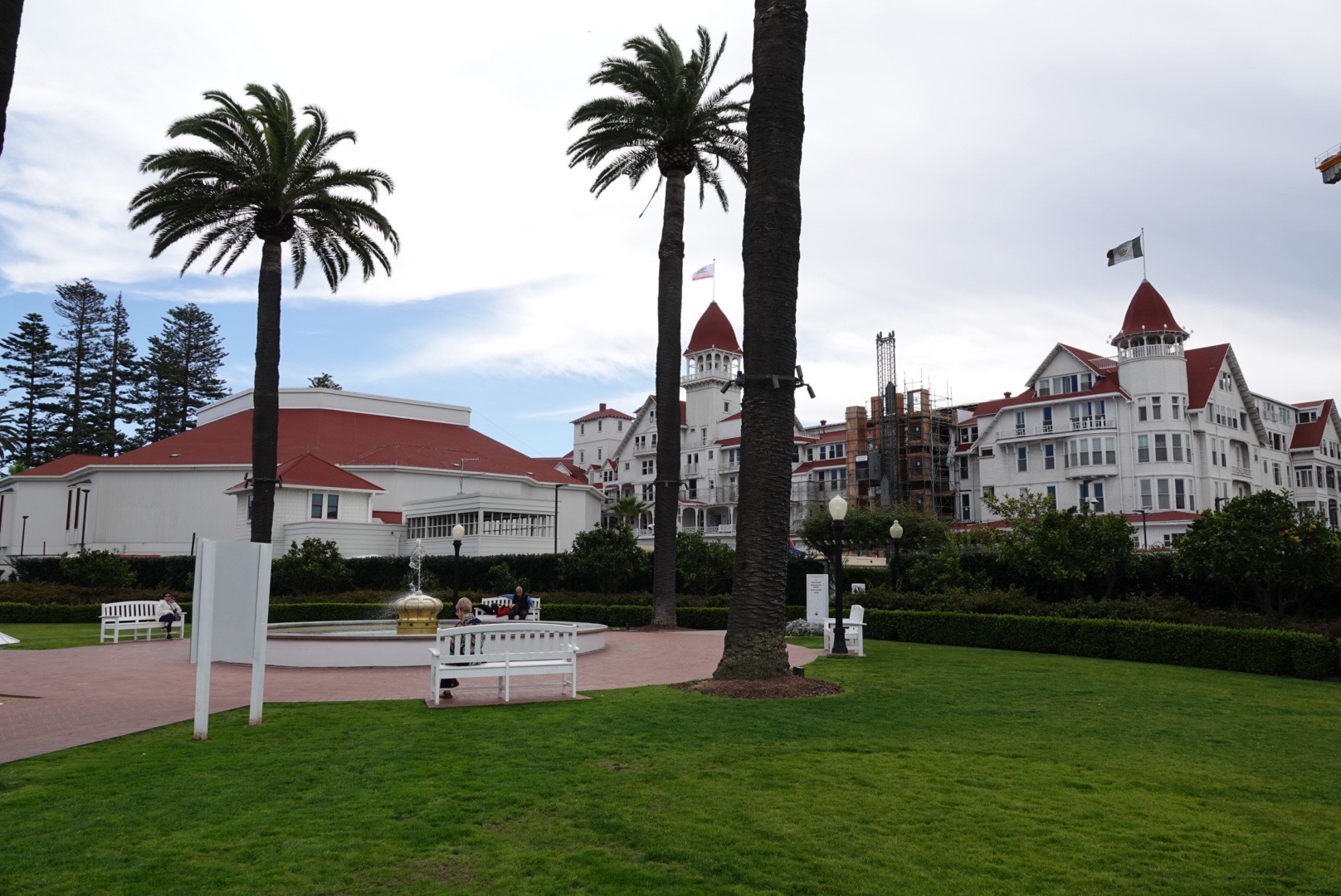
At one point, the Spreckels family owned all of Coronado Island, but it is the hotel that is so fascinating. It has a really wonderful website Del History outlining its history, which includes this:
When the resort was under construction, an economic downturn sent many investors out of San Diego and The Del’s founders were concerned. John D. Spreckels, son of wealthy “Sugar King” Claus Spreckels, fell in love with Hotel del Coronado and provided generous loans and other assistance to the resort’s founders, Babcock and Story, in order to keep the dream alive. Ultimately, the two businessmen chose to transfer complete ownership to Spreckels. Spreckels remained owner until his death in 1926, and the hotel remained in his family until 1948.
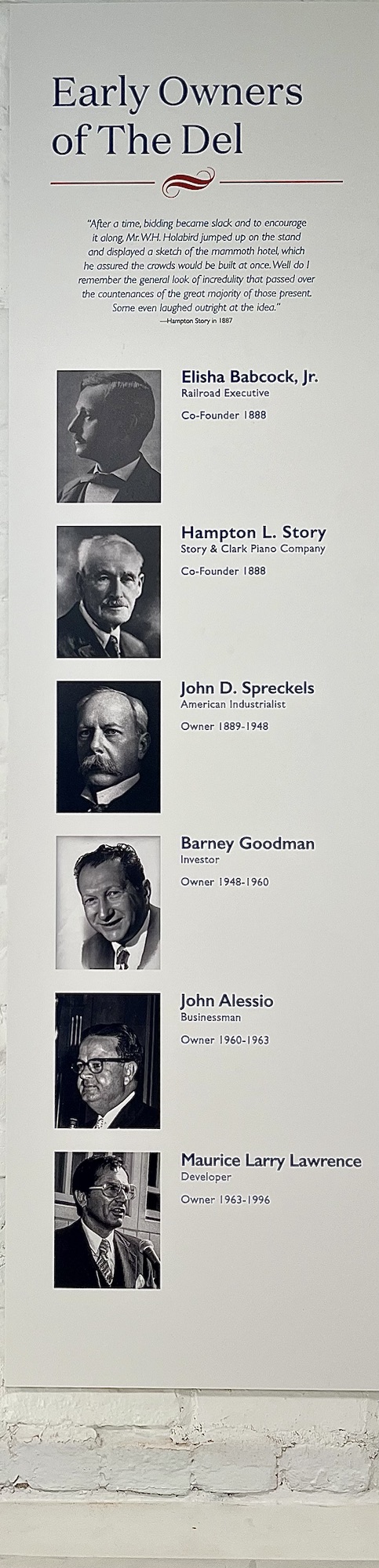
Since 2015, the hotel has been owned by Blackstone Group, an investment firm, who have contracted Hilton Hotels to manage it as part of their Curio collection.

The hotel’s 90 minute “Legendary Tour” is billed as bringing to life the iconic resort’s rich heritage through an in-depth, docent-led walking tour of the Victorian building and gardens, including access to exclusive behind-the-scenes areas. That’s just the kind of thing I like. Poor Ted – although as long as he can take photos he’s the most easygoing partner in the world.
We started our tour (led by lace, jet bead, and fascinator-wearing docent Betty) in the Ice House, where at one time an ice machine made all the ice for both the hotel and the town! Apparently at one time Elisha Babcock (who after selling the hotel to JDSpreckels stayed on for many years to manage it) boasted that they could make enough ice for the entire state of California – a statement that fortunately for him was never tested.
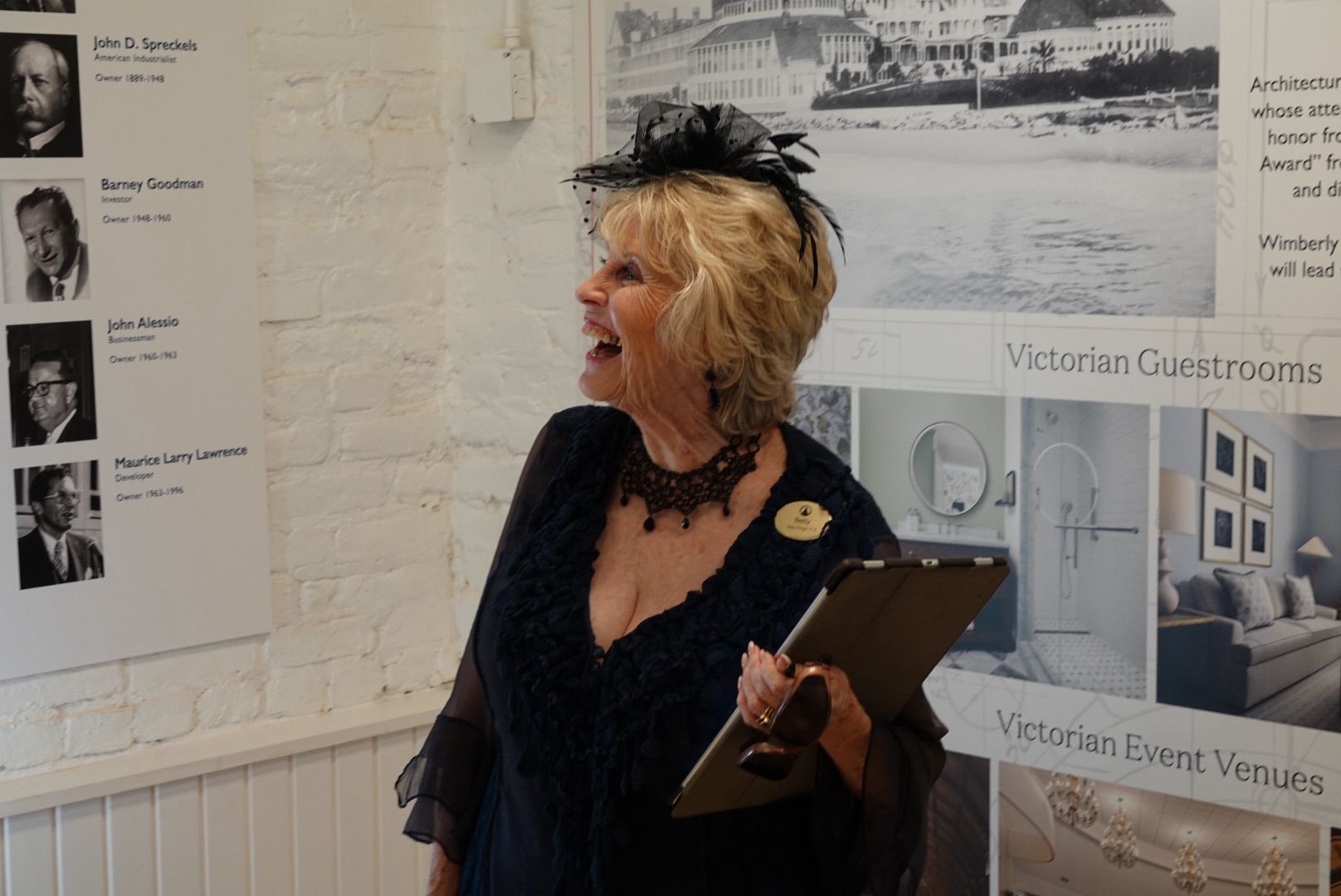

The Ice House also hosts a tiny museum of memorabilia. Especially interesting to me were the table setting notes and menus.

There was also a letter from Edward, Duke of Windsor, that referred back to a dinner given in his honour in 1920 while he was Prince of Wales. Betty assured us that the legend that Edward had first met Wallis Simpson at the Del Coronado was not true (a fact borne out, apparently, by their respective diaries).That said, Mrs Simpson and her first husband, Earl Winfield Spencer Jr., the first commanding officer of Naval Air Station San Diego, did frequent the hotel. The Coronado cottage that they lived in until 1927 has been moved to the hotel’s beachfront, and turned into a lovely restaurant called “Windsor Cottage”.

From the Ice House, we took a short stroll to see two buildings that pre-dated the massive resort hotel: The Oxford, and the historic Hotel Del Coronado Boathouse (now an unaffiliated restaurant).


I thought it was really fascinating that the boathouse was built as a sort of “practice round” for the construction workers before they built the Hotel Del later that year, since most of the workers were recently unemployed Chinese railroad workers with no actual building experience. Despite that, the hotel (not the boathouse- the actual hotel) was completed in just 11 months, by workers employed 7 day’s per week in two 11-hour shifts per day.
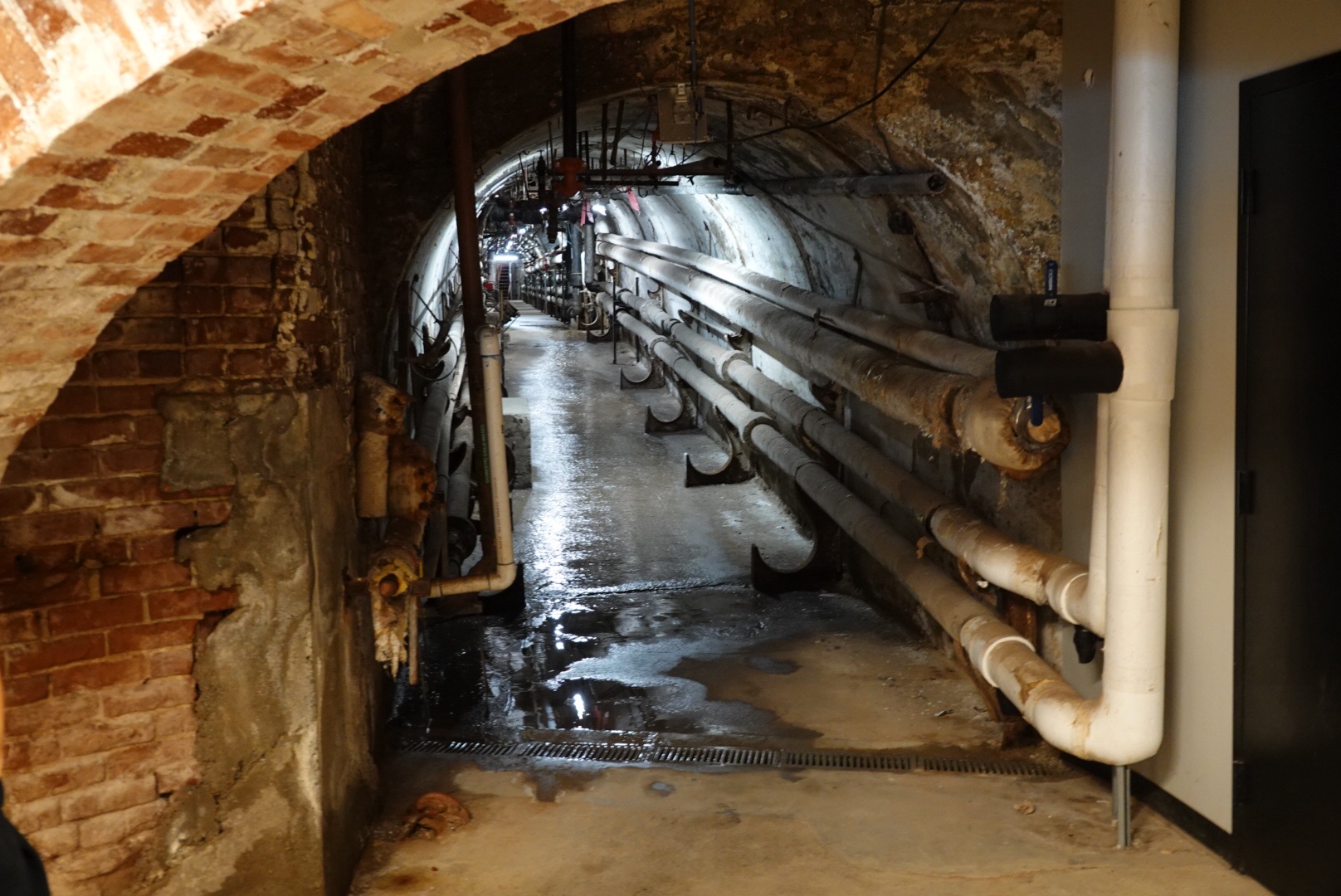
Our next stop on the tour was the Power Plant. Built in 1887 to power the hotel and the rest of Coronado, it was the largest Power Plant of its kind. It continued to provide power to all of Coronado until 1922. The first floor is open for tours; upstairs has been outfitted for private events.
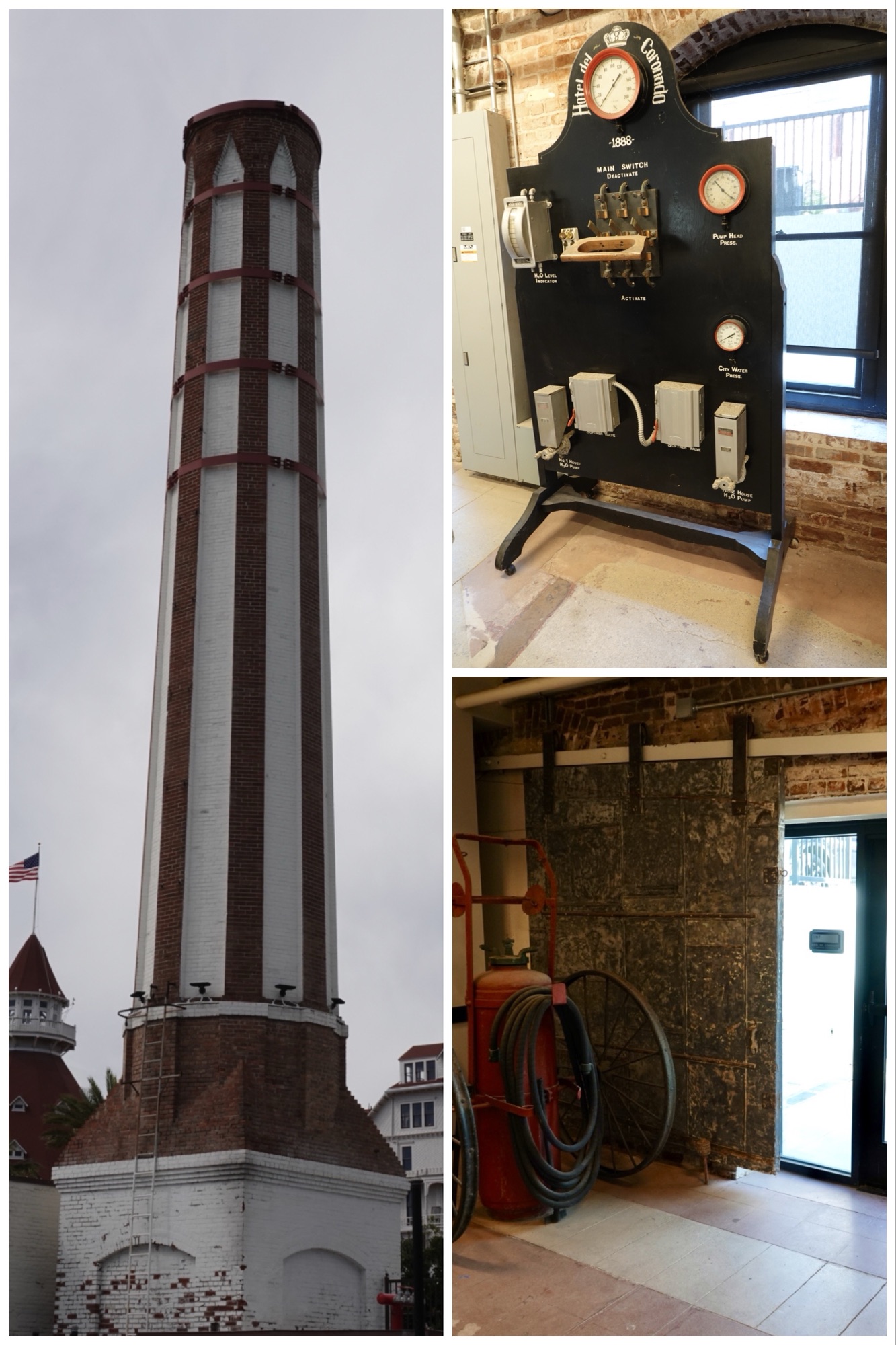
The Power Plant fire doors were interesting. They are made of pine, clad with metal, and are intentionally mounted on a slanted runner. The heavy door is held open by a sturdy rope. If the rope burns, the door is released and slides down to slam shut and seal the room. Smart!
Also on display in the Power Plant, although not originally located there, was one of three chandeliers from the hotel’s Crown dining room. The chandelier was designed by frequent guest L. Frank Baum (yes, the author of the Oz books), and is the only one of the originals that has survived.

It wasn’t on the tour, but Ted and I did walk past the house where L.Frank Baum’s lived for a few years, only a few blocks from the hotel. Other than a small Historic Register plaque on the private residence, which you can barely see (and definitely not read) from the road, there is only a witch’s face in the window to the left of the front door to give any hint that the house was his. I guess I’d hoped for witch’s shoes peeking out underneath! Betty did say that the house is part of an annual Coronado history walk.

Next was The Laundry, which is now an upscale smokehouse restaurant with a private dining room in the former “fluff and fold” room. The original drying racks are still in situ high above the dining tables. They were pulled down using ropes, the laundry hung on them, and then returned to full height where they moved along a track (think the moving rack in a dry cleaner’s) to air dry the hotel’s linens and guests’ clothing.

Then it was back outside to head into the hotel itself.

We entered through the door that would once have been only for men and married women. The stained glass above the door is one of only a very few originals. Betty explained that an owner post-Spreckels removed and destroyed much of the original stained glass in a misguided mission to modernize the hotel, and it was only thanks to old photographs that they were able to be recreated.

The hotel’s rotunda today is a picture of elegance, but that was not the case originally. Although the gorgeous woodwork, and the impressive patterned ceiling (created without the use of nails) are original, but the floor was only bordered with wood. The floor’s centre was tile, so that the male guests returning from their hunting and fishing amusements could simply drop their catch on the floor. The Chef would then come and arrange to either prepare the fish or game to order for that evening, or put it on ice for a subsequent dinner. You can imagine the mess. Betty showed us a picture of the rotunda from that era, complete with spittoons, which the hotel staff were instructed to empty – WEEKLY! No wonder women remained upstairs in the gallery.
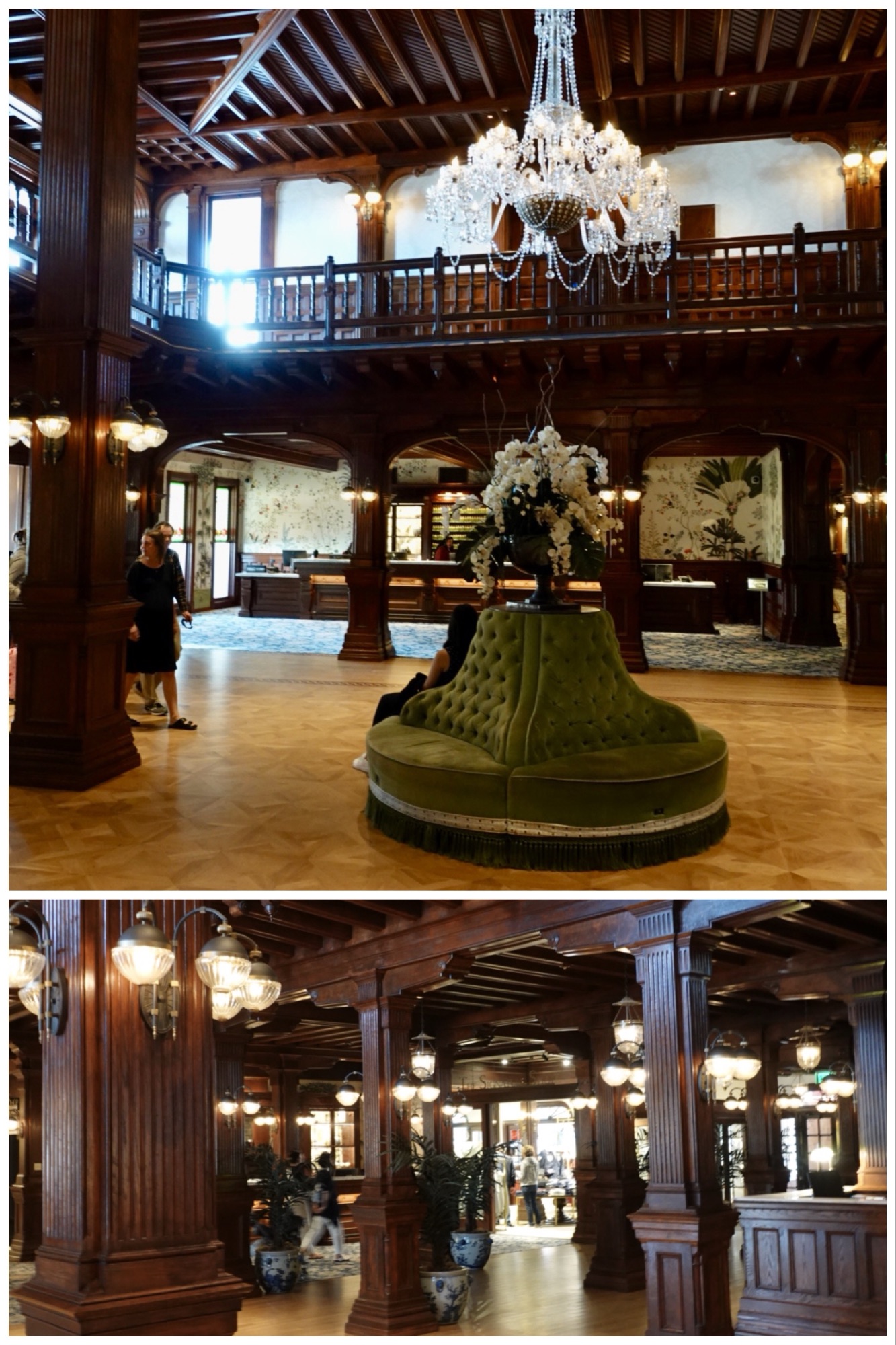
With all the restoration going on in the hotel, including the main dining room, our tour ended in the rotunda. All that was left was to go outside where we could admire the huge dragon tree, and hear a couple of anecdotes about arguably the hotel’s most famous guest: Marilyn Monroe.

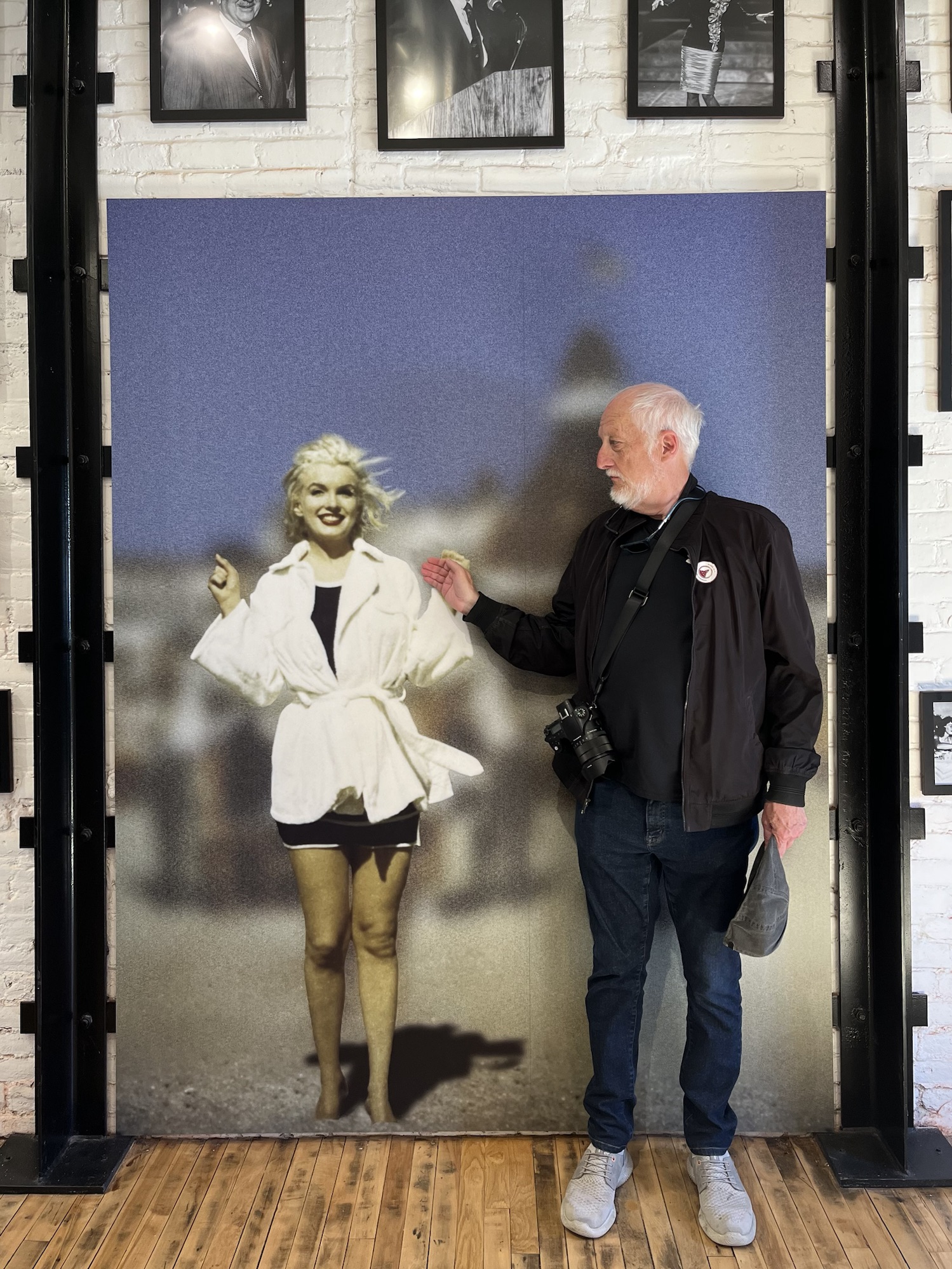
Apparently Michael Wilder had originally planned to film Some Like It Hot in Miami, but found it far TOO hot and humid in the summer filming months. When he relocated the exterior filming to the Del Coronado, legend has it that the irate Mayor of Miami called the Mayor of Coronado to accuse him of “stealing” the film from him. That same legend has Coronado’s Mayor replying “some like it hot, but apparently not THAT hot”.
Ted made sure to cozy up to the poster of Marilyn on Coronado Beach.
We took time on our own for a short walk on the beach, and to admire the waterfront side of the hotel. One of the stranger facts Betty had shared was that the hotel originally had no ocean-facing rooms, because the Victorian sensibility preferred rooms overlooking gardens. The only things overlooking the water were public galleries with chairs on them.

FOOD NOTE: Before taking our tour, we had lunch at the Coronado Tavern, a couple of blocks from the hotel. They’ve been voted best burger in Coronado several years running, and their signature burger with bacon mixed into the beef, then topped with aged white cheddar and blistered shishito peppers was delicious – but their bartender’s take on a Paloma made with tequila, Giffard Pamplemousse, fresh (squeezed at the bar!) grapefruit juice, and lime was even better.

(The fries were crisp and perfect too)
All in all, even though the tour may not have offered up as many behind-the-scenes secrets as I might have hoped, it was a gorgeous sunny day at an iconic landmark. Another wonderful day in our San Diego experience.
 Rose and Ted’s Excellent Adventure