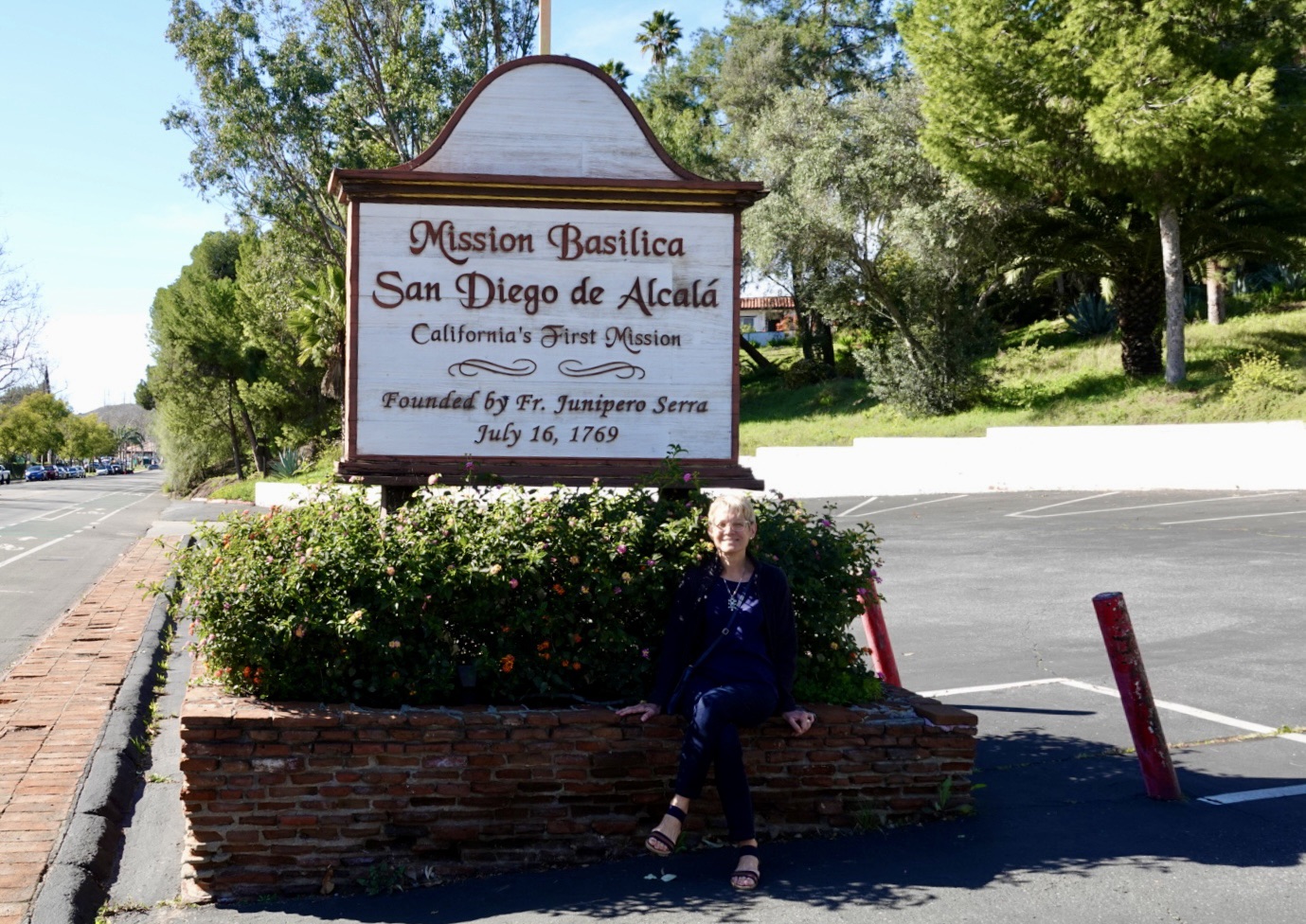
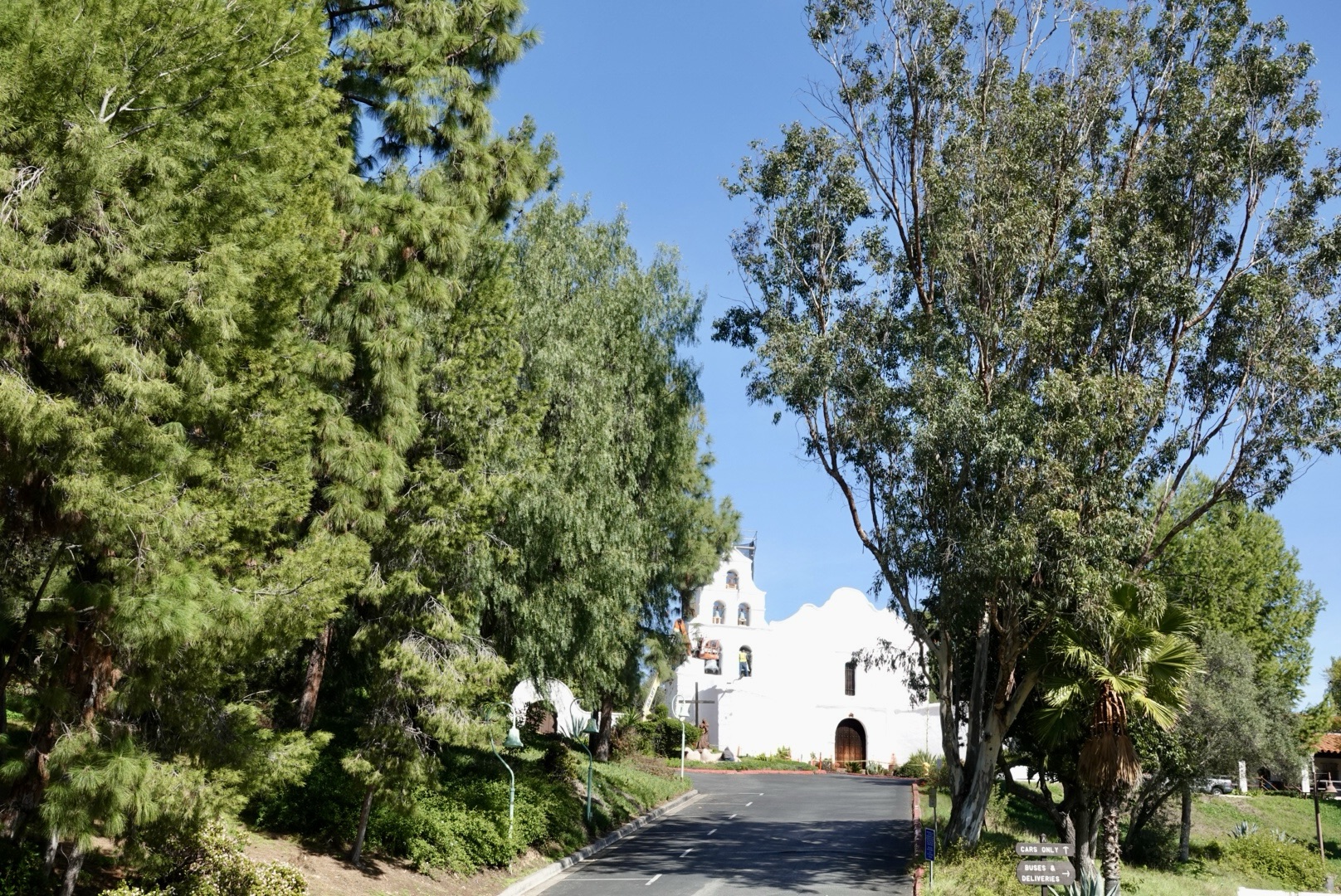
The Mission San Diego de Alcalá was the 1st California mission, founded in 1769, and is also the southernmost in Alta California, the area that eventually became part of the U.S. Although the current building only dates to 1931, it is the repository of the mission’s history.
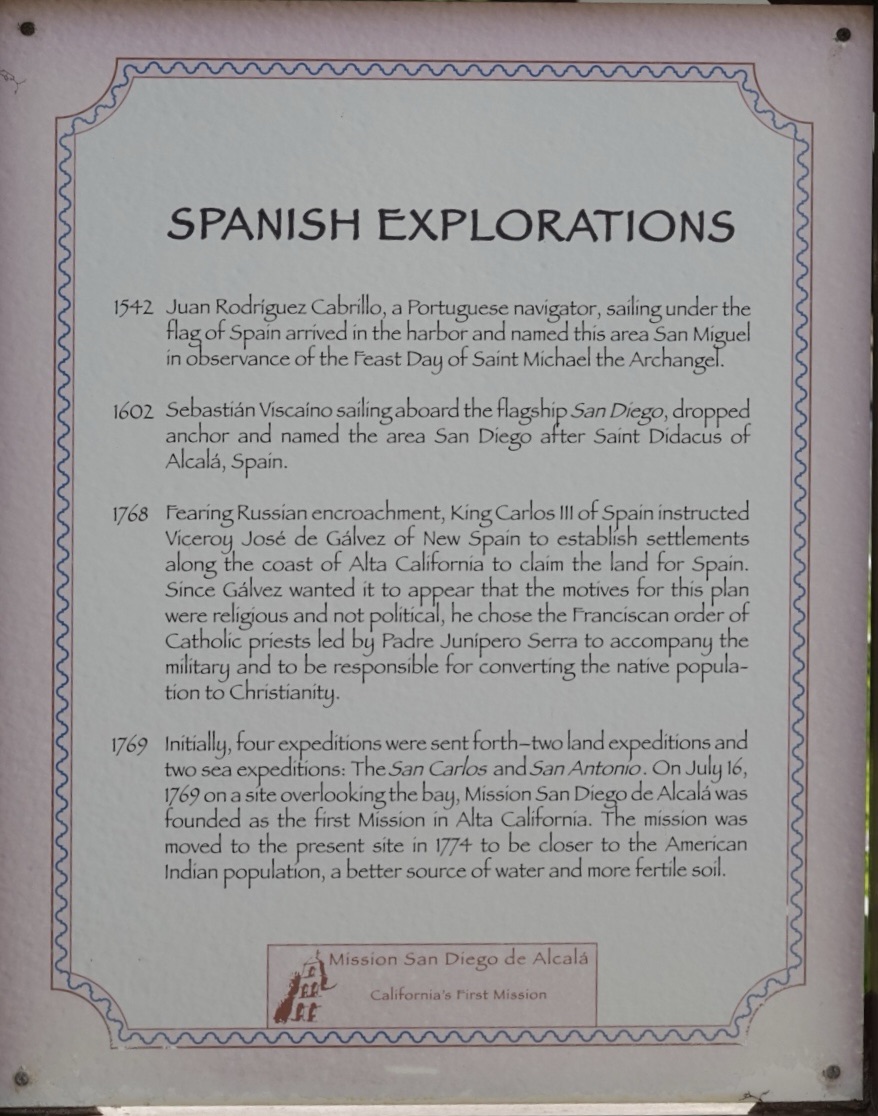
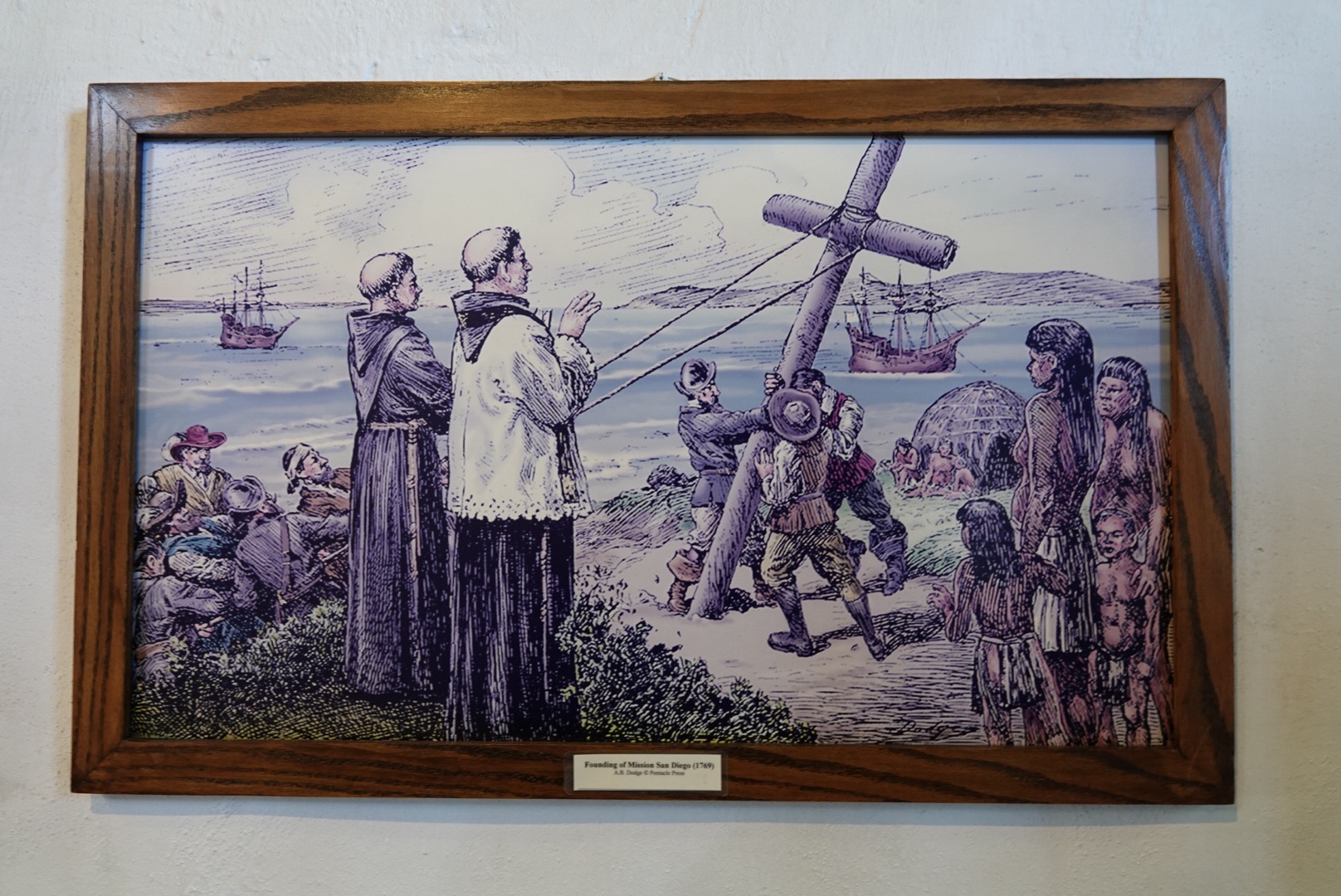
Surviving records show only 16 baptisms of Tipai-Ipai natives in 1771, and those baptized continued to live in their own villages since the mission did not have enough food to support them. That brought to mind the Jesuit compound at Ste Marie Among the Hurons in Ontario, (dating to the 1600s) where the converted Huron were largely responsible for teaching the Jesuit clerics what crops would grow. Episode 133 Huron and Wendat. In San Diego, it was the natives who were “taught” farming techniques that allowed crops already familiar to the Franciscans to be grown. There didn’t seem to be much question that the indigenous people weren’t looking for new crops; they were already self-sufficient between foraging and hunting in the year-round mild climate, however records show that the Franciscans thought them “slothful”.
The mission’s peak years were 1797-1831. At the highest point, there were 1829 “neophytes” living there, and 30,000 animals (cattle and sheep), up from just 236 animals in 1773 (the first year of surviving records).
In 1775, the mission was destroyed by an Indian attack. There is a large white cross beside the church that marks the spot where Padre Luis Jayme became the first Catholic martyr of Alta California. Whether the Indians were intent simply on pillaging the mission, or on destruction, and whether he was “brutally murdered while uttering the cry “Love God, my children”” as is inscribed on the monument, or died accidentally in the blaze that consumed the wooden pole and dried reed mission, may be a matter of perspective. The usual expression is that history is written by the victors, but in the case of 1775, history was written – literally – by those capable of writing.
The first “real” church was built in 1813, although there had been 3 temporary structures before that. In 1834, the mission was secularized, and the church fairly quickly fell into ruin. During the years after the Mexican-American War, the mission site was used by the USArmy. In 1862, a proclamation signed by President Abraham Lincoln returned the site to the Catholic Church, but by the time of restoration in 1931, only the church façade and arcade remained standing.
The 46 foot Campanario (bell wall) is the mission’s most striking (no pun intended) feature. The bell wall is currently being restored, so we were unable to get close to the bells, or hear them.


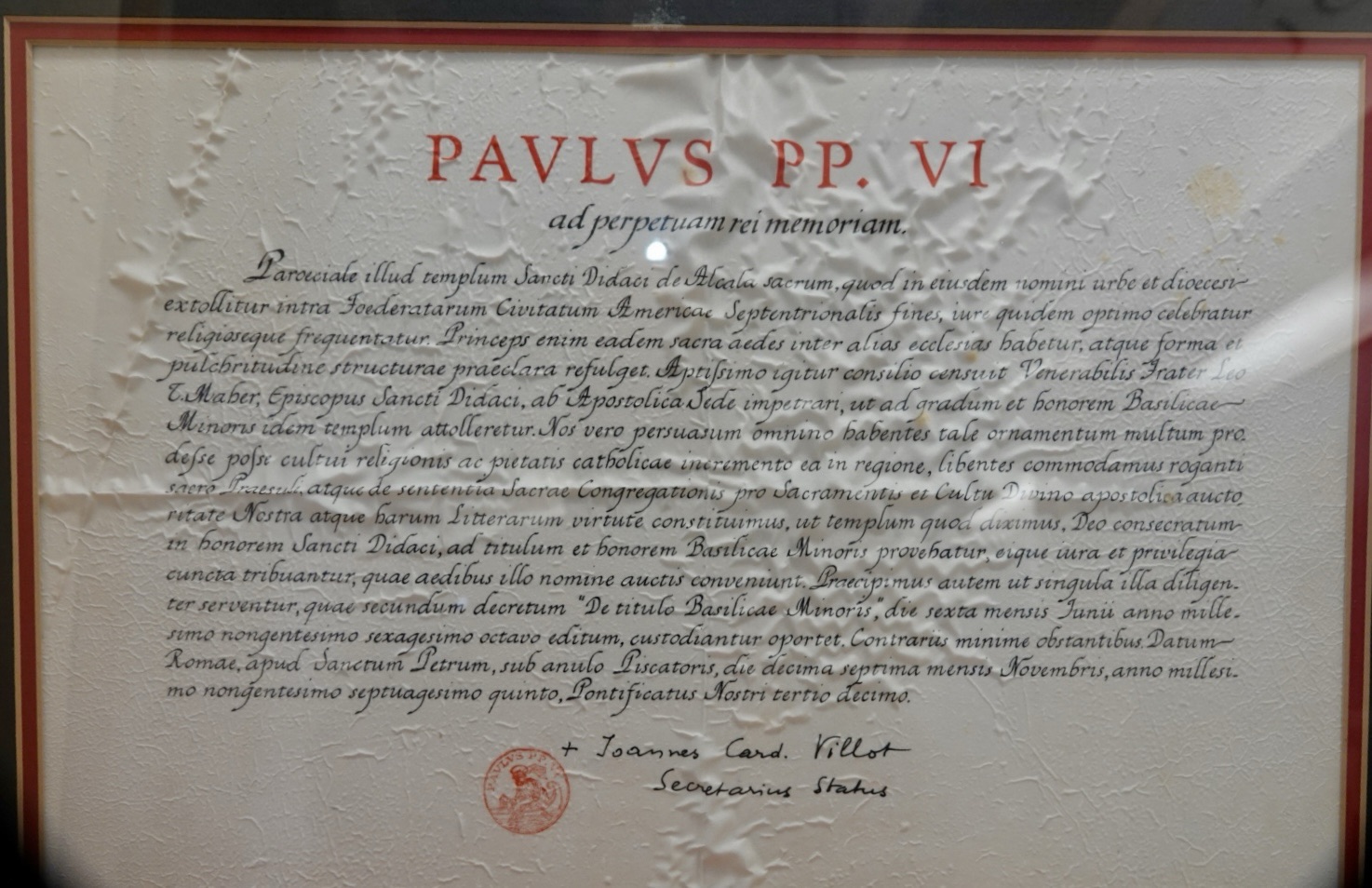
The church, named for St. Didacus (aka Diego) of Alcalá, a fifteenth century Spanish Franciscan, has held the designation of Minor Basilica since a 1976 edict by Pope Paul VI. That document is on display in the museum.
Touring the mission is only possible between 9 and 4 daily, since it is an active Roman Catholic Church of the diocese of San Diego, and holds masses daily at 7 a.m. and 5 p.m.

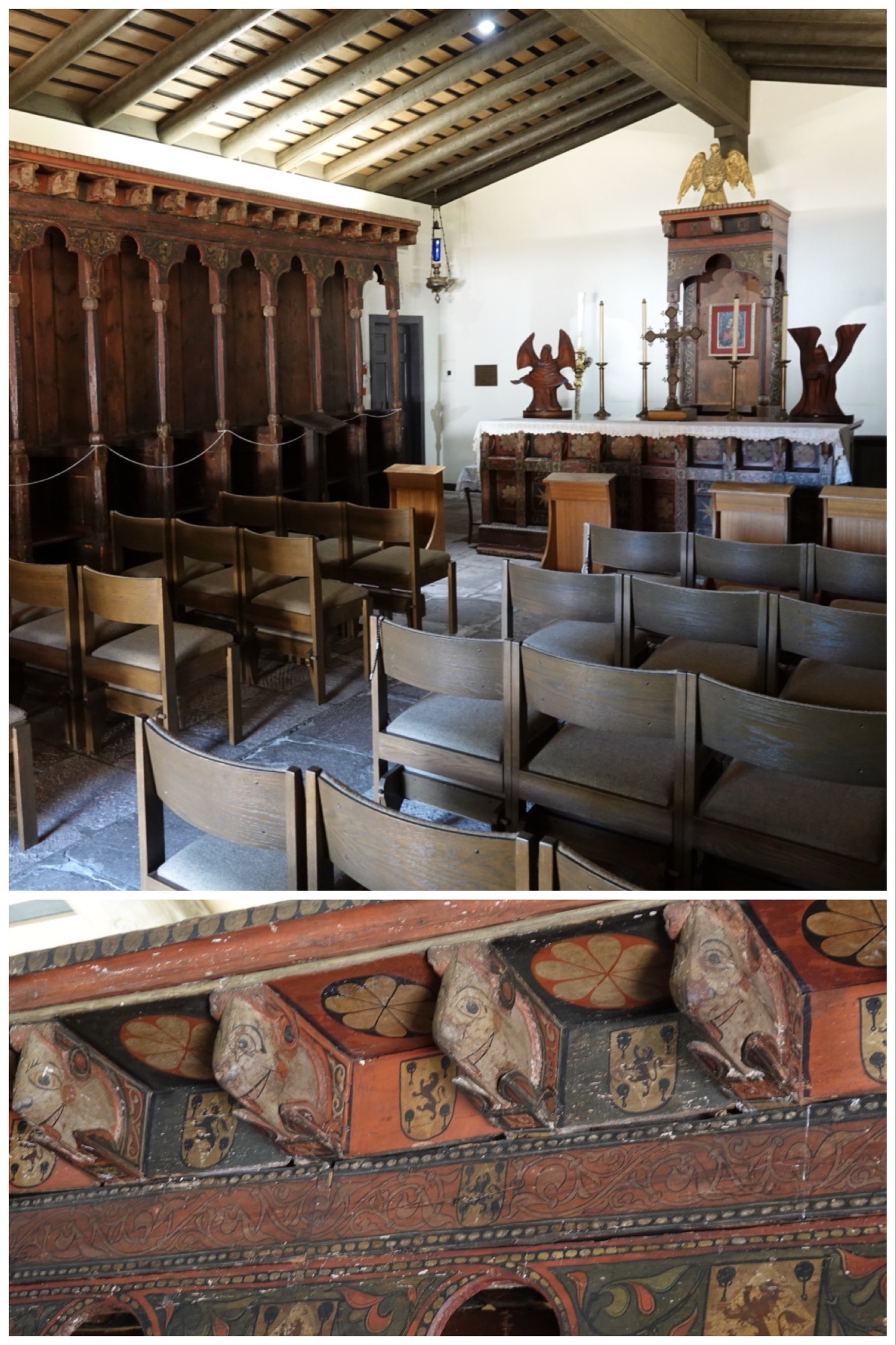
The interior is quite plain, as are most mission churches, but the few paintings, statues, and symbols decorating it are all really interesting. Some are new since the 1931 build, some date back to the 1813 structure, and a few are even mid 18th century.

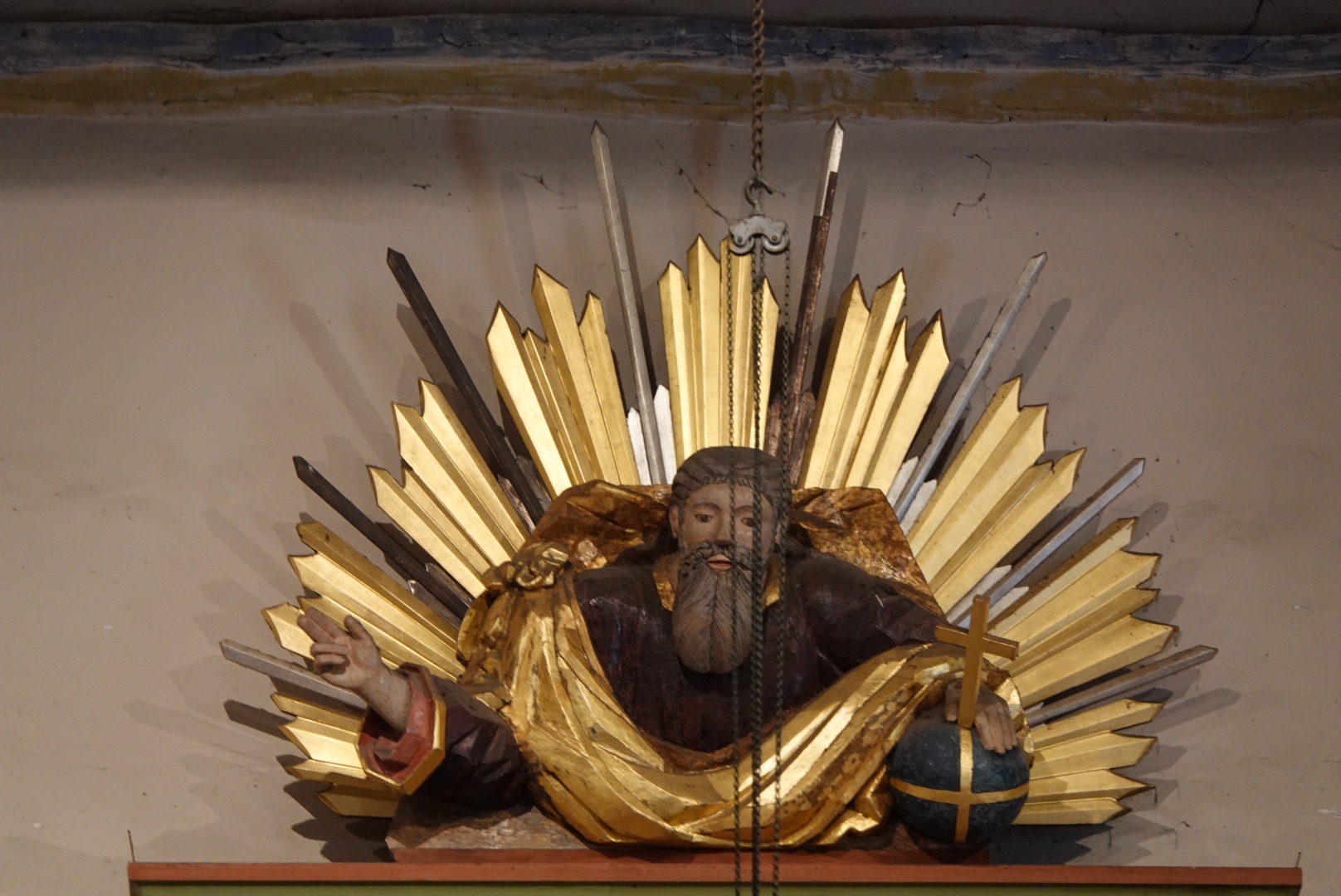
In modern Catholic churches, only Christ is depicted.
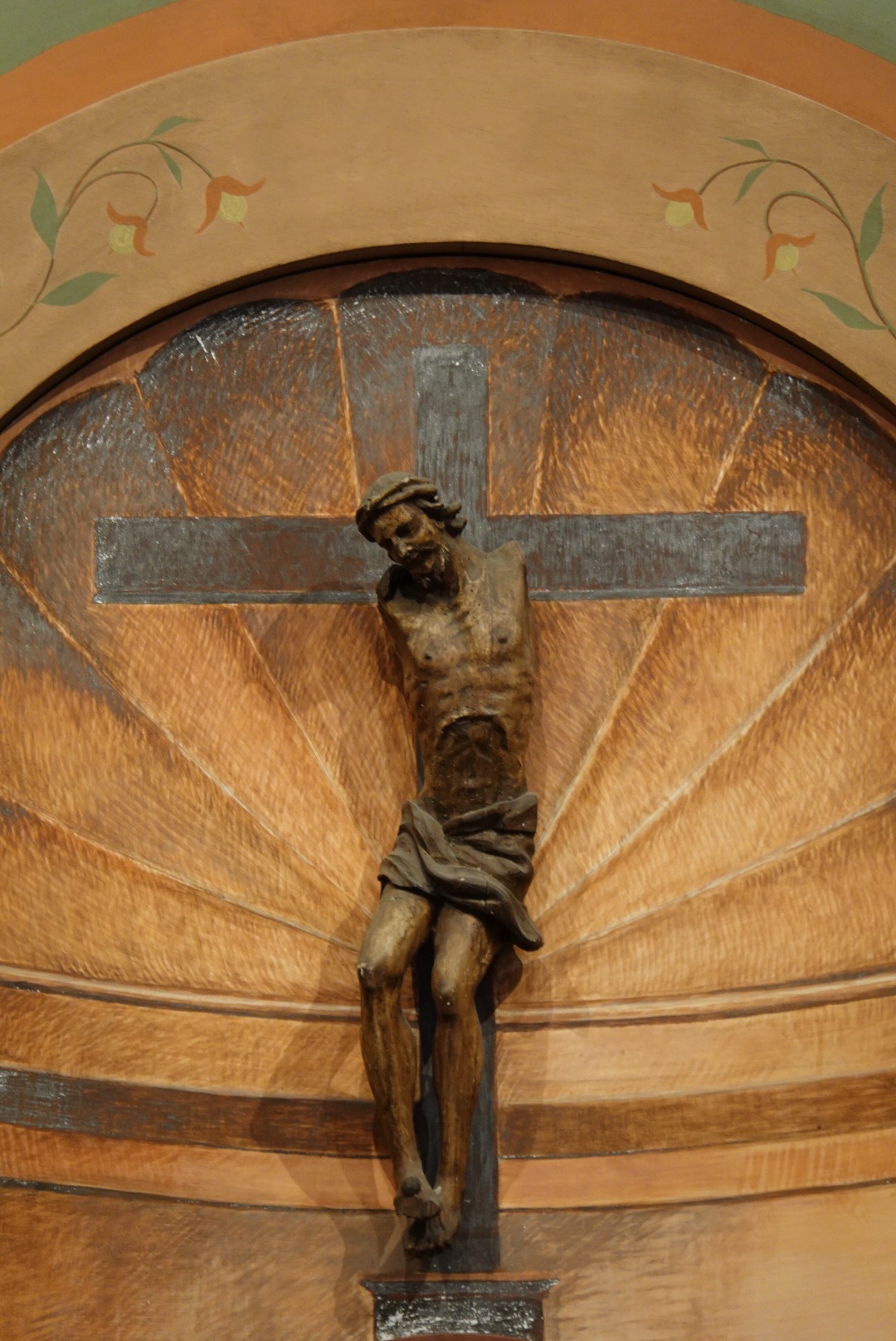


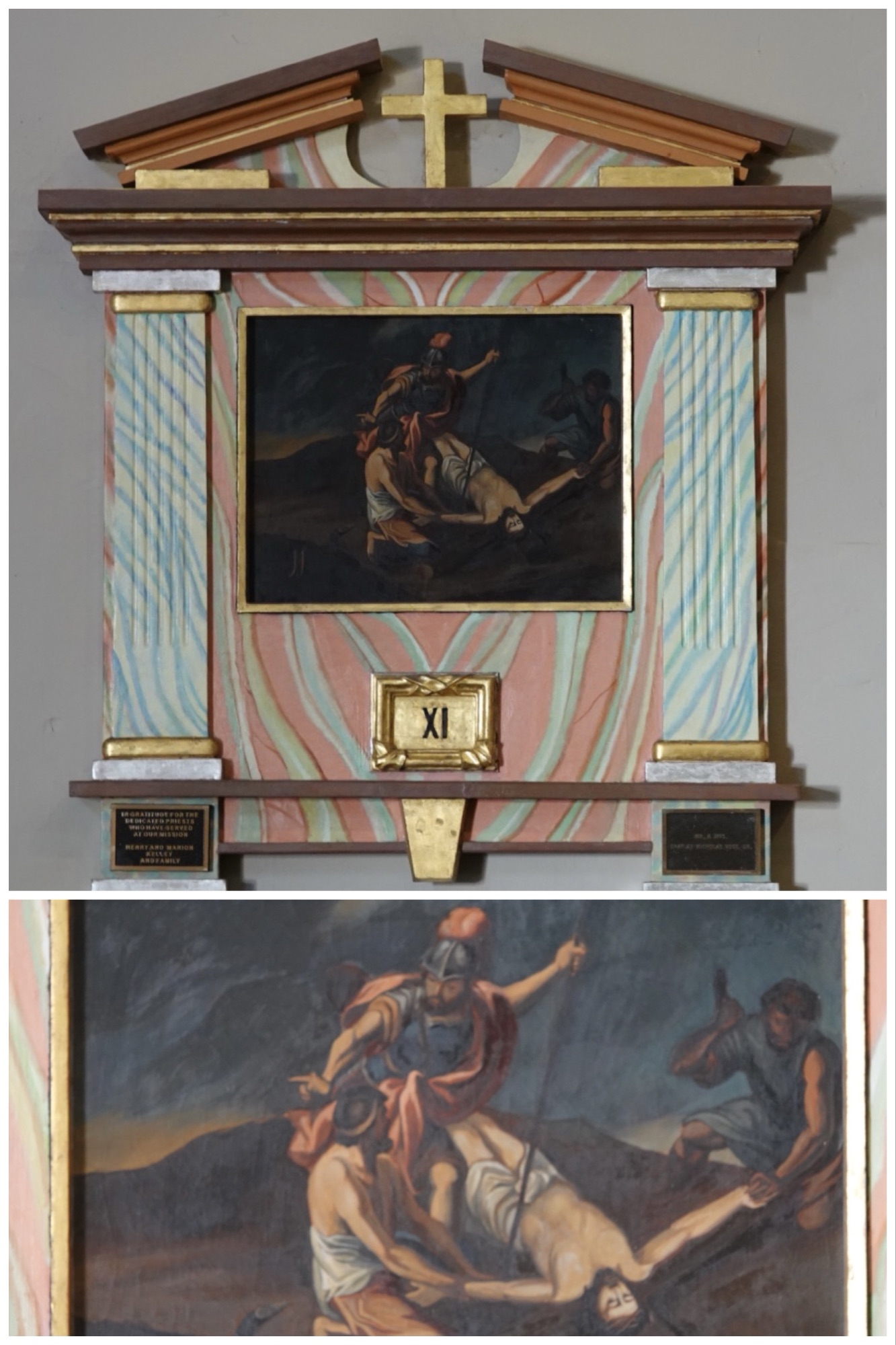
Not only the altar area, but also the side walls of the church had some interesting pieces. The 14 Stations of the Cross looked really old, but that is by design. They are 20th century copies of the originals that are at Mission San Luis Rey.
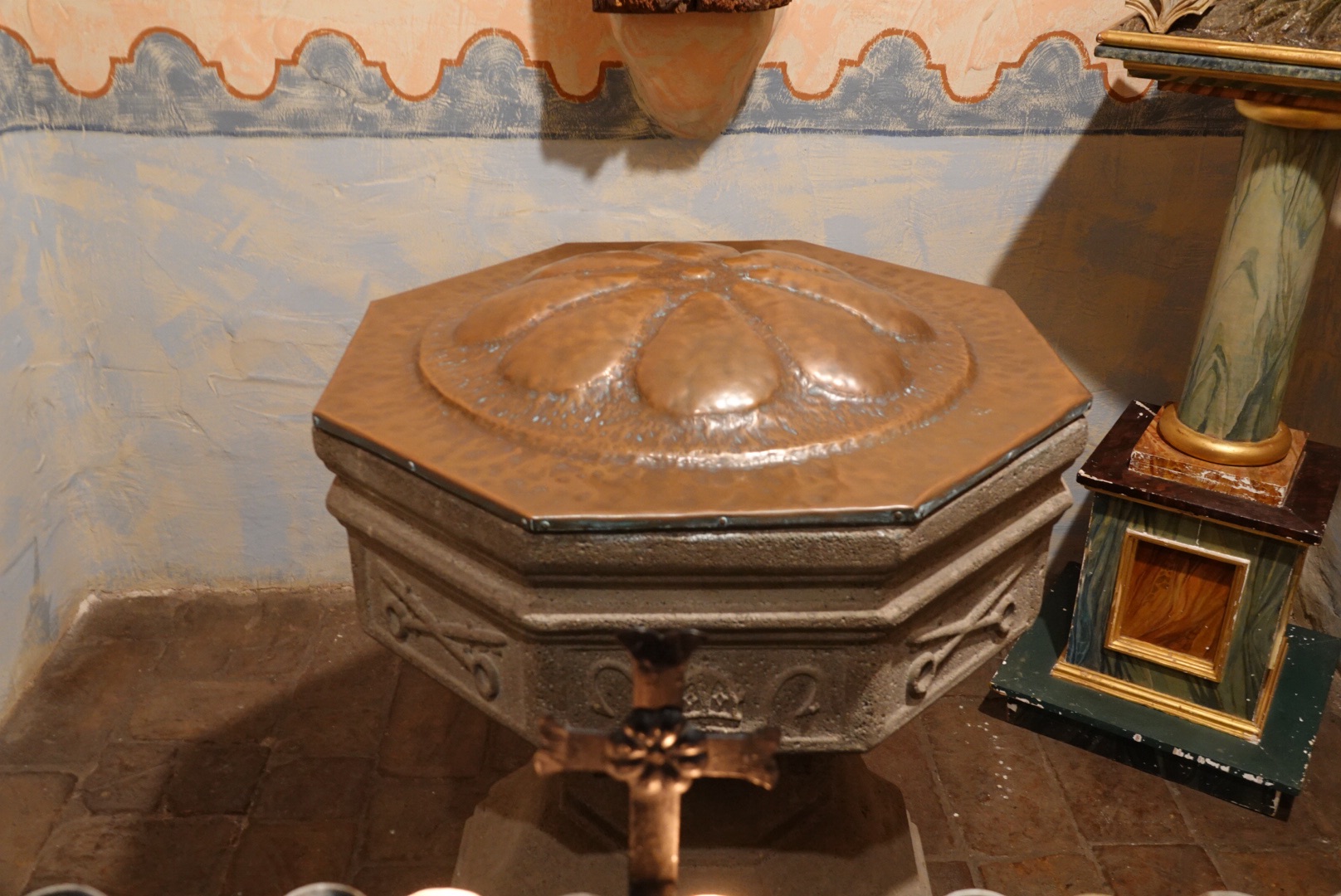
The baptismal font in the church is a replica of the one in which Father Junípero Serra was baptized in 1713 in Petra on the island of Majorca. Serra was the First Founding Father President and founder of the California missions.
In the courtyard outside the church is a meditation garden with some lovely statuary, including St Francis of Assisi above a small clear pool, and St Joseph.


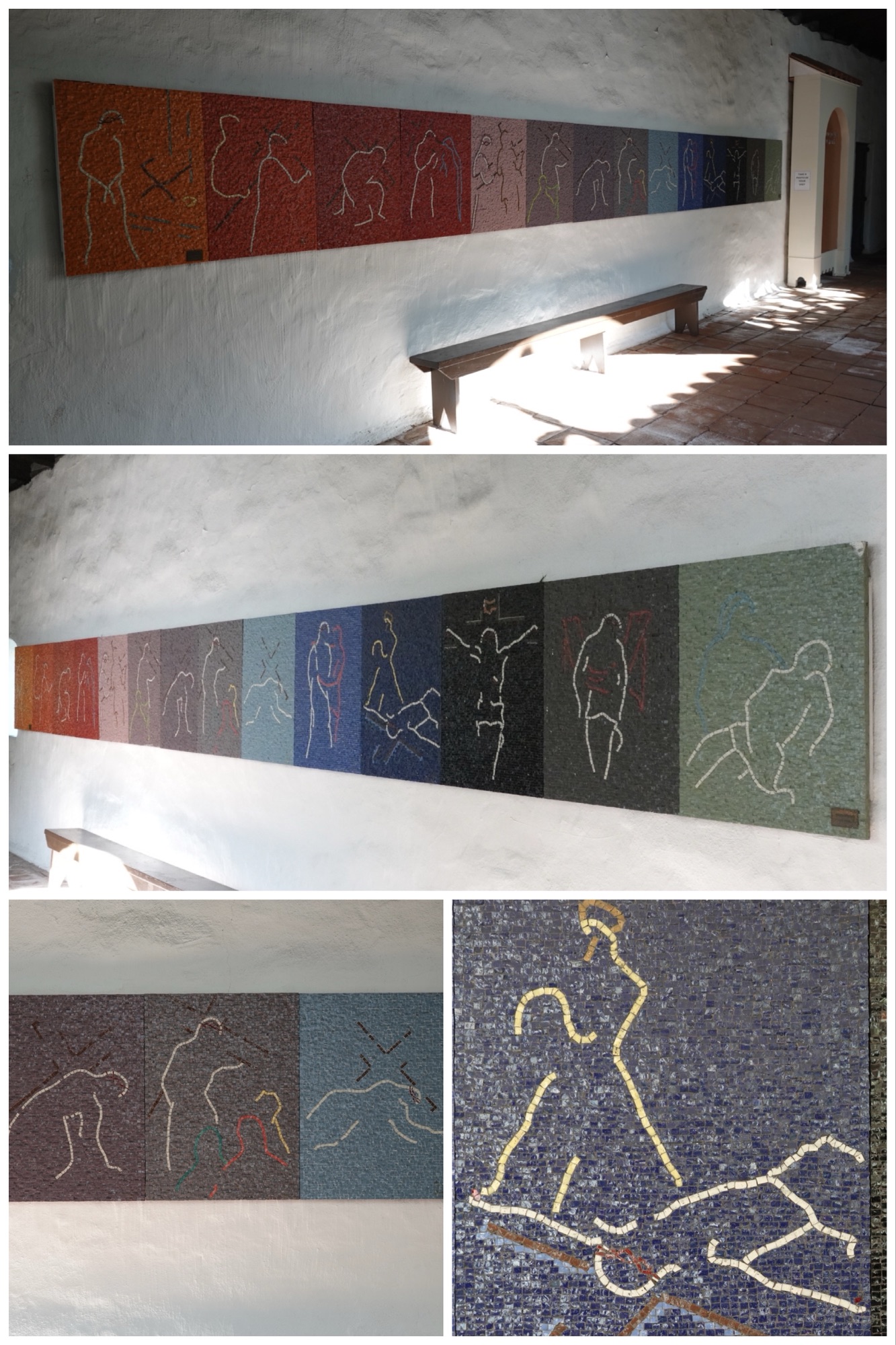
From the garden we walked through a passageway leading to the small mission museum. In addition to the expected traditional statuary, the wall is decorated with a quite beautiful but very modern mosaic depiction of the Stations of the Cross.

When we were in San Antonio, Ted and I toured all 5 of the Spanish colonial missions. At the mission today we met a couple from Merced California, who were hoping to visit all of the California missions. This display in the museum showed a map and models of all of them. It would be quite a road trip!

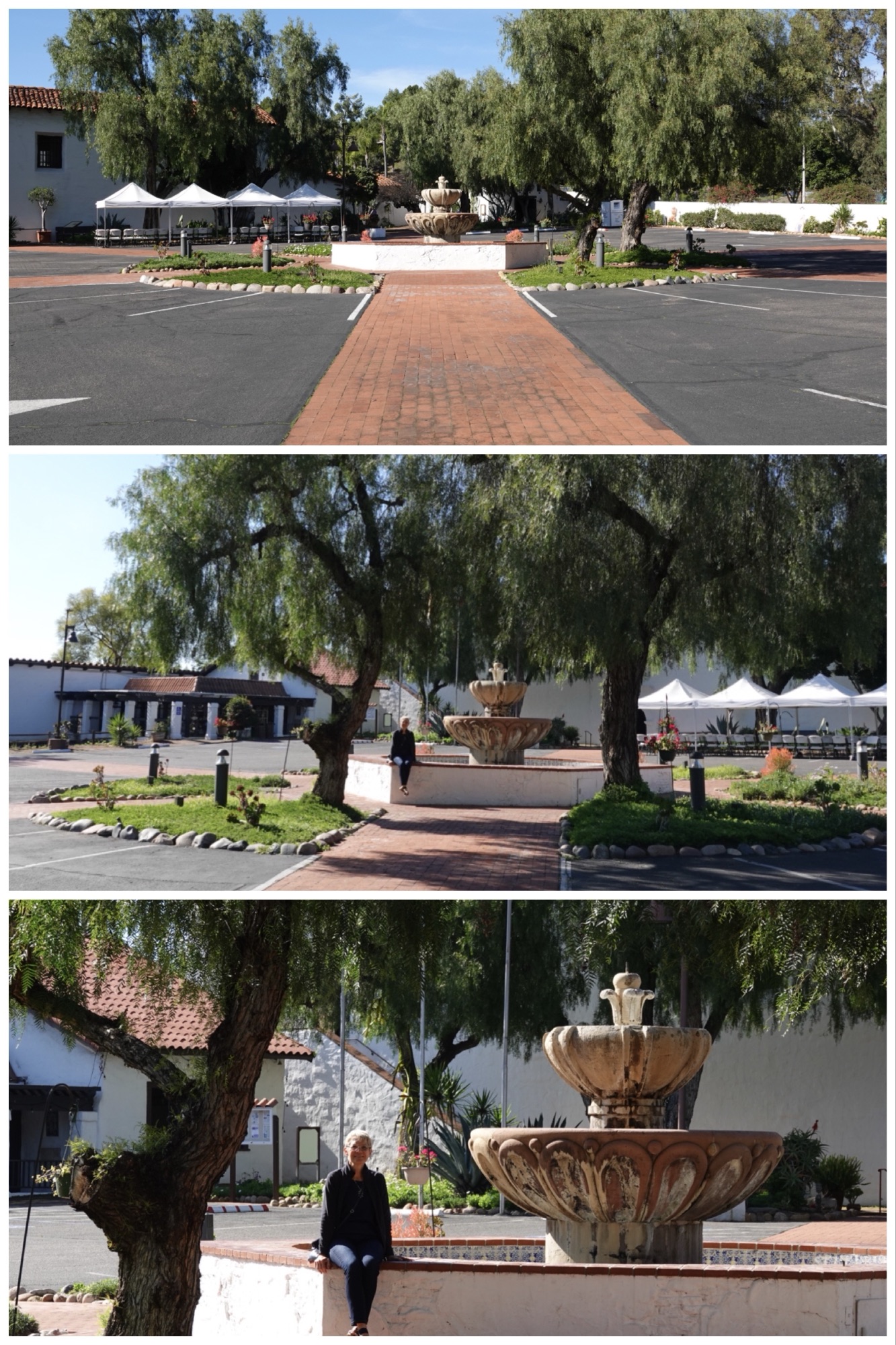
Our last stop was in the second courtyard, at the fountain and the inactive archeological site excavating the convento (the friars’ residence).
It was an interesting place, but I couldn’t help comparing it to the magnificent Mission San Javier Del Bac just outside Tucson Arizona, which meant that naturally I had to go back and relive that visit. Episode 57 – Arizona Mission
Tomorrow we take a break, board the Blue Line trolley, and head to the big outlet mall in San Ysidro at the Mexican border to do some window shopping.
 Rose and Ted’s Excellent Adventure