How would you feel about children playing above your bones someday? I think I’d be quite pleased to be close to laughter and joy, but that might not be how everyone sees it.
On our first day here, Ted and I took a walk around the neighbourhood and arrived at a beautiful green space, complete with very busy children’s playground, beside (Ulysses S) Grant Elementary School. The green space is called Pioneer Park, and boasts huge trees, green lawns, walking paths, and – from its highest vantage point – a view all the way out to the harbour.

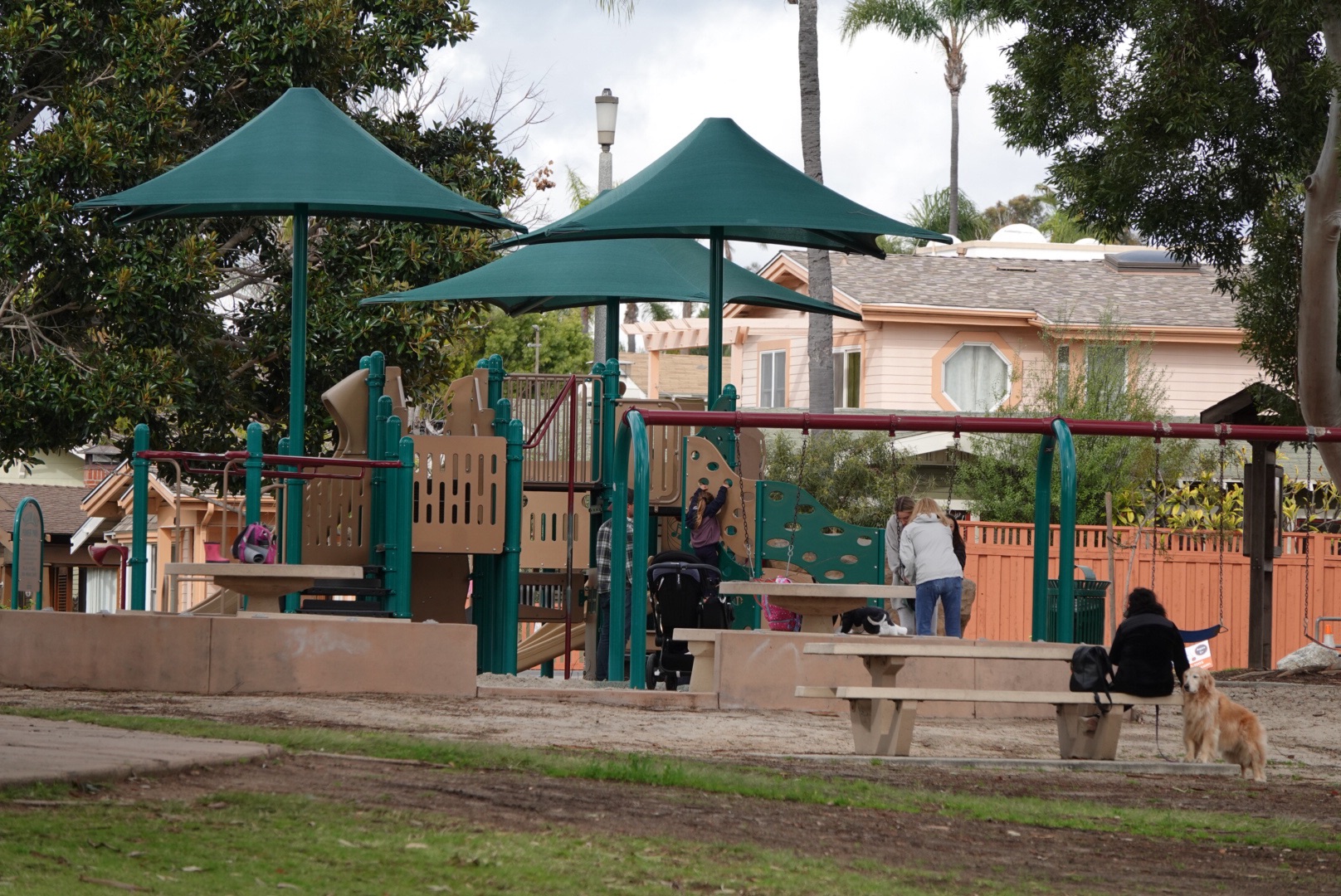
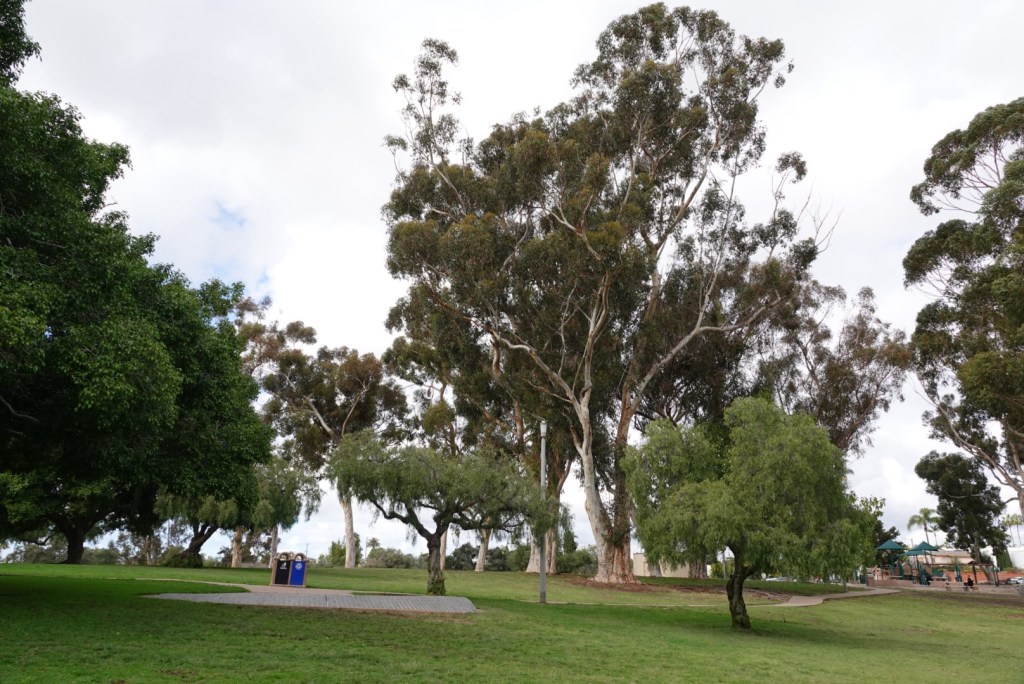

At one side of the park, not far from the playground, there was a small collection of tombstones and monuments, all placed unusually close together. Since we’re always interested in what we can learn from memorials, we naturally had to go look more closely.
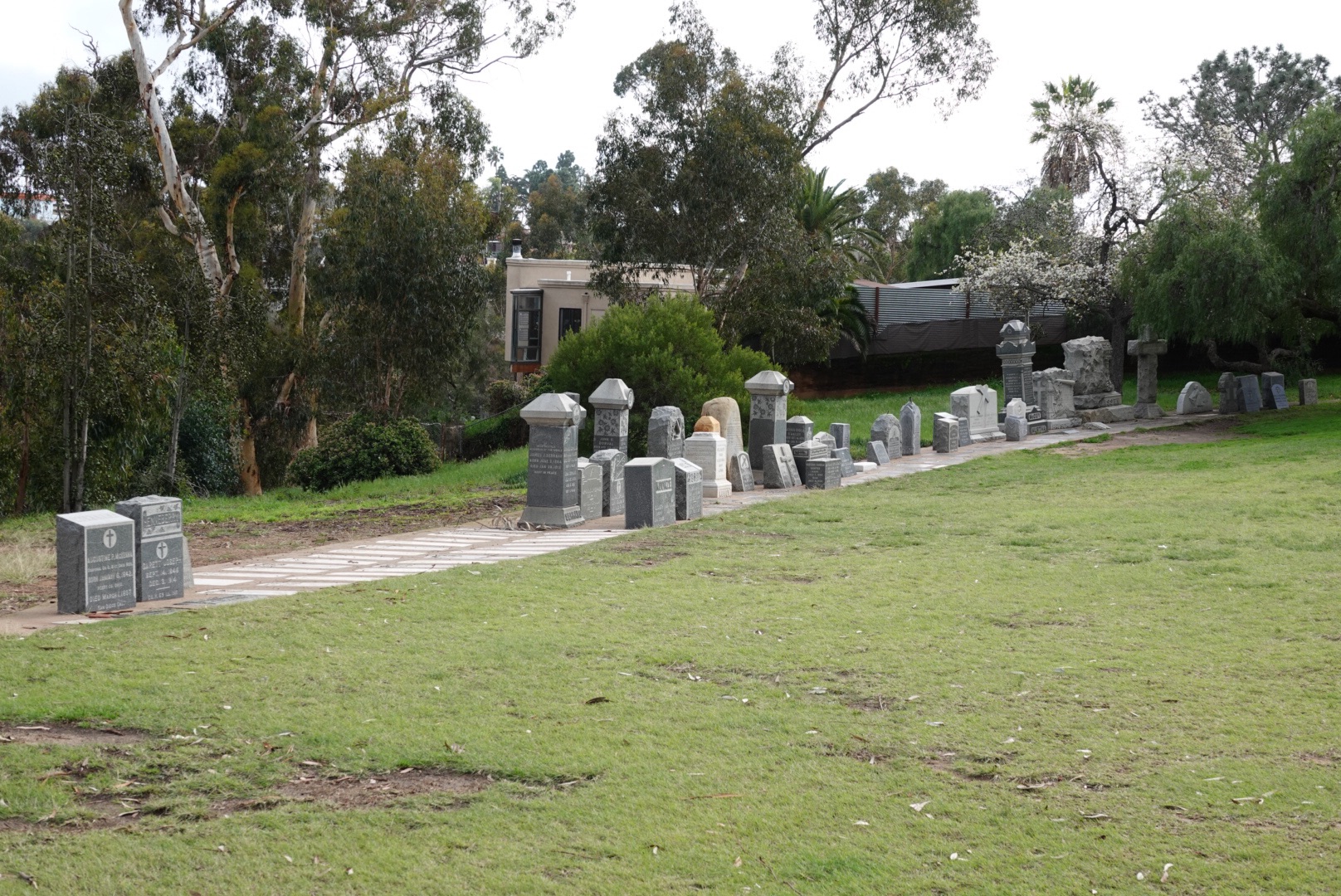
Several of the stones were laid flat, and had names, ranks, and dates related to the Mexican-American War in the mid 1800s, but some of the others were more recent.
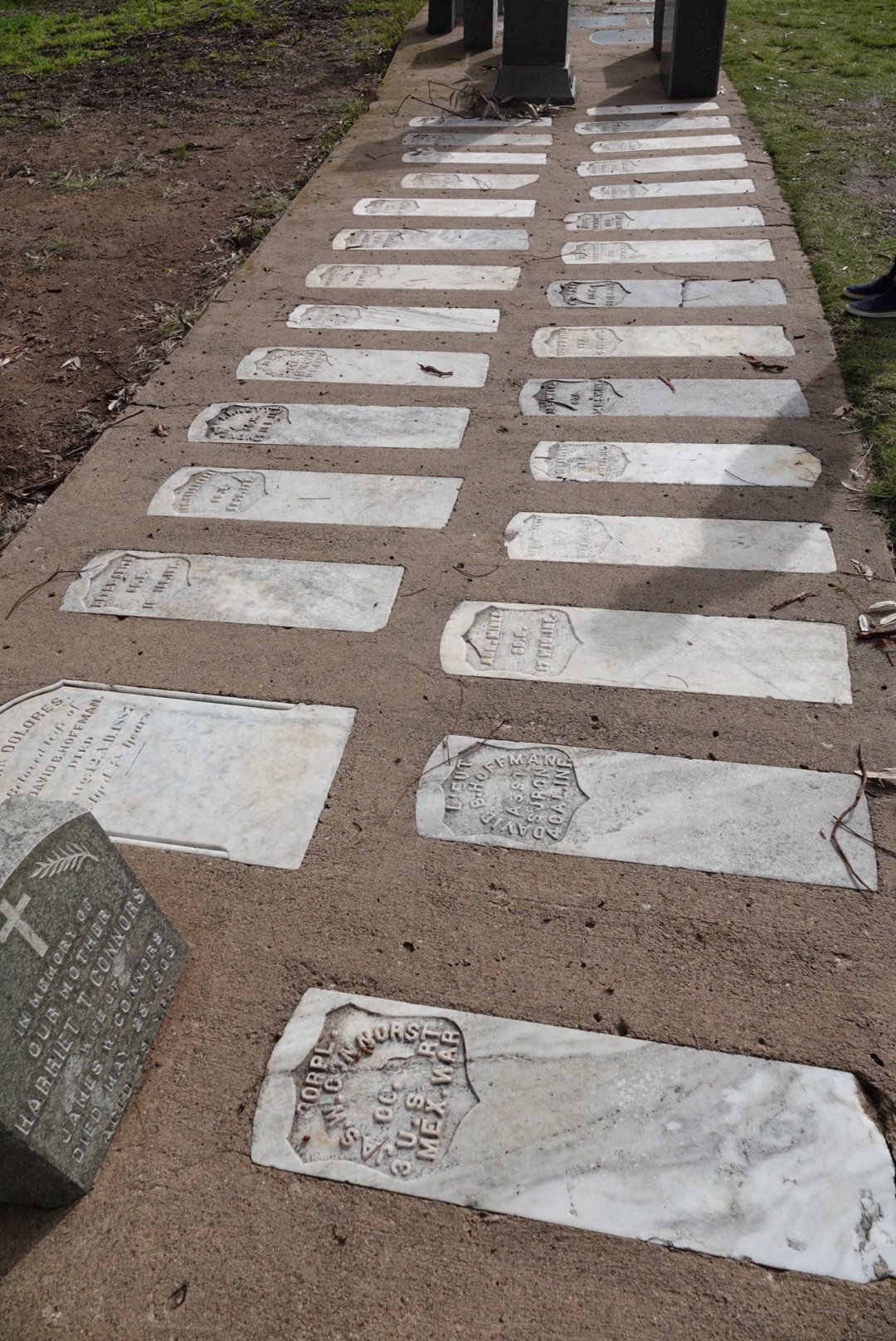
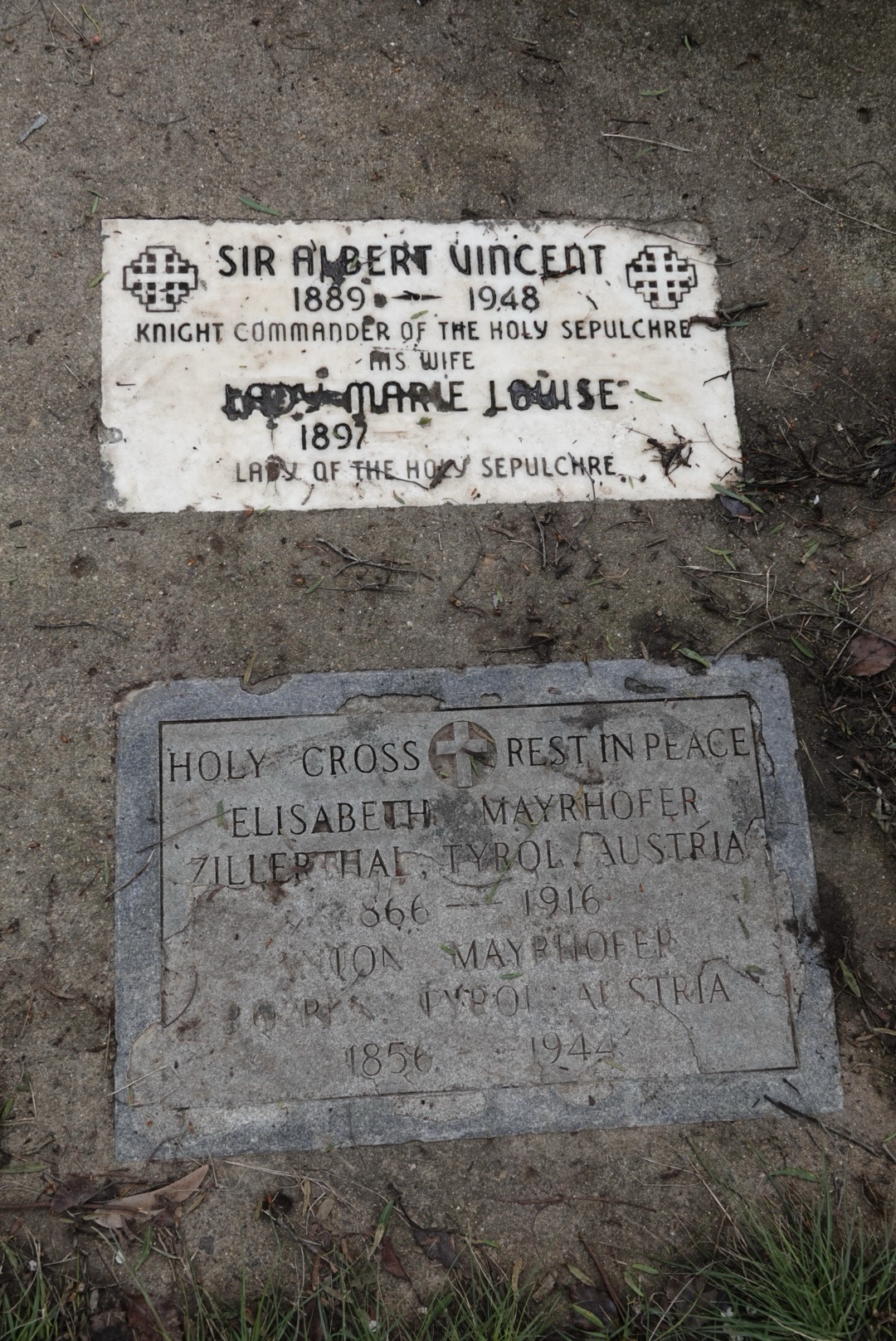
The newest we saw were for Sir Albert Vincent who died in 1948, and Elisabeth Mayrhofer, an Austrian immigrant who died in 1944. That made me curious, because I’d thought that most North American cemeteries had 99 year leases on burial plots, so it seemed especially odd for these graves to have been disturbed.
It also made Ted curious, so we headed to Google, and then returned to the park for another visit.
It turns out that the story of these few headstones, and what was once Calvary Cemetery, is related to over 4000 graves located right under our feet. After years of neglect, the crumbling headstones were simply dumped into a ditch and the land turned into a community park – leaving all the bodies interred but now in unmarked graves!
From sandiegohistory.org “Established around 1876 as a Catholic cemetery by Father Antonio Ubach, Calvary Cemetery in San Diego’s Mission Hills community was used extensively from 1880 to 1919. After the last burial in 1960, it fell into disrepair and a city resolution converted the cemetery into Calvary Memorial Pioneer Park in 1970. Of the more than 600 gravestones and monuments that remained in the cemetery, 142 were preserved in a section of the park while the others were removed to the city’s Mount Hope Cemetery.”


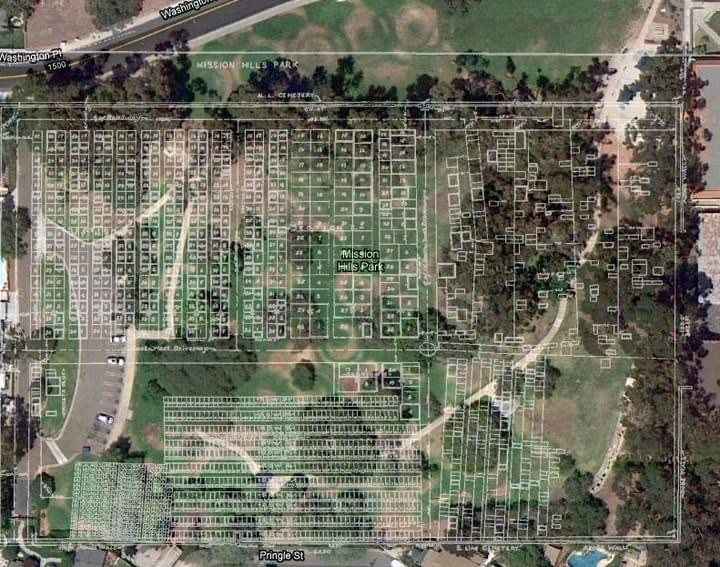
There is a layout of the cemetery, as it existed in the 1940s, that can be superimposed onto the existing park. That map (copied below) and much more of the story can be found here: https://hiddensandiego.com/things-to-do/places/pioneer-park
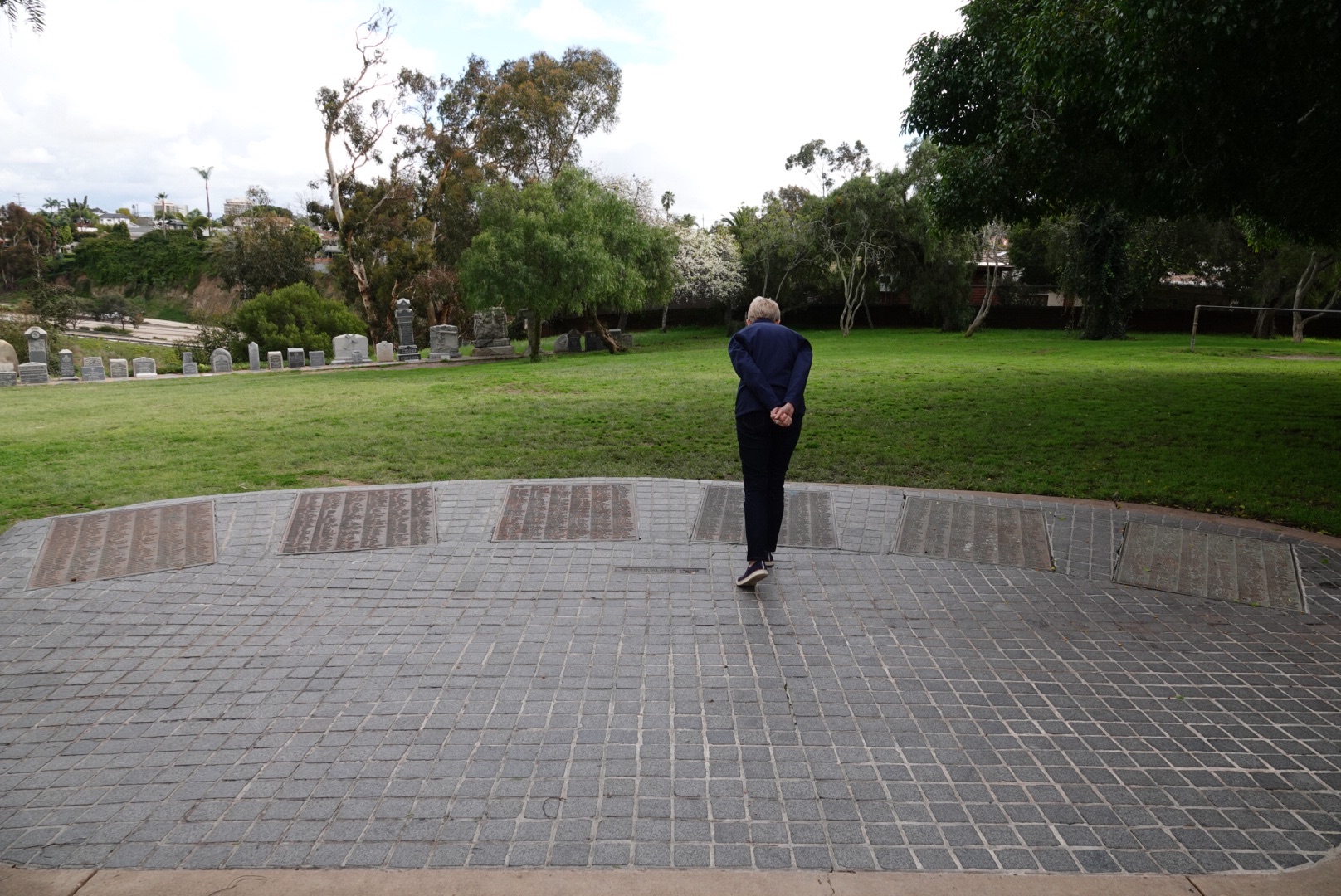
On a tiled mound in the park is a memorial marker, and brass plaques listing the names of all those who remain invisible but nonetheless here.

It’s a strange feeling knowing the park is atop a graveyard, and yet perhaps Irishman James McCoy’s family monument gives us pause for thought.
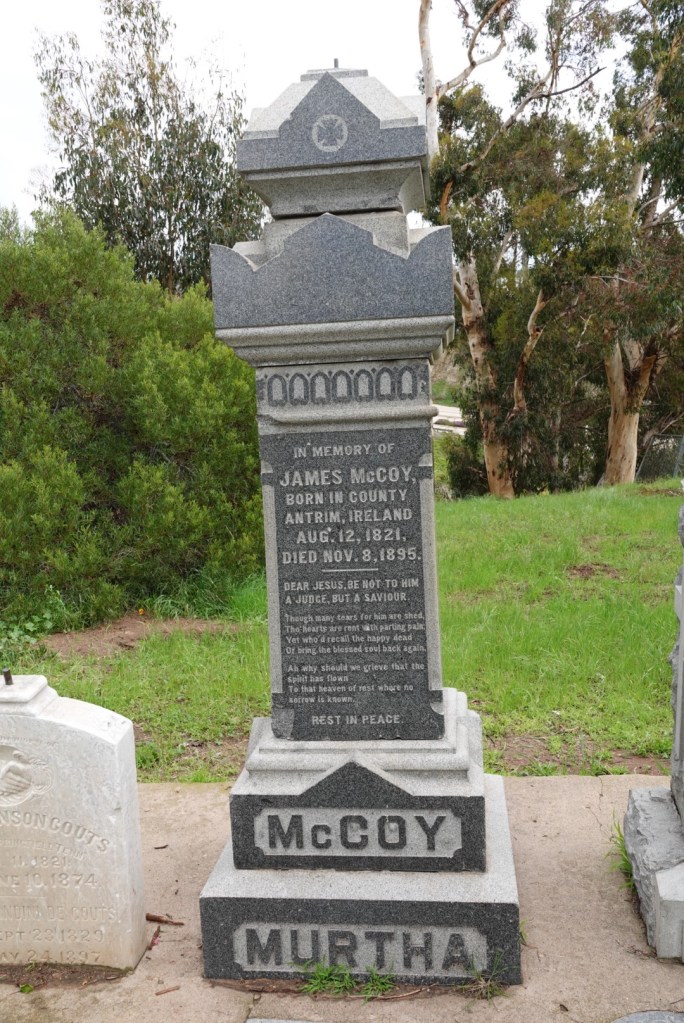
Though many tears for him are shed,
Tho’ hearts are rent with parting pain,
Yet who’d recall the happy dead
Or bring the blessed soul back again.

Ah why should we grieve that the spirit has flown
To that heaven of rest where no sorrow is known.
If the spirits have indeed flown, then why preserve sorrow here? I, for one, would be happy to know that joy is all around me.
 Rose and Ted’s Excellent Adventure
I too would be happy to know that joy is all around me!
LikeLiked by 1 person
Thank you – this was fascinating and thought provoking. I wish all cemeteries could be repurposed this way. I remember especially in Washington DC and New Orleans being shocked by the amount of prime real estate given over to the dead — especially in poor neighborhoods where kids could really use a place to play.
LikeLiked by 1 person
Me, too !!!!
<
div dir=”ltr”>
<
blockquote type=”cite”>
LikeLike