Our monthly transit passes are now active, so we can venture further afield, although today we just returned to Old Town for a bit more exploration. Because it’s Saturday, we didn’t want to head to the zoo or more popular tourist sites and deal with weekend crowds.
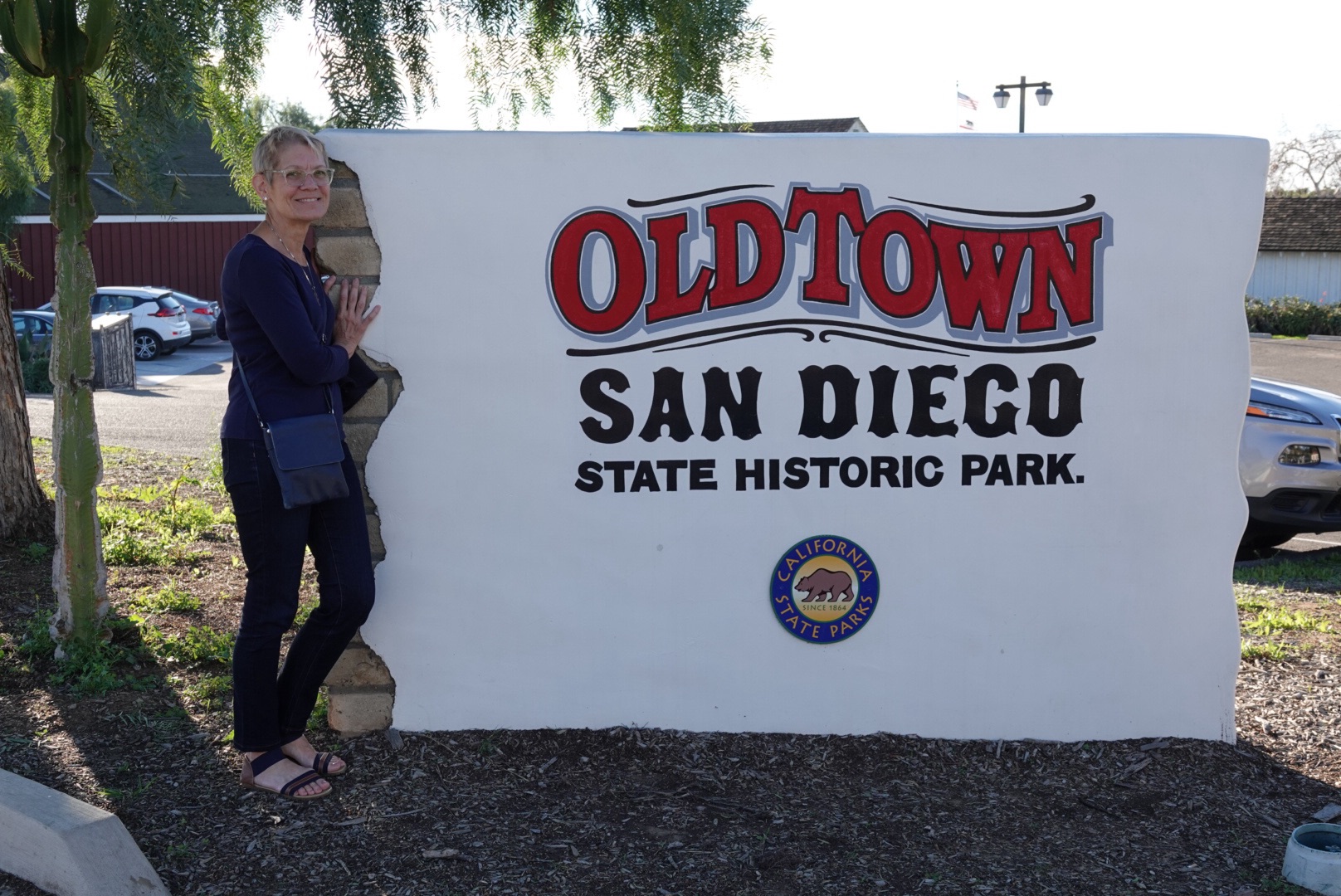
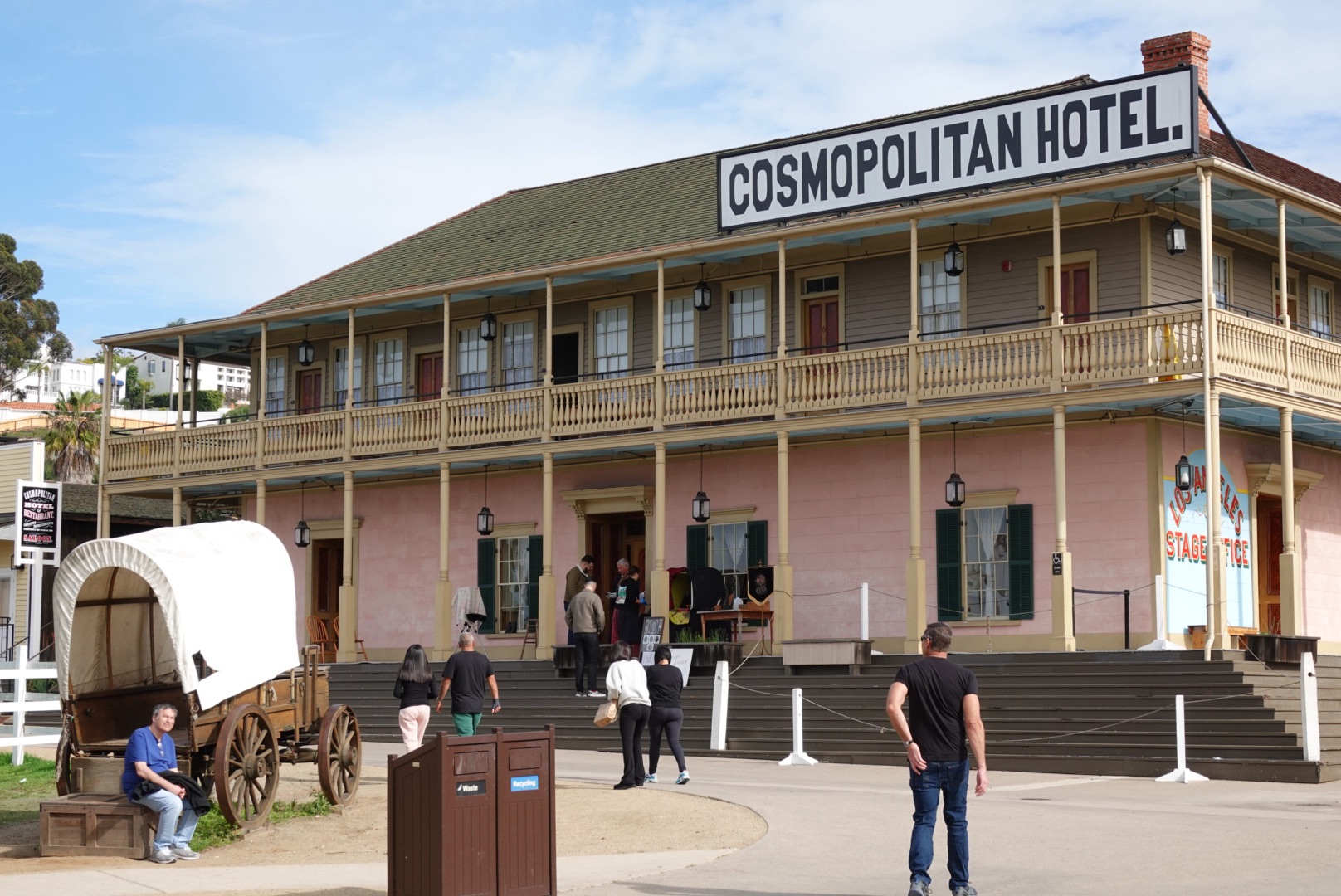
Old Town San Diego State Historic Park is quite different from other state parks or Canadian provincial parks we’ve visited. We’re used to acres and acres of wilderness and trails, but this park is much more like a pioneer village recreation blended with a tourist retail area.

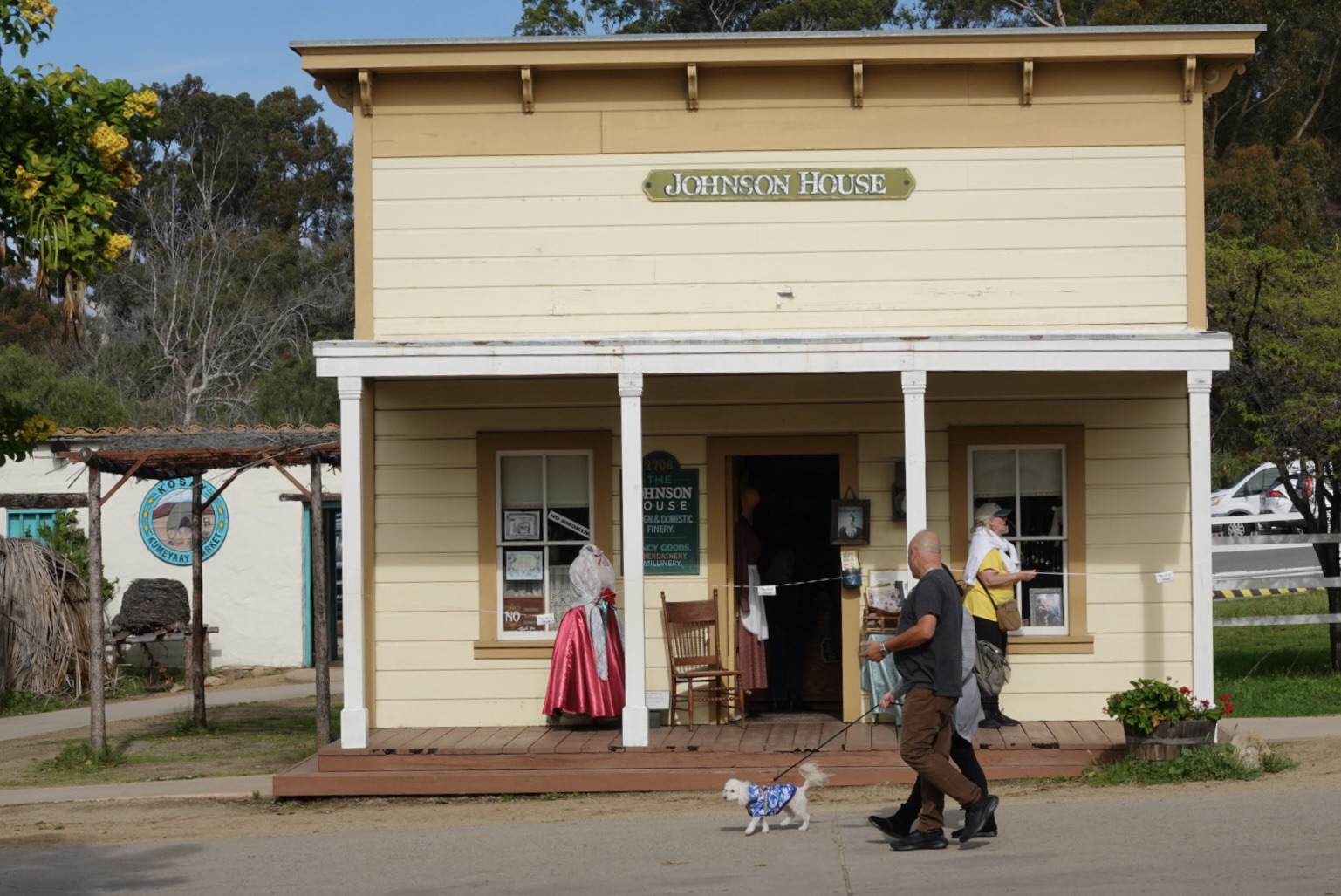
There are many recreated – as well as a couple of original – buildings, several museums, a community theatre, a town square, a Mexican retail “neighbourhood”, and dozens and dozens of gift shops and restaurants. If it weren’t for the big state historic (maybe the word historic is the key?) park signs at the boundaries, I’d have thought we’d simply walked into a themed entertainment section of the city.
The streets and permanent artisan markets are eye-catching, none moreso than the Fiesta de Reyes area, with the lovely Casa de Reyes Restaurant and a music stage at its centre.

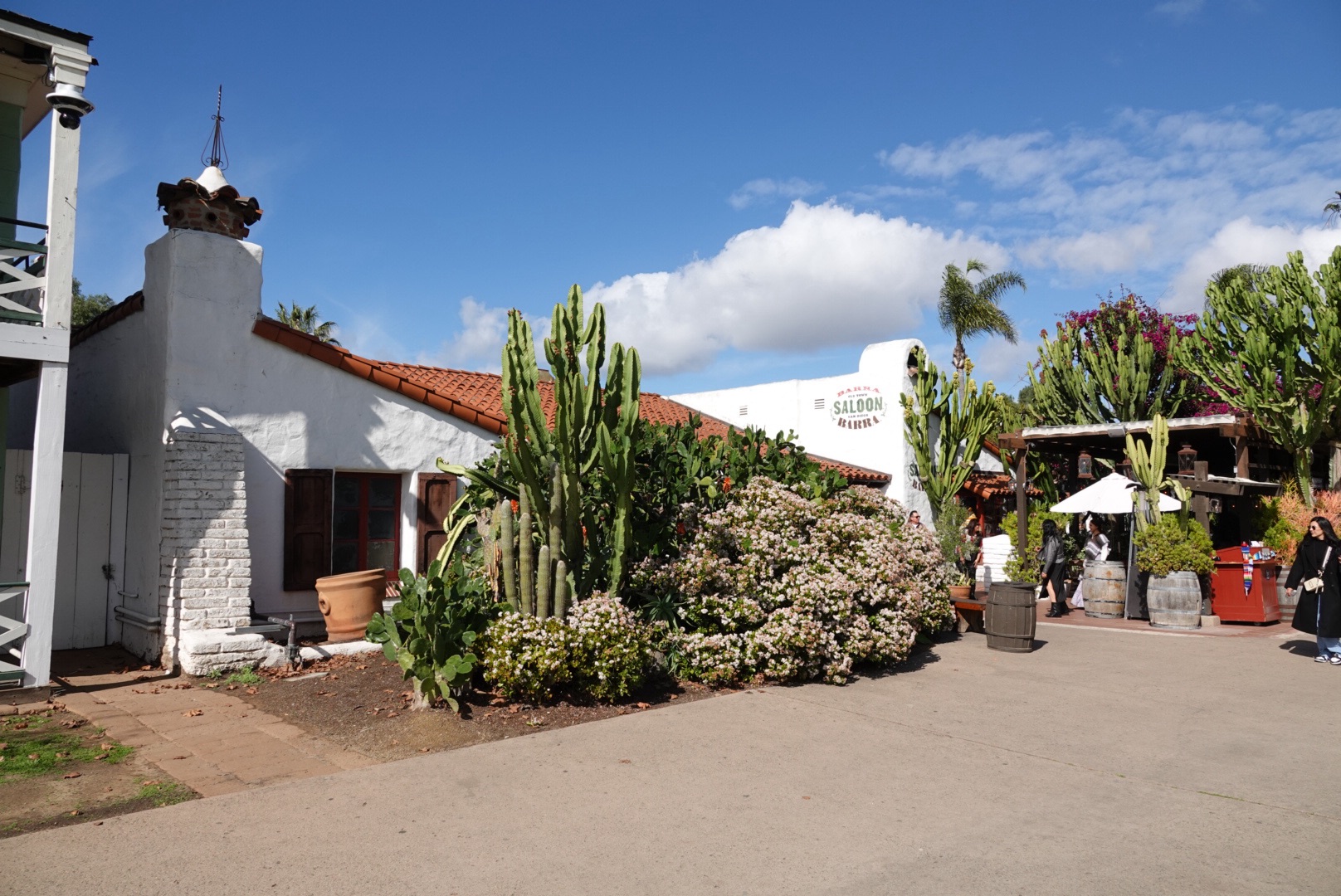
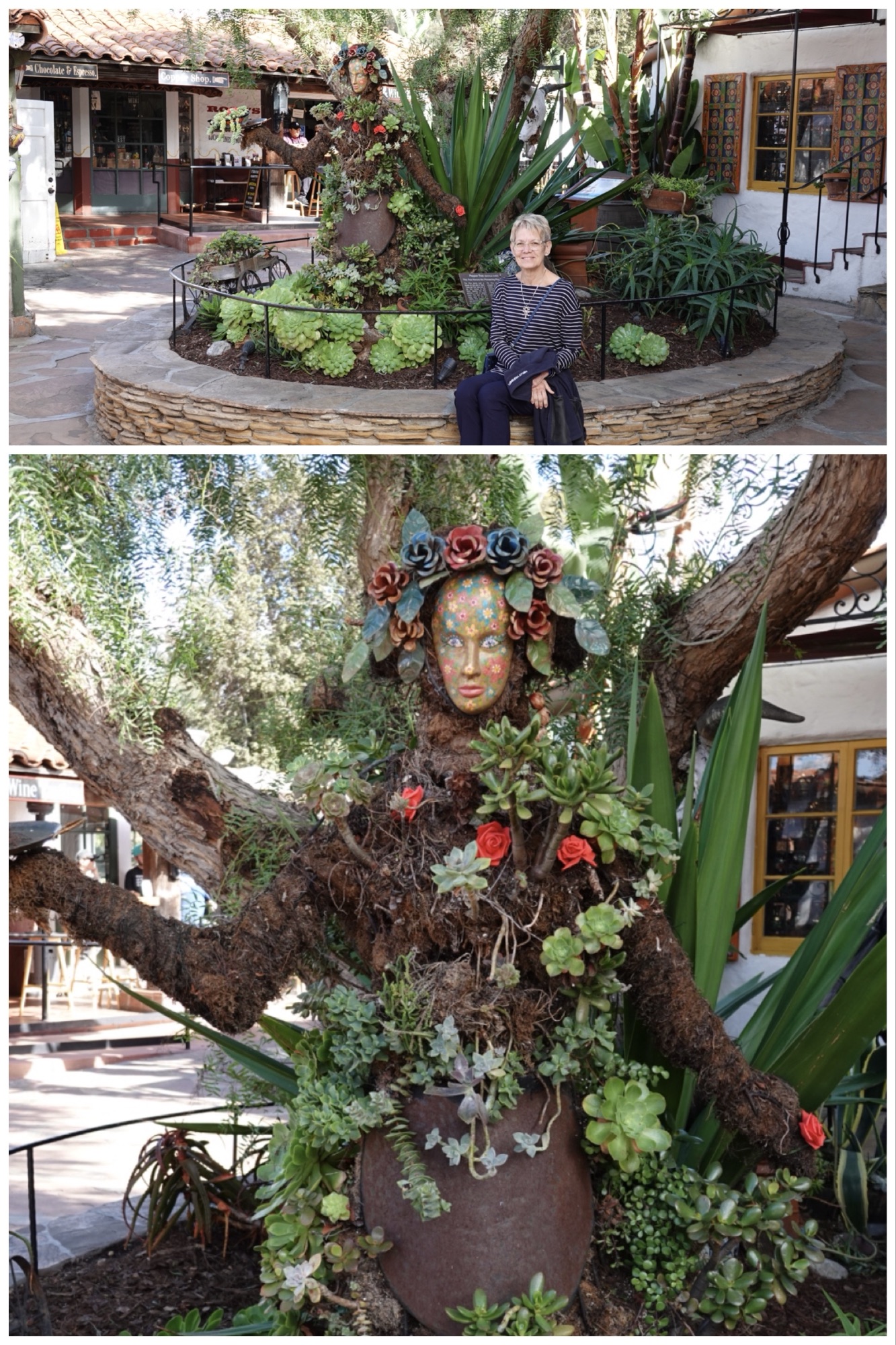
The park’s website says that it “interprets San Diego’s history between 1821, when Mexico gained their independence from Spain, until 1872, when a large fire ripped through Old Town and many people moved to what was then called New Town, now called Downtown San Diego.” It was the history I was looking for- not the shopping and food. In many cases, unless you know exactly what you’re looking for, it’s easy to assume a store is just a store, without learning the building’s original story. Unfortunately, after we got home I realized that I had completely missed some interesting places because their facades were so totally covered with kitsch.


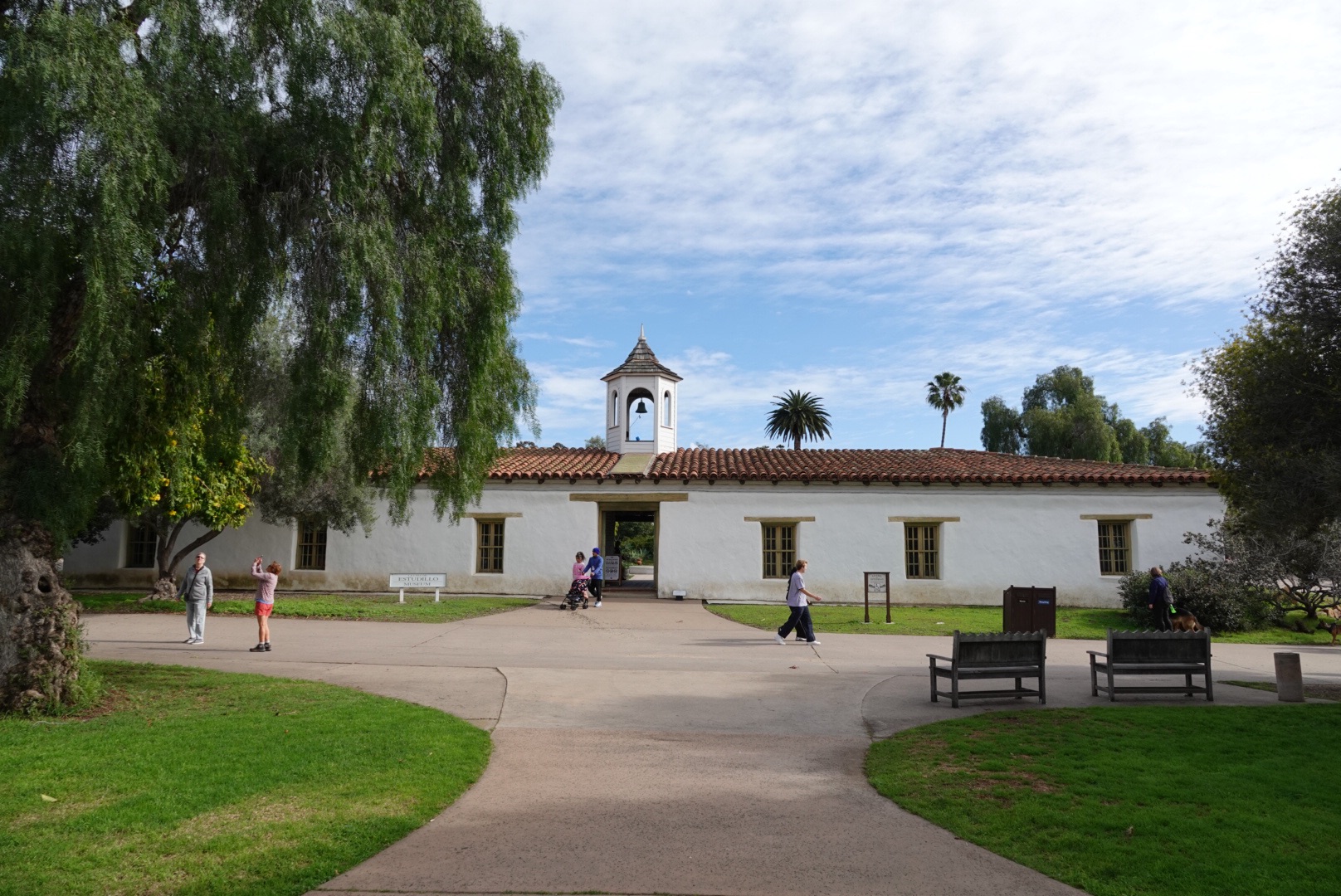
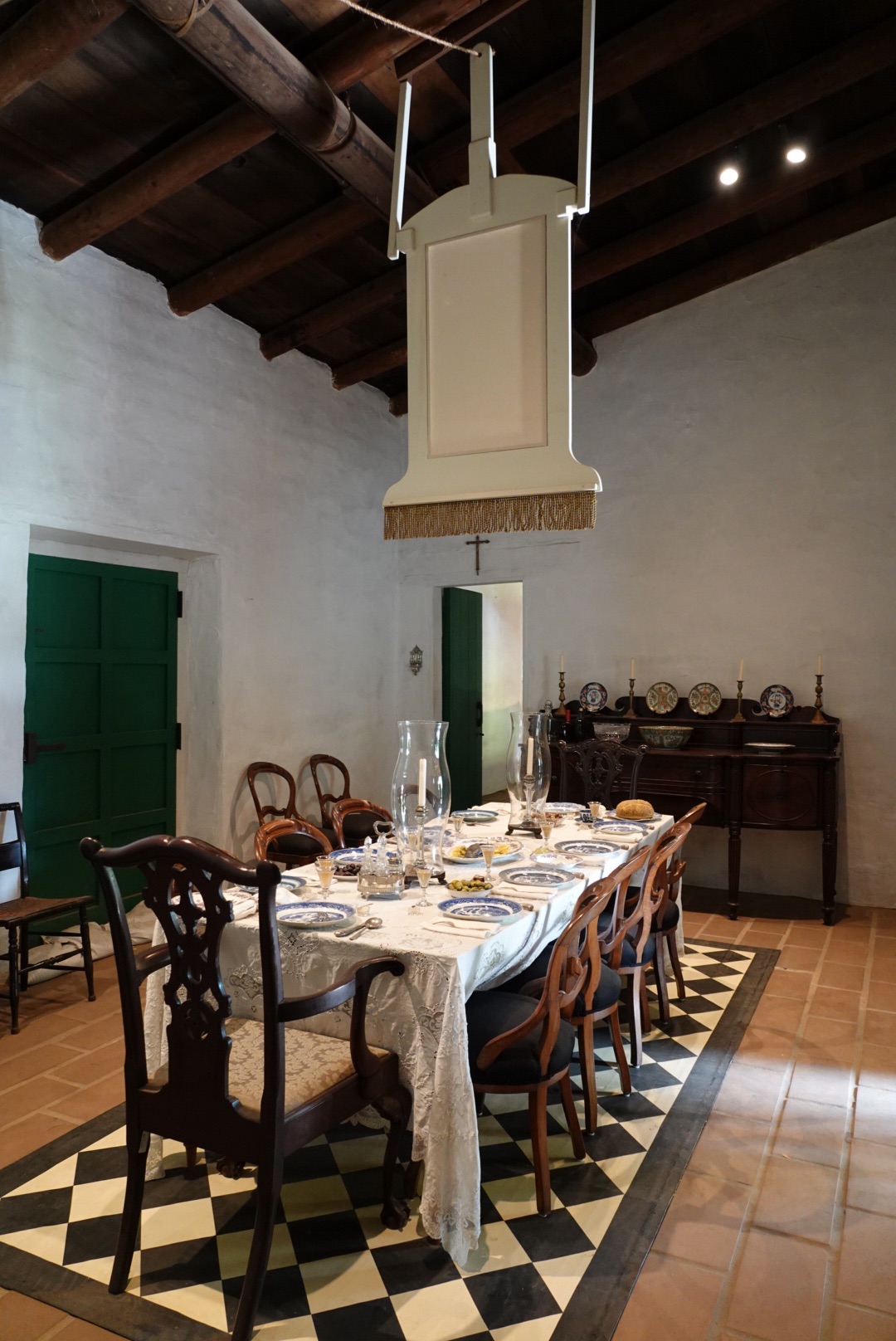
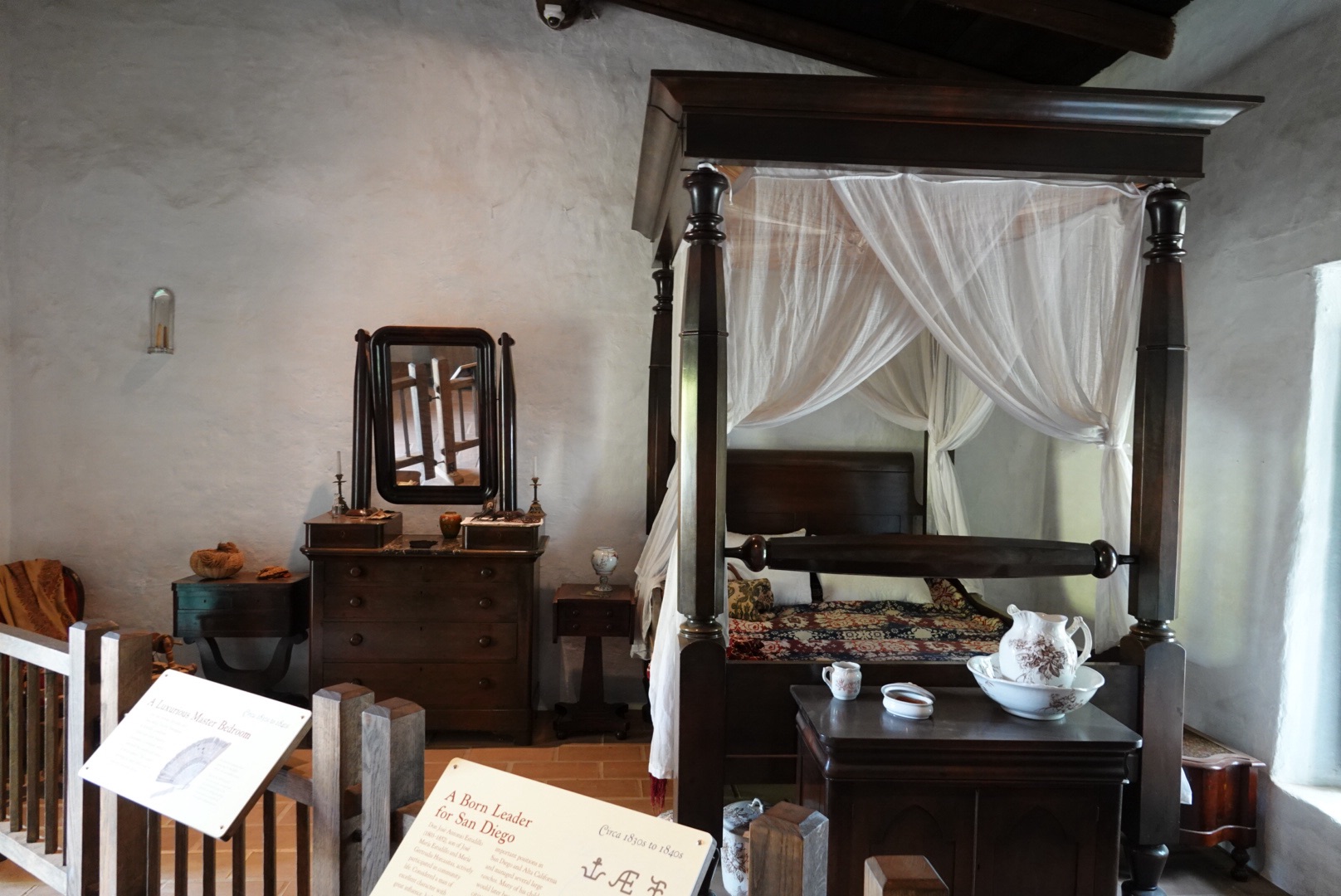
The most interesting house/museum in the park is also one of the few original buildings: CASA DE ESTUDILLO, built in 1825 as the home of Don Jose Antonio de Estudillo, a Spanish aristocrat. It became a sanctuary for women and children during the American occupation in 1846. For a number of years in the early 20th century it was a big tourist attraction, having been made famous as “Ramona’s Marriage Place” from Helen Hunt Jackson’s popular novel “Ramona”.
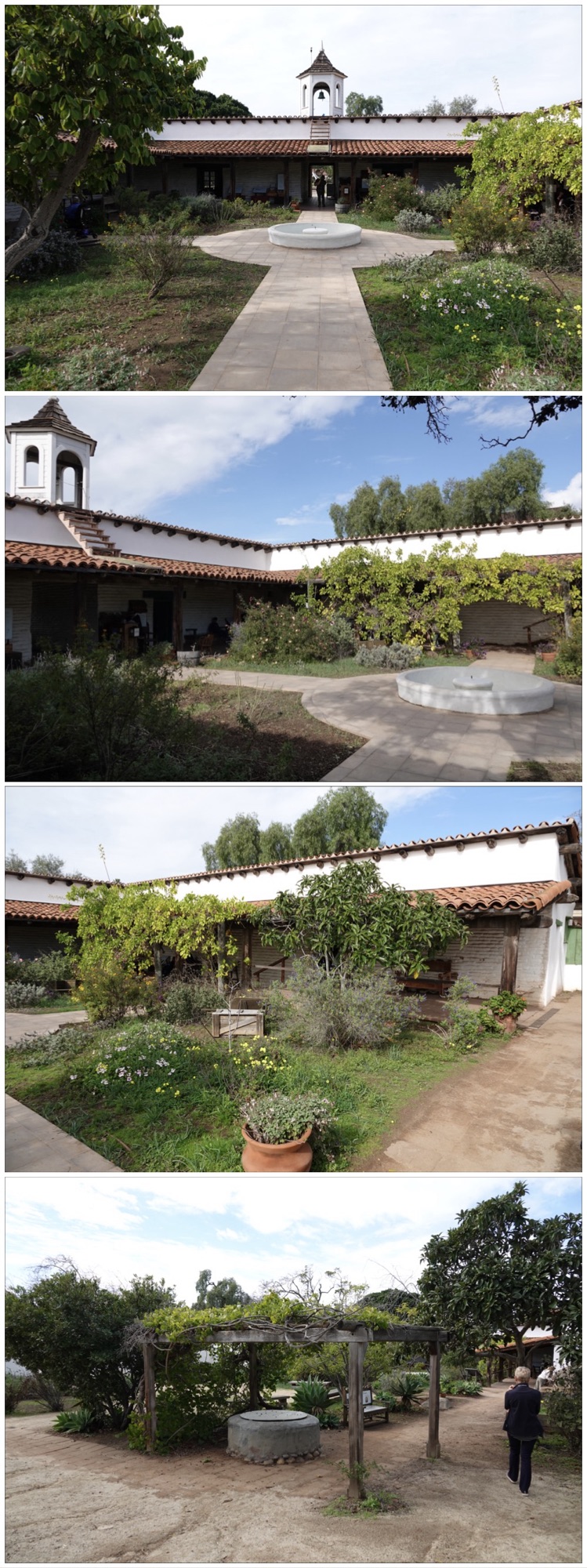
Many of the casa’s rooms have been furnished in the original style, and there are lots of signs detailing the de Estudillo family’s many commercial and philanthropic accomplishments. Three of the most interesting rooms were the living room, dining room, and master bedroom – but Ted could have easily taken a lot more photos!

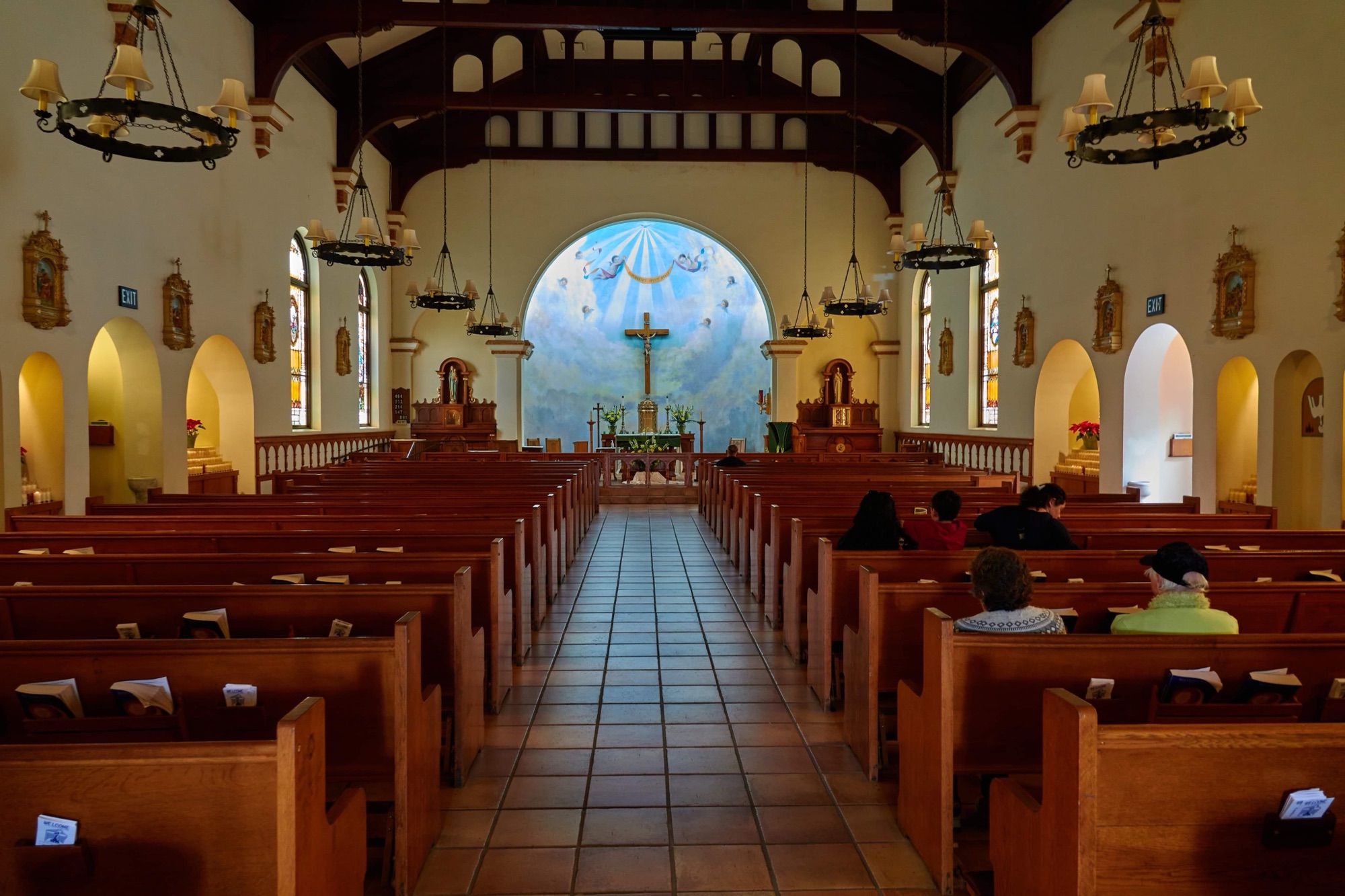
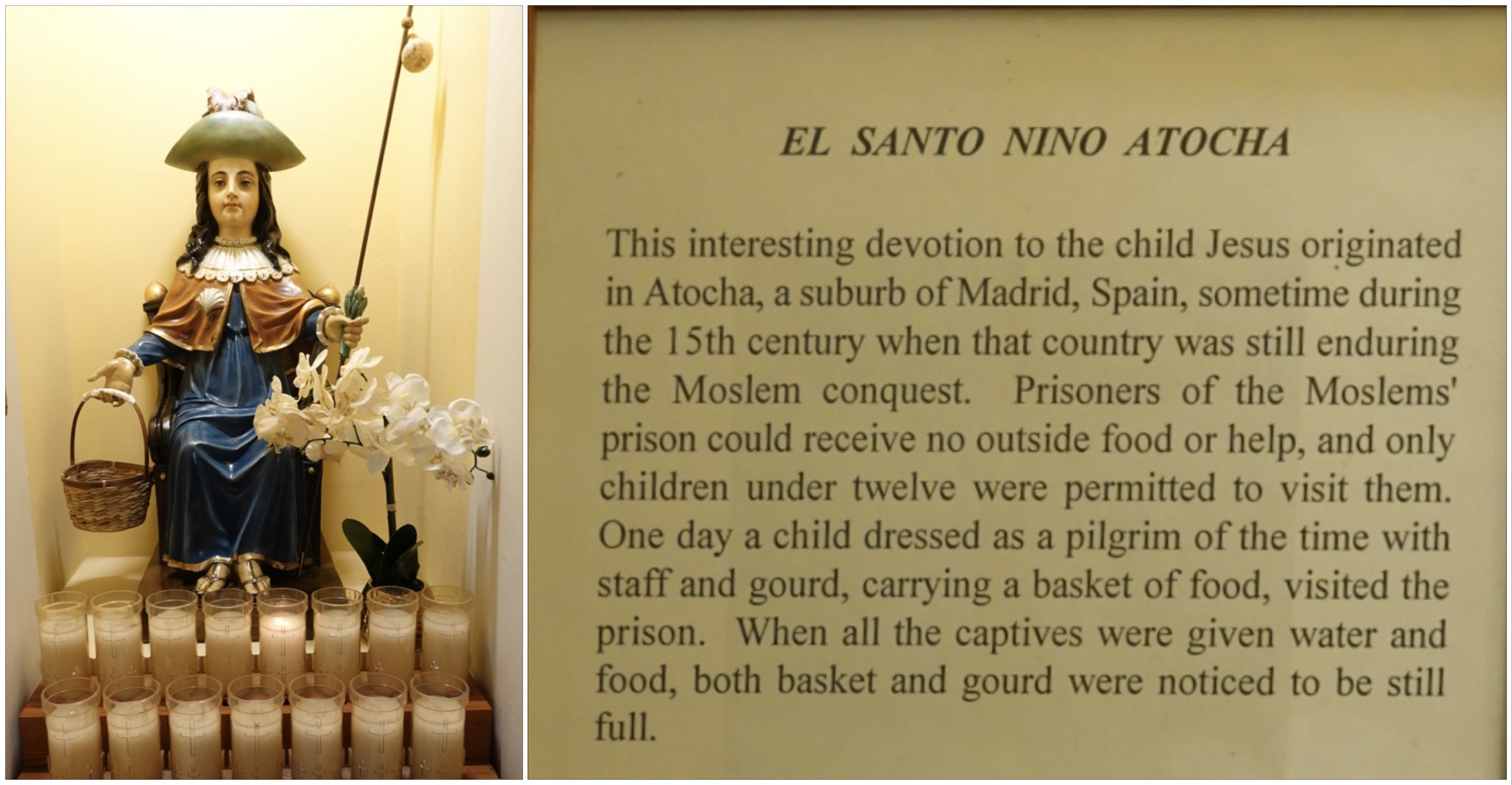
We took a moment to walk back to the Church of the Immaculate Conception that we’d looked at briefly a couple of days ago. This is the church begun in 1868 by Father Antonio D. Ubach, but due to the boom that set in for the New San Diego, was not completed and dedicated until 1919. A wedding had just let out and moved into the adjacent church hall, so we were able to go inside. Like many mission churches, it is quite plain inside.
Since we’d used transit, and hadn’t nearly reached our step goal yet, I convinced Ted to head up the trail leading us into Presidio Park and the Junipero Serra Museum, a 93-year old Spanish Revival-style building housing the collection of the San Diego History Center.

The Serra sits on one of the most significant historical sites on the West Coast, the site of the first permanent European settlement in what is today the State of California. If you (like me) have ever wondered how a museum – or a public park – comes into existence, this plaque outside the Serra puts it beautifully:

There were not a lot of exhibits inside the museum – it appears to be a work in progress. I’m glad we visited it though.
We arrived back at our flat late afternoon, having enjoyed a wonderful sunny day outdoors.
It rained yesterday, and it’s going to ran – a LOT – for the next 3 or 4 days, which has generated multiple flood and landslide warnings for southwestern California. We’re hoping to be spared most of that here in the hills, but are definitely not planning outdoor activities for a few days. To that end, I have a big grocery order coming tomorrow from Ralph’s (part of the Kroger family), several ebooks downloaded, and a bottle of Robert Mondavi Private Selection Merlot ready to go.
 Rose and Ted’s Excellent Adventure