Hawaii is in the Koningsdam’s rear view mirror, and we’re headed back to San Diego (via Ensenada Mexico), which meant 5 more sea days.
WEDNESDAY
Today was an independent day for me, meaning that Ted wasn’t interested in doing the things I wanted to do. As a result, our “plan” was to meet for the pre-dinner show.
Here was my day:
10:00 a.m. The exc.talk by our Cruise Director was called “Balance”, and focussed on food: specifically, the issue of returning Hawaii to a status closer to self-sufficiency. The islands have an image of being paradise, but just because there are beautiful beaches on the leeward side of each island and lush rainforest on the windward does not mean that it is an easy place to cultivate.
Not enough food is currently grown here to sustain the population. By the 1960’s, 95% of all the food consumed here was being imported. Almost all the arable land was being used for “cash” crops: sugar cane, pineapples, and even cattle grazing. There is a movement toward growing more food crops here, but it is a cultural struggle to convince a population whose families were plantation workers to embrace farming.
All of that goes a long way toward explaining something that surprised me here: how unappealing much (not all, don’t get me wrong) of the Hawaiian food is. The most iconic Hawaiian dish is the “plate lunch”: a couple of scoops of rice (imported from California), “Hawaiian” macaroni salad (imported pasta), a big portion of meat (kalua pork, Portuguese sausage, or Chinese barbecue – all hailing back to the ethnicities of plantation workers), and maybe a fried egg.
The other iconic “Hawaiian” dish is SPAM sushi: sushi rice topped with a slice of SPAM and wrapped in seaweed. SPAM dates back to the huge military presence here, and sushi to the large number of Japanese immigrants. Why not? (Because it just doesn’t taste all that great, that’s why not – but apparently I’m in the minority here.)
Moving back to “pono”, the Hawaiian word for balance, also synonymous with doing what is right, there is also a trend toward going back to eating more fresh fish, and nutritious carbohydrates like taro. From taro, Hawaiians make poi, a mashed taro dish that is a staple food. Non-Hawaiians often find its taste bland, and its texture pasty, but it makes a good “base” for saucy foods. In a different talk, Kainoa joked that babies are fed poi as a supplement to breastfeeding … until they are old enough to say “no!”.
It was an interesting insight into the balance and imbalances in Hawaiian diets.
11:00 a.m. Kainoa’s presentation entitled “The Amazing Captain Cook” acknowledged that we seem to currently focus on the negatives, and that anything related to colonialism is given a bad rap. Instead, he shared all of the truly amazing things Cook did, from mapping Newfoundland, the St Lawrence River, and Antarctica; exploring many of the previously mapped South Pacific islands; “discovering” the Hawaiian islands; and coming up with a “cure” for scurvy.

He also told us the story of how it all went wrong for Captain Cook here in Hawaii, going from being mistaken for the returning god Lono and much feted on his arrival in Kealakekua Bay in 1778, to later overstaying his welcome when returning in 1779 after having explored further north looking for the Northwest Passage (maybe not the god Lono after all). It seems that perhaps a confrontation over the Hawaiians having taken some items from Cook’s ship resulted – after some Hawaiians having been shot – in Cook’s death. Kainoa gave us two versions of his death: the British version that Cook was clubbed, beaten and murdered; the Hawaiian version that he was clubbed and beaten, but drowned in deep water while trying to get back to his ship.
Next is the interesting part. The Hawaiians recognized that Cook, even if he was not Lono, was a very important person. They prepared Cook’s body in their traditional way: removing and burning his flesh and returning his venerated bones to his crew. This led to stories of cannibalism, but Hawaiians did not (and, as Ted pointed out, still do not!) eat human flesh.
After Cook’s experiences in Hawaii, there was a huge influx of whaling ships to the islands, bringing the diseases that eventually wiped out 90% of the original population. Two of Cook’s junior officers were given exploration ships of their own: Captain George Vancouver, and the possibly even more famous Captain William Bligh.
While I was in the theatre, Ted grabbed lunch on his own from the buffet.
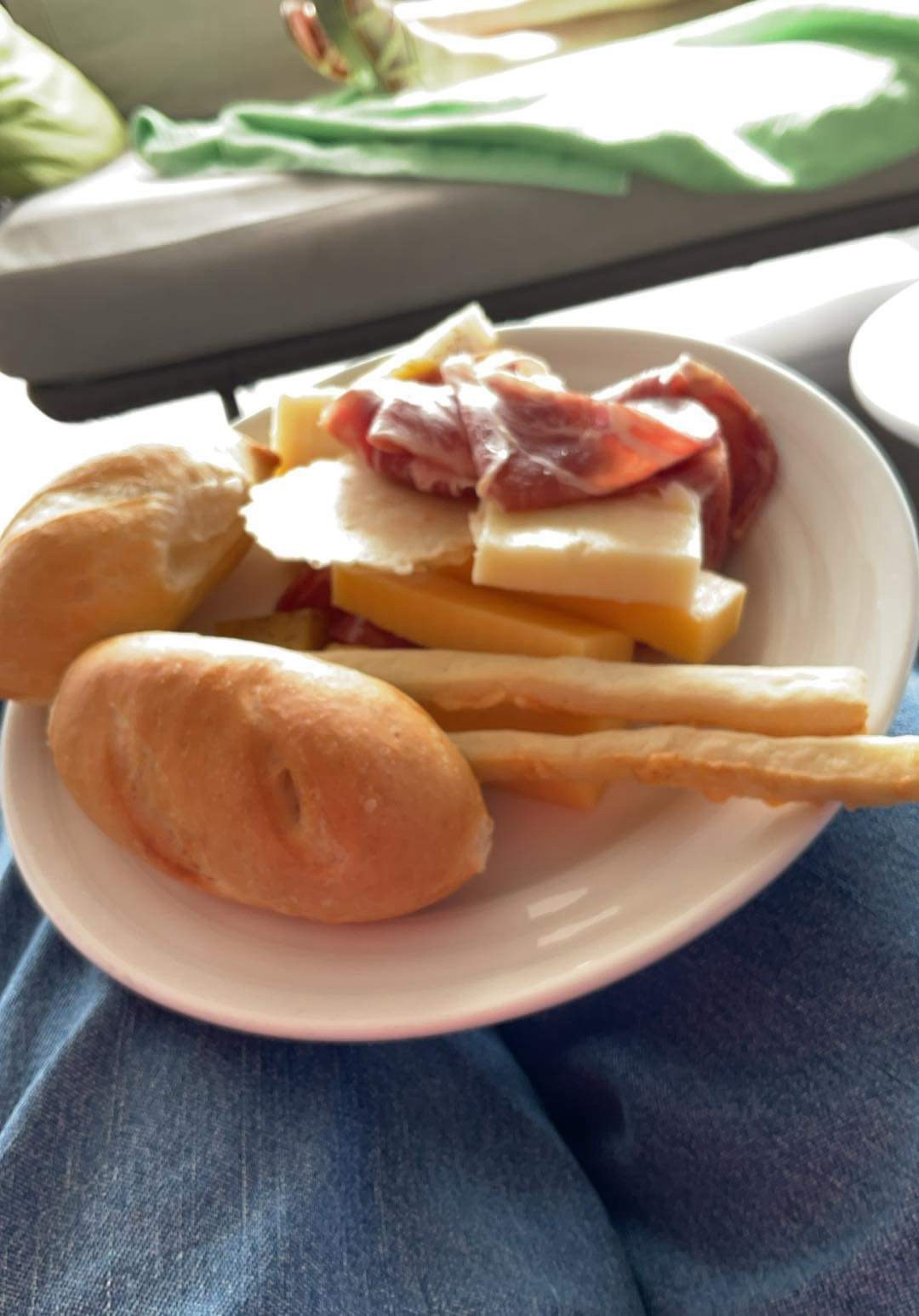
Having had only a quick cup of coffee before heading to the morning lectures, I headed for lunch too. Somehow mine almost always includes Prosecco, especially with the Lido’s generous pour.

2:00 p.m. Movie time. Today’s feature in the theatre was the 2022 movie See How They Run. It’s a really fun mystery romp kicked off with a murder during the after-party for the 100th performance of Agatha Christie’s The Mousetrap in London’s West End in 1953. There are lots of clever twists, a wonderful cast, and plenty of spoofing of the who-dunnit genre.
4:30 p.m. Time for an “up close and personal” session with the incredible dancers of the Step One Dance Company. It was really interesting to hear how this very diverse group of young dancers (the eldest 2 males are each just 31) from the UK, US, Canada, and Italy were brought together by a New York talent agency and put through rigorous rehearsals to become what looks on stage like a seasoned troupe.
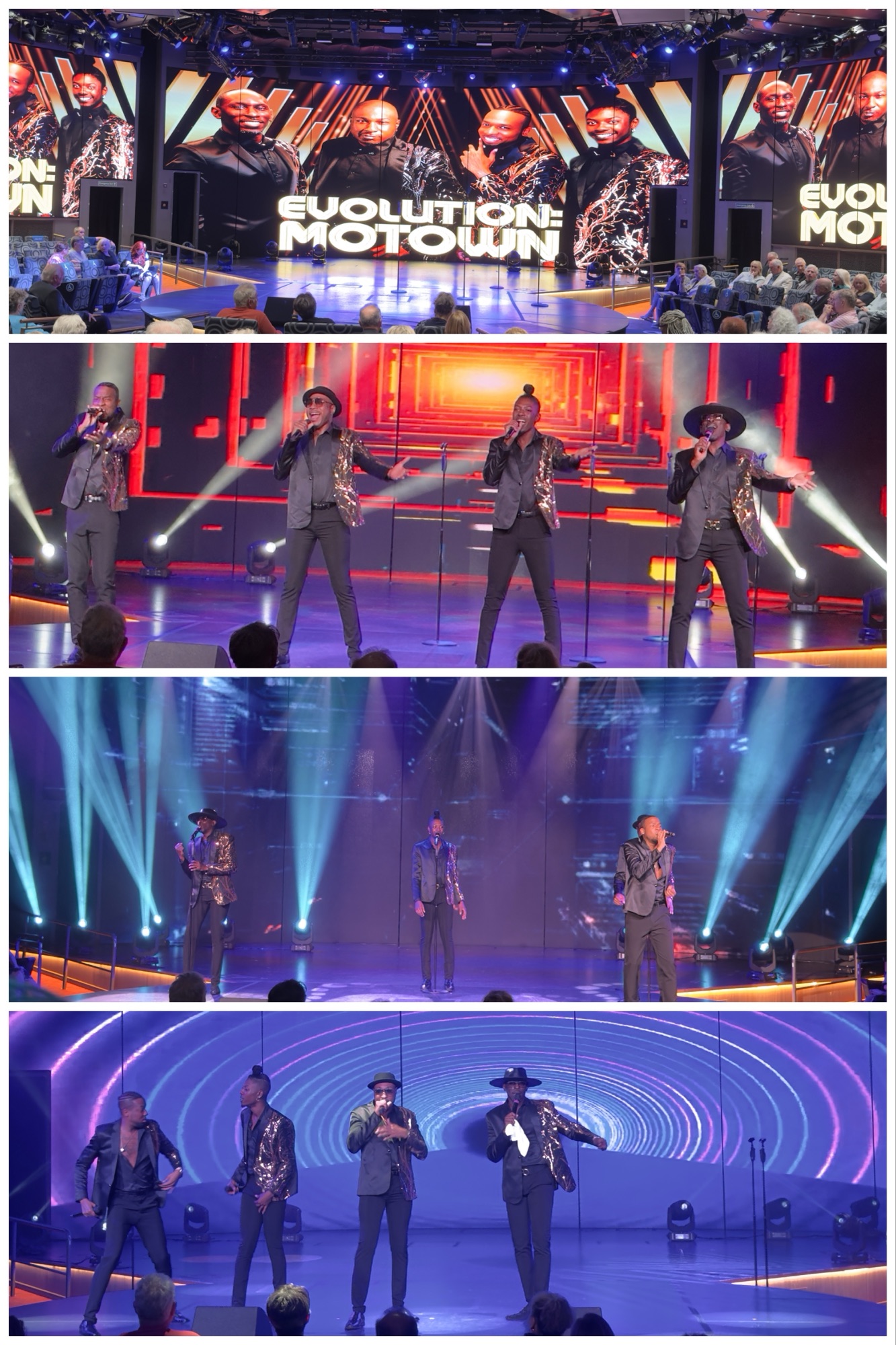
Then off to change for “dressy night” dinner, and collect Ted to take in the 6 p.m. performance by the absolutely excellent vocal group Evolution Motown on the World Stage before our 7:30 dinner seating.
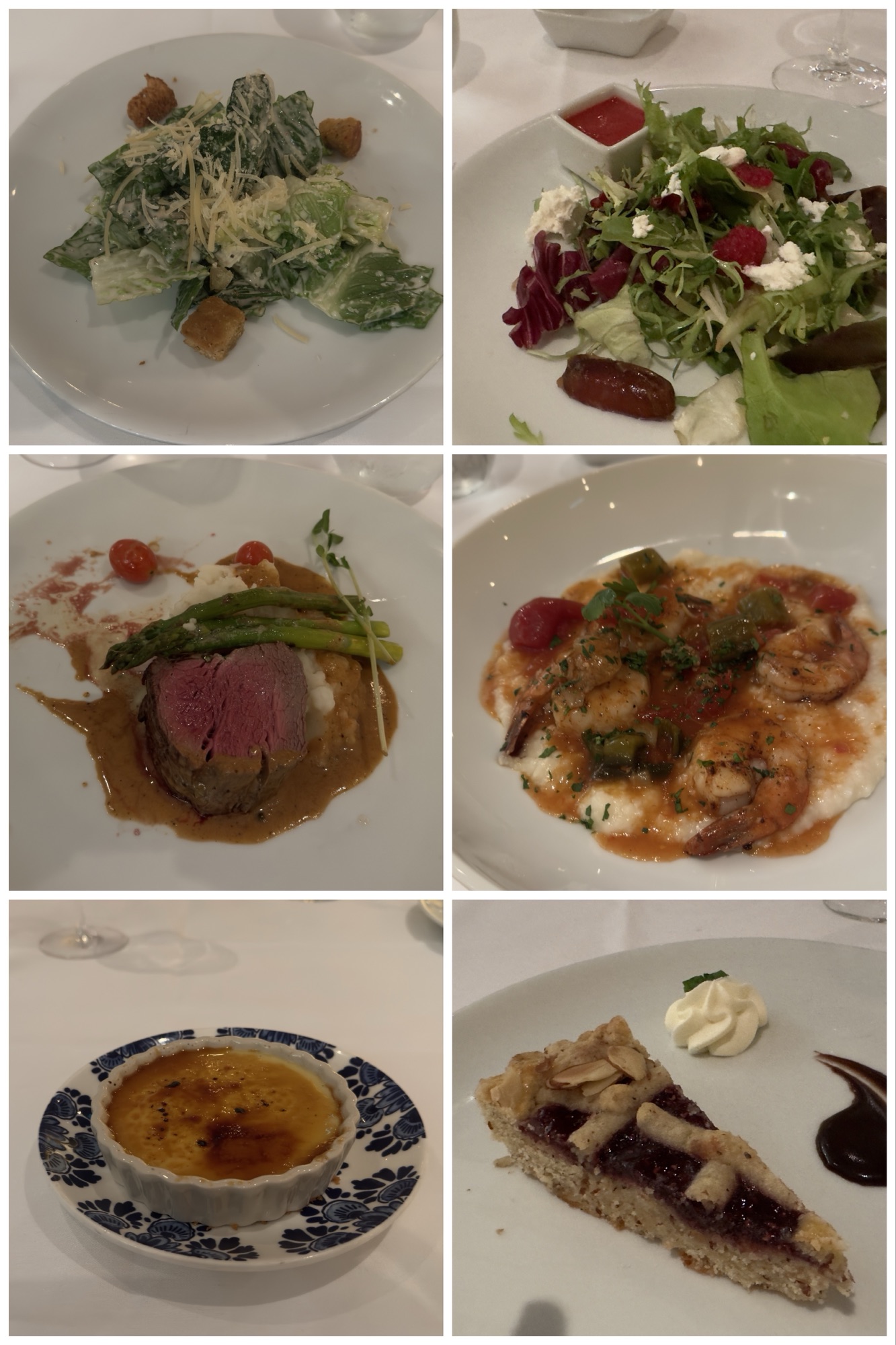
Right top to bottom: my dinner. Excellent date, raspberry and goat cheese salad; meh shrimp, grits, and andouille sausage; delicious linzer torte.
The ship has been rocking all day, getting progressively worse as we get further from Hawaii, but there’s been enough going on that involved visual stimulation that I wasn’t too bothered by the movement until late evening, when bed seemed like the best solution. We’re turning clocks ahead an hour tonight anyway.
THURSDAY
So… we don’t play in the casino on the ship, partly because we don’t want to lose money and partly because we don’t want to be in the smoky space, but last night two separate slots players won big: one person winning $26000 USD, and the other over $10000! Maybe we’re missing an opportunity….
Anyway, slow start today. The seas are rocking, and I slept in too late even to make breakfast hours.
Kainoa’s lecture today at 11 included a 2010 documentary called “Under a Jarvis Moon” featuring students of Kainoa’s grandfather’s generation from Kamehahmeha Schools, the first Hawaiian language schools established after colonization. The film tells the story of a group of 15 young (late teenage) Hawaiian men sent by the US military on a “secret mission” to isolated equatorial Pacific islands 1300 miles from their homes in the 1930s to “settle” them. Much of the documentary was in the voices of men involved in the project.

The islands were flat and inhospitable. The last time the islands had been inhabited was in the late 1800s when Hawaiians were sent there to work for an American guano (fertilizer) collecting company, but this time the goal was not profit, but establishing the islands as US territory for future military strategy. Much like Canada keeping a military base/settlement in Alert near the north pole, keeping people living on these islands was a way to establish ownership.
The young men – all volunteers convinced that they would be increasing the prestige of their school, and all of Hawaiian heritage – were dropped in groups of just 5 onto Jarvis, Howland, and Baker Islands in 1935 in a confidential project authorized by the President of the United States. Before being left on the island, the young men worked cooking for and serving the sailors on the Navy ships transporting them.
The young men’s duties included keeping a weather log, planting crops, fishing, and keeping a log of birds and insects. The humour displayed in the logs books of these young men was notable; the documentary included many examples.
The project, with subsequent groups of young men, in total 130, went on for almost 7 full years, 1935 to 1942. In the later years, the food they were able to catch (mahi mahi, lobster, sharks) and grow was supplemented by military rations: pork and beans, corned beef, macaroni and cheese, onions and even coffee. Prior to that, they learned useful things like the fact that booby birds and their eggs were tasty, but frigate birds were stinky and had very little meat. Fresh water was delivered by the military in 2/3 full (they had to float) 55 gallon drums – 3 drums total for 5 men every 3 months – only for drinking, not for washing or laundry! One of the men joked that they became a nudist colony out of necessity.
The 22nd group of young men were on the islands on the day that Pearl Harbor was attacked.

The young men involved in these secret missions eventually went back and completed their schooling and became mayors, professors, radio technicians, police officers, and more.
During the project only three men died, one of a ruptured appendix before the medical aid radioed for could arrive, and two during attacks on Howland Island on December 8, 1941 by the Japanese (when the Hawaiians had been told NOT to contact the ship so as not to give away any ship’s location to the enemy). Those who survived that attack were all sworn to secrecy after their eventual rescue.
The encouraging bottom line was that at no point did the missions turn into Lord of the Flies. Instead, the bonds between those young men were everlasting, as evidenced by the stories and memories shared in the documentary. As the narrator so eloquently said, “They not only survived, but they survived with grace and elegance and skill.”
Since 1974, the islands involved have been designated wildlife refuges.

The documentary was a lot to take in, so in order to help me digest all that information I headed up to the Dive In for a burger and fries, after which a nap was called for. All that thinking clearly wore me out.
Our pre-dinner entertainment was ventriloquist/magician/comedian Mike Robinson’s second very funny show.

A couple of glasses of Californian Murphy-Goode merlot for me, and an Italian Stemmari moscato for Ted, rounded out our night.
FRIDAY
Clocks moved ahead again overnight (that’s 2 days in a row), bringing us back to San Diego/Vancouver time, but also meaning that we woke up “late”.
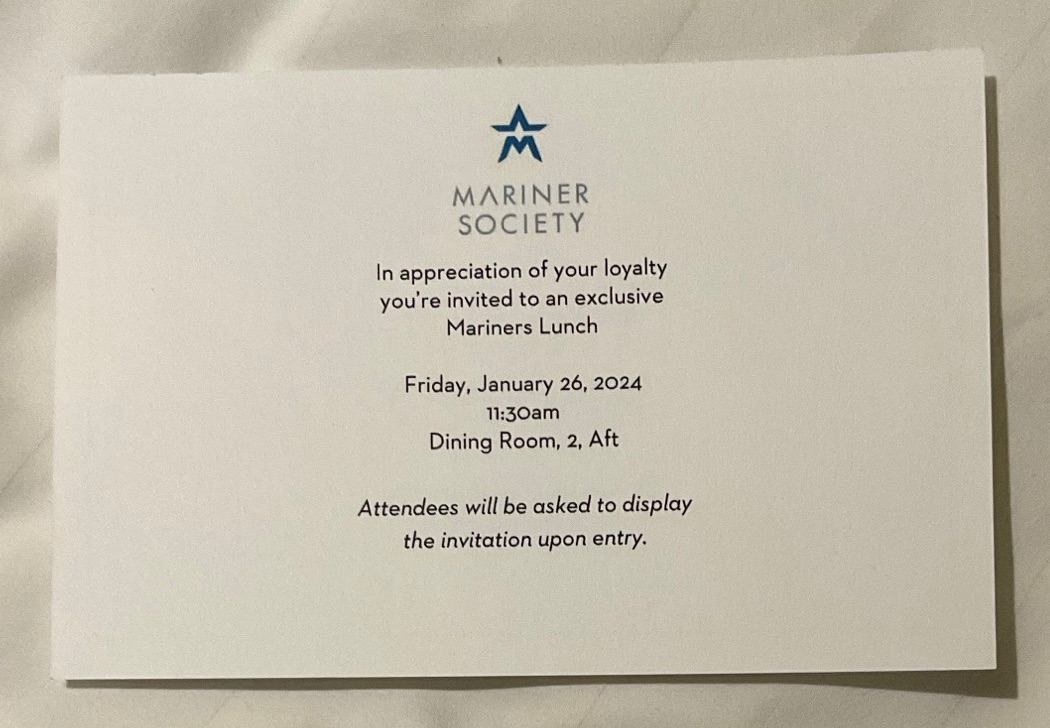
We’d received these invitations earlier in the week. We know what Viking Explorer Society receptions look like (cocktails with the Captain, and live music), but were curious about Holland America’s Mariner Society lunch, so I skipped the 11 a.m. hour-long talk on the history of education in Hawaii so that Ted and I could attend.
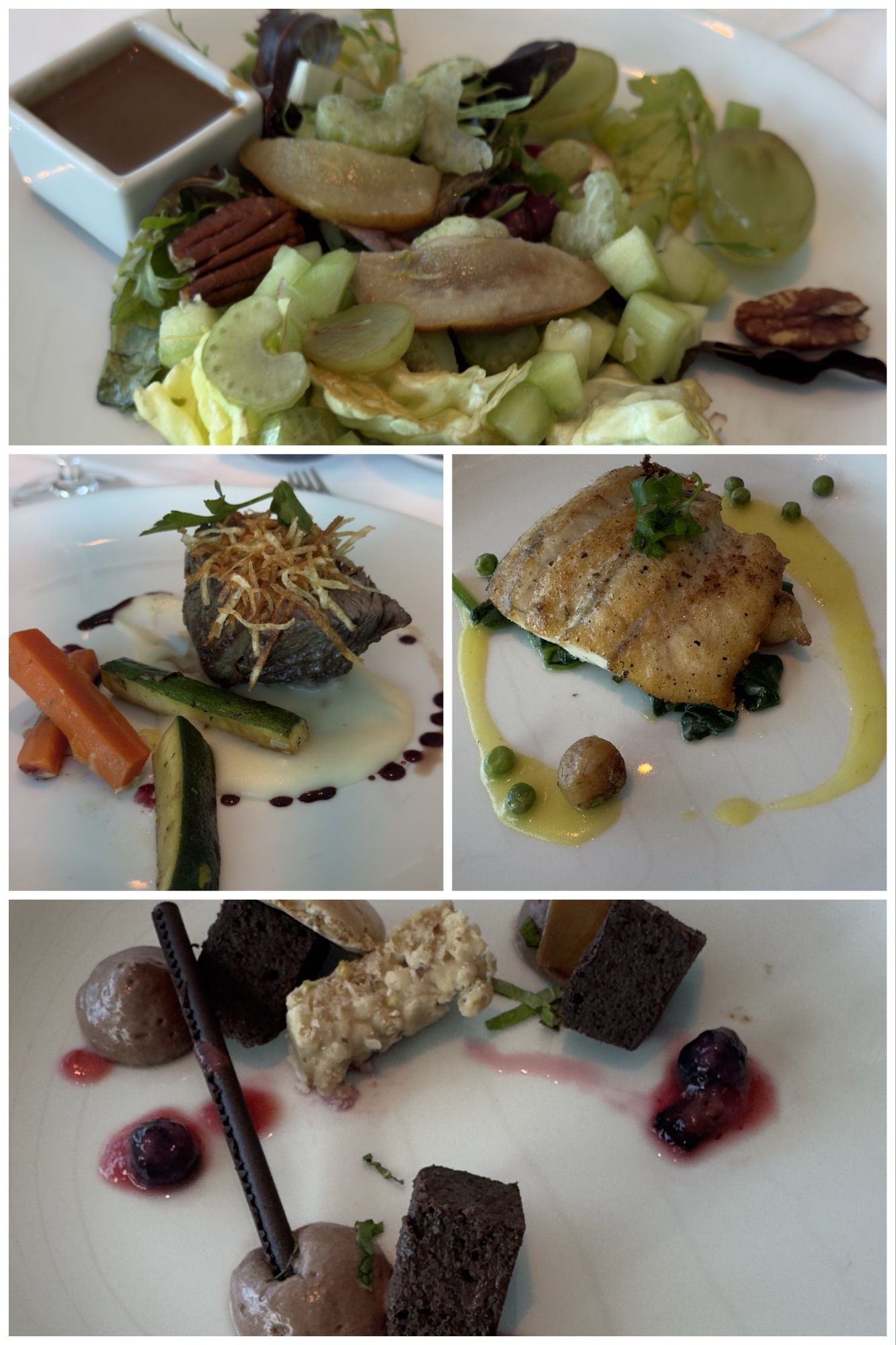
It was a lovely lunch, greeted by the officers as we entered the dining room. Tables were pre-set with sparkling wine, and there was a special menu. Our hour was made even more pleasant by having Jim and Sheila from California to share our table, and travel stories, with.
There was nothing of interest to us happening in the afternoon, so we retreated to the comfortable couches and lounges on deck 9 for coffees and an afternoon of reading. I’ve started a new Regency-period mystery series by Andrea Penrose, and managed to finish the first book, Murder On Black Swan Lane.
At 4:30, Cruise Director Kristen was hosting an up-close half hour with the 4 vocalists from Evolution Motown who we’d enjoyed so much on Wednesday, so I popped into BBKing’s along with about 100 other people to hear their story. The most surprising thing we learned was that these 4 consummate professionals had only begun singing together as a quartet on the day they boarded our ship! Apparently there are 17 strong vocalists who can be called upon to form quartets on short notice, which also explains why each of them is capable of being the lead singer on any given song. The youngest member of the quartet performing for us is Jay Camaro, who we recognized from the top 25 on Season 19 of American Idol in 2021.
Then it was time to change for the early show on the World Stage (Jesse and Colleen Kazemek reprising 50s and 60s songs) and our final specialty restaurant dinner at Tamarind.
For the second HAL cruise in a row, the undisputed, hands-down best meal we’ve had on the ship – service, ambience, food presentation, and most importantly TASTE – has been at Tamarind.
Tonight Ted started with a Wasabi cocktail, made with sake, lychee liqueur, sour mix, agave syrup, and orange juice, and garnished with a lychee fruit stuffed with Wasabi mustard. Ted pronounced it “whoah!” and then ordered a second! I started with Momokea pearl sake, which has a pearly white colour due to being unfiltered.

Amuse bouches were delivered: shrimp crackers, rice crackers, soy sauce, and three kinds of dipping sauces ranging from slightly spicy chili sauce to very spicy shrimp and chili paste. As an appetizer I had yellow tail sashimi and octopus nigiri sushi before my lobster and shrimp potstickers with smoked shoyu sauce; Ted’s appetizer was Chinese five spice baby back ribs.

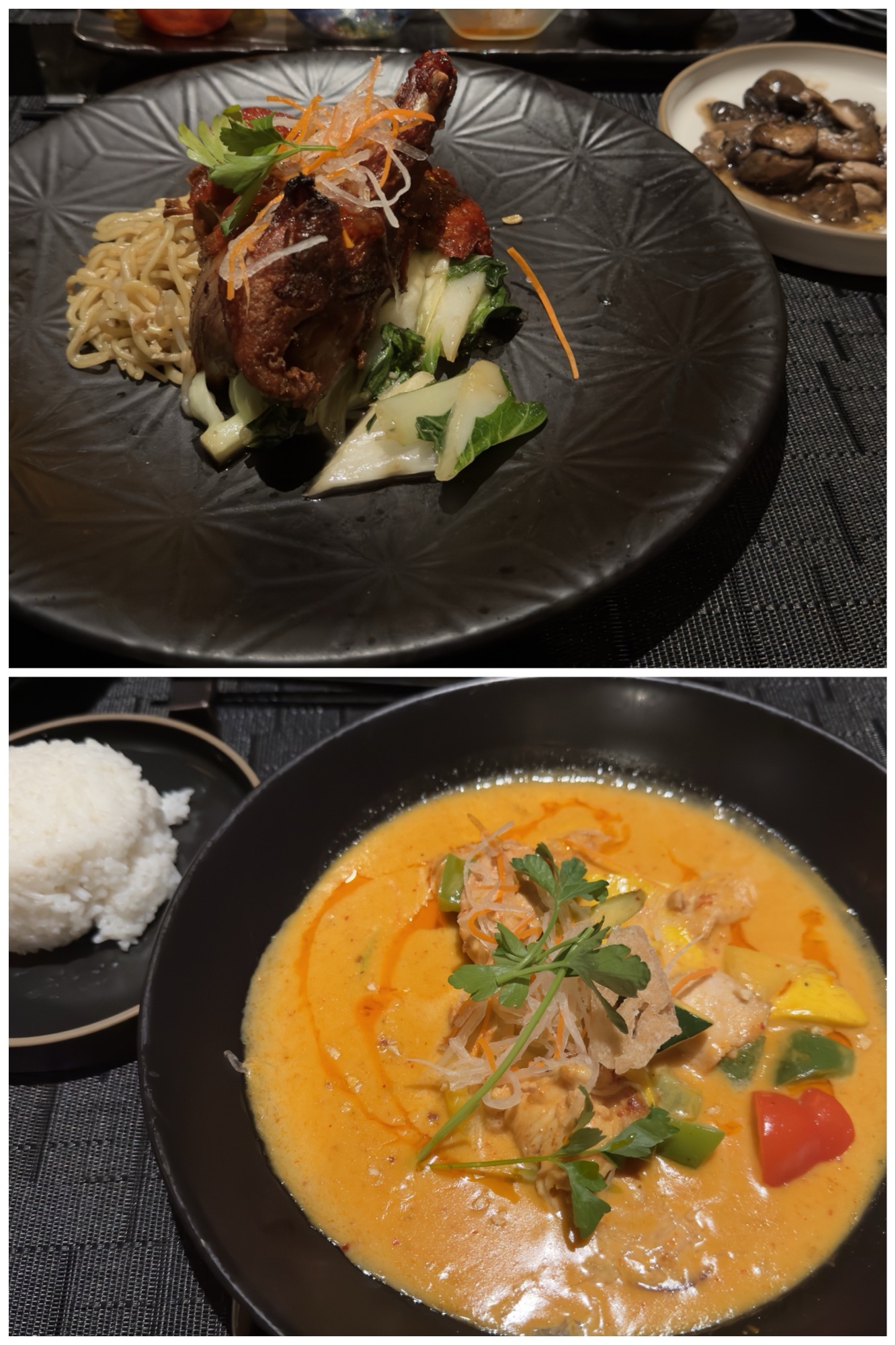
As his main course, Ted had crispy duck in a ginger-chili glaze, served with drunken udon noodles and a side of sake-braised oyster and shiitake mushrooms. I had spicy Panang red curry coconut chicken with jasmine rice.
My dessert was deconstructed yuzu cheesecake in a thin white chocolate boat, garnished with sesame honey tuile. Ted’s dessert was passion fruit jelly topped with a coconut macaroon and mango sorbet, served with a sugared rice cracker.

The whole dinner, including Anita’s perfect service, was culinary magic.
SATURDAY
It was our last chance today to send another bag of laundry to be washed, folded, and returned to us in time to pack for disembarkation on the 30th. The $25 per bag laundry price has worked out quite well from our onboard credits. With few extra purchases beyond laundry, (just a lanyard, the difference on a couple of drinks that exceeded the $11 per drink package maximum, sushi, and a gelato) we’ll actually be getting a small refund to our credit card in a few days.
The way Holland America does their accounting is interesting, perhaps even borderline confusing. Our account starts out by showing credits for our pre-purchased gratuities in an amount that exactly matches our number of sailing days, plus a separate line for our non-refundable onboard credits. Then crew gratuities, deducted individually every day, are taken from the non-refundable credits first. That means that the pre-paid gratuities can potentially remain undepleted at the cruise’s end – and THAT amount gets refunded back to the credit card we used to pay for the cruise. It’s a nice bonus, but unlike any process we’ve experienced before.
The talks/lectures planned during our last two sea days were reprisals of ones we’d already seen, so the days turned into reading days. Today I started and finished The Secret, Book & Scone Society (the location of the comma is significant) by Ellery Adams. The winds and swells we’d been experiencing on our first 3 days out of Hawaii died down enough to have the outdoor promenade deck and the upper deck track open again, and the temperature was a pleasant 19°C/68°F, so I took a walk too. Three “laps” of deck 3 is one mile.
We’d had a light breakfast of just a small bagel with cream cheese (me) and peanut butter (Ted) and coffee, and skipped lunch in order to try the ship’s afternoon high tea. Tea in the Wintergarden was a highlight on our Viking ocean cruises, complemented as it was by stellar table service and live music (piano or strings) and some of the best quiet conversations with other passengers. High Tea in the Wintergarden
We didn’t expect the same from a tea held in the main dining room, and we didn’t get it – with the exception of the conversation at our table, which was lovely. Only one kind of tea – pre-brewed black tea served from stainless steel carafes – was offered, the scones were small and tough, the sandwiches were less than delicate, and the desserts were simply mini cupcakes. While the high tea is offered every sea day, it’s not likely something we’d repeat.

Tonight’s pre-dinner entertainment was Evolution Motown’s second show. Given how good their first show was, tonight the theatre was absolutely packed. The highlight of the show tonight was their finale: Prince’s Purple Rain.

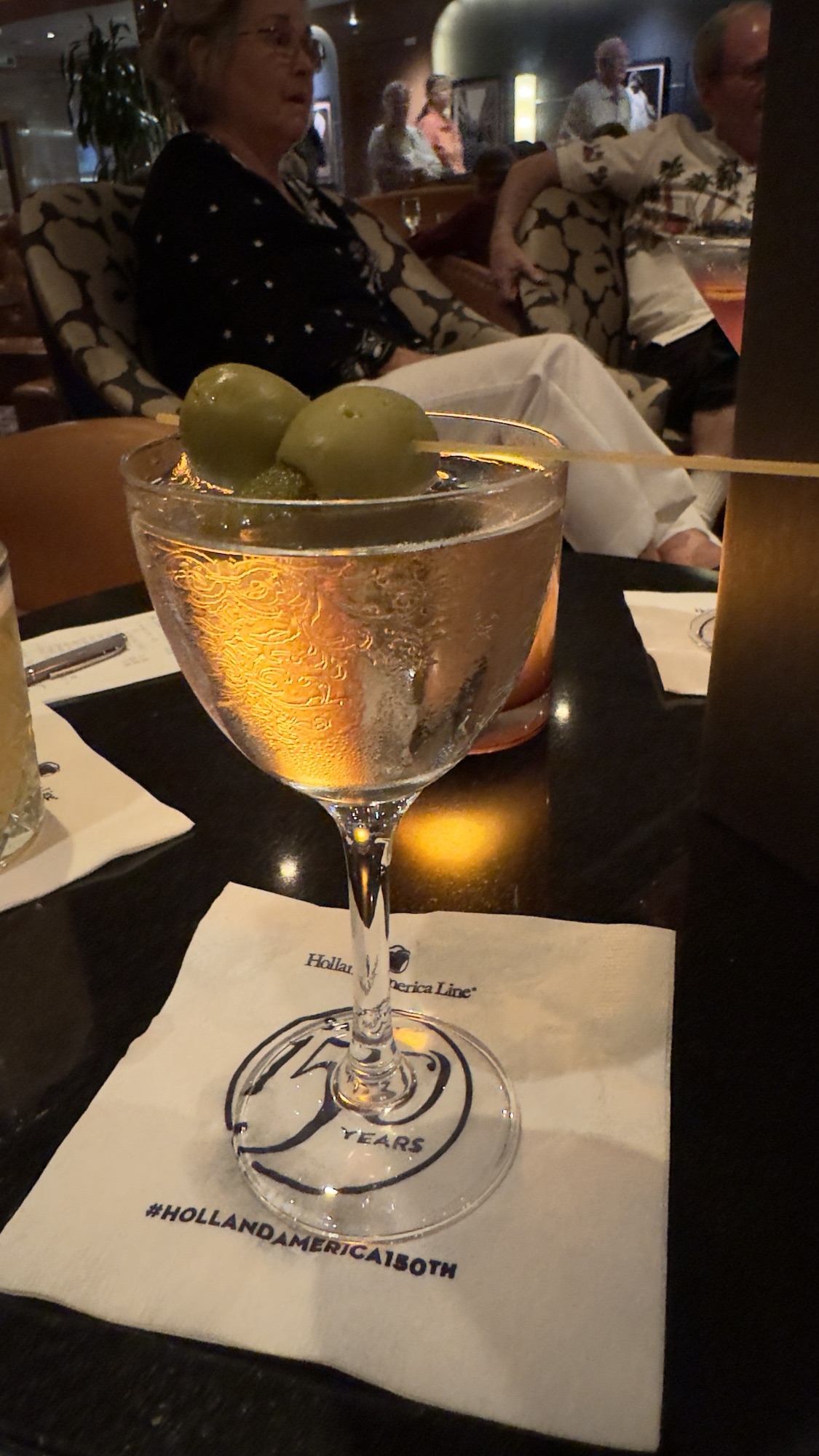
We stopped for drinks and conversation between the show and our 7:30 dinner reservation, and experienced one of the strange things that happen far too often on this ship: my martini served in a port wine glass, and with pickles stuffed into the olives. Just weird.
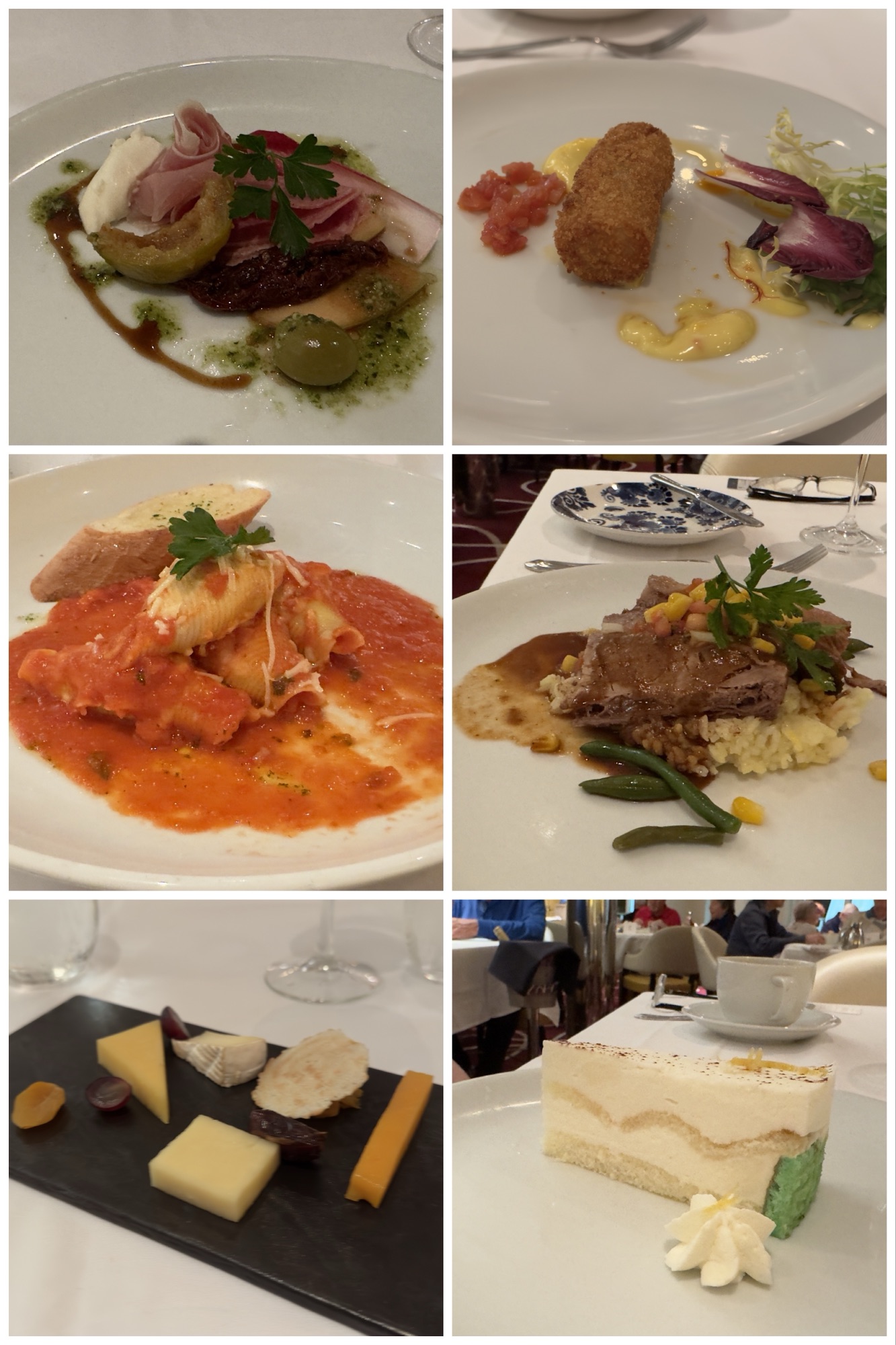
Our conversation group all dispersed at 7:30, headed to various dinner venues. We ate in the main dining room, where our dinners were accompanied by glasses of moscato (Ted) and shiraz (me).
After finishing our drinks on deck 2 listening to the band from the Rolling Stone Rock Room, we called it a night.
SUNDAY
Finally, our last sea day! Ted spent significant amount of time today on deck 9 watching the NFL games and being uncharacteristically sociable, which is pretty much a necessity when you’re sitting among football fans.
I spent the NFL hours at a talk by Kainoa about the Hawaiian humpback whale, and later curled up in the library re-reading a very old James Patterson novel, Along Came A Spider. It’s been interesting seeing what books folks on the ship have tucked under their arms; there’s a LOT of James Patterson, David Baldacci, and Lee Child being read by both men and women. Remember, Holland America cruisers skew older – these are clearly favourite authors of the over-60 set who have aged right along with the authors themselves.
Because I am THE BEST, I delivered a custom capocollo/pineapple/jalapeño/double cheese pizza to Ted so he wouldn’t lose his viewing chair, and then I headed for today’s “special” station in the buffet: German food. No wonder I’ve gained 5 pounds on this cruise. There’s lots of walking planned once we get to San Diego.

I took in one last excellent performance by the Step One Dance Company, and Ted caught the second of the NFL semi-finals before our penultimate dinner of this cruise.
Then it was time to hit Billboard Onboard for their all request piano show before turning in for the night.
One final port stop tomortow.
 Rose and Ted’s Excellent Adventure
What??
<
div>Al
Sent from my iPhone
<
div dir=”ltr”>
<
blockquote type=”cite”>
LikeLike