#MyVikingStory
When we were last here at the end of November 2022, the city’s many Christmas markets were just being set up. None were actually open yet. Episode 355 – Koblenz
Our included morning activity: a narrated river cruise along the Middle Rhine, while enjoying coffees and dessert.
Today we travelled by bus to Lorch, about 2 hours upriver from Cologne, from where we boarded a typical tour boat to cruise the short portion of the Rhine in which it is possible to dock, a span of only about 23 km. We were frankly stunned by the water levels, which drowned beaches and parks, swamped huge trees, and reached just below the level of the roads along the Rhine’s banks. In fact, some of the roads on which we drove today were under water earlier in the week. People’s yards have been turned into swimming pools.
A normal cruise in this area would go past 19 castles along 66 kilometers of river. We saw 9, and another 2 from our bus on the way back to Koblenz. Of course, Ted and I had cruised the middle Rhine twice before, but we felt sorry for first time visitors who missed so much.
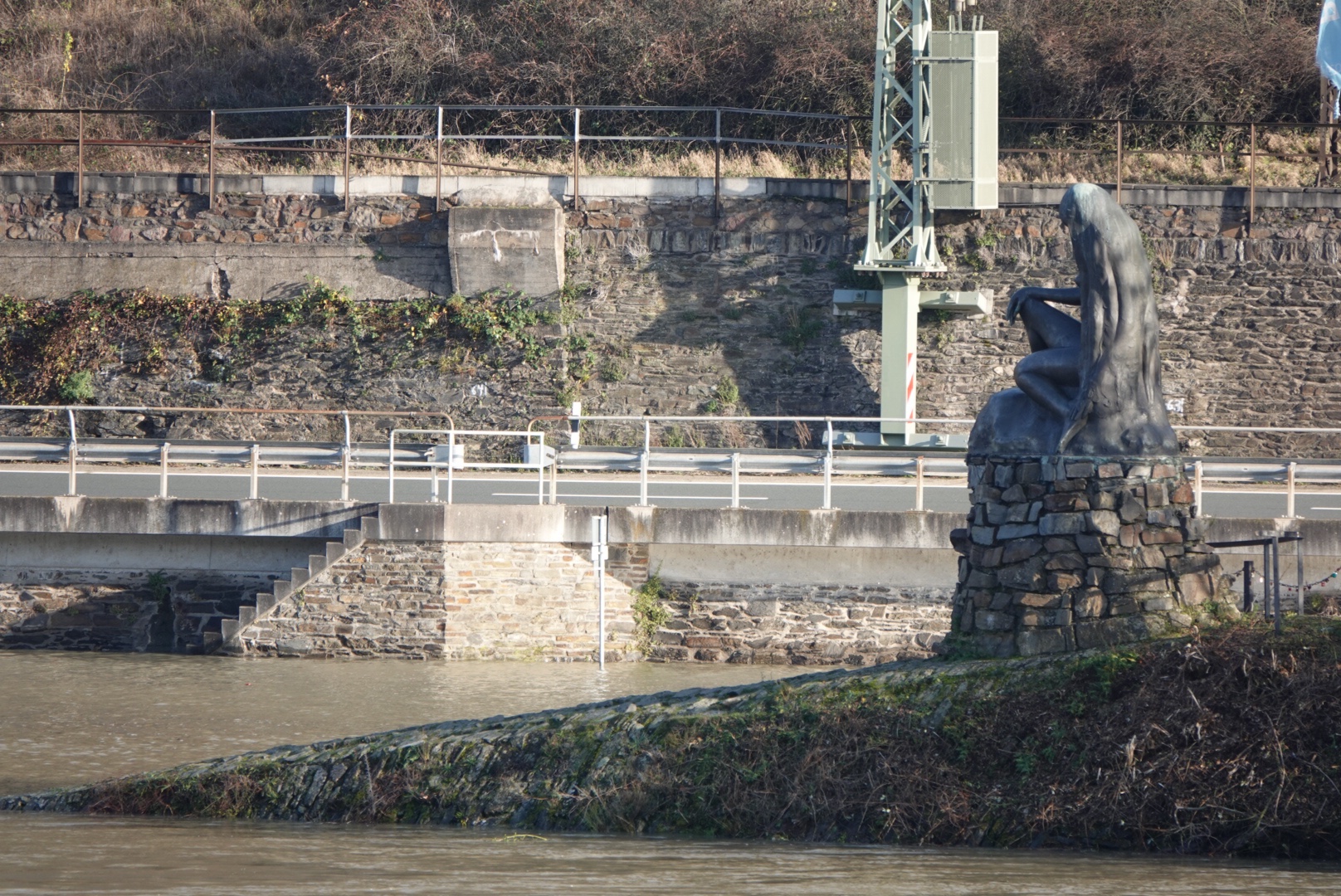
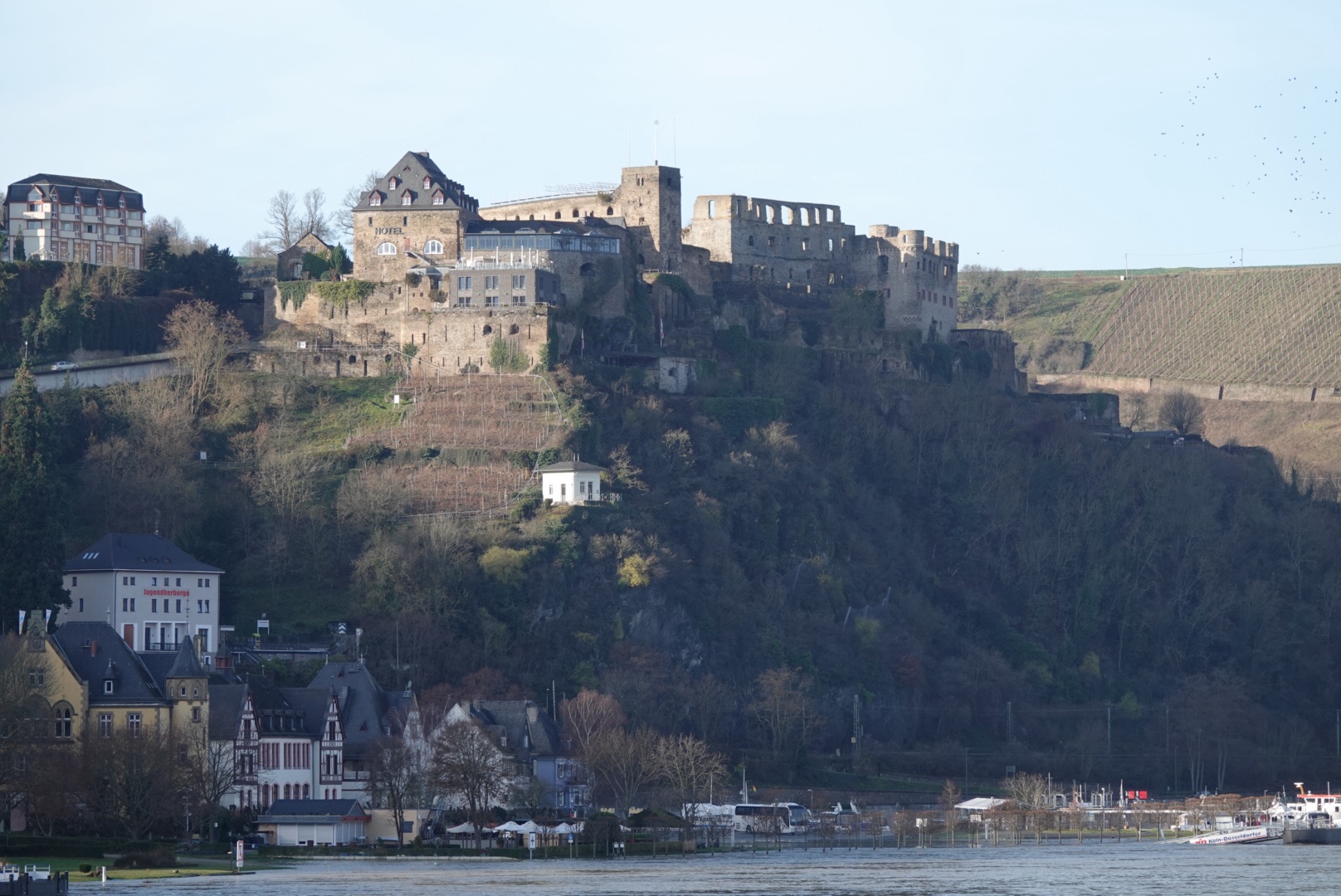
Here’s what we saw this morning, captured in Ted’s photos taken from the upper deck of the boat:

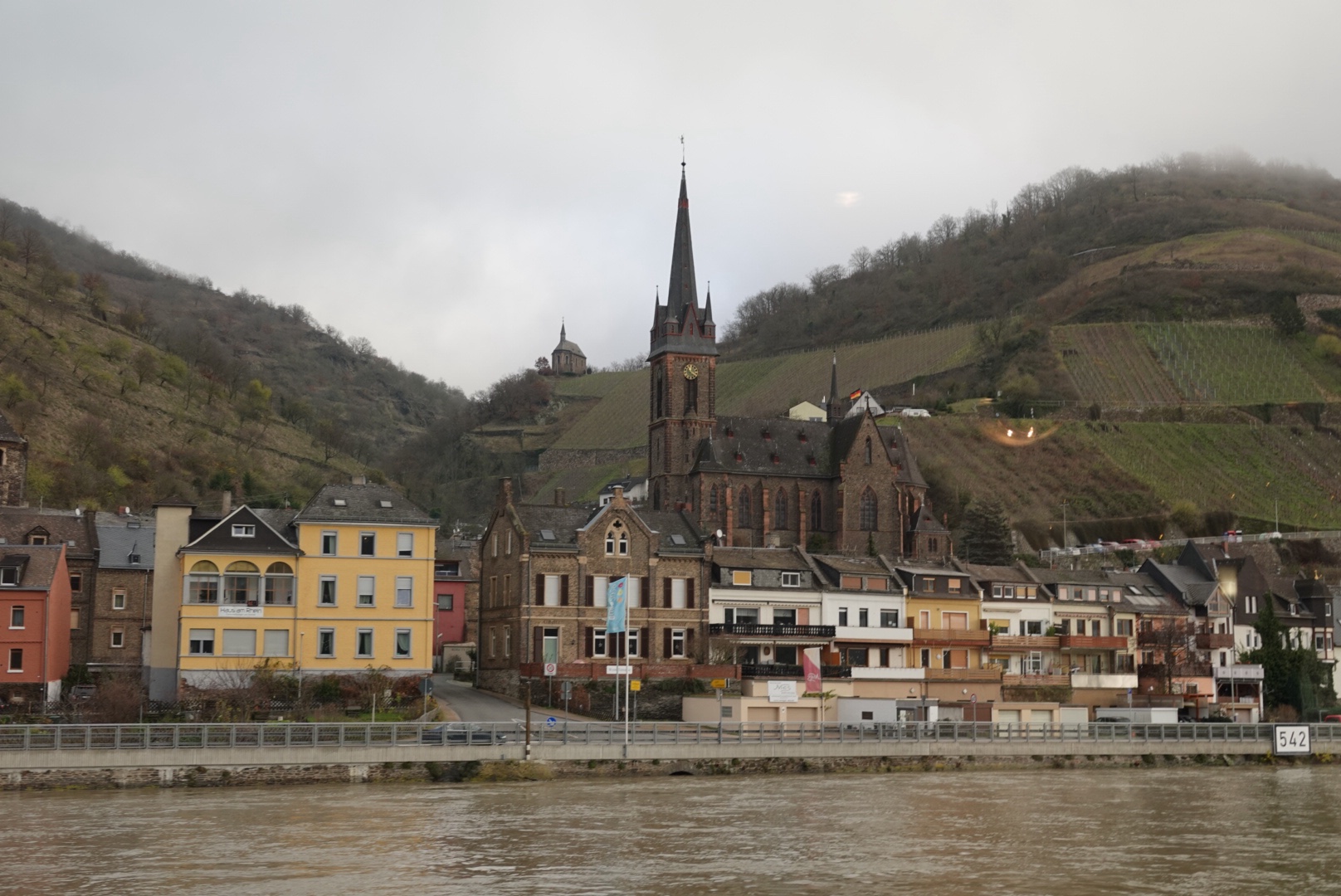


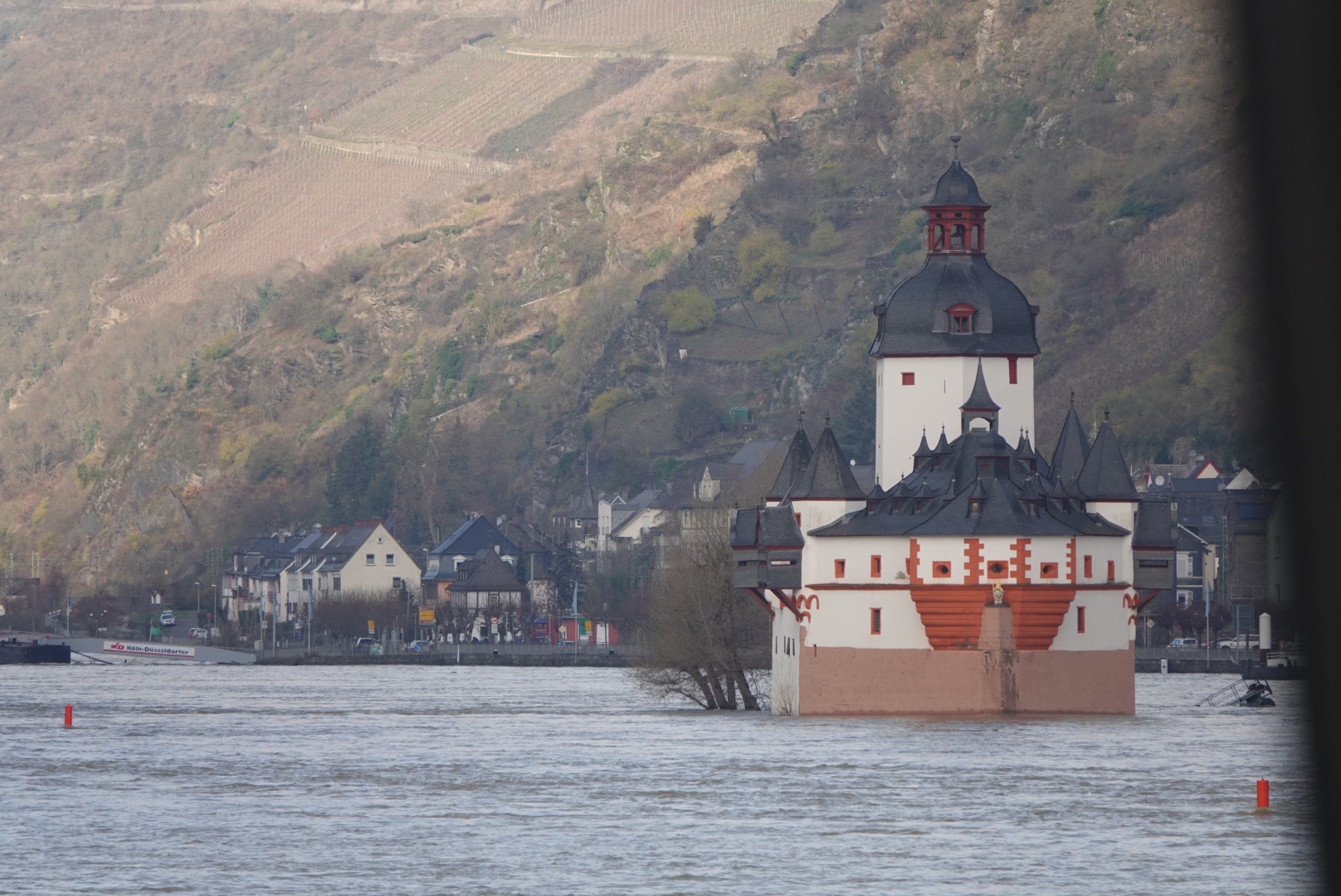
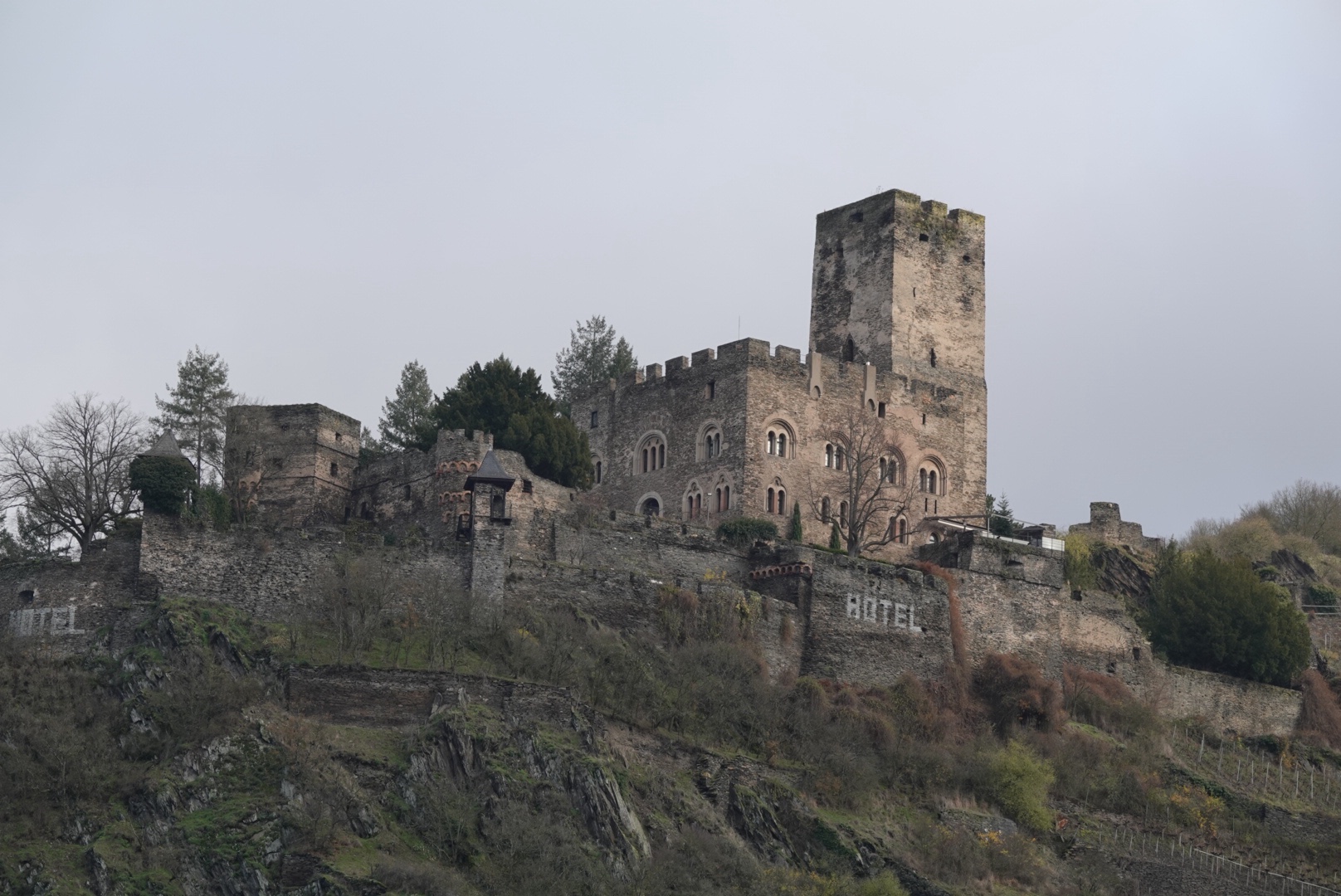


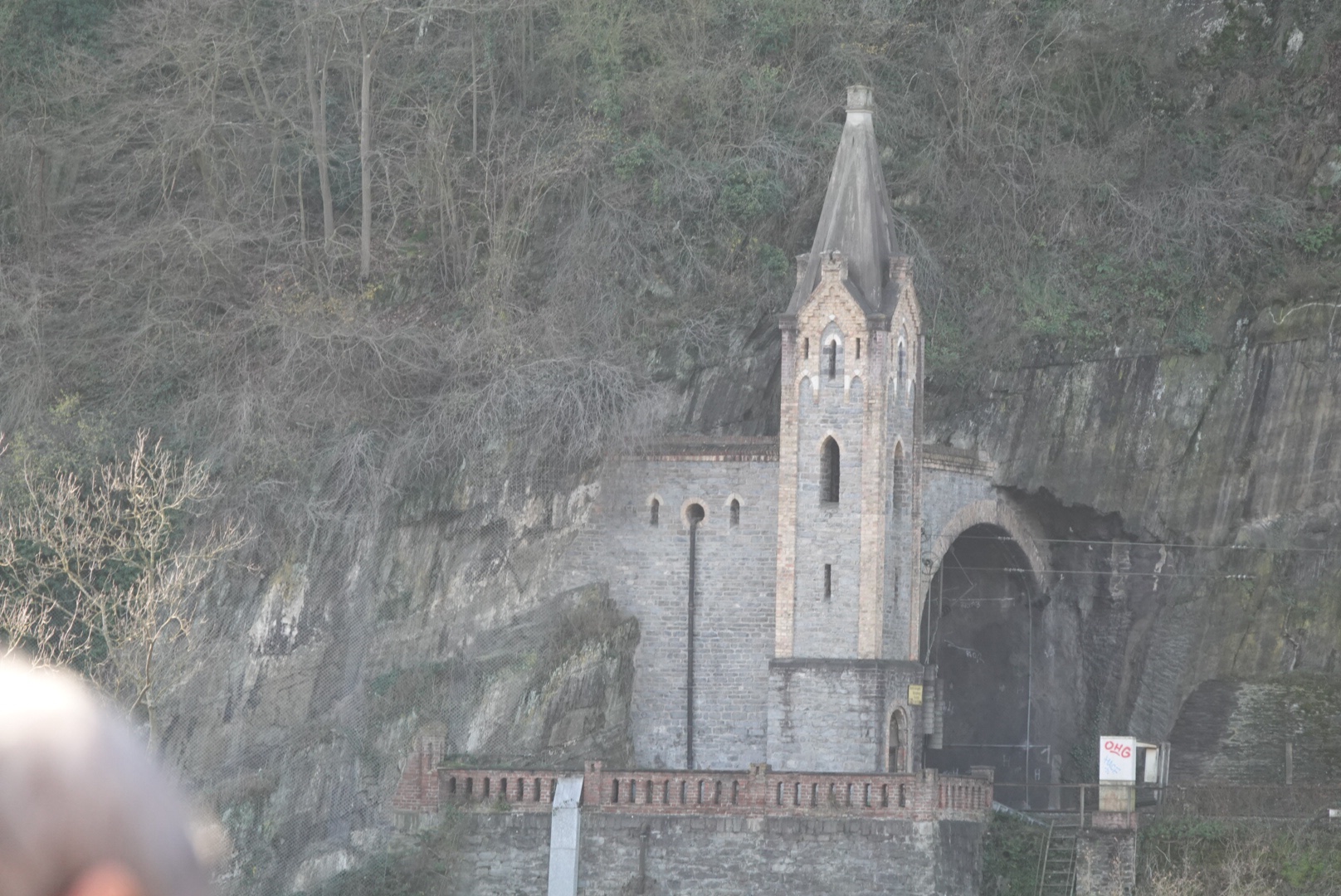



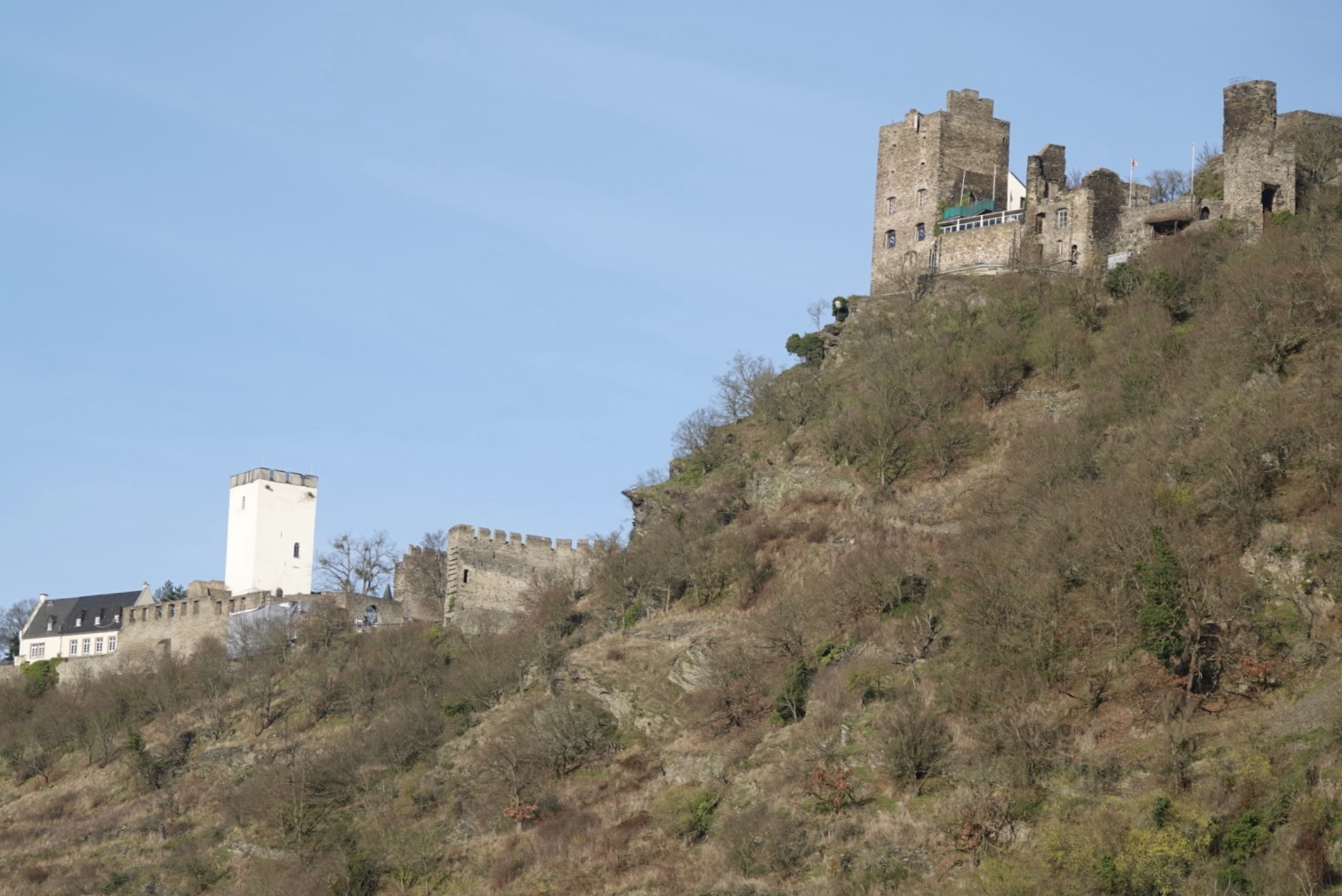
After Sterrenberg Castle, we had to disembark at the last available accessible dock, and drive back downriver to Koblenz. En route, Ted was able to photograph Marksburg Castle, which we visited in 2013 on our first trip to Germany. The 12th century castle was the only one along this stretch of the Rhine not damaged during any wars.

On arrival in Koblenz, our bus parked beside the Rhine and we had a terrific view of Ehrenbreitstein Castle on the opposite side of the river.

Our included 4 hour tour in Koblenz: Take a festive stroll around Koblenz to explore its historic past and visit the Christmas market.Begin your tour at Deutsches Eck, the city’s famed German Corner and home to a popular equestrian statue of Emperor Wilhelm I. After time to admire the sculpture, continue your walk among the narrow streets. Revel in the yuletide atmosphere in the heart of the Old Town and admire the beautiful old school that has operated as the Koblenz City Hall since 1895. Get acquainted with local Christmas traditions during a stroll through the cheerful Christmas market; six different locations, between Münzplatz and Zentralplatz, host the festivities. As you pass the charming stalls, the sweet aroma of traditional holiday favorites, such as glühwein and roasted almonds. Indulge in a delicious, sweet treat before returning to your ship.
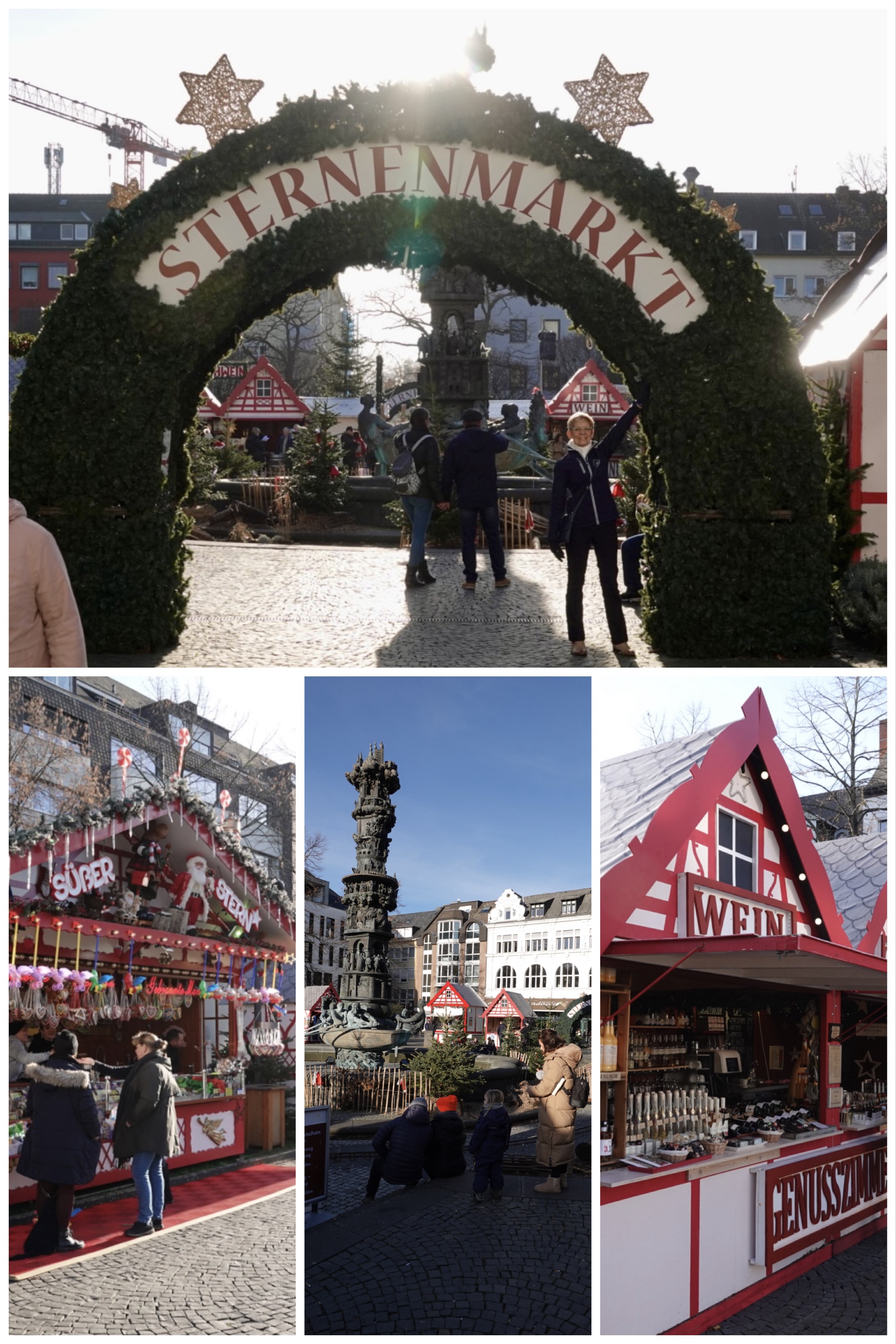
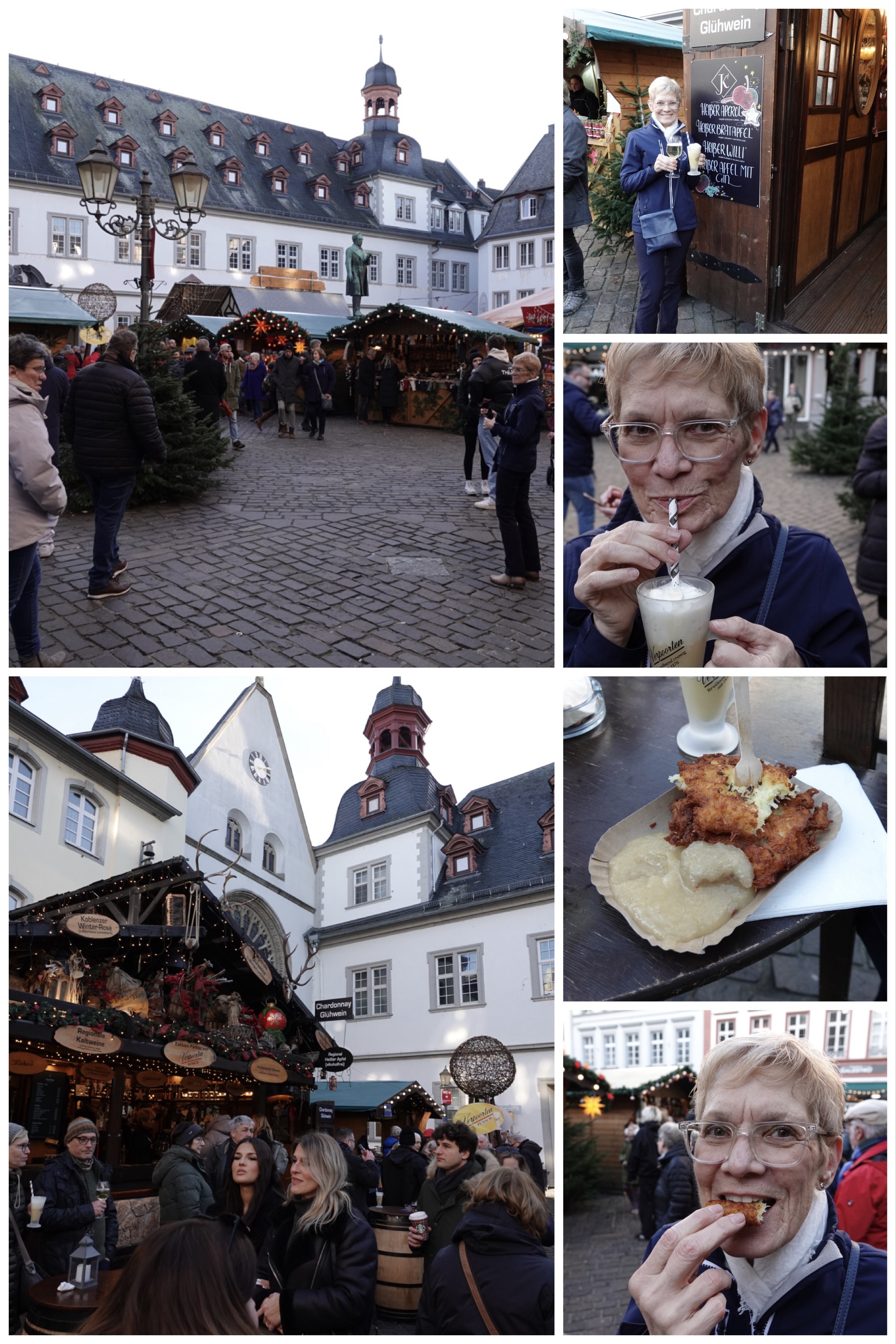
Having been here twice before, and taken some great photos of the Kaiser Wilhelm statue, Ted and I opted out of the guided tour and headed right into the city to explore the markets and have a snack. Once again, the focus of all the Christmas markets here was on food and drink as opposed to artisanal crafts or Christmas decorations. That has been both a surprise and a disappointment, since we definitely expected to see more interesting local wares for sale.


It is impossible to photograph the entirety of the Church of Our Lady in the narrow streets, but Ted got a nice shot of the bell tower, and we did pop inside for a moment.

The sign on the exterior explains that this was already the mother church of the city around 600AD, was rebuilt in neo-Romanesque style in 1180, renovated in Gothic style in the 16th century, had its Baroque “onion” towers added in 1693, was badly damaged in 1944, rebuilt in 1957, given a new choir in 1992, and had the interior restored in 2000. That’s quite the history!


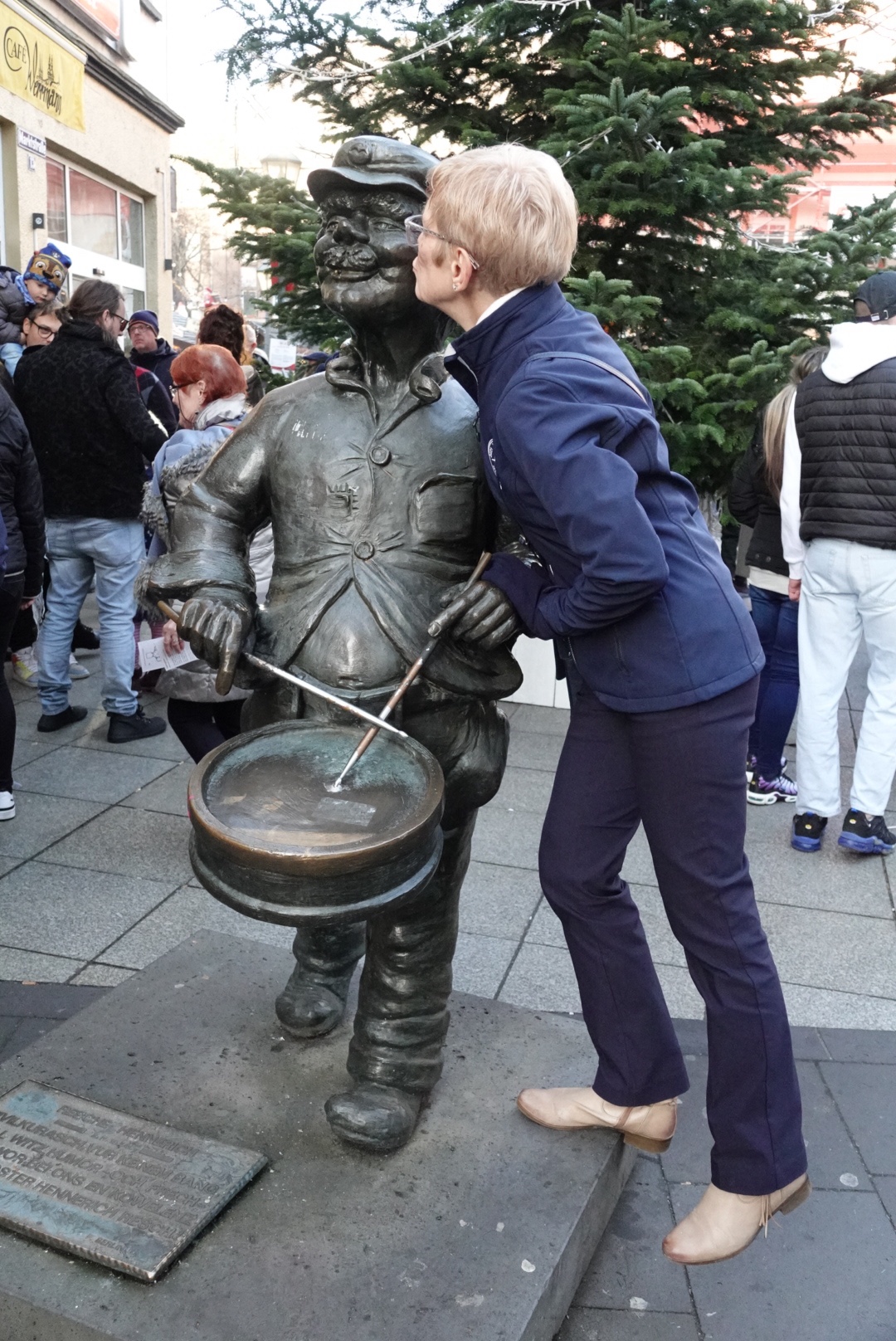
When in Koblenz, there are 2 things I feel that I just have to do: check out the French thumb sculpture in the church yard of the Basilica of Saint Castor, and give some affection to the statue of the drummer that reminds both Ted and me so much of my Dad. It’s all about the moustache and those smiling cheeks.

After our afternoon in Koblenz we were driven back to our boat, still docked in the winter storage yard. Tomorrow we’re set free to move first to Cologne proper, and then downstream to Dordrecht and finally Amsterdam.
Dinner tonight was followed by an absolutely enchanting performance by a local classical quartet consisting of violin, viola, cello, and oboe. They wowed us all.
We get to sleep in tomorrow, since our day in Cologne doesn’t officially start until a walking tour at 10:00. Ted is exhausted and coughing, so we’ll decide in the morning whether he comes with me into the city or just stays in bed. The most important thing is that he be healthy for the 10-1/2 hour flight back to BC in 3 days.
Fingers crossed.
 Rose and Ted’s Excellent Adventure
Gute Besserung to Ted! I love reading your posts, especially since they bring back so many memories of the three years we lived along the Rhine in Bonn. Many of the castles you described today figure prominently in our lives: Bill’s grandparents helped to establish the youth hostel at Burg Stahleck; our first date was at a wine festival in St. Goar (and our first kiss on the ferry from there to St. Goarshausen), and on and on!
It’s hard to think that only a couple of years ago the Rhine was at all-time low levels and the remains of Roman marinas were exposed. To use a line from the Loraley poem: “Ich weiß nicht, was es bedeuten doll,”….
Gute fahrt noch!
LikeLiked by 1 person
What wonderful memories! Thank you for sharing them with us!!
LikeLike