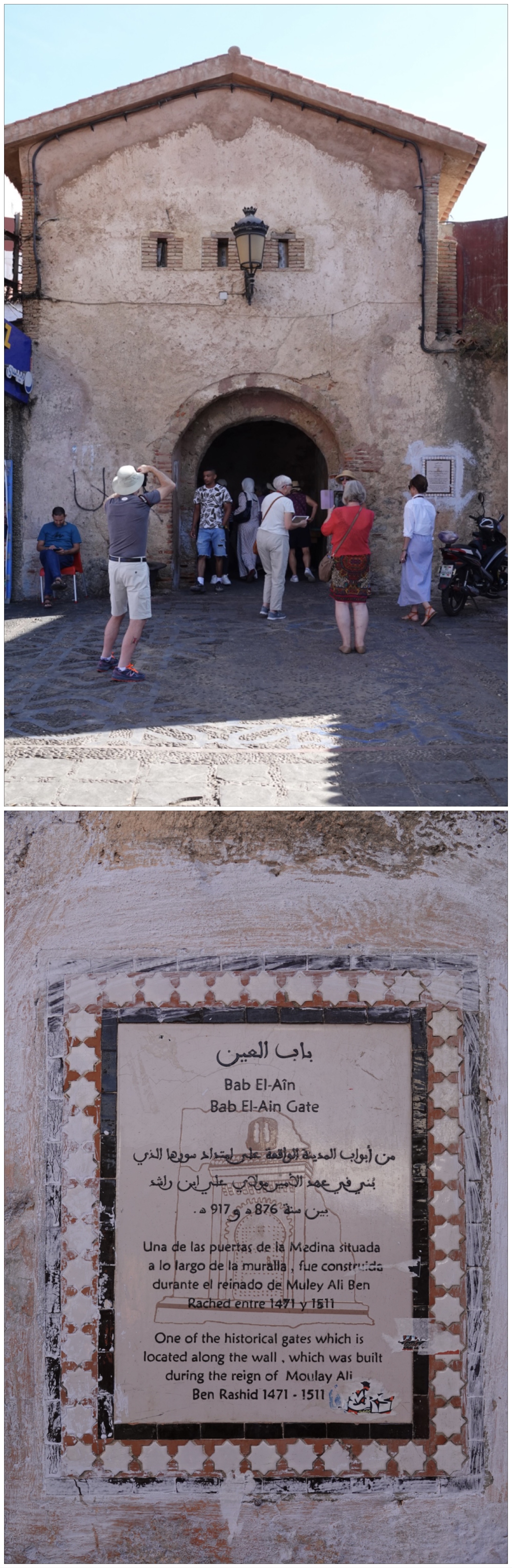
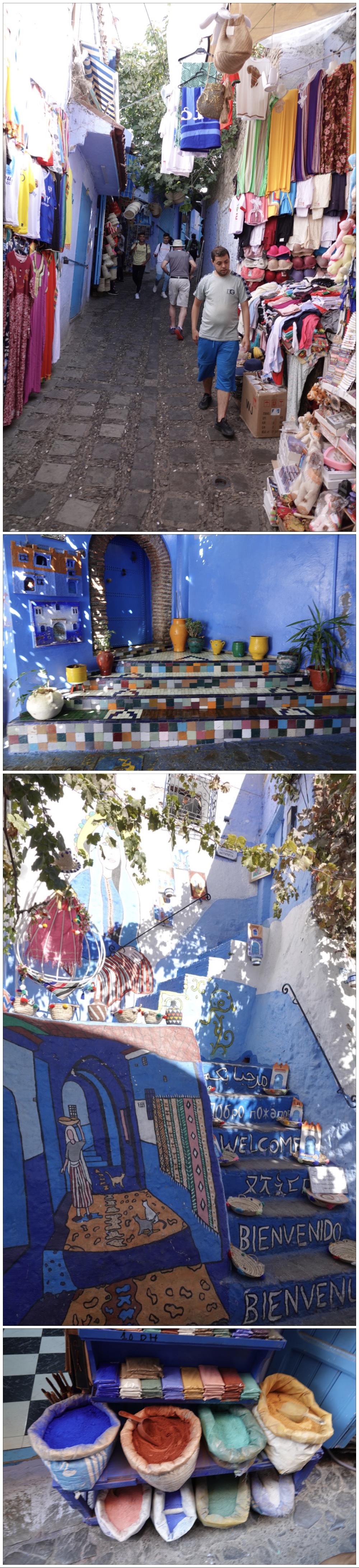
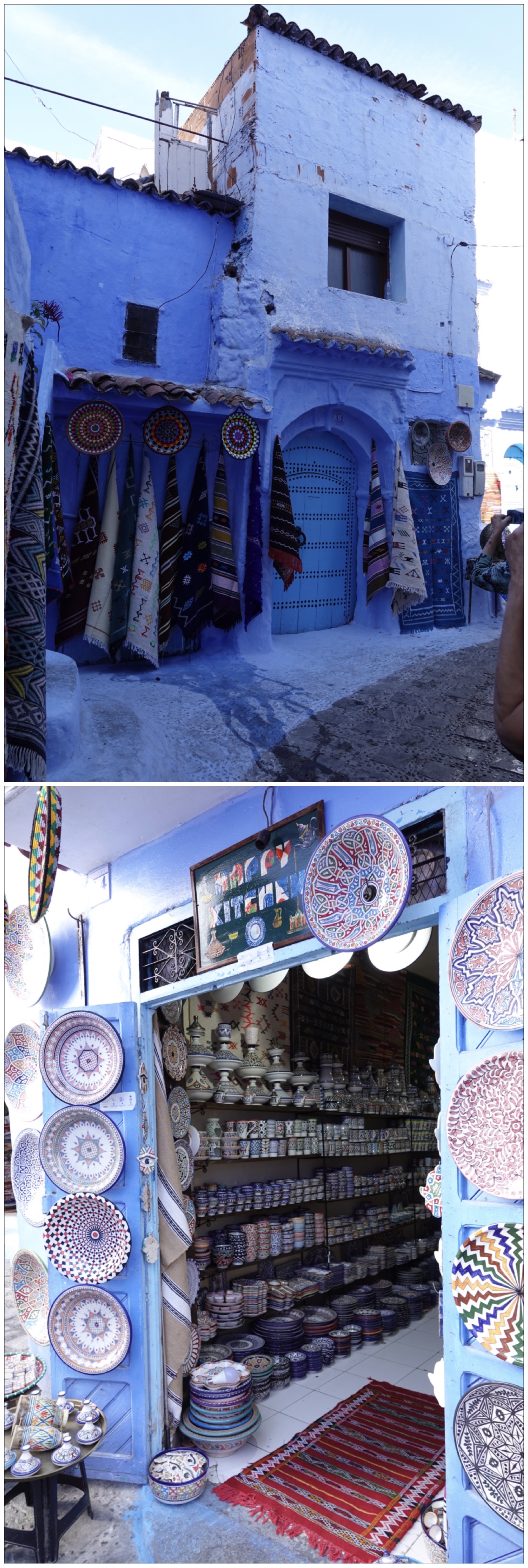
October 5 Itinerary: We proceed to the mountain city of Chefchaouen, known as the “Blue City”. It is famous for the old Medina, houses with blue doors, wrought iron windows and tile roofs. The local markets are animated with traditionally dressed locals and colourful goods. After our tour we continue to Meknes.
🐪 🐫 🐪 🐫🐪 🐫🐪 🐫🐪 🐫🐪 🐫🐪 🐫🐪 🐫🐪 🐫🐪 🐫🐪 🐫🐪 🐪 🐫🐪 🐫🐪 🐫
After an excellent breakfast that for me featured fresh yogurt and local honey that tasted and smelled of the fragrant roses from which the bees had sipped, it was another long driving day as we followed the Rif mountain range from Tangier all the way to Meknes.
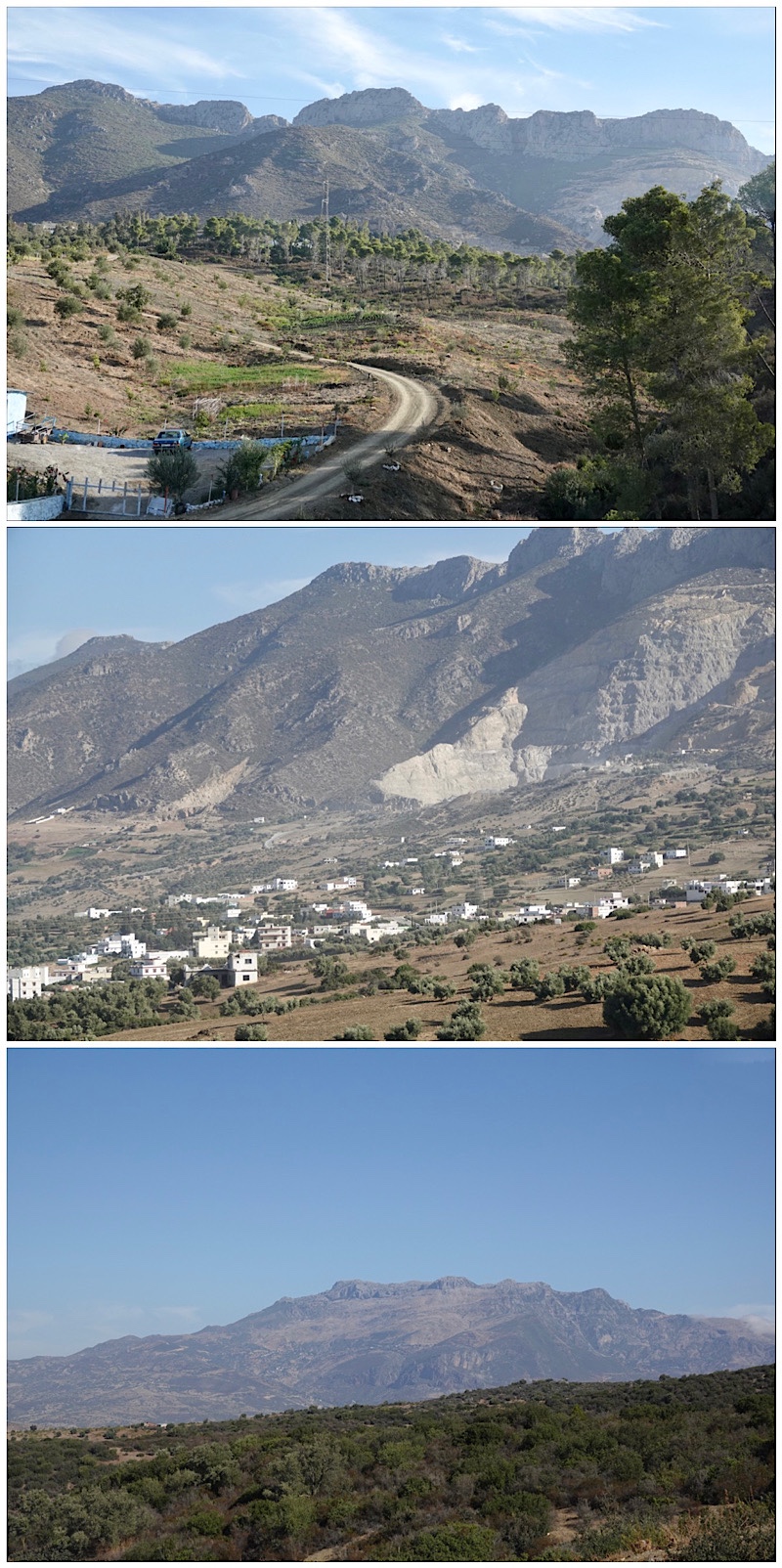
En route, we saw examples of both already green irrigated farms, and those still untilled while waiting for the rainy season to begin near the end of this month.
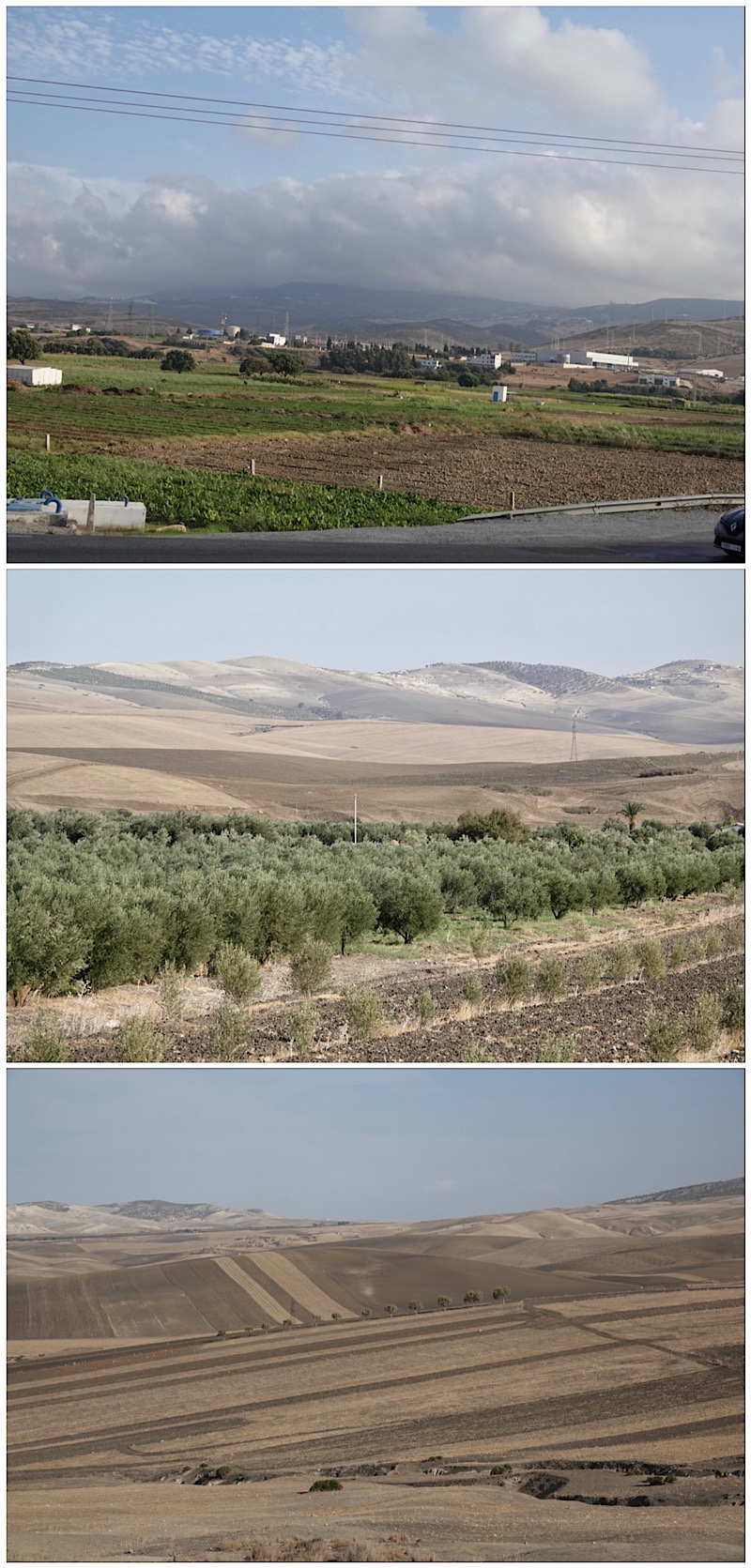
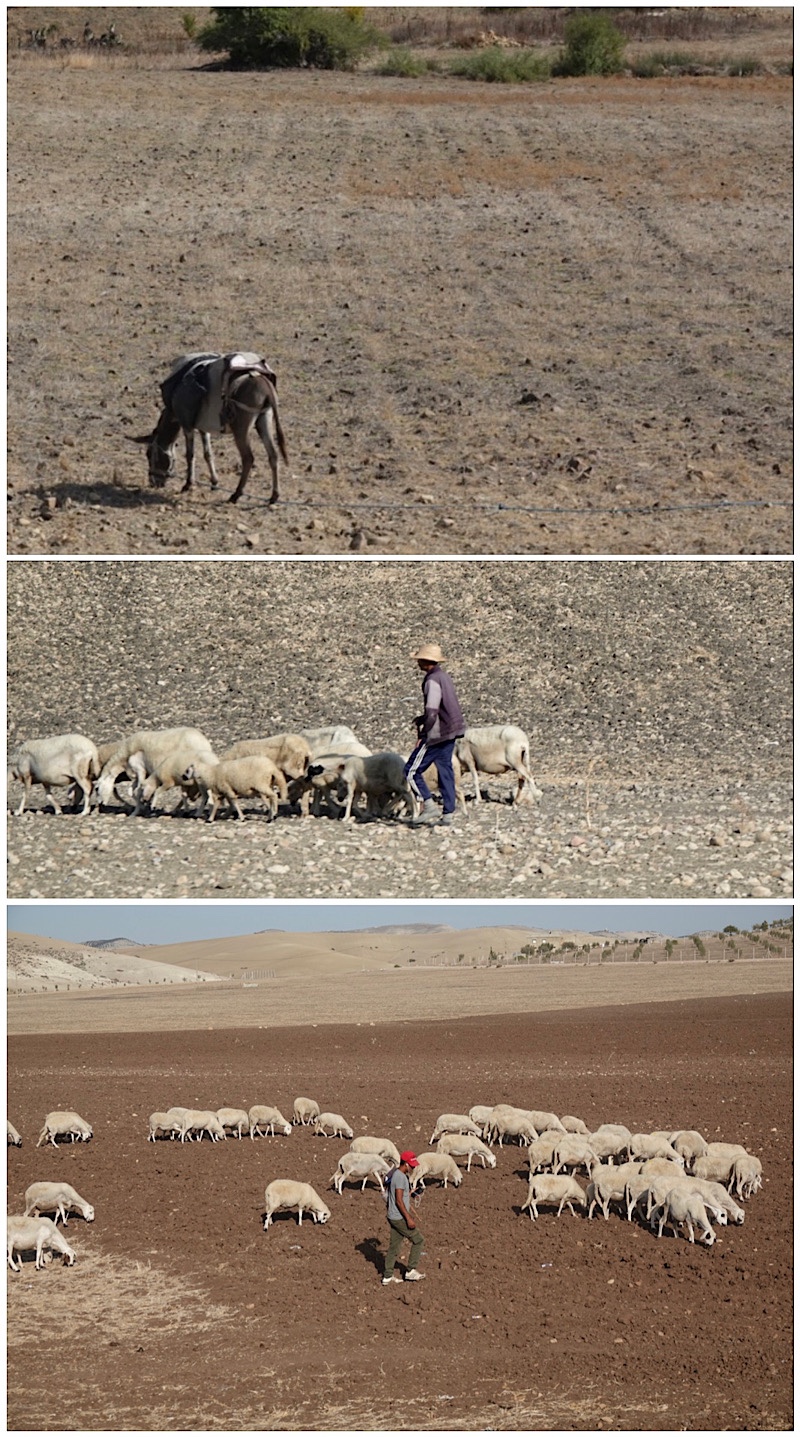
We passed through olive groves and fruit orchards, as well as grazing flocks of sheep, herds of goats, and the lone donkeys that each farm seems to have.
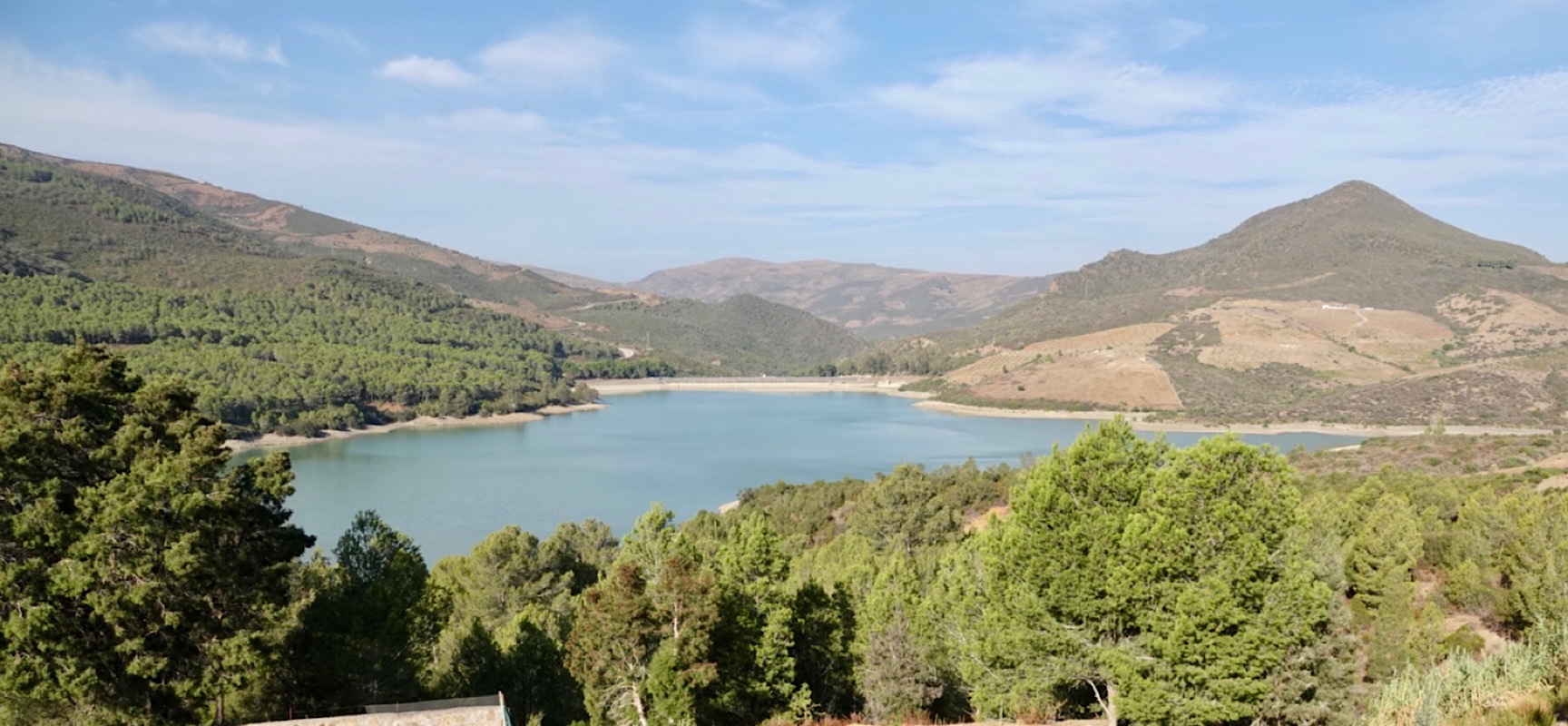
We also passed a couple of fairly new dams (one pictured below) constructed both to conserve water and provide electricity, and a large wind farm. When we reach the Sahara, we’ll see part of the Noor Ouarzazate Solar Complex, the world’s biggest concentrated solar power facility.
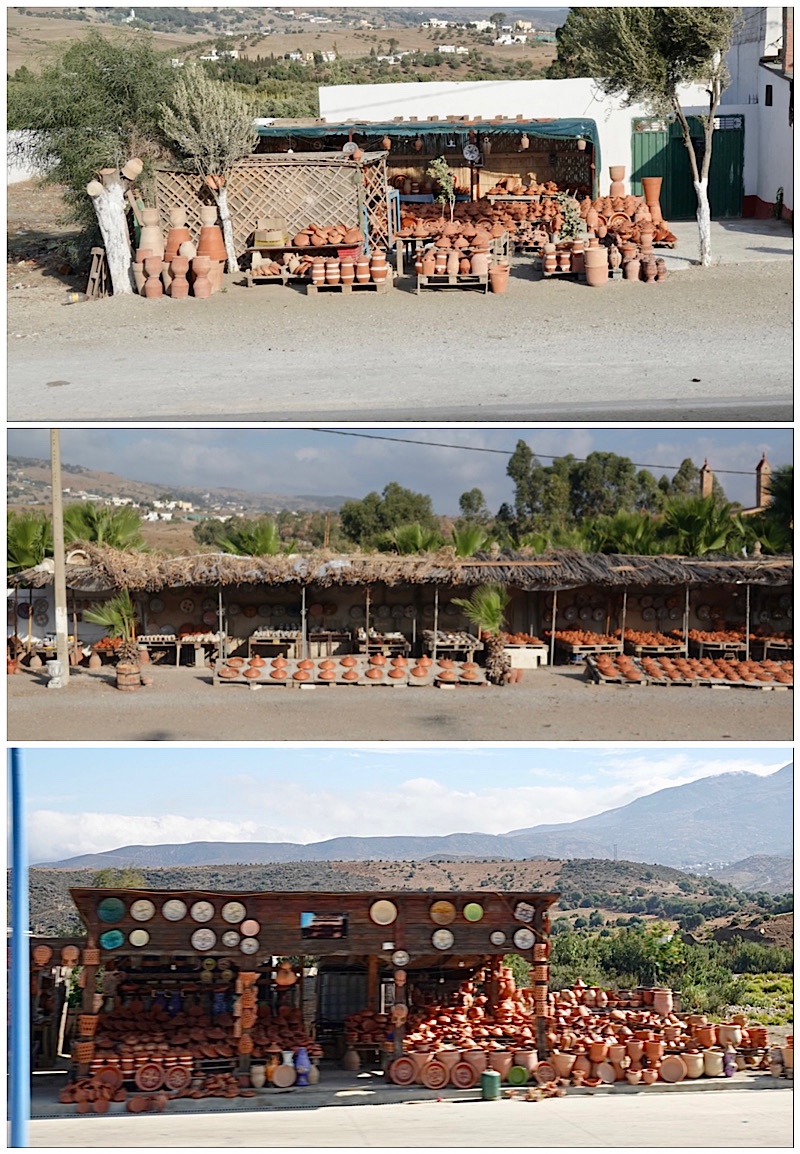
Along the roadside were several large displays of Moroccan cookware for sale, but no shopkeepers , which made us wonder whether sales were done on the honour system.
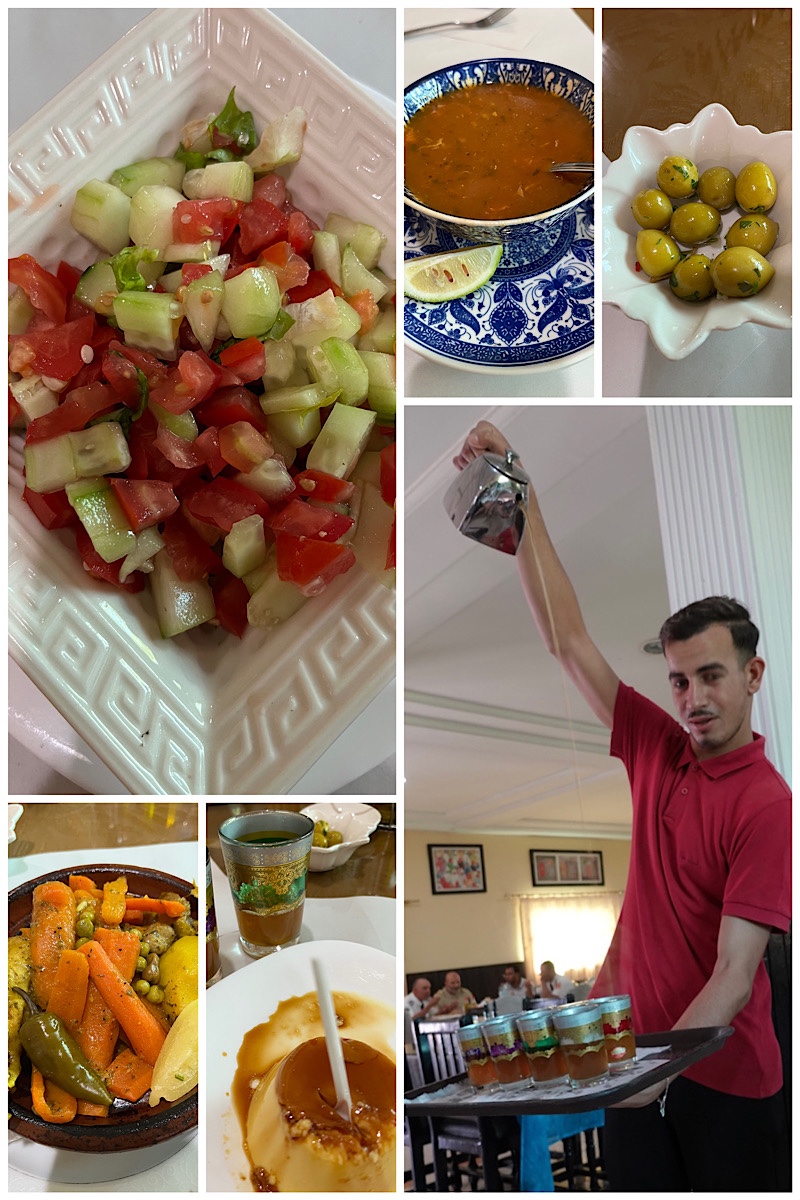
To break up the rest of the route to Meknes we stopped for lunch at the Motel Rif, 4km from the centre of the city of Ouazzane. From the a la carte menu provided to our large group Ted enjoyed harira lamb soup and a beef tagine, and I enjoyed the Rif salad of fresh tomato, cucumber, and onion, and a chicken tagine. The tagines were nicely spicy due to hot peppers, and made us appreciate our yogurt créme brûlée’s that much more. A bonus was fresh hot mint tea, poured from great height by our talented server. With lunch at 2:30 p.m., neither of us were going to be very hungry for dinner later.
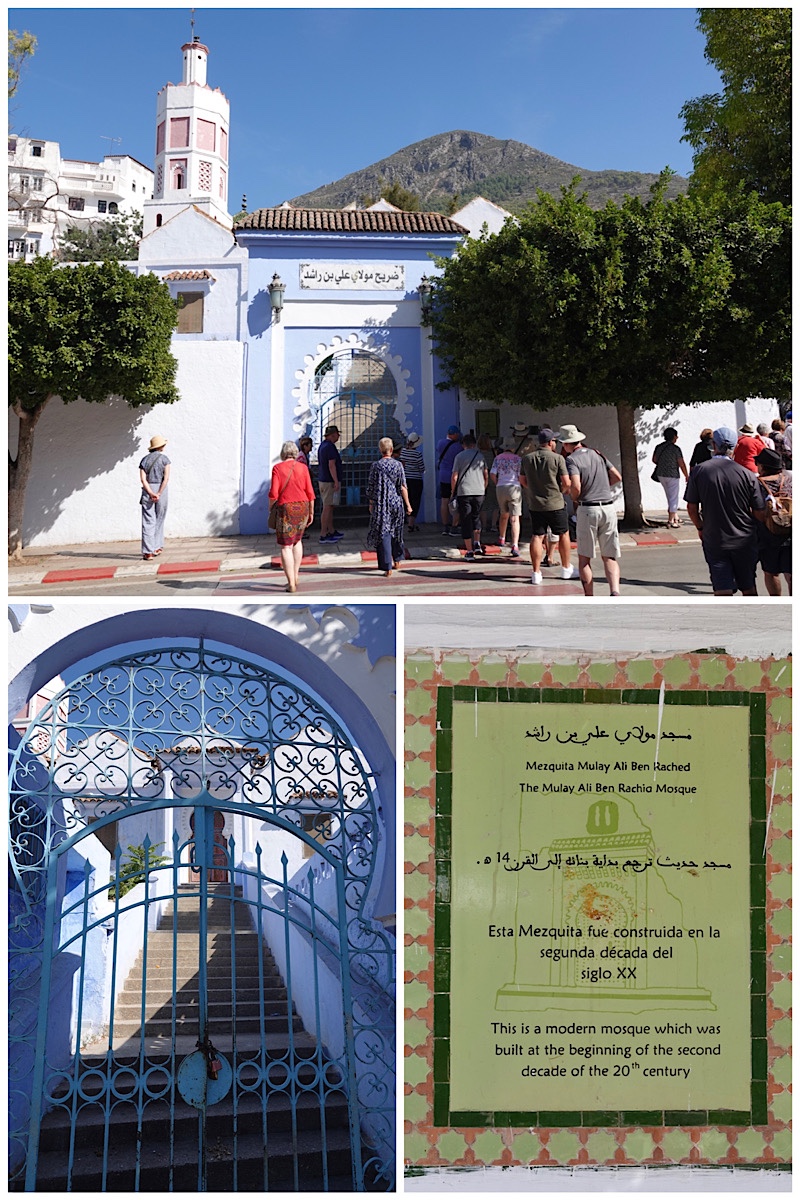
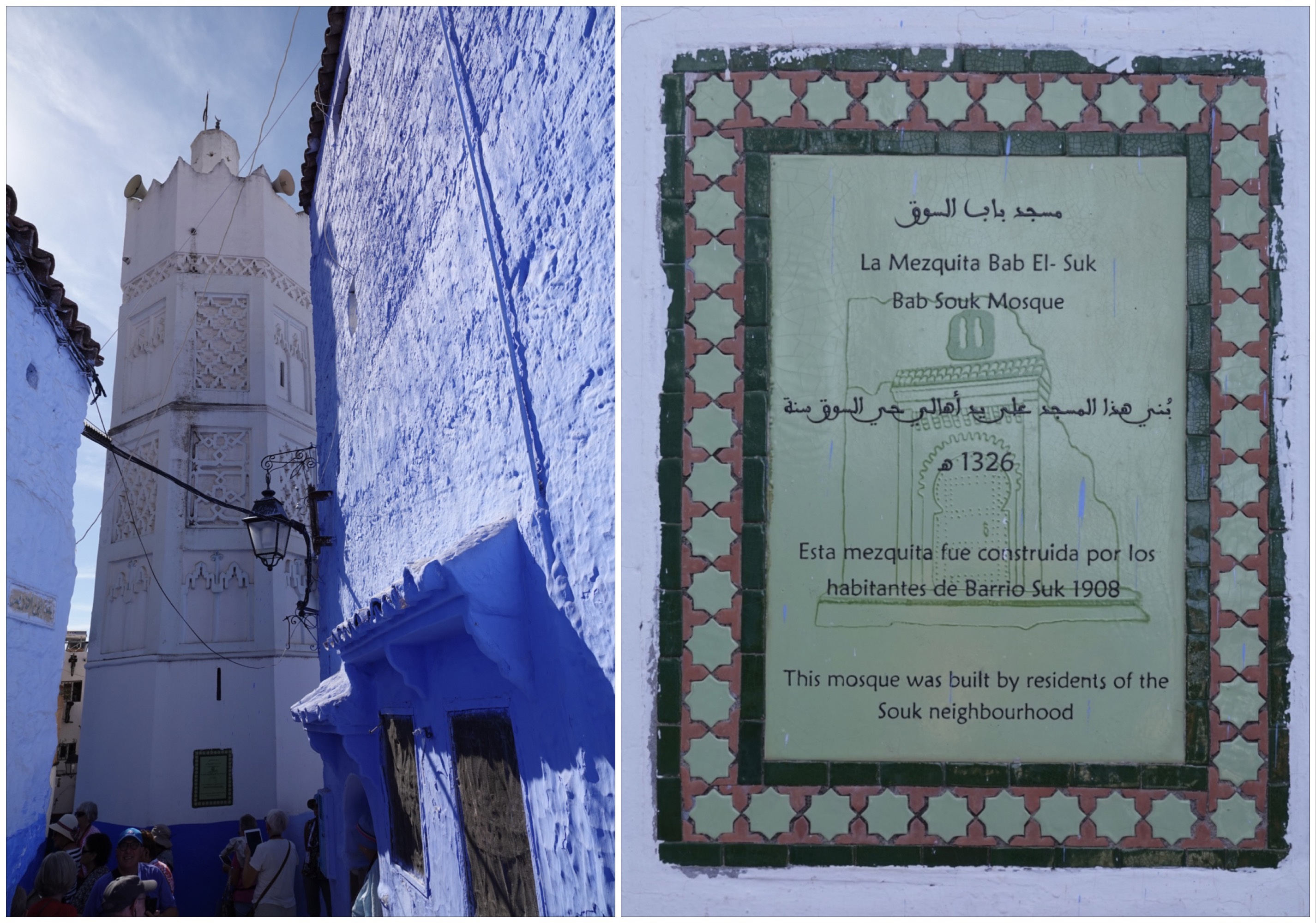
On to our main goal. Chefchaouen truly is a blue city, especially in the old kasbah/medina. Shops, homes, small hotels and restaurants, mosques, and even entire street surfaces are painted in various shades of blue. The colour dates back to settlement of the area by Jews displaced from Spain during both the Crusades and the Spanish Inquisition, and is most often the same blue shade as the Israeli flag, representing sky and heaven. By contrast, green is the colour most often used by Muslims, signifying peace – but in Chefchaouen even the mosque outside the kasbah is blue!
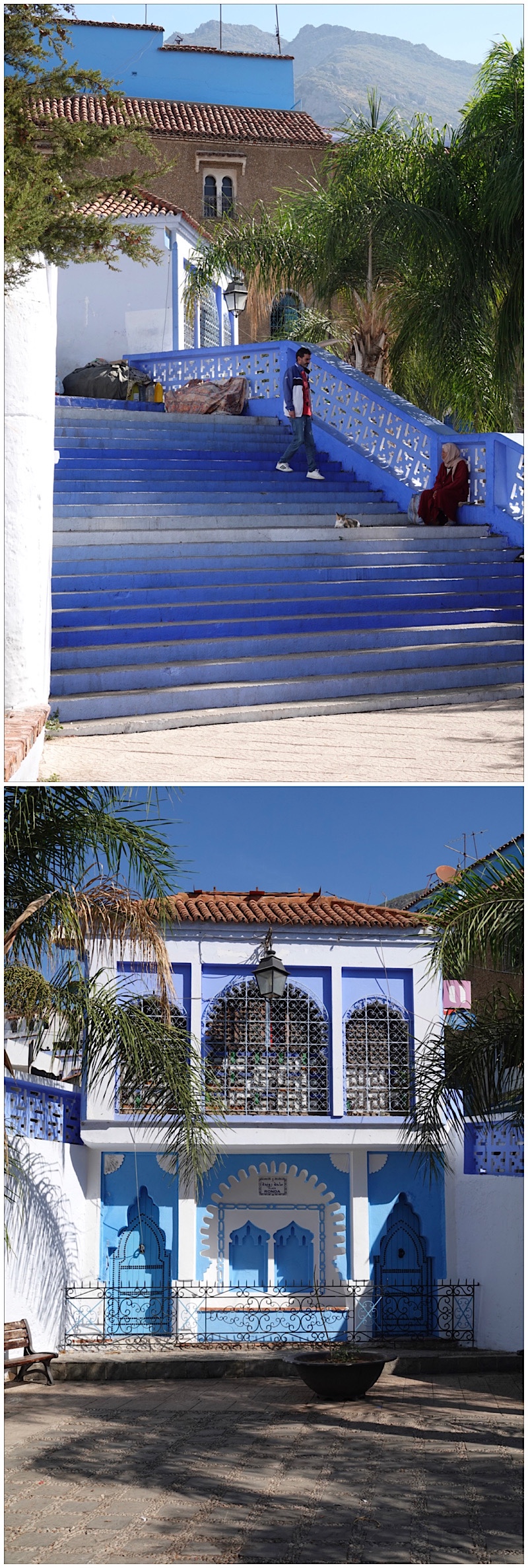
A kasbah is a fortified city, citadel, or walled community. A medina is an old town or town centre. In Chefchaouen, the medina is inside the kasbah!

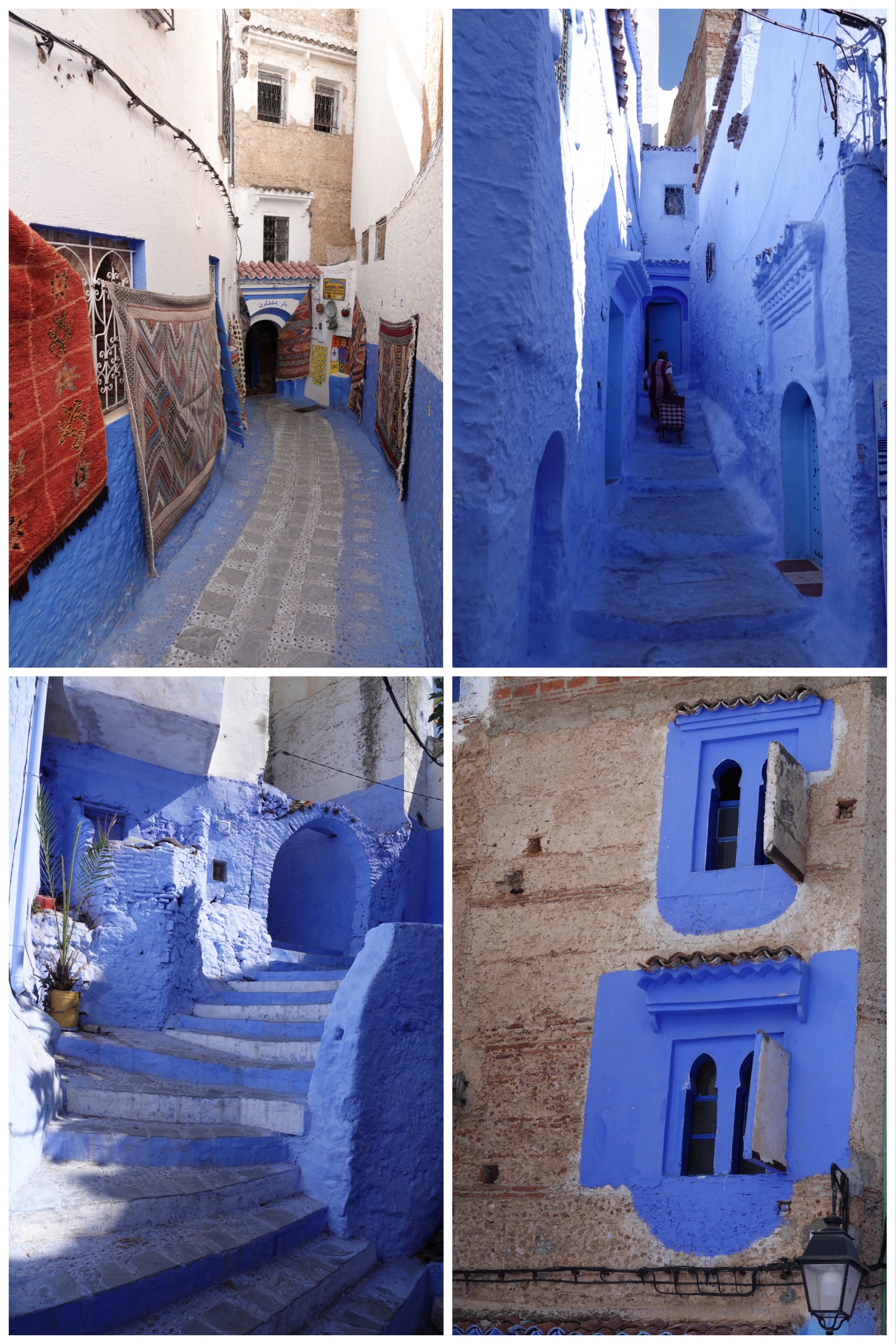
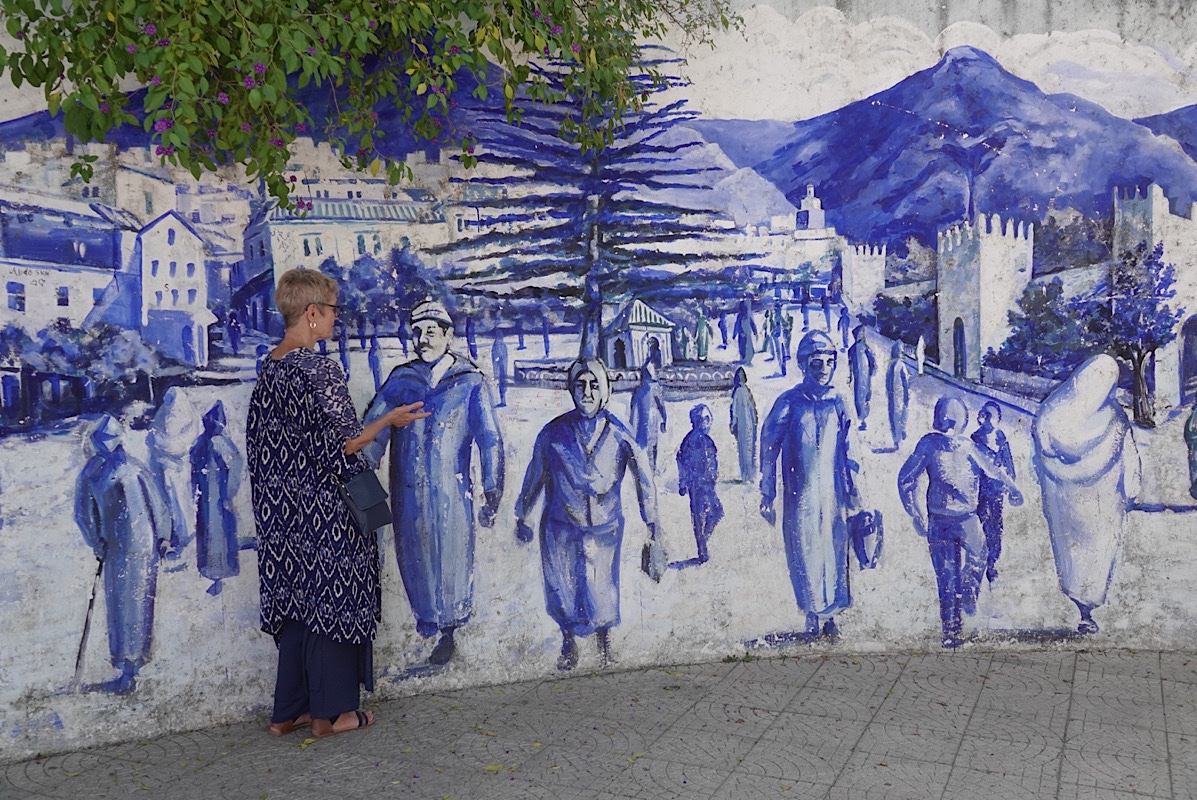
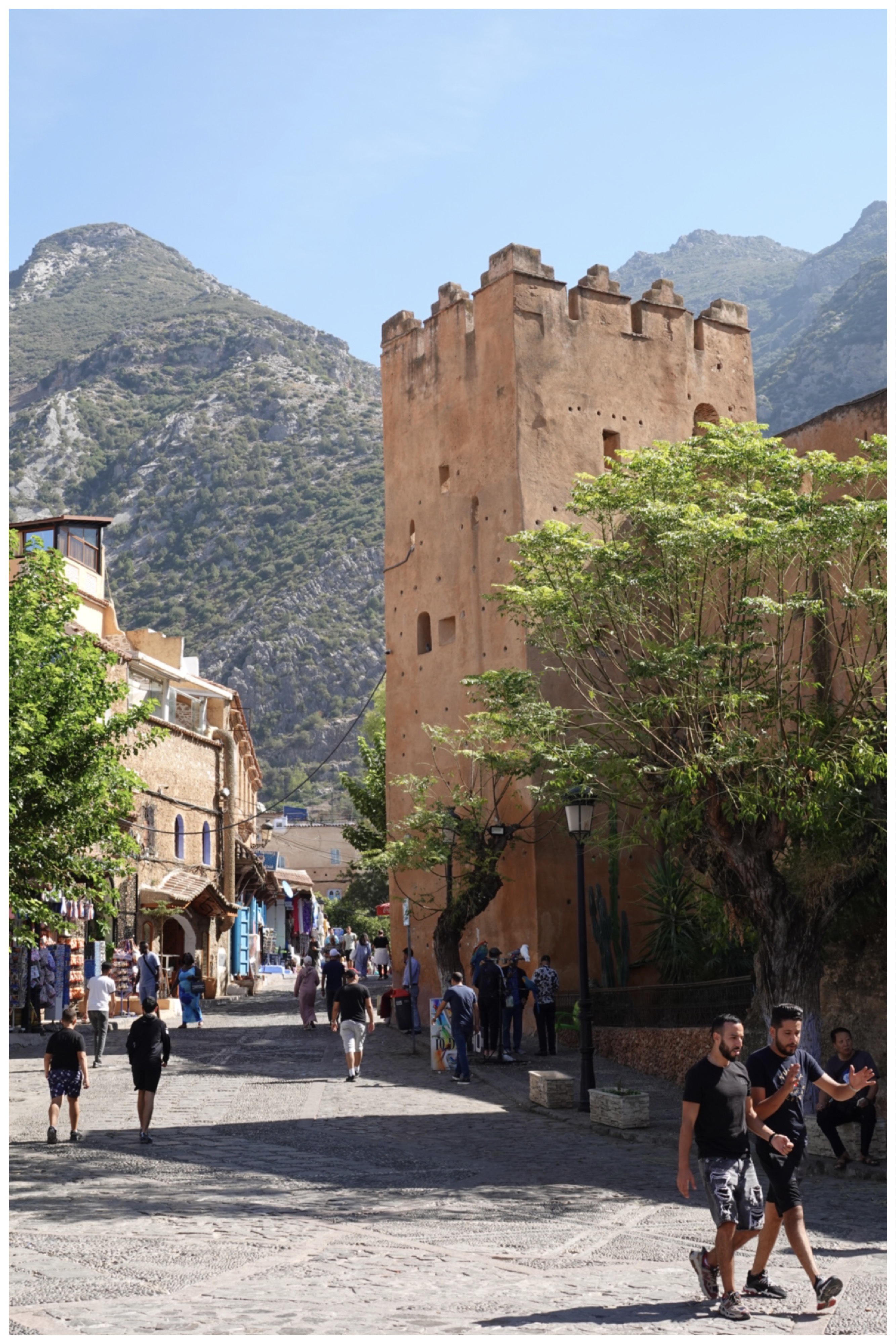
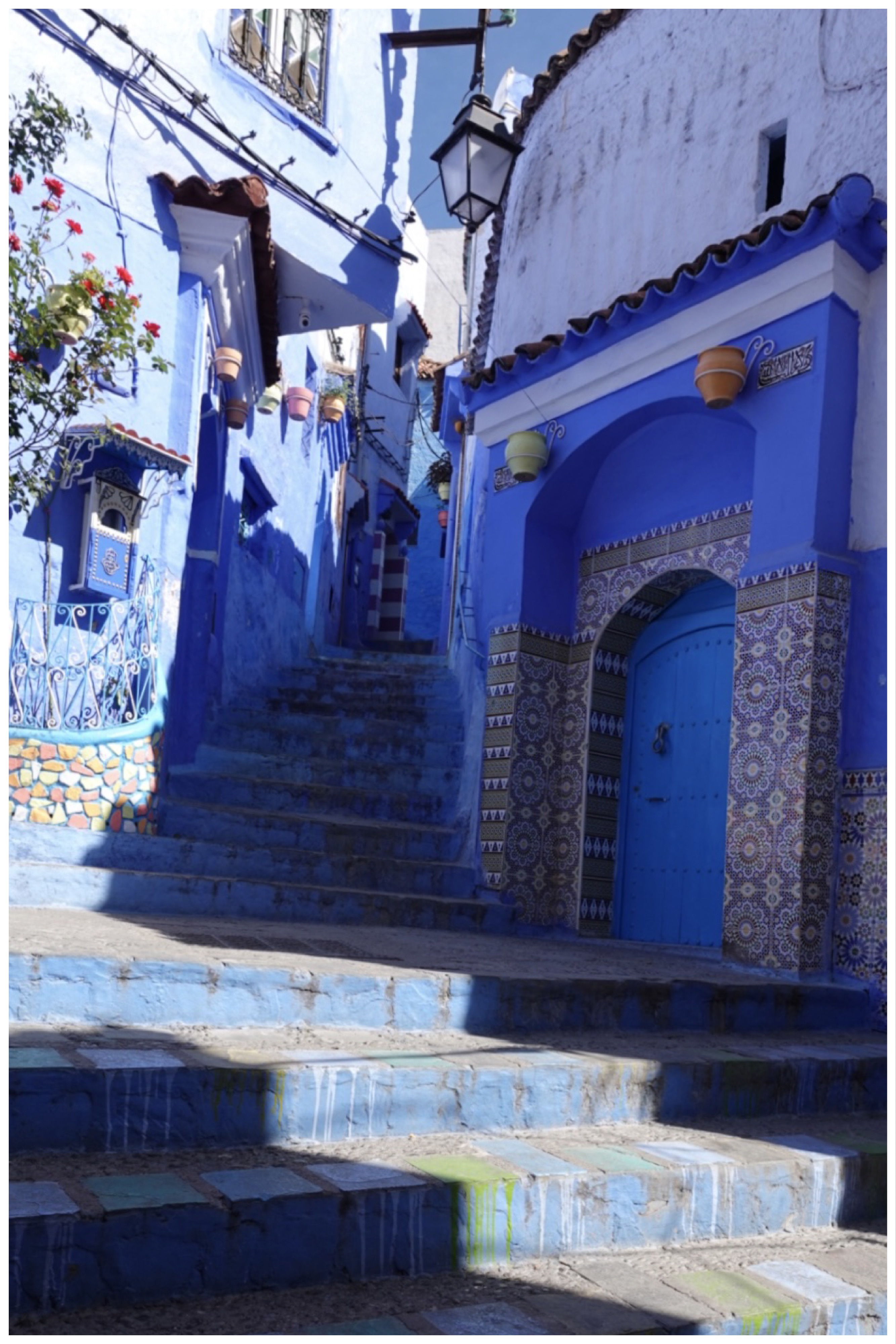
After all that blue, it was time to head to our next overnight destination, Meknes, which we’ll explore tomorrow.
Our accommodation in Meknes is the 5 star Hotel Zaki, with an incredibly impressive entryway and lobby,ornately decorated in Moroccan carved cedar, mosaic tile, enamel, and bronze.
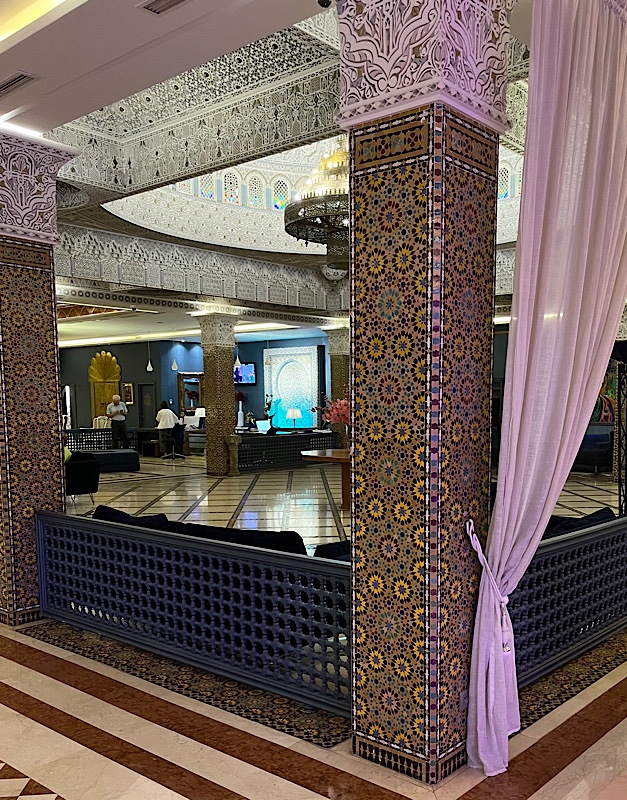
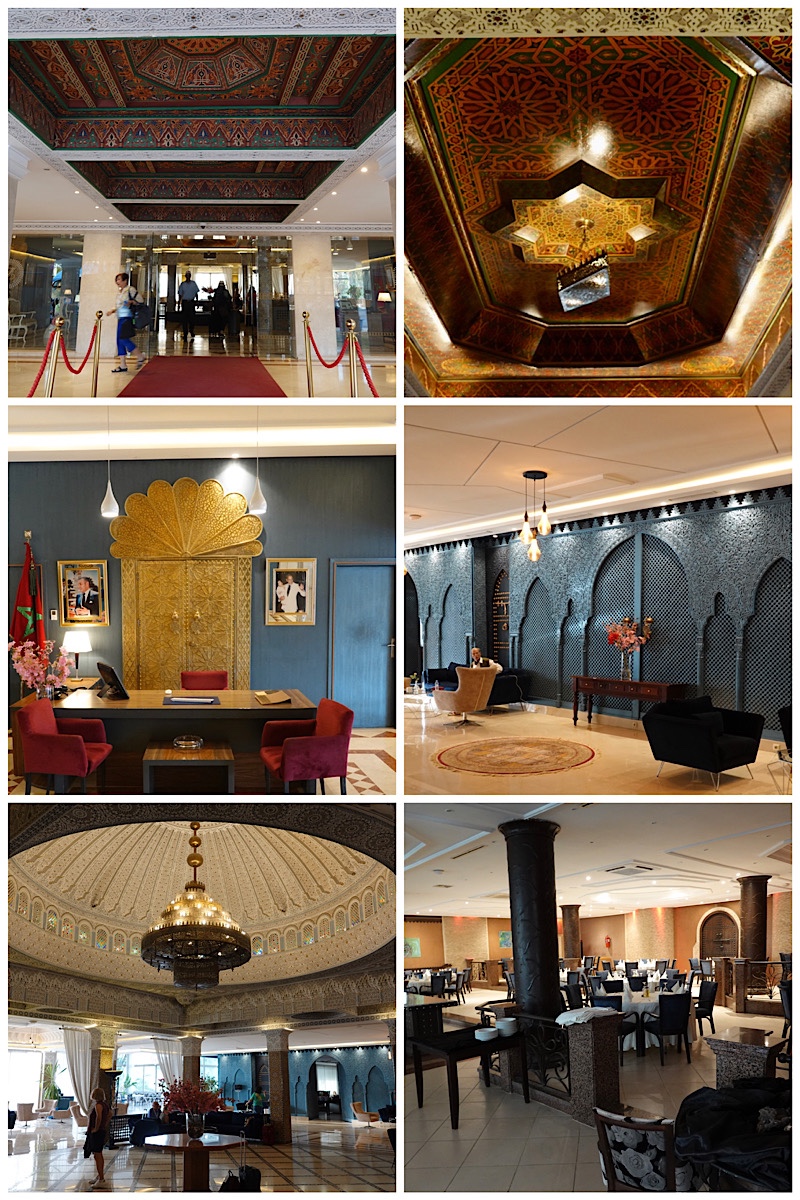
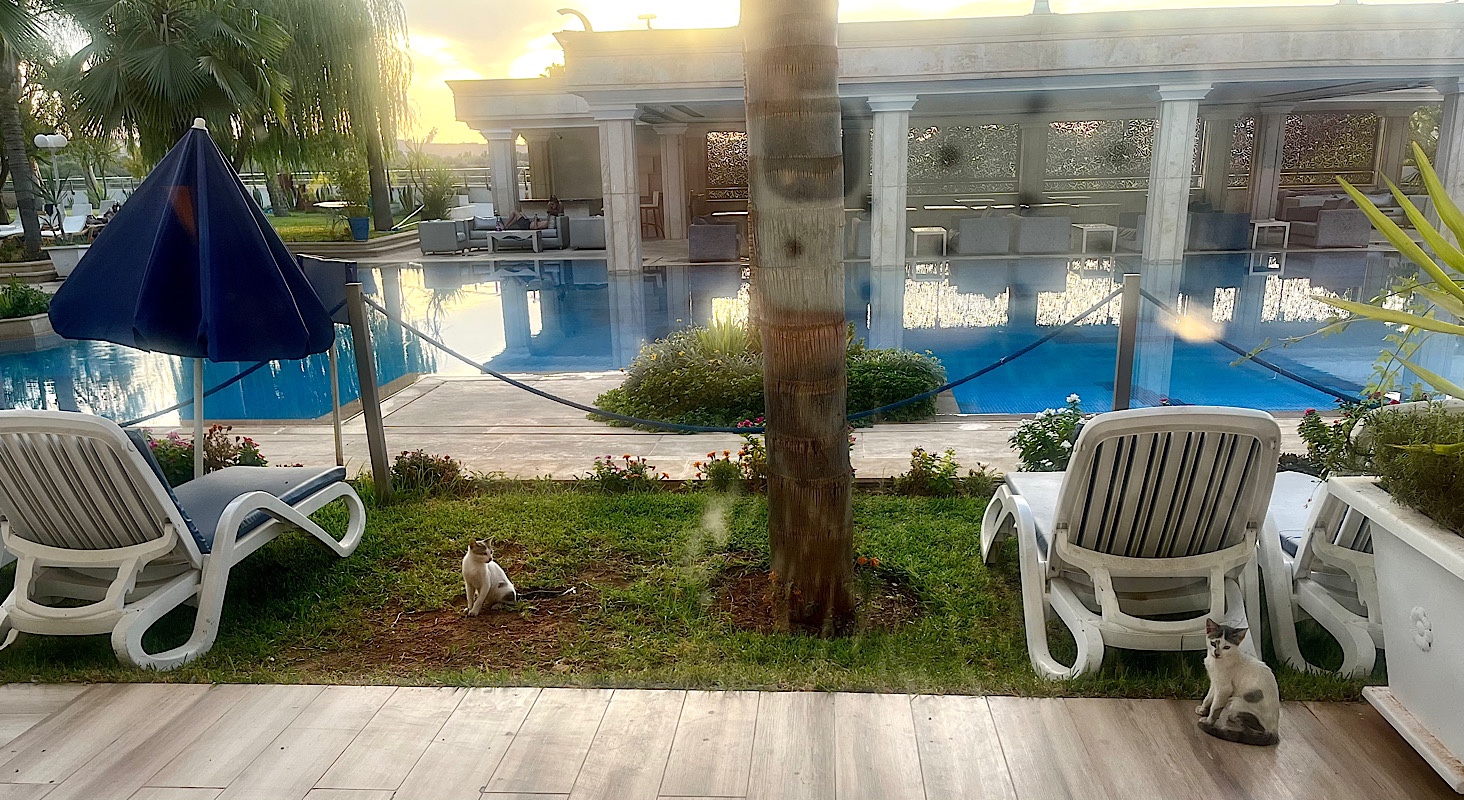
Our room is poolside, with its own patio that apparently comes with 2 cats! Unfortunately, we’ve been told not to pet any of Morocco’s many strays, since they’ve never been vaccinated.

Dinner tonight, while buffet style again, was excellent: truly hot (temperature-wise) food, great flavours, and nicely presented. Unfortunately, my large lunch precluded me trying more than the a samosa-like vegetable pastry, a kefta (beef) spring roll, and a sliver of dark chocolate cake.
I also did a bit of financial “housekeeping”, accessing an ATM to take out another 1000 Dirham ($140CAD/$100USD). We have yet to find anywhere except our hotels that will accept credit cards, so I underestimated how much cash we’d need for paid WCs and 14 lunches.
Tomorrow we touch on Rome’s connection to Morocco, at Volubilis.
 Rose and Ted’s Excellent Adventure