October 4 Itinerary: We depart for Tangier, a cosmopolitan city combining all of its historical inhabitants – Phoenician, Romans, Vandals, Berbers, Arabs, Portuguese, Spanish, British and French. Our tour of the old city shows us the crowded Souks where traditional products are made and sold, then through the archway to the walled Medina – a medieval world of narrow lanes leading to the lively bazaars.
🐪 🐫 🐪 🐫🐪 🐫🐪 🐫🐪 🐫🐪 🐫🐪 🐫🐪 🐫🐪 🐫🐪 🐫🐪 🐫🐪 🐪 🐫🐪 🐫🐪 🐫
We’re almost completely used to the time change now, so being wakened at 5:45 a.m. by the muezzin’s call to prayer from the nearest minaret didn’t seem unreasonable.
We weren’t holding out much hope that breakfast would be anything special this morning, and it wasn’t. Actually, it was quite sad – and even our morning coffee was only available from a self-serve machine. Poor Monica, dealing with everyone’s towel issues last night (apparently the hotel’s laundry service did not deliver?) and insufficiently fed and caffeinated travellers this morning.
On returning to our room to complete packing, our key wouldn’t work (and no, it hadn’t been anywhere near my phone, since it has to go in the room’s key slot in order for lights and plugs to work). Back down to reception, which was unmanned, however I tracked down the concierge and had the key re-enabled.
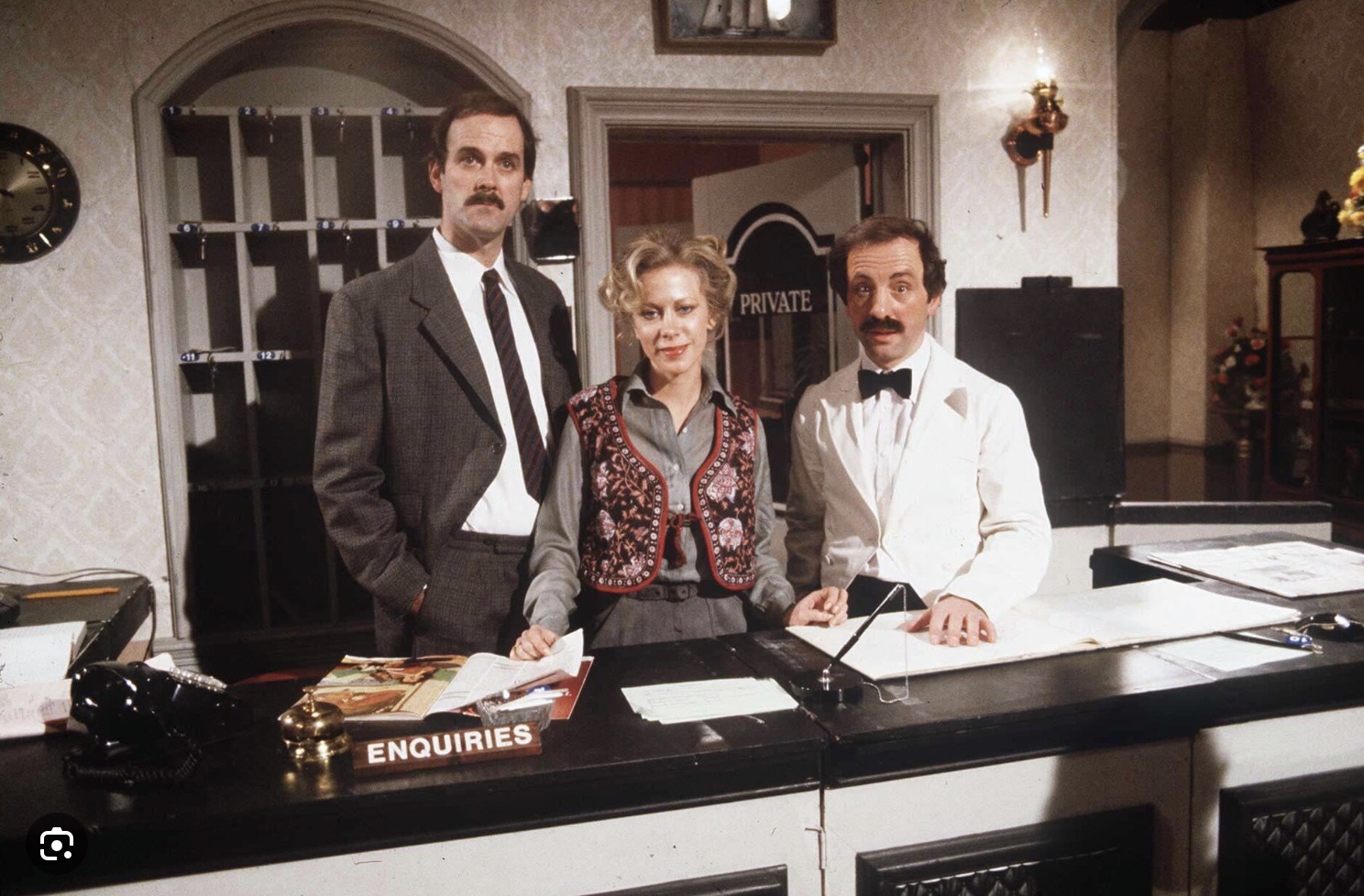
I will say that this hotel has been memorable, in a Fawlty Towers kind of way, but without John Cleese’s dry humour.
After breakfast, we embarked for Tangier, a 250 km bus ride that would take about 3 hours. Our day’s itinerary ended up being different from what was published, but very enjoyable. Fouad seems to be adding points of interest as we go along, for which we are very appreciative.
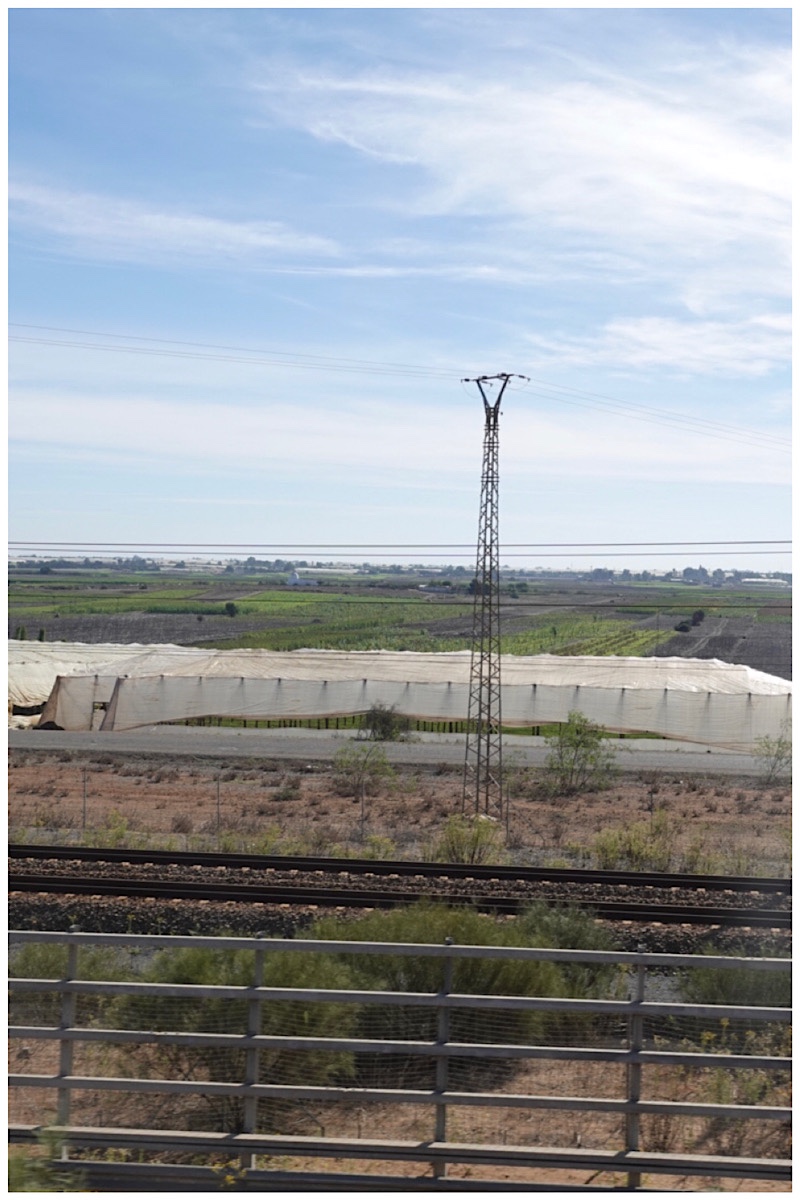
We began by driving through vast oak forests, and then through about 50 km of rich agricultural land growing everything from bananas (SO MANY bananas!), root vegetables, tree fruits, melons, onions and garlic to – surprisingly – rice.
Our route along the A5 also paralleled a portion of the rail tracks for the country’s new TGV (Trains de Grand Vitesse), the high speed passenger train system. It’s clear that lots of money is being put into transportation infrastructure in Morocco, with huge new train and bus stations recently built to support travel between main cities. Morocco has a population of around 38 million people (just slightly fewer than Canada), with about 11 million of those living in the 10 largest cities, which are fairly widely spread apart in the area west of the Atlas Mountains.
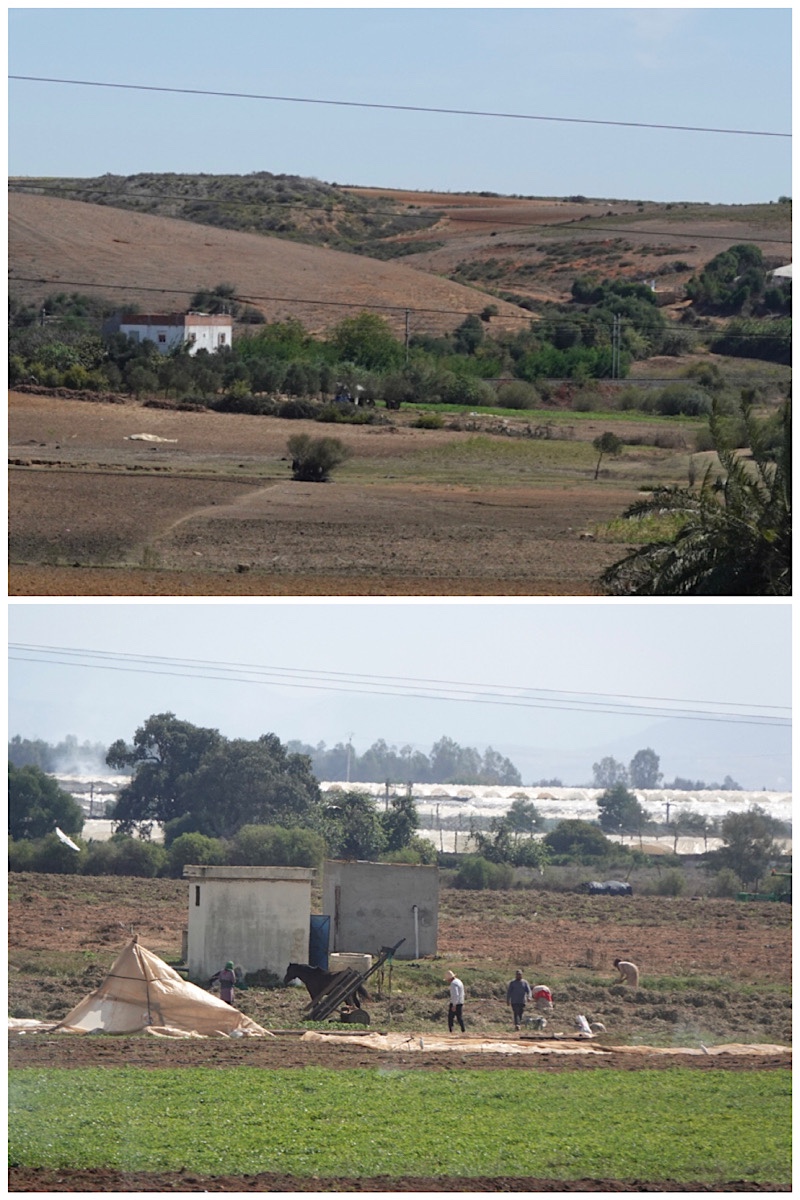
We saw very little large farming machinery, but lots of farm workers hoeing, planting, and weeding – and a few horse-drawn plows and donkey carts.
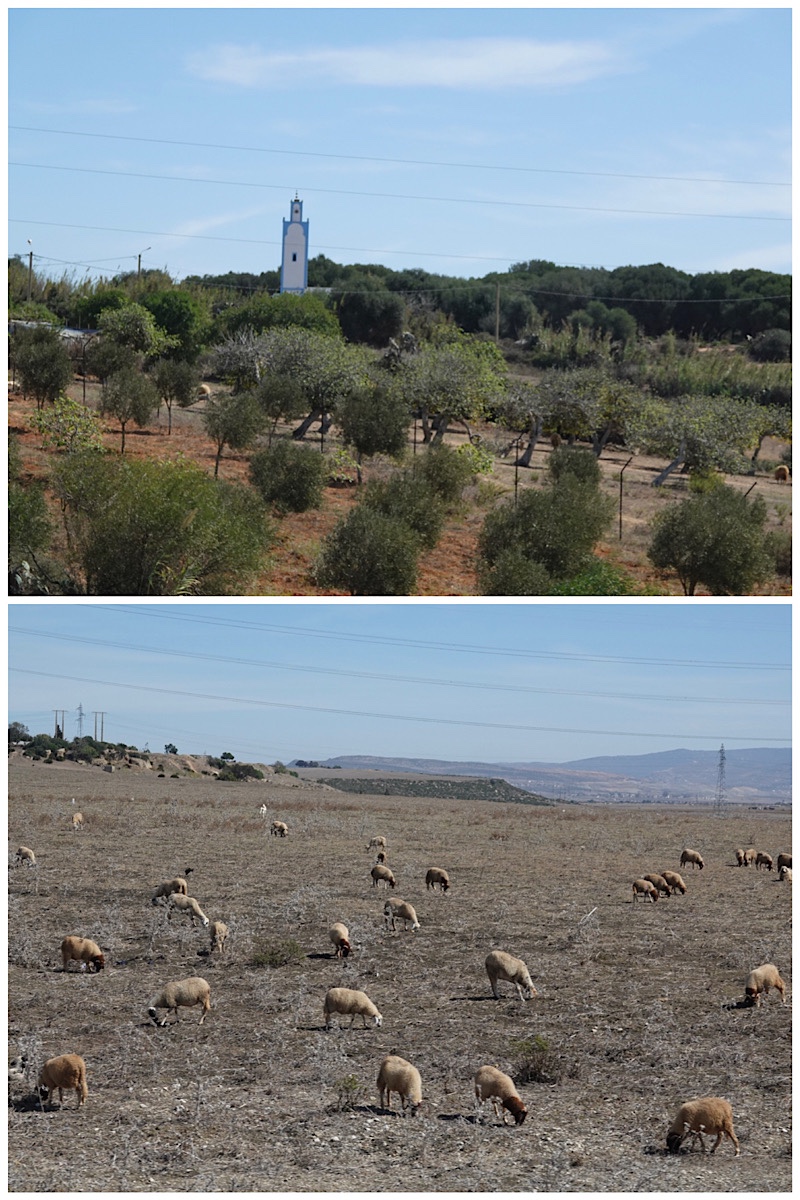
One crop that is having a negative impact on the water table because of how much water it uses (the same problem created by almonds in California) is avocados, yet we saw large avocado orchards all along the highway.
Moroccan agriculture has benefited immensely from cooperation from Israel, who have shared their desert irrigation technologies. Nonetheless, fresh water for both irrigation and drinking can be in limited supply in a desert country that has undergone periods of drought. To help solve those issues, King Mohammed VI is supporting the construction of several large desalination plants on both the Atlantic and Mediterranean coasts.
We made a couple of comfort stops along our route, at well-equipped, modern service centres complete with large gas bars (gas here since deregulation costs exactly the same as in Coquitlam BC: 14 Moroccan dirham, or $2 CAD//litre), car washes, cafés, and even compact mosques and ablution fountains so that travellers can still meet their 5 times daily prayer obligations.
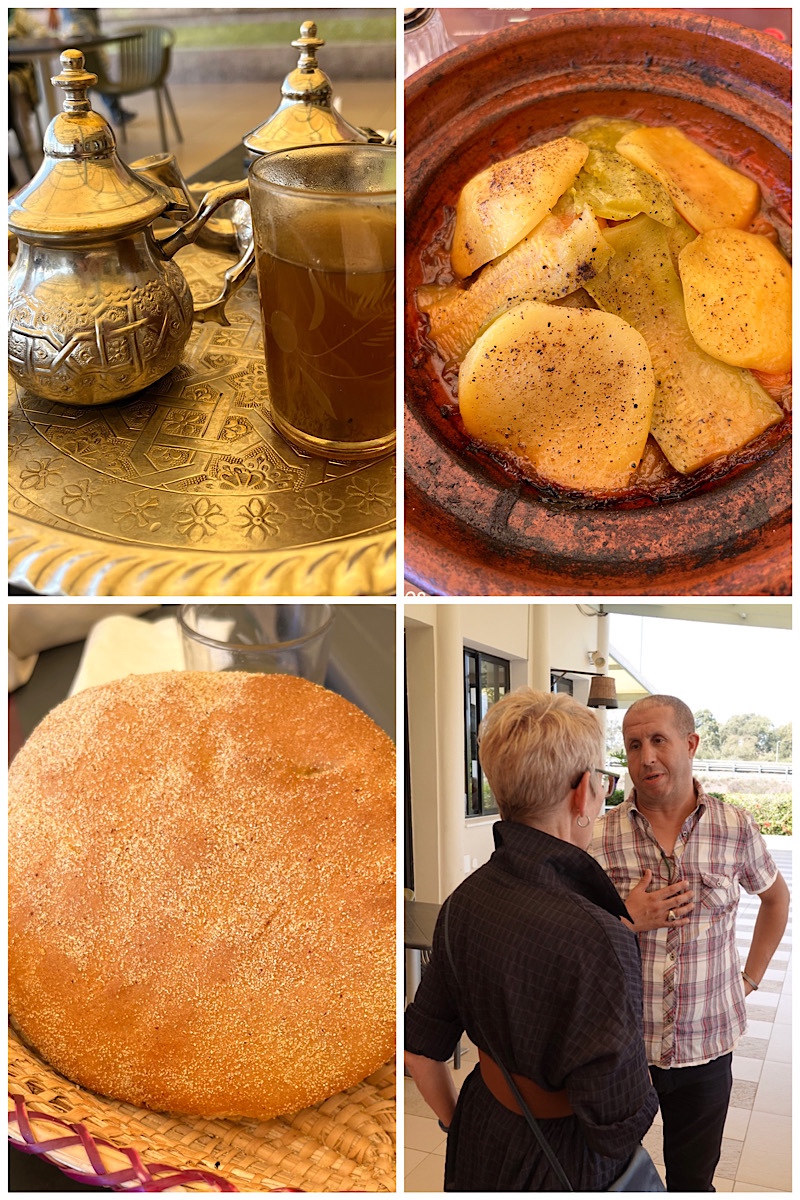
An added bonus were the excellent Moroccan kitchens creating breads, sandwiches, soups, and tagines. How interesting is it that the best meal we’ve eaten so far in Morocco was at a highway service centre? We were able to watch the cook prepping vegetables and meat and cooking our lamb and prune tagine to order, and see fresh bread coming out of the oven. Plus, this was the first place where our mint tea was properly made with leaves and served from silver teapots!
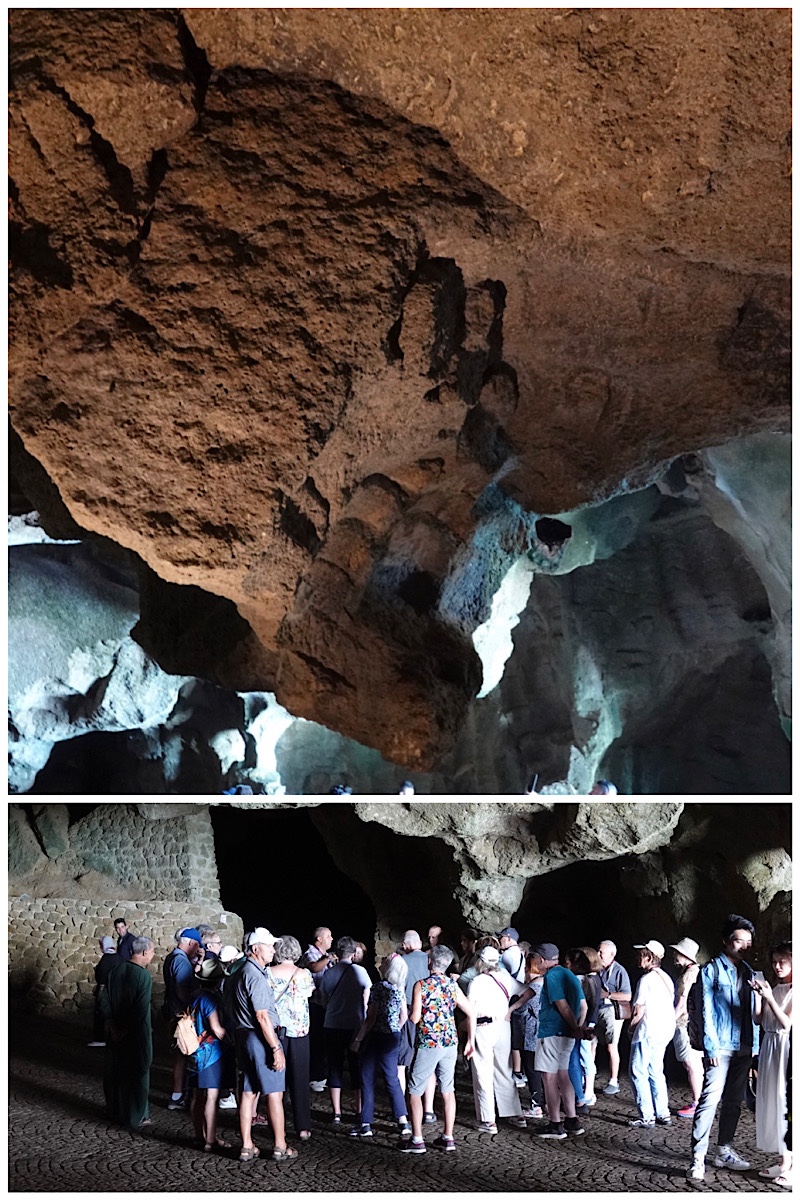
Our first real tour stop of the day was at the Hercules Grotto/Cave on the Atlantic coast within sight of Spain and Gibraltar. This area just outside Tangier was settled by the Phoenicians, who clearly had WAY too much time on their hands, because after discovering the cave in which Hercules was supposed to have stayed while completing one of his 12 labours, they went about carving the cave into a 3-dimensional “map” of their world.
The opening of the cave facing the Atlantic was chiseled out into the shape of the African continent, including Madagascar, so that ships approaching the cave would know they had reached the gateway to Africa. Since they ran out of room for the Cape of Good Hope, it was carved into an interior wall.
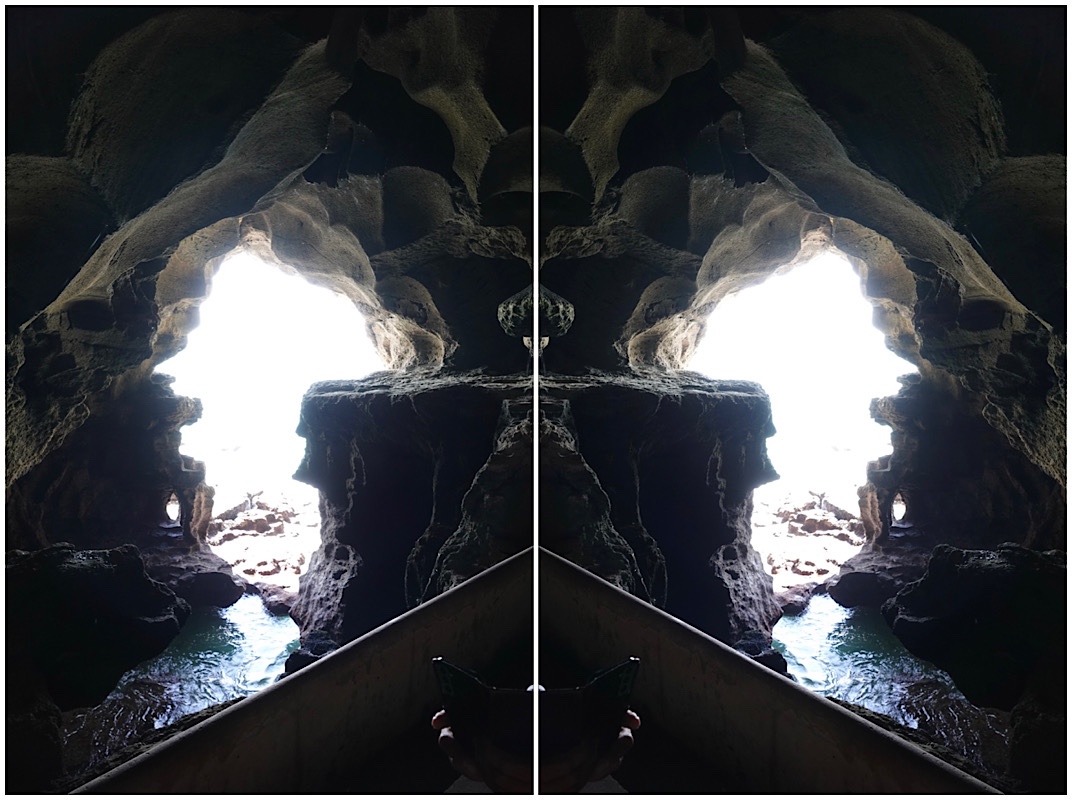
The inside of the cave was carved into “waves”, coming from one direction to represent the Atlantic Ocean, and another to represent the Mediterranean Sea.
Other carvings depicted a map of Morocco, and the Rock of Gibraltar. It’s hard to imagine the practical application of all that work.
The cave is situated on a section of picturesque coastline which is just a portion of miles and miles of golden sandy beaches.
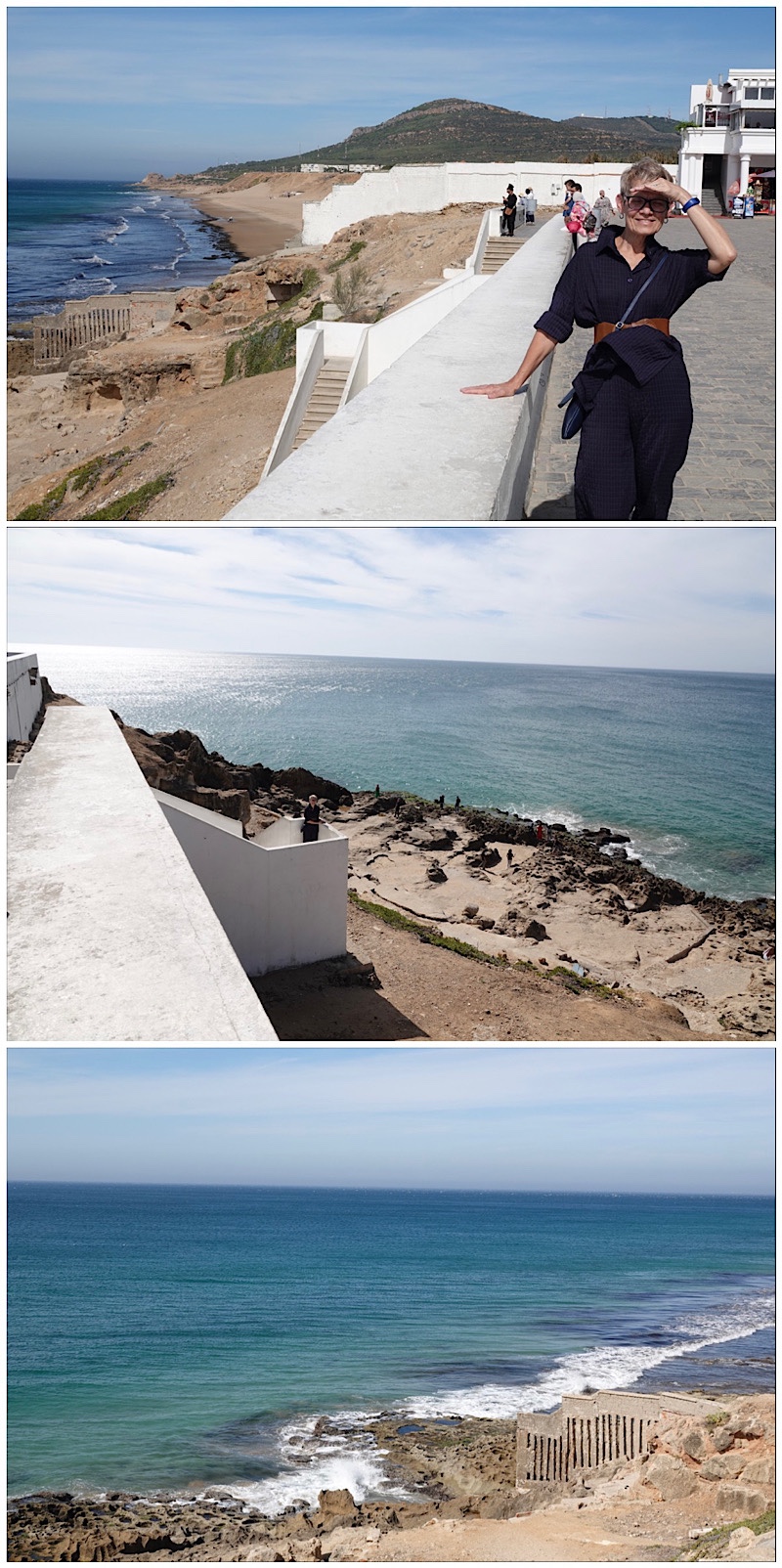
After exploring the cave, we drove a short distance to stop at Cap Spartel, the point at which the Atlantic and Mediterranean meet. Early in the morning, the delineation of the 2 waters can be seen as a border between blue and green, but mid-afternoon in full sun that was not visible.

On to Tangier itself (spelled “Tanger” in Moroccan French). The name is a form of Tinglis, the daughter of the god of the ancient Berbers, who inhabited it long before Islam). The city is known as the “bride of the north” for its beauty, and the artists city due to the number of artists and literary figures who have called it home. Offsetting all those positives are 2 negatives: after independence it became known as a base of operation for spies of many nationalities, and much of its wealth in the early to mid 20th century came from the smuggling of hashish, and the cannabis grown in the Rif mountains. That latter notoriety is still a concern for law enforcement.
At one point in the 1920s there was talk of the city being divided into 33 sectors, one given to each of the (mostly European, except for the U.S.)countries who had nationals stationed there. By 1956 the Sultan had not only vetoed that idea, but also ended Tangier and Morocco’s French occupation.
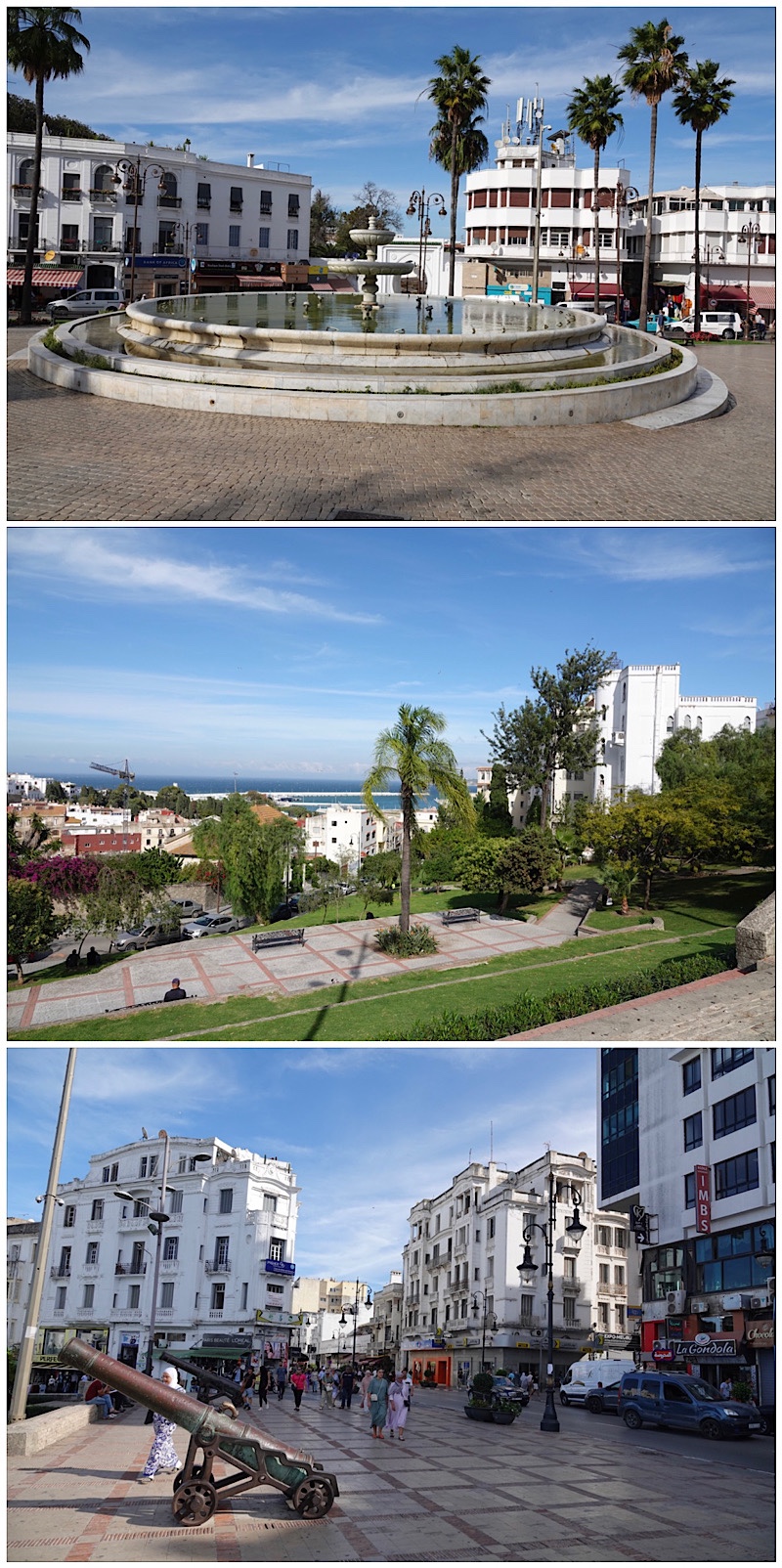
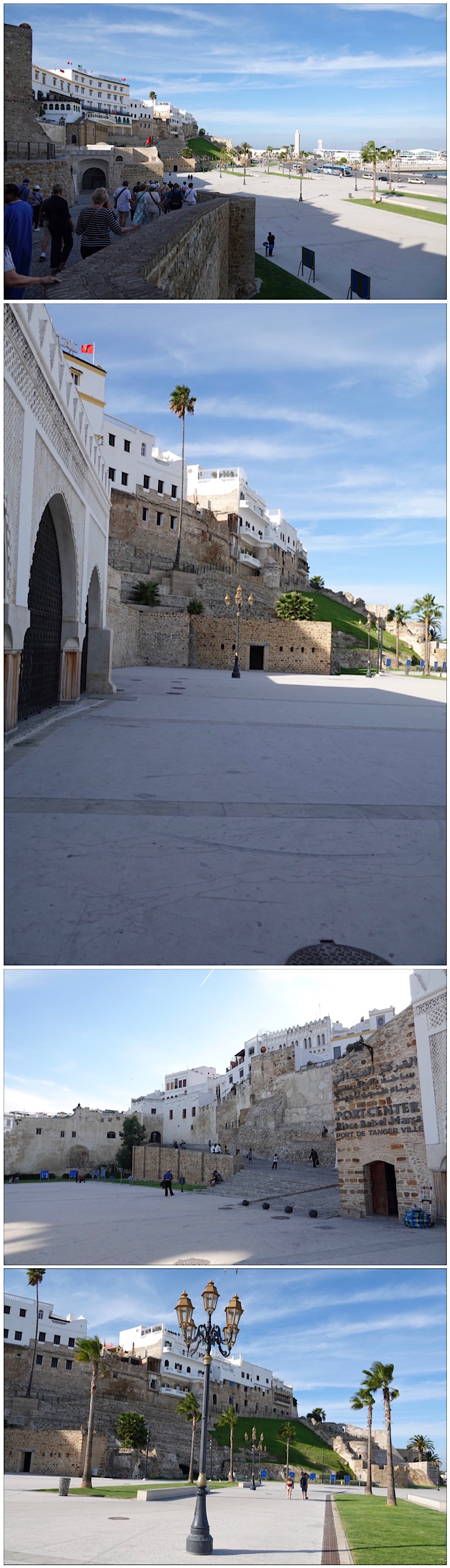
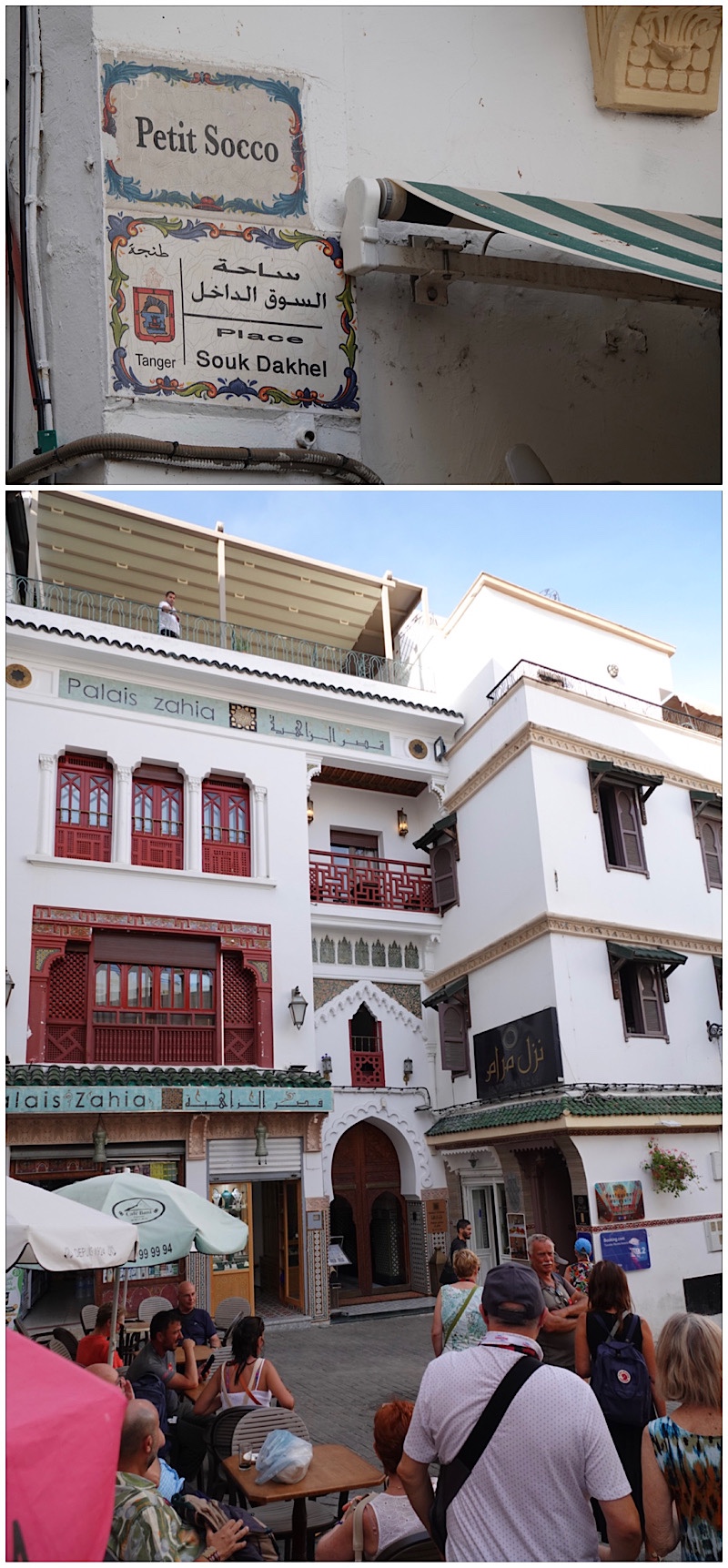
Our short walking tour of the old city took us into the Dar Adil Kasbah, comprised of a grand souk (market) and the smaller Spanish “petit socco”. While most of western and southern Morocco has strong French cultural ties, and uses French as a second language, Tangier (which is only about 40 km across the Strait of Gibraltar from Tarifa) is much more closely aligned with Spanish culture and language.
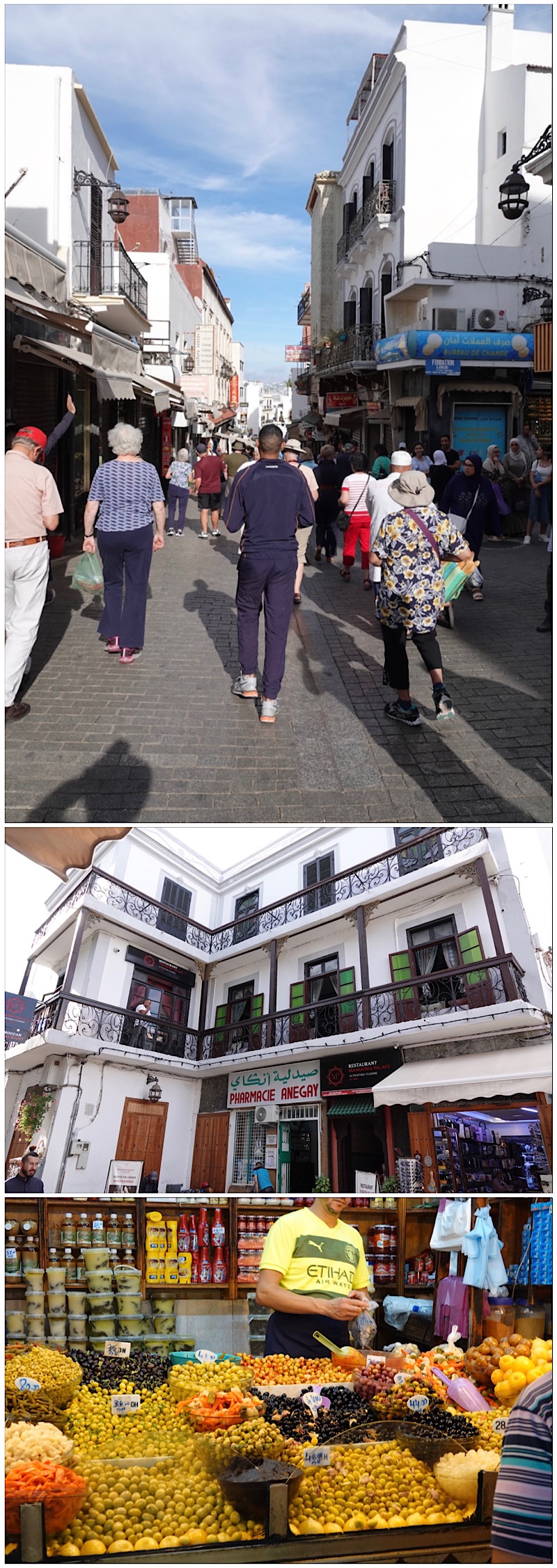
One of the shops we visited in the Grand Souk catered exclusiveky to men’s fashion, selling a wide variety of djellabas. The shop was originally a “caravanserai” : a hostel for travelling merchants, with a lower courtyard for animals, booths for selling goods, and upper sleeping chambers.
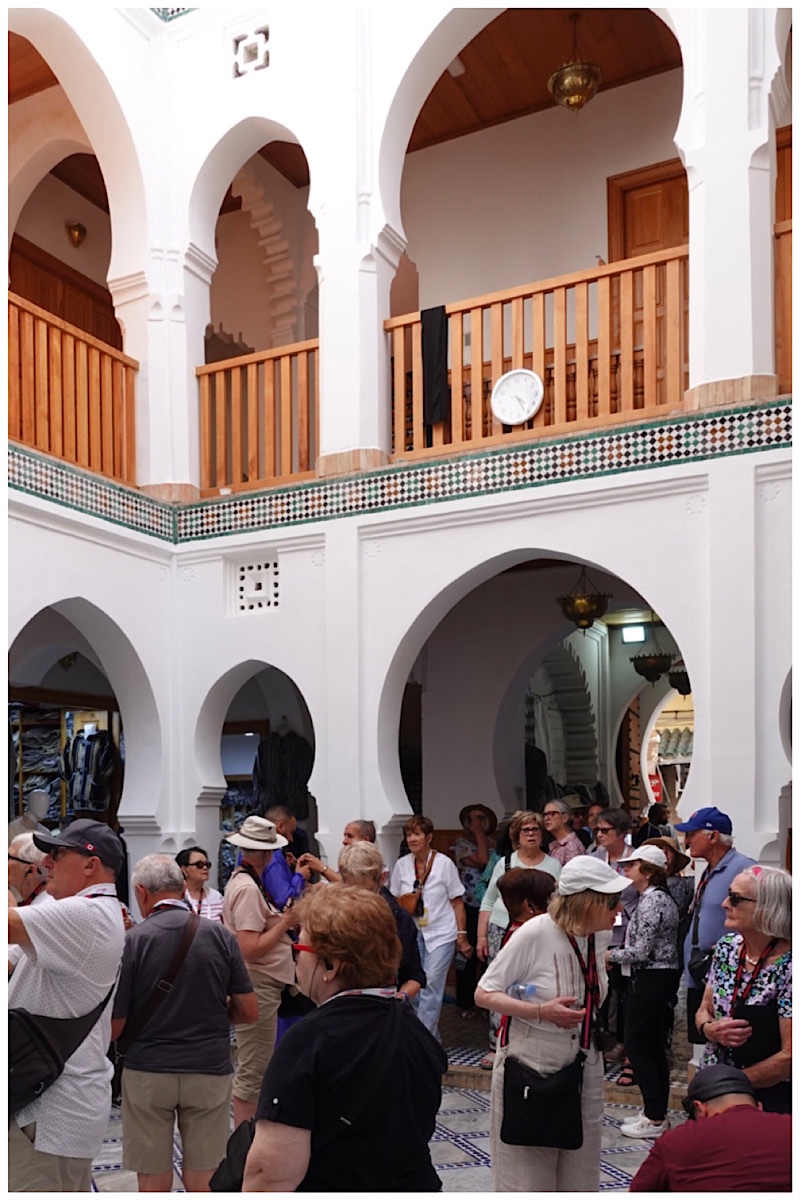
Side note: A djellaba is a long, loose-fitting hooded unisex outer robe or dress with full sleeves that is worn in the Maghreb region of North Africa. The main difference between the men’s and women’s versions is decoration, with women’s robes being much more colourful, often embroidered or even embellished with beads and sequins. Our walking tour guide explained that the djellaba is the most appropriate option in Morocco; abayas like what I bought in Saudi Arabia, and which use a separate scarf instead of an attached hood, are more common in the Middle East and India.

Inside the Kasbah we passed the Spanish Catholic Mission (below), built during the Spanish occupation era.

The “green mosque” is also located inside the souk. Green is the colour used to represent Islam, and stands for peace.

Just before coming to Morocco, I read Christine Mangan’s psychological thriller “Tangerine”, set in Tangier, and I found myself in the souk today looking for a mysterious man wearing a fedora with a purple hat band. No one fit that description, but there were a few fairly insistent street vendors who really didn’t want to take “laa, shukran” (no thank you) for an answer.
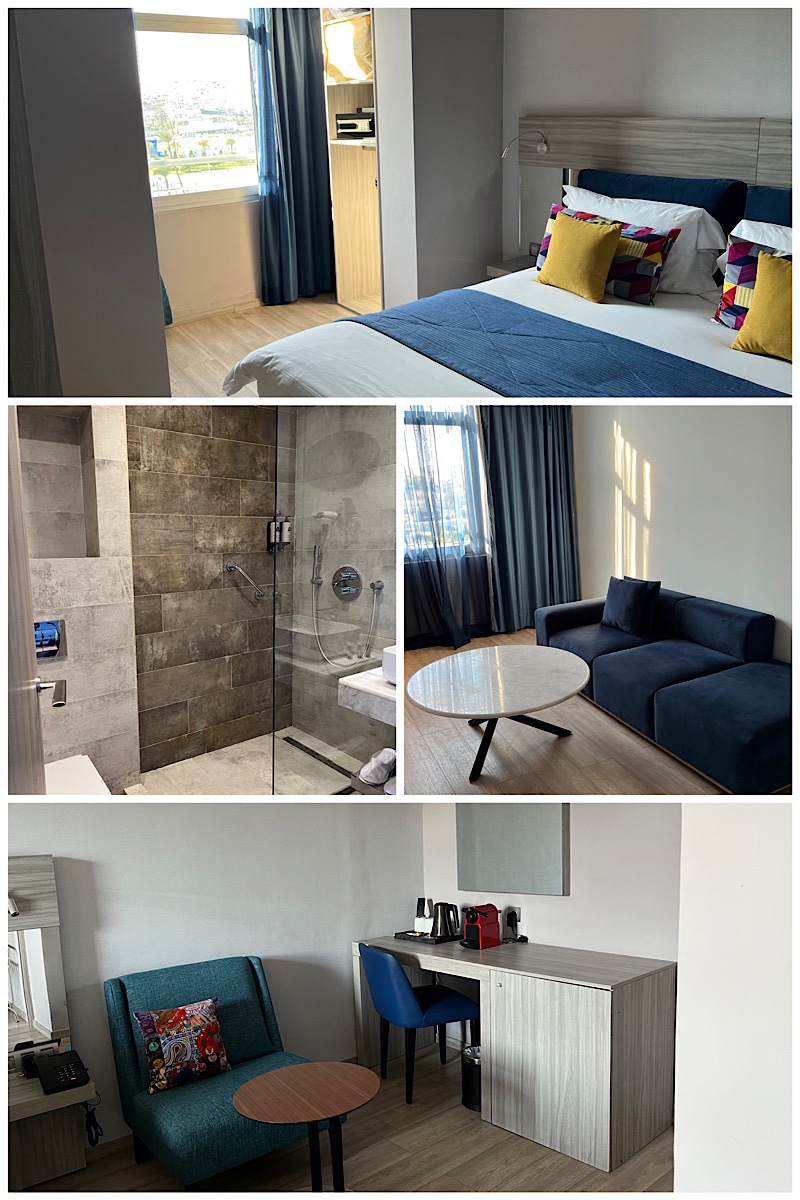
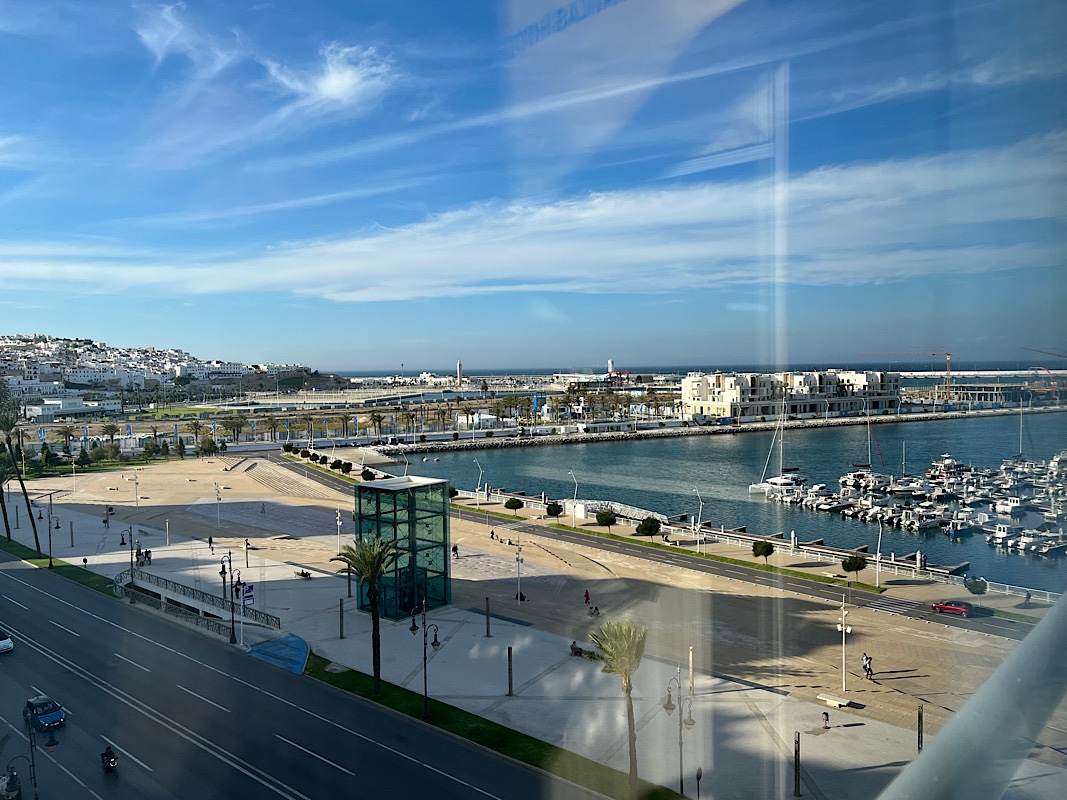
Having completed another full day (although much of it was on the bus), we checked into our Tangier accommodation: a beautiful 2-room suite in the Marina Bay Hotel, with a view from our windows overlooking the harbour.
Dinner was buffet style again, and non-Moroccan foods. There was a good selection of cold salads, plus chicken, fish, beef shank, scalloped potatoes, steamed and grilled vegetables, and fettuccine bolognese as mains, as well as a variety of bite-sized desserts. The food was hot and tasty, but as was the case on our two previous nights, service was lacklustre. I’d say my biggest disappointment so far on this trip has been the food … with the exception of that wonderful service station!! I know that Morocco has much more to offer than we’ve seen. Bring on some “real” Moroccan flavours, some fresh dates, and a chink,of wonderful nutty nougat please!
Tomorrow we’ll have another long bus ride as we journey to Chefchaouen and Meknes.
 Rose and Ted’s Excellent Adventure
So much …
<
div dir=”ltr”>Wh
LikeLiked by 1 person
It looks like throngs of tourists are still visiting Morocco, despite the earthquake. I suppose there are places you won’t be able to visit due to the damage, but you’ve had a decent mix of big city and countryside so far. Jayne B.
LikeLike
We expect to be able to visit everything except the Berber villages in the High Atlas mountains. Our local guide assures us that while there was significant loss of life, there was little damage to infrastructure.
LikeLike
You aren’t selling me
LikeLike
We’re not even re-selling ourselves! We had 2 amazing experiences with this company, in 2017 (England) and 2019 (Scotland). Ireland last May was less than great, but we’d already booked this. We’re pretty much agreed it’s our last trip with them.
LikeLike