Itinerary: We proceed to Waterford and visit the factory where they once made the famous crystal. Later we visit a small historic pub for local Irish music and drinks.
☘️☘️☘️☘️☘️☘️☘️☘️☘️☘️☘️☘️☘️☘️☘️☘️☘️☘️☘️☘️☘️☘️☘️☘️☘️☘️
High 17°C/ Low 9°C. Sunny.
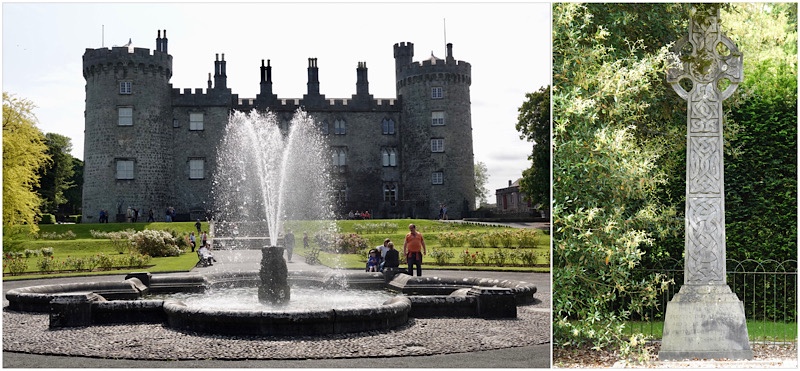
After another “meh” breakfast at our Dublin hotel, we boarded the bus toward Waterford, making a stop on Kilkenny to see the castle there. The stone castle dates to about 1260, although there was a wooden castle there earlier than that, built by Richard Clare, the second Earl of Pembroke. In the late 1300s, the castle became the seat of the Butlers of Ormonde, a family who were ancestors of Anne Boleyn. During the Cromwellian era, the castle was used as a Catholic stronghold, damaged by Oliver Cromwell’s troops, and and allowed to become rundown until a restoration by the Earl of Ormonde in the 19th century. Sadly, there was subsequent deterioration, partly due to a huge backlog in taxes, and in 1967 the current Lord Ormonde sold the abandoned and deteriorating castle to the Castle Restoration Committee for a ceremonial £50. It has been beautifully restored, and the public park and rose garden around it is quite gorgeous.
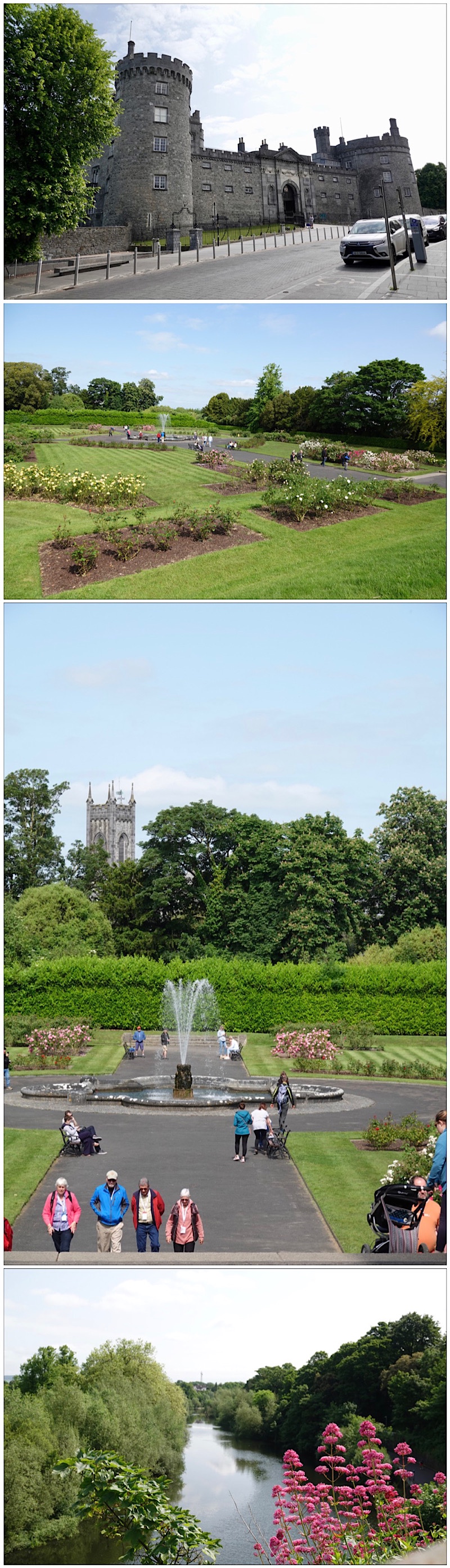
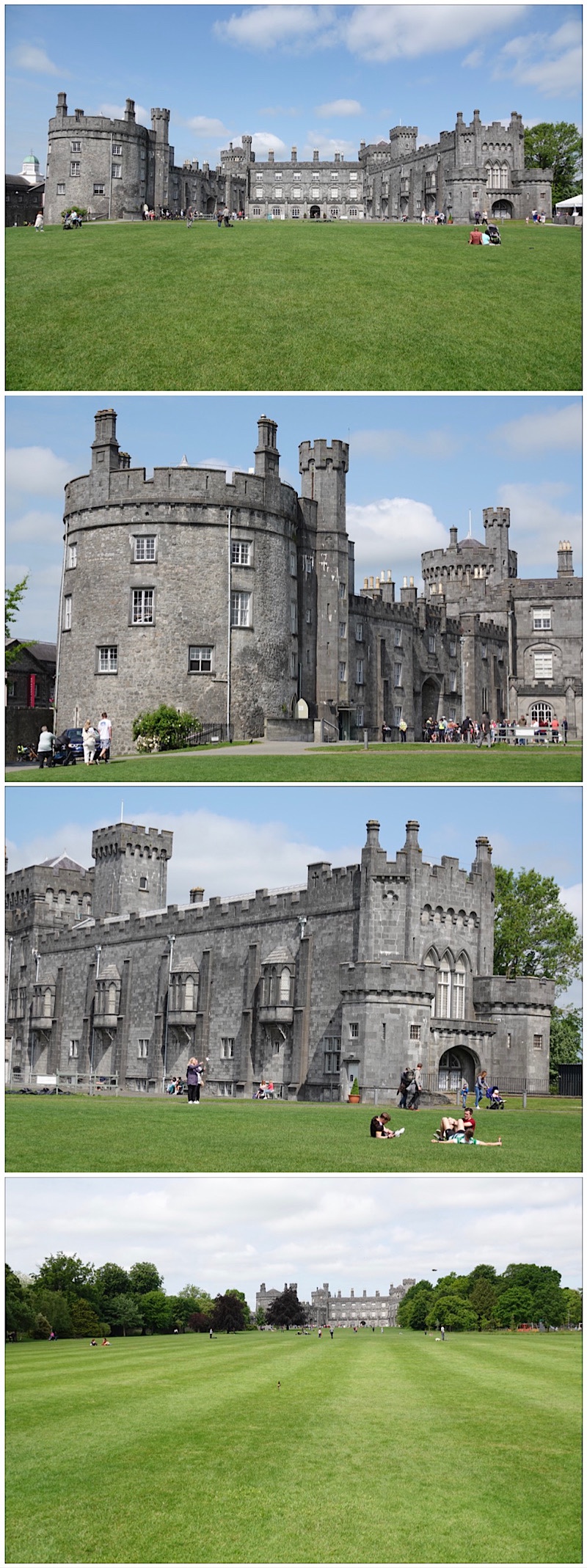
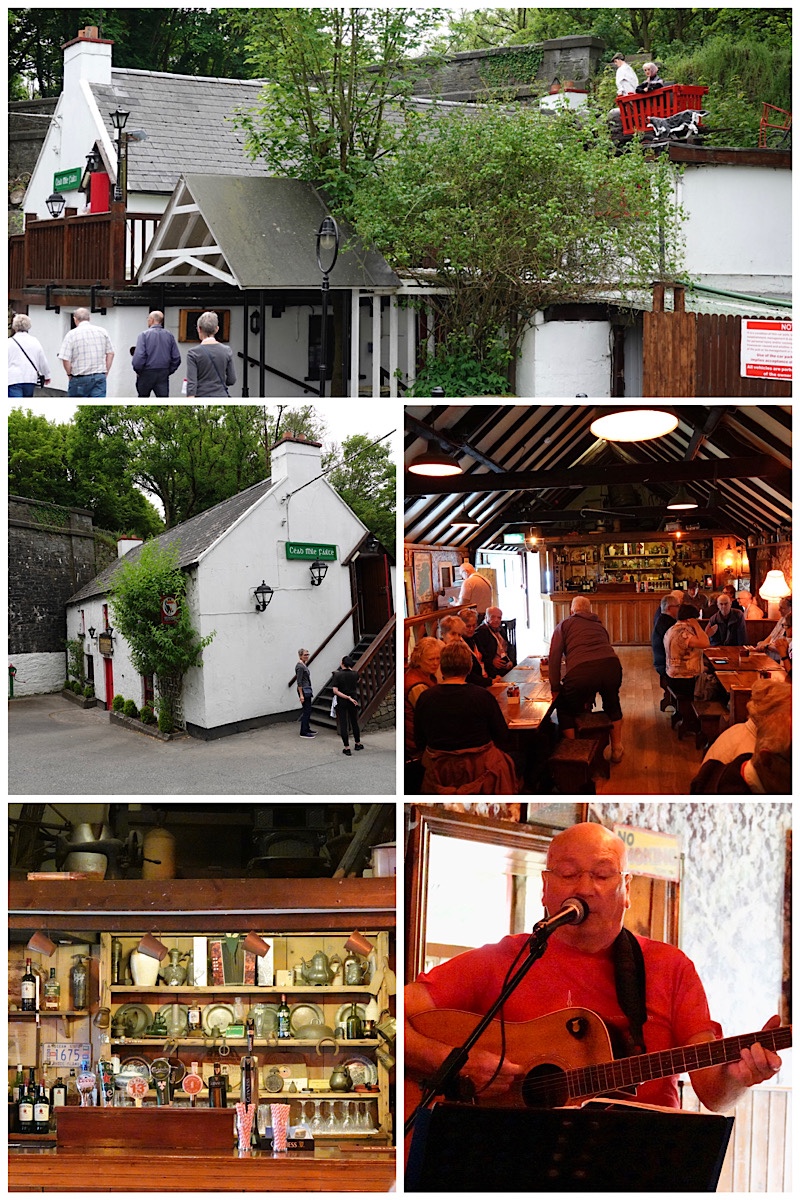
After an hour or so in Kilkenny, we headed to lunch at John Meade’s 18th century pub half way between Passage East and Waterford, where we were also treated to music and stories by guitarist/singer Dermott Power.
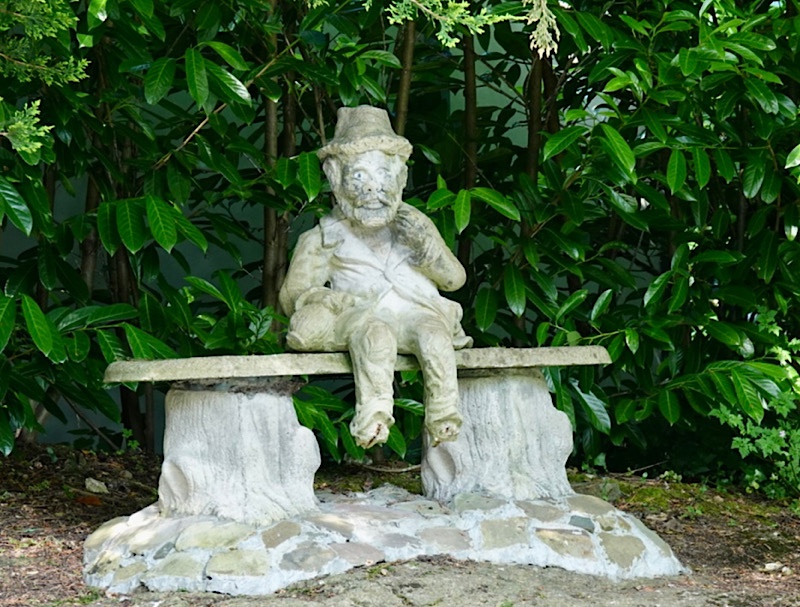
In the yard, something had turned this leprechaun to stone.
Power is a very common name in Newfoundland , and among other things Dermott told us about the Irish emigration in the late 1700s that brought fisherman to Newfoundland and firmly established the Irish culture there even before the additional immigration due to the mid 1800s potato famine. When Dermott peppered one of his stories with “Lord tunderin’ Jaysus” we felt an immediate connection to Canada.
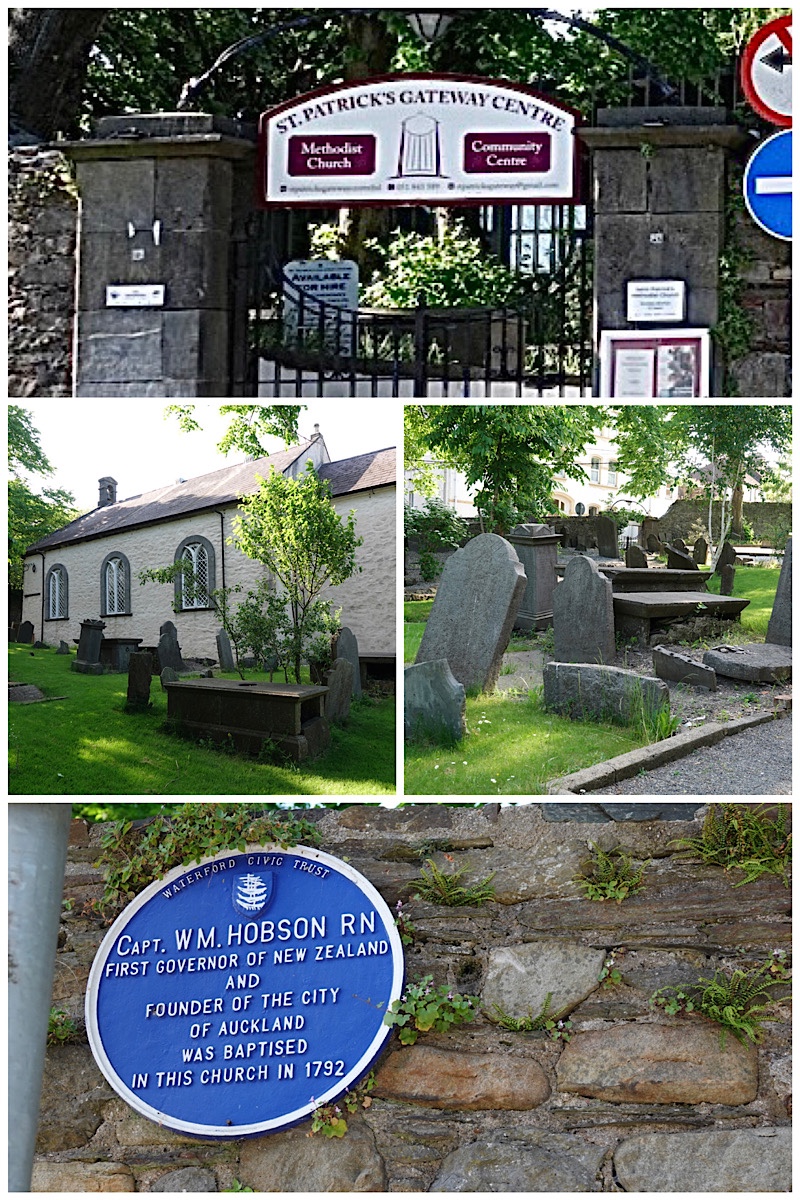
One of the anecdotes Dermott shared was that because there were no Catholic clerics in Newfoundland, families often made the long and treacherous transatlantic trek back to Waterford to celebrate weddings and baptisms. The gate through which they entered St. Patrick’s church here is just two streets behind the hotel in which we were slated to stay.
We arrived in Waterford just after 4 p.m., free to do as we pleased for the rest of the day. Our accommodation tonight is in the historic granvillehotel .
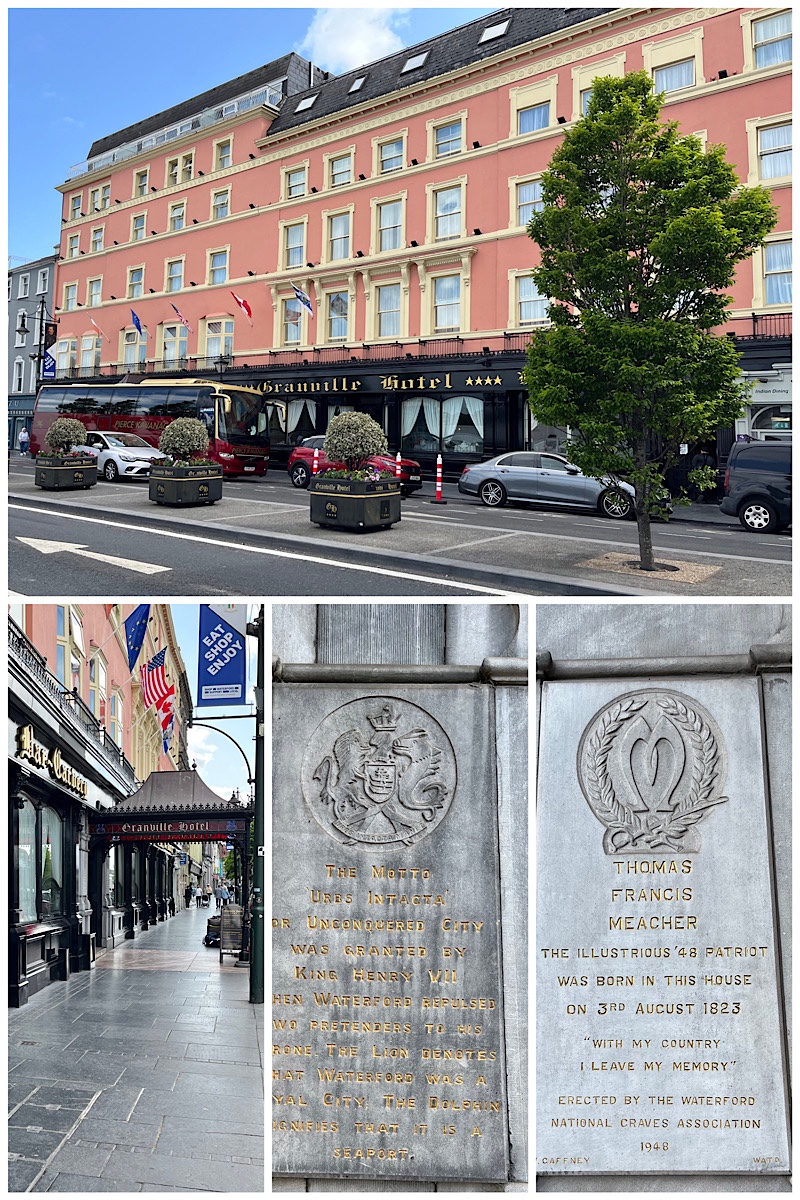
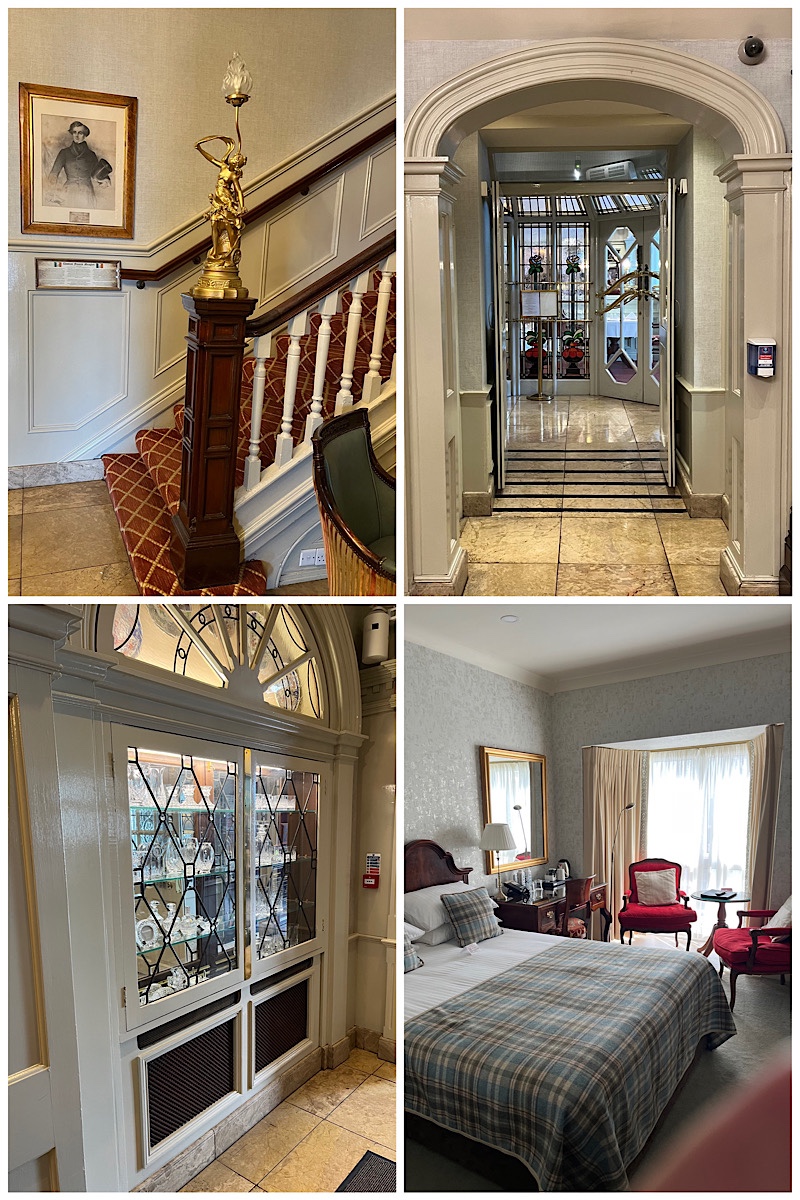
Since it was Sunday, lots of things were closed, and since it was almost 5 p.m. by the time we’d settled in to our rooms, even those things that were open were getting ready to close at 6. Nonetheless, there was so much to see on our independent walk around town that we’re convinced Waterford is a place to which we could happily return for a week or two.

Our first priority was finding St. Patrick’s Gate. The site is now in disrepair, with its graveyard full of tumbled unreadable stones, and the small church now Methodist and still holding services, but for an almost non-existent congregation. The plaque beside the gate verified that baptisms were indeed being performed here in the 1700s.
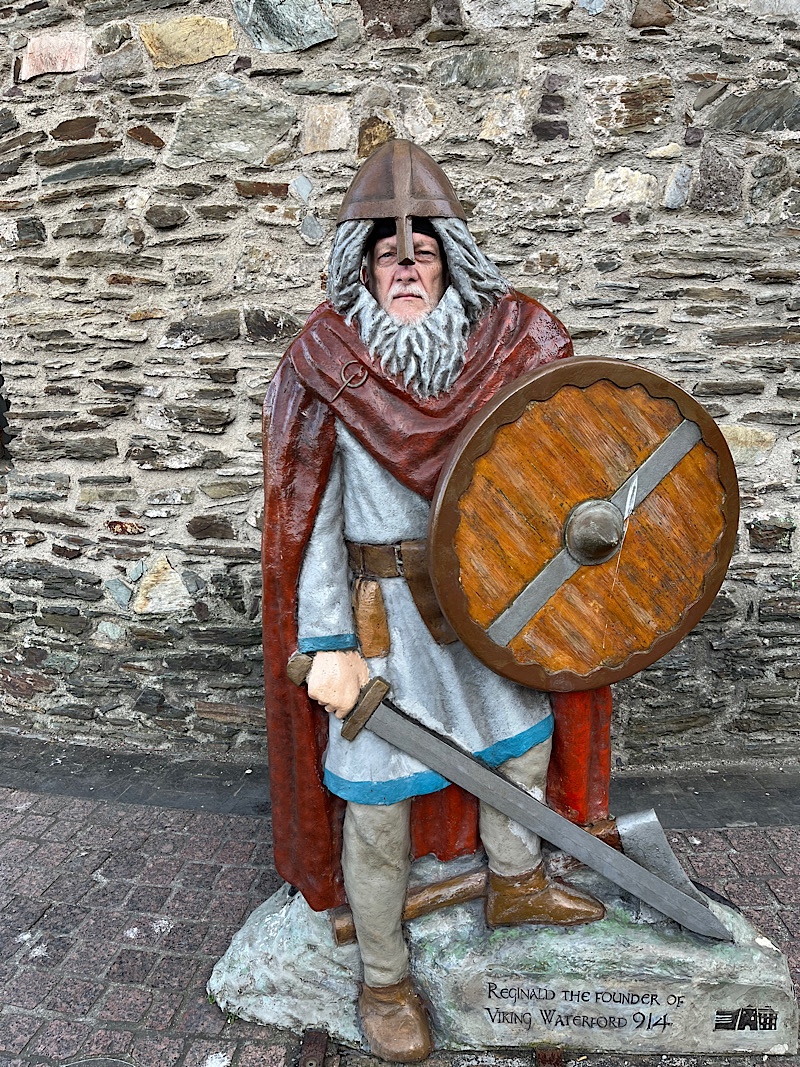
Waterford is the oldest town in Ireland, having been settled by the Vikings in 914 AD. There are lots of Viking artifacts and symbols all around the town.
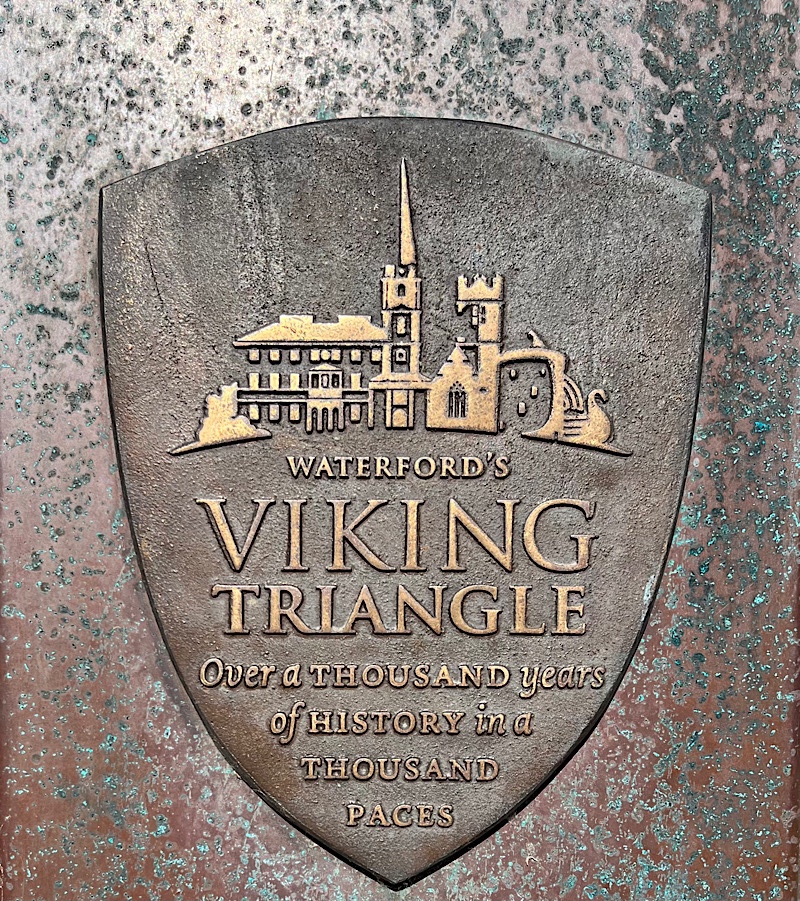

In the “Viking Triangle” in the centre of town we were wowed by the Dragon Slayer Sword, carved from a tree trunk over 20 feet long. The sign on the wall of the Viking Triangle courtyard explained that The roots represent the fiery tail of a comet that morphs into a dragon grasping the pommel of the sword. Vikings believed that comets were caused by dragons hurling bolts of fire across the sky, while those fearing attacks by Vikings saw comets as bad omens.
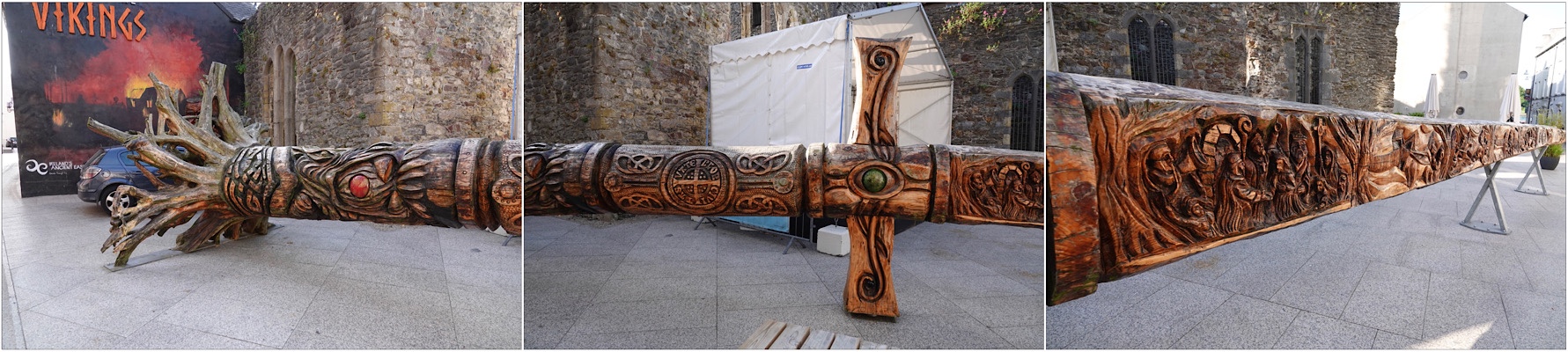
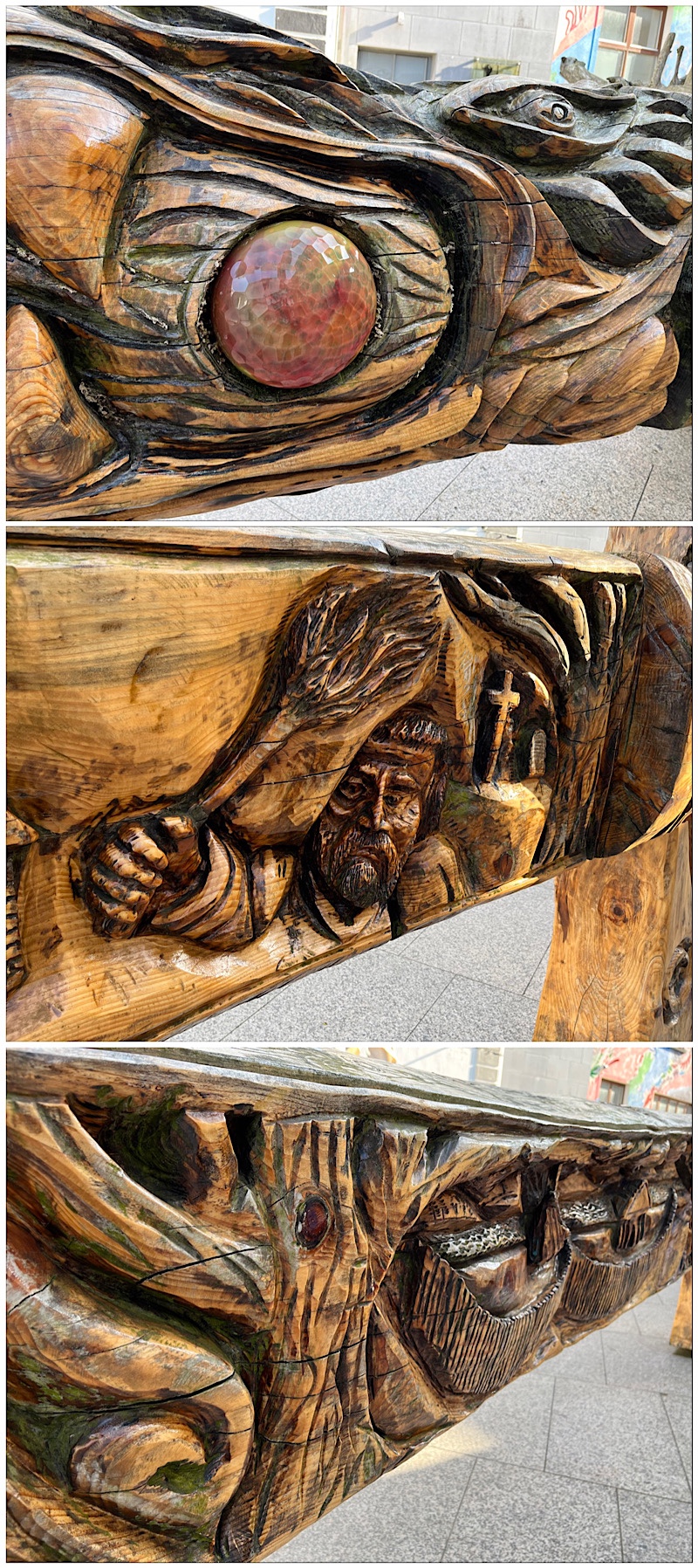
30 cm / 12 inches in diameter.

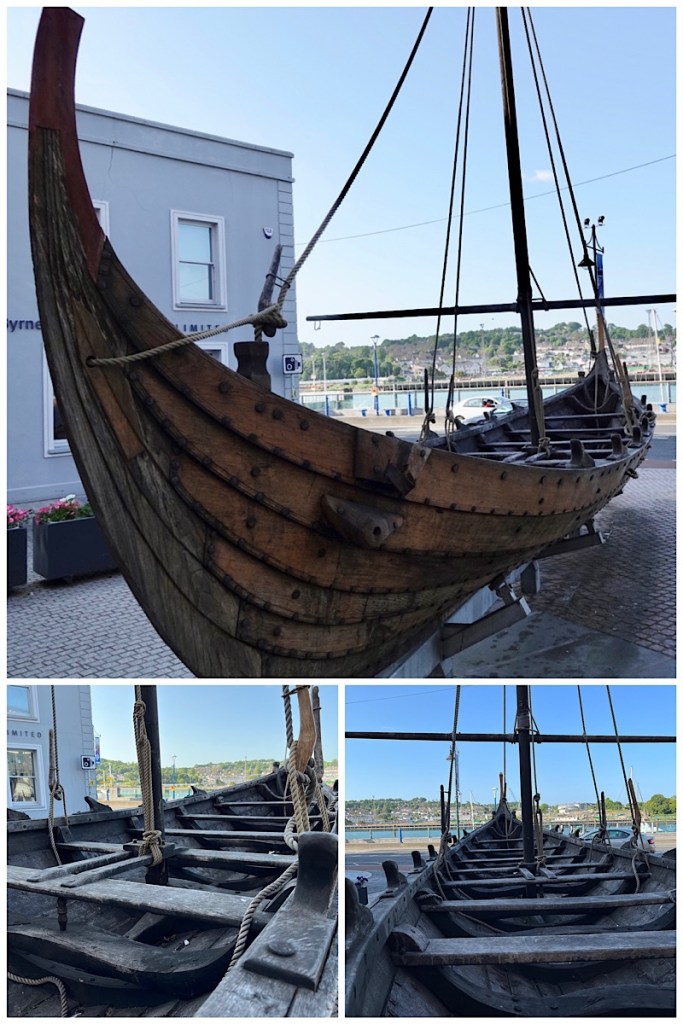
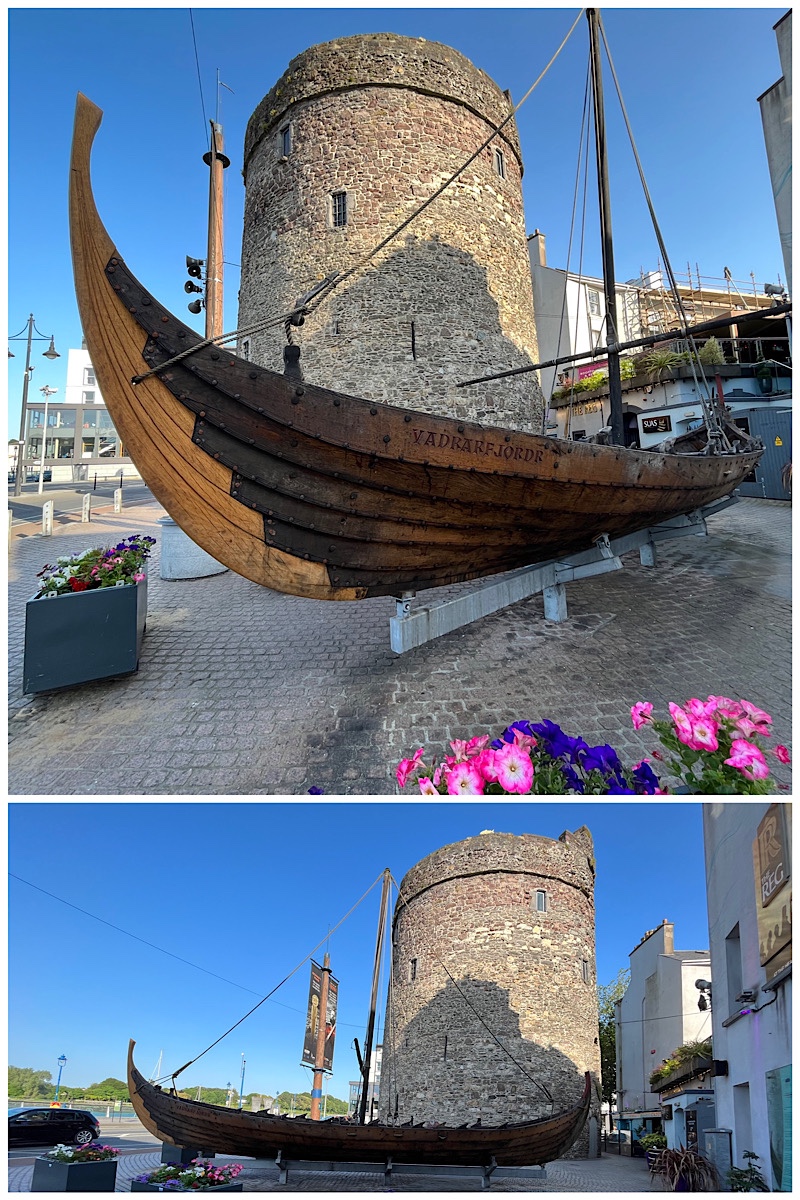
Medieval Waterford was surrounded by a stone wall almost a mile in circumference. Today, there are still 6 towers standing. “Reginald’s Tower” was rebuilt in 1170 after the Anglo-Norman capture of Waterford. The tower stands behind the replica ship.
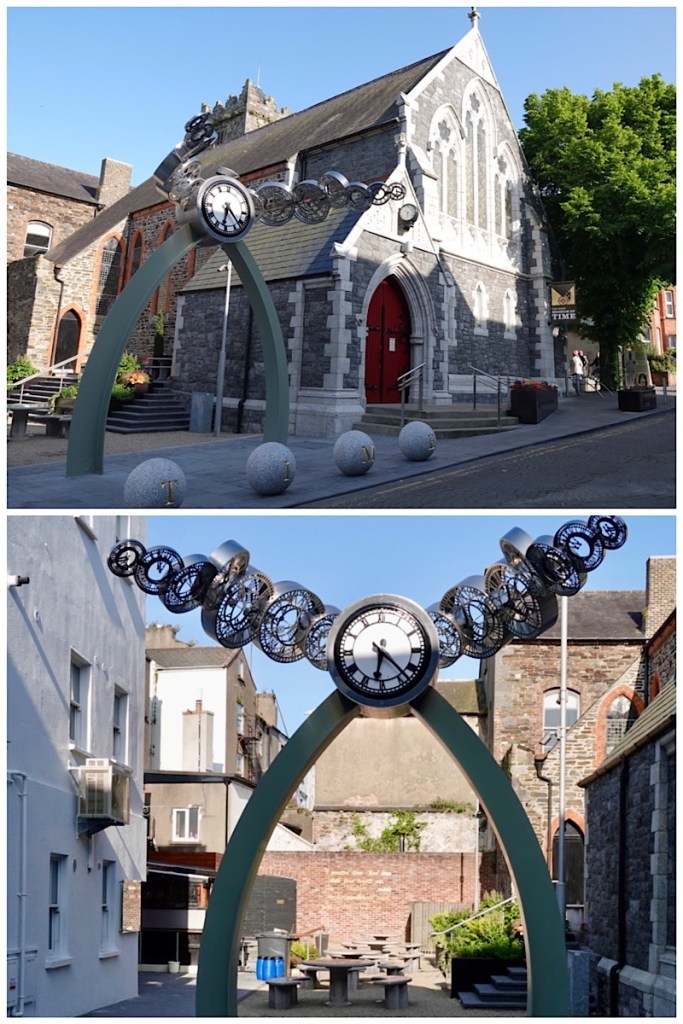
Waterford was also a religious centre, although most of the churches we saw had been converted to other uses, most interestingly the Museum of Time (National Horological Museum). We’d love to come back to tour that, and the ruins of the Franciscan Friary adjacent to it.

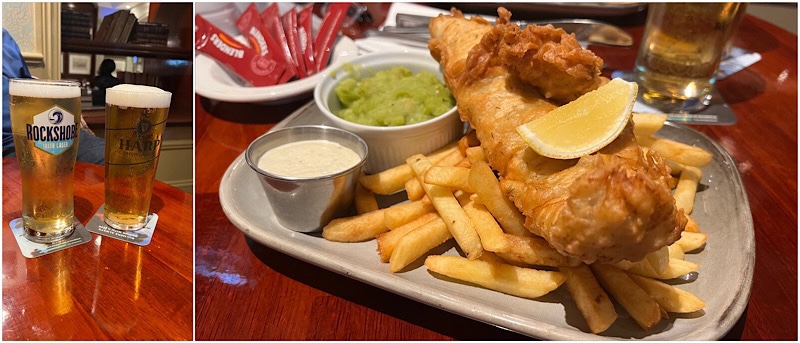
Unbelievably, we were hungry again. Our hotel’s pub made terrific beer-battered cod and chips that made us both happy.
Tomorrow we’ll visit the Waterford crystal factory, and …. maybe … kiss the Blarney Stone.
 Rose and Ted’s Excellent Adventure
This is amazing! I’ll be touring Ireland in July. It’s great to get a “head start” on my trip, so to speak.
LikeLiked by 1 person
Looking forward to your Waterford, crystal factory tour!
LikeLiked by 1 person
Whew! I thought I was going to miss the Waterford crystal!! Love Ted’s suit of armour but your shirt “She who must obeyed “ Carrie’s a lot more clout xxxx
>
LikeLiked by 1 person
When it comes to kissing that stone …remember all the others that did so before you!
LikeLiked by 1 person